

The DOI matches its Crossref record.
Overview and challenges of machine translation for contextually appropriate translations
Overview
The claims and statistics of this paper haven’t been checked yet.
Run the check — free, no account needed. It reads the open-access text and checks the sources it cites.
Integrity signals
Registry
Cites
Statistics
Figures
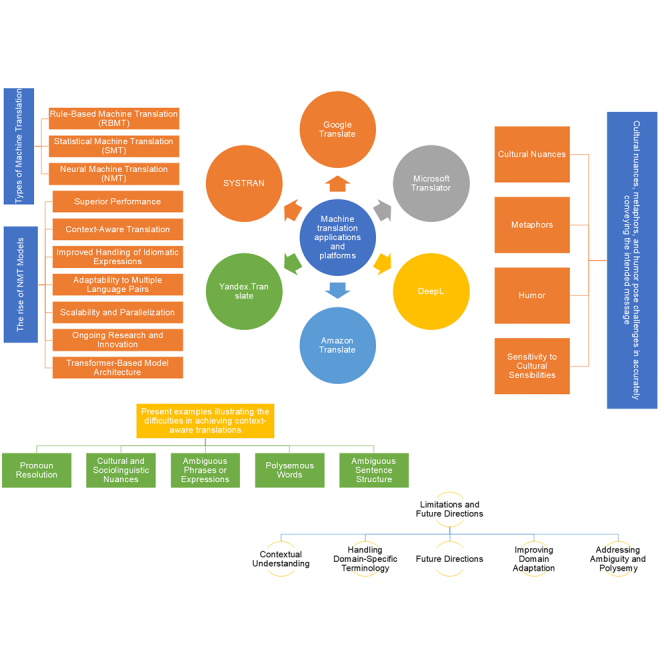
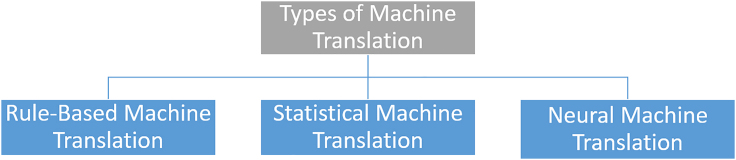
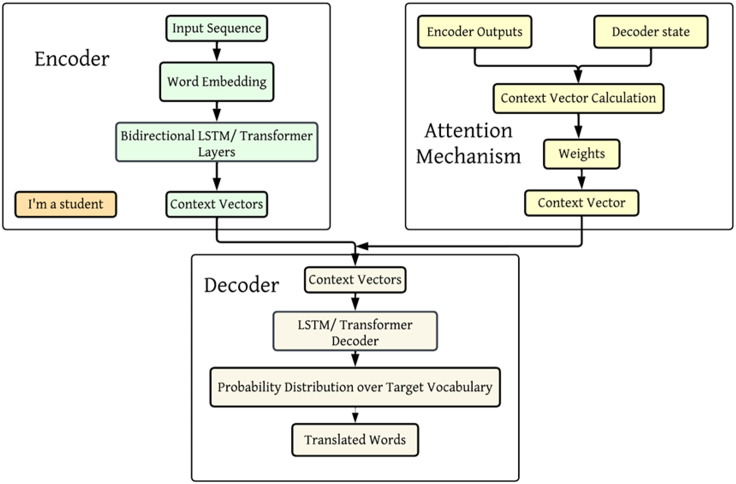
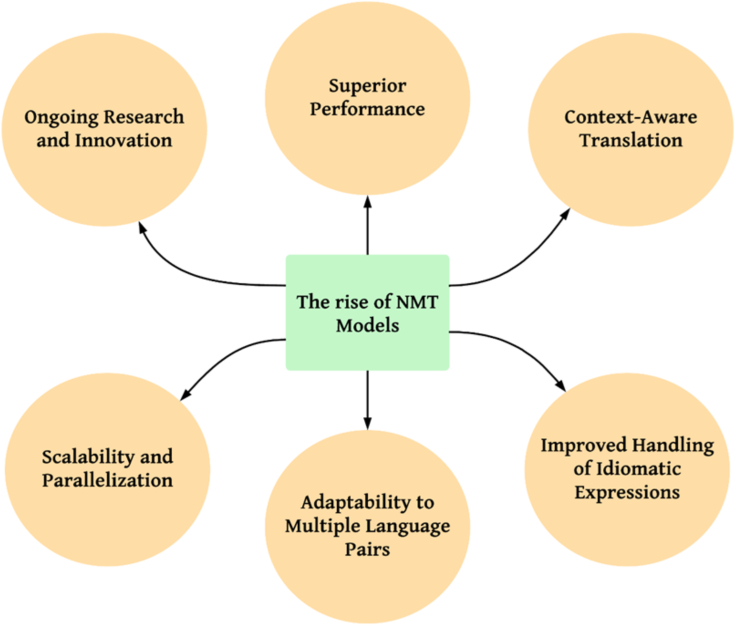
Verification
Claims the paper makes
The claims and statistics of this paper haven’t been checked yet.
Run the check — free, no account needed. It reads the open-access text and checks the sources it cites.
Claims other papers make about this one
Each is checked against this paper’s own text: does it say what the citing paper says it does?
In the citing paper
“For bioinspired coatings (cell membranes/extracellular vesicles/cell-based vectors), scalability is often constrained by source variability and purification yield; thus, standardized sourcing, closed processing, sterility/endotoxin control, and functional assays that track key surface markers and penetration phenotypes are essential [122].”
From Overcoming tumor microenvironment barriers: transformable and bioinspired nanomedicine strategies for deep tumor penetration (2026) · cites this paper as [122]
In the citing paper
“This gap reflects practical constraints in human tumor sampling, imaging standardization, and the diversity of stromal and vascular phenotypes across indications [122].”
From Overcoming tumor microenvironment barriers: transformable and bioinspired nanomedicine strategies for deep tumor penetration (2026) · cites this paper as [122]
Self-check
Percentages, sums and reported differences re-computed from the paper’s own numbers.
The self-check needs the paper’s full text.
Citations
Cites
No references could be resolved yet.
Research works printed but not linked: 113
- Ranathunga, 2023, Neural machine translation for low-resource languages: A survey, ACM Comput. Surv., 55, 1, 10.1145/3567592 · DOI
- Jolley, 2022, Thirty years of machine translation in language teaching and learning: A review of the literature, L2, 14, 10.5070/L214151760 · DOI
- Dabre, 2020, A survey of multilingual neural machine translation, ACM Comput. Surv., 53, 1, 10.1145/3406095 · DOI
- Rivera-Trigueros, 2022, Machine translation systems and quality assessment: a systematic review, Comput. Humanit., 56, 593
- Tan, 2020, Neural machine translation: A review of methods, resources, and tools, AI Open, 1, 5, 10.1016/j.aiopen.2020.11.001 · DOI
- Núñez-Marcos, 2022, A survey on Sign Language machine translation, Expert Syst. Appl., 213
- Tavares, 2023, The Challenges of Teaching and Assessing Technical Translation in an Era of Neural Machine Translation, Educ. Sci., 13, 541, 10.3390/educsci13060541 · DOI
- Arivazhagan, 2019, Massively multilingual neural machine translation in the wild: Findings and challenges, arXiv
- Bao, 2023, Non-Autoregressive Document-Level Machine Translation (NA-DMT): Exploring Effective Approaches, Challenges, and Opportunities, arXiv
- Cheng, 2020, Advaug: Robust adversarial augmentation for neural machine translation, arXiv
- Koponen, 2019, A product and process analysis of post-editor corrections on neural, statistical and rule-based machine translation output, Mach. Translat., 33, 61, 10.1007/s10590-019-09228-7 · DOI
- Sghaier, 2020, Rule-based machine translation from Tunisian dialect to modern standard Arabic, Procedia Comput. Sci., 176, 310, 10.1016/j.procs.2020.08.033 · DOI
- Prates, 2020, Assessing gender bias in machine translation: a case study with google translate, Neural Comput. Appl., 32, 6363, 10.1007/s00521-019-04144-6 · DOI · Paper page
- Satir, 2021, Preventing translation quality deterioration caused by beam search decoding in neural machine translation using statistical machine translation, Inf. Sci., 581, 791, 10.1016/j.ins.2021.10.006 · DOI
- Zhang, 2020, Neural machine translation: Challenges, progress and future, Sci. China Technol. Sci., 63, 2028, 10.1007/s11431-020-1632-x · DOI
- Rahul, 2023, Morphology & word sense disambiguation embedded multimodal neural machine translation system between Sanskrit and Malayalam, Biomed. Signal Process Control, 85, 10.1016/j.bspc.2023.105051 · DOI
- Shterionov, 2018, Human versus automatic quality evaluation of NMT and PBSMT, Mach. Translat., 32, 217, 10.1007/s10590-018-9220-z · DOI
- Park, 2022, Mimicking Infants’ Bilingual Language Acquisition for Domain Specialized Neural Machine Translation, IEEE Access, 10, 38684, 10.1109/ACCESS.2022.3165572 · DOI
- Dankers, 2022, Can transformer be too compositional? analysing idiom processing in neural machine translation, arXiv
- Ko, 2021, Adapting high-resource NMT models to translate low-resource related languages without parallel data, arXiv
- Huang, 2019, Gpipe: Efficient training of giant neural networks using pipeline parallelism, Adv. Neural Inf. Process. Syst., 32
- Hancock, 2020, AI-mediated communication: Definition, research agenda, and ethical considerations, J. Computer-Mediated Commun., 25, 89, 10.1093/jcmc/zmz022 · DOI · Paper page
- Bowker, 2020, Machine translation literacy instruction for international business students and business English instructors, J. Bus. Finance Librarian., 25, 25, 10.1080/08963568.2020.1794739 · DOI
- Lee, 2020, The impact of using machine translation on EFL students’ writing, Comput. Assist. Lang. Learn., 33, 157, 10.1080/09588221.2018.1553186 · DOI
- Kahlon, 2023, Machine translation from text to sign language: a systematic review, Univers. Access Inf. Soc., 22, 1, 10.1007/s10209-021-00823-1 · DOI
- Xu, 2023, Choice of words, expressions of mind: Understanding the marginality of translation in Singapore’s public services, Translat. Stud., 16, 64, 10.1080/14781700.2022.2091655 · DOI
- Klump, 2008, Enabling Global Collaboration in the Geosciences: Geoinformatics 2008; Potsdam, Germany, 11–13 June 2008, Eos Trans. AGU, 89, 503, 10.1029/2008EO490007 · DOI
- Le, 2012, An enhancement of the Role-Based Access Control model to facilitate information access management in context of team collaboration and workflow, J. Biomed. Inf., 45, 1084, 10.1016/j.jbi.2012.06.001 · DOI
- Shamoug, 2023, SEmHuS: a semantically embedded humanitarian space, J. Int. Humanit. Action, 8, 3, 10.1186/s41018-023-00135-4 · DOI
- Trzaskawka, 2020, Selected Clauses of a Copyright Contract in Polish and English in Translation by Google Translate: A Tentative Assessment of Quality, Int. J. Semiotic. Law, 33, 689, 10.1007/s11196-020-09680-2 · DOI
- McGeachie, 2007, Translate One, Analyze Many: Leveraging the Microsoft Intermediate Language and Source Code Transformation for Model Checking, Electron. Notes Theor. Comput. Sci., 190, 3, 10.1016/j.entcs.2007.02.057 · DOI
- Chang, 1991, Resolution of ambiguity in Chinese and its application to machine translation, Mach. Translat., 6, 279, 10.1007/BF00417653 · DOI
- Procter, 2022, Cultural Competency in Voice Evaluation: Considerations of Normative Standards for Sociolinguistically Diverse Voices, J. Voice, 36, 793
- Kandasamy, 2020, Query expansion using named entity disambiguation for a question-answering system, Concurr. Comput., 32, 10.1002/cpe.5119 · DOI
- Asplund, 2022, Knowing too much? On bias due to domain-specific knowledge in internal crowdsourcing for explorative ideas, R D Manag., 52, 720
- Maimaiti, 2022, Data augmentation for low-resource languages NMT guided by constrained sampling, Int. J. Intell. Syst., 37, 30, 10.1002/int.22616 · DOI
- Qassem, 2020, Translations of Stylistic Variations in the Noble Qur’an into English: Stylistic and Exegetical Perspectives, J. Intercult. Commun. Res., 50, 1
- Pedersen, 1999, Systematic Verb Polysemy in MT: A Study of Danish Motion Verbs with Comparisons with Spanish, Mach. Translat., 14, 35, 10.1023/A:1008183205171 · DOI
- Şerban, 2017, What can polysemy tell us about theories of explanation?, Eur. J. Philos. Sci., 7, 41, 10.1007/s13194-016-0142-4 · DOI
- Borsotti, 2021, A deterministic parsing algorithm for ambiguous regular expressions, Acta Inf., 58, 195, 10.1007/s00236-020-00366-7 · DOI
- Alfaify, 2022, Cultural references in films: an audience reception study of subtitling into Arabic, Translator, 28, 112, 10.1080/13556509.2021.1898714 · DOI
- Wu, 2014, Building Chinese relative clause structures with lexical and syntactic cues: evidence from visual world eye-tracking and reading times, Lang. Cognit. Neurosci., 29, 1205, 10.1080/01690965.2013.841969 · DOI
- Cai, 2019, A statistical method for detecting spatiotemporal co-occurrence patterns, Int. J. Geogr. Inf. Sci., 33, 967, 10.1080/13658816.2018.1563297 · DOI
- Wang, 2019, Domain-specific machine translation with recurrent neural network for software localization, Empir. Software Eng., 24, 3514, 10.1007/s10664-019-09702-z · DOI
- Bowker, 2020, Machine translation literacy instruction for international business students and business English instructors, J. Bus. Finance Librarian., 25, 25, 10.1080/08963568.2020.1794739 · DOI
- Bi, 2022, Machine reading comprehension combined with semantic dependency for Chinese zero pronoun resolution, Artif. Intell. Rev., 56, 7597, 10.1007/s10462-022-10364-5 · DOI
- Algouzi, 2023, The Study of AI-Mediated Communication and Socio-Cultural Language-Related Variables: Gmail Reply Suggestions, Appl. Artif. Intell., 37, 1, 10.1080/08839514.2023.2175114 · DOI
- Ananthakrishnan, 2015, Lightly supervised word-sense translation-error detection and resolution in an interactive conversational spoken language translation system, Mach. Translat., 29, 25, 10.1007/s10590-015-9168-1 · DOI
- Abou-Khalil, 2019, Learning isolated polysemous words: identifying the intended meaning of language learners in informal ubiquitous language learning environments, Smart Learn. Environ., 6, 13, 10.1186/s40561-019-0095-0 · DOI
- Cohen, 2022, Semantic graph for word disambiguation in machine translation, Multimed. Tool. Appl., 81, 43485, 10.1007/s11042-022-13242-y · DOI
- Carvalho, 2023, Attitudes towards machine translation and languages among travelers, Inf. Technol. Tourism, 25, 175, 10.1007/s40558-023-00253-0 · DOI
- Vulchanova, 2019, Boon or Burden? The Role of Compositional Meaning in Figurative Language Processing and Acquisition, J. Logic Lang. Inf., 28, 359, 10.1007/s10849-019-09282-7 · DOI
- Rehm, 2004, Being seaward-handed: a computational model of the acquisition of language-specific spatial references, Cognit. Process., 5, 15, 10.1007/s10339-003-0007-6 · DOI
- Dibbets, 2001, Contextual dependencies in predictive learning, Memory, 9, 29, 10.1080/09658210042000021 · DOI
- Haig, 2003, Language Variation and Education: Teachers' Perceptions, Lang. Educ., 17, 266, 10.1080/09500780308666852 · DOI
- Kirk, 2022, The Nuances of Confucianism in Technology Policy: an Inquiry into the Interaction Between Cultural and Political Systems in Chinese Digital Ethics, Int. J. Polit. Cult. Soc., 35, 129, 10.1007/s10767-020-09370-8 · DOI
- Kampourakis, 2016, The Bad Use of Metaphors and the Use of Bad Metaphors, Sci. Educ., 25, 947, 10.1007/s11191-016-9870-2 · DOI
- Lu, 2020, Humorous Product Styles and Pleasure: Positive-Negative and Overt-Subtle Dimensions of Humour, Des. J., 23, 175
- Seif, 2022, De-sign Agency as the envoy of intentionality: trajectories toward Cultural Sensitivity and Environmental Sensibility, Biosemiotics, 15, 285, 10.1007/s12304-022-09491-x · DOI
- Campbell, 2006, Our Faithfulness to the Past: Reconstructing Memory Value, Phil. Psychol., 19, 361, 10.1080/09515080600690573 · DOI
- Kandel, 1945, Education: A Bridge for Cultural Understanding, Educ. Forum, 10, 39, 10.1080/00131724509342223 · DOI
- Kirkpatrick, 2021, The Impact of Source and Message Relevance on Audience Responses to Health Podcasts, Commun. Rep., 34, 78, 10.1080/08934215.2021.1912129 · DOI
- Hudson, 2008, The Complex Nature of Reading Fluency: A Multidimensional View, Read. Writ. Q., 25, 4, 10.1080/10573560802491208 · DOI
- Lowell, 1998, Miscommunication between Aboriginal Students and their Non-Aboriginal Teachers in a Bilingual School, Lang. Cult. Curric., 11, 367, 10.1080/07908319808666563 · DOI
- Boland, 2010, ‘Capital of Culture—you must be having a laugh!’Challenging the official rhetoric of Liverpool as the 2008 European cultural capital, Soc. Cult. Geogr., 11, 627, 10.1080/14649365.2010.508562 · DOI
- Schlesewsky, 2002, Why a “Word Order Difference” Is Not Always a “Word Order” Difference: A Reply to Weyerts, Penke, Münte, Heinze, and Clahsen, J. Psycholinguist. Res., 31, 437, 10.1023/A:1021209818415 · DOI
- Kobayashi, 2018, ERP Responses to Violations in the Hierarchical Structure of Functional Categories in Japanese Verb Conjugation, J. Psycholinguist. Res., 47, 215, 10.1007/s10936-017-9525-8 · DOI
- Schriefers, 1999, Representation and Processing of Grammatical Gender in Language Production: A Review, J. Psycholinguist. Res., 28, 575, 10.1023/A:1023264810403 · DOI
- Audring, 2008, Gender assignment and gender agreement: Evidence from pronominal gender languages, Morphology, 18, 93, 10.1007/s11525-009-9124-y · DOI
- Aelbrecht, 2013, Preposition doubling in Flemish and its implications for the syntax of Dutch PPs, J. Comp. German Ling., 16, 33, 10.1007/s10828-013-9054-2 · DOI
- Segal, 1966, The influence of frequency of exposure on the learning of a phrase structural grammar, Psychonomic Sci., 4, 157, 10.3758/BF03342226 · DOI
- Jager, 2016, Polysemy Advantage with Abstract But Not Concrete Words, J. Psycholinguist. Res., 45, 143, 10.1007/s10936-014-9337-z · DOI
- Bruening, 2020, Idioms, collocations, and structure, Nat. Lang. Ling. Theor., 38, 365, 10.1007/s11049-019-09451-0 · DOI
- Kaan, 2001, Effects of NP Type on the Resolution of Word-Order Ambiguities, J. Psycholinguist. Res., 30, 529, 10.1023/A:1010417614058 · DOI
- Brisau, 1969, Complex sentence structures in headlines, Engl. Stud., 50, 31, 10.1080/00138386908597322 · DOI
- Leroy, 2013, The influence of the frequency of functional markers on repetitive imitation of syntactic constructions in children with specific language impairment, from their own language productions, Clin. Linguist. Phon., 27, 508, 10.3109/02699206.2013.787546 · DOI
- Osborne, 2009, Comparative coordination vs. comparative subordination, Nat. Lang. Ling. Theor., 27, 427, 10.1007/s11049-009-9068-2 · DOI
- Hanafin, 2010, On reading Transpositions: A response to Rosi Braidotti's Transpositions: On Nomadic Ethics, Subjectivity, 3, 131, 10.1057/sub.2010.8 · DOI
- Stigliano, 2022, P-omission in ellipsis in Spanish: Evidence for syntactic identity, Nat. Lang. Ling. Theor., 40, 1353, 10.1007/s11049-021-09535-w · DOI
- Hemforth, 2000, Case Matching and Relative Clause Attachment, J. Psycholinguist. Res., 29, 81, 10.1023/A:1005176507878 · DOI
- Garraffa, 2016, Interference in Processing Agreement: The Impact of Grammatical Cues, J. Psycholinguist. Res., 45, 337, 10.1007/s10936-015-9351-9 · DOI
- Derewianka, 2012, Knowledge about Language in the Australian Curriculum: English, Aust. J. Lang. Literacy, 35, 127, 10.1007/BF03651879 · DOI
- Moldovan, 2021, Descriptions and Tests for Polysemy, Axiomathes, 31, 229, 10.1007/s10516-019-09445-y · DOI
- Montgomery, 2008, Role of Working Memory in Typically Developing Children’s Complex Sentence Comprehension, J. Psycholinguist. Res., 37, 331, 10.1007/s10936-008-9077-z · DOI
- Goyder, 2006, Variation in prescribing for anxiety and depression: a reflection of health inequalities, cultural differences or variations in access to care?, Int. J. Equity Health, 5, 4, 10.1186/1475-9276-5-4 · DOI
- Onifer, 1981, Accessing lexical ambiguities during sentence comprehension: Effects of frequency of meaning and contextual bias, Mem. Cognit., 9, 225, 10.3758/BF03196957 · DOI
- Jia, 2021, Learning natural ordering of tags in domain-specific Q& sites, Front. Inform. Technol. Electron. Eng., 22, 170, 10.1631/FITEE.1900645 · DOI
- Shen, 2021, Domain-Specific Language Techniques for Visual Computing: A Comprehensive Study, Arch. Comput. Methods Eng., 28, 3113, 10.1007/s11831-020-09492-4 · DOI
- Durey, 1997, Transforming Engineering Concepts for Technical and Vocational Teacher Education, Int. J. Technol. Des. Educ., 7, 181, 10.1023/A:1008888331778 · DOI
- Vannest, 2002, Counterintuitive Cross-Linguistic Differences: More Morphological Computation in English Than in Finnish, J. Psycholinguist. Res., 31, 83, 10.1023/A:1014934915952 · DOI
- Quirchmayr, 2018, Semi-automatic rule-based domain terminology and software feature-relevant information extraction from natural language user manuals, Empir. Software Eng., 23, 3630, 10.1007/s10664-018-9597-6 · DOI
- Ali, 2022, Perspectives to promote modularity, reusability, and consistency in multi-language systems, Innovat. Syst. Software Eng., 18, 5, 10.1007/s11334-021-00425-3 · DOI
- Xu, 2018, Domain-specific cross-language relevant question retrieval, Empir. Software Eng., 23, 1084, 10.1007/s10664-017-9568-3 · DOI
- Batley, 2019, New appraisal values of travel time saving and reliability in Great Britain, Transportation, 46, 583, 10.1007/s11116-017-9798-7 · DOI
- Chauhan, 2022, Improved Unsupervised Neural Machine Translation with Semantically Weighted Back Translation for Morphologically Rich and Low Resource Languages, Neural Process. Lett., 54, 1707, 10.1007/s11063-021-10702-8 · DOI
- Dillon, 2007, Translators and TM: An investigation of translators’ perceptions of translation memory adoption, Mach. Translat., 20, 67, 10.1007/s10590-006-9004-8 · DOI
- Castro, 2022, Difficulties in semantically congruent translation of verbally and symbolically represented algebraic statements, Educ. Stud. Math., 109, 593, 10.1007/s10649-021-10088-3 · DOI
- Gardner, 2014, Improving coordination through information continuity: a framework for translational research, BMC Health Serv. Res., 14, 590, 10.1186/s12913-014-0590-5 · DOI
- Lorentz, 2017, A nonlocal damage model for plain concrete consistent with cohesive fracture, Int. J. Fract., 207, 123, 10.1007/s10704-017-0225-z · DOI
- Payette, 1992, An intelligent computer-assistant for stylistic instruction, Comput. Humanit., 26, 87, 10.1007/BF00116346 · DOI
- Georgiou, 2012, Longitudinal predictors of reading and spelling across languages varying in orthographic consistency, Read. Writ., 25, 321, 10.1007/s11145-010-9271-x · DOI
- Cho, 2019, Motivational predictors of struggling readers’ reading comprehension: the effects of mindset, achievement goals, and engagement, Read. Writ., 32, 1219, 10.1007/s11145-018-9908-8 · DOI
- Satta, 2018, A linguistic grounding for a polysemy theory of ‘knows, Philos. Stud., 175, 1163, 10.1007/s11098-017-0901-x · DOI
- Crible, 2021, Negation Cancels Discourse-Level Processing Differences: Evidence from Reading Times in Concession and Result Relations, J. Psycholinguist. Res., 50, 1283, 10.1007/s10936-021-09802-2 · DOI
- Yurchenko, 2018, Event-Related Potentials in the Brain on Perception of Referentially Ambiguous Russian Pronouns, Neurosci. Behav. Physiol., 48, 101, 10.1007/s11055-017-0537-5 · DOI
- Allender, 2016, Disciplinary and idiomatic literacy: Re-living and re-working the past in senior school history, Aust. J. Lang. Literacy, 39, 7, 10.1007/BF03651902 · DOI
- Jayez, 1989, Problems of context and knowledge, Argumentation, 3, 303, 10.1007/BF00128943 · DOI
- Prysby, 1987, Modeling contextual effects on political behavior: Static versus dynamic models, Polit. Behav., 9, 225, 10.1007/BF00988613 · DOI
- Mairesse, 2010, Towards personality-based user adaptation: psychologically informed stylistic language generation, User Model. User-Adapted Interact., 20, 227, 10.1007/s11257-010-9076-2 · DOI
- Duran, 2007, Using temporal cohesion to predict temporal coherence in narrative and expository texts, Behav. Res. Methods, 39, 212, 10.3758/BF03193150 · DOI
- Dashtipour, 2022, Extending persian sentiment lexicon with idiomatic expressions for sentiment analysis, Soc. Netw. Anal. Min., 12, 9, 10.1007/s13278-021-00840-1 · DOI
- Wu, 2017, Miscommunication handling in spoken dialog systems based on error-aware dialog state detection, EURASIP J. Audio Speech Music Process., 2017, 9, 10.1186/s13636-017-0107-3 · DOI
- Sebastián, 2021, A domain specific language notation for a language learning activity generation tool, Multimed. Tool. Appl., 80, 36275, 10.1007/s11042-021-11296-y · DOI
Cited by
Sorted by citations
Sheng, J., Yuan, W., Zhang, M., Chen, Z., Qi, Y., Zhao, Y., & Zhang, S. (2026) · Journal of Nanobiotechnology · doi:10.1186/s12951-026-04028-7 · Cited by 35
Metadata
- Authors
- Naveen, P., & Trojovský, P.
- Venue
- iScience
- Publisher
- Elsevier BV
- Published
- 2024-10
- Volume
- 27
- Issue
- 10
- Pages
- 110878
- ISSN
- 2589-0042
- PMC
- PMC11465115
- Cited by
- 103
- References
- 0
- Language
- en
- Licence
- Funders
- Univerzita Hradec Králové (2226/2024)
About these checks
Registry, retraction, Cites and statistics results are computed, not judged, with one exception: a printed reference that no index lists is read once by a model before it counts as a citation error. Claims are extracted by a model and kept only when their quote appears verbatim in the text; each cited source is then checked, with a model’s help, for whether it says what the claim relies on. Those verdicts can be wrong — read the claim’s quote and the cited source before relying on one.
Statistics and arithmetic are recomputed, not judged.
Confidence bands are shown only for fields calibrated on our annotated test set. None is calibrated yet, so no band is shown.
What counts as a claim ›How we measure confidence ›How we check this ›
Are you an author, or do you see a problem with this page? Request a review
