

The DOI matches its Crossref record; 87 of the 88 references it cites were found in a registry or an index.
The WHO-5 well-being index – validation based on item response theory and the analysis of measurement invariance across 35 countries
Open accessAbstract
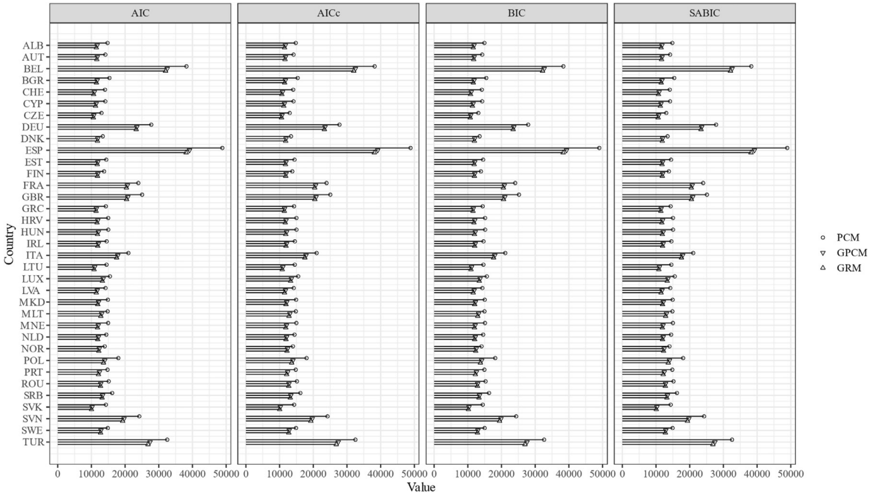
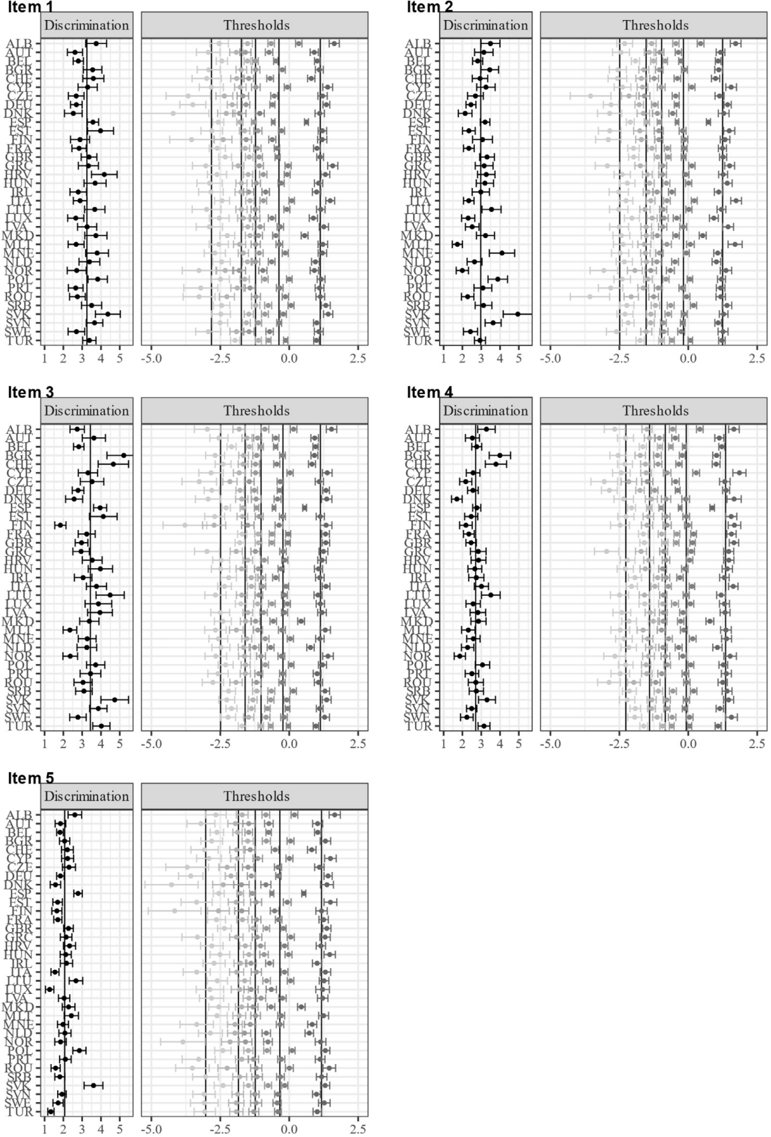
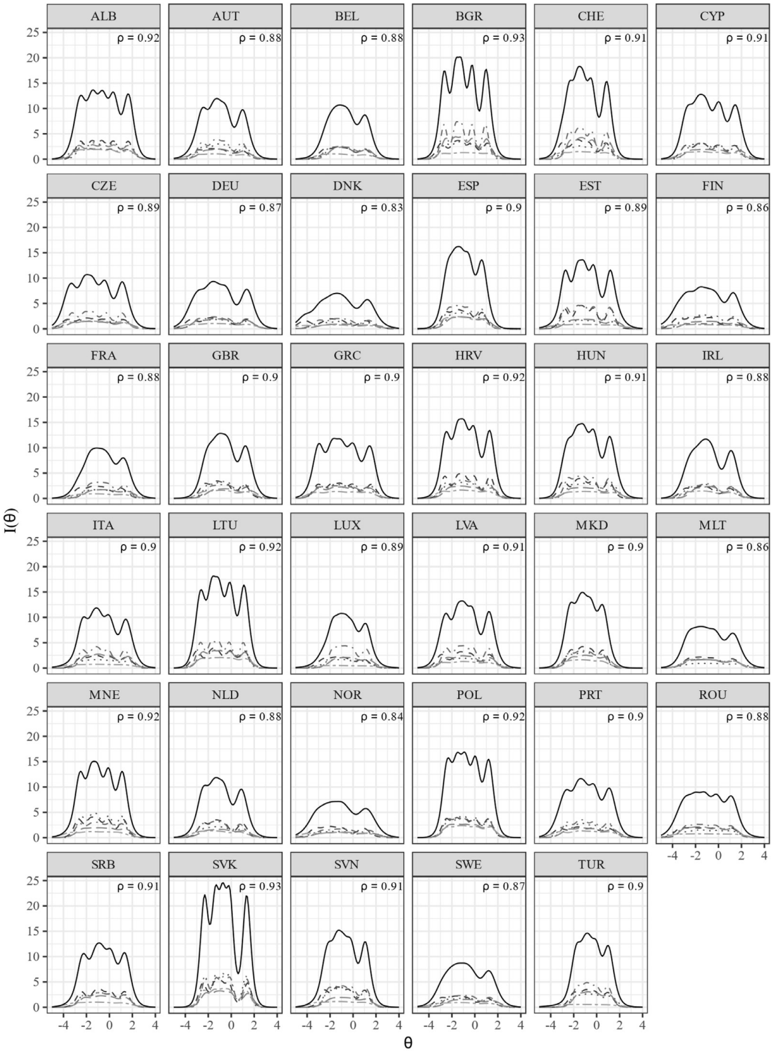
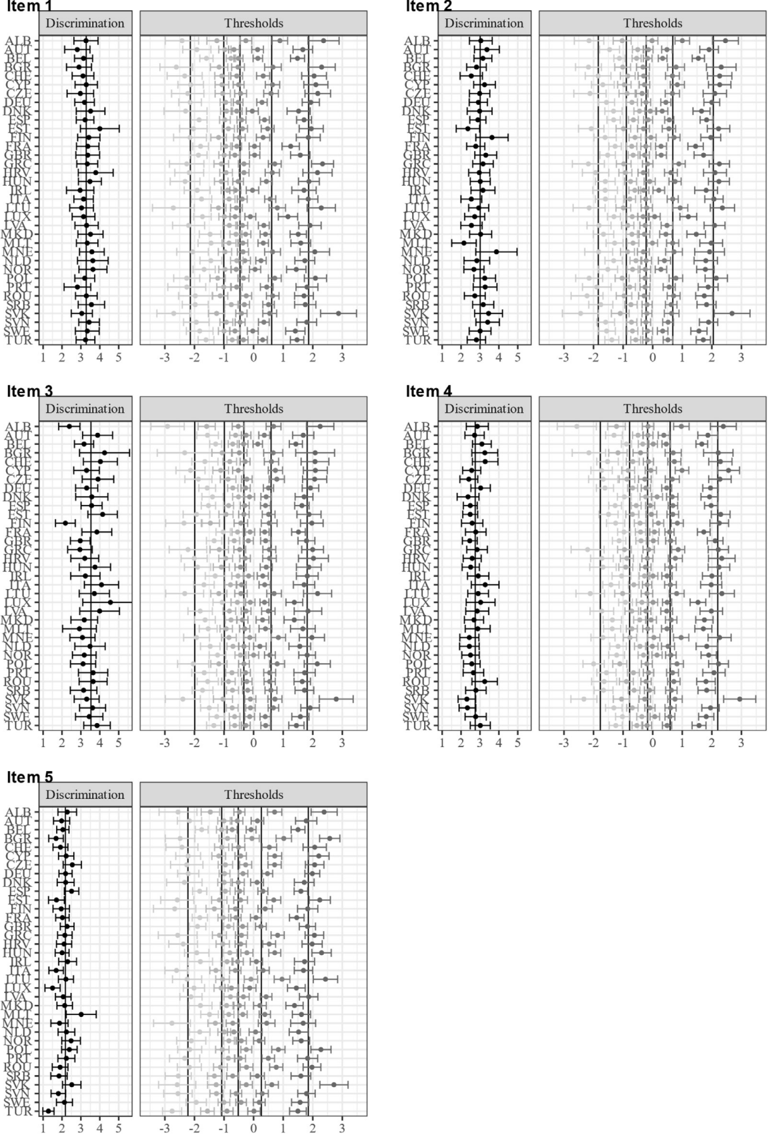
The five-item World Health Organization Well-Being Index (WHO-5) is a frequently used brief standard measure in large-scale cross-cultural clinical studies. Despite its frequent use, some psychometric questions remain that concern the choice of an adequate item response theory (IRT) model, the evaluation of reliability at important cutoff points, and most importantly the assessment of measurement invariance across countries. Data from the 6th European Working Condition survey (2015) were used that collected nationally representative samples of employed and self-employed individuals (N = 43,469) via computer-aided personal interviews across 35 European countries. An in-depth IRT analysis was conducted for each country, testing different IRT assumptions (e.g., unidimensionality), comparing different IRT-models, and calculating reliabilities. Furthermore, measurement invariance analysis was conducted with the recently proposed alignment procedure. The graded response model fitted the data best for all countries. Furthermore, IRT assumptions were mostly fulfilled. The WHO-5 showed overall and at critical points high reliability. Measurement invariance analysis revealed metric invariance but discarded scalar invariance across countries. Analysis of the test characteristic curves of the aligned graded response model indicated low levels of differential test functioning at medium levels of the WHO-5, but differential test functioning increased at more extreme levels. The current study has no external criterion (e.g., structured clinical interviews) to assess sensitivity and specificity of the WHO-5 as a depression screening-tool. The WHO-5 is a psychometrically sound measure. However, large-scale cross-cultural studies should employ a latent variable modeling approach that accounts for non-invariant parameters across countries (e.g., alignment).
Overview
The claims and statistics of this paper haven’t been checked yet.
Run the check — free, no account needed. It reads the open-access text and checks the sources it cites.
Integrity signals
Registry
Cites
Statistics
Figures

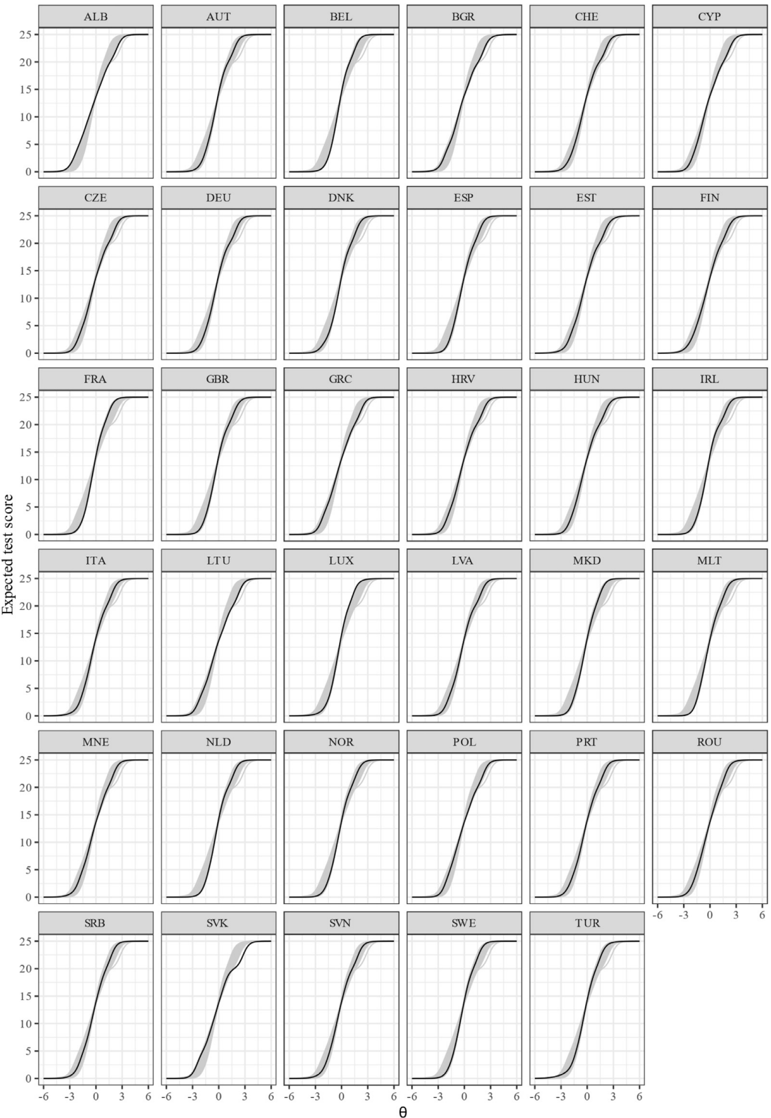
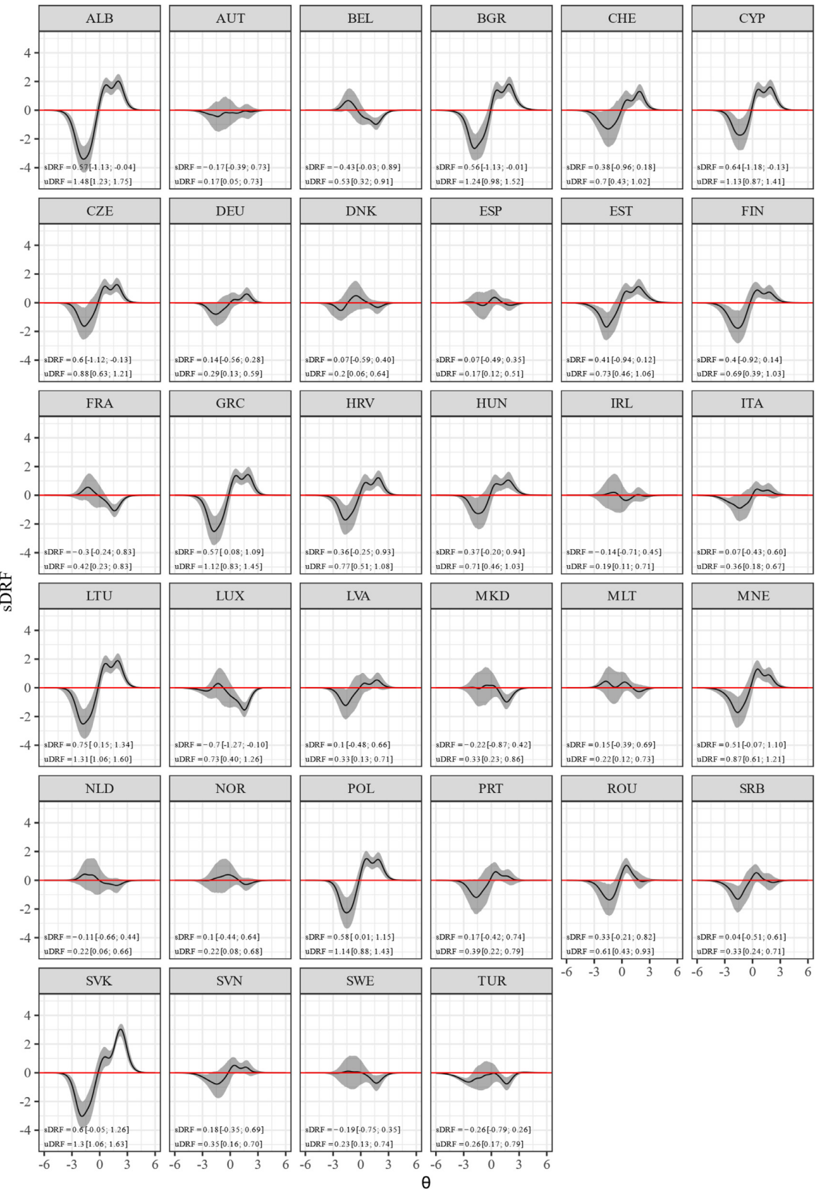
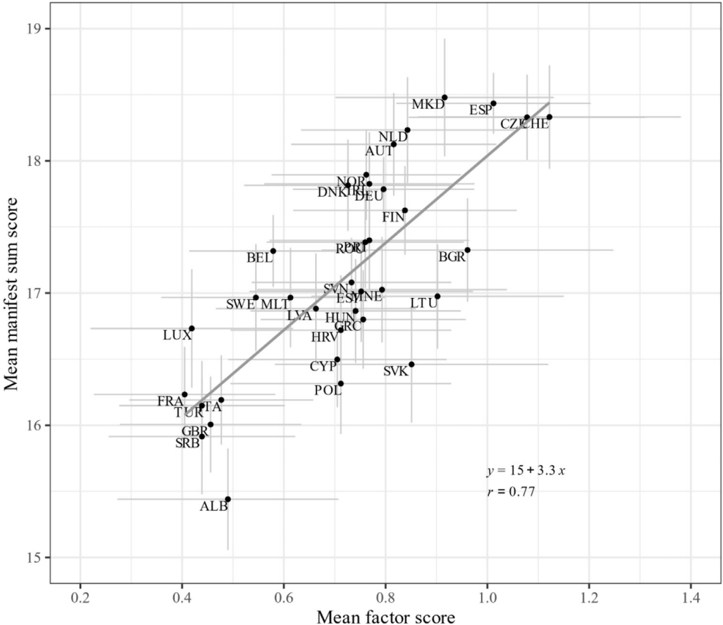
Verification
Claims the paper makes
The claims and statistics of this paper haven’t been checked yet.
Run the check — free, no account needed. It reads the open-access text and checks the sources it cites.
Claims other papers make about this one
Each is checked against this paper’s own text: does it say what the citing paper says it does?
The cited source says what the claim attributes to it.
In the citing paper
“A vast set of literature supports the validity and reliability of the measure in several populations [42-45].”
From A Cognitive Behavioral Therapy Chatbot (Otis) for Health Anxiety Management: Mixed Methods Pilot Study (2022) · cites this paper as [44]
Self-check
Percentages, sums and reported differences re-computed from the paper’s own numbers.
The self-check needs the paper’s full text.
Citations
Cites
R: A Language and Environment for Statistical Computing
R Core Team (2000) · doi:10.32614/r.manuals · Cited by 355,893
A new look at the statistical model identification
Akaike, H. (1974) · IEEE Transactions on Automatic Control · doi:10.1109/tac.1974.1100705 · Cited by 51,879 · cited 1×
“In a next step, the ifferent IRT models (i.e., PCM, GPCM, GRM) were compared using the kaike information criterion (AIC; Akaike, 1974 ) and the Bayesian inormation criterion (BIC; Schwarz, 1978 ) as well as their sample size djusted variants to determine which model fitted the data best.”
MethodEstimating the Dimension of a Model
Schwarz, G. (1978) · The Annals of Statistics · doi:10.1214/aos/1176344136 · Cited by 47,033 · cited 1×
“In a next step, the ifferent IRT models (i.e., PCM, GPCM, GRM) were compared using the kaike information criterion (AIC; Akaike, 1974 ) and the Bayesian inormation criterion (BIC; Schwarz, 1978 ) as well as their sample size djusted variants to determine which model fitted the data best.”
MethodPrinciples and Practice of Structural Equation Modeling
Tabri, N., & Elliott, C. M. (2012) · Canadian Graduate Journal of Sociology and Criminology · doi:10.15353/cgjsc.v1i1.3787 · Cited by 39,094
(1998) · Cited by 36,049
A Rationale and Test for the Number of Factors in Factor Analysis
Horn, J. L. (1965) · Psychometrika · doi:10.1007/bf02289447 · Cited by 8,965 · cited 1×
“Statistical analysis To test the unidimensionality assumption required for the applicaion of IRT models, parallel analysis ( Horn, 1965 ) and minimum average artial method ( Velicer, 1976 ) with principal component analysis and olychoric correlations were used that have been found to work well ith…”
MethodLikelihood Ratio Tests for Model Selection and Non-Nested Hypotheses
Vuong, Q. H. (1989) · Econometrica · doi:10.2307/1912557 · Cited by 5,929 · cited 1×
“Moreover, the uong test ( Vuong, 1989 ) was used that has been found to reliably dis- inguish between the GRM and GPCM ( Schneider et al., 2019 ).”
MethodAssessing Measurement Invariance in Cross‐National Consumer Research
Steenkamp, J. E. M., & Baumgartner, H. (1998) · Journal of Consumer Research · doi:10.1086/209528 · Cited by 4,760
The WHO-5 well-being index: A systematic review of the literature
Topp, C. W., Østergaard, S. D., Søndergaard, S., & Bech, P. (2015) · Psychotherapy and Psychosomatics · doi:10.1159/000376585 · Cited by 4,708
A Rasch model for partial credit scoring
Masters, G. N. (1982) · Psychometrika · doi:10.1007/bf02296272 · Cited by 3,782 · cited 1×
“Many tudies on the psychometric properties of the WHO-5 apply the partial redit model (PCM; also called ordinal Rasch model; Masters, 1982 ) that ssumes a constant discrimination parameter across items.”
Method
Research works printed but not linked: 1
- Eurofound (Ed.)., 2017. European quality of life survey 2016: quality of life, quality of public services, and quality of society. Publications Office of the European Union, Luxembourg.
Cited by
Sorted by citations
Lara‐Cabrera, M. L., Betancort, M., Muñoz-Rubilar, C. A., Novo, N. R., Bjerkeset, O. A., & Cuevas, C. D. L. (2022) · International Journal of Environmental Research and Public Health · doi:10.3390/ijerph191610106 · Cited by 71
“A recent validation study using item response theory (IRT) suggested that cross-cultural validation studies are needed for the WHO-5 [23].”
MethodSteffgen, G., Sischka, P. E., & de Henestrosa, M. F. (2020) · International Journal of Environmental Research and Public Health · doi:10.3390/ijerph17217771 · Cited by 74
Self-citationMaier, K., Konaszewski, K., Skalski‐Bednarz, S. B., Büssing, A., & Surżykiewicz, J. (2022) · International Journal of Environmental Research and Public Health · doi:10.3390/ijerph19063415 · Cited by 68
“All items of the WHO-5 are phrased positively with a six-point response format ranging from 0 (none of the time) to 5 (all of the time).”
MethodInfluentialVitale, V., Martin, L., White, M. P., Elliott, L. R., Wyles, K. J., Browning, M. H. E. M., Pahl, S., Stehl, P., Bell, S., Bratman, G. N., et al. (2022) · Journal of Environmental Psychology · doi:10.1016/j.jenvp.2022.101876 · Cited by 59
Nissen, A., Sengoelge, M., & Solberg, Ø. (2021) · Frontiers in Public Health · doi:10.3389/fpubh.2021.717353 · Cited by 51
Metadata
- Authors
- Sischka, P. E., Costa, A. P., Steffgen, G., & Schmidt, A. F.
- Affiliations
- University of Luxembourg (LU)
- Johannes Gutenberg University Mainz (DE)
- Corresponding author
- Sischka, Philipp E.
- Venue
- Journal of Affective Disorders Reports
- Publisher
- Elsevier BV
- Published
- 2020-12
- Volume
- 1
- Pages
- 100020
- ISSN
- 2666-9153 (ISSN-L)
- OpenAlex
- W3094404984
- Cited by
- 245
- References
- 88
- Citations by year
- 2026: 50 · 2025: 55 · 2024: 61 · 2023: 35 · 2022: 28 · 2021: 13 · 2020: 3
- FWCI
- 12.56
- Type
- journal article
- Language
- en
- Update notices
- erratum (2022-12-01)
- Open access
- gold
- doi.org
- Licence
- Locations
- Journal of Affective Disorders Reports (publishedVersion, cc-by-nc-nd)
- Open Repository and Bibliography (University of Luxembourg) (submittedVersion, cc-by-nc-sa)
- DOAJ (DOAJ: Directory of Open Access Journals) (submittedVersion, cc-by-sa)
- OSF Preprints (OSF Preprints) (submittedVersion)
- Topics
- Social Sciences › Decision Sciences › Management Science and Operations Research › Psychometric Methodologies and Testing
- Social Sciences › Psychology › Experimental and Cognitive Psychology › Anxiety, Depression, Psychometrics, Treatment, Cognitive Processes
- Social Sciences › Psychology › Experimental and Cognitive Psychology › Mental Health Research Topics
- Keywords
- WHO-5, well-being index, measurement invariance, graded response model, alignment procedure, differential item functioning, depression screening, psychometric validation, cross-cultural measurement, European Working Conditions Survey, reliability statistics, unidimensionality
About these checks
Registry, retraction, Cites and statistics results are computed, not judged, with one exception: a printed reference that no index lists is read once by a model before it counts as a citation error. Claims are extracted by a model and kept only when their quote appears verbatim in the text; each cited source is then checked, with a model’s help, for whether it says what the claim relies on. Those verdicts can be wrong — read the claim’s quote and the cited source before relying on one.
Statistics and arithmetic are recomputed, not judged.
Confidence bands are shown only for fields calibrated on our annotated test set. None is calibrated yet, so no band is shown.
What counts as a claim ›How we measure confidence ›How we check this ›
Are you an author, or do you see a problem with this page? Request a review
