

The DOI matches its Crossref record; 87 of the 88 references it cites were found in a registry or an index.
The WHO-5 well-being index – validation based on item response theory and the analysis of measurement invariance across 35 countries
Open accessAbstract
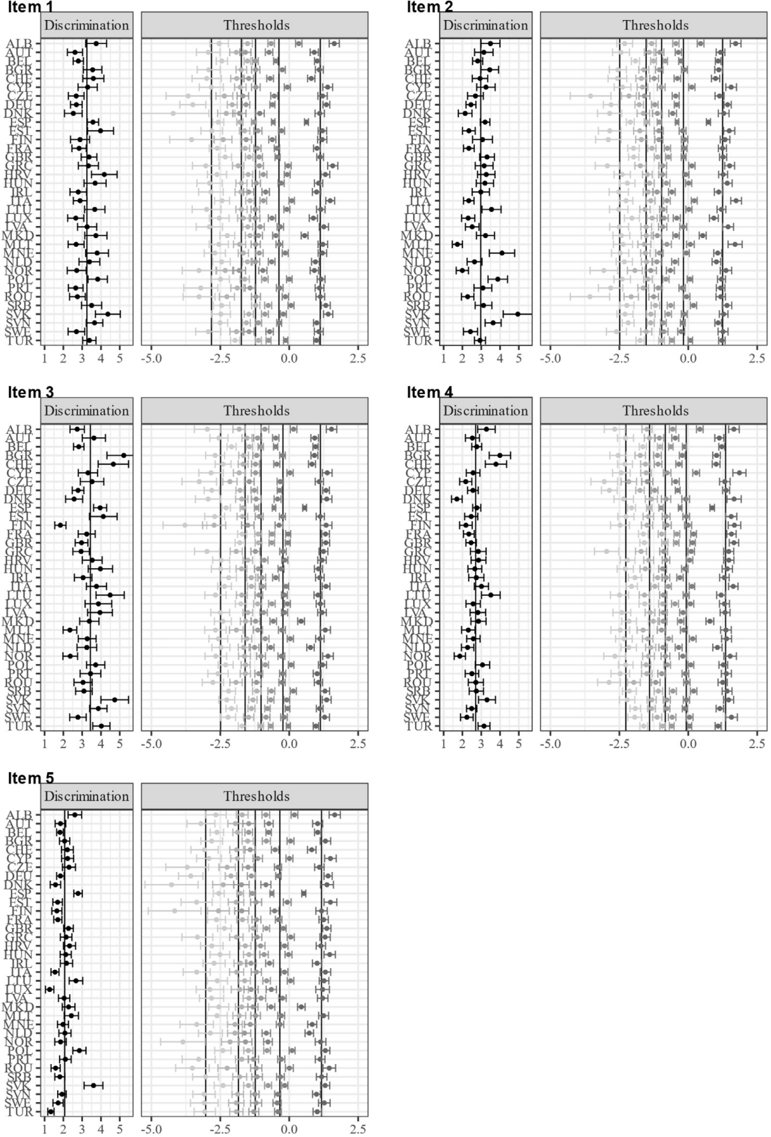
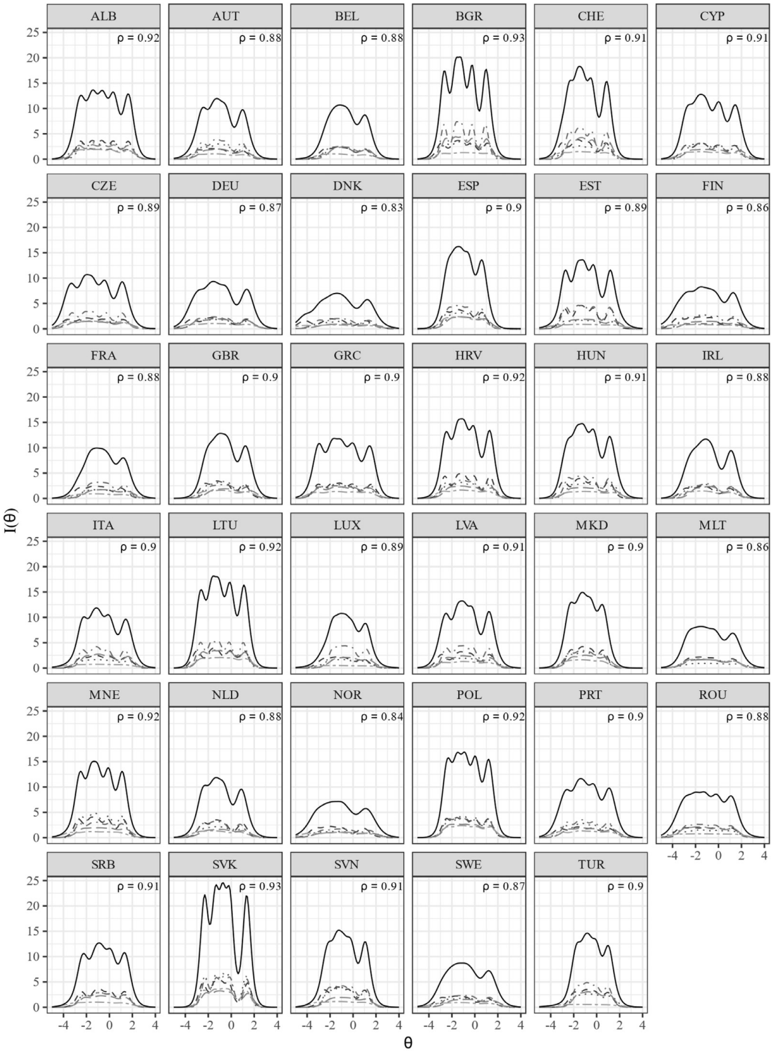
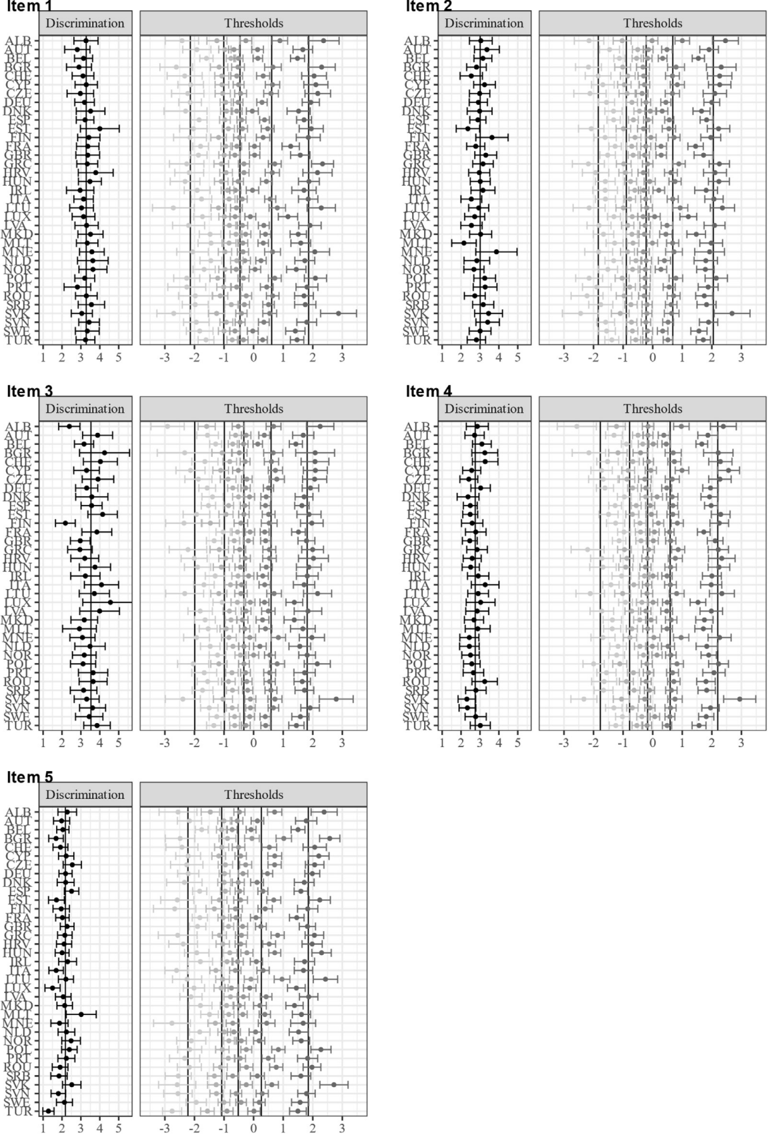
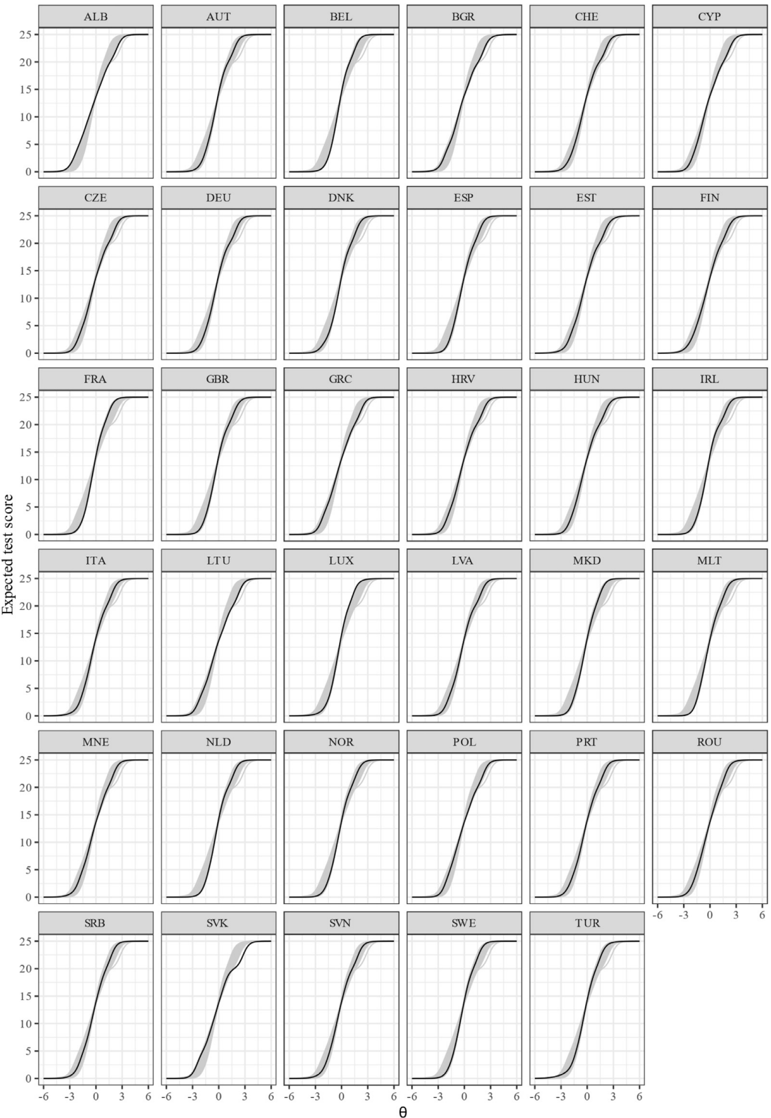
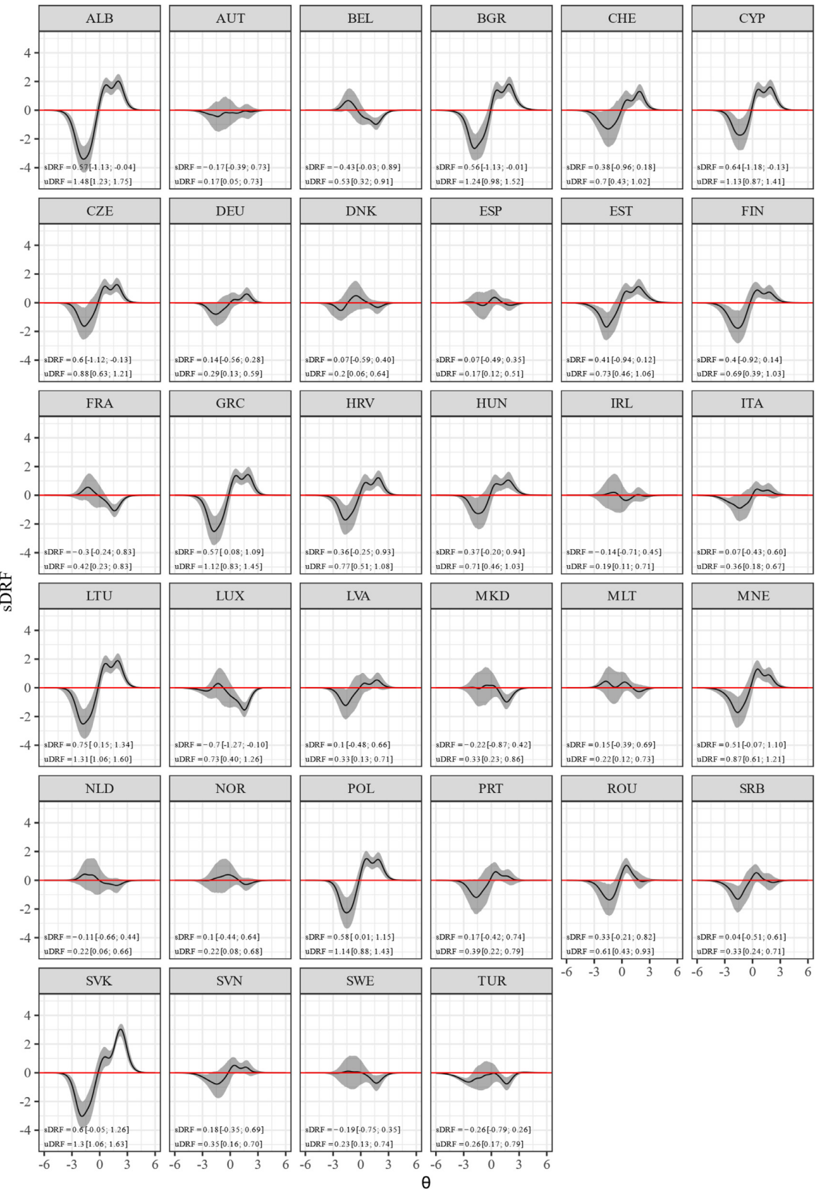
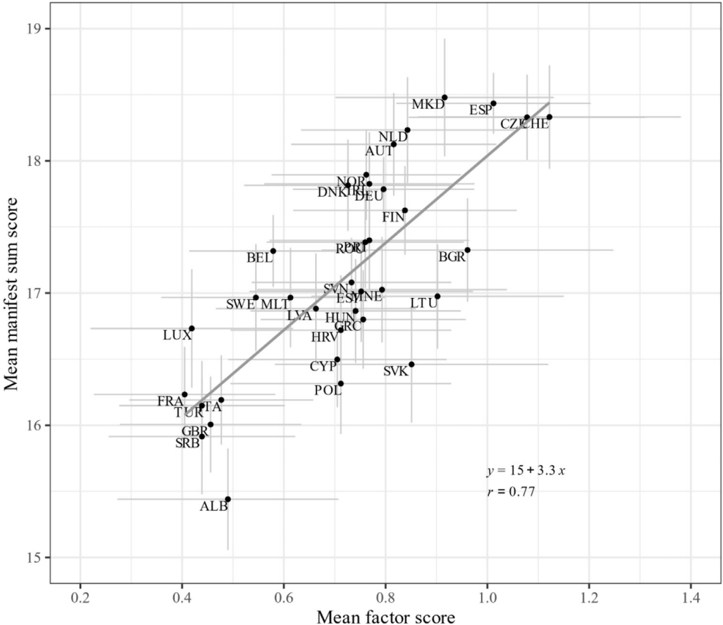
The five-item World Health Organization Well-Being Index (WHO-5) is a frequently used brief standard measure in large-scale cross-cultural clinical studies. Despite its frequent use, some psychometric questions remain that concern the choice of an adequate item response theory (IRT) model, the evaluation of reliability at important cutoff points, and most importantly the assessment of measurement invariance across countries. Data from the 6th European Working Condition survey (2015) were used that collected nationally representative samples of employed and self-employed individuals (N = 43,469) via computer-aided personal interviews across 35 European countries. An in-depth IRT analysis was conducted for each country, testing different IRT assumptions (e.g., unidimensionality), comparing different IRT-models, and calculating reliabilities. Furthermore, measurement invariance analysis was conducted with the recently proposed alignment procedure. The graded response model fitted the data best for all countries. Furthermore, IRT assumptions were mostly fulfilled. The WHO-5 showed overall and at critical points high reliability. Measurement invariance analysis revealed metric invariance but discarded scalar invariance across countries. Analysis of the test characteristic curves of the aligned graded response model indicated low levels of differential test functioning at medium levels of the WHO-5, but differential test functioning increased at more extreme levels. The current study has no external criterion (e.g., structured clinical interviews) to assess sensitivity and specificity of the WHO-5 as a depression screening-tool. The WHO-5 is a psychometrically sound measure. However, large-scale cross-cultural studies should employ a latent variable modeling approach that accounts for non-invariant parameters across countries (e.g., alignment).
Overview
The claims and statistics of this paper haven’t been checked yet.
Run the check — free, no account needed. It reads the open-access text and checks the sources it cites.
Integrity signals
Registry
Cites
Statistics
Figures
Verification
Claims the paper makes
The claims and statistics of this paper haven’t been checked yet.
Run the check — free, no account needed. It reads the open-access text and checks the sources it cites.
Claims other papers make about this one
Each is checked against this paper’s own text: does it say what the citing paper says it does?
The cited source says what the claim attributes to it.
In the citing paper
“A vast set of literature supports the validity and reliability of the measure in several populations [42-45].”
From A Cognitive Behavioral Therapy Chatbot (Otis) for Health Anxiety Management: Mixed Methods Pilot Study (2022) · cites this paper as [44]
Self-check
Percentages, sums and reported differences re-computed from the paper’s own numbers.
The self-check needs the paper’s full text.
Citations
Cites
R: A Language and Environment for Statistical Computing
R Core Team (2000) · doi:10.32614/r.manuals · Cited by 355,893
A new look at the statistical model identification
Akaike, H. (1974) · IEEE Transactions on Automatic Control · doi:10.1109/tac.1974.1100705 · Cited by 51,879 · cited 1×
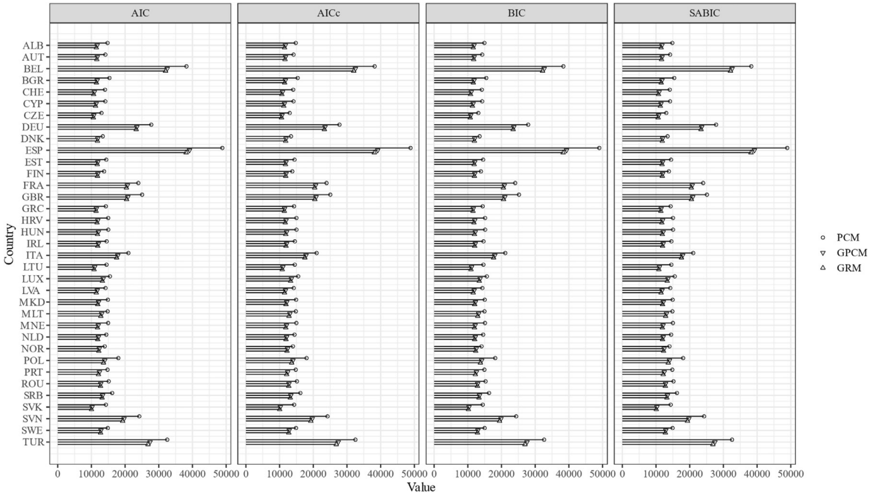
“In a next step, the ifferent IRT models (i.e., PCM, GPCM, GRM) were compared using the kaike information criterion (AIC; Akaike, 1974 ) and the Bayesian inormation criterion (BIC; Schwarz, 1978 ) as well as their sample size djusted variants to determine which model fitted the data best.”
MethodEstimating the Dimension of a Model
Schwarz, G. (1978) · The Annals of Statistics · doi:10.1214/aos/1176344136 · Cited by 47,033 · cited 1×
“In a next step, the ifferent IRT models (i.e., PCM, GPCM, GRM) were compared using the kaike information criterion (AIC; Akaike, 1974 ) and the Bayesian inormation criterion (BIC; Schwarz, 1978 ) as well as their sample size djusted variants to determine which model fitted the data best.”
MethodPrinciples and Practice of Structural Equation Modeling
Tabri, N., & Elliott, C. M. (2012) · Canadian Graduate Journal of Sociology and Criminology · doi:10.15353/cgjsc.v1i1.3787 · Cited by 39,094
(1998) · Cited by 36,049
A Rationale and Test for the Number of Factors in Factor Analysis
Horn, J. L. (1965) · Psychometrika · doi:10.1007/bf02289447 · Cited by 8,965 · cited 1×
“Statistical analysis To test the unidimensionality assumption required for the applicaion of IRT models, parallel analysis ( Horn, 1965 ) and minimum average artial method ( Velicer, 1976 ) with principal component analysis and olychoric correlations were used that have been found to work well ith…”
MethodLikelihood Ratio Tests for Model Selection and Non-Nested Hypotheses
Vuong, Q. H. (1989) · Econometrica · doi:10.2307/1912557 · Cited by 5,929 · cited 1×
“Moreover, the uong test ( Vuong, 1989 ) was used that has been found to reliably dis- inguish between the GRM and GPCM ( Schneider et al., 2019 ).”
MethodAssessing Measurement Invariance in Cross‐National Consumer Research
Steenkamp, J. E. M., & Baumgartner, H. (1998) · Journal of Consumer Research · doi:10.1086/209528 · Cited by 4,760
The WHO-5 well-being index: A systematic review of the literature
Topp, C. W., Østergaard, S. D., Søndergaard, S., & Bech, P. (2015) · Psychotherapy and Psychosomatics · doi:10.1159/000376585 · Cited by 4,708
A Rasch model for partial credit scoring
Masters, G. N. (1982) · Psychometrika · doi:10.1007/bf02296272 · Cited by 3,782 · cited 1×
“Many tudies on the psychometric properties of the WHO-5 apply the partial redit model (PCM; also called ordinal Rasch model; Masters, 1982 ) that ssumes a constant discrimination parameter across items.”
Method
Research works printed but not linked: 1
- Eurofound (Ed.)., 2017. European quality of life survey 2016: quality of life, quality of public services, and quality of society. Publications Office of the European Union, Luxembourg.
Cited by
Sorted by citations
Lara‐Cabrera, M. L., Betancort, M., Muñoz-Rubilar, C. A., Novo, N. R., Bjerkeset, O. A., & Cuevas, C. D. L. (2022) · International Journal of Environmental Research and Public Health · doi:10.3390/ijerph191610106 · Cited by 71
“A recent validation study using item response theory (IRT) suggested that cross-cultural validation studies are needed for the WHO-5 [23].”
MethodSteffgen, G., Sischka, P. E., & de Henestrosa, M. F. (2020) · International Journal of Environmental Research and Public Health · doi:10.3390/ijerph17217771 · Cited by 74
Self-citationMaier, K., Konaszewski, K., Skalski‐Bednarz, S. B., Büssing, A., & Surżykiewicz, J. (2022) · International Journal of Environmental Research and Public Health · doi:10.3390/ijerph19063415 · Cited by 68
“All items of the WHO-5 are phrased positively with a six-point response format ranging from 0 (none of the time) to 5 (all of the time).”
MethodInfluentialVitale, V., Martin, L., White, M. P., Elliott, L. R., Wyles, K. J., Browning, M. H. E. M., Pahl, S., Stehl, P., Bell, S., Bratman, G. N., et al. (2022) · Journal of Environmental Psychology · doi:10.1016/j.jenvp.2022.101876 · Cited by 59
Nissen, A., Sengoelge, M., & Solberg, Ø. (2021) · Frontiers in Public Health · doi:10.3389/fpubh.2021.717353 · Cited by 51
Perera, C., Aldamman, K., Hansen, M., Haahr-Pedersen, I., Caballero-Bernal, J., Caldas-Castañeda, O. N., Chaparro-Plata, Y., Dinesen, C., Wiedemann, N., & Vallières, F. (2022) · SSM - Mental Health · doi:10.1016/j.ssmmh.2022.100109 · Cited by 50
Duong, T. V., Lin, C.-Y., Chen, S., Huang, Y., Okan, O., Dadaczynski, K., & Lai, C.-F. (2021) · Vaccines · doi:10.3390/vaccines9090985 · Cited by 50
“Subjective well-being was assessed using the WHO-5 well-being index with 5 items [53], which has been widely used across 35 countries [54].”
MethodGoonesekera, Y., & Donkin, L. (2022) · JMIR Formative Research · doi:10.2196/37877 · Cited by 43
“A vast set of literature supports the validity and reliability of the measure in several populations [42-45].”
BackgroundItem Response Theory Analysis of the Fear of COVID-19 Scale (FCV-19S): A Systematic Review
Alimoradi, Z., Lin, C.-Y., Ullah, I., Griffiths, M. D., & Pakpour, A. H. (2022) · Psychology Research and Behavior Management · doi:10.2147/prbm.s350660 · Cited by 47
Cross-cultural validity of the WHO-5 Well-Being Index and Euthymia Scale: A clinimetric analysis
Carrozzino, D., Christensen, K. S., Patierno, C., Woźniewicz, A., Møeller, S. B., Arendt, I. T. P., Zhang, Y., Yuan, Y., Sasaki, N., Nishi, D., et al. (2022) · Journal of Affective Disorders · doi:10.1016/j.jad.2022.05.111 · Cited by 44
Thorsteinsen, K., Parks‐Stamm, E. J., Kvalø, M., Olsen, M., & Martiny, S. E. (2022) · Sex Roles · doi:10.1007/s11199-022-01307-z · Cited by 42
Effects of limiting digital screen use on well-being, mood, and biomarkers of stress in adults
Pedersen, J., Rasmussen, M. G. B., Sørensen, S. O., Mortensen, S. R., Olesen, L. G., Brage, S., Kristensen, P. L., Puterman, E. M., & Grøntved, A. (2022) · npj Mental Health Research · doi:10.1038/s44184-022-00015-6 · Cited by 39
Sia, A., Tan, P. Y., Yu Jin, K. I. M., & Kenneth Boon Hwee, E. R. (2023) · Landscape and Urban Planning · doi:10.1016/j.landurbplan.2023.104758 · Cited by 33
Measurement Invariance of the WHO-5 Well-Being Index: Evidence from 15 European Countries
Cosma, A. P., Költő, A., Chzhen, Y., Kleszczewska, D. W., Kalman, M., & Martin, G. (2022) · International Journal of Environmental Research and Public Health · doi:10.3390/ijerph19169798 · Cited by 38
“To our knowledge, there is only one published study that explored cross-national MI of the WHO-5 [28].”
BackgroundMethodValidating the Five-Item World Health Organization Well-Being Index
Nylén‐Eriksen, M., Bjørnnes, A. K., Hafstad, H., Lie, I., Grov, E. K., & Lara‐Cabrera, M. L. (2022) · International Journal of Environmental Research and Public Health · doi:10.3390/ijerph191811489 · Cited by 35
“Validation studies have been conducted in different countries and fields [24,25].”
BackgroundTolerance of immersive head-mounted virtual reality among older nursing home residents
Rmadi, H., Maillot, P., Artico, R., Baudouin, É., Hanneton, S., Dietrich, G., & Duron, E. (2023) · Frontiers in Public Health · doi:10.3389/fpubh.2023.1163484 · Cited by 34
“Furthermore, recently, the WHO-5 was found to be reliable in 35 countries (including France) and has parameters that do not vary across countries (35).”
BackgroundSischka, P. E., Martin, G., Residori, C., Hammami, N., Page, N., Schnohr, C., & Cosma, A. P. (2025) · Assessment · doi:10.1177/10731911241309452 · Cited by 47
“…investigating the psychometric properties of the WHO-5 have been conducted among adults (e.g., Jami & Kemmelmeier, 2020; Lara-Cabrera et al., 2022; Sischka, Costa, et al., 2020; Topp et al., 2015), and thus, cannot be unambiguously generalized to adolescent populations (e.g., Borgers et al.,…”
InfluentialSelf-citationSotardi, V. A., Surtees, N., Vincent, K., & Johnston, H. (2021) · Journal of Diversity in Higher Education · doi:10.1037/dhe0000305 · Cited by 29
Sischka, P. E., Melzer, A., Schmidt, A. F., & Steffgen, G. (2021) · Frontiers in Psychology · doi:10.3389/fpsyg.2021.627968 · Cited by 34
“The five-item WHO-5 Well-Being Index is a well-validated brief general index of subjective psychological well-being (Topp et al., 2015; Sischka et al., 2020a) with responses ranging from 1 (at no time) to 6 (all of the time).”
MethodSelf-citationBagdžiūnienė, D., Žukauskaitė, I., Bulotaitė, L., & Sargautytė, R. (2025) · Frontiers in Psychology · doi:10.3389/fpsyg.2025.1517359 · Cited by 58
Pauli, R., Gaum, P. M., Cropley, M., & Lang, J. (2023) · Frontiers in Psychology · doi:10.3389/fpsyg.2023.1013744 · Cited by 29
“WHO-5 measurements are language invariant (Sischka et al., 2020) and are suitable to screen for depression (Krieger et al., 2014).”
BackgroundToh, G. W., Koh, W. L., Ho, J., Chia, J., Maulod, A., Tirtajana, I., Yang, P., & Lee, M. (2023) · Equality Diversity and Inclusion An International Journal · doi:10.1108/edi-10-2021-0270 · Cited by 31
Quansah, F., Hagan, J. E., Ankomah, F., Agormedah, E. K., Nugba, R. M., Srem‐Sai, M., & Schack, T. (2022) · Children · doi:10.3390/children9070991 · Cited by 22
“Numerous studies have assessed the validity and psychometric properties of the WHO-5 well-being index across different geographical contexts such as in Europe [35,39,40], Asia [41–44], and Africa [45,46].”
BackgroundMethodInfluentialSuhaimi, A. F., Makki, S. M., Tan, K., Silim, U. A., & Ibrahim, N. (2022) · International Journal of Environmental Research and Public Health · doi:10.3390/ijerph19074415 · Cited by 21
Essuman, D., Boso, N., Asamany, P. A., Ataburo, H., & Asiedu-Appiah, F. (2024) · International Journal of Entrepreneurial Behaviour & Research · doi:10.1108/ijebr-07-2023-0742 · Cited by 26
Alshayea, A. K. (2023) · Journal of Psychopathology and Behavioral Assessment · doi:10.1007/s10862-023-10027-x · Cited by 20
Caycho‐Rodríguez, T., Vilca, L. W., Valencia, P. D., Carbajal‐León, C., Reyes-Bossio, M. A., White, M., Rojas-Jara, C., Polanco-Carrasco, R., Gallegos, M., Cervigni, M., et al. (2023) · BMC Psychology · doi:10.1186/s40359-023-01149-8 · Cited by 25
“This result is consistent with a study conducted in 35 countries where item 3 was also one of the items that allowed for a better and more accurate assessment of people with moderate and high levels of subjective well-being [9].”
BackgroundResultInfluentialEfficacy of a Conversational AI Agent for Psychiatric Symptoms and Digital Therapeutic Alliance
Shoshani, A., Gurfinkel, B., Kor, A., Ben-Haim, Y., Kanarek, O., Segev, R., Shafir, O., & Arbel, R. (2026) · JAMA Network Open · doi:10.1001/jamanetworkopen.2026.6713 · Cited by 27
Lehmann, J., Schwarz, E., Azad, Z. R., Gritzka, S., Seifried-Dübon, T., Diebig, M., Gast, M., Kilian, R., Nater, U. M., Jarczok, M. N., et al. (2021) · BMC Public Health · doi:10.1186/s12889-021-10398-4 · Cited by 19
Predicting subjective well-being in a high-risk sample of Russian mental health app users
Panicheva, P., Mararitsa, L. V., Sorokin, S., Koltsova, O. Y., & Rosso, P. (2022) · EPJ Data Science · doi:10.1140/epjds/s13688-022-00333-x · Cited by 21
“That is why WHO-5 has been adopted in many research fields such as suicidology, geriatrics, youth and alcohol abuse studies, personality disorder research, and occupational psychology [15, 24].”
BackgroundMethodA multicultural comparative study of self‐stigma in epilepsy: Differences across four cultures
Iwayama, T., Mizuno, K., Yıldız, E., Lim, K. S., Soon, M.-Y., Lynn, Y. J., Hin, C. W., Jean, J. C. Z., Fong, S., Xuen, Y., et al. (2024) · Epilepsia Open · doi:10.1002/epi4.13051 · Cited by 18
Fekih‐Romdhane, F., Cherif, W., Alhuwailah, A., Fawaz, M. A., Shuwiekh, H. A. M., Helmy, M. S., Hassan, I. H. M., Naser, A. Y., Zarrouq, B., Chebli, M., et al. (2023) · Research Square · doi:10.21203/rs.3.rs-2988215/v1 · Cited by 18
Do, H. P., Baker, P., Vo, T. V., Luong-Thanh, B.-Y., Nguyen, H. L., Valdebenito, S., Eisner, M., Tran, B. X., Hoang, T. D., & Dunne, M. P. (2020) · Journal of Affective Disorders Reports · doi:10.1016/j.jadr.2020.100047 · Cited by 20
Fear of contamination among older adults in the post-COVID-19 era
Alhalal, E., Alkhair, Z., Alghazal, F., Muhaimeed, F., & Halabi, R. (2022) · Geriatric Nursing · doi:10.1016/j.gerinurse.2022.08.010 · Cited by 18
Measurement Invariance of the Meaning in Life Questionnaire Across 17 Countries
Schutte, L., Brdar, I., Wissing, M. P., Tončić, M., de Araújo, U. F., Carlquist, E., Solano, A. C., Freire, T., Pozo, M. D. R. H., Jose, P. E., et al. (2023) · Applied Research in Quality of Life · doi:10.1007/s11482-023-10150-7 · Cited by 19
“This method has been recently used to assess measurement invariance across many groups (e.g., Glassow et al., 2021; Jang et al., 2017; Raudenská, 2020; Sischka et al., 2020; Zakariya et al., 2020).”
MethodWell-being and ill-being on campus
Morrison, P. S., Liu, I., & Zeng, D. (2023) · International Journal of Wellbeing · doi:10.5502/ijw.v13i3.2785 · Cited by 22
“The scale has been widely tested for its validity, sensitivity, and reliability: see for example DeWit (2007), Downs et al. (2017), Sischka et al. (2020), Hill et al. (2015 and Topp et al. (2015).”
MethodRejikumar, G., Ajitha, A. A., Jose, A., & Mathew, S. (2021) · Journal of Service Theory and Practice · doi:10.1108/jstp-12-2020-0284 · Cited by 17
The Mental Well-Being of Health Care Professionals During the COVID-19 Pandemic
Ariza‐Montes, A., Mahmood, F., Han, H., & Saleem, M. (2021) · Journal of Occupational and Environmental Medicine · doi:10.1097/jom.0000000000002470 · Cited by 18
The Hospitality Stress Matrix: Exploring Job Stressors and Their Effects on Psychological Well-Being
Yoo, D. Y. (2023) · Sustainability · doi:10.3390/su151713116 · Cited by 27
Barnard-Kelly, K. D., Battelino, T., Brosius, F. C., Ceriello, A., Cosentino, F., Gavin, J. R., Giorgino, F., Green, J., Ji, L., Kellerer, M., et al. (2025) · Cardiovascular Diabetology · doi:10.1186/s12933-024-02550-2 · Cited by 15
“• Diabetes psychosocial assessment tool (DPAT) [65] • WHO Well-Being Index (WHO-5) [66] • Patient Health Questionnaire-9 (PHQ-9) [67] • Problem Areas in Diabetes (PAID) [ [78] more involved in their own care and found conversations with healthcare professionals more relevant [92].”
Schubin, K., Seinsche, L., Pfaff, H., & Zeike, S. (2023) · Frontiers in Psychology · doi:10.3389/fpsyg.2023.994959 · Cited by 13
“The WHO-5 has been used extensively in international research showing adequate validity and high reliability (Topp et al., 2015; Sischka et al., 2020).”
MethodQuansah, F., Ankomah, F., Agormedah, E. K., Ntumi, S., Hagan, J. E., Srem‐Sai, M., Dadaczynski, K., Okan, O., & Schack, T. (2023) · Health Science Reports · doi:10.1002/hsr2.1095 · Cited by 16
Naturalistic Evaluation of HeadGear: A Smartphone App to Reduce Depressive Symptoms in Workers
Deady, M., Collins, D., Glozier, N., Gardiner, E., Arena, A. F. A., Gayed, A., Bryant, R. A., Calvo, R. A., & Harvey, S. B. (2024) · Behavior Therapy · doi:10.1016/j.beth.2024.01.001 · Cited by 12
Sischka, P. E., Schmidt, A. F., & Steffgen, G. (2022) · Current Psychology · doi:10.1007/s12144-022-03377-4 · Cited by 13
“General psychological well‑being The five-item WHO-5 Well-Being Index is a well-validated and psychometrically sound brief general index of subjective psychological well-being (Topp et al., 2015; Sischka et al., 2020) with a response format ranging from 1 (= at no time ) to 6 (= all of the time ).”
Self-citationGavanda, S., Held, S., Schrey, S., Oberwetter, K., Lazzaro, P.-G. M., Pergelt, M., & Geisler, S. (2025) · The Journal of Strength and Conditioning Research · doi:10.1519/jsc.0000000000005216 · Cited by 12
“The WHO-5 is considered highly reliable (36).”
Jami, W. A., & Kemmelmeier, M. (2020) · Journal of Well-Being Assessment · doi:10.1007/s41543-021-00042-8 · Cited by 12
Herr, R., Brokmeier, L., Baron, B. N., Mauss, D., & Fischer, J. E. (2023) · BMC Psychology · doi:10.1186/s40359-023-01308-x · Cited by 12
“The five items of the WHO-5 Well-Being Index assessed mental well-being [24, 25].”
MethodSolberg, Ø., Nissen, A., & Saboonchi, F. (2023) · Conflict and Health · doi:10.1186/s13031-023-00556-3 · Cited by 19
“Subjective well-being (SWB) was measured with the WHO-5 index, which has been extensively used and validated across populations and cultures, including among refugee populations [19, 20].”
MethodZhu, Y., Dolmans, D. H. J. M., Köhler, E., Kusurkar, R. A., Abidi, L., & Savelberg, H. H. C. M. (2024) · Medical Science Educator · doi:10.1007/s40670-024-02106-9 · Cited by 25
“The WHO (Five) Well-Being Questionnaire [42] is a brief measure with non-invasive questions into respondents’ subjective well-being, and its measurement has shown high validity [43].”
Nosè, M., Turrini, G., Muriago, G., Badino, M., Cristofalo, D., Sartori, R., Tedeschi, F., & Barbui, C. (2025) · BMJ Open · doi:10.1136/bmjopen-2025-101446 · Cited by 19
“Scores range from 0 to 25 and the scale has demonstrated sensitivity to change in well-being and is available in numerous languages 35 (online supplemental file 1).”
Caycho‐Rodríguez, T., Tomás, J. M., Valencia, P. D., Ventura‐León, J., Vilca, L. W., Carbajal‐León, C., Reyes-Bossio, M. A., White, M., Rojas-Jara, C., Polanco-Carrasco, R., et al. (2022) · Current Psychology · doi:10.1007/s12144-022-03389-0 · Cited by 12
“Furthermore, well-being can be used as an important outcome measure of quality of life in different populations and an indicator of the efficacy of various treatment conditions (Sischka et al., 2020).”
Dalgaard, N. T., Villumsen, A. M., Sørensen, K. M., Midgley, N., Væver, M. S., Almlund, M., & Pontoppidan, M. (2023) · BMC Psychology · doi:10.1186/s40359-023-01103-8 · Cited by 14
“The WHO-5 index [60, 61] is a five-item questionnaire assessing the emotional well-being of foster parents.”
BackgroundRosa, C. D., Larson, L. R., Collado, S., Geiger, S. J., Profice, C. C., & Menuchi, M. R. T. P. (2024) · Journal of Environmental Psychology · doi:10.1016/j.jenvp.2024.102438 · Cited by 13
Say, Y., Nordin, M. S., & Ng, A. L. O. (2025) · BMC Public Health · doi:10.1186/s12889-025-22340-z · Cited by 12
“The reliability of the WHO-5 is satisfactory across 35 countries in general and at important cutoffs [27].”
Laczkó, T., Ács, P., Morvay-Sey, K., Cselik, B., & Stocker, M. (2022) · International Journal of Environmental Research and Public Health · doi:10.3390/ijerph20010660 · Cited by 15
“The scale is also suitable for measuring the results of clinical procedures and for comparisons with the average population or different social groups and/or periods [23,25].”
BackgroundMethodChang, C., Palermo, E. H., Deswert, S., Brown, A., & Nuske, H. J. (2023) · Digital Health · doi:10.1177/20552076231170693 · Cited by 10
COVID-19 Pandemic and Lockdown: Associations With Personality and Stress Components
Smrdu, M., Kuder, A., Turk, E., Čelik, T., Šet, J., & Kralj‐Fišer, S. (2021) · Psychological Reports · doi:10.1177/00332941211043451 · Cited by 9
“WHO-5 was developed as a subjective measure of well-being, and is a screening instrument for depression, with its reliability ranging from /¼ 0.83 to 0.93 (Sischka et al., 2020).”
InfluentialWellbeing Heterogeneity within and Among University Students
Liu, I., Morrison, P. S., & Zeng, D. (2023) · Applied Research in Quality of Life · doi:10.1007/s11482-023-10238-0 · Cited by 14
“12 The instrument has also been subject to several methodological interrogations (Bech et al., 1996, deWit, 2007; Sischka et al., 2020; Krieger et al., 2014).”
Salamanca-Sanabria, A., Liew, S. J., Mair, J. L., Iorio, M. D., Ling, Y. D. Y., Tint, M. T., Wei, Y. T., Lim, K., Ong, D., Chooi, Y. C., et al. (2024) · Trials · doi:10.1186/s13063-024-08247-x · Cited by 10
“The WHO-5 shows reliability across countries between 0.86 and 0.96 [47].”
BackgroundInfluentialvan de Put, M., van den Belt, M., de Wit, N. J. W., & Kort, R. (2024) · Nutrition Research · doi:10.1016/j.nutres.2024.07.008 · Cited by 11
“…at baseline, weeks 2, 8, and 21: the digestion-associated quality of life questionnaire, to measure digestion-associated quality of life [ 62 ], the Athens insomnia scale, to measure sleep quality [ 63 ], and the World Health Organization five well-being index, to measure well-being [ 64 ].”
Rivera, E., Arundell, L., Parker, K. E., Veitch, J., Salmon, J., Ridgers, N. D., Timperio, A. F., Sahlqvist, S., & Loh, V. H. Y. (2024) · Health Promotion International · doi:10.1093/heapro/daae137 · Cited by 9
“This measure has been shown to be suitable for individuals over 9 years, has good construct validity among younger persons and older adults (Topp et al ., 2015), and has satisfactory reliability across 35 countries (Sischka et al ., 2020).”
BackgroundDementyev, F., Fish, B., Opoku, N. S., Tesfaye, L., Chan, J., Ortiz, L., Montgomery, S., Walker, E. J., & Wilson, S. M. (2023) · Frontiers in Sports and Active Living · doi:10.3389/fspor.2023.1255514 · Cited by 11
Rochester, J. R., Kwiatkowski, C. F., Lathrop, M. K., Neveux, I., Daza, E. J., Grzymski, J. J., & Hua, J. (2024) · Trials · doi:10.1186/s13063-024-08627-3 · Cited by 8
“According to previously published research, this has the power to detect estimated effect sizes for 13 endpoints (9 metabolites and 3 survey analyses), [6, 44, 56, 60, 61] from a sample of n = 150 participants per arm (i.e., after 50% attrition down from the original n = 300 per arm).”
Nosè, M., Muriago, G., Turrini, G., Tedeschi, F., Forlani, O., Sartori, R., Badino, M., & Barbui, C. (2025) · Journal of Medical Internet Research · doi:10.2196/69031 · Cited by 12
“…psychological distress with the Kessler-10 (K-10) [24], depressive symptoms with the Patient Health Question-naire-9 (PHQ-9) depression scale[25], anxiety symptoms with the Generalized Anxiety Disorder-7 (GAD-7) scale [26], and psychological well-being with the WHO-5 Well-Being Index (WHO-5) [27].”
Kliem, S., Lohmann, A., Fischer, S., Baier, D., Clemens, V., Sachser, C., Kampling, H., Brähler, E., & Fegert, J. M. (2025) · Frontiers in Psychology · doi:10.3389/fpsyg.2025.1592614 · Cited by 8
Larionow, P., Mazur, M., & Mudło‐Głagolska, K. (2025) · Healthcare · doi:10.3390/healthcare13040432 · Cited by 10
“The WHO-5 is a brief self-report questionnaire for measuring positive well-being [27–29].”
Fekih‐Romdhane, F., Cherif, W., Alhuwailah, A., Fawaz, M. A., Shuwiekh, H. A. M., Helmy, M. S., Hassan, I. H. M., Naser, A. Y., Zarrouq, B., Chebli, M., et al. (2025) · Cambridge Prisms Global Mental Health · doi:10.1017/gmh.2025.10051 · Cited by 30
“The committee on Improving the Health, Safety, and Well-Being of Young Adults (convened by the National Research Council and the Institute of Medicine) concluded in their report that young adulthood is developmentally “of critical nature” within the life course [73].”
Hlynsson, J. I., Sjöberg, A., Ström, L., & Carlbring, P. (2024) · Cognitive Behaviour Therapy · doi:10.1080/16506073.2024.2402992 · Cited by 12
“Furthermore, most of the evidence regarding the validity of the WHO-5 deals with its application in diagnostic settings, not in relation to other positively-laden qualities such as quality of life (for a review, see Topp et al., 2015).”
InfluentialLarionow, P., Ocalewski, J., Mudło‐Głagolska, K., Michalak, M., & Mazur, M. (2025) · Frontiers in Psychiatry · doi:10.3389/fpsyt.2025.1614234 · Cited by 9
Nielsen, C. M., Lauridsen, H. H., Østergaard, S. D., & Kølbæk, P. (2023) · Journal of Psychiatric Research · doi:10.1016/j.jpsychires.2023.12.028 · Cited by 7
Jeitler, M., Erehman, A., Koppold, D. A., Ortiz, M., Jerzynski, L., Stöckigt, B., Rotter, G., Blakeslee, S., Brinkhaus, B., Michalsen, A., et al. (2023) · Frontiers in Medicine · doi:10.3389/fmed.2022.1033181 · Cited by 7
“The level of the WHO-5 is slightly below the level of wellbeing in a sample representative of the resident population in Germany aged 41–60 years (17.5 ± 4.9) (43).”
MethodInfluentialMcNabb, T., Charters, F. J., Dionisio, R., & Challies, E. (2024) · Nature-Based Solutions · doi:10.1016/j.nbsj.2024.100192 · Cited by 6
Yoo, D. Y. (2022) · Sustainability · doi:10.3390/su14158979 · Cited by 6
Reitsma, L., Mooren, T. T. M., Mouthaan, J., van Hoof, M., Groen, S., van Dijk, I., Lotzin, A., Boelen, P. A., & Lenferink, L. I. M. (2024) · Clinical Psychology & Psychotherapy · doi:10.1002/cpp.3054 · Cited by 7
Peitz, D., Thom, J., Walther, L., Hoelling, H., & Cohrdes, C. (2024) · Health and Quality of Life Outcomes · doi:10.1186/s12955-024-02304-4 · Cited by 6
“Hedonic well-being was measured using the WHO-5 (Bech, 2004 [25–27]).”
MethodLarionow, P., Mudło‐Głagolska, K., & Preece, D. A. (2024) · Cambridge Prisms Global Mental Health · doi:10.1017/gmh.2024.97 · Cited by 6
“The PHQ-4 and WHO-5 are widely used, and psychometrically sound brief measures of anxiety and depression symptoms (Caro-Fuentes and Sanabria-Mazo, 2023) or subjective well-being (Topp et al., 2015; Sischka et al., 2020), respectively.”
MethodPheko, M. M., Mhaka‐Mutepfa, M., Mfolwe, L. M., Mathoothe, K. D., Seok, C. B., & Low, W. Y. (2023) · SAGE Open · doi:10.1177/21582440231198387 · Cited by 6
“The WHO-5 items were extracted from the WHO-10 scale, which was based on a scale containing 28-items (Bech et al., as cited in Topp et al., 2015; Sischka et al., 2020).”
BackgroundMethodInfluentialSia, A., Soh, M. C. K., Lee, W. M., Poon, H. J., & Er, K. B. H. (2025) · Urban forestry & urban greening · doi:10.1016/j.ufug.2025.128806 · Cited by 6
Leung, R. Y. F., Ye, M. Z., Zhang, F. Y. Q., Kwok, T. T.-O., Sun, Y., Lai, A. Y. K., Jiang, J., & Tse, M. Y. M. (2025) · JMIR Formative Research · doi:10.2196/67765 · Cited by 5
“The WHO-5 is a widely recognized and validated scale for use across many ethnicities, including the Hong Kong population [54-56].”
Lotzin, A., Reinhardt, C., Barthelmäs, M., & Laskowsky, I. (2025) · International Journal of Clinical and Health Psychology · doi:10.1016/j.ijchp.2025.100594 · Cited by 5
Manee, F., Alnaser, M. Z., Alqattan, A., Almutairi, S., & Maqtouf, H. (2025) · Healthcare · doi:10.3390/healthcare13141767 · Cited by 9
“The WHO-5 Well-Being Index is a psychometrically sound measure [28,29].”
Patangia, B., Moharkonda, P. S., & Lee, M. C. C. (2025) · BMC Nursing · doi:10.1186/s12912-025-03698-2 · Cited by 5
“Although the WHO-5 primarily captures positive aspects of well-being and does not directly assess symptoms of anxiety or depression, it remains a widely validated and reliable tool across diverse populations and clinical settings [39, 40].”
Yun, B., Sim, J., Oh, J., Kim, Y., & Yoon, J. (2022) · Frontiers in Public Health · doi:10.3389/fpubh.2022.990276 · Cited by 6
“The depressive group was defined using the World Health Organization WellBeing Index (WHO-5), which is used worldwide for assessing subjective well-being (31) (cut-off score: < 50) (32).”
MethodExamining Shift Length and Fatigue
Farmer, M. L., Hoffman, J., Vance, A. J., Li, Y., & Bell, T. R. (2024) · Advances in Neonatal Care · doi:10.1097/anc.0000000000001220 · Cited by 5
Association between learning environment and well-being of postgraduate residents in Kuwait
Alhenaidi, A., Alqallaf, B., Alsalahi, S. E., Al‐Haqan, A., Elsherif, M., & Kelendar, H. (2025) · BMC Medical Education · doi:10.1186/s12909-025-07030-z · Cited by 5
Zheng, Z., Wang, Y., Jin, Y., Chen, L., & Liu, Y. (2025) · Cities · doi:10.1016/j.cities.2025.106166 · Cited by 5
Women with disabilities, body image, and wellbeing: Assessing the effectiveness of dance sessions
Pandya, S. P. (2024) · Journal of Bodywork and Movement Therapies · doi:10.1016/j.jbmt.2024.02.019 · Cited by 5
Health and health literacy among social work students in Germany: A cross-sectional health survey
Hollederer, A., & Dieckmännken, I. (2024) · Social Work in Public Health · doi:10.1080/19371918.2024.2434737 · Cited by 5
“An international validation study by Sischka et al. (2020), found that the WHO-5 showed high reliability.”
Cooper, D., Ward, K., Kavanagh, R., & O’Connor, S. (2023) · Physical Activity and Health · doi:10.5334/paah.296 · Cited by 4
Raknes, S., Townsend, D., Ghostine, C., & Hammoud, M. (2024) · Cyberpsychology Behavior and Social Networking · doi:10.1089/cyber.2023.0688 · Cited by 5
“32,33 The Arabic version of the WHO-5 was validated in Lebanon and showed acceptable reliability ( a = 0.80).”
InfluentialLindahl, M., Hansen, E. A., Skinneholm, M. E., Abed-Allatief, R. H., Mortensen, M. P., Vestergaard, A., Windskov, C., Jørgensen, A.-S. H., Jensen, L., & Juneja, H. (2024) · European Journal of Physiotherapy · doi:10.1080/21679169.2024.2444963 · Cited by 4
“WhO-5 has overall satisfying psychometric properties [44,45], including internal consistency, with a cronbach’s alpha at 0.88 for the Danish version [43].”
InfluentialJulià, A., Gallo, P., Marí‐Klose, M., & Escapa, S. (2025) · BMC Geriatrics · doi:10.1186/s12877-025-05749-4 · Cited by 4
“The raw scores are transformed to a score from 0 to 100, where 0 is low level of well-being and 100 high level [35, 36].”
The Mental Well-Being of Physicians in Nigeria During the COVID-19 Pandemic
Buowari, D. Y., Jimoh, A. O., Isokariari, O. M.-A., Agoyi, M. O., Emeagui, O. D., Emeribe, N. A., Esievoadje, E. S., Odimegwu, C. L., & Ogbonna, V. I. (2022) · Nigerian Journal of Medicine · doi:10.4103/njm.njm_52_22 · Cited by 4
The Effect of Option Differences on Psychometric Properties of Items in Likert-Type Scales
Doğan, N., Yurtçu, M., & Gündeğer, C. (2023) · Sakarya University Journal of Education · doi:10.19126/suje.1253876 · Cited by 4
Reichel, J. L., Mülder, L. M., Dietz, P., Heller, S., Werner, A. M., Schäfer, M., Schwab, L., Letzel, S., & Rigotti, T. (2024) · Scientific Reports · doi:10.1038/s41598-024-57486-0 · Cited by 7
Gallemit, I. M. J. S., Mordeno, I. G., Simon, P. D., & Ferolino, M. A. L. (2024) · BMC Psychology · doi:10.1186/s40359-024-01941-0 · Cited by 5
“Findings complement previous research asserting that all well-being items are strongly entrenched onto one dimension, suggesting a single construct [12, 27].”
BackgroundSischka, P. E., Albert, I., & Kornadt, A. E. (2024) · Assessment · doi:10.1177/10731911241283609 · Cited by 4
“For applied studies see, for example, Sischka et al. (2020) and Heinz et al. (2022).”
Self-citationJuras, K., Mendrok, M., Pach, J., & Moroń, M. (2025) · Healthcare · doi:10.3390/healthcare13030340 · Cited by 5
Iuliano, E., Zimatore, G., Fabbrizio, A., Giorgio, A. D., Sausa, M., Matteo, B. M., Angilletta, S., Reis, V. M., Garrido, N. D., Vilaça‐Alves, J., et al. (2025) · Healthcare · doi:10.3390/healthcare13040354 · Cited by 5
“World Health Organization-Five Well-Being World Health Organization-Five Well-Being Index [23]: This is a self-reported short questionnaire commonly used to assess subjective well-being. questionnaire commonly used to assess subjective well-being.”
Social XR: Designing An Extended Reality Application for Interaction in Long-Distance Relationships
Zhou, D., Deng, Y., Globa, A., Davies, R., Hu, Y. '., Wu, R.-X., Fu, L., & Quigley, A. J. (2024) · Australian Conference on Human-Computer Interaction (OzCHI) · doi:10.1145/3726986.3727035 · Cited by 4
“This approach facilitates tracking changes in user well-being, particularly in relation to the long-term effects of interventions or significant life changes [33].”
Metadata
- Authors
- Sischka, P. E., Costa, A. P., Steffgen, G., & Schmidt, A. F.
- Affiliations
- University of Luxembourg (LU)
- Johannes Gutenberg University Mainz (DE)
- Corresponding author
- Sischka, Philipp E.
- Venue
- Journal of Affective Disorders Reports
- Publisher
- Elsevier BV
- Published
- 2020-12
- Volume
- 1
- Pages
- 100020
- ISSN
- 2666-9153 (ISSN-L)
- OpenAlex
- W3094404984
- Cited by
- 245
- References
- 88
- Citations by year
- 2026: 50 · 2025: 55 · 2024: 61 · 2023: 35 · 2022: 28 · 2021: 13 · 2020: 3
- FWCI
- 12.56
- Type
- journal article
- Language
- en
- Update notices
- erratum (2022-12-01)
- Open access
- gold
- doi.org
- Licence
- Locations
- Journal of Affective Disorders Reports (publishedVersion, cc-by-nc-nd)
- Open Repository and Bibliography (University of Luxembourg) (submittedVersion, cc-by-nc-sa)
- DOAJ (DOAJ: Directory of Open Access Journals) (submittedVersion, cc-by-sa)
- OSF Preprints (OSF Preprints) (submittedVersion)
- Topics
- Social Sciences › Decision Sciences › Management Science and Operations Research › Psychometric Methodologies and Testing
- Social Sciences › Psychology › Experimental and Cognitive Psychology › Anxiety, Depression, Psychometrics, Treatment, Cognitive Processes
- Social Sciences › Psychology › Experimental and Cognitive Psychology › Mental Health Research Topics
- Keywords
- WHO-5, well-being index, measurement invariance, graded response model, alignment procedure, differential item functioning, depression screening, psychometric validation, cross-cultural measurement, European Working Conditions Survey, reliability statistics, unidimensionality
About these checks
Registry, retraction, Cites and statistics results are computed, not judged, with one exception: a printed reference that no index lists is read once by a model before it counts as a citation error. Claims are extracted by a model and kept only when their quote appears verbatim in the text; each cited source is then checked, with a model’s help, for whether it says what the claim relies on. Those verdicts can be wrong — read the claim’s quote and the cited source before relying on one.
Statistics and arithmetic are recomputed, not judged.
Confidence bands are shown only for fields calibrated on our annotated test set. None is calibrated yet, so no band is shown.
What counts as a claim ›How we measure confidence ›How we check this ›
Are you an author, or do you see a problem with this page? Request a review
