

The DOI matches its Crossref record; 33 of the 33 references it cites were found in a registry or an index.
Diversity of the genus Ocimum (Lamiaceae) through morpho-molecular (RAPD) and chemical (GC–MS) analysis
Open accessAbstract
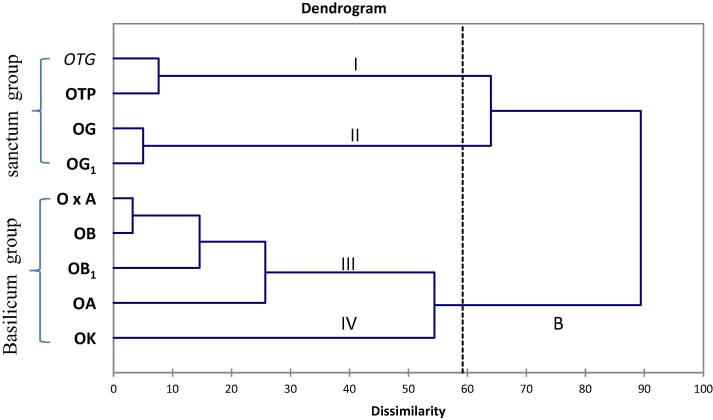
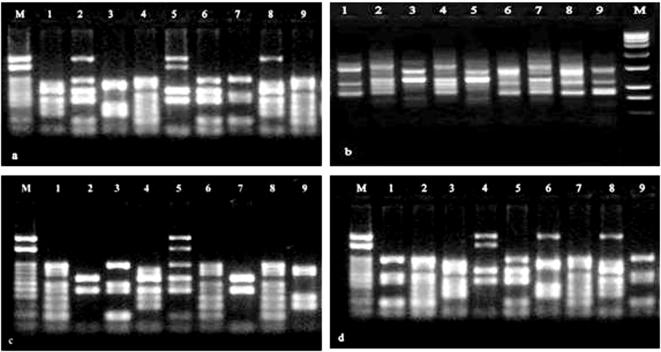
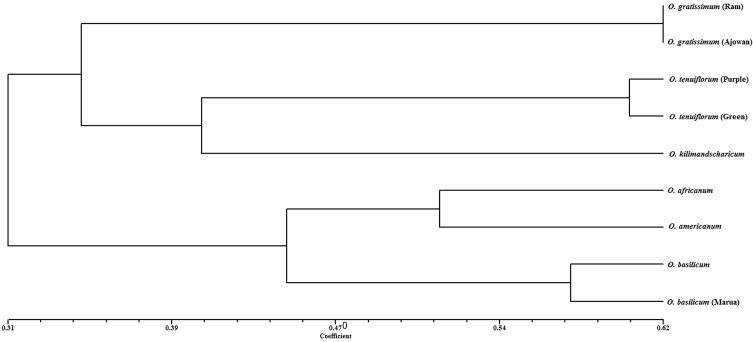
In this present study, we have described the diversity of nine Ocimum genotypes naturally grown in the Dakshin Dinajpur district of West Bengal, India. Their diversity was determined on the basis of morphological, chemical and randomly amplified polymorphic DNA (RAPD) to determine the level of variation present in the genus Ocimum. Among nine Ocimum genotypes six (O. americanum, O. × africanum, O. basilicum, O. gratissimum, O. kilimandscharicum and O. tenuiflorum) are found to be different Ocimum species and the rest are as varieties. A total of 18 qualitative and 17 quantitative morphological traits and chemical compositions were evaluated. Significant variations were observed in the morphological traits except O. × africanum and O. basilicum species. Cluster generated from the morphological data showed two different groups viz. basilicum group and sanctum group. Chemical analysis did not show much variation between morphologically similar species viz. O. × africanum and O. basilicum. However, RAPD analyses clearly showed that O. × africanum and O. basilicum are different species. Thus the combined analyses of morphological traits, chemical and molecular markers represent the best possible approach to confirm taxonomic delineation. Moreover, we are reporting O. × africanum for the first time from this region as well as from West Bengal, India.
Overview
The claims and statistics of this paper haven’t been checked yet.
Run the check — free, no account needed. It reads the open-access text and checks the sources it cites.
Integrity signals
Registry
Cites
Statistics
Figures
Verification
Claims the paper makes
The claims and statistics of this paper haven’t been checked yet.
Run the check — free, no account needed. It reads the open-access text and checks the sources it cites.
Claims other papers make about this one
Each is checked against this paper’s own text: does it say what the citing paper says it does?
The source backs part of the claim, not all of it — or backs it for a different population, condition or comparison.
In the citing paper
“More than 100 species have been recognised within the genus [16].”
From Comprehensive Metabolomic Fingerprinting Combined with Chemometrics Identifies Species- and Variety-Specific Variation of Medicinal Herbs: An Ocimum Study (2023) · cites this paper as [16]
Experimental — accuracy not yet measuredThe source backs part of the claim, not all of it — or backs it for a different population, condition or comparison.
In the citing paper
“DNA-based methods have been proven to be robust for the unambiguous identification of the medicinal plant genus; however, these methods fail to identify the mixing of species that is responsible for the lowering of the quality of medicinal plant products [16].”
From Comprehensive Metabolomic Fingerprinting Combined with Chemometrics Identifies Species- and Variety-Specific Variation of Medicinal Herbs: An Ocimum Study (2023) · cites this paper as [16]
Experimental — accuracy not yet measuredThe check wasn’t confident either way, so it gives no verdict — never disputed.
In the citing paper
“A significant number of studies have been devoted to describing Ocimum essential oils [21,29,30], but relatively few studies have been devoted to Ocimum leaves as there is a lack of a comprehensive and rapid fingerprinting approach [16,31,32].”
From Comprehensive Metabolomic Fingerprinting Combined with Chemometrics Identifies Species- and Variety-Specific Variation of Medicinal Herbs: An Ocimum Study (2023) · cites this paper as [16]
Experimental — accuracy not yet measured
Self-check
Percentages, sums and reported differences re-computed from the paper’s own numbers.
The self-check needs the paper’s full text.
Citations
Cites
Indian Medicinal Plants: An Illustrated Dictionary
Khare, C. P. (2007) · Springer eBooks · doi:10.1007/978-0-387-70638-2 · Cited by 10,646
Nouvelles recherches sur la distribution florale
Jaccard, P. (1908) · E-Periodica · doi:10.5169/seals-268384 · Cited by 3,316
Optimizing parental selection for genetic linkage maps
Anderson, J. A., Churchill, G. A., Autrique, J. E., Tanksley, S. D., & Sorrells, M. E. (1993) · Genome · doi:10.1139/g93-024 · Cited by 1,540
Infraspecific taxonomy and essential oil chemotypes in sweet basil, Ocimum basilicum
Grayer, R. J., Kite, G. C., Goldstone, F. J., Bryan, S. E., Paton, A., & Putievsky, E. (1996) · Phytochemistry · doi:10.1016/s0031-9422(96)00429-3 · Cited by 374
Harley, R., Reynolds, T. L., & Gardens, K. R. B. (1992) · Medical Entomology and Zoology · Cited by 329
Basil: a source of essential oils.
Simon, J. E., Quinn, J. A., Murray, R. G., & Janick, J. (1990) · Cited by 244
Labra, M., Miele, M., Ledda, B., Grassi, F., Mazzei, M., & Sala, F. (2004) · Plant Science · doi:10.1016/j.plantsci.2004.04.026 · Cited by 240
Applied Multivariate Methods for Data Analysis
Nemeth, M. A. (2000) · Technometrics · doi:10.1080/00401706.2000.10486010 · Cited by 182
Dong, G., & Meng, L. (1994) · Cited by 165
Dambolena, J. S., Zunino, M. P., López, A. G., Rubinstein, H. R., Zygadlo, J. A., Mwangi, J., Thoithi, G. N., Kibwage, I. O., Mwalukumbi, J. M., & Kariuki, S. (2009) · Innovative Food Science & Emerging Technologies · doi:10.1016/j.ifset.2009.08.005 · Cited by 156
Carović‐Stanko, K., Liber, Z., Besendorfer, V., Javornik, B., Bohanec, B., Kolak, I., & Šatović, Z. (2009) · Plant Systematics and Evolution · doi:10.1007/s00606-009-0251-z · Cited by 127
Assessment of agronomic, chemical and genetic variability in common basil (Ocimum basilicum L.)
Masi, L. D., Siviero, P., Esposito, C., Castaldo, D., Siano, F., & Laratta, B. (2006) · European Food Research and Technology · doi:10.1007/s00217-005-0201-0 · Cited by 115
Mondello, L., Zappia, G., Cotroneo, A., Bonaccorsi, I., Chowdhury, J. U., Yusuf, M., & Dugo, G. (2002) · Flavour and Fragrance Journal · doi:10.1002/ffj.1108 · Cited by 108
Jirovetz, L., Buchbauer, G., Shafi, M. P., & Kaniampady, M. M. (2003) · European Food Research and Technology · doi:10.1007/s00217-003-0708-1 · Cited by 104
Paton, A. J., & Putievsky, E. (1996) · Kew Bulletin · doi:10.2307/4117026 · Cited by 94
Molecular and chemical characterization of the most widespread Ocimum species
Carović‐Stanko, K., Liber, Z., Politeo, O., Strikić, F., Kolak, I., Miloš, M., & Šatović, Z. (2011) · Plant Systematics and Evolution · doi:10.1007/s00606-011-0471-x · Cited by 78
Economic Botany: Plants in Our World.
Prance, G. T., Simpson, B. B., & Conner-Ogorzaly, M. (1986) · Brittonia · doi:10.2307/2807342 · Cited by 76
Economic Botany: Plants in Our World
Simpson, B. B., & Conner-Ogorzaly, M. (1986) · Cited by 71
Exploring compositional diversity in the essential oils of 34 Ocimum taxa from Indian flora
Verma, R. S., Padalia, R. C., Chauhan, A., & Thul, S. T. (2012) · Industrial Crops and Products · doi:10.1016/j.indcrop.2012.12.005 · Cited by 62
Genetic Diversity of Basil (Ocimum spp.) Based on RAPD Markers
Vieira, R. F., Goldsbrough, P. B., & Simon, J. E. (2003) · Journal of the American Society for Horticultural Science · doi:10.21273/jashs.128.1.0094 · Cited by 62
Tchoumbougnang, F., Zollo, P. H. A., Avlessi, F., Alitonou, G. A., Sohounhloue, D. K., Ouamba, J. M., Tsomambet, A., Andissa, N. O., Dagne, E., Agnaniet, H., et al. (2006) · Journal of Essential Oil Research · doi:10.1080/10412905.2006.9699064 · Cited by 58
Phylogenetic relationships as in Ocimum revealed by RAPD markers
Singh, A. P., Dwivedi, S., Bharti, S., et al. (2004) · Euphytica · doi:10.1023/b:euph.0000019497.89760.e8 · Cited by 54
Saha, S., Kader, A., Sengupta, C., & Ghosh, P. (2012) · American Journal of Plant Sciences · doi:10.4236/ajps.2012.31006 · Cited by 46
Morphological variability in holy basil (Ocimum tenuiflorum L.) from India
Malav, P. K., Pandey, A., Bhatt, K. C., et al. (2015) · Genetic Resources and Crop Evolution · doi:10.1007/s10722-015-0227-5 · Cited by 41
Chemical and pharmacological studies on fixed oil of Ocimum sanctum.
Singh, S., MAJUMDAR, D. K., & Mr, Y. (1996) · PubMed · Cited by 40
Pushpangadan, P., & Sobti, S. N. (1982) · CYTOLOGIA · doi:10.1508/cytologia.47.575 · Cited by 28
Patel, R. P., Singh, R., Saikia, S. K., Rao, B. R. R., Sastry, K. P., Zaim, M., & Lal, R. K. (2015) · Industrial Crops and Products · doi:10.1016/j.indcrop.2015.08.043 · Cited by 24
Ahmad, S., & Khaliq, I. (2002) · Pakistan Journal of Biological Sciences · doi:10.3923/pjbs.2002.1084.1087 · Cited by 15
Bernhardt, B., Fazekas, G. A., Ladányi, M., Inotai, K., Zámbori-Németh, É., Bernáth, J., & Szabó, K. (2014) · Journal of Applied Research on Medicinal and Aromatic Plants · doi:10.1016/j.jarmap.2014.03.002 · Cited by 15
Paxton, J., & Hereman, S. (2009) · Cited by 13
Application of molecular markers in medicinal plant studies
Pourmohammad, A. (2013) · Acta Universitatis Sapientiae Agriculture and Environment · doi:10.2478/ausae-2014-0006 · Cited by 12
Ocimum L. (Lamiaceae) in Australia and Papua New Guinea
Conn, B. J. (2014) · Telopea · doi:10.7751/telopea20147790 · Cited by 3
Shanthy, S., Purwar, S., Santosh, K. S., & Priyanka, D. (2014) · Journal of Medicinal Plants Research · doi:10.5897/jmpr12.1188 · Cited by 3
Research works printed but not linked: 19
- Khosla, 1995, Ind. J. Genet., 55, 71
- Mishra, 2014, Sci. Secure J. Biotechnol., 3, 188
- Balyan, 1988, PAFAI J., 10, 13
- Agarwal, 2013, Ind. J. Fund. Appl. Life Sci., 3, 521
- Patel, 2015, 3, Biotechnology, 5, 697
- Harisaranraj, 2008, Ethnobot. Leafl., 12, 609
- Erum, 2011, Pak. J. Agric. Res., 24, 1
- Vieira, 2003, J. Am. Soc. Hortic. Sci., 128, 94, 10.21273/JASHS.128.1.94 · DOI
- Lal, 2012, Int. J. Adv. Biol. Res., 2, 279
- Bernhardt, 2014, J. Appl. Res. Med. Aromat. Plants, 1, 23
- Jaccard, 1908, Bull. Soc. Vaud. Sci. Nat., 44, 223
- Svecova, 2010, Acta Univ. Sapientiae Alimentaria, 3, 118
- Maheshwari, 1987, Indian Perfumer, 31, 137
- Patel, 2015, Indian J. Plant Sci., 4, 16
- Sastry, 2012, J. Plant Dev., 19, 53
- Omer, 2008, Res. J. Agric. Biol. Sci., 4, 293
- Nadkarni, 1952, Curr. Set., 21, 68
- Singh, 1996, Indian J. Exp. Biol., 34, 1212
- Satović, 2002, Acta biologica Cracoviensia Ser. Botanica, 44, 155
Cited by
Diversity, phytochemical and medicinal potential of the genus Ocimum L. (Lamiaceae)
Zahran, E. M., Abdelmohsen, U. R., Khalil, H. E., Desoukey, S. Y., Fouad, M. A., & Kamel, M. S. (2020) · Phytochemistry Reviews · doi:10.1007/s11101-020-09690-9 · Cited by 90
Aromatic Profiles of Essential Oils from Five Commonly Used Thai Basils
Tangpao, T., Chung, H.-H., & Sommano, S. R. (2018) · Foods · doi:10.3390/foods7110175 · Cited by 87
“The genus of Ocimum comprises of more than 65 species and is the biggest genera in Lamiaceae family worldwide [24].”
BackgroundRai, A. K., Khan, S., Kumar, A., Dubey, B. K., Lal, R. K., Tiwari, A., Trivedi, P. K., Elliott, C. T., & Ch, R. (2023) · Metabolites · doi:10.3390/metabo13010122 · Cited by 33
“More than 100 species have been recognised within the genus [16].”
BackgroundMethodMirgal, A., Ghoshal, S., Ghule, C., Bhatt, K., Patel, K., Girme, A., & Hingorani, L. (2023) · Planta Medica · doi:10.1055/a-1876-3009 · Cited by 3
Metadata
- Authors
- Chowdhury, T., Mandal, A., Roy, S. C., & De Sarker, D.
- Affiliations
- Raiganj University (IN)
- North Bengal University (IN)
- Corresponding author
- Chowdhury, Tanmay
- Venue
- Journal of Genetic Engineering and Biotechnology
- Publisher
- Elsevier BV
- Published
- 2017-06
- Volume
- 15
- Issue
- 1
- Pages
- 275-286
- ISSN
- 1687-157X (ISSN-L)
- PMC
- PMC6296643
- OpenAlex
- W2568652151
- Cited by
- 95
- References
- 33
- Citations by year
- 2026: 5 · 2025: 9 · 2024: 10 · 2023: 20 · 2022: 17 · 2021: 13 · 2020: 9 · 2019: 3 · 2018: 7 · 2017: 1
- FWCI
- 3.63
- Type
- journal article
- Language
- en
- Open access
- gold
- doi.org
- Licence
- cc-by-nc-nd
- www.elsevier.com/tdm/userlicense/1.0/ (tdm)
- www.elsevier.com/legal/tdmrep-license (tdm)
- creativecommons.org/licenses/by-nc-nd/4.0/ (vor)
- Locations
- Journal of Genetic Engineering and Biotechnology (publishedVersion, cc-by-nc-nd)
- Europe PMC (PubMed Central) (publishedVersion, cc-by-nc-nd)
- PubMed Central (publishedVersion, cc-by-nc-nd)
- PubMed (publishedVersion)
- DOAJ (DOAJ: Directory of Open Access Journals) (submittedVersion, cc-by-sa)
- Funders
- Raiganj University
- Topics
- Life Sciences › Biochemistry, Genetics and Molecular Biology › Genetics › Genetic diversity and population structure
- Health Sciences › Medicine › Complementary and alternative medicine › Phytochemicals and Medicinal Plants
- Life Sciences › Biochemistry, Genetics and Molecular Biology › Genetics › Genetic Mapping and Diversity in Plants and Animals
- Keywords
- Ocimum, Lamiaceae, species diversity, Ocimum basilicum, morphological variation, RAPD markers, essential oil composition, West Bengal
About these checks
Registry, retraction, Cites and statistics results are computed, not judged, with one exception: a printed reference that no index lists is read once by a model before it counts as a citation error. Claims are extracted by a model and kept only when their quote appears verbatim in the text; each cited source is then checked, with a model’s help, for whether it says what the claim relies on. Those verdicts can be wrong — read the claim’s quote and the cited source before relying on one.
Statistics and arithmetic are recomputed, not judged.
Confidence bands are shown only for fields calibrated on our annotated test set. None is calibrated yet, so no band is shown.
What counts as a claim ›How we measure confidence ›How we check this ›
Are you an author, or do you see a problem with this page? Request a review
Data sources
Bibliographic data: Semantic Scholar, OpenAlex, Crossref.
Contains information from the Semantic Scholar Academic Graph Datasets, made available under the ODC Attribution License (ODC-BY 1.0).
Semantic Scholar’s data is described in: Kinney, R., et al. (2023). The Semantic Scholar Open Data Platform. arXiv:2301.10140.
