

The DOI matches its Crossref record; 241 of the 242 references it cites were found in a registry or an index, and 1 are not checked yet.
Obesity: Prevalence, causes, consequences, management, preventive strategies and future research directions
Open accessAbstract
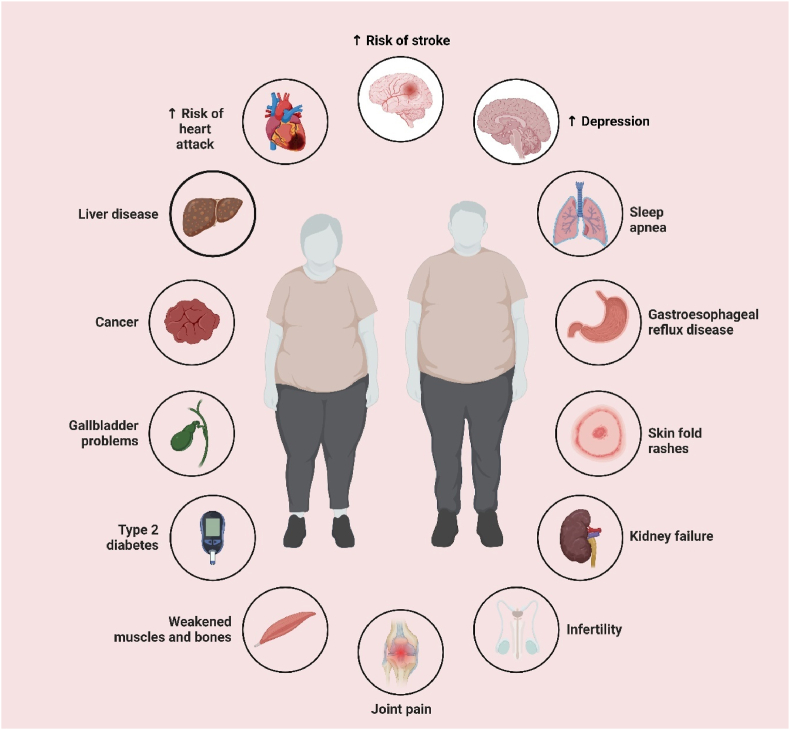
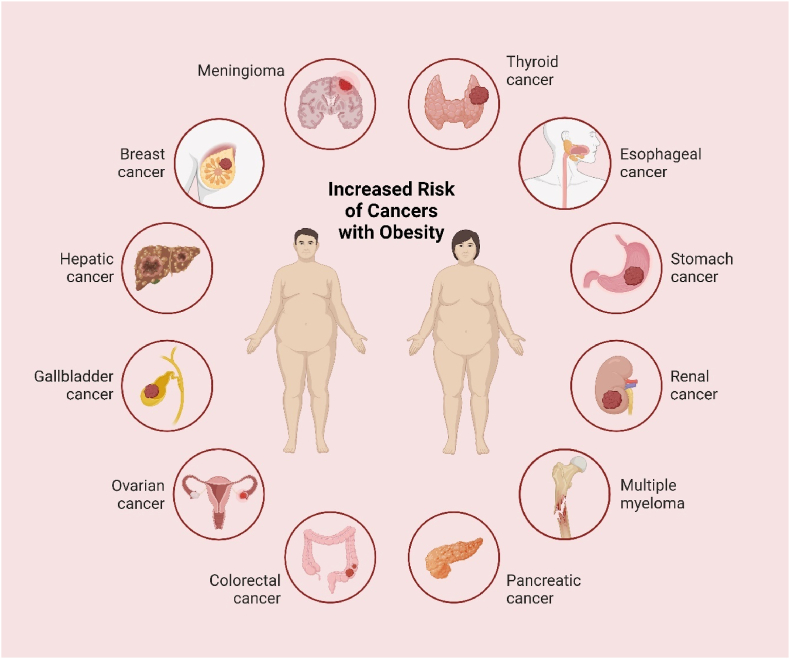
Obesity has emerged as one of the most pressing global public health challenges of the 21st century. Obesity has reached epidemic proportions worldwide, with over 1 billion people classified as obese in 2022, representing 13 % of the global population. Since 1975, obesity rates have tripled, and projections indicate that by 2035, around 1.9 billion adults-approximately 25 % of the world's population-will be affected. Looking further ahead to 2050, it is estimated that 3.80 billion adults, representing more than half of the anticipated global adult population, will be living with overweight or obesity. The increasing burden of obesity is associated with an alarming rise in non-communicable diseases, including type 2 diabetes, cardiovascular diseases, and multiple cancers, collectively contributing to over 5 million deaths annually. Obesity is driven by complex interactions between genetic, behavioral, environmental, and socioeconomic factors, with rapid urbanization and globalization accelerating the consumption of high-calorie diets and sedentary lifestyles. While historically prevalent in high-income nations, obesity rates are now rising most rapidly in low- and middle-income countries (LMICs), with over 70 % of obese individuals living in developing nations. The economic costs of obesity are staggering, with projections estimating a global financial burden of $4.32 trillion per year by 2035, equivalent to 3 % of the global GDP. This article explores the epidemiology, determinants, health implications, and policy responses to obesity, emphasizing the urgent need for multisectoral strategies to mitigate its impact. Public health initiatives, taxation on sugar-sweetened beverages, improved food regulations, and increased physical activity promotion are essential components of evidence-based interventions. Addressing the obesity crisis requires global cooperation to implement sustainable, long-term strategies targeting both prevention and treatment.
Overview
The claims and statistics of this paper haven’t been checked yet.
Run the check — free, no account needed. It reads the open-access text and checks the sources it cites.
Integrity signals
Registry
Cites
Statistics
Figures
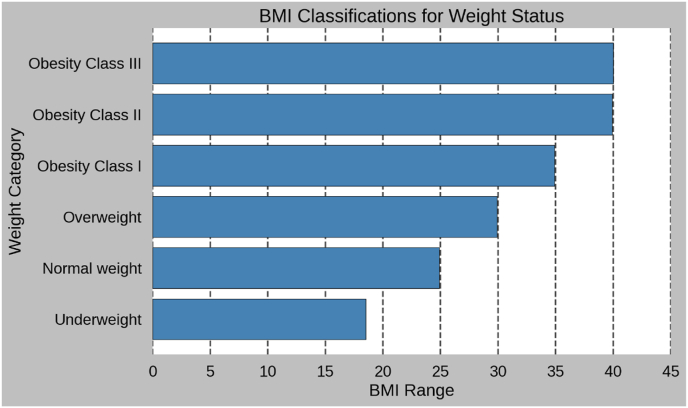
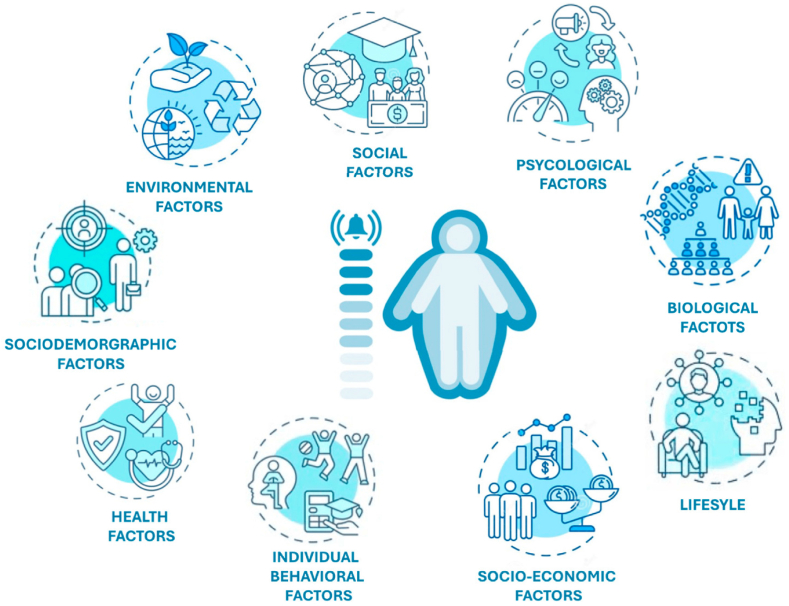
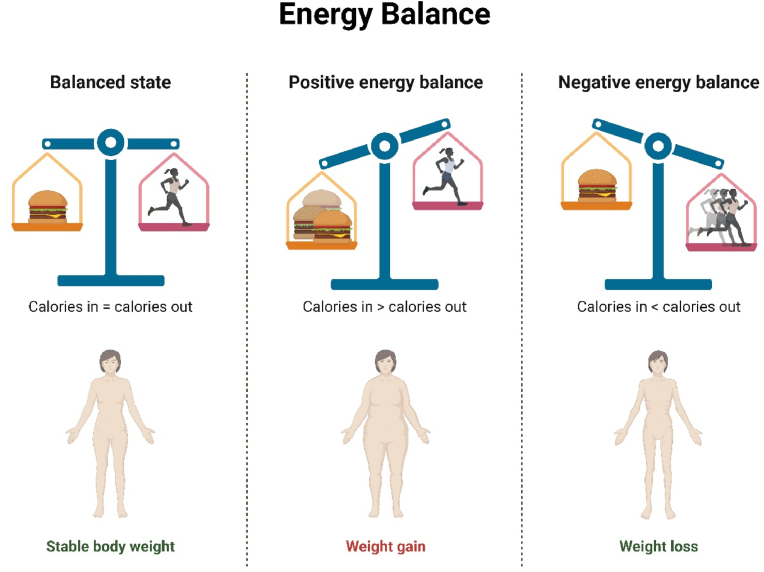
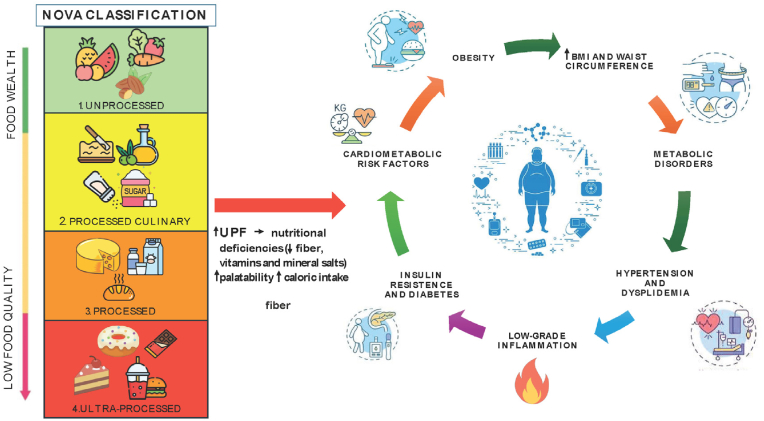
Verification
Claims the paper makes
The claims and statistics of this paper haven’t been checked yet.
Run the check — free, no account needed. It reads the open-access text and checks the sources it cites.
Claims other papers make about this one
Each is checked against this paper’s own text: does it say what the citing paper says it does?
The cited source says what the claim attributes to it.
In the citing paper
“Obesity substantially increases the risk of diabetes, cardiovascular disease, fatty liver disease, and certain cancers, while imposing enormous societal and economic burdens.[2][3][4]”
From The Triple‐Agonist Revolution: Retatrutide and the Paradigm Shift in Multi‐Hormonal Pharmacotherapy for Obesity and Cardiometabolic Comorbidities (2026) · cites this paper as [4]
Self-check
Percentages, sums and reported differences re-computed from the paper’s own numbers.
The self-check needs the paper’s full text.
Citations
Cites
An obesity-associated gut microbiome with increased capacity for energy harvest
Turnbaugh, P. J., Ley, R. E., Mahowald, M. A., Magrini, V., Mardis, E. R., & Gordon, J. I. (2006) · Nature · doi:10.1038/nature05414 · Cited by 12,444
Ng, M., Fleming, T., Robinson, M., Thomson, B., Graetz, N., Margono, C., Mullany, E. C., Biryukov, S., Abbafati, C., Abera, S. F., et al. (2014) · The Lancet · doi:10.1016/s0140-6736(14)60460-8 · Cited by 11,952
World Health Organization 2020 guidelines on physical activity and sedentary behaviour
Bull, F. C., Al-Ansari, S. S., Biddle, S., Borodulin, K., Buman, M. P., Cardon, G., Carty, C., Chaput, J.-P., Chastin, S., Chou, R., et al. (2020) · British Journal of Sports Medicine · doi:10.1136/bjsports-2020-102955 · Cited by 11,657 · cited 1×
“According to recommendations from the U.S. Preventive Services Task Force, there should be at least 150 min of moderate-intensity or 75 min of vigorous-intensity aerobic physical activity per week, with strength training exercises included [223].”
Metabolic Endotoxemia Initiates Obesity and Insulin Resistance
Cani, P. D., Amar, J., Iglesias, M. A., Poggi, M., Knauf, C., Bastelica, D., Neyrinck, A. M., Fava, F., Tuohy, K. M., Chabo, C., et al. (2007) · Diabetes · doi:10.2337/db06-1491 · Cited by 6,638
Obesity and cardiovascular disease: a scientific statement from the American Heart Association
Powell-Wiley, T. M., Poirier, P., Burke, L. E., Després, J.-P., Gordon-Larsen, P., Lavie, C. J., Lear, S. A., Ndumele, C. E., Neeland, I. J., Sanders, P., et al. (2021) · Circulation · doi:10.1161/cir.0000000000000973 · Cited by 3,691
Phelps, N. H., Singleton, R. K., Zhou, B., Heap, R. A., Mishra, A., Bennett, J. E., Paciorek, C. J., Lhoste, V. P., Carrillo-Larco, R. M., Stevens, G. A., et al. (2024) · The Lancet · doi:10.1016/s0140-6736(23)02750-2 · Cited by 2,544 · cited 1×
“Indeed, more people are obese than underweight in every global region except parts of sub-Saharan Africa and South-East Asia [1,11 – 13] Many nations face a double burden of malnutrition, where high obesity prevalence coexists with persistent undernutrition and micronutrient deficiencies [1,14 –…”
Self-citationReactive oxygen species have a causal role in multiple forms of insulin resistance
Houstis, N., Rosen, E. D., & Lander, E. S. (2006) · Nature · doi:10.1038/nature04634 · Cited by 2,525 · cited 1×
“Mitochondrial stress in obese tissues reduces oxidative phosphorylation and increases reactive oxygen species (ROS), which further disrupt insulin signaling and lipid metabolism [190].”
Tracking of childhood overweight into adulthood: a systematic review of the literature
Singh, A. S., Mulder, C., Twisk, J. W. R., van Mechelen, W., & Chinapaw, M. J. M. (2008) · Obesity Reviews · doi:10.1111/j.1467-789x.2008.00475.x · Cited by 2,495
The Firmicutes/Bacteroidetes Ratio: A Relevant Marker of Gut Dysbiosis in Obese Patients?
Magne, F., Gotteland, M., Gauthier, L., Zazueta, A., Pesoa, S., Navarrete, P., & Balamurugan, R. (2020) · Nutrients · doi:10.3390/nu12051474 · Cited by 2,335
Inflammatory links between obesity and metabolic disease
Lumeng, C. N., & Saltiel, A. R. (2011) · Journal of Clinical Investigation · doi:10.1172/jci57132 · Cited by 2,319
Research works printed but not linked: 2
- Das, 2024, Pathophysiology of obesity: an extensive review, Indo Global J Pharmaceut Sci, 14, 1
- 2024, Economic impact of overweight and obesity to surpass $4 trillion by 2035, World Obes
Cited by
Sorted by citations
Prenatal Dietary Exposure to Endocrine Disruptors and Its Lasting Impact on Offspring Health
Potiris, A., Daponte, N., Moustakli, E., Zikopoulos, A., Kokkosi, E., Arkouli, N., Anagnostaki, I., Vogiatzoglou, A. L., Tzeli, M., Sarella, A., et al. (2025) · Toxics · doi:10.3390/toxics13100864 · Cited by 27
Microbiome based precision medicine through integrated multiomics and machine learning
Kumar, A., Xu, C., & Dakal, T. C. (2025) · Microbiological Research · doi:10.1016/j.micres.2025.128384 · Cited by 24
The clinical and economic burden of obesity in low- and middle-income countries: a systematic review
Fatoye, F., Mbada, C. E., Niyi-Odumosu, F. A., Fatoye, C., Useh, U., Hakimi, Z., & Gebrye, T. (2025) · International Journal of Obesity · doi:10.1038/s41366-025-01913-3 · Cited by 22
Grocic, M., Nguyen, M., & Sanyal, A. J. (2026) · Diabetes Obesity and Metabolism · doi:10.1111/dom.70662 · Cited by 16
Macrophage Phenotypic Switch and Obesity‐Associated Metabolic Risk: Mechanisms and Targets
Vera, K., Hemakumar, C., Bilachi, R. S., Ramírez, D. C., & Gomez-Mejiba, S. (2025) · Oxidative Medicine and Cellular Longevity · doi:10.1155/omcl/6710641 · Cited by 12
Metadata
- Authors
- Ahmed, S. K., & Mohammed, R. A.
- Affiliations
- University of Raparin (IQ)
- Corresponding author
- Ahmed, Sirwan Khalid
- Venue
- Metabolism Open
- Publisher
- Elsevier BV
- Published
- 2025-09
- Volume
- 27
- Pages
- 100375
- ISSN
- 2589-9368 (ISSN-L)
- PMC
- PMC12486175
- OpenAlex
- W4411248990
- Semantic Scholar
- 0279e2a43f943eec9d75c66a6c5744b5650fb570
- Cited by
- 432
- References
- 239
- Citations by year
- 2026: 358 · 2025: 74
- FWCI
- 70.65
- Type
- journal article
- Language
- en
- Open access
- gold
- doi.org
- Licence
- Locations
- Metabolism Open (publishedVersion, cc-by)
- Europe PMC (PubMed Central) (publishedVersion, cc-by)
- PubMed (publishedVersion)
- PubMed Central (publishedVersion, cc-by)
- DOAJ (DOAJ: Directory of Open Access Journals) (submittedVersion, cc-by-sa)
- Topics
- Health Sciences › Medicine › Public Health, Environmental and Occupational Health › Obesity, Physical Activity, Diet
- Health Sciences › Medicine › Public Health, Environmental and Occupational Health › Obesity and Health Practices
- Health Sciences › Medicine › Endocrinology, Diabetes and Metabolism › Diabetes, Cardiovascular Risks, and Lipoproteins
- Keywords
- obesity, obesity prevalence, obesity epidemiology, determinants of obesity, non-communicable diseases, type 2 diabetes, cardiovascular disease, cancer, economic burden of obesity, low- and middle-income countries, urbanization, sedentary lifestyle, hypercaloric diet, sugar-sweetened beverage tax, food regulation, physical activity promotion, obesity prevention, obesity treatment, multisectoral policy
About these checks
Registry, retraction, Cites and statistics results are computed, not judged, with one exception: a printed reference that no index lists is read once by a model before it counts as a citation error. Claims are extracted by a model and kept only when their quote appears verbatim in the text; each cited source is then checked, with a model’s help, for whether it says what the claim relies on. Those verdicts can be wrong — read the claim’s quote and the cited source before relying on one.
Statistics and arithmetic are recomputed, not judged.
Confidence bands are shown only for fields calibrated on our annotated test set. None is calibrated yet, so no band is shown.
What counts as a claim ›How we measure confidence ›How we check this ›
Are you an author, or do you see a problem with this page? Request a review
