Cited by 150Fibroblast Growth Factor ResearchAlcohol Consumption and Health EffectsLiver physiology and pathology

The DOI matches its Crossref record; 41 of the 43 references it cites were found in a registry or an index.

Fibroblast growth factor 21 (FGF21) is robustly induced by ethanol and has a protective role in ethanol associated liver injury

Open access

Abstract

OBJECTIVE: Excess ethanol consumption has serious pathologic consequences. In humans, repeated episodes of binge drinking can lead to liver damage and have adverse effects on other organs such as pancreas and brain. Long term chronic consumption of ethanol can also result in progressive alcoholic liver disease and cirrhosis. Fibroblast growth factor 21 (FGF21) is a metabolic regulator with multiple physiologic functions. FGF21 is a novel biomarker for non-alcoholic fatty liver disease (NAFLD) in humans and limits hepatotoxicity in mice. Therefore, we explored the possibility that FGF21 plays a role in response to ethanol consumption in both humans and mice. METHODS: We used a binge drinking paradigm in humans to examine the effect of acute ethanol consumption on circulating FGF21. We adapted this paradigm to evaluate the acute response to ethanol in mice. We then examined the role of FGF21 on liver pathology in two models of chronic ethanol consumption in both wild type (WT) mice and mice lacking FGF21 (FGF21-KO). RESULTS: Acute ethanol consumption resulted in a robust induction of serum FGF21 after 6 h in both humans and mice. Serum ethanol peaked at 1 h in both species and was cleared by 6 h. Ethanol clearance was the same in WT and FGF21-KO mice, indicating that FGF21 does not play a major role in ethanol metabolism in a binge paradigm. When FGF21-KO mice were fed the Lieber-DeCarli diet, a high fat diet supplemented with ethanol, a higher mortality was observed compared to WT mice after 16 days on the diet. When FGF21-KO mice consumed 30% ethanol in drinking water, along with a normal chow diet, there was no mortality observed even after 16 weeks, but the FGF21-KO mice had significant liver pathology compared to WT mice. CONCLUSIONS: Acute or binge ethanol consumption significantly increases circulating FGF21 levels in both humans and mice. However, FGF21 does not play a role in acute ethanol clearance. In contrast, chronic ethanol consumption in the absence of FGF21 is associated with significant liver pathology alone or in combination with excess mortality, depending on the type of diet consumed with ethanol. This suggests that FGF21 protects against long term ethanol induced hepatic damage and may attenuate progression of alcoholic liver disease. Further study is required to assess the therapeutic potential of FGF21 in the treatment of alcoholic liver disease.

Overview

The claims and statistics of this paper haven’t been checked yet.

Run the check — free, no account needed. It reads the open-access text and checks the sources it cites.

A few free checks a day · papers already verified open instantly · results are public

Integrity signals

Registry

Crossref · 10.1016/j.molmet.2017.08.004

Cites

41 of 41 references verified0 citation errors · 0 not checkable

Statistics

Figures

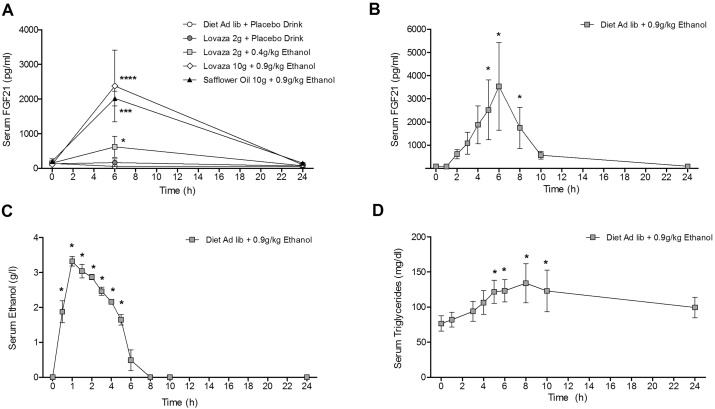
Figure 1 Binge ethanol consumption in humans increases circulating FGF21 levels. Binge consumption of ethanol elevates FGF21 in humans. In subjects receiving fatty acid supplements, a placebo drink has no effect on circulating FGF21 (A). Binge consumption of the lower ethanol dose (0.4 g/kg) in subjects receiving supplements causes an 11-fold increase in circulating FGF21 at 6 h. Remarkably, binge consumption of a higher ethanol dose (0.9 g/kg) results in a dramatic 40-fold elevation in circulating FGF21 at 6 h in these subjects (A). This effect is also consistent in subjects not receiving any fatty acid supplements, where the higher ethanol dose (0.9 g/kg) causes a similar 40-fold rise in circulating FGF21 at 6 h (B). Serum FGF21 levels increase over the first 6 h and then decline, returning to normal at 24 h (B). In these same subjects, serum ethanol peaks 1 h after the binge episode and is cleared from the circulation by 8 h (C). Serum triglycerides are elevated between 5 and 10 h after the ethanol challenge (D). Data represented as Mean ± SEM; n = 4–11 subjects. Significance was determined with a two-way ANOVA with repeated measures followed by a post-hoc analysis using Bonferroni's test. Significance is designated by asterisks with *P < 0.05, **P < 0.01, ***P < 0.001, ****P < 0.0001.
Figure 1 Binge ethanol consumption in humans increases circulating FGF21 levels. Binge consumption of ethanol elevates FGF21 in humans. In subjects receiving fatty acid supplements, a placebo drink has no effect on circulating FGF21 (A). Binge consumption of the lower ethanol dose (0.4 g/kg) in subjects receiving supplements causes an 11-fold increase in circulating FGF21 at 6 h. Remarkably, binge consumption of a higher ethanol dose (0.9 g/kg) results in a dramatic 40-fold elevation in circulating FGF21 at 6 h in these subjects (A). This effect is also consistent in subjects not receiving any fatty acid supplements, where the higher ethanol dose (0.9 g/kg) causes a similar 40-fold rise in circulating FGF21 at 6 h (B). Serum FGF21 levels increase over the first 6 h and then decline, returning to normal at 24 h (B). In these same subjects, serum ethanol peaks 1 h after the binge episode and is cleared from the circulation by 8 h (C). Serum triglycerides are elevated between 5 and 10 h after the ethanol challenge (D). Data represented as Mean ± SEM; n = 4–11 subjects. Significance was determined with a two-way ANOVA with repeated measures followed by a post-hoc analysis using Bonferroni's test. Significance is designated by asterisks with *P < 0.05, **P < 0.01, ***P < 0.001, ****P < 0.0001.CC BY · PubMed Central
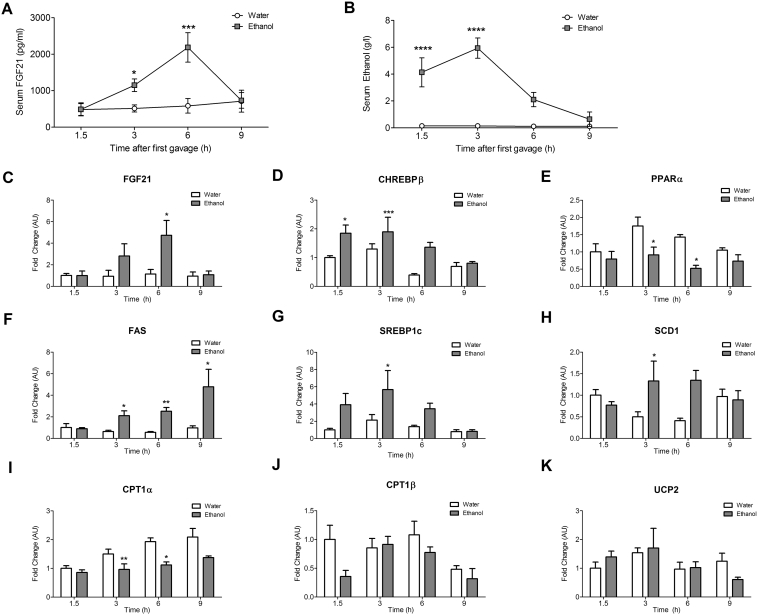
Figure 2 Acute ethanol feeding in mice increases circulating FGF21 levels. WT mice gavaged with ethanol have increased serum FGF21 levels that peak at 6 h (A). Serum ethanol levels peak at 1.5 h and are sustained until 3 h (B). Ethanol gavage in WT mice causes a time dependent increase in hepatic FGF21 gene expression (C). Carbohydrate induced transcription factor ChREBPβ is upregulated (D), and a simultaneous downregulation of transcription factor PPARα and its target is observed (E, K). Fatty acid synthesis genes are upregulated (F, G, H) whereas fatty acid oxidation genes are downregulated or remain unchanged (I, J). Data represented as Mean ± SEM; n = 8–10 mice/group. Significance in (A) and (B) was determined with a two-way ANOVA with repeated measures followed by a post-hoc analysis using Bonferroni's test. Significance in (C)–(K) was determined with a two-way ANOVA with Bonferroni's post-hoc test for individual comparisons. Significance is designated by asterisks with *P < 0.05, **P < 0.01, ***P < 0.001, ****P < 0.0001.
Figure 2 Acute ethanol feeding in mice increases circulating FGF21 levels. WT mice gavaged with ethanol have increased serum FGF21 levels that peak at 6 h (A). Serum ethanol levels peak at 1.5 h and are sustained until 3 h (B). Ethanol gavage in WT mice causes a time dependent increase in hepatic FGF21 gene expression (C). Carbohydrate induced transcription factor ChREBPβ is upregulated (D), and a simultaneous downregulation of transcription factor PPARα and its target is observed (E, K). Fatty acid synthesis genes are upregulated (F, G, H) whereas fatty acid oxidation genes are downregulated or remain unchanged (I, J). Data represented as Mean ± SEM; n = 8–10 mice/group. Significance in (A) and (B) was determined with a two-way ANOVA with repeated measures followed by a post-hoc analysis using Bonferroni's test. Significance in (C)–(K) was determined with a two-way ANOVA with Bonferroni's post-hoc test for individual comparisons. Significance is designated by asterisks with *P < 0.05, **P < 0.01, ***P < 0.001, ****P < 0.0001.CC BY · PubMed Central
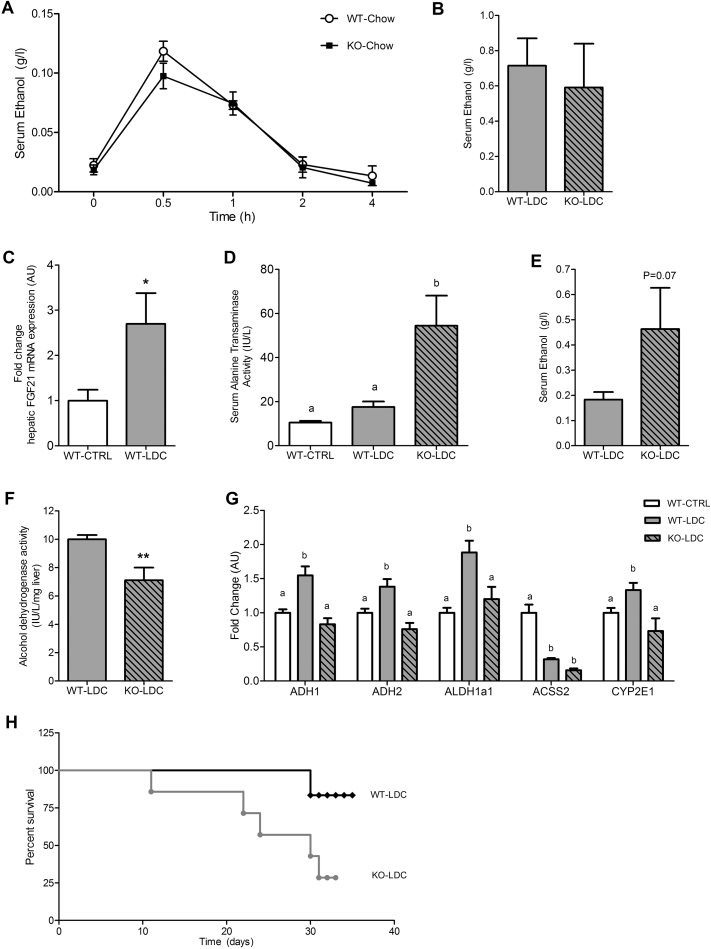
Figure 3 Chronic ethanol consumption along with a Lieber–DeCarli diet leads to excess mortality and disruption of ethanol metabolism in FGF21-KO mice. Clearance of ethanol after a single IP injection (20% v/v) is identical in WT and FGF21-KO mice consuming chow (A). Following a 12 h fast, WT and FGF21-KO mice fed ethanol in the Lieber–DeCarli (LDC) diet (4% w/v) have similar serum ethanol levels 4 h post re-feeding (B). Chronic ethanol consumption in LDC diet (6% w/v) for 16 days results in significant elevation of hepatic FGF21 gene expression in WT mice (C). Serum marker of hepatic damage ALT is elevated only in FGF21-KO mice on the LDC diet (D). Serum ethanol levels are elevated in FGF21-KO mice on the LDC diet for 16 days (E). Hepatic capacity for oxidizing ethanol is lower in FGF21-KO mice on the LDC diet, as measured by alcohol dehydrogenase activity (F). Expression of ethanol metabolizing enzymes is attenuated in FGF21-KO mice compared to WT mice on the LDC diet (G). A survival curve experiment in mice consuming ethanol in the LDC diet (4% w/v) reveals excess mortality in FGF21-KO mice on the LDC diet (H). Data represented as Mean ± SEM; n = 6–8 mice/group. Significance in (A) determined with a two-way ANOVA with repeated measures followed by a post-hoc analysis using Bonferroni's test. Significance in (B), (C), (E), (F) was determined with a unpaired two tailed student t-test. Significance in (H) was determined with a log rank (Mantel–cox) test. Significance in (D), (G) was determined with a two-way ANOVA and Bonferroni's post-hoc analysis test for individual comparisons. Significance is either designated by asterisks with *P < 0.05, **P < 0.01, or is designated by letters where means that do not share a common letter are significantly different from each other at P < 0.01.
Figure 3 Chronic ethanol consumption along with a Lieber–DeCarli diet leads to excess mortality and disruption of ethanol metabolism in FGF21-KO mice. Clearance of ethanol after a single IP injection (20% v/v) is identical in WT and FGF21-KO mice consuming chow (A). Following a 12 h fast, WT and FGF21-KO mice fed ethanol in the Lieber–DeCarli (LDC) diet (4% w/v) have similar serum ethanol levels 4 h post re-feeding (B). Chronic ethanol consumption in LDC diet (6% w/v) for 16 days results in significant elevation of hepatic FGF21 gene expression in WT mice (C). Serum marker of hepatic damage ALT is elevated only in FGF21-KO mice on the LDC diet (D). Serum ethanol levels are elevated in FGF21-KO mice on the LDC diet for 16 days (E). Hepatic capacity for oxidizing ethanol is lower in FGF21-KO mice on the LDC diet, as measured by alcohol dehydrogenase activity (F). Expression of ethanol metabolizing enzymes is attenuated in FGF21-KO mice compared to WT mice on the LDC diet (G). A survival curve experiment in mice consuming ethanol in the LDC diet (4% w/v) reveals excess mortality in FGF21-KO mice on the LDC diet (H). Data represented as Mean ± SEM; n = 6–8 mice/group. Significance in (A) determined with a two-way ANOVA with repeated measures followed by a post-hoc analysis using Bonferroni's test. Significance in (B), (C), (E), (F) was determined with a unpaired two tailed student t-test. Significance in (H) was determined with a log rank (Mantel–cox) test. Significance in (D), (G) was determined with a two-way ANOVA and Bonferroni's post-hoc analysis test for individual comparisons. Significance is either designated by asterisks with *P < 0.05, **P < 0.01, or is designated by letters where means that do not share a common letter are significantly different from each other at P < 0.01.CC BY · PubMed Central
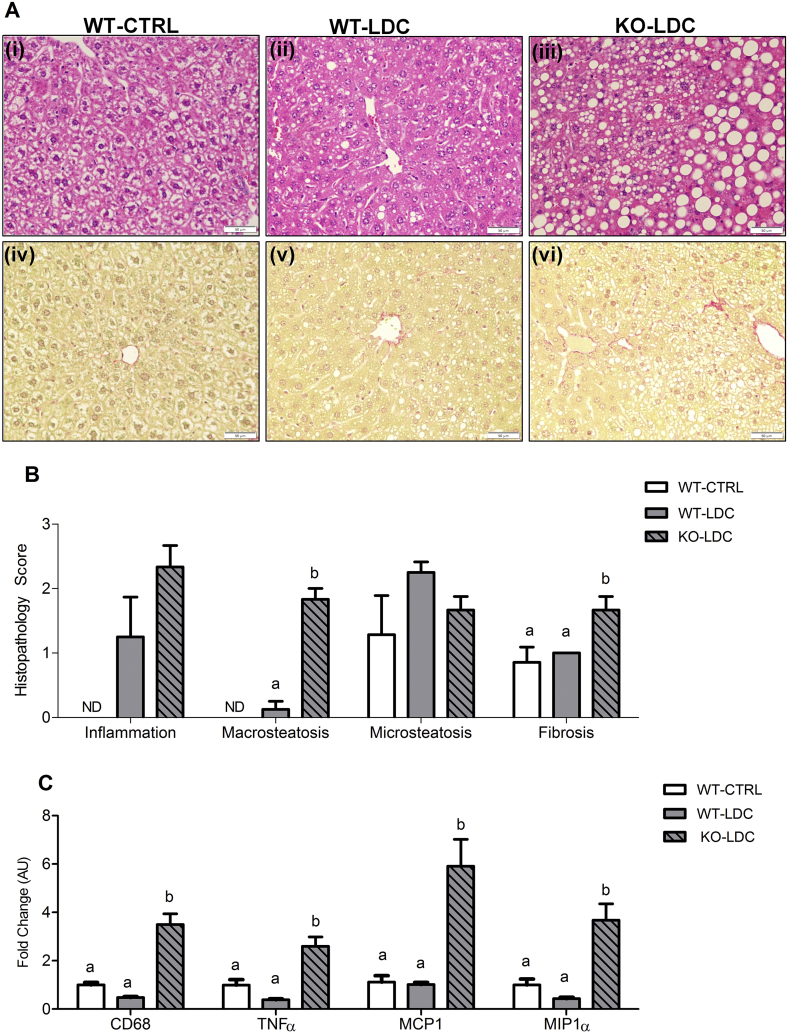
Figure 4 FGF21-KO mice develop worse liver pathology when consuming ethanol in the Lieber–DeCarli diet. Hematoxylin & Eosin staining of liver sections demonstrate relatively normal histology in WT mice consuming the CTRL diet or the LDC diet (A i–ii). In contrast, severe steatosis is observed in FGF21-KO on the LDC diet (A iii). Sirius Red staining reveals pronounced fibrosis in FGF21-KO-LDC mice (A vi) compared to WT-CTRL or WT-LDC mice (A iv–v). Double blind histopathological scoring confirms the excess liver damage in FGF21-KO-LDC mice, as indicated by specific macrosteatosis and fibrosis scores (B). In addition, FGF21-KO-LDC mice also have higher expression of inflammatory markers compared to WT-CTRL or WT-LDC mice (C). Data represented as Mean ± SEM; n = 6–8 mice/group. Significance in (B) and (C) was determined with a two-way ANOVA and Bonferroni's post-hoc analysis test for individual comparisons. Significance is designated by letters where means that do not share a common letter are significantly different from each other at P < 0.01. Scale: 50 μm (A).
Figure 4 FGF21-KO mice develop worse liver pathology when consuming ethanol in the Lieber–DeCarli diet. Hematoxylin & Eosin staining of liver sections demonstrate relatively normal histology in WT mice consuming the CTRL diet or the LDC diet (A i–ii). In contrast, severe steatosis is observed in FGF21-KO on the LDC diet (A iii). Sirius Red staining reveals pronounced fibrosis in FGF21-KO-LDC mice (A vi) compared to WT-CTRL or WT-LDC mice (A iv–v). Double blind histopathological scoring confirms the excess liver damage in FGF21-KO-LDC mice, as indicated by specific macrosteatosis and fibrosis scores (B). In addition, FGF21-KO-LDC mice also have higher expression of inflammatory markers compared to WT-CTRL or WT-LDC mice (C). Data represented as Mean ± SEM; n = 6–8 mice/group. Significance in (B) and (C) was determined with a two-way ANOVA and Bonferroni's post-hoc analysis test for individual comparisons. Significance is designated by letters where means that do not share a common letter are significantly different from each other at P < 0.01. Scale: 50 μm (A).CC BY · PubMed Central
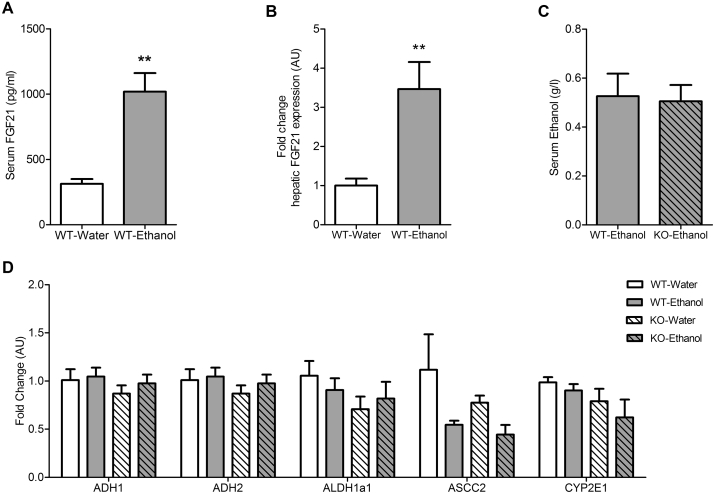
Figure 5 Chronic ethanol consumption in drinking water along with a chow diet has no adverse effect on the ethanol metabolizing capacity of FGF21 KO mice. WT mice consuming 30% ethanol in drinking water (v/v) and a chow diet for 16 weeks have significantly elevated serum FGF21 levels (A) and increased hepatic FGF21 expression (B). After 16 weeks, serum ethanol levels are similar in WT and FGF21-KO mice consuming ethanol (C). Hepatic gene expression of ethanol oxidizing enzymes is the same in all groups (D). Data represented as Mean ± SEM; n = 5–6 mice/group. Significance in (A), (B), (C) was determined with a two-tailed unpaired student t-test. Significance in (D) was determined with a two-way ANOVA and Bonferroni's post-hoc analysis test for individual comparisons. Significance is designated by asterisks with **P < 0.01.
Figure 5 Chronic ethanol consumption in drinking water along with a chow diet has no adverse effect on the ethanol metabolizing capacity of FGF21 KO mice. WT mice consuming 30% ethanol in drinking water (v/v) and a chow diet for 16 weeks have significantly elevated serum FGF21 levels (A) and increased hepatic FGF21 expression (B). After 16 weeks, serum ethanol levels are similar in WT and FGF21-KO mice consuming ethanol (C). Hepatic gene expression of ethanol oxidizing enzymes is the same in all groups (D). Data represented as Mean ± SEM; n = 5–6 mice/group. Significance in (A), (B), (C) was determined with a two-tailed unpaired student t-test. Significance in (D) was determined with a two-way ANOVA and Bonferroni's post-hoc analysis test for individual comparisons. Significance is designated by asterisks with **P < 0.01.CC BY · PubMed Central
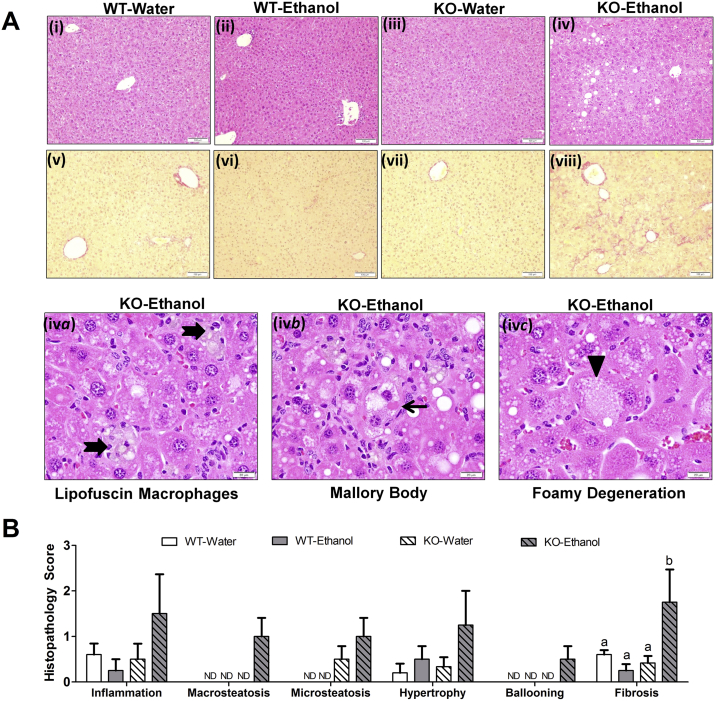
Figure 6 Ethanol consumption in drinking water leads to evolving hepatic damage in FGF21-KO mice. After 16 weeks, there are no detectable signs of inflammation, steatosis, and fibrosis in WT-Water mice (A i, A v, B) or WT-Ethanol mice (30% ethanol) (A ii, A vi, B). FGF21-KO-Water also have normal liver histology (A iii, A vii, B). In contrast, FGF21-KO-Ethanol mice drinking 30% ethanol have hepatic damage including inflammation, steatosis, hypertrophy, and fibrosis as indicated by histological analysis (A iv, A viii, B). This includes the presence of hallmark pathological features of alcoholic liver disease such as lipofuscin macrophages (thick arrow) (A iv a), Mallory bodies (thin arrow) (A iv b), and foamy degeneration of hepatocytes (arrow head) (A iv c), only seen in FGF21-KO mice consuming ethanol. Data represented as Mean ± SEM; n = 5–6 mice/group. Significance in (B) was determined with a two-way ANOVA and Bonferroni's post-hoc analysis test for individual comparisons. Significance is designated by letters where means that do not share a common letter are significantly different from each other at P < 0.01. Scale: 100 μm (A i–ix), 20 μm (A iv a–c).
Figure 6 Ethanol consumption in drinking water leads to evolving hepatic damage in FGF21-KO mice. After 16 weeks, there are no detectable signs of inflammation, steatosis, and fibrosis in WT-Water mice (A i, A v, B) or WT-Ethanol mice (30% ethanol) (A ii, A vi, B). FGF21-KO-Water also have normal liver histology (A iii, A vii, B). In contrast, FGF21-KO-Ethanol mice drinking 30% ethanol have hepatic damage including inflammation, steatosis, hypertrophy, and fibrosis as indicated by histological analysis (A iv, A viii, B). This includes the presence of hallmark pathological features of alcoholic liver disease such as lipofuscin macrophages (thick arrow) (A iv a), Mallory bodies (thin arrow) (A iv b), and foamy degeneration of hepatocytes (arrow head) (A iv c), only seen in FGF21-KO mice consuming ethanol. Data represented as Mean ± SEM; n = 5–6 mice/group. Significance in (B) was determined with a two-way ANOVA and Bonferroni's post-hoc analysis test for individual comparisons. Significance is designated by letters where means that do not share a common letter are significantly different from each other at P < 0.01. Scale: 100 μm (A i–ix), 20 μm (A iv a–c).CC BY · PubMed Central
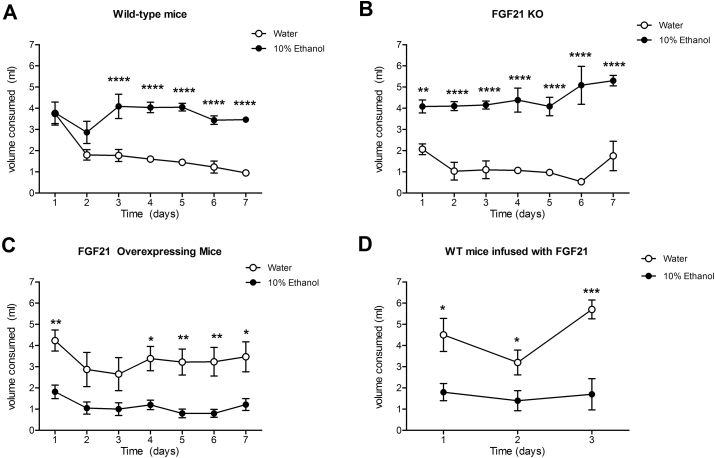
Figure 7 Excess FGF21 reduces preference for ethanol. WT and FGF21-KO mice demonstrate a similar strong, immediate preference for 10% ethanol (v/v) over water in a two-bottle preference test (A, B) (WT: P < 0.0001; FGF21-KO – P < 0.0001). FGF21-OE mice prefer water over ethanol (C). Similarly, WT mice when infused peripherally with FGF21 switch their preference to water from ethanol (D). Data represented as Mean ± SEM; n = 6 mice/group. Significance determined with a two-way ANOVA with repeated measures and Bonferroni's post-hoc analysis test for individual comparisons. Significance is designated by asterisks with *P < 0.05, **P < 0.01, ***P < 0.001, ****P < 0.0001.
Figure 7 Excess FGF21 reduces preference for ethanol. WT and FGF21-KO mice demonstrate a similar strong, immediate preference for 10% ethanol (v/v) over water in a two-bottle preference test (A, B) (WT: P < 0.0001; FGF21-KO – P < 0.0001). FGF21-OE mice prefer water over ethanol (C). Similarly, WT mice when infused peripherally with FGF21 switch their preference to water from ethanol (D). Data represented as Mean ± SEM; n = 6 mice/group. Significance determined with a two-way ANOVA with repeated measures and Bonferroni's post-hoc analysis test for individual comparisons. Significance is designated by asterisks with *P < 0.05, **P < 0.01, ***P < 0.001, ****P < 0.0001.CC BY · PubMed Central
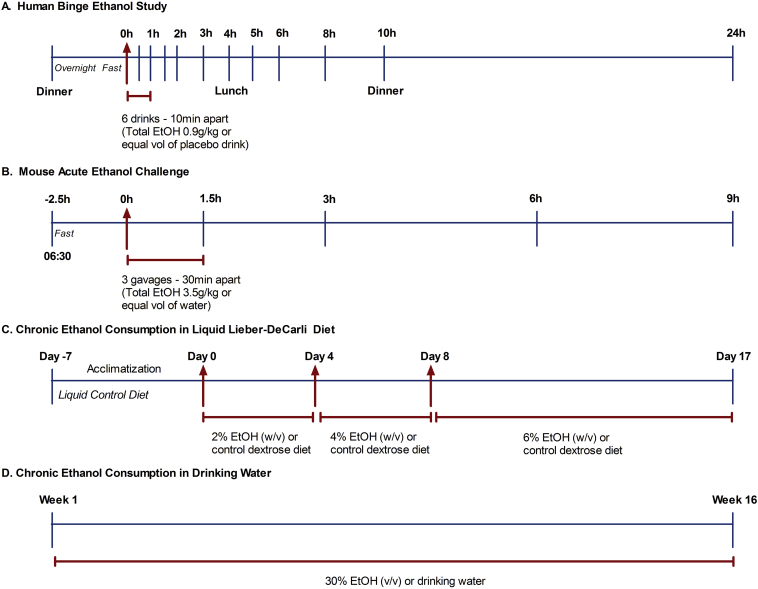
Supplementary Figure 1 Experimental design for acute and chronic ethanol consumption studies. Study design for binge ethanol consumption in human subjects (A) and an adapted experimental paradigm of acute ethanol feeding in mice (B). Experimental design for mice chronically consuming ethanol supplemented in a high fat liquid LDC diet (C). Experimental design for mice chronically consuming ethanol in drinking water combined with a chow diet (D).
Supplementary Figure 1 Experimental design for acute and chronic ethanol consumption studies. Study design for binge ethanol consumption in human subjects (A) and an adapted experimental paradigm of acute ethanol feeding in mice (B). Experimental design for mice chronically consuming ethanol supplemented in a high fat liquid LDC diet (C). Experimental design for mice chronically consuming ethanol in drinking water combined with a chow diet (D).CC BY · PubMed Central
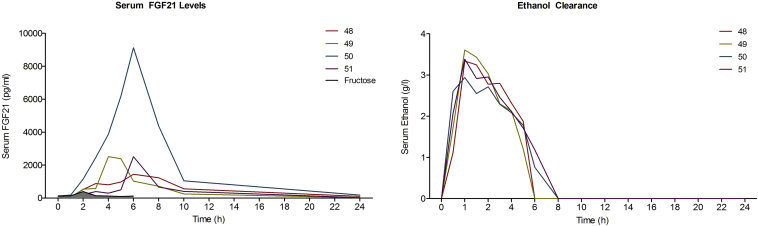
Supplementary Figure 2 Serum FGF21 and ethanol response in individual human subjects after binge consumption of ethanol. Binge consumption of ethanol in healthy human subjects (0.9 g/kg) results in a significant elevation of serum FGF21 in each subject compared to the 3–4 fold induction observed with a 75 g fructose challenge (adapted from reference 8) (A). The time course of serum ethanol clearance in the individual subjects is the same (B).
Supplementary Figure 2 Serum FGF21 and ethanol response in individual human subjects after binge consumption of ethanol. Binge consumption of ethanol in healthy human subjects (0.9 g/kg) results in a significant elevation of serum FGF21 in each subject compared to the 3–4 fold induction observed with a 75 g fructose challenge (adapted from reference 8) (A). The time course of serum ethanol clearance in the individual subjects is the same (B).CC BY · PubMed Central
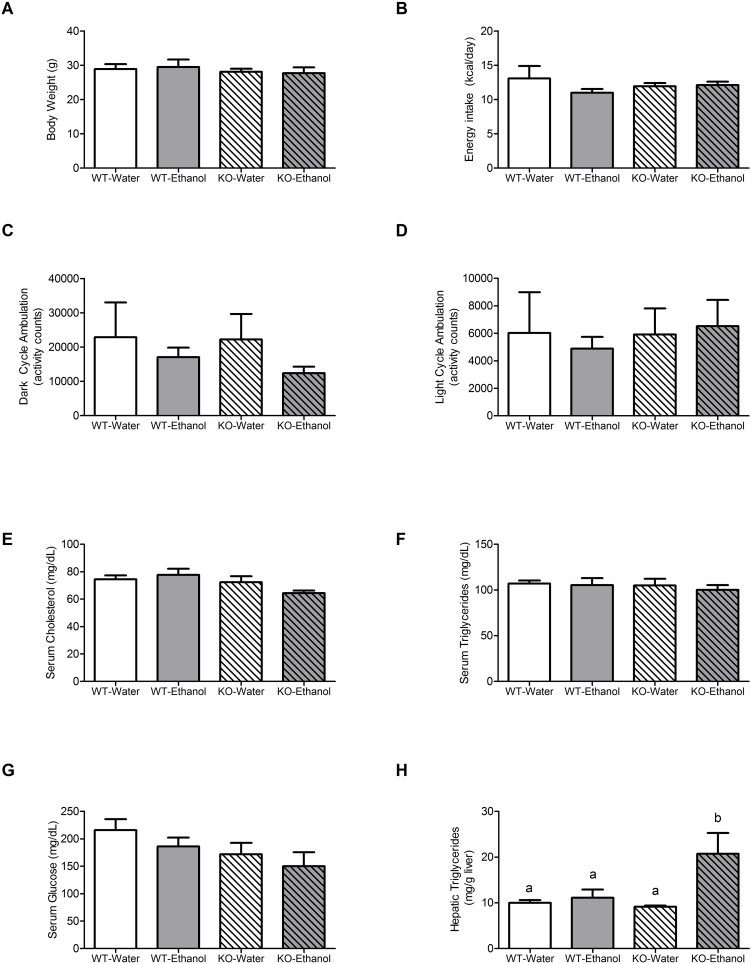
Supplementary Figure 3 Baseline parameters in mice chronically consuming ethanol in drinking water. After 16 weeks, WT and FGF21-KO mice consuming 30% ethanol in drinking water along with a chow diet have similar body weights (A), caloric intake (B), locomotor activity (C, D), serum cholesterol (E), serum triglycerides (F), and serum glucose (G). In contrast, FGF21-KO-Ethanol mice have increased accumulation of triglycerides in the liver compared to other groups (H). Data represented as Mean ± SEM; n = 5–6 mice/group. Significance was determined with a two-way ANOVA and Bonferroni's post-hoc analysis test for individual comparisons. Significance is designated by letters where means that do not share a common letter are significantly different from each other at P < 0.01.
Supplementary Figure 3 Baseline parameters in mice chronically consuming ethanol in drinking water. After 16 weeks, WT and FGF21-KO mice consuming 30% ethanol in drinking water along with a chow diet have similar body weights (A), caloric intake (B), locomotor activity (C, D), serum cholesterol (E), serum triglycerides (F), and serum glucose (G). In contrast, FGF21-KO-Ethanol mice have increased accumulation of triglycerides in the liver compared to other groups (H). Data represented as Mean ± SEM; n = 5–6 mice/group. Significance was determined with a two-way ANOVA and Bonferroni's post-hoc analysis test for individual comparisons. Significance is designated by letters where means that do not share a common letter are significantly different from each other at P < 0.01.CC BY · PubMed Central
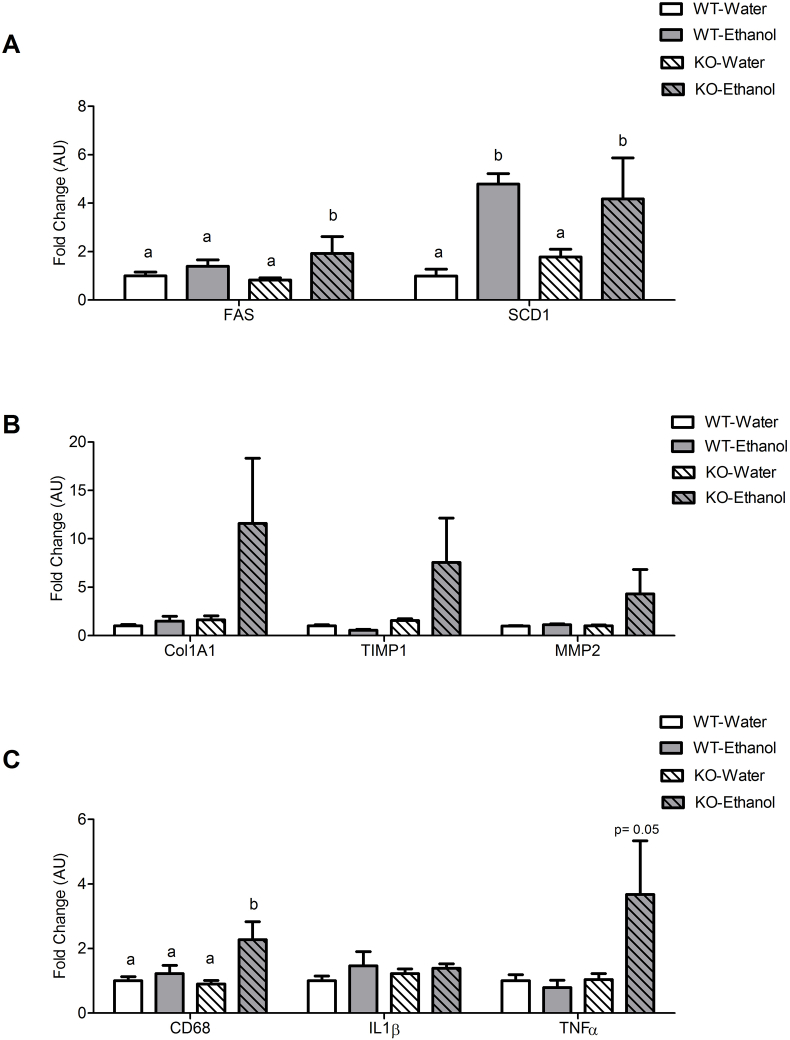
Supplementary Figure 4 Lipogenesis, inflammation, and fibrosis markers in mice chronically consuming ethanol in drinking water. After 16 weeks, WT and FGF21-KO mice consuming 30% ethanol in drinking water along with a chow diet have increased expression of fatty acid synthesis genes FAS and SCD1 (A). In addition, FGF21-KO mice consuming 30% ethanol demonstrate a trend towards increased hepatic expression of fibrotic markers (B) and significant induction of inflammatory markers CD68 and TNFα (C). Data represented as Mean ± SEM; n = 5–6 mice/group. Significance was determined with a two-way ANOVA and Bonferroni's post-hoc analysis test for individual comparisons. Significance is designated by letters where means that do not share a common letter are significantly different from each other at P < 0.01.
Supplementary Figure 4 Lipogenesis, inflammation, and fibrosis markers in mice chronically consuming ethanol in drinking water. After 16 weeks, WT and FGF21-KO mice consuming 30% ethanol in drinking water along with a chow diet have increased expression of fatty acid synthesis genes FAS and SCD1 (A). In addition, FGF21-KO mice consuming 30% ethanol demonstrate a trend towards increased hepatic expression of fibrotic markers (B) and significant induction of inflammatory markers CD68 and TNFα (C). Data represented as Mean ± SEM; n = 5–6 mice/group. Significance was determined with a two-way ANOVA and Bonferroni's post-hoc analysis test for individual comparisons. Significance is designated by letters where means that do not share a common letter are significantly different from each other at P < 0.01.CC BY · PubMed Central

Verification

Claims the paper makes

The claims and statistics of this paper haven’t been checked yet.

Run the check — free, no account needed. It reads the open-access text and checks the sources it cites.

A few free checks a day · papers already verified open instantly · results are public

Claims other papers make about this one

Each is checked against this paper’s own text: does it say what the citing paper says it does?

Self-check

Percentages, sums and reported differences re-computed from the paper’s own numbers.

The self-check needs the paper’s full text.

Citations

Cites

Show all 43 references

Cited by

Sorted by citations

See all 150

Metadata

Authors
Desai, B. N., Singhal, G., Watanabe, M., Stevanovic, D., Lundasen, T., Fisher, F. M., Mather, M. L., Vardeh, H. G., Douris, N., Adams, A. C., Nasser, I. A., FitzGerald, G. A., Flier, J. S., Skarke, C., & Maratos-Flier, E.
Affiliations
  • Beth Israel Deaconess Medical Center (US)
  • Eli Lilly (United States) (US)
  • University of Pennsylvania (US)
Venue
Molecular Metabolism
Publisher
Elsevier BV
Published
2017-11
Volume
6
Issue
11
Pages
1395-1406
ISSN
2212-8778 (ISSN-L)
OpenAlex
W2749688538
Cited by
150
References
43
Citations by year
2026: 12 · 2025: 20 · 2024: 17 · 2023: 16 · 2022: 19 · 2021: 21 · 2020: 17 · 2019: 15 · 2018: 12
FWCI
4.92
Type
journal article
Language
en
Open access
Locations
  • Molecular Metabolism (publishedVersion, cc-by)
  • PubMed Central (publishedVersion, cc-by)
  • PubMed (publishedVersion)
  • Digital Access to Scholarship at Harvard (DASH) (Harvard University) (submittedVersion, cc-by)
  • DOAJ (DOAJ: Directory of Open Access Journals) (submittedVersion, cc-by-sa)
  • IRIS Research product catalog (Sapienza University of Rome) (submittedVersion)
Funders
  • American Heart Association
  • JPB Foundation
  • National Institutes of Health (UL1TR000003, DK028082, DK034854, ES013508)
  • Harvard Digestive Diseases Center, Harvard University (P30DK034854, DK034854)
  • National Institute of Diabetes and Digestive and Kidney Diseases (NIDDK P30, DK034854, DK028082, R01DK028082, P30DK034854)
  • National Institute of Environmental Health Sciences (ES013508-05, ES013508, P30ES013508)
  • National Center for Research Resources (UL1RR024134)
  • National Center for Advancing Translational Sciences
Topics
  • Life Sciences › Biochemistry, Genetics and Molecular Biology › Molecular Biology › Fibroblast Growth Factor Research
  • Health Sciences › Medicine › Pathology and Forensic Medicine › Alcohol Consumption and Health Effects
  • Health Sciences › Medicine › Hepatology › Liver physiology and pathology
Keywords
FGF21, ethanol, binge drinking, alcoholic liver disease, ethanol-induced liver injury, hepatoprotection, FGF21 knockout mice, ethanol clearance, mortality, biomarkers, chronic alcohol consumption, Lieber-DeCarli diet, alcohol metabolism, liver pathology
MeSH terms
Adult, Ethanol, Animals, Fatty Liver, Alcoholic, Female, Fibroblast Growth Factors, Humans, Liver, Liver Cirrhosis, Liver Diseases, Alcoholic, Longitudinal Studies, Male, Mice, Inbred C57BL, Random Allocation, Mice, Knockout, Mice

About these checks

Registry, retraction, Cites and statistics results are computed, not judged, with one exception: a printed reference that no index lists is read once by a model before it counts as a citation error. Claims are extracted by a model and kept only when their quote appears verbatim in the text; each cited source is then checked, with a model’s help, for whether it says what the claim relies on. Those verdicts can be wrong — read the claim’s quote and the cited source before relying on one.

Statistics and arithmetic are recomputed, not judged.

Confidence bands are shown only for fields calibrated on our annotated test set. None is calibrated yet, so no band is shown.

What counts as a claim ›How we measure confidence ›How we check this ›

Are you an author, or do you see a problem with this page? Request a review