

The DOI matches its Crossref record; 78 of the 81 references it cites were found in a registry or an index.
The role of skeletal muscle Akt in the regulation of muscle mass and glucose homeostasis
Open accessAbstract
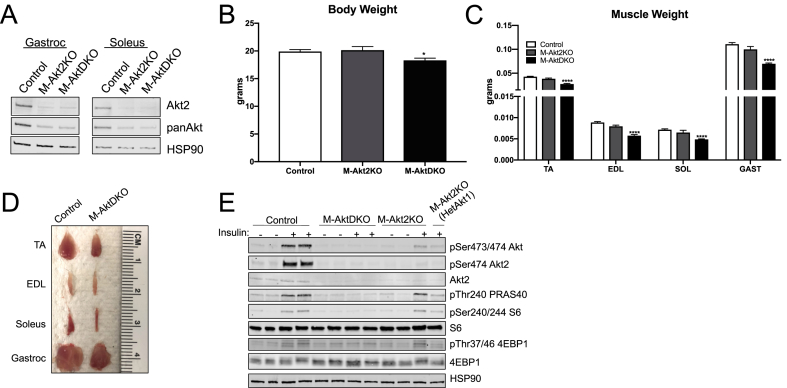
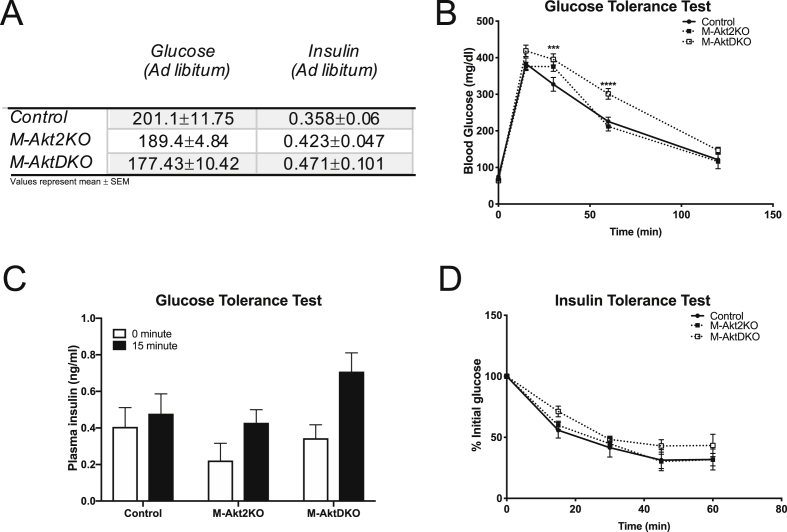
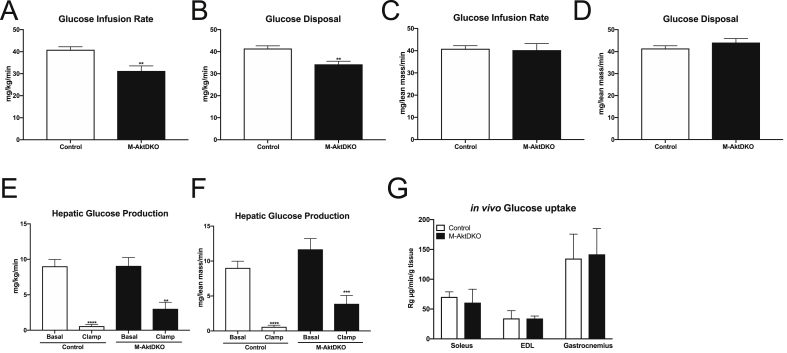
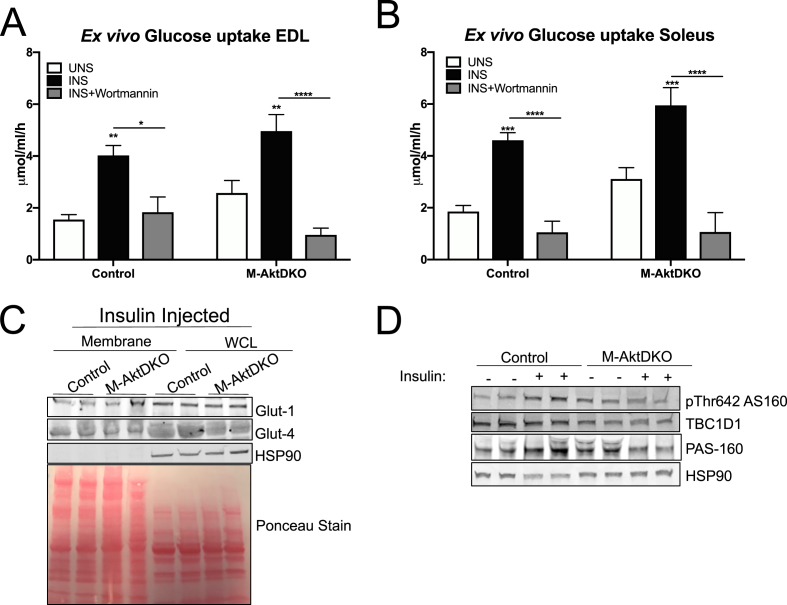
OBJECTIVE: Skeletal muscle insulin signaling is a major determinant of muscle growth and glucose homeostasis. Protein kinase B/Akt plays a prominent role in mediating many of the metabolic effects of insulin. Mice and humans harboring systemic loss-of-function mutations in Akt2, the most abundant Akt isoform in metabolic tissues, are glucose intolerant and insulin resistant. Since the skeletal muscle accounts for a significant amount of postprandial glucose disposal, a popular hypothesis in the diabetes field suggests that a reduction in Akt, specifically in skeletal muscle, leads to systemic glucose intolerance and insulin resistance. Despite this common belief, the specific role of skeletal muscle Akt in muscle growth and insulin sensitivity remains undefined. METHODS: We generated multiple mouse models of skeletal muscle Akt deficiency to evaluate the role of muscle Akt signaling in vivo. The effects of these genetic perturbations on muscle mass, glucose homeostasis and insulin sensitivity were assessed using both in vivo and ex vivo assays. RESULTS: Surprisingly, mice lacking Akt2 alone in skeletal muscle displayed normal skeletal muscle insulin signaling, glucose tolerance, and insulin sensitivity despite a dramatic reduction in phosphorylated Akt. In contrast, deletion of both Akt isoforms (M-AktDKO) prevented downstream signaling and resulted in muscle atrophy. Despite the absence of Akt signaling, in vivo and ex vivo insulin-stimulated glucose uptake were normal in M-AktDKO mice. Similar effects on insulin sensitivity were observed in mice with prolonged deletion (4 weeks) of both skeletal muscle Akt isoforms selectively in adulthood. Conversely, short term deletion (2 weeks) of skeletal muscle specific Akt in adult muscles impaired insulin tolerance paralleling the effect observed by acute pharmacological inhibition of Akt in vitro. Mechanistically, chronic ablation of Akt induced mitochondrial dysfunction and activation of AMPK, which was required for insulin-stimulated glucose uptake in the absence of Akt. CONCLUSIONS: Together, these data indicate that chronic reduction in Akt activity alone in skeletal muscle is not sufficient to induce insulin resistance or prevent glucose uptake in all conditions. Therefore, since insulin-stimulated glucose disposal in skeletal muscle is markedly impaired in insulin-resistant states, we hypothesize that alterations in signaling molecules in addition to skeletal muscle Akt are necessary to perturb glucose tolerance and insulin sensitivity in vivo.
Overview
The claims and statistics of this paper haven’t been checked yet.
Run the check — free, no account needed. It reads the open-access text and checks the sources it cites.
Integrity signals
Registry
Cites
Statistics
Figures
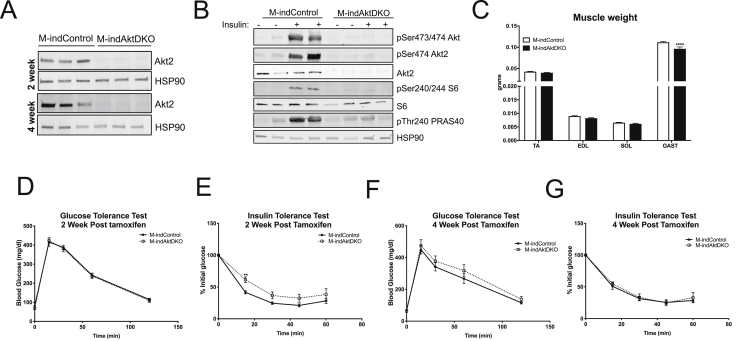
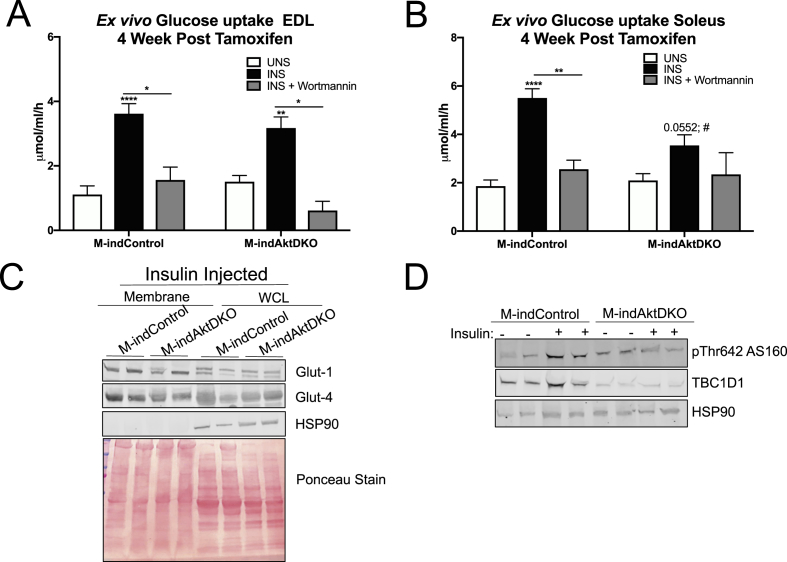
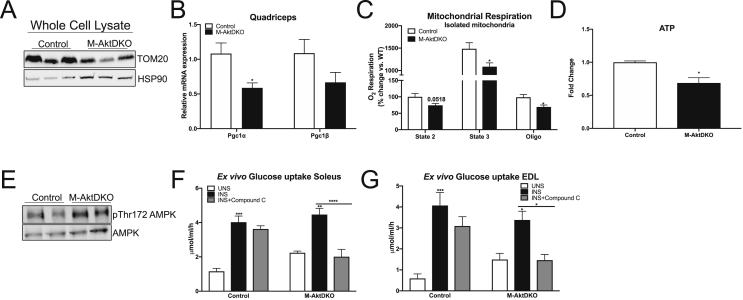
Verification
Claims the paper makes
The claims and statistics of this paper haven’t been checked yet.
Run the check — free, no account needed. It reads the open-access text and checks the sources it cites.
Claims other papers make about this one
Each is checked against this paper’s own text: does it say what the citing paper says it does?
In the citing paper
“recent studies utilizing skeletal muscle-specific knockouts of both Akt1 and Akt2 demonstrated that deletion of both isoforms reduces both muscle size and muscle protein synthesis, indicating that only minimal amounts of Akt in muscle are needed to transmit downstream signaling and preserve muscle mass in vivo [19,20].”
From Antibody blockade of activin type II receptors preserves skeletal muscle mass and enhances fat loss during GLP-1 receptor agonism (2024) · cites this paper as [19]
In the citing paper
“Skeletal muscle Akt signaling is both required and sufficient for muscle hypertrophy, as genetic loss of Akt isoforms in the muscle leads to decreased muscle size in adult mice [19,20,22].”
From Antibody blockade of activin type II receptors preserves skeletal muscle mass and enhances fat loss during GLP-1 receptor agonism (2024) · cites this paper as [19]
In the citing paper
“As described in prior studies, these mice display significant deficits in muscle growth and protein synthesis, consistent with a major anabolic role for Akt in muscle [19,20].”
From Antibody blockade of activin type II receptors preserves skeletal muscle mass and enhances fat loss during GLP-1 receptor agonism (2024) · cites this paper as [19]
In the citing paper
“Residual Akt1 expression in whole muscle tissue is due to the expression of Akt1 in non-muscle cells [19].”
From Antibody blockade of activin type II receptors preserves skeletal muscle mass and enhances fat loss during GLP-1 receptor agonism (2024) · cites this paper as [19]
In the citing paper
“Furthermore, the AKT1 rs1130214 polymorphism affects the AKT pathway, a critical component of the mTOR signaling cascade, influencing MPS rates [59].”
From Beyond Calories: Individual Metabolic and Hormonal Adaptations Driving Variability in Weight Management—A State-of-the-Art Narrative Review (2024) · cites this paper as [59]
Self-check
Percentages, sums and reported differences re-computed from the paper’s own numbers.
The self-check needs the paper’s full text.
Citations
Cites
Watterson, K. R., Bestow, D., Gallagher, J. R., Hamilton, D. L., Ashford, F. B., Meakin, P. J., & Ashford, M. L. J. (2012) · Neurosignals · doi:10.1159/000334144 · Cited by 3,395
The selectivity of protein kinase inhibitors: a further update
Bain, J., Plater, L., Elliott, M., Shpiro, N., Hastie, C. J., McLauchlan, H., Klevernic, I. V., Arthur, J. S. C., Alessi, D. R., & Cohen, P. (2007) · Biochemical Journal · doi:10.1042/bj20070797 · Cited by 2,522
Skeletal Muscle Insulin Resistance Is the Primary Defect in Type 2 Diabetes
DeFronzo, R. A., & Tripathy, D. (2009) · Diabetes Care · doi:10.2337/dc09-s302 · Cited by 2,102
Cho, H., Mu, J., Kim, J. K., Thorvaldsen, J. L., Chu, Q., Crenshaw, E. B., Kaestner, K. H., Bartolomei, M. S., Shulman, G. I., & Birnbaum, M. J. (2001) · Science · doi:10.1126/science.292.5522.1728 · Cited by 1,860
DeFronzo, R. A., Jacot, E., Jequier, E., Maeder, E., Wahren, J., & Felber, J. P. (1981) · Diabetes · doi:10.2337/diab.30.12.1000 · Cited by 1,770
The pathogenesis of insulin resistance: integrating signaling pathways and substrate flux
Samuel, V. T., & Shulman, G. I. (2016) · Journal of Clinical Investigation · doi:10.1172/jci77812 · Cited by 1,484
Pathogenesis of type 2 diabetes mellitus
DeFronzo, R. A. (2004) · Medical Clinics of North America · doi:10.1016/j.mcna.2004.04.013 · Cited by 1,342
Cho, H., Thorvaldsen, J. L., Chu, Q., Feng, F., & Birnbaum, M. J. (2001) · Journal of Biological Chemistry · doi:10.1074/jbc.c100462200 · Cited by 959
Mu, J., Brozinick, J. T., Valladares, O., Bucan, M., & Birnbaum, M. J. (2001) · Molecular Cell · doi:10.1016/s1097-2765(01)00251-9 · Cited by 924
Peng, X.-D., Xu, P.-Z., Chen, M.-L., Hahn-Windgassen, A., Skeen, J. E., Jacobs, J., Sundararajan, D., Chen, W. S., Crawford, S. E., Coleman, K. G., et al. (2003) · Genes & Development · doi:10.1101/gad.1089403 · Cited by 836
Research works printed but not linked: 1
- Moller, 2019, The role of p-21 activated kinases (PAKs) in glucose homeostasis and skeletal muscle glucose uptake, BioRxiv
Cited by
Sorted by citations
The aetiology and molecular landscape of insulin resistance
James, D. E., Stöckli, J., & Birnbaum, M. J. (2021) · Nature Reviews Molecular Cell Biology · doi:10.1038/s41580-021-00390-6 · Cited by 736
Insulin: The master regulator of glucose metabolism
Norton, L., Shannon, C. E., Gastaldelli, A., & DeFronzo, R. A. (2022) · Metabolism · doi:10.1016/j.metabol.2022.155142 · Cited by 367
Mechanisms of muscle insulin resistance and the cross‐talk with liver and adipose tissue
Rosa, S. C. D. S., Nayak, N., Caymo, A. M., & Gordon, J. W. (2020) · Physiological Reports · doi:10.14814/phy2.14607 · Cited by 271
Insulin signalling and GLUT4 trafficking in insulin resistance
van Gerwen, J., Shun-Shion, A. S., & Fazakerley, D. J. (2023) · Biochemical Society Transactions · doi:10.1042/bst20221066 · Cited by 277
Mechanisms of Estrogen Influence on Skeletal Muscle: Mass, Regeneration, and Mitochondrial Function
Pellegrino, A., Tiidus, P. M., & Vandenboom, R. (2022) · Sports Medicine · doi:10.1007/s40279-022-01733-9 · Cited by 178
Metadata
- Authors
- Jaiswal, N., Gavin, M. G., Quinn, W. J., Luongo, T. S., Gelfer, R. G., Baur, J. A., & Titchenell, P. M.
- Affiliations
- University of Pennsylvania (US)
- Corresponding author
- Titchenell, P.M.
- Venue
- Molecular Metabolism
- Publisher
- Elsevier BV
- Published
- 2019-10
- Volume
- 28
- Pages
- 1-13
- ISSN
- 2212-8778 (ISSN-L)
- PMC
- PMC6822261
- OpenAlex
- W2964701486
- Cited by
- 167
- References
- 81
- Citations by year
- 2026: 10 · 2025: 28 · 2024: 27 · 2023: 20 · 2022: 40 · 2021: 23 · 2020: 18 · 2019: 1
- FWCI
- 6.78
- Type
- journal article
- Language
- en
- Open access
- gold
- doi.org
- Licence
- Locations
- Molecular Metabolism (publishedVersion, cc-by-nc-nd)
- Europe PMC (PubMed Central) (publishedVersion, cc-by-nc-nd)
- PubMed Central (publishedVersion, cc-by-nc-nd)
- PubMed (publishedVersion)
- DOAJ (DOAJ: Directory of Open Access Journals) (submittedVersion, cc-by-sa)
- Funders
- University of Pennsylvania
- National Institutes of Health (P30 19525, K01 111715)
- Topics
- Life Sciences › Biochemistry, Genetics and Molecular Biology › Molecular Biology › Metabolism, Diabetes, and Cancer
- Life Sciences › Biochemistry, Genetics and Molecular Biology › Molecular Biology › Muscle Physiology and Disorders
- Health Sciences › Nursing › Nutrition and Dietetics › Muscle metabolism and nutrition
- Keywords
- AKT2, Akt isoforms, muscle mass, muscle atrophy, glucose homeostasis, insulin resistance, insulin sensitivity, insulin-stimulated glucose uptake, mitochondrial dysfunction, AMPK, skeletal muscle insulin signaling
- MeSH terms
- Animals, Glucose, Homeostasis, Humans, Male, Weight Gain, Muscle, Skeletal, Proto-Oncogene Proteins c-akt, Mice
About these checks
Registry, retraction, Cites and statistics results are computed, not judged, with one exception: a printed reference that no index lists is read once by a model before it counts as a citation error. Claims are extracted by a model and kept only when their quote appears verbatim in the text; each cited source is then checked, with a model’s help, for whether it says what the claim relies on. Those verdicts can be wrong — read the claim’s quote and the cited source before relying on one.
Statistics and arithmetic are recomputed, not judged.
Confidence bands are shown only for fields calibrated on our annotated test set. None is calibrated yet, so no band is shown.
What counts as a claim ›How we measure confidence ›How we check this ›
Are you an author, or do you see a problem with this page? Request a review
