

The DOI matches its Crossref record; 249 of the 252 references it cites were found in a registry or an index, and 1 are not checked yet.
Hydrogel-based cardiac repair and regeneration function in the treatment of myocardial infarction
Open accessAbstract
A life-threatening illness that poses a serious threat to human health is myocardial infarction. It may result in a significant number of myocardial cells dying, dilated left ventricles, dysfunctional heart function, and ultimately cardiac failure. Based on the development of emerging biomaterials and the lack of clinical treatment methods and cardiac donors for myocardial infarction, hydrogels with good compatibility have been gradually applied to the treatment of myocardial infarction. Specifically, based on the three processes of pathophysiology of myocardial infarction, we summarized various types of hydrogels designed for myocardial tissue engineering in recent years, including natural hydrogels, intelligent hydrogels, growth factors, stem cells, and microRNA-loaded hydrogels. In addition, we also describe the heart patch and preparation techniques that promote the repair of MI heart function. Although most of these hydrogels are still in the preclinical research stage and lack of clinical trials, they have great potential for further application in the future. It is expected that this review will improve our knowledge of and offer fresh approaches to treating myocardial infarction.
Overview
The claims and statistics of this paper haven’t been checked yet.
Run the check — free, no account needed. It reads the open-access text and checks the sources it cites.
Integrity signals
Registry
Cites
Statistics
Figures
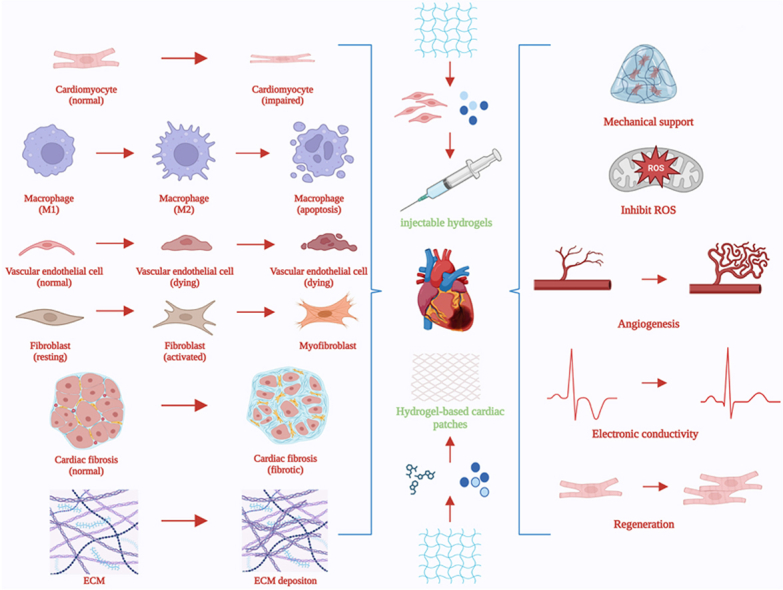
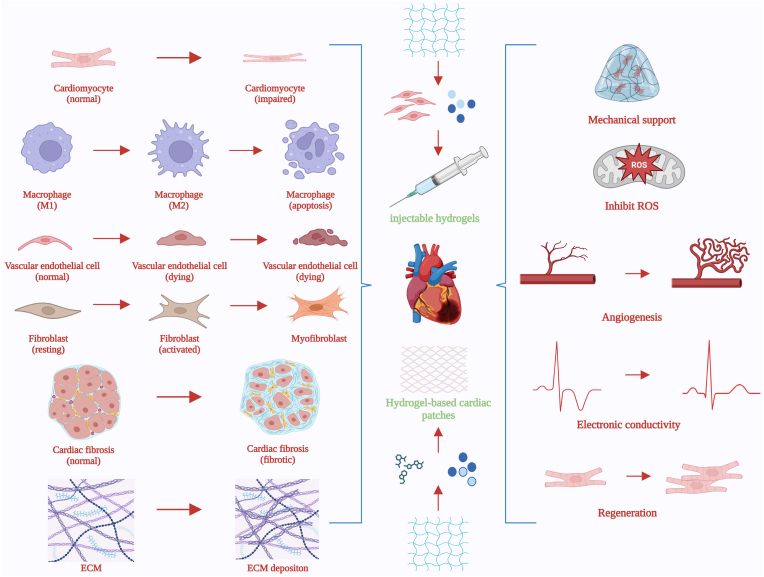
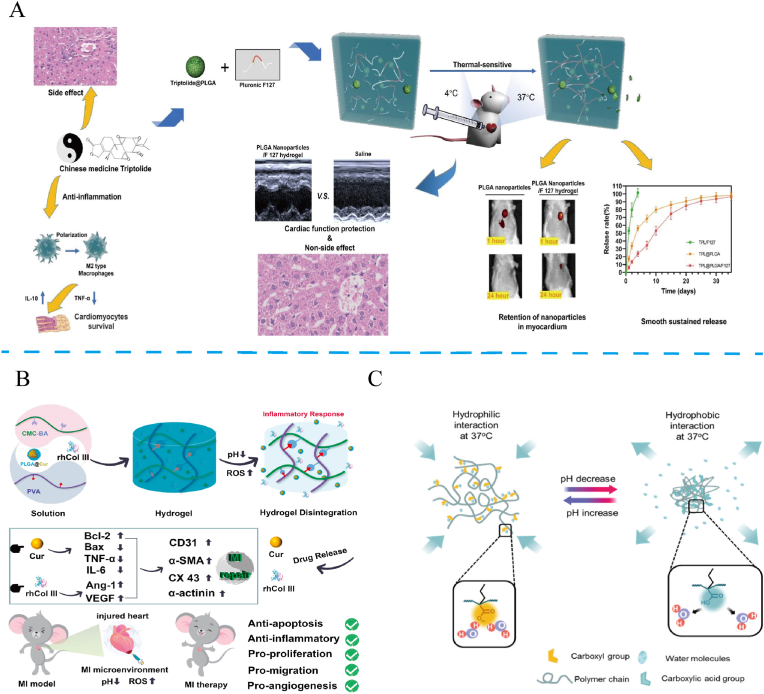
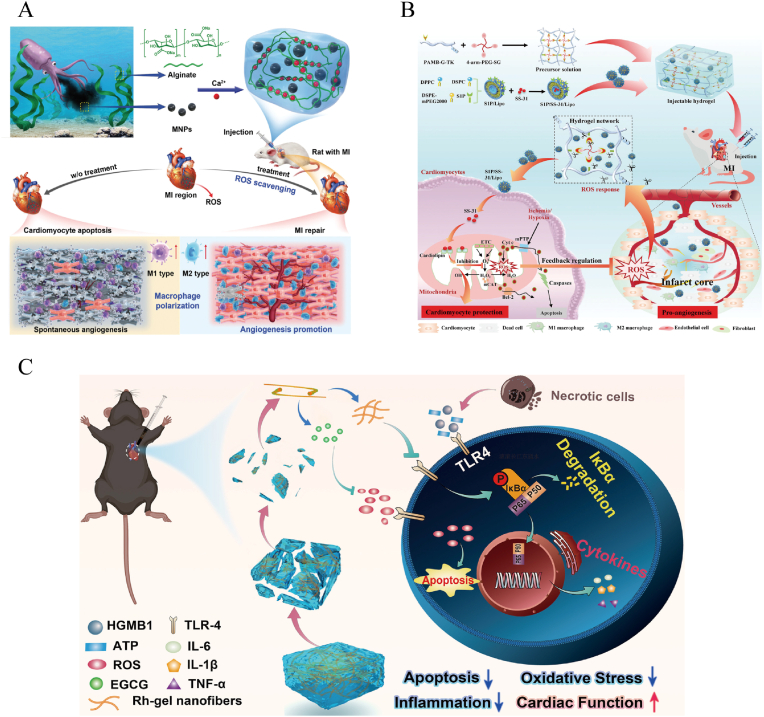
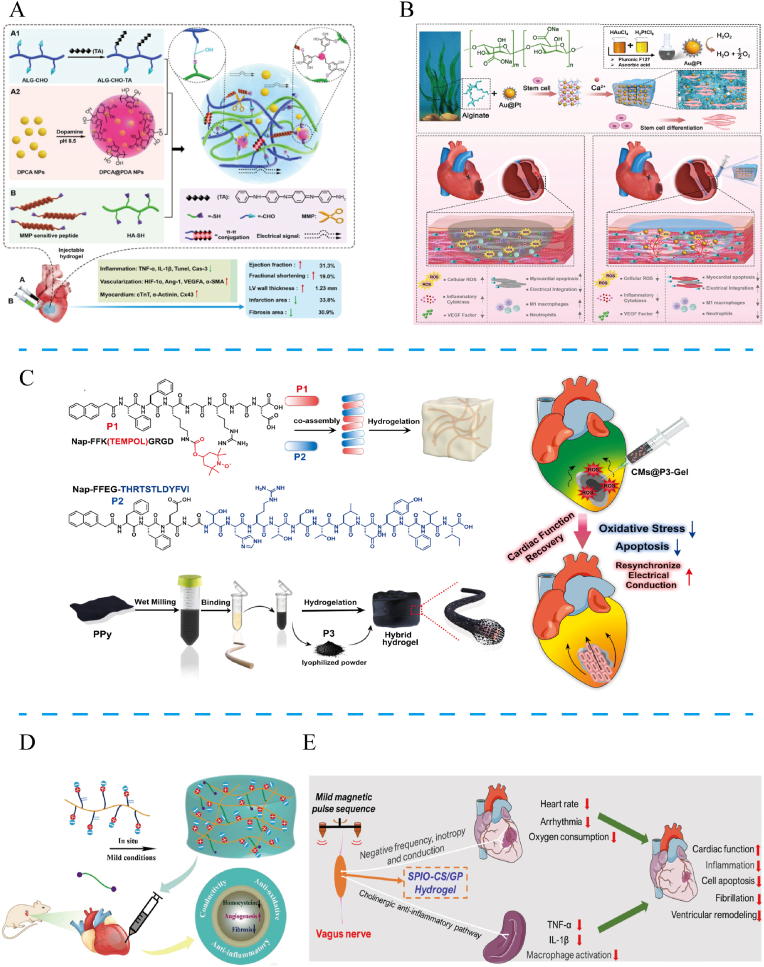
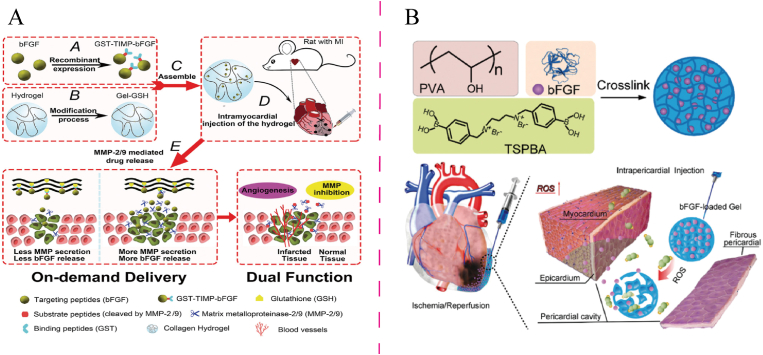
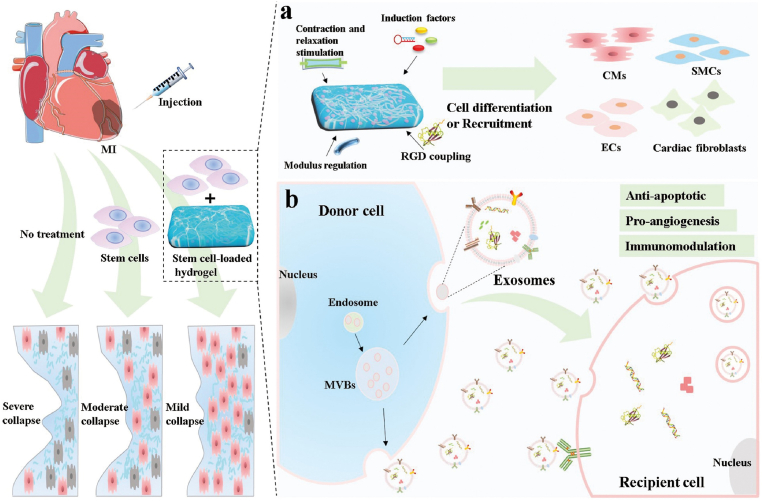
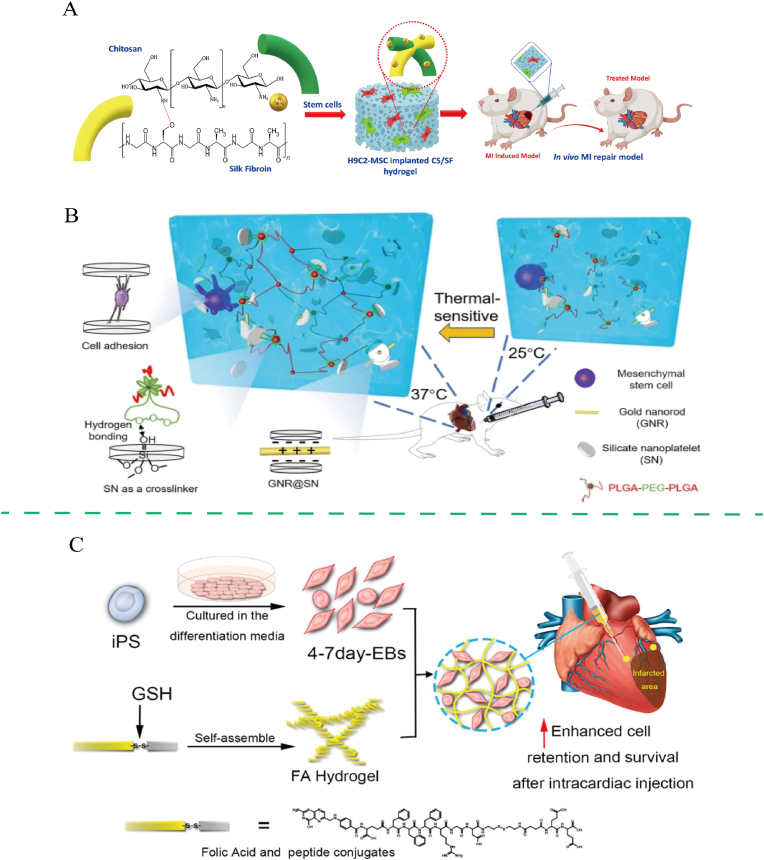
Verification
Claims the paper makes
The claims and statistics of this paper haven’t been checked yet.
Run the check — free, no account needed. It reads the open-access text and checks the sources it cites.
Claims other papers make about this one
Each is checked against this paper’s own text: does it say what the citing paper says it does?
The check wasn’t confident either way, so it gives no verdict — never disputed.
In the citing paper
“In fact, over the past ten years, more than 30 studies have explored dLECM-based hydrogels in liver regeneration.”
From From scaffold to function: A systematic review on dLECM-based hydrogels for liver tissue engineering — Fabrication, properties, and translational applications (2026) · cites this paper as [12]
Experimental — accuracy not yet measuredThe check wasn’t confident either way, so it gives no verdict — never disputed.
In the citing paper
“Results show these hydrogels can help maintain hepatocyte function in culture, boost angiogenesis, reduce fibrosis, and even support the formation of organoid-like structures.”
From From scaffold to function: A systematic review on dLECM-based hydrogels for liver tissue engineering — Fabrication, properties, and translational applications (2026) · cites this paper as [12]
Experimental — accuracy not yet measured
Self-check
Percentages, sums and reported differences re-computed from the paper’s own numbers.
The self-check needs the paper’s full text.
Citations
Cites
Items 201–250 of 250
Gil-Cabrerizo, P., Saludas, L., Prósper, F., Abizanda, G., de Anleo, M. E.-G., Ruiz‐Villalba, A., Garbayo, E., & Blanco‐Prieto, M. J. (2022) · International Journal of Pharmaceutics · doi:10.1016/j.ijpharm.2022.122356 · Cited by 34
Zahar, N. M. E., Magdy, N., El-Kosasy, A. M., & Bartlett, M. G. (2018) · Analytical and Bioanalytical Chemistry · doi:10.1007/s00216-018-1032-8 · Cited by 33
Song, M., Chen, L., Zhang, L., Li, C., Coffie, J. W., Fang, Z., Zhang, L., Wang, S., Gao, X., & Wang, H. (2020) · Pharmaceutical Biology · doi:10.1080/13880209.2020.1803369 · Cited by 33
IGF-1C domain–modified hydrogel enhanced the efficacy of stem cells in the treatment of AMI
Yao, Y., Yang, L., Feng, L.-F., Yue, Z. D., Zhao, N.-H., Li, Z., & He, Z. (2020) · Stem Cell Research & Therapy · doi:10.1186/s13287-020-01637-3 · Cited by 33
Wu, Z., Li, W., Cheng, S., Liu, J., & Wang, S. (2022) · Nanomedicine Nanotechnology Biology and Medicine · doi:10.1016/j.nano.2022.102616 · Cited by 33
The use of low-level electromagnetic fields to suppress atrial fibrillation
Yu, L., Dyer, J. W., Scherlag, B. J., Stavrakis, S., Sha, Y., Sheng, X., Garabelli, P., Jacobson, J., & Po, S. S. (2015) · Heart Rhythm · doi:10.1016/j.hrthm.2014.12.022 · Cited by 31
Xiang, Q., Liao, Y., Chao, H., Huang, W., Liu, J., Chen, H., Hong, D., Zou, Z., Xiang, A. P., & Li, W. (2018) · Stem Cell Research & Therapy · doi:10.1186/s13287-018-0803-7 · Cited by 31
Stoehr, A., Yang, Y., Patel, S., Evangelista, A. M., Aponte, A. M., Wang, G., Liu, P., Boylston, J. A., Kloner, P. H., Lin, Y., et al. (2016) · Cardiovascular Research · doi:10.1093/cvr/cvw081 · Cited by 30
Bao, S., Lu, Y., Zhang, J., Xue, L., Zhang, Y., Wang, P., Zhang, F., Gu, N., & Sun, J. (2023) · Nanoscale · doi:10.1039/d2nr05073k · Cited by 29
Zhu, H., Li, X., Yuan, M., Wan, W., Hu, M., Wang, X., & Jiang, X. (2017) · Experimental and Therapeutic Medicine · doi:10.3892/etm.2017.5015 · Cited by 28
Wang, M., & Feng, L. (2023) · Chemosphere · doi:10.1016/j.chemosphere.2023.138238 · Cited by 28
Wang, J., Liu, Q., Gong, J., Wan, Z., Zhou, J., Chang, C., & Zhang, D. (2022) · Small · doi:10.1002/smll.202202235 · Cited by 28
Self-citationLi, Z., Masumoto, H., Jo, J., Yamazaki, K., Ikeda, T., Tabata, Y., & Minatoya, K. (2018) · General Thoracic and Cardiovascular Surgery · doi:10.1007/s11748-018-0969-z · Cited by 27
Meshes in a mess: Mesenchymal stem cell-based therapies for soft tissue reinforcement
Marinaro, F., Sanchez-Margallo, F. M., Álvarez, V., López, E., Tarazona, R., Brun, M. V., Blázquez, R., & Casado, J. G. (2018) · Acta Biomaterialia · doi:10.1016/j.actbio.2018.11.042 · Cited by 27
Li, Y., He, X., Li, C., Gong, L., & Liu, M. (2019) · BioMed Research International · doi:10.1155/2019/5742608 · Cited by 27
Yuan, Z., Qing-mei, Q., Yuan, M., Wang, H., & Li, R. (2020) · Journal of Drug Delivery Science and Technology · doi:10.1016/j.jddst.2020.102001 · Cited by 27
Wang, X., Chun, Y. W., Zhong, L., Chiusa, M., Balikov, D. A., Frist, A. Y., Lim, C. C., Maltais, S., Bellan, L. M., Hong, C. C., et al. (2015) · International Journal of Cardiology · doi:10.1016/j.ijcard.2015.04.139 · Cited by 25
Wen, Y., Li, X., Li, Z., Wang, M., Chen, P., Liu, Y., Zhang, X., & Jiang, X. (2020) · Journal of Cardiovascular Translational Research · doi:10.1007/s12265-019-09941-x · Cited by 24
Chu, T. L., Tripathi, G., Park, M., Bae, S., & Lee, B. (2022) · International Journal of Biological Macromolecules · doi:10.1016/j.ijbiomac.2022.05.085 · Cited by 24
Yoshizaki, Y., Ii, M., Takai, H., Mayumi, N., Fujiwara, S., Kuzuya, A., & Ohya, Y. (2021) · Science and Technology of Advanced Materials · doi:10.1080/14686996.2021.1938212 · Cited by 24
Advanced bioactive hydrogels for the treatment of myocardial infarction
Lu, Y., Luo, Y., Zhu, R., Huang, X., & Bai, S. (2022) · Journal of Materials Chemistry B · doi:10.1039/d2tb01591a · Cited by 23
Gottipati, A., Chelvarajan, L., Peng, H., Kong, R., Cahall, C. F., Li, C., Tripathi, H., Al‐Darraji, A., Ye, S., EL-Sawalhy, E., et al. (2019) · Stem Cell Reviews and Reports · doi:10.1007/s12015-018-9870-5 · Cited by 22
Fu, Y., Azene, N., Ehtiati, T., Flammang, A. J., Gilson, W. D., Gabrielson, K. L., Weiss, C. R., Bulte, J. W. M., Solaiyappan, M., Johnston, P. V., et al. (2014) · Radiology · doi:10.1148/radiol.14131424 · Cited by 22
Reduced Cardiotoxicity of Ponatinib-Loaded PLGA-PEG-PLGA Nanoparticles in Zebrafish Xenograft Model
Al-Thani, H. F., Shurbaji, S., Zakaria, Z. Z., Hasan, M. H., Goračinova, K., Korashy, H. M., & Yalcin, H. C. (2022) · Materials · doi:10.3390/ma15113960 · Cited by 22
Wu, C., Liu, B., Wang, R., & Li, G. (2022) · Frontiers in Cardiovascular Medicine · doi:10.3389/fcvm.2021.809580 · Cited by 21
Elgamouz, A., Kawde, A.-N. M., Shehadi, I., Sayari, S., Mohammed, S. A. A., Abdelrazeq, A., Nassab, C. N., AbdelHamid, A. A., & Hasan, K. (2023) · ACS Omega · doi:10.1021/acsomega.2c07023 · Cited by 21
Zhang, X., Wang, B., Hong, H., Wang, Y., Liu, J., Liu, C., & Chen, X. (2022) · Journal of Material Science and Technology · doi:10.1016/j.jmst.2022.08.028 · Cited by 20
Non-invasive Autonomic Neuromodulation Is Opening New Landscapes for Cardiovascular Diseases
Chen, M., Wang, S., Li, X., Yu, L., Yang, H., Liu, Q., Tang, J., & Zhou, S. (2020) · Frontiers in Physiology · doi:10.3389/fphys.2020.550578 · Cited by 19
Ji, J., Chen, S.-Y., Yang, Z., Zhang, R., Qian, L.-L., Jiang, Y., Guo, J.-Q., Wu, Y., Fan, Q., Yao, Y., et al. (2022) · Nanomedicine Nanotechnology Biology and Medicine · doi:10.1016/j.nano.2022.102618 · Cited by 17
Self-citationHao, T., Li, J., Yao, F., Dong, D., Wang, Y., Yang, B., & Wang, C. (2018) · ACS Nano · doi:10.1021/acsnano.8b06561 · Cited by 16
Matsushita, S., Forrester, J. S., Li, C., Sato, M., Li, Z., Guo, X., Guan, J., & Amano, A. (2016) · Journal of Tissue Engineering · doi:10.1177/2041731416646676 · Cited by 15
Kim, S. R., Bae, S., Lee, J. Y., Kim, M. S., Kim, M., Chung, W., Bae, J., Lee, J., & Park, S. (2023) · Scientific Reports · doi:10.1038/s41598-023-31014-y · Cited by 14
Lundberg, J. O., Weitzberg, E., & Gladwin, M. T. (2008) · Nature Reviews Drug Discovery · doi:10.1038/nrd2466-c2 · Cited by 14
Li, Z., Xu, Y., Li, H., & Guan, J. (2014) · Science China Chemistry · doi:10.1007/s11426-014-5089-8 · Cited by 13
Kim, D., Lee, C., Kim, N., Lee, S. Y., Lee, M. Y., Choi, E. S., Park, S., Kim, C. G., Hwang, H., Lim, S. T., et al. (2013) · Macromolecular Research · doi:10.1007/s13233-014-2036-7 · Cited by 13
NanoClusters Surface Area Allows Nanoparticle Dissolution with Microparticle Properties
Kuehl, C. J., El-Gendy, N. A., & Berkland, C. J. (2014) · Journal of Pharmaceutical Sciences · doi:10.1002/jps.23980 · Cited by 12
Li, X., Lü, P., Liu, Z., Wen, Z., Li, X., Wang, C., Jin, W., Zhou, B., Huang, N., Song, M., et al. (2023) · Chemical Engineering Journal · doi:10.1016/j.cej.2023.146745 · Cited by 12
The Metabolism and Pharmacokinetics of Rhein and Aurantio-Obtusin
Xiao, S.-L., Guan, L.-J., Jiang, R.-F., Wang, X.-G., Li, X., & Cai, W. (2020) · Current Drug Metabolism · doi:10.2174/1389200221666200719002128 · Cited by 11
Sokołowska, P., Żukowski, K., Lasocka, I., Szulc‐Dąbrowska, L., & Jastrzębska, E. (2020) · The Analyst · doi:10.1039/c9an02366f · Cited by 10
Yu, J., Zhang, R., & Mao, Y.-L. (2022) · Neuroscience Letters · doi:10.1016/j.neulet.2022.136860 · Cited by 10
Gálvez‐Montón, C., Soler‐Botija, C., Egea, O. I., Dı́az-Güemes, I., Martí, M., Iglesias‐García, O., Prat‐Vidal, C., Crisóstomo, V., Valldeperas, A. L., Perea‐Gil, I., et al. (2017) · Tissue Engineering Part C Methods · doi:10.1089/ten.tec.2017.0156 · Cited by 10
Wang, J., Liu, Q., Gong, J., Wan, Z., Zhou, J., Chang, C., & Zhang, D. (2022) · Small · doi:10.1002/smll.202270244 · Cited by 10
Self-citationRan, F., Liu, C., Liu, Z., Shang, T., Zhou, M., & Qiao, T. (2014) · Experimental and Therapeutic Medicine · doi:10.3892/etm.2014.1562 · Cited by 9
Drug delivery and epimorphic salamander-type mouse regeneration: A full parts and labor plan
Heber‐Katz, E., & Messersmith, P. B. (2018) · Advanced Drug Delivery Reviews · doi:10.1016/j.addr.2018.02.006 · Cited by 8
Suryono, S., Rohman, M. S., Widjajanto, E., Prayitnaningsih, S., & Wihastuti, T. A. (2023) · Journal of Biomolecular Structure and Dynamics · doi:10.1080/07391102.2023.2166590 · Cited by 7
Lu, J., Wang, R., Shen, L., Yin, J., Liu, G., Chen, H., Xu, F., Wu, Q., Ye, C., Fei, X., et al. (2020) · Science China Materials · doi:10.1007/s40843-020-1445-x · Cited by 6
Yi, X., Li, X., Wan, W., & Jiang, X. (2017) · Journal of the American College of Cardiology · doi:10.1016/j.jacc.2017.07.193 · Cited by 2
Martin, J. L., Demiralp, B., & Bolinger, K. (2022) · Journal of Cardiac Failure · doi:10.1016/j.cardfail.2022.03.343 · Cited by 2
Future of myocardial infarction mortality in Iran: a scenario-based study
Alizadeh, G., Gholipour, K., Shishavan, M. K., Dehnavieh, R., Goharinejad, S., Arab‐Zozani, M., Khosravi, M. F., & Zarnaq, R. K. (2023) · Journal of Health Population and Nutrition · doi:10.1186/s41043-023-00356-8 · Cited by 1
Zhang, Y., Zhu, D., Wei, Y., Wu, Y., Cui, W., Liuqin, L., Fan, G., Yang, Q., Wang, Z., Xu, Z., et al. (2022) · Acta Biomaterialia · doi:10.1016/j.actbio.2022.03.049 · Cited by 1
Self-citation
Research works printed but not linked: 2
- Choi, 2019, Thermo-responsive poly(N-vinyl caprolactam) (PVCL)-based drug carriers for controlled drug release, Abstr. Pap. Am. Chem. Soc., 258
- Fan, 2019, Myocardial-infarction-responsive smart hydrogels targeting matrix metalloproteinase for on-demand growth factor delivery, Adv. Mater., 31, 10.1002/adma.201902900 · DOI
Cited by
Sorted by citations
Parvin, N., Joo, S. W., & Mandal, T. K. (2025) · Gels · doi:10.3390/gels11060383 · Cited by 87
Biofunctional and Interface‐Engineered Hydrogels for Advanced Tissue Engineering
Jia, B., Zhao, X., Wan, X., Wu, Z., Wu, Y., & Huang, H. (2025) · Advanced Healthcare Materials · doi:10.1002/adhm.202502146 · Cited by 55
Biocompatible Stimuli-Sensitive Natural Hydrogels: Recent Advances in Biomedical Applications
Moreno, J. M. C., Chelu, M., & Popa, M. (2025) · Gels · doi:10.3390/gels11120993 · Cited by 47
Therapeutic potentials of allicin in cardiovascular disease: advances and future directions
Gao, Y., Wang, B., Qin, G., Liang, S., Yin, J., Jiang, H., Liu, M., & Li, X. (2024) · Chinese Medicine · doi:10.1186/s13020-024-00936-8 · Cited by 42
Baddi, S., Dang-i, A. Y., Gao, F., Qiu, X., & Feng, C. (2025) · Progress in Materials Science · doi:10.1016/j.pmatsci.2025.101428 · Cited by 35
Metadata
- Authors
- Xu, Q., Xiao, Z., Yang, Q., Yu, T., Deng, X., Chen, N., Huang, Y., Wang, L., Guo, J., & Wang, J.
- Affiliations
- Jinan University (CN)
- University of California, Davis (US)
- Corresponding author
- Wang, Lihong
- Guo, Jun
- Wang, Jinghao
- Venue
- Materials Today Bio
- Publisher
- Elsevier BV
- Published
- 2024-04
- Volume
- 25
- Pages
- 100978
- ISSN
- 2590-0064 (ISSN-L)
- PMC
- PMC10907859
- OpenAlex
- W4391787791
- Cited by
- 77
- References
- 252
- Citations by year
- 2026: 32 · 2025: 36 · 2024: 9
- FWCI
- 8.54
- Type
- journal article
- Language
- en
- Open access
- gold
- doi.org
- Licence
- Locations
- Materials Today Bio (publishedVersion, cc-by-nc-nd)
- PubMed Central (publishedVersion, cc-by-nc-nd)
- PubMed (publishedVersion)
- DOAJ (DOAJ: Directory of Open Access Journals) (submittedVersion)
- Funders
- National Natural Science Foundation of China
- Topics
- Health Sciences › Medicine › Surgery › Tissue Engineering and Regenerative Medicine
- Physical Sciences › Materials Science › Biomaterials › Hydrogels: synthesis, properties, applications
- Health Sciences › Medicine › Cardiology and Cardiovascular Medicine › Cardiac Fibrosis and Remodeling
- Keywords
- myocardial infarction, hydrogels, cardiac tissue engineering, cardiac regeneration, natural hydrogels, stimuli-responsive hydrogels, growth factor delivery, stem cell delivery, biomaterials, cardiac repair
About these checks
Registry, retraction, Cites and statistics results are computed, not judged, with one exception: a printed reference that no index lists is read once by a model before it counts as a citation error. Claims are extracted by a model and kept only when their quote appears verbatim in the text; each cited source is then checked, with a model’s help, for whether it says what the claim relies on. Those verdicts can be wrong — read the claim’s quote and the cited source before relying on one.
Statistics and arithmetic are recomputed, not judged.
Confidence bands are shown only for fields calibrated on our annotated test set. None is calibrated yet, so no band is shown.
What counts as a claim ›How we measure confidence ›How we check this ›
Are you an author, or do you see a problem with this page? Request a review
