

The DOI matches its Crossref record; 249 of the 252 references it cites were found in a registry or an index, and 1 are not checked yet.
Hydrogel-based cardiac repair and regeneration function in the treatment of myocardial infarction
Open accessAbstract
A life-threatening illness that poses a serious threat to human health is myocardial infarction. It may result in a significant number of myocardial cells dying, dilated left ventricles, dysfunctional heart function, and ultimately cardiac failure. Based on the development of emerging biomaterials and the lack of clinical treatment methods and cardiac donors for myocardial infarction, hydrogels with good compatibility have been gradually applied to the treatment of myocardial infarction. Specifically, based on the three processes of pathophysiology of myocardial infarction, we summarized various types of hydrogels designed for myocardial tissue engineering in recent years, including natural hydrogels, intelligent hydrogels, growth factors, stem cells, and microRNA-loaded hydrogels. In addition, we also describe the heart patch and preparation techniques that promote the repair of MI heart function. Although most of these hydrogels are still in the preclinical research stage and lack of clinical trials, they have great potential for further application in the future. It is expected that this review will improve our knowledge of and offer fresh approaches to treating myocardial infarction.
Overview
The claims and statistics of this paper haven’t been checked yet.
Run the check — free, no account needed. It reads the open-access text and checks the sources it cites.
Integrity signals
Registry
Cites
Statistics
Figures
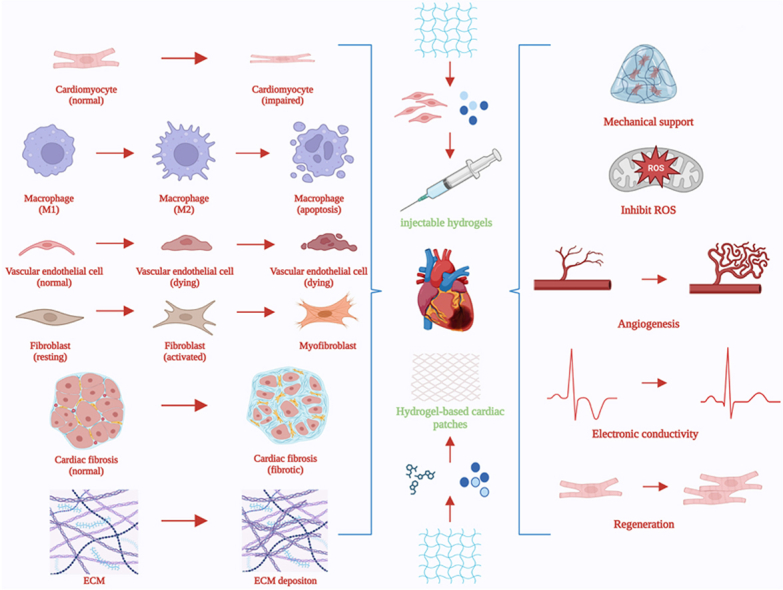
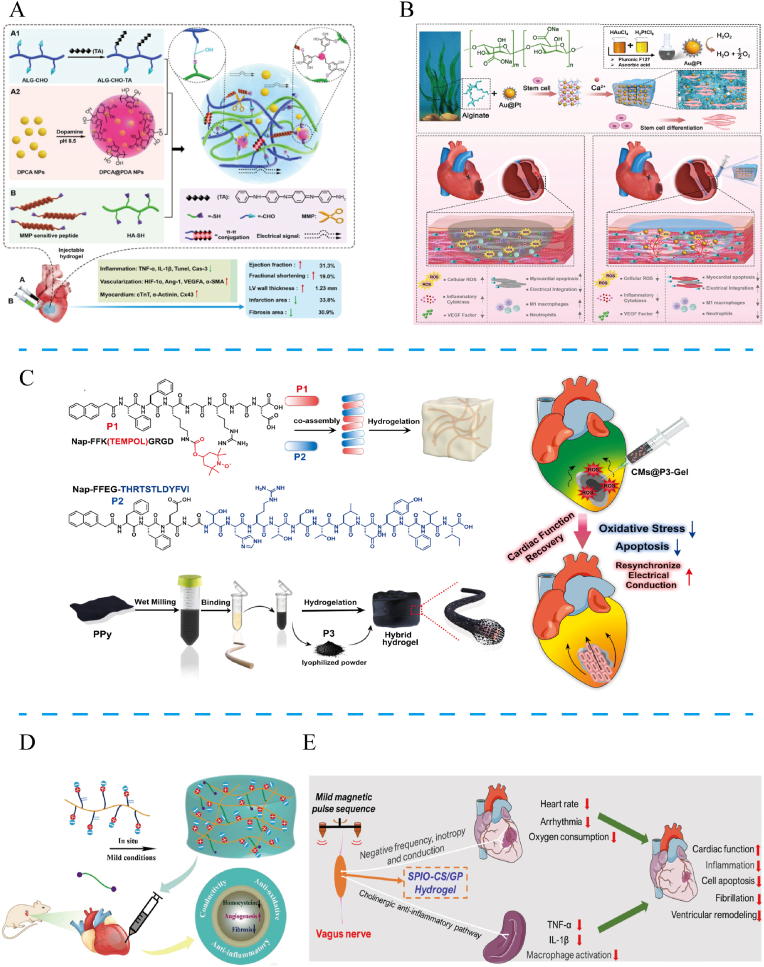
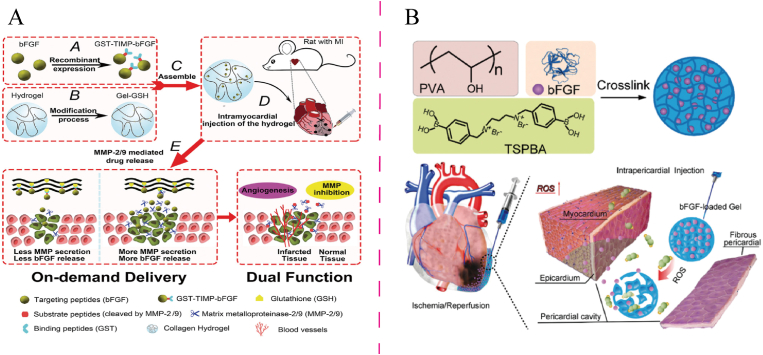
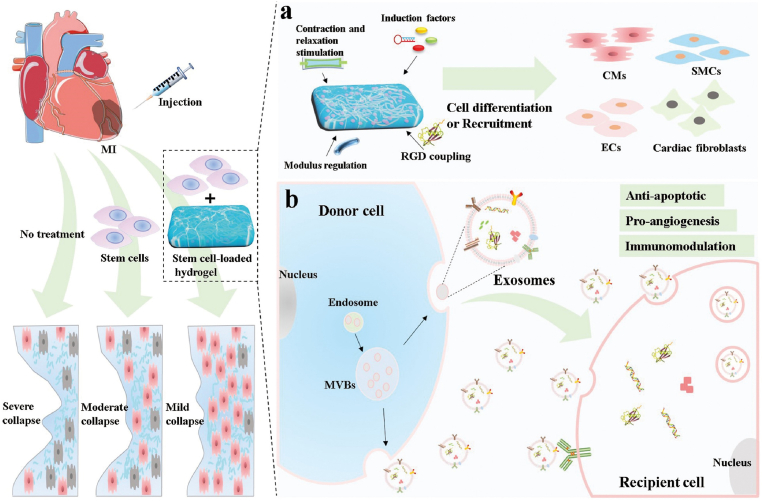
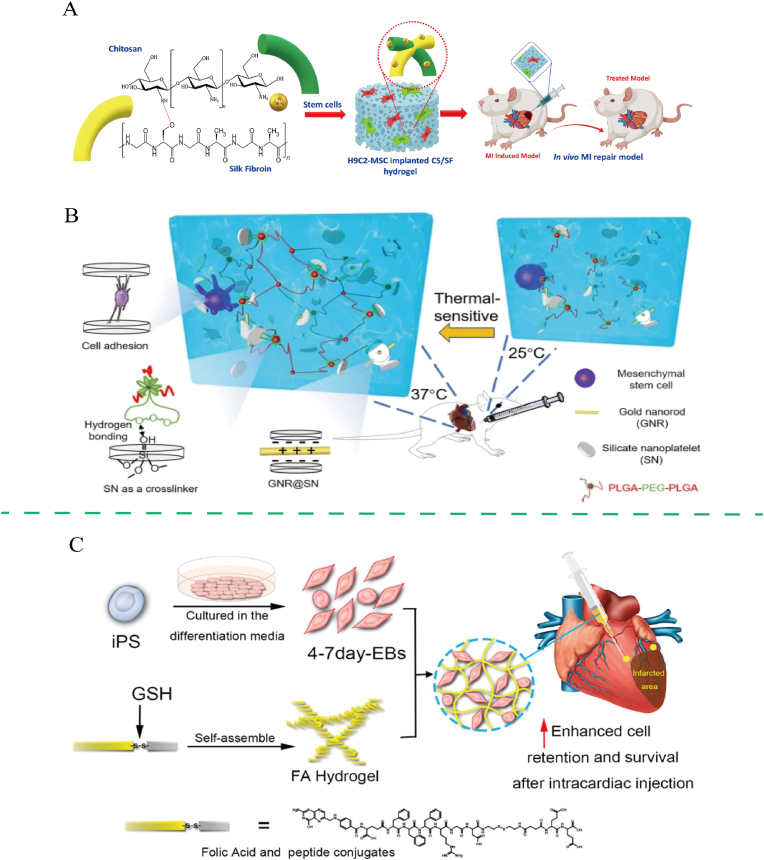
Verification
Claims the paper makes
The claims and statistics of this paper haven’t been checked yet.
Run the check — free, no account needed. It reads the open-access text and checks the sources it cites.
Claims other papers make about this one
Each is checked against this paper’s own text: does it say what the citing paper says it does?
The check wasn’t confident either way, so it gives no verdict — never disputed.
In the citing paper
“In fact, over the past ten years, more than 30 studies have explored dLECM-based hydrogels in liver regeneration.”
From From scaffold to function: A systematic review on dLECM-based hydrogels for liver tissue engineering — Fabrication, properties, and translational applications (2026) · cites this paper as [12]
Experimental — accuracy not yet measuredThe check wasn’t confident either way, so it gives no verdict — never disputed.
In the citing paper
“Results show these hydrogels can help maintain hepatocyte function in culture, boost angiogenesis, reduce fibrosis, and even support the formation of organoid-like structures.”
From From scaffold to function: A systematic review on dLECM-based hydrogels for liver tissue engineering — Fabrication, properties, and translational applications (2026) · cites this paper as [12]
Experimental — accuracy not yet measured
Self-check
Percentages, sums and reported differences re-computed from the paper’s own numbers.
The self-check needs the paper’s full text.
Citations
Cites
MicroRNAs: small RNAs with a big role in gene regulation
He, L., & Hannon, G. J. (2004) · Nature Reviews Genetics · doi:10.1038/nrg1379 · Cited by 7,118
Macrophage plasticity, polarization, and function in health and disease
Shapouri‐Moghaddam, A., Mohammadian, S., Vazini, H., Taghadosi, M., Esmaeili, S., Mardani, F., Seifi, B., Mohammadi, A., Afshari, J. T., & Sahebkar, A. (2018) · Journal of Cellular Physiology · doi:10.1002/jcp.26429 · Cited by 4,930
Vascular-specific growth factors and blood vessel formation
Yancopoulos, G. D., Davis, S., Gale, N. W., Rudge, J. S., Wiegand, S. J., & Holash, J. (2000) · Nature · doi:10.1038/35025215 · Cited by 3,699
Pyroptosis: Gasdermin-Mediated Programmed Necrotic Cell Death
Shi, J., Gao, W., & Shao, F. (2017) · Trends in Biochemical Sciences · doi:10.1016/j.tibs.2016.10.004 · Cited by 3,088
The nitrate-nitrite-nitric oxide pathway in physiology and therapeutics
Lundberg, J. O., Weitzberg, E., & Gladwin, M. T. (2008) · Nature Reviews Drug Discovery · doi:10.1038/nrd2466 · Cited by 2,739
Hydrogels in regenerative medicine
Slaughter, B. V., Khurshid, S. S., Fisher, O. Z., Khademhosseini, A., & Peppas, N. A. (2009) · Advanced Materials · doi:10.1002/adma.200802106 · Cited by 2,703
Human Mesenchymal Stem Cells Differentiate to a Cardiomyocyte Phenotype in the Adult Murine Heart
Toma, C., Pittenger, M. F., Cahill, K. S., Byrne, B. J., & Kessler, P. (2002) · Circulation · doi:10.1161/hc0102.101442 · Cited by 2,234
Ferroptosis as a target for protection against cardiomyopathy
Fang, X., Wang, H., Han, D., Xie, E., Yang, X., Wei, J., Gu, S., Gao, F., Zhu, N., Yin, X., et al. (2019) · Proceedings of the National Academy of Sciences · doi:10.1073/pnas.1821022116 · Cited by 2,163
The inflammatory response in myocardial injury, repair, and remodelling
Frangogiannis, N. G. (2014) · Nature Reviews Cardiology · doi:10.1038/nrcardio.2014.28 · Cited by 1,802
Man, S. M., Karki, R., & Kanneganti, T. (2017) · Immunological Reviews · doi:10.1111/imr.12534 · Cited by 1,684
Research works printed but not linked: 2
- Choi, 2019, Thermo-responsive poly(N-vinyl caprolactam) (PVCL)-based drug carriers for controlled drug release, Abstr. Pap. Am. Chem. Soc., 258
- Fan, 2019, Myocardial-infarction-responsive smart hydrogels targeting matrix metalloproteinase for on-demand growth factor delivery, Adv. Mater., 31, 10.1002/adma.201902900 · DOI
Cited by
Sorted by citations
Parvin, N., Joo, S. W., & Mandal, T. K. (2025) · Gels · doi:10.3390/gels11060383 · Cited by 87
Biofunctional and Interface‐Engineered Hydrogels for Advanced Tissue Engineering
Jia, B., Zhao, X., Wan, X., Wu, Z., Wu, Y., & Huang, H. (2025) · Advanced Healthcare Materials · doi:10.1002/adhm.202502146 · Cited by 55
Biocompatible Stimuli-Sensitive Natural Hydrogels: Recent Advances in Biomedical Applications
Moreno, J. M. C., Chelu, M., & Popa, M. (2025) · Gels · doi:10.3390/gels11120993 · Cited by 47
Therapeutic potentials of allicin in cardiovascular disease: advances and future directions
Gao, Y., Wang, B., Qin, G., Liang, S., Yin, J., Jiang, H., Liu, M., & Li, X. (2024) · Chinese Medicine · doi:10.1186/s13020-024-00936-8 · Cited by 42
Baddi, S., Dang-i, A. Y., Gao, F., Qiu, X., & Feng, C. (2025) · Progress in Materials Science · doi:10.1016/j.pmatsci.2025.101428 · Cited by 35
Tissue engineering: Hydrogel scaffolds and mechanical properties as key design parameters
Goswami, A. K., Giduturi, V. K., Yerramilli, S. N., Chauhan, V. S., & Yadav, N. (2025) · Advances in Colloid and Interface Science · doi:10.1016/j.cis.2025.103691 · Cited by 37
Cordoba, A., Gutiérrez-Mejía, F. A., Cepeda-Granados, G., Cauich‐Rodríguez, J. V., & Esquivel, K. (2025) · Polymers · doi:10.3390/polym17233154 · Cited by 34
Cao, Y., Rong, F., Zhu, K., & Gao, Y. (2024) · ACS Applied Materials & Interfaces · doi:10.1021/acsami.4c09623 · Cited by 34
Injectable Hydrogels in Cardiovascular Tissue Engineering
Patel, R., & Patel, D. D. (2024) · Polymers · doi:10.3390/polym16131878 · Cited by 32
Yu, S. P., Wang, L., Chen, M., Chen, Y., & Peng, Z. (2025) · Biomacromolecules · doi:10.1021/acs.biomac.4c01752 · Cited by 25
Self-citationInjectable BMSC‐Based Extracellular Matrix‐Mimicking Microtissue for Myocardial Infarction Repair
Yao, L., An, H., Fan, C., Lan, Q., Zhong, H., Zhang, Y., Libo, Z. H. O. U., & Hao, P. (2025) · Advanced Science · doi:10.1002/advs.202500299 · Cited by 24
Hydrogels for Cardiac Tissue Regeneration: Current and Future Developments
Holme, S., Richardson, S. M., Bella, J., & Pinali, C. (2025) · International Journal of Molecular Sciences · doi:10.3390/ijms26052309 · Cited by 22
Future Frontiers in Bioinspired Implanted Biomaterials
Gu, Q., Yuan, R., Sun, D., & Wallace, G. G. (2025) · Advanced Materials · doi:10.1002/adma.202506323 · Cited by 22
Designing of porous scaffolds for tissue engineering and regenerative medicine
Sahoo, R., Sanket, A. S., Pattnaik, A., Pany, S., Pradhan, S., Pati, S., Haugen, H. J., Puppi, D., & Samal, S. K. (2026) · Journal of Materials Chemistry B · doi:10.1039/d5tb02507a · Cited by 20
Mohammadzadeh, M., Farzin, A., Pazhouhnia, Z., Hoseinpour, M., & Beheshtizadeh, N. (2026) · Journal of Biological Engineering · doi:10.1186/s13036-025-00607-8 · Cited by 19
Lv, Q., Zhou, D., He, Y., Xu, T., Qiu, X., & Zeng, J. (2025) · Bioactive Materials · doi:10.1016/j.bioactmat.2025.01.013 · Cited by 19
Adhesive and Conductive Hydrogels for the Treatment of Myocardial Infarction
Zhao, J. A., Chen, Y., Qin, Y., Li, Y., Lu, X., & Xie, C. (2025) · Macromolecular Rapid Communications · doi:10.1002/marc.202400835 · Cited by 16
Zhao, Y., Song, S., Zhang, J., Ren, X., & Zhao, Y. (2025) · Chemical Reviews · doi:10.1021/acs.chemrev.4c00923 · Cited by 17
Injectable Hydrogel for Cardiac Repair via Dual Inhibition of Ferroptosis and Oxidative Stress
Gong, J., Qiu, Y., Yu, C., Cao, C., Li, X., Lu, J., Zhao, W., Zhao, Z., Zhang, H., Yao, F., et al. (2025) · ACS Applied Materials & Interfaces · doi:10.1021/acsami.5c02666 · Cited by 15
Carbon nanomaterials: Exploring new frontiers in wound healing therapy
Madaninasab, P., Mohammadzadeh, M., & Labbaf, S. (2025) · Bioengineering & Translational Medicine · doi:10.1002/btm2.70071 · Cited by 15
Inflammatory Cell-Targeted Delivery Systems for Myocardial Infarction Treatment
Zhang, W., Peng, D., Cheng, S., Ni, R., Yang, M., Cai, Y., Chen, J., Liu, F., & Liu, Y. Z. (2025) · Bioengineering · doi:10.3390/bioengineering12020205 · Cited by 13
Gao, J., Zhou, Y., Xu, G., Wei, Z., Ding, L., Zhang, W., & Huang, Y. (2024) · Materials Today Bio · doi:10.1016/j.mtbio.2024.101411 · Cited by 11
Self-citationHydrogel‐Based Implantable Medical Devices: Pioneering Therapies and Monitoring
Yao, P., Deng, X., Zhang, R., & Liu, Z. (2026) · Advanced Functional Materials · doi:10.1002/adfm.202531960 · Cited by 10
Self-citationWang, W., Tai, S., Tao, J., Yang, L., Cheng, X., & Zhou, J. (2024) · Materials Today Bio · doi:10.1016/j.mtbio.2024.101295 · Cited by 10
Baniasadi, M., Salehi, M. B., & Baniasadi, H. (2024) · International Journal of Biological Macromolecules · doi:10.1016/j.ijbiomac.2024.139240 · Cited by 9
Kim, D. W., Kim, Y. H., Lee, G., Lee, E., Bhang, S. H., & Lee, K. (2024) · Biofabrication · doi:10.1088/1758-5090/ad9cc3 · Cited by 9
Li, B., Gao, Y., Luo, X., Hu, C., Deng, M., Chen, J., & Gao, M. (2025) · International Journal of Biological Macromolecules · doi:10.1016/j.ijbiomac.2025.139575 · Cited by 6
Fu, Y., Wang, Y., Tian, Y., Xia, L. H., Liu, F., Su, Z., Dong, Z., & Cao, P. (2025) · Materials Today Communications · doi:10.1016/j.mtcomm.2025.113232 · Cited by 6
Stem Cells to Organoids: Pioneering the Future of Regenerative Therapies
Kumar, D., Gupta, S., Gupta, V., Tanwar, R., Rani, P., & Bansal, V. (2025) · Stem Cell Reviews and Reports · doi:10.1007/s12015-025-10985-7 · Cited by 6
Majidi, Z., Sarvi, M. M., Rajabi, M. A., Firouzian, H., Seyhoun, I., & Majidi Zolbin, M. (2026) · Regenerative Therapy · doi:10.1016/j.reth.2025.11.006 · Cited by 5
Fattahi, M. R., Sigaroodi, F., Asadian, E., & Khani, M. (2025) · Biomaterials Advances · doi:10.1016/j.bioadv.2025.214564 · Cited by 5
Lavarian, H., Sigaroodi, F., Asadian, E., Ganjoury, C., Boroumand, S., & Khani, M. (2025) · Colloids and Surfaces B Biointerfaces · doi:10.1016/j.colsurfb.2025.115210 · Cited by 5
Lei, W., Wang, X., Cai, J., & Pan, L. (2025) · Biotechnology Journal · doi:10.1002/biot.70152 · Cited by 5
Recent advances in biomimetic hydrogel materials for cardiac medicine applications
Saeed, S., Khan, S. U., Khan, A. J., Ullah, M., & Gouda, M. (2025) · Discover Materials · doi:10.1007/s43939-025-00440-2 · Cited by 5
Xi, B., Wang, S., Alpar, A. T., Hubbell, J. A., Tirrell, M., & Fang, Y. H. (2026) · Journal of Controlled Release · doi:10.1016/j.jconrel.2026.115031 · Cited by 5
Gao, Y., Hu, X., Zhang, H., Chen, S., Yu, J., Li, D., Dong, D., Zhan, H., Gao, B., Mao, L., et al. (2025) · International Journal of Biological Macromolecules · doi:10.1016/j.ijbiomac.2025.146803 · Cited by 5
Lu, Y., Yang, S., Yang, Q., & Huang, W. (2024) · Advanced Therapeutics · doi:10.1002/adtp.202400383 · Cited by 4
Self-citationStrategies for the delivery of RNA therapeutics to diseased heart tissue
Nicoletti, L., Coletto, M., Stola, G. P., Paoletti, C., Marcello, E. E., Testore, D., Tivano, F., Zoso, A., Mattu, C., & Chiono, V. (2025) · Expert Opinion on Drug Delivery · doi:10.1080/17425247.2025.2539960 · Cited by 5
Applications of elastic and conductive hydrogels in myocardial infarction repair
Guan, H., & Zhang, Y. (2025) · Colloids and Interface Science Communications · doi:10.1016/j.colcom.2025.100856 · Cited by 4
Lu, J., Chen, J., Lu, L., Zhao, Y., Liu, R., Li, Y., Liu, C., Che, P., & Sun, H. Y. (2025) · Journal of Materials Chemistry B · doi:10.1039/d5tb02290h · Cited by 4
Cristallini, C., Rossin, D., Barbani, N., Vanni, R., Labardi, M., Trouki, C., Burchielli, S., Kusmic, C., Terlizzi, D., Sergi, F., et al. (2025) · Biomaterials Advances · doi:10.1016/j.bioadv.2025.214523 · Cited by 3
Kavosh, P., Ansari, M., Chehelcheraghi, F., Nazari, A., Sabzevari, A., & Eslami, H. (2026) · Journal of Polymers and the Environment · doi:10.1007/s10924-025-03729-8 · Cited by 3
Li, J., Gao, J., Zhu, K., & Gao, Y. (2026) · APL Bioengineering · doi:10.1063/5.0312953 · Cited by 3
Emerging frontiers of conductive supramolecular hydrogels in biomedical applications
Razaq, H., Zhao, C., & Feng, C. (2025) · Review of Materials Research · doi:10.1016/j.revmat.2025.100018 · Cited by 3
Özkahraman, B., Öztürk, S., & Süloğlu, A. K. (2025) · Journal of Drug Delivery Science and Technology · doi:10.1016/j.jddst.2025.107062 · Cited by 2
Zhang, Z., Lang, X., Zhang, Y., Dong, X., Han, X., Ch, X., & Zhuang, X. (2026) · International Journal of Molecular Sciences · doi:10.3390/ijms27146464 · Cited by 2
Biopolymer-based interpenetrating polymer network hydrogels for tissue engineering
Jia, M., Liu, Y., Zhou, Y., Fang, Y., Wu, K., Mengjia, G., Li, Q., Zhang, J., & Zhang, H. (2026) · Materials Chemistry Frontiers · doi:10.1039/d6qm00345a · Cited by 2
Kızılcaoğlu, E. P., & Özkahraman, B. (2025) · Journal of Drug Delivery Science and Technology · doi:10.1016/j.jddst.2025.106796 · Cited by 2
Garza-Treviño, E. N., Santoyo-Suárez, M. G., & Islas, J. F. (2024) · Nanomedicine · doi:10.1080/17435889.2024.2443384 · Cited by 2
Nanomaterial-Based Photothermal and Photodynamic Therapies for Cardiovascular Diseases
Jia, H., Chen, H., Chen, X., Wang, B., Sun, J., Chen, S., & Cui, C. (2025) · Industrial Crops and Products · doi:10.1016/j.indcrop.2025.121522 · Cited by 1
Bioimplants with 3D and 4D Additive Manufacturing Processes
Shankhwar, N., & Prasad, A. (2025) · Materials horizons · doi:10.1007/978-981-96-9306-1_9 · Cited by 1
Kumar, S., Moharana, P. C., Yadav, S. R., Yadav, V. K., Meena, R. L., Nogiya, M., Surya, J. N., He, Y., Li, X., & Gouda, M. (2025) · Earth Systems and Environment · doi:10.1007/s41748-025-00939-x · Cited by 1
Wang, C. L., Zhang, Z., Yin, Q., Xu, C., Liang, L., Li, S., Zhao, Y., Chunlan, W., & Zhou, J. (2026) · Advanced Science · doi:10.1002/advs.202514103 · Cited by 1
Deng, G., Zhu, S., Qing, O., He, X., Ou, Y.-S., Su, H., Linhui, J., Huang, J., Long, X. L., Wu, M., et al. (2026) · Stem Cell Research & Therapy · doi:10.1186/s13287-026-05097-z · Cited by 1
Multifunctional Hydrogels: Rational Design and Application in Regenerative Medicine
Song, L., Silli, E. K., Xu, Y., Lv, H., & Song, R. (2026) · MedComm · doi:10.1002/mco2.71046 · Cited by 1
Xie, L., Zhou, Y., Luo, W., Zhang, J., & Wei, D. (2025) · Journal of Polymer Science · doi:10.1002/pol.20250625
Rezkinanda, A., Akbar, D. A., Rosali, W., & Anwar, S. (2025) · Syntax Literate Jurnal Ilmiah Indonesia · doi:10.36418/syntax-literate.v10i10.61753
Cui, Y., Xiang, Q., Zhao, K., Li, J. J., Che, B., Zheng, K., Gao, Y., Guo, S., & Fu, D. (2025) · doi:10.22541/au.176150016.60795129/v1
Mechanical and Electrical Phenotype of hiPSC‐Cardiomyocytes on Fibronectin‐Based Hydrogels
Costa, A. D. S., Stonkute, L., Trujillo, S., Gonzalez‐Oliva, M. A., Burton, F. L., Dalby, M. J., Dobre, O., Smith, G. L., & Salmerón‐Sánchez, M. (2025) · Advanced Healthcare Materials · doi:10.1002/adhm.202501595
James-ocloo, O. S., Zhao, L., Jia, J., Ahmed, A., Ullah, N., Touqeer, M., Siddiqui, A., Tawiah, G. K., & Huang, D. (2026) · Frontiers of Materials Science · doi:10.1007/s11706-026-0755-2
Gunasegaran, R., Al‐Ashwal, R. H., Jusoh, N., Ramlee, M. H., & Al‐Hazmy, S. M. (2026) · Cardiovascular Engineering and Technology · doi:10.1007/s13239-026-00824-2
Repairing the Infarcted Heart: Preclinical Outcomes of Cardiac Tissue Engineering
Najafinezhad, F., Javid, R. N., Maleki, S., Davoodi, S., Movahedi, N., Sepehri, M., & Rabbani, S. (2026) · Stem Cell Reviews and Reports · doi:10.1007/s12015-026-11125-5
He, G., Ma, Y.-Y., Zhang, S.-M., Qi-hui, T., Zhuang, X.-F., Liu, X.-C., Zhang, H.-M., Li, Q., Zi-Han, Q. I., Liang, W.-J., et al. (2026) · Research Square · doi:10.21203/rs.3.rs-9426756/v1
Self-citationZhu, E.-C., Lan, X.-Y., Chen, Z., Yue, J.-Y., Yang, Q.-H., & Chuang-Nian, Z. (2026) · Journal of Composites Science · doi:10.3390/jcs10060287
Self-citationHydrogels loaded with different substances for treating heart failure: a promising therapy
Meng, R., Xiao, W., Liang, S., Shen, J., Xu, H., Li, H., Xue, X., Zheng, M., Wang, X., & Wei, M. (2026) · Frontiers in Cardiovascular Medicine · doi:10.3389/fcvm.2026.1744301
Developing Peptide-Based Hydrogels for Soft Tissue Repair
Ross, A., Nguyen, D., Salazar, G. A. M., İleri, R., Guzmán‐Soto, I., Ruel, M., Suuronen, E. J., & Alarcon, E. I. (2026) · ACS Materials Letters · doi:10.1021/acsmaterialslett.6c00136
Muttaqin, T. A., Som, R., & Charalambous, A. (2025) · Journal of Biomedical and Techno Nanomaterials · doi:10.70177/jbtn.v2i4.2661
Multifunctional Integrated Hydrogels for Tissue Regeneration and Repair
Liu, Y. (2026) · Tissue Engineering Part B Reviews · doi:10.1177/19373368261469767
Coronary Microvascular Dysfunction: Epidemiology, Pathophysiology, Diagnosis, and Treatment
Ge, Z., Zhang, M. Q., Ning, X., Du, Y., Su, L.-S., Wu, X., Zhang, J., Liu, T., & Wang, X. (2026) · MedComm · doi:10.1002/mco2.70875
A hydrogel platform delivering mesenchymal stem cell lysate for potential myocardial tissue repair
Du, Z., Zhang, Q., Wang, Q., Santerre, P., MA, T. K. F., Ma, P., & Zhang, X. (2026) · Frontiers in Bioengineering and Biotechnology · doi:10.3389/fbioe.2026.1855161
BAZYANI, A., & ROTARI, I. A. (2026) · Medicine and Materials · doi:10.36868/medmater.2026.06.02.05
Dai, Y., & Han, B. (2026) · Frontiers in Immunology · doi:10.3389/fimmu.2026.1939896
Feng, X. (2026) · Pakistan Journal of Pharmaceutical Sciences · doi:10.36721/pjps/2026.40.15963.1
Angiogenesis-promoting properties of phosphorylcholine mimetic nanoparticles
Moradi, M., Poudel, B. K., Hooker, E., Kiyaseh, M., Rusu, D., Griffith, M., & Larrivée, B. (2026) · Angiogenesis · doi:10.1007/s10456-026-10094-0
Harnessing biomaterial-based immunomodulation for cardiac repair and regeneration
Rafique, M., Niazi, M. S. Y. A. K., Ali, O., Zhang, J., Li, M., Zhu, Y., Shaikho, N., Hashim, R., Shafiq, M., Guo, R., et al. (2026) · Med-X · doi:10.1007/s44258-026-00094-6
Cao, Z., Chen, T., Fu, X., & Wang, Y. (2026) · ACS Nano · doi:10.1021/acsnano.6c10157
Ahadzi, E., Manu, O. D., Antwi‐Baah, R., Agbe, H., & Adjei, P. E. (2026) · International Journal of Biomaterials · doi:10.1155/ijbm/7925127
Zhai, S., Wang, Z., Wang, J., Guo, X., Tan, X., Zhang, H., Zhang, R., & Hu, N. (2026) · ACS Applied Materials & Interfaces · doi:10.1021/acsami.6c15728
Self-citationBiomedical and healthcare applications of self-healing polymer nanocomposites
Staszak, K., & Wieszczycka, K. (2026) · Elsevier eBooks · doi:10.1016/b978-0-443-40545-7.00009-6
Liang, P., Zhang, Y., Ye, T., Li, J., Xiong, A., 張舒涵, Wang, Y., Xu, R., & Zhang, M. (2026) · ACS Omega · doi:10.1021/acsomega.6c10567
Rejali, A., Ebrahimian-Hosseinabadi, M., Rafienia, M., & Dini, G. (2026) · Biomaterials and Biosystems · doi:10.1016/j.bbiosy.2026.100154
Challenges and innovations in cardiac AAV gene delivery as a platform for cardiac regeneration
Kabboul, G., Muñoz, A. I., Bishawi, M. M., Doering, C. B., & Levit, R. D. (2026) · npj Biomedical Innovations. · doi:10.1038/s44385-026-00117-2
Metadata
- Authors
- Xu, Q., Xiao, Z., Yang, Q., Yu, T., Deng, X., Chen, N., Huang, Y., Wang, L., Guo, J., & Wang, J.
- Affiliations
- Jinan University (CN)
- University of California, Davis (US)
- Corresponding author
- Wang, Lihong
- Guo, Jun
- Wang, Jinghao
- Venue
- Materials Today Bio
- Publisher
- Elsevier BV
- Published
- 2024-04
- Volume
- 25
- Pages
- 100978
- ISSN
- 2590-0064 (ISSN-L)
- PMC
- PMC10907859
- OpenAlex
- W4391787791
- Cited by
- 77
- References
- 252
- Citations by year
- 2026: 32 · 2025: 36 · 2024: 9
- FWCI
- 8.54
- Type
- journal article
- Language
- en
- Open access
- gold
- doi.org
- Licence
- Locations
- Materials Today Bio (publishedVersion, cc-by-nc-nd)
- PubMed Central (publishedVersion, cc-by-nc-nd)
- PubMed (publishedVersion)
- DOAJ (DOAJ: Directory of Open Access Journals) (submittedVersion)
- Funders
- National Natural Science Foundation of China
- Topics
- Health Sciences › Medicine › Surgery › Tissue Engineering and Regenerative Medicine
- Physical Sciences › Materials Science › Biomaterials › Hydrogels: synthesis, properties, applications
- Health Sciences › Medicine › Cardiology and Cardiovascular Medicine › Cardiac Fibrosis and Remodeling
- Keywords
- myocardial infarction, hydrogels, cardiac tissue engineering, cardiac regeneration, natural hydrogels, stimuli-responsive hydrogels, growth factor delivery, stem cell delivery, biomaterials, cardiac repair
About these checks
Registry, retraction, Cites and statistics results are computed, not judged, with one exception: a printed reference that no index lists is read once by a model before it counts as a citation error. Claims are extracted by a model and kept only when their quote appears verbatim in the text; each cited source is then checked, with a model’s help, for whether it says what the claim relies on. Those verdicts can be wrong — read the claim’s quote and the cited source before relying on one.
Statistics and arithmetic are recomputed, not judged.
Confidence bands are shown only for fields calibrated on our annotated test set. None is calibrated yet, so no band is shown.
What counts as a claim ›How we measure confidence ›How we check this ›
Are you an author, or do you see a problem with this page? Request a review
