

The DOI matches its Crossref record; 8 of the 8 references it cites were found in a registry or an index.
A novel compound heterozygous mutation in TREM2 found in a Turkish frontotemporal dementia-like family
Open accessAbstract
Triggering receptor expressed on myeloid cells 2 (TREM2) homozygous mutations cause Nasu-Hakola disease, an early-onset recessive form of dementia preceded by bone cysts and fractures. The same type of mutations has recently been shown to cause frontotemporal dementia (FTD) without the presence of any bone phenotype. Here, we further confirm the association of TREM2 mutations with FTD-like phenotypes by reporting the first compound heterozygous mutation in a Turkish family.
Overview
The claims and statistics of this paper haven’t been checked yet.
Run the check — free, no account needed. It reads the open-access text and checks the sources it cites.
Integrity signals
Registry
Cites
Statistics
Figures
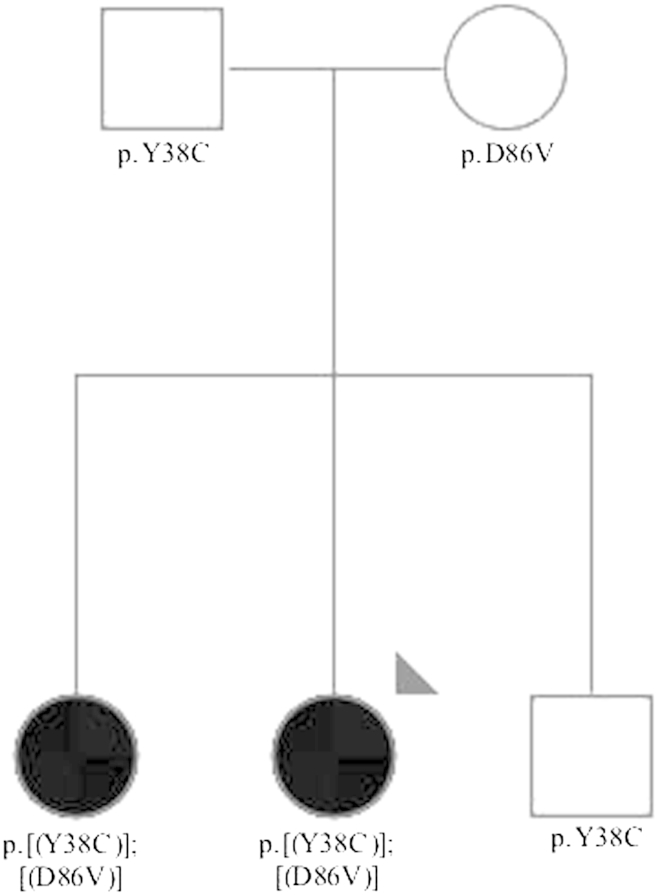
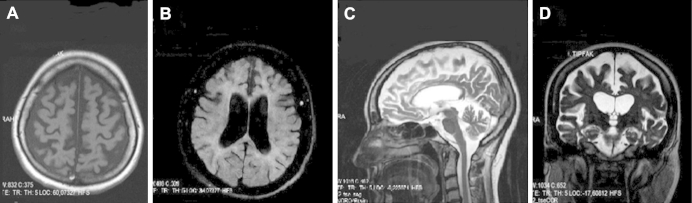
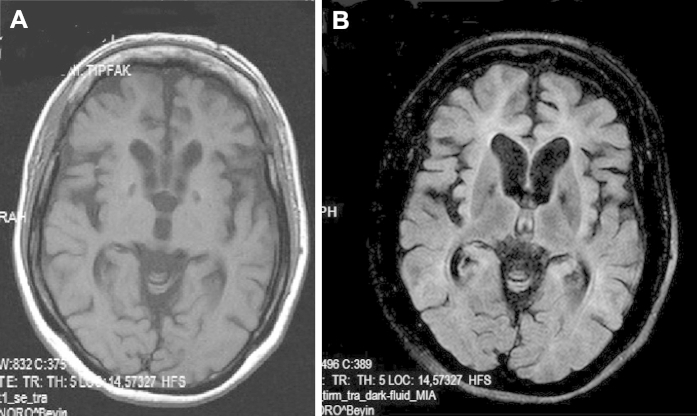
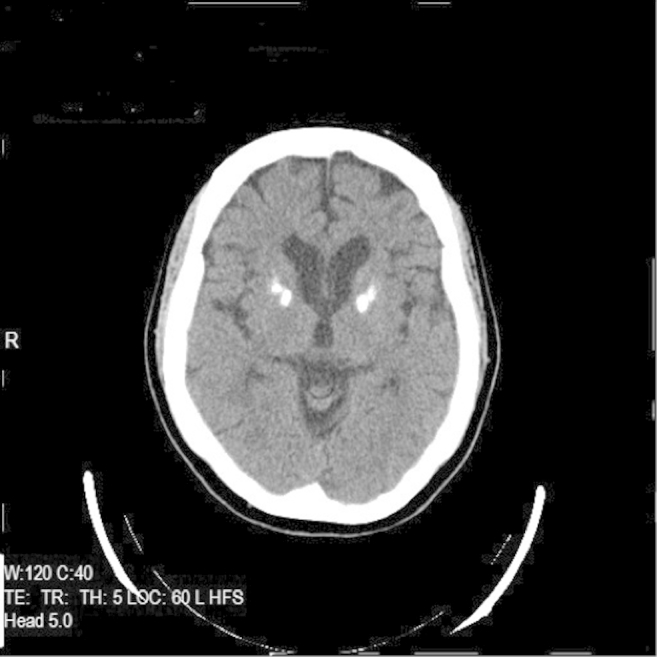
Verification
Claims the paper makes
The claims and statistics of this paper haven’t been checked yet.
Run the check — free, no account needed. It reads the open-access text and checks the sources it cites.
Claims other papers make about this one
Each is checked against this paper’s own text: does it say what the citing paper says it does?
In the citing paper
“In addition to the R47H variant, further TREM2 variants have been revealed to be risk factors of AD or other CNS diseases, such as R62H (8,20), H157Y (25), Q33X, T66M and Y38C (26,27).”
From Trem2 promotes anti-inflammatory responses in microglia and is suppressed under pro-inflammatory conditions (2020) · cites this paper as [26]
Self-check
Percentages, sums and reported differences re-computed from the paper’s own numbers.
The self-check needs the paper’s full text.
Citations
Cites
TREM2 Variants in Alzheimer's Disease
Guerreiro, R., Wojtas, A., Bras, J., Carrasquillo, M., Rogaeva, E., Majounie, E., Cruchaga, C., Sassi, C., Kauwe, J. S. K., Younkin, S., et al. (2013) · New England Journal of Medicine · doi:10.1056/nejmoa1211851 · Cited by 3,020
Self-citationVariant of TREM2 Associated with the Risk of Alzheimer's Disease
Jonsson, T., Stefansson, H., Steinberg, S., Jonsdottir, I., Jonsson, P. V., Snaedal, J., Bjornsson, S., Huttenlocher, J., Levey, A. I., Lah, J. J., et al. (2013) · New England Journal of Medicine · doi:10.1056/nejmoa1211103 · Cited by 2,558
Guerreiro, R. J., Lohmann, E., Brás, J. M., Gibbs, J. R., Rohrer, J. D., Gurunlian, N., Dursun, B., Bilgic, B., Hanagasi, H., Gurvit, H., et al. (2013) · JAMA Neurology · doi:10.1001/jamaneurol.2013.579 · Cited by 374 · cited 7×
“…cases with homozygous mutations in TREM2 have been described to present atypical phenotypes resembling behavioral variant frontotemporal dementia (bvFTD) and lacking stage (2) of the clinical picture described previously (Chouery et al., 2008; Giraldo et al., 2013; Guerreiro et al., 2013b).”
BackgroundResultInfluentialSelf-citationThe genetic causes of basal ganglia calcification, dementia, and bone cysts: DAP12 and TREM2
Klünemann, H. H., Ridha, B. H., Magy, L., Wherrett, J. R., Hemelsoet, D. M., Keen, R. W., De Bleecker, J. L., Rossor, M. N., Marienhagen, J., Klein, H. E., et al. (2005) · Neurology · doi:10.1212/01.wnl.0000160304.00003.ca · Cited by 254
CNS manifestations of Nasu–Hakola disease
Bm, J., Autti, T., Raininko, R., Partanen, J., Salonen, O., Puranen, M., Hakola, P., & Haltia, M. (2001) · Neurology · doi:10.1212/wnl.56.11.1552 · Cited by 205
Giraldo, M., Lopera, F., Siniard, A. L., Corneveaux, J. J., Schrauwen, I., Carvajal, J., Muñoz, C., Ramirez-Restrepo, M., Gaiteri, C., Myers, A. J., et al. (2013) · Neurobiology of Aging · doi:10.1016/j.neurobiolaging.2013.02.016 · Cited by 147
Mutations inTREM2lead to pure early-onset dementia without bone cysts
Chouery, É., Delague, V., Bergougnoux, A., Koussa, S., Serre, J., & Mégarbané, A. (2008) · Human Mutation · doi:10.1002/humu.20836 · Cited by 120
A novel compound heterozygous mutation in the DAP12 gene in a patient with Nasu-Hakola disease
Kuroda, R., Satoh, J., Yamamura, T., Anezaki, T., Terada, T., Yamazaki, K., Obi, T., & Mizoguchi, K. (2006) · Journal of the Neurological Sciences · doi:10.1016/j.jns.2006.09.019 · Cited by 13
Cited by
Sorted by citations
TREM2 Lipid Sensing Sustains the Microglial Response in an Alzheimer’s Disease Model
Wang, Y., Cella, M., Mallinson, K., Ulrich, J. D., Young, K. L., Robinette, M. L., Gilfillan, S., Krishnan, G. M., Sudhakar, S., Zinselmeyer, B. H., et al. (2015) · Cell · doi:10.1016/j.cell.2015.01.049 · Cited by 1,736
Yeh, F. L., Wang, Y., Tom, I., Gonzalez, L. C., & Sheng, M. (2016) · Neuron · doi:10.1016/j.neuron.2016.06.015 · Cited by 943
TREM2 mutations implicated in neurodegeneration impair cell surface transport and phagocytosis
Kleinberger, G., Yamanishi, Y., Suárez-Calvet, M., Czirr, E., Lohmann, E., Cuyvers, E., Struyfs, H., Pettkus, N., Wenninger-Weinzierl, A., Mazaheri, F., et al. (2014) · Science Translational Medicine · doi:10.1126/scitranslmed.3009093 · Cited by 798
Self-citationTREM2 — a key player in microglial biology and Alzheimer disease
Ulland, T. K., & Colonna, M. (2018) · Nature Reviews Neurology · doi:10.1038/s41582-018-0072-1 · Cited by 735
TREM2, microglia, and neurodegenerative diseases
Yeh, F. L., Hansen, D. V., & Sheng, M. (2017) · Trends in Molecular Medicine · doi:10.1016/j.molmed.2017.03.008 · Cited by 440
Metadata
- Authors
- Guerreiro, R., Bilgic, B., Guven, G., Brás, J., Rohrer, J., Lohmann, E., Hanagasi, H., Gurvit, H., & Emre, M.
- Affiliations
- UCL Queen Square Institute of Neurology (GB)
- German Center for Neurodegenerative Diseases (DE)
- Istanbul University (TR)
- Corresponding author
- Guerreiro, Rita
- Venue
- Neurobiology of Aging
- Publisher
- Elsevier BV
- Published
- 2013-12
- Volume
- 34
- Issue
- 12
- Pages
- 2890.e1-2890.e5
- ISSN
- 0197-4580 (ISSN-L)
- PMC
- PMC3898264
- OpenAlex
- W2086009263
- Cited by
- 158
- References
- 8
- Citations by year
- 2026: 4 · 2025: 6 · 2024: 6 · 2023: 22 · 2022: 9 · 2021: 23 · 2020: 17 · 2019: 12 · 2018: 14 · 2017: 12 · 2016: 14 · 2015: 10 · 2014: 6 · 2013: 1
- FWCI
- 5.80
- Type
- journal article
- Language
- en
- Open access
- hybrid
- doi.org
- Locations
- Neurobiology of Aging (publishedVersion, cc-by)
- Europe PMC (PubMed Central) (publishedVersion, cc-by)
- PubMed Central (publishedVersion, cc-by)
- PubMed (publishedVersion)
- UCL Discovery (University College London) (submittedVersion)
- DZNE Pub (submittedVersion, cc-by)
- Funders
- Wellcome Trust/MRC Joint Call in Neurodegeneration (WT089698)
- Topics
- Life Sciences › Neuroscience › Neurology › Neuroinflammation and Neurodegeneration Mechanisms
- Life Sciences › Neuroscience › Cellular and Molecular Neuroscience › Alzheimer's disease research and treatments
- Health Sciences › Medicine › Psychiatry and Mental health › Dementia and Cognitive Impairment Research
- Keywords
- TREM2, compound heterozygosity, frontotemporal dementia, Nasu-Hakola disease, familial dementia, bone cysts, Turkish families
- MeSH terms
- Adult, Female, Heterozygote, Humans, Lipodystrophy, Magnetic Resonance Imaging, Male, Membrane Glycoproteins, Mutation, Osteochondrodysplasias, Phenotype, Receptors, Immunologic, Subacute Sclerosing Panencephalitis, Tomography, X-Ray Computed, Turkey, Frontotemporal Dementia
About these checks
Registry, retraction, Cites and statistics results are computed, not judged, with one exception: a printed reference that no index lists is read once by a model before it counts as a citation error. Claims are extracted by a model and kept only when their quote appears verbatim in the text; each cited source is then checked, with a model’s help, for whether it says what the claim relies on. Those verdicts can be wrong — read the claim’s quote and the cited source before relying on one.
Statistics and arithmetic are recomputed, not judged.
Confidence bands are shown only for fields calibrated on our annotated test set. None is calibrated yet, so no band is shown.
What counts as a claim ›How we measure confidence ›How we check this ›
Are you an author, or do you see a problem with this page? Request a review
