

The DOI matches its Crossref record; 45 of the 47 references it cites were found in a registry or an index.
Comparing Dynamic Causal Models using AIC, BIC and Free Energy
Open accessAbstract
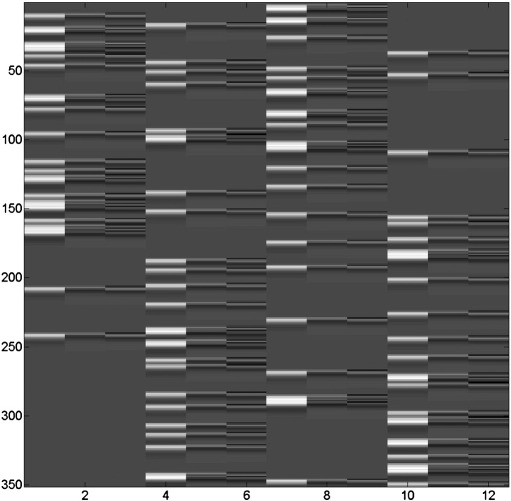
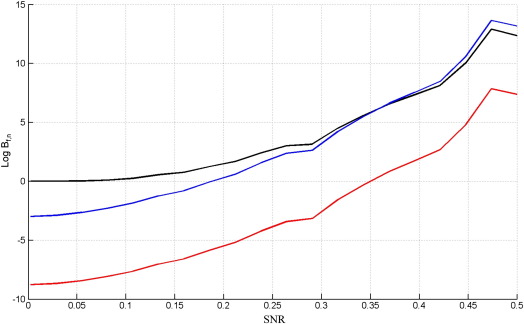
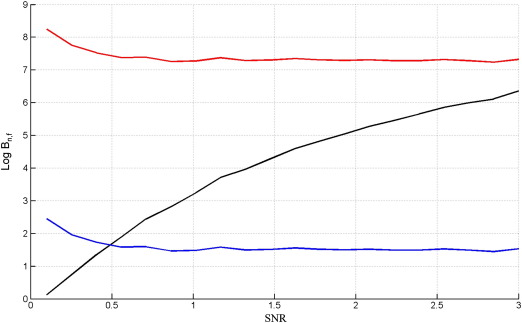
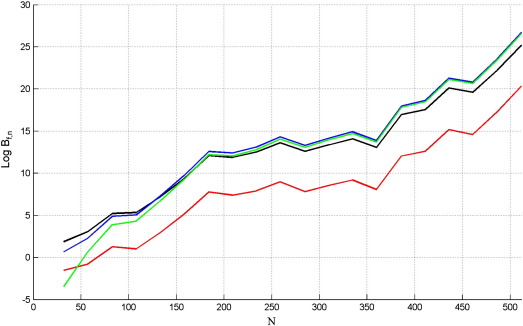
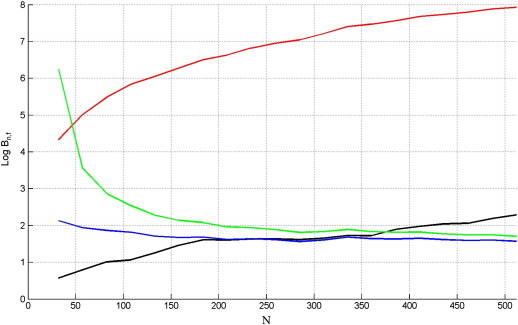
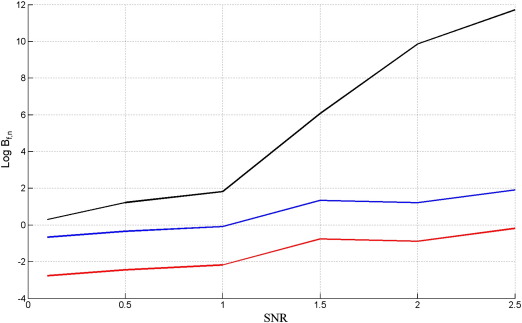
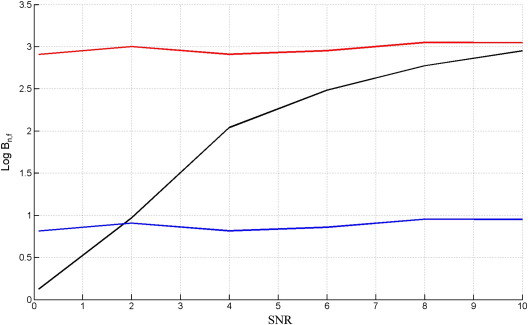
In neuroimaging it is now becoming standard practise to fit multiple models to data and compare them using a model selection criterion. This is especially prevalent in the analysis of brain connectivity. This paper describes a simulation study which compares the relative merits of three model selection criteria (i) Akaike's Information Criterion (AIC), (ii) the Bayesian Information Criterion (BIC) and (iii) the variational Free Energy. Differences in performance are examined in the context of General Linear Models (GLMs) and Dynamic Causal Models (DCMs). We find that the Free Energy has the best model selection ability and recommend it be used for comparison of DCMs.
Overview
The claims and statistics of this paper haven’t been checked yet.
Run the check — free, no account needed. It reads the open-access text and checks the sources it cites.
Integrity signals
Registry
Cites
Statistics
Figures
Verification
Claims the paper makes
The claims and statistics of this paper haven’t been checked yet.
Run the check — free, no account needed. It reads the open-access text and checks the sources it cites.
Claims other papers make about this one
Each is checked against this paper’s own text: does it say what the citing paper says it does?
The cited source says what the claim attributes to it.
In the citing paper
“Practically, log model evidence is usually approximated with Bayesian information criteria or variational free energy (Penny, 2012).”
From Active Inference, homeostatic regulation and adaptive behavioural control (2015) · cites this paper as Penny, 2012
Self-check
Percentages, sums and reported differences re-computed from the paper’s own numbers.
The self-check needs the paper’s full text.
Citations
Cites
Estimating the Dimension of a Model
Schwarz, G. (1978) · The Annals of Statistics · doi:10.1214/aos/1176344136 · Cited by 47,033
Model selection and multimodel inference: a practical information-theoretic approach.
Guthery, F. S., Burnham, K. P., & Anderson, D. R. (2003) · The Journal of Wildlife Management · doi:10.2307/3802723 · Cited by 41,495
Gelman, A., Carlin, J. B., Stern, H. S., & Rubin, D. B. (2003) · doi:10.1201/9780429258480 · Cited by 27,276
Book Review: Pattern Recognition and Machine Learning
Nasrabadi, N. M. (2007) · Journal of Electronic Imaging · doi:10.1117/1.2819119 · Cited by 22,066
Kass, R. E., & Raftery, A. E. (1995) · Journal of the American Statistical Association · doi:10.1080/01621459.1995.10476572 · Cited by 12,558
Multimodel Inference: Understanding AIC and BIC in Model Selection
Burnham, K. P., & Anderson, D. R. (2004) · Sociological Methods & Research · doi:10.1177/0049124104268644 · Cited by 11,648
Applied Regression Analysis and Other Multivariable Methods
Walker, E., Kleinbaum, D. G., Kupper, L. L., & Muller, K. E. (1989) · Technometrics · doi:10.2307/1270375 · Cited by 8,538
Bayesian model selection in social research
Raftery, A. E. (1995) · Sociological Methodology · doi:10.2307/271063 · Cited by 6,823
Regression and time series model selection in small samples
HURVICH, C. M., & TSAI, C.-L. (1989) · Biometrika · doi:10.1093/biomet/76.2.297 · Cited by 6,586
Information theory, inference, and learning algorithms
(2004) · Choice Reviews Online · doi:10.5860/choice.41-5949 · Cited by 6,536
Research works printed but not linked: 2
- Akaike, 1973, Information measures and model selection, Bull. Int. Stat. Inst., 50, 277
- Hoeting, 1999, Bayesian model averaging: a tutorial, Stat. Sci., 14, 382
Cited by
Sorted by citations
Farahani, F. V., Karwowski, W., & Lighthall, N. R. (2019) · Frontiers in Neuroscience · doi:10.3389/fnins.2019.00585 · Cited by 765
Analysing connectivity with Granger causality and dynamic causal modelling
Friston, K., Moran, R., & Seth, A. K. (2013) · Current Opinion in Neurobiology · doi:10.1016/j.conb.2012.11.010 · Cited by 684
Active Inference, homeostatic regulation and adaptive behavioural control
Pezzulo, G., Rigoli, F., & Friston, K. (2015) · Progress in Neurobiology · doi:10.1016/j.pneurobio.2015.09.001 · Cited by 650
“Practically, log model evidence is usually approximated with Bayesian information criteria or variational free energy (Penny, 2012).”
Bayesian model selection for group studies — Revisited
Rigoux, L., Stephan, K. E., Friston, K. J., & Jean Daunizeau, A. (2013) · NeuroImage · doi:10.1016/j.neuroimage.2013.08.065 · Cited by 659
Criticality in the brain: A synthesis of neurobiology, models and cognition
Cocchi, L., Gollo, L. L., Zalesky, A., & Breakspear, M. J. (2017) · Progress in Neurobiology · doi:10.1016/j.pneurobio.2017.07.002 · Cited by 555
Metadata
- Authors
- Penny, W. D.
- Affiliations
- Wellcome Centre for Human Neuroimaging (GB)
- Corresponding author
- Penny, W.D.
- ORCID
- Penny, W.D.
- Venue
- NeuroImage
- Publisher
- Elsevier BV
- Published
- 2012-01
- Volume
- 59
- Issue
- 1
- Pages
- 319-330
- ISSN
- 1053-8119 (ISSN-L)
- PMC
- PMC3200437
- OpenAlex
- W2150847325
- Cited by
- 298
- References
- 47
- Citations by year
- 2026: 10 · 2025: 21 · 2024: 12 · 2023: 16 · 2022: 20 · 2021: 25 · 2020: 26 · 2019: 19 · 2018: 34 · 2017: 23 · 2016: 29 · 2015: 20 · 2014: 16 · 2013: 18 · 2012: 8
- FWCI
- 6.99
- Type
- journal article
- Language
- en
- Open access
- hybrid
- doi.org
- Licence
- Locations
- NeuroImage (publishedVersion, cc-by)
- Europe PMC (PubMed Central) (publishedVersion, cc-by)
- PubMed Central (publishedVersion, cc-by)
- PubMed (publishedVersion)
- UCL Discovery (University College London) (submittedVersion)
- UEA Digital Repository (University of East Anglia) (submittedVersion)
- Funders
- Wellcome Trust
- Topics
- Life Sciences › Neuroscience › Cognitive Neuroscience › Functional Brain Connectivity Studies
- Physical Sciences › Computer Science › Artificial Intelligence › Bayesian Modeling and Causal Inference
- Physical Sciences › Mathematics › Statistics and Probability › Statistical Methods and Inference
- Keywords
- dynamic causal modeling, model selection criteria, Akaike information criterion, Bayesian information criterion, variational free energy, brain connectivity, general linear model, model comparison, simulation study
- MeSH terms
- Bayes Theorem, Brain Mapping, Image Processing, Computer-Assisted, Magnetic Resonance Imaging, Models, Neurological, Models, Theoretical, Reproducibility of Results, Linear Models
About these checks
Registry, retraction, Cites and statistics results are computed, not judged, with one exception: a printed reference that no index lists is read once by a model before it counts as a citation error. Claims are extracted by a model and kept only when their quote appears verbatim in the text; each cited source is then checked, with a model’s help, for whether it says what the claim relies on. Those verdicts can be wrong — read the claim’s quote and the cited source before relying on one.
Statistics and arithmetic are recomputed, not judged.
Confidence bands are shown only for fields calibrated on our annotated test set. None is calibrated yet, so no band is shown.
What counts as a claim ›How we measure confidence ›How we check this ›
Are you an author, or do you see a problem with this page? Request a review
