

Repetitive transcranial magnetic stimulation as a treatment for Alzheimer's disease: A randomized placebo-controlled double-blind clinical trial
Open accessPublished version of a preprint
The DOI matches its Crossref record; 35 of the 35 references it cites were found in a registry or an index; none of the 20 sources its claims cite is checked for support yet.
Abstract
We report results of a large multisite double-blind randomized trial investigating the short and long-term efficacy of repetitive transcranial magnetic stimulation (rTMS) applied to patients with Alzheimer's disease (AD) at mild to moderate stages, in doses of either 2 or 4 weeks of treatment (5 days/week), whilst compared with 4 weeks of sham rTMS. Randomization to treatment group was stratified based on age and severity. The objectives of this study were to: 1) investigate the efficacy of active rTMS versus sham, 2) investigate the effect of dose of treatment (2 or 4 weeks), and 3) investigate the length of benefits from treatment. The rTMS pulses (20 Hz, 30 pulses/train, 25 trains, 10-s intertrain interval) were applied serially to the left and right dorsolateral prefrontal cortex using neuro-navigation. We compared the primary outcome measure's (ADAS-Cog) score changes from pre- to post-treatment, with assessments at baseline and 4 more times up to 6 months post-treatment. Data of 135 patients were analyzed. The mean total ADAS-Cog score at baseline did not differ between the active and sham treatment groups, nor across the three study sites. The overall results show significant cognitive improvement after treatment up to two months post-treatment with either sham or active coils. The results show both short and long-term benefits of active rTMS treatment but also show similar benefits for sham coil treatment of mild/moderate AD. We discuss this finding in the context of the existing literature on rTMS therapy for AD, as well as evidence of the sham coil's potential to induce a low-level current in the brain. TRIAL REGISTRATION: https://clinicaltrials.gov/ct2/show/NCT02908815.
Overview
CoChat Summary
TL;DR
In a multisite double-blind randomized trial of 135 analyzed patients with mild-to-moderate Alzheimer’s disease, active rTMS to bilateral DLPFC (2 or 4 weeks) did not outperform 4-week sham on ADAS-Cog changes up to 6 months. All groups showed cognitive improvement up to about 2 months, and the authors hypothesize the Magstim sham coil may have had neuromodulatory effects.
Key findings
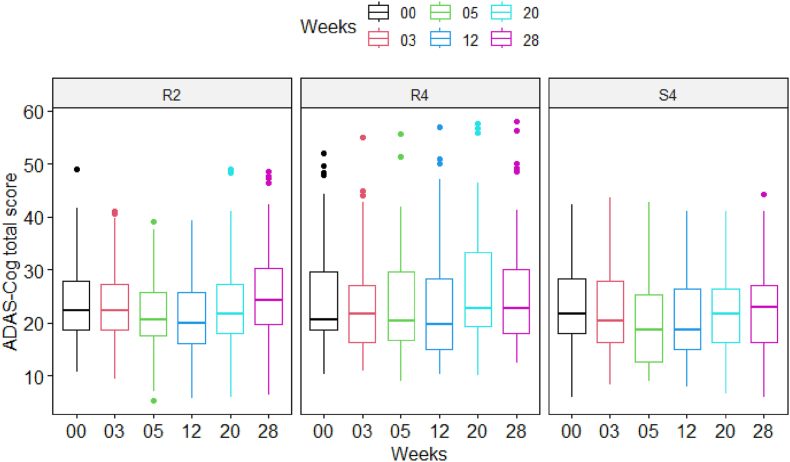
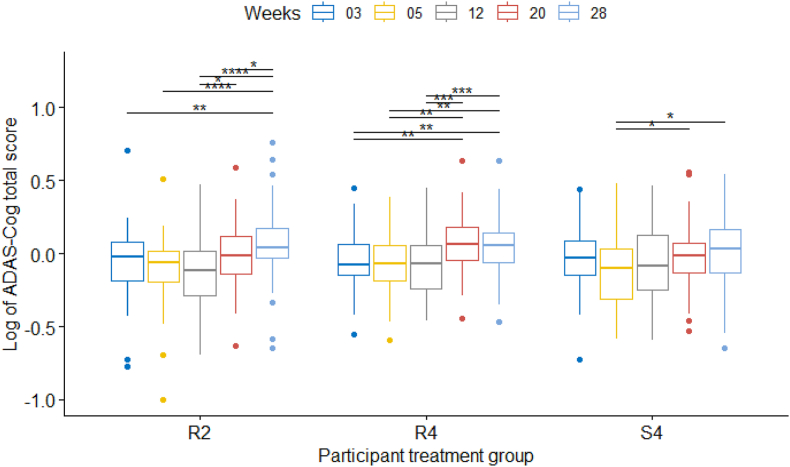
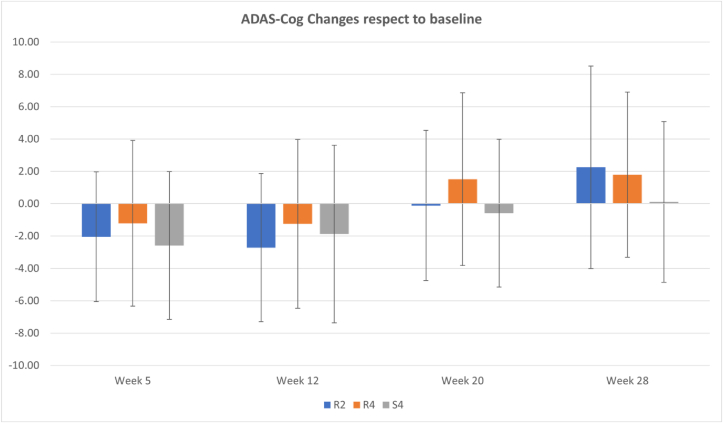
- Primary outcome: mixed-effects model showed a significant effect of time (Weeks F = 21.40, p < 0.00001) but no significant group effect (F = 0.63, p = 0.53) or group × time interaction (F = 1.59, p = 0.13); active and sham groups had similar ADAS-Cog outcomes.
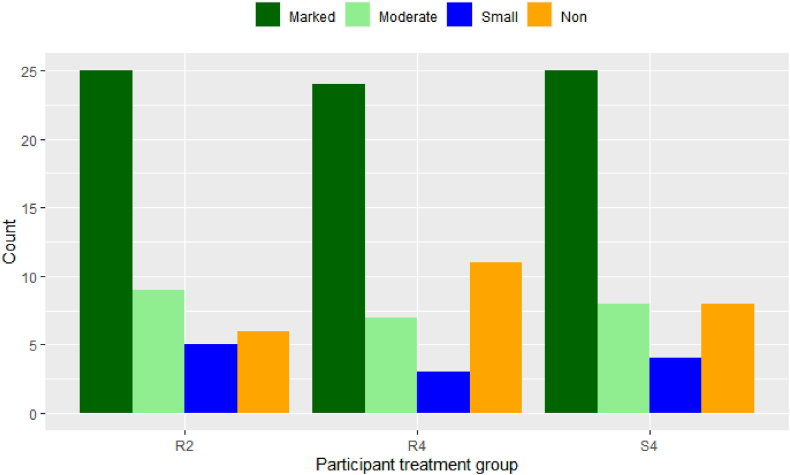
- Response rates at all sites: active rTMS (n = 90) had 72.2% marked/moderate, 8.9% mild/stabilized, and 18.9% non-responsive/declined; sham rTMS (n = 45) had 73.3%, 8.9%, and 17.8%, respectively.
- Improvement lasted more than 2 months in about 68% of active and sham patients, with some improving up to 6 months post-treatment; about 10% declined in either group.
- Tolerability: 82% of active and 79% of sham participants experienced at least one minor adverse effect, with no significant difference in frequency or severity; overall withdrawal was 18% versus the expected 10%.
Methods
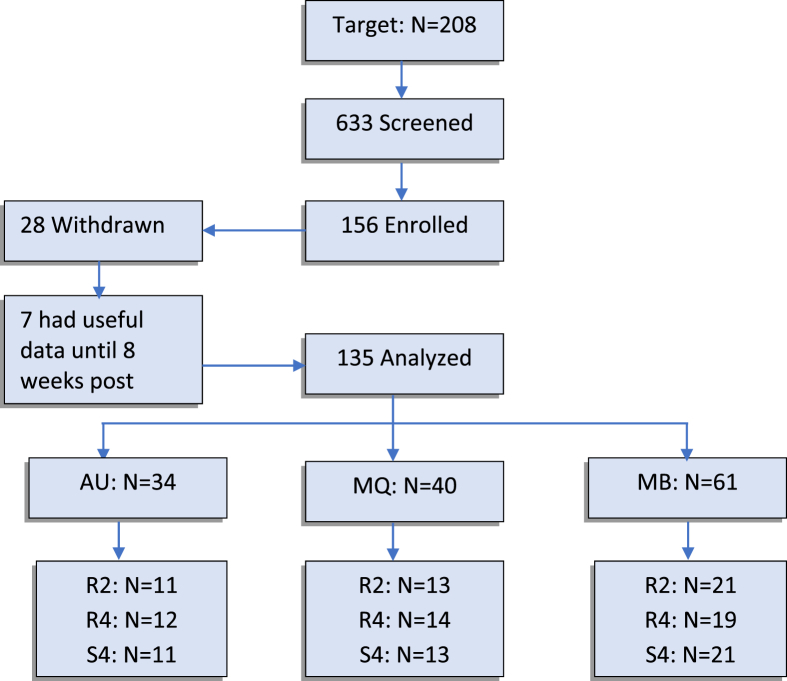
- Multisite (Winnipeg, Montreal, Melbourne), randomized, placebo-controlled, double-blind trial; 633 individuals were screened, 156 enrolled, and 135 analyzed. Randomization was stratified by age (< or >70 years) and CDR (1 or 2) into active 2-week (R2), active 4-week (R4), or sham 4-week (S4) groups.
- rTMS was delivered at 20 Hz, 30 pulses/train, 25 trains, 10-s intertrain interval, 1500 pulses/session, at 90–100% resting motor threshold, neuronavigated to bilateral DLPFC (left then right); sham used a Magstim Sham coil identical in sound and scalp sensation. Treatment was 5 days/week for 2 or 4 weeks.
- Primary outcome was ADAS-Cog change from baseline at weeks 3, 5, 12, 20, and 28; secondary outcomes included NPI-Q and ADCS-ADL. Analyses used mixed-effects models, repeated-measures ANOVA, MANOVA, chi-square tests, and a predefined response-rate classification.
Limitations
- Stated: assessor personnel changed over the 5-year study; the sham coil may induce magnetic fields and reduce the ability to detect active-versus-sham differences; some assessments were performed online due to COVID-19; and differences in target site and absence of cognitive training limit generalization of the null results.
- Stated/evident: enrollment fell short of the target 208 participants, withdrawal was 18%, there was no 2-week sham group, additional AD biomarkers were not available, and no post-intervention depression measure was available to test whether reduced depressive symptoms explained cognitive improvement.
- Evident: the study used a sham coil that may not be physiologically inert, and the authors call for future trials with “true” sham coils.
Model-written summary. Check it against the paper before relying on it.
Integrity signals
Registry
Cites
Statistics
Figures
Verification
Claims the paper makes
0 Valid · 0 Not valid · 18 Not checked · 63 Own results and interpretations
A result the paper reports from its own data — it cites no other source for it, so there is none to check. The quote shows it is in the paper.
In the paper
“There was no significant difference between the frequency and severity of the adverse effects between the active and sham groups.”
§ Repetitive transcranial magnetic stimulation as a treatment for Alzheimer's disease: A randomized placebo-controlled double-blind clinical trial > Results
plain- Asserted: passes — The authors put it forward as true.
- Checkable: passes — It can be checked against evidence.
- Load-bearing: passes — The paper’s conclusions depend on it.
- Based: passes — The paper gives a reason why it holds.
A result the paper states — it cites no source for it, so there is none to check. The quote shows it is in the paper.
In the paper
“All the statistical analyses done on ADAS-Cog (and its log) changes as the primary outcome generated similar results when considering the “Response Rate” as defined in the Statistical Analysis section instead of the ADAS-Cog score changes with respect to baseline.”
§ Repetitive transcranial magnetic stimulation as a treatment for Alzheimer's disease: A randomized placebo-controlled double-blind clinical trial > Results > Comparisons based on the response rate
plain- Asserted: passes — The authors put it forward as true.
- Checkable: passes — It can be checked against evidence.
- Load-bearing: unclear — It is unclear whether the paper’s conclusions depend on it.
- Based: passes — The paper gives a reason why it holds.
A result the paper reports from its own data — it cites no other source for it, so there is none to check. The quote shows it is in the paper.
In the paper
“In summary, the results of our analysis of 135 participants in three groups, active treatment in two doses of 2 and 4 weeks versus sham, indicate 1) an overall significant improvement for all groups after treatment”
§ Repetitive transcranial magnetic stimulation as a treatment for Alzheimer's disease: A randomized placebo-controlled double-blind clinical trial > Discussion > Limitations of the study
hedgedn = 135- Asserted: passes — The authors put it forward as true.
- Checkable: passes — It can be checked against evidence.
- Load-bearing: passes — The paper’s conclusions depend on it.
- Based: passes — The paper gives a reason why it holds.
A result the paper reports from its own data — it cites no other source for it, so there is none to check. The quote shows it is in the paper.
In the paper
“In addition, and interestingly, on average all groups showed no decline compared to baseline at follow-up assessment.”
§ Repetitive transcranial magnetic stimulation as a treatment for Alzheimer's disease: A randomized placebo-controlled double-blind clinical trial > Discussion
plainn = 156- Asserted: passes — The authors put it forward as true.
- Checkable: passes — It can be checked against evidence.
- Load-bearing: unclear — It is unclear whether the paper’s conclusions depend on it.
- Based: passes — The paper gives a reason why it holds.
A result the paper reports from its own data — it cites no other source for it, so there is none to check. The quote shows it is in the paper.
In the paper
“but the proportions were homogeneous between the sites.”
§ Repetitive transcranial magnetic stimulation as a treatment for Alzheimer's disease: A randomized placebo-controlled double-blind clinical trial > Results > Comparisons based on the response rate
plain- Asserted: passes — The authors put it forward as true.
- Checkable: passes — It can be checked against evidence.
- Load-bearing: unclear — It is unclear whether the paper’s conclusions depend on it.
- Based: passes — The paper gives a reason why it holds.
22 more claims
Create a free account to see all 81 claims and to verify the 20 references still open.
- It may state two separate claims as one. 29
- Probably not a substantial claim. 30
Statistics recomputed
Every reported test result, recomputed from its test statistic and degrees of freedom. A result shows as not adding up only once an independent check has confirmed it.
- ConsistentF(2, 153) = 0.596reported p = .552 · recomputed p = .552
“F(2,153)=0.596,p = .552”
Self-check
Percentages, sums and reported differences re-computed from the paper’s own numbers.
Each contradiction between two passages listed here was confirmed by an independent check.
Rated minor: it would not touch a result — a value no result rests on, a p-value that stays on the same side of the significance level, or a conflict that is clerical, resolved elsewhere in the paper, or outside its own findings.
In the paper
§ Repetitive transcranial magnetic stimulation as a treatment for Alzheimer's disease: A randomized placebo-controlled double-blind clinical trial > Discussion
“only 13 had a CSDD score of 10 or higher that may suggest a mild level of depression”
§ Repetitive transcranial magnetic stimulation as a treatment for Alzheimer's disease: A randomized placebo-controlled double-blind clinical trial > Discussion
“Table: Table 5 Distribution of the 13 patients with major depression (CSDD ≥ 10) across the sites and groups, their response rate as Marked, Moderate, Small or Non-responsive.”
Rated minor: it would not touch a result — a value no result rests on, a p-value that stays on the same side of the significance level, or a conflict that is clerical, resolved elsewhere in the paper, or outside its own findings.
In the paper
§ Repetitive transcranial magnetic stimulation as a treatment for Alzheimer's disease: A randomized placebo-controlled double-blind clinical trial > Materials and Methods > Statistical analysis
“a “Marked Positive Response” if their ADAS-Cog score has ≥3 point improvement compared to baseline at either Week5 or Week8 assessment sessions.”
§ Repetitive transcranial magnetic stimulation as a treatment for Alzheimer's disease: A randomized placebo-controlled double-blind clinical trial > Materials and Methods > Outcome measures
“We assessed participants within one week prior to the start of intervention (baseline) and at 3, 5, 12, 20, and 28 weeks after the start of the intervention.”
Rated minor: it would not touch a result — a value no result rests on, a p-value that stays on the same side of the significance level, or a conflict that is clerical, resolved elsewhere in the paper, or outside its own findings.
In the paper
§ Repetitive transcranial magnetic stimulation as a treatment for Alzheimer's disease: A randomized placebo-controlled double-blind clinical trial > Discussion
“the amount of decline measured by ADAS-Cog score changes with respect to baseline is higher in the active group compared to sham group (average values of 2.6 and 1.8 for R2 and R4, respectively, compared to −0.11 for S4)”
§ Repetitive transcranial magnetic stimulation as a treatment for Alzheimer's disease: A randomized placebo-controlled double-blind clinical trial > Discussion
“Negative and positive values imply improvement and decline, respectively (the lower ADAS-Cog, the better cognitive status).”
Citations
Cites
. Cerebral blood flow in dementia.
Hachinski, V. C., Iliff, L. D., Zilhka, E., Du Boulay, G. H., McAllister, V. L., Marshall, J., Russell, R. W. R., & Symon, L. (1975) · Archives of Neurology · doi:10.1001/archneur.1975.00490510088009 · Cited by 3,186
The number needed to treat: a clinically useful measure of treatment effect
Cook, R. J., & Sackett, D. L. (1995) · BMJ · doi:10.1136/bmj.310.6977.452 · Cited by 1,885
Transcranial magnetic stimulation and the human brain
Hallett, M. (2000) · Nature · doi:10.1038/35018000 · Cited by 1,603 · cited 1×
“High-frequency pulses (10 – 20 Hz) increase cortical excitability and synaptic plasticity through long-term potentiation mechanisms [8]; however, a systematic review paper on the studies on rTMS ef fi cacy for AD treatment did not fi nd any statistically signi fi cant differences in outcomes whether…”
Efficacy and safety of cholinesterase inhibitors in Alzheimer's disease: a meta-analysis.
Lanctôt, K. L., Herrmann, N., Yau, K. K., Khan, L. R., Liu, B. A., Loulou, M., & Einarson, T. R. (2003) · PubMed Central · Cited by 438
Koch, G., Bonnì, S., Pellicciari, M. C., Casula, E. P., Mancini, M., Esposito, R., Ponzo, V., Picazio, S., Di Lorenzo, F., Serra, L., et al. (2018) · NeuroImage · doi:10.1016/j.neuroimage.2017.12.048 · Cited by 367
Meta-analysis of the Hachinski Ischemic Score in pathologically verified dementias
Moroney, J. T., Bagiella, E., Desmond, D. W., Hachinski, V. C., Mölsä, P. K., Gustafson, L., Brun, A., Fischer, P., Erkinjuntti, T., Rosen, W., et al. (1997) · Neurology · doi:10.1212/wnl.49.4.1096 · Cited by 316
Ahmed, M. A., Darwish, E. S., Khedr, E. M., El serogy, Y. M., & Ali, A. M. (2012) · Journal of Neurology · doi:10.1007/s00415-011-6128-4 · Cited by 310
Improved language performance in Alzheimer disease following brain stimulation
Cotelli, M., Calabria, M., Manenti, R., Rosini, S., Zanetti, O., Cappa, S. F., & Miniussi, C. (2011) · Journal of Neurology, Neurosurgery & Psychiatry · doi:10.1136/jnnp.2009.197848 · Cited by 304
Precuneus magnetic stimulation for Alzheimer’s disease: a randomized, sham-controlled trial
Koch, G., Casula, E. P., Bonnì, S., Borghi, I., Assogna, M., Minei, M., Pellicciari, M. C., Motta, C., D’Acunto, A., Porrazzini, F., et al. (2022) · Brain · doi:10.1093/brain/awac285 · Cited by 300
Rusjan, P. M., Barr, M. S., Farzan, F., Arenovich, T., Maller, J. J., Fitzgerald, P. B., & Daskalakis, Z. J. (2010) · Human Brain Mapping · doi:10.1002/hbm.20964 · Cited by 258
Self-citation
Cited by
The emerging field of non-invasive brain stimulation in Alzheimer’s disease
Koch, G., Altomare, D., Benussi, A., Bréchet, L., Casula, E. P., Dodich, A., Pievani, M., Santarnecchi, E., & Frisoni, G. B. (2024) · Brain · doi:10.1093/brain/awae292 · Cited by 90
Non-invasive brain stimulation: current and future applications in neurology
Rektorová, I., Pupíková, M., Fleury, L., Brabenec, L., & Hummel, F. C. (2025) · Nature Reviews Neurology · doi:10.1038/s41582-025-01137-z · Cited by 73
Waris, A., Siraj, M., Khan, A. A., Lin, J., Asim, M., & Alhumaydhi, F. A. (2024) · ACS Pharmacology & Translational Science · doi:10.1021/acsptsci.4c00494 · Cited by 36
Zhang, X., Zhu, L., Li, Y., Yu, H., Wang, T., & Chu, X. (2025) · European journal of medical research · doi:10.1186/s40001-025-02493-8 · Cited by 21
Uehara, M. A., Kalia, S., Campuzano, M. T. G., Jozani, M. J., Lithgow, B., & Moussavi, Z. (2025) · Medicina · doi:10.3390/medicina61040757 · Cited by 19
Self-citationCognitive effects of focal neuromodulation in neurological and psychiatric disorders
Wiseman, M., Sewell, I. J., Nestor, S. M., Giacobbe, P., Hamani, C., Lipsman, N., & Rabin, J. S. (2024) · Nature Reviews Psychology · doi:10.1038/s44159-024-00291-3 · Cited by 18
Sepehrimanesh, M., Melen, S. V., Yeasmin, F., Ojo, V. A., Walden, F., Urmee, H., Etheridge, J., & Nasu, A. K. (2026) · Cells · doi:10.3390/cells15100928 · Cited by 11
Network-targeted transcranial magnetic stimulation (TMS) for mild cognitive impairment (MCI)
Taylor, J. L., Priyanka, B., Hernandez, B., Iv, M., Adamson, M. M., Heath, A. M., Yesavage, J. A., & McNerney, M. W. (2025) · NeuroImage Clinical · doi:10.1016/j.nicl.2025.103819 · Cited by 9
Saha, C., Figley, C. R., Lithgow, B., Fitzgerald, P. B., Koski, L. M., Mansouri, B., Anssari, N., Wang, X., & Moussavi, Z. (2024) · Brain Sciences · doi:10.3390/brainsci14030226 · Cited by 7
Self-citationIn Vitro Treatment of Alzheimer’s Disease by Disintegrating Amyloid- β Using Electromagnetic Waves
Bhattacharjee, S., Choi, J., Park, S., Shim, K.-H., Baek, C., Han, H.-B., Hong, H.-C., Yun, S., Cha, M., Shah, Y. H., et al. (2025) · IEEE Transactions on Antennas and Propagation · doi:10.1109/tap.2025.3568638 · Cited by 5
Wang, T., Guo, M., Wu, H., Liu, S., Ji, Y., Wang, P., & Xu, G. (2025) · GeroScience · doi:10.1007/s11357-025-01888-z · Cited by 5
Leuchter, M. K., Oughli, H. A., Durbin, K. A., Jackson, N. J., Elashoff, D. A., Chang, T. S., Corlier, J., Ngo, D., Matthews, C. D., Wong, D. Y., et al. (2025) · Alzheimer s & Dementia Translational Research & Clinical Interventions · doi:10.1002/trc2.70043 · Cited by 4
Uehara, M. A., Kalia, S., Campuzano, M. T. G., & Moussavi, Z. (2025) · Medicina · doi:10.3390/medicina61111994 · Cited by 4
Self-citationChigareva, O., Astafeva, D., Bikbaeva, K., Berezhnaya, K., Sheifer, M., Gayduk, A., Khairedinova, I., Zakharov, A. V., Sack, A. T., Koutsoumistros, T., et al. (2024) · Research Publications (Maastricht University) · doi:10.24869/psyd.2024.188 · Cited by 4
Lithgow, B., Saha, C., Dastgheib, Z. A., & Moussavi, Z. (2025) · Neuroscience Insights · doi:10.1177/26331055251328355 · Cited by 4
Self-citationInsufficient Sleep and Alzheimer’s Disease: Potential Approach for Therapeutic Treatment Methods
Trinh, D. Q., Nhu, H., & Pham, D. T. (2024) · Brain Sciences · doi:10.3390/brainsci15010021 · Cited by 3
Song, S., Liu, Q.-M., Huang, X., Chen, P., Tao, M., Pei, X., Wang, H., Han, Y., Chen, J., Hong, W., et al. (2025) · Alzheimer s Research & Therapy · doi:10.1186/s13195-025-01781-z · Cited by 3
Dastgheib, Z. A., Lithgow, B., & Moussavi, Z. (2025) · Cognitive Neurodynamics · doi:10.1007/s11571-025-10310-5 · Cited by 3
Self-citationQuantitative Analysis of Factors of Attrition in a Double-blind rTMS Study for Alzheimer Treatment
Bretecher, C. A., Verot, A., Teschuk, J. M., Uehara, M. A., Fitzgerald, P. B., Koski, L. M., Lithgow, B., & Moussavi, Z. (2024) · Alzheimer Disease & Associated Disorders · doi:10.1097/wad.0000000000000633 · Cited by 3
Self-citationImpairment of astrocyte homeostasis and lysosomal function in Alzheimer’s disease pathogenesis
Collier, J. M., McFarland, M., Krishna, S., Kurella, P., Pinon, C. C., & Sun, D. (2025) · Aging and Disease · doi:10.14336/ad.2025.0694 · Cited by 3
Tang, Y., Huang, L., Li, W., Gao, T., Shi, N., Zhu, Y., Wang, Y., Nan, J., Zhu, Y., Li, J., et al. (2026) · Neuroscience & Biobehavioral Reviews · doi:10.1016/j.neubiorev.2026.106844 · Cited by 2
Saha, C., Dastgheib, Z. A., Lithgow, B., & Moussavi, Z. (2024) · Neuroscience Insights · doi:10.1177/26331055241268108 · Cited by 2
Self-citationKumar, B. S., Syed, A., Ekta, Raparthi, A., Palaniappan, A., Kakde, S. P., Shreelakshmi, M. N., Biswas, S. K., Ahmed, S. R., Khan, R., et al. (2025) · medRxiv · doi:10.1101/2025.08.31.25334781 · Cited by 1
Napoleon, T., Akinrinde, D., Femi‐Lawal, V. O., Adebajo, G. O., Yokolo, H., Okei, F. U., Alabi, G. J., Ifeoluwa, O. I., Lawal, S. O., Abati, S. O., et al. (2026) · Health Science Reports · doi:10.1002/hsr2.73104 · Cited by 1
Non-invasive brain technologies and their role in clinical applications
Sharma, G., & Chowdhury, S. R. (2025) · Expert Review of Medical Devices · doi:10.1080/17434440.2025.2563614 · Cited by 1
Cao, Z., & Yang, M. Y. (2025) · Journal of Neurology and Neuromedicine · doi:10.29245/2572.942x/2025/4.1326 · Cited by 1
Saha, C., Figley, C. R., Lithgow, B., Wang, X., Fitzgerald, P. B., Koski, L. M., Mansouri, B., & Moussavi, Z. (2025) · Medical & Biological Engineering & Computing · doi:10.1007/s11517-025-03366-2 · Cited by 1
Self-citationA Network Target for Memory Dysfunction Derived from Brain Lesions and StimulationsPreprint
Howard, C., Madan, S., Garimella, A. H., Schaper, F. L. W. V. J., Kletenik, I., Ng, M., Mosley, P. E., Grafman, J. H., Bakshi, R., Glanz, B., et al. (2026) · medRxiv · doi:10.64898/2026.03.10.26348082 · Cited by 1
Papaliagkas, V. T., Kalinderi, K., Moschou, M., Arnaoutoglou, M., Koutsouraki, E., & Kimiskidis, V. Κ. (2026) · Life · doi:10.3390/life16030397 · Cited by 1
Yang, Z., Hou, X., Tan, Y., Tang, L., Ke, Z., Hu, Z. D., Ye, Q., Meng, H., Xu, Y., & Chen, H. (2026) · Current Neuropharmacology · doi:10.2174/011570159x438627260121063828 · Cited by 1
DOENÇA DE ALZHEIMER NO ENVELHECIMENTO: ESTRATÉGIAS PARA PREVENÇÃO E TRATAMENTO
Soares, B. D. L., Silva, E. G. D. N. E., Salgado, P. R. R., & de Souza, V. G. (2026) · Revista Ibero-Americana de Humanidades, Ciências e Educação · doi:10.51891/rease.v12i5.26487 · Cited by 1
Ma, J., Lu, J., Guo, Q.-H., Hua, X., & Xu, J. (2026) · IntechOpen eBooks · doi:10.5772/intechopen.1014748
Valverde, H. P., Clark, B. J., Hogeveen, J., & Clark, V. P. (2026) · Brain Sciences · doi:10.3390/brainsci16050527
Zheng, W., Ma, Y., Su, C., Qiu, Z., Yan, Z., Xu, G., Geng, D., & Wang, A. (2026) · Reviews in the Neurosciences · doi:10.1515/revneuro-2026-0134
Lu, L., Lan, S., Lan, S., & Hsieh, Y. (2026) · Frontiers in Aging Neuroscience · doi:10.3389/fnagi.2026.1782521
Xu, N., Xing, Y., Li, A., Pan, R., Liu, S., Gao, J., Liu, X., Tao, T., Zhang, P., Xie, W., et al. (2026) · medRxiv · doi:10.64898/2026.02.13.26346250
Wang, P.-J., Yang, X., Ji, L., Shi, J., Cai, X., Sun, P., Liu, H.-X., Jiang, F., & Yang, F. (2026) · Frontiers in Aging Neuroscience · doi:10.3389/fnagi.2026.1858299
Zhang, B., Hu, S., & Li, H. (2026) · Frontiers in Nutrition · doi:10.3389/fnut.2026.1796774
Zhu, Z., Xu, J., Wu, N., Su, Q., Zhu, S., Jiang, J., Zhang, G., Wang, L., & Lin, H. (2026) · Research Square · doi:10.21203/rs.3.rs-10979108/v1
Taylor, J. L., Hernandez, B., Lazzeroni, L. C., McNerney, M. W., Heath, A. M., Ashford, J. W., Cheng, J. J., Chao, S. Z., Priyanka, B., Iv, M., et al. (2026) · Brain Disorders · doi:10.1016/j.dscb.2026.100322
Acupuncture in neural stem cell-based therapy for cognitive impairment
Chang, H.-C. (2026) · World Journal of Stem Cells · doi:10.4252/wjsc.119872
Feng, J., Huang, X., Shi, Y., Gao, Y., Chen, J., Song, Z., Mao, X., Niu, S., Li, J., & Li, J. (2026) · Frontiers in Aging Neuroscience · doi:10.3389/fnagi.2026.1987345
Exercise dampens microglia synaptic engulfment in Alzheimer’s disease
Zu, J. (2025) · Electronic Theses of LMU Munich (Ludwig-Maximilians-Universität München) · doi:10.5282/edoc.35963
Nhu, H., To, T. M., Lam, D. T. A., Do, N. N. Y., Pham, T. V., Tran, G., Nguyen, T. B., & Nguyen, P. T. (2026) · Journal of Oleo Science · doi:10.5650/jos.ess26020
Uehara, M. (2026) · Mspace (University of Manitoba)
Self-citationSaha, C. (2024) · Mspace (University of Manitoba)
Self-citationGutiérrez, R. M. P., Gómez, J. T., Martínez, D. M. H., Muñiz-Ramírez, A., & Flores, J. M. M. (2025) · Functional Foods in Health and Disease · doi:10.31989/ffhd.v15i7.1668
Moussavi, Z., Uehara, M. A., & Garcia-Campuzano, M. (2026) · Bioengineering · doi:10.3390/bioengineering13111239
Self-citationChowdhury, M. A., & Shaheen, H. (2026) · arXiv · doi:10.48550/arxiv.2610.09629
Yılmaz, S., Aydın, F., Velioğlu, H. A., Beyaztaş, H., Güler, E. M., Bektay, M. Y., Uzer, G., Avcı, S., Fakharnasab, S., Yıldız, S., et al. (2026) · Scientific Reports · doi:10.1038/s41598-026-62048-7
Alzheimer's Disease: Innovative Approaches and Emerging Strategies in Holistic Management
Chan, M. K., Wong, M. B., & Tulina, D. (2025) · Advances In Clinical And Medical Research · doi:10.52793/acmr.2025.6(1)-96
Metadata
- Authors
- Moussavi, Z., Uehara, M., Rutherford, G., Lithgow, B., Millikin, C., Wang, X., Saha, C., Mansouri, B., Omelan, C., Fellows, L., Fitzgerald, P. B., & Koski, L.
- Affiliations
- Riverview Health Centre (CA)
- University of Manitoba (CA)
- Monash Alfred Psychiatry Research centre (AU)
- Warren Centre for Actuarial Studies and Research (CA)
- McGill University (CA)
- Australian National University (AU)
- Corresponding author
- Moussavi, Zahra
- ORCID
- Venue
- Neurotherapeutics
- Publisher
- Elsevier BV
- Published
- 2024-04
- Volume
- 21
- Issue
- 3
- Pages
- e00331
- ISSN
- 1878-7479 (ISSN-L)
- PMC
- PMC10937236
- OpenAlex
- W4391811274
- Cited by
- 52
- References
- 35
- Citations by year
- 2026: 23 · 2025: 19 · 2024: 10
- FWCI
- 6.73
- Type
- journal article
- Language
- en
- Update notices
- erratum (2024-09-01)
- Open access
- gold
- doi.org
- Licence
- cc-by-nc-nd
- www.elsevier.com/tdm/userlicense/1.0/ (tdm)
- www.elsevier.com/legal/tdmrep-license (tdm)
- creativecommons.org/licenses/by-nc-nd/4.0/ (vor)
- Locations
- Neurotherapeutics (publishedVersion, cc-by-nc-nd)
- Research Square (submittedVersion, cc-by)
- PubMed Central (publishedVersion, cc-by-nc-nd)
- PubMed (publishedVersion)
- Funders
- National Health and Medical Research Council (1193596)
- Weston Brain Institute
- Topics
- Life Sciences › Neuroscience › Neurology › Transcranial Magnetic Stimulation Studies
- Health Sciences › Medicine › Psychiatry and Mental health › Dementia and Cognitive Impairment Research
- Life Sciences › Neuroscience › Cellular and Molecular Neuroscience › Alzheimer's disease research and treatments
- Keywords
- repetitive transcranial magnetic stimulation, Alzheimer's disease, sham rTMS, dorsolateral prefrontal cortex, cognitive enhancement, treatment dose, long-term treatment outcomes, ADAS-Cog, non-invasive brain stimulation
- MeSH terms
- Aged, Aged, 80 and over, Alzheimer Disease, Double-Blind Method, Female, Humans, Male, Middle Aged, Treatment Outcome, Transcranial Magnetic Stimulation
About these checks
Registry, retraction, Cites and statistics results are computed, not judged, with one exception: a printed reference that no index lists is read once by a model before it counts as a citation error. Claims are extracted by a model and kept only when their quote appears verbatim in the text; each cited source is then checked, with a model’s help, for whether it says what the claim relies on. Those verdicts can be wrong — read the claim’s quote and the cited source before relying on one.
A language model drew the claims from the paper on 2026-11-27, under version 3 of the claim definition (model deepseek-v4.1-flash, prompt extract-v3).
A second model labelled each claim on 2026-11-27 (model jev-1.13-20260917, definition revision gold-guideline-v0.2).
Statistics and arithmetic are recomputed, not judged.
Confidence bands are shown only for fields calibrated on our annotated test set. None is calibrated yet, so no band is shown.
What counts as a claim ›How we measure confidence ›How we check this ›
Are you an author, or do you see a problem with this page? Request a review
Data sources
Bibliographic data: Semantic Scholar, OpenAlex, Crossref.
Contains information from the Semantic Scholar Academic Graph Datasets, made available under the ODC Attribution License (ODC-BY 1.0).
Semantic Scholar’s data is described in: Kinney, R., et al. (2023). The Semantic Scholar Open Data Platform. arXiv:2301.10140.
