

Training Midwives to Perform Basic Obstetric Point-of-Care Ultrasound in Rural Areas Using a Tablet Platform and Mobile Phone Transmission Technology—A WFUMB COE Project
Open accessThe DOI matches its Crossref record; 15 of the 15 references it cites were found in a registry or an index.
Abstract
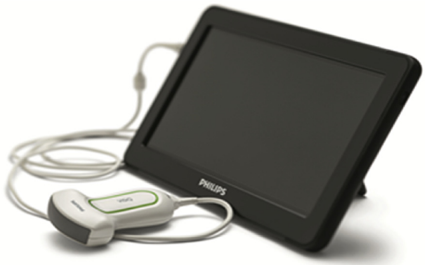
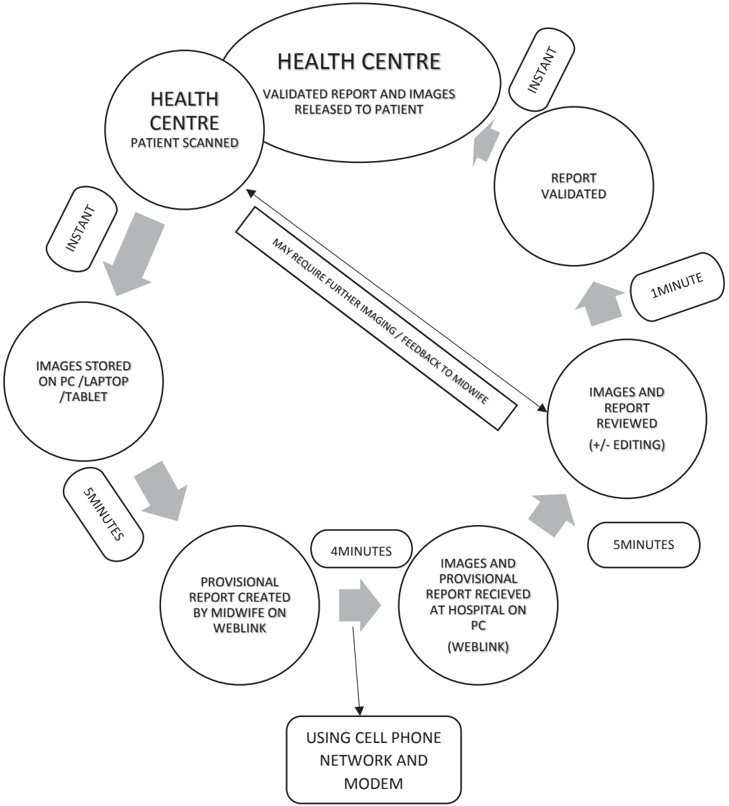
Point-of-care ultrasound (POCUS) has become a topical subject and can be applied in a variety of ways with differing outcomes. The cost of all diagnostic procedures including obstetric ultrasound examinations is a major factor in the developing world and POCUS is only useful if it can be equated to good outcomes at a lower cost than a routine obstetric examination. The aim of this study was to assess a number of processes including accuracy of images and reports generated by midwives, performance of a tablet-sized ultrasound scanner, training of midwives to complete ultrasounds, teleradiology solution transmissions of images via internet, review of images by a radiologist, communication between midwife and radiologist, use of this technique to identify high-risk patients and improvement of the education and teleradiology model components. The midwives had no previous experience in ultrasound. They were stationed in rural locations where POCUS was available for the first time. After scanning the patients, an interim report was generated by the midwives and sent electronically together with all images to the main hospital for validation. Unique software was used to send lossless images by mobile phone using a modem. Transmission times were short and quality of images transmitted was excellent. All reports were validated by two experienced radiologists in our department and returned to the centers using the same transmission software. The transmission times, quality of scans, quality of reports and other parameters were recorded and monitored. Analysis showed excellent correlation between provisional and validated reports. Reporting accuracy of scans performed by the midwives was 99.63%. Overall flow turnaround time (from patient presentation to validated report) was initially 35 min but reduced to 25 min. The unique mobile phone transmission was faultless and there was no degradation of image quality. We found excellent correlation between final outcomes of the pregnancies and diagnoses on the basis of reports generated by the midwives. Only 1 discrepancy was found in the midwives' reports. Scan results versus actual outcomes revealed 2 discrepancies in the 20 patients identified as high risk. In conclusion, we found that it is valuable to train midwives in POCUS to use an ultrasound tablet device and transmit images and reports via the internet to radiologists for review of accuracy. This focus on the identification of high-risk patients can be valuable in a remote healthcare facility.
Overview
The claims and statistics of this paper haven’t been checked yet.
Free: it reads the open-access text and checks the first 5 claims that cite a source we can check. Create a free account to check every claim.
Integrity signals
Registry
Cites
Statistics
Figures
Verification
Claims the paper makes
The claims and statistics of this paper haven’t been checked yet.
Free: it reads the open-access text and checks the first 5 claims that cite a source we can check. Create a free account to check every claim.
Claims other papers make about this one
Each is checked against this paper’s own text: does it say what the citing paper says it does?
The source backs part of the claim, not all of it — or backs it for a different population, condition or comparison.
In the citing paper
“Image acquisition can be taught from a distance via the internet and a telemedicine platform is reliably able to transmit high quality images (29, 34, 37, 38).”
From Tele-Ultrasound in Resource-Limited Settings: A Systematic Review (2019) · cites this paper as [38]
Experimental — accuracy not yet measuredThe cited source says what the claim attributes to it.
In the citing paper
“In an attempt to overcome such challenges, ultrasound training programs have taught non-experts either to independently perform obstetric ultrasounds to screen for high-risk pregnancies (52–55) or to utilize tele-ultrasound (29, 34, 37, 38).”
From Tele-Ultrasound in Resource-Limited Settings: A Systematic Review (2019) · cites this paper as [38]
Self-check
Percentages, sums and reported differences re-computed from the paper’s own numbers.
The self-check needs the paper’s full text.
Citations
Cites
Review article: Use of ultrasound in the developing world
Sippel, S., Muruganandan, K., Levine, A., & Shah, S. (2011) · International Journal of Emergency Medicine · doi:10.1186/1865-1380-4-72 · Cited by 352
A review of training opportunities for ultrasonography in low and middle income countries
LaGrone, L. N., Sadasivam, V., Kushner, A. L., & Groen, R. S. (2012) · Tropical Medicine & International Health · doi:10.1111/j.1365-3156.2012.03014.x · Cited by 142 · cited 1×
“…had to be assessed toward the end of the training period and several similar trainings have been described by other authors (Hediger et al. 2016; LaGrone et al. 2012; Parker and Harrison 2015; Rijken et al. 2009; Shaw-Battista 2015); yet no data have been published stating an ideal time frame…”
Best practice in maternal–fetal medicine
FIGO Working Group on Best Practice in Maternal–Fetal Medicine (2014) · International Journal of Gynecology & Obstetrics · doi:10.1016/j.ijgo.2014.10.011 · Cited by 113
Obstetric ultrasound scanning by local health workers in a refugee camp on the Thai-Burmese border.
Rijken, M. J., Lee, S. J., Boel, M. E., Papageorghiou, A. T., Visser, G. H. A., Dwell, S. L. M., Kennedy, S. H., Singhasivanon, P., White, N. J., Nosten, F., et al. (2009) · Ultrasound in Obstetrics & Gynecology · doi:10.1002/uog.7350 · Cited by 108 · cited 3×
“Indeed, this is the practice in most developed economies; however, many women in low resource regions especially in sub-Saharan Africa will still go through pregnancy without the benefit of even a single ultrasound examination (Ostensen 2000; Rijken et al. 2009; Sippel, et al. 2011).”
BackgroundMethodACOG Practice Bulletin No. 101: Ultrasonography in Pregnancy
(2009) · Obstetrics & Gynecology · doi:10.1097/00006250-200902000-00033 · Cited by 93
Shaw‐Battista, J., Young‐Lin, N., Bearman, S., Dau, K. Q., & Vargas, J. (2015) · Journal of Midwifery & Women s Health · doi:10.1111/jmwh.12395 · Cited by 66
Nathan, R., Swanson, J. O., Swanson, D. L., McClure, E. M., Bolamba, V. L., Lokangaka, A. L., Pineda, I. S., Figueroa, L., López-Gomez, W., Garcés, A., et al. (2016) · Current Problems in Diagnostic Radiology · doi:10.1067/j.cpradiol.2016.11.001 · Cited by 56
Ultrasound Quality Assurance (QA) for Singletons in the NICHD Fetal Growth Studies
Hediger, M., Fuchs, K., Grantz, K., Grewal, J., Kim, S., Gore-Langton, R. E., Louis, G. B. B., D'Alton, M., & Albert, P. S. (2016) · Journal of ultrasound in medicine · doi:10.7863/ultra.15.09087 · Cited by 48 · cited 3×
“The open-ended timeline had to be assessed toward the end of the training period and several similar trainings have been described by other authors (Hediger et al. 2016; LaGrone et al. 2012; Parker and Harrison 2015; Rijken et al. 2009; Shaw-Battista 2015); yet no data have been published stating…”
MethodResultDiagnostic Ultrasound at MACH 20: Retroperitoneal and Pelvic Imaging in Space
Jones, J. A., Sargsyan, A. E., Barr, Y., Melton, S. L., Hamilton, D. R., Dulchavsky, S. A., & Whitson, P. A. (2009) · Ultrasound in Medicine & Biology · doi:10.1016/j.ultrasmedbio.2009.01.002 · Cited by 46
Øyen, L., & Aune, I. (2015) · Sexual & Reproductive Healthcare · doi:10.1016/j.srhc.2015.10.003 · Cited by 43
Research works printed but not linked: 1
- Cunningham F, Leveno KJ, Bloom SL, Spong CY, Dashe JS, Hoffman BL, Casey BM, Sheffield JS. Fetal imaging, Williams ob- stetrics. 24th edition. New York: McGraw-Hill 2013.
Cited by
Tele-Ultrasound in Resource-Limited Settings: A Systematic Review
Britton, N., Miller, M. A., Safadi, S., Siegel, A., Levine, A. R., & McCurdy, M. T. (2019) · Frontiers in Public Health · doi:10.3389/fpubh.2019.00244 · Cited by 166
“In an attempt to overcome such challenges, ultrasound training programs have taught nonexperts either to independently perform obstetric ultrasounds to screen for high-risk pregnancies (52–55) or to utilize teleultrasound (29, 34, 37, 38).”
BackgroundAbrokwa, S. K., Ruby, L. C., Heuvelings, C. C., & Bélard, S. (2022) · EClinicalMedicine · doi:10.1016/j.eclinm.2022.101333 · Cited by 140
Diagnostic Ultrasound Safety Review for Point‐of‐Care Ultrasound Practitioners
Miller, D. L., Abo, A. M., Abramowicz, J. S., Bigelow, T. A., Dalecki, D., Dickman, E., Donlon, J., Harris, G. R., & Nomura, J. T. (2019) · Journal of Ultrasound in Medicine · doi:10.1002/jum.15202 · Cited by 103
“A particularly exciting aspect of POCUS is that appropriate training including safety and image interpretation potentially can be given to many nonphysician medical personnel and can bring the benefits of POCUS to virtually any patient in need: for example, in remote rural areas.(105,106)”
BackgroundPoint-of-care ultrasound in obstetrics and gynecology
Recker, F., Weber, E. C., Strizek, B., Gembruch, U., Westerway, S. C., & Dietrich, C. F. (2021) · Archives of Gynecology and Obstetrics · doi:10.1007/s00404-021-05972-5 · Cited by 94
“A WFUMB project showed that training midwives in performing routine and focused prenatal scans was a convenient way to cope with the small number of trained sonographers or obstetricians in low-resource countries [17].”
BackgroundEvaluation of antenatal Point-of-Care Ultrasound (PoCUS) training: a systematic review
Bidner, A., Bezak, E., & Parange, N. (2022) · Medical Education Online · doi:10.1080/10872981.2022.2041366 · Cited by 72
“[63] used an asynchronous method, where trainee images and interim report was sent for specialist review while the patient waited.”
BackgroundMethodInfluential
Metadata
- Authors
- Vinayak, S., Sande, J., Nisenbaum, H., & Nolsøe, C. P.
- Affiliations
- Aga Khan University Hospital Nairobi (KE)
- Penn Presbyterian Medical Center (US)
- University of Copenhagen (DK)
- Corresponding author
- Vinayak, Sudhir
- Venue
- Ultrasound in Medicine & Biology
- Publisher
- Elsevier BV
- Published
- 2017-10
- Volume
- 43
- Issue
- 10
- Pages
- 2125-2132
- ISSN
- 0301-5629 (ISSN-L)
- OpenAlex
- W2735074909
- Cited by
- 123
- References
- 15
- Citations by year
- 2026: 5 · 2025: 10 · 2024: 39 · 2023: 11 · 2022: 19 · 2021: 15 · 2020: 7 · 2019: 9 · 2018: 7
- FWCI
- 5.98
- Type
- journal article
- Language
- en
- Open access
- hybrid
- doi.org
- Licence
- cc-by-nc-nd
- www.elsevier.com/tdm/userlicense/1.0/ (tdm)
- creativecommons.org/licenses/by-nc-nd/4.0/ (vor)
- Locations
- Ultrasound in Medicine & Biology (publishedVersion, cc-by-nc-nd)
- PubMed (publishedVersion)
- Research at the University of Copenhagen (University of Copenhagen) (publishedVersion, cc-by-nc-nd)
- eCommons - AKU (Aga Khan University) (submittedVersion)
- Topics
- Health Sciences › Medicine › Critical Care and Intensive Care Medicine › Ultrasound in Clinical Applications
- Health Sciences › Medicine › Radiology, Nuclear Medicine and Imaging › Radiology practices and education
- Health Sciences › Medicine › Health Informatics › Artificial Intelligence in Healthcare and Education
- Keywords
- point-of-care ultrasound, midwifery education, rural health care, teleradiology, high-risk pregnancy identification, telemedicine, developing countries
- MeSH terms
- Female, Humans, Kenya, Midwifery, Pilot Projects, Pregnancy, Ultrasonography, Point-of-Care Systems, Cell Phone, Rural Nursing
About these checks
Registry, retraction, Cites and statistics results are computed, not judged, with one exception: a printed reference that no index lists is read once by a model before it counts as a citation error. Claims are extracted by a model and kept only when their quote appears verbatim in the text; each cited source is then checked, with a model’s help, for whether it says what the claim relies on. Those verdicts can be wrong — read the claim’s quote and the cited source before relying on one.
Statistics and arithmetic are recomputed, not judged.
Confidence bands are shown only for fields calibrated on our annotated test set. None is calibrated yet, so no band is shown.
What counts as a claim ›How we measure confidence ›How we check this ›
Are you an author, or do you see a problem with this page? Request a review
Data sources
Bibliographic data: Semantic Scholar, OpenAlex, Crossref.
Contains information from the Semantic Scholar Academic Graph Datasets, made available under the ODC Attribution License (ODC-BY 1.0).
Semantic Scholar’s data is described in: Kinney, R., et al. (2023). The Semantic Scholar Open Data Platform. arXiv:2301.10140.
