

The DOI matches its Crossref record; 3 of the 3 references it cites were found in a registry or an index.
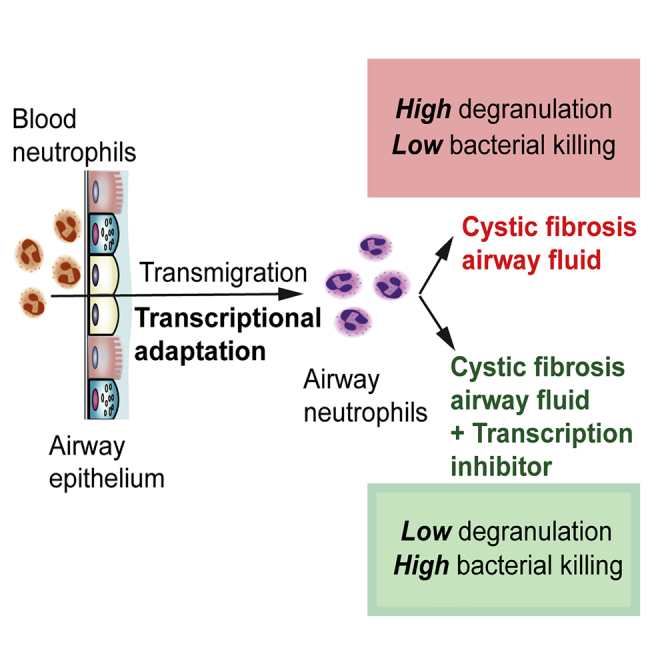
Transcriptional firing represses bactericidal activity in cystic fibrosis airway neutrophils
Overview
The claims and statistics of this paper haven’t been checked yet.
Run the check — free, no account needed. It reads the open-access text and checks the sources it cites.
Integrity signals
Registry
Cites
Statistics
Figures
Verification
Claims the paper makes
The claims and statistics of this paper haven’t been checked yet.
Run the check — free, no account needed. It reads the open-access text and checks the sources it cites.
Claims other papers make about this one
Each is checked against this paper’s own text: does it say what the citing paper says it does?
In the citing paper
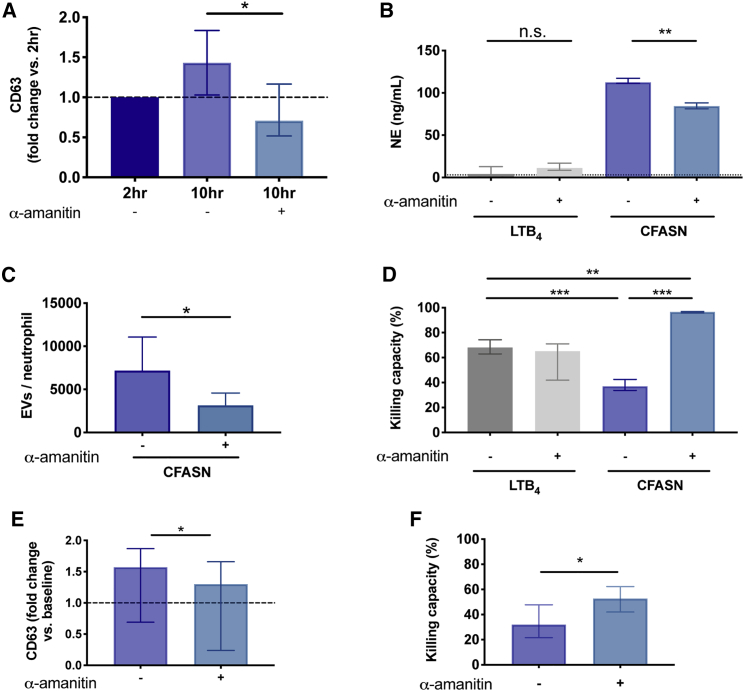
“Moreover, blocking de novo transcription in CF airway neutrophils restores their bactericidal activity [13].”
From Nascent RHOH acts as a molecular brake on actomyosin-mediated effector functions of inflammatory neutrophils (2022) · cites this paper as [13]
Self-check
Percentages, sums and reported differences re-computed from the paper’s own numbers.
The self-check needs the paper’s full text.
Citations
Cites
Lozano, R., Naghavi, M., Foreman, K., Lim, S., Shibuya, K., Aboyans, V., Abraham, J., Adair, T., Aggarwal, R., Ahn, S. Y., et al. (2012) · The Lancet · doi:10.1016/s0140-6736(12)61728-0 · Cited by 14,070
STEM: a tool for the analysis of short time series gene expression data
Ernst, J., & Bar-Joseph, Z. (2006) · BMC Bioinformatics · doi:10.1186/1471-2105-7-191 · Cited by 1,703
Rørvig, S., Østergaard, O., Heegaard, N. H. H., & Borregaard, N. (2013) · Journal of Leukocyte Biology · doi:10.1189/jlb.1212619 · Cited by 289
Research works printed but not linked: 51
- Lawrence, 2018, The ontogeny of a neutrophil: mechanisms of granulopoiesis and homeostasis, Microbiol. Mol. Biol. Rev., 82, e00057-17, 10.1128/MMBR.00057-17 · DOI
- Summers, 2010, Neutrophil kinetics in health and disease, Trends Immunol., 31, 318, 10.1016/j.it.2010.05.006 · DOI
- Paul, 2016, Transcriptional heterogeneity and lineage commitment in myeloid progenitors, Cell, 164, 325, 10.1016/j.cell.2015.12.046 · DOI
- Borregaard, 2010, Neutrophils, from marrow to microbes, Immunity, 33, 657, 10.1016/j.immuni.2010.11.011 · DOI
- Taschner, 2007, Down-regulation of RXRalpha expression is essential for neutrophil development from granulocyte/monocyte progenitors, Blood, 109, 971, 10.1182/blood-2006-04-020552 · DOI
- Bartels, 2015, Acetylation of C/EBPε is a prerequisite for terminal neutrophil differentiation, Blood, 125, 1782, 10.1182/blood-2013-12-543850 · DOI
- Downey, 1995, Intracellular signaling in neutrophil priming and activation, Semin. Cell Biol., 6, 345, 10.1016/S1043-4682(05)80005-4 · DOI
- Miralda, 2017, Multiple phenotypic changes define neutrophil priming, Front. Cell. Infect. Microbiol., 7, 217, 10.3389/fcimb.2017.00217 · DOI
- Jacobson, 2018, Migration through a small pore disrupts inactive chromatin organization in neutrophil-like cells, BMC Biol., 16, 142, 10.1186/s12915-018-0608-2 · DOI
- Wright, 2013, RNA-seq reveals activation of both common and cytokine-specific pathways following neutrophil priming, PLoS ONE, 8, e58598, 10.1371/journal.pone.0058598 · DOI
- Dwyer-Lindgren, 2017, Trends and patterns of differences in chronic respiratory disease mortality among US counties, 1980-2014, JAMA, 318, 1136, 10.1001/jama.2017.11747 · DOI
- Tirouvanziam, 2006, Neutrophilic inflammation as a major determinant in the progression of cystic fibrosis, Drug News Perspect., 19, 609, 10.1358/dnp.2006.19.10.1068008 · DOI
- Tirouvanziam, 2008, Profound functional and signaling changes in viable inflammatory neutrophils homing to cystic fibrosis airways, Proc. Natl. Acad. Sci. USA, 105, 4335, 10.1073/pnas.0712386105 · DOI
- Tirouvanziam, 2002, Primary inflammation in human cystic fibrosis small airways, Am. J. Physiol. Lung Cell. Mol. Physiol., 283, L445, 10.1152/ajplung.00419.2001 · DOI
- Margaroli, 2019, Elastase exocytosis by airway neutrophils is associated with early lung damage in children with cystic fibrosis, Am. J. Respir. Crit. Care Med., 199, 873, 10.1164/rccm.201803-0442OC · DOI
- Ingersoll, 2015, Mature cystic fibrosis airway neutrophils suppress T cell function: evidence for a role of arginase 1 but not programmed death-ligand 1, J. Immunol., 194, 5520, 10.4049/jimmunol.1500312 · DOI
- Forrest, 2018, Frontline Science: pathological conditioning of human neutrophils recruited to the airway milieu in cystic fibrosis, J. Leukoc. Biol., 104, 665, 10.1002/JLB.5HI1117-454RR · DOI
- Makam, 2009, Activation of critical, host-induced, metabolic and stress pathways marks neutrophil entry into cystic fibrosis lungs, Proc. Natl. Acad. Sci. USA, 106, 5779, 10.1073/pnas.0813410106 · DOI
- Laval, 2013, Metabolic adaptation of neutrophils in cystic fibrosis airways involves distinct shifts in nutrient transporter expression, J. Immunol., 190, 6043, 10.4049/jimmunol.1201755 · DOI
- Valvezan, 2017, mTORC1 couples nucleotide synthesis to nucleotide demand resulting in a targetable metabolic vulnerability, Cancer Cell, 32, 624, 10.1016/j.ccell.2017.09.013 · DOI
- Albert, 2015, mTOR signaling in cellular and organismal energetics, Curr. Opin. Cell Biol., 33, 55, 10.1016/j.ceb.2014.12.001 · DOI · Paper page
- Aramburu, 2014, Transcriptional regulation of the stress response by mTOR, Sci. Signal., 7, re2, 10.1126/scisignal.2005326 · DOI
- Chandler, 2018, Myeloperoxidase oxidation of methionine associates with early cystic fibrosis lung disease, Eur. Respir. J., 52, 1801118, 10.1183/13993003.01118-2018 · DOI
- Sagel, 2005, Induced sputum matrix metalloproteinase-9 correlates with lung function and airway inflammation in children with cystic fibrosis, Pediatr. Pulmonol., 39, 224, 10.1002/ppul.20165 · DOI
- Sagel, 2002, Induced sputum inflammatory measures correlate with lung function in children with cystic fibrosis, J. Pediatr., 141, 811, 10.1067/mpd.2002.129847 · DOI
- Condamine, 2016, Lectin-type oxidized LDL receptor-1 distinguishes population of human polymorphonuclear myeloid-derived suppressor cells in cancer patients, Sci. Immunol., 1, aaf8943, 10.1126/sciimmunol.aaf8943 · DOI
- Genschmer, 2019, Activated PMN exosomes: pathogenic entities causing matrix destruction and disease in the lung, Cell, 176, 113, 10.1016/j.cell.2018.12.002 · DOI
- Margaroli, 2016, Neutrophil plasticity enables the development of pathological microenvironments: implications for cystic fibrosis airway disease, Mol. Cell Pediatr., 3, 38, 10.1186/s40348-016-0066-2 · DOI
- Zhang, 2004, Gene expression in mature neutrophils: early responses to inflammatory stimuli, J. Leukoc. Biol., 75, 358, 10.1189/jlb.0903412 · DOI
- Khan, 2017, Transcriptional firing helps to drive NETosis, Sci. Rep., 7, 41749, 10.1038/srep41749 · DOI
- Agraz-Cibrian, 2019, 1,25-Dihydroxyvitamin D3 induces formation of neutrophil extracellular trap-like structures and modulates the transcription of genes whose products are neutrophil extracellular trap-associated proteins: A pilot study, Steroids, 141, 14, 10.1016/j.steroids.2018.11.001 · DOI
- Tutino, 2018, Circulating neutrophil transcriptome may reveal intracranial aneurysm signature, PLoS ONE, 13, e0191407, 10.1371/journal.pone.0191407 · DOI
- Naranbhai, 2015, Genomic modulators of gene expression in human neutrophils, Nat. Commun., 6, 7545, 10.1038/ncomms8545 · DOI
- Kenyon, 2017, Active nuclear transcriptome analysis reveals inflammasome-dependent mechanism for early neutrophil response to Mycobacterium marinum, Sci. Rep., 7, 6505, 10.1038/s41598-017-06099-x · DOI
- Jiang, 2015, RNA sequencing from human neutrophils reveals distinct transcriptional differences associated with chronic inflammatory states, BMC Med. Genomics, 8, 55, 10.1186/s12920-015-0128-7 · DOI
- Lakschevitz, 2015, Neutrophil transcriptional profile changes during transit from bone marrow to sites of inflammation, Cell. Mol. Immunol., 12, 53, 10.1038/cmi.2014.37 · DOI
- Ford, 2021, Functional and transcriptional adaptations of blood monocytes recruited to the cystic fibrosis airway microenvironment in vitro, Int. J. Mol. Sci., 22, 2530, 10.3390/ijms22052530 · DOI
- Kolpen, 2010, Polymorphonuclear leucocytes consume oxygen in sputum from chronic Pseudomonas aeruginosa pneumonia in cystic fibrosis, Thorax, 65, 57, 10.1136/thx.2009.114512 · DOI
- Worlitzsch, 2002, Effects of reduced mucus oxygen concentration in airway Pseudomonas infections of cystic fibrosis patients, J. Clin. Invest., 109, 317, 10.1172/JCI0213870 · DOI · Paper page
- Grassi, 2018, Dynamics of transcription regulation in human bone marrow myeloid differentiation to mature blood neutrophils, Cell Rep., 24, 2784, 10.1016/j.celrep.2018.08.018 · DOI
- Fouret, 1989, Expression of the neutrophil elastase gene during human bone marrow cell differentiation, J. Exp. Med., 169, 833, 10.1084/jem.169.3.833 · DOI
- Takahashi, 1988, Myelomonocytic cell lineage expression of the neutrophil elastase gene, J. Biol. Chem., 263, 2543, 10.1016/S0021-9258(18)69241-5 · DOI
- Bjerregaard, 2003, The in vivo profile of transcription factors during neutrophil differentiation in human bone marrow, Blood, 101, 4322, 10.1182/blood-2002-03-0835 · DOI
- Ribeiro, 2005, Chronic airway infection/inflammation induces a Ca2+i-dependent hyperinflammatory response in human cystic fibrosis airway epithelia, J. Biol. Chem., 280, 17798, 10.1074/jbc.M410618200 · DOI
- Grunwell, 2019, Neutrophil dysfunction in the airways of children with acute respiratory failure due to lower respiratory tract viral and bacterial coinfections, Sci. Rep., 9, 2874, 10.1038/s41598-019-39726-w · DOI
- Oh, 2008, Neutrophil isolation protocol, J. Vis. Exp., 17, 745
- Bolstad, 2003, A comparison of normalization methods for high density oligonucleotide array data based on variance and bias, Bioinformatics, 19, 185, 10.1093/bioinformatics/19.2.185 · DOI
- Kim, 2019, Graph-based genome alignment and genotyping with HISAT2 and HISAT-genotype, Nat. Biotechnol., 37, 907, 10.1038/s41587-019-0201-4 · DOI · Paper page
- Love, 2014, Moderated estimation of fold change and dispersion for RNA-seq data with DESeq2, Genome Biol., 15, 550, 10.1186/s13059-014-0550-8 · DOI · Paper page
- Ernst, 2005, Clustering short time series gene expression data, Bioinformatics, 21, i159, 10.1093/bioinformatics/bti1022 · DOI
- Eng, 1994, An approach to correlate tandem mass spectral data of peptides with amino acid sequences in a protein database, J. Am. Soc. Mass Spectrom., 5, 976, 10.1016/1044-0305(94)80016-2 · DOI · Paper page
Cited by
Peng, S., Stojkov, D., Gao, J., Oberson, K., Latzin, P., Casaulta, C., Yousefi, S., & Simon, H.-U. (2022) · PLOS Biology · doi:10.1371/journal.pbio.3001794 · Cited by 15
Metadata
- Authors
- Margaroli, C., Moncada-Giraldo, D., Gulick, D. A., Dobosh, B., Giacalone, V. D., Forrest, O. A., Sun, F., Gu, C., Gaggar, A., Kissick, H., Wu, R., Gibson, G., & Tirouvanziam, R.
- Venue
- Cell Reports Medicine
- Publisher
- Elsevier BV
- Published
- 2021-04
- Volume
- 2
- Issue
- 4
- Pages
- 100239
- ISSN
- 2666-3791
- PMC
- PMC8080108
- Cited by
- 38
- References
- 3
- Language
- en
- Licence
- Funders
- National Institutes of Health
- National Heart, Lung, and Blood Institute (R01HL126603)
- Cystic Fibrosis Foundation (ROWE19R0, TIROUV15A0)
- Emory University
- Children's Healthcare of Atlanta
About these checks
Registry, retraction, Cites and statistics results are computed, not judged, with one exception: a printed reference that no index lists is read once by a model before it counts as a citation error. Claims are extracted by a model and kept only when their quote appears verbatim in the text; each cited source is then checked, with a model’s help, for whether it says what the claim relies on. Those verdicts can be wrong — read the claim’s quote and the cited source before relying on one.
Statistics and arithmetic are recomputed, not judged.
Confidence bands are shown only for fields calibrated on our annotated test set. None is calibrated yet, so no band is shown.
What counts as a claim ›How we measure confidence ›How we check this ›
Are you an author, or do you see a problem with this page? Request a review
