

Evaluation of patient compliance with the use of scrotal cooling devices
Open accessThe DOI matches its Crossref record; 28 of the 28 references it cites were found in a registry or an index; none of the 31 sources its claims cite is checked for support yet.
Abstract
OBJECTIVE: To evaluate the compliance of infertile men with the use of scrotal cooling devices. As a secondary objective, sperm parameters, deoxyribonucleic acid fragmentation, and hormone profiles were examined. DESIGN: This exploratory study on scrotal cooling provided scrotal cooling devices to men with primary infertility and abnormal semen parameters. Feedback on the devices after their use was gathered in the form of a questionnaire, and semen parameters were examined after device use. SETTING: Single center infertility clinic in Toronto, Ontario, Canada. PATIENTS: Patients with primary infertility and abnormal semen parameters were prospectively evaluated before and after scrotal cooling. INTERVENTIONS: One of two scrotal cooling devices (Underdog or Snowballs) was used, on the basis of patient preference. MAIN OUTCOME MEASURES: Questionnaires were completed by patients on compliance with device use and concerns about and recommendations for improving the cooling devices. Baseline deoxyribonucleic acid fragmentation index, sperm parameters, and hormones were measured at the initial visit (t = 0) and at subsequent visits (t = 4-12 weeks). Statistical comparison of values before and after scrotal cooling was performed. RESULTS: Forty patients were enrolled in the study, and the questionnaire was completed by 65.0% (n = 26). Most respondents (76.9%) used scrotal cooling less than the recommended duration. Respondents believed that the devices were uncomfortable (31.5%), impeded work (21.0%), and lost cooling rapidly (14.3%). Significant increases in sperm motility and vitality (from 25.4 % to 29.0% and from 64.8% to 71.7%, respectively) were demonstrated after scrotal cooling. CONCLUSIONS: Most patients were not compliant with the recommended use of the scrotal cooling devices because of issues of comfort, convenience, and concealability. Further work on improving scrotal cooling devices is necessary to enhance their potential as a therapeutic tool for men with abnormal sperm parameters and infertility.
Overview
CoChat Summary
TL;DR
In a prospective cohort of 40 infertile men with abnormal semen parameters, most questionnaire respondents (76.9%) used scrotal cooling devices less than recommended, citing discomfort, work interference, privacy, and rapid loss of cooling. Despite poor compliance, sperm motility and vitality increased significantly after 4–12 weeks of cooling, while most other semen, DNA, and hormone parameters did not change significantly.
Key findings
- Compliance was low: 40 men were enrolled, 26 (65.0%) completed the questionnaire, 76.9% used scrotal cooling less than the recommended duration, only 26.9% used it daily, and 30.8% used it 1–2 days/week.
- Device concerns: among 19 respondents, the most common bothers were discomfort (31.6%), not being “work-friendly” (21.1%), lack of privacy (15.8%), and rapid loss of cooling (15.8%); among 13 suggestions, improving comfort (38.5%) and longer/more consistent cooling (30.7%) were most common.
- Sperm motility rose from 25.39% before cooling to 31.24% at approximately 4 weeks (P = .017) and 29.00% at 4–12 weeks (P = .009); vitality rose from 64.80% to 70.87% at approximately 4 weeks (P = .045) and 71.67% at 4–12 weeks (P = .032).
- No significant changes were found in concentration, count, progressive motility, morphology, volume, DNA fragmentation index, FSH, LH, total testosterone, or estradiol; prolactin changed significantly (9.21 to 12.45 ng/mL, P = .035), although the text describes it as lower despite the reported values increasing. DFI decreased from 23.50% to 17.68% (P = .679), but only 11 patients had two DFI tests.
Methods
- Prospective cohort at a single-center infertility clinic (Mount Sinai Hospital, Toronto) from January 1 to December 31, 2019; 40 men aged 18–48 years (mean 37.1 ± 6.8) with primary infertility (>1 year of unprotected sex without conception) and abnormal semen parameters per WHO 2010; obstructive azoospermia was excluded.
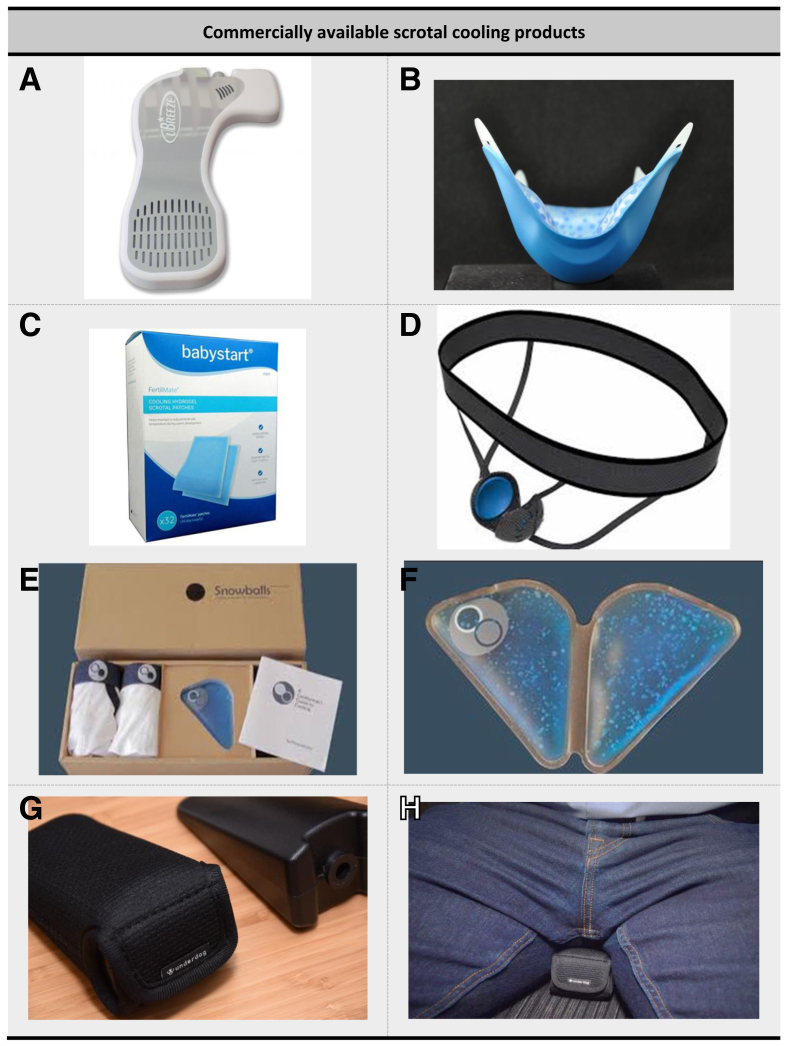
- Patients selected one of two reusable scrotal cooling devices (Snowballs or Underdog) based on lifestyle; devices were provided free, and patients were advised to use cooling a minimum of 2 hours daily for up to 3 months.
- Outcomes included a paper questionnaire on compliance, ease of use, bothers, and improvement suggestions; semen parameters, DNA fragmentation index, and hormones were measured before and after 2–3 months. Compliance was reported descriptively; before-after comparisons used paired t tests with P < .05; the study was exploratory with no power calculation.
Limitations
- Paper-stated: inability to directly assess device use; potential recall bias from questionnaire data; inability to directly assess whether devices were applied correctly; the study was not designed to test the effects of scrotal cooling on semen parameters or fertility.
- Evident from the text: small sample and incomplete data (40 enrolled; 26 questionnaires; 22 semen analyses; 10 hormone pairs; 11 DFI pairs), no control group, no power calculation, and patient-selected device.
- Evident from the text: questionnaire item denominators vary, and some reported results are internally inconsistent (e.g., prolactin described as lower after cooling while values rose from 9.21 to 12.45 ng/mL).
Model-written summary. Check it against the paper before relying on it.
Integrity signals
Registry
Cites
Statistics
Figures
Verification
Claims the paper makes
0 Valid · 1 Not valid · 18 Not checked · 44 Own results and interpretations
A result the paper reports from its own data — it cites no other source for it, so there is none to check. The quote shows it is in the paper.
In the paper
“The prolactin level was statistically significantly lower after cooling: 9.21 ng/mL (±3.41 mL) before vs. 12.45 ng/mL (±3.65 ng/mL) after approximately 4 weeks (P = .035).”
§ Evaluation of patient compliance with the use of scrotal cooling devices > Results > Hormone Profile
plainstates a causen = 10 ·- Asserted: passes — The authors put it forward as true.
- Checkable: passes — It can be checked against evidence.
- Load-bearing: unclear — It is unclear whether the paper’s conclusions depend on it.
- Based: passes — The paper gives a reason why it holds.
- Rests on 3 assumptions not shown here.
A result the paper reports from its own data — it cites no other source for it, so there is none to check. The quote shows it is in the paper.
In the paper
“lost cooling rapidly (14.3%)”
- Also stated in: § Questionnaire · plain
“rapid loss of optimal cooling with the devices (15.8%)”
§ Evaluation of patient compliance with the use of scrotal cooling devices > Abstract > Result(s)
plainn = 26- Asserted: passes — The authors put it forward as true.
- Checkable: passes — It can be checked against evidence.
- Load-bearing: unclear — It is unclear whether the paper’s conclusions depend on it.
- Based: passes — The paper gives a reason why it holds.
- Rests on an assumption not shown here.
- Also stated in: § Questionnaire · plain
A result the paper reports from its own data — it cites no other source for it, so there is none to check. The quote shows it is in the paper.
In the paper
“In fact, 30.8% (8/26) used the device two days or less per week.”
§ Evaluation of patient compliance with the use of scrotal cooling devices > Results > Questionnaire
plain- Asserted: passes — The authors put it forward as true.
- Checkable: passes — It can be checked against evidence.
- Load-bearing: unclear — It is unclear whether the paper’s conclusions depend on it.
- Based: passes — The paper gives a reason why it holds.
- Rests on an assumption not shown here.
A result the paper reports from its own data — it cites no other source for it, so there is none to check. The quote shows it is in the paper.
In the paper
“The mean semen volume was not affected by scrotal cooling; 3.62 mL (±3.32 mL) before cooling vs. 3.46 mL (±2.13 mL) at approximately four weeks (P = .941).”
§ Evaluation of patient compliance with the use of scrotal cooling devices > Results > Semen Parameters
plainn = 22- Asserted: passes — The authors put it forward as true.
- Checkable: passes — It can be checked against evidence.
- Load-bearing: unclear — It is unclear whether the paper’s conclusions depend on it.
- Based: passes — The paper gives a reason why it holds.
- Rests on 3 assumptions not shown here.
A result the paper reports from its own data — it cites no other source for it, so there is none to check. The quote shows it is in the paper.
In the paper
“Significant increases in sperm motility and vitality (from 25.4 % to 29.0% and from 64.8% to 71.7%, respectively) were demonstrated after scrotal cooling.”
- Also stated in: § Semen Parameters · plain
“Sperm motility demonstrated a statistically significant increase after a short 4–12-week trial of scrotal cooling”
§ Evaluation of patient compliance with the use of scrotal cooling devices > Abstract > Result(s)
boostedstates a causen = 22 ·- Asserted: passes — The authors put it forward as true.
- Checkable: passes — It can be checked against evidence.
- Load-bearing: passes — The paper’s conclusions depend on it.
- Based: passes — The paper gives a reason why it holds.
- Rests on 3 assumptions not shown here.
- Also stated in: § Semen Parameters · plain
20 more claims
Create a free account to see all 63 claims and to verify the 31 references still open.
- It may state two separate claims as one. 21
- Probably not a substantial claim. 21
- The quote only partly states this claim. 1
Self-check
Percentages, sums and reported differences re-computed from the paper’s own numbers.
Each contradiction between two passages listed here was confirmed by an independent check.
Rated major: it would touch a result — a value a result rests on, reported and recomputed p-values on opposite sides of the significance level, two passages that conflict with no sign which is right, or a cited work retracted before this paper was published.
In the paper
§ Evaluation of patient compliance with the use of scrotal cooling devices > Results > Hormone Profile
“The prolactin level was statistically significantly lower after cooling:”
§ Evaluation of patient compliance with the use of scrotal cooling devices > Results > Hormone Profile
“9.21 ng/mL (±3.41 mL) before vs. 12.45 ng/mL (±3.65 ng/mL) after approximately 4 weeks (P = .035).”
Rated minor: it would not touch a result — a value no result rests on, a p-value that stays on the same side of the significance level, or a conflict that is clerical, resolved elsewhere in the paper, or outside its own findings.
In the paper
§ Evaluation of patient compliance with the use of scrotal cooling devices > Abstract > Result(s)
“lost cooling rapidly (14.3%).”
§ Evaluation of patient compliance with the use of scrotal cooling devices > Results > Questionnaire
“The third most common answer was matched between “hindrance of privacy” (15.8%) and the rapid loss of optimal cooling with the devices (15.8%).”
Citations
Cites
World Health Organization reference values for human semen characteristics*‡
Cooper, T. G., Noonan, E., von Eckardstein, S., Auger, J., Baker, H. W. G., Behre, H. M., Haugen, T. B., Kruger, T., Wang, C., Mbizvo, M. T., et al. (2010) · Human Reproduction Update · doi:10.1093/humupd/dmp048 · Cited by 3,163 · cited 1×
“Semen parameters (usingWorld Health Organization standard testing), DNA fragmentation index (DFI using the sperm chromatin structure assay with flow cytometry), and hormone analyses (total testosterone, follicle-stimulating hormone, and luteinizing hormone) (samples drawn in themorning) were obtained before the use of…”
MethodThe Parkes Lecture Heat and the testis
Setchell, B. P. (1998) · Reproduction · doi:10.1530/jrf.0.1140179 · Cited by 418
Gil-Guzman, E., Ollero, M., Lopez, M. C., Sharma, R. K., Alvarez, J. G., Thomas, A. J., & Agarwal, A. (2001) · Human Reproduction · doi:10.1093/humrep/16.9.1922 · Cited by 370
Infections in the male genital tract and reactive oxygen species
Ochsendorf, F. (1999) · Human Reproduction Update · doi:10.1093/humupd/5.5.399 · Cited by 346
Pérez‐Crespo, M., Pintado, B., & Gutiérrez‐Adán, A. (2008) · Molecular Reproduction and Development · doi:10.1002/mrd.20759 · Cited by 311
Elevation of intratesticular and scrotal skin surface temperature in men with varicocele
Goldstein, M., & Eid, J.-F. (1989) · Journal of Urology · doi:10.1016/s0022-5347(17)38874-2 · Cited by 202
Garolla, A., Torino, M., Miola, P., Caretta, N., Pizzol, D., Menegazzo, M., Bertoldo, A., & Foresta, C. (2015) · Human Reproduction · doi:10.1093/humrep/dev057 · Cited by 131
Control of Human Spermatogenesis Intrascrotal Temperature
Robinson, D. (1968) · JAMA: The Journal of the American Medical Association · doi:10.1001/jama.1968.03140170006002 · Cited by 97
Reduction in testicular temperature after varicocelectomy in infertile men
James Wright, E., Young, G. P. H., & Goldstein, M. (1997) · Urology · doi:10.1016/s0090-4295(97)00191-x · Cited by 79
Inhibiting effect of artificial cryptorchidism on spermatogenesis
Mieusset, R., Grandjean, H., Mansat, A., & Pontonnier, F. (1985) · Fertility and Sterility · doi:10.1016/s0015-0282(16)48502-x · Cited by 78
Expression of the HSPA2 gene in ejaculated spermatozoa from adolescents with and without varicocele
Lima, S. B., Cenedeze, M. A., Bertolla, R. P., Filho, P. A. H., Oehninger, S., & Cedenho, A. P. (2006) · Fertility and Sterility · doi:10.1016/j.fertnstert.2006.05.030 · Cited by 74
Jung, A., Eberl, M., & Schill, W. B. (2001) · Reproduction · doi:10.1530/rep.0.1210595 · Cited by 69
Agger, P. (1971) · Fertility and Sterility · doi:10.1016/s0015-0282(16)38223-1 · Cited by 68
Cocuzza, M., Athayde, K. S., Agarwal, A., Pagani, R., Sikka, S. C., Lucon, A. M., Srougi, M., & Hallak, J. (2008) · Fertility and Sterility · doi:10.1016/j.fertnstert.2007.07.1377 · Cited by 53
Wet heat exposure: A potentially reversible cause of low semen quality in infertile men
Shefi, S., Tarapore, P. E., Walsh, T. J., Croughan, M., & Turek, P. J. (2007) · International braz j urol · doi:10.1590/s1677-55382007000100008 · Cited by 50
Caspase signalling pathways in human spermatogenesis
Almeida, C., Correia, S., Rocha, E., Alves, Â., Ferraz, L., Silva, J., Sousa, M., & Barros, A. (2013) · Journal of Assisted Reproduction and Genetics · doi:10.1007/s10815-013-9938-8 · Cited by 48
Chronic scrotal hypothermia as a treatment for poor semen quality
Zorgniotti, A., Sealfon, A., & Toth, A. (1980) · The Lancet · doi:10.1016/s0140-6736(80)90839-9 · Cited by 47
Shiraishi, K., & Naito, K. (2007) · BJU International · doi:10.1111/j.1464-410x.2007.06800.x · Cited by 45
What factors affect the carriage of epinephrine auto-injectors by teenagers?
Macadam, C., Barnett, J., Roberts, G., Stiefel, G., King, R., Erlewyn‐Lajeunesse, M., Holloway, J. A., & Lucas, J. S. (2012) · Clinical and Translational Allergy · doi:10.1186/2045-7022-2-3 · Cited by 43
Lang, A. R., Martin, J. L., Sharples, S., & Crowe, J. A. (2013) · Applied Ergonomics · doi:10.1016/j.apergo.2013.02.001 · Cited by 42
Further clinical experience with testis hypothermia for infertility due to poor semen
Zorgniotti, A. W., Sealfon, A. I., & Toth, A. (1982) · Urology · doi:10.1016/0090-4295(82)90018-8 · Cited by 39
Chronic Scrotal Hypothermia: Results in 90 Infertile Couples
Zorgniotti, A. W., Cohen, M. S., & Sealfon, A. I. (1986) · The Journal of Urology · doi:10.1016/s0022-5347(17)45933-7 · Cited by 36
Scrotal Hypothermia: New theraphy for poor semen
Zorgniotti, A. W., & Sealfon, A. I. (1984) · Urology · doi:10.1016/s0090-4295(84)80006-0 · Cited by 28
Scrotal hypothermia and the infertile man
Mulcahy, J. J. (1984) · Journal of Urology · doi:10.1016/s0022-5347(17)49694-7 · Cited by 26
JUNG, A., SCHILL, W. ‐., & SCHUPPE, H. ‐. (2005) · International Journal of Andrology · doi:10.1111/j.1365-2605.2004.00517.x · Cited by 22
Adverse effects of common sports and recreational activities on male reproduction
Panara, K., Masterson, J. M., Savio, L. F., & Ramasamy, R. (2019) · European Urology Focus · doi:10.1016/j.euf.2018.04.013 · Cited by 16
Scrotal cooling and its benefits to male fertility: a systematic review
Nikolopoulos, I., Osman, W., Haoula, Z., Jayaprakasan, K., & Atiomo, W. (2013) · Journal of Obstetrics and Gynaecology · doi:10.3109/01443615.2012.758088 · Cited by 8
Jarvi, K. A. (2020) · Urologic Clinics of North America · doi:10.1016/j.ucl.2019.12.009 · Cited by 3
Self-citation
Cited by
Male Infertility: A Comprehensive Review of Urological Causes and Contemporary Management
Barone, B., Amicuzi, U., Tammaro, S., Olivetta, M., Stizzo, M., Musone, M., Napolitano, L., Luca, L. D., Reccia, P., Capone, F., et al. (2026) · Journal of Clinical Medicine · doi:10.3390/jcm15010397 · Cited by 27
Raad, G., Massaad, V., Serdarogullari, M., Bakos, H. W., Issa, R., Khachan, M. J., Makhlouf, N., Mourad, Y., Fakih, C., & Fakih, F. (2022) · International Journal of Impotence Research · doi:10.1038/s41443-022-00573-5 · Cited by 5
Alternative Approaches to the Treatment of Male Infertility
Mostafa, T., & Le, T. V. (2024) · Springer eBooks · doi:10.1007/978-3-031-62648-7_16 · Cited by 1
Lifestyle habits and idiopathic male infertility: Are men willing to change?
Clavijo, R. I. (2021) · F&S Reports · doi:10.1016/j.xfre.2021.07.005 · Cited by 1
Butaney, M., & Rambhatla, A. (2024) · Elsevier eBooks · doi:10.1016/b978-0-323-93047-5.00015-5
Metadata
- Authors
- Benidir, T., Remondini, T., Lau, S., & Jarvi, K. A.
- Affiliations
- University of Toronto (CA)
- Mount Sinai Hospital (CA)
- Corresponding author
- Jarvi, Keith A.
- Venue
- F&S Reports
- Publisher
- Elsevier BV
- Published
- 2021-09
- Volume
- 2
- Issue
- 3
- Pages
- 289-295
- ISSN
- 2666-3341 (ISSN-L)
- PMC
- PMC8441567
- OpenAlex
- W3180144213
- Cited by
- 5
- References
- 28
- Citations by year
- 2026: 1 · 2024: 2 · 2022: 1 · 2021: 1
- FWCI
- 0.62
- Type
- journal article
- Language
- en
- Open access
- gold
- doi.org
- Licence
- cc-by-nc-nd
- www.elsevier.com/tdm/userlicense/1.0/ (tdm)
- www.elsevier.com/legal/tdmrep-license (tdm)
- creativecommons.org/licenses/by-nc-nd/4.0/ (vor)
- Locations
- F&S Reports (publishedVersion, cc-by-nc-nd)
- Europe PMC (PubMed Central) (publishedVersion, cc-by-nc-nd)
- PubMed Central (publishedVersion, cc-by-nc-nd)
- PubMed (publishedVersion)
- Topics
- Health Sciences › Medicine › Reproductive Medicine › Sperm and Testicular Function
- Health Sciences › Medicine › Reproductive Medicine › Reproductive Health and Technologies
- Health Sciences › Medicine › Urology › Male Reproductive Health Studies
- Keywords
- medication adherence, male infertility, primary infertility, sperm motility, sperm viability, DNA fragmentation, hormonal profile, device comfort
About these checks
Registry, retraction, Cites and statistics results are computed, not judged, with one exception: a printed reference that no index lists is read once by a model before it counts as a citation error. Claims are extracted by a model and kept only when their quote appears verbatim in the text; each cited source is then checked, with a model’s help, for whether it says what the claim relies on. Those verdicts can be wrong — read the claim’s quote and the cited source before relying on one.
A language model drew the claims from the paper on 2026-11-27, under version 3 of the claim definition (model deepseek-v4.1-flash, prompt extract-v3).
A second model labelled each claim on 2026-11-27 (model jev-1.13-20260917, definition revision gold-guideline-v0.2).
Statistics and arithmetic are recomputed, not judged.
Confidence bands are shown only for fields calibrated on our annotated test set. None is calibrated yet, so no band is shown.
What counts as a claim ›How we measure confidence ›How we check this ›
Are you an author, or do you see a problem with this page? Request a review
Data sources
Bibliographic data: Semantic Scholar, OpenAlex, Crossref.
Contains information from the Semantic Scholar Academic Graph Datasets, made available under the ODC Attribution License (ODC-BY 1.0).
Semantic Scholar’s data is described in: Kinney, R., et al. (2023). The Semantic Scholar Open Data Platform. arXiv:2301.10140.
