

The DOI matches its Crossref record; 2 of the 2 references it cites were found in a registry or an index.
High-throughput sequencing SELEX for the determination of DNA-binding protein specificities in vitro
Overview
The claims and statistics of this paper haven’t been checked yet.
Run the check — free, no account needed. It reads the open-access text and checks the sources it cites.
Integrity signals
Registry
Cites
Statistics
Figures
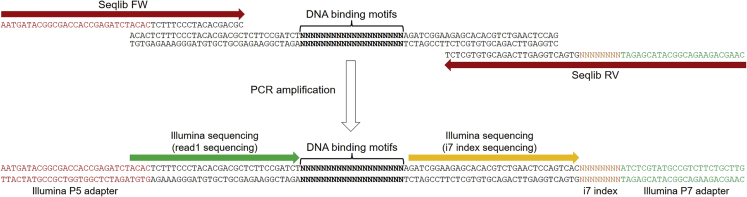
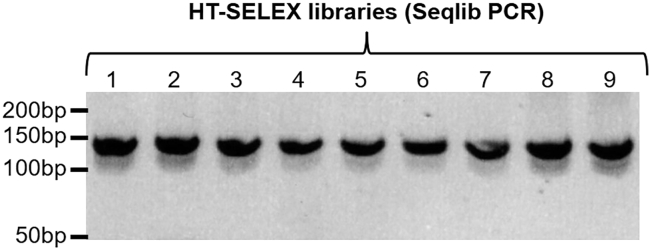
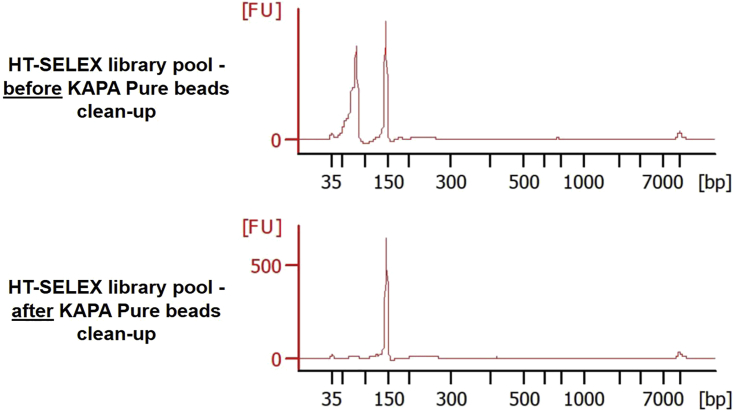
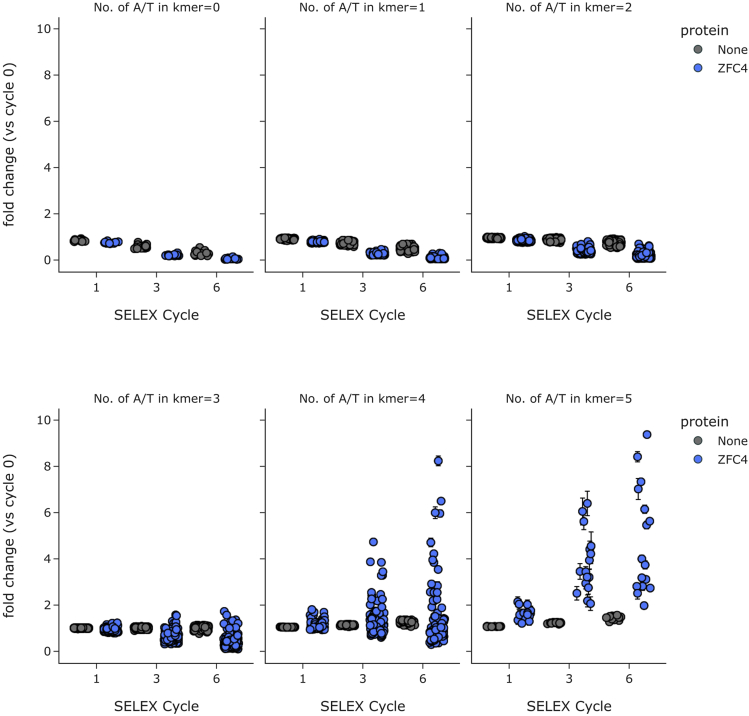
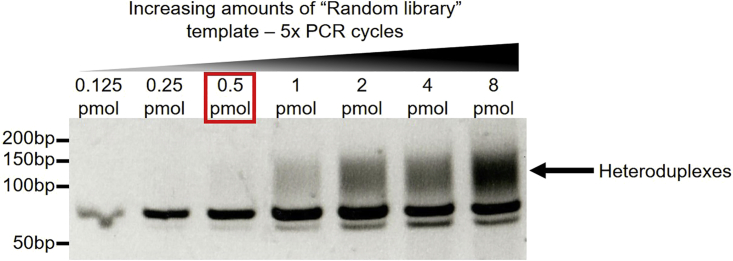
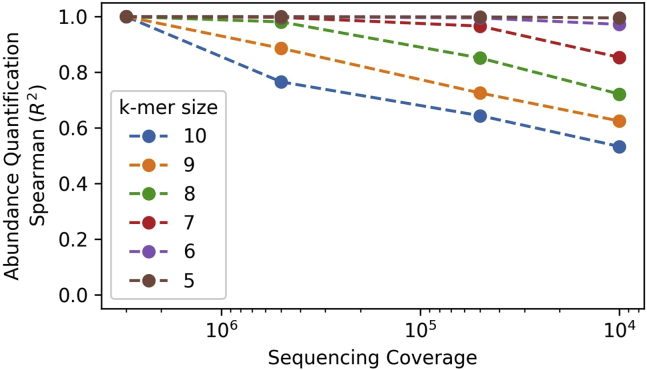
Verification
Claims the paper makes
The claims and statistics of this paper haven’t been checked yet.
Run the check — free, no account needed. It reads the open-access text and checks the sources it cites.
Self-check
Percentages, sums and reported differences re-computed from the paper’s own numbers.
The self-check needs the paper’s full text.
Citations
Cites
Impact of cytosine methylation on DNA binding specificities of human transcription factors
Yin, Y., Morgunova, E., Jolma, A., Kaasinen, E., Sahu, B., Khund-Sayeed, S., Das, P. K., Kivioja, T., Dave, K., Zhong, F., et al. (2017) · Science · doi:10.1126/science.aaj2239 · Cited by 1,257
SALL4 controls cell fate in response to DNA base composition
Pantier, R., Chhatbar, K., Quante, T., Skourti-Stathaki, K., Cholewa-Waclaw, J., Alston, G., Alexander-Howden, B., Lee, H. Y., Cook, A. G., Spruijt, C. G., et al. (2021) · Molecular Cell · doi:10.1016/j.molcel.2020.11.046 · Cited by 45
Self-citation
Research works printed but not linked: 12
- Ellington, 1990, In vitro selection of RNA molecules that bind specific ligands, Nature, 346, 818, 10.1038/346818a0 · DOI
- Gräslund, 2008, Protein production and purification, Nat. Methods, 5, 135, 10.1038/nmeth.f.202 · DOI
- Jolma, 2010, Multiplexed massively parallel SELEX for characterization of human transcription factor binding specificities, Genome Res., 20, 861, 10.1101/gr.100552.109 · DOI · Paper page
- Jolma, 2013, DNA-binding specificities of human transcription factors, Cell, 152, 327, 10.1016/j.cell.2012.12.009 · DOI
- Jolma, 2020, Binding specificities of human RNA-binding proteins toward structured and linear RNA sequences, Genome Res., 30, 962, 10.1101/gr.258848.119 · DOI
- Kanagawa, 2003, Bias and artifacts in multitemplate polymerase chain reactions (PCR), J. Biosci. Bioeng., 96, 317, 10.1016/S1389-1723(03)90130-7 · DOI
- Kielkopf, 2021, Expressing cloned genes for protein production, purification, and analysis, Cold Spring Harb. Protoc., 2021, 10.1101/pdb.top102129 · DOI
- Nitta, 2015, Conservation of transcription factor binding specificities across 600 million years of bilateria evolution, Elife, 4, e04837, 10.7554/eLife.04837 · DOI
- Roulet, 2002, High-throughput SELEX–SAGE method for quantitative modeling of transcription-factor binding sites, Nat. Biotechnol., 20, 831, 10.1038/nbt718 · DOI
- Slattery, 2011, Cofactor binding evokes latent differences in DNA binding specificity between Hox proteins, Cell, 147, 1270, 10.1016/j.cell.2011.10.053 · DOI
- Thompson, 2002, Heteroduplexes in mixed-template amplifications: formation, consequence and elimination by ‘reconditioning PCR, Nucleic Acids Res., 30, 2083, 10.1093/nar/30.9.2083 · DOI
- Tuerk, 1990, Systematic evolution of ligands by exponential enrichment: RNA ligands to bacteriophage T4 DNA polymerase, Science, 249, 505, 10.1126/science.2200121 · DOI
Cited by
Sorted by citations
Structure of SALL4 zinc finger domain reveals link between AT-rich DNA binding and Okihiro syndrome
Watson, J. A., Pantier, R., Jayachandran, U., Chhatbar, K., Alexander-Howden, B., Kruusvee, V., Prendecki, M., Bird, A., & Cook, A. G. (2023) · Life Science Alliance · doi:10.26508/lsa.202201588 · Cited by 14
“All possible canonical k-mer sequences (k = 6) were searched individually in SELEX libraries at different cycles using eme_selex (Pantier et al, 2022).”
Self-citation
Metadata
- Authors
- Pantier, R., Chhatbar, K., Alston, G., Lee, H. Y., & Bird, A.
- Venue
- STAR Protocols
- Publisher
- Elsevier BV
- Published
- 2022-09
- Volume
- 3
- Issue
- 3
- Pages
- 101490
- ISSN
- 2666-1667
- PMC
- PMC9243297
- Cited by
- 28
- References
- 2
- Language
- en
- Licence
- Funders
- ERC (EC 694295 Gen-Epix)
- European Research Council
- University of Edinburgh
- Simons Initiative for the Developing Brain
- Wellcome Trust (092076, 107930, 203149)
About these checks
Registry, retraction, Cites and statistics results are computed, not judged, with one exception: a printed reference that no index lists is read once by a model before it counts as a citation error. Claims are extracted by a model and kept only when their quote appears verbatim in the text; each cited source is then checked, with a model’s help, for whether it says what the claim relies on. Those verdicts can be wrong — read the claim’s quote and the cited source before relying on one.
Statistics and arithmetic are recomputed, not judged.
Confidence bands are shown only for fields calibrated on our annotated test set. None is calibrated yet, so no band is shown.
What counts as a claim ›How we measure confidence ›How we check this ›
Are you an author, or do you see a problem with this page? Request a review
