

Global, regional, and national life expectancy, all-cause mortality, and cause-specific mortality for 249 causes of death, 1980–2015: a systematic analysis for the Global Burden of Disease Study 2015
Open accessThe DOI matches its Crossref record; 141 of the 141 references it cites were found in a registry or an index.
Abstract
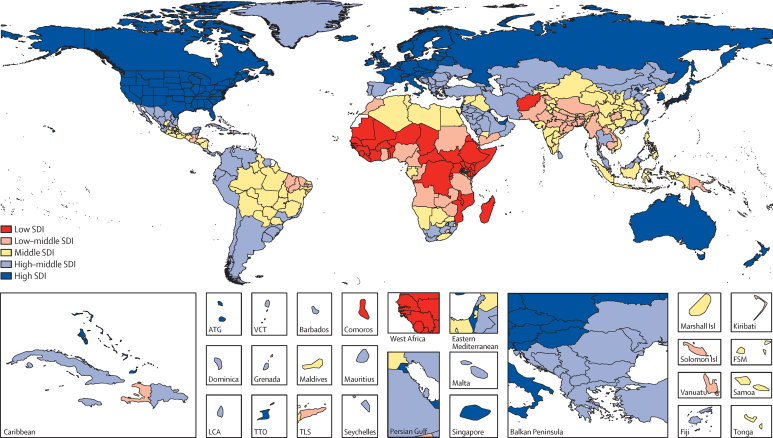
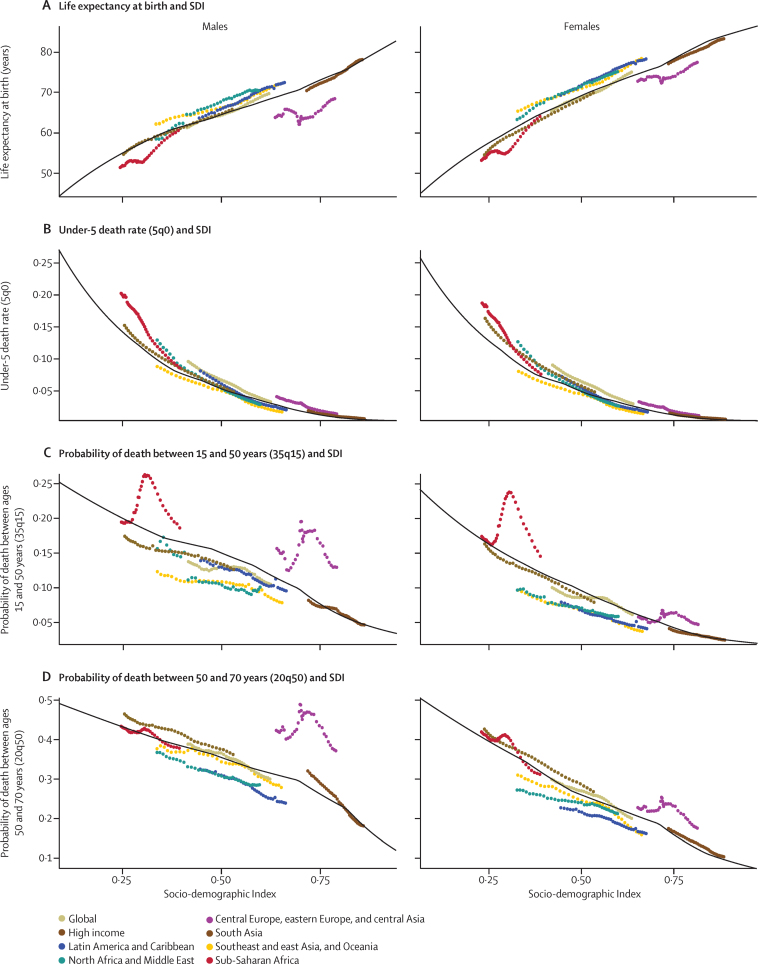
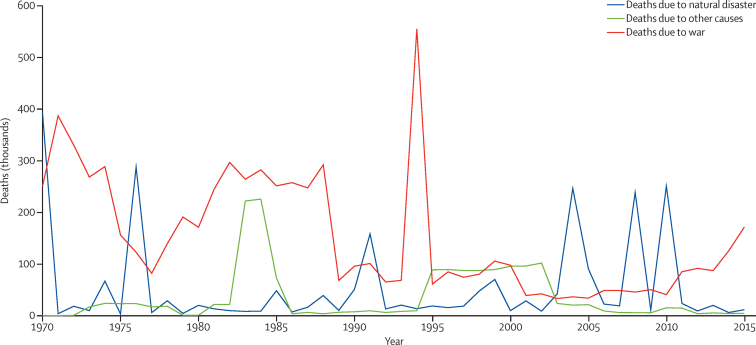
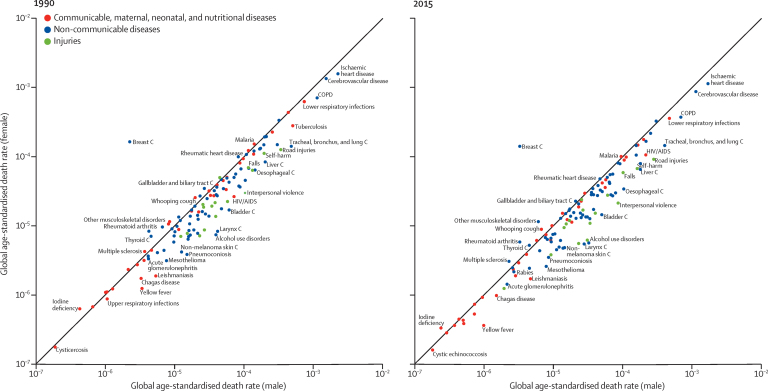
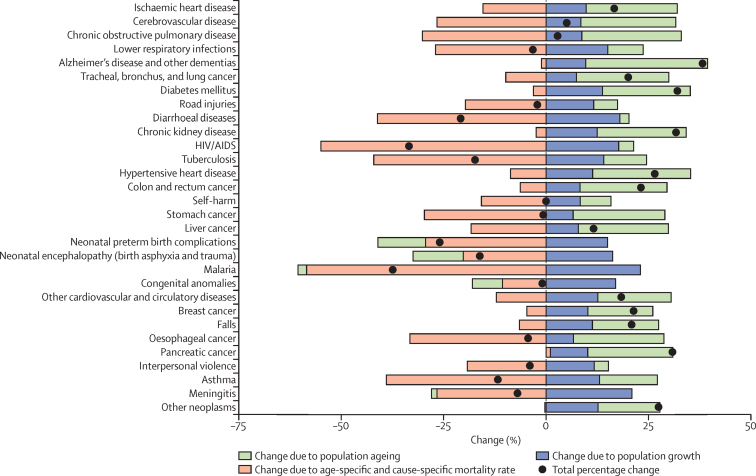
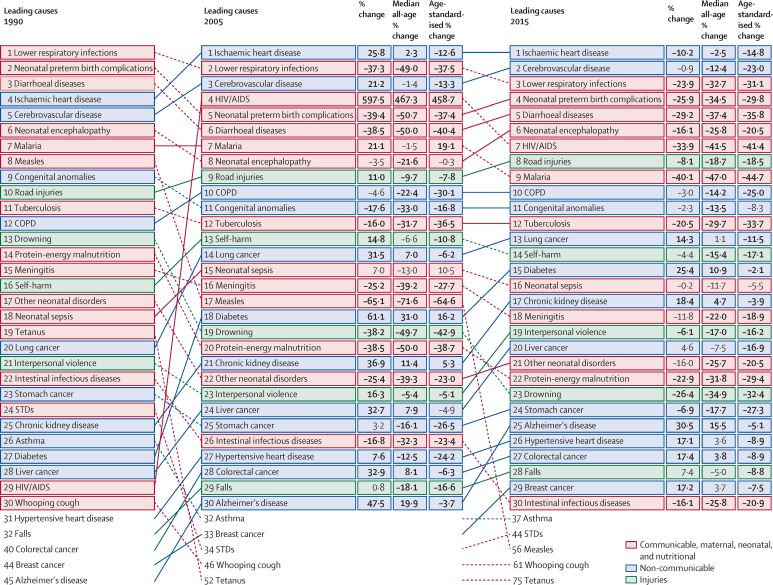
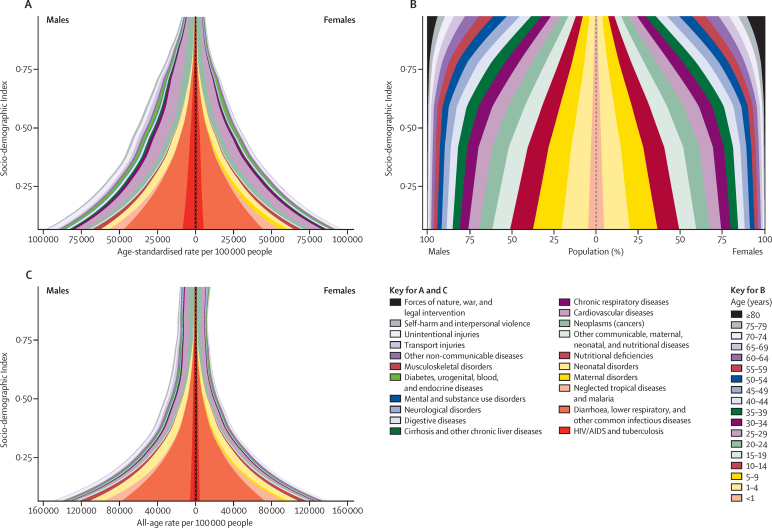
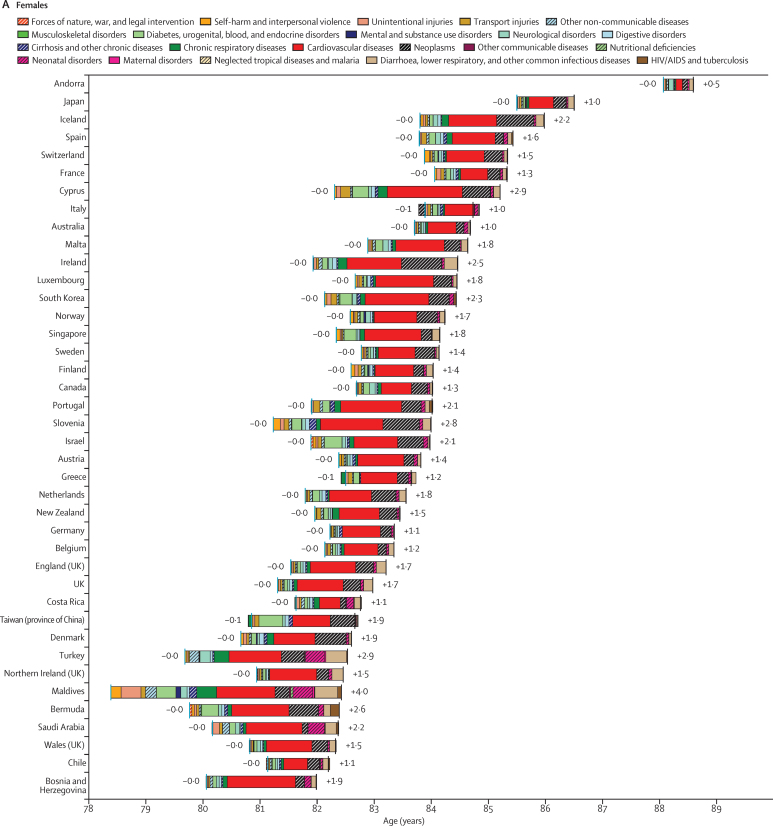
BACKGROUND: Improving survival and extending the longevity of life for all populations requires timely, robust evidence on local mortality levels and trends. The Global Burden of Disease 2015 Study (GBD 2015) provides a comprehensive assessment of all-cause and cause-specific mortality for 249 causes in 195 countries and territories from 1980 to 2015. These results informed an in-depth investigation of observed and expected mortality patterns based on sociodemographic measures. METHODS: We estimated all-cause mortality by age, sex, geography, and year using an improved analytical approach originally developed for GBD 2013 and GBD 2010. Improvements included refinements to the estimation of child and adult mortality and corresponding uncertainty, parameter selection for under-5 mortality synthesis by spatiotemporal Gaussian process regression, and sibling history data processing. We also expanded the database of vital registration, survey, and census data to 14 294 geography-year datapoints. For GBD 2015, eight causes, including Ebola virus disease, were added to the previous GBD cause list for mortality. We used six modelling approaches to assess cause-specific mortality, with the Cause of Death Ensemble Model (CODEm) generating estimates for most causes. We used a series of novel analyses to systematically quantify the drivers of trends in mortality across geographies. First, we assessed observed and expected levels and trends of cause-specific mortality as they relate to the Socio-demographic Index (SDI), a summary indicator derived from measures of income per capita, educational attainment, and fertility. Second, we examined factors affecting total mortality patterns through a series of counterfactual scenarios, testing the magnitude by which population growth, population age structures, and epidemiological changes contributed to shifts in mortality. Finally, we attributed changes in life expectancy to changes in cause of death. We documented each step of the GBD 2015 estimation processes, as well as data sources, in accordance with Guidelines for Accurate and Transparent Health Estimates Reporting (GATHER). FINDINGS: Globally, life expectancy from birth increased from 61·7 years (95% uncertainty interval 61·4-61·9) in 1980 to 71·8 years (71·5-72·2) in 2015. Several countries in sub-Saharan Africa had very large gains in life expectancy from 2005 to 2015, rebounding from an era of exceedingly high loss of life due to HIV/AIDS. At the same time, many geographies saw life expectancy stagnate or decline, particularly for men and in countries with rising mortality from war or interpersonal violence. From 2005 to 2015, male life expectancy in Syria dropped by 11·3 years (3·7-17·4), to 62·6 years (56·5-70·2). Total deaths increased by 4·1% (2·6-5·6) from 2005 to 2015, rising to 55·8 million (54·9 million to 56·6 million) in 2015, but age-standardised death rates fell by 17·0% (15·8-18·1) during this time, underscoring changes in population growth and shifts in global age structures. The result was similar for non-communicable diseases (NCDs), with total deaths from these causes increasing by 14·1% (12·6-16·0) to 39·8 million (39·2 million to 40·5 million) in 2015, whereas age-standardised rates decreased by 13·1% (11·9-14·3). Globally, this mortality pattern emerged for several NCDs, including several types of cancer, ischaemic heart disease, cirrhosis, and Alzheimer's disease and other dementias. By contrast, both total deaths and age-standardised death rates due to communicable, maternal, neonatal, and nutritional conditions significantly declined from 2005 to 2015, gains largely attributable to decreases in mortality rates due to HIV/AIDS (42·1%, 39·1-44·6), malaria (43·1%, 34·7-51·8), neonatal preterm birth complications (29·8%, 24·8-34·9), and maternal disorders (29·1%, 19·3-37·1). Progress was slower for several causes, such as lower respiratory infections and nutritional deficiencies, whereas deaths increased for others, including dengue and drug use disorders. Age-standardised death rates due to injuries significantly declined from 2005 to 2015, yet interpersonal violence and war claimed increasingly more lives in some regions, particularly in the Middle East. In 2015, rotaviral enteritis (rotavirus) was the leading cause of under-5 deaths due to diarrhoea (146 000 deaths, 118 000-183 000) and pneumococcal pneumonia was the leading cause of under-5 deaths due to lower respiratory infections (393 000 deaths, 228 000-532 000), although pathogen-specific mortality varied by region. Globally, the effects of population growth, ageing, and changes in age-standardised death rates substantially differed by cause. Our analyses on the expected associations between cause-specific mortality and SDI show the regular shifts in cause of death composition and population age structure with rising SDI. Country patterns of premature mortality (measured as years of life lost [YLLs]) and how they differ from the level expe
Overview
The claims and statistics of this paper haven’t been checked yet.
Free: it reads the open-access text and checks the first 5 claims that cite a source we can check. Create a free account to check every claim.
Integrity signals
Registry
Cites
Statistics
Figures
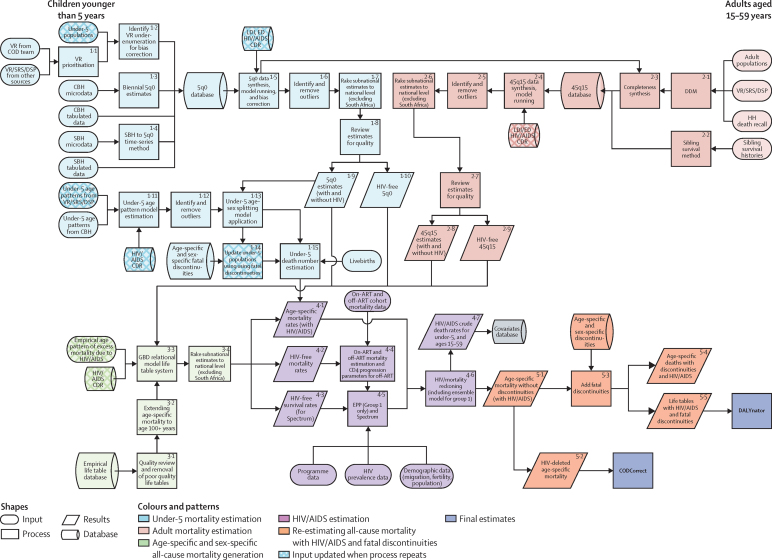
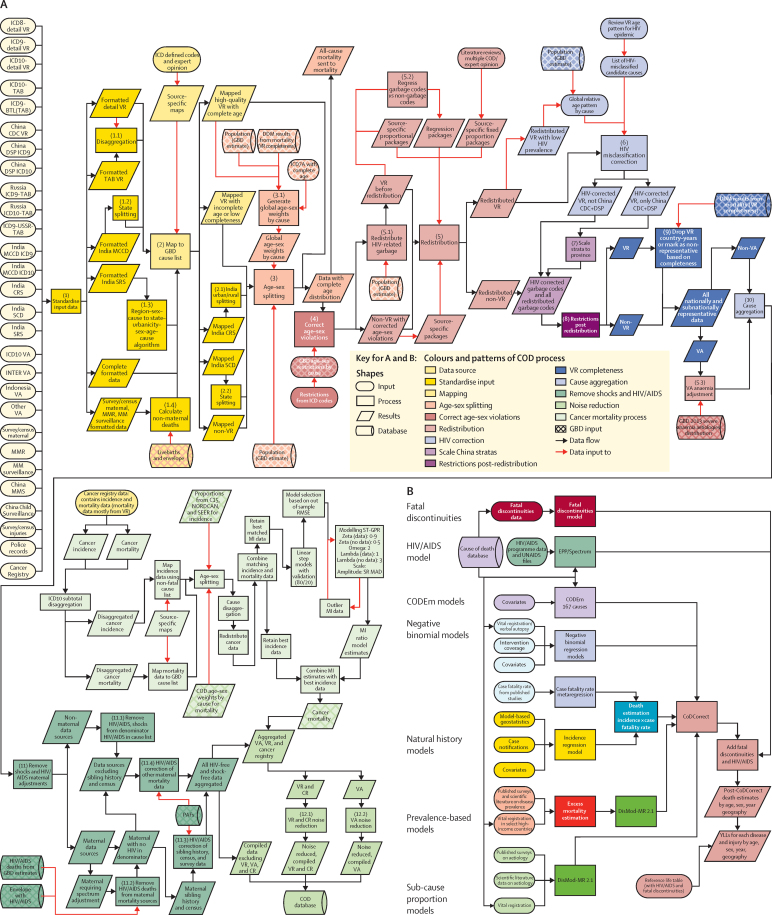
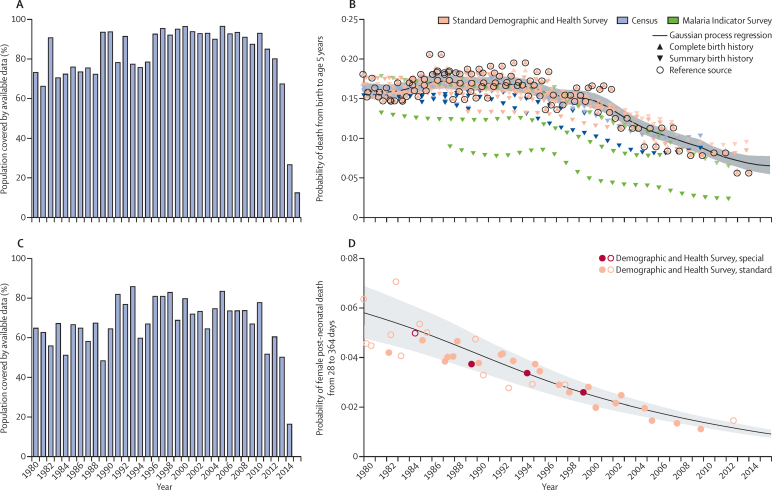
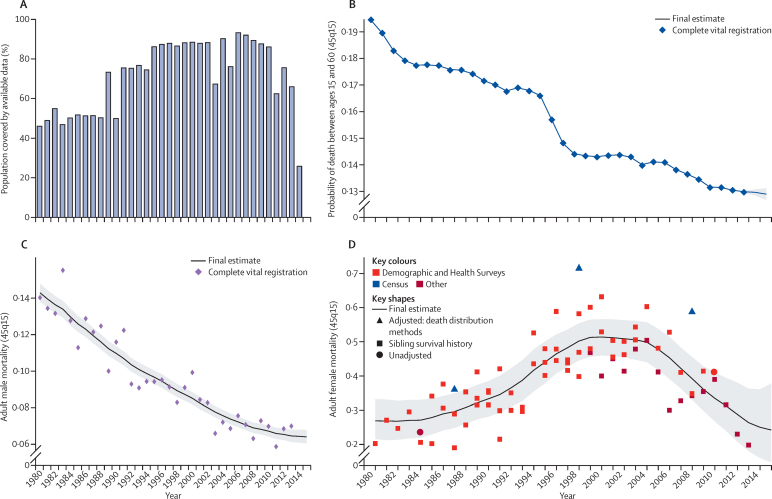
Verification
Claims the paper makes
The claims and statistics of this paper haven’t been checked yet.
Free: it reads the open-access text and checks the first 5 claims that cite a source we can check. Create a free account to check every claim.
Claims other papers make about this one
Each is checked against this paper’s own text: does it say what the citing paper says it does?
The cited source doesn’t support the claim as written.
In the citing paper
“Asthma is a chronic respiratory disease associated with significant increase in the years of life lost due to premature mortality, the age-standardised mortality rates for asthma dropped from 8.8/100,000 in 2005 to 6.1/100,000 by 2015 [141].”
From Global and Multi-National Prevalence of Fungal Diseases-Estimate Precision (2017) · cites this paper as [141]
Checked by a reasoning model — may be wrong.
Experimental — accuracy not yet measuredThe source backs part of the claim, not all of it — or backs it for a different population, condition or comparison.
In the citing paper
“In terms of absolute number of people affected by neurological disorders, most of the increase in the burden was associated with ageing of the population and population growth.9”
From Global, regional, and national burden of neurological disorders during 1990–2015: a systematic analysis for the Global Burden of Disease Study 2015 (2017) · cites this paper as [9]
Experimental — accuracy not yet measuredThe source backs part of the claim, not all of it — or backs it for a different population, condition or comparison.
In the citing paper
“These methods have been extensively peer reviewed over previous rounds of GBD14, 15, 16, 17, 18, 19 and concurrently as part of the peer review process for GBD 2023.”
From Global burden of 292 causes of death in 204 countries and territories and 660 subnational locations, 1990–2023: a systematic analysis for the Global Burden of Disease Study 2023 (2025) · cites this paper as [14]
Experimental — accuracy not yet measuredThe source backs part of the claim, not all of it — or backs it for a different population, condition or comparison.
In the citing paper
“The global shift toward NCDs for both sexes has been driven by the effects of population growth, ageing, and the epidemiological transition;3,25”
From Global, regional, and national age-sex specific mortality for 264 causes of death, 1980–2016: a systematic analysis for the Global Burden of Disease Study 2016 (2017) · cites this paper as [3]
Experimental — accuracy not yet measuredThe source backs part of the claim, not all of it — or backs it for a different population, condition or comparison.
In the citing paper
“Increasing evidence also points to air pollution as an emerging risk factor for dementia, heart and cardiovascular disease and lung cancer.1,14”
From Common risk factors for major noncommunicable disease, a systematic overview of reviews and commentary: the implied potential for targeted risk reduction (2019) · cites this paper as [1]
Experimental — accuracy not yet measured
5 more claims about this paper
Create a free account to see every claim other papers make about this one.
Self-check
Percentages, sums and reported differences re-computed from the paper’s own numbers.
The self-check needs the paper’s full text.
Citations
Cites
Cancer incidence and mortality worldwide: Sources, methods and major patterns in GLOBOCAN 2012
Ferlay, J., Soerjomataram, I., Dikshit, R., Eser, S., Mathers, C., Rebelo, M., Parkin, D. M., Forman, D., & Bray, F. (2015) · International Journal of Cancer · doi:10.1002/ijc.29210 · Cited by 28,766
Lozano, R., Naghavi, M., Foreman, K., Lim, S., Shibuya, K., Aboyans, V., Abraham, J., Adair, T., Aggarwal, R., Ahn, S. Y., et al. (2012) · The Lancet · doi:10.1016/s0140-6736(12)61728-0 · Cited by 14,070
Self-citationA safe operating space for humanity
Rockström, J., Steffen, W., Noone, K., Persson, Å., Chapin, F. S., Lambin, E. F., Lenton, T. M., Scheffer, M., Folke, C., Schellnhuber, H. J., et al. (2009) · Nature · doi:10.1038/461472a · Cited by 13,333
Lim, S. S., Vos, T., Flaxman, A. D., Danaei, G., Shibuya, K., Adair-Rohani, H., AlMazroa, M. A., Amann, M., Anderson, H. R., Andrews, K. G., et al. (2012) · The Lancet · doi:10.1016/s0140-6736(12)61766-8 · Cited by 11,805
Self-citationForouzanfar, M. H., Afshin, A., Alexander, L. T., Anderson, H. R., Bhutta, Z. A., Biryukov, S., Brauer, M., Burnett, R., Cercy, K., Charlson, F. J., et al. (2016) · The Lancet · doi:10.1016/s0140-6736(16)31679-8 · Cited by 7,698
Self-citation(1996) · Cited by 6,884
Self-citationVos, T., Barber, R. M., Bell, B., Bertozzi-Villa, A., Biryukov, S., Bolliger, I., Charlson, F., Davis, A., Degenhardt, L., Dicker, D., et al. (2015) · The Lancet · doi:10.1016/s0140-6736(15)60692-4 · Cited by 6,414
Self-citationLopez, A. D., Mathers, C. D., Ezzati, M., Jamison, D. T., & Murray, C. J. (2006) · The Lancet · doi:10.1016/s0140-6736(06)68770-9 · Cited by 5,630
Self-citationMortality by cause for eight regions of the world: Global Burden of Disease Study
Murray, C. J., & Lopez, A. D. (1997) · The Lancet · doi:10.1016/s0140-6736(96)07493-4 · Cited by 4,043
Self-citation
Research works printed but not linked: 4
- Flaxman AD Vos T Murray CJL An integrative metaregression framework for descriptive epidemiology 2015 University of Washington Press Seattle
- IARC Working Group on the Evaluation of Carcinogenic Risks to Humans International Agency for Research on Cancer A review of human carcinogens. Lyon, France; Geneva, Switzerland: International Agency for Research on Cancer; Distributed by WHO Press http://monographs.iarc.fr/ENG/Monographs/vol100B/index.php 2012 (accessed April 13, 2016).
- Burnham G Doocy S Dzeng E Lafta R Roberts L The Human Cost of the War in Iraq. A Mortality Study, 2002–2006 2006 Bloomberg School of Public Health, Johns Hopkins University; School of Medicine, Al Mustansiriya University; Center for International Studies, Massachusetts Institute of Technology Baltimore, MD; Baghdad, Iraq; Cambridge, MA
- Bloomberg Philanthropies Launches $100 Million Data for Health Program in Developing Countries Bloomberg Philanthropies http://www.bloomberg.org/press/releases/bloomberg-philanthropies-launches-100-million-data-health-program-developing-countries/ (accessed April 21, 2016).
Cited by
Heart Disease and Stroke Statistics—2020 Update: A Report From the American Heart Association
Virani, S. S., Alonso, A., Benjamin, E. J., Bittencourt, M. S., Callaway, C. W., Carson, A. P., Chamberlain, A. M., Chang, A. R., Cheng, S., Delling, F. N., et al. (2020) · Circulation · doi:10.1161/cir.0000000000000757 · Cited by 9,175
Self-citationHeart Disease and Stroke Statistics—2019 Update: A Report From the American Heart Association
Benjamin, E. J., Muntner, P., Alonso, A., Bittencourt, M. S., Callaway, C. W., Carson, A. P., Chamberlain, A. M., Chang, A. R., Cheng, S., Das, S. R., et al. (2019) · Circulation · doi:10.1161/cir.0000000000000659 · Cited by 9,036
Self-citationForouzanfar, M. H., Afshin, A., Alexander, L. T., Anderson, H. R., Bhutta, Z. A., Biryukov, S., Brauer, M., Burnett, R., Cercy, K., Charlson, F. J., et al. (2016) · The Lancet · doi:10.1016/s0140-6736(16)31679-8 · Cited by 7,698
Self-citationVos, T., Allen, C., Arora, M., Barber, R. M., Bhutta, Z. A., Brown, A., Carter, A., Casey, D. C., Charlson, F. J., Chen, A. Z., et al. (2016) · The Lancet · doi:10.1016/s0140-6736(16)31678-6 · Cited by 7,253
Self-citationChalasani, N., Younossi, Z., Lavine, J. E., Charlton, M., Cusi, K., Rinella, M., Harrison, S. A., Brunt, E. M., & Sanyal, A. J. (2018) · Hepatology · doi:10.1002/hep.29367 · Cited by 7,239
Metadata
- Authors
- Wang, H., Naghavi, M., Allen, C., Barber, R. M., Bhutta, Z. A., Carter, A., Casey, D. C., Charlson, F. J., Chen, A. Z., Coates, M. M., Coggeshall, M., Dandona, L., Dicker, D. J., Erskine, H. E., Ferrari, A. J., Fitzmaurice, C., Foreman, K., Forouzanfar, M. H., Fraser, M. S., Fullman, N., Gething, P. W., Goldberg, E. M., Graetz, N., Haagsma, J. A., Hay, S. I., Huynh, C., Johnson, C. O., Kassebaum, N. J., Kinfu, Y., Kulikoff, X. R., Kutz, M., Kyu, H. H., Larson, H. J., Leung, J., Liang, X., Lim, S. S., Lind, M., Lozano, R., Marquez, N., Mensah, G. A., Mikesell, J., Mokdad, A. H., Mooney, M. D., Nguyen, G., Nsoesie, E., Pigott, D. M., Pinho, C., Roth, G. A., Salomon, J. A., Sandar, L., Silpakit, N., Sligar, A., Sorensen, R. J. D., Stanaway, J., Steiner, C., Teeple, S., Thomas, B. A., Troeger, C., VanderZanden, A., Vollset, S. E., Wanga, V., Whiteford, H. A., Wolock, T., Zoeckler, L., Abate, K. H., Abbafati, C., Abbas, K. M., Abd-Allah, F., Abera, S. F., Abreu, D. M. X., Abu-Raddad, L. J., Abyu, G. Y., Achoki, T., Adelekan, A. L., Ademi, Z., Adou, A. K., Adsuar, J. C., Afanvi, K. A., Afshin, A., Agardh, E. E., Agarwal, A., Agrawal, A., Kiadaliri, A. A., Ajala, O. N., Akanda, A. S., Akinyemi, R. O., Akinyemiju, T. F., Akseer, N., Lami, F. H. A., Alabed, S., Al-Aly, Z., Alam, K., Alam, N. K. M., Alasfoor, D., Aldhahri, S. F., Aldridge, R. W., Alegretti, M. A., Aleman, A. V., Alemu, Z. A., Alexander, L. T., Alhabib, S., Ali, R., Alkerwi, A., Alla, F., Allebeck, P., Al-Raddadi, R., Alsharif, U., Altirkawi, K. A., Martin, E. A., Alvis-Guzman, N., Amare, A. T., Amegah, A. K., Ameh, E. A., Amini, H., Ammar, W., Amrock, S. M., Andersen, H. H., Anderson, B. O., Anderson, G. M., Antonio, C. A. T., Aregay, A. F., Ärnlöv, J., Arsenijevic, V. S. A., Artaman, A., Asayesh, H., Asghar, R. J., Atique, S., Avokpaho, E. F. G. A., Awasthi, A., Azzopardi, P., Bacha, U., Badawi, A., Bahit, M. C., Balakrishnan, K., Banerjee, A., Barac, A., Barker-Collo, S. L., Bärnighausen, T., Barregard, L., Barrero, L. H., Basu, A., Basu, S., Bayou, Y. T., Bazargan-Hejazi, S., Beardsley, J., Bedi, N., Beghi, E., Belay, H. A., Bell, B., Bell, M. L., Bello, A. K., Bennett, D. A., Bensenor, I. M., Berhane, A., Bernabé, E., Betsu, B. D., Beyene, A. S., Bhala, N., Bhalla, A., Biadgilign, S., Bikbov, B., Abdulhak, A. A. B., Biroscak, B. J., Biryukov, S., Bjertness, E., Blore, J. D., Blosser, C. D., Bohensky, M. A., Borschmann, R., Bose, D., Bourne, R. R. A., Brainin, M., Brayne, C. E. G., Brazinova, A., Breitborde, N. J. K., Brenner, H., Brewer, J. D., Brown, A., Brown, J., Brugha, T. S., Buckle, G. C., Butt, Z. A., Calabria, B., Campos-Nonato, I. R., Campuzano, J. C., Carapetis, J. R., Cárdenas, R., Carpenter, D. O., Carrero, J. J., Castañeda-Orjuela, C. A., Rivas, J. C., Catalá-López, F., Cavalleri, F., Cercy, K., Cerda, J., Chen, W., Chew, A., Chiang, P. P.-C., Chibalabala, M., Chibueze, C. E., Chimed-Ochir, O., Chisumpa, V. H., Choi, J.-Y. J., Chowdhury, R., Christensen, H., Christopher, D. J., Ciobanu, L. G., Cirillo, M., Cohen, A. J., Colistro, V., Colomar, M., Colquhoun, S. M., Cooper, C., Cooper, L. T., Cortinovis, M., Cowie, B. C., Crump, J. A., Damsere-Derry, J., Danawi, H., Dandona, R., Daoud, F., Darby, S. C., Dargan, P. I., das Neves, J., Davey, G., Davis, A. C., Davitoiu, D. V., de Castro, E. F., de Jager, P., Leo, D. D., Degenhardt, L., Dellavalle, R. P., Deribe, K., Deribew, A., Dharmaratne, S. D., Dhillon, P. K., Diaz-Torné, C., Ding, E. L., dos Santos, K. P. B., Dossou, E., Driscoll, T. R., Duan, L., Dubey, M., Duncan, B. B., Ellenbogen, R. G., Ellingsen, C. L., Elyazar, I., Endries, A. Y., Ermakov, S. P., Eshrati, B., Esteghamati, A., Estep, K., Faghmous, I. D. A., Fahimi, S., Faraon, E. J. A., Farid, T. A., Farinha, C. S. E. S., Faro, A., Farvid, M. S., Farzadfar, F., Feigin, V. L., Fereshtehnejad, S.-M., Fernandes, J. G., Fernandes, J. C., Fischer, F., Fitchett, J. R. A., Flaxman, A., Foigt, N., Fowkes, F. G. R., Franca, E. B., Franklin, R. C., Friedman, J., Frostad, J., Fürst, T., Futran, N. D., Gall, S. L., Gambashidze, K., Gamkrelidze, A., Ganguly, P., Gankpé, F. G., Gebre, T., Gebrehiwot, T. T., Gebremedhin, A. T., Gebru, A. A., Geleijnse, J. M., Gessner, B. D., Ghoshal, A. G., Gibney, K. B., Gillum, R. F., Gilmour, S., Giref, A. Z., Giroud, M., Gishu, M. D., Giussani, G., Glaser, E., Godwin, W. W., Gomez-Dantes, H., Gona, P., Goodridge, A., Gopalani, S. V., Gosselin, R. A., Gotay, C. C., Goto, A., Gouda, H. N., Greaves, F., Gugnani, H. C., Gupta, R., Gupta, R., Gupta, V., Gutiérrez, R. A., Hafezi-Nejad, N., Haile, D., Hailu, A. D., Hailu, G. B., Halasa, Y. A., Hamadeh, R. R., Hamidi, S., Hancock, J., Handal, A. J., Hankey, G. J., Hao, Y., Harb, H. L., Harikrishnan, S., Haro, J. M., Havmoeller, R., Heckbert, S. R., Heredia-Pi, I. B., Heydarpour, P., Hilderink, H. B. M., Hoek, H. W., Hogg, R. S., Horino, M., Horita, N., Hosgood, H. D., Hotez, P. J., Hoy, D. G., Hsairi, M., Htet, A. S., Htike, M. M. T., Hu, G., Huang, C., Huang, H., Huiart, L., Husseini, A., Huybrechts, I., Huynh, G., Iburg, K. M., Innos, K., Inoue, M., Iyer, V. J., Jacobs, T. A., Jacobsen, K. H., Jahanmehr, N., Jakovljevic, M. B., James, P., Javanbakht, M., Jayaraman, S. P., Jayatilleke, A. U., Jeemon, P., Jensen, P. N., Jha, V., Jiang, G., Jiang, Y., Jibat, T., Jimenez-Corona, A., Jonas, J. B., Joshi, T. K., Kabir, Z., Kamal, R., Kan, H., Kant, S., Karch, A., Karema, C. K., Karimkhani, C., Karletsos, D., Karthikeyan, G., Kasaeian, A., Katibeh, M., Kaul, A., Kawakami, N., Kayibanda, J. F., Keiyoro, P. N., Kemmer, L., Kemp, A. H., Kengne, A. P., Keren, A., Kereselidze, M., Kesavachandran, C. N., Khader, Y. S., Khalil, I. A., Khan, A. R., Khan, E. A., Khang, Y.-H., Khera, S., Khoja, T. A. M., Kieling, C., Kim, D., Kim, Y. J., Kissela, B. M., Kissoon, N., Knibbs, L. D., Knudsen, A. K., Kokubo, Y., Kolte, D., Kopec, J. A., Kosen, S., Koul, P. A., Koyanagi, A., Krog, N. H., Defo, B. K., Bicer, B. K., Kudom, A. A., Kuipers, E. J., Kulkarni, V. S., Kumar, G. A., Kwan, G. F., Lal, A., Lal, D. K., Lalloo, R., Lallukka, T., Lam, H., Lam, J. O., Langan, S. M., Lansingh, V. C., Larsson, A., Laryea, D. O., Latif, A. A., Lawrynowicz, A. E. B., Leigh, J., Levi, M., Li, Y., Lindsay, M. P., Lipshultz, S. E., Liu, P. Y., Liu, S., Liu, Y., Lo, L.-T., Logroscino, G., Lotufo, P. A., Lucas, R. M., Lunevicius, R., Lyons, R. A., Ma, S., Machado, V. M. P., Mackay, M. T., MacLachlan, J. H., Razek, H. M. A. E., Magdy, M., Razek, A. E., Majdan, M., Majeed, A., Malekzadeh, R., Manamo, W. A. A., Mandisarisa, J., Mangalam, S., Mapoma, C. C., Marcenes, W., Margolis, D. J., Martin, G. R., Martinez-Raga, J., Marzan, M. B., Masiye, F., Mason-Jones, A. J., Massano, J., Matzopoulos, R., Mayosi, B. M., McGarvey, S. T., McGrath, J. J., McKee, M., McMahon, B. J., Meaney, P. A., Mehari, A., Mehndiratta, M. M., Mejia-Rodriguez, F., Mekonnen, A. B., Melaku, Y. A., Memiah, P., Memish, Z. A., Mendoza, W., Meretoja, A., Meretoja, T. J., Mhimbira, F. A., Micha, R., Millear, A., Miller, T. R., Mirarefin, M., Misganaw, A., Mock, C. N., Mohammad, K. A., Mohammadi, A., Mohammed, S., Mohan, V., Mola, G. L. D., Monasta, L., Hernandez, J. C. M., Montero, P., Montico, M., Montine, T. J., Moradi-Lakeh, M., Morawska, L., Morgan, K., Mori, R., Mozaffarian, D., Mueller, U. O., Murthy, G. V. S., Murthy, S., Musa, K. I., Nachega, J. B., Nagel, G., Naidoo, K. S., Naik, N., Naldi, L., Nangia, V., Nash, D., Nejjari, C., Neupane, S., Newton, C. R., Newton, J. N., Ng, M., Ngalesoni, F. N., de Dieu Ngirabega, J., Nguyen, Q. L., Nisar, M. I., Pete, P. M. N., Nomura, M., Norheim, O. F., Norman, P. E., Norrving, B., Nyakarahuka, L., Ogbo, F. A., Ohkubo, T., Ojelabi, F. A., Olivares, P. R., Olusanya, B. O., Olusanya, J. O., Opio, J. N., Oren, E., Ortiz, A., Osman, M., Ota, E., Ozdemir, R., PA, M., Pain, A., Pandian, J. D., Pant, P. R., Papachristou, C., Park, E.-K., Park, J.-H., Parry, C. D., Parsaeian, M., Caicedo, A. J. P., Patten, S. B., Patton, G. C., Paul, V. K., Pearce, N., Pedro, J. M., Stokic, L. P., Pereira, D. M., Perico, N., Pesudovs, K., Petzold, M., Phillips, M. R., Piel, F. B., Pillay, J. D., Plass, D., Platts-Mills, J. A., Polinder, S., Pope, C. A., Popova, S., Poulton, R. G., Pourmalek, F., Prabhakaran, D., Qorbani, M., Quame-Amaglo, J., Quistberg, D. A., Rafay, A., Rahimi, K., Rahimi-Movaghar, V., Rahman, M., Rahman, M. H. U., Rahman, S. U., Rai, R. K., Rajavi, Z., Rajsic, S., Raju, M., Rakovac, I., Rana, S. M., Ranabhat, C. L., Rangaswamy, T., Rao, P., Rao, S. R., Refaat, A. H., Rehm, J., Reitsma, M. B., Remuzzi, G., Resnikoff, S., Ribeiro, A. L., Ricci, S., Blancas, M. J. R., Roberts, B., Roca, A., Rojas-Rueda, D., Ronfani, L., Roshandel, G., Rothenbacher, D., Roy, A., Roy, N. K., Ruhago, G. M., Sagar, R., Saha, S., Sahathevan, R., Saleh, M. M., Sanabria, J. R., Sanchez-Niño, M. D., Sanchez-Riera, L., Santos, I. S., Sarmiento-Suarez, R., Sartorius, B., Satpathy, M., Savic, M., Sawhney, M., Schaub, M. P., Schmidt, M. I., Schneider, I. J. C., Schöttker, B., Schutte, A. E., Schwebel, D. C., Seedat, S., Sepanlou, S. G., Servan-Mori, E. E., Shackelford, K. A., Shaddick, G., Shaheen, A., Shahraz, S., Shaikh, M. A., Shakh-Nazarova, M., Sharma, R., She, J., Sheikhbahaei, S., Shen, J., Shen, Z., Shepard, D. S., Sheth, K. N., Shetty, B. P., Shi, P., Shibuya, K., Shin, M.-J., Shiri, R., Shiue, I., Shrime, M. G., Sigfusdottir, I. D., Silberberg, D. H., Silva, D. A. S., Silveira, D. G. A., Silverberg, J. I., Simard, E. P., Singh, A., Singh, G. M., Singh, J. A., Singh, O. P., Singh, P. K., Singh, V., Soneji, S., Søreide, K., Soriano, J. B., Sposato, L. A., Sreeramareddy, C. T., Stathopoulou, V., Stein, D. J., Stein, M. B., Stranges, S., Stroumpoulis, K., Sunguya, B. F., Sur, P., Swaminathan, S., Sykes, B. L., Szoeke, C. E. I., Tabarés-Seisdedos, R., Tabb, K. M., Takahashi, K., Takala, J. S., Talongwa, R. T., Tandon, N., Tavakkoli, M., Taye, B., Taylor, H. R., Ao, B. J. T., Tedla, B. A., Tefera, W. M., Have, M. T., Terkawi, A. S., Tesfay, F. H., Tessema, G. A., Thomson, A. J., Thorne-Lyman, A. L., Thrift, A. G., Thurston, G. D., Tillmann, T., Tirschwell, D. L., Tonelli, M., Topor-Madry, R., Topouzis, F., Towbin, J. A., Traebert, J., Tran, B. X., Truelsen, T., Trujillo, U., Tura, A. K., Tuzcu, E. M., Uchendu, U. S., Ukwaja, K. N., Undurraga, E. A., Uthman, O. A., Dingenen, R. V., van Donkelaar, A., Vasankari, T., Vasconcelos, A. M. N., Venketasubramanian, N., Vidavalur, R., Vijayakumar, L., Villalpando, S., Violante, F. S., Vlassov, V. V., Wagner, J. A., Wagner, G. R., Wallin, M. T., Wang, L., Watkins, D. A., Weichenthal, S., Weiderpass, E., Weintraub, R. G., Werdecker, A., Westerman, R., White, R. A., Wijeratne, T., Wilkinson, J. D., Williams, H. C., Wiysonge, C. S., Woldeyohannes, S. M., Wolfe, C. D. A., Won, S., Wong, J. Q., Woolf, A. D., Xavier, D., Xiao, Q., Xu, G., Yakob, B., Yalew, A. Z., Yan, L. L., Yano, Y., Yaseri, M., Ye, P., Yebyo, H. G., Yip, P., Yirsaw, B. D., Yonemoto, N., Yonga, G., Younis, M. Z., Yu, S., Zaidi, Z., Zaki, M. E. S., Zannad, F., Zavala, D. E., Zeeb, H., Zeleke, B. M., Zhang, H., Zodpey, S., Zonies, D., Zuhlke, L. J., Vos, T., Lopez, A. D., & Murray, C. J. L.
- Affiliations
- Institute for Health Metrics and Evaluation (US)
- ORCID
- Wang, Haidong
- Naghavi, Mohsen
- Barber, Ryan M
- Bhutta, Zulfiqar A
- Carter, Austin
- Charlson, Fiona J
- Coates, Matthew M
- Dandona, Lalit
- Erskine, Holly E
- Ferrari, Alize J
- Fitzmaurice, Christina
- Forouzanfar, Mohammad H
- Fullman, Nancy
- Gething, Peter W
- Goldberg, Ellen M
- Graetz, Nicholas
- Haagsma, Juanita A
- Hay, Simon I
- Kassebaum, Nicholas J
- Kinfu, Yohannes
- Kulikoff, Xie Rachel
- Kyu, Hmwe H
- Larson, Heidi J
- Leung, Janni
- Liang, Xiaofeng
- Lim, Stephen S
- Lind, Margaret
- Lozano, Rafael
- Marquez, Neal
- Mensah, George A
- Mokdad, Ali H
- Mooney, Meghan D
- Nsoesie, Elaine
- Pigott, David M
- Roth, Gregory A
- Salomon, Joshua A
- Sandar, Logan
- Sorensen, Reed J D
- Stanaway, Jeffrey
- Teeple, Stephanie
- VanderZanden, Amelia
- Wanga, Valentine
- Whiteford, Harvey A
- Wolock, Timothy
- Abate, Kalkidan Hassen
- Abbafati, Cristiana
- Abbas, Kaja M
- Abd-Allah, Foad
- Abera, Semaw Ferede
- Abreu, Daisy M X
- Abu-Raddad, Laith J
- Achoki, Tom
- Adelekan, Ademola Lukman
- Ademi, Zanfina
- Adsuar, José C
- Afshin, Ashkan
- Agardh, Emilie Elisabet
- Agarwal, Arnav
- Agrawal, Anurag
- Akanda, Ali Shafqat
- Akinyemi, Rufus Olusola
- Akinyemiju, Tomi F
- Akseer, Nadia
- Lami, Faris Hasan Al
- Alabed, Samer
- Alam, Khurshid
- Alam, Noore K M
- Alasfoor, Deena
- Aldridge, Robert William
- Alexander, Lily T
- Alhabib, Samia
- Ali, Raghib
- Alkerwi, Ala'a
- Alla, François
- Al-Raddadi, Rajaa
- Alsharif, Ubai
- Altirkawi, Khalid A
- Amare, Azmeraw T
- Amegah, Adeladza Kofi
- Ameh, Emmanuel A
- Amini, Heresh
- Ammar, Walid
- Amrock, Stephen Marc
- Anderson, Benjamin O
- Anderson, Gregory M
- Antonio, Carl Abelardo T
- Aregay, Atsede Fantahun
- Ärnlöv, Johan
- Asayesh, Hamid
- Asghar, Rana Jawad
- Atique, Suleman
- Avokpaho, Euripide Frinel G Arthur
- Awasthi, Ashish
- Azzopardi, Peter
- Badawi, Alaa
- Balakrishnan, Kalpana
- Banerjee, Amitava
- Barac, Aleksandra
- Barker-Collo, Suzanne L
- Bärnighausen, Till
- Barrero, Lope H
- Basu, Arindam
- Basu, Sanjay
- Bayou, Yibeltal Tebekaw
- Beardsley, Justin
- Bedi, Neeraj
- Beghi, Ettore
- Bell, Michelle L
- Bello, Aminu K
- Bennett, Derrick A
- Berhane, Adugnaw
- Bernabé, Eduardo
- Betsu, Balem Demtsu
- Beyene, Addisu Shunu
- Bhala, Neeraj
- Biadgilign, Sibhatu
- Bikbov, Boris
- Abdulhak, Aref A Bin
- Biroscak, Brian J
- Blore, Jed D
- Blosser, Christopher D
- Bohensky, Megan A
- Borschmann, Rohan
- Bourne, Rupert R A
- Brainin, Michael
- Brayne, Carol E G
- Breitborde, Nicholas J K
- Brenner, Hermann
- Brown, Jonathan
- Brugha, Traolach S
- Buckle, Geoffrey Colin
- Butt, Zahid A
- Calabria, Bianca
- Carapetis, Jonathan R
- Cárdenas, Rosario
- Carpenter, David O
- Castañeda-Orjuela, Carlos A
- Catalá-López, Ferrán
- Chen, Wanqing
- Chibueze, Chioma Ezinne
- Chisumpa, Vesper Hichilombwe
- Choi, Jee-Young Jasmine
- Chowdhury, Rajiv
- Christensen, Hanne
- Christopher, Devasahayam Jesudas
- Ciobanu, Liliana G
- Cohen, Aaron J
- Colistro, Valentina
- Colomar, Mercedes
- Colquhoun, Samantha M
- Cooper, Cyrus
- Cooper, Leslie Trumbull
- Crump, John A
- Dandona, Rakhi
- Daoud, Farah
- Darby, Sarah C
- Dargan, Paul I
- Davey, Gail
- Davis, Adrian C
- Degenhardt, Louisa
- Deribe, Kebede
- Deribew, Amare
- Dharmaratne, Samath D
- Dhillon, Preet K
- Ding, Eric L
- Driscoll, Tim R
- Dubey, Manisha
- Duncan, Bruce Bartholow
- Ellenbogen, Richard G
- Ellingsen, Christian Lycke
- Elyazar, Iqbal
- Endries, Aman Yesuf
- Esteghamati, Alireza
- Faraon, Emerito Jose Aquino
- Faro, André
- Farvid, Maryam S
- Farzadfar, Farshad
- Feigin, Valery L
- Fereshtehnejad, Seyed-Mohammad
- Fernandes, Jefferson G
- Fischer, Florian
- Fitchett, Joseph R A
- Flaxman, Abraham
- Foigt, Nataliya
- Franklin, Richard C
- Friedman, Joseph
- Fürst, Thomas
- Futran, Neal D
- Gall, Seana L
- Gamkrelidze, Amiran
- Ganguly, Parthasarathi
- Gankpé, Fortuné Gbètoho
- Gebre, Teshome
- Gebremedhin, Amanuel Tesfay
- Geleijnse, Johanna M
- Gessner, Bradford D
- Ghoshal, Aloke Gopal
- Gibney, Katherine B
- Gilmour, Stuart
- Giroud, Maurice
- Gishu, Melkamu Dedefo
- Giussani, Giorgia
- Glaser, Elizabeth
- Gona, Philimon
- Goodridge, Amador
- Gopalani, Sameer Vali
- Gosselin, Richard A
- Gotay, Carolyn C
- Goto, Atsushi
- Gouda, Hebe N
- Greaves, Felix
- Gugnani, Harish Chander
- Gupta, Rahul
- Gupta, Vipin
- Haile, Demewoz
- Hailu, Alemayehu Desalegne
- Hamadeh, Randah Ribhi
- Hamidi, Samer
- Hancock, Jamie
- Handal, Alexis J
- Hankey, Graeme J
- Hao, Yuantao
- Harb, Hilda L
- Harikrishnan, Sivadasanpillai
- Haro, Josep Maria
- Heckbert, Susan R
- Heredia-Pi, Ileana Beatriz
- Heydarpour, Pouria
- Hilderink, Henk B M
- Hoek, Hans W
- Hogg, Robert S
- Horino, Masako
- Horita, Nobuyuki
- Hotez, Peter J
- Htet, Aung Soe
- Hu, Guoqing
- Huang, Cheng
- Huang, Hsiang
- Husseini, Abdullatif
- Huynh, Grace
- Iburg, Kim Moesgaard
- Innos, Kaire
- Inoue, Manami
- Iyer, Veena J
- Jacobs, Troy A
- Jacobsen, Kathryn H
- Jahanmehr, Nader
- James, Peter
- Javanbakht, Mehdi
- Jayaraman, Sudha P
- Jayatilleke, Achala Upendra
- Jeemon, Panniyammakal
- Jensen, Paul N
- Jha, Vivekanand
- Jiang, Ying
- Jonas, Jost B
- Kabir, Zubair
- Kamal, Ritul
- Kan, Haidong
- Kant, Surya
- Karch, André
- Karletsos, Dimitris
- Karthikeyan, Ganesan
- Kasaeian, Amir
- Katibeh, Marzieh
- Kawakami, Norito
- Kemmer, Laura
- Kemp, Andrew Haddon
- Keren, Andre
- Kereselidze, Maia
- Khader, Yousef Saleh
- Khan, Abdur Rahman
- Khan, Ejaz Ahmad
- Khang, Young-Ho
- Khera, Sahil
- Kieling, Christian
- Kim, Daniel
- Kim, Yun Jin
- Kissoon, Niranjan
- Knibbs, Luke D
- Knudsen, Ann Kristin
- Kokubo, Yoshihiro
- Kolte, Dhaval
- Kopec, Jacek A
- Kosen, Soewarta
- Koul, Parvaiz A
- Koyanagi, Ai
- Krog, Norun Hjertager
- Kudom, Andreas A
- Kuipers, Ernst J
- Kulkarni, Veena S
- Kumar, G Anil
- Kwan, Gene F
- Lal, Aparna
- Lalloo, Ratilal
- Lallukka, Tea
- Lam, Hilton
- Lam, Jennifer O
- Lansingh, Van C
- Laryea, Dennis Odai
- Latif, Asma Abdul
- Leigh, James
- Levi, Miriam
- Li, Yongmei
- Lindsay, M Patrice
- Lipshultz, Steven E
- Liu, Patrick Y
- Liu, Shiwei
- Liu, Yang
- Logroscino, Giancarlo
- Lotufo, Paulo A
- Lucas, Robyn M
- Lyons, Ronan A
- Ma, Stefan
- Mackay, Mark T
- MacLachlan, Jennifer H
- Razek, Hassan Magdy Abd El
- Majeed, Azeem
- Malekzadeh, Reza
- Mangalam, Srikanth
- Mapoma, Chabila C
- Marcenes, Wagner
- Martin, Gerard Robert
- Marzan, Melvin Barrientos
- Masiye, Felix
- Massano, João
- Matzopoulos, Richard
- Mayosi, Bongani M
- McGarvey, Stephen Theodore
- McGrath, John J
- McKee, Martin
- McMahon, Brian J
- Meaney, Peter A
- Mehari, Alem
- Mekonnen, Alemayehu B
- Melaku, Yohannes Adama
- Memiah, Peter
- Memish, Ziad A
- Meretoja, Atte
- Meretoja, Tuomo J
- Mhimbira, Francis Apolinary
- Micha, Renata
- Miller, Ted R
- Misganaw, Awoke
- Mock, Charles N
- Mohammad, Karzan Abdulmuhsin
- Mohammadi, Alireza
- Mohammed, Shafiu
- Mohan, Viswanathan
- Mola, Glen Liddell D
- Monasta, Lorenzo
- Montico, Marcella
- Montine, Thomas J
- Mori, Rintaro
- Mozaffarian, Dariush
- Mueller, Ulrich O
- Murthy, Srinivas
- Musa, Kamarul Imran
- Nachega, Jean B
- Nagel, Gabriele
- Naidoo, Kovin S
- Naik, Nitish
- Naldi, Luigi
- Nash, Denis
- Nejjari, Chakib
- Neupane, Subas
- Newton, Charles R
- Newton, John N
- Ng, Marie
- Nguyen, Quyen Le
- Nisar, Muhammad Imran
- Nomura, Marika
- Norheim, Ole F
- Nyakarahuka, Luke
- Ogbo, Felix Akpojene
- Ohkubo, Takayoshi
- Olivares, Pedro R
- Olusanya, Bolajoko Olubukunola
- Olusanya, Jacob Olusegun
- Opio, John Nelson
- Oren, Eyal
- Ota, Erika
- Pandian, Jeyaraj D
- Pant, Puspa Raj
- Park, Eun-Kee
- Park, Jae-Hyun
- Parry, Charles D
- Patten, Scott B
- Patton, George C
- Pearce, Neil
- Pedro, João Mário
- Pereira, David M
- Perico, Norberto
- Pesudovs, Konrad
- Petzold, Max
- Piel, Frédéric B
- Pillay, Julian David
- Plass, Dietrich
- Platts-Mills, James A
- Polinder, Suzanne
- Pope, C Arden
- Poulton, Richie G
- Pourmalek, Farshad
- Prabhakaran, Dorairaj
- Qorbani, Mostafa
- Quistberg, D Alex
- Rahimi, Kazem
- Rahman, Mohammad Hifz Ur
- Rahman, Sajjad Ur
- Rajavi, Zhale
- Ranabhat, Chhabi L
- Rao, Sowmya R
- Refaat, Amany H
- Rehm, Jürgen
- Reitsma, Marissa B
- Remuzzi, Giuseppe
- Resnikoff, Serge
- Roberts, Bayard
- Roca, Anna
- Ronfani, Luca
- Roshandel, Gholamreza
- Rothenbacher, Dietrich
- Roy, Ambuj
- Ruhago, George Mugambage
- Sagar, Rajesh
- Saha, Sukanta
- Sahathevan, Ramesh
- Sanabria, Juan R
- Santos, Itamar S
- Sartorius, Benn
- Satpathy, Maheswar
- Savic, Miloje
- Schaub, Michael P
- Schneider, Ione J C
- Schöttker, Ben
- Schutte, Aletta E
- Schwebel, David C
- Seedat, Soraya
- Sepanlou, Sadaf G
- Servan-Mori, Edson E
- Shaddick, Gavin
- Shaheen, Amira
- Sharma, Rajesh
- She, Jun
- Sheikhbahaei, Sara
- Shen, Jiabin
- Shen, Ziyan
- Shepard, Donald S
- Sheth, Kevin N
- Shibuya, Kenji
- Shin, Min-Jeong
- Shiri, Rahman
- Shiue, Ivy
- Shrime, Mark G
- Silva, Diego Augusto Santos
- Silveira, Dayane Gabriele Alves
- Silverberg, Jonathan I
- Simard, Edgar P
- Singh, Abhishek
- Singh, Gitanjali M
- Singh, Jasvinder A
- Singh, Om Prakash
- Singh, Prashant Kumar
- Singh, Virendra
- Soneji, Samir
- Søreide, Kjetil
- Soriano, Joan B
- Sposato, Luciano A
- Sreeramareddy, Chandrashekhar T
- Stein, Dan J
- Stein, Murray B
- Stranges, Saverio
- Stroumpoulis, Konstantinos
- Sunguya, Bruno F
- Sur, Patrick
- Swaminathan, Soumya
- Sykes, Bryan L
- Szoeke, Cassandra E I
- Tabb, Karen M
- Takahashi, Ken
- Takala, Jukka S
- Tandon, Nikhil
- Tavakkoli, Mohammad
- Taye, Bineyam
- Taylor, Hugh R
- Tedla, Bemnet Amare
- Tefera, Worku Mekonnen
- Have, Margreet Ten
- Terkawi, Abdullah Sulieman
- Tesfay, Fisaha Haile
- Tessema, Gizachew Assefa
- Thrift, Amanda G
- Thurston, George D
- Tillmann, Taavi
- Tirschwell, David L
- Tonelli, Marcello
- Topouzis, Fotis
- Traebert, Jefferson
- Tran, Bach Xuan
- Tura, Abera Kenay
- Tuzcu, Emin Murat
- Ukwaja, Kingsley N
- Undurraga, Eduardo A
- Uthman, Olalekan A
- Dingenen, Rita Van
- Vasankari, Tommi
- Vasconcelos, Ana Maria Nogales
- Venketasubramanian, Narayanaswamy
- Vidavalur, Ramesh
- Villalpando, Salvador
- Violante, Francesco S
- Wagner, Gregory R
- Wallin, Mitchell T
- Watkins, David A
- Weichenthal, Scott
- Weiderpass, Elisabete
- Werdecker, Andrea
- Westerman, Ronny
- White, Richard A
- Wijeratne, Tissa
- Wilkinson, James D
- Williams, Hywel C
- Wiysonge, Charles Shey
- Woldeyohannes, Solomon Meseret
- Wolfe, Charles D A
- Won, Sungho
- Wong, John Q
- Woolf, Anthony D
- Xavier, Denis
- Xu, Gelin
- Yakob, Bereket
- Yalew, Ayalnesh Zemene
- Yan, Lijing L
- Yano, Yuichiro
- Yaseri, Mehdi
- Ye, Pengpeng
- Yebyo, Henock Gebremedhin
- Yip, Paul
- Yirsaw, Biruck Desalegn
- Yonemoto, Naohiro
- Younis, Mustafa Z
- Yu, Shicheng
- Zaidi, Zoubida
- Zaki, Maysaa El Sayed
- Zannad, Faiez
- Zeeb, Hajo
- Zeleke, Berihun M
- Zhang, Hao
- Zodpey, Sanjay
- Zonies, David
- Zuhlke, Liesl Joanna
- Vos, Theo
- Murray, Christopher J L
- Venue
- The Lancet
- Publisher
- Elsevier BV
- Published
- 2016-10
- Volume
- 388
- Issue
- 10053
- Pages
- 1459-1544
- ISSN
- 0099-5355 (ISSN-L)
- 0140-6736
- PMC
- PMC5388903
- OpenAlex
- W2614986146
- Semantic Scholar
- 3402f5ed9edf5351cef361b4c14b9767ab0f9ec2
- Cited by
- 6,596
- References
- 140
- Citations by year
- 2026: 178 · 2025: 367 · 2024: 548 · 2023: 594 · 2022: 722 · 2021: 834 · 2020: 881 · 2019: 844 · 2018: 930 · 2017: 657 · 2016: 29
- FWCI
- 2291.61
- Type
- journal article
- Language
- en
- Update notices
- erratum (2017-01-07)
- Open access
- hybrid
- doi.org
- Licence
- cc-by
- www.elsevier.com/tdm/userlicense/1.0/ (tdm)
- creativecommons.org/licenses/by/4.0/ (vor)
- Locations
- The Lancet (publishedVersion, cc-by)
- Europe PMC (PubMed Central) (publishedVersion, cc-by)
- PubMed Central (publishedVersion, cc-by)
- PubMed (publishedVersion)
- Americanae (AECID Library) (publishedVersion, cc-by-nc-nd)
- Americanae (AECID Library) (publishedVersion, other-oa)
- LA Referencia (Red Federada de Repositorios Institucionales de Publicaciones Científicas) (publishedVersion, other-oa)
- University of Groningen research database (University of Groningen / Centre for Information Technology) (publishedVersion, other-oa)
- Repositori digital de la UPF (Universitat Pompeu Fabra) (publishedVersion, cc-by)
- LA Referencia (Red Federada de Repositorios Institucionales de Publicaciones Científicas) (publishedVersion, cc-by-nc-nd)
- White Rose Research Online (University of Leeds, The University of Sheffield, University of York) (acceptedVersion)
- ePrints Soton (University of Southampton) (acceptedVersion)
- Socio-Environmental Systems Modeling (acceptedVersion, cc-by)
- Leicester Research Archive (University of Leicester) (acceptedVersion, cc-by)
- LSHTM Research Online (London School of Hygiene and Tropical Medicine) (acceptedVersion)
- Warwick Research Archive Portal (University of Warwick) (acceptedVersion)
- QUT ePrints (Queensland University of Technology) (submittedVersion, cc-by)
- ResearchOnline - JCU (James Cook University) (submittedVersion)
- Anglia Ruskin Research Online (Anglia Ruskin University) (submittedVersion)
- Journal of Media Literacy Education (submittedVersion, cc-by)
- eCite Digital Repository (University of Tasmania) (submittedVersion, cc-by)
- Monash University Research Portal (Monash University) (submittedVersion, other-oa)
- UWA Profiles and Research Repository (UWA) (submittedVersion, cc-by)
- Research Bank (Australian Catholic University) (submittedVersion)
- Jagiellonian University Repository (Jagiellonian University) (submittedVersion, cc-by-nc-nd)
- Homo Politicus (Academy of Humanities and Economics in Lodz) (submittedVersion, cc-by-nc-nd)
- Touro Scholar (Touro College) (submittedVersion, cc-by)
- University of Canberra Research Portal (submittedVersion, cc-by)
- Dalarna University College Electronic Archive (submittedVersion, other-oa)
- Uppsala University Publications (Uppsala University) (submittedVersion, other-oa)
- Aberdeen University Research Archive (Aberdeen University) (submittedVersion)
- Tuwhera (Auckland University of Technology) (submittedVersion, cc-by)
- NORA - Norwegian Open Research Archives (submittedVersion, cc-by)
- BIBSYS Brage (BIBSYS (Norway)) (submittedVersion)
- Archivio istituzionale della ricerca (Alma Mater Studiorum Università di Bologna) (submittedVersion, cc-by)
- Adelaide Research & Scholarship (AR&S) (University of Adelaide) (submittedVersion, cc-by)
- Flinders Academic Commons (Flinders University) (submittedVersion)
- UCL Discovery (University College London) (submittedVersion)
- eScholarship (California Digital Library) (submittedVersion, cc-by)
- eSpace (Curtin University) (submittedVersion)
- NORA - Norwegian Open Research Archives (submittedVersion, other-oa)
- Figshare (submittedVersion)
- Figshare (submittedVersion, cc-by)
- Florence Research (University of Florence) (submittedVersion)
- Informationszentrum Lebenswissenschaften (ZB MED) (submittedVersion, cc-by)
- Työväentutkimus Vuosikirja (submittedVersion)
- ORCA Online Research @Cardiff (Cardiff University) (submittedVersion)
- HZI (Helmholtz Centre for Infection Research) (submittedVersion, cc-by-nc-sa)
- Institutional Repositories DataBase (IRDB) (submittedVersion)
- IRIS Research product catalog (Sapienza University of Rome) (submittedVersion)
- Minerva Access (University of Melbourne) (submittedVersion, cc-by)
- Research Portal (King's College London) (submittedVersion, cc-by)
- Lund University Publications (Lund University) (submittedVersion)
- Hacettepe University Institutional Repository (hacettepe.edu.tr) (submittedVersion, other-oa)
- ANU Open Research (Australian National University) (submittedVersion, cc-by)
- PUB – Publications at Bielefeld University (Bielefeld University) (submittedVersion, other-oa)
- Publikationen an der Universität Bielefeld (Universität Bielefeld) (submittedVersion, other-oa)
- Joint Research Centre (European Commission) (submittedVersion)
- Scopus (Elsevier) (submittedVersion)
- Portuguese National Funding Agency for Science, Research and Technology (RCAAP Project by FCT) (submittedVersion, other-oa)
- Repositorio - Universidad de Ciencias Aplicadas y Ambientales UDCA. (submittedVersion, cc-by-nc-nd)
- Griffith Research Online (submittedVersion, cc-by)
- CINECA IRIS Institutional Research Information System (University of Bari Aldo Moro) (submittedVersion)
- Seoul National University Open Repository (Seoul National University) (submittedVersion)
- Spiral (Imperial College London) (submittedVersion, cc-by)
- UniSA Research Outputs Repository (University of South Australia) (submittedVersion, other-oa)
- University of Groningen research database (University of Groningen / Centre for Information Technology) (submittedVersion, other-oa)
- Data Archiving and Networked Services (DANS) (submittedVersion, cc-by)
- Newcastle University ePrints (Newcastle Univesity)
- Funders
- U.S. Department of Health and Human Services
- United States Agency for International Development
- Bill and Melinda Gates Foundation
- Heart and Stroke Foundation of Canada
- Massachusetts General Hospital
- George Mason University
- Brown University
- Children's Hospital of Philadelphia
- Wayne State University
- University of Pennsylvania
- Emory University
- Oklahoma State University
- George Washington University
- School of Medicine, Wayne State University
- Arkansas State University
- Aarhus Universitet
- Brandeis University
- Johns Hopkins University
- University of Louisville
- University of Cincinnati
- Auckland University of Technology, New Zealand
- Queen Mary University of London
- Virginia Commonwealth University
- Arabian Gulf University
- Wellcome Trust (095066, 201900)
- University of Massachusetts Boston
- Birzeit University
- National Cerebral and Cardiovascular Center
- Children's National Hospital
- Universitat Pompeu Fabra
- Sree Chitra Tirunal Institute for Medical Sciences and Technology
- National Institute for Health and Care Research (ACF-2014-04-008, NF-SI-0510-10060, NIHR/CS/010/014, RP-PG-0407-10184, NF-SI-0508-10082, NF-SI-0513-10085, NF-SI-0611-10084, CL-2015-18-011)
- Academy of Medical Sciences (SGL014\1002)
- Imperial College London
- King's College London
- University of Aberdeen
- University of Tasmania
- Swansea University
- South African Medical Research Council
- National University of Singapore
- Public Health Foundation of India
- University College Cork
- Rijksuniversiteit Groningen
- James Cook University
- Sun Yat-sen University
- Seoul National University
- Central South University
- Fudan University
- Universitat de València
- Hospital de Clínicas de Porto Alegre
- Ministry of Health and Medical Education
- Jordan University of Science and Technology
- Simon Fraser University
- Universiteit Gent
- Tehran University of Medical Sciences and Health Services
- Universidade Federal do Rio Grande do Sul
- Universitair Medisch Centrum Groningen
- Hacettepe Üniversitesi
- Universität Bielefeld
- Universitat de Barcelona
- Shahid Beheshti University of Medical Sciences
- Centro de Investigación Biomédica en Red de Salud Mental
- University of Delhi
- University of Cape Town
- Arak University of Medical Sciences
- University of Gondar
- Universidade do Estado de Santa Catarina
- University of Peradeniya
- Secretaría de Salud
- Fakultet Medicinskih Nauka, Univerziteta U Kragujevcu
- National Health Laboratory Service
- Universidade Federal de Sergipe
- Ministry of Health of the Russian Federation
- Children's Hospital of Michigan
- Aswan University
- National Institutes of Health
- Centers for Disease Control and Prevention
- U.S. Food and Drug Administration (R43 FD006302)
- University of North Carolina at Chapel Hill
- Perelman School of Medicine, University of Pennsylvania
- Heller School for Social Policy and Management
- Johns Hopkins Bloomberg School of Public Health
- School of Public Health and Family Medicine, University of Cape Town
- Medical Research Council (MR/K00669X/1, MR/K006525/1, MC_UU_12011/1, MC_PC_13043)
- Economic and Social Research Council (ES/L007444/1)
- Japan Society for the Promotion of Science (16H02643)
- Russian Academy of Sciences
- Wageningen University and Research
- Rijksinstituut voor Volksgezondheid en Milieu
- National Institute on Aging (P30AG047845)
- National Cancer Institute (L30 CA130678, K99CA201542)
- National Institute on Minority Health and Health Disparities
- Mailman School of Public Health, Columbia University
- University of Colorado School of Medicine, Anschutz Medical Campus
- Colorado School of Public Health
- Topics
- Social Sciences › Demography › Insurance, Mortality, Demography, Risk Management
- Health Sciences › Medicine › Pediatrics, Perinatology and Child Health › Global Maternal and Child Health
- Health Sciences › Medicine › Public Health, Environmental and Occupational Health › Global Health and Epidemiology
- Keywords
- life expectancy, all-cause mortality, cause-specific mortality, mortality trends, socio-demographic index, population aging, under-five mortality, child mortality, cause of death classification, Ebola virus disease, global health burden
- MeSH terms
- Cause of Death, Communicable Diseases, Humans, Life Expectancy, Mortality, Global Health, Mortality, Premature
About these checks
Registry, retraction, Cites and statistics results are computed, not judged, with one exception: a printed reference that no index lists is read once by a model before it counts as a citation error. Claims are extracted by a model and kept only when their quote appears verbatim in the text; each cited source is then checked, with a model’s help, for whether it says what the claim relies on. Those verdicts can be wrong — read the claim’s quote and the cited source before relying on one.
Statistics and arithmetic are recomputed, not judged.
Confidence bands are shown only for fields calibrated on our annotated test set. None is calibrated yet, so no band is shown.
What counts as a claim ›How we measure confidence ›How we check this ›
Are you an author, or do you see a problem with this page? Request a review
How to cite
Cite CoChat for the checks on this page, and the paper for its own findings.
- This page
- CoChat. (2026). Citation check: Global, regional, and national life expectancy, all-cause mortality, and cause-specific mortality for 249 causes of death, 1980–2015: a systematic analysis for the Global Burden of Disease Study 2015. https://app.cochat.ai/papers/10.1016/s0140-6736(16)31012-1
- The paper
- Wang, H., Naghavi, M., Allen, C., Barber, R. M., Bhutta, Z. A., Carter, A., Casey, D. C., Charlson, F. J., Chen, A. Z., Coates, M. M., Coggeshall, M., Dandona, L., Dicker, D. J., Erskine, H. E., Ferrari, A. J., Fitzmaurice, C., Foreman, K., Forouzanfar, M. H., Fraser, M. S., . . . Murray, C. J. L. (2016). Global, regional, and national life expectancy, all-cause mortality, and cause-specific mortality for 249 causes of death, 1980–2015: a systematic analysis for the Global Burden of Disease Study 2015. The Lancet. https://doi.org/10.1016/s0140-6736(16)31012-1
Data sources
Bibliographic data: Semantic Scholar, OpenAlex, Crossref.
Contains information from the Semantic Scholar Academic Graph Datasets, made available under the ODC Attribution License (ODC-BY 1.0).
Semantic Scholar’s data is described in: Kinney, R., et al. (2023). The Semantic Scholar Open Data Platform. arXiv:2301.10140.
