

Congenital adrenal hyperplasia
Open accessThe DOI matches its Crossref record; 59 of the 162 references it cites were found in a registry or an index, and 13 are not checked yet; 18 of the 107 sources its claims cite were checked for support.
Abstract
Congenital adrenal hyperplasia is a group of autosomal recessive disorders encompassing enzyme deficiencies in the adrenal steroidogenesis pathway that lead to impaired cortisol biosynthesis. Depending on the type and severity of steroid block, patients can have various alterations in glucocorticoid, mineralocorticoid, and sex steroid production that require hormone replacement therapy. Presentations vary from neonatal salt wasting and atypical genitalia, to adult presentation of hirsutism and irregular menses. Screening of neonates with elevated 17-hydroxyprogesterone concentrations for classic (severe) 21-hydroxylase deficiency, the most common type of congenital adrenal hyperplasia, is in place in many countries, however cosyntropin stimulation testing might be needed to confirm the diagnosis or establish non-classic (milder) subtypes. Challenges in the treatment of congenital adrenal hyperplasia include avoidance of glucocorticoid overtreatment and control of sex hormone imbalances. Long-term complications include abnormal growth and development, adverse effects on bone and the cardiovascular system, and infertility. Novel treatments aim to reduce glucocorticoid exposure, improve excess hormone control, and mimic physiological hormone patterns.
Verified 2026-10-06 · 13 references not checked yet
Overview
CoChat Summary
TL;DR
Congenital adrenal hyperplasia (CAH) is a group of rare autosomal recessive disorders of cortisol biosynthesis, most commonly caused by 21-hydroxylase deficiency, leading to glucocorticoid/mineralocorticoid deficiency and androgen excess. This Lancet seminar reviews genetics, pathophysiology, diagnosis, management, long-term complications, and emerging therapies.
Key findings
- CAH comprises seven autosomal recessive enzyme defects; over 95% is due to 21-hydroxylase deficiency. Classic 21OH deficiency incidence is 1:10,000 to 1:20,000, while nonclassic is about 1:1,000. Neonatal screening is performed in over 40 countries, including all 50 US states since 2009, but not yet in the UK.
- Diagnosis of 21OH deficiency relies on 17OHP: neonatal screening uses dried blood spots; after infancy, early morning 17OHP above 1,000 ng/dL (30 nmol/L) is diagnostic, and less than 200 ng/dL (6 nmol/L) usually excludes nonclassic CAH if measured in the follicular phase. Cosyntropin stimulation is often needed for nonclassic diagnosis.
- Management centers on chronic glucocorticoid therapy, fludrocortisone for salt-wasting forms, stress-dose glucocorticoids, and sex steroid replacement in rare forms; anti-hypertensives may be needed in 11βOH and 17OH deficiency. Genital surgery, prenatal dexamethasone, and bilateral adrenalectomy remain controversial.
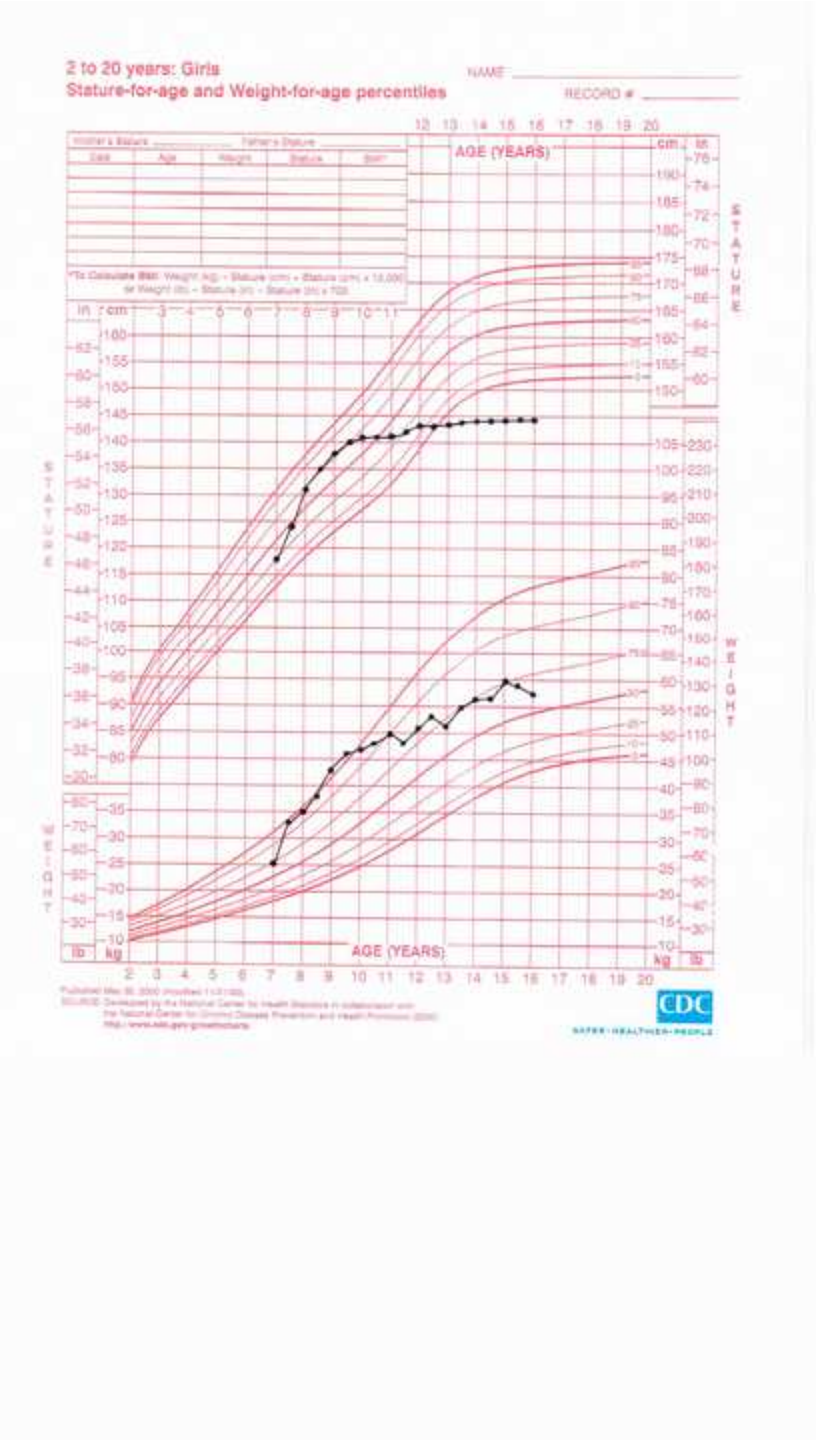
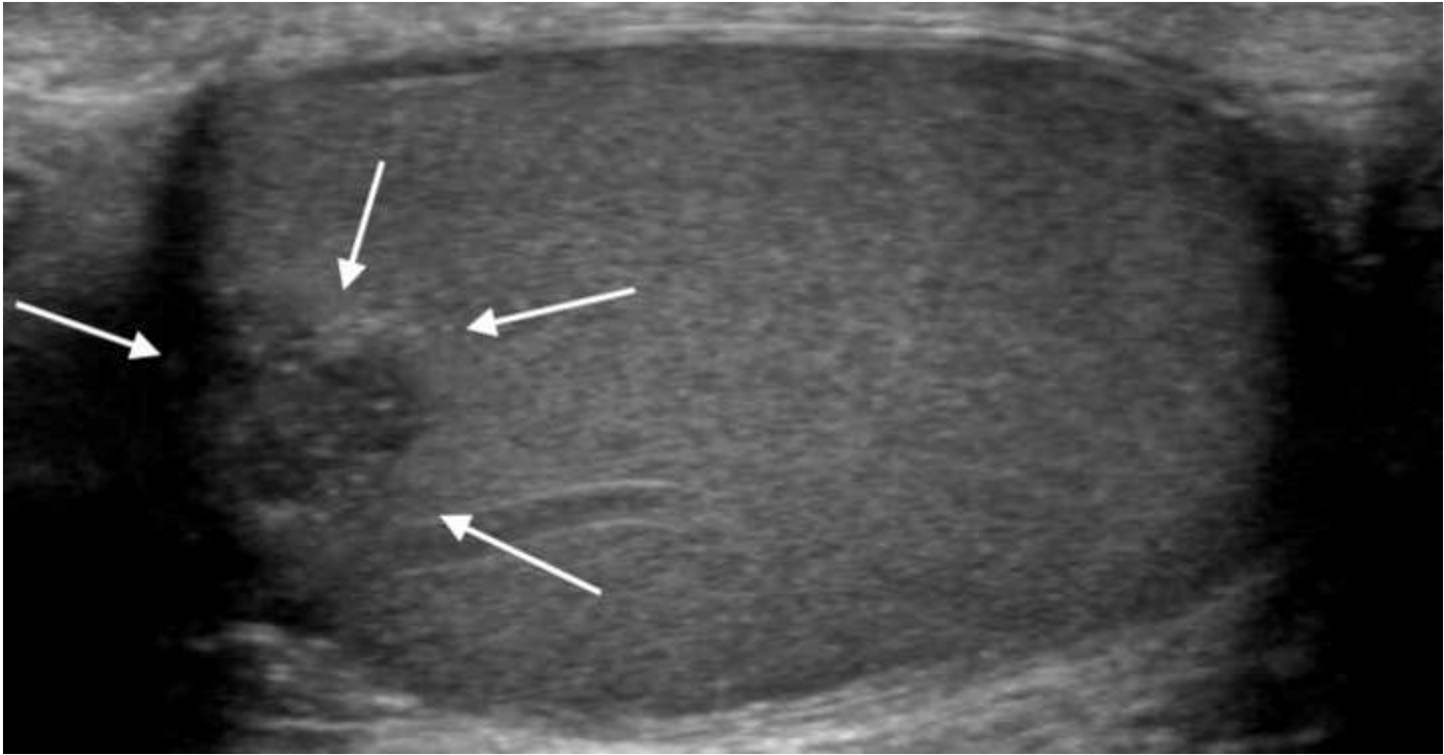
- Long-term complications include short stature (meta-analysis of 35 studies: average final height 1.38 SD below population norm in classic 21OH deficiency), excess mortality from adrenal crises in a Swedish cohort of 588 patients, testicular adrenal rest tissue in 44–94% of men and 21–33% of boys with classic 21OH deficiency, and low BMD prevalence of 37–81%. Emerging therapies include Chronocort in 16 patients, a CRF1 antagonist lowering ACTH/17OHP in 6 of 8 females, abiraterone normalizing androstenedione in 5 of 6 women, and anti-androgen/aromatase inhibition with reduced hydrocortisone normalizing growth over 2 years in 28 prepubertal children.
Methods
- Narrative review/Lancet Seminar; no systematic search strategy, formal quality appraisal, or meta-analysis methods are described.
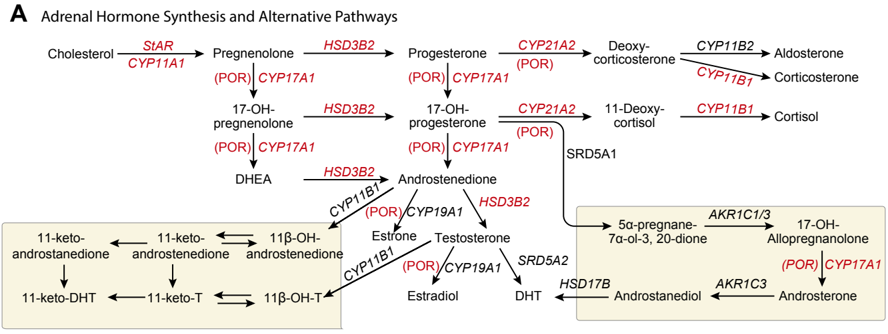
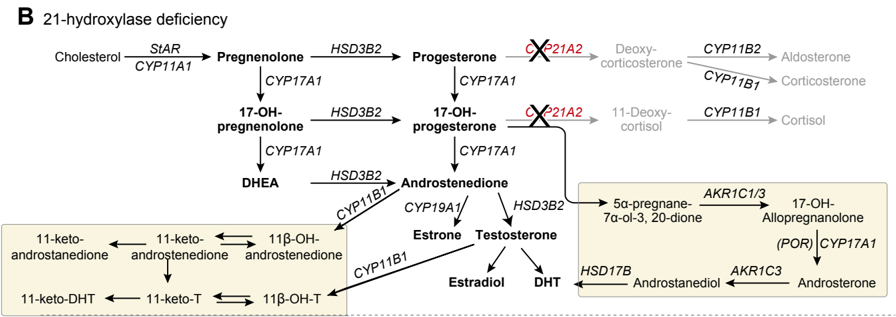
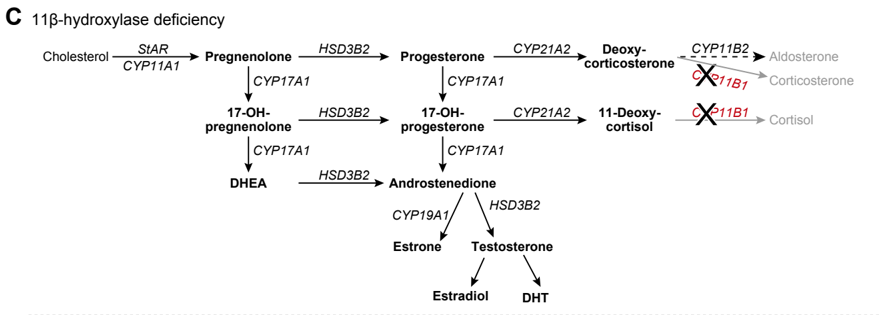
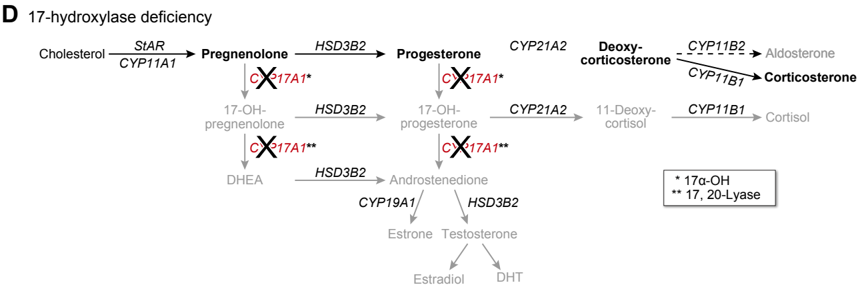
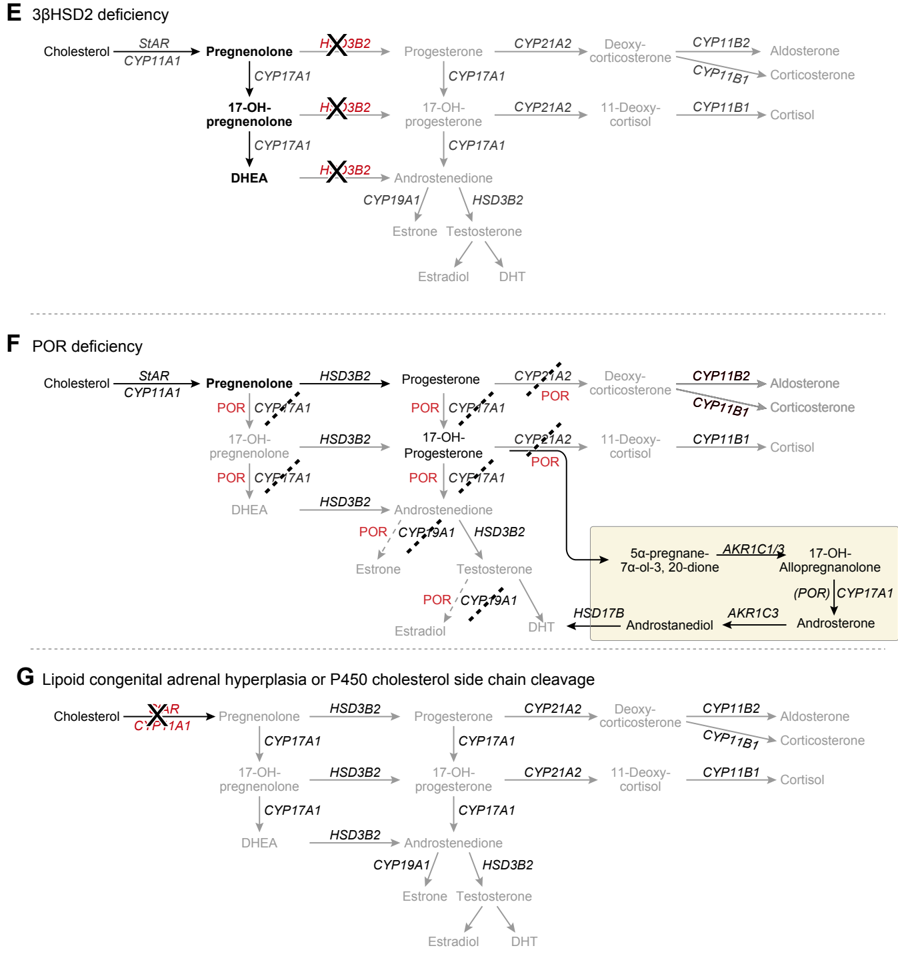
- Synthesizes literature, clinical practice guidelines, cohort studies, trials, and case reports across the seven main forms of CAH: 21OH, 11βOH, 17OH, 3βHSD2, POR, lipoid CAH/StAR, and SCC/CYP11A1 deficiency.
- Reports selected quantitative data from cited studies, including incidences, hormone cutoffs, cohort prevalences, and early-phase trial results, but presents no primary data collection or original analysis.
Limitations
- Stated: long-term effects of prenatal dexamethasone exposure are unknown; genital surgery outcomes are imperfect, and newer surgical approaches lack long enough follow-up to assess outcomes.
- Stated: bilateral adrenalectomy carries increased adrenal crisis risk and about one-third develop adrenal rest tissue if glucocorticoid dose is too low; many novel therapies are early-phase or small studies.
- Evident: as a narrative seminar, it lacks systematic search and formal evidence grading, relying on cited literature and expert synthesis; some statements, such as screening implementation status, are time-sensitive.
Model-written summary. Check it against the paper before relying on it.
Integrity signals
Registry
Cites
Statistics
Figures
Verification
Claims the paper makes
8 Valid · 7 Not valid · 58 Not checked · 21 Own results and interpretations
At least one cited source doesn’t support this claim or points to a different paper, and none confirmed it — see the verdicts below.
In the paper
“Most patients are compound heterozygotes, meaning they have different mutations in the two alleles.”
§ Congenital Adrenal Hyperplasia: The Lancet Seminar Series > Genetics and Pathophysiology of the Various Forms of CAH
What the sources say
- Not checked yetcites [24]
- Disputedcites [25] matched to “Rare causes of primary adrenal insufficiency: genetic and clinical characterization of a large nationwide cohort” (2016) sourceExperimental — accuracy not yet measured
The Results report the opposite pattern in this study’s children with primary adrenal insufficiency: 62 of 77 were homozygous, and only one was compound heterozygous. The cohort is not a survey of CAH patients generally, so these figures do not establish the frequency in CAH; they contradict the claim if it is attributed to this study’s patients. (LLM, conf=0.84)
Checked by a reasoning model — may be wrong.
plain- Asserted: passes — The authors put it forward as true.
- Checkable: passes — It can be checked against evidence.
- Load-bearing: unclear — It is unclear whether the paper’s conclusions depend on it.
- Based: passes — The paper gives a reason why it holds.
The cited sources that could be checked couldn’t confirm or dispute this claim.
In the paper
“A meta-analysis of 35 studies of classic 21OH deficiency showed an average final height of 1.38 standard deviations below the population norm.72”
§ Congenital Adrenal Hyperplasia: The Lancet Seminar Series > Long-term Complications
What the sources say
- Could not verifycites [72] matched to “Gender identity, gender assignment and reassignment in individuals with disorders of sex development: a major of dilemma” (2016) sourceExperimental — accuracy not yet measured
The 46,XX DSD section discusses 21-hydroxylase deficiency and gender-related outcomes, but does not report final height. Searches for the 35-study meta-analysis, final height, and 1.38 standard deviations found no passage addressing the claimed result in our copy. (LLM, conf=0.74)
plain- Asserted: passes — The authors put it forward as true.
- Checkable: passes — It can be checked against evidence.
- Load-bearing: unclear — It is unclear whether the paper’s conclusions depend on it.
- Based: passes — The paper gives a reason why it holds.
- Could not verify
The cited sources that could be checked couldn’t confirm or dispute this claim.
In the paper
“Mineralocorticoid, in the form of fludrocortisone, is given to achieve a plasma renin activity in the normal range in the salt-wasting forms of CAH (Panel) 20 .”
§ Congenital Adrenal Hyperplasia: The Lancet Seminar Series > Mineralocorticoid replacement
What the sources say
- Could not verifycites [20] matched to “Mutations in CYP11B1 and congenital adrenal hyperplasia in Moroccan Jews” (2005) sourceExperimental — accuracy not yet measured
The introductory discussion of 11β-hydroxylase deficiency (p. 5463) says patients may develop salt loss during glucocorticoid replacement therapy. Our copy does not state that fludrocortisone is given for salt-wasting CAH or that treatment aims to normalize plasma renin activity; searches for those terms and mineralocorticoid treatment found no such passage. (LLM, conf=0.75)
plainstates a cause- Asserted: passes — The authors put it forward as true.
- Checkable: passes — It can be checked against evidence.
- Load-bearing: passes — The paper’s conclusions depend on it.
- Based: passes — The paper gives a reason why it holds.
- Could not verify
The cited sources that could be checked couldn’t confirm or dispute this claim.
In the paper
“A level of less than 200 ng/dL (6 nmol/L) usually excludes nonclassic CAH if measured during the follicular phase of a reproductive-age woman.64”
§ Congenital Adrenal Hyperplasia: The Lancet Seminar Series > Screening for 21OH deficiency after infancy relies on measuring early morning (before 8 am)
What the sources say
- Could not verifycites [64] matched to “Fertility in women with nonclassical congenital adrenal hyperplasia due to 21-hydroxylase deficiency” (2010) sourceExperimental — accuracy not yet measured
The Patients section gives a diagnostic criterion of post-ACTH 17OHP above 10 ng/mL, and Hormone determinations says hormone levels were measured during the follicular phase. Neither passage addresses whether a basal 17OHP level below 200 ng/dL usually excludes nonclassic CAH; searches for that threshold and screening rule found no such passage in our copy. (LLM, conf=0.73)
hedged- Asserted: passes — The authors put it forward as true.
- Checkable: passes — It can be checked against evidence.
- Load-bearing: unclear — It is unclear whether the paper’s conclusions depend on it.
- Based: passes — The paper gives a reason why it holds.
- Could not verify
The cited sources that could be checked couldn’t confirm or dispute this claim.
In the paper
“Cell-free fetal DNA obtained from the mother's plasma as early as 5 weeks gestation has correctly identified fetal CAH status in 14 families.85”
§ Congenital Adrenal Hyperplasia: The Lancet Seminar Series > Prenatal treatment
What the sources say
- Could not verifycites [85] matched to “Positive fertility outcomes in a female with classic congenital adrenal hyperplasia following bilateral adrenalectomy” (2016) sourceExperimental — accuracy not yet measured
The Background and Case presentation (pages unavailable) discuss CAH and one patient’s diagnosis and fertility treatment, not prenatal testing with maternal plasma. Searches for cell-free fetal DNA, testing at five weeks, and results in 14 families found no passage addressing the claim. (LLM, conf=0.76)
plainstates a causen = 14- Asserted: passes — The authors put it forward as true.
- Checkable: passes — It can be checked against evidence.
- Load-bearing: passes — The paper’s conclusions depend on it.
- Based: passes — The paper gives a reason why it holds.
- Could not verify
41 more claims · 3 with their cited sources checked
Create a free account to see all 94 claims and to verify the 89 references still open.
- Probably not a substantial claim. 8
- It may state two separate claims as one. 43
Claims other papers make about this one
Each is checked against this paper’s own text: does it say what the citing paper says it does?
The cited source says what the claim attributes to it.
In the citing paper
“More than 90% of CAH cases are caused by mutant 21-hydroxylase (CYP21A2) (10), a key enzyme in glucocorticoid and mineralocorticoid biosynthesis (Fig. 1);”
From Steroid Metabolome Analysis in Disorders of Adrenal Steroid Biosynthesis and Metabolism (2019) · cites this paper as [10]
In the citing paper
“The variants of congenital adrenal hyperplasia (CAH) comprise five autosomal recessive inborn disorders defined by glucocorticoid deficiency resulting from inactivating mutations in enzymes involved in adrenal steroidogenesis (10).”
From Steroid Metabolome Analysis in Disorders of Adrenal Steroid Biosynthesis and Metabolism (2019) · cites this paper as [10]
Self-check
Percentages, sums and reported differences re-computed from the paper’s own numbers.
Each contradiction between two passages listed here was confirmed by an independent check.
Rated minor: it would not touch a result — a value no result rests on, a p-value that stays on the same side of the significance level, or a conflict that is clerical, resolved elsewhere in the paper, or outside its own findings.
In the paper
§ Congenital Adrenal Hyperplasia: The Lancet Seminar Series > References
“21OH=12-hydroxylase.”
§ Congenital Adrenal Hyperplasia: The Lancet Seminar Series > Introduction
“21-hydroxylase (21OH)”
Citations
Cites
1 retracted
Wallensteen, L., Zimmermann, M., Sandberg, M. T., Gezelius, A., Nordenström, A., Hirvikoski, T., & Lajić, S. (2016) · Hormones and Behavior · doi:10.1016/j.yhbeh.2016.06.011 · Cited by 6
RetractedThe Molecular Biology, Biochemistry, and Physiology of Human Steroidogenesis and Its Disorders
Miller, W. L., & Auchus, R. J. (2011) · Endocrine Reviews · doi:10.1210/er.2010-0013 · Cited by 2,458
Bornstein, S. R., Allolio, B., Arlt, W., Barthel, A., Don-Wauchope, A., Hammer, G. D., Husebye, E. S., Merke, D. P., Murad, M. H., Stratakis, C. A., et al. (2016) · The Journal of Clinical Endocrinology & Metabolism · doi:10.1210/jc.2015-1710 · Cited by 1,769
Self-citationSpeiser, P. W., Azziz, R., Baskin, L. S., Ghizzoni, L., Hensle, T. W., Merke, D. P., Meyer-Bahlburg, H. F. L., Miller, W. L., Montori, V. M., Oberfield, S. E., et al. (2010) · The Journal of Clinical Endocrinology & Metabolism · doi:10.1210/jc.2009-2631 · Cited by 1,468
Self-citationCongenital Adrenal Hyperplasia
(1987) · New England Journal of Medicine · doi:10.1056/nejm198711263172211 · Cited by 1,409
Congenital adrenal hyperplasia
Speiser, P. W., & White, P. C. (2003) · New England Journal of Medicine · doi:10.1056/nejmra021561 · Cited by 1,405
Role of steroidogenic acute regulatory protein in adrenal and gonadal steroidogenesis
Lin, D., Sugawara, T., Strauss, J. F., Clark, B. J., Stocco, D. M., Saenger, P., Rogol, A., & Miller, W. L. (1995) · Science · doi:10.1126/science.7892608 · Cited by 1,030
The pathophysiology and genetics of congenital lipoid adrenal hyperplasia
Bose, H. S., Sugawara, T., Strauss, J. F., & Miller, W. L. (1996) · New England Journal of Medicine · doi:10.1056/nejm199612193352503 · Cited by 676
Genotyping steroid 21-hydroxylase deficiency: hormonal reference data
NEW, M. I., LORENZEN, F., LERNER, A. J., KOHN, B., OBERFIELD, S. E., POLLACK, M. S., DUPONT, B., STONER, E., LEVY, D. J., PANG, S., et al. (1983) · The Journal of Clinical Endocrinology & Metabolism · doi:10.1210/jcem-57-2-320 · Cited by 624
17-Hydroxylation deficiency in man
Biglieri, E. G., Herron, M. A., & Brust, N. (1966) · Journal of Clinical Investigation · doi:10.1172/jci105499 · Cited by 561 · cited 7×
“Molecular endocrinology (Baltimore, Md) 1988; 2(6): 564-70.”
Influential
Research works printed but not linked: 1
- White PC, Curnow KM, Pascoe L. Disorders of steroid 11 beta-hydroxylase isozymes. Endocr Rev 1994; 15(4): 421-38.
Cited by
Items 601–700 of 701
Cinsel Gelişim Bozukluklarında Görüntüleme
Ucar, A. K., & Kuruğoğlu, S. (2024) · doi:10.5152/6806
Cinsiyet Gelişim Bozukluklarinda Psikiyatrik Komorbiditeler
Çirkin, B. (2024) · doi:10.5152/6817
Sezer, A., Aydın, A., Çakır, A. D., Cantürk, A. E., Ucar, A. K., Özcabı, B., Çirkin, B., Tosun, C., Aydın, D. B., Anaç, E., et al. (2024) · doi:10.5152/6800
46, XY Cinsiyet Gelişim Bozuklukları
Aydın, D. B., & Evliyaoğlu, O. (2024) · doi:10.5152/6807
Cinsiyet Gelişim Bozukluklarının Sınıflandırılması
Özcabı, B. (2024) · doi:10.5152/6804 · Cited by 1
Cinsel Gelişim Bozukluklarında Tanı
Özcabı, B., & Çakır, A. D. (2024) · doi:10.5152/6805 · Cited by 1
Gonad Gelişimi ve Cinsel Gelişim Bozukluğunun Moleküler Düzeneğ
Çakır, A. D. (2024) · doi:10.5152/6803
Cinsiyet Gelişim Bozukluklarında Malformasyon Sendromları
Özer, Y., & Bayramoğlu, E. (2024) · doi:10.5152/6811
Hakalmaz, A. E., & Eliçevik, M. (2024) · doi:10.5152/6813
Huang, Y., Qiao, J., & Zheng, J. (2024) · Clinical Case Reports · doi:10.1002/ccr3.9131
AVALIANDO A EFICÁCIA DA TERAPIA COM HORMÔNIO DO CRESCIMENTO EM CRIANÇAS COM DISTÚRBIOS ENDÓCRINOS
Penna, L. E., Neto, A. A. D. L., Rezende, L. C., de Castro, L. S., & Muniz, A. C. S. F. (2024) · Revista Ibero-Americana de Humanidades, Ciências e Educação · doi:10.51891/rease.v10i7.14780 · Cited by 1
Challenges in the Diagnosis and Management of Congenital Adrenal Hyperplasia: A Case Report
Biyang, G. P., & Sa’adi, A. (2024) · Pharmacognosy Journal · doi:10.5530/pj.2024.16.118
Cytogenomic description of a Mexican cohort with differences in sex development
Olivera-Bernal, G. C., Ita, M. D., Ricárdez-Marcial, E. F., Garduño-Zarazúa, L. M., González-Cuevas, Á. R., Robles, O. A. S., Huicochea‐Montiel, J. C., Cárdenas‐Conejo, A., Santana-Díaz, L., & Rosas‐Vargas, H. (2024) · Molecular Cytogenetics · doi:10.1186/s13039-024-00685-1
Filho, L. R., Gentilin, K. C. A. F., Silveira, C. G. D. A., & Campos, I. A. P. (2024) · Journal Archives of Health · doi:10.46919/archv5n3espec-206
Liu, F., Kang, C., Hu, Z., Luo, X., Wu, W., Tao, Q., Chi, Q., Yang, H. J., & Wang, X. (2024) · Hormone and Metabolic Research · doi:10.1055/a-2365-7521
“These mutations result in the dysregulation of adrenocortical steroid synthesis, thereby leading to an elevation in adrenocorticotropic hormone (ACTH) levels and subsequent adrenal cortical hyperplasia [1].”
Hashemipour, M., & Saleh, R. (2024) · Hormone Molecular Biology and Clinical Investigation · doi:10.1515/hmbci-2022-0116
Simple-Virilizing Congenital adrenal hyperplasia sustained by five mutations on the CYP21A2 gene
Agrimonti, G., Spaggiari, G., Menabò, S., Vezzani, S., Magnani, E., Frasoldati, A., Granata, A. R. M., & Santi, D. (2024) · Biomedical Research and Therapy · doi:10.15419/bmrat.v11i7.905 · Cited by 2
Tuna, M. B., Doğanca, T., Mourmouris, P., Kurtulmuş, N., Argun, Ö. B., & Kural, A. R. (2021) · Hellenic Urology · doi:10.4103/huaj.huaj_6_21
A Patient with a History of Traumatic Brain Injury and Fever
An, L., Ferber, C. J., & Siddiqui, H. (2024) · Springer eBooks · doi:10.1007/978-3-031-62517-6_4
Bulsari, K., & Falhammar, H. (2024) · Elsevier eBooks · doi:10.1016/b978-0-443-13825-6.00076-5
Synchronously Mature Intersex Japanese Flounder (Paralichthys olivaceus): A Rare Case
Han, T., Cao, W., San, L., Xu, Z., Wang, G., He, Z., Liu, Y., Ren, Y., Wang, Y., Zhang, X., et al. (2024) · Animals · doi:10.3390/ani14202948
Yang, Y., Gao, M., Wu, W., Sun, M., & Wang, Z. (2024) · Research Square · doi:10.21203/rs.3.rs-5267458/v1
Ahmed, S., Siddiqui, A., Lakhani, S., Khan, S., Kausar, R., & Siddiqui, I. (2024) · Indian Journal of Clinical Biochemistry · doi:10.1007/s12291-024-01277-x
Chen, X., Zhao, J., Li, D., Na, X., Yi, D., Yan, M., Yin, Y., & Wang, X. (2024) · Molecular Genetics & Genomic Medicine · doi:10.1002/mgg3.70029
Congenital Adrenal Hyperplasia
Turcu, A. F., & Reich, N. (2024) · Elsevier eBooks · doi:10.1016/b978-0-12-822563-9.00223-7
21-Hydroxylase deficiency: Clinical and biochemical aspects
Nordenström, A., & Lajić, S. (2024) · Elsevier eBooks · doi:10.1016/b978-0-443-13825-6.00171-0
Männlicher Hypogonadismus und Fruchtbarkeit
Khalafalla, K. M., de Souza, R. P., Ohlander, S. J., & NIEDERBERGER, C. S. (2024) · Springer eBooks · doi:10.1007/978-3-031-65245-5_11
Congenital Disorders of the Adrenal Gland
de Krijger, R. R., Tischler, A. S., Asa, S. L., Lack, E. E., & Volante, M. (2024) · American Registry of PathologyArlington, Virginia eBooks · doi:10.55418/9781933477473-02
(2024) · Frontiers research topics · doi:10.3389/978-2-8325-5833-1
Update on prenatal diagnosis and treatment of congenital adrenal hyperplasia
Westeinde, A. V., Nordenström, A., & Lajić, S. (2024) · Elsevier eBooks · doi:10.1016/b978-0-443-13825-6.00183-7
Unique Case Report: A Rare Association of 21-Hydroxylase Deficiency with Triple X Karyotype
Azulay, R. S. D. S., Facundo, A. N., Sousa, S. S. E., Nascimento, G. C., Magalhães, M., Neto, C. P. D. O., de Abreu, J. D. M. F., Lago, D. C. F., Damianse, S. D. S. P., Carvalho, V. C., et al. (2025) · Genes · doi:10.3390/genes16030354
Efficacy and safety of crinecerfont for the treatment of congenital adrenal hyperplasia
Cleto, A. S., Schirlo, J. M., Machozeki, J., & Martins, C. M. (2025) · European Journal of Internal Medicine · doi:10.1016/j.ejim.2025.03.021
Abdominal Leiomyoma in an Adult Transgender with Adrenogenital Syndrome: A Rare Case Report
AlAni, A. M. M., Mukdad, O. A., Hassan, Y., Al‐Bozom, I., Zabara, A., Alfared, M. H., Kolleri, J. J., & Darweesh, A. (2025) · AL-Kindy College Medical Journal · doi:10.47723/6sac8t53
Praktisches Management des Adrenogenitalen Syndroms
Wörther, H. (2025) · Journal für Endokrinologie Diabetologie und Stoffwechsel · doi:10.1007/s41969-025-00269-3
“Oftmals ist eine supraphysiologische GC-Gesamtdosis notwendig, um die adrenale Androgen-produktion effizient zu supprimieren [1, 13, 14].”
InfluentialAghaei, S., Tabatabaiefar, M. A., Saffari‐Chaleshtori, J., Korram, E., Amini, S. S., Aghaei, M., Koohiyan, M., Ataie, Z., Samei, P., & Farrokhi, E. (2025) · Advanced Biomedical Research · doi:10.4103/abr.abr_439_23
“[1,7] The STAR gene (spanning 8 kb on 8p11.”
邵, 涵. (2025) · Advances in Clinical Medicine · doi:10.12677/acm.2025.1572037
Aswani, A., Butt, E., Akinooye, O., Chokapirat, C., & Osaretin, O. (2025) · Cureus · doi:10.7759/cureus.89331
Mutations Affecting Leydig Cell Function
Lazzaretti, C., Furini, C., Santi, D., Simoni, M., & Casarini, L. (2025) · Springer eBooks · doi:10.1007/978-3-031-96376-6_24
Campioni, L., Carlo, M. C. D., Sola, C., Bergoglio, B., Bollati, M., Montesano, G., Ponzetto, F., Lopez, C., Motta, G., Parasiliti‐Caprino, M., et al. (2025) · Frontiers in Endocrinology · doi:10.3389/fendo.2025.1660114
Cazzolla, A. P., Bizzoca, M. E., Lorusso, M., Illuzzi, G., Ciavarella, D., Testa, F., Lovero, R., Brescia, V., & Crincoli, V. (2025) · Special Care in Dentistry · doi:10.1111/scd.70091
Molavi, N., Aghaei, S., Hoseinzadeh, M., Khanahmad, H., Hashemipour, M., & Tabatabaiefar, M. A. (2025) · Current Genetic Medicine Reports · doi:10.1007/s40142-025-00218-1
Chen, Y., Qi, Y., Ge, L., Weng, L., Pan, X., Zhou, X., Zhou, N., Wang, Y., Jia, J., & Li, H. (2025) · Risk Management and Healthcare Policy · doi:10.2147/rmhp.s514355
A rare case of 21-hydroxylase deficiency presenting as precocious puberty in a male child
Satekge, T. M., Tshipeng, J. P. M., Khosa, R. J., & Sutton, C. (2025) · doi:10.5348/100029z19ts2025cr
Taş, B. Y., Özbaran, B., Inal-Kaleli, I., Doğan, N., Jalilova, A., Özen, S., Köse, S., Gökşen, D., Darcan, Ş., & Bildik, T. (2025) · Journal of Clinical Research in Pediatric Endocrinology · doi:10.4274/jcrpe.galenos.2025.2025-3-16
Gawlik, Z., Kaleta, K., Wróblewska, M., Szwarkowska, M., Preizner-Rzucidło, E., Jażdżewski, K., Wardak, S., Starzyk, J., & Januś, D. M. (2025) · Pediatric Endocrinology Diabetes and Metabolism · doi:10.5114/pedm.2025.155104
High-Resolution Variant Profiling of CAH-Associated Genes Using a Long-Read Sequencing AssayPreprint
Gu, S., Chu, G., Cai, R., Sun, X., Lu, Q., Han, W., Deng, S., Wang, X., Xiang, J., & He, R. X. (2025) · medRxiv · doi:10.1101/2025.10.24.25338696
Леонидович, И. А., Isakova, Y. I., & Reshetov, I. V. (2025) · Issues of Reconstructive and Plastic Surgery · doi:10.52581/1814-1471/94/02
Monostori, P. B., Szatmári, I., Baráth, Á., Bókay, J., Csenki, M., Galla, Z., Gellén, B., Grecsó, N., Gyüre, E., Halász, Z., et al. (2025) · International Journal of Neonatal Screening · doi:10.3390/ijns11040099
Hiperplasia suprarrenal congénita: crisis adrenal y genitales virilizados
Santilln-Snchez, L. G., Campante-Arteaga, A. A., Curiel-Vargas, D. M., Callejo-Bernal, M. A. D., Rosas-Trujillo, L. B., & Callejo-Bernal, A. P. D. (2025) · Salud Jalisco · doi:10.35366/121810
Raju, V. V. S., Boddu, S. K., Varma, C., Arjunan, G. N., & Mudunuri, G. K. R. (2025) · Journal of Pediatric Endocrinology and Diabetes · doi:10.25259/jped_53_2025 · Cited by 1
Li, Z., Liang, Y., Du, C., Yu, X., Hou, L., Wu, W., Ying, Y., & Luo, X. (2021) · Figshare · doi:10.6084/m9.figshare.17083928
Li, Z., Liang, Y., Du, C., Yu, X., Hou, L., Wu, W., Ying, Y., & Luo, X. (2021) · Figshare · doi:10.6084/m9.figshare.17083925
Additional file 1 of Cytogenomic description of a Mexican cohort with differences in sex development
Olivera-Bernal, G. C., Ita, M. D., Ricárdez-Marcial, E. F., Garduño-Zarazúa, L. M., González-Cuevas, Á. R., Robles, O. A. S., Huicochea‐Montiel, J. C., Cárdenas‐Conejo, A., Santana-Díaz, L., & Rosas‐Vargas, H. (2024) · Figshare · doi:10.6084/m9.figshare.26308985
Li, Z., Liang, Y., Du, C., Yu, X., Hou, L., Wu, W., Ying, Y., & Luo, X. (2021) · Figshare · doi:10.6084/m9.figshare.17083931
Gallea, M. N. (2023) · LA Referencia (Red Federada de Repositorios Institucionales de Publicaciones Científicas)
Alwani, M., Nimbalkar, P., Halvadia, H., Kadikar, B., & Kaku, Y. D. (2024) · doi:10.5005/jihr-11055-v1n1-11
I Jornada Científica de Pediatría: Libro de Resúmenes 2025
RCEM (2026) · Revista Chilena de Estudiantes de Medicina · doi:10.5354/0718-672x.2025.82475
Pseudohypoaldosteronism type 1
Fernandes-Rosa, F. L., & Zennaro, M. (2026) · Elsevier eBooks · doi:10.1016/b978-0-443-13825-6.00354-x
Unveiling Salt-Wasting Congenital Adrenal Hyperplasia in an Infant: A Diagnostic Challenge
Kummari, S., Sravya, M. K., & Mahipal, R. (2026) · Cureus · doi:10.7759/cureus.103140
Soliman, N. A., Soliman, A. T., Alyafei, F., Ahmed, S., Hamed, N., Alaaraj, N., Elsayed, S., Fawzy, D., & Elawwa, A. (2026) · International Journal of Public Health Excellence (IJPHE) · doi:10.55299/ijphe.v5i2.1663
Yenidoğan Metabolik ve Endokrin Hastalık Tarama Programı ve Güncel Durumu
Aytekin, M. F., & Ocaktan, M. E. (2026) · Akdeniz Medical Journal · doi:10.53394/akd.1554569
The intersection of disorders of sex development and cardiovascular diseases
Hashmi, S., & Aherrahrou, R. (2026) · Biology of Sex Differences · doi:10.1186/s13293-025-00814-4
Modern competency‐based teaching of human sexual development
Eppler, E., Bilella, A., & Hammer, C. M. (2026) · Anatomical Sciences Education · doi:10.1002/ase.70222
Sun, H., Li, R., Li, L., & Li, P. (2026) · Frontiers in Public Health · doi:10.3389/fpubh.2026.1733159
“CAH affects approximately 1 in 10,000 to 20,000 live births globally, with varying prevalence by region and genotype (7, 8).”
Munarin, J., Tuli, G., Pavanello, E., & SANCTIS, L. D. (2026) · Journal of Clinical Medicine · doi:10.3390/jcm15072631
Kolli, V., Trick, J., Schulman, A., Iben, J., Padilla, C. J., Li, T., Faucz, F. R., & Merke, D. P. (2026) · Frontiers in Endocrinology · doi:10.3389/fendo.2026.1784619
“The combination of cortisol, aldosterone, and epinephrine de fi ciencies places patients at risk for life-threatening adrenal crises, during which patients may experience acute episodes of hyperkalemia, metabolic acidosis, and hypoglycemia (2, 3).”
Self-citationGénomique intégrée des tumeurs bénignes corticosurrénaliennes
Faillot, S. (2017) · theses.fr (ABES) · doi:10.70675/36869127z1fb2z41bbzb082z1048e489a8e6
Stéroïdomique corticosurrénalienne par LC-MS/MS : applications en endocrinologie pédiatrique
Travers, S. A. A. (2020) · theses.fr (ABES) · doi:10.70675/84cf9c3bze93ez41dcza251z559f27f3c6a6
Effet de la modulation de l'équilibre calcique dans le cortex surrénalien
Fedlaoui, B. (2023) · theses.fr (ABES) · doi:10.70675/45da36b4z01fdz47d6za4b6z8663da88f35d
Identification de nouveaux gènes impliqués dans le développement sexuel
Mary, L. (2022) · theses.fr (ABES) · doi:10.70675/138aff9azab96z4771za908ze14f8530409f
Drossart, T. (2025) · theses.fr (ABES) · doi:10.70675/3d7ac8c8z01e3z43b5z8286ze5ede0f2dec4
Gee, H., & Hearn, T. J. (2026) · Current Genetic Medicine Reports · doi:10.1007/s40142-026-00247-4
A 56-Year-Old Male Patient With 21-Hydroxylase Deficiency Presenting With Fatigue: A Case Report
Huang, S., Wu, W., Wu, Y., Wang, J., 朱力军, Yang, Y., & Zhang, Q. H. (2026) · British Journal of Hospital Medicine · doi:10.31083/bjhm53026
Nokoff, N., Fechner, P. Y., Kim, M. S., Marshall, I. H., Merke, D. P., Sarafoglou, K., Hartzell, A. L., Lin, V. H., & Thornton, P. (2026) · The Journal of Clinical Endocrinology & Metabolism · doi:10.1210/clinem/dgag192
Self-citationAntonova, E. N., Uldanova, E. E., Trifonova, A. S., Piven, E. D., Глазова, О. В., Sakr, N., Rudev, N. V., Vorontsova, M. V., Митяева, О. Н., & Volchkov, P. Y. (2026) · Russian Journal of Genetics · doi:10.1134/s102279542670002x
Zavgorodneva, Z., Kaljevic, M., & Chen, K. (2026) · AACE Endocrinology and Diabetes · doi:10.1016/j.aed.2026.04.016
Gee, H., & Hearn, T. J. (2026) · BMJ connections. · doi:10.1136/bmjccgg-2026-000087
Obesity in Classic Congenital Adrenal Hyperplasia: Mechanisms, Complications and Management
Mu, J., Li, Y. J., Sun, M., Li, Y. J., Li, P., & Zou, H. (2026) · Clinical Endocrinology · doi:10.1111/cen.70155
Kim, H., Lin, V. H., Newfield, R. S., Dauber, A., Luo, M., Cicero, S., Li, M., Zhao, C., & Cheng, H. K.-H. (2026) · Journal of the Endocrine Society · doi:10.1210/jendso/bvag112
Nesbit, S. M., Shuch, B., Hamidi, S., Arasu, A., & Harari, A. (2026) · Research Square · doi:10.21203/rs.3.rs-9588169/v1
Tizianel, I., Ceccato, F., & Barbot, M. (2026) · Frontiers in Adolescent Medicine · doi:10.3389/fradm.2026.1827315
“Advances in neonatal screening, endocrine management and multidisciplinary care have markedly improved survival and quality of life, shifting the clinical focus toward long-term outcomes and comorbidities across the lifespan (4).”
Salcedo, C. (2024) · Carolina Digital Repository (University of North Carolina at Chapel Hill) · doi:10.17615/vbcc-rz55
Polito, N. D., Gambarota, F., Hampson, E., & Herlitz, A. (2026) · Neuroscience & Biobehavioral Reviews · doi:10.1016/j.neubiorev.2026.106877
Congenital Adrenal Hyperplasia Case Attending With Hypertension Diagnosed With 21OH DeficiencyPreprint
Topuz, E. (2026) · Research Square · doi:10.21203/rs.3.rs-9961710/v1
Yılmaz, E., Topal, E., Dündar, İ., Yılmaz, Z. Y., Köker, N., Kaya, E., & Çamtosun, E. (2026) · Journal of Clinical Medicine · doi:10.3390/jcm15156029
Analytical Method of Development and Validation of Hydrocortisone by UV Spectroscopic Method
Mane, S. R., Ingale, M. B., & Dilip, V. K. (2026) · International Journal of Pharma Growth Research Review · doi:10.54660/ijpgrr.2026.3.4.01-05
Zhao, P., Qiu, X., Lin, Q., Huang, T., Zeng, Y., Zhou, J., & Xu, L. (2026) · Frontiers in Genetics · doi:10.3389/fgene.2026.1894466
Benetti‐Pinto, C. L., Soares, J. M., & Yela, D. A. (2020) · Femina · doi:10.61622/0100-7254486202005
Irvine, T. B., & Monks, D. A. (2026) · Hormones and Behavior · doi:10.1016/j.yhbeh.2026.105982
Kouri, C., Sommer, G., Costa, F. C., de Miranda, M. C., du Toit, T., Heldt, K., Hess, M., Hirschberg, A. L., Markosyan, R. L., Neumann, U., et al. (2026) · European Journal of Endocrinology · doi:10.1093/ejendo/lvag160
Villalobos, L. F. B., Acosta, M. C. R., Sierra, D. G., Ibarra, L. M. S., Castellón, A. C. M., & Coronel, D. J. N. (2026) · Ciencia Latina Revista Científica Multidisciplinar · doi:10.37811/cl_rcm.v10i4.25370
Yuan, S., 孙治华, & Lin, Y. (2026) · Research Square · doi:10.21203/rs.3.rs-10675579/v1
Liu, S., & Tse, M. L. (2026) · Clinical Toxicology · doi:10.1080/15563650.2026.2727908
HIPERPLASIA SUPRARRENAL CONGÉNITA CLÁSICA PERDEDORA DE SAL EN LACTANTE MASCULINO: REPORTE DE CASO
Gutiérrez, J. D. A. R., Coronel, N. O. B., & Recalde, A. M. M. R. (2026) · Revista Científica Multidisciplinaria Ciencia PJC · doi:10.65740/nhqz8996
Diagnóstico y manejo de la hiperplasia suprarrenal congénita: revisión sistemática
Sanchez-Zambrano, J., Zamora-Trejo, I. B., & Castellano-Castellano, F. G. (2026) · Cuaderno de odontología. Revista científica. · doi:10.62574/sodygynv
Gutiérrez, M. M. V., Pertuz, D. R., Oviedo, N. S., Gabrial, S. S. A., Guevara, S. V. G., & Burbano, H. D. B. (2026) · Cureus · doi:10.7759/cureus.118125
Metadata
- Authors
- El-Maouche, D., Arlt, W., & Merke, D. P.
- Affiliations
- University of Birmingham (GB)
- Eunice Kennedy Shriver National Institute of Child Health and Human Development (US)
- Corresponding author
- Merke, Deborah P
- Venue
- The Lancet
- Publisher
- Elsevier BV
- Published
- 2017-11
- Volume
- 390
- Issue
- 10108
- Pages
- 2194-2210
- ISSN
- 0099-5355 (ISSN-L)
- 0140-6736
- OpenAlex
- W2103673171
- Semantic Scholar
- bc74f5f4130d1014de0433f4792f449968364c4c
- Cited by
- 669
- References
- 162
- Citations by year
- 2026: 31 · 2025: 43 · 2024: 92 · 2023: 89 · 2022: 85 · 2021: 91 · 2020: 66 · 2019: 58 · 2018: 46 · 2017: 20
- FWCI
- 4.87
- Type
- journal article
- Language
- en
- Open access
- Licence
- cc-by-nc-nd
- www.elsevier.com/tdm/userlicense/1.0/ (tdm)
- Locations
- The Lancet (publishedVersion)
- PubMed (publishedVersion)
- University of Birmingham Research Portal (University of Birmingham) (submittedVersion, cc-by-nc-nd)
- Topics
- Health Sciences › Medicine › Endocrinology, Diabetes and Metabolism › Sexual Differentiation and Disorders
- Health Sciences › Medicine › Endocrinology, Diabetes and Metabolism › Adrenal Hormones and Disorders
- Life Sciences › Biochemistry, Genetics and Molecular Biology › Clinical Biochemistry › Metabolism and Genetic Disorders
- Keywords
- congenital adrenal hyperplasia, 21-hydroxylase deficiency, adrenal steroidogenesis, cortisol production, hormone replacement therapy, newborn screening, 17-hydroxyprogesterone, ACTH stimulation test, salt wasting, ambiguous genitalia, hirsutism, infertility, sex hormone imbalance, late complications
- MeSH terms
- Adrenal Hyperplasia, Congenital, Combined Modality Therapy, Dose-Response Relationship, Drug, Female, Follow-Up Studies, Glucocorticoids, Humans, Infant, Newborn, Male, Severity of Illness Index, Neonatal Screening, Treatment Outcome, Risk Assessment, Genetic Predisposition to Disease, Hormone Replacement Therapy, Rare Diseases
About these checks
Registry, retraction, Cites and statistics results are computed, not judged, with one exception: a printed reference that no index lists is read once by a model before it counts as a citation error. Claims are extracted by a model and kept only when their quote appears verbatim in the text; each cited source is then checked, with a model’s help, for whether it says what the claim relies on. Those verdicts can be wrong — read the claim’s quote and the cited source before relying on one.
The claim verdicts this report counts are experimental: their accuracy is not yet measured.
A language model drew the claims from the paper on 2026-10-06, under version 3 of the claim definition (model deepseek-v4.1-flash, prompt extract-v3).
A second model labelled each claim on 2026-10-06 (model jev-1.13-20260917, definition revision gold-guideline-v0.2).
Cited sources are checked with a language model’s help (gpt-6-sol).
Statistics and arithmetic are recomputed, not judged.
Confidence bands are shown only for fields calibrated on our annotated test set. None is calibrated yet, so no band is shown.
What counts as a claim ›How we measure confidence ›How we check this ›
Are you an author, or do you see a problem with this page? Request a review
Data sources
Bibliographic data: Semantic Scholar, OpenAlex, Crossref.
Contains information from the Semantic Scholar Academic Graph Datasets, made available under the ODC Attribution License (ODC-BY 1.0).
Semantic Scholar’s data is described in: Kinney, R., et al. (2023). The Semantic Scholar Open Data Platform. arXiv:2301.10140.
