

The safety and immunogenicity of two novel live attenuated monovalent (serotype 2) oral poliovirus vaccines in healthy adults: a double-blind, single-centre phase 1 study
Open accessThe DOI matches its Crossref record; 22 of the 23 references it cites were found in a registry or an index.
Abstract
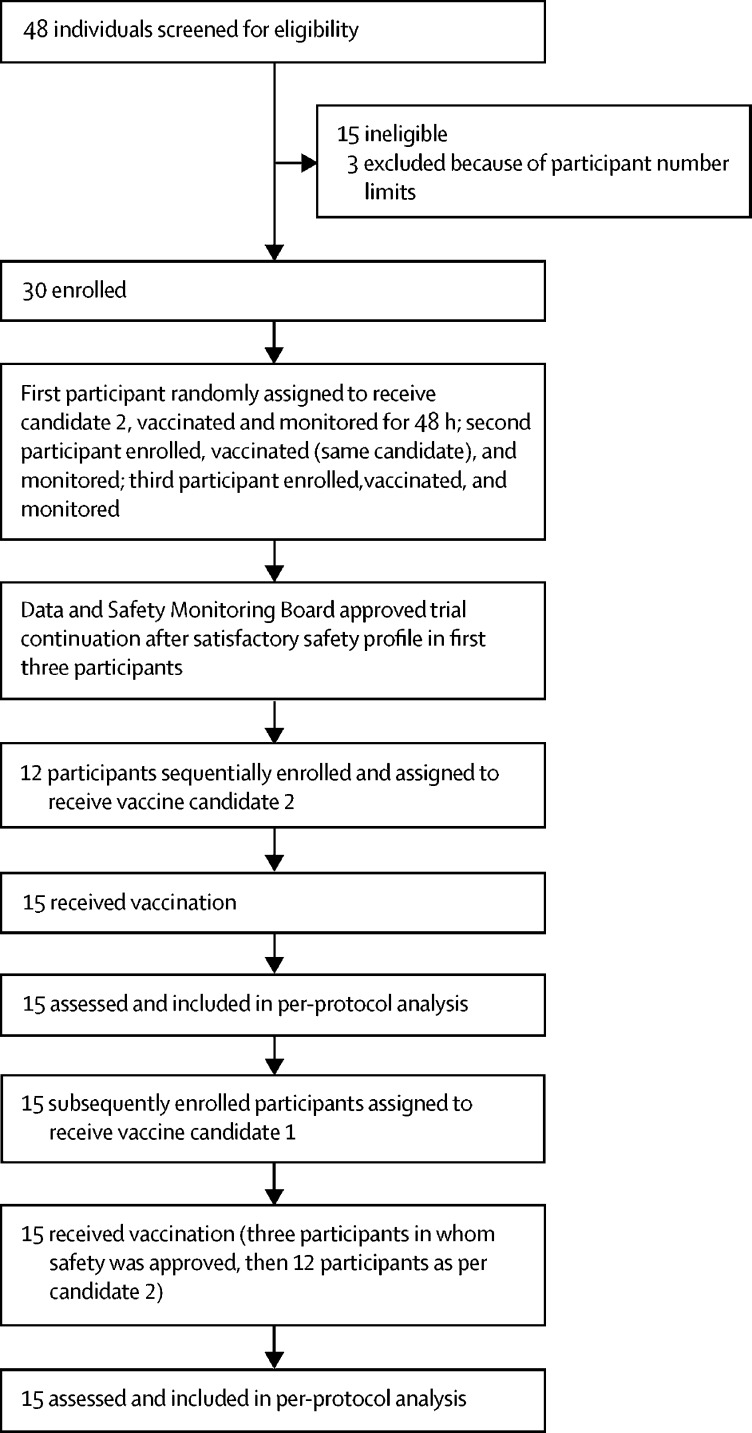
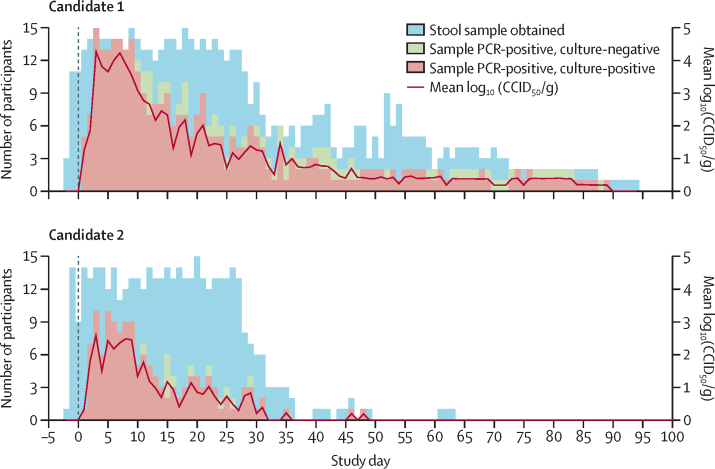
BACKGROUND: Use of oral live-attenuated polio vaccines (OPV), and injected inactivated polio vaccines (IPV) has almost achieved global eradication of wild polio viruses. To address the goals of achieving and maintaining global eradication and minimising the risk of outbreaks of vaccine-derived polioviruses, we tested novel monovalent oral type-2 poliovirus (OPV2) vaccine candidates that are genetically more stable than existing OPVs, with a lower risk of reversion to neurovirulence. Our study represents the first in-human testing of these two novel OPV2 candidates. We aimed to evaluate the safety and immunogenicity of these vaccines, the presence and extent of faecal shedding, and the neurovirulence of shed virus. METHODS: In this double-blind, single-centre phase 1 trial, we isolated participants in a purpose-built containment facility at the University of Antwerp Hospital (Antwerp, Belgium), to minimise the risk of environmental release of the novel OPV2 candidates. Participants, who were recruited by local advertising, were adults (aged 18-50 years) in good health who had previously been vaccinated with IPV, and who would not have any contact with immunosuppressed or unvaccinated people for the duration of faecal shedding at the end of the study. The first participant randomly chose an envelope containing the name of a vaccine candidate, and this determined their allocation; the next 14 participants to be enrolled in the study were sequentially allocated to this group and received the same vaccine. The subsequent 15 participants enrolled after this group were allocated to receive the other vaccine. Participants and the study staff were masked to vaccine groups until the end of the study period. Participants each received a single dose of one vaccine candidate (candidate 1, S2/cre5/S15domV/rec1/hifi3; or candidate 2, S2/S15domV/CpG40), and they were monitored for adverse events, immune responses, and faecal shedding of the vaccine virus for 28 days. Shed virus isolates were tested for the genetic stability of attenuation. The primary outcomes were the incidence and type of serious and severe adverse events, the proportion of participants showing viral shedding in their stools, the time to cessation of viral shedding, the cell culture infective dose of shed virus in virus-positive stools, and a combined index of the prevalence, duration, and quantity of viral shedding in all participants. This study is registered with EudraCT, number 2017-000908-21 and ClinicalTrials.gov, number NCT03430349. FINDINGS: Between May 22 and Aug 22, 2017, 48 volunteers were screened, of whom 15 (31%) volunteers were excluded for reasons relating to the inclusion or exclusion criteria, three (6%) volunteers were not treated because of restrictions to the number of participants in each group, and 30 (63%) volunteers were sequentially allocated to groups (15 participants per group). Both novel OPV2 candidates were immunogenic and increased the median blood titre of serum neutralising antibodies; all participants were seroprotected after vaccination. Both candidates had acceptable tolerability, and no serious adverse events occurred during the study. However, severe events were reported in six (40%) participants receiving candidate 1 (eight events) and nine (60%) participants receiving candidate 2 (12 events); most of these events were increased blood creatinine phosphokinase but were not accompanied by clinical signs or symptoms. Vaccine virus was detected in the stools of 15 (100%) participants receiving vaccine candidate 1 and 13 (87%) participants receiving vaccine candidate 2. Vaccine poliovirus shedding stopped at a median of 23 days (IQR 15-36) after candidate 1 administration and 12 days (1-23) after candidate 2 administration. Total shedding, described by the estimated median shedding index (50% cell culture infective dose/g), was observed to be greater with candidate 1 than candidate 2 across all participants (2·8 [95% CI 1·8-3·5] vs 1·0 [0·7-1·6]). Reversion to neurovirulence, assessed as paralysis of transgenic mice, was low in isolates from those vaccinated with both candidates, and sequencing of shed virus indicated that there was no loss of attenuation in domain V of the 5'-untranslated region, the primary site of reversion in Sabin OPV. INTERPRETATION: We found that the novel OPV2 candidates were safe and immunogenic in IPV-immunised adults, and our data support the further development of these vaccines to potentially be used for maintaining global eradication of neurovirulent type-2 polioviruses. FUNDING: Bill & Melinda Gates Foundation.
Overview
The claims and statistics of this paper haven’t been checked yet.
Free: it reads the open-access text and checks the first 5 claims that cite a source we can check. Create a free account to check every claim.
Integrity signals
Registry
Cites
Statistics
Figures
Verification
Claims the paper makes
The claims and statistics of this paper haven’t been checked yet.
Free: it reads the open-access text and checks the first 5 claims that cite a source we can check. Create a free account to check every claim.
Claims other papers make about this one
Each is checked against this paper’s own text: does it say what the citing paper says it does?
The source backs part of the claim, not all of it — or backs it for a different population, condition or comparison.
In the citing paper
“Importantly, vaccination with nOPV2 elicited a significant increase in neutralizing antibody titers against type 2 poliovirus in at least 83% of the subjects (Van Damme et al., 2019).”
From Engineering the Live-Attenuated Polio Vaccine to Prevent Reversion to Virulence (2020) · cites this paper as Van Damme et al., 2019
Experimental — accuracy not yet measuredThe source backs part of the claim, not all of it — or backs it for a different population, condition or comparison.
In the citing paper
“Analysis of shed virus in stool samples showed effective intestinal mucosal replication of the vaccine virus in all vaccinees.”
From Engineering the Live-Attenuated Polio Vaccine to Prevent Reversion to Virulence (2020) · cites this paper as Van Damme et al., 2019
Experimental — accuracy not yet measuredThe cited source says what the claim attributes to it.
In the citing paper
“An anamnestic antibody response was evident by an increase in the median neutralizing antibody titer from 56.9 (interquartile range [IQR] with 40.6–147.4 as Q1–Q3) before vaccination to 1,152.0 (IQR with 650.0–1448.0 as Q1–Q3) at 28 days post-vaccination (Van Damme et al., 2019).”
From Engineering the Live-Attenuated Polio Vaccine to Prevent Reversion to Virulence (2020) · cites this paper as Van Damme et al., 2019
The cited source says what the claim attributes to it.
In the citing paper
“Virus shedding in stool was observed in 14 collected samples at day 7 post-administration and in five of 11 collected samples on day 28.”
From Engineering the Live-Attenuated Polio Vaccine to Prevent Reversion to Virulence (2020) · cites this paper as Van Damme et al., 2019
The cited source says what the claim attributes to it.
In the citing paper
“Strikingly, in the mouse neurovirulence test, the redesigned nOPV2 recovered from vaccinees maintained its attenuation phenotype (Van Damme et al., 2019), in contrast to the current vaccine containing Sabin2 (Stern et al., 2017).”
From Engineering the Live-Attenuated Polio Vaccine to Prevent Reversion to Virulence (2020) · cites this paper as Van Damme et al., 2019
5 more claims about this paper
Create a free account to see every claim other papers make about this one.
Self-check
Percentages, sums and reported differences re-computed from the paper’s own numbers.
The self-check needs the paper’s full text.
Citations
Cites
Liver enzyme alteration: a guide for clinicians
Giannini, E. G. (2005) · Canadian Medical Association Journal · doi:10.1503/cmaj.1040752 · Cited by 2,016
Hird, T. R., & Grassly, N. C. (2012) · PLoS Pathogens · doi:10.1371/journal.ppat.1002599 · Cited by 221
Approach to asymptomatic creatine kinase elevation
Moghadam-Kia, S., Oddis, C. V., & Aggarwal, R. (2016) · Cleveland Clinic Journal of Medicine · doi:10.3949/ccjm.83a.14120 · Cited by 203
Update on Vaccine-Derived Polioviruses-Worldwide, January 2017–June 2018
Jorba, J., Diop, O. M., Iber, J., Henderson, E., Zhao, K., Sutter, R. W., Wassilak, S. G. F., & Burns, C. C. (2018) · MMWR. Morbidity and Mortality Weekly Report · doi:10.15585/mmwr.mm6742a5 · Cited by 197
Self-citationKilpatrick, D. R., Yang, C.-F., Ching, K., Vincent, A., Iber, J., Campagnoli, R., Mandelbaum, M., De, L., Yang, S.-J., Nix, A., et al. (2009) · Journal of Clinical Microbiology · doi:10.1128/jcm.00702-09 · Cited by 187
Self-citationSutter, R. W., Kew, O. M., & Cochi, S. L. (2008) · Vaccines · doi:10.1016/b978-1-4160-3611-1.50030-1 · Cited by 167
Self-citationIdentification of two determinants that attenuate vaccine-related type 2 poliovirus
Ren, R. B., Moss, E. G., & Racaniello, V. R. (1991) · Journal of Virology · doi:10.1128/jvi.65.3.1377-1382.1991 · Cited by 163
Genetic basis of attenuation of the Sabin type-2 vaccine strain of poliovirus in primates.
Macadam, A. J., Pollard, S. R., Ferguson, G., Skuce, R., Wood, D., Almond, J. W., & Minor, P. D. (1993) · Virology · doi:10.1006/viro.1993.1003 · Cited by 139
Self-citationStandardized Methods for Detection of Poliovirus Antibodies
Weldon, W. C., Oberste, M. S., & Pallansch, M. A. (2016) · Methods in molecular biology · doi:10.1007/978-1-4939-3292-4_8 · Cited by 128
Self-citationThe Evolutionary Pathway to Virulence of an RNA Virus
Stern, A., Yeh, M. T., Zinger, T., Smith, M., Wright, C., Ling, G., Nielsen, R., Macadam, A., & Andino, R. (2017) · Cell · doi:10.1016/j.cell.2017.03.013 · Cited by 127
Self-citation
Research works printed but not linked: 1
- Hird, 2012, Systematic review of mucosal immunity induced by oral and inactivated poliovirus vaccines against virus shedding following oral poliovirus challenge, PLoS Pathog, 8, 10.1371/journal.ppat.1002599 · DOI · Paper page
Cited by
Items 101–147 of 147
New polio vaccine poised to get emergency WHO approval
Irwin, A. (2020) · Nature · doi:10.1038/d41586-020-03045-2 · Cited by 6
Iliyasu, Z., Danzomo, A. A., Jeyaseelan, V., Gofama, M. M., Akintan, P., Akinrinoye, O. O., Also, U., Abdullahi, H., Mawashi, K. Y., Gajida, A. U., et al. (2025) · Vaccine · doi:10.1016/j.vaccine.2025.126978 · Cited by 5
Combating a resurgence of poliomyelitis through public health surveillance and vaccination
Chong, C. Y., Kam, K., & Yung, C. F. (2023) · Annals of the Academy of Medicine Singapore · doi:10.47102/annals-acadmedsg.2022390 · Cited by 5
Longley, A. T., Nsubuga, F., Gilani, Z., Tobolowsky, F. A., Kisakye, A., Greene, S. A., Ampeire, I., Ssennono, V. F., Gyasi, S. O., Ntale, I., et al. (2025) · The Lancet Global Health · doi:10.1016/s2214-109x(25)00110-x · Cited by 5
Auzenbergs, M., Fountain, H., Macklin, G., Lyons, H. M., & O’Reilly, K. M. (2023) · Gates Open Research · doi:10.12688/gatesopenres.13272.3 · Cited by 5
Poliovirus vaccine options: another step forward
Thompson, K. M. (2020) · The Lancet · doi:10.1016/s0140-6736(20)32629-5 · Cited by 6
Immunogenicity of Viral Vaccines in the Italian Military
Ferlito, C., Biselli, R., Visco, V., Cattaruzza, M. S., Capobianchi, M. R., Castilletti, C., Lapa, D., Nicoletti, L., Marchi, A., Magurano, F., et al. (2021) · Biomedicines · doi:10.3390/biomedicines9010087 · Cited by 5
Polio endgame options: will we have the vaccines needed?
Thompson, K. M. (2019) · The Lancet · doi:10.1016/s0140-6736(19)31294-2 · Cited by 4
nouveau vaccin antipoliomyélitique oral : un tournant décisif pour le programme d’éradication ?
Bessaud, M. (2021) · Médecine tropicale et santé internationale · doi:10.48327/mtsi.2021.191 · Cited by 4
Troy, S. B., & Maldonado, Y. (2022) · Elsevier eBooks · doi:10.1016/b978-0-323-75608-2.00235-4 · Cited by 4
Estívariz, C. F., Burns, C. C., & Macklin, G. (2023) · Elsevier eBooks · doi:10.1016/b978-0-323-79058-1.00050-5 · Cited by 7
Self-citationWong, W., Gauld, J., & Famulare, M. (2023) · Virus Evolution · doi:10.1093/ve/vead044 · Cited by 5
de Deus, N., Chissaque, A., Bauhofer, A. F. L., Barata, A., Jani, I. V., Cavestany, R. L., Jeyaseelan, V., & Mach, O. (2024) · Vaccine · doi:10.1016/j.vaccine.2024.01.071 · Cited by 3
Immune persistence after different polio sequential immunization schedules in Chinese infants
Zhao, T., Li, J., Huang, T., Ying, Z., Che, Y., Zhao, Z., Fu, Y., Tao, J., Yang, Q.-H., Wei, D., et al. (2024) · npj Vaccines · doi:10.1038/s41541-024-00831-1 · Cited by 3
Polio: abandoning eradication would result in rapid resurgence of an ancient scourge
Sutter, R. W., & Zaffran, M. (2019) · BMJ Global Health · doi:10.1136/bmjgh-2019-001877 · Cited by 3
Mohanty, M. C., Govindaraj, G. M., Ahmad, M. A., Varose, S. Y., Tatkare, M., Shete, A., Yadav, S., Joshi, Y., Yadav, P. D., Sharma, D., et al. (2024) · Vaccines · doi:10.3390/vaccines12070759 · Cited by 3
Manukyan, H., Petrovskaya, S. N., Chumakov, K., & Laassri, M. (2020) · Vaccines · doi:10.3390/vaccines8010120 · Cited by 3
李爱玲, 蒋激扬, 马建波, 王光明, 郝洁, Xiang, G. C., & 谢蜀生 (2004) · PubMed · Cited by 3
Evolution and development of vaccines against major human infections
Sahu, U., & Khare, P. S. (2022) · Elsevier eBooks · doi:10.1016/b978-0-323-85941-7.00011-5 · Cited by 3
Public Health Response to Restore Polio Free Status in Malaysia
Avoi, R., Rahim, S. S. S. A., & Rao, P. V. (2020) · Borneo Epidemiology Journal · doi:10.51200/bej.v1i2.2743 · Cited by 3
Kraevsky, S. V., Kanashenko, S. L., Kolesnichenko, A. V., Ivin, Y. Y., Piniaeva, A. N., Kovpak, A. A., Ishmukhametov, A. A., Budnik, S. V., Churyukin, R. S., Shilov, O. A., et al. (2025) · Viruses · doi:10.3390/v17111498 · Cited by 2
Ogar, C. K., Sisay, M. M., Pereira, L. R., Leopold, C., Souverein, P. C., Mantel-Teeuwisse, A. K., & Bruin, M. L. D. (2026) · British Journal of Clinical Pharmacology · doi:10.1002/bcp.70580 · Cited by 2
Benitez-Baez, M. J., Angulo-Varela, E. A., Aispuro-Heredia, J. D. R., Vázquez-Noriega, E. G., Karam-León, A., Zamudio, U. A. A., Canizalez‐Román, A., & León-Sicairos, N. M. (2024) · Trends in Sciences · doi:10.48048/tis.2024.8702 · Cited by 2
Las nuevas vacunas genéticamente atenuadas frente al virus de la poliomielitis
Reina, J., & Viana-Ramírez, J. (2024) · Vacunas · doi:10.1016/j.vacun.2024.10.003 · Cited by 2
Immune and Safety Analysis of ultraIPVTM, a Novel UVC-Inactivated Polio Vaccine
MacLeod, D. A., Tobin, J. K., Bushnell, R. V., Wiggins, T. J., Shyamkumar, T. S., Nadipelly, R., Lawson, S. R., Pillai, V. V., Tobin, G. J., & Dollery, S. J. (2025) · Viruses · doi:10.3390/v17070915 · Cited by 2
Mercer, L. D., Seña, A. C., Colgate, E. R., Crothers, J. W., Wright, P. F., Al-Ibrahim, M. S., Tritama, E., Vincent, A., Mainou, B. A., Zhang, Y., et al. (2025) · The Lancet Infectious Diseases · doi:10.1016/s1473-3099(25)00285-3 · Cited by 2
Self-citationEvaluation of the immunization effectiveness of bOPV booster immunization and IPV revaccination
Yu-ping, Z., Li, J., Huang, T., Zhi-fang, Y., Ting, Z., Yan-chun, C., Zhi-mei, Z., Fu, Y., Jun-hui, T., Yang, Q., et al. (2023) · npj Vaccines · doi:10.1038/s41541-023-00642-w · Cited by 2
nOPV2 development as a global effort for polio outbreak response
Bandyopadhyay, A. S., & Zipursky, S. (2023) · The Lancet Global Health · doi:10.1016/s2214-109x(23)00375-3 · Cited by 2
Self-citationInsights on vaccine-derived poliovirus type 2 outbreaks and novel oral polio vaccine candidates
Aboshanab, K. M., Alshahrani, M. Y., Enshasy, H. A. E., Shabana, M. R., & Majeed, A. B. A. (2025) · Diagnostic Microbiology and Infectious Disease · doi:10.1016/j.diagmicrobio.2025.117221 · Cited by 1
Poliovirus eradication: 3 minus 2 is equal to 3
Bessaud, M. (2020) · Virologie · doi:10.1684/vir.2020.0844 · Cited by 1
Hovi, T., & Vesikari, T. (2021) · Springer eBooks · doi:10.1007/978-3-030-77173-7_8 · Cited by 1
Chen, L., Qiu, Q., Zhu, Q., Li, J., Xie, X., Shao, X., Liang, J., Zhang, W. Y., Zheng, H., Li, B., et al. (2024) · Human Vaccines & Immunotherapeutics · doi:10.1080/21645515.2023.2300156 · Cited by 1
Fecal shedding and transmission of vaccine–derived poliovirus: A systematic review and meta–analysis
Yunus, G. M., Taher, K. A., Akram, K. A., Anil, D. S., Anis, H. S., & Shaikh, A. (2024) · One Health Bulletin · doi:10.4103/ohbl.ohbl_29_24 · Cited by 1
Oberste, M. S., Burns, C. C., & Konopka‐Anstadt, J. L. (2020) · Elsevier eBooks · doi:10.1016/b978-0-12-814515-9.00117-x · Cited by 1
Self-citationWatkins, C. L., Peersen, O. B., Cohen, R., Ho, P. S., & Wilusz, J. (2020) · Digital Collections of Colorado (Colorado State University) · doi:10.25675/3.04639
Shulman, L. M. (2020) · Springer eBooks · doi:10.1007/978-1-4939-2493-6_839-3
Shulman, L. M. (2023) · Encyclopedia of sustainability science and technology series · doi:10.1007/978-1-0716-2463-0_839
Mach, O., Cavestany, R. L., Jeyaseelan, V., & Macklin, G. (2023) · Elsevier eBooks · doi:10.1016/b978-0-323-99967-0.00048-x
Tobolowsky, F. A., Nsubuga, F., Gilani, Z., Kisakye, A., Ndagije, H. B., Kyabayinze, D., & Gidudu, J. (2024) · Emerging infectious diseases · doi:10.3201/eid3004.231361
The new genetically attenuated vaccines against poliomyelitis virus
Reina, J., & Viana-Ramírez, J. (2025) · Vacunas (English Edition) · doi:10.1016/j.vacune.2025.100381
A newly designed vaccine may help stamp out remaining polio cases worldwide
Foster, P. L. (2019) · The Conversation · doi:10.64628/aai.syxa34rux
Epidemiology and vaccination strategies against type-2 vaccine -derived poliovirus
Macklin, G. (2023) · LSHTM Research Online (London School of Hygiene and Tropical Medicine) · doi:10.17037/pubs.04670892
Kouatcho, G., Ouédraogo, S., Tekpa, G., Tondogba, M. T. L. M., Agbenu, E., Gbangaï, M., Mboufoungou, N. E., Toboe, D., Razaiarimanga, M. C., Yandja, J. J. A., et al. (2026) · Research Square · doi:10.21203/rs.3.rs-10144680/v1
Біотехнологія одержання вірусних вакцин для птахівництва
Середінський, А. А. (2024) · Institutional Repository of National University of Food Technologies
Émergence de souches révertantes issues du nouveau vaccin polio oral : et maintenant ?
Bessaud, M., Balière, C., Doté, J. W., & Gouandjika‐Vasilache, I. (2026) · Virologie · doi:10.1684/vir.2026.1148
Anand, A., Jepkosgei, D., Mwachari, C., Jalango, R. E., Kitwan, L., Kagecha, C., Leboo, I., Hussein, A., Kitungulu, B., Kigen, H. T., et al. (2026) · Vaccine · doi:10.1016/j.vaccine.2026.128969
Metadata
- Authors
- Van Damme, P., De Coster, I., Bandyopadhyay, A. S., Revets, H., Withanage, K., De Smedt, P., Suykens, L., Oberste, M. S., Weldon, W. C., Costa-Clemens, S. A., Clemens, R., Modlin, J., Weiner, A. J., Macadam, A. J., Andino, R., Kew, O. M., Konopka-Anstadt, J. L., Burns, C. C., Konz, J., Wahid, R., & Gast, C.
- Affiliations
- Gates Foundation (US)
- University of Antwerp (BE)
- Centers for Disease Control and Prevention (US)
- National Institute for Biological Standards and Control (GB)
- University of California, San Francisco (US)
- Program for Appropriate Technology in Health (US)
- ORCID
- Venue
- The Lancet
- Publisher
- Elsevier BV
- Published
- 2019-07
- Volume
- 394
- Issue
- 10193
- Pages
- 148-158
- ISSN
- 0099-5355 (ISSN-L)
- 0140-6736
- PMC
- PMC6626986
- OpenAlex
- W2948253547
- Semantic Scholar
- 628c23861be92acbd5b3d92d284fac5222387de1
- Cited by
- 141
- References
- 23
- Citations by year
- 2026: 3 · 2025: 9 · 2024: 16 · 2023: 16 · 2022: 21 · 2021: 24 · 2020: 41 · 2019: 10
- FWCI
- 17.34
- Type
- journal article
- Language
- en
- Open access
- hybrid
- doi.org
- Licence
- cc-by
- www.elsevier.com/tdm/userlicense/1.0/ (tdm)
- www.elsevier.com/legal/tdmrep-license (tdm)
- creativecommons.org/licenses/by/4.0/ (vor)
- Locations
- The Lancet (publishedVersion, cc-by)
- PubMed Central (publishedVersion, cc-by)
- PubMed (publishedVersion)
- eScholarship (California Digital Library) (submittedVersion, cc-by)
- eScholarship (California Digital Library) (submittedVersion)
- Funders
- Bill and Melinda Gates Foundation
- Topics
- Health Sciences › Medicine › Infectious Diseases › Viral Infections and Immunology Research
- Health Sciences › Medicine › Epidemiology › Virology and Viral Diseases
- Life Sciences › Immunology and Microbiology › Virology › Poxvirus research and outbreaks
- Keywords
- live attenuated poliovirus vaccine, vaccine safety, vaccine immunogenicity, fecal shedding, neurovirulence, vaccine-derived poliovirus, vaccine reversion, healthy adults
- MeSH terms
- Immunogenicity, Vaccine, Adult, Antibodies, Viral, Double-Blind Method, Feces, Female, Humans, Male, Middle Aged, Poliomyelitis, Poliovirus Vaccine, Oral, RNA, Viral, Vaccines, Attenuated, Virulence, Single-Blind Method, Virus Shedding, Poliovirus, Young Adult
About these checks
Registry, retraction, Cites and statistics results are computed, not judged, with one exception: a printed reference that no index lists is read once by a model before it counts as a citation error. Claims are extracted by a model and kept only when their quote appears verbatim in the text; each cited source is then checked, with a model’s help, for whether it says what the claim relies on. Those verdicts can be wrong — read the claim’s quote and the cited source before relying on one.
Statistics and arithmetic are recomputed, not judged.
Confidence bands are shown only for fields calibrated on our annotated test set. None is calibrated yet, so no band is shown.
What counts as a claim ›How we measure confidence ›How we check this ›
Are you an author, or do you see a problem with this page? Request a review
Data sources
Bibliographic data: Semantic Scholar, OpenAlex, Crossref.
Contains information from the Semantic Scholar Academic Graph Datasets, made available under the ODC Attribution License (ODC-BY 1.0).
Semantic Scholar’s data is described in: Kinney, R., et al. (2023). The Semantic Scholar Open Data Platform. arXiv:2301.10140.
