

Estimating excess mortality due to the COVID-19 pandemic: a systematic analysis of COVID-19-related mortality, 2020–21
Open accessThe DOI matches its Crossref record; 32 of the 32 references it cites were found in a registry or an index; 14 of the 18 sources its claims cite were checked for support.
Abstract
BACKGROUND: Mortality statistics are fundamental to public health decision making. Mortality varies by time and location, and its measurement is affected by well known biases that have been exacerbated during the COVID-19 pandemic. This paper aims to estimate excess mortality from the COVID-19 pandemic in 191 countries and territories, and 252 subnational units for selected countries, from Jan 1, 2020, to Dec 31, 2021. METHODS: All-cause mortality reports were collected for 74 countries and territories and 266 subnational locations (including 31 locations in low-income and middle-income countries) that had reported either weekly or monthly deaths from all causes during the pandemic in 2020 and 2021, and for up to 11 year previously. In addition, we obtained excess mortality data for 12 states in India. Excess mortality over time was calculated as observed mortality, after excluding data from periods affected by late registration and anomalies such as heat waves, minus expected mortality. Six models were used to estimate expected mortality; final estimates of expected mortality were based on an ensemble of these models. Ensemble weights were based on root mean squared errors derived from an out-of-sample predictive validity test. As mortality records are incomplete worldwide, we built a statistical model that predicted the excess mortality rate for locations and periods where all-cause mortality data were not available. We used least absolute shrinkage and selection operator (LASSO) regression as a variable selection mechanism and selected 15 covariates, including both covariates pertaining to the COVID-19 pandemic, such as seroprevalence, and to background population health metrics, such as the Healthcare Access and Quality Index, with direction of effects on excess mortality concordant with a meta-analysis by the US Centers for Disease Control and Prevention. With the selected best model, we ran a prediction process using 100 draws for each covariate and 100 draws of estimated coefficients and residuals, estimated from the regressions run at the draw level using draw-level input data on both excess mortality and covariates. Mean values and 95% uncertainty intervals were then generated at national, regional, and global levels. Out-of-sample predictive validity testing was done on the basis of our final model specification. FINDINGS: Although reported COVID-19 deaths between Jan 1, 2020, and Dec 31, 2021, totalled 5·94 million worldwide, we estimate that 18·2 million (95% uncertainty interval 17·1-19·6) people died worldwide because of the COVID-19 pandemic (as measured by excess mortality) over that period. The global all-age rate of excess mortality due to the COVID-19 pandemic was 120·3 deaths (113·1-129·3) per 100 000 of the population, and excess mortality rate exceeded 300 deaths per 100 000 of the population in 21 countries. The number of excess deaths due to COVID-19 was largest in the regions of south Asia, north Africa and the Middle East, and eastern Europe. At the country level, the highest numbers of cumulative excess deaths due to COVID-19 were estimated in India (4·07 million [3·71-4·36]), the USA (1·13 million [1·08-1·18]), Russia (1·07 million [1·06-1·08]), Mexico (798 000 [741 000-867 000]), Brazil (792 000 [730 000-847 000]), Indonesia (736 000 [594 000-955 000]), and Pakistan (664 000 [498 000-847 000]). Among these countries, the excess mortality rate was highest in Russia (374·6 deaths [369·7-378·4] per 100 000) and Mexico (325·1 [301·6-353·3] per 100 000), and was similar in Brazil (186·9 [172·2-199·8] per 100 000) and the USA (179·3 [170·7-187·5] per 100 000). INTERPRETATION: The full impact of the pandemic has been much greater than what is indicated by reported deaths due to COVID-19 alone. Strengthening death registration systems around the world, long understood to be crucial to global public health strategy, is necessary for improved monitoring of this pandemic and future pandemics. In addition, further research is warranted to help distinguish the proportion of excess mortality that was directly caused by SARS-CoV-2 infection and the changes in causes of death as an indirect consequence of the pandemic. FUNDING: Bill & Melinda Gates Foundation, J Stanton, T Gillespie, and J and E Nordstrom.
Overview
CoChat Summary
## TL;DR
This study estimates that the COVID-19 pandemic caused 18·2 million excess deaths worldwide from Jan 1, 2020 to Dec 31, 2021, far above the 5·94 million reported COVID-19 deaths. The burden was highly uneven across countries and regions, with especially high excess mortality in south Asia, north Africa and the Middle East, and eastern Europe.
## Key findings
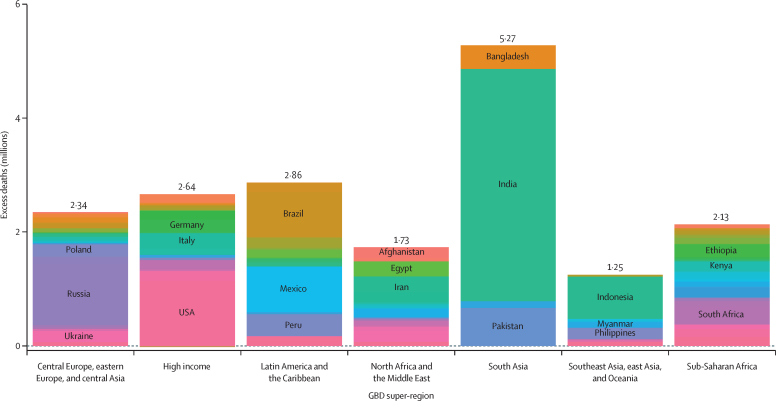
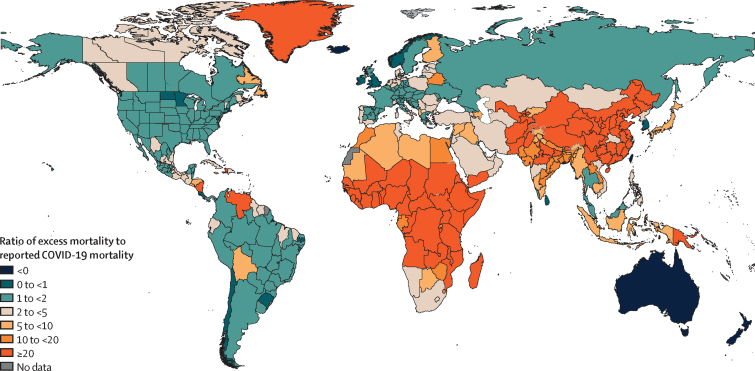
- Worldwide, the authors estimated 18·2 million excess deaths due to the pandemic (95% UI 17·1–19·6), about 3·07 times the 5·94 million reported COVID-19 deaths.
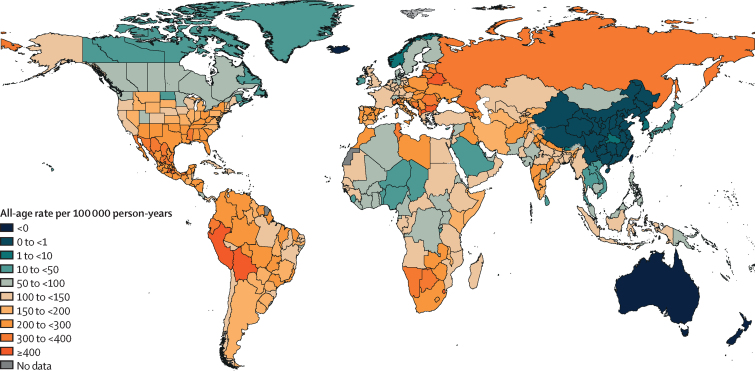
- The global all-age excess mortality rate was 120·3 deaths per 100 000 population (113·1–129·3), and it exceeded 300 per 100 000 in 21 countries.
- The largest cumulative excess death counts were estimated in India (4·07 million [3·71–4·36]), the USA (1·13 million [1·08–1·18]), and Russia (1·07 million [1·06–1·08]); these seven countries accounted for more than half of global excess deaths.
- Among those high-burden countries, excess mortality rates were highest in Russia (374·6 per 100 000 [369·7–378·4]) and Mexico (325·1 [301·6–353·3]); Bolivia had the highest country-level excess mortality rate overall at 734·9 per 100 000 (594·1–879·2).
## Methods
- Systematic analysis of excess mortality for Jan 1, 2020 to Dec 31, 2021 across 191 countries and territories and 252 subnational units for selected countries.
- The study used all-cause mortality data from 74 countries and territories and 266 subnational locations, plus empirical excess mortality data for 12 states in India and provinces of South Africa.
- Excess mortality was estimated by correcting reported mortality for late registration, anomalies such as heat waves, and under-registration, then subtracting ensemble-model predictions of expected mortality; for places without time-detailed all-cause mortality, a statistical model using 15 selected covariates predicted excess mortality.
- The authors used six models in an ensemble for expected mortality, LASSO regression for covariate selection, and out-of-sample predictive validity testing; they propagated uncertainty with 100 draws.
## Limitations
- The paper states that different modeling strategies were needed depending on data availability, and that direct measurement would be preferable to modelled excess mortality for places without all-cause mortality data.
- The authors state they excluded the most recent weeks and months in 2021 because late registration can take 20 weeks or longer, and they note there is subjectivity in choosing the exclusion window.
- The paper states that it estimated cumulative excess mortality rather than weekly or monthly excess mortality because reporting lags could make time-detailed ratios unstable.
- Evident from the text: excess mortality is not decomposed into direct SARS-CoV-2 deaths versus indirect pandemic effects, and the authors say available cause-of-death data were too sparse to do this robustly.
Model-written summary. Check it against the paper before relying on it.
Integrity signals
Registry
Cites
Statistics
Figures
Verification
Claims the paper makes
4 Valid · 8 Not valid · 2 Not checked · 121 Own results and interpretations
The cited sources support only part of this claim — read each source’s verdict below.
In the paper
“the magnitude and distribution of many other causes of death might have changed because of social, economic, and behavioural responses to the pandemic, including strict lockdowns”
§ Estimating excess mortality due to the COVID-19 pandemic: a systematic analysis of COVID-19-related mortality, 2020–21 > Introduction
What the sources say
- Partly supportedcites [11] Mungmunpuntipantip R Wiwanitkit V The COVID-19 pandemic and traffic accidents S Afr Med J 111 2021 13227 33944735 sourceExperimental — accuracy not yet measured
The Introduction and Discussion link pandemic-related behavior changes and lockdowns to changes in injury patterns, and the Conclusions report fewer trauma hospitalizations. The paper studies hospitalized injuries, however, not the magnitude or distribution of causes of death generally; that extension is not supported by our copy. (LLM, conf=0.86)
- Partly supportedcites [12] Rozenfeld M Peleg K Givon A COVID-19 changed the injury patterns of hospitalized patients Prehosp Disaster Med 36 2021 251 259 33641689 PMC7985901 sourceExperimental — accuracy not yet measured
The Discussion (page unavailable) links pandemic restrictions to changes in traumatic injury patterns and reports higher mortality among trauma patients. The paper does not establish changes in the magnitude or distribution of causes of death broadly, or assess social and economic responses beyond the restrictions discussed. (LLM, conf=0.85)
- Partly supportedcites [13] Salottolo K Caiafa R Mueller J Multicenter study of US trauma centers examining the effect of the COVID-19 pandemic on injury causes, diagnoses and procedures Trauma Surg Acute Care Open 6 2021 e000655 PMC8023757 33884307 sourceExperimental — accuracy not yet measured
The Discussion (page unavailable) reports a modeled increase in avoidable cancer deaths from diagnosis delays associated with lockdown, and the Introduction (page unavailable) notes increased mortality from causes not fully attributable to COVID-19 in Northern Italy. These passages support the possibility of changes in some non-COVID mortality, but they do not address the distribution of many causes of death or establish economic responses as a factor. (LLM, conf=0.83)
hedgedstates a possible cause- Asserted: passes — The authors put it forward as true.
- Checkable: passes — It can be checked against evidence.
- Load-bearing: passes — The paper’s conclusions depend on it.
- Based: passes — The paper gives a reason why it holds.
- Partly supported
The cited sources support only part of this claim — read each source’s verdict below.
In the paper
“reported deaths represent only a partial count of total death tolls from the COVID-19 pandemic”
- Also stated in: § Introduction · plain
“Official statistics on reported COVID-19 deaths provide only a partial picture of the true burden of mortality.”
§ Estimating excess mortality due to the COVID-19 pandemic: a systematic analysis of COVID-19-related mortality, 2020–21 > Introduction
What the sources say
- Partly supportedcites [1] Friedman J Liu P Troeger CE Predictive performance of international COVID-19 mortality forecasting models Nat Commun 12 2021 2609 PMC8110547 33972512 sourceExperimental — accuracy not yet measured
The Methods (Model comparison framework; page not provided) identify Ecuador and Peru as settings with marked under-registration of COVID-19 deaths, supporting the point for those locations. The paper does not establish that reported deaths are only a partial count of the pandemic’s total death toll generally. (LLM, conf=0.85)
plain- Asserted: passes — The authors put it forward as true.
- Checkable: passes — It can be checked against evidence.
- Load-bearing: passes — The paper’s conclusions depend on it.
- Based: passes — The paper gives a reason why it holds.
- Also stated in: § Introduction · plain
The cited sources support only part of this claim — read each source’s verdict below.
In the paper
“early in the pandemic, before tests were widely available, many deaths due to COVID-19 among older individuals in high-income countries, particularly in long-term care facilities, are unlikely to have been attributed to COVID-19”
§ Estimating excess mortality due to the COVID-19 pandemic: a systematic analysis of COVID-19-related mortality, 2020–21 > Introduction
What the sources say
- Could not verifycites [2] Li Y Fang F He M Factors associated with nursing homes' late participation in COVID-19 reporting J Am Geriatr Soc 68 2020 2468 2469 32894775 sourceExperimental — accuracy not yet measured
Our copy of Li, Fang & He (2020) is a US-only research letter on factors associated with nursing homes' late participation in CMS COVID-19 reporting: the INTRODUCTION (p.1) describes the April 19, 2020 CMS mandate and grace period, and the RESULTS (p.1) report that 1,770 of 15,418 nursing homes (11.5%) had not reported by May 31, 2020, with odds ratios for size, chain affiliation, star rating, age and race composition. The DISCUSSION (p.1-2) attributes non-participation to resource/IT barriers and notes older adults' higher risk of critical disease (ref 6) and racial disparities in reporting (refs 7-9). Nothing in our copy addresses test availability early in the pandemic, deaths not being attributed to COVID-19, or high-income countries outside the US; I searched for 'deaths not attributed / testing not widely available', 'limited testing capacity, undercounted deaths in long-term care', and 'high-income countries, cause-of-death attribution' and obtained only the reporting-participation passages above. Non-reporting of CMS data is a different mechanism from cause-of-death misattribution, so the source neither supports nor contradicts the claim. (LLM, conf=0.72)
- Could not verifycites [3] Li R Pei S Chen B Substantial undocumented infection facilitates the rapid dissemination of novel coronavirus (SARS-CoV-2) Science 368 2020 489 493 32179701 PMC7164387 sourceExperimental — accuracy not yet measured
The Outlook reports undocumented infections in China before 23 January 2020, not deaths that went unattributed to COVID-19. Searches for deaths, older people, and long-term care found no passage addressing the claim about mortality attribution in high-income countries. (LLM, conf=0.78)
- Partly supportedcites [4] Lau H Khosrawipour T Kocbach P Ichii H Bania J Khosrawipour V Evaluating the massive underreporting and undertesting of COVID-19 cases in multiple global epicenters Pulmonology 27 2021 110 115 32540223 PMC7275155 sourceExperimental — accuracy not yet measured
The Discussion (page unavailable) reports retrospective corrections of COVID-19 death counts and unexplained rises in deaths recorded as non-COVID-19, often with unspecified pneumonia listed as the cause. This supports concern about missed attribution early in the pandemic, but the paper does not identify those deaths as COVID-19 deaths or establish that they occurred particularly among older people or long-term care residents. (LLM, conf=0.85)
hedgedstates a possible cause- Asserted: passes — The authors put it forward as true.
- Checkable: passes — It can be checked against evidence.
- Load-bearing: passes — The paper’s conclusions depend on it.
- Based: passes — The paper gives a reason why it holds.
- Could not verify
The cited sources support only part of this claim — read each source’s verdict below.
In the paper
“the reliability of reported deaths varies greatly between locations and over time”
§ Estimating excess mortality due to the COVID-19 pandemic: a systematic analysis of COVID-19-related mortality, 2020–21 > Introduction
What the sources say
- Partly supportedcites [1] Friedman J Liu P Troeger CE Predictive performance of international COVID-19 mortality forecasting models Nat Commun 12 2021 2609 PMC8110547 33972512 sourceExperimental — accuracy not yet measured
The Discussion says data quality varies substantially between countries, supporting the claim about locations. The Methods note day-to-day fluctuations in death reporting, but do not establish that the reliability of reported deaths varies greatly over time. (LLM, conf=0.82)
plainstates an association- Asserted: passes — The authors put it forward as true.
- Checkable: passes — It can be checked against evidence.
- Load-bearing: passes — The paper’s conclusions depend on it.
- Based: passes — The paper gives a reason why it holds.
- Partly supported
The cited sources that could be checked couldn’t confirm or dispute this claim.
In the paper
“as under-reporting of deaths is common in most vital registration systems, especially those from outside the high-income group of countries”
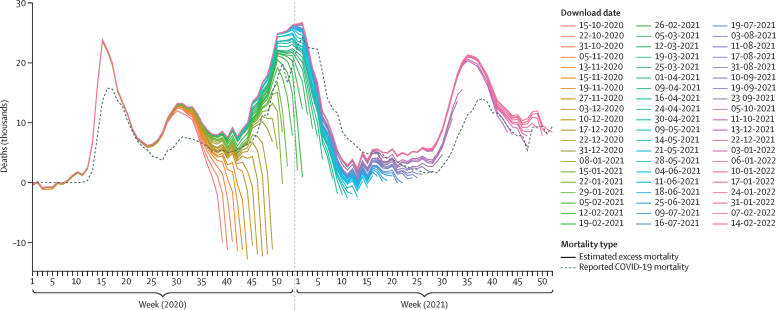
§ Estimating excess mortality due to the COVID-19 pandemic: a systematic analysis of COVID-19-related mortality, 2020–21 > Methods > Database of all-cause mortality We searched government websites, compendia developed by the World Mortality Database,18 the Human Mortality Database, and the European Statistical Office, and identified 74 countries and territories and an additional 266 subnational locations where either weekly or monthly all-cause mortality data were reported for periods in 2020 and 2021, and for up to 11 years previously (appendix pp 4–8, 47). These locations included 31 locations in low-income and middle-income countries. In addition to the time-detailed all-cause mortality data that are publicly available for the estimation of excess mortality, we also included empirical assessments of excess mortality for the nine provinces of South Africa (in addition to all-cause mortality data at the national level) and 12 states of India (in lieu of state-level all-cause mortality data). The Medical Research Council of South Africa used the data from both the civil registration system and the Rapid Mortality Surveillance Report to produce timely excess mortality estimates at the national and provincial levels (all nine provinces). For India, empirical assessment of excess mortality for 12 states used data from the civil registration system. For different months during the first and second waves of the COVID-19 epidemic in the 12 states in India, total numbers of deaths for those states during the corresponding months were made available (appendix pp 7–8). Using the mean reported deaths during the same periods in years 2018 and 2019, we were able to generate excess mortality rates for those Indian states after accounting for under-registration of mortality by the civil registration system at the state level. We identified three types of data issues. First, all-cause mortality from weekly or monthly reporting often has considerable lags in reporting (appendix pp 51–84). Figure 1 shows the effect of lags in reporting of all-cause mortality on excess mortality for the vital registration system in the USA; it takes approximately 20 weeks for data in the USA to be nearly complete. We systematically reviewed input vital registration data and trimmed periods that were likely to be subject to late registration for all locations in the analysis. As these data have been made public only recently, we had limited information by which to identify the precise lag time in late registration; this was particularly true for locations where data are made available more sporadically and by month. We therefore took a conservative approach and excluded data from more recent weeks and months in 2021 in our calculation of excess mortality. Second, in many European countries, registered deaths spiked in late July and early August (calendar weeks 31–33) of 2020, which was a period when reported COVID-19 deaths were extremely low as reported in our online tool. This period coincided with a heat wave; such spikes in all-cause mortality have been observed in Europe during similar timeframes in previous years.19, 20, 21 Because our model cannot separate excess mortality due to COVID-19 from excess deaths occurring during a heat wave, we excluded these weeks of data for all countries in western Europe (classified according to the Global Burden of Diseases, Injuries, and Risk Factors Study [GBD] location groupings) from subsequent analyses to avoid potentially exaggerating the impact of COVID-19 on all-cause mortality during 2020.
What the sources say
- Could not verifycites [22] Vos T Lim SS Abbafati C Global burden of 369 diseases and injuries in 204 countries and territories, 1990–2019: a systematic analysis for the Global Burden of Disease Study 2019 Lancet 396 2020 1204 1222 33069326 PMC7567026 sourceExperimental — accuracy not yet measured
The paper’s main text (page not provided) discusses fewer cancer diagnoses and incomplete initial case registration in the Netherlands, not under-reporting of deaths in vital registration systems. Searches for the claimed wording and for death-registration undercounts in lower-income countries found no passage addressing that claim. (LLM, conf=0.78)
plainstates an association- Asserted: passes — The authors put it forward as true.
- Checkable: passes — It can be checked against evidence.
- Load-bearing: passes — The paper’s conclusions depend on it.
- Based: passes — The paper gives a reason why it holds.
- Could not verify
91 more claims · 2 with their cited sources checked
Create a free account to see all 135 claims and every source verdict.
- Probably not a substantial claim. 13
- It may state two separate claims as one. 29
Claims other papers make about this one
Each is checked against this paper’s own text: does it say what the citing paper says it does?
The source backs part of the claim, not all of it — or backs it for a different population, condition or comparison.
In the citing paper
“As previously predicted,3 COVID-19 shifted baseline patterns of mortality for diseases and injuries that were affected by physical-distancing measures and other government-mandated restrictions.”
From Global burden of 288 causes of death and life expectancy decomposition in 204 countries and territories and 811 subnational locations, 1990–2021: a systematic analysis for the Global Burden of Disease Study 2021 (2024) · cites this paper as [3]
Experimental — accuracy not yet measuredThe source backs part of the claim, not all of it — or backs it for a different population, condition or comparison.
In the citing paper
“Due to use of face masks, physical distancing, and other non-pharmaceutical interventions deployed during the COVID-19 pandemic, we found evidence that the burden of some other infectious diseases (eg, influenza and respiratory syncytial virus) in some locations was reduced, the effects of which were incorporated into our excess mortality estimations.23”
From Global incidence, prevalence, years lived with disability (YLDs), disability-adjusted life-years (DALYs), and healthy life expectancy (HALE) for 371 diseases and injuries in 204 countries and territories and 811 subnational locations, 1990–2021: a systematic analysis for the Global Burden of Disease Study 2021 (2024) · cites this paper as [23]
Experimental — accuracy not yet measuredThe source backs part of the claim, not all of it — or backs it for a different population, condition or comparison.
In the citing paper
“First, data on COVID-19 outcomes (eg, cases, deaths, hospital admissions, and seroprevalence) were of highly variable quality and completeness, which required novel methods for standardisation.23, 25, 26”
From Global incidence, prevalence, years lived with disability (YLDs), disability-adjusted life-years (DALYs), and healthy life expectancy (HALE) for 371 diseases and injuries in 204 countries and territories and 811 subnational locations, 1990–2021: a systematic analysis for the Global Burden of Disease Study 2021 (2024) · cites this paper as [23]
Experimental — accuracy not yet measuredThe cited source says what the claim attributes to it.
In the citing paper
“Our overall estimates are similar to those from complementary approaches [2, 28–32].”
From Estimates of pandemic excess mortality in India based on civil registration data (2022) · cites this paper as [31]
In the citing paper
“Correctly accounting for deaths and their causes during acute emergencies carries important societal ramifications9–12.”
From Attributed causes of excess mortality during the COVID-19 pandemic in a south Indian city (2023) · cites this paper as [9]
2 more claims about this paper
Create a free account to see every claim other papers make about this one.
Self-check
Percentages, sums and reported differences re-computed from the paper’s own numbers.
Each contradiction between two passages listed here was confirmed by an independent check.
Rated minor: it would not touch a result — a value no result rests on, a p-value that stays on the same side of the significance level, or a conflict that is clerical, resolved elsewhere in the paper, or outside its own findings.
In the paper
§ Estimating excess mortality due to the COVID-19 pandemic: a systematic analysis of COVID-19-related mortality, 2020–21 > Results
“The global all-age rate of excess mortality due to the COVID-19 pandemic was 120·3 deaths (113·1–129·3) per 100 000 of the population.”
§ Estimating excess mortality due to the COVID-19 pandemic: a systematic analysis of COVID-19-related mortality, 2020–21 > Results
“Conversely, Arunachal Pradesh, Telangana, Sikkim, Rajasthan, Gujarat, Uttar Pradesh, Jharkhand, West Bengal, and Goa had excess mortality rates that were lower than the global average of 120·6 per 100 000 (although 95% UIs overlap).”
Citations
Cites
Vos, T., Lim, S. S., Abbafati, C., Abbas, K. M., Abbasi, M., Abbasifard, M., Abbasi-Kangevari, M., Abbastabar, H., Abd-Allah, F., Abdelalim, A., et al. (2020) · The Lancet · doi:10.1016/s0140-6736(20)30925-9 · Cited by 19,358
Self-citationLi, R., Pei, S., Chen, B., Song, Y., Zhang, T., Yang, W., & Shaman, J. (2020) · Science · doi:10.1126/science.abb3221 · Cited by 3,633
Death toll exceeded 70,000 in Europe during the summer of 2003
Robine, J.-M., Cheung, S. L. K., Le Roy, S., Van Oyen, H., Griffiths, C., Michel, J.-P., & Herrmann, F. R. (2007) · Comptes Rendus. Biologies · doi:10.1016/j.crvi.2007.12.001 · Cited by 2,127
Guidelines for accurate and transparent health estimates reporting: the GATHER statement
Stevens, G. A., Alkema, L., Black, R. E., Boerma, J. T., Collins, G. S., Ezzati, M., Grove, J. T., Hogan, D. R., Hogan, M. C., Horton, R., et al. (2016) · The Lancet · doi:10.1016/s0140-6736(16)30388-9 · Cited by 1,798
Self-citationSuicide risk and prevention during the COVID-19 pandemic
Gunnell, D., Appleby, L., Arensman, E., Hawton, K., John, A., Kapur, N., Khan, M., O'Connor, R. C., Pirkis, J., Appleby, L., et al. (2020) · The Lancet Psychiatry · doi:10.1016/s2215-0366(20)30171-1 · Cited by 1,513 · cited 1×
“29 There is convincing evidence that rates of anxiety and depression increased during the pandemic period, which might lead to increases in deaths from suicide; 30,31 however, to date, evidence of increased suicide mortality is scarce apart from in Japan, where reported suicide deaths increased”
Fullman, N., Yearwood, J., Abay, S. M., Abbafati, C., Abd-Allah, F., Abdela, J., Abdelalim, A., Abebe, Z., Abebo, T. A., Aboyans, V., et al. (2018) · The Lancet · doi:10.1016/s0140-6736(18)30994-2 · Cited by 1,013
Self-citationKarlinsky, A., & Kobak, D. (2021) · eLife · doi:10.7554/elife.69336 · Cited by 772
Fewer cancer diagnoses during the COVID-19 epidemic in the Netherlands
Dinmohamed, A. G., Visser, O., Verhoeven, R. H. A., Louwman, M. W. J., van Nederveen, F. H., Willems, S. M., Merkx, M. A. W., Lemmens, V. E. P. P., Nagtegaal, I. D., & Siesling, S. (2020) · The Lancet Oncology · doi:10.1016/s1470-2045(20)30265-5 · Cited by 699 · cited 1×
“Some excess mortality might be attributable to reductions in health-care use across a number of causes; 14,15,24,25 however, the effect of reduced health-care use on health outcomes is difficult to prove.”
Causey, K., Fullman, N., Sorensen, R. J. D., Galles, N. C., Zheng, P., Aravkin, A., Danovaro-Holliday, M. C., Martinez-Piedra, R., Sodha, S. V., Velandia-González, M. P., et al. (2021) · The Lancet · doi:10.1016/s0140-6736(21)01337-4 · Cited by 450 · cited 1×
“Many mechanisms have been proposed, including reduced vaccination rates 26 and reduced births in hospitals.”
Self-citationMortality Related to Air Pollution with the Moscow Heat Wave and Wildfire of 2010
Shaposhnikov, D., Revich, B., Bellander, T., Bedada, G. B., Bottai, M., Kharkova, T., Kvasha, E., Lezina, E., Lind, T., Semutnikova, E., et al. (2014) · Epidemiology · doi:10.1097/ede.0000000000000090 · Cited by 429
Cited by
Items 801–900 of 1,734
Kumari, A. P., Parthasarathy, M. R., Bamrotiya, M., et al. (2022) · Journal of the International AIDS Society · doi:10.1002/jia2.25964 · Cited by 4
“Don’t Look Up” Your Science—Herd Immunity or Herd Mentality?
Igyártó, B. Z. (2022) · Microorganisms · doi:10.3390/microorganisms10071463 · Cited by 5
The health benefit of physical exercise on COVID-19 pandemic: Evidence from mainland China
Lin, R., Hu, X., Guo, L., & Huang, J. (2022) · PLoS ONE · doi:10.1371/journal.pone.0275425 · Cited by 5
Self-Isolation and Testing Behaviour During the COVID-19 Pandemic: An Agent-Based Model
Gostoli, U., & Silverman, E. (2022) · Artificial Life · doi:10.1162/artl_a_00392 · Cited by 4
“Excess mortality estimates place the global death toll be-tween January 2020 and December 2021 at 18.2 million (Wang et al., 2022).”
BackgroundInfluentialNew Psychological Perspectives on Death and Dying—Between Normality and the COVID-19 Emergency
Testoni, I. (2022) · Behavioral Sciences · doi:10.3390/bs12110414 · Cited by 4
“3 deaths per 100,000 people, with that of 21 countries exceeding 300 deaths per 100,000 people [17].”
BackgroundCOVID-19 in Russia: Evolution of Views on the Pandemic. Report II
Стародубов, В. И., Beregovykh, V. V., Акимкин, В. Г., Семененко, Т. А., Викторовна, У. С., Avdeev, S. N., Zykov, K. A., Трофимова, Т. Н., Вачиковна, П. Н., Переходов, С. Н., et al. (2022) · Annals of the Russian academy of medical sciences · doi:10.15690/vramn2122 · Cited by 11
Spread of COVID-19 in the Russian regions in 2020: factors of excess mortality
Колосницына, М. Г., & Chubarov, M. Y. (2022) · Population and Economics · doi:10.3897/popecon.6.e87739 · Cited by 5
Evaluating Johnson and Johnson COVID-19 Vaccination Outcomes in a Low-Income Hispanic Population
Lamb, C. C., Owens, C., Gamboa, W., & Lopez-Yunez, A. M. (2023) · Vaccines · doi:10.3390/vaccines11010148 · Cited by 4
Rammohan, R., Joy, M., Saggar, T., Magam, S. G., Sinha, A., Natt, D., Mehta, V., Bunting, S., Anand, P., & Mustacchia, P. J. (2023) · Cureus · doi:10.7759/cureus.36588 · Cited by 4
Yin, Y., Lin, J., Yuan, S., Tong, S., He, Y., Dong, B., Zhang, F., Chen, E., Zheng, J., & Wang, W. J. (2023) · Journal of Medical Virology · doi:10.1002/jmv.28767 · Cited by 4
“After controlling the initial COVID‐19 epidemic in Wuhan city in early 2020, the massive outbreak of SARS‐CoV‐2 was prevented in China over the past 2 years.(2) Compared with more than 500 million confirmed cases and over 6 million deaths due to SARS‐CoV‐2 infection worldwide, it was estimated that more than 150 milli…”
BackgroundZhang, H., Lu, Z., Yang, F., Chen, H., Zhang, L., Zhao, H., & Chen, Y. (2023) · Journal of Medical Virology · doi:10.1002/jmv.28893 · Cited by 4
“The coronavirus disease 2019 (COVID‐19) pandemic has significantly impacted the world for over 2 years.(1) By the end of 2022, it had caused over 732.”
BackgroundAmbade, P., Thavorn, K., & Pakhale, S. S. (2023) · Healthcare · doi:10.3390/healthcare11142112 · Cited by 7
“A more nuanced study utilizing the data between January 2020 and December 2021 (the first and second wave of the pandemic) has estimated that the number of deaths that occurred during this period was almost four times higher than that in MH’s reported data [131].”
BackgroundMolecular Docking and Dynamics Identify Potential Drugs to be Repurposed as SARS-CoV-2 Inhibitors
Muzaffar-Ur-Rehman, M., Chougule, K. S., Chandu, A., Kumar, B. K., Joshi, R. P., Jadhav, S. R., Murugesan, S., & Vasan, S. S. (2023) · Journal of Computational Biophysics and Chemistry · doi:10.1142/s2737416523500552 · Cited by 5
Chen, J., Chen, S., Duan, G., et al. (2023) · Epidemics · doi:10.1016/j.epidem.2023.100719 · Cited by 4
Bhattacharya, P., John, D., Mukherjee, N., Narassima, M. S., Menon, J. C., & Banerjee, A. (2023) · BMJ Open · doi:10.1136/bmjopen-2023-072559 · Cited by 4
“16 For example, the value of labour of a woman who chooses to stay at home to conduct household chores and raise children is not accounted for in GDP estimations.”
BackgroundYonamine, D. K., dos Reis, V. E. N., Feu, A. E., Borges, W. D. S., Cardoso, C. L., & Dinamarco, T. M. (2023) · Journal of Pharmaceutical and Biomedical Analysis · doi:10.1016/j.jpba.2023.115935 · Cited by 4
Raphson, L., & Lipsitch, M. (2024) · Epidemiology · doi:10.1097/ede.0000000000001723 · Cited by 4
Chesdachai, S., Rivera, C. G., Mara, K. C., Teaford, H. R., Suarez, M. L. G., Larsen, J. J., Ganesh, R., Tulledge‐Scheitel, S. M., & Razonable, R. R. (2024) · Scientific Reports · doi:10.1038/s41598-024-56195-y · Cited by 4
Preparing for pandemic response in the context of limited resources
Andrade, J., Beishuizen, B. H. H., Stein, M. L., Connolly, M. A., & Duggan, J. (2024) · System Dynamics Review · doi:10.1002/sdr.1775 · Cited by 6
Impact of the COVID‐19 Pandemic on Conduct and Results of CLEAR Outcomes Trial
Singh, A., Laffin, L. J., Sarraju, A., Lincoff, A. M., Nicholls, S. J., Bloedon, L. T., Sasiela, W. J., Li, N., Robinson, P. L., Kelly, S., et al. (2024) · Clinical Cardiology · doi:10.1002/clc.24328 · Cited by 5
Trends in Sudden Unexpected Deaths in an Australian Population: Impact of the COVID-19 Pandemic
Healy, J., Youssef, A. M., Sawant, S., Orchard, J. J., Rehan, R., Vuuren, R. V., Orchard, J. W., Semsarian, C., & Puranik, R. (2024) · Heart Lung and Circulation · doi:10.1016/j.hlc.2024.07.009 · Cited by 4
Developing molecular surveillance of SARS-CoV-2 in the Czech Republic (2021–2022)
Šúri, T., Pfeiferová, L., Bezdíček, M., Svaton, J., Hampl, V., Berka, K., Jiřincová, H., Lengerová, M., Kolísko, M., Nagy, A., et al. (2025) · Scientific Reports · doi:10.1038/s41598-025-01074-3 · Cited by 3
Mangat, H. S., Musah, A., Luedtke, S., Syed, A. A., Maramattom, B. V., Maruthanal, J., Bosman, A., & Kostkova, P. (2022) · Frontiers in Public Health · doi:10.3389/fpubh.2022.972464 · Cited by 4
On the impacts of the COVID-19 pandemic on mortality: Lost years or lost days?
Rousson, V., & Locatelli, I. (2022) · Frontiers in Public Health · doi:10.3389/fpubh.2022.1015501 · Cited by 5
Impact of the COVID-19 epidemic on mortality in rural coastal KenyaPreprint
Otiende, M., Nyaguara, A., Bottomley, C., Walumbe, D., Mochamah, G., Amadi, D., Nyundo, C., Kagucia, E., Etyang, A., Adetifa, I., et al. (2022) · medRxiv · doi:10.1101/2022.04.06.22273516 · Cited by 5
Parry, H., Bruton, R. K., Ayodele, M., et al. (2022) · SSRN Electronic Journal · doi:10.2139/ssrn.4095379 · Cited by 4
Éditorial : COVID-19, migrations et parcours : ruptures et continuités
Aumond, F., Petit, V., & Robin, N. (2022) · Revue européenne de migrations internationales · doi:10.4000/remi.19909 · Cited by 4
CiDRE + M2c macrophages hijacked by SARS-CoV-2 cause COVID-19 severityPreprint
Mitsui, Y., Suzuki, T., Kuniyoshi, K., Inamo, J., Yamaguchi, K., Komuro, M., Watanabe, J., Edamoto, M., Li, S., Kouno, T., et al. (2022) · bioRxiv (Cold Spring Harbor Laboratory) · doi:10.1101/2022.09.30.510331 · Cited by 5
Conflicting COVID-19 excess mortality estimates – Authors' reply
Hay, S. I., & Murray, C. J. L. (2023) · The Lancet · doi:10.1016/s0140-6736(23)00227-1 · Cited by 4
Self-citationWithdrawn: A systematic review of autopsy findings in deaths after COVID-19 vaccination
Hulscher, N., Alexander, P. E., Amerling, R., Gessling, H., Hodkinson, R., Makis, W., Risch, H. A., Trozzi, M., & McCullough, P. A. (2024) · Forensic Science International · doi:10.1016/j.forsciint.2024.112115 · Cited by 10
RetractedMarco, M. D., Miano, N., Marchisello, S., Coppolino, G., L’Episcopo, G., Scilletta, S., Spichetti, C., Torre, S., Scicali, R., Zanoli, L., et al. (2023) · Journal of Clinical Medicine · doi:10.3390/jcm12165304 · Cited by 4
The determinants of COVID-19 case reporting across Africa
Han, Q. K., Rutayisire, G., Fonkou, M. D. M., Avusuglo, W., Ahmadi, A. R., Asgary, A., Orbinski, J., Wu, J., & Kong, J. D. (2024) · Frontiers in Public Health · doi:10.3389/fpubh.2024.1406363 · Cited by 4
“Countries with a higher median age (Figure 2C) might experience a higher COVID-19 case fatality rate due to increased risk in older individuals (7, 50), significantly straining healthcare systems.”
Background(2024) · doi:10.1186/s12884-024-06841-0 · Cited by 2
“Barriers to reach healthcare increased worldwide during the pandemic and is considered one of the contributing factors to the observed excess of mortality globally [64].”
BackgroundExcess mortality due to COVID-19 in Thailand between the pandemic and post-pandemic periods
Dul-amnuay, A., Peansukwech, U., Hanapun, C., et al. (2025) · Scientific Reports · doi:10.1038/s41598-025-85324-4 · Cited by 3
Linsen, S. E. V., Kamoun, A., Gunda, A., Mwenifumbo, T., Chavula, C., Nchimunya, L., Tsai, Y., Mulenga, N., Kadewele, G., Kajombo, E. N., et al. (2025) · PLOS Digital Health · doi:10.1371/journal.pdig.0000535 · Cited by 3
Epstein-Shuman, A., Zhu, X., Hunt, J. H., Fernández, R. E., Rozek, G. M., Redd, A. D., Gotthold, Z. A., Quiros, G., Galiwango, R. M., Kigozi, G., et al. (2025) · Journal of Infection and Public Health · doi:10.1016/j.jiph.2025.102722 · Cited by 4
Vu, T. P., & Khuc, Q. V. (2025) · Public Performance & Management Review · doi:10.1080/15309576.2025.2486066 · Cited by 3
“Excess mortality is widely regarded as a more accurate measure of COVID-19 mortality (Msemburi et al., 2023; Wang et al., 2022).”
InfluentialDoes Democracy Save Lives? Modeling Effects of Political Institutions on COVID‐19 Mortality
Kim, E. H. (2025) · Social Science Quarterly · doi:10.1111/ssqu.70073 · Cited by 3
Martellucci, C. A., Capodici, A., Soldato, G., Fiore, M., Zauli, E., Carota, R., Benedictis, M. D., Marco, G. D., Luzio, R. D., Flacco, M. E., et al. (2025) · EXCLI journal · doi:10.17179/excli2025-8400 · Cited by 10
Mechanisms That Prevent Vascular Leakage During Leukocyte Extravasation
de Haan, S. J., & van Buul, J. D. (2025) · Acta Physiologica · doi:10.1111/apha.70126 · Cited by 6
Zoonotic diseases (zoonoses): Definitions, classifications, hazards, and prevention strategies
Guo, J., & Jin, N. (2026) · Animals and zoonoses. · doi:10.1016/j.azn.2026.01.004 · Cited by 8
Dandona, R., Kumar, G. A., Akbar, M., Dora, S. S. P., Majumder, M., Mukherjee, R., & Dandona, L. (2026) · BMC Pregnancy and Childbirth · doi:10.1186/s12884-026-08650-z · Cited by 3
“Data from India has contributed little to the published pooled analysis reporting on population-based estimates on pregnancy outcomes as a result of COVID-19 [74].”
Dahl, J., Tapia, G., Bøås, H., Bakken, I. J., & Gulseth, H. L. (2026) · BMJ Public Health · doi:10.1136/bmjph-2024-001859 · Cited by 7
Xie, C., Deng, J., Li, F., Wu, C., Xu, M., Yu, B., Wu, G., Zhong, Y., Tang, D., & Li, J. (2023) · Infectious Diseases and Therapy · doi:10.1007/s40121-022-00752-3 · Cited by 3
“According to recent reports, 500 million have been diagnosed with COVID-19 and over 5 million have died, with the numbers continuing to rise [5].”
BackgroundCOVID-19 response: a perspective from Pakistan
Mirza, Z. (2023) · International Journal for Quality in Health Care · doi:10.1093/intqhc/mzad015 · Cited by 3
Migriño, J. R., & Bernardo-Lazaro, M. R. (2023) · Western Pacific surveillance response journal · doi:10.5365/wpsar.2023.14.1.984 · Cited by 5
Daenen, K., Tong‐Minh, K., Liesenfeld, O., Stoof, S. C. M., Huijben, J. A., Dalm, V. A. S. H., Gommers, D. A. M. P. J., Gorp, E. C. M. V., & Endeman, H. (2023) · Journal of Clinical Medicine · doi:10.3390/jcm12196197 · Cited by 2
COVID 19 mortality as a reflection of the quality of health in EU countries
Stehlíková, B., Vincúrová, Z., Brezina, I., & Švihlíková, I. (2023) · Economics & Sociology · doi:10.14254/2071-789x.2023/16-3/8 · Cited by 4
Broad, J., Sparkes, D., Platt, N., Howells, A., Foulkes, S., Khawam, J., Cole, M. J., Andrews, N. J., Watson, C., Hopkins, S., et al. (2024) · NIHR Open Research · doi:10.3310/nihropenres.13517.1 · Cited by 4
Development of Pneumonia Patient Classification Model Using Fair Federated Learning
Kim, D., Oh, K., Kang, S., & Lee, Y. (2024) · Lecture notes in computer science · doi:10.1007/978-3-031-53827-8_15 · Cited by 5
Trust in Government in a Changing World: Shocks, Tax Evasion, and Economic Growth
Alm, J. R., & Barreto, R. A. (2024) · The B E Journal of Macroeconomics · doi:10.1515/bejm-2024-0014 · Cited by 7
Muolo, A., Zagaglia, B., Marucci, A., Saneugenio, F. E., Sateriano, A., & Salvati, L. (2024) · Urban Science · doi:10.3390/urbansci8020026 · Cited by 3
Kocsmár, É., Kocsmár, I., Elamin, F., Pápai, L., Jakab, Á., Várkonyi, T., Glasz, T., Rácz, G. A., Pesti, A., Danics, K., et al. (2024) · GeroScience · doi:10.1007/s11357-024-01163-7 · Cited by 3
Measuring population health using health expectancy estimates from morbidity and mortality databases
Carreras, M., Ibern, P., & Inoriza, J. M. (2024) · PLoS ONE · doi:10.1371/journal.pone.0302174 · Cited by 3
Fihel, A., Janicka, A., Buschner, A., Ustinavičienė, R., & Trakienė, A. (2024) · PLoS ONE · doi:10.1371/journal.pone.0307194 · Cited by 4
Choi, M. H., Kim, H. J., & Yoo, H. J. (2024) · Australian Critical Care · doi:10.1016/j.aucc.2024.06.012 · Cited by 3
Muttalib, F., Memon, Z., Muhammad, S., Soomro, A. A., Khan, S. P., Bano, S., Jawwad, M., Soofi, S. B., Hansen, B. E., Adhikari, N. K. J., et al. (2024) · BMJ Open · doi:10.1136/bmjopen-2023-082255 · Cited by 5
“36 37 Another notable difference in our study was that hospital and post-discharge mortality were relatively low compared with existing hospital data in Pakistan and other LMICs.”
Gender-Specific Mental Health Outcomes in Central America: A Natural Experiment
Montesinos-Yufa, H. M., & Nagasuru-McKeever, T. (2024) · International Journal on Data Science and Technology · doi:10.11648/j.ijdst.20241003.11 · Cited by 3
Excess mortality during COVID-19 pandemic in Bangladesh – evidence from a rural survey
Hossain, A. T., Akter, E., Siddique, A. B., Rahman, H., Ameen, S., Jabeen, S., Manna, R. M., Hossain, M. A., Rahman, Q. S.-U., Ahmed, A., et al. (2024) · Journal of Global Health · doi:10.7189/jogh.14.05031 · Cited by 5
Cavillot, L., den Borre, L. V., Vanthomme, K., Scohy, A., Deboosere, P., Devleesschauwer, B., Speybroeck, N., & Gadeyne, S. (2024) · Archives of Public Health · doi:10.1186/s13690-024-01437-8 · Cited by 3
Caram‐Deelder, C., Vlieg, A. V. H., Groenwold, R. H. H., Chen, Q., Mook-Kanamori, D. O., Dekkers, O. M., Koster, E. A. S., de Wreede, L. C., van Nieuwkoop, C., Toshkov, D., et al. (2024) · IJID Regions · doi:10.1016/j.ijregi.2024.100500 · Cited by 3
“Despite these major differences, these studies consistently reported the presence of excess mortality during the COVID-19 pandemic [ 15 , 21 , 22 ].”
McLaughlin, E., & Beck, M. P. (2025) · Risk Analysis · doi:10.1111/risa.17703 · Cited by 4
“Global excess deaths for Covid-19 were estimated at 18.2 million from January 1, 2020 to December 31, 2021 (Wang et al., 2022), and arguably, this figure could have been higher were it not for the various mitigation efforts implemented globally.”
InfluentialClimatic impacts on mortality in pre-industrial Sweden
Chen, T. T., Edvinsson, R., Modig, K., Linderholm, H. W., & Ljungqvist, F. C. (2025) · Climate of the past · doi:10.5194/cp-21-185-2025 · Cited by 3
Maghsoodlo, Y. B., Safaeesirat, A., & Ghanbarnejad, F. (2025) · Scientific Reports · doi:10.1038/s41598-025-85232-7 · Cited by 5
“For instance, the COVID-19 pandemic, originating from China [87], affected people of all countries [67, 84], mentally [71, 35, 80], financially [15], and beyond.”
Venter, M., Manuguerra, J., Alviola, P., et al. (2025) · Nature Communications · doi:10.1038/s41467-025-57218-6 · Cited by 3
Kitano, T., Salmon, D. A., Dudley, M. Z., Saldanha, I. J., Thompson, D. A., & Engineer, L. D. (2025) · Value in Health · doi:10.1016/j.jval.2025.02.007 · Cited by 5
Pandemic preparedness and response priorities in Latin America: A regional Delphi consensus
Méndez-Lizárraga, C. A., Armas-González, R., Loyola, S., Bruno, A., Pando‐Robles, V., Fernández-Niño, J. A., Muñoz, R. F., Coloma, J., Lescano, A. G., Bravo-García, E., et al. (2025) · Public Health · doi:10.1016/j.puhe.2025.01.003 · Cited by 4
Marra, A., D’Agnano, V., Pagliaro, R., Perrotta, F., Fiore, I. D., D’Orologio, A., Scialò, F., Schiattarella, A., Bianco, A., & Parrella, R. (2025) · Biomedicines · doi:10.3390/biomedicines13051072 · Cited by 8
Wang, L., Li, X., Ye, Z., Zhang, S., Zhang, X., & Jing, L. (2025) · BMC Public Health · doi:10.1186/s12889-025-22504-x · Cited by 4
“These factors may partly explain China’s comparatively low excess mortality rates, compared to the significant increases in deaths observed in other countries [28].”
Summers, J. A., Kerr, J. R., Grout, L. M., Kvalsvig, A., Baker, M. G., & Wilson, N. (2025) · SSM - Population Health · doi:10.1016/j.ssmph.2025.101827 · Cited by 6
“For the health outcome metric we chose the cumulative excess mortality rate for the country at the end-2023 point, as this metric is considered more informative than reported deaths from Covid-19 (Wang et al., 2022).”
Abdallah, A. E., Kamaly, O. M. A., El‐Fakharany, E. M., et al. (2025) · Molecular Diversity · doi:10.1007/s11030-025-11237-z · Cited by 3
Chakraborty, C., Bhattacharya, M., Chatterjee, S., Lee, S., Bhattacharya, P., Ohimain, E. I., Wen, Z., Das, A., Rai, A., Abdelhameed, A. S., et al. (2025) · Folia Microbiologica · doi:10.1007/s12223-025-01299-9 · Cited by 7
Zhao, P., Dong, J., Liu, H. D., Xue, Y., Zhang, T., Sui, H., Hu, Y., Du, J., Su, H., Jin, Q., et al. (2025) · iMetaMed · doi:10.1002/imm3.70004 · Cited by 4
Struckmann, V., Findeiss, V., El‐Duah, P., et al. (2025) · Global Health Research and Policy · doi:10.1186/s41256-025-00449-3 · Cited by 3
Mortality in Germany during the COVID-19 Pandemic
Pichler, A., & Uhlig, D. (2023) · International Journal of Environmental Research and Public Health · doi:10.3390/ijerph20206942 · Cited by 4
COVID 19 y enfermedad hepática: un panorama que está siendo aclarado
Quiróz, R. J. O. (2022) · Revista Colombiana de Gastroenterología · doi:10.22516/25007440.919 · Cited by 3
Better pandemic preparedness does correlate with lower COVID-19 mortality
Dowell, S. F., Wang, H., & Blazes, D. L. (2022) · Gates Open Research · doi:10.12688/gatesopenres.13649.1 · Cited by 2
Self-citationWildi, K. S., Bouquet, M., Ainola, C., Livingstone, S., Colombo, S. M., Heinsar, S., Sato, N. A., Sato, K., Wilson, E., Abbate, G., et al. (2022) · Metabolites · doi:10.3390/metabo12070655 · Cited by 4
Ahmed, F., Qualls, N., Kowalczyk, S., Cunningham, S., Zviedrite, N., & Uzicanin, A. (2022) · Disaster Medicine and Public Health Preparedness · doi:10.1017/dmp.2022.174 · Cited by 2
Wang, T., Xu, J., Wang, B., Wang, Y., Zhao, W., Xiang, B., Xue, Y., Yuan, Q., & Wang, Y. (2022) · Frontiers in Microbiology · doi:10.3389/fmicb.2022.910343 · Cited by 3
“Worse was that over two more folds of “excess deaths” might have occurred due to indirect consequences of the pandemic, such as changes in “social, economic, and behavioral responses to the pandemic, including strict lockdowns” (Collaborators, 2022).”
BackgroundPathak, R., & Williams, D. W. (2022) · Forecasting · doi:10.3390/forecast4040044 · Cited by 4
“Lancet 2022, 399, 1513–1536.”
InfluentialIntelligence artificielle et Covid-19, ou les limites du « solutionnisme technologique »
Brault, N. (2022) · Annales des Mines - Responsabilité et environnement · doi:10.3917/re1.108.0057 · Cited by 3
Corticosteroid Uptake For COVID-19 after Publication of RECOVERY: A Difference in Difference Model
Kearney, C. M., LeSieur, M. N., Bosch, N. A., & Walkey, A. J. (2022) · Annals of the American Thoracic Society · doi:10.1513/annalsats.202208-715rl · Cited by 3
Martín‐Conty, J. L., López, B. P., García, A. S., Vegas, C. D. P., Mordillo‐Mateos, L., Bernal-Jiménez, J. J., Conty‐Serrano, R., Villamor, M. Á. C., López‐Izquierdo, R., & Rodríguez, F. M. (2023) · Frontiers in Public Health · doi:10.3389/fpubh.2022.1076627 · Cited by 3
“This excess of mortality may result from the lack of appropriate and timely attention to life-threatening diseases, excessmortality due to COVID-19, or a combination of both circumstances (8).”
BackgroundConflicting COVID-19 excess mortality estimates
O’Neill, D. J. (2023) · The Lancet · doi:10.1016/s0140-6736(23)00111-3 · Cited by 3
Quality of End-of-Life Care for Older Adults with Dementia during the COVID-19 Pandemic
Nakanishi, M., Ogawa, A., Sakai, M., Yoshii, H., Yamasaki, S., & Nishida, A. (2023) · Journal of the American Medical Directors Association · doi:10.1016/j.jamda.2023.03.001 · Cited by 4
Ramírez-Soto, M. C., Salazar-Peña, M., & Vargas-Herrera, J. (2023) · International Journal of Environmental Research and Public Health · doi:10.3390/ijerph20065156 · Cited by 4
The burden of big spaces: Russian regions and cities in the COVID-19 pandemic
Nikitin, B. V., Zakharova, M., Pilyasov, A. N., et al. (2023) · Letters in Spatial and Resource Sciences · doi:10.1007/s12076-023-00341-z · Cited by 3
“Mortality trend adjust - ment, which is sometimes included in country-level pandemic analyzes (Wang et al. 2022), has not been applied, despite mortality in Russia decreased by 1.5%. from 2015 to 2019.”
BackgroundInfluentialYadav, A. K., Ahmed, T., Dumka, N., Singh, S. R., Pathak, V., & Kotwal, A. (2023) · Medical Journal Armed Forces India · doi:10.1016/j.mjafi.2023.02.008 · Cited by 3
Cai, X., Li, G., Feng, H., Wang, X., He, L., Luo, D., Xu, C., Huang, Y., & Qiu, S. (2023) · Psychiatry Investigation · doi:10.30773/pi.2022.0238 · Cited by 4
Estimation of excess cardiovascular deaths after COVID-19 in 2020
Furuse, Y. (2023) · Journal of Infection · doi:10.1016/j.jinf.2023.04.014 · Cited by 5
“Studies that estimated overall excess deaths during the COVID-19 pandemic have recently been published.(6,7) While many countries experienced a surge in excess deaths, some countries, such as Australia and Japan, observed little or no excess deaths.”
Bănică, A., & Muntele, I. (2023) · Letters in Spatial and Resource Sciences · doi:10.1007/s12076-023-00340-0 · Cited by 4
Barbieri, G., Pizzato, M., Gögele, M., Giardiello, D., Weichenberger, C. X., Foco, L., Bottigliengo, D., Bertelli, C., Barin, L., Lundin, R., et al. (2023) · BMJ Open · doi:10.1136/bmjopen-2023-072650 · Cited by 3
Simons, E., Nikolay, B., Ouedraogo, P., Pasquier, E., Tiemeni, C., Adjaho, I., Badjo, C., Chamman, K., Diomandé, M., Dosso, M. B., et al. (2023) · PLOS Global Public Health · doi:10.1371/journal.pgph.0001457 · Cited by 4
A simulation of undiagnosed population and excess mortality during the COVID-19 pandemic
Dasgupta, R., & Majumder, S. K. (2023) · Results in Control and Optimization · doi:10.1016/j.rico.2023.100262 · Cited by 3
“However, it has been lately understood that reported deaths represent only a partial count of total death tolls from COVID-19, and what is of more concern, the reliability of reported deaths varies greatly between locations and over time[2,3].”
Suresh, V., Sheik, D. A., Detomasi, T. C., et al. (2023) · Biosensors · doi:10.3390/bios13070682 · Cited by 3
Surviving together: social cohesion and Covid-19 infections and mortality across the world
Pacheco-Miranda, J., Bakshi, S., & van Staveren, I. (2023) · Critical Public Health · doi:10.1080/09581596.2023.2232526 · Cited by 4
Tournier, A., Fok, Y., van Haselen, R. A., et al. (2023) · Integrative Medicine Reports · doi:10.1089/imr.2023.0015 · Cited by 3
Lopez-Gigosos, R. M., Vegas-Romero, M., Mariscal, A., Mariscal-López, E., Fang, J., & Gutiérrez‐Bedmar, M. (2023) · Perspectives in Public Health · doi:10.1177/17579139231180800 · Cited by 7
Revisiting Japan's early COVID‐19 countermeasures
Kaneda, Y., Higuchi, Y., & Takahashi, K. (2023) · Health Science Reports · doi:10.1002/hsr2.1468 · Cited by 3
“Nonetheless, a study assessing excess mortality between January 2020 and December 2021 found that Japan had the highest excess mortality rate among OECD nations, with an estimated 111,000 deaths—a figure that is six times greater than the officially confirmed COVID‐19 death count of 18,400.(5) This calls into question…”
Background
Metadata
- Authors
- Wang, H., Paulson, K. R., Pease, S. A., Watson, S., Comfort, H., Zheng, P., Aravkin, A. Y., Bisignano, C., Barber, R. M., Alam, T., Fuller, J. E., May, E. A., Jones, D. P., Frisch, M. E., Abbafati, C., Adolph, C., Allorant, A., Amlag, J. O., Bang-Jensen, B., Bertolacci, G. J., Bloom, S. S., Carter, A., Castro, E., Chakrabarti, S., Chattopadhyay, J., Cogen, R. M., Collins, J. K., Cooperrider, K., Dai, X., Dangel, W. J., Daoud, F., Dapper, C., Deen, A., Duncan, B. B., Erickson, M., Ewald, S. B., Fedosseeva, T., Ferrari, A. J., Frostad, J. J., Fullman, N., Gallagher, J., Gamkrelidze, A., Guo, G., He, J., Helak, M., Henry, N. J., Hulland, E. N., Huntley, B. M., Kereselidze, M., Lazzar-Atwood, A., LeGrand, K. E., Lindstrom, A., Linebarger, E., Lotufo, P. A., Lozano, R., Magistro, B., Malta, D. C., Månsson, J., Mantilla Herrera, A. M., Marinho, F., Mirkuzie, A. H., Misganaw, A. T., Monasta, L., Naik, P., Nomura, S., O'Brien, E. G., O'Halloran, J. K., Olana, L. T., Ostroff, S. M., Penberthy, L., Reiner Jr, R. C., Reinke, G., Ribeiro, A. L. P., Santomauro, D. F., Schmidt, M. I., Shaw, D. H., Sheena, B. S., Sholokhov, A., Skhvitaridze, N., Sorensen, R. J. D., Spurlock, E. E., Syailendrawati, R., Topor-Madry, R., Troeger, C. E., Walcott, R., Walker, A., Wiysonge, C. S., Worku, N. A., Zigler, B., Pigott, D. M., Naghavi, M., Mokdad, A. H., Lim, S. S., Hay, S. I., Gakidou, E., & Murray, C. J. L.
- Affiliations
- University of Washington (US)
- ORCID
- Venue
- The Lancet
- Publisher
- Elsevier BV
- Published
- 2022-04
- Volume
- 399
- Issue
- 10334
- Pages
- 1513-1536
- ISSN
- 0099-5355 (ISSN-L)
- 0140-6736
- PMC
- PMC8912932
- OpenAlex
- W4220867566
- Cited by
- 2,069
- References
- 32
- Citations by year
- 2026: 161 · 2025: 258 · 2024: 473 · 2023: 787 · 2022: 385
- FWCI
- 50.89
- Type
- journal article
- Language
- en
- Update notices
- erratum (2022-04-16)
- Open access
- hybrid
- doi.org
- Licence
- cc-by
- www.elsevier.com/tdm/userlicense/1.0/ (tdm)
- www.elsevier.com/legal/tdmrep-license (tdm)
- creativecommons.org/licenses/by/4.0/ (vor)
- Locations
- The Lancet (publishedVersion, cc-by)
- PubMed Central (publishedVersion, cc-by)
- PubMed (publishedVersion)
- ePrints Soton (University of Southampton) (acceptedVersion)
- LSHTM Research Online (London School of Hygiene and Tropical Medicine) (acceptedVersion)
- IRIS Research product catalog (Sapienza University of Rome) (submittedVersion, other-oa)
- Funders
- National Science Foundation (2031096)
- Bill and Melinda Gates Foundation
- South African Medical Research Council
- Ministry of Education, Culture, Sports, Science and Technology (/2016)
- Coordenação de Aperfeiçoamento de Pessoal de Nível Superior (88887, 88887.507149/2020-00, 2020-00)
- Conselho Nacional de Desenvolvimento Científico e Tecnológico (465518/2014‐1, 310679, 310679/2016‐8, 310679/2016-8 and 465518/2014-1, 2014-1, 2016‐8, PPM-00428-17, 2020-00, -8 and)
- Medical Research Council
- National Health and Medical Research Council (1121516, 310679, 2031096)
- Topics
- Physical Sciences › Mathematics › Modeling and Simulation › COVID-19 epidemiological studies
- Health Sciences › Medicine › Oncology › COVID-19 and healthcare impacts
- Social Sciences › Demography › Insurance, Mortality, Demography, Risk Management
- Keywords
- excess mortality, COVID-19 pandemic, all-cause mortality, underreporting of deaths, LASSO, mortality prediction, seroprevalence, healthcare access and quality, India, low- and middle-income countries, uncertainty intervals
- MeSH terms
- COVID-19, SARS-CoV-2, Humans, Mortality, Global Health, Seroepidemiologic Studies, Pandemics
About these checks
Registry, retraction, Cites and statistics results are computed, not judged, with one exception: a printed reference that no index lists is read once by a model before it counts as a citation error. Claims are extracted by a model and kept only when their quote appears verbatim in the text; each cited source is then checked, with a model’s help, for whether it says what the claim relies on. Those verdicts can be wrong — read the claim’s quote and the cited source before relying on one.
The claim verdicts this report counts are experimental: their accuracy is not yet measured.
A language model drew the claims from the paper on 2026-10-10, under version 3 of the claim definition (model deepseek-v4.1-flash, prompt extract-v3).
A second model labelled each claim on 2026-10-10 (model jev-1.13-20260917, definition revision gold-guideline-v0.2).
Cited sources are checked with a language model’s help (gpt-6-sol and qwen3.8-omni-flash).
Statistics and arithmetic are recomputed, not judged.
Confidence bands are shown only for fields calibrated on our annotated test set. None is calibrated yet, so no band is shown.
What counts as a claim ›How we measure confidence ›How we check this ›
Are you an author, or do you see a problem with this page? Request a review
Data sources
Bibliographic data: Semantic Scholar, OpenAlex, Crossref.
Contains information from the Semantic Scholar Academic Graph Datasets, made available under the ODC Attribution License (ODC-BY 1.0).
Semantic Scholar’s data is described in: Kinney, R., et al. (2023). The Semantic Scholar Open Data Platform. arXiv:2301.10140.
