

Estimating excess mortality due to the COVID-19 pandemic: a systematic analysis of COVID-19-related mortality, 2020–21
Open accessThe DOI matches its Crossref record; 32 of the 32 references it cites were found in a registry or an index; 14 of the 18 sources its claims cite were checked for support.
Abstract
BACKGROUND: Mortality statistics are fundamental to public health decision making. Mortality varies by time and location, and its measurement is affected by well known biases that have been exacerbated during the COVID-19 pandemic. This paper aims to estimate excess mortality from the COVID-19 pandemic in 191 countries and territories, and 252 subnational units for selected countries, from Jan 1, 2020, to Dec 31, 2021. METHODS: All-cause mortality reports were collected for 74 countries and territories and 266 subnational locations (including 31 locations in low-income and middle-income countries) that had reported either weekly or monthly deaths from all causes during the pandemic in 2020 and 2021, and for up to 11 year previously. In addition, we obtained excess mortality data for 12 states in India. Excess mortality over time was calculated as observed mortality, after excluding data from periods affected by late registration and anomalies such as heat waves, minus expected mortality. Six models were used to estimate expected mortality; final estimates of expected mortality were based on an ensemble of these models. Ensemble weights were based on root mean squared errors derived from an out-of-sample predictive validity test. As mortality records are incomplete worldwide, we built a statistical model that predicted the excess mortality rate for locations and periods where all-cause mortality data were not available. We used least absolute shrinkage and selection operator (LASSO) regression as a variable selection mechanism and selected 15 covariates, including both covariates pertaining to the COVID-19 pandemic, such as seroprevalence, and to background population health metrics, such as the Healthcare Access and Quality Index, with direction of effects on excess mortality concordant with a meta-analysis by the US Centers for Disease Control and Prevention. With the selected best model, we ran a prediction process using 100 draws for each covariate and 100 draws of estimated coefficients and residuals, estimated from the regressions run at the draw level using draw-level input data on both excess mortality and covariates. Mean values and 95% uncertainty intervals were then generated at national, regional, and global levels. Out-of-sample predictive validity testing was done on the basis of our final model specification. FINDINGS: Although reported COVID-19 deaths between Jan 1, 2020, and Dec 31, 2021, totalled 5·94 million worldwide, we estimate that 18·2 million (95% uncertainty interval 17·1-19·6) people died worldwide because of the COVID-19 pandemic (as measured by excess mortality) over that period. The global all-age rate of excess mortality due to the COVID-19 pandemic was 120·3 deaths (113·1-129·3) per 100 000 of the population, and excess mortality rate exceeded 300 deaths per 100 000 of the population in 21 countries. The number of excess deaths due to COVID-19 was largest in the regions of south Asia, north Africa and the Middle East, and eastern Europe. At the country level, the highest numbers of cumulative excess deaths due to COVID-19 were estimated in India (4·07 million [3·71-4·36]), the USA (1·13 million [1·08-1·18]), Russia (1·07 million [1·06-1·08]), Mexico (798 000 [741 000-867 000]), Brazil (792 000 [730 000-847 000]), Indonesia (736 000 [594 000-955 000]), and Pakistan (664 000 [498 000-847 000]). Among these countries, the excess mortality rate was highest in Russia (374·6 deaths [369·7-378·4] per 100 000) and Mexico (325·1 [301·6-353·3] per 100 000), and was similar in Brazil (186·9 [172·2-199·8] per 100 000) and the USA (179·3 [170·7-187·5] per 100 000). INTERPRETATION: The full impact of the pandemic has been much greater than what is indicated by reported deaths due to COVID-19 alone. Strengthening death registration systems around the world, long understood to be crucial to global public health strategy, is necessary for improved monitoring of this pandemic and future pandemics. In addition, further research is warranted to help distinguish the proportion of excess mortality that was directly caused by SARS-CoV-2 infection and the changes in causes of death as an indirect consequence of the pandemic. FUNDING: Bill & Melinda Gates Foundation, J Stanton, T Gillespie, and J and E Nordstrom.
Overview
CoChat Summary
## TL;DR
This study estimates that the COVID-19 pandemic caused 18·2 million excess deaths worldwide from Jan 1, 2020 to Dec 31, 2021, far above the 5·94 million reported COVID-19 deaths. The burden was highly uneven across countries and regions, with especially high excess mortality in south Asia, north Africa and the Middle East, and eastern Europe.
## Key findings
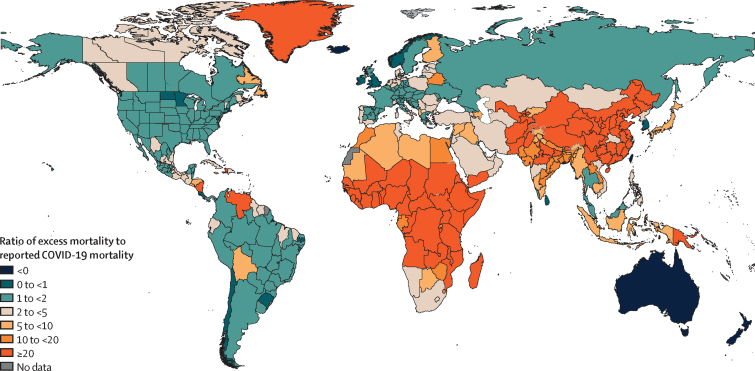
- Worldwide, the authors estimated 18·2 million excess deaths due to the pandemic (95% UI 17·1–19·6), about 3·07 times the 5·94 million reported COVID-19 deaths.
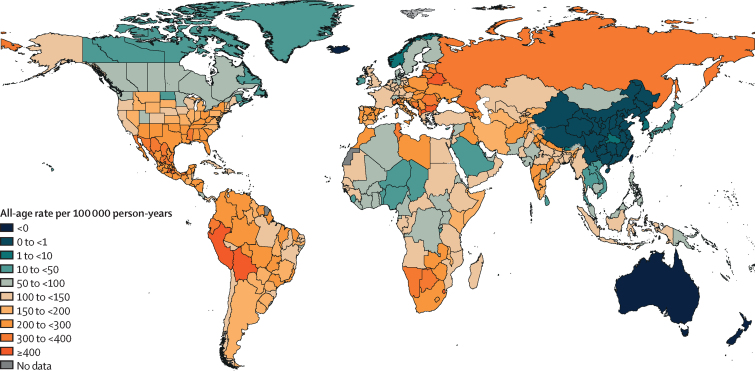
- The global all-age excess mortality rate was 120·3 deaths per 100 000 population (113·1–129·3), and it exceeded 300 per 100 000 in 21 countries.
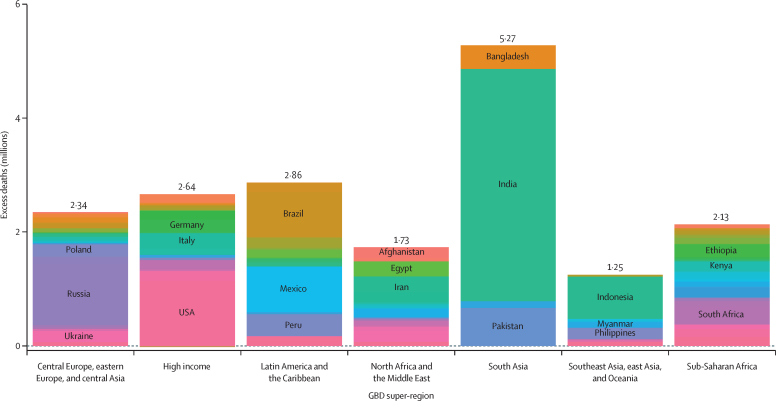
- The largest cumulative excess death counts were estimated in India (4·07 million [3·71–4·36]), the USA (1·13 million [1·08–1·18]), and Russia (1·07 million [1·06–1·08]); these seven countries accounted for more than half of global excess deaths.
- Among those high-burden countries, excess mortality rates were highest in Russia (374·6 per 100 000 [369·7–378·4]) and Mexico (325·1 [301·6–353·3]); Bolivia had the highest country-level excess mortality rate overall at 734·9 per 100 000 (594·1–879·2).
## Methods
- Systematic analysis of excess mortality for Jan 1, 2020 to Dec 31, 2021 across 191 countries and territories and 252 subnational units for selected countries.
- The study used all-cause mortality data from 74 countries and territories and 266 subnational locations, plus empirical excess mortality data for 12 states in India and provinces of South Africa.
- Excess mortality was estimated by correcting reported mortality for late registration, anomalies such as heat waves, and under-registration, then subtracting ensemble-model predictions of expected mortality; for places without time-detailed all-cause mortality, a statistical model using 15 selected covariates predicted excess mortality.
- The authors used six models in an ensemble for expected mortality, LASSO regression for covariate selection, and out-of-sample predictive validity testing; they propagated uncertainty with 100 draws.
## Limitations
- The paper states that different modeling strategies were needed depending on data availability, and that direct measurement would be preferable to modelled excess mortality for places without all-cause mortality data.
- The authors state they excluded the most recent weeks and months in 2021 because late registration can take 20 weeks or longer, and they note there is subjectivity in choosing the exclusion window.
- The paper states that it estimated cumulative excess mortality rather than weekly or monthly excess mortality because reporting lags could make time-detailed ratios unstable.
- Evident from the text: excess mortality is not decomposed into direct SARS-CoV-2 deaths versus indirect pandemic effects, and the authors say available cause-of-death data were too sparse to do this robustly.
Model-written summary. Check it against the paper before relying on it.
Integrity signals
Registry
Cites
Statistics
Figures
Verification
Claims the paper makes
4 Valid · 8 Not valid · 2 Not checked · 121 Own results and interpretations
The cited sources support only part of this claim — read each source’s verdict below.
In the paper
“the magnitude and distribution of many other causes of death might have changed because of social, economic, and behavioural responses to the pandemic, including strict lockdowns”
§ Estimating excess mortality due to the COVID-19 pandemic: a systematic analysis of COVID-19-related mortality, 2020–21 > Introduction
What the sources say
- Partly supportedcites [11] Mungmunpuntipantip R Wiwanitkit V The COVID-19 pandemic and traffic accidents S Afr Med J 111 2021 13227 33944735 sourceExperimental — accuracy not yet measured
The Introduction and Discussion link pandemic-related behavior changes and lockdowns to changes in injury patterns, and the Conclusions report fewer trauma hospitalizations. The paper studies hospitalized injuries, however, not the magnitude or distribution of causes of death generally; that extension is not supported by our copy. (LLM, conf=0.86)
- Partly supportedcites [12] Rozenfeld M Peleg K Givon A COVID-19 changed the injury patterns of hospitalized patients Prehosp Disaster Med 36 2021 251 259 33641689 PMC7985901 sourceExperimental — accuracy not yet measured
The Discussion (page unavailable) links pandemic restrictions to changes in traumatic injury patterns and reports higher mortality among trauma patients. The paper does not establish changes in the magnitude or distribution of causes of death broadly, or assess social and economic responses beyond the restrictions discussed. (LLM, conf=0.85)
- Partly supportedcites [13] Salottolo K Caiafa R Mueller J Multicenter study of US trauma centers examining the effect of the COVID-19 pandemic on injury causes, diagnoses and procedures Trauma Surg Acute Care Open 6 2021 e000655 PMC8023757 33884307 sourceExperimental — accuracy not yet measured
The Discussion (page unavailable) reports a modeled increase in avoidable cancer deaths from diagnosis delays associated with lockdown, and the Introduction (page unavailable) notes increased mortality from causes not fully attributable to COVID-19 in Northern Italy. These passages support the possibility of changes in some non-COVID mortality, but they do not address the distribution of many causes of death or establish economic responses as a factor. (LLM, conf=0.83)
hedgedstates a possible cause- Asserted: passes — The authors put it forward as true.
- Checkable: passes — It can be checked against evidence.
- Load-bearing: passes — The paper’s conclusions depend on it.
- Based: passes — The paper gives a reason why it holds.
- Partly supported
The cited sources support only part of this claim — read each source’s verdict below.
In the paper
“reported deaths represent only a partial count of total death tolls from the COVID-19 pandemic”
- Also stated in: § Introduction · plain
“Official statistics on reported COVID-19 deaths provide only a partial picture of the true burden of mortality.”
§ Estimating excess mortality due to the COVID-19 pandemic: a systematic analysis of COVID-19-related mortality, 2020–21 > Introduction
What the sources say
- Partly supportedcites [1] Friedman J Liu P Troeger CE Predictive performance of international COVID-19 mortality forecasting models Nat Commun 12 2021 2609 PMC8110547 33972512 sourceExperimental — accuracy not yet measured
The Methods (Model comparison framework; page not provided) identify Ecuador and Peru as settings with marked under-registration of COVID-19 deaths, supporting the point for those locations. The paper does not establish that reported deaths are only a partial count of the pandemic’s total death toll generally. (LLM, conf=0.85)
plain- Asserted: passes — The authors put it forward as true.
- Checkable: passes — It can be checked against evidence.
- Load-bearing: passes — The paper’s conclusions depend on it.
- Based: passes — The paper gives a reason why it holds.
- Also stated in: § Introduction · plain
The cited sources support only part of this claim — read each source’s verdict below.
In the paper
“early in the pandemic, before tests were widely available, many deaths due to COVID-19 among older individuals in high-income countries, particularly in long-term care facilities, are unlikely to have been attributed to COVID-19”
§ Estimating excess mortality due to the COVID-19 pandemic: a systematic analysis of COVID-19-related mortality, 2020–21 > Introduction
What the sources say
- Could not verifycites [2] Li Y Fang F He M Factors associated with nursing homes' late participation in COVID-19 reporting J Am Geriatr Soc 68 2020 2468 2469 32894775 sourceExperimental — accuracy not yet measured
Our copy of Li, Fang & He (2020) is a US-only research letter on factors associated with nursing homes' late participation in CMS COVID-19 reporting: the INTRODUCTION (p.1) describes the April 19, 2020 CMS mandate and grace period, and the RESULTS (p.1) report that 1,770 of 15,418 nursing homes (11.5%) had not reported by May 31, 2020, with odds ratios for size, chain affiliation, star rating, age and race composition. The DISCUSSION (p.1-2) attributes non-participation to resource/IT barriers and notes older adults' higher risk of critical disease (ref 6) and racial disparities in reporting (refs 7-9). Nothing in our copy addresses test availability early in the pandemic, deaths not being attributed to COVID-19, or high-income countries outside the US; I searched for 'deaths not attributed / testing not widely available', 'limited testing capacity, undercounted deaths in long-term care', and 'high-income countries, cause-of-death attribution' and obtained only the reporting-participation passages above. Non-reporting of CMS data is a different mechanism from cause-of-death misattribution, so the source neither supports nor contradicts the claim. (LLM, conf=0.72)
- Could not verifycites [3] Li R Pei S Chen B Substantial undocumented infection facilitates the rapid dissemination of novel coronavirus (SARS-CoV-2) Science 368 2020 489 493 32179701 PMC7164387 sourceExperimental — accuracy not yet measured
The Outlook reports undocumented infections in China before 23 January 2020, not deaths that went unattributed to COVID-19. Searches for deaths, older people, and long-term care found no passage addressing the claim about mortality attribution in high-income countries. (LLM, conf=0.78)
- Partly supportedcites [4] Lau H Khosrawipour T Kocbach P Ichii H Bania J Khosrawipour V Evaluating the massive underreporting and undertesting of COVID-19 cases in multiple global epicenters Pulmonology 27 2021 110 115 32540223 PMC7275155 sourceExperimental — accuracy not yet measured
The Discussion (page unavailable) reports retrospective corrections of COVID-19 death counts and unexplained rises in deaths recorded as non-COVID-19, often with unspecified pneumonia listed as the cause. This supports concern about missed attribution early in the pandemic, but the paper does not identify those deaths as COVID-19 deaths or establish that they occurred particularly among older people or long-term care residents. (LLM, conf=0.85)
hedgedstates a possible cause- Asserted: passes — The authors put it forward as true.
- Checkable: passes — It can be checked against evidence.
- Load-bearing: passes — The paper’s conclusions depend on it.
- Based: passes — The paper gives a reason why it holds.
- Could not verify
The cited sources support only part of this claim — read each source’s verdict below.
In the paper
“the reliability of reported deaths varies greatly between locations and over time”
§ Estimating excess mortality due to the COVID-19 pandemic: a systematic analysis of COVID-19-related mortality, 2020–21 > Introduction
What the sources say
- Partly supportedcites [1] Friedman J Liu P Troeger CE Predictive performance of international COVID-19 mortality forecasting models Nat Commun 12 2021 2609 PMC8110547 33972512 sourceExperimental — accuracy not yet measured
The Discussion says data quality varies substantially between countries, supporting the claim about locations. The Methods note day-to-day fluctuations in death reporting, but do not establish that the reliability of reported deaths varies greatly over time. (LLM, conf=0.82)
plainstates an association- Asserted: passes — The authors put it forward as true.
- Checkable: passes — It can be checked against evidence.
- Load-bearing: passes — The paper’s conclusions depend on it.
- Based: passes — The paper gives a reason why it holds.
- Partly supported
The cited sources that could be checked couldn’t confirm or dispute this claim.
In the paper
“as under-reporting of deaths is common in most vital registration systems, especially those from outside the high-income group of countries”
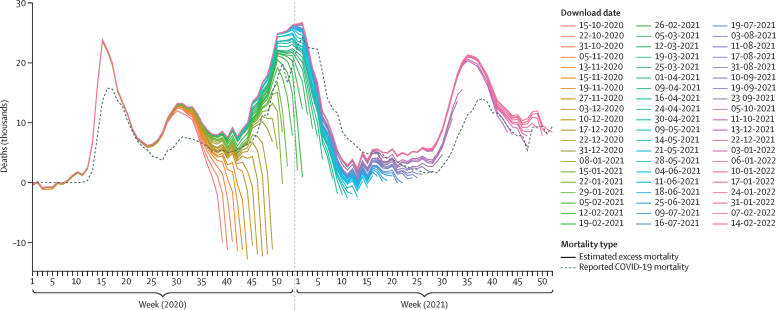
§ Estimating excess mortality due to the COVID-19 pandemic: a systematic analysis of COVID-19-related mortality, 2020–21 > Methods > Database of all-cause mortality We searched government websites, compendia developed by the World Mortality Database,18 the Human Mortality Database, and the European Statistical Office, and identified 74 countries and territories and an additional 266 subnational locations where either weekly or monthly all-cause mortality data were reported for periods in 2020 and 2021, and for up to 11 years previously (appendix pp 4–8, 47). These locations included 31 locations in low-income and middle-income countries. In addition to the time-detailed all-cause mortality data that are publicly available for the estimation of excess mortality, we also included empirical assessments of excess mortality for the nine provinces of South Africa (in addition to all-cause mortality data at the national level) and 12 states of India (in lieu of state-level all-cause mortality data). The Medical Research Council of South Africa used the data from both the civil registration system and the Rapid Mortality Surveillance Report to produce timely excess mortality estimates at the national and provincial levels (all nine provinces). For India, empirical assessment of excess mortality for 12 states used data from the civil registration system. For different months during the first and second waves of the COVID-19 epidemic in the 12 states in India, total numbers of deaths for those states during the corresponding months were made available (appendix pp 7–8). Using the mean reported deaths during the same periods in years 2018 and 2019, we were able to generate excess mortality rates for those Indian states after accounting for under-registration of mortality by the civil registration system at the state level. We identified three types of data issues. First, all-cause mortality from weekly or monthly reporting often has considerable lags in reporting (appendix pp 51–84). Figure 1 shows the effect of lags in reporting of all-cause mortality on excess mortality for the vital registration system in the USA; it takes approximately 20 weeks for data in the USA to be nearly complete. We systematically reviewed input vital registration data and trimmed periods that were likely to be subject to late registration for all locations in the analysis. As these data have been made public only recently, we had limited information by which to identify the precise lag time in late registration; this was particularly true for locations where data are made available more sporadically and by month. We therefore took a conservative approach and excluded data from more recent weeks and months in 2021 in our calculation of excess mortality. Second, in many European countries, registered deaths spiked in late July and early August (calendar weeks 31–33) of 2020, which was a period when reported COVID-19 deaths were extremely low as reported in our online tool. This period coincided with a heat wave; such spikes in all-cause mortality have been observed in Europe during similar timeframes in previous years.19, 20, 21 Because our model cannot separate excess mortality due to COVID-19 from excess deaths occurring during a heat wave, we excluded these weeks of data for all countries in western Europe (classified according to the Global Burden of Diseases, Injuries, and Risk Factors Study [GBD] location groupings) from subsequent analyses to avoid potentially exaggerating the impact of COVID-19 on all-cause mortality during 2020.
What the sources say
- Could not verifycites [22] Vos T Lim SS Abbafati C Global burden of 369 diseases and injuries in 204 countries and territories, 1990–2019: a systematic analysis for the Global Burden of Disease Study 2019 Lancet 396 2020 1204 1222 33069326 PMC7567026 sourceExperimental — accuracy not yet measured
The paper’s main text (page not provided) discusses fewer cancer diagnoses and incomplete initial case registration in the Netherlands, not under-reporting of deaths in vital registration systems. Searches for the claimed wording and for death-registration undercounts in lower-income countries found no passage addressing that claim. (LLM, conf=0.78)
plainstates an association- Asserted: passes — The authors put it forward as true.
- Checkable: passes — It can be checked against evidence.
- Load-bearing: passes — The paper’s conclusions depend on it.
- Based: passes — The paper gives a reason why it holds.
- Could not verify
91 more claims · 2 with their cited sources checked
Create a free account to see all 135 claims and every source verdict.
- Probably not a substantial claim. 13
- It may state two separate claims as one. 29
Claims other papers make about this one
Each is checked against this paper’s own text: does it say what the citing paper says it does?
The source backs part of the claim, not all of it — or backs it for a different population, condition or comparison.
In the citing paper
“As previously predicted,3 COVID-19 shifted baseline patterns of mortality for diseases and injuries that were affected by physical-distancing measures and other government-mandated restrictions.”
From Global burden of 288 causes of death and life expectancy decomposition in 204 countries and territories and 811 subnational locations, 1990–2021: a systematic analysis for the Global Burden of Disease Study 2021 (2024) · cites this paper as [3]
Experimental — accuracy not yet measuredThe source backs part of the claim, not all of it — or backs it for a different population, condition or comparison.
In the citing paper
“Due to use of face masks, physical distancing, and other non-pharmaceutical interventions deployed during the COVID-19 pandemic, we found evidence that the burden of some other infectious diseases (eg, influenza and respiratory syncytial virus) in some locations was reduced, the effects of which were incorporated into our excess mortality estimations.23”
From Global incidence, prevalence, years lived with disability (YLDs), disability-adjusted life-years (DALYs), and healthy life expectancy (HALE) for 371 diseases and injuries in 204 countries and territories and 811 subnational locations, 1990–2021: a systematic analysis for the Global Burden of Disease Study 2021 (2024) · cites this paper as [23]
Experimental — accuracy not yet measuredThe source backs part of the claim, not all of it — or backs it for a different population, condition or comparison.
In the citing paper
“First, data on COVID-19 outcomes (eg, cases, deaths, hospital admissions, and seroprevalence) were of highly variable quality and completeness, which required novel methods for standardisation.23, 25, 26”
From Global incidence, prevalence, years lived with disability (YLDs), disability-adjusted life-years (DALYs), and healthy life expectancy (HALE) for 371 diseases and injuries in 204 countries and territories and 811 subnational locations, 1990–2021: a systematic analysis for the Global Burden of Disease Study 2021 (2024) · cites this paper as [23]
Experimental — accuracy not yet measuredThe cited source says what the claim attributes to it.
In the citing paper
“Our overall estimates are similar to those from complementary approaches [2, 28–32].”
From Estimates of pandemic excess mortality in India based on civil registration data (2022) · cites this paper as [31]
In the citing paper
“Correctly accounting for deaths and their causes during acute emergencies carries important societal ramifications9–12.”
From Attributed causes of excess mortality during the COVID-19 pandemic in a south Indian city (2023) · cites this paper as [9]
2 more claims about this paper
Create a free account to see every claim other papers make about this one.
Self-check
Percentages, sums and reported differences re-computed from the paper’s own numbers.
Each contradiction between two passages listed here was confirmed by an independent check.
Rated minor: it would not touch a result — a value no result rests on, a p-value that stays on the same side of the significance level, or a conflict that is clerical, resolved elsewhere in the paper, or outside its own findings.
In the paper
§ Estimating excess mortality due to the COVID-19 pandemic: a systematic analysis of COVID-19-related mortality, 2020–21 > Results
“The global all-age rate of excess mortality due to the COVID-19 pandemic was 120·3 deaths (113·1–129·3) per 100 000 of the population.”
§ Estimating excess mortality due to the COVID-19 pandemic: a systematic analysis of COVID-19-related mortality, 2020–21 > Results
“Conversely, Arunachal Pradesh, Telangana, Sikkim, Rajasthan, Gujarat, Uttar Pradesh, Jharkhand, West Bengal, and Goa had excess mortality rates that were lower than the global average of 120·6 per 100 000 (although 95% UIs overlap).”
Citations
Cites
Vos, T., Lim, S. S., Abbafati, C., Abbas, K. M., Abbasi, M., Abbasifard, M., Abbasi-Kangevari, M., Abbastabar, H., Abd-Allah, F., Abdelalim, A., et al. (2020) · The Lancet · doi:10.1016/s0140-6736(20)30925-9 · Cited by 19,358
Self-citationLi, R., Pei, S., Chen, B., Song, Y., Zhang, T., Yang, W., & Shaman, J. (2020) · Science · doi:10.1126/science.abb3221 · Cited by 3,633
Death toll exceeded 70,000 in Europe during the summer of 2003
Robine, J.-M., Cheung, S. L. K., Le Roy, S., Van Oyen, H., Griffiths, C., Michel, J.-P., & Herrmann, F. R. (2007) · Comptes Rendus. Biologies · doi:10.1016/j.crvi.2007.12.001 · Cited by 2,127
Guidelines for accurate and transparent health estimates reporting: the GATHER statement
Stevens, G. A., Alkema, L., Black, R. E., Boerma, J. T., Collins, G. S., Ezzati, M., Grove, J. T., Hogan, D. R., Hogan, M. C., Horton, R., et al. (2016) · The Lancet · doi:10.1016/s0140-6736(16)30388-9 · Cited by 1,798
Self-citationSuicide risk and prevention during the COVID-19 pandemic
Gunnell, D., Appleby, L., Arensman, E., Hawton, K., John, A., Kapur, N., Khan, M., O'Connor, R. C., Pirkis, J., Appleby, L., et al. (2020) · The Lancet Psychiatry · doi:10.1016/s2215-0366(20)30171-1 · Cited by 1,513 · cited 1×
“29 There is convincing evidence that rates of anxiety and depression increased during the pandemic period, which might lead to increases in deaths from suicide; 30,31 however, to date, evidence of increased suicide mortality is scarce apart from in Japan, where reported suicide deaths increased”
Fullman, N., Yearwood, J., Abay, S. M., Abbafati, C., Abd-Allah, F., Abdela, J., Abdelalim, A., Abebe, Z., Abebo, T. A., Aboyans, V., et al. (2018) · The Lancet · doi:10.1016/s0140-6736(18)30994-2 · Cited by 1,013
Self-citationKarlinsky, A., & Kobak, D. (2021) · eLife · doi:10.7554/elife.69336 · Cited by 772
Fewer cancer diagnoses during the COVID-19 epidemic in the Netherlands
Dinmohamed, A. G., Visser, O., Verhoeven, R. H. A., Louwman, M. W. J., van Nederveen, F. H., Willems, S. M., Merkx, M. A. W., Lemmens, V. E. P. P., Nagtegaal, I. D., & Siesling, S. (2020) · The Lancet Oncology · doi:10.1016/s1470-2045(20)30265-5 · Cited by 699 · cited 1×
“Some excess mortality might be attributable to reductions in health-care use across a number of causes; 14,15,24,25 however, the effect of reduced health-care use on health outcomes is difficult to prove.”
Causey, K., Fullman, N., Sorensen, R. J. D., Galles, N. C., Zheng, P., Aravkin, A., Danovaro-Holliday, M. C., Martinez-Piedra, R., Sodha, S. V., Velandia-González, M. P., et al. (2021) · The Lancet · doi:10.1016/s0140-6736(21)01337-4 · Cited by 450 · cited 1×
“Many mechanisms have been proposed, including reduced vaccination rates 26 and reduced births in hospitals.”
Self-citationMortality Related to Air Pollution with the Moscow Heat Wave and Wildfire of 2010
Shaposhnikov, D., Revich, B., Bellander, T., Bedada, G. B., Bottai, M., Kharkova, T., Kvasha, E., Lezina, E., Lind, T., Semutnikova, E., et al. (2014) · Epidemiology · doi:10.1097/ede.0000000000000090 · Cited by 429
Cited by
Items 301–400 of 1,734
Khan, M. A. S., Miah, M. I., Islam, Z., Afrin, S., Ahmed, F., & Rahman, S. R. (2023) · Informatics in Medicine Unlocked · doi:10.1016/j.imu.2023.101305 · Cited by 15
Xue, Z., Li, Y., Xiao, S., Zhang, H., & Xu, J. (2023) · Experimental and Therapeutic Medicine · doi:10.3892/etm.2023.12168 · Cited by 15
Oduor, C., Audi, A. O., Kiplangat, S., Auko, J., Ouma, A., Aol, G., Nasimiyu, C., Agogo, G. O., Lo, T., Munyua, P. M., et al. (2023) · PLOS Global Public Health · doi:10.1371/journal.pgph.0002141 · Cited by 15
“In sub-Saharan Africa and more specifically in Kenya, the impact of the pandemic on mortality has been largely unquantified [9].”
Xavier, M. O., Amouzou, A., Maïga, A., Akseer, N., Huicho, L., & Matijasevich, A. (2023) · Journal of Global Health · doi:10.7189/jogh.13.06040 · Cited by 26
Comparing methods to predict baseline mortality for excess mortality calculations
Ferenci, T. (2023) · BMC Medical Research Methodology · doi:10.1186/s12874-023-02061-w · Cited by 26
“Methods using ARIMA models [10–13], the Holt–Winters method [14], or those based on Gaussian process [15] are not considered, nor are ensemble methods [16, 17].”
BackgroundMethodInfluentialMonti, M. M., Milanetti, E., Frans, M. T., Miotto, M., Rienzo, L. D., Baranov, M. V., Gosti, G., Somavarapu, A. K., Nagaraj, M., Golbek, T. W., et al. (2024) · The Journal of Physical Chemistry B · doi:10.1021/acs.jpcb.3c06258 · Cited by 15
A Comparative Analysis of COVID-19 Response Measures and Their Impact on Mortality Rate
Konishi, T. (2024) · COVID · doi:10.3390/covid4020012 · Cited by 17
Shiri, I., Salimi, Y., Sirjani, N., Razeghi, B., Bagherieh, S., Pakbin, M., Mansouri, Z., Hajianfar, G., Avval, A. H., Askari, D., et al. (2024) · Medical Physics · doi:10.1002/mp.16964 · Cited by 16
Cao, T., Zhu, Q., Tong, C., Halengbieke, A., Ni, X., Tang, J., Han, Y., Li, Q., & Yang, X. (2024) · Nutrition Metabolism and Cardiovascular Diseases · doi:10.1016/j.numecd.2024.02.004 · Cited by 18
Ghasemiyeh, P., & Mohammadi‐Samani, S. (2024) · Virology Journal · doi:10.1186/s12985-024-02370-6 · Cited by 18
“Also, according to the epidemiological mortality rate estimation studies, the mortality rate exceeded over 18.2 million till now and many people will lose their lives during this lethal pandemic [1].”
BackgroundInfluentialTanoue, Y., Ghaznavi, C., Kawashima, T., Eguchi, A., Yoneoka, D., & Nomura, S. (2022) · International Journal of Environmental Research and Public Health · doi:10.3390/ijerph19148810 · Cited by 15
Self-citationVanhulle, E., D’huys, T., Provinciael, B., Stroobants, J., Camps, A., Noppen, S., Schols, D., Damme, E. J. M. V., Maes, P., Stevaert, A., et al. (2022) · Frontiers in Cellular and Infection Microbiology · doi:10.3389/fcimb.2022.989534 · Cited by 16
“2 million excess deaths in two years (Wang et al., 2022).”
BackgroundChina's “dynamic clearing” epidemic prevention policy: Achievements, challenges, and prospects
Wang, Q., & Huang, L. (2022) · Frontiers in Public Health · doi:10.3389/fpubh.2022.978944 · Cited by 21
Kepp, K. P., Björk, J., Emilsson, L., & Lallukka, T. M. (2023) · SSM - Population Health · doi:10.1016/j.ssmph.2023.101377 · Cited by 19
“…World Health Organization (WHO)(Msemburi et al., 2023; World Health Organization, 2022a) and the Institute for Health Metrics and Evaluation (IHME)(Wang et al., 2022) published estimates of the excess mortality in 2020 and 2021, and The Economist(Solstad, 2021) and World Mortality Dataset…”
InfluentialCao, X., Li, Y., Zi, Y., & Zhu, Y. (2023) · Frontiers in Public Health · doi:10.3389/fpubh.2023.1085451 · Cited by 16
“Second, different countries/regions may have different measures of COVID-19 mortality, owing to geographical variations in diagnostic criteria and testing capacity (14).”
BackgroundInfluentialEffects of COVID-19 vaccination on human fertility: a post-pandemic literature review
Wang, C., Wang, M., Li, G., Song, B., Xing, Q., & Cao, Y. (2023) · Annals of Medicine · doi:10.1080/07853890.2023.2261964 · Cited by 16
Nhacolo, A., Madewell, Z. J., Muir, J. A., Sacoor, C. N., Xerinda, E. G., Matsena, T., Jamisse, E. L., Bassat, Q., Whitney, C. G., Mandomando, I., et al. (2023) · PLOS Global Public Health · doi:10.1371/journal.pgph.0002532 · Cited by 11
Rethinking the evidence on COVID-19 in Africa
Bejon, P., Agweyu, A., Ochola‐Oyier, L. I., Hamaluba, M., Kamuya, D., Kinyanjui, S., & Barasa, E. (2025) · The Lancet Infectious Diseases · doi:10.1016/s1473-3099(25)00071-4 · Cited by 17
“61 Furthermore, some direct observations were supportive of high death rates in Africa.”
Li, J., Tseng, Y., Chen, S.-H., & Chen, K. (2025) · Biomedical Journal · doi:10.1016/j.bj.2025.100929 · Cited by 25
“Infectious diseases constitute a significant challenge to public health and society worldwide, with the capacity to trigger widespread outbreaks and epidemics [1,2].”
COVID-19 Autopsies Reveal Underreporting of SARS-CoV-2 Infection and Scarcity of Co-infections
Schwab, N., Nienhold, R., Henkel, M., Baschong, A., Graber, A., Frank, A., Mensah, N., Koike, J., Hernach, C., Sachs, M., et al. (2022) · Frontiers in Medicine · doi:10.3389/fmed.2022.868954 · Cited by 17
Vitamin D in the prevention or treatment of COVID-19
Martineau, A. R. (2022) · Proceedings of The Nutrition Society · doi:10.1017/s0029665122002798 · Cited by 14
Jorgensen, P., Schmid, A. M., Sulo, J., Preza, I., Hasibra, I., Kissling, E., Fico, A., Sridhar, S., Rubin-Smith, J. E., Kota, M., et al. (2023) · The Lancet Regional Health - Europe · doi:10.1016/j.lanepe.2023.100584 · Cited by 13
Ruiz, F. J., Rueda, S. T., Pearson, C. A. B., Bergren, E., Okeke, C. C., Procter, S. R., Montero, A. M., Jit, M., Vassall, A., & Uzochukwu, B. S. C. (2023) · PLOS Global Public Health · doi:10.1371/journal.pgph.0001693 · Cited by 15
“While reported COVID-19 related deaths total approximately 3000, the real number of deaths could be many times higher; a recent study suggests excess mortality in Nigeria for 2020–21 could surpass 160,000 deaths [5].”
BackgroundMoreno‐Torres, V., Soriano, V., Calderón‐Parra, J., Martínez‐Urbistondo, M., Treviño, A., Vicente, Z. D. S., de Mendoza, C., & Ruiz‐Irastorza, G. (2023) · Autoimmunity Reviews · doi:10.1016/j.autrev.2023.103341 · Cited by 17
Impact of Land Use Systems and Climate Change on Water Resources: Indian Perspectives
Patra, S., Shilky, Kumar, A., & Saikia, P. (2023) · Advances in geographical and environmental sciences · doi:10.1007/978-981-99-3660-1_6 · Cited by 18
Greenspace exposure is conducive to the resilience of public sentiment during the COVID-19 pandemic
Song, L., Zhang, A., & Zhi, H. (2023) · Health & Place · doi:10.1016/j.healthplace.2023.103096 · Cited by 18
SARS-CoV-2 neutralizing antibody bebtelovimab – a systematic scoping review and meta-analysis
Liew, M. N. Y., Kua, K. P., Lee, S. W. H., & Wong, K. K. (2023) · Frontiers in Immunology · doi:10.3389/fimmu.2023.1100263 · Cited by 14
Unique atmospheric microbiota patterns for 31 major Chinese cities
Zhang, L., & Yao, M. (2023) · Atmospheric Environment · doi:10.1016/j.atmosenv.2023.120143 · Cited by 15
Steinberg, J., Hughes, S., Hui, H., Allsop, M. J., Egger, S. J., David, M., Caruana, M., Coxeter, P., Carle, C., Onyeka, T. C., et al. (2023) · International Journal of Cancer · doi:10.1002/ijc.34798 · Cited by 18
Global evidence on the economic effects of disease suppression during COVID-19
Rothwell, J., Cojocaru, A., Srinivasan, R., & Kim, Y. S. (2024) · Humanities and Social Sciences Communications · doi:10.1057/s41599-023-02571-4 · Cited by 22
Nzaji, M. K., Kamenga, J. D. D., Lungayo, C. L., Bene, A. C. M., Meyou, S. F., Kapit, A. M., Fogarty, A., Sessoms, D., MacDonald, P. D. M., Standley, C. J., et al. (2024) · PLOS Global Public Health · doi:10.1371/journal.pgph.0002772 · Cited by 15
Causal effects of closing businesses in a pandemic
Barrot, J.-N., Bonelli, M., Grassi, B., & Sauvagnat, J. (2024) · Journal of Financial Economics · doi:10.1016/j.jfineco.2024.103794 · Cited by 22
Szwarcwald, C. L., de Almeida, W. D. S., Boccolini, C. S., Filho, A. M. S., & Malta, D. C. (2024) · Public Health · doi:10.1016/j.puhe.2024.03.011 · Cited by 17
Self-citationLiu, D., Zhou, Y., Tao, X., Cheng, Y., & Tao, R. (2024) · Frontiers in Public Health · doi:10.3389/fpubh.2024.1374667 · Cited by 22
Human behavior in the context of low-probability high-impact events
Sundh, J. (2024) · Humanities and Social Sciences Communications · doi:10.1057/s41599-024-03403-9 · Cited by 24
Experiences of COVID ‐19 survivors: A qualitative study based on Watson's Theory of Human Caring
Muslu, L., Kolutek, R., & Fidan, G. (2022) · Nursing and Health Sciences · doi:10.1111/nhs.12979 · Cited by 16
“In other words, it is expected that the epidemic will affect public health for years (Wang et al., 2022; Katikireddi et al., 2021).”
BackgroundUse of Human Lung Tissue Models for Screening of Drugs against SARS-CoV-2 Infection
McAuley, A. J., van Vuren, P. J., Mohammed, M.-U.-R., Faheem, F., Goldie, S., Riddell, S., Gödde, N., Styles, I. K., Bruce, M. P., Chahal, S., et al. (2022) · Viruses · doi:10.3390/v14112417 · Cited by 16
“As of March 2022, the ongoing coronavirus disease-19 (COVID-19) pandemic has resulted in nearly 500 million cases, over 6 million attributable deaths, and over 18 million excess deaths worldwide [1,2].”
BackgroundKirenga, B., Mugenyi, L., Rico, M. S., Bosa, H. K., Muttamba, W., Mugume, R., Mwesigwa, E., Kalimo, E., Nyombi, V., Segawa, I., et al. (2023) · Molecular Psychiatry · doi:10.1038/s41380-023-02004-3 · Cited by 15
“The SARS-CoV-2 pandemic has created a tremendous economic and health crisis worldwide [1 – 3] and has led to excess mortality, especially in low-and middle-income countries [4, 5].”
BackgroundYang, Z., Fu, X., Zhao, Y., Li, X., Long, J., & Zhang, L. (2023) · International Journal of Biological Macromolecules · doi:10.1016/j.ijbiomac.2023.124352 · Cited by 14
“More than 500 million cases have been diagnosed with over 6 million deaths reported worldwide [1].”
The severity of COVID-19 across the spectrum of HIV
Miller, K. W., & Gandhi, R. T. (2023) · Current Opinion in HIV and AIDS · doi:10.1097/coh.0000000000000791 · Cited by 15
Adimulam, T., Arumugam, T., Gokul, A., & Ramsuran, V. (2023) · International Journal of Molecular Sciences · doi:10.3390/ijms24108711 · Cited by 17
“Interestingly, the largest excess deaths due to the COVID-19 pandemic were observed in Asia, North Africa, and Europe [61].”
BackgroundFeng, Y., Zhang, Y., Ding, X., Fan, Y., & Ge, J. (2023) · Building and Environment · doi:10.1016/j.buildenv.2023.110489 · Cited by 16
Budhadev, D., Hooper, J., Rocha, C., Nehlmeier, I., Kempf, A. M., Hoffmann, M., Krüger, N., Zhou, D., Pöhlmann, S., & Guo, Y. (2023) · JACS Au · doi:10.1021/jacsau.3c00163 · Cited by 17
Paglino, E., Lundberg, D. J., Zhou, Z., Wasserman, J. A., Raquib, R. V., Luck, A. N., Hempstead, K., Bor, J. H., Preston, S. H., Elo, I. T., et al. (2022) · medRxiv · doi:10.1101/2022.04.23.22274192 · Cited by 18
The Coronavirus Disease 2019 Spatial Care Path: Home, Community, and Emergency Diagnostic Portals
Kost, G. J. (2022) · Diagnostics · doi:10.3390/diagnostics12051216 · Cited by 13
Ferrara, N., Campobasso, C. P., Cocozza, S., et al. (2022) · Journal of Clinical Medicine · doi:10.3390/jcm11144196 · Cited by 13
Excess deaths during the COVID-19 pandemic in Alberta, Canada
Beesoon, S., Bakal, J. A., Youngson, E. R. E., Williams, K., Berzins, S. A., Brindle, M. E., & Joffe, A. M. (2022) · IJID Regions · doi:10.1016/j.ijregi.2022.08.011 · Cited by 15
Stoffel, S., Kaushal, A., Grimani, A., von Wagner, C., Sniehotta, F. F., & Vlaev, I. (2022) · BMJ Open · doi:10.1136/bmjopen-2022-065804 · Cited by 13
Impact de la COVID-19 sur la santé publique en Afrique subsaharienne
Chippaux, J. (2023) · Bulletin de l Académie Nationale de Médecine · doi:10.1016/j.banm.2022.10.015 · Cited by 22
Has COVID-19 increased inequality in mortality by income in the Netherlands?
Wouterse, B., Geisler, J., Bär, M., & van Doorslaer, E. K. A. (2023) · Journal of Epidemiology & Community Health · doi:10.1136/jech-2022-219845 · Cited by 15
Rabarison, J. H., Rakotondramanga, J. M., Ratovoson, R., Masquelier, B., Rasoanomenjanahary, A., Dreyfus, A., Garchitorena, A., Rasambainarivo, F., Razanajatovo, N. H., Andriamandimby, S. F., et al. (2023) · BMJ Global Health · doi:10.1136/bmjgh-2023-011801 · Cited by 13
Munira, M. S., Okada, Y., & Nishiura, H. (2023) · PeerJ · doi:10.7717/peerj.15784 · Cited by 15
Implementation of a broad public health approach to COVID-19 in Sweden, January 2020 to May 2022
Tegnell, A., Bessö, A., Björkholm, B., Byfors, S., Carlson, J., & Wisell, K. T. (2023) · Eurosurveillance · doi:10.2807/1560-7917.es.2023.28.41.2300063 · Cited by 14
SARS-CoV-2 spike protein S1 activates Cx43 hemichannels and disturbs intracellular Ca2+ dynamics
Prieto‐Villalobos, J., Lucero, C. M. J., Rovegno, M., Gómez, G. I., Retamal, M. A., & Orellana, J. A. (2023) · Biological Research · doi:10.1186/s40659-023-00468-9 · Cited by 13
Childhood adversity and COVID-19 outcomes in the UK Biobank
Hanson, J. L., O’Connor, K., Adkins, D. J., & Kahhalé, I. (2023) · Journal of Epidemiology & Community Health · doi:10.1136/jech-2023-221147 · Cited by 19
“2 3 COVID-19 has also placed enormous burdens on healthcare systems, often requiring hospitalisation and intensive care for those with severe infections, in turn leading to billions of dollars in healthcare expenses.”
BackgroundHosek, J. R. (2024) · Canadian Journal of Latin American and Caribbean Studies / Revue canadienne des études latino-américaines et caraïbes · doi:10.1080/08263663.2024.2323850 · Cited by 16
Moreira, R. D. C., Bastos, L. S., Carvalho, L. M., Freitas, L. P., & Pacheco, A. G. (2024) · PLOS Global Public Health · doi:10.1371/journal.pgph.0002576 · Cited by 17
Arnold, L., Bimczok, S., Schütt, H., Lisak-Wahl, S., Buchberger, B., & Stratil, J. M. (2024) · BMC Infectious Diseases · doi:10.1186/s12879-024-09271-7 · Cited by 17
“The SARS-CoV-2 pandemic is estimated to have taken the lives of 18.2 million people worldwide between January 2020 and December 2021 [1], prior to the widespread availability of effective vaccines.”
BackgroundInfluentialNilsson, A., Emilsson, L., Kepp, K. P., Knudsen, A. K., Forthun, I., Madsen, C., Björk, J., & Lallukka, T. M. (2024) · European Journal of Epidemiology · doi:10.1007/s10654-024-01154-0 · Cited by 18
“Globally, the first two years of the pandemic, 2020–2021, were estimated to have caused 15–18 million excess deaths [7, 8].”
BackgroundTao, R., Wang, S., Lü, Q., Liu, Y., Xia, L., Mo, D., Geng, F., Liu, T., Liu, Y., Jiang, F., et al. (2024) · Frontiers in Psychiatry · doi:10.3389/fpsyt.2024.1485726 · Cited by 18
Pérez-Ortega, J., Almanza-Ortega, N. N., Torres-Poveda, K., et al. (2022) · Mathematics · doi:10.3390/math10132167 · Cited by 13
Valencia, J. S., Soto-Becerra, P., Escobar-Agreda, S., Fernández-Navarro, M., Reyes, O. A. E., Mayta‐Tristán, P., Mezones‐Holguín, E., & Solari, L. (2022) · Vaccine · doi:10.1016/j.vaccine.2022.09.066 · Cited by 17
Zheng, W., Wang, J., Zhang, K., Liu, C., Zhang, L., Liang, X., Zhang, L., Ma, Y., Yang, R., Yuan, X., et al. (2022) · Frontiers in Endocrinology · doi:10.3389/fendo.2022.982493 · Cited by 15
“The COVID-19 pandemic is a serious threat to human health (1, 21).”
BackgroundTwice evasions of Omicron variants explain the temporal patterns in six Asian and Oceanic countries
Chen, B., Zhao, Y., Jin, Z., He, D., & Li, H. (2023) · BMC Infectious Diseases · doi:10.1186/s12879-023-07984-9 · Cited by 14
“One study [70] could be valid evidence to support our conclusion.”
Excess mortality from COVID 19 in Costa Rica: a registry based study using Poisson regression
Fantin, R., Barboza‐Solís, C., Hildesheim, A., & Herrero, R. (2023) · The Lancet Regional Health - Americas · doi:10.1016/j.lana.2023.100451 · Cited by 19
Age and sex adjustments are critical when comparing death rates
Islam, N., & Jdanov, D. A. (2023) · BMJ · doi:10.1136/bmj.p845 · Cited by 15
The making of India's COVID-19 disaster: A Disaster Risk Management (DRM) Assemblage analysis
McGowran, P., Johns, H., Raju, E., & Ayeb‐Karlsson, S. (2023) · International Journal of Disaster Risk Reduction · doi:10.1016/j.ijdrr.2023.103797 · Cited by 14
Namuniina, A., Muyanja, E., Biribawa, V. M., Okech, B. A., Ssemaganda, A., Price, M. A., Hills, N. K., Nanteza, A., Bagaya, B. S., Weiskopf, D., et al. (2023) · PLOS Global Public Health · doi:10.1371/journal.pgph.0001566 · Cited by 13
Impact of COVID-19 on mortality in coastal Kenya: a longitudinal open cohort study
Otiende, M., Nyaguara, A., Bottomley, C., Walumbe, D., Mochamah, G., Amadi, D., Nyundo, C., Kagucia, E. W., Etyang, A. O., Adetifa, I., et al. (2023) · Nature Communications · doi:10.1038/s41467-023-42615-6 · Cited by 20
“For comparison, these same models estimated excess mortality rates for the USA at 179.3 and 140/10,000 respectively, and for the UK at 126.8 and 109/100,000, respectively 1 – 3 .”
InfluentialMuir, J. A., Dheresa, M., Madewell, Z. J., Getachew, T., Daraje, G., Mengesha, G., Whitney, C. G., Assefa, N., & Cunningham, S. A. (2024) · BMC Nutrition · doi:10.1186/s40795-023-00815-9 · Cited by 18
“Beyond immediate health effects [1], the pandemic also had social and economic implications as government-enforced lockdowns were implemented with the goal of mitigating the pace and severity of the disease [2].”
BackgroundNanque, L. M., Jensen, A. M., Diness, A. R., Nielsen, S., Cabral, C. H. P. D. S., Cawthorne, D., Martins, J. S. D., Cá, E., Jensen, K., Martins, C. L., et al. (2024) · PLOS Global Public Health · doi:10.1371/journal.pgph.0002901 · Cited by 17
“Hence most African mortality estimates are based on models [29,30].”
Global Expansion of SARS-CoV-2 Variants of Concern: Dispersal Patterns and Influence of Air TravelPreprint
Tegally, H., Wilkinson, E., Martin, D. P., Moir, M., Brito, A. F., Giovanetti, M., Khan, K., Huber, C., Bogoch, I. I., San, J. E., et al. (2022) · medRxiv · doi:10.1101/2022.11.22.22282629 · Cited by 13
Troeger, C., Arndt, M. B., Aalruz, H., Abdoun, M., Abdullahi, A., Abebe, M., Abedi, A., Abie, A., Aboagye, R. G., Abolhassani, H., et al. (2025) · The Lancet Child & Adolescent Health · doi:10.1016/s2352-4642(25)00303-7 · Cited by 19
Self-citationAdapting to an aggregate shock: The impact of the Covid-19 crisis on rural households
Mahmud, M., & Riley, E. (2022) · Review of Economics of the Household · doi:10.1007/s11150-022-09625-7 · Cited by 19
The role transition of radiotherapy for the treatment of liver cancer in the COVID-19 era
Li, Z., Hu, Y., Zeng, M., Hu, Q., Ye, F., Liu, R., Cai, H., Li, Q., & Wang, X. (2022) · Frontiers in Oncology · doi:10.3389/fonc.2022.976143 · Cited by 12
Conflicting COVID-19 excess mortality estimates
Moeti, M. R., Makubalo, L., Guèye, A. S., Baldé, T., Karamagi, H. C., Awandare, G. A., Thumbi, S. M., Zhang, F., Mutapi, F., & Woolhouse, M. E. J. (2023) · The Lancet · doi:10.1016/s0140-6736(23)00112-5 · Cited by 15
Ruhm, C. J. (2023) · American Journal of Epidemiology · doi:10.1093/aje/kwad127 · Cited by 14
Won, Y., Rim, D., Mistrick, R. G., & Bahnfleth, W. P. (2023) · Science and Technology for the Built Environment · doi:10.1080/23744731.2023.2247947 · Cited by 12
“Excess mortality data suggest that actual numbers of deaths are at least two times higher (Wang et al. 2022).”
BackgroundLedesma, J. R., Basting, A. V. L., Chu, H. T., Ma, J., Zhang, M., Vongpradith, A., Novotney, A., Dalos, J., Zheng, P., Murray, C. J. L., et al. (2023) · Microorganisms · doi:10.3390/microorganisms11092191 · Cited by 20
Self-citationRisk of SARS-CoV-2 Infection Among Households With Children in France, 2020-2022
Galmiche, S., Charmet, T., Rakover, A., Schaeffer, L., Chény, O., Platen, C. V., Omar, F., David, C., Mailles, A., Carrat, F., et al. (2023) · JAMA Network Open · doi:10.1001/jamanetworkopen.2023.34084 · Cited by 11
Scientific advisory councils in the COVID-19 response
Delfraissy, J., Horgan, M. M., Mølbak, K., Simón, F. S., Stadler, T., van Dissel, J., Gucht, S. V., Ricciardi, W., Wieler, L. H., Vallance, P. J., et al. (2023) · The Lancet · doi:10.1016/s0140-6736(23)01846-9 · Cited by 11
Qualitative and Ulam–Hyres stability analysis of fractional order cancer-immune model
Xu, C., & Farman, M. T. (2023) · Chaos Solitons & Fractals · doi:10.1016/j.chaos.2023.114277 · Cited by 12
Loría, V., Aparicio, A., Hildesheim, A., et al. (2023) · BMJ Open · doi:10.1136/bmjopen-2022-071284 · Cited by 12
Landscape‐Scale Epidemiological Dynamics of SARS‐CoV‐2 in White‐Tailed Deer
Hewitt, J., Wilson‐Henjum, G., Collins, D. T., Linder, T. J., Lenoch, J. B., Heale, J. D., Quintanal, C., Pleszewski, R., McBride, D. S., Bowman, A. S., et al. (2024) · Transboundary and Emerging Diseases · doi:10.1155/2024/7589509 · Cited by 13
“However, excess mortality can be challenging to use at local scales since it can be negative and sensitive to the risk that pandemic-related behavioral changes (i.e., driving less) biases all-cause death predictions to be high [32, 33].”
Hadjichrysanthou, C., Beukenhorst, A. L., Koch, C. M., Alter, G., Goudsmit, J., Anderson, R. M., & de Wolf, F. (2022) · Infectious Diseases and Therapy · doi:10.1007/s40121-022-00710-z · Cited by 11
“2 million deaths by 31 December 2021, based on excess mortality estimates [1].”
BackgroundMorooka, H., Yamamoto, T., Tanaka, A., Furuhashi, K., Miyagawa, Y., & Maruyama, S. (2022) · Globalization and Health · doi:10.1186/s12992-022-00883-9 · Cited by 16
“The carbon footprint of the Japanese healthcare system accounts for 5% of the total domestic carbon footprint [13]; thus, it is imperative to reduce carbon emissions from the medical sector to meet the goal of carbon neutrality by 2050 [12].”
Acute liver injury in COVID-19 patients hospitalized in the intensive care unit: Narrative review
Polyzogopoulou, E., Amoiridou, P., Abraham, T. P., & Ventoulis, I. (2022) · World Journal of Gastroenterology · doi:10.3748/wjg.v28.i47.6662 · Cited by 14
Impact of COVID-19 on mortality in Asia
Jones, G. W. (2023) · Asian Population Studies · doi:10.1080/17441730.2023.2193476 · Cited by 25
“Table 5 shows the excess in mean deaths per 100,000 population in Asian countries as compared with Western countries over the 2020 – 2021 period, based on the WHO estimates and those by Wang et al. (2022).”
BackgroundMethodInfluentialCOVID-19 Detection from Cough Recordings Using Bag-of-Words Classifiers
Pavel, I., & Ciocoiu, I. B. (2023) · Sensors · doi:10.3390/s23114996 · Cited by 13
COVID-19 in hospitalized solid organ transplant recipients in a nationwide registry study
Moreno‐Torres, V., Martínez‐Urbistondo, M., Calderón‐Parra, J., et al. (2023) · International Journal of Infectious Diseases · doi:10.1016/j.ijid.2023.06.007 · Cited by 12
“By the end of 2021, estimates for excess mortality due to COVID-19 were over 18 million people globally [1].”
BackgroundAkbulut, S., Yağın, F. H., Şahin, T. T., Garzali, I. U., Tunçer, A., Akyuz, M., BAĞCI, N., Barut, B., Ünsal, S., Sarıcı, K. B., et al. (2023) · Journal of Clinical Medicine · doi:10.3390/jcm12134466 · Cited by 12
Gender differences in estimated excess mortality during the COVID-19 pandemic in Thailand
Pothisiri, W., Prasitsiriphon, O., Apakupakul, J., & Ploddi, K. (2023) · BMC Public Health · doi:10.1186/s12889-023-16828-9 · Cited by 12
“While this ratio provides evidence that COVID-19 deaths have been undercounted in Thailand, its magnitude is relatively small compared to that of other developing countries in the region and beyond [8].”
BackgroundResultInfluentialChen, S. X., Ye, F. T.-F., Cheng, K. L., Ng, J. C. K., Lam, B. C. P., Hui, B. P. H., Au, A. K. Y., Wu, W. C. H., Gu, D., & Zeng, Y. (2023) · PNAS Nexus · doi:10.1093/pnasnexus/pgad318 · Cited by 13
“We found that trust in the press, television, the government, and parliament was not related to vaccination rates for three doses in study 1 and that mainstream media trust was not significantly associated with vaccination rates across all time points in study 2.”
BackgroundResultImplementation of Recommendations on the Use of Corticosteroids in Severe COVID-19
Lemyre, F. C., Merson, L., Vijayaraghavan, B. K. T., Burrell, A. J. C., Citarella, B. W., Domingue, M., Lévesque, S., Usuf, E. A., Wils, E., Ohshimo, S., et al. (2023) · JAMA Network Open · doi:10.1001/jamanetworkopen.2023.46502 · Cited by 14
Excess mortality according to group of causes in the first year of the COVID-19 pandemic in Brazil
Guimarães, R. M., Passos, M., & Dutra, V. G. P. (2022) · Revista Brasileira de Epidemiologia · doi:10.1590/1980-549720220029 · Cited by 39
Crespo-Martín, A., Palacios‐Ceña, D., Hoyas, E. H., Güeita‐Rodríguez, J., Fernández-Gómez, G., & Pérez‐Corrales, J. (2022) · International Journal of Environmental Research and Public Health · doi:10.3390/ijerph192315712 · Cited by 18
Multiviral Quartet Nanocages Elicit Broad Anti-Coronavirus Responses for Proactive VaccinologyPreprint
Hills, R. A., Tan, T. K., Cohen, A. A., Keeffe, J. R., Keeble, A. H., Gnanapragasam, P. N. P., Storm, K. N., Hill, M. L., Liu, S., Gilbert‐Jaramillo, J., et al. (2023) · bioRxiv (Cold Spring Harbor Laboratory) · doi:10.1101/2023.02.24.529520 · Cited by 12
“(671 million confirmed cases and 13 billion vaccine doses administered by February 2023) (31, 32), an outstanding question was whether a broad antibody response could be achieved”
BackgroundUniversal healthcare and the pandemic mortality gap
Fisman, D. N. (2022) · Proceedings of the National Academy of Sciences · doi:10.1073/pnas.2208032119 · Cited by 11
“However, the same appears to be true in the United States, and recent work suggests that the degree of underreporting in Canada and the United States is fairly similar (5).”
BackgroundLindström, M. (2023) · Scandinavian Journal of Public Health · doi:10.1177/14034948231171201 · Cited by 11
“[17] Wang H, Paulson KR, Peace SA, et al.”
BackgroundSaliva microbiome in relation to SARS-CoV-2 infection in a prospective cohort of healthy US adults
Armstrong, A. J. S., Horton, D. B., Andrews, T., Greenberg, P. J., Roy, J., Gennaro, M. L., Carson, J. L., Panettieri, R. A., Barrett, E. S., & Blaser, M. J. (2023) · EBioMedicine · doi:10.1016/j.ebiom.2023.104731 · Cited by 12
Metadata
- Authors
- Wang, H., Paulson, K. R., Pease, S. A., Watson, S., Comfort, H., Zheng, P., Aravkin, A. Y., Bisignano, C., Barber, R. M., Alam, T., Fuller, J. E., May, E. A., Jones, D. P., Frisch, M. E., Abbafati, C., Adolph, C., Allorant, A., Amlag, J. O., Bang-Jensen, B., Bertolacci, G. J., Bloom, S. S., Carter, A., Castro, E., Chakrabarti, S., Chattopadhyay, J., Cogen, R. M., Collins, J. K., Cooperrider, K., Dai, X., Dangel, W. J., Daoud, F., Dapper, C., Deen, A., Duncan, B. B., Erickson, M., Ewald, S. B., Fedosseeva, T., Ferrari, A. J., Frostad, J. J., Fullman, N., Gallagher, J., Gamkrelidze, A., Guo, G., He, J., Helak, M., Henry, N. J., Hulland, E. N., Huntley, B. M., Kereselidze, M., Lazzar-Atwood, A., LeGrand, K. E., Lindstrom, A., Linebarger, E., Lotufo, P. A., Lozano, R., Magistro, B., Malta, D. C., Månsson, J., Mantilla Herrera, A. M., Marinho, F., Mirkuzie, A. H., Misganaw, A. T., Monasta, L., Naik, P., Nomura, S., O'Brien, E. G., O'Halloran, J. K., Olana, L. T., Ostroff, S. M., Penberthy, L., Reiner Jr, R. C., Reinke, G., Ribeiro, A. L. P., Santomauro, D. F., Schmidt, M. I., Shaw, D. H., Sheena, B. S., Sholokhov, A., Skhvitaridze, N., Sorensen, R. J. D., Spurlock, E. E., Syailendrawati, R., Topor-Madry, R., Troeger, C. E., Walcott, R., Walker, A., Wiysonge, C. S., Worku, N. A., Zigler, B., Pigott, D. M., Naghavi, M., Mokdad, A. H., Lim, S. S., Hay, S. I., Gakidou, E., & Murray, C. J. L.
- Affiliations
- University of Washington (US)
- ORCID
- Venue
- The Lancet
- Publisher
- Elsevier BV
- Published
- 2022-04
- Volume
- 399
- Issue
- 10334
- Pages
- 1513-1536
- ISSN
- 0099-5355 (ISSN-L)
- 0140-6736
- PMC
- PMC8912932
- OpenAlex
- W4220867566
- Cited by
- 2,069
- References
- 32
- Citations by year
- 2026: 161 · 2025: 258 · 2024: 473 · 2023: 787 · 2022: 385
- FWCI
- 50.89
- Type
- journal article
- Language
- en
- Update notices
- erratum (2022-04-16)
- Open access
- hybrid
- doi.org
- Licence
- cc-by
- www.elsevier.com/tdm/userlicense/1.0/ (tdm)
- www.elsevier.com/legal/tdmrep-license (tdm)
- creativecommons.org/licenses/by/4.0/ (vor)
- Locations
- The Lancet (publishedVersion, cc-by)
- PubMed Central (publishedVersion, cc-by)
- PubMed (publishedVersion)
- ePrints Soton (University of Southampton) (acceptedVersion)
- LSHTM Research Online (London School of Hygiene and Tropical Medicine) (acceptedVersion)
- IRIS Research product catalog (Sapienza University of Rome) (submittedVersion, other-oa)
- Funders
- National Science Foundation (2031096)
- Bill and Melinda Gates Foundation
- South African Medical Research Council
- Ministry of Education, Culture, Sports, Science and Technology (/2016)
- Coordenação de Aperfeiçoamento de Pessoal de Nível Superior (88887, 88887.507149/2020-00, 2020-00)
- Conselho Nacional de Desenvolvimento Científico e Tecnológico (465518/2014‐1, 310679, 310679/2016‐8, 310679/2016-8 and 465518/2014-1, 2014-1, 2016‐8, PPM-00428-17, 2020-00, -8 and)
- Medical Research Council
- National Health and Medical Research Council (1121516, 310679, 2031096)
- Topics
- Physical Sciences › Mathematics › Modeling and Simulation › COVID-19 epidemiological studies
- Health Sciences › Medicine › Oncology › COVID-19 and healthcare impacts
- Social Sciences › Demography › Insurance, Mortality, Demography, Risk Management
- Keywords
- excess mortality, COVID-19 pandemic, all-cause mortality, underreporting of deaths, LASSO, mortality prediction, seroprevalence, healthcare access and quality, India, low- and middle-income countries, uncertainty intervals
- MeSH terms
- COVID-19, SARS-CoV-2, Humans, Mortality, Global Health, Seroepidemiologic Studies, Pandemics
About these checks
Registry, retraction, Cites and statistics results are computed, not judged, with one exception: a printed reference that no index lists is read once by a model before it counts as a citation error. Claims are extracted by a model and kept only when their quote appears verbatim in the text; each cited source is then checked, with a model’s help, for whether it says what the claim relies on. Those verdicts can be wrong — read the claim’s quote and the cited source before relying on one.
The claim verdicts this report counts are experimental: their accuracy is not yet measured.
A language model drew the claims from the paper on 2026-10-10, under version 3 of the claim definition (model deepseek-v4.1-flash, prompt extract-v3).
A second model labelled each claim on 2026-10-10 (model jev-1.13-20260917, definition revision gold-guideline-v0.2).
Cited sources are checked with a language model’s help (gpt-6-sol and qwen3.8-omni-flash).
Statistics and arithmetic are recomputed, not judged.
Confidence bands are shown only for fields calibrated on our annotated test set. None is calibrated yet, so no band is shown.
What counts as a claim ›How we measure confidence ›How we check this ›
Are you an author, or do you see a problem with this page? Request a review
Data sources
Bibliographic data: Semantic Scholar, OpenAlex, Crossref.
Contains information from the Semantic Scholar Academic Graph Datasets, made available under the ODC Attribution License (ODC-BY 1.0).
Semantic Scholar’s data is described in: Kinney, R., et al. (2023). The Semantic Scholar Open Data Platform. arXiv:2301.10140.
