

GLP-1 receptor agonists and next-generation incretin-based medications: metabolic, cardiovascular, and renal benefits
Open accessThe DOI matches its Crossref record; 162 of the 164 references it cites were found in a registry or an index, and 1 are not checked yet; 10 of the 18 sources its claims cite were checked for support.
Abstract
GLP-1 receptor agonists were initially developed to treat type 2 diabetes and have had a transformative effect on its therapy, and are highly effective for glycaemic control, with the added benefit of bodyweight reduction and a low risk of causing hypoglycaemia. GLP-1 receptor agonists reduce risks for major adverse cardiovascular events (eg, non-fatal myocardial infarction, stroke, and cardiovascular death), and the risk of admission to or treatment within hospital for heart failure. These drugs reduce albuminuria and slow the decline in estimated glomerular filtration rate over time, therefore delaying or preventing kidney failure. Furthermore, GLP-1 receptor agonists (eg, liraglutide and semaglutide) and the dual glucose-dependent insulinotropic polypeptide (GIP) and GLP-1 receptor co-agonist tirzepatide have been approved for treatment of obesity, with clinical trials establishing benefits for various obesity-related conditions: prevention of type 2 diabetes; risk for major adverse cardiovascular events; heart failure, especially with preserved ejection fraction; regression of steatosis and prevention of fibrosis in steatotic liver disease; and symptomatic improvements in obstructive sleep apnoea and knee osteoarthritis. Current developments include the exploration of novel indications (eg, neurodegenerative diseases and substance use disorders) with suggestive evidence of efficacy, and the development of small-molecule GLP-1 receptor agonists for oral treatment to improve convenience. Dual (ie, GLP-1-glucagon and GLP-1-amylin) and triple (ie, GIP-GLP-1-glucagon) receptor agonists activating multiple receptors promise greater efficacy than mono-agonists, especially for weight loss. However, some clinical development programmes have a high burden of adverse gastrointestinal events, and dose-escalation regimens should be optimised to reach acceptable tolerability.
Verified 2026-11-22 · 1 reference not checked yet
Overview
CoChat Summary
TL;DR
This review summarizes how GLP-1 receptor agonists and newer incretin-based drugs have become established treatments for type 2 diabetes and obesity, with benefits extending to cardiovascular, kidney, and several obesity-related outcomes. It also highlights next-generation dual/triple agonists and oral agents that may improve efficacy, but notes that tolerability and safety remain important issues.
Key findings
- Currently available GLP-1 receptor agonists and tirzepatide are described as “highly efficacious and safe” for hyperglycaemia in type 2 diabetes, and some agents produce substantial weight loss in people with overweight or obesity.
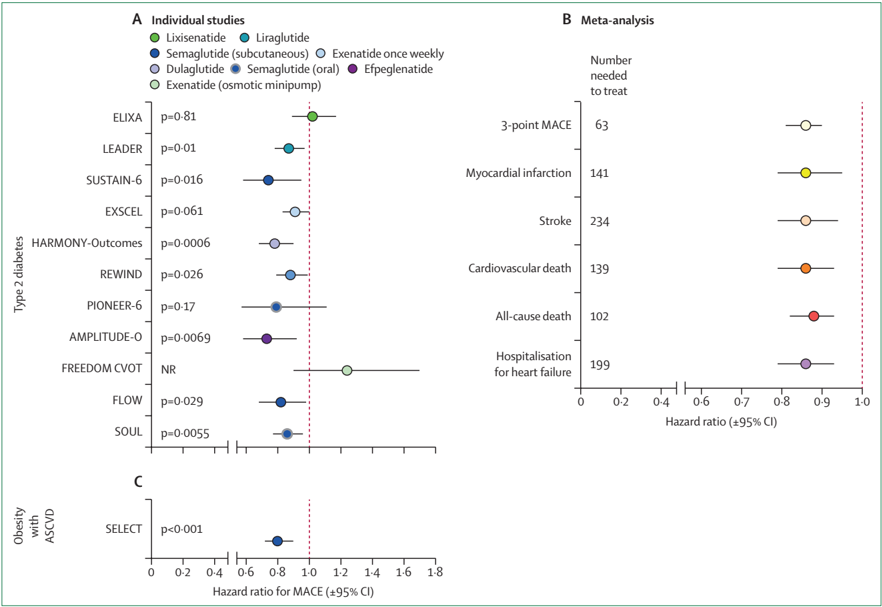
- In people with overweight or obesity and established cardiovascular disease without diabetes, semaglutide reduced MACE in SELECT with HR 0.80 (95% CI 0.72–0.90); in the same trial, reductions were also reported for heart-failure-related events (18%), all-cause mortality (19%), coronary revascularisation (23%), and a kidney composite endpoint (22%), though these were not statistically significant under hierarchical testing.
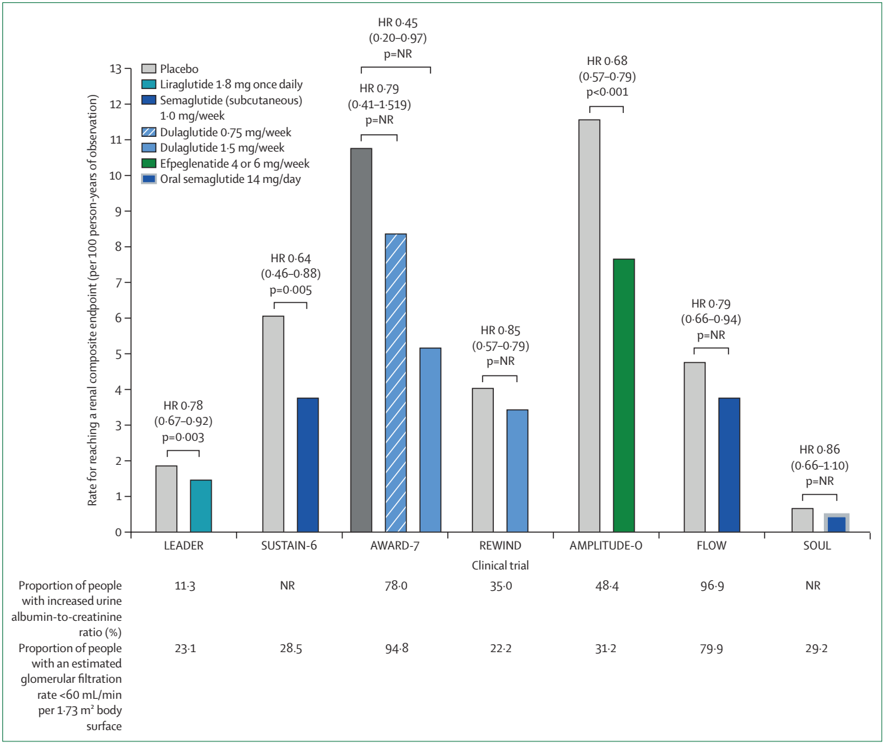
- In the FLOW kidney outcomes trial in type 2 diabetes with CKD, semaglutide reduced the composite primary kidney outcome by 24% (HR 0.76, 0.66–0.88), slowed eGFR decline (annual slope difference 1.16 mL/min per 1.73 m²), and reduced MACE (HR 0.82, 0.68–0.98) and all-cause mortality (HR 0.80, 0.67–0.95).
- For obesity-related conditions, the paper reports benefits including prevention of progression to type 2 diabetes by 66–93% vs placebo, and improvements in MASLD, HFpEF, obstructive sleep apnoea, and knee osteoarthritis.
Methods
- Narrative review of incretin-based medications, focusing on GLP-1 receptor agonists and newer mono-, dual-, and triple-agonist therapies.
- Literature was gathered by searching PubMed for English, German, and French papers from database inception to Oct 13, 2025, plus additional literature collected by the authors since 1987.
- The review synthesizes clinical trial evidence on glycaemic control, weight loss, cardiovascular outcomes, kidney outcomes, adverse events, and selected obesity-associated conditions.
Limitations
- The paper does not report a formal systematic review or meta-analysis protocol, so the evidence synthesis is narrative and may be selective.
- The search was limited to PubMed and to papers in English, German, and French (stated in the paper), which may omit relevant studies in other languages or indexed elsewhere.
- Because this is a review, most conclusions depend on previously published trials; the text also notes that some newer agents and indications still require large-scale phase 3 trials to establish clinical benefits, safety, and tolerability.
Model-written summary. Check it against the paper before relying on it.
Integrity signals
Registry
Cites
Statistics
Figures
Verification
Claims the paper makes
6 Valid · 2 Not valid · 4 Not checked · 11 Own results and interpretations
At least one cited source doesn’t support this claim or points to a different paper, and none confirmed it — see the verdicts below.
In the paper
“If treatment with incretin-based medications is discontinued, bodyweight will increase at approximately the velocity as it had been lost with treatment.”
§ Glucagon-like receptor agonists and next-generation incretin-based medications: metabolic, cardiovascular, and renal benefits > Incretin-based medications for bodyweight reduction in obesity
What the sources say
- Disputedcites [64] 64. Rubino D, Abrahamsson N, Davies M, et al, and the STEP 4 Investigators. Effect of continued weekly subcutaneous semaglutide vs placebo on weight loss maintenance in adults with overweight or obesity: the STEP 4 randomized clinical trial. JAMA 2021; 325: 1414-25. sourceExperimental — accuracy not yet measured
The Changes During the Run-in Period section reports 10.6% mean weight loss over 20 weeks, while the Results passage reports 6.9% mean weight regain over 48 weeks after participants switched from semaglutide to placebo (page numbers unavailable). Weight did increase after withdrawal, but its average rate of increase was substantially slower than its rate of loss. The trial also studied semaglutide specifically, not incretin-based medications generally. (LLM, conf=0.88)
Checked by a reasoning model — may be wrong.
- Not checked — no full text of the sourcecites [65] 65. McGowan BM, Bruun JM, Capehorn M, et al, and the STEP 10 Study Group. Efficacy and safety of once-weekly semaglutide 2•4 mg versus placebo in people with obesity and prediabetes (STEP 10): a randomised, double-blind, placebo-controlled, multicentre phase 3 trial. Lancet Diabetes Endocrinol 2024; 12: 631-42. source
- Disputedcites [66] 66. Aronne LJ, Sattar N, Horn DB, et al, and the SURMOUNT-4 Investigators. Continued treatment with tirzepatide for maintenance of weight reduction in adults with obesity: the SURMOUNT-4 randomized clinical trial. JAMA 2024; 331: 38-48. sourceExperimental — accuracy not yet measured
The Results report 20.9% mean weight loss over 36 weeks of tirzepatide treatment, followed by 14.0% weight regain over 52 weeks after participants switched to placebo. Those figures indicate a substantially slower average rate of regain than loss, not approximately the same rate. The trial studied tirzepatide, not incretin-based medications as a whole. (LLM, conf=0.84)
Checked by a reasoning model — may be wrong.
- Disputed
Every source the paper cites for this claim was checked and supports it.
In the paper
“Cardiovascular outcomes trials (CVOTs) have studied the effects of incretin-based medications reported in populations with type 2 diabetes and in people with overweight or obesity with pre-existing atherosclerotic cardiovascular disease (ASCVD; figure 2).28”
§ Glucagon-like receptor agonists and next-generation incretin-based medications: metabolic, cardiovascular, and renal benefits > Incretin-based medications and cardiovascular disease
What the sources say
- Supportedcites [28] 28. Lincoff AM, Brown-Frandsen K, Colhoun HM, et al, and the SELECT Trial Investigators. Semaglutide and cardiovascular outcomes in obesity without diabetes. N Engl J Med 2023; 389: 2221-32. source
The Discussion describes prior GLP-1 receptor agonist cardiovascular trials in people with type 2 diabetes and compares them with the current trial. The Conclusions identify the current trial’s population as people with overweight or obesity and preexisting cardiovascular disease, but without diabetes. (LLM, conf=0.93)
- Supported
The cited sources support only part of this claim — read each source’s verdict below.
In the paper
“Tirzepatide is currently the only dual agonist specifically targeting GIP and GLP-1 receptors that has been approved to treat type 2 diabetes and obesity.”
§ Glucagon-like receptor agonists and next-generation incretin-based medications: metabolic, cardiovascular, and renal benefits > Trizepatide, a first dual receptor agonist
What the sources say
- Partly supportedcites [13] 13. Coskun T, Sloop KW, Loghin C, et al. LY3298176, a novel dual GIP and GLP-1 receptor agonist for the treatment of type 2 diabetes mellitus: from discovery to clinical proof of concept. Mol Metab 2018; 18: 3-14. sourceExperimental — accuracy not yet measured
Section 3.2 describes LY3298176 as a dual GIP and GLP-1 receptor agonist. The paper does not identify it as tirzepatide or establish that it is the only approved dual agonist; its conclusion instead calls for further clinical evaluation for type 2 diabetes and potentially obesity. No page numbers are available in our copy. (LLM, conf=0.87)
- Partly supported
The sources with a verdict support this claim; the rest weren’t checked yet, have no full text we could read, or their verdicts aren’t rated yet.
In the paper
“The extent of bodyweight reduction is highly variable between individuals,”
§ Glucagon-like receptor agonists and next-generation incretin-based medications: metabolic, cardiovascular, and renal benefits > Incretin-based medications for bodyweight reduction in obesity
What the sources say
- Supportedcites [64] 64. Rubino D, Abrahamsson N, Davies M, et al, and the STEP 4 Investigators. Effect of continued weekly subcutaneous semaglutide vs placebo on weight loss maintenance in adults with overweight or obesity: the STEP 4 randomized clinical trial. JAMA 2021; 325: 1414-25. source
The Discussion (page not available in our copy) states that individuals can vary in their response to weight-loss treatment and reports differing proportions reaching weight-loss thresholds. This supports the claim that the extent of bodyweight reduction varies between individuals. (LLM, conf=0.89)
- Supportedcites [67] 67. Garvey WT, Batterham RL, Bhatta M, et al, and the STEP 5 Study Group. Two-year effects of semaglutide in adults with overweight or obesity: the STEP 5 trial. Nat Med 2022; 28: 2083-91. source
The Discussion states that there is marked variability in weight change among patients receiving weight-management treatments. It also notes that while most semaglutide-treated participants lost weight, a small proportion gained weight, directly supporting the claim about differences between individuals. (LLM, conf=0.95)
- Not checked — no full text of the sourcecites [68] 68. Zhao L, Cheng Z, Lu Y, et al. Tirzepatide for weight reduction in Chinese adults with obesity: the SURMOUNT-CN randomized clinical trial. JAMA 2024; 332: 551-60. source
- Supported
The sources with a verdict support this claim; the rest weren’t checked yet, have no full text we could read, or their verdicts aren’t rated yet.
In the paper
“In the STEP-8 trial, 70 semaglutide 2•4 mg/week led to greater weight loss (a 15•8% reduction) compared with liraglutide 3•0 mg once daily (a 6•4% reduction); in the SURMOUNT-5 trial, 15 tirzepatide 15 mg caused significantly higher weight reduction (20•2%) compared with semaglutide 2•4 mg (13•7%”
§ Glucagon-like receptor agonists and next-generation incretin-based medications: metabolic, cardiovascular, and renal benefits > Incretin-based medications for bodyweight reduction in obesity
What the sources say
- Supportedcites [70] 70. Rubino DM, Greenway FL, Khalid U, et al, and the STEP 8 Investigators. Effect of weekly subcutaneous semaglutide vs daily liraglutide on body weight in adults with overweight or obesity without diabetes: the STEP 8 Randomized Clinical Trial. JAMA 2022; 327: 138-50. source
The STEP 8 paper’s Primary Outcome section reports 15.8% mean weight loss with semaglutide versus 6.4% with liraglutide at week 68, a significant difference. The Abstract identifies the doses as 2.4 mg weekly and 3.0 mg daily, respectively. The separate SURMOUNT-5 comparison has its own citation and is not attributed to this source. (LLM, conf=0.94)
- Not checked yetcites [15] 15. Aronne LJ, Horn DB, le Roux CW, et al, and the SURMOUNT-5 Trial Investigators. Tirzepatide as compared with semaglutide for the treatment of obesity. N Engl J Med 2025; 393: 26-36. source
Checked before — its earlier verdict is held back until a new check runs.
- Supported
18 more claims · 2 with their cited sources checked
Create a free account to see all 23 claims and to verify the 2 references still open.
Citations
Cites
Liraglutide and Cardiovascular Outcomes in Type 2 Diabetes
Marso, S. P., Daniels, G. H., Brown-Frandsen, K., Kristensen, P., Mann, J. F. E., Nauck, M. A., Nissen, S. E., Pocock, S., Poulter, N. R., Ravn, L. S., et al. (2016) · New England Journal of Medicine · doi:10.1056/nejmoa1603827 · Cited by 7,629
Self-citationSemaglutide and Cardiovascular Outcomes in Patients with Type 2 Diabetes
Marso, S. P., Bain, S. C., Consoli, A., Eliaschewitz, F. G., Jódar, E., Leiter, L. A., Lingvay, I., Rosenstock, J., Seufert, J., Warren, M. L., et al. (2016) · New England Journal of Medicine · doi:10.1056/nejmoa1607141 · Cited by 6,900
Tirzepatide Once Weekly for the Treatment of Obesity
Jastreboff, A. M., Aronne, L. J., Ahmad, N. N., Wharton, S., Connery, L., Alves, B., Kiyosue, A., Zhang, S., Liu, B., Bunck, M. C., et al. (2022) · New England Journal of Medicine · doi:10.1056/nejmoa2206038 · Cited by 3,838
Biology of Incretins: GLP-1 and GIP
Baggio, L. L., & Drucker, D. J. (2007) · Gastroenterology · doi:10.1053/j.gastro.2007.03.054 · Cited by 3,639
Semaglutide and Cardiovascular Outcomes in Obesity without Diabetes
Lincoff, A. M., Brown-Frandsen, K., Colhoun, H. M., Deanfield, J., Emerson, S. S., Esbjerg, S., Hardt-Lindberg, S., Hovingh, G. K., Kahn, S. E., Kushner, R. F., et al. (2023) · New England Journal of Medicine · doi:10.1056/nejmoa2307563 · Cited by 3,236
Gerstein, H. C., Colhoun, H. M., Dagenais, G. R., Diaz, R., Lakshmanan, M., Pais, P., Probstfield, J., Riesmeyer, J. S., Riddle, M. C., Rydén, L., et al. (2019) · The Lancet · doi:10.1016/s0140-6736(19)31149-3 · Cited by 3,163
Lixisenatide in Patients with Type 2 Diabetes and Acute Coronary Syndrome
Pfeffer, M. A., Claggett, B., Diaz, R., Dickstein, K., Gerstein, H. C., Køber, L. V., Lawson, F. C., Ping, L., Wei, X., Lewis, E. F., et al. (2015) · New England Journal of Medicine · doi:10.1056/nejmoa1509225 · Cited by 2,409
Armstrong, M. J., Gaunt, P., Aithal, G. P., Barton, D., Hull, D., Parker, R., Hazlehurst, J. M., Guo, K., Abouda, G., Aldersley, M. A., et al. (2016) · The Lancet · doi:10.1016/s0140-6736(15)00803-x · Cited by 2,203
Effects of once-weekly exenatide on cardiovascular outcomes in type 2 diabetes
Holman, R. R., Bethel, M. A., Mentz, R. J., Thompson, V. P., Lokhnygina, Y., Buse, J. B., Chan, J. C., Choi, J., Gustavson, S. M., Iqbal, N., et al. (2017) · New England Journal of Medicine · doi:10.1056/nejmoa1612917 · Cited by 2,162
Effects of Semaglutide on Chronic Kidney Disease in Patients with Type 2 Diabetes.
Perkovic, V., Tuttle, K. R., Rossing, P., Mahaffey, K. W., Mann, J. F. E., Bakris, G., Baeres, F. M. M., Idorn, T., Bosch-Traberg, H., Lausvig, N. L., et al. (2024) · New England Journal of Medicine · doi:10.1056/nejmoa2403347 · Cited by 2,099
Self-citation
Research works printed but not linked: 1
- 148. www.thelancet.com Published online January 14, 2026 https://doi.org/10.1016/S0140-6736(25)02105-1 149
Cited by
Current Drug Development Pipeline for MASLD and MASH: Focusing on Cardiovascular Comorbidities
Александровна, П. В., & Okovityi, S. V. (2026) · Biomedicines · doi:10.3390/biomedicines14040909 · Cited by 10
Causes and consequences of discontinuation of GLP1RAs or tirzepatide
Ceriello, A., Prattichizzo, F., Abdullah, A. R. M. S., Grotta, R. L., Berra, C., McGowan, B. M., Jenkins, A., Cohen, N. D., Nauck, M. A., & Russo, G. T. (2026) · Nature Reviews Endocrinology · doi:10.1038/s41574-026-01258-5 · Cited by 23
Self-citationKoufakis, T., Kokkinos, A. D., & le Roux, C. W. (2026) · Diabetes Obesity and Metabolism · doi:10.1111/dom.70723 · Cited by 9
Therapeutic Potential of Glucagon-Like Peptide-1 Receptor Agonists for Smoking Cessation
Hendershot, C. S., Simmons, W. K., Jha, M. K., McKee, S. A., & Yammine, L. (2026) · Biological Psychiatry · doi:10.1016/j.biopsych.2026.04.002 · Cited by 6
Ho, M. J., Liew, C. F., Tan, N. A. M. R., Morita, A., & Oon, H. H. B. (2026) · Expert Review of Clinical Immunology · doi:10.1080/1744666x.2026.2665732 · Cited by 8
New and Emerging Therapeutic Targets for ApoB-Containing Particles Lowering
Gaudet, D., Larouche, M., Raal, F. J., & Catapano, A. L. (2026) · Circulation Research · doi:10.1161/circresaha.126.327270 · Cited by 5
Lempesis, I. G., & Dalamaga, Μ. (2026) · Metabolism Open · doi:10.1016/j.metop.2026.100463 · Cited by 8
Pharmacologic Treatment of Obesity in the Context of Type 2 Diabetes
Conte, C., & Amaro, A. (2026) · Current Diabetes Reports · doi:10.1007/s11892-026-01626-5 · Cited by 3
Vyas, K. S., Gopinath, S., Dacso, M. M., Green, J. B., & Wyles, S. P. (2026) · Dermatologic Surgery · doi:10.1097/dss.0000000000005187 · Cited by 4
Hypercalcemia Induced by Tirzepatide and Calcium Supplementation: A Case Report
Nguyen, E., Kawamura, M., Munoz, I., & Ahn, G. (2026) · Cureus · doi:10.7759/cureus.108061 · Cited by 2
Bianchi, C., Prato, S. D., Rothberg, A. E., & Nauck, M. A. (2026) · Diabetes Obesity and Metabolism · doi:10.1111/dom.70674 · Cited by 4
Self-citationAdipose tissue as a humoral–neuronal hub in metabolic regulation
Tsuji, T., & Tseng, Y. (2026) · Nature Reviews Endocrinology · doi:10.1038/s41574-026-01265-6 · Cited by 10
Medical treatments for obesity: what does the future have in store?
Bassatne, A., & Rizo, I. M. (2026) · The Journal of Clinical Endocrinology & Metabolism · doi:10.1210/clinem/dgag274 · Cited by 1
McIntyre, R. S., Zhang‐James, Y., & Kwan, A. T. H. (2026) · JAMA Psychiatry · doi:10.1001/jamapsychiatry.2026.2574 · Cited by 2
Yabe, D., Shiraiwa, T., Ugai, H., Takeuchi, M., & Suzuki, R. (2026) · The Lancet Diabetes & Endocrinology · doi:10.1016/s2213-8587(26)00138-5 · Cited by 1
Koch, L., Dilmen, E., Jansen, J., & Kramann, R. (2026) · Journal of the American Society of Nephrology · doi:10.1681/asn.0000001154 · Cited by 6
Carlino, I., Franco, S. D., Colalillo, N., Bisogno, S., Gennari, L., & Palazzuoli, A. (2026) · Biomedicines · doi:10.3390/biomedicines14061289 · Cited by 1
Obesity and Pharmacokinetic Variability: Implications for Cardiovascular Therapeutics
Pitocco, D., Cortelletti, M., Petrucci, G., & Rocca, B. (2026) · European Cardiology Review · doi:10.15420/ecr.2025.99 · Cited by 1
Abenavoli, L., Loricchio, A. G., Lopez, I., Morano, D., Ismaiel, A., Dumitrascu, D. L., & Luzza, F. (2026) · Medicina · doi:10.3390/medicina62050986 · Cited by 1
New pharmacological agents and emerging therapeutic targets for painful diabetic neuropathy
Panou, T., Παπάνας, Ν., & Kempler, P. (2026) · Frontiers in Endocrinology · doi:10.3389/fendo.2026.1788702 · Cited by 1
Hepatic Lipoprotein Production, Cardiometabolic Phenotypes, and Subtypes of Steatotic Liver Disease
Davidson, N. O. (2026) · Circulation Research · doi:10.1161/circresaha.126.327269 · Cited by 2
Alper, A., Fagin, A., Karthikeyan, A., Lerner, M., Gershon, A., Morgan, A. A., Rubinstein, G., Agarwal, R., & FAILLACE, R. T. (2026) · Cardiovascular Diabetology – Endocrinology Reports · doi:10.1186/s40842-026-00333-0 · Cited by 1
Shirley, M. (2026) · Drugs · doi:10.1007/s40265-026-02363-5 · Cited by 3
Kakadiya, J., Rai, P., Bathla, G., Dhaduk, V., Chen, H. A., McIntyre, M. K., Mandel, D., Latifi, S., Connolly, B., Salim, H. A., et al. (2026) · Journal of Clinical Neurology · doi:10.3988/jcn.2026.0073 · Cited by 2
Non-pharmacological treatment of MASLD
Dufour, J., & Berzigotti, A. (2026) · Diabetologia · doi:10.1007/s00125-026-06811-5 · Cited by 1
Beyond GLP1: modulating multiple nutrient-stimulated hormone pathways to reduce cardiovascular risk
Kang, Y. M., Harrington, J., Aroda, V. R., & McGuire, D. K. (2026) · Nature Reviews Cardiology · doi:10.1038/s41569-026-01296-6 · Cited by 1
Falahee, B. E., Apovian, C. M., & Istfan, N. W. (2026) · Obesity · doi:10.1002/oby.70294 · Cited by 2
Increasing skeletal muscle mass and strength during incretin-based weight loss
Mendias, C. L., & Awan, T. M. (2026) · Obesity Pillars · doi:10.1016/j.obpill.2026.100317 · Cited by 1
Shirley, M. (2026) · Drugs · doi:10.1007/s40265-026-02350-w
Kardiovaskuläre Pharmakotherapie im Zeitalter RNA-basierter Präzisionsmedizin
Derda, A. A., & Hohneck, A. L. (2026) · Herz · doi:10.1007/s00059-026-05375-9
Mazdutide and Orforglipron—New Evidence in Obesity and Diabetes
Gadde, K. M., Talebloo, J., & Heymsfield, S. B. (2026) · JAMA · doi:10.1001/jama.2026.10443
GLP-1 receptor agonists in type 1 diabetes: expanding the therapeutic landscape beyond insulin
Dimitriadis, G., & Lambadiari, V. (2026) · The Lancet Regional Health - Europe · doi:10.1016/j.lanepe.2026.101782
Prospects for the use of new antidiabetic drugs in rheumatology
Nasonov, E. L., Shestakova, M. V., Kondratyeva, L. V., & Елисеев, М. С. (2026) · Rheumatology Science and Practice · doi:10.47360/1995-4484-2026-315-334 · Cited by 1
Bigda, P., Rafałowska, Z., Rutz, S., Wojtala, A., Kret, J., Wyrostkiewicz, A., Sadkowski, A., Gdula, J., Zielińska, L., Szpunar, M., et al. (2026) · International Journal of Innovative Technologies in Social Science · doi:10.31435/ijitss.3(51).2026.6153
EASL-EASD-EASO guidance on the use of resmetirom and semaglutide as MASH-targeted therapy
Tacke, F., Horn, P., Wong, V. W. S., Ratziu, V., Bugianesi, E., Francque, S., Zelber‐Sagi, S., Caussy, C., Roden, M., Gastaldelli, A., et al. (2026) · Journal of Hepatology · doi:10.1016/j.jhep.2026.08.028 · Cited by 5
Castaneda, R., Sepulveda-Gonzalez, D., Andrade, M. D. H., SHUFELT, C. L., & Faubion, S. S. (2026) · Menopause The Journal of The North American Menopause Society · doi:10.1097/gme.0000000000002854 · Cited by 3
Evaluating the use of GLP-1 receptor agonists in Wolfram syndrome patients
Lee, L. A., Tang, A. F., Asako, A., Ning, S., Reed, H. A., Duncan, E., Lugar, H. M., Hoekel, J., Marshall, B. A., Hershey, T. G., et al. (2026) · Frontiers in Endocrinology · doi:10.3389/fendo.2026.1847818
Hsiao, Y. (2026) · Dermatologica Sinica · doi:10.4103/ds.ds_v44-2_editorial
Ruotolo, G., Harris, C., Lin, Y., Wilson, J. M., Pirro, V., Duffin, K. L., Thomas, M. K., Hartman, M. L., Neill, C. O., Coşkun, T., et al. (2026) · Diabetes Obesity and Metabolism · doi:10.1111/dom.71200 · Cited by 1
Othman, L., Nguyen, A., Kassim, A., et al. (2026) · Research Square · doi:10.21203/rs.3.rs-10951421/v1
Broksø, A. D., Brüner, M., Hartmann, B., Josefsen, K. E., Holst, J. J., & Kragstrup, T. W. (2026) · The Lancet Rheumatology · doi:10.1016/s2665-9913(26)00074-3 · Cited by 2
Multisystem Benefits of GLP-1 Microdosing: A Narrative Review
Panlilio, M. A., Piserchio, N., Hennessey, M., Torres, K., Khan, S., & Choy, L. (2026) · Cureus · doi:10.7759/cureus.113635
Oral GLP-1 receptor agonists: competition for efficacy and tolerability
Nauck, M. A., & Horowitz, M. (2026) · The Lancet · doi:10.1016/s0140-6736(26)00360-0
Self-citationNeuigkeiten aus Endokrinologie/Diabetologie
Blüher, M., Bojunga, J., Faßnacht, M., & Führer‐Sakel, D. (2026) · Die Innere Medizin · doi:10.1007/s00108-026-02154-w
Self-citationJones, G. B. (2026) · International Journal of Cardiology · doi:10.1016/j.ijcard.2026.134632
Hobai, I. A., & Goodin, B. (2026) · Anesthesia & Analgesia · doi:10.1213/ane.0000000000008227
Treatment potential of oral small-molecule GLP-1 receptor agonists
Blüher, M. (2026) · The Lancet · doi:10.1016/s0140-6736(26)01135-9
Self-citationBrunetti, K., Fassari, B., Catalani, E., Galletti, G., Quondam, S. D., Mocciaro, E., Giovarelli, M., Palma, C. D., Perrotta, C., Clementi, E., et al. (2026) · Biomedicine & Pharmacotherapy · doi:10.1016/j.biopha.2026.119735
Hadianawala, M., Mohanty, S. K., & Patil, S. N. (2026) · Journal of Medicinal Chemistry · doi:10.1021/acs.jmedchem.6c02013
Next-Generation GLP-1 Agonist Bioassays: Integrating Precision with Biological Relevance
Gräf, C., Reuter, J., Rüggeberg, S., Mohr, S., Petri, J., Gélinas, S., Niederhaus, B., Werner, U., Strebe, N., Zein, Z. E., et al. (2026) · International Journal of Molecular Sciences · doi:10.3390/ijms27188068
Geddam, R., Kamatham, S., & Ashok, C. (2026) · Obesity Medicine · doi:10.1016/j.obmed.2026.100721 · Cited by 1
Advances in weight-loss-independent cardiovascular protective mechanisms of GLP-1 receptor agonists
Ma, J., Feng, X., Xu, W., & Lyu, J. (2026) · Peptides · doi:10.1016/j.peptides.2026.171519
10 minutes: Glucagon-like peptide-1 receptor agonists
Tyler, B. (2026) · InnovAiT Education and inspiration for general practice · doi:10.1177/17557380261441197
Cagrilintide–semaglutide: a new option for patients with type 2 diabetes
Scheen, A. J. (2026) · The Lancet Diabetes & Endocrinology · doi:10.1016/s2213-8587(26)00129-4
Obesity in Heart Failure: Mechanistic, Diagnostic and Therapeutic Considerations
Pathan, F. K., & Williams, K. (2026) · Cardiac failure review · doi:10.15420/cfr.2026.05
Albuminuria a krónikus vesekárosodás kimutatására: biomarker és terápiás célpont
Vásárhelyi, B., & Tislér, A. (2026) · Orvosi Hetilap · doi:10.1556/650.2026.33622
Impact of glucagon-like peptide-1 receptor agonists on bone metabolism
Vadini, V., Duan, D., & Moseley, K. F. (2026) · The Journal of Clinical Endocrinology & Metabolism · doi:10.1210/clinem/dgag323 · Cited by 2
Practical use of GLP-1-based medications in obesity clinics
Jethwani, P. D., Hallock, R., & Griebeler, M. L. (2026) · Advances in pharmacology · doi:10.1016/bs.apha.2026.08.011
Effetto scheletrico di semaglutide e tirzepatide nei pazienti con un aumentato rischio di fratture
Arecco, A., Boschetti, M., & Cocchiara, F. (2026) · L Endocrinologo · doi:10.1007/s40619-026-01880-5
Glucagon-like peptide-1 regulates lipid metabolism through actions in the gut and liver
Lewis, G. F., Feng, J. N., & Jin, T. (2026) · Metabolism and Diseases · doi:10.1016/j.metdis.2026.100023
Nxumalo, M. B., Kumalo, H. M., Maruma, L. N., Tata, F. Y., Ntanzi, N., & Khan, R. B. (2026) · Health Sciences Review · doi:10.1016/j.hsr.2026.100274 · Cited by 3
Tirzepatide in type 1 diabetes: beyond mere weight loss
Panou, T., Gouveri, E., Popovic, D. S., & Παπάνας, Ν. (2026) · Expert Review of Clinical Pharmacology · doi:10.1080/17512433.2026.2685653
Ming, Q., & Li, Z. (2026) · Frontiers in Nutrition · doi:10.3389/fnut.2026.1914155
Tantush, A., Hamida, B. B., Sagher, M., Afsheen, N., Sager, M., Abusbaeh, A., Tantoush, M., Abusbaeh, A., Najaim, A., Alhamadi, M., et al. (2026) · Cureus · doi:10.7759/cureus.107653 · Cited by 1
White, R. D., Demirer, M., Erdal, B. S., & Lin, G. (2026) · Cardiovascular Diabetology – Endocrinology Reports · doi:10.1186/s40842-026-00312-5
Merolla, A., & Rovere, P. Q. (2026) · Cardiac failure review · doi:10.15420/cfr.2026.22 · Cited by 1
Micalo, L., Archie, M. M., Rowe, V. L., Adewale, A. P., Pham, N. V., Li, A., & Jimenez, J. C. (2026) · Journal of Vascular Surgery Venous and Lymphatic Disorders · doi:10.1016/j.jvsv.2026.102557 · Cited by 2
Safety and tolerability of orforglipron in Japanese people with type 2 diabetes
Nauck, M. A., & Horowitz, M. (2026) · The Lancet Diabetes & Endocrinology · doi:10.1016/s2213-8587(26)00182-8
Self-citationIt's more than mechanics: the case for metabolic end-points in airways disease
Bloom, C. I., Foer, D., Aroda, V. R., & Cahill, K. N. (2026) · European Respiratory Journal · doi:10.1183/13993003.01007-2026
Buciuc, A. G., Gold, M. S., & Fuehrlein, B. (2026) · Addiction & Prevention · doi:10.3390/addictprev1010007
Foods as Modulators of GLP-1 Secretion
Ткаченко, Г. М., Kołodziejska, R., Rymuszka, A., Kamiński, P., & Kurhaluk, N. (2026) · Nutrients · doi:10.3390/nu18182995
Nomikos, M., Rizzo, M., & Makadma, A. S. A. (2026) · Journal of Diabetes and its Complications · doi:10.1016/j.jdiacomp.2026.109361
Pereira, N. R. M., Ishikura, I. A., Tufik, S., & Hachul, H. (2026) · Maturitas · doi:10.1016/j.maturitas.2026.109129
Hundal, J., Linz, M. O., Anikreddy, S., Sengupta, S., Zhou, K., & Maiti, B. (2026) · JCO Oncology Practice · doi:10.1200/op-26-00061 · Cited by 1
Weight management in cardiology practice: challenges and opportunities
Leening, M. J. G., Martens, F. M. A. C., & Hemels, M. E. W. (2026) · Netherlands Heart Journal · doi:10.1007/s12471-026-02075-1
Hsu, C., & Tain, Y. (2026) · Antioxidants · doi:10.3390/antiox15060769 · Cited by 1
Tirzepatide and the gut microbiota–obesity axis: metabolic mechanisms and therapeutic perspectives
Cadena-Ullauri, S., Paredes, A. S. C., Guamán-Herrera, L., Imbaquingo-Espinales, J., Ruiz‐Pozo, V. A., Tamayo‐Trujillo, R., Guevara‐Ramírez, P., Paz‐Cruz, E., & Zambrano, A. K. (2026) · Frontiers in Microbiology · doi:10.3389/fmicb.2026.1901528 · Cited by 1
Talebloo, J., Chawla, E., Shahamati, D., Shiv, S., & Gadde, K. M. (2026) · Expert Opinion on Investigational Drugs · doi:10.1080/13543784.2026.2713043
Can oral GLP-1 receptor agonists ACHIEVE the same as SGLT2 inhibitors?
Heerspink, H. J. L., & Smeijer, J. D. (2026) · The Lancet · doi:10.1016/s0140-6736(26)01040-8
McGuane, C., Farhadhar, N., Sharieff, K. A., Petrosky, S. N., & Alabasi, K. (2026) · Cureus · doi:10.7759/cureus.109731 · Cited by 1
Pedagogos, E., Chen, R., Nelson, A. J., Badve, S. V., Rasalam, R. R., & MacIsaac, R. J. (2026) · Internal Medicine Journal · doi:10.1111/imj.70647
Sun, K., Wu, Y.-G., Xiang, Y.-H., Li, M.-Y., Ding, Y., Zhang, L.-S., Zeng, Y., Xie, H.-Q., & Shen, B. (2026) · Therapeutic Advances in Musculoskeletal Disease · doi:10.1177/1759720x261485407
Eighty Years After Vague: Advances in Understanding Ectopic Fat and Metabolic Dysfunction
Conte, C., Sumithran, P., le Roux, C. W., Miras, A. D., & Gaal, L. V. (2026) · Obesity Reviews · doi:10.1111/obr.70229
GLP-1RA Use and the Risk of Heart Failure in Patients With Diabetes: Association or Causation?
Inoue, K., & Kazi, D. S. (2026) · Circulation · doi:10.1161/circulationaha.126.078150 · Cited by 1
GLP-1 medications and health equity: when insurance access determines who benefits
Arif, S., Chaudhary, A., Ullah, S., et al. (2026) · Postgraduate Medical Journal · doi:10.1093/postmj/qgag128
Multireceptor modulation in metabolic disease: are more targets better?
Zhang, S., & Lingvay, I. (2026) · The Lancet · doi:10.1016/s0140-6736(26)01136-0
Bukowska, M., Otrębska, K., Lewandowska, D., & Jastrzębska, A. (2026) · International Journal of Innovative Technologies in Social Science · doi:10.31435/ijitss.3(51).2026.6563
Smith, R., Erickson, K., Washington, D., Zollo, R. A., Kalvapudi, S., Vedire, Y., Petrucci, C. M., Vethanayagam, R. R., Hsiao, H.-H., Rosario, S. R., et al. (2026) · Annals of Surgery · doi:10.1097/sla.0000000000007151
Brancato, D., Borretta, G., Chianelli, M., Disoteo, O., Grasso, M., Grimaldi, F., Guastamacchia, E., Muratori, F., Oleandri, S., Orio, M., et al. (2026) · Frontiers in Endocrinology · doi:10.3389/fendo.2026.1907270
Overview of weight loss medicines and practical advice for patients
Boocock, R. C. (2026) · Nursing Standard · doi:10.7748/ns.2026.e12753
Huang, S.-C., Cheng, W.-Y., Hou, C.-Y., Wu, J.-Y., Lai, C., & Tseng, W. (2026) · Frontiers in Urology · doi:10.3389/fruro.2026.1855180
MASH as a network disease: therapeutic modulation of interorgan immunometabolic architecture
Crespo, J., Jiménez-González, C., & Iruzubieta, P. (2026) · Metabolism and Target Organ Damage · doi:10.20517/mtod.2026.54
The Incretin Revolution: Integrating Incretin-Based Therapies into Clinical Care
Wojeck, B. S., & Nokes, B. T. (2026) · Biomedical Journal · doi:10.1016/j.bj.2026.101038
New Amylin-Based Agonists for the Treatment of Obesity and Type 2 Diabetes Mellitus
Panou, T., Gouveri, E., Popovic, D. S., & Παπάνας, Ν. (2026) · Diabetes Therapy · doi:10.1007/s13300-026-01921-0
Trenas, A., Prieto-Laín, N., Gómez-Hernández, A. I., Velasco, M. Á. P., Bernal-López, M. R., Lopez-Carmona, M. D., de Lucas, M. D. G., Gómez‐Huelgas, R., & Perez-Belmonte, L. M. (2026) · Pharmaceuticals · doi:10.3390/ph19040583 · Cited by 1
Lum, J., Jordan, A., Knigh, P., & Hisamoto, K. (2026) · medRxiv · doi:10.64898/2026.06.02.26354773
Immunosenescence in Cardiovascular-Kidney-Metabolic Syndrome: A Unifying Mechanistic Framework
Sano, M. (2026) · International Journal of Heart Failure · doi:10.36628/ijhf.2026.0060
Metadata
- Authors
- Nauck, M. A., Tuttle, K. R., Tschöp, M. H., & Blüher, M.
- Affiliations
- Universitätsmedizin Greifswald (DE)
- University of Washington (US)
- Helmholtz Munich (DE)
- Corresponding author
- Nauck, Michael A
- Venue
- The Lancet
- Publisher
- Elsevier BV
- Published
- 2026-02
- Volume
- 407
- Issue
- 10531
- Pages
- 892-908
- ISSN
- 0099-5355 (ISSN-L)
- 0140-6736
- OpenAlex
- W7124314989
- Cited by
- 123
- References
- 150
- Citations by year
- 2026: 123
- FWCI
- 130.49
- Type
- journal article
- Language
- en
- Update notices
- erratum (2026-03-14)
- Open access
- hybrid
- doi.org
- Licence
- cc-by
- www.elsevier.com/tdm/userlicense/1.0/ (tdm)
- www.elsevier.com/legal/tdmrep-license (tdm)
- creativecommons.org/licenses/by/4.0/ (vor)
- Locations
- The Lancet (publishedVersion, cc-by)
- PubMed (publishedVersion)
- Funders
- National Institute of Diabetes and Digestive and Kidney Diseases
- Centers for Disease Control and Prevention
- Topics
- Health Sciences › Medicine › Endocrinology, Diabetes and Metabolism › Diabetes Treatment and Management
- Health Sciences › Medicine › Pharmacology (medical) › Pharmacology and Obesity Treatment
- Health Sciences › Medicine › Cardiology and Cardiovascular Medicine › Heart Failure Treatment and Management
- Keywords
- GLP-1 receptor agonists, incretin-based therapy, type 2 diabetes, obesity, cardiovascular risk, heart failure, albuminuria, renal function decline, tirzepatide, liraglutide, semaglutide, preserved ejection fraction, nonalcoholic steatohepatitis, obstructive sleep apnea, knee osteoarthritis, gastrointestinal adverse effects, weight loss, neurodegenerative diseases, substance use disorders
- MeSH terms
- Liraglutide, Glucagon-Like Peptide-1 Receptor Agonists, Tirzepatide, Semaglutide, Cardiovascular Diseases, Diabetes Mellitus, Type 2, Gastric Inhibitory Polypeptide, Humans, Hypoglycemic Agents, Obesity, Incretins
About these checks
Registry, retraction, Cites and statistics results are computed, not judged, with one exception: a printed reference that no index lists is read once by a model before it counts as a citation error. Claims are extracted by a model and kept only when their quote appears verbatim in the text; each cited source is then checked, with a model’s help, for whether it says what the claim relies on. Those verdicts can be wrong — read the claim’s quote and the cited source before relying on one.
The claim verdicts this report counts are experimental: their accuracy is not yet measured.
A language model drew the claims from the paper on 2026-09-25 (prompt extract-v2).
Cited sources are checked with a language model’s help (gpt-6-sol).
Statistics and arithmetic are recomputed, not judged.
Confidence bands are shown only for fields calibrated on our annotated test set. None is calibrated yet, so no band is shown.
What counts as a claim ›How we measure confidence ›How we check this ›
Are you an author, or do you see a problem with this page? Request a review
Data sources
Bibliographic data: Semantic Scholar, OpenAlex, Crossref.
Contains information from the Semantic Scholar Academic Graph Datasets, made available under the ODC Attribution License (ODC-BY 1.0).
Semantic Scholar’s data is described in: Kinney, R., et al. (2023). The Semantic Scholar Open Data Platform. arXiv:2301.10140.
