

Reducing the toxicity of anticancer therapy: new strategies
Open accessThe DOI matches its Crossref record; 33 of the 35 references it cites were found in a registry or an index.
Abstract
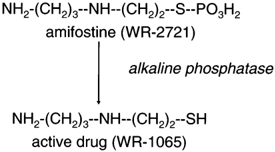
Cytoprotective agents offer opportunities to reduce the treatment-related toxicity of anticancer therapy and perhaps to increase the dose and dose intensity of radiation and chemotherapy. One such agent is amifostine, an organic thiophosphate. Amifostine selectively protects normal tissues and provides broad-spectrum protection for a variety of organs while remaining minimally toxic. Clinical studies have demonstrated that amifostine protects against myelotoxicity, nephrotoxicity, neurotoxicity, mucositis and esophagitis in patients treated with alkylating and platinum agents, paclitaxel and radiation therapy. In addition, preclinical studies suggest the possibility of protection against anthracycline-induced cardiotoxicity and radiation- and chemotherapy-induced mutagenicity. Preclinical and clinical studies have not demonstrated any diminution of antitumor efficacy. Amifostine is well tolerated in doses of 740 or 910 mg/m2. The most common side effects requiring treatment are transient hypotension, which responds to intravenous fluids, and nausea and vomiting, effectively treated with 5-HT3 antagonists and dexamethasone.
Overview
The claims and statistics of this paper haven’t been checked yet.
Free: it reads the open-access text and checks the first 5 claims that cite a source we can check. Create a free account to check every claim.
Integrity signals
Registry
Cites
Statistics
Figures
Verification
Claims the paper makes
The claims and statistics of this paper haven’t been checked yet.
Free: it reads the open-access text and checks the first 5 claims that cite a source we can check. Create a free account to check every claim.
Claims other papers make about this one
Each is checked against this paper’s own text: does it say what the citing paper says it does?
The cited source says what the claim attributes to it.
In the citing paper
“Such treatments may cause diverse and even drastic side effects in patients [180,181,182,183,184,185,186].”
From Gut Microbiota and Cancer: From Pathogenesis to Therapy (2019) · cites this paper as [182]
Self-check
Percentages, sums and reported differences re-computed from the paper’s own numbers.
The self-check needs the paper’s full text.
Citations
Cites
Kemp, G., Rose, P., Lurain, J., Berman, M., Manetta, A., Roullet, B., Homesley, H., Belpomme, D., & Glick, J. (1996) · Journal of Clinical Oncology · doi:10.1200/jco.1996.14.7.2101 · Cited by 463
Yuhas, J. M. (1980) · PubMed · Cited by 294
WR-2721 and high-dose cisplatin: an active combination in the treatment of metastatic melanoma.
Glover, D., Glick, J. H., Weiler, C., Fox, K., & Guerry, D. (1987) · Journal of Clinical Oncology · doi:10.1200/jco.1987.5.4.574 · Cited by 192
Jm, Y., & Čulo, F. (1980) · PubMed · Cited by 162
Calabro-Jones, P. M., Aguilera, J. A., Ward, J. F., Smoluk, G. D., & Fahey, R. C. (1988) · PubMed · Cited by 149
Cytoprotective agents for anthracyclines.
Dorr, R. T. (1996) · PubMed · Cited by 131
WR-2721 protects against the hematologic toxicity of cyclophosphamide: a controlled phase II trial.
Glover, D. J., Glick, J. H., Weiler, C., Hurowitz, S., & Kligerman, M. M. (1986) · Journal of Clinical Oncology · doi:10.1200/jco.1986.4.4.584 · Cited by 124
McDonald, S. A., Meyerowitz, C., Smudzin, T., & Rubin, P. (1994) · International Journal of Radiation Oncology*Biology*Physics · doi:10.1016/0360-3016(94)90562-2 · Cited by 123
Grdina, D. J., Nagy, B., Hill, C. K., Wells, R. L., & Peraino, C. (1985) · Carcinogenesis · doi:10.1093/carcin/6.6.929 · Cited by 117
Phase I/II trials of WR-2721 and cis-platinum
Glover, D. J., Glick, J. H., Weiler, C., Fox, K. R., Turrisi, A. T., & Kligerman, M. M. (1986) · International Journal of Radiation Oncology*Biology*Physics · doi:10.1016/0360-3016(86)90205-1 · Cited by 112
Research works printed but not linked: 2
- Yang JL, Fernandes DJ, Speicher L, Capizzi RL. Biochemical determinants of the cytoprotective effect of amifostine (meeting abstract). Proc Ann Meet Am Assoc Cancer Res 1995;36:1725.
- Yuhas JM, Culo F. Selective inhibition of the nephrotoxicity [28
Cited by
Gut Microbiota and Cancer: From Pathogenesis to Therapy
Vivarelli, S., Salemi, R., Candido, S., Falzone, L., Santagati, M., Stefani, S., Torino, F., Banna, G. L., Tonini, G., & Libra, M. (2019) · Cancers · doi:10.3390/cancers11010038 · Cited by 586
Functionalized niosomes as a smart delivery device in cancer and fungal infection
Aparajay, P., & Dev, A. (2021) · European Journal of Pharmaceutical Sciences · doi:10.1016/j.ejps.2021.106052 · Cited by 155
Wattanapitayakul, S. K., Chularojmontri, L., Herunsalee, A., Charuchongkolwongse, S., Niumsakul, S., & Bauer, J. A. (2005) · Basic & Clinical Pharmacology & Toxicology · doi:10.1111/j.1742-7843.2005.pto960112.x · Cited by 131
Cancer drug development: The missing links
Kunnumakkara, A. B., Bordoloi, D., Sailo, B. L., Roy, N. K., Thakur, K. K., Banik, K., Shakibaei, M., Gupta, S. C., & Aggarwal, B. B. (2019) · Experimental Biology and Medicine · doi:10.1177/1535370219839163 · Cited by 112
Herman, E. H., Zhang, J., Chadwick, D. P., & Ferrans, V. J. (2000) · Cancer Chemotherapy and Pharmacology · doi:10.1007/s002800050048 · Cited by 122
“A similar protective activity has been observed in human clinical trials [15].”
BackgroundKapadia, G. J., Rao, G. S., Ramachandran, C., Iida, A., Suzuki, N., & Tokuda, H. (2013) · Journal of Complementary and Integrative Medicine · doi:10.1515/jcim-2013-0007 · Cited by 100
“red beetroot extract) when used in right combination and dose could enhance the therapeutic efficacy of potent chemotherapeutic drugs (like doxorubicin), reduce their toxic side-effects through dosage reduction and impede development of cancer cell resistance to drug treatment [6, 11, 16, 18, 53].”
BackgroundChemopreventive Potential of Caryophyllane Sesquiterpenes: An Overview of Preliminary Evidence
Sotto, A. D., Mancinelli, R., Gullì, M., Eufemi, M., Mammola, C. L., Mazzanti, G., & Giacomo, S. D. (2020) · Cancers · doi:10.3390/cancers12103034 · Cited by 114
The potential of amifostine: from cytoprotectant to therapeutic agent.
Santini, V., & Giles, F. J. (1999) · PubMed · Cited by 90
Rappeneau, S., Baeza-Squiban, A., Marano, F., & Calvet, J. (2000) · Toxicological Sciences · doi:10.1093/toxsci/58.1.153 · Cited by 61
“We found that the sulfhydryl-containing molecule, N-acetylcysteine (NAC), and the radioprotector, WR-1065, classically described for their scavenging properties ( Griggs, 1998; Zandwijk, 1995), reduced HN2 toxicity mainly by direct extracellular interaction with HN2.”
BackgroundRomano, M. F., Lamberti, A., Bisogni, R., Garbi, C., Pagnano, A. M., Auletta, P., Tassone, P., Turco, M. C., & Venuta, S. (1999) · Blood · doi:10.1182/blood.v94.12.4060 · Cited by 59
Anticancer Effects of Red Beet Pigments
Kapadia, G. J., & Rao, G. S. (2012) · Springer eBooks · doi:10.1007/978-1-4614-3458-0_7 · Cited by 57
Ghasemian, M., Kazeminava, F., Naseri, A., Mohebzadeh, S., Abbaszadeh, M., Kafil, H. S., & Ahmadian, Z. (2023) · Biomedicine & Pharmacotherapy · doi:10.1016/j.biopha.2023.115328 · Cited by 55
Advances in Understanding Drug-Induced Neuropathies
Peltier, A., & Russell, J. W. (2006) · Drug Safety · doi:10.2165/00002018-200629010-00002 · Cited by 54
Kanat, Ö., Evrensel, T., Baran, İ., Coskun, H. H., Zarifoğlu, M., Turan, Ö. F., Kurt, E., Demiray, M., Gönüllü, G., & Manavoğlu, O. (2003) · Medical Oncology · doi:10.1385/mo:20:3:237 · Cited by 53
“Additionally, it is generally well tolerated by patients and is associated with transient side effects (5, 6 ).”
BackgroundMethodRadiation Therapy in Cancer Patients 80 Years of Age and Older
Wasil, T., Lichtman, S. M., Gupta, V., & Rush, S. C. (2000) · American Journal of Clinical Oncology · doi:10.1097/00000421-200010000-00019 · Cited by 53
The prophylaxis of bacterial infections in neutropenic patients
Kerr, K. G. (1999) · Journal of Antimicrobial Chemotherapy · doi:10.1093/jac/44.5.587 · Cited by 43
Protective effect of (+)-catechin against 5-fluorouracil-induced myelosuppression in mice
Takano, F., Tanaka, T., Aoi, J., Yahagi, N., & Fushiya, S. (2004) · Toxicology · doi:10.1016/j.tox.2004.04.009 · Cited by 35
Rappeneau, S., Baeza-Squiban, A., Jeulin, C., & Marano, F. (2000) · Toxicological Sciences · doi:10.1093/toxsci/54.1.212 · Cited by 35
“…precursors NAC and OTC (Meister, 1994) as well as the organic thiophosphate amifostine (WR-2721) and its active sulfhydryl metabolite, the WR-1065, which are chemo- and radioprotective (Foster-Nora and Siden, 1997; Griggs, 1998; Yudas, 1979), were investigated as chemoprotectors in 16HBE14o- cells.”
BackgroundZhang, B., Zhang, Y., Dang, W., Xing, B., Yu, C., Guo, P., Pi, J., Deng, X., Qi, D., & Liu, Z. (2022) · Journal of Nanobiotechnology · doi:10.1186/s12951-022-01628-x · Cited by 31
“To counteract the toxicity of anticancer drugs to normal tissues, we use corresponding antagonists [41].”
MethodThe role of apoptosis in cisplatin-induced ototoxicity in rats
de Freitas, M. R., Figueiredo, A. A., Brito, G. A. D. C., Leitão, R. F. D. C., de Carvalho, J. V., Gomes, R. M., & Ribeiro, R. D. A. (2009) · Brazilian Journal of Otorhinolaryngology · doi:10.1016/s1808-8694(15)30528-0 · Cited by 31
Hosseinimehr, S. J., & Karami, M. Y. (2005) · Archives of Toxicology · doi:10.1007/s00204-005-0655-7 · Cited by 29
“This protection from thiols may arise due to hydrogen ion donation (promoting DNA repair), free radical scavenging, and inhibition of alkylating agents, where the thiol component attracts positively-charged carbonium ions (Griggs 1998; Mazur and Blawat 1999).”
BackgroundSharma, M., Vijayaraghavan, R., & Agrawal, O. P. (2010) · International Journal of Toxicology · doi:10.1177/1091581810365730 · Cited by 28
“Reports Sharma et al 399 are available of the protection afforded by several classes of molecules against HN-2 also.26 Sulfhydryl-containing molecule such as NAC, melatonin, and the radioprotector, WR-1065, reduce HN-2 toxicity mainly by direct extracellular interaction with HN-2.”
BackgroundResin-bound aminothiols: synthesis and application
Mourtas, S., Katakalou, C., Nicolettou, A., Tzavara, C., Gatos, D., & Barlos, K. (2003) · Tetrahedron Letters · doi:10.1016/s0040-4039(02)02445-0 · Cited by 26
Mazur, L., Augustynek, A., Halicka, H. D., & Deptała, A. (2003) · Cell Biology and Toxicology · doi:10.1023/a:1022013630420 · Cited by 23
Kanat, Ö., Kurt, E., Yalçınkaya, U., Evrensel, T., & Manavoğlu, O. (2006) · Indian Journal of Cancer · doi:10.4103/0019-509x.25769 · Cited by 22
Önalan, G., Gülümser, Ç., Mülayim, B., Dağdeviren, A., & Zeyneloğlu, H. B. (2013) · Archives of Gynecology and Obstetrics · doi:10.1007/s00404-013-2963-0 · Cited by 20
Mazur, L., Augustynek, A., & Bochenek, M. (2002) · Toxicology · doi:10.1016/s0300-483x(01)00558-3 · Cited by 19
Mazur, L., Czyzewska, A., & Bochenek, M. (2002) · Human & Experimental Toxicology · doi:10.1191/0960327102ht261oa · Cited by 17
“cysteamine may also afford some additional protection.(1,4,5,7,72,73) A better understanding of the mechanisms respon-”
BackgroundTakano, F., Ohta, Y., Tanaka, T., Sasaki, K., Kobayashi, K., Takahashi, T., Yahagi, N., Yoshizaki, F., Fushiya, S., & Ohta, T. (2007) · Evidence-based Complementary and Alternative Medicine · doi:10.1093/ecam/nem080 · Cited by 16
“Severe anemia that is resistant to medical treatment is often observed in patients with malignancies who are undergoing chemotherapy, and pathogenesis of this anemia is multifactorial ( 1 ).”
Myelodysplastic Syndromes in the Elderly
Saba, H. I. (2001) · Cancer Control · doi:10.1177/107327480100800112 · Cited by 15
Mazur, L., Augustynek, A., Deptałla, A., Halicka, H. D., & Bedner, E. (2002) · Anti-Cancer Drugs · doi:10.1097/00001813-200208000-00010 · Cited by 14
WR-2721: Inhibitor of cisplatin-induced micronuclei
Mazur, L., ewska, A. C., & Augustynek, A. (2000) · Teratogenesis Carcinogenesis and Mutagenesis · doi:10.1002/1520-6866(2000)20:6<349::aid-tcm4>3.0.co;2-e · Cited by 13
Cardiovascular Considerations With Anthracycline Use in Patients With Cancer
Nelson, M. A., Frishman, W. H., Seiter, K. P., Keefe, D. L., & Dutcher, J. P. (2001) · Heart Disease · doi:10.1097/00132580-200105000-00006 · Cited by 11
Management of high-risk myelodysplastic syndromes
Pisani, F., & Rainaldi, A. (2001) · Critical Reviews in Oncology/Hematology · doi:10.1016/s1040-8428(01)00093-2 · Cited by 10
“Amifostine has the unique ability to protect normal tissues but not tumor cells from radiation or chemotherapy [84–87].”
BackgroundEffects of GSH and WR-2721 on induction of micronuclei by cyclophosphamide
Mazur, L., & Bławat, A. (1999) · Toxicology Letters · doi:10.1016/s0378-4274(99)00139-3 · Cited by 10
Manola, K. N., Terzoudi, G. I., Dardoufas, C., Malik, S., & Pantelias, G. E. (2003) · International Journal of Radiation Biology · doi:10.1080/09553000310001610222 · Cited by 8
“It selectively protects against xerostomia, myelotoxicity, nephrotoxicity, neurotoxicity and mucositis associated with radiation and chemotherapy modalities (Griggs 1998).”
BackgroundTakata, T., Tanaka, T., Yahagi, N., Yahagi, R., Tsuchida, H., Ishigaki, Y., Tomosugi, N., Fushiya, S., Takano, F., & Ohta, T. (2008) · Biological and Pharmaceutical Bulletin · doi:10.1248/bpb.31.1565 · Cited by 5
SPPS of protected peptidyl aminoalkyl amides
Karavoltsos, M., Mourtas, S., Gatos, D., & Barlos, K. (2002) · Journal of Peptide Science · doi:10.1002/psc.421 · Cited by 4
“Examples of such compounds are the naturally occurring polyamines [3], the antipsychotic sulpiride 1 [4,5], and the wide range cytoprotectand amifostine 2 [6–8].”
BackgroundSolid phase insertion of diamines into peptide chains
Karavoltsos, M., Mourtas, S., Gatos, D., & Barlos, K. (2003) · Tetrahedron Letters · doi:10.1016/s0040-4039(03)00708-1 · Cited by 3
Saosamniang, P., Matsumura, K., Okajima, M. K., & Kaneko, T. (2025) · International Journal of Biological Macromolecules · doi:10.1016/j.ijbiomac.2025.140716 · Cited by 2
Regulatory perspective of cancer drug development: An overview
Panchal, A., Musyuni, P., & Aggarwal, G. (2023) · Journal of Generic Medicines The Business Journal for the Generic Medicines Sector · doi:10.1177/17411343231201064 · Cited by 2
Tigrine, C., & Kameli, A. (2019) · Phytothérapie · doi:10.3166/phyto-2019-0206 · Cited by 2
Idweini, Y., Umbert, B., Solé, M., & Carretero, P. (2022) · Urology & Nephrology Open Access Journal · doi:10.15406/unoaj.2022.10.00315 · Cited by 1
Colorectal cancer: Current status of preclinical research
Agyarko, E., Tagoe, B., Dankyi, B. O., Quaye, B., Fredua‐Agyeman, M., & Amponsah, S. K. (2025) · Elsevier eBooks · doi:10.1016/b978-0-443-31656-2.00010-4 · Cited by 1
Tatin, X. (2021) · theses.fr (ABES) · doi:10.70675/2e1efdc7ze73bz4150za65dzec3d74346874 · Cited by 1
Anti-Myelosuppression Effects of Korean Red Ginseng in SD Rat Injected with 5-fluorouracil
Park, H. J., Han, J.-M., Kim, H.-G., Choi, M., Lee, J., & Son, C. (2012)
A Mathematical Model for the Saturation Effects of Radiotherapy with Oscillating Tumor Density
Vithanage, G. V. R. K., Wattetenne, A. R. M. H. P., Jayakody, K. A. N. D., Dhanushika, M. S., & Dassanayaka, S. (2025) · Journal of Advances in Applied & Computational Mathematics · doi:10.15377/2409-5761.2025.12.8
de Freitas, M. R. (2006) · Americanae (AECID Library)
Toxicity and Safety Assessment of Heterocyclic Anticancer Agents
Kesharwani, G., Mishra, A., Mishra, P., & Dewangan, S. (2026) · BENTHAM SCIENCE PUBLISHERS eBooks · doi:10.2174/9798898817084126010012
Metadata
- Authors
- Griggs, J. J.
- Affiliations
- University of Rochester Medicine (US)
- Corresponding author
- Griggs, Jennifer J
- ORCID
- Griggs, Jennifer J
- Venue
- Leukemia Research
- Publisher
- Elsevier BV
- Published
- 1998-05
- Volume
- 22
- Pages
- S27-S33
- ISSN
- 0145-2126 (ISSN-L)
- OpenAlex
- W2023645569
- Semantic Scholar
- 81328dc6fe6a2d16e1951952f3f999de73b9513d
- Cited by
- 48
- References
- 35
- Citations by year
- 2026: 1 · 2025: 3 · 2023: 2 · 2022: 2 · 2021: 2 · 2020: 1 · 2019: 3 · 2013: 2 · 2012: 2
- FWCI
- 2.81
- Type
- journal article
- Language
- en
- Open access
- hybrid
- doi.org
- Licence
- cc-by-nc-nd
- www.elsevier.com/tdm/userlicense/1.0/ (tdm)
- www.elsevier.com/legal/tdmrep-license (tdm)
- creativecommons.org/licenses/by-nc-nd/4.0/ (vor, 301 d)
- Locations
- Leukemia Research (publishedVersion, cc-by-nc-nd)
- PubMed (publishedVersion)
- Topics
- Life Sciences › Pharmacology, Toxicology and Pharmaceutics › Toxicology › Chemotherapy-induced organ toxicity mitigation
- Health Sciences › Medicine › Radiology, Nuclear Medicine and Imaging › Effects of Radiation Exposure
- Health Sciences › Medicine › Dermatology › Chemotherapy-related skin toxicity
- Keywords
- amifostine, cytoprotective agents, chemotherapy toxicity, radiation toxicity, myelosuppression, nephrotoxicity, neurotoxicity, mucositis, esophagitis, alkylating agents, platinum agents, paclitaxel, anthracycline cardiotoxicity, mutagenicity, dose intensity, thiophosphates
- MeSH terms
- Antineoplastic Agents, Dose-Response Relationship, Drug, Amifostine, Humans, Neoplasms, Survival Rate, Treatment Outcome, Cytoprotection
About these checks
Registry, retraction, Cites and statistics results are computed, not judged, with one exception: a printed reference that no index lists is read once by a model before it counts as a citation error. Claims are extracted by a model and kept only when their quote appears verbatim in the text; each cited source is then checked, with a model’s help, for whether it says what the claim relies on. Those verdicts can be wrong — read the claim’s quote and the cited source before relying on one.
Statistics and arithmetic are recomputed, not judged.
Confidence bands are shown only for fields calibrated on our annotated test set. None is calibrated yet, so no band is shown.
What counts as a claim ›How we measure confidence ›How we check this ›
Are you an author, or do you see a problem with this page? Request a review
Data sources
Bibliographic data: Semantic Scholar, OpenAlex, Crossref.
Contains information from the Semantic Scholar Academic Graph Datasets, made available under the ODC Attribution License (ODC-BY 1.0).
Semantic Scholar’s data is described in: Kinney, R., et al. (2023). The Semantic Scholar Open Data Platform. arXiv:2301.10140.
