

High-dose rifampicin, moxifloxacin, and SQ109 for treating tuberculosis: a multi-arm, multi-stage randomised controlled trial
Open accessThe DOI matches its Crossref record; 30 of the 31 references it cites were found in a registry or an index.
Abstract
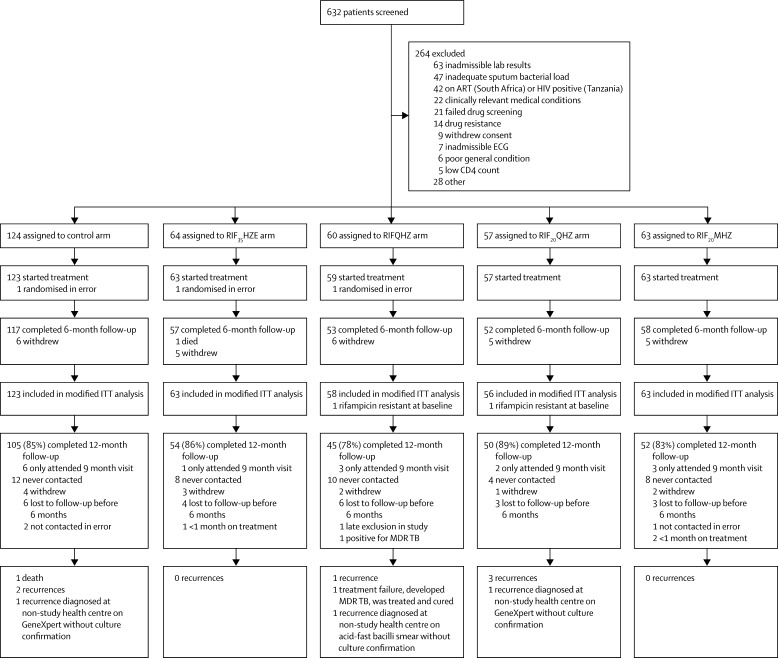
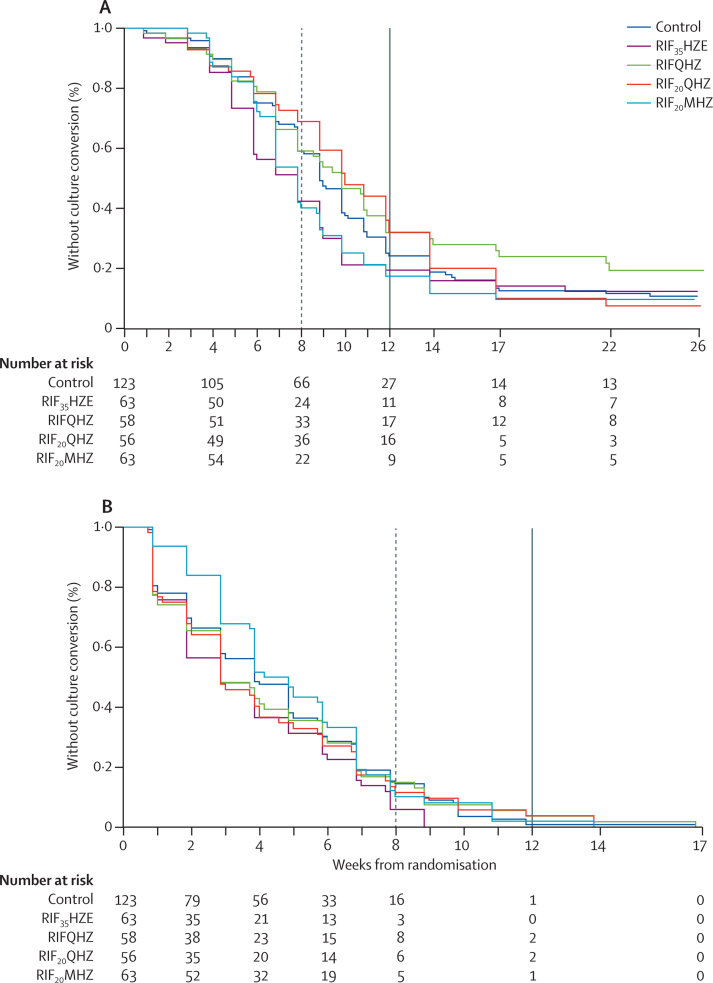
BACKGROUND: Tuberculosis is the world's leading infectious disease killer. We aimed to identify shorter, safer drug regimens for the treatment of tuberculosis. METHODS: We did a randomised controlled, open-label trial with a multi-arm, multi-stage design. The trial was done in seven sites in South Africa and Tanzania, including hospitals, health centres, and clinical trial centres. Patients with newly diagnosed, rifampicin-sensitive, previously untreated pulmonary tuberculosis were randomly assigned in a 1:1:1:1:2 ratio to receive (all orally) either 35 mg/kg rifampicin per day with 15-20 mg/kg ethambutol, 20 mg/kg rifampicin per day with 400 mg moxifloxacin, 20 mg/kg rifampicin per day with 300 mg SQ109, 10 mg/kg rifampicin per day with 300 mg SQ109, or a daily standard control regimen (10 mg/kg rifampicin, 5 mg/kg isoniazid, 25 mg/kg pyrazinamide, and 15-20 mg/kg ethambutol). Experimental treatments were given with oral 5 mg/kg isoniazid and 25 mg/kg pyrazinamide per day for 12 weeks, followed by 14 weeks of 5 mg/kg isoniazid and 10 mg/kg rifampicin per day. Because of the orange discoloration of body fluids with higher doses of rifampicin it was not possible to mask patients and clinicians to treatment allocation. The primary endpoint was time to culture conversion in liquid media within 12 weeks. Patients without evidence of rifampicin resistance on phenotypic test who took at least one dose of study treatment and had one positive culture on liquid or solid media before or within the first 2 weeks of treatment were included in the primary analysis (modified intention to treat). Time-to-event data were analysed using a Cox proportional-hazards regression model and adjusted for minimisation variables. The proportional hazard assumption was tested using Schoelfeld residuals, with threshold p<0·05 for non-proportionality. The trial is registered with ClinicalTrials.gov (NCT01785186). FINDINGS: Between May 7, 2013, and March 25, 2014, we enrolled and randomly assigned 365 patients to different treatment arms (63 to rifampicin 35 mg/kg, isoniazid, pyrazinamide, and ethambutol; 59 to rifampicin 10 mg/kg, isoniazid, pyrazinamide, SQ109; 57 to rifampicin 20 mg/kg, isoniazid, pyrazinamide, and SQ109; 63 to rifampicin 10 mg/kg, isoniazid, pyrazinamide, and moxifloxacin; and 123 to the control arm). Recruitment was stopped early in the arms containing SQ109 since prespecified efficacy thresholds were not met at the planned interim analysis. Time to stable culture conversion in liquid media was faster in the 35 mg/kg rifampicin group than in the control group (median 48 days vs 62 days, adjusted hazard ratio 1·78; 95% CI 1·22-2·58, p=0·003), but not in other experimental arms. There was no difference in any of the groups in time to culture conversion on solid media. 11 patients had treatment failure or recurrent disease during post-treatment follow-up: one in the 35 mg/kg rifampicin arm and none in the moxifloxacin arm. 45 (12%) of 365 patients reported grade 3-5 adverse events, with similar proportions in each arm. INTERPRETATION: A dose of 35 mg/kg rifampicin was safe, reduced the time to culture conversion in liquid media, and could be a promising component of future, shorter regimens. Our adaptive trial design was successfully implemented in a multi-centre, high tuberculosis burden setting, and could speed regimen development at reduced cost. FUNDING: The study was funded by the European and Developing Countries Clinical Trials partnership (EDCTP), the German Ministry for Education and Research (BmBF), and the Medical Research Council UK (MRC).
Overview
The claims and statistics of this paper haven’t been checked yet.
Free: it reads the open-access text and checks the first 5 claims that cite a source we can check. Create a free account to check every claim.
Integrity signals
Registry
Cites
Statistics
Figures
Verification
Claims the paper makes
The claims and statistics of this paper haven’t been checked yet.
Free: it reads the open-access text and checks the first 5 claims that cite a source we can check. Create a free account to check every claim.
Claims other papers make about this one
Each is checked against this paper’s own text: does it say what the citing paper says it does?
The cited source says what the claim attributes to it.
In the citing paper
“improving upon first-generation inhibitors such as SQ109, which is in phase 2 clinical trials (158)”
From Mycobacterium smegmatis: The Vanguard of Mycobacterial Research (2023) · cites this paper as [158]
Self-check
Percentages, sums and reported differences re-computed from the paper’s own numbers.
The self-check needs the paper’s full text.
Citations
Cites
Fox, W., Ellard, G. A., & Mitchison, D. A. (1999) · PubMed · Cited by 811
Four-Month Moxifloxacin-Based Regimens for Drug-Sensitive Tuberculosis
Gillespie, S. H., Crook, A. M., McHugh, T. D., Mendel, C. M., Meredith, S. K., Murray, S. R., Pappas, F., Phillips, P. P. J., & Nunn, A. J. (2014) · New England Journal of Medicine · doi:10.1056/nejmoa1407426 · Cited by 645
Self-citationThe association between sterilizing activity and drug distribution into tuberculosis lesions
Prideaux, B., Via, L. E., Zimmerman, M. D., Eum, S., Sarathy, J., O'Brien, P., Chen, C., Kaya, F., Weiner, D. M., Chen, P.-Y., et al. (2015) · Nature Medicine · doi:10.1038/nm.3937 · Cited by 461
Clinical Pharmacokinetics of Rifampicin
Acocella, G. (1978) · Clinical Pharmacokinetics · doi:10.2165/00003088-197803020-00002 · Cited by 405
Concentration-Dependent Mycobacterium tuberculosis Killing and Prevention of Resistance by Rifampin
Gumbo, T., Louie, A., Deziel, M. R., Liu, W., Parsons, L. M., Salfinger, M., & Drusano, G. L. (2007) · Antimicrobial Agents and Chemotherapy · doi:10.1128/aac.01533-06 · Cited by 345
Pharmacokinetics-Pharmacodynamics of Rifampin in an Aerosol Infection Model of Tuberculosis
Jayaram, R., Gaonkar, S., Kaur, P., Suresh, B. L., Mahesh, B. N., Jayashree, R., Nandi, V., Bharat, S., Shandil, R. K., Kantharaj, E., et al. (2003) · Antimicrobial Agents and Chemotherapy · doi:10.1128/aac.47.7.2118-2124.2003 · Cited by 335
Rustomjee, R., Lienhardt, C., Kanyok, T. P., Davies, G., Levin, J., Mthiyane, T., Reddy, C., Sturm, A. W., Sirgel, F. A., Allen, J., et al. (2008) · PubMed · Cited by 326
Intensified Antituberculosis Therapy in Adults with Tuberculous Meningitis
Heemskerk, A. D., Bang, N. D., Mai, N. T. H., Chau, T. T. H., Phu, N. H., Loc, P. P., Chau, N. V. V., Hien, T. T., Dung, N. H., Lan, N. T. N., et al. (2016) · New England Journal of Medicine · doi:10.1056/nejmoa1507062 · Cited by 310
A Dose-Ranging Trial to Optimize the Dose of Rifampin in the Treatment of Tuberculosis
Boeree, M. J., Diacon, A. H., Dawson, R., Narunsky, K., du Bois, J., Venter, A., Phillips, P. P. J., Gillespie, S. H., McHugh, T. D., Hoelscher, M., et al. (2015) · American Journal of Respiratory and Critical Care Medicine · doi:10.1164/rccm.201407-1264oc · Cited by 309
Self-citationConde, M. B., Efron, A., Loredo, C., De Souza, G. R. M., Graça, N. P., Cezar, M. C., Ram, M., Chaudhary, M. A., Bishai, W. R., Kritski, A. L., et al. (2009) · The Lancet · doi:10.1016/s0140-6736(09)60333-0 · Cited by 289
Research works printed but not linked: 1
- Boeree MJ. High-dose rifampicin: issues in efficacy and safety. The 46th Union World Conference on Lung Health; Cape Town; Dec 6, 2015.
Cited by
Items 201–300 of 414
Brown, A. K., Aljohani, A. K. B., Gill, J. H., Steel, P. G., & Sellars, J. D. (2019) · Molecules · doi:10.3390/molecules24040811 · Cited by 14
Inhibitors of enzymes in the electron transport chain of Mycobacterium tuberculosis
Thompson, A. M., & Denny, W. A. (2019) · Annual reports in medicinal chemistry · doi:10.1016/bs.armc.2019.05.001 · Cited by 14
Modern Anti-Tuberculosis Drugs and Their Classification. Part I: First-Line Drugs
Kаyukova, L. A., & Berikova, E. A. (2020) · Pharmaceutical Chemistry Journal · doi:10.1007/s11094-020-02239-2 · Cited by 14
Should treatment of low-level rifampicin mono-resistant tuberculosis be different?
Gopie, F. A., Commiesie, E., Baldi, S., Kamst, M., Kaur, D., de Lange, W. C. M., Pinas, P. S., Stijnberg, D., Wongsokarijo, M., Zijlmans, W. C. W. R., et al. (2021) · Journal of Clinical Tuberculosis and Other Mycobacterial Diseases · doi:10.1016/j.jctube.2021.100222 · Cited by 14
A Model-Informed Method for the Purpose of Precision Dosing of Isoniazid in Pulmonary Tuberculosis
van Beek, S. W., ter Heine, R., Alffenaar, J. C., Magis-Escurra, C., Aarnoutse, R. E., Svensson, E. M., the Isoniazid Precision Dosing Group, Boeree, M. J., Burhan, E., Dawson, R., et al. (2021) · Clinical Pharmacokinetics · doi:10.1007/s40262-020-00971-2 · Cited by 14
Self-citationApplication of antimicrobial drugs in Mycobacterium tuberculosis and research progress
Wang, Y., Cao, D., & Liu, G. (2025) · Microbial Pathogenesis · doi:10.1016/j.micpath.2025.107794 · Cited by 13
Pharmacokinetics and Safety of Twice-daily Ritonavir-boosted Atazanavir With Rifampicin
Gausi, K., Mugerwa, H., Siccardi, M., Montanha, M. C., Lamorde, M., Wiesner, L., D’Avolio, A., McIlleron, H., Wilkins, E., Nicolò, A. D., et al. (2023) · Clinical Infectious Diseases · doi:10.1093/cid/ciad700 · Cited by 13
Zhang, M., Tian, Y., Gao, B., Qin, X., Shen, Q., Li, Z., Shi, Y., Zhang, L., Liu, Y., Sun, W., et al. (2026) · Zoonoses · doi:10.15212/zoonoses-2026-0002 · Cited by 12
Musisi, E., Wyness, A. J., Eldirdiri, S., Dombay, E., Mtafya, B., Ntinginya, N. E., Heinrich, N., Kibiki, G. S., Höelscher, M., Boeree, M. J., et al. (2022) · The Lancet Microbe · doi:10.1016/s2666-5247(23)00191-x · Cited by 12
Self-citationPound foolish and penny wise—when will dosing of rifampicin be optimised?
Magis-Escurra, C., Anthony, R. M., van der Zanden, A. G. M., van Soolingen, D., & Alffenaar, J. C. (2018) · The Lancet Respiratory Medicine · doi:10.1016/s2213-2600(18)30044-4 · Cited by 12
Novel Short-Course Therapy and Morphism Mapping for Clinical Pulmonary Mycobacterium kansasii
Srivastava, S., Wang, J., Magombedze, G., Chapagain, M. L., Huang, H., Deshpande, D., Heysell, S. K., Pasipanodya, J. G., & Gumbo, T. (2021) · Antimicrobial Agents and Chemotherapy · doi:10.1128/aac.01553-20 · Cited by 12
Davis, A., Wasserman, S. A., Maxebengula, M., Stek, C. J., Bremer, M., Daroowala, R., Aziz, S., Goliath, R. T., Stegmann, S., Koekemoer, S., et al. (2021) · Wellcome Open Research · doi:10.12688/wellcomeopenres.16783.1 · Cited by 12
Pharmacokinetics of First-Line Anti-Tubercular Drugs
Mukherjee, A., Lodha, R., & Kabra, S. K. (2019) · The Indian Journal of Pediatrics · doi:10.1007/s12098-019-02911-w · Cited by 12
Novel tuberculosis combination regimens of two and three-months therapy durationPreprint
Gumbo, T., Chapagain, M. L., Magombedze, G., Srivastava, S., Deshpande, D., Pasipanodya, J. G., Gumbo, R., Dheda, K. U. J., Diacon, A. H., Hermann, D. J., et al. (2022) · bioRxiv (Cold Spring Harbor Laboratory) · doi:10.1101/2022.03.13.484155 · Cited by 12
Self-citationIntensified Treatment of Tuberculous Meningitis in Adults: A Systematic Review and Meta-analysis
Llamas-Lopez, A., Seddon, J. A., Chow, F. C., Upton, C. M., Jain, S. K., Alffenaar, J. C., Grint, D. J., Dooley, K. E., Aarnoutse, R. E., & Cresswell, F. V. (2025) · Open Forum Infectious Diseases · doi:10.1093/ofid/ofaf503 · Cited by 11
“Rifampicin dosing of 35 mg/ kg/d has been safely used in adults and children [28, 29].”
Self-citationDegradation of Polymer-Drug Conjugate Nanoparticles Based on Lactic and Itaconic Acid
Vuong, M. D. L., Haouas, M., Ural, M. S., Desmaële, D., Martineau, C., & Gref, R. (2022) · International Journal of Molecular Sciences · doi:10.3390/ijms232214461 · Cited by 11
Sidamo, T., Rao, P. S., Aklillu, E., Shibeshi, W., Park, Y., Cho, Y., Shin, J., Heysell, S. K., Mpagama, S. G., & Engidawork, E. (2022) · Infection and Drug Resistance · doi:10.2147/idr.s389442 · Cited by 11
“Introduction Fluoroquinolones (FQs) are used off-label for the treatment of multidrug-resistant tuberculosis (MDR-TB), and for evaluation in shortening the duration of drug susceptible TB in recently prioritized regimens.(1) Within the class, levofloxacin (LFX) and moxifloxacin (MXF) play a substantial role in ensurin…”
Self-citationPettit, A. C., Shepherd, B. E., & Sterling, T. R. (2018) · Current Opinion in HIV and AIDS · doi:10.1097/coh.0000000000000506 · Cited by 11
Dosage Forms - Innovation and Future Perspectives
Ahmad, U. (2022) · IntechOpen eBooks · doi:10.5772/intechopen.95734 · Cited by 11
High-Dose First-Line Treatment Regimen for Recurrent Rifampicin-Susceptible Tuberculosis
Decroo, T., de Jong, B. C., Piubello, A., Souleymane, M. B., Lynen, L., & Deun, A. V. (2020) · American Journal of Respiratory and Critical Care Medicine · doi:10.1164/rccm.202001-0201le · Cited by 11
“Moreover, Boeree and colleagues showed that high-dose rifampicin (35 mg/kg) was safe and reduced time to culture conversion when comparedwith normal-dose rifampicin (10mg/kg) (5).”
Pétermann, Y. J., Said, B., Cathignol, A. E., Sariko, M., Thoma, Y., Mpagama, S. G., Csajka, C., & Guidi, M. (2024) · JAC-Antimicrobial Resistance · doi:10.1093/jacamr/dlae182 · Cited by 10
Self-citationThiazole-Scaffold-Based Anti-tubercular Agents: A Review on Synthesis and Structural Modifications
Debnath, U., Roy, K. K., & Kumar, A. (2025) · Synlett · doi:10.1055/a-2637-7462 · Cited by 10
High-dose rifamycins in the treatment of TB: a systematic review and meta-analysis
Arbiv, O. A., Kim, J. M., Yan, M., Romanowski, K., Campbell, J. R., Trajman, A., Asadi, L., Fregonese, F., Winters, N., Menzies, D., et al. (2022) · Thorax · doi:10.1136/thoraxjnl-2020-216497 · Cited by 10
Pereiro, J. E., Ghimire, S., Sturkenboom, M. G. G., Alffenaar, J. C., Tavares, M., Aguirre, S., Battaglia, A., Molinas, G., Tórtola, T., Akkerman, O. W., et al. (2022) · Pharmaceutics · doi:10.3390/pharmaceutics15010009 · Cited by 10
Reddy, K. P., Horsburgh, C. R., Wood, R., Fields, N. F., Girouard, M. P., Costantini, S., Hou, T., Freedberg, K. A., & Walensky, R. P. (2019) · Annals of the American Thoracic Society · doi:10.1513/annalsats.201905-418oc · Cited by 10
Berkenfeld, K., McConville, J. T., & Lamprecht, A. (2020) · Expert Opinion on Drug Delivery · doi:10.1080/17425247.2020.1720644 · Cited by 10
The filarial and the antibiotics: Single or combination therapy using antibiotics for filariasis
Fordjour, F. A., & Kwarteng, A. (2022) · Frontiers in Cellular and Infection Microbiology · doi:10.3389/fcimb.2022.1044412 · Cited by 10
The paradigm shift to end tuberculosis. Are we ready to assume the changes?
Monedero, I., Bhavaraju, R., Mendoza‐Ticona, A., & Sánchez‐Montalvá, A. (2017) · Expert Review of Respiratory Medicine · doi:10.1080/17476348.2017.1335599 · Cited by 10
Common Biological Properties of Mycobacterium tuberculosis MmpL3 Inhibitors
Ames, L., Allen, R. H., Boshoff, H. I., Cleghorn, L. A. T., Engelhart, C. A., Schnappinger, D., & Parish, T. (2025) · ACS Infectious Diseases · doi:10.1021/acsinfecdis.5c00394 · Cited by 9
New drugs for the management of tuberculosis
Cross, G. B. (2025) · Current Opinion in Infectious Diseases · doi:10.1097/qco.0000000000001156 · Cited by 9
“Initia-tives Initia-tives such as the Tuberculosis Trials Consortium (TBTC), UNITE4TB and SMART4TB exemplify this approach, fostering global collaboration and accelerating the generation of high-quality evidence.”
Thoma, Y., Cathignol, A. E., Pétermann, Y. J., Sariko, M., Said, B., Csajka, C., Guidi, M., & Mpagama, S. G. (2024) · JMIR Research Protocols · doi:10.2196/58720 · Cited by 9
Self-citationSafety of Triple-Dose Rifampin in Tuberculosis Treatment: A Systematic Review and Meta-Analysis
Arbiv, O. A., Holmes, T. W., Kim, M. J., Yan, M., Romanowski, K., Brode, S. K., Burman, W. J., Menzies, D., & Johnston, J. C. (2025) · Clinical Infectious Diseases · doi:10.1093/cid/ciaf004 · Cited by 9
“We identified 11 315 articles (Figure 1), with 653 articles undergoing full-text review and 17 articles included in the systematic review and meta-analysis [7, 8, 20–34], 11 of which included TDR [7, 8, 20–24, 26, 27, 30, 33].”
Mekota, A., Gillespie, S. H., Höelscher, M., Diacon, A. H., Dawson, R., Churchyard, G., Sanne, I., Minja, L. T., Kibiki, G. S., Maboko, L., et al. (2022) · Acta Tropica · doi:10.1016/j.actatropica.2022.106776 · Cited by 9
Self-citationA comparison of clinical development pathways to advance tuberculosis regimen development
Chang, V. K., Phillips, P. P. J., Imperial, M. Z., Nahid, P., & Savić, R. M. (2022) · BMC Infectious Diseases · doi:10.1186/s12879-022-07846-w · Cited by 9
Self-citationTsiligiannis, A., Sfouni, M., Nalda‐Molina, R., & Dokoumetzidis, A. (2019) · European Journal of Pharmaceutical Sciences · doi:10.1016/j.ejps.2019.105016 · Cited by 9
Kumar, N. P., Nancy, A., Viswanathan, V., Sivakumar, S., Thiruvengadam, K., Ahamed, S. F., Hissar, S. S., Kornfeld, H., & Babu, S. (2023) · Frontiers in Immunology · doi:10.3389/fimmu.2023.1093640 · Cited by 9
Svensson, R. J., Sabiiti, W., Kibiki, G. S., Ntinginya, N. E., Bhatt, N., Davies, G., Gillespie, S. H., & Simonsson, U. S. H. (2019) · Antimicrobial Agents and Chemotherapy · doi:10.1128/aac.00652-19 · Cited by 9
Self-citationKengo, A., Gausi, K., Nabisere, R. M., Musaazi, J., Buzibye, A., Omali, D., Aarnoutse, R. E., Lamorde, M., Dooley, K. E., Sloan, D. J., et al. (2023) · Antimicrobial Agents and Chemotherapy · doi:10.1128/aac.00431-23 · Cited by 8
Self-citationNgo, H., Xu, A. Y., Velásquez, G. E., Zhang, N., Chang, V. K., Kurbatova, E. V., Whitworth, W. C., Sizemore, E. E., Bryant, K. E., Carr, W., et al. (2024) · Clinical Infectious Diseases · doi:10.1093/cid/ciae119 · Cited by 8
Self-citationAdvances in antibacterial agents for Mycobacterium fortuitum
Jortieke, C. R. T., Joaquim, A. R., & Fumagalli, F. (2025) · RSC Medicinal Chemistry · doi:10.1039/d4md00508b · Cited by 8
Sun, M., & Fan, J. (2021) · Annals of Palliative Medicine · doi:10.21037/apm-20-2612 · Cited by 8
Ekqvist, D., Bornefall, A., Augustinsson, D., Sönnerbrandt, M., Nordvall, M. J., Fredrikson, M. G., Björn Carlsson, A., Sandstedt, M., Simonsson, U. S. H., Alffenaar, J. C., et al. (2022) · BMJ Open · doi:10.1136/bmjopen-2021-054788 · Cited by 8
Bhavani, P. K., Arthanari, J., Bhaskar, A., Narayanan, M. K. S., & Inbaraj, L. R. (2025) · The Indian Journal of Medical Research · doi:10.25259/ijmr_1673_2024 · Cited by 7
“Five studies included individuals living with HIV (PLHIV) 11,12,23,25,26 , while Sanni et al 23 and Atwine et al 26 exclusively included PLHIV.”
InfluentialAsif, M., Qusty, N. F., & Alghamdi, S. A. (2023) · Medicinal Chemistry · doi:10.2174/0115734064260853230926080134 · Cited by 7
Namale, P. E., Boloko, L., Vermeulen, M., Haigh, K. A., Bagula, F., Maseko, A., Sossen, B., Lee-Jones, S., Msomi, Y., McIlleron, H., et al. (2024) · Trials · doi:10.1186/s13063-024-08119-4 · Cited by 7
“Patients in the rifampicin 35 mg/kg/day arm achieved culture conversion in liquid media at a median of 48 days compared to 62 days in the control arm with rifampicin 10 mg/kg/day (adjusted HR 1.78, 95% CI 1.22–2.58) [13].”
BackgroundMethodInfluentialBurman, W. J., Luczynski, P., Horsburgh, C. R., Phillips, P. P. J., & Johnston, J. C. (2024) · The Lancet Infectious Diseases · doi:10.1016/s1473-3099(24)00597-8 · Cited by 7
Self-citationImazu, P., dos Santos, J. M. M. F., Beraldi‐Magalhães, F., Fernández-Llimós, F., Tonin, F. S., & Pontarolo, R. (2022) · Journal of Pharmacy and Pharmacology · doi:10.1093/jpp/rgac004 · Cited by 7
The quest to deliver high-dose rifampicin: can the inhaled approach help?
Khadka, P., Dummer, J. F., Hill, P. C., & Das, S. C. (2024) · Expert Opinion on Drug Delivery · doi:10.1080/17425247.2024.2301931 · Cited by 7
“This was more evident from the results from another multi-center randomized controlled trial conducted in 365 patients from high TB burden settings, in which 35 mg/kg rifampicin was reported safe and reduced the time to culture conversion in liquid media [30].”
ResultHendon-Dunn, C. L., Pertinez, H. E., Marriott, A., Hatch, K. A., Allnutt, J. C., Davies, G., & Bacon, J. (2019) · Antimicrobial Agents and Chemotherapy · doi:10.1128/aac.00570-19 · Cited by 7
Miliary tuberculosis in a paediatric patient with psoriasis
Kilgore, J. T., Pelletier, J., Becken, B., Kenny, S., Das, S. U., & Parnell, L. (2021) · BMJ Case Reports · doi:10.1136/bcr-2020-237580 · Cited by 7
Finding the right dose of rifampicin, and the right dose of optimism
Ruslami, R., & Menzies, D. (2016) · The Lancet Infectious Diseases · doi:10.1016/s1473-3099(16)30315-2 · Cited by 7
Specialty Grand Challenge In Pediatric Infectious Diseases
Lepage, P., & Blumental, S. (2017) · Frontiers in Pediatrics · doi:10.3389/fped.2017.00185 · Cited by 7
Lemaitre, F. (2021) · Therapeutic Drug Monitoring · doi:10.1097/ftd.0000000000000948 · Cited by 7
High-Dose Rifampin: Shall We Be Bolder?
Dooley, K. E. (2018) · American Journal of Respiratory and Critical Care Medicine · doi:10.1164/rccm.201806-1140ed · Cited by 7
Wolbachia Endosymbionts as Treatment Targets for Filarial Diseases
Hübner, M. P., Pfarr, K. M., & Hoerauf, A. M. (2022) · Wiley eBooks · doi:10.1002/9783527823413.ch24 · Cited by 6
Maitre, T., Godmer, A., Mory, C., Chauffour, A., Cuc, T., Helali, N. E., Aubry, A., & Véziris, N. (2024) · Antimicrobial Agents and Chemotherapy · doi:10.1128/aac.00583-24 · Cited by 6
“As recently demonstrated for rifampicin (20, 21), a dose-increase regimen is a strategy to increase antituberculosis activity in drug-susceptible tubercu losis.”
Pereiro, J. E., Aguiar, A., Nara, E., Medina, A., Molinas, G., Tavares, M., Tórtola, T., Ghimire, S., Alffenaar, J. C., Sturkenboom, M. G. G., et al. (2025) · Clinical Infectious Diseases · doi:10.1093/cid/ciaf003 · Cited by 6
Heysell, S. K., Mpagama, S. G., Nuwagira, E., Said, B., Conaway, M. R., Null, M. M., Thomas, T. A., Boulware, D. R., Otoupalova, E., Arinaitwe, R., et al. (2026) · The Lancet Infectious Diseases · doi:10.1016/s1473-3099(25)00747-9 · Cited by 6
“In trials of adults with pulmonary tuberculosis, rifampicin oral doses of up to 35 mg/kg did not lead to severe hepatotoxicity; 27,28 however, mild gastrointestinal symptoms and hyperbilirubinaemia have been observed in a dose-dependent manner.”
Self-citationPieterman, E. D., van den Berg, S., van der Meijden, A., Svensson, E. M., Bax, H. I., & de Steenwinkel, J. E. M. (2021) · Antimicrobial Agents and Chemotherapy · doi:10.1128/aac.02255-20 · Cited by 6
Treatment Strategy for Rifampin-Susceptible Tuberculosis
Burman, W. J., Fox, G. J., & Horsburgh, C. R. (2023) · New England Journal of Medicine · doi:10.1056/nejmc2304776 · Cited by 6
Martinecz, A., Boeree, M. J., Diacon, A. H., Dawson, R., Hemez, C. F., Aarnoutse, R. E., & Wiesch, P. A. Z. (2023) · PLoS Computational Biology · doi:10.1371/journal.pcbi.1011000 · Cited by 5
Self-citationAlghamdi, S. A., Qusty, N. F., Maulana, A., Ajmal, M., Khan, M., Mahato, A. K., Verma, S., & Asif, M. (2025) · Russian Journal of Bioorganic Chemistry · doi:10.1134/s1068162023603257 · Cited by 5
Treatment guidelines for tuberculosis and tuberculous meningitis
Cresswell, F. V., Musubire, A. K., & Århem, K. J. (2020) · Elsevier eBooks · doi:10.1016/b978-0-12-818825-5.00006-1 · Cited by 5
Kathamuthu, G. R., Bhavani, P. K., Singh, M., Saini, J. K., Aggarwal, A. N., Ansari, M. S. S., Garg, R., & Babu, S. (2022) · Frontiers in Pharmacology · doi:10.3389/fphar.2022.896551 · Cited by 5
Bovijn, L., Solomons, R., & Marais, S. (2019) · Springer eBooks · doi:10.1007/978-3-030-29108-2_13 · Cited by 6
Verma, R., Gurumurthy, M., Yeo, B. C. M., Lu, Q., Naftalin, C. M., & Paton, N. I. (2021) · Antimicrobial Agents and Chemotherapy · doi:10.1128/aac.01699-21 · Cited by 5
Preclinical Efficacy Testing of New Drug Candidates
Nuermberger, E. L. (2017) · ASM Press eBooks · doi:10.1128/9781555819569.ch13 · Cited by 6
Advancements in Tuberculosis Treatment: From Epidemiology to Innovative Therapies
Thakur, A. (2024) · International Journal of Science and Research (IJSR) · doi:10.21275/sr24303183227 · Cited by 5
Guleria, R., Chawla, R., Modi, M., Rodrigues, C. S., Jaiswal, A., Saxena, P., Biswal, M., Chaudhry, D., Peter, J. V., Sehgal, I. S., et al. (2024) · Indian Journal of Critical Care Medicine · doi:10.5005/jp-journals-10071-24783 · Cited by 5
“80,81 Q15: Do Enterally Administered Anti-TB Drugs Achieve Therapeutic Levels in Critically Ill Patients?”
BackgroundDufault, S. M., Davies, G., Svensson, E. M., Sloan, D. J., McCallum, A. D., Patel, A. S., Brantegem, P. V., Denti, P., & Phillips, P. P. J. (2024) · International Journal of Antimicrobial Agents · doi:10.1016/j.ijantimicag.2024.107404 · Cited by 5
“Sputum was collected during clinic visits at a schedule of 2 days before start of treatment (pre-randomization), weekly for 12 weeks, and then at weeks 14, 17, 22, and 26 after treatment start [6].”
Self-citationMer, M., Zumla, A. I., & Dünser, M. W. (2018) · Intensive Care Medicine · doi:10.1007/s00134-018-5161-5 · Cited by 5
Aljayyoussi, G., Donnellan, S., Ward, S. A., & Biagini, G. A. (2019) · Pharmaceutics · doi:10.3390/pharmaceutics11060278 · Cited by 5
TB Elimination Requires Discovery and Development of Transformational Agents
Lienhardt, C., & Raviglione, M. C. (2020) · Applied Sciences · doi:10.3390/app10072605 · Cited by 5
Iliopsoas Gravity Abscess Secondary to a Tuberculous Empyema
Tone, K., Hirano, Y., & Kuwano, K. (2021) · International Journal of Mycobacteriology · doi:10.4103/ijmy.ijmy_129_21 · Cited by 5
Vuong, M. D. L. (2022) · theses.fr (ABES) · doi:10.70675/1f93503az2a80z4f56z9702z53336df9b90a · Cited by 5
Cummings, J. E., Woolhiser, L. K., Guglielmi, V. E., Wernsman, M., Romano, A., Pauly, S., Belisle, J. T., Walter, N. D., Robertson, G. T., & Slayden, R. A. (2025) · Frontiers in Pharmacology · doi:10.3389/fphar.2025.1667592 · Cited by 4
Alkashef, N. M., Salama, E. A., Anandakrishnan, R., Hazbun, T. R., Hoernig, M., Brown, A. M., Lawrence, C. B., & Seleem, M. N. (2025) · PLoS neglected tropical diseases · doi:10.1371/journal.pntd.0013837 · Cited by 4
“Additionally, its superior safety profile during frequent dosing is typically crucial for the extended management of cryptococcal infection [15,22,23].”
Tuberculosis molecular bacterial load assay in the management of tuberculosis
Gillespie, S. H., & Sabiiti, W. (2024) · Current Opinion in Infectious Diseases · doi:10.1097/qco.0000000000001084 · Cited by 4
Self-citationWeir, I. R., & Wasserman, S. A. (2021) · Clinical Infectious Diseases · doi:10.1093/cid/ciab576 · Cited by 4
Fregonese, F., Apriani, L., Barss, L., Benedetti, A., Cook, V. J., Fisher, D., Fox, G. J., Johnston, J. C., Long, R., Nguyen, T. A., et al. (2023) · PLoS ONE · doi:10.1371/journal.pone.0278087 · Cited by 4
Susanto, B. O., Svensson, E. M., Brake, L. T., Aarnoutse, R. E., Boeree, M. J., & Simonsson, U. S. H. (2023) · International Journal of Antimicrobial Agents · doi:10.1016/j.ijantimicag.2023.106813 · Cited by 4
Self-citationWasmann, R. E., Masini, T., Viney, K. A., Verkuijl, S. E., Brands, A., Hesseling, A. C., McIlleron, H., Denti, P., & Dooley, K. E. (2023) · Frontiers in Pharmacology · doi:10.3389/fphar.2023.1055329 · Cited by 4
Xie, Y. L., Modi, N., Handler, D., Yu, S., Rao, P. S., Kagan, L., de Guex, K. P., Reiss, R., Siemiątkowska, A., Narang, A., et al. (2023) · Antimicrobial Agents and Chemotherapy · doi:10.1128/aac.00932-23 · Cited by 4
Macgregor-Fairlie, M., Gomes, P. D. C., Weston, D., Rickard, J. J. S., & Oppenheimer, P. G. (2023) · PLoS ONE · doi:10.1371/journal.pone.0293093 · Cited by 4
Tryptophan and Its Derived Metabolites as Biomarkers for Tuberculosis Disease: A Systematic Review
Maulina, N., Hayati, Z., Hasballah, K., & Zulkarnain, Z. (2024) · ̒Ulūm va funūn-i bastah/bandī · doi:10.61186/ibj.4174 · Cited by 4
“While TB is completely treatable [4] , some patients encounter challenges such as recurrence, treatment failure, and death, which hinder global efforts to eradicate TB [5] .”
BackgroundOptimizing β‐lactam‐containing antibiotic combination therapy for the treatment of Buruli ulcer
DʼAgate, S., Velickovic, P., García‐Barrios, N., Ramón‐García, S., & Pasqua, O. E. D. (2024) · British Journal of Clinical Pharmacology · doi:10.1111/bcp.16209 · Cited by 4
“37,38 Moreover, it is plausible to assume that a novel regimen (RIF twice daily) will not affect the overall adherence to treatment, given that CLA is already used twice daily and AMX/CLV also needs to be administered twice daily to ensure appropriate exposure levels.”
Kwak, N., Kim, J., Kim, H.-J., Kwon, B. S., Lee, J. H., Mok, J., Kwon, Y. S., Kang, Y. A., Park, Y., Lee, J. Y., et al. (2024) · Tuberculosis & respiratory diseases · doi:10.4046/trd.2024.0099 · Cited by 4
“Similarly, in patients, higher doses of rifampicin exerted sterilizing activity in a dose-dependent manner with no significant increase in adverse events 9,11,27 .”
Clewe, O., Faraj, A., Hu, Y., Coates, A. R. M., & Simonsson, U. S. H. (2020) · Journal of Pharmacokinetics and Pharmacodynamics · doi:10.1007/s10928-020-09694-0 · Cited by 4
Sanni, S., Wachinou, A. P., Merle, C. S. C., Békou, W., Esse, M., Gossa, S., Gomina, K., Baba‐Moussa, L., & Affolabi, D. (2021) · Archives of Pharmacy Practice · doi:10.51847/plywkp28yd · Cited by 4
Fully weekly antituberculosis regimen: a proof-of-concept study
Kort, F., Ray, L. F. L., Chauffour, A., Jarlier, V., Lounis, N., Andries, K., Aubry, A., Guglielmetti, L., & Véziris, N. (2020) · European Respiratory Journal · doi:10.1183/13993003.02502-2019 · Cited by 4
Disseminated Mycobacterium bovis Infection Complicated by Meningitis and Stroke: A Case Report
Clifford, K. M., & Szumowski, J. D. (2020) · Open Forum Infectious Diseases · doi:10.1093/ofid/ofaa475 · Cited by 4
Plasma Levels of Rifampin Correlate with the Tuberculosis Drug Activity Assay
Niward, K., Blom, L. E., Forsman, L. D., Bruchfeld, J., Eliasson, E., Schön, T., Chryssanthou, E., & Paues, J. (2018) · Antimicrobial Agents and Chemotherapy · doi:10.1128/aac.00218-18 · Cited by 4
Sabiiti, W., Azam, K., Kuchaka, D. J., Mtafya, B., Bowness, R., Oravcová, K., Farmer, E. C. W., Honeyborne, I., Evangelopoulos, D., McHugh, T. D., et al. (2019) · bioRxiv (Cold Spring Harbor Laboratory) · doi:10.1101/555995 · Cited by 4
Self-citationLipid Transporters: From Bacteria, Protozoa, Fungi and Plants, to Mice and MenPreprint
Malwal, S. R., Baek, K., Phan, T.-N., Lee, H., Li, Z., Moreno, S. N. J., No, J. H., & Oldfield, E. (2021) · ChemRxiv · doi:10.26434/chemrxiv.14538267.v1 · Cited by 4
Schalkwyk, M. V., Bekker, A., Decloedt, E. H., Wang, J., Theron, G. B., Cotton, M. F., Eke, A. C., Cressey, T. R., Wabwire, D., Shapiro, D. E., et al. (2025) · Antimicrobial Agents and Chemotherapy · doi:10.1128/aac.00052-25 · Cited by 3
“Recent studies suggest that higher RIF dosing to reach minimum concentration targets (24, 25) could be achieved by adding an extra RIF tablet to the standard fixed-dose combination (FDC) tablet regimen.”
Gelé, T., Atwine, D., Baudin, E., Muyindike, W. R., Mworozi, K., Kyohairwe, R., Kananura, K., Logoose, S., Nyehangane, D., Nanjebe, D., et al. (2025) · Journal of Antimicrobial Chemotherapy · doi:10.1093/jac/dkaf319 · Cited by 3
Singh, D., Singh, V. J., Mandal, S. P., Dsouza, K., Kumar, B. R. P., & Dixit, S. R. (2023) · Current Drug Therapy · doi:10.2174/1574885519666230830125139 · Cited by 3
Goutelle, S., Bahuaud, O., Genestet, C., Millet, A., Parant, F., Dumitrescu, O., Ader, F., the Lyon TB Study Group, Ader, F., Bahuaud, O., et al. (2025) · Clinical Pharmacokinetics · doi:10.1007/s40262-025-01479-3 · Cited by 3
“Although the clinical relevance of accepted concentration targets can be questioned, the 600-mg/kg or 10-mg/kg dose of RIF has been highlighted as too low for a long time [2] and higher dosages of RIF have shown promising results [11, 13, 39].”
Mackay, E. A., Platt, G., Peloquin, C. A., Brooks, M. B., Coit, J. M., Velásquez, G. E., Pertinez, H. E., Vargas, D., Sánchez, E., Calderon, R. I., et al. (2025) · The Journal of Infectious Diseases · doi:10.1093/infdis/jiaf195 · Cited by 3
“…considerations suggest that higher doses of some components of the first-line regimen, such as RIF, could contribute to improved outcomes for all patients and pivotal trials are now evaluating this question despite initial concerns about safety, particularly drug-induced liver injury [3, 4].”
Ljubić, S., Matulić, M., Ðermić, D., Feliciello, M. C., Procino, A., Ugarković, Đ., & Feliciello, I. (2025) · Epigenetics & Chromatin · doi:10.1186/s13072-025-00628-z · Cited by 3
“[21], and it is therefore interesting to know how similar doses affect metabolism of mammalian cells.”
Metadata
- Authors
- Boeree, M. J., Heinrich, N., Aarnoutse, R., Diacon, A. H., Dawson, R., Rehal, S., Kibiki, G. S., Churchyard, G., Sanne, I., Ntinginya, N. E., Minja, L. T., Hunt, R. D., Charalambous, S., Hanekom, M., Semvua, H. H., Mpagama, S. G., Manyama, C., Mtafya, B., Reither, K., Wallis, R. S., Venter, A., Narunsky, K., Mekota, A., Henne, S., Colbers, A., van Balen, G. P., Gillespie, S. H., Phillips, P. P. J., & Hoelscher, M.
- Affiliations
- Radboud University Medical Center (NL)
- German Center for Infection Research (DE)
- Stellenbosch University (ZA)
- University of Cape Town (ZA)
- MRC Clinical Trials Unit at UCL (GB)
- Tumaini University (TZ)
- University of the Witwatersrand (ZA)
- Helen Joseph Hospital (ZA)
- National Institute for Medical Research (TZ)
- Ifakara Health Institute (TZ)
- University College London (GB)
- Aurum Institute (ZA)
- Swiss Tropical and Public Health Institute (CH)
- Ludwig-Maximilians-Universität München (DE)
- University of St Andrews (GB)
- Corresponding author
- Boeree, Martin J
- ORCID
- Boeree, Martin J
- Heinrich, Norbert
- Aarnoutse, Rob
- Diacon, Andreas H
- Dawson, Rodney
- Rehal, Sunita
- Kibiki, Gibson S
- Churchyard, Gavin
- Sanne, Ian
- Ntinginya, Nyanda E
- Minja, Lilian T
- Hunt, Robert D
- Charalambous, Salome
- Hanekom, Madeleine
- Semvua, Hadija H
- Mpagama, Stellah G
- Mtafya, Bariki
- Reither, Klaus
- Wallis, Robert S
- Narunsky, Kim
- Colbers, Angela
- Gillespie, Stephen H
- Phillips, Patrick P J
- Venue
- The Lancet Infectious Diseases
- Publisher
- Elsevier BV
- Published
- 2017-01
- Volume
- 17
- Issue
- 1
- Pages
- 39-49
- ISSN
- 1473-3099 (ISSN-L)
- PMC
- PMC5159618
- OpenAlex
- W2543303947
- Semantic Scholar
- 4fcc2ec1abfed59a93e8aa6217db5cee6f0778a6
- Cited by
- 379
- References
- 31
- Citations by year
- 2026: 18 · 2025: 36 · 2024: 28 · 2023: 40 · 2022: 41 · 2021: 43 · 2020: 40 · 2019: 53 · 2018: 47 · 2017: 32
- FWCI
- 40.91
- Type
- journal article
- Language
- en
- Open access
- hybrid
- doi.org
- Licence
- cc-by
- www.elsevier.com/tdm/userlicense/1.0/ (tdm)
- www.elsevier.com/legal/tdmrep-license (tdm)
- creativecommons.org/licenses/by/4.0/ (vor)
- Locations
- The Lancet Infectious Diseases (publishedVersion, cc-by)
- PubMed Central (publishedVersion, cc-by)
- PubMed (publishedVersion)
- IHI Repository (acceptedVersion)
- LSHTM Research Online (London School of Hygiene and Tropical Medicine) (acceptedVersion)
- Radboud Repository (Radboud University) (submittedVersion)
- UCL Discovery (University College London) (submittedVersion)
- St Andrews Research Repository (St Andrews Research Repository) (submittedVersion, cc-by)
- Radboud Repository (Radboud University) (submittedVersion, other-oa)
- Funders
- Medical Research Council (MC_UU_12023/27)
- European and Developing Countries Clinical Trials Partnership
- Topics
- Health Sciences › Medicine › Infectious Diseases › Tuberculosis Research and Epidemiology
- Health Sciences › Medicine › Infectious Diseases › Infectious Diseases and Tuberculosis
- Health Sciences › Medicine › Pharmacology (medical) › Antibiotics Pharmacokinetics and Efficacy
- Keywords
- pulmonary tuberculosis, rifampicin, moxifloxacin, SQ109, linezolid, ethambutol, isoniazid, pyrazinamide, culture conversion, rifampicin resistance, treatment time reduction, drug safety, adverse events, South Africa, Tanzania
- MeSH terms
- Moxifloxacin, Adamantane, Adult, Antitubercular Agents, Drug Administration Schedule, Drug Therapy, Combination, Ethambutol, Ethylenediamines, Female, Humans, Isoniazid, Male, Pyrazinamide, Rifampin, South Africa, Tanzania, Tuberculosis, Pulmonary, Fluoroquinolones
About these checks
Registry, retraction, Cites and statistics results are computed, not judged, with one exception: a printed reference that no index lists is read once by a model before it counts as a citation error. Claims are extracted by a model and kept only when their quote appears verbatim in the text; each cited source is then checked, with a model’s help, for whether it says what the claim relies on. Those verdicts can be wrong — read the claim’s quote and the cited source before relying on one.
Statistics and arithmetic are recomputed, not judged.
Confidence bands are shown only for fields calibrated on our annotated test set. None is calibrated yet, so no band is shown.
What counts as a claim ›How we measure confidence ›How we check this ›
Are you an author, or do you see a problem with this page? Request a review
Data sources
Bibliographic data: Semantic Scholar, OpenAlex, Crossref.
Contains information from the Semantic Scholar Academic Graph Datasets, made available under the ODC Attribution License (ODC-BY 1.0).
Semantic Scholar’s data is described in: Kinney, R., et al. (2023). The Semantic Scholar Open Data Platform. arXiv:2301.10140.
