

Self-managed, computerised speech and language therapy for patients with chronic aphasia post-stroke compared with usual care or attention control (Big CACTUS): a multicentre, single-blinded, randomised controlled trial
Open accessThe DOI matches its Crossref record; 30 of the 32 references it cites were found in a registry or an index; 1 of the 13 sources its claims cite were checked for support.
Abstract
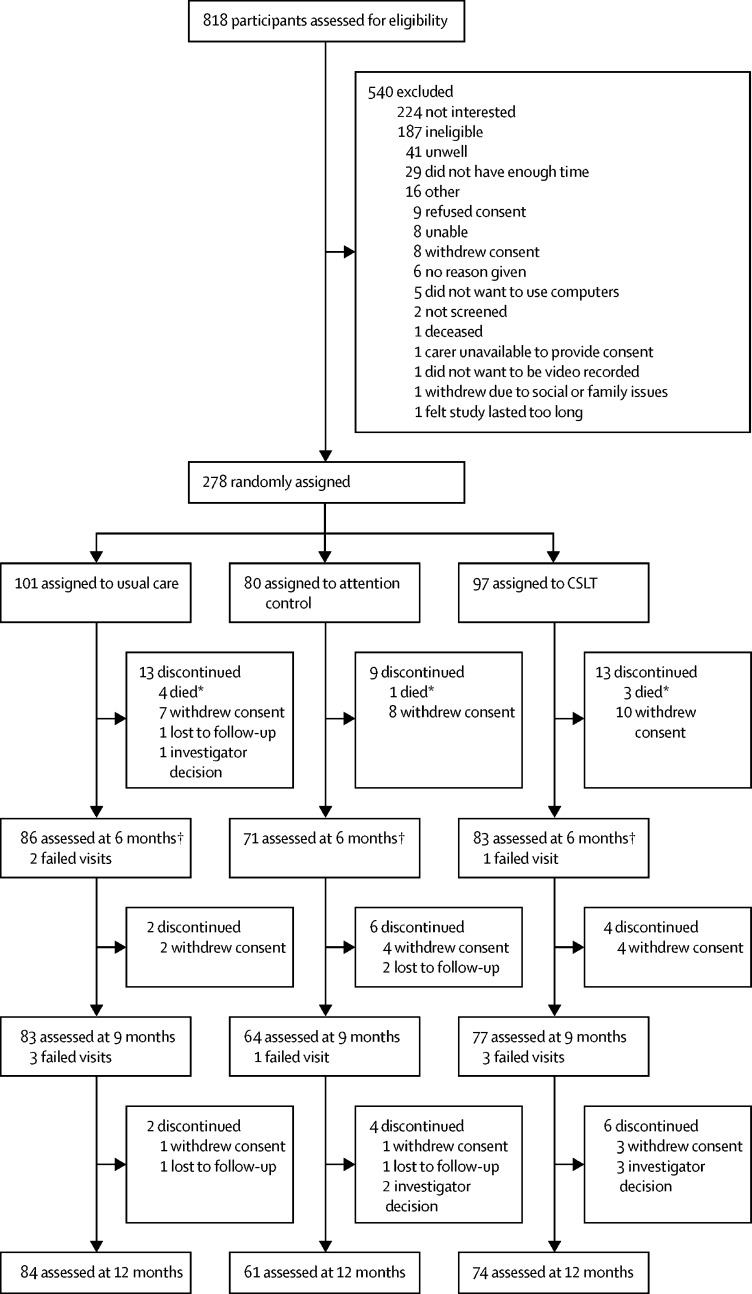
BACKGROUND: Post-stroke aphasia might improve over many years with speech and language therapy; however speech and language therapy is often less readily available beyond a few months after stroke. We assessed self-managed computerised speech and language therapy (CSLT) as a means of providing more therapy than patients can access through usual care alone. METHODS: In this pragmatic, superiority, three-arm, individually randomised, single-blind, parallel group trial, patients were recruited from 21 speech and language therapy departments in the UK. Participants were aged 18 years or older and had been diagnosed with aphasia post-stroke at least 4 months before randomisation; they were excluded if they had another premorbid speech and language disorder caused by a neurological deficit other than stroke, required treatment in a language other than English, or if they were currently using computer-based word-finding speech therapy. Participants were randomly assigned (1:1:1) to either 6 months of usual care (usual care group), daily self-managed CSLT plus usual care (CSLT group), or attention control plus usual care (attention control group) with the use of computer-generated stratified blocked randomisation (randomly ordered blocks of sizes three and six, stratified by site and severity of word finding at baseline based on CAT Naming Objects test scores). Only the outcome assessors and trial statistician were masked to the treatment allocation. The speech and language therapists who were doing the outcome assessments were different from those informing participants about which group they were assigned to and from those delivering all interventions. The statistician responsible for generating the randomisation schedule was separate from those doing the analysis. Co-primary outcomes were the change in ability to retrieve personally relevant words in a picture naming test (with 10% mean difference in change considered a priori as clinically meaningful) and the change in functional communication ability measured by masked ratings of video-recorded conversations, with the use of Therapy Outcome Measures (TOMs), between baseline and 6 months after randomisation (with a standardised mean difference in change of 0·45 considered a priori as clinically meaningful). Primary analysis was based on the modified intention-to-treat (mITT) population, which included randomly assigned patients who gave informed consent and excluded those without 6-month outcome measures. Safety analysis included all participants. This trial has been completed and was registered with the ISRCTN, number ISRCTN68798818. FINDINGS: From Oct 20, 2014, to Aug 18, 2016, 818 patients were assessed for eligibility, of which 278 (34%) participants were randomly assigned (101 [36%] to the usual care group; 97 [35%] to the CSLT group; 80 [29%] to the attention control group). 86 patients in the usual care group, 83 in the CSLT group, and 71 in the attention control group contributed to the mITT. Mean word finding improvements were 1·1% (SD 11·2) in the usual care group, 16·4% (15·3) in the CSLT group, and 2·4% (8·8) in the attention control group. Word finding improvement was 16·2% (95% CI 12·7 to 19·6; p<0·0001) higher in the CSLT group than in the usual care group and was 14·4% (10·8 to 18·1) higher than in the attention control group. Mean changes in TOMs were 0·05 (SD 0·59) in the usual care group (n=84), 0·04 (0·58) in the CSLT group (n=81), and 0·10 (0·61) in the attention control group (n=68); the mean difference in change between the CSLT and usual care groups was -0·03 (-0·21 to 0·14; p=0·709) and between the CSLT and attention control groups was -0·01 (-0·20 to 0·18). The incidence of serious adverse events per year were rare with 0·23 events in the usual care group, 0·11 in the CSLT group, and 0·16 in the attention control group. 40 (89%) of 45 serious adverse events were unrelated to trial activity and the remaining five (11%) of 45 serious adverse events were classified as unlikely to be related to trial activity. INTERPRETATION: CSLT plus usual care resulted in a clinically significant improvement in personally relevant word finding but did not result in an improvement in conversation. Future studies should explore ways to generalise new vocabulary to conversation for patients with chronic aphasia post-stroke. FUNDING: National Institute for Health Research, Tavistock Trust for Aphasia.
Overview
CoChat Summary
TL;DR
In the Big CACTUS multicentre randomised trial, self-managed computerised speech and language therapy (CSLT) plus usual care improved personally relevant word finding in chronic post-stroke aphasia compared with usual care or attention control, but did not improve functional communication in conversation. CSLT was low-cost and safe, with cost-effectiveness more likely for mild or moderate word-finding difficulties than for the whole aphasia population.
Key findings
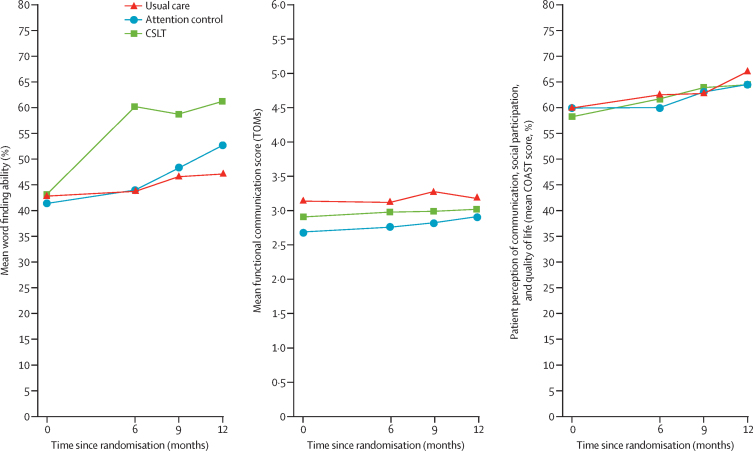
- Among 240 participants in the modified intention-to-treat analysis, mean word-finding improvement was 1·1% (SD 11·2) with usual care, 16·4% (15·3) with CSLT, and 2·4% (8·8) with attention control. CSLT improved word finding by 16·2% (95% CI 12·7–19·6; p<0·0001) versus usual care and 14·4% (10·8–18·1) versus attention control, exceeding the prespecified 10% clinically important difference; improvement was maintained at 9 and 12 months.
- Functional communication on TOMs did not improve: mean changes were 0·05 (SD 0·59) with usual care, 0·04 (0·58) with CSLT, and 0·10 (0·61) with attention control; CSLT vs usual care adjusted mean difference was –0·03 (–0·21 to 0·14; p=0·709) and CSLT vs attention control was –0·01 (–0·20 to 0·18).
- The key secondary COAST outcome did not show sufficient improvement: CSLT vs usual care 0·5 (–3·1 to 4·1; p=0·772); CSLT vs attention control 3·8 (0·0 to 7·5; p=0·051).
- Safety events were rare: serious adverse event incidence per year was 0·23 in usual care, 0·11 in CSLT, and 0·16 in attention control; 40 (89%) of 45 serious adverse events were unrelated to trial activity and five (11%) were unlikely to be related. In the CSLT group, 23 (27%) of 85 participants reported fatigue or anxiety at some point during 6 months of computer use.
- Health economic results: incremental cost of CSLT was £733 (95% credible interval 674–798), incremental QALY gain was 0·017 (–0·05 to 0·10), and ICER was £42,686 per QALY gained versus usual care and £40,164 versus attention control; ICERs were £22,371 for mild and £28,819 for moderate word-finding difficulty, while CSLT was more expensive and produced fewer QALYs than usual care for severe word-finding difficulties.
Methods
- Pragmatic, superiority, three-arm, individually randomised, single-blind, parallel group trial recruiting from 21 speech and language therapy departments in the UK. Participants were aged ≥18 years with aphasia confirmed after stroke at least 4 months before randomisation, word-finding difficulties (CAT Naming Objects score 5–43/48), and ability to perform StepByStep matching and repetition tasks at ≥50% accuracy; exclusions included other premorbid speech/language disorder, need for treatment in a language other than English, or current computer-based word-finding therapy.
- Participants were randomly assigned 1:1:1 to 6 months of usual care, CSLT plus usual care, or attention control plus usual care, using stratified block randomisation by site and baseline word-finding severity. Outcome assessors and the trial statistician were masked; treating therapists and participants were not.
- Co-primary outcomes were change from baseline to 6 months in a picture naming test of 100 personally relevant words and in functional communication measured by masked TOMs activity ratings of video-recorded conversations. Primary analysis used the modified intention-to-treat population, multiple linear regression adjusted for baseline outcome and stratification factors, and a Hochberg multiple testing procedure; safety analysis included all participants.
Limitations
- The paper states that only one computer program and one language domain (word finding) were tested; the software was English-only, so patients requiring another language were excluded; participant ethnicity was not recorded; and further research is needed to identify patient characteristics, motivation, dose response, and effects of continued practice.
- The paper also notes that recruitment stopped after 278 of 285 planned participants, with chance imbalance across groups; TOMs may not detect small changes; the trial was not powered to detect a meaningful QALY difference; and attention control activity with puzzle books could not be measured as accurately as computer practice.
- Evident from the text: the attention control group was smaller and had some baseline differences, including a greater proportion with severe comprehension difficulties and lower baseline TOMs scores, which the authors note may have affected power and comparisons.
Model-written summary. Check it against the paper before relying on it.
Integrity signals
Registry
Cites
Statistics
Figures
Verification
Claims the paper makes
1 Valid · 0 Not valid · 10 Not checked · 96 Own results and interpretations
A result the paper reports from its own data — it cites no other source for it, so there is none to check. The quote shows it is in the paper.
In the paper
“Improvement was maintained at 9 and 12 months (figure 2).”
§ Self-managed, computerised speech and language therapy for patients with chronic aphasia post-stroke compared with usual care or attention control (Big CACTUS): a multicentre, single-blinded, randomised controlled trial > Results
plain- Asserted: passes — The authors put it forward as true.
- Checkable: passes — It can be checked against evidence.
- Load-bearing: passes — The paper’s conclusions depend on it.
- Based: passes — The paper gives a reason why it holds.
A result the paper reports from its own data — it cites no other source for it, so there is none to check. The quote shows it is in the paper.
In the paper
“For CSLT compared with attention control, the ICER was ·40 164 per QALY gained.”
§ Self-managed, computerised speech and language therapy for patients with chronic aphasia post-stroke compared with usual care or attention control (Big CACTUS): a multicentre, single-blinded, randomised controlled trial > Results
plain- Asserted: passes — The authors put it forward as true.
- Checkable: passes — It can be checked against evidence.
- Load-bearing: passes — The paper’s conclusions depend on it.
- Based: passes — The paper gives a reason why it holds.
A result the paper reports from its own data — it cites no other source for it, so there is none to check. The quote shows it is in the paper.
In the paper
“57 (61%) of 94 participants in the CSLT group continued to use the computer exercises unsupported beyond the 6-month timepoint.”
§ Self-managed, computerised speech and language therapy for patients with chronic aphasia post-stroke compared with usual care or attention control (Big CACTUS): a multicentre, single-blinded, randomised controlled trial > Results
plainn = 94- Asserted: passes — The authors put it forward as true.
- Checkable: passes — It can be checked against evidence.
- Load-bearing: unclear — It is unclear whether the paper’s conclusions depend on it.
- Based: passes — The paper gives a reason why it holds.
A result the paper reports from its own data — it cites no other source for it, so there is none to check. The quote shows it is in the paper.
In the paper
“and was 14·4% (10·8 to 18·1) higher than in the attention control group.”
§ Self-managed, computerised speech and language therapy for patients with chronic aphasia post-stroke compared with usual care or attention control (Big CACTUS): a multicentre, single-blinded, randomised controlled trial > Abstract > Findings
plainstates a causen = 71- Asserted: passes — The authors put it forward as true.
- Checkable: passes — It can be checked against evidence.
- Load-bearing: passes — The paper’s conclusions depend on it.
- Based: passes — The paper gives a reason why it holds.
- Rests on 2 assumptions not shown here.
A result the paper reports from its own data — it cites no other source for it, so there is none to check. The quote shows it is in the paper.
In the paper
“the mean difference in change between the CSLT and usual care groups was –0·03 (–0·21 to 0·14; p=0·709)”
§ Self-managed, computerised speech and language therapy for patients with chronic aphasia post-stroke compared with usual care or attention control (Big CACTUS): a multicentre, single-blinded, randomised controlled trial > Abstract > Findings
plainn = 81- Asserted: passes — The authors put it forward as true.
- Checkable: passes — It can be checked against evidence.
- Load-bearing: passes — The paper’s conclusions depend on it.
- Based: passes — The paper gives a reason why it holds.
- Rests on an assumption not shown here.
47 more claims
Create a free account to see all 107 claims and to verify the 1 reference still open.
- It may state two separate claims as one. 36
- Probably not a substantial claim. 27
- The quote only partly states this claim. 1
Claims other papers make about this one
Each is checked against this paper’s own text: does it say what the citing paper says it does?
The cited source doesn’t support the claim as written.
In the citing paper
“For instance, in the UK, Palmer et al. (2019) found that individuals more than 3 months’ post‐stroke received a median of just 380 min of SLT over a 3‐month period, which is equivalent to only 30 min per week.”
From Exploring the Effectiveness of Technology‐Based Interventions in Aphasia Rehabilitation: A Systematic Review (2026) · cites this paper as Palmer et al. (2019)
Checked by a reasoning model — may be wrong.
Experimental — accuracy not yet measuredThe source backs part of the claim, not all of it — or backs it for a different population, condition or comparison.
In the citing paper
“Despite these findings, many individuals worldwide receive much less therapy than is recommended.”
From Exploring the Effectiveness of Technology‐Based Interventions in Aphasia Rehabilitation: A Systematic Review (2026) · cites this paper as Palmer et al. (2019)
Experimental — accuracy not yet measuredThe source backs part of the claim, not all of it — or backs it for a different population, condition or comparison.
In the citing paper
“Despite these differences in approach, the direction of findings was consistent across both modalities at sufficient dose, with high‐quality RCTs in each demonstrating superiority over face‐to‐face therapy (Palmer et al. 2019; Kurul et al. 2026).”
From Exploring the Effectiveness of Technology‐Based Interventions in Aphasia Rehabilitation: A Systematic Review (2026) · cites this paper as Palmer et al. 2019
Experimental — accuracy not yet measuredThe source backs part of the claim, not all of it — or backs it for a different population, condition or comparison.
In the citing paper
“The strongest evidence came from studies that met the dose threshold and demonstrated clear between‐group superiority (Palmer et al. 2019; Kurul et al. 2026).”
From Exploring the Effectiveness of Technology‐Based Interventions in Aphasia Rehabilitation: A Systematic Review (2026) · cites this paper as Palmer et al. 2019
Experimental — accuracy not yet measuredThe source backs part of the claim, not all of it — or backs it for a different population, condition or comparison.
In the citing paper
“Its prominence reflects both the maturity of the software and its capacity to deliver structured, intensive therapy at scale that is not feasible in routine clinical settings (e.g., Palmer et al. 2019).”
From Exploring the Effectiveness of Technology‐Based Interventions in Aphasia Rehabilitation: A Systematic Review (2026) · cites this paper as Palmer et al. 2019
Experimental — accuracy not yet measured
14 more claims about this paper
Create a free account to see every claim other papers make about this one.
Self-check
Percentages, sums and reported differences re-computed from the paper’s own numbers.
Each contradiction between two passages listed here was confirmed by an independent check.
Rated minor: it would not touch a result — a value no result rests on, a p-value that stays on the same side of the significance level, or a conflict that is clerical, resolved elsewhere in the paper, or outside its own findings.
In the paper
§ Self-managed, computerised speech and language therapy for patients with chronic aphasia post-stroke compared with usual care or attention control (Big CACTUS): a multicentre, single-blinded, randomised controlled trial > Results
“a lower proportion of participants with severe word finding difficulties in the attention control group than the CSLT or usual care groups.”
§ Self-managed, computerised speech and language therapy for patients with chronic aphasia post-stroke compared with usual care or attention control (Big CACTUS): a multicentre, single-blinded, randomised controlled trial > Results
“| Severe | 22 (25%) | 21 (25%) | 19 (27%) |”
Rated minor: it would not touch a result — a value no result rests on, a p-value that stays on the same side of the significance level, or a conflict that is clerical, resolved elsewhere in the paper, or outside its own findings.
In the paper
§ Self-managed, computerised speech and language therapy for patients with chronic aphasia post-stroke compared with usual care or attention control (Big CACTUS): a multicentre, single-blinded, randomised controlled trial > Results
“a greater proportion of participants with severe comprehension difficulties”
§ Self-managed, computerised speech and language therapy for patients with chronic aphasia post-stroke compared with usual care or attention control (Big CACTUS): a multicentre, single-blinded, randomised controlled trial > Results
“| Severe | 3 (3%) | 5 (6%) | 3 (4%) |”
Citations
Cites
Hoffmann, T. C., Glasziou, P. P., Boutron, I., Milne, R., Perera, R., Moher, D., Altman, D. G., Barbour, V., Macdonald, H., Johnston, M., et al. (2014) · BMJ · doi:10.1136/bmj.g1687 · Cited by 10,548
Development and preliminary testing of the new five-level version of EQ-5D (EQ-5D-5L)
Herdman, M., Gudex, C., Lloyd, A., Janssen, M., Kind, P., Parkin, D., Bonsel, G., & Badia, X. (2011) · Quality of Life Research · doi:10.1007/s11136-011-9903-x · Cited by 9,795
International Classification of Functioning, Disability and Health
Chard, G. (2004) · British Journal of Occupational Therapy · doi:10.1177/030802260406700101 · Cited by 3,688
Multiple Comparison Procedures
Hochberg, Y., & Tamhane, A. C. (1987) · Wiley Series in Probability and Statistics · doi:10.1002/9780470316672 · Cited by 2,389
The PRECIS-2 tool: designing trials that are fit for purpose
Loudon, K., Treweek, S., Sullivan, F., Donnan, P., Thorpe, K. E., & Zwarenstein, M. (2015) · BMJ · doi:10.1136/bmj.h2147 · Cited by 1,846
Speech and language therapy for aphasia following stroke
Brady, M. C., Kelly, H., Godwin, J., Enderby, P., & Campbell, P. (2016) · Cochrane Database of Systematic Reviews · doi:10.1002/14651858.cd000425.pub4 · Cited by 1,159
Self-citationSwinburn, K., Porter, G., & Howard, D. (2012) · PsycTESTS Dataset · doi:10.1037/t13733-000 · Cited by 601
Physical rehabilitation approaches for the recovery of function and mobility following stroke
Todhunter-Brown, A., Baer, G., Campbell, P., Choo, P. L., Forster, A., Morris, J., Pomeroy, V. M., & Langhorne, P. (2014) · Cochrane Database of Systematic Reviews · doi:10.1002/14651858.cd001920.pub3 · Cited by 582
Breitenstein, C., Grewe, T., Flöel, A., Ziegler, W., Springer, L., Martus, P., Huber, W., Willmes, K., Ringelstein, E. B., Haeusler, K. G., et al. (2017) · The Lancet · doi:10.1016/s0140-6736(17)30067-3 · Cited by 387
Drummond, M., Brandt, A., Luce, B., & Rovira, J. (1993) · International Journal of Technology Assessment in Health Care · doi:10.1017/s0266462300003007 · Cited by 230
Research works printed but not linked: 1
- Enderby P John A Petheram B Therapy outcome measures for rehabilitation professionals: speech and language therapy, physiotherapy, occupational therapy 2nd edn. 2013 John Wiley & Sons Chichester
Cited by
Items 101–200 of 200
Lancioni, G. E., O’Reilly, M. F., Sigafoos, J., D’Amico, F., Spica, A., Buonocunto, F., Gaudio, V. D., Lanzilotti, C., & Navarro, J. (2020) · Advances in Neurodevelopmental Disorders · doi:10.1007/s41252-020-00183-6 · Cited by 4
Katsari, M., Angelopoulou, G., Laskaris, N., Potagas, C. M., & Kasselimis, D. S. (2022) · Brain Sciences · doi:10.3390/brainsci12101273 · Cited by 5
Clinical evidence in ischemic stroke: Where we have gone so far and hopes for the future
Li, T., Song, C., Liebeskind, D. S., Dmytriw, A. A., Xu, R., Wang, X., Wang, J., Zhao, H., Cao, W., Gong, H., et al. (2023) · European Journal of Neurology · doi:10.1111/ene.16047 · Cited by 3
Cuperus, P., de Kok, D., de Aguiar, V., & Nickels, L. (2024) · Aphasiology · doi:10.1080/02687038.2024.2384542 · Cited by 4
Is Aphasia Treatment Beneficial for the Elderly? A Review of Recent Evidence
Fabian, R., Bunker, L. D., & Hillis, A. E. (2020) · Current Physical Medicine and Rehabilitation Reports · doi:10.1007/s40141-020-00287-z · Cited by 6
Wong, W. W.-S., & Law, S. (2022) · Aphasiology · doi:10.1080/02687038.2022.2096873 · Cited by 6
Breaking the communication barrier using new technologies in aphasic patients post-stroke
Ferrete Ruíz, E. J., de Torres Chacón, M. D. L. R., Perez Sánchez, S., Domínguez Mayoral, A., Gamero García, M. Á., Barragan Prieto, A., Ruiz Bayo, L., Briales Grzib, H., & Montaner Villalonga, J. (2023) · Revista Científica de la Sociedad de Enfermería Neurológica (English ed ) · doi:10.1016/j.sedeng.2022.06.002 · Cited by 4
Klamroth-Marganska, V., Giovanoli, S., Easthope, C. A., & Schönhammer, J. G. (2022) · Springer eBooks · doi:10.1007/978-3-031-08995-4_25 · Cited by 6
Gan, L., Huang, L., Li, L., Yang, X., Meng, L., Pang, Z., & Wei, Q. (2025) · Scientific Reports · doi:10.1038/s41598-025-06258-5 · Cited by 3
“Table 5 demonstrates significant interaction effects on quality of life scores assessed by the SAQOL-39 scale, at the TIME[1], Group A demonstrated a statistically significant improvement in SAQOL-39 scores compared to Group C, with a mean increase of 9.57 points (95% CI [− 18.39, − 0.61]; P = 0.037).”
InfluentialGriffin-Musick, J. R., Off, C. A., Scharp, V. L., Fahey, D., Slovarp, L. J., & Quindry, J. C. (2025) · Journal of Speech Language and Hearing Research · doi:10.1044/2025_jslhr-24-00806 · Cited by 4
Schütz, M., Lindström, R., Henriksson, I., Ulfarsson, T., & Schalling, E. (2025) · Aphasiology · doi:10.1080/02687038.2025.2569040 · Cited by 4
Leaman, M. C., Edmonds, L. A., Oleson, J., & Williams, K. N. (2026) · American Journal of Speech-Language Pathology · doi:10.1044/2025_ajslp-25-00113 · Cited by 3
The Efficacy and Utility of Constant Therapy in Poststroke Aphasia Rehabilitation
Kiran, S., & Smith, Z. M. (2025) · Perspectives of the ASHA Special Interest Groups · doi:10.1044/2025_persp-24-00260 · Cited by 5
Understanding the Economics of Aphasia: Recent Findings from Speech and Language Research
Jacobs, M., & Ellis, C. (2022) · Seminars in Speech and Language · doi:10.1055/s-0042-1749132 · Cited by 4
“Difficult but Good”: enjoying accessible digital creativity
Roper, A., Barnard, R., Cruice, M. N., Marshall, J., Mulholland, A., Neate, T., & Wilson, S. (2023) · Aphasiology · doi:10.1080/02687038.2022.2160624 · Cited by 5
“Identified benefits include the opportunities for self-directed practice (Palmer et al., 2019) and compensating for aphasic CONTACT Abi Roper Abi.Roper.1@city.ac.uk 1 Now at Wolfson Institute of Population Health, Queen Mary University of London.”
BackgroundRose, M. L. (2023) · International Journal of Speech-Language Pathology · doi:10.1080/17549507.2023.2220995 · Cited by 10
“The Big CACTUS RCT (n¼278; Palmer et al., 2019) showed significantly improved naming after 20–30minutes per day of selfmanaged computer naming therapy over 6months.”
BackgroundHarrison, M., Palmer, R., & Cooper, C. (2023) · JMIR Rehabilitation and Assistive Technologies · doi:10.2196/47542 · Cited by 3
“Demonstrating that CSLT can be used to support sufficient amounts of therapy practice to enable effective retrieval of specific words, with speech and language therapists (SLTs) needing to provide additional support and activities to help people with aphasia use the words in everyday contexts [5,7].”
BackgroundMethodInfluentialSelf-citationCordella, C., & Kiran, S. (2024) · American Journal of Speech-Language Pathology · doi:10.1044/2024_ajslp-23-00285 · Cited by 4
Economic Evaluations of Speech and Language Therapy Interventions: A Scoping Review
Hill, J. E., Kulkarni, A., Moll, D., Meteyard, L., Shelley, L., Chugg, G., Jones, G., Benedetto, V., Harris, C., Doherty, A. J., et al. (2025) · International Journal of Language & Communication Disorders · doi:10.1111/1460-6984.70091 · Cited by 3
Varley, R. A., Bruns, C., Warren, J. E., Dąbrowska, E., & Javadi, A. (2020) · OSF Preprints (OSF Preprints) · doi:10.31219/osf.io/fduqh · Cited by 4
Kim, E. S., Laird, L., Wilson, C., Stewart, S., Mildner, P., Möller, S., Schatz, R., Spang, R. P., Voigt-Antons, J.-N., & Rochon, E. (2025) · JMIR mHealth and uHealth · doi:10.2196/67711 · Cited by 2
Design considerations for clinical trials in aphasia
Palmer, R. (2020) · Annals of Indian Academy of Neurology · doi:10.4103/aian.aian_453_20 · Cited by 3
“[6]”
BackgroundResultInfluentialSelf-citationUsing creative digital technologies in aphasia rehabilitation
Marshall, J., Roper, A., Neate, T., Cruice, M. N., & Wilson, S. (2022) · ACM SIGACCESS Accessibility and Computing · doi:10.1145/3560232.3560234 · Cited by 2
Charting the Course of Aphasia Recovery: Factors, Trajectories, and Outcomes
Marte, M. J., Russell-Meill, M., Carvalho, N., & Kiran, S. (2024) · Annual Review of Linguistics · doi:10.1146/annurev-linguistics-011724-121245 · Cited by 6
Xu, S., Wang, W., Liang, C., Chen, S., Huang, Z., Li, X., Chen, Y., Lin, X., Zou, Y., Jia, J., et al. (2025) · BMC Neurology · doi:10.1186/s12883-025-04218-0 · Cited by 2
“Both disorders are characterised by high prevalence, high disability rates and poor rehabilitation outcomes, which seriously affect the ability of patients to live independently and return to society, and place a heavy burden on families and society [3].”
Where are we now with aphasia after stroke?
Enderby, P., & Sutton, L. (2020) · Annals of Indian Academy of Neurology · doi:10.4103/aian.aian_666_20 · Cited by 6
“A pragmatic, superiority, three-arm, individually randomised, single-blind, parallel group trial[9] recruited patients aged over 18 years who had been diagnosed with aphasia post-stroke at least 4 months before randomisation.”
BackgroundSelf-citationBuilding an Online Platform for Speech and Language Therapy in Germany: Users Needs and Requirements
Giordano, K., Wonschik, M., & Leinweber, J. (2023) · Lecture notes in computer science · doi:10.1007/978-3-031-35897-5_39 · Cited by 3
Chadd, K. E., Harding, S. A., Mortley, J., & Enderby, P. (2023) · Advances in Communication and Swallowing · doi:10.3233/acs-220018 · Cited by 4
Self-citationFord, A. L. B., Kuchler, K., Cakir-Dilek, B., Elmquist, M., & Finestack, L. H. (2024) · American Journal of Speech-Language Pathology · doi:10.1044/2024_ajslp-23-00389 · Cited by 2
Flight, L., Brennan, A., Wilson, I., & Chick, S. E. (2024) · Value in Health · doi:10.1016/j.jval.2024.06.004 · Cited by 2
“25 Big CACTUS was funded by the NIHR Health Technology Assessment Programme.”
Atalık, G., & Kayıkçı, M. E. K. (2024) · Disability and Rehabilitation Assistive Technology · doi:10.1080/17483107.2024.2431056 · Cited by 3
Gorshkov, G., Buivolova, O. V., Gavrilova, E., & Dragoy, O. (2025) · Neurorehabilitation · doi:10.1177/10538135241296737 · Cited by 3
“In 16.7% of the studies, the therapy lasted three weeks or fewer (Joubert et al., 2024; Laures-Gore et al., 2021; Pitt et al., 2017).”
InfluentialYu, N., Li, Y., Han, X., et al. (2025) · Brain and Behavior · doi:10.1002/brb3.70552 · Cited by 2
Yu, M., Zhu, L., Chen, W., Liu, J., Liu, Z., & Song, A. (2026) · ACM International Conference on Intelligent User Interfaces (IUI) · doi:10.1145/3742413.3789090 · Cited by 2
Li, X., Gao, Y., Zhang, C., Zhang, Q., Xin, X., Tan, Z., Zhang, B., Fan, R., Huang, X., Xu, M., et al. (2021) · Evidence-based Complementary and Alternative Medicine · doi:10.1155/2021/8880590 · Cited by 3
“A review of clinical trials for PSA over the past 5 years revealed that a multitude of interventions can be beneficial in improving language and functional outcomes for patients with PSA [5], with the majority of high-quality clinical research focusing on the chronic phase of aphasia [7–9].”
Vitali, C., Fusari, G., Baldanzi, C., Cacciatore, D. M., Crispiatico, V., Carullo, A., Rovaris, M., Cattaneo, D., Baglio, F., & Isernia, S. (2023) · Digital Health · doi:10.1177/20552076231218150 · Cited by 5
“31 Also, speech therapy telerehabilitation delivery gained attention, 32 with latest contributions supporting its viability to treat language disturbances at distance 33 and showing a good attitude of speech therapists toward the adoption of this new delivery path.”
BackgroundLeff, A. P., & Crinion, J. (2022) · Journal of Neurology Neurosurgery & Psychiatry · doi:10.1136/jnnp-2022-329267 · Cited by 2
Stroke pathway – Evidence Base Commissioning. An Evidence Review
Marshall, I. J., McKevitt, C., Wang, Y., Wafa, H. A., Skolarus, L. E., Bhalla, A., Muruet-Gutierrez, W., Emmett, E. S., Sommerville, P., Birns, J., et al. (2022) · doi:10.3310/nihropenres.1115195.1 · Cited by 2
Russell, A. M., Shepherd, V., Woolfall, K., Young, B., Gillies, K., Volkmer, A., Jayes, M., Huxtable, R., Perkins, A., Noor, N. M., et al. (2022) · Research Square · doi:10.21203/rs.3.rs-2123156/v1 · Cited by 2
Yang, F.-A., Huang, C., Lu, C.-H., Wu, P.-J., Escorpizo, R. S., & Chen, H. (2024) · Research Square · doi:10.21203/rs.3.rs-4312160/v1 · Cited by 2
Kodani, Y., Nagami, S., Yokozeki, A., Fukunaga, S., Nakamura, K., & Nakamura, H. (2025) · PLOS ONE · doi:10.1371/journal.pone.0319805 · Cited by 1
“[31,34,39,59,60] were rated “Moderate,” encompassing synchronous Tele-SLT assessment and training, as well as asynchronous Tele-SLT training.”
Gibbons, N., Cook, K. J., Sutherland, D., & Tillard, G. (2024) · Folia Phoniatrica et Logopaedica · doi:10.1159/000538988 · Cited by 2
“Instead, studies completed across multiple countries have shown that aphasia treatment is typically provided in the 45 – 90 min range weekly [8, 15 – 17].”
Wong, W. W.-S., & Kwok, H. T. K. (2025) · Aphasiology · doi:10.1080/02687038.2025.2495611 · Cited by 1
“COAST has been used in some large-scale randomized controlled trials as an outcome measure (e.g., Bowen et al., 2012; Palmer et al., 2019).”
Zannino, G. D., Stanzione, A., Laurenzio, R. D., Annicchiarico, R., Formisano, R., Caltagirone, C., & Carlesimo, G. A. (2025) · Aphasiology · doi:10.1080/02687038.2025.2514532 · Cited by 1
“In previous self-managed protocols, ASR was used for providing feedback during training in the frame of an errorful learning paradigm (see, for example, Ballard et al., 2019; Palmer et al., 2019; Raymer et al., 2006; see; Zheng et al., 2015; Adikari et al., 2024, for reviews).”
UI/UX design requirements for young stroke survivors: recommendations from the literature
Passey, D., Ferdous, H. S., Burns, K., Gilbert, C. A., Power, E., Rose, T., Bernhardt, J. A., Thijs, V., & Daniel Capurro, N. (2025) · npj Digital Medicine · doi:10.1038/s41746-025-01796-8 · Cited by 1
Bruns, C., Rodgers, F., Dathan, K., Dean, M. P., Warren, J. E., Fleming, V., Javadi, A., & Varley, R. A. (2025) · Aphasiology · doi:10.1080/02687038.2025.2530572 · Cited by 1
“A typical result for noun interventions is improvement of treated words, but limited generalisation to untreated items or spontaneous speech (e.g., Palmer et al., 2019).”
M., N., & Philip, V. S. (2025) · Aphasiology · doi:10.1080/02687038.2025.2555871 · Cited by 1
Kim, S., Kim, M., Cho, S., Kim, J., Kim, J., & Kim, Y. (2025) · Digital Health · doi:10.1177/20552076251381630 · Cited by 1
“25 However, this approach has been criticized for its passive nature and the risk of inducing boredom due to its repetitive and constrained structure.”
Li, N., Liao, Y., Zhang, Y., Qin, J., Gao, Y., Rong, X., Shi, H., Gu, Y., & Yu, H. (2025) · BMC Nursing · doi:10.1186/s12912-025-04019-3 · Cited by 3
Simulating tDCS-induced electric fields in stroke patients: Realistic-lesion head models are needed
Kimura, I., Meinzer, M., Antonenko, D., Darkow, R., Flöel, A., & Thielscher, A. (2025) · NeuroImage Clinical · doi:10.1016/j.nicl.2025.103931 · Cited by 3
Schultz, K., Larkman, C. S., Rose, M. L., Togher, L., & Carragher, M. (2026) · American Journal of Speech-Language Pathology · doi:10.1044/2025_ajslp-25-00285 · Cited by 2
Radford, K., Grant, M. I., Holmes, J. A., Phillips, J. S., Powers, K., Chambers, R. L., Craven, K., Bell, B., McKevitt, C., Clarke, D., et al. (2025) · Health Technology Assessment · doi:10.3310/gjkr0715 · Cited by 4
Self-citationPulvermüller, F., Jäger, A., Osterloh, M. R., Knechtges, J., Arndt, V., Sadlon, A., Berthier, M. L., & Mohr, B. (2026) · Brain Communications · doi:10.1093/braincomms/fcag252 · Cited by 1
Language and Cognitive Rehabilitation after Stroke
Brady, M., & Evans, J. J. (2020) · Cambridge University Press eBooks · doi:10.1017/9781316286234.025 · Cited by 1
Self-citationListen up: it is time to integrate neuroscience and technologies into aphasia rehabilitation
Ralph, M. A. L. (2021) · Journal of Neurology Neurosurgery & Psychiatry · doi:10.1136/jnnp-2020-325349 · Cited by 2
Rapid review of consumer-grade software for aphasia rehabilitation
Mabin, J., Shiggins, C., Reardon, A., Penfold, E., Keily, B., Riba, M., Campbell, J., & Brownsett, S. L. E. (2025) · Aphasiology · doi:10.1080/02687038.2025.2473032 · Cited by 2
“Fewer studies investigated software targeting receptive (Cherney, 2010; Fleming et al., 2021; Palmer et al., 2019; Woodhead et al., 2018), or expressive and receptive language (Braley et al., 2021; De Luca et al., 2018; Kiran et al., 2014; Palmer et al., 2012; Raymer et al., 2006; Stark &…”
InfluentialTranskranielle Gleichstromstimulation bei Aphasie nach Schlaganfall
Meinzer, M., Unger, N., Rysop, A. U., & Flöel, A. (2025) · Springer eBooks · doi:10.1007/978-3-662-70454-7_15 · Cited by 1
Forero, S. J. J., & Palmer, R. (2022) · International Journal of Language & Communication Disorders · doi:10.1111/1460-6984.12814 · Cited by 3
Self-citationГеннадьевна, В. И., Тофиковна, Л. Е., Matveeva, M., & Rodin, E. (2023) · Bulletin of Kemerovo State University Series Humanities and Social Sciences · doi:10.21603/2542-1840-2023-7-2-161-168 · Cited by 2
Aphasia: Acquired Language and Speech Disorder
Mirman, D. (2020) · Elsevier eBooks · doi:10.1016/b978-0-12-819641-0.00031-1 · Cited by 2
Liu, H. X., Betke, M., Ishwar, P. S., & Kiran, S. (2026) · medRxiv · doi:10.64898/2026.01.22.26344656 · Cited by 1
Alhejji, B., Cunningham, S., Dorney, S., & Palmer, R. (2026) · International Journal of Language & Communication Disorders · doi:10.1111/1460-6984.70322 · Cited by 1
Self-citationFarrington-Douglas, C., Leff, A. P., & Square, U. Q. (2020) · Advances in Clinical Neuroscience & Rehabilitation · doi:10.47795/aebq6694
Python, G., Krethlow, G., & Chételat, D. (2021) · Neuropsychologie clinique et appliquée · doi:10.46278/j.ncacn202104294
Pérez, D. A. (2004) · Alto rendimiento: ciencia deportiva, entrenamiento y fitness
Improving coordination of international aphasia research
Ali, M., & Rose, M. L. (2022) · Aphasiology · doi:10.1080/02687038.2021.1985350 · Cited by 1
“…last decade has seen an increase in the development, conduct and publication of high-quality aphasia studies including well-powered randomised controlled trials (Breitenstein et al., 2017; Godecke et al., 2020; Kristinsson et al., 2021; Nouwens et al., 2017; Palmer et al., 2019; Rose et al., 2019).”
BackgroundRuíz, E. J. F., Chacón, M. D. L. R. D. T., Pérez-Sánchez, S., Mayoral, A. D., García, M. Á. G., Barragán-Prieto, A., Bayo, L. R., Grzib, H. B., & Montaner, J. (2022) · Revista Científica de la Sociedad Española de Enfermería Neurológica · doi:10.1016/j.sedene.2022.03.002
Hesketh, E., White, P., Simkiss, D., & Roulstone, S. (2023) · International Journal of Language & Communication Disorders · doi:10.1111/1460-6984.12877 · Cited by 5
Rickert, E., Altermatt, S., Park, S., Kuntner, K. P., Beierlein, S. W., Blechschmidt, A., Reymond, C., Degen, M., & Hemm, S. (2024) · SSRN Electronic Journal · doi:10.2139/ssrn.4790951
Petrie, J., Loban, A., Turton, E., Derebecka, J., North, S., Herbert, E., & Hind, D. (2024) · Contemporary Clinical Trials · doi:10.1016/j.cct.2024.107573 · Cited by 2
Digital participation and communication disorders across the lifespan
(2024) · Frontiers research topics · doi:10.3389/978-2-8325-4920-9
Rehabilitation von Personen mit einer Aphasie und Dysarthrie
Kurfess, C., Ammer, F., & Grötzbach, H. (2024) · Springer eBooks · doi:10.1007/978-3-662-66957-0_14 · Cited by 5
(2024) · Journal of Neurology and Experimental Neuroscience · doi:10.17756/jnen.2024-115 · Cited by 1
“However, it is common practice, illustrated by Palmer et al. [27], to use the mean with TOMs data and all are presented here.”
MethodFuentes, B., Jordi, P., Sempere‐Iborra, C., Tarifa‐Rodríguez, A., de Celis, E., Alonso, M. M., Ares, G. R., Rigual, R., Rodríguez‐Pardo, J., Alonso‐López, E., et al. (2024) · Digital Health · doi:10.1177/20552076241288311 · Cited by 1
Cross, A., Raaj, S., & Krishnamoorthy, B. (2024) · Disability and Rehabilitation · doi:10.1080/09638288.2024.2433638
Romani, C., Olson, A., Cox, N., & Lander, L. (2025) · Aphasiology · doi:10.1080/02687038.2025.2467232 · Cited by 2
“Thiese are important indications of functional gains which are often difficult to demonstrate (for example, there was no improvement in spontaneous speech in the Big-Cactus study, Palmer et al., 2019).”
InfluentialRickert, E., Altermatt, S., Park, S., Stawiski, M., Kuntner, K. P., Beierlein, S. W., Blechschmidt, A., Reymond, C., Degen, M., & Hemm, S. (2025) · SSRN Electronic Journal · doi:10.2139/ssrn.5255744
Willis, A., Shiely, F., Howie, A. H., Treweek, S. P., Taljaard, M., Loudon, K., Murphy, E., Bhakoo, A., Yazdani, Y., Ward, F., et al. (2025) · SSRN Electronic Journal · doi:10.2139/ssrn.5254765
Rückbildung und Rehabilitation von Aphasien
Meffert, E., & Biedermann, B. (2025) · Springer eBooks · doi:10.1007/978-3-662-70454-7_4 · Cited by 1
Willis, A., Shiely, F., Howie, A. H., Treweek, S. P., Taljaard, M., Loudon, K., Murphy, E., Bhakoo, A., Yazdani, Y., Ward, F., et al. (2025) · Journal of Clinical Epidemiology · doi:10.1016/j.jclinepi.2025.111959
Simulating tDCS-induced electric fields in stroke patients: realistic-lesion head models are neededPreprint
Kimura, I., Meinzer, M., Antonenko, D., et al. (2025) · medRxiv · doi:10.1101/2025.09.23.25336427
“…individually tailored speech-language therapy (SLT) can improve chronic aphasia (Brady et al., 2025, 2016), but recent clinical trials have also highlighted variable outcomes across patients and high percentages of non-responders (Breitenstein et al., 2017; Palmer et al., 2019; Rose et al., 2022).”
YILDIZ, M., Oğuz, Ö., & Pierce, J. E. (2025) · International Journal of Language & Communication Disorders · doi:10.1111/1460-6984.70143
Rickert, E., Altermatt, S., Park, S., Stawiski, M., Kuntner, K. P., Beierlein, S. W., Blechschmidt, A., Reymond, C., Degen, M., & Hemm, S. (2025) · Biomedical Signal Processing and Control · doi:10.1016/j.bspc.2025.108851
Efficacy of telerehabilitation for cognitive impairments after brain lesions: a systematic review
Brun, C., Arheix-Parras, S., Carlsberg, M., Glize, B., & Cogné, M. (2025) · Annals of Physical and Rehabilitation Medicine · doi:10.1016/j.rehab.2025.102058
Parchure, S., Gupta, A., Kelkar, A. S., Vnenchak, L., Faseyitan, O. K., Medaglia, J. D., Harvey, D. Y., Coslett, H. B., & Hamilton, R. H. (2026) · bioRxiv (Cold Spring Harbor Laboratory) · doi:10.64898/2026.02.02.703416
Nil, L. D., Eloise, K., Moein, N., Rochon, E. A., Laird, L., & Harper, S. (2026) · Journal of Fluency Disorders · doi:10.1016/j.jfludis.2026.106215
A Provisional Theory of Change and Basic Logic Model for Intensive Comprehensive Aphasia Programs
Monnelly, K., Marshall, J., Dipper, L. T., & Cruice, M. N. (2026) · Journal of Speech Language and Hearing Research · doi:10.1044/2025_jslhr-25-00519 · Cited by 1
Speech therapy for poststroke aphasia: a network meta-analysis of randomized controlled trials
Yang, F.-A., Huang, C., Lu, C.-H., Wu, P.-J., Escorpizo, R. S., & Chen, H. (2026) · PeerJ · doi:10.7717/peerj.21118 · Cited by 1
“The ranking of effectiveness probabilities indicated that MMAT was the most effective approach, followed by CIAT, HISLT, CSLT, and conventional therapy (Fig.”
InfluentialPersonalization of Words in Anomia Treatment for People With Aphasia: A Scoping Review
Vogel-Eyny, A., Lowe, M. S., Ashaie, S. A., Slattery, S., Boxrud, B., & Castro, N. M. (2026) · American Journal of Speech-Language Pathology · doi:10.1044/2026_ajslp-25-00512
Xu, L., Tang, L., 征安吉, Li, Y., & Zhang, Y. (2026) · Frontiers in Neuroscience · doi:10.3389/fnins.2026.1866063 · Cited by 1
“Aphasia is one of the most debilitating consequences of stroke, affecting more than one third of stroke survivors (Breitenstein et al., 2017; Palmer et al., 2019), particularly those with middle cerebral artery lesions in the language-dominant hemisphere (Flowers et al., 2013).”
Cognitive strategies for improving activity-level outcomes post stroke: an integrative review
Tabone, F., Couwels, I., Stockley, R., & Demeyere, N. (2026) · Topics in Stroke Rehabilitation · doi:10.1080/10749357.2026.2684949
Gainullin, R. A., Fedorov, D. D., Kuznetsova, Y. A., Imankuliev, R. R., Gazislamova, D. R., & Mazur, D. A. (2026) · Russian Journal of Physiotherapy Balneology and Rehabilitation · doi:10.17816/rjpbr702991
Bruns, C., Fleming, V., Rodgers, F., Dathan, K., Warren, J. E., Javadi, A., & Varley, R. A. (2026) · Aphasiology · doi:10.1080/02687038.2026.2706852
Aphasic speech disorders: Therapeutic approaches to minimize agrammatism in aphasic patients
Grzesiak-Witek, D., Niekra, U., Witek, P., Tuczyński, K., & Sobolewski, P. K. (2026) · Journal of Modern Science · doi:10.13166/jms/224779
“The study by Palmer et al. (2019) confirmed that self-managed computer-based therapy makes it possible to maintain the intensity of exercises in the home environment and can bring significant benefits to patients.”
Sun, C., Feng, T., Jiang, Y., Lin, M., Jiang, S., Dong, Z., 朱赛伟, Wu, H., Zhang, Y., Meng, Q., et al. (2026) · Frontiers in Neurology · doi:10.3389/fneur.2026.1876482
“For example, the Queen Square Intensive Comprehensive Aphasia Program reported a large effect size for speaking improvement, and this benefit was maintained at 12-week follow-up (3, 4).”
Kristinsson, S., Coolsen, S., Ahmadi, S., & Bonilha, L. (2026) · Brain Sciences · doi:10.3390/brainsci16090905
“…computerized and app-based therapy platforms could support high-frequency home practice while recording dose, adherence, and item-level performance [37,38]; telerehabilitation and hybrid-care models could reduce access barriers and make repeated treatment episodes more feasible over time [39,40];…”
Ellis, C., Jacobs, M., Perraillon, M. C., Wheeler‐Hegland, K., McGowan, R., Grubaugh, A. L., & Lindrooth, R. C. (2026) · Aphasiology · doi:10.1080/02687038.2026.2725595
“There is concern that the variations in samples, sample sizes and procedures use to determine rates of aphasia have resulted in significant differences in reported rates (Palmer et al., 2019).”
Wallace, S. J., Isaacs, M. L., Sinh, G., Sinh, A., Copland, D. A., Palmer, V. J., Wiles, J., Angwin, A. J., Hill, A. J., Timmer, B. H. B., et al. (2026) · Disability and Rehabilitation · doi:10.1080/09638288.2026.2737733
Alhejji, B., Cunningham, S., Alothman, F., & Palmer, R. (2026) · Aphasiology · doi:10.1080/02687038.2026.2741696
Self-citation
Metadata
- Authors
- Palmer, R., Dimairo, M., Cooper, C., Enderby, P., Brady, M., Bowen, A., Latimer, N., Julious, S., Cross, E., Alshreef, A., Harrison, M., Bradley, E., Witts, H., & Chater, T.
- Affiliations
- University of Sheffield (GB)
- Glasgow Caledonian University (GB)
- Manchester Academic Health Science Centre (GB)
- Derbyshire Community Health Services NHS Foundation Trust (GB)
- Corresponding author
- Cooper, Cindy
- ORCID
- Venue
- The Lancet Neurology
- Publisher
- Elsevier BV
- Published
- 2019-09
- Volume
- 18
- Issue
- 9
- Pages
- 821-833
- ISSN
- 1474-4422 (ISSN-L)
- PMC
- PMC6700375
- OpenAlex
- W2950366686
- Semantic Scholar
- 938f7f7f86878a67351f3deec94631ec244bb2f9
- Cited by
- 200
- References
- 32
- Citations by year
- 2026: 23 · 2025: 37 · 2024: 27 · 2023: 23 · 2022: 35 · 2021: 26 · 2020: 25 · 2019: 3
- FWCI
- 12.93
- Type
- journal article
- Language
- en
- Open access
- hybrid
- doi.org
- Licence
- cc-by
- www.elsevier.com/tdm/userlicense/1.0/ (tdm)
- www.elsevier.com/legal/tdmrep-license (tdm)
- creativecommons.org/licenses/by/4.0/ (vor)
- Locations
- The Lancet Neurology (publishedVersion, cc-by)
- PubMed Central (publishedVersion, cc-by)
- PubMed (publishedVersion)
- White Rose Research Online (University of Leeds, The University of Sheffield, University of York) (acceptedVersion)
- ResearchOnline (Glasgow Caledonian University) (acceptedVersion, cc-by)
- Research Explorer (The University of Manchester) (submittedVersion, other-oa)
- Funders
- National Institute for Health Research
- Stroke Association
- Collaboration for Leadership in Applied Health Research and Care - Greater Manchester
- Yorkshire Cancer Research (S406NL)
- Higher Education Funding Council for England
- Health Technology Assessment Programme (12/21/01)
- Topics
- Life Sciences › Neuroscience › Cognitive Neuroscience › Neurobiology of Language and Bilingualism
- Health Sciences › Medicine › Rehabilitation › Stroke Rehabilitation and Recovery
- Health Sciences › Health Professions › Occupational Therapy › Assistive Technology in Communication and Mobility
- Keywords
- post-stroke aphasia, word retrieval, picture naming, functional communication, usual care, attentional control, stroke rehabilitation, pragmatic competence
- MeSH terms
- Stroke Rehabilitation, Adult, Aged, Aged, 80 and over, Aphasia, Attention, Female, Humans, Language Therapy, Male, Middle Aged, Speech Therapy, Single-Blind Method, Treatment Outcome, Stroke, Young Adult
About these checks
Registry, retraction, Cites and statistics results are computed, not judged, with one exception: a printed reference that no index lists is read once by a model before it counts as a citation error. Claims are extracted by a model and kept only when their quote appears verbatim in the text; each cited source is then checked, with a model’s help, for whether it says what the claim relies on. Those verdicts can be wrong — read the claim’s quote and the cited source before relying on one.
The claim verdicts this report counts are experimental: their accuracy is not yet measured.
A language model drew the claims from the paper on 2026-10-10, under version 3 of the claim definition (model deepseek-v4.1-flash, prompt extract-v3).
A second model labelled each claim on 2026-10-10 (model jev-1.13-20260917, definition revision gold-guideline-v0.2).
Statistics and arithmetic are recomputed, not judged.
Confidence bands are shown only for fields calibrated on our annotated test set. None is calibrated yet, so no band is shown.
What counts as a claim ›How we measure confidence ›How we check this ›
Are you an author, or do you see a problem with this page? Request a review
Data sources
Bibliographic data: Semantic Scholar, OpenAlex, Crossref.
Contains information from the Semantic Scholar Academic Graph Datasets, made available under the ODC Attribution License (ODC-BY 1.0).
Semantic Scholar’s data is described in: Kinney, R., et al. (2023). The Semantic Scholar Open Data Platform. arXiv:2301.10140.
