

Self-managed, computerised speech and language therapy for patients with chronic aphasia post-stroke compared with usual care or attention control (Big CACTUS): a multicentre, single-blinded, randomised controlled trial
Open accessThe DOI matches its Crossref record; 30 of the 32 references it cites were found in a registry or an index; 1 of the 13 sources its claims cite were checked for support.
Abstract
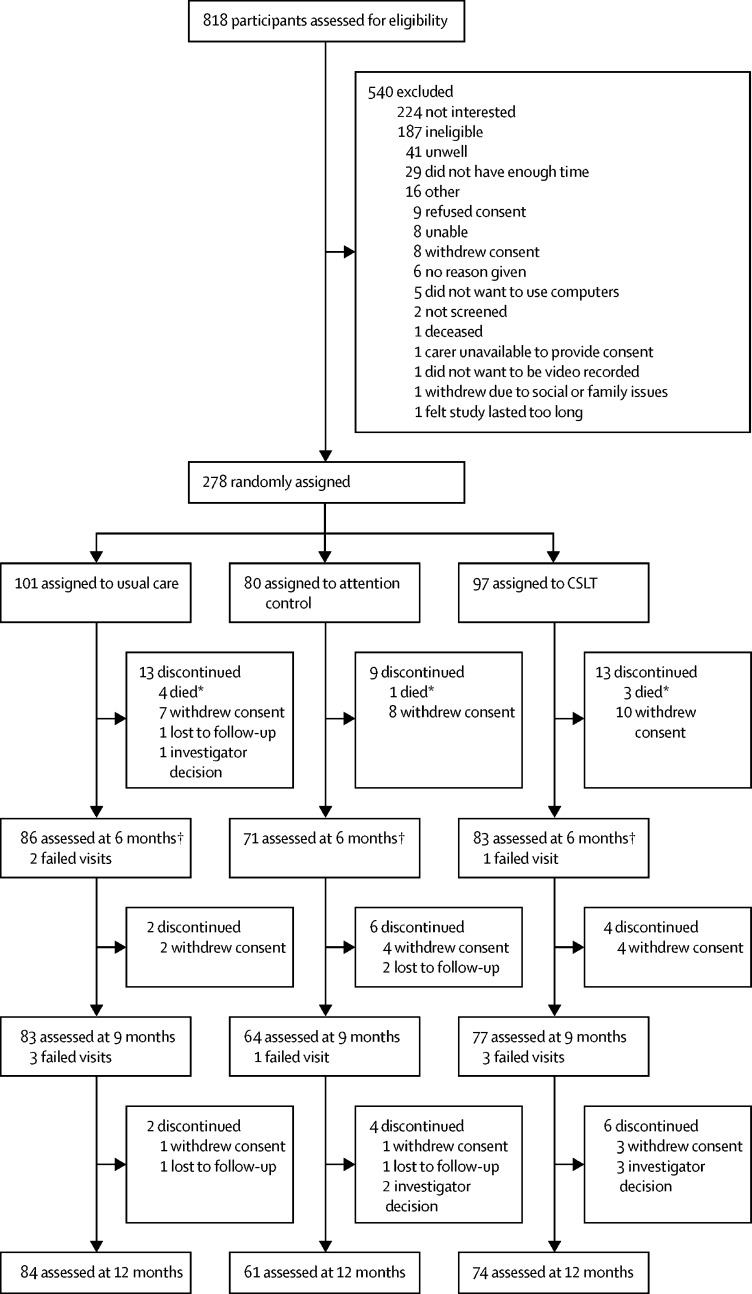
BACKGROUND: Post-stroke aphasia might improve over many years with speech and language therapy; however speech and language therapy is often less readily available beyond a few months after stroke. We assessed self-managed computerised speech and language therapy (CSLT) as a means of providing more therapy than patients can access through usual care alone. METHODS: In this pragmatic, superiority, three-arm, individually randomised, single-blind, parallel group trial, patients were recruited from 21 speech and language therapy departments in the UK. Participants were aged 18 years or older and had been diagnosed with aphasia post-stroke at least 4 months before randomisation; they were excluded if they had another premorbid speech and language disorder caused by a neurological deficit other than stroke, required treatment in a language other than English, or if they were currently using computer-based word-finding speech therapy. Participants were randomly assigned (1:1:1) to either 6 months of usual care (usual care group), daily self-managed CSLT plus usual care (CSLT group), or attention control plus usual care (attention control group) with the use of computer-generated stratified blocked randomisation (randomly ordered blocks of sizes three and six, stratified by site and severity of word finding at baseline based on CAT Naming Objects test scores). Only the outcome assessors and trial statistician were masked to the treatment allocation. The speech and language therapists who were doing the outcome assessments were different from those informing participants about which group they were assigned to and from those delivering all interventions. The statistician responsible for generating the randomisation schedule was separate from those doing the analysis. Co-primary outcomes were the change in ability to retrieve personally relevant words in a picture naming test (with 10% mean difference in change considered a priori as clinically meaningful) and the change in functional communication ability measured by masked ratings of video-recorded conversations, with the use of Therapy Outcome Measures (TOMs), between baseline and 6 months after randomisation (with a standardised mean difference in change of 0·45 considered a priori as clinically meaningful). Primary analysis was based on the modified intention-to-treat (mITT) population, which included randomly assigned patients who gave informed consent and excluded those without 6-month outcome measures. Safety analysis included all participants. This trial has been completed and was registered with the ISRCTN, number ISRCTN68798818. FINDINGS: From Oct 20, 2014, to Aug 18, 2016, 818 patients were assessed for eligibility, of which 278 (34%) participants were randomly assigned (101 [36%] to the usual care group; 97 [35%] to the CSLT group; 80 [29%] to the attention control group). 86 patients in the usual care group, 83 in the CSLT group, and 71 in the attention control group contributed to the mITT. Mean word finding improvements were 1·1% (SD 11·2) in the usual care group, 16·4% (15·3) in the CSLT group, and 2·4% (8·8) in the attention control group. Word finding improvement was 16·2% (95% CI 12·7 to 19·6; p<0·0001) higher in the CSLT group than in the usual care group and was 14·4% (10·8 to 18·1) higher than in the attention control group. Mean changes in TOMs were 0·05 (SD 0·59) in the usual care group (n=84), 0·04 (0·58) in the CSLT group (n=81), and 0·10 (0·61) in the attention control group (n=68); the mean difference in change between the CSLT and usual care groups was -0·03 (-0·21 to 0·14; p=0·709) and between the CSLT and attention control groups was -0·01 (-0·20 to 0·18). The incidence of serious adverse events per year were rare with 0·23 events in the usual care group, 0·11 in the CSLT group, and 0·16 in the attention control group. 40 (89%) of 45 serious adverse events were unrelated to trial activity and the remaining five (11%) of 45 serious adverse events were classified as unlikely to be related to trial activity. INTERPRETATION: CSLT plus usual care resulted in a clinically significant improvement in personally relevant word finding but did not result in an improvement in conversation. Future studies should explore ways to generalise new vocabulary to conversation for patients with chronic aphasia post-stroke. FUNDING: National Institute for Health Research, Tavistock Trust for Aphasia.
Overview
CoChat Summary
TL;DR
In the Big CACTUS multicentre randomised trial, self-managed computerised speech and language therapy (CSLT) plus usual care improved personally relevant word finding in chronic post-stroke aphasia compared with usual care or attention control, but did not improve functional communication in conversation. CSLT was low-cost and safe, with cost-effectiveness more likely for mild or moderate word-finding difficulties than for the whole aphasia population.
Key findings
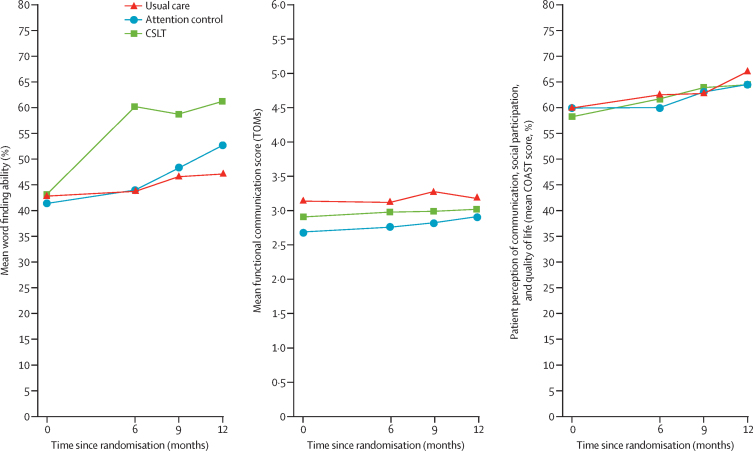
- Among 240 participants in the modified intention-to-treat analysis, mean word-finding improvement was 1·1% (SD 11·2) with usual care, 16·4% (15·3) with CSLT, and 2·4% (8·8) with attention control. CSLT improved word finding by 16·2% (95% CI 12·7–19·6; p<0·0001) versus usual care and 14·4% (10·8–18·1) versus attention control, exceeding the prespecified 10% clinically important difference; improvement was maintained at 9 and 12 months.
- Functional communication on TOMs did not improve: mean changes were 0·05 (SD 0·59) with usual care, 0·04 (0·58) with CSLT, and 0·10 (0·61) with attention control; CSLT vs usual care adjusted mean difference was –0·03 (–0·21 to 0·14; p=0·709) and CSLT vs attention control was –0·01 (–0·20 to 0·18).
- The key secondary COAST outcome did not show sufficient improvement: CSLT vs usual care 0·5 (–3·1 to 4·1; p=0·772); CSLT vs attention control 3·8 (0·0 to 7·5; p=0·051).
- Safety events were rare: serious adverse event incidence per year was 0·23 in usual care, 0·11 in CSLT, and 0·16 in attention control; 40 (89%) of 45 serious adverse events were unrelated to trial activity and five (11%) were unlikely to be related. In the CSLT group, 23 (27%) of 85 participants reported fatigue or anxiety at some point during 6 months of computer use.
- Health economic results: incremental cost of CSLT was £733 (95% credible interval 674–798), incremental QALY gain was 0·017 (–0·05 to 0·10), and ICER was £42,686 per QALY gained versus usual care and £40,164 versus attention control; ICERs were £22,371 for mild and £28,819 for moderate word-finding difficulty, while CSLT was more expensive and produced fewer QALYs than usual care for severe word-finding difficulties.
Methods
- Pragmatic, superiority, three-arm, individually randomised, single-blind, parallel group trial recruiting from 21 speech and language therapy departments in the UK. Participants were aged ≥18 years with aphasia confirmed after stroke at least 4 months before randomisation, word-finding difficulties (CAT Naming Objects score 5–43/48), and ability to perform StepByStep matching and repetition tasks at ≥50% accuracy; exclusions included other premorbid speech/language disorder, need for treatment in a language other than English, or current computer-based word-finding therapy.
- Participants were randomly assigned 1:1:1 to 6 months of usual care, CSLT plus usual care, or attention control plus usual care, using stratified block randomisation by site and baseline word-finding severity. Outcome assessors and the trial statistician were masked; treating therapists and participants were not.
- Co-primary outcomes were change from baseline to 6 months in a picture naming test of 100 personally relevant words and in functional communication measured by masked TOMs activity ratings of video-recorded conversations. Primary analysis used the modified intention-to-treat population, multiple linear regression adjusted for baseline outcome and stratification factors, and a Hochberg multiple testing procedure; safety analysis included all participants.
Limitations
- The paper states that only one computer program and one language domain (word finding) were tested; the software was English-only, so patients requiring another language were excluded; participant ethnicity was not recorded; and further research is needed to identify patient characteristics, motivation, dose response, and effects of continued practice.
- The paper also notes that recruitment stopped after 278 of 285 planned participants, with chance imbalance across groups; TOMs may not detect small changes; the trial was not powered to detect a meaningful QALY difference; and attention control activity with puzzle books could not be measured as accurately as computer practice.
- Evident from the text: the attention control group was smaller and had some baseline differences, including a greater proportion with severe comprehension difficulties and lower baseline TOMs scores, which the authors note may have affected power and comparisons.
Model-written summary. Check it against the paper before relying on it.
Integrity signals
Registry
Cites
Statistics
Figures
Verification
Claims the paper makes
1 Valid · 0 Not valid · 10 Not checked · 96 Own results and interpretations
A result the paper reports from its own data — it cites no other source for it, so there is none to check. The quote shows it is in the paper.
In the paper
“Improvement was maintained at 9 and 12 months (figure 2).”
§ Self-managed, computerised speech and language therapy for patients with chronic aphasia post-stroke compared with usual care or attention control (Big CACTUS): a multicentre, single-blinded, randomised controlled trial > Results
plain- Asserted: passes — The authors put it forward as true.
- Checkable: passes — It can be checked against evidence.
- Load-bearing: passes — The paper’s conclusions depend on it.
- Based: passes — The paper gives a reason why it holds.
A result the paper reports from its own data — it cites no other source for it, so there is none to check. The quote shows it is in the paper.
In the paper
“For CSLT compared with attention control, the ICER was ·40 164 per QALY gained.”
§ Self-managed, computerised speech and language therapy for patients with chronic aphasia post-stroke compared with usual care or attention control (Big CACTUS): a multicentre, single-blinded, randomised controlled trial > Results
plain- Asserted: passes — The authors put it forward as true.
- Checkable: passes — It can be checked against evidence.
- Load-bearing: passes — The paper’s conclusions depend on it.
- Based: passes — The paper gives a reason why it holds.
A result the paper reports from its own data — it cites no other source for it, so there is none to check. The quote shows it is in the paper.
In the paper
“57 (61%) of 94 participants in the CSLT group continued to use the computer exercises unsupported beyond the 6-month timepoint.”
§ Self-managed, computerised speech and language therapy for patients with chronic aphasia post-stroke compared with usual care or attention control (Big CACTUS): a multicentre, single-blinded, randomised controlled trial > Results
plainn = 94- Asserted: passes — The authors put it forward as true.
- Checkable: passes — It can be checked against evidence.
- Load-bearing: unclear — It is unclear whether the paper’s conclusions depend on it.
- Based: passes — The paper gives a reason why it holds.
A result the paper reports from its own data — it cites no other source for it, so there is none to check. The quote shows it is in the paper.
In the paper
“and was 14·4% (10·8 to 18·1) higher than in the attention control group.”
§ Self-managed, computerised speech and language therapy for patients with chronic aphasia post-stroke compared with usual care or attention control (Big CACTUS): a multicentre, single-blinded, randomised controlled trial > Abstract > Findings
plainstates a causen = 71- Asserted: passes — The authors put it forward as true.
- Checkable: passes — It can be checked against evidence.
- Load-bearing: passes — The paper’s conclusions depend on it.
- Based: passes — The paper gives a reason why it holds.
- Rests on 2 assumptions not shown here.
A result the paper reports from its own data — it cites no other source for it, so there is none to check. The quote shows it is in the paper.
In the paper
“the mean difference in change between the CSLT and usual care groups was –0·03 (–0·21 to 0·14; p=0·709)”
§ Self-managed, computerised speech and language therapy for patients with chronic aphasia post-stroke compared with usual care or attention control (Big CACTUS): a multicentre, single-blinded, randomised controlled trial > Abstract > Findings
plainn = 81- Asserted: passes — The authors put it forward as true.
- Checkable: passes — It can be checked against evidence.
- Load-bearing: passes — The paper’s conclusions depend on it.
- Based: passes — The paper gives a reason why it holds.
- Rests on an assumption not shown here.
47 more claims
Create a free account to see all 107 claims and to verify the 1 reference still open.
- It may state two separate claims as one. 36
- Probably not a substantial claim. 27
- The quote only partly states this claim. 1
Claims other papers make about this one
Each is checked against this paper’s own text: does it say what the citing paper says it does?
The cited source doesn’t support the claim as written.
In the citing paper
“For instance, in the UK, Palmer et al. (2019) found that individuals more than 3 months’ post‐stroke received a median of just 380 min of SLT over a 3‐month period, which is equivalent to only 30 min per week.”
From Exploring the Effectiveness of Technology‐Based Interventions in Aphasia Rehabilitation: A Systematic Review (2026) · cites this paper as Palmer et al. (2019)
Checked by a reasoning model — may be wrong.
Experimental — accuracy not yet measuredThe source backs part of the claim, not all of it — or backs it for a different population, condition or comparison.
In the citing paper
“Despite these findings, many individuals worldwide receive much less therapy than is recommended.”
From Exploring the Effectiveness of Technology‐Based Interventions in Aphasia Rehabilitation: A Systematic Review (2026) · cites this paper as Palmer et al. (2019)
Experimental — accuracy not yet measuredThe source backs part of the claim, not all of it — or backs it for a different population, condition or comparison.
In the citing paper
“Despite these differences in approach, the direction of findings was consistent across both modalities at sufficient dose, with high‐quality RCTs in each demonstrating superiority over face‐to‐face therapy (Palmer et al. 2019; Kurul et al. 2026).”
From Exploring the Effectiveness of Technology‐Based Interventions in Aphasia Rehabilitation: A Systematic Review (2026) · cites this paper as Palmer et al. 2019
Experimental — accuracy not yet measuredThe source backs part of the claim, not all of it — or backs it for a different population, condition or comparison.
In the citing paper
“The strongest evidence came from studies that met the dose threshold and demonstrated clear between‐group superiority (Palmer et al. 2019; Kurul et al. 2026).”
From Exploring the Effectiveness of Technology‐Based Interventions in Aphasia Rehabilitation: A Systematic Review (2026) · cites this paper as Palmer et al. 2019
Experimental — accuracy not yet measuredThe source backs part of the claim, not all of it — or backs it for a different population, condition or comparison.
In the citing paper
“Its prominence reflects both the maturity of the software and its capacity to deliver structured, intensive therapy at scale that is not feasible in routine clinical settings (e.g., Palmer et al. 2019).”
From Exploring the Effectiveness of Technology‐Based Interventions in Aphasia Rehabilitation: A Systematic Review (2026) · cites this paper as Palmer et al. 2019
Experimental — accuracy not yet measured
14 more claims about this paper
Create a free account to see every claim other papers make about this one.
Self-check
Percentages, sums and reported differences re-computed from the paper’s own numbers.
Each contradiction between two passages listed here was confirmed by an independent check.
Rated minor: it would not touch a result — a value no result rests on, a p-value that stays on the same side of the significance level, or a conflict that is clerical, resolved elsewhere in the paper, or outside its own findings.
In the paper
§ Self-managed, computerised speech and language therapy for patients with chronic aphasia post-stroke compared with usual care or attention control (Big CACTUS): a multicentre, single-blinded, randomised controlled trial > Results
“a lower proportion of participants with severe word finding difficulties in the attention control group than the CSLT or usual care groups.”
§ Self-managed, computerised speech and language therapy for patients with chronic aphasia post-stroke compared with usual care or attention control (Big CACTUS): a multicentre, single-blinded, randomised controlled trial > Results
“| Severe | 22 (25%) | 21 (25%) | 19 (27%) |”
Rated minor: it would not touch a result — a value no result rests on, a p-value that stays on the same side of the significance level, or a conflict that is clerical, resolved elsewhere in the paper, or outside its own findings.
In the paper
§ Self-managed, computerised speech and language therapy for patients with chronic aphasia post-stroke compared with usual care or attention control (Big CACTUS): a multicentre, single-blinded, randomised controlled trial > Results
“a greater proportion of participants with severe comprehension difficulties”
§ Self-managed, computerised speech and language therapy for patients with chronic aphasia post-stroke compared with usual care or attention control (Big CACTUS): a multicentre, single-blinded, randomised controlled trial > Results
“| Severe | 3 (3%) | 5 (6%) | 3 (4%) |”
Citations
Cites
Hoffmann, T. C., Glasziou, P. P., Boutron, I., Milne, R., Perera, R., Moher, D., Altman, D. G., Barbour, V., Macdonald, H., Johnston, M., et al. (2014) · BMJ · doi:10.1136/bmj.g1687 · Cited by 10,548
Development and preliminary testing of the new five-level version of EQ-5D (EQ-5D-5L)
Herdman, M., Gudex, C., Lloyd, A., Janssen, M., Kind, P., Parkin, D., Bonsel, G., & Badia, X. (2011) · Quality of Life Research · doi:10.1007/s11136-011-9903-x · Cited by 9,795
International Classification of Functioning, Disability and Health
Chard, G. (2004) · British Journal of Occupational Therapy · doi:10.1177/030802260406700101 · Cited by 3,688
Multiple Comparison Procedures
Hochberg, Y., & Tamhane, A. C. (1987) · Wiley Series in Probability and Statistics · doi:10.1002/9780470316672 · Cited by 2,389
The PRECIS-2 tool: designing trials that are fit for purpose
Loudon, K., Treweek, S., Sullivan, F., Donnan, P., Thorpe, K. E., & Zwarenstein, M. (2015) · BMJ · doi:10.1136/bmj.h2147 · Cited by 1,846
Speech and language therapy for aphasia following stroke
Brady, M. C., Kelly, H., Godwin, J., Enderby, P., & Campbell, P. (2016) · Cochrane Database of Systematic Reviews · doi:10.1002/14651858.cd000425.pub4 · Cited by 1,159
Self-citationSwinburn, K., Porter, G., & Howard, D. (2012) · PsycTESTS Dataset · doi:10.1037/t13733-000 · Cited by 601
Physical rehabilitation approaches for the recovery of function and mobility following stroke
Todhunter-Brown, A., Baer, G., Campbell, P., Choo, P. L., Forster, A., Morris, J., Pomeroy, V. M., & Langhorne, P. (2014) · Cochrane Database of Systematic Reviews · doi:10.1002/14651858.cd001920.pub3 · Cited by 582
Breitenstein, C., Grewe, T., Flöel, A., Ziegler, W., Springer, L., Martus, P., Huber, W., Willmes, K., Ringelstein, E. B., Haeusler, K. G., et al. (2017) · The Lancet · doi:10.1016/s0140-6736(17)30067-3 · Cited by 387
Drummond, M., Brandt, A., Luce, B., & Rovira, J. (1993) · International Journal of Technology Assessment in Health Care · doi:10.1017/s0266462300003007 · Cited by 230
Research works printed but not linked: 1
- Enderby P John A Petheram B Therapy outcome measures for rehabilitation professionals: speech and language therapy, physiotherapy, occupational therapy 2nd edn. 2013 John Wiley & Sons Chichester
Cited by
Hilkens, N. A., Casolla, B., Leung, T. W., & de Leeuw, F.-E. (2024) · The Lancet · doi:10.1016/s0140-6736(24)00642-1 · Cited by 681
Current Approaches to the Treatment of Post-Stroke Aphasia
Fridriksson, J., & Hillis, A. E. (2021) · Journal of Stroke · doi:10.5853/jos.2020.05015 · Cited by 172
“A large RCT (n=278) with three arms further supports the potential utility of computerized aphasia therapy (Big CACTUS).(76) Here, patients at least 4 months post-stroke were randomized to receive usual care; usual care supplemented with self-administered computerized SLT; or usual care with added attention therapy.”
BackgroundStroke: Molecular mechanisms and therapies: Update on recent developments
Shehjar, F., Maktabi, B., Rahman, Z. A., Bahader, G. A., James, A. W., Naqvi, A., Mahajan, R., & Shah, Z. A. (2022) · Neurochemistry International · doi:10.1016/j.neuint.2022.105458 · Cited by 165
Collaborators, T. R. A. R. O. P. W. A. A. S. (., Brady, M. C., Ali, M., VandenBerg, K., Williams, L. J., Williams, L. R., Abo, M., Becker, F., Bowen, A., Brandenburg, C., et al. (2022) · Stroke · doi:10.1161/strokeaha.121.035216 · Cited by 131
Self-citationBrady, M., Ali, M., VandenBerg, K., Williams, L. J., Williams, L. R., Abo, M., Becker, F., Bowen, A., Brandenburg, C., Breitenstein, C., et al. (2022) · Kölner Universitäts PublikationsServer (Universität zu Köln) · doi:10.18154/rwth-2022-03053 · Cited by 94
Self-citationBraley, M., Pierce, J. S., Saxena, S., De Oliveira, E., Taraboanta, L., Anantha, V., Lakhan, S. E., & Kiran, S. (2021) · Frontiers in Neurology · doi:10.3389/fneur.2021.626780 · Cited by 80
Clinical Pathways in Stroke Rehabilitation: Evidence-based Clinical Practice Recommendations
Platz, T. (2021) · Springer eBooks · doi:10.1007/978-3-030-58505-1 · Cited by 118
Doedens, W., & Meteyard, L. (2022) · Neuropsychology Review · doi:10.1007/s11065-021-09531-2 · Cited by 112
“There is robust evidence that therapy approaches based on ‘in vacuo’ decontextualised language processing skills, such as naming individual pictures, improve performance on words and sentences practiced during therapy (e.g., Brady et al., 2016; Palmer et al., 2019).”
BackgroundMethodInfluential Usage of Big Data and Artificial Intelligence in Healthcare
Yang, Y. C., Islam, S. U., Noor, A., Khan, S., Afsar, W., & Nazir, S. (2021) · Computational and Mathematical Methods in Medicine · doi:10.1155/2021/5812499 · Cited by 68
“[26] have assessed a self-managed computerized speech and language therapy (CSLT) aiming to deliver more therapy to patients than they can access through usual care alone.”
BackgroundRetractedRose, M. L., Nickels, L., Copland, D. A., Togher, L., Godecke, E., Meinzer, M., Rai, T., Cadilhac, D. A.-M., Kim, J., Hurley, M., et al. (2022) · Journal of Neurology Neurosurgery & Psychiatry · doi:10.1136/jnnp-2021-328422 · Cited by 72
Menahemi-Falkov, M., Breitenstein, C., Pierce, J. E., Hill, A. J., O'Halloran, R., & Rose, M. L. (2022) · Disability and Rehabilitation · doi:10.1080/09638288.2021.1955303 · Cited by 60
“Recently, Palmer et al. [92] reported 32.9% of intervention group participants reached their consensus-based criterion for a meaningful change 4 , similar to the rate of responders found in our review for statistically significant changes on the IPD level.”
InfluentialNovel Advances to Post-Stroke Aphasia Pharmacology and Rehabilitation
Cichoń, N., Włodarczyk, L., Saluk, J., Bijak, M., Redlicka, J., Gorniak, L., & Miller, E. D. (2021) · Journal of Clinical Medicine · doi:10.3390/jcm10173778 · Cited by 86
“In this study, it was shown that computer-based therapy significantly improved word-finding skills, but did not affect functional conversation [58].”
BackgroundGiachero, A., Calati, M., Pia, L., La Vista, L., Molo, M., Rugiero, C., Fornaro, C., & Marangolo, P. (2020) · Behavioural Neurology · doi:10.1155/2020/2846046 · Cited by 58
“However, CSLT did not have an effect on conversation, self-perceived improvements in everyday communication, social participation, and quality of life [49].”
BackgroundØra, H. P., Kirmess, M., Brady, M., Sørli, H., & Becker, F. (2020) · Frontiers in Neurology · doi:10.3389/fneur.2020.00671 · Cited by 67
“In recent years, studies on aphasia telerehabilitation using both synchronously (real-time) and asynchronously (delayed) approaches have been conducted (11, 12).”
BackgroundSelf-citationPalmer, R., Dimairo, M., Latimer, N., Cross, E., Brady, M., Enderby, P., Bowen, A., Julious, S., Harrison, M., Alshreef, A., et al. (2020) · Health Technology Assessment · doi:10.3310/hta24190 · Cited by 53
Self-citationDose effects in behavioural treatment of post-stroke aphasia: a systematic review and meta-analysis
Harvey, S., Carragher, M., Dickey, M. W., Pierce, J. E., & Rose, M. L. (2020) · Disability and Rehabilitation · doi:10.1080/09638288.2020.1843079 · Cited by 50
Treatment dose in post-stroke aphasia: A systematic scoping review
Harvey, S. R., Carragher, M., Dickey, M. W., Pierce, J. E., & Rose, M. L. (2021) · Neuropsychological Rehabilitation · doi:10.1080/09602011.2020.1786412 · Cited by 47
Volkmer, A., Walton, H., Swinburn, K., Spector, A. E., Warren, J. D., & Beeke, S. (2023) · Pilot and Feasibility Studies · doi:10.1186/s40814-023-01301-6 · Cited by 47
Rodgers, H., Bosomworth, H. J., Krebs, H. I., van Wijck, F., Howel, D., Wilson, N., Finch, T. L., Alvarado, N., Ternent, L., Fernandez-García, C., et al. (2020) · Health Technology Assessment · doi:10.3310/hta24540 · Cited by 62
The use of virtual reality in the rehabilitation of aphasia: a systematic review
Devane, N., Behn, N., Marshall, J., Ramachandran, A., Wilson, S., & Hilari, K. (2023) · Disability and Rehabilitation · doi:10.1080/09638288.2022.2138573 · Cited by 43
Web-based Oral Reading for Language in Aphasia (Web ORLA ® ): A pilot randomized control trial
Cherney, L. R., Lee, J. B., Kim, K.-Y. A., & van Vuuren, S. (2021) · Clinical Rehabilitation · doi:10.1177/0269215520988475 · Cited by 41
Language changes in Alzheimer’s disease: A systematic review of verb processing
Williams, E., McAuliffe, M., & Theys, C. (2021) · Brain and Language · doi:10.1016/j.bandl.2021.105041 · Cited by 40
Treatment of post-stroke aphasia: A narrative review for stroke neurologists
Vitti, E., & Hillis, A. E. (2021) · International Journal of Stroke · doi:10.1177/17474930211017807 · Cited by 55
Munsell, M., De Oliveira, E., Saxena, S., Godlove, J., & Kiran, S. (2020) · Journal of Medical Internet Research · doi:10.2196/16286 · Cited by 40
“Although it was noted that 61% of the patients used the software beyond the 6-month protocol, statistics on their usage in an observational context has not been reported [34].”
Adjunctive Approaches to Aphasia Rehabilitation: A Review on Efficacy and Safety
Picano, C., Quadrini, A., Pisano, F., & Marangolo, P. (2021) · Brain Sciences · doi:10.3390/brainsci11010041 · Cited by 47
Inclusion of People With Aphasia in Stroke Trials: A Systematic Search and Review
Shiggins, C., Ryan, B., Dewan, F., Bernhardt, J. A., O’Halloran, R., Power, E., Lindley, R. I., Mcgurk, G., & Rose, M. L. (2023) · Archives of Physical Medicine and Rehabilitation · doi:10.1016/j.apmr.2023.06.010 · Cited by 48
ChatGPT in Healthcare: Exploring AI Chatbot for Spontaneous Word Retrieval in Aphasia
Purohit, A. K., Upadhyaya, A., & Holzer, A. (2023) · Computer Supported Cooperative Work and Social Computing · doi:10.1145/3584931.3606993 · Cited by 38
“Computer software such as StepByStep offers individuals with daily word-finding exercises based on their needs and chosen words and therapy software such as Linguagraphica provides a wide range of exercises that may be beneficial for the improvement of trained words [24].”
BackgroundMethodOperationalising treatment success in aphasia rehabilitation
Breitenstein, C., Hilari, K., Menahemi-Falkov, M., Rose, M. L., Wallace, S. J., Brady, M., Hillis, A. E., Kiran, S., Szaflarski, J. P., Tippett, D. C., et al. (2022) · Aphasiology · doi:10.1080/02687038.2021.2016594 · Cited by 41
“In the recent randomised controlled 'Big CACTUS' trial, at least 10% improvement in a study-specific naming task was considered a 'clinically meaningful' change (Palmer et al., 2019).”
BackgroundMethodSelf-citationFleming, V., Brownsett, S. L. E., Krason, A., Maegli, M. A., Coley-Fisher, H., Ong, Y., Nardo, D., Leach, R., Howard, D., Robson, H., et al. (2020) · Journal of Neurology Neurosurgery & Psychiatry · doi:10.1136/jnnp-2020-324256 · Cited by 45
Monnelly, K., Marshall, J., & Cruice, M. (2022) · Disability and Rehabilitation · doi:10.1080/09638288.2021.1964626 · Cited by 31
Eapen, B. C., Tran, J., Ballard‐Hernandez, J., Buelt, A., Hoppes, C. W., Matthews, C. T., Pundik, S., Reston, J., Tchopev, Z. N., Wayman, L. M., et al. (2025) · Annals of Internal Medicine · doi:10.7326/annals-24-02205 · Cited by 38
European Stroke Organisation (ESO) guideline on aphasia rehabilitation
Brady, M., Mills, C. S., Øra, H. P., Novaes, N. P., Becker, F., Constantinidou, F., Flöel, A., Sunnerhagen, K. S., Isaksen, J., Jagoe, C., et al. (2025) · European Stroke Journal · doi:10.1177/23969873241311025 · Cited by 49
“In people with aphasia after stroke, we suggest using either in-person or digitally delivered SLT Quality of evidence: Very low ⊕”
Self-citationXu, S., Yan, Z., Pan, Y., Yang, Q., Liu, Z., Gao, J., Yang, Y., Wu, Y., Zhang, Y., Wang, J., et al. (2021) · Behavioural Neurology · doi:10.1155/2021/9417173 · Cited by 26
Bryant, L., Sedlarevic, N., Stubbs, P. W., Bailey, B., Nguyen, V. A., Bluff, A., Barnett, D., Estela, M., Hayes, C., Jacobs, C., et al. (2022) · Disability and Rehabilitation Assistive Technology · doi:10.1080/17483107.2022.2063423 · Cited by 36
“While this type of computer-based intervention increased client autonomy, Wade, Mortley and Enderby [10] and Palmer and colleagues [11] noted that the level of independent practice achieved relies on clients having the motivation and skills to access systems, the complexity of software programs,…”
BackgroundDeveloping Systems of Care for Stroke in Resource-limited Settings
Silva, G. S., & Rocha, E. C. A. (2024) · Seminars in Neurology · doi:10.1055/s-0044-1782617 · Cited by 32
“61,62 Beyond improving functional outcomes and the patients ’ quality of life, telerehabilitation can also reduce depression among their caregivers.”
Advances in Stroke: Therapies Targeting Stroke Recovery
Richards, L. G., & Cramer, S. C. (2020) · Stroke · doi:10.1161/strokeaha.120.033231 · Cited by 31
Harrison, M., Palmer, R., & Cooper, C. L. (2020) · Frontiers in Neurology · doi:10.3389/fneur.2020.582328 · Cited by 26
“In addition, on-going support is provided by a volunteer or therapy assistant to enable the PWA to carry out independent practice (16, 17).”
BackgroundSelf-citationFreund, M., Carey, M. L., Dilworth, S., Waller, A. E., Mansfield, E. L., Rose, A. J., Thienel, R., & Hyde, L. (2021) · Disability and Rehabilitation · doi:10.1080/09638288.2021.1913245 · Cited by 27
“Palmer et al. [30] reported that 64 and 46% of participants used the computer therapy for at least 10 and 26 h, respectively, within 6 months (deemed as adhered to key components of CSLT).”
BackgroundMethodResultInfluentialAphasianomics: estimating the economic burden of poststroke aphasia in the United States
Jacobs, M., & Ellis, C. (2021) · Aphasiology · doi:10.1080/02687038.2021.1985426 · Cited by 31
Conversation as an Outcome of Aphasia Treatment: A Systematic Scoping Review
Azios, J. H., Archer, B., Simmons‐Mackie, N. N., Raymer, A. M., Carragher, M., Shashikanth, S., & Gulick, E. (2022) · American Journal of Speech-Language Pathology · doi:10.1044/2022_ajslp-22-00011 · Cited by 28
The verbal, non-verbal and structural bases of functional communication abilities in aphasia
Schumacher, R., Bruehl, S., Halai, A. D., & Ralph, M. A. L. (2020) · Brain Communications · doi:10.1093/braincomms/fcaa118 · Cited by 32
“…as an outcome measure (Doesborgh et al. , 2004; Berthier et al. , 2006; de Jong-Hagelstein et al. , 2011; Bowen et al. , 2012; Sickert et al. , 2014; Brady et al. , 2016; Breitenstein et al. , 2017; Nouwens et al. , 2017; Meltzer et al. , 2018; Efstratiadou et al. , 2019; Palmer et al. , 2019).”
Cock, E. D., Batens, K., Feiken, J., Hemelsoet, D., Oostra, K. M., & Herdt, V. D. (2020) · Journal of Communication Disorders · doi:10.1016/j.jcomdis.2020.106070 · Cited by 26
‘I think writing is everything’: An exploration of the writing experiences of people with aphasia
Thiel, L., & Conroy, P. (2022) · International Journal of Language & Communication Disorders · doi:10.1111/1460-6984.12762 · Cited by 30
Russell, A. M., Shepherd, V., Woolfall, K., Young, B., Gillies, K., Volkmer, A., Jayes, M., Huxtable, R., Perkins, A., Noor, N. M., et al. (2023) · Trials · doi:10.1186/s13063-023-07159-6 · Cited by 26
Nichol, L., Pitt, R., Wallace, S. J., Rodriguez, A. D., & Hill, A. J. (2022) · Disability and Rehabilitation Assistive Technology · doi:10.1080/17483107.2022.2037758 · Cited by 28
“For example, research has demonstrated that the independent use of technology-based aphasia therapy programs can result in improvements in language measures and functional communication [32,63–69].”
BackgroundLatimer, N. R., Bhadhuri, A., Alshreef, A., Palmer, R., Cross, E., Dimairo, M., Julious, S. A., Cooper, C. L., Enderby, P., Brady, M., et al. (2020) · Clinical Rehabilitation · doi:10.1177/0269215520975348 · Cited by 20
“The trial protocol is publicly available(8) and specific details on clinical aspects of the study can be found in an extensive report for the funder (which also includes full details of the economic evaluation),(11) and have been summarised elsewhere.(12) The CACTUS pilot study was also registered with the ISRCTN regi…”
BackgroundMethodInfluentialSelf-citationKnox, L., McDermott, C. J., & Hobson, E. (2022) · Journal of Medical Engineering & Technology · doi:10.1080/03091902.2022.2040625 · Cited by 21
“The “Big CACTUS” is one example that implemented a selfmanaged computerised speech and language therapy intervention for people with speech problems after stroke; resulting in significant improvements in wordfinding exercises [46].”
BackgroundDevelopment of the “Kalmer” relaxation intervention: co-design with stroke survivors with aphasia
El-Helou, R., Ryan, B., & Kneebone, I. (2022) · Disability and Rehabilitation · doi:10.1080/09638288.2022.2069294 · Cited by 21
Burke, J., Palmer, R., & Harrison, M. (2021) · Disability and Rehabilitation · doi:10.1080/09638288.2020.1871519 · Cited by 23
“An average of 9 h SLT time to set up and support the intervention enabled an average of 28 h of independent practice (range 0–105 h, interquartile range 15–50 h) to help achieve the impairment-based word finding gain [12,36].”
BackgroundMethodResultInfluentialSelf-citationBehn, N., Harrison, M., Brady, M., Breitenstein, C., Carragher, M., Fridriksson, J., Godecke, E., Hillis, A. E., Kelly, H., Palmer, R., et al. (2022) · Aphasiology · doi:10.1080/02687038.2022.2037502 · Cited by 21
Self-citationImplementation Cost Analysis of an Intensive Comprehensive Aphasia Program
Boyer, N., Jordan, N., & Cherney, L. R. (2020) · Archives of Physical Medicine and Rehabilitation · doi:10.1016/j.apmr.2020.09.398 · Cited by 19
Low, T. A., Lindland, K., Kirton, A., Carlson, H. L., Harris, A. D., Goodyear, B. G., Monchi, O., Hill, M. D., Rose, M. L., & Dukelow, S. P. (2025) · Neurology · doi:10.1212/wnl.0000000000213424 · Cited by 18
“Study Funding This trial was funded by a grant-in-aid provided by the Heart and”
Marshall, I. J., McKevitt, C., Wang, Y., Wafa, H. A., Skolarus, L. E., Bhalla, A., Muruet-Gutierrez, W., Emmett, E. S., Sommerville, P., Birns, J., et al. (2022) · NIHR Open Research · doi:10.3310/nihropenres.13257.1 · Cited by 22
Wang, H., Cai, Z., Li, S., Zheng, J., Xie, Y., He, Y., Li, C., & Zheng, D. (2023) · Frontiers in Human Neuroscience · doi:10.3389/fnhum.2023.1176923 · Cited by 18
“There is a continuing outbreak of citations for seven articles, four of which deal with rehabilitation methods for post-stroke aphasia, including various means of speech and language rehabilitation and transcranial direct current stimulation (tDCS) therapy (Brady et al., 2016; Breitenstein et al., 2017; Fridriksson et…”
BackgroundGeorgiou, A. M., & Kambanaros, M. (2023) · Medicina · doi:10.3390/medicina59091674 · Cited by 25
“The Big CACTUS trial [26] demonstrated the superiority of self-managed, computerized SALT over usual care or attention control for chronic aphasia post-stroke.”
MethodMultisensory cueing facilitates naming in aphasia
Grechuta, K., Rubio Ballester, B., Espín Munné, R., Usabiaga Bernal, T., Molina Hervás, B., Mohr, B., Pulvermüller, F., San Segundo, R. M., & Verschure, P. F. M. J. (2020) · Journal of NeuroEngineering and Rehabilitation · doi:10.1186/s12984-020-00751-w · Cited by 15
Spaccavento, S., Falcone, R., Cellamare, F., Picciola, E., & Glueckauf, R. L. (2021) · Journal of Communication Disorders · doi:10.1016/j.jcomdis.2021.106158 · Cited by 14
Bartlett, R. S., Carpenter, A. M., & Chapman, L. K. (2022) · American Journal of Speech-Language Pathology · doi:10.1044/2022_ajslp-21-00255 · Cited by 19
Monnelly, K., Marshall, J., Dipper, L. T., & Cruice, M. N. (2023) · Disability and Rehabilitation · doi:10.1080/09638288.2023.2274877 · Cited by 19
“Rates/nature of events were like those reported in other therapy trials [95,96].”
Leaman, M. C., & Edmonds, L. A. (2023) · American Journal of Speech-Language Pathology · doi:10.1044/2023_ajslp-23-00141 · Cited by 16
Gan, L., Huang, L., Zhang, Y., Yang, X., Li, L., Meng, L., & Wei, Q. (2024) · Frontiers in Neurology · doi:10.3389/fneur.2024.1473254 · Cited by 21
Cordella, C., Munsell, M., Godlove, J. M., Anantha, V., Advani, M., & Kiran, S. (2022) · Journal of Medical Internet Research · doi:10.2196/36135 · Cited by 14
“A smaller subset of studies have investigated self-managed programs, in which users not only complete therapy at home but also determine their own practice schedule [22-26].”
BackgroundLin, B., Ni, J., Xiong, X., Zhang, L., Song, J., Wang, M., Chai, L., Huang, Y., & Huang, J. (2025) · Complementary Therapies in Medicine · doi:10.1016/j.ctim.2025.103137 · Cited by 13
Success rates of intensive aphasia therapy: real-world data from 448 patients between 2003 and 2020
Peitz, D., Schumann‐Werner, B., Hußmann, K., Pinho, J., Chen, H., Binkofski, F., Huber, W., Willmes, K., Heim, S., Schulz, J. B., et al. (2024) · Journal of Neurology · doi:10.1007/s00415-024-12429-7 · Cited by 15
Kim, E. S., Laird, L., Wilson, C., Bieg, T., Mildner, P., Möller, S., Schatz, R., Schwarz, S., Spang, R., Voigt-Antons, J.-N., et al. (2021) · JMIR Research Protocols · doi:10.2196/30621 · Cited by 12
Hickin, J., Cruice, M. N., & Dipper, L. T. (2021) · American Journal of Speech-Language Pathology · doi:10.1044/2021_ajslp-21-00120 · Cited by 18
Naming vs. non-naming treatment in aphasia in a group setting–A randomized controlled trial
Kristensson, J., Saldert, C., Östberg, P., Smith, S. R., Åke, S., & Longoni, F. (2022) · Journal of Communication Disorders · doi:10.1016/j.jcomdis.2022.106215 · Cited by 14
Doogan, C., Balushi, R. A., Gooding, B., Crinion, J., & Leff, A. P. (2022) · Aphasiology · doi:10.1080/02687038.2022.2118518 · Cited by 14
“As such, when the EQ-5D-5L has been used in trials of even very effective SLT interventions, it lacks sensitivity to change (Palmer et al., 2019).”
Autonomy-supportive treatment for acquired apraxia of speech: feasibility and therapeutic effect
Haley, K. L., Cunningham, K. T., Kim, I., & Shafer, J. S. (2019) · Aphasiology · doi:10.1080/02687038.2019.1705662 · Cited by 13
“…home programs can help bridge the gap by complementing clinician-administered treatment (Ballard, Etter, Shen, Monroe, & Tien Tan, 2019; Bilda, 2011; Cherney, Halper, Holland, & Cole, 2008; Fink, Brecher, Schwartz, & Robey, 2002; Hoover & Carney, 2014; Palmer et al., 2019; Varley et al., 2016).”
Upton, E., Doogan, C., Fleming, V., Leyton, P. Q., Barbera, D., Zeidman, P., Hope, T., Latham, W., Coley-Fisher, H., Price, C., et al. (2024) · eClinicalMedicine · doi:10.1016/j.eclinm.2024.102483 · Cited by 12
“8,32 Despite this encouragement, six participants achieved less than half of the target dose ( 30 h) due to time constraints, illness, fatigue or low motivation.”
Brown, E. V. D., Wallace, S. E., & Liu, Q. (2021) · American Journal of Speech-Language Pathology · doi:10.1044/2021_ajslp-20-00372 · Cited by 11
Liu, H., Cordella, C., Ishwar, P. S., Betke, M., & Kiran, S. (2023) · Frontiers in Digital Health · doi:10.3389/fdgth.2023.1095110 · Cited by 13
Thunstedt, D. C., Young, P., Küpper, C., Müller, K., Becker, R., Erbert, F., Lehner, K., Rheinwald, M., Pfahler, A., Dieterich, M., et al. (2020) · Frontiers in Neurology · doi:10.3389/fneur.2020.00294 · Cited by 10
“However, this trial was a power analysis regarding chronic aphasia (20).”
BackgroundComputerised speech and language therapy in post-stroke aphasia
Flöel, A. (2019) · The Lancet Neurology · doi:10.1016/s1474-4422(19)30199-1 · Cited by 11
Making the case for the collection of a minimal dataset for children with speech sound disorder
Morgan, L., Overton, S., Bates, S., Titterington, J., & Wren, Y. E. (2021) · International Journal of Language & Communication Disorders · doi:10.1111/1460-6984.12649 · Cited by 12
Feng, J., Lv, M., Ma, X., Li, T., Xu, M., Yang, J., Su, F., Hu, R., Li, J., Qiu, Y., et al. (2024) · European Journal of Neuroscience · doi:10.1111/ejn.16436 · Cited by 9
“While these approaches have been reported to be beneficial, there is still room for further improvement (Palmer et al., 2019).”
Harvey, S., Stone, M., Zingelman, S., Copland, D. A., Kilkenny, M. F., Godecke, E., Cadilhac, D. A.-M., Kim, J., Olaiya, M. T., Rose, M. L., et al. (2024) · BMJ Open · doi:10.1136/bmjopen-2023-080532 · Cited by 9
Fuentes, B., de la Fuente-Gómez, L., Sempere‐Iborra, C., Delgado-Fernández, C., Tarifa‐Rodríguez, A., de Leciñana, M. A., de Celis, E., Gutiérrez-Zúñiga, R., López-Táppero, J., Alonso, M. M., et al. (2022) · Trials · doi:10.1186/s13063-021-05956-5 · Cited by 14
A Review of Poststroke Aphasia Recovery and Treatment Options
Tilton-Bolowsky, V. E., & Hillis, A. E. (2023) · Physical Medicine and Rehabilitation Clinics of North America · doi:10.1016/j.pmr.2023.06.010 · Cited by 9
Liscano, Y., Sandoval, L. M. B., & Díaz-Vallejo, J. A. (2025) · Brain Sciences · doi:10.3390/brainsci15091007 · Cited by 15
“Included were two-arm RCTs (Braley et al., 2021 [19]; Cherney et al., 2021 [20]), a large-scale, three-arm multicenter RCT (Palmer et al., 2019 [18]), a crossover RCT (Fleming et al., 2021 [17]), and a Phase II within-subject design (Upton et al., 2024 [16]).”
InfluentialSpeech and language therapy for aphasia: parameters and outcomes
Thomas, L., Lander, L., Cox, N., & Romani, C. (2020) · Aphasiology · doi:10.1080/02687038.2020.1712588 · Cited by 11
“In a second study, Palmer et al. (2019) have assessed the efficacy of computer-delivered therapy for word-finding difficulties in a large randomized controlled trial.”
BackgroundThe User-Centred Design in the Development of a Platform for Teletherapy for People with Aphasia
Spelter, B., Corsten, S., Diehlmann, L. E., Plath, A., & Leinweber, J. (2022) · Lecture notes in computer science · doi:10.1007/978-3-031-05028-2_23 · Cited by 10
Simić, T., Desjardins, M.-È., Courson, M., Bedetti, C., Houzé, B., & Brambati, S. M. (2023) · Brain and Language · doi:10.1016/j.bandl.2023.105300 · Cited by 13
Hickin, J., Cruice, M. N., & Dipper, L. T. (2022) · Aphasiology · doi:10.1080/02687038.2022.2116928 · Cited by 10
“Computer-based treatments and home-practice have become an increasingly important resource for people with aphasia (PwA) (e.g., Floel, 2019; Kurland et al., 2018; Palmer et al., 2019).”
BackgroundMethodInfluentialEricson, C., Latysheva, A., Poirier, S.-È., & Fossard, M. (2025) · Brain Sciences · doi:10.3390/brainsci15020122 · Cited by 7
“Similarly, two randomized controlled trials on word production treatment reported significant improvements with self-administered computer-based ther-Brain apy compared to usual care [39] and an attention control group (paper-based puzzle book activities) [14].”
Invaluable Benefits of 10 Years of the International Collaboration of Aphasia Trialists (CATs)
Breitenstein, C., Wallace, S. J., Gilmore, N., Finch, E., Pettigrove, K., Brady, M., Brady, M., Breitenstein, C., Hilari, K., Wallace, S. J., et al. (2024) · Stroke · doi:10.1161/strokeaha.124.046487 · Cited by 6
Self-citationRehabilitation of visual disorders
Leff, A. P., & Barton, J. J. S. (2021) · Handbook of clinical neurology · doi:10.1016/b978-0-12-821377-3.00015-5 · Cited by 6
Heide, J., Netzebandt, J., Ahrens, S., Brüsch, J., Saalfrank, T., & Schmitz-Antonischki, D. (2023) · Frontiers in Communication · doi:10.3389/fcomm.2023.1210193 · Cited by 6
Lancioni, G. E., Navarro, J., Singh, N. N., O’Reilly, M. F., Sigafoos, J., Mellino, A., Arcuri, P., Alberti, G., & Chiariello, V. (2024) · Advances in Neurodevelopmental Disorders · doi:10.1007/s41252-024-00401-5 · Cited by 10
“However, the use of such therapies alone is unlikely to foster rapid improvements that could help people to independently engage in functional activity and communication (Basilakos, 2018; D'Amico et al., 2019; Hassett et al., 2018; MacDonald, 2017; Palmer et al., 2019).”
The effect of mobile application-based technology on post-stroke aphasia: a systematic review
Jiang, Z., He, M., Zhang, C., & Chen, X. (2024) · Frontiers in Neurology · doi:10.3389/fneur.2024.1405209 · Cited by 6
The efficacy of confrontational naming treatments for aphasia: a meta-analysis
Yousefzade, F., Memarian, A., Rahimi, A., & Ghasisin, L. (2024) · Aphasiology · doi:10.1080/02687038.2024.2393448 · Cited by 6
Xu, X., Chen, S., Li, Z., Zhang, L., Pan, T., Long, S., Yang, T., Li, M., Li, Q., Chen, N., et al. (2025) · Clinical Neurophysiology Practice · doi:10.1016/j.cnp.2025.10.001 · Cited by 6
“Aphasia is one of the most debilitating consequences of stroke, affecting more than one third of stroke survivors(Breitenstein et al. 2017) (Palmer et al. 2019).”
MRehab: A Mixed Reality Rehabilitation System Supporting Integrated Speech and Hand Training
Wang, Q., Luo, C., Yang, S., et al. (2024) · Proceedings of the ACM on Interactive Mobile Wearable and Ubiquitous Technologies · doi:10.1145/3678532 · Cited by 5
“As a result, approximately 80% of stroke survivors experience hand motor impairment, 21%- 38% exhibit aphasia, and more than 24% experience a combination of speech and motor deficits[47, 58].”
Feng, J., Hu, R., Lyu, M., Ma, X., Li, T., Meng, Y., Qi, W., Li, H., Zhang, Y., Ding, S., et al. (2025) · BMJ · doi:10.1136/bmj-2024-083605 · Cited by 11
“5 13 35 The main limitation of this study was the inclusion of only native Chinese speakers, who were all recruited from the east coast of mainland China.”
InfluentialRehabilitation of Communication Disorders
Palmer, R., & Pauranik, A. (2021) · Springer eBooks · doi:10.1007/978-3-030-58505-1_10 · Cited by 9
Self-citationA Comparative Analysis of Functional Status and Mobility in Stroke Patients with and without Aphasia
Guzek, Z., Dziubek, W., Stefańska, M., & Kowalska, J. (2022) · Journal of Clinical Medicine · doi:10.3390/jcm11123478 · Cited by 8
Tongue Acupuncture for the Treatment of Poststroke Aphasia: A Systematic Review and Meta-Analysis
Yang, S., Li, L., Jiang, R., et al. (2022) · Evidence-based Complementary and Alternative Medicine · doi:10.1155/2022/4731074 · Cited by 5
Possible Effects of Acupuncture in Poststroke Aphasia
Zhuo, B., Deng, S., Li, B., Zhu, W., Zhang, M., Qin, C., & Meng, Z. (2023) · Behavioural Neurology · doi:10.1155/2023/9445381 · Cited by 7
Wischmann, J., Brasch, L., Franzen, J., Schwierz, J., Kovalenko, O., Gutmann, A., Erbert, F., Bußmann, L., Lauer, J., Dumberger, C., et al. (2025) · European Journal of Neurology · doi:10.1111/ene.70443 · Cited by 6
Richards, L. G., Ifejika, N. L., Stein, J., Bahouth, M. N., Saylor, M. A., Barrett, A. M., Chen, P., Deutsch, A. F., Dusenbury, W., Ellis, C., et al. (2026) · Stroke · doi:10.1161/str.0000000000000536 · Cited by 15
Metadata
- Authors
- Palmer, R., Dimairo, M., Cooper, C., Enderby, P., Brady, M., Bowen, A., Latimer, N., Julious, S., Cross, E., Alshreef, A., Harrison, M., Bradley, E., Witts, H., & Chater, T.
- Affiliations
- University of Sheffield (GB)
- Glasgow Caledonian University (GB)
- Manchester Academic Health Science Centre (GB)
- Derbyshire Community Health Services NHS Foundation Trust (GB)
- Corresponding author
- Cooper, Cindy
- ORCID
- Venue
- The Lancet Neurology
- Publisher
- Elsevier BV
- Published
- 2019-09
- Volume
- 18
- Issue
- 9
- Pages
- 821-833
- ISSN
- 1474-4422 (ISSN-L)
- PMC
- PMC6700375
- OpenAlex
- W2950366686
- Semantic Scholar
- 938f7f7f86878a67351f3deec94631ec244bb2f9
- Cited by
- 200
- References
- 32
- Citations by year
- 2026: 23 · 2025: 37 · 2024: 27 · 2023: 23 · 2022: 35 · 2021: 26 · 2020: 25 · 2019: 3
- FWCI
- 12.93
- Type
- journal article
- Language
- en
- Open access
- hybrid
- doi.org
- Licence
- cc-by
- www.elsevier.com/tdm/userlicense/1.0/ (tdm)
- www.elsevier.com/legal/tdmrep-license (tdm)
- creativecommons.org/licenses/by/4.0/ (vor)
- Locations
- The Lancet Neurology (publishedVersion, cc-by)
- PubMed Central (publishedVersion, cc-by)
- PubMed (publishedVersion)
- White Rose Research Online (University of Leeds, The University of Sheffield, University of York) (acceptedVersion)
- ResearchOnline (Glasgow Caledonian University) (acceptedVersion, cc-by)
- Research Explorer (The University of Manchester) (submittedVersion, other-oa)
- Funders
- National Institute for Health Research
- Stroke Association
- Collaboration for Leadership in Applied Health Research and Care - Greater Manchester
- Yorkshire Cancer Research (S406NL)
- Higher Education Funding Council for England
- Health Technology Assessment Programme (12/21/01)
- Topics
- Life Sciences › Neuroscience › Cognitive Neuroscience › Neurobiology of Language and Bilingualism
- Health Sciences › Medicine › Rehabilitation › Stroke Rehabilitation and Recovery
- Health Sciences › Health Professions › Occupational Therapy › Assistive Technology in Communication and Mobility
- Keywords
- post-stroke aphasia, word retrieval, picture naming, functional communication, usual care, attentional control, stroke rehabilitation, pragmatic competence
- MeSH terms
- Stroke Rehabilitation, Adult, Aged, Aged, 80 and over, Aphasia, Attention, Female, Humans, Language Therapy, Male, Middle Aged, Speech Therapy, Single-Blind Method, Treatment Outcome, Stroke, Young Adult
About these checks
Registry, retraction, Cites and statistics results are computed, not judged, with one exception: a printed reference that no index lists is read once by a model before it counts as a citation error. Claims are extracted by a model and kept only when their quote appears verbatim in the text; each cited source is then checked, with a model’s help, for whether it says what the claim relies on. Those verdicts can be wrong — read the claim’s quote and the cited source before relying on one.
The claim verdicts this report counts are experimental: their accuracy is not yet measured.
A language model drew the claims from the paper on 2026-10-10, under version 3 of the claim definition (model deepseek-v4.1-flash, prompt extract-v3).
A second model labelled each claim on 2026-10-10 (model jev-1.13-20260917, definition revision gold-guideline-v0.2).
Statistics and arithmetic are recomputed, not judged.
Confidence bands are shown only for fields calibrated on our annotated test set. None is calibrated yet, so no band is shown.
What counts as a claim ›How we measure confidence ›How we check this ›
Are you an author, or do you see a problem with this page? Request a review
Data sources
Bibliographic data: Semantic Scholar, OpenAlex, Crossref.
Contains information from the Semantic Scholar Academic Graph Datasets, made available under the ODC Attribution License (ODC-BY 1.0).
Semantic Scholar’s data is described in: Kinney, R., et al. (2023). The Semantic Scholar Open Data Platform. arXiv:2301.10140.
