

Evaluation of the feasibility, diagnostic yield, and clinical utility of rapid genome sequencing in infantile epilepsy (Gene-STEPS): an international, multicentre, pilot cohort study
Open accessThe DOI matches its Crossref record; 33 of the 33 references it cites were found in a registry or an index.
Abstract
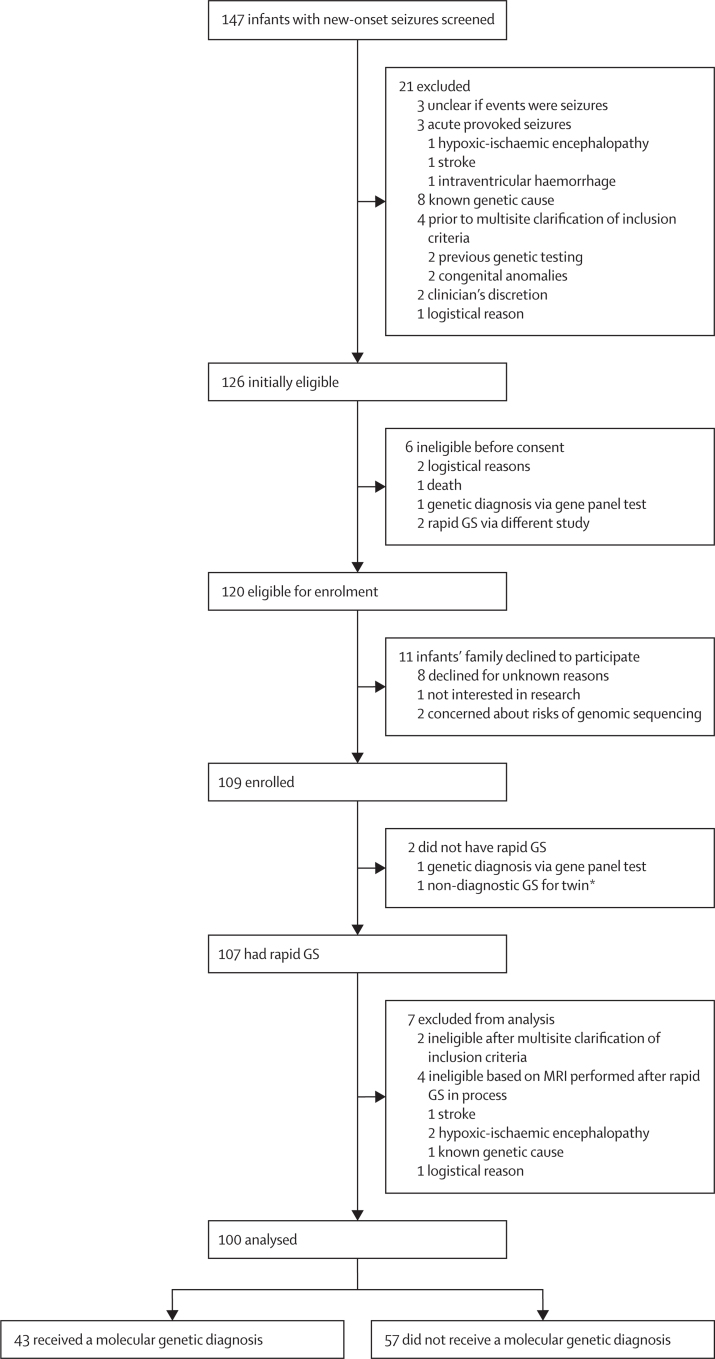
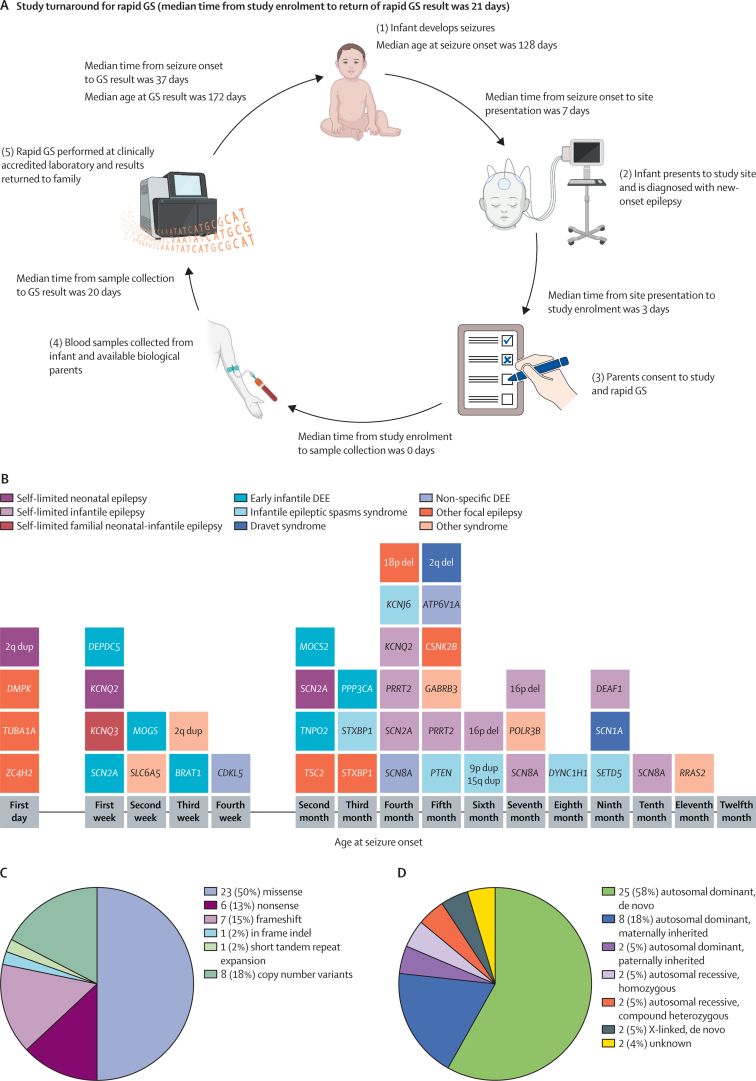
BACKGROUND: Most neonatal and infantile-onset epilepsies have presumed genetic aetiologies, and early genetic diagnoses have the potential to inform clinical management and improve outcomes. We therefore aimed to determine the feasibility, diagnostic yield, and clinical utility of rapid genome sequencing in this population. METHODS: We conducted an international, multicentre, cohort study (Gene-STEPS), which is a pilot study of the International Precision Child Health Partnership (IPCHiP). IPCHiP is a consortium of four paediatric centres with tertiary-level subspecialty services in Australia, Canada, the UK, and the USA. We recruited infants with new-onset epilepsy or complex febrile seizures from IPCHiP centres, who were younger than 12 months at seizure onset. We excluded infants with simple febrile seizures, acute provoked seizures, known acquired cause, or known genetic cause. Blood samples were collected from probands and available biological parents. Clinical data were collected from medical records, treating clinicians, and parents. Trio genome sequencing was done when both parents were available, and duo or singleton genome sequencing was done when one or neither parent was available. Site-specific protocols were used for DNA extraction and library preparation. Rapid genome sequencing and analysis was done at clinically accredited laboratories, and results were returned to families. We analysed summary statistics for cohort demographic and clinical characteristics and the timing, diagnostic yield, and clinical impact of rapid genome sequencing. FINDINGS: Between Sept 1, 2021, and Aug 31, 2022, we enrolled 100 infants with new-onset epilepsy, of whom 41 (41%) were girls and 59 (59%) were boys. Median age of seizure onset was 128 days (IQR 46-192). For 43 (43% [binomial distribution 95% CI 33-53]) of 100 infants, we identified genetic diagnoses, with a median time from seizure onset to rapid genome sequencing result of 37 days (IQR 25-59). Genetic diagnosis was associated with neonatal seizure onset versus infantile seizure onset (14 [74%] of 19 vs 29 [36%] of 81; p=0·0027), referral setting (12 [71%] of 17 for intensive care, 19 [44%] of 43 non-intensive care inpatient, and 12 [28%] of 40 outpatient; p=0·0178), and epilepsy syndrome (13 [87%] of 15 for self-limited epilepsies, 18 [35%] of 51 for developmental and epileptic encephalopathies, 12 [35%] of 34 for other syndromes; p=0·001). Rapid genome sequencing revealed genetic heterogeneity, with 34 unique genes or genomic regions implicated. Genetic diagnoses had immediate clinical utility, informing treatment (24 [56%] of 43), additional evaluation (28 [65%]), prognosis (37 [86%]), and recurrence risk counselling (all cases). INTERPRETATION: Our findings support the feasibility of implementation of rapid genome sequencing in the clinical care of infants with new-onset epilepsy. Longitudinal follow-up is needed to further assess the role of rapid genetic diagnosis in improving clinical, quality-of-life, and economic outcomes. FUNDING: American Academy of Pediatrics, Boston Children's Hospital Children's Rare Disease Cohorts Initiative, Canadian Institutes of Health Research, Epilepsy Canada, Feiga Bresver Academic Foundation, Great Ormond Street Hospital Charity, Medical Research Council, Murdoch Children's Research Institute, National Institute of Child Health and Human Development, National Institute for Health and Care Research Great Ormond Street Hospital Biomedical Research Centre, One8 Foundation, Ontario Brain Institute, Robinson Family Initiative for Transformational Research, The Royal Children's Hospital Foundation, University of Toronto McLaughlin Centre.
Overview
The claims and statistics of this paper haven’t been checked yet.
Free: it reads the open-access text and checks the first 5 claims that cite a source we can check. Create a free account to check every claim.
Integrity signals
Registry
Cites
Statistics
Figures
Verification
Claims the paper makes
The claims and statistics of this paper haven’t been checked yet.
Free: it reads the open-access text and checks the first 5 claims that cite a source we can check. Create a free account to check every claim.
Claims other papers make about this one
Each is checked against this paper’s own text: does it say what the citing paper says it does?
The source backs part of the claim, not all of it — or backs it for a different population, condition or comparison.
In the citing paper
“Indeed, a recent study of rapid genome sequencing (median time from seizure onset to sequencing result of 37 days) in infants with seizures beginning under one year of age, identified the genetic aetiology in 46% of 100 children, with clinical utility in 56%, prognostic counselling in 86% and genetic counselling implications in all those with a pathogenic variant 157 .”
From Developmental and epileptic encephalopathies (2024) · cites this paper as [157]
Experimental — accuracy not yet measuredThe source backs part of the claim, not all of it — or backs it for a different population, condition or comparison.
In the citing paper
“A 2023 genome analysis of infants with seizures beginning in the first year of life identified a genetic cause in 43% of 100 infants, and all had implications for disease management 157 .”
From Developmental and epileptic encephalopathies (2024) · cites this paper as [157]
Experimental — accuracy not yet measuredThe cited source says what the claim attributes to it.
In the citing paper
“By contrast, a 2023 genome sequencing study of infants presenting with seizures under age 1 year identified the causal variant in 43% with immediate treatment implications in 56%, informing additional evaluation in 65% and prognostic counselling in 86% 157 .”
From Developmental and epileptic encephalopathies (2024) · cites this paper as [157]
The cited source says what the claim attributes to it.
In the citing paper
“This international collaborative study analysed the yield of rapid genome sequencing in infants presenting with seizures in the first year of life and highlighted the utility in determining management, prognostic and reproductive counselling.”
From Developmental and epileptic encephalopathies (2024) · cites this paper as [157]
Self-check
Percentages, sums and reported differences re-computed from the paper’s own numbers.
The self-check needs the paper’s full text.
Citations
Cites
Richards, S., Aziz, N., Bale, S., Bick, D., Das, S., Gastier-Foster, J., Grody, W. W., Hegde, M., Lyon, E., Spector, E., et al. (2015) · Genetics in Medicine · doi:10.1038/gim.2015.30 · Cited by 32,594
De novo mutations in epileptic encephalopathies
Epi4K Consortium, & Epilepsy Phenome/Genome Project (2013) · Nature · doi:10.1038/nature12439 · Cited by 1,514
Zuberi, S. M., Wirrell, E., Yozawitz, E., Wilmshurst, J. M., Specchio, N., Riney, K., Pressler, R., Auvin, S., Samia, P., Hirsch, E., et al. (2022) · Epilepsia · doi:10.1111/epi.17239 · Cited by 934
Self-citation100,000 Genomes Pilot on Rare-Disease Diagnosis in Health Care — Preliminary Report
The 100, 0. G. P. P. I. (2021) · New England Journal of Medicine · doi:10.1056/nejmoa2035790 · Cited by 716
Manickam, K., McClain, M. R., Demmer, L. A., Biswas, S., Kearney, H. M., Malinowski, J., Massingham, L. J., Miller, D., Yu, T. W., & Hisama, F. M. (2021) · Genetics in Medicine · doi:10.1038/s41436-021-01242-6 · Cited by 639
The genetic landscape of the epileptic encephalopathies of infancy and childhood
McTague, A., Howell, K. B., Cross, J. H., Kurian, M. A., & Scheffer, I. E. (2016) · The Lancet Neurology · doi:10.1016/s1474-4422(15)00250-1 · Cited by 604
Self-citationSymonds, J. D., Zuberi, S. M., Stewart, K., McLellan, A., O‘Regan, M., MacLeod, S., Jollands, A., Joss, S., Kirkpatrick, M., Brunklaus, A., et al. (2019) · Brain · doi:10.1093/brain/awz195 · Cited by 459
High Rate of Recurrent De Novo Mutations in Developmental and Epileptic Encephalopathies
Hamdan, F. F., Myers, C. T., Cossette, P., Lemay, P., Spiegelman, D., Laporte, A. D., Nassif, C., Diallo, O., Monlong, J., Cadieux-Dion, M., et al. (2017) · The American Journal of Human Genetics · doi:10.1016/j.ajhg.2017.09.008 · Cited by 445 · cited 3×
“%) of 100 infants (appendix pp 25–26).”
InfluentialUltra-Rare Genetic Variation in the Epilepsies: A Whole-Exome Sequencing Study of 17,606 Individuals
Feng, Y.-C. A., Howrigan, D. P., Abbott, L. E., Tashman, K., Cerrato, F., Singh, T., Heyne, H., Byrnes, A., Churchhouse, C., Watts, N., et al. (2019) · The American Journal of Human Genetics · doi:10.1016/j.ajhg.2019.05.020 · Cited by 297
Self-citationDe novo variants in neurodevelopmental disorders with epilepsy
EuroEPINOMICS RES Consortium, Heyne, H. O., Singh, T., Stamberger, H., Abou Jamra, R., Caglayan, H., Craiu, D., De Jonghe, P., Guerrini, R., Helbig, K. L., et al. (2018) · Nature Genetics · doi:10.1038/s41588-018-0143-7 · Cited by 289 · cited 1×
“26,31 An additional area of uncertainty relates to the detection of variants of uncertain significance not considered clinically diagnostic, as was the case for 10% of our cohort, which might require time or additional investigation to resolve.”
Self-citation
Cited by
Developmental and epileptic encephalopathies
Scheffer, I. E., Zuberi, S., Mefford, H. C., Guerrini, R., & McTague, A. (2024) · Nature Reviews Disease Primers · doi:10.1038/s41572-024-00546-6 · Cited by 158
“By contrast, a 2023 genome sequencing study of infants presenting with seizures under age 1 year identified the causal variant in 43% with immediate treatment implications in 56%, informing additional evaluation in 65% and prognostic counselling in 86% 157 .”
InfluentialSelf-citationGenetic Advancements in Infantile Epileptic Spasms Syndrome and Opportunities for Precision Medicine
Snyder, H., Jain, P., RamachandranNair, R., Jones, K., & Whitney, R. (2024) · Genes · doi:10.3390/genes15030266 · Cited by 42
“To date, there is limited research on the utility of WGS in IESS specifically; one study utilizing a whole-genomic approach in a cohort of 16 IESS patients had a diagnostic yield of 25%, while another had a yield of 19% [103,104].”
BackgroundSelf-citationSpecchio, N., Trivisano, M., Aronica, E., Balestrini, S., Arzimanoglou, A. A., Colasante, G., Cross, J. H., Jóźwiak, S., Wilmshurst, J. M., Vigevano, F., et al. (2024) · The Lancet Child & Adolescent Health · doi:10.1016/s2352-4642(24)00196-2 · Cited by 39
“Rapid genome sequencing demonstrated also a high diagnostic yield and clinical utility 18 .”
Self-citationLaFlamme, C. W., Rastin, C., Sengupta, S., Pennington, H. E., Russ-Hall, S. J., Schneider, A. L., Bonkowski, E. S., Almanza Fuerte, E. P., Allan, T. J., Zalusky, M. P.-G., et al. (2024) · Nature Communications · doi:10.1038/s41467-024-50159-6 · Cited by 31
“11) inherited from his mother, who had a smaller expansion ( ~1700 – 1900 bp).”
Self-citationCavirani, B., Spagnoli, C., Caraffi, S. G., Cavalli, A., Cesaroni, C. A., Cutillo, G., GIORGIS, V. D., Frattini, D., Marchetti, G. B., Masnada, S., et al. (2024) · International Journal of Molecular Sciences · doi:10.3390/ijms25021248 · Cited by 27
“Unsurprisingly [36–38], comorbidities with neurodevelopmental and psychiatric disorders were common.”
BackgroundThe clinical and genetic spectrum of inherited glycosylphosphatidylinositol deficiency disorders
Sidpra, J., Sudhakar, S. V., Biswas, A., Massey, F., Turchetti, V., Lau, T., Cook, E., Alvi, J. R., Elbendary, H. M., Jewell, J., et al. (2024) · Brain · doi:10.1093/brain/awae056 · Cited by 19
“42 69-71 Though PIGN -IGD is the only IGD with recently described—albeit heterogenous—epileptology, this is expanded to include focal emotional and sensory seizures in addition to generalized myoclonic-atonic seizures.”
BackgroundSelf-citationHenry, O. J., Ygberg, S. E., Barbaro, M., Lesko, N., Karlsson, L., Peña‐Pérez, L., Båvner, A., Töhönen, V., Lindstrand, A., Stödberg, T., et al. (2025) · Epilepsia · doi:10.1111/epi.18403 · Cited by 19
“The current study validated previously known predictors/associations for receiving a genetic diagnosis: ID/ DD/DEE, neonatal seizure onset, 3,22,27,31,35 and mortality, where an increased risk of mortality has been reported in genetic epilepsies, 36,37 especially in DEEs.”
InfluentialClinical applications of and molecular insights from RNA sequencing in a rare disease cohort
Stark, J. C., Pipko, N., Liang, Y., Szuto, A., Tsoi, C. T., Dickson, M. A., Yuki, K. E., Hou, H., Scholten, S., Pulsifer, K., et al. (2025) · Genome Medicine · doi:10.1186/s13073-025-01494-w · Cited by 23
Self-citationPapadopoulou, M. T., Muccioli, L., Bisulli, F., Klotz, K. A., Fons, C., Trivisano, M., Kabulashvili, T., Specchio, N., Lesca, G., & Arzimanoglou, A. A. (2024) · Epilepsia Open · doi:10.1002/epi4.12930 · Cited by 15
“17 In detail, D′ Gamma at al recently reported results from the application of rapid genome sequencing (median time to genetic result from seizure onset: 37 days) in the context of an international, multicenter, pilot, cohort study in 100 infants with new-onset epilepsy.”
InfluentialSymonds, J. D., Park, K., Mignot, C., Macleod, S., Armstrong, M., Ashrafian, H., Bernard, G., Brown, K. E., Brunklaus, A., Callaghan, M., et al. (2024) · Epilepsia · doi:10.1111/epi.18115 · Cited by 14
“22 There is strong evidence that these variants are causative because all variants appear to be absent from the general population; 11 of the 13 variants were predicted as damaging by all in silico tools tested; and in all the cases where we had parental samples available (12/13), the variants were…”
Self-citationHowell, K. B., White, S. M., McTague, A., D’Gama, A. M., Costain, G., Poduri, A., Scheffer, I. E., Chau, V., Smith, L., Stephenson, S. E. M., et al. (2025) · npj Genomic Medicine · doi:10.1038/s41525-025-00474-8 · Cited by 18
Self-citationHospital-wide access to genomic data advanced pediatric rare disease research and clinical outcomes
French, C. E., Andrews, N. C., Beggs, A. H., Boone, P. M., Brownstein, C. A., Chopra, M., Chou, J. S., Chung, W. K., D’Gama, A. M., Doan, R. N., et al. (2024) · npj Genomic Medicine · doi:10.1038/s41525-024-00441-9 · Cited by 17
“It has also enabled the swift rollout of a rapid-turnaround hybrid clinical/research trio GS study for infants with epilepsy, part of the International Precision Child Health Part-nership (IPCHiP) 30 .”
Self-citationHack, J., Watkins, J. C., Schreiber, J. M., & Hammer, M. F. (2024) · Epilepsia · doi:10.1111/epi.18118 · Cited by 12
“23 Consistent with this view, we find that 36.9% of our SCN8A-RD cohort with GOF variants experience developmental delay before seizure onset or vice versa.”
InfluentialConsensus reporting guidelines to address gaps in descriptions of ultra-rare genetic conditions
AlMail, A., Jamjoom, A. A., Pan, A. Y., Feng, M. Y., Chau, V., D’Gama, A. M., Howell, K. B., Liang, N. S. Y., McTague, A., Poduri, A., et al. (2024) · npj Genomic Medicine · doi:10.1038/s41525-024-00408-w · Cited by 11
“…included: Murdoch Children ’ s Research Institute/Royal Children ’ s Hospital (Melbourne, Australia), The Hospital for Sick Children (SickKids ® ; Toronto, ON, Canada), University College London/Greater Ormond Street Hospital (London, UK), and Boston Children ’ s Hospital (MA, USA) 63,64 .”
BackgroundSelf-citationIdentification and treatment of surgically-remediable causes of infantile epileptic spasms syndrome
Macdonald‐Laurs, E., Dzau, W., Warren, A. E. L., Coleman, M., Mignone, C., Stephenson, S. E. M., & Howell, K. B. (2024) · Expert Review of Neurotherapeutics · doi:10.1080/14737175.2024.2360117 · Cited by 11
Self-citationHolistic Exome-Based Genetic Testing in Adults With Epilepsy
Krenn, M., Wagner, M., Trimmel, K., Bonelli, S. B., Rath, J., Jud, J., Schwarz, M., Milenković, I., Weng, R., Koren, J. P., et al. (2025) · Neurology Genetics · doi:10.1212/nxg.0000000000200260 · Cited by 11
“21 Anecdotal evidence also suggests that genetic testing can inform the selection of epilepsy surgery candidates.”
Exome and Genome Sequencing to Diagnose the Genetic Basis of Neonatal Hypotonia
Morton, S. U., Costain, G., French, C. E., Wakeling, E. L., Szuto, A., Christodoulou, J., Cohn, R. D., Darras, B. T., Wojcik, M. H., D’Gama, A. M., et al. (2024) · Neurology · doi:10.1212/wnl.0000000000210106 · Cited by 11
Self-citationAdult phenotypes of genetic developmental and epileptic encephalopathies
Vakrinou, A., Pagni, S., Mills, J. D., Clayton, L. M. S., Balestrini, S., & Sisodiya, S. M. (2024) · Brain Communications · doi:10.1093/braincomms/fcaf028 · Cited by 9
“57 Importantly, even in adulthood, a genetic diagnosis can lead to changes in clinical management in up to 50% of adult individuals.”
Innes, E. A., Han, V. X., Patel, S., Farrar, M. A., Gill, D. S., Mohammad, S. S., & Dale, R. C. (2025) · Developmental Medicine & Child Neurology · doi:10.1111/dmcn.16273 · Cited by 10
Lucca, C., Rosina, E., Pezzani, L., Piazzolla, D., Spaccini, L., Scatigno, A., Gasperini, S., Pezzoli, L., Cereda, A., Milani, D., et al. (2025) · Clinical Genetics · doi:10.1111/cge.14760 · Cited by 10
Majethia, P., Kaur, N., Mascarenhas, S., Rao, L. P., Pande, S., Narayanan, D. L., Bhat, V., Nayak, S. S., Nair, K. V., Prasannakumar, A. P., et al. (2024) · Clinical Genetics · doi:10.1111/cge.14495 · Cited by 9
“6,11,33 However, in the current study, it is observed that only 33% of the causative variants occurred de novo and 53% of the variants were identified in families with autosomal recessive disorders.”
BackgroundTchaicha, S., Auvin, S., Beniczky, S., Brunklaus, A., Lagae, L., Perucca, E., Surges, R., Adler, S., Helmstaedter, C., Jansen, F. E., et al. (2026) · Epilepsia Open · doi:10.1002/epi4.70210 · Cited by 8
Self-citationElkhateeb, N., Issa, M. Y., Elbendary, H. M., Elnaggar, W., Ramadan, A., Rafat, K., Kamel, M., Abdel‐Ghafar, S. F., Amer, F., Hassaan, H. M., et al. (2024) · Clinical Genetics · doi:10.1111/cge.14481 · Cited by 7
McTague, A., Scheffer, I. E., Kullmann, D. M., & Sisodiya, S. M. (2024) · Handbook of clinical neurology · doi:10.1016/b978-0-323-90820-7.00016-1 · Cited by 8
Self-citationExome sequencing in Nigerian children with early‐onset epilepsy syndromes
Ademuwagun, I. A., Adam, Y., Rotimi, S. O., Syrbe, S., Radtke, M., Hentschel, J., Lemke, J. R., & Adebiyi, E. F. (2024) · Epilepsia Open · doi:10.1002/epi4.13106 · Cited by 6
The spectrum of movement disorders in young children with ARX ‐related epilepsy‐dyskinesia syndrome
Akula, S. K., Quiroz, V., D’Gama, A. M., Chiu, M. Y., Koh, H. Y., Saffari, A., Zaman, Z., Tam, A., Srouji, R., Valentine, R., et al. (2024) · Annals of Clinical and Translational Neurology · doi:10.1002/acn3.52055 · Cited by 5
Self-citationPrecision Antisense Oligonucleotide Therapy Amenability for Infantile Genetic Epilepsies
Sherrill, E., Cheerie, D., Beck, C. S., Whittle, E. F., Shafi, Y., Chandler, N. J., Christodoulou, J., Daniel, J., Hassell, J. K., Lachgar-Ruiz, M., et al. (2026) · JAMA Neurology · doi:10.1001/jamaneurol.2026.1021 · Cited by 4
Self-citationNguyen, J., Lachgar-Ruiz, M., Higginbotham, E. J., Coleman, M., Coleman, J., Shao, W., Scotchman, E., Pritchard, A. J., Bell, K. M., Chitty, L. S., et al. (2026) · Neurology · doi:10.1212/wnl.0000000000214645 · Cited by 5
“(seizure types, EEG fi ndings) and development details, other neurologic and non-neurologic features, MRI fi ndings, and other genetic testing, 10 we collected additional data to assist reanalysis, including any new data in the above categories and if applicable, the age and cause of death.”
Self-citationRapid genome sequencing for infantile-onset epilepsy within a national health-care setting
Robinson, H. K., Stals, K. L., Hill, S. L., Parrish, A., & Baple, E. L. (2024) · The Lancet Neurology · doi:10.1016/s1474-4422(23)00429-5 · Cited by 4
Utility of Genome Sequencing After Nondiagnostic Exome Sequencing in Unexplained Pediatric EpilepsyPreprint
D’Gama, A. M., Shao, W., Smith, L. A., Koh, H. Y., Davis, M., Koh, J., Oby, B. T., Urzua, C. I., Sheidley, B. R., Rockowitz, S., et al. (2024) · medRxiv · doi:10.1101/2024.08.08.24307445 · Cited by 4
Self-citationZhu, S., Zhu, H., Liu, X., Liu, J., Pi, G., Li, Y., Luo, Z., Fan, J., Xiong, F., Zhang, W., et al. (2025) · Epilepsy & Behavior · doi:10.1016/j.yebeh.2025.110338 · Cited by 3
“The molecular mechanisms underlying epilepsy associated with KMT2E variants remain unclear; however, they may involve ion channels that influence neuronal excitability, as well as abnormalities in neurotransmitter function, neuronal migration, and differentiation [17 – 19].”
A crash course in genomics for epilepsy clinicians
Moloney, P. B., & Delanty, N. (2025) · Epilepsy & Behavior · doi:10.1016/j.yebeh.2025.110553 · Cited by 4
Extending the Branches of Neonatal Neurocritical Care
Petersen, M. A., & Glass, H. C. (2025) · Seminars in Perinatology · doi:10.1016/j.semperi.2025.152131 · Cited by 3
“91– 94 Genomic insights are increasingly used to tailor therapeutic strategies, such as more precise use of antiseizure medications, and better inform long-term prognosis.”
CDKL5 Deficiency Disorder: Some Lessons Learned 20 Years After the First Description
Pestana‐Knight, E., & Olson, H. E. (2024) · American Journal on Intellectual and Developmental Disabilities · doi:10.1352/1944-7558-129.2.101 · Cited by 5
Kanmaz, S., Tekgül, H., Kayılıoğlu, H., Ataş, Y., Kart, P. Ö., Yıldız, N., Gümüş, H., Aydin, K., Kanmaz, S., Kayilioglu, H., et al. (2024) · Seizure · doi:10.1016/j.seizure.2024.09.021 · Cited by 3
PRRT 2 -Related Epilepsy: From Self-Limited Infantile Epilepsy to Atypical Epilepsy Phenotypes
Komar, M. A., Sidhu, J., Joseph, J., Kumar, A., Callen, D. J. A., Mesterman, R., RamachandranNair, R., Jones, K., Meaney, B. F., Singh, S., et al. (2025) · Neurology Genetics · doi:10.1212/nxg.0000000000200267 · Cited by 5
Self-citationIdentification of novel epilepsy genetics and development of advanced diagnostic approaches
Veerabathiran, R., & Iyshwarya, B. K. (2025) · Brain Disorders · doi:10.1016/j.dscb.2025.100202 · Cited by 2
Coleman, J., Moloney, P. B., Giffney, C., Regan, M. O., Webb, D. W., Lynch, K., Connolly, L., Kenny, J., & Byrne, S. (2025) · Journal of Genetic Counseling · doi:10.1002/jgc4.70083 · Cited by 2
“Treatment and feasibility for genome sequencing in pediatric neurology settings have been proven even within the clinical standard and rapid testing both within and outside the intensive care setting (Aaltio et al., 2022; D'Gama et al., 2023; Koh et al., 2023).”
D’Gama, A. M., Douglas, J., Hills, S., Wojcik, M. H., Genetti, C. A., Soucy, A., D’Gama, A. M., Kritzer, A., Santana, A., Sousa, A., et al. (2025) · Genetics in Medicine · doi:10.1016/j.gim.2025.101554 · Cited by 2
Self-citationRobertson, A. J., Tran, K. A., Bennett, C., Sullivan, C. M., Stark, Z., Vadlamudi, L., & Waddell, N. (2024) · Scientific Reports · doi:10.1038/s41598-024-57976-1 · Cited by 2
“The value of rapid, timely diagnosis in epilepsy, especially infantile epilepsy, are well recognised 33,34 , and any approach that has the potential to enable access to precision treatments, prevent additional tests, and ineffective or unnecessary treatments is worth exploring.”
BackgroundSelf-citationAdvances in Genetic Testing of Neurologically Abnormal Neonates in the Neonatal Intensive Care Unit
Burns, W., Haffner, D. N., & Chaudhari, B. P. (2025) · Clinics in Perinatology · doi:10.1016/j.clp.2025.02.006 · Cited by 2
Scott, R. C., Hsieh, J., McTague, A., Mahoney, J. M., & Christian, C. A. (2025) · Epiliepsy currents/Epilepsy currents · doi:10.1177/15357597251320142 · Cited by 3
“28,29 Identi fi cation of variants in genes encoding a diverse range of processes including ion and solute channels and transporters, synaptic signaling and scaffolding proteins, cell growth and metabolism and regulation of gene expression have expanded our understanding of the pathophysiology of…”
Self-citationSasaki, E., Millington, P., Sazonova, T., Hanington, L., Parrish, A., Baños-Piñero, B., Lord, H., Taylor, J., Jeeneea, R., Sherlaw‐Sturrock, C., et al. (2025) · European Journal of Human Genetics · doi:10.1038/s41431-025-01870-5 · Cited by 2
“Some recent studies of patients with genetic epilepsies have highlighted the importance of the genetic diagnosis in guiding the management [6, 8 – 10].”
Witzel, M., Gebhard, C., Wenzel, S., Kleier, S., Eichhorn, B., Lorenz, P., von der Heyden, L., Kuhn, M., Luedeke, M., Döcker, M., et al. (2023) · Frontiers in Neurology · doi:10.3389/fneur.2023.1276238 · Cited by 1
Diagnostic evaluation of patients with epileptic spasms in the era of next‐generation sequencing
Mir, A., Al-Qahtani, M. H., Amer, F., Albaradie, R., Alotaibi, W., Alghamdi, F., Khallaf, H., Bashir, S., Costain, G., Aljouda, L., et al. (2024) · Epileptic Disorders · doi:10.1002/epd2.20259 · Cited by 2
Self-citationBrulé, S., Dozières‐Puyravel, B., Nasser, H., Elmaleh, M., Mauvais, F., & Auvin, S. (2025) · Epilepsia · doi:10.1111/epi.18383 · Cited by 1
“18 In cases of epilepsies and DEE in infancy and early childhood, early targeted whole exome sequencing has already proven to be a cost-effective approach.”
Trio-Based Whole-Genome Sequencing for Critically Ill Pediatric Patients in Korea
Lee, S., Koh, J., Lim, J., Cho, J., Kim, W. J., Lee, Y., Yi, B., Joo, E., Jung, D., Lim, B. C., et al. (2025) · Journal of Child Neurology · doi:10.1177/08830738251344996 · Cited by 2
Self-citationBeretti, T., Rozalen, W., Villard, L., Riccardi, F., Daquin, G., Lepine, A. F., Villeneuve, N., Milh, M., & Desnous, B. (2025) · Epilepsia Open · doi:10.1002/epi4.70126 · Cited by 1
“21,22 Although these techniques demand additional resources, they are becoming increasingly integrated into clinical practice, with turnaround times now compatible with the urgent needs of neonatal care.”
Clinical and genetic analysis of epilepsy in children with SCN8A gene variants
Li, R., Wang, C., Geng, R., Xu, X., Tao, Y., & Dai, Y. (2025) · Seizure · doi:10.1016/j.seizure.2025.12.002 · Cited by 1
Kessler, C., Schuler, B. A., Jasper, E. A., Talbert, J. L., Duncan, L., & Mosera, M. (2026) · American Journal of Medical Genetics Part A · doi:10.1002/ajmg.a.70083 · Cited by 2
Jadhav, T., Bouffler, S. E., Innes, E. A., Fahey, M. C., Hunter, M., Kothur, K., Lunke, S., Lynch, M., Macdonald‐Laurs, E., Palmer, E. E., et al. (2026) · Epilepsia Open · doi:10.1002/epi4.70266 · Cited by 1
“10,11 Diagnosis of KCNQ2 neonatal epilepsy enables implementation of targeted treatments with sodium channel blocking (SCB) antiseizure medication (ASM), which can improve seizure control.”
Self-citationGenome sequencing for the fast diagnosis of early-onset epilepsies
Johannesen, K. M., & Møller, R. S. (2023) · The Lancet Neurology · doi:10.1016/s1474-4422(23)00289-2 · Cited by 1
AlMail, A., Jamjoom, A. A., Pan, A. Y., Feng, M. Y., Chau, V., D’Gama, A. M., Howell, K. B., Liang, N. S. Y., McTague, A., Poduri, A., et al. (2023) · medRxiv · doi:10.1101/2023.09.13.23295418 · Cited by 1
Self-citationEditorial: Epilepsy advances in 2023
Ryvlin, P. (2024) · Current Opinion in Neurology · doi:10.1097/wco.0000000000001251 · Cited by 1
Stone, K., Prinzing, G., Lai, A., Smith, L. A., Sheidley, B. R., Corliss, M. M., Bowling, K. M., Cao, Y., Wiltrout, K., Stone, S. S. D., et al. (2026) · medRxiv · doi:10.64898/2026.09.01.26361943 · Cited by 1
Self-citationRapid Whole Genome Sequencing: It Is Feasible! When Can We Implement It?
Joshi, C. (2024) · Epiliepsy currents/Epilepsy currents · doi:10.1177/15357597241237349
Infant with Refractory Seizures and Characteristic Diffusion Restriction Pattern on Neuroimaging
Yoganathan, S., Krishnan, P., Shroff, M. M., Al-Qahtani, M. H., Parthasarathy, P., Chau, V., Guilder, L., Costain, G., Gorodetsky, C., & Jain, P. (2024) · Canadian Journal of Neurological Sciences / Journal Canadien des Sciences Neurologiques · doi:10.1017/cjn.2024.329
Self-citationMolecular genetic causes of epilepsy in children
Yanin, K. R., Gumeniuk, O. I., Коротков, А. Г., & Yanina, T. A. (2024) · S S Korsakov Journal of Neurology and Psychiatry · doi:10.17116/jnevro202412411260
Genetic Counseling in the Genomic Era
Sheidley, B. R., & Smith, L. A. (2025) · Elsevier eBooks · doi:10.1016/b978-0-443-10944-7.00049-4
Self-citationGenome Sequencing Uncovers Additional Findings in Phelan‐ McDermid Syndrome
Moses, R. G., Similuk, M. N., Hehn, A., Duncan, R., Pekar, M., Gordon‐Lipkin, E. M., Acosta, M. T., Zeltser, D., Reynolds-Lallement, N. C., Soorya, L. V., et al. (2025) · American Journal of Medical Genetics Part B Neuropsychiatric Genetics · doi:10.1002/ajmg.b.33036
Molecular Genetic Causes of Epilepsy in Children
Yanin, K. R., Gumeniuk, O. I., Korotkov, A. G., & Yanina, T. A. (2025) · Neuroscience and Behavioral Physiology · doi:10.1007/s11055-025-01823-x
“Numerous studies in recent years have shown that gene panels and exome and/or genome sequencing have high diagnostic ef fi ciency and cost-effectiveness in the diagnosis of early-onset epilepsy [22].”
Stanley, K. J., Chisholm, C., Gillespie, M. K., Caluseriu, O., del Signore, N., Elango, S., Hartley, T., Hewson, S., Kim, R. H., McSheffrey, G., et al. (2025) · BMJ Open · doi:10.1136/bmjopen-2025-107603
“27 30–43 There are limited data to inform the implementation of such a pre-geneticist model in outpatient practice, 43 where most individuals with RD access genetics services.”
Self-citationClinical and Molecular Profile of Infantile-Onset Pharmaco-Resistant Epilepsy in Iraqi Children
Saadi, N. W., Makhseed, N., Al-Husseinawi, A. K., & Marafi, D. (2025) · International Journal of Epilepsy · doi:10.1055/s-0045-1809983 · Cited by 1
Putting control into parents' hands: Parent experiences with a genomic results e‐booklet
Adam, S., Gombas, P., Demos, M. K., Boelman, C. G., Connolly, M. B., Lavelle, K., Friedman, J. M., GenCOUNSEL, Elliott, A. M., & Birch, P. H. (2025) · Journal of Genetic Counseling · doi:10.1002/jgc4.70095
“and quality of life (Demos et al., 2019; D'Gama et al., 2023; Shickh et al., 2021; Smith et al., 2023; Symonds & McTague, 2020).”
Mastrangelo, M., Carducci, C., Manti, F., Ricciardi, G., Bove, R., Pisani, F., & Leuzzi, V. (2025) · Children · doi:10.3390/children12111514
Wakeling, E. L., Baptiste, R., Rocca, C., Hoskins, B. E., Clarkson, C., Chitty, L. S., & Tucci, A. (2025) · Genetics in Medicine · doi:10.1016/j.gim.2025.101619 · Cited by 1
Self-citationAssessing Precision Antisense Oligonucleotide Therapy Eligibility for Infantile Genetic EpilepsiesPreprint
Sherrill, E., Cheerie, D., Beck, C. S., Whittle, E. F., Shafi, Y., Chandler, N. J., Christodoulou, J., Ma, D. J., Hassell, J. K., Lachgar-Ruiz, M., et al. (2025) · medRxiv · doi:10.64898/2025.12.02.25341084
Self-citationThe Evolving Landscape of Epilepsy Diagnosis and Management
Boreham, H. (2025) · EMJ Neurology · doi:10.33590/emjneurol/xzzr4971
Epilepsy‐Associated Variants of a Single SCN1A Codon Exhibit Divergent Functional Properties
Liebovitz, L. N., Thompson, C. H., Laux, L., & George, A. L. (2026) · Annals of Clinical and Translational Neurology · doi:10.1002/acn3.70344
Genética en epilepsia: puesta al día
Álvarez-Díaz, C., Venegas, V., & Pérez, E. (2026) · Revista Médica Clínica Las Condes · doi:10.1016/j.rmclc.2026.02.002
Exome and genome sequencing for the diagnosis of rare diseases
Elbracht, M., Krause, J., Mattern, L., Güzel, N., Lischka, A., Suh, D. S. J., Knopp, C., Bourgeois, M., Beijer, D., D'Augello, S., et al. (2026) · Deutsches Ärzteblatt international · doi:10.3238/arztebl.m2026.0030
Wheless, J. W., Shahid, A. M., & Vidaurre, J. A. (2026) · Pediatric Neurology · doi:10.1016/j.pediatrneurol.2026.03.019
Cheawsamoot, C., Thangpong, R., Chetruengchai, W., Kanlayaprasit, S., Kamolvisit, W., Kor‐anantakul, P., Assawapitaksakul, A., Boonsimma, P., Poonmaksatit, S., Chomtho, K., et al. (2026) · Journal of Medical Genetics · doi:10.1136/jmg-2026-111514
“4 However, short-read sequencing (SRS) has important limitations, including reduced sensitivity for large structural variants (SVs), copy number variants (CNVs) and repeat expansions, difficulty phasing biallelic variants without parental samples and limited coverage of non-coding and some coding…”
Multigene Panel Testing in Pediatric Epilepsy: Diagnostic Yield and Clinical Implications
Kim, Y. H., Cho, J., Lee, S., Seo, S. H., Cho, A., Kim, H., Lim, B. C., & Chae, J. (2026) · Annals of Child Neurology · doi:10.26815/acn.2026.01389
Tse, D. M., Tang, W., Chui, M. M. C., Lo, C. W. S., Lai, J., Chu, A. T.-W., & Chung, B. H. (2026) · Genetics in Medicine · doi:10.1016/j.gim.2026.102644
Rapid genomic sequencing in the NICU: Who to test and why
Ali, S. S., Newsam, M. T., & Agrawal, P. B. (2026) · European Journal of Human Genetics · doi:10.1038/s41431-026-02207-6
Hospital-wide implementation of inpatient first-tier rapid genome sequencing
Wenger, T. L., Scott, A. A., Kruidenier, L., Hayek, J. C., Beck, A. E., Chow, P. M., Glass, I. A., Adam, M. P., Bennett, J. T., Dipple, K. M., et al. (2026) · Genetics in Medicine · doi:10.1016/j.gim.2026.102685
Iglesias, M., & Sherin, K. (2026) · Cureus · doi:10.7759/cureus.117344
Global epidemiological and genetic burden of rare neurological diseases in children
Xie, Z., Sun, C., Liang, W., Zhao, X., Miao, L., Liu, X., Liu, C., Liu, C., Yin, Z., Li, J., et al. (2026) · iScience · doi:10.1016/j.isci.2026.117791
“15 16–19 As most pediatric rare neurological diseases are monogenic or Mendelian and often cause severe, progressive disabilities, these diagnostic improvements, together with prolonged patient survival, have naturally led to higher recorded prevalence and DALYs over the past three decades.”
Whole Genomes, Clearer Diagnoses—Precision Care for Children With Neurologic Disease
Inder, T. E. (2026) · JAMA Neurology · doi:10.1001/jamaneurol.2026.3008
Dong, R., Zhang, H., Wang, X., Zhang, K., & Liu, G.-H. (2026) · Genes · doi:10.3390/genes17111326
Metadata
- Authors
- D'Gama, A. M., Mulhern, S., Sheidley, B. R., Boodhoo, F., Buts, S., Chandler, N. J., Cobb, J., Curtis, M., Higginbotham, E. J., Holland, J., Khan, T., Koh, J., Liang, N. S. Y., McRae, L., Nesbitt, S. E., Oby, B. T., Paternoster, B., Patton, A., Rose, G., Scotchman, E., Valentine, R., Wiltrout, K. N., Hayeems, R. Z., Jain, P., Lunke, S., Marshall, C. R., Rockowitz, S., Sebire, N. J., Stark, Z., White, S. M., Chitty, L. S., Cross, J. H., Scheffer, I. E., Chau, V., Costain, G., Poduri, A., Howell, K. B., & McTague, A.
- Affiliations
- Victorian Clinical Genetics Services (AU)
- Boston Children's Hospital (US)
- Great Ormond Street Hospital (GB)
- Universitätsklinikum Aachen (DE)
- Murdoch Children's Research Institute (AU)
- Hospital for Sick Children (CA)
- SickKids Foundation (CA)
- University of Toronto (CA)
- Frimley Park Hospital (GB)
- The University of Melbourne (AU)
- Royal Children's Hospital (AU)
- Corresponding author
- McTague, Amy
- ORCID
- Sheidley, Beth R
- Buts, Sarah
- Chandler, Natalie J
- Cobb, Joanna
- Curtis, Meredith
- Higginbotham, Edward J
- Holland, Jonathon
- Khan, Tayyaba
- Liang, Nicole S Y
- McRae, Lyndsey
- Oby, Brandon T
- Paternoster, Ben
- Rose, Graham
- Scotchman, Elizabeth
- Valentine, Rozalia
- Wiltrout, Kimberly N
- Hayeems, Robin Z
- Jain, Puneet
- Lunke, Sebastian
- Marshall, Christian R
- Rockowitz, Shira
- Sebire, Neil J
- Stark, Zornitza
- White, Susan M
- Chitty, Lyn S
- Cross, J Helen
- Scheffer, Ingrid E
- Chau, Vann
- Costain, Gregory
- Poduri, Annapurna
- Howell, Katherine B
- McTague, Amy
- Venue
- The Lancet Neurology
- Publisher
- Elsevier BV
- Published
- 2023-09
- Volume
- 22
- Issue
- 9
- Pages
- 812-825
- ISSN
- 1474-4422 (ISSN-L)
- PMC
- PMC11860300
- OpenAlex
- W4385889024
- Semantic Scholar
- eb2886420cdf23312dc8eecdd8abf5ae4d52fe5c
- Cited by
- 80
- References
- 33
- Citations by year
- 2026: 19 · 2025: 30 · 2024: 28 · 2023: 3
- FWCI
- 16.22
- Type
- journal article
- Language
- en
- Update notices
- erratum (2023-12-01)
- Open access
- hybrid
- doi.org
- Licence
- cc-by
- www.elsevier.com/tdm/userlicense/1.0/ (tdm)
- www.elsevier.com/legal/tdmrep-license (tdm)
- creativecommons.org/licenses/by/4.0/ (vor)
- Locations
- The Lancet Neurology (publishedVersion, cc-by)
- PubMed Central (publishedVersion, cc-by)
- PubMed (publishedVersion)
- UCL Discovery (University College London) (submittedVersion, cc-by)
- Minerva Access (University of Melbourne) (submittedVersion, cc-by)
- Funders
- Wellcome Trust
- National Institute for Health and Care Research
- Medical Research Council (MR/T007087/1)
- National Health and Medical Research Council (2006841)
- Eunice Kennedy Shriver National Institute of Child Health and Human Development (P50HD105351, T32HD098061)
- Topics
- Health Sciences › Medicine › Clinical Neurology › Epilepsy research and treatment
- Life Sciences › Biochemistry, Genetics and Molecular Biology › Genetics › Genomics and Rare Diseases
- Life Sciences › Biochemistry, Genetics and Molecular Biology › Clinical Biochemistry › Metabolism and Genetic Disorders
- Keywords
- infantile epilepsy, rapid genome sequencing, neonatal seizures, complex febrile seizures, genetic diagnosis, diagnostic yield, clinical utility
- MeSH terms
- Child, Seizures, Febrile, Epilepsy, Feasibility Studies, Female, Humans, Infant, Newborn, Male, Ontario, Pilot Projects, Cohort Studies
About these checks
Registry, retraction, Cites and statistics results are computed, not judged, with one exception: a printed reference that no index lists is read once by a model before it counts as a citation error. Claims are extracted by a model and kept only when their quote appears verbatim in the text; each cited source is then checked, with a model’s help, for whether it says what the claim relies on. Those verdicts can be wrong — read the claim’s quote and the cited source before relying on one.
Statistics and arithmetic are recomputed, not judged.
Confidence bands are shown only for fields calibrated on our annotated test set. None is calibrated yet, so no band is shown.
What counts as a claim ›How we measure confidence ›How we check this ›
Are you an author, or do you see a problem with this page? Request a review
Data sources
Bibliographic data: Semantic Scholar, OpenAlex, Crossref.
Contains information from the Semantic Scholar Academic Graph Datasets, made available under the ODC Attribution License (ODC-BY 1.0).
Semantic Scholar’s data is described in: Kinney, R., et al. (2023). The Semantic Scholar Open Data Platform. arXiv:2301.10140.
