

The DOI matches its Crossref record; 42 of the 42 references it cites were found in a registry or an index.
RAB32 Ser71Arg in autosomal dominant Parkinson's disease: linkage, association, and functional analyses
Open accessPublished version of a preprint
Abstract
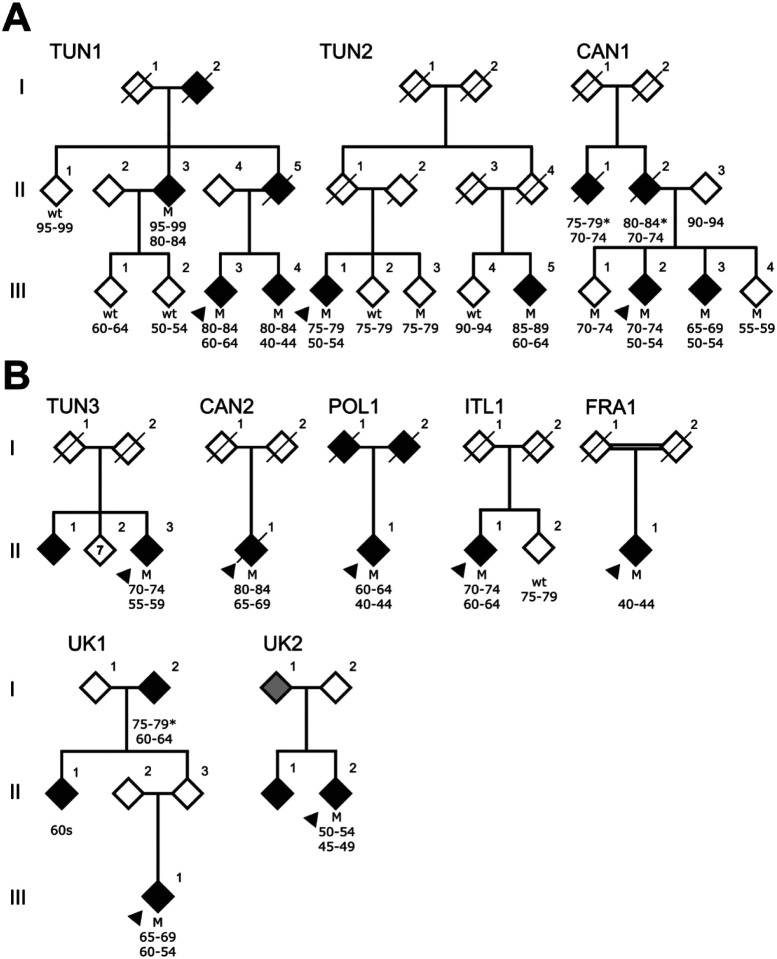
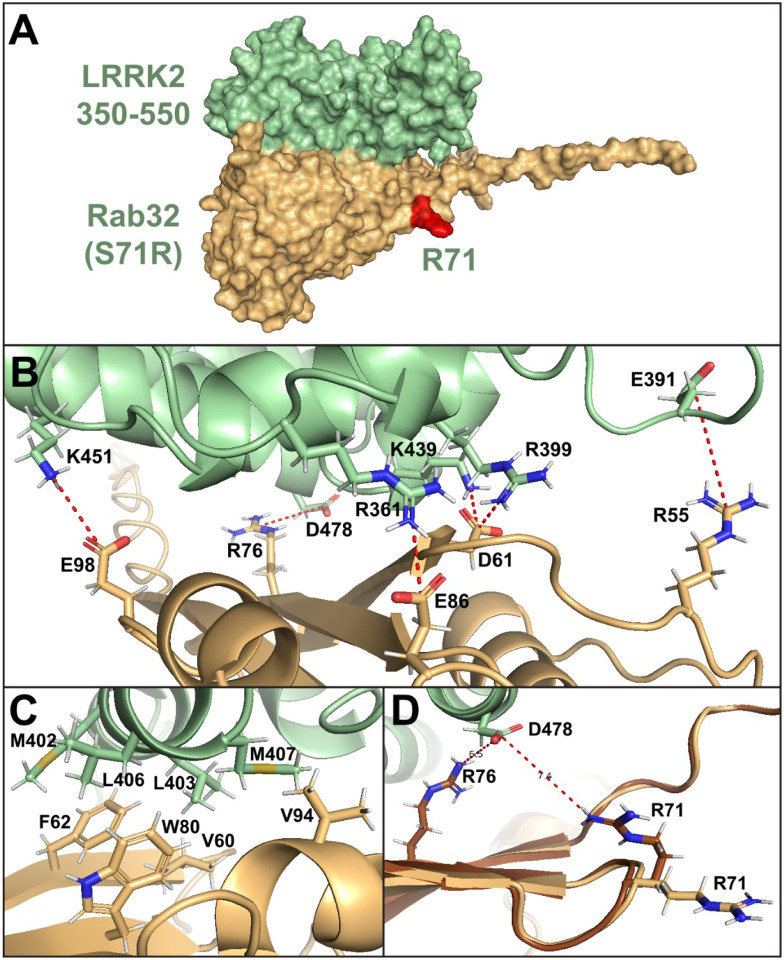
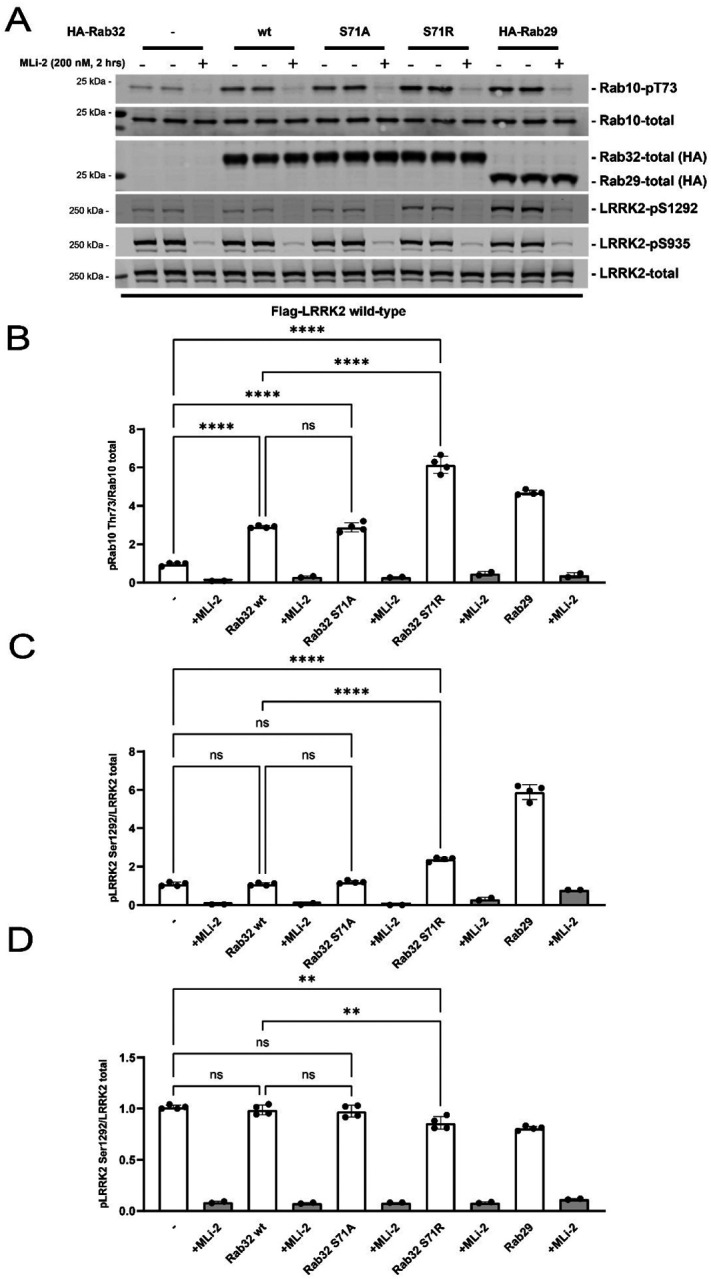
Background Parkinson's disease is a progressive neurodegenerative disorder with multifactorial causes, among which genetic risk factors play a part. The RAB GTPases are regulators and substrates of LRRK2, and variants in the LRRK2 gene are important risk factors for Parkinson's disease. We aimed to explore genetic variability in RAB GTPases within cases of familial Parkinson's disease. Methods We did whole-exome sequencing in probands from families in Canada and Tunisia with Parkinson's disease without a genetic cause, who were recruited from the Centre for Applied Neurogenetics (Vancouver, BC, Canada), an international consortium that includes people with Parkinson's disease from 36 sites in 24 countries. 61 RAB GTPases were genetically screened, and candidate variants were genotyped in relatives of the probands to assess disease segregation by linkage analysis. Genotyping was also done to assess variant frequencies in individuals with idiopathic Parkinson's disease and controls, matched for age and sex, who were also from the Centre for Applied Neurogenetics but unrelated to the probands or each other. All participants were aged 18 years or older. The sequencing and genotyping findings were validated by case–control association analyses using bioinformatic data obtained from publicly available clinicogenomic databases (AMP-PD, GP2, and 100 000 Genomes Project) and a private German clinical diagnostic database (University of Tübingen). Clinical and pathological findings were summarised and haplotypes were determined. In-vitro studies were done to investigate protein interactions and enzyme activities. Findings Between June 1, 2010, and May 31, 2017, 130 probands from Canada and Tunisia (47 [36%] female and 83 [64%] male; mean age 72·7 years [SD 11·7; range 38–96]; 109 White European ancestry, 18 north African, two east Asian, and one Hispanic] underwent whole-exome sequencing. 15 variants in RAB GTPase genes were identified, of which the RAB32 variant c.213C>G (Ser71Arg) cosegregated with autosomal dominant Parkinson's disease in three families (nine affected individuals; non-parametric linkage Z score=1·95; p=0·03). 2604 unrelated individuals with Parkinson's disease and 344 matched controls were additionally genotyped, and five more people originating from five countries (Canada, Italy, Poland, Turkey, and Tunisia) were identified with the RAB32 variant. From the database searches, in which 6043 individuals with Parkinson's disease and 62 549 controls were included, another eight individuals were identified with the RAB32 variant from four countries (Canada, Germany, UK, and USA). Overall, the association of RAB32 c.213C>G (Ser71Arg) with Parkinson's disease was significant (odds ratio [OR] 13·17, 95% CI 2·15–87·23; p=0·0055; I 2 =99·96%). In the people who had the variant, Parkinson's disease presented at age 54·6 years (SD 12·75, range 31–81, n=16), and two-thirds had a family history of parkinsonism. RAB32 Ser71Arg heterozygotes shared a common haplotype, although penetrance was incomplete. Findings in one individual at autopsy showed sparse neurofibrillary tangle pathology in the midbrain and thalamus, without Lewy body pathology. In functional studies, RAB32 Arg71 activated LRRK2 kinase to a level greater than RAB32 Ser71. Interpretation RAB32 Ser71Arg is a novel genetic risk factor for Parkinson's disease, with reduced penetrance. The variant was found in individuals with Parkinson's disease from multiple ethnic groups, with the same haplotype. In-vitro assays show that RAB32 Arg71 activates LRRK2 kinase, which indicates that genetically distinct causes of familial parkinsonism share the same mechanism. The discovery of RAB32 Ser71Arg also suggests several genetically inherited causes of Parkinson's disease originated to control intracellular immunity. This shared aetiology should be considered in future translational research, while the global epidemiology of RAB32 Ser71Arg needs to be assessed to inform genetic counselling. Funding National Institutes of Health, the Canada Excellence Research Chairs program, Aligning Science Across Parkinson's, the Michael J Fox Foundation for Parkinson's Research, and the UK Medical Research Council.
Overview
The claims and statistics of this paper haven’t been checked yet.
Run the check — free, no account needed. It reads the open-access text and checks the sources it cites.
Integrity signals
Registry
Cites
Statistics
Figures
Verification
Claims the paper makes
The claims and statistics of this paper haven’t been checked yet.
Run the check — free, no account needed. It reads the open-access text and checks the sources it cites.
Self-check
Percentages, sums and reported differences re-computed from the paper’s own numbers.
The self-check needs the paper’s full text.
Citations
Cites
Highly accurate protein structure prediction with AlphaFold
Jumper, J., Evans, R., Pritzel, A., Green, T., Figurnov, M., Ronneberger, O., Tunyasuvunakool, K., Bates, R., Žídek, A., Potapenko, A., et al. (2021) · Nature · doi:10.1038/s41586-021-03819-2 · Cited by 43,764
Conducting Meta-Analyses in R with the metafor Package
Viechtbauer, W. (2010) · Journal of Statistical Software · doi:10.18637/jss.v036.i03 · Cited by 20,464
Hughes, A. J., Daniel, S. E., Kilford, L., & Lees, A. J. (1992) · Journal of Neurology, Neurosurgery & Psychiatry · doi:10.1136/jnnp.55.3.181 · Cited by 10,378
Mutation in the α-Synuclein Gene Identified in Families with Parkinson's Disease
Polymeropoulos, M. H., Lavedan, C., Leroy, E., Ide, S. E., Dehejia, A., Dutra, A., Pike, B., Root, H., Rubenstein, J., Boyer, R., et al. (1997) · Science · doi:10.1126/science.276.5321.2045 · Cited by 8,240
Mutations in the parkin gene cause autosomal recessive juvenile parkinsonism
Kitada, T., Asakawa, S., Hattori, N., Matsumine, H., Yamamura, Y., Minoshima, S., Yokochi, M., Mizuno, Y., & Shimizu, N. (1998) · Nature · doi:10.1038/33416 · Cited by 5,227
Bloem, B. R., Okun, M. S., & Klein, C. (2021) · The Lancet · doi:10.1016/s0140-6736(21)00218-x · Cited by 3,920
Hereditary Early-Onset Parkinson's Disease Caused by Mutations in PINK1
Valente, E. M., Abou-Sleiman, P. M., Caputo, V., Muqit, M. M. K., Harvey, K., Gispert, S., Ali, Z., Del Turco, D., Bentivoglio, A. R., Healy, D. G., et al. (2004) · Science · doi:10.1126/science.1096284 · Cited by 3,481
Merlin—rapid analysis of dense genetic maps using sparse gene flow trees
Abecasis, G. R., Cherny, S. S., Cookson, W., & Cardon, L. R. (2001) · Nature Genetics · doi:10.1038/ng786 · Cited by 3,323
Impaired Degradation of Mutant α-Synuclein by Chaperone-Mediated Autophagy
Cuervo, A. M., Stefanis, L., Fredenburg, R., Lansbury, P. T., & Sulzer, D. (2004) · Science · doi:10.1126/science.1101738 · Cited by 2,024 · cited 3×
“2,3 Monomeric α-synuclein (which is encoded by SNCA ) functions as a vesicular chaperone, 4 but it can aggregate into Lewy body pathology, 5 which is pathognomonic for Parkinson’s disease.”
International Parkinson's Disease Genomics Consortium (IPDGC), Nalls, M. A., Parkinson's Study Group (PSG) Parkinson's Research: The Organized GENetics Initiative (PROGENI), 23andMe, GenePD, NeuroGenetics Research Consortium (NGRC), Hussman Institute of Human Genomics (HIHG), Investigator, T. A. J. D., (CHARGE), C. F. H. A. A. R. I. G. E., North American Brain Expression Consortium (NABEC), et al. (2014) · Nature Genetics · doi:10.1038/ng.3043 · Cited by 1,895
Self-citation
Cited by
Sorted by citations
Items 101–117 of 117
Bases moléculaires de la maladie de Parkinson
Lesage, S., & Brice, A. (2025) · Encyclopédie médico-chirurgicale. Neurologie · doi:10.1016/s0246-0378(25)49794-2
Self-citationConvergent molecular pathways to inherited Parkinson's disease
Pfeffer, S. R. (2026) · Current Opinion in Cell Biology · doi:10.1016/j.ceb.2026.102624
Vps35 p.D620N causes Lrrk2 kinase hyperactivity, chronic microglial activation and inflammationPreprint
Deng, I. B., Bu, M., Follett, J., Sharp, R. C., Mamais, A., Xoi, L., Yu, F., Rabil, G., Wall, S. C., & Farrer, M. J. (2026) · bioRxiv (Cold Spring Harbor Laboratory) · doi:10.64898/2026.03.09.710482
Self-citationGenetic landscape of Parkinson’s disease in the Personalized Parkinson Project cohortPreprint
Lüth, T., Klein, C., Helmich, R. C. G., Brüggemann, N., Hrir, S., Kuiperij, H. B., Gorgogietas, V. A., Fernandes, S. B. G., Prasuhn, J., May, P., et al. (2026) · medRxiv · doi:10.64898/2026.03.16.26348127
Self-citationGenetic and environmental risk factors of Parkinsonism
Kaňovský, P., Menšíková, K., Čupr, P., Vodička, R., Kolaříková, K., Strnadová, T., Cook, S. E. V., Koníčková, D., Klánová, J., Colosimo, C., et al. (2026) · Journal of Neural Transmission · doi:10.1007/s00702-025-03058-z
Basi molecolari della malattia di Parkinson
Lesage, S., & Brice, A. (2026) · EMC - Neurologia · doi:10.1016/s1634-7072(26)51721-5
Self-citationSharp, R. C., Wall, S. C., Follett, J., Deng, I. B., & Farrer, M. J. (2026) · bioRxiv (Cold Spring Harbor Laboratory) · doi:10.64898/2026.08.16.745139
Self-citationGutierrez-Arratia, J. D., Awad, P. S., Schuh, A. F. S., & Cornejo‐Olivas, M. (2026) · Journal of Parkinson s Disease · doi:10.1177/1877718x261478730
Species-dependent activities of the PINK1–parkin axis
Huang, W., Chen, K., Wen, J., Zhang, T., Li, S., Li, X., & Yang, W. (2026) · Translational Neurodegeneration · doi:10.1186/s40035-026-00586-w
Parkinson's disease and the habenula
Samancı, B. (2026) · doi:10.26481/dis.20261001bs
Unified long-read panel for Parkinson’s and repeat expansion disorders
Fienemann, A., Prietzsche, J. C., Laß, J., Much, C., Schaake, S., Lüth, T., Gabbert, C., Zimprich, A., Stögmann, E., König, T., et al. (2026) · npj Parkinson s Disease · doi:10.1038/s41531-026-01585-4
Self-citationEnfermedad de Parkinson: actualización clínica y nuevos enfoques diagnósticos y terapéuticos
Suárez, P. R., Sánchez-Ajofrin, J. R., & Santos‐García, D. (2026) · Medicina Clínica · doi:10.1016/j.medcli.2026.107616
Wagen, A. Z., Reynolds, R. H., Foo, J. N., Gustavsson, E. K., Wood, N. W., Taliun, S. A. G., Wallace, C., Blauwendraat, C., Gandhi, S., & Ryten, M. (2026) · Communications Biology · doi:10.1038/s42003-026-10865-x
Self-citationReply to “Evaluation of Rare MCOLN1 Variants in a Large Cohort of α‐Synucleinopathies”
Ying, C., Chen, X., Cen, Z., Feng, X., Jin, N., Li, J., Wang, X., & Luo, W. F. (2026) · Movement Disorders · doi:10.1002/mds.70569
Boumpoureka, I., Gorgogietas, V. A., Petkovski, E., Halder, R., Massart, F., & Krüger, R. (2026) · bioRxiv (Cold Spring Harbor Laboratory) · doi:10.64898/2026.10.20.760406
Genetics of Parkinson’s disease and parkinsonism: a practical guide to assessment and testing
Frost, J. L. I., Mullane, G., Lam, E., Real, R., Lynch, T., Morris, H. R., & Olszewska, D. A. (2026) · Practical Neurology · doi:10.1136/pn-2026-005226
Self-citation
Metadata
- Authors
- Gustavsson, E. K., Follett, J., Trinh, J., Barodia, S. K., Real, R., Liu, Z., Grant-Peters, M., Fox, J. D., Appel-Cresswell, S., Stoessl, A. J., Rajput, A., Rajput, A. H., Auer, R., Tilney, R., Sturm, M., Haack, T. B., Lesage, S., Tesson, C., Brice, A., Vilariño-Güell, C., Ryten, M., Goldberg, M. S., West, A. B., Hu, M. T., Morris, H. R., Sharma, M., Gan-Or, Z., Samanci, B., Lis, P., Periñan, M. T., Amouri, R., Ben Sassi, S., Hentati, F., Tonelli, F., Alessi, D. R., & Farrer, M. J.
- Affiliations
- University of British Columbia (CA)
- University of Alabama at Birmingham (US)
- Aligning Science Across Parkinson's (US)
- Saskatchewan Health Authority (CA)
- UCL Queen Square Institute of Neurology (GB)
- University of Tübingen (DE)
- Centre National de la Recherche Scientifique (FR)
- UCL Biomedical Research Centre (GB)
- Duke University (US)
- University of Oxford (GB)
- Hôpital La Rabta (TN)
- University of Dundee (GB)
- Corresponding author
- Farrer, Matthew J
- ORCID
- Gustavsson, Emil K
- Follett, Jordan
- Trinh, Joanne
- Barodia, Sandeep K
- Real, Raquel
- Liu, Zhiyong
- Fox, Jesse D
- Stoessl, A Jon
- Rajput, Alex
- Auer, Roland
- Tilney, Russel
- Sturm, Marc
- Haack, Tobias B
- Lesage, Suzanne
- Tesson, Christelle
- Brice, Alexis
- Ryten, Mina
- Goldberg, Matthew S
- West, Andrew B
- Hu, Michele T
- Morris, Huw R
- Sharma, Manu
- Amouri, Rim
- Tonelli, Francesca
- Alessi, Dario R
- Farrer, Matthew J
- Venue
- The Lancet Neurology
- Publisher
- Elsevier BV
- Published
- 2024-06
- Volume
- 23
- Issue
- 6
- Pages
- 603-614
- ISSN
- 1474-4422 (ISSN-L)
- PMC
- PMC10827257
- OpenAlex
- W4394695501
- Cited by
- 114
- References
- 42
- Citations by year
- 2026: 28 · 2025: 51 · 2024: 35
- FWCI
- 30.50
- Type
- journal article
- Language
- en
- Open access
- hybrid
- doi.org
- Licence
- Locations
- The Lancet Neurology (publishedVersion, cc-by)
- medRxiv (acceptedVersion, cc-by)
- PubMed (publishedVersion)
- PubMed Central (publishedVersion, cc-by)
- UCL Discovery (University College London) (submittedVersion, cc-by)
- PubMed Central (submittedVersion, cc-by)
- Discovery Research Portal (University of Dundee) (submittedVersion, cc-by)
- Funders
- Canadian Institutes of Health Research
- UKRI Medical Research Council
- Aligning Science Across Parkinson's
- Topics
- Health Sciences › Medicine › Clinical Neurology › Parkinson's Disease Mechanisms and Treatments
- Life Sciences › Biochemistry, Genetics and Molecular Biology › Molecular Biology › Nuclear Receptors and Signaling
- Health Sciences › Medicine › Clinical Neurology › Deep Brain Stimulation and Movement Disorders
- Keywords
- Parkinson's disease, Rab32, Rab GTPases, autosomal dominant inheritance, familial Parkinson's disease, genetic linkage, genetic association, LRRK2, haplotype analysis, protein-protein interaction, genetic risk factors, exome sequencing, case-control association, haplotype phasing
About these checks
Registry, retraction, Cites and statistics results are computed, not judged, with one exception: a printed reference that no index lists is read once by a model before it counts as a citation error. Claims are extracted by a model and kept only when their quote appears verbatim in the text; each cited source is then checked, with a model’s help, for whether it says what the claim relies on. Those verdicts can be wrong — read the claim’s quote and the cited source before relying on one.
Statistics and arithmetic are recomputed, not judged.
Confidence bands are shown only for fields calibrated on our annotated test set. None is calibrated yet, so no band is shown.
What counts as a claim ›How we measure confidence ›How we check this ›
Are you an author, or do you see a problem with this page? Request a review
