

The influence of personality disorder on the future mental health and social adjustment of young adults: a population-based, longitudinal cohort study
Open accessThe DOI matches its Crossref record; 34 of the 34 references it cites were found in a registry or an index; 7 of the 25 sources its claims cite were checked for support.
Abstract
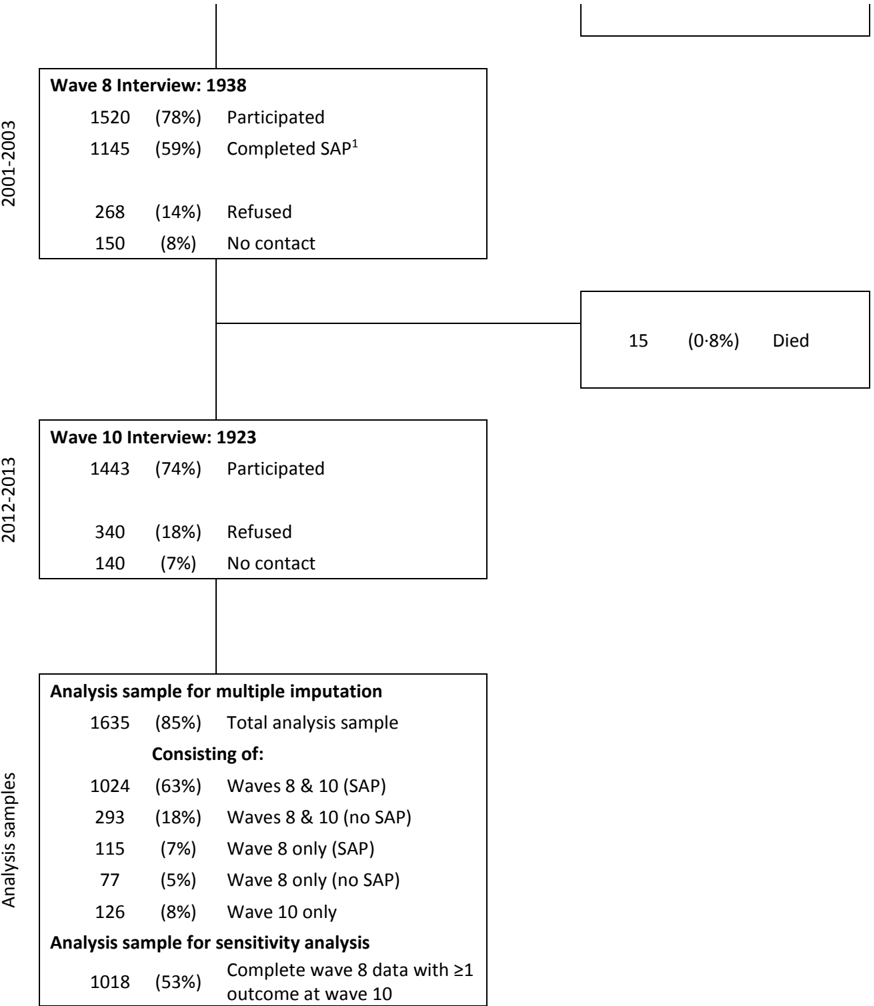
Background Existing knowledge about the consequences of personality disorders is substantially derived from the study of clinical populations. To gain a fuller understanding of the disease burden associated with personality disorders, we report their long-term mental health and social consequences in a large population-based sample of young adults. Methods We used data from a population-based, ten-wave cohort study of a stratified random sample of non-treatment-seeking young adults recruited from Victoria, Australia, between Aug 20, 1992, and March 3, 2014. The population sample was originally recruited in adolescence: here we report the analysis of data collected from wave 8 (participants aged 24-25 years) and wave 10 (participants aged 34-35 years). Presence and severity of personality disorder were assessed at age 24 years with a semi-structured, informant-based interview (the Standardised Assessment of Personality). At age 35 years, participants were assessed on the occurrence of the following outcomes: major depressive disorder, anxiety disorder, smoking and alcohol consumption, illicit substance use, ever having separated from a long-term partner or been divorced, not currently in a relationship, not currently in paid employment, and in receipt of government welfare. We used multiple imputation to address potentially biased estimates resulting from the reduction of the analysis sample to participants who had completed both survey waves. The imputation dataset contained 1635 individuals. Findings For the 1520 participants in wave 8, 1145 (75%) informant interviews for personality disorder in these participants took place. At age 24 years, 305 (27%) of the observed sample had either personality difficulties or personality disorder. At age 24 years, in the imputed analysis sample, the severity of personality disorder was associated with the absence of a degree or vocational qualification (adjusted odds ratio [aOR] for the effect of complex and severe personality disorder vs no personality disorder 1·76, 95% CI 1·11-2·76), receipt of welfare (2·52, 1·33-4·78), the presence of common mental disorders (1·77, 1·08-2·90), and cigarette smoking (2·01, 1·29-3·14). At age 35 years, severity of personality disorder was independently associated with not being in a relationship (aOR for the effect of complex and severe personality disorder vs no personality disorder or personality difficulty 2·05, 95% CI 1·21-3·45), increased odds of an anxiety disorder (2·27, 1·2-4·28), and major depression (2·23, 1·24-4·01). Interpretation The presence of personality disorder predicts the occurrence of later anxiety and depression, as well as the absence of long-term relationships, effects that are not attributable to pre-existing mental health, substance use or social problems. Our study provides strong support for including personality disorder in global studies of the burden of mental disorders to improve the understanding of population mental health. Funding Australia's National Health and Medical Research Council (NHMRC) and Victoria's Operational Infrastructure Support Program.
Overview
CoChat Summary
TL;DR
In a population-based longitudinal cohort of non-treatment-seeking young adults in Victoria, Australia, personality disorder (PD) severity at age 24 predicted poorer mental health and social adjustment at age 35, independent of prior common mental disorder and social difficulties. The authors argue these findings support including PD in global burden-of-disease estimates.
Key findings
At age 24 years, 28% (n=458) had either personality difficulties or PD: 7% (n=113) personality difficulty, 13% (n=216) simple PD, 5% (n=86) complex PD, and 2% (n=37) severe PD.
- At age 35 years, fully adjusted models showed PD severity was associated with not being in a relationship (complex/severe PD vs no PD or personality difficulty: aOR 2.05, 95% CI 1.21–3.45), anxiety disorder (aOR 2.27, 95% CI 1.20–4.28), and major depression (aOR 2.23, 95% CI 1.24–4.01).
- Personality difficulty also showed increased odds of later anxiety disorder (OR 2.43, 95% CI 1.30–4.53) and major depression (OR 2.14, 95% CI 1.15–3.99) in fully adjusted models.
- At age 24 years, PD severity was associated with absence of post-school qualifications, receipt of welfare, common mental disorders, and daily cigarette smoking; there was no evidence for an association with high-risk alcohol use or illicit substance use.
- No evidence was found for an association between PD severity and later illicit substance use; associations with daily smoking, nicotine dependence, and alcohol dependence were substantially attenuated after adjusting for baseline substance use.
Methods
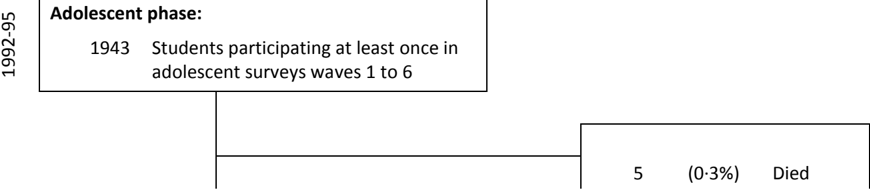
Ten-wave cohort study in Victoria, Australia (1992–2013), analyzing waves 8 (age 24–25) and 10 (age 34–35) in a stratified random sample of 1635 non-treatment-seeking young adults.
- PD presence and severity were assessed at age 24 via the Standardised Assessment of Personality informant interview, using Tyrer & Johnson severity levels; complex and severe PD were combined for analysis.
- Outcomes at age 35 included social measures, CIDI-assessed anxiety disorder and major depressive disorder, and substance use. Logistic regression with robust standard errors fitted unadjusted, partially adjusted (gender and parental divorce/separation), and fully adjusted models (plus wave 8 social, mental health, and substance use status); multiple imputation used 50 datasets, with an available-case sensitivity analysis.
Limitations
Stated by the authors: 293 people did not participate in the PD assessment at wave 8, so participation bias may have affected findings; unmeasured confounding and reverse causality may have contributed to some associations; common mental disorder measures were not identical at ages 24 and 35, so residual confounding cannot be excluded; informant reports can introduce information bias; the concurrent validity of the SAP for severity thresholds had not been previously examined; models did not adjust for place of residence; and the study did not capture the full range of mental disorder or physical health problems.
- Also stated: PD severity had 30% missing data, though multiple imputation was used to address missingness.
- Evident from the text: the sample is drawn from Victoria, Australia, so generalizability beyond that setting is not established.
Model-written summary. Check it against the paper before relying on it.
Integrity signals
Registry
Cites
Statistics
Figures
Verification
Claims the paper makes
5 Valid · 3 Not valid · 10 Not checked · 71 Own results and interpretations
A result the paper reports from its own data — it cites no other source for it, so there is none to check. The quote shows it is in the paper.
In the paper
“The severity of PD was associated with absence of a degree or vocational qualification, the presence of common mental disorders and cigarette smoking.”
§ THE INFLUENCE OF PERSONALITY DISORDER ON THE FUTURE MENTAL HEALTH AND SOCIAL ADJUSTMENT OF YOUNG ADULTS: A POPULATION-BASED COHORT STUDY > Outcomes
plainstates an association- Asserted: passes — The authors put it forward as true.
- Checkable: passes — It can be checked against evidence.
- Load-bearing: passes — The paper’s conclusions depend on it.
- Based: passes — The paper gives a reason why it holds.
- Rests on an assumption not shown here.
A result the paper reports from its own data — it cites no other source for it, so there is none to check. The quote shows it is in the paper.
In the paper
“At age 24 years, 28% (n=458) of the sample had either personality difficulties or PD.”
§ THE INFLUENCE OF PERSONALITY DISORDER ON THE FUTURE MENTAL HEALTH AND SOCIAL ADJUSTMENT OF YOUNG ADULTS: A POPULATION-BASED COHORT STUDY > Outcomes
plainn = 458- Asserted: passes — The authors put it forward as true.
- Checkable: passes — It can be checked against evidence.
- Load-bearing: unclear — It is unclear whether the paper’s conclusions depend on it.
- Based: passes — The paper gives a reason why it holds.
- Rests on an assumption not shown here.
A result the paper reports from its own data — it cites no other source for it, so there is none to check. The quote shows it is in the paper.
In the paper
“The severity of PD was associated with absence of a degree or vocational qualification, the presence of common mental disorders and cigarette smoking.”
§ THE INFLUENCE OF PERSONALITY DISORDER ON THE FUTURE MENTAL HEALTH AND SOCIAL ADJUSTMENT OF YOUNG ADULTS: A POPULATION-BASED COHORT STUDY > Outcomes
plainstates an association- Asserted: passes — The authors put it forward as true.
- Checkable: passes — It can be checked against evidence.
- Load-bearing: passes — The paper’s conclusions depend on it.
- Based: passes — The paper gives a reason why it holds.
- Rests on an assumption not shown here.
A result the paper reports from its own data — it cites no other source for it, so there is none to check. The quote shows it is in the paper.
In the paper
“When we accounted for these baseline differences in smoking status in the regression model, the association between PD severity and smoking status at age 35 years was substantially attenuated.”
§ THE INFLUENCE OF PERSONALITY DISORDER ON THE FUTURE MENTAL HEALTH AND SOCIAL ADJUSTMENT OF YOUNG ADULTS: A POPULATION-BASED COHORT STUDY > DISCUSSION
plainstates an association- Asserted: passes — The authors put it forward as true.
- Checkable: passes — It can be checked against evidence.
- Load-bearing: passes — The paper’s conclusions depend on it.
- Based: passes — The paper gives a reason why it holds.
- Rests on 2 assumptions not shown here.
A result the paper reports from its own data — it cites no other source for it, so there is none to check. The quote shows it is in the paper.
In the paper
“In unadjusted and partially adjusted models, PD severity was associated with daily cigarette smoking, nicotine and alcohol dependence.”
§ THE INFLUENCE OF PERSONALITY DISORDER ON THE FUTURE MENTAL HEALTH AND SOCIAL ADJUSTMENT OF YOUNG ADULTS: A POPULATION-BASED COHORT STUDY > RESULTS
plainstates an association- Asserted: passes — The authors put it forward as true.
- Checkable: passes — It can be checked against evidence.
- Load-bearing: unclear — It is unclear whether the paper’s conclusions depend on it.
- Based: passes — The paper gives a reason why it holds.
- Rests on 2 assumptions not shown here.
46 more claims
Create a free account to see all 89 claims and to verify the 1 reference still open.
- Probably not a substantial claim. 23
- It may state two separate claims as one. 22
Claims other papers make about this one
Each is checked against this paper’s own text: does it say what the citing paper says it does?
In the citing paper
“severity of PD is robustly associated with future risk of poor health and relationship difficulties [31]”
From European guidelines for personality disorders: past, present and future (2019) · cites this paper as [31]
Self-check
Percentages, sums and reported differences re-computed from the paper’s own numbers.
Each contradiction between two passages listed here was confirmed by an independent check.
Rated major: it would touch a result — a value a result rests on, reported and recomputed p-values on opposite sides of the significance level, two passages that conflict with no sign which is right, or a cited work retracted before this paper was published.
In the paper
§ THE INFLUENCE OF PERSONALITY DISORDER ON THE FUTURE MENTAL HEALTH AND SOCIAL ADJUSTMENT OF YOUNG ADULTS: A POPULATION-BASED COHORT STUDY > Added value of this study
“Both personality difficulties and personality disorder were linked to the occurrence of mental health problems 10 years later, as well as the absence of a long-term relationship.These links were all maintained even after taking previous mental health and social problems into account.”
§ THE INFLUENCE OF PERSONALITY DISORDER ON THE FUTURE MENTAL HEALTH AND SOCIAL ADJUSTMENT OF YOUNG ADULTS: A POPULATION-BASED COHORT STUDY > Adolescent phase:
“FULLY ADJUSTEDfoot_6 No PD or personality difficulty 1 1 1 Personality difficulty 1•10 (0•63 -1•91) 1•09 (0•57 -2•08) 1•07 (0•57 -2•03)”
Rated minor: it would not touch a result — a value no result rests on, a p-value that stays on the same side of the significance level, or a conflict that is clerical, resolved elsewhere in the paper, or outside its own findings.
In the paper
§ THE INFLUENCE OF PERSONALITY DISORDER ON THE FUTURE MENTAL HEALTH AND SOCIAL ADJUSTMENT OF YOUNG ADULTS: A POPULATION-BASED COHORT STUDY > RESULTS
“these associations were attenuated, but remained significant, with the exception of the occurrence of multiple social difficulties (p= 0•24).”
§ THE INFLUENCE OF PERSONALITY DISORDER ON THE FUTURE MENTAL HEALTH AND SOCIAL ADJUSTMENT OF YOUNG ADULTS: A POPULATION-BASED COHORT STUDY > Adolescent phase:
“FULLY ADJUSTEDfoot_9 No PD or personality difficulty 1 1 Personality difficulty 2•30 (1•06 -5•01) 1•32 (0•69 -2•51) Simple PD 1•89 (1•03 -3•45) 1•46 (0•90 -2•37) Complex & severe PD 1•85 (0•83 -4•16) 1•64 (0•86 -3•12) Joint p-value 0•06 0•24”
Citations
Cites
Multiple Imputation for Nonresponse in Surveys
Rubin, D. B. (1987) · Wiley Series in Probability and Statistics · doi:10.1002/9780470316696 · Cited by 20,701
The Fagerstrom Test for Nicotine Dependence: a revision of the Fagerstrom Tolerance Questionnaire
HEATHERTON, T. F., KOZLOWSKI, L. T., FRECKER, R. C., & FAGERSTROM, K. (1991) · British Journal of Addiction · doi:10.1111/j.1360-0443.1991.tb01879.x · Cited by 10,738
(1988) · NFER-Nelson eBooks · Cited by 5,560
Kessler, R. C., & Üstün, T. B. (2004) · International Journal of Methods in Psychiatric Research · doi:10.1002/mpr.168 · Cited by 4,771
Multiple Imputation for Nonresponse in Surveys.
Lynn, P., & Rubin, D. B. (1988) · The Statistician · doi:10.2307/2348774 · Cited by 2,329
Bateman, A., & Fonagy, P. (2008) · American Journal of Psychiatry · doi:10.1176/appi.ajp.2007.07040636 · Cited by 894
Gunderson, J. G. (2011) · Archives of General Psychiatry · doi:10.1001/archgenpsychiatry.2011.37 · Cited by 770
Classification, assessment, prevalence, and effect of personality disorder
Tyrer, P., Reed, G. M., & Crawford, M. J. (2015) · The Lancet · doi:10.1016/s0140-6736(14)61995-4 · Cited by 656
Grant, B. F., Stinson, F. S., Dawson, D. A., Chou, S. P., Ruan, W. J., & Pickering, R. P. (2004) · Archives of General Psychiatry · doi:10.1001/archpsyc.61.4.361 · Cited by 644
Kessler, R. C., Abelson, J., Demler, O., Escobar, J. I., Gibbon, M., Guyer, M. E., Howes, M. J., Jin, R., Vega, W. A., Walters, E. E., et al. (2004) · International Journal of Methods in Psychiatric Research · doi:10.1002/mpr.169 · Cited by 489
Cited by
Childhood adversity and borderline personality disorder: a meta‐analysis
Porter, C., Palmier‐Claus, J., Branitsky, A., Mansell, W., Warwick, H., & Varese, F. (2020) · Acta Psychiatrica Scandinavica · doi:10.1111/acps.13118 · Cited by 450
Winsper, C., Bilgin, A., Thompson, A., Marwaha, S., Chanen, A. M., Singh, S. P., Wang, A., & Furtado, V. (2020) · The British Journal of Psychiatry · doi:10.1192/bjp.2019.166 · Cited by 346
Self-citationVolkert, J., Gablonski, T.-C., & Rabung, S. (2018) · The British Journal of Psychiatry · doi:10.1192/bjp.2018.202 · Cited by 346
The Challenge of Transforming the Diagnostic System of Personality Disorders
Herpertz, S. C., Huprich, S. K., Bohus, M., Chanen, A., Goodman, M., Mehlum, L., Moran, P., Newton-Howes, G., Scott, L., & Sharp, C. (2017) · Journal of Personality Disorders · doi:10.1521/pedi_2017_31_338 · Cited by 170
“…serious long-term implications for mental health and 1 It should be noted that Hopwood et al. wrote that this study supported the preference of clinicians for dimensional models; yet, the findings were more mixed that what they reported. social functioning (Moran et al., 2016) is even more recent.”
ResultSelf-citationEuropean guidelines for personality disorders: past, present and future
Simonsen, S., Bateman, A., Bohus, M., Dalewijk, H. J., Doering, S., Kaera, A., Moran, P., Renneberg, B., Ribaudi, J. S., Taubner, S., et al. (2019) · Borderline Personality Disorder and Emotion Dysregulation · doi:10.1186/s40479-019-0106-3 · Cited by 147
Self-citationDiagnosis and Treatment of Borderline Personality Disorder in Young People
Chanen, A. M., Nicol, K., Betts, J. K., & Thompson, K. N. (2020) · Current Psychiatry Reports · doi:10.1007/s11920-020-01144-5 · Cited by 142
Self-citationClark, L. A., Nuzum, H., & Ro, E. (2017) · Current Opinion in Psychology · doi:10.1016/j.copsyc.2017.12.004 · Cited by 110
“Using the Wave 8 (age 24–25) data from a large-scale epidemiological study, researchers found that PD-severity assessed with an interview similar to Tyrer’s [29] predicted not only increased risk of MDD and anxiety disorders, but also greater likelihood of unemployment, being on welfare, and being divorced or never ma…”
Volkert, J., Hauschild, S., & Taubner, S. (2019) · Current Psychiatry Reports · doi:10.1007/s11920-019-1012-5 · Cited by 101
Personality disorder services in England: findings from a national survey
Dale, O., Sethi, F. N., Stanton, C., Evans, S., Barnicot, K., Sedgwick, R., Goldsack, S., Doran, M., Shoolbred, L., Samele, C., et al. (2017) · BJPsych Bulletin · doi:10.1192/pb.bp.116.055251 · Cited by 81
Self-citationImpact of personality pathology on psychosocial functioning
Skodol, A. E. (2018) · Current Opinion in Psychology · doi:10.1016/j.copsyc.2017.09.006 · Cited by 75
Structure of DSM‐5 and ICD‐11 personality domains in Iranian community sample
Lotfi, M., Bach, B., Amini, M., & Simonsen, E. H. (2018) · Personality and Mental Health · doi:10.1002/pmh.1409 · Cited by 73
Quenneville, A. F., Badoud, D., Nicastro, R., Jermann, F., Favre, S., Küng, A., Euler, S., Perroud, N. A., & Richard-Lepouriel, H. (2019) · Journal of Affective Disorders · doi:10.1016/j.jad.2019.10.053 · Cited by 72
The Association Between Personality Traits and Dietary Choices: A Systematic Review
Esposito, C. M., Ceresa, A., & Buoli, M. (2020) · Advances in Nutrition · doi:10.1093/advances/nmaa166 · Cited by 76
“Because of their diffusion, they account for a significant socioeconomic burden as a consequence of the associated disability and chronicity (3).”
BackgroundGu, M., Cheng, Q., Wang, X., Yuan, F., Sam, N., Pan, H., Li, B., & Ye, D. (2019) · Lupus · doi:10.1177/0961203319828519 · Cited by 62
Chanen, A. M., Betts, J. K., Jackson, H., Cotton, S. M., Gleeson, J., Davey, C. G., Thompson, K., Perera, S., Rayner, V., Andrewes, H., et al. (2022) · JAMA Psychiatry · doi:10.1001/jamapsychiatry.2021.3637 · Cited by 52
Self-citationPearson, R. M., Campbell, A., Howard, L. M., Bornstein, M. H., O'Mahen, H., Mars, B., & Moran, P. (2018) · Psychological Medicine · doi:10.1017/s0033291717001246 · Cited by 41
“The social and health burden associated with personality disorder is closely linked to the severity of underlying disturbance, as indexed by the number of underlying dysfunctional traits (Yang et al. 2010; Tyrer et al. 2015; Moran et al. 2016).”
BackgroundSelf-citationBurnout, Depression, and Borderline Personality: A 1,163-Participant Study
Bianchi, R., Rolland, J.-P., & Salgado, J. F. (2018) · Frontiers in Psychology · doi:10.3389/fpsyg.2017.02336 · Cited by 37
“Both personality disorders and “personality difficulties” (i.e., subclinical traits) have been longitudinally linked to the occurrence of mental health and social problems (Moran et al., 2016).”
BackgroundHutsebaut, J., Clarke, S. L., & Chanen, A. M. (2023) · Frontiers in Psychiatry · doi:10.3389/fpsyt.2023.1130417 · Cited by 36
“Consequently, these young adults are over-represented among the unemployed, welfare recipients, socially marginalized, and medically unwell (51, 59, 60).”
BackgroundSelf-citationSimpson, S., Azam, F., Brown, S., Hronis, A., & Brockman, R. N. (2021) · Personality and Mental Health · doi:10.1002/pmh.1533 · Cited by 39
Ledden, S., Rains, L. S., Schlief, M., Barnett, P., Ching, B. C. F., Hallam, B., Günak, M. M., Steare, T., Parker, J., Labovitch, S., et al. (2022) · BMC Psychiatry · doi:10.1186/s12888-022-04171-z · Cited by 30
Lamph, G., Dorothy, J., Jeynes, T., et al. (2021) · Mental Health Review Journal · doi:10.1108/mhrj-05-2020-0035 · Cited by 27
Physical health-related quality of life among older adults with personality disorders
Holzer, K. J., & Huang, J. (2018) · Aging & Mental Health · doi:10.1080/13607863.2018.1468412 · Cited by 29
“A number of studies suggest an association between PDs and receipt of public assistance (Byrne et al., 2013; Moran et al., 2016; Østby et al., 2014; Vaughn et al., 2010), which may be even stronger for PDs than more widely studied disorders, including anxiety and depression (Østby et al., 2014).”
BackgroundInfluentialChow, R. T. S., Yu, R., Geddes, J. R., & Fazel, S. (2024) · The British Journal of Psychiatry · doi:10.1192/bjp.2024.226 · Cited by 48
Kvarstein, E. H., Frøyhaug, M., Pettersen, M. S., Carlsen, S., Ekberg, A., Fjermestad‐Noll, J., Ulvestad, D. A., Gikling, E. L., Hjermann, E., Lindberget, K., et al. (2023) · Frontiers in Psychiatry · doi:10.3389/fpsyt.2023.1163347 · Cited by 35
Clemente, M. J., Martins-da-Silva, A. S., Pedro, M. O. P., Paiva, H. S., Périco, C. D. A.-M., Torales, J. C., Ventriglio, A., & Castaldelli-Maia, J. M. (2022) · Heliyon · doi:10.1016/j.heliyon.2022.e09912 · Cited by 34
“Future studies should also focus on the epidemiology of PD through the different classification systems, such as DSM-5 and ICD-11, and, in particular, on the DSM-5 alternate model, since only two studies were based on DSM-5 criteria (Moran et al., 2016; Bach et al., 2017).”
BackgroundKatakis, P., Schlief, M., Barnett, P., Rains, L. S., Rowe, S. L., Pilling, S., & Johnson, S. (2023) · BMC Psychiatry · doi:10.1186/s12888-022-04483-0 · Cited by 32
Kramer, U., Kolly, S., Charbon, P., Ilagan, G. S., & Choi-Kain, L. W. (2021) · Personality Disorders Theory Research and Treatment · doi:10.1037/per0000511 · Cited by 24
French, L., Moran, P., Wiles, N., Kessler, D. S., & Turner, K. M. (2019) · BMJ Open · doi:10.1136/bmjopen-2018-026616 · Cited by 25
Self-citationE-Mental Health for People with Personality Disorders: A Systematic Review
Xie, Q., Torous, J. B., & Goldberg, S. B. (2022) · Current Psychiatry Reports · doi:10.1007/s11920-022-01360-1 · Cited by 23
“th er ap y N on -D B T In te rn et -b as ed 545 Current Psychiatry Reports (2022) 24:541–552”
BackgroundInfluentialBach, B., & Abiddine, F. Z. E. (2020) · International Journal of Mental Health · doi:10.1080/00207411.2020.1732624 · Cited by 22
“…are estimated to meet the criteria for a personality disorder (PD), which is a serious risk factor for both mental, social, and physical problems (Moran et al., 2016; CONTACT Bo Bach bobachsayad@gmail.com Center for Personality Disorder Research, Psychiatric Research Unit, Slagelse Psychiatric…”
BackgroundChanen, A. M., Nicol, K., Betts, J. K., Bond, G. R., Mihalopoulos, C., Jackson, H. J., Thompson, K. N., Jovev, M., Yuen, H. P., Chinnery, G. L., et al. (2020) · Trials · doi:10.1186/s13063-020-04471-3 · Cited by 23
Self-citationDisordered personality traits and psychiatric morbidity in pregnancy: a population-based study
Crowley, G., Molyneaux, E., Nath, S., Trevillion, K., Moran, P., & Howard, L. M. (2019) · Archives of Women s Mental Health · doi:10.1007/s00737-018-0937-8 · Cited by 24
Self-citationBanyard, H. G., Behn, A. J., & Delgadillo, J. (2021) · Cognitive Therapy and Research · doi:10.1007/s10608-021-10203-x · Cited by 28
“PD are associated with considerable psychological distress, social problems, functional impairment, and premature mortality (Moran et al. 2016).”
BackgroundGeneral hospital admission rates in people diagnosed with personality disorder
Fok, M. L.-Y., Chang, C., Broadbent, M., Stewart, R. J., & Moran, P. (2019) · Acta Psychiatrica Scandinavica · doi:10.1111/acps.13004 · Cited by 25
“Increasingly the body of evidence points towards the occurrence of an accelerated deterioration in the health of individuals with PD over time (28-31) although the reasons remain unclear.”
BackgroundSelf-citationAntisocial Personality Disorder in Older Adults: A Critical Review
Holzer, K. J., & Vaughn, M. G. (2017) · Journal of Geriatric Psychiatry and Neurology · doi:10.1177/0891988717732155 · Cited by 25
Bach, B., Kongerslev, M., & Simonsen, E. H. (2019) · Personality and Mental Health · doi:10.1002/pmh.1470 · Cited by 19
Klinkby, I. M. I., Hastrup, L. H., Bo, S., Storebø, O. J., Simonsen, E. H., & Kongerslev, M. (2023) · European Child & Adolescent Psychiatry · doi:10.1007/s00787-023-02274-w · Cited by 20
“…have gained considerable recognition as severe mental disorders that significantly contribute to burdens in terms of mental and physical health [20, 36, 45, 53], functioning [24, 27], and societal costs [25] among adult populations in recent decades, their applicability in child and adolescent…”
BackgroundMachado, G. M., Skjeldal, K. E., Grønnerød, C., & Carvalho, L. D. F. (2024) · Journal of Personality · doi:10.1111/jopy.13005 · Cited by 17
Sinnaeve, R., Vaessen, T., Diest, I. V., Myin‐Germeys, I., van den Bosch, L. M. C., Vrieze, E., Kamphuis, J. H., & Claes, S. J. (2021) · Clinical Psychology & Psychotherapy · doi:10.1002/cpp.2566 · Cited by 16
McMurran, M., Day, F., Reilly, J. G., Delport, J., McCrone, P., Whitham, D., Tan, W., Duggan, C. F., Montgomery, A. A., Williams, H. C., et al. (2017) · Journal of Personality Disorders · doi:10.1521/pedi_2017_31_286 · Cited by 17
Self-citationImpact of congenital heart disease on personality disorders in adulthood
Stapel, B., Winter, L., Heitland, I., Löffler, F., Bauersachs, J. K., Westhoff‐Bleck, M., & Kahl, K. G. (2024) · European Journal of Preventive Cardiology · doi:10.1093/eurjpc/zwae030 · Cited by 13
Hudson, C. A., Spry, E., Borschmann, R., Becker, D., Moran, P., Olsson, C. A., Coffey, C., Romaniuk, H., Bayer, J. K., & Patton, G. C. (2016) · Journal of Affective Disorders · doi:10.1016/j.jad.2016.11.022 · Cited by 15
“The association may be understood in part with reference to broader literature concerning personality disorder, anxiety and depression, as well as other work showing that personality disorder is a risk factor for poor future mental health (Moran et al., 2016).”
BackgroundSelf-citationLiu, Y., Li, B., Hao, F., Wang, B., Zhu, J. L., Liu, D., Zhai, J., Chen, M., & Wang, J. (2021) · Journal of Affective Disorders · doi:10.1016/j.jad.2021.08.008 · Cited by 16
Day, C., Briskman, J., Crawford, M., Foote, L., Harris, L., Boadu, J., McCrone, P., McMurran, M., Michelson, D., Moran, P., et al. (2020) · Health Technology Assessment · doi:10.3310/hta24140 · Cited by 13
Self-citationA creative ecological approach to supporting young people with mental health challenges in schools
Harris, A., & Jones, S. H. (2023) · International Journal of Qualitative Studies in Education · doi:10.1080/09518398.2023.2233938 · Cited by 14
“A longitudinal study conducted in Victoria, Australia found young people 24 years old diagnosed with a personality disorder were more likely to smoke, have lower levels of education, receive welfare and experience depression or anxiety long-term (Moran et al. 2016).”
BackgroundZhang, W., Wang, M., Yu, M., & Wang, J. (2021) · Assessment · doi:10.1177/10731911211022835 · Cited by 13
“Although there were many epidemiological studies supported the unique and enduring effect of personality pathology on long-term social adjustment, including depression and anxiety disorders, substance use problem, long-term unemployment, and relationship failure (Grant et al., 2004; Gunderson et al., 2011; Huang et al…”
ResultCrawford, M., Thana, L., Parker, J., Turner, O., Xing, K. P., McMurran, M., Moran, P., Weaver, T. D., Barrett, B. M., Claringbold, A., et al. (2018) · Trials · doi:10.1186/s13063-018-2920-0 · Cited by 12
Self-citationPreyde, M., DiCroce, M., Parekh, S., & Heintzman, J. (2022) · Psychiatry Research · doi:10.1016/j.psychres.2022.114397 · Cited by 10
French, L., Turner, K. M., Dawson, S., & Moran, P. (2017) · Personality and Mental Health · doi:10.1002/pmh.1372 · Cited by 10
Self-citationPersonality pathology and population health
Skodol, A. E. (2016) · The Lancet Psychiatry · doi:10.1016/s2215-0366(16)30084-0 · Cited by 12
Balmer, A., Sambrook, L., Roks, H., Ashley‐Mudie, P., Tait, J., Bu, C., McIntyre, J. C., Shetty, A., Nathan, R., & Saini, P. (2023) · Journal of Psychiatric and Mental Health Nursing · doi:10.1111/jpm.12959 · Cited by 10
Building a strong European alliance for personality disorder research and intervention
Mehlum, L. I., BATEMAN, A. W., Dalewijk, H. J., Doering, S., Kaera, A., Moran, P., Renneberg, B., Soler, J., Simonsen, S., Wilberg, T., et al. (2018) · Borderline Personality Disorder and Emotion Dysregulation · doi:10.1186/s40479-018-0082-z · Cited by 8
“Background Personality disorders are highly prevalent both in the general [1] and in clinical populations [2] and they are strongly associated with poor social adjustment [3], high prevalence of psychiatric [4] and somatic [5] comorbidity, reduced quality of life [6] and increased mortality [7].”
BackgroundSelf-citationCadman, T., Kwong, A. S. F., Moran, P., O’Mahen, H., Culpin, I., Lawlor, D. A., & Pearson, R. M. (2021) · JCPP Advances · doi:10.1002/jcv2.12028 · Cited by 8
“Thus, this describes two vulnerable groups: (i) mothers with high levels of maladaptive traits, many of whom have experienced interpersonal violence and mental health problems themselves, (Moran et al., 2016) and (ii) their offspring who are at increased risk of depression throughout adolescence.”
BackgroundSelf-citationLake, J. R., Bear, N., Fletcher, C., Pace, G., Salmin, I., & Brealey, G. (2023) · Personality and Mental Health · doi:10.1002/pmh.1579 · Cited by 9
Chen, F., Lin, X., Pan, Y., Zeng, X., Zhang, S., Hu, H., Yu, M., & Wu, J. (2021) · PeerJ · doi:10.7717/peerj.11061 · Cited by 8
“Currently, there is considerable support in the research literature for an association between depression and pathological personality; the presence of a pathological personality predicts the occurrence of later depression, and the severity of personality disorders increases the risk of major depressive disorder (Mora…”
BackgroundHall, K., Barnicot, K., Crawford, M., & Moran, P. (2019) · Social Psychiatry and Psychiatric Epidemiology · doi:10.1007/s00127-019-01705-x · Cited by 10
Self-citationSpangenberg, H., Ramklint, M., & Ramirez, A. (2023) · Upsala Journal of Medical Sciences · doi:10.48101/ujms.v128.9014 · Cited by 7
“An Australian study found severity of PD in young adults to be associated with not having a degree or vocational qualification and with receiving welfare benefits (16).”
Volkert, J., Taubner, S., Barkauskienė, R., Navas, J. M. M., Sales, C. M. D., Thiele, V., Saliba, A., Protić, S., Adler, A., Cerón, S. C., et al. (2021) · Frontiers in Psychology · doi:10.3389/fpsyg.2021.703095 · Cited by 6
Machado, G. M., & Carvalho, L. D. F. (2021) · Journal of Forensic Psychiatry and Psychology · doi:10.1080/14789949.2021.1945660 · Cited by 6
Zabihi, S., Jones, R., Moran, P., King, M., Osborn, D., & Pitman, A. (2021) · Journal of Personality Disorders · doi:10.1521/pedi_2021_35_520 · Cited by 8
“other longitudinal studies (Moran et al., 2016), and highlights a need for practitioners to tailor bereavement or crisis support packages to those with a greater degree of underlying personality difficulties, as they are a high-risk population.”
BackgroundSelf-citationPerinatal foundations of personality pathology from a dynamical systems perspective
Kaliush, P. R., Gao, M. M., Vlisides‐Henry, R. D., Thomas, L. R., Butner, J., Conradt, E. D., & Crowell, S. E. (2020) · Current Opinion in Psychology · doi:10.1016/j.copsyc.2020.12.003 · Cited by 9
“PDs are prevalent, debilitating, and sometimes life-threatening, and have enormous economic implications [1,2,3].”
BackgroundFinch, E. F., Brickell, C. M., & Choi-Kain, L. W. (2018) · Journal of College Student Psychotherapy · doi:10.1080/87568225.2018.1491361 · Cited by 7
“One in three youth suicides in the United States is associated with BPD (Bolton & Robinson, 2010) and by age 24 individuals with BPD are markedly different than their peers both socially and in terms of overall health and functioning (Moran et al., 2016).”
BackgroundPersonality Pathology Explains Functional Impairment in Patients with Hypochondriasis.
Bach, B., Skjernov, M., & Simonsen, E. (2022) · Journal of the Academy of Consultation-Liaison Psychiatry · doi:10.1016/j.jaclp.2022.08.001 · Cited by 6
Muñoz-Negro, J. E., Passalacqua, R. G., Alonso, N. P., & Cervilla, J. A. (2020) · The European Journal of Psychiatry · doi:10.1016/j.ejpsy.2020.06.003 · Cited by 7
Investigation of health anxiety and related factors in Chinese patients with physical disease
Zhang, Y., Li, P., Ma, Y., Mao, S., Li, G., Zheng, A., & Yuan, Y. (2017) · Perspectives In Psychiatric Care · doi:10.1111/ppc.12220 · Cited by 5
Volkert, J., Ilagan, G. S., Iliakis, E. A., Ren, B., Schröder‐Pfeifer, P., & Choi-Kain, L. W. (2024) · Psychology and Psychotherapy Theory Research and Practice · doi:10.1111/papt.12516 · Cited by 7
Treagust, N., Sidhom, E., Lewis, J. R., Denman, C., Knutson, O., & Underwood, B. R. (2022) · International Journal of Geriatric Psychiatry · doi:10.1002/gps.5837 · Cited by 5
“ability to function, for many leading to significant distress and a concomitant increased likelihood of experiencing further mental disorder and premature mortality.(2) Individuals diagnosed with PD often have above‐average levels of interaction with healthcare ser-”
BackgroundVie affective, désir d’enfant et parentalité chez les personnes avec schizophrénie
Dubreucq, M., Fond, G. B., Padovani, R., Mallet, J., & Dubreucq, J. (2022) · Annales Médico-psychologiques revue psychiatrique · doi:10.1016/j.amp.2022.07.017 · Cited by 4
Ledden, S., Rains, L. S., Schlief, M., Barnett, P., Ching, B. C. F., Hallam, B., Günak, M. M., Steare, T., Parker, J., Labovitch, S., et al. (2021) · medRxiv · doi:10.1101/2021.12.07.21267399 · Cited by 4
Borderline personality: revisiting its classification as a neurodevelopmental disorder
Laurini, O., Strugarek, P., & Rahioui, H. (2025) · Frontiers in Psychiatry · doi:10.3389/fpsyt.2025.1587778 · Cited by 4
Eielsen, H. P., Vrabel, K. R., & Olofsson, M. E. (2025) · Journal of Clinical Psychology · doi:10.1002/jclp.23805 · Cited by 4
The Predictive Role of Personality Disorders and Personality Traits in Death Anxiety
Husain, W., Babar, F., Raza, F., Trabelsi, K., Pakpour, A. H., & Jahrami, H. (2024) · OMEGA - Journal of Death and Dying · doi:10.1177/00302228241298137 · Cited by 3
Clinical Staging for Personality Disorders in Older Adults
Conjaerts, J. A. P., Videler, A. C., Schepman, R., Elfeddali, I., Rosowsky, E., & van Alphen, S. P. J. (2024) · Journal of Geriatric Psychiatry and Neurology · doi:10.1177/08919887241254467 · Cited by 7
Intersectionality, interdisciplinarity and mental health in education
Koh, A., Harris, A., Goh, D. P. S., & Jones, S. H. (2024) · International Journal of Qualitative Studies in Education · doi:10.1080/09518398.2023.2286240 · Cited by 5
“…and embedded, never individual, and lifelong, extending existing scholarship on BPd which remains focused on individual journeys and traits (Moran et al., 2016). through the case study analysis, the authors assert that “there is much to be gained by taking a holistic and networked…”
BackgroundYager, J. (2020) · The Journal of Nervous and Mental Disease · doi:10.1097/nmd.0000000000001261 · Cited by 3
Managing Violent Offenders with a Personality Disorder
Logan, C. (2020) · Wiley eBooks · doi:10.1002/9781119315933.ch20 · Cited by 3
Early detection and intervention for borderline personality disorder in adolescence
Schmeck, K., & Schlüter-Müller, S. (2017) · Socijalna psihijatrija · doi:10.24869/spsih.2017.30 · Cited by 4
“Longitudinal studies have demonstrated that the presence of PD symptomatology in adolescence leads to major impairments in young adulthood if the disorder is not treated properly (10).”
BackgroundCarniel, B. P., Alexandrino, G. B., Burin, L. M., Portal, P. H. G., & da Rocha, N. S. (2025) · BMC Psychiatry · doi:10.1186/s12888-025-07039-0 · Cited by 2
“In the same way as UD, personality disorders (PD) are also common psychiatric disorders and are associated with a wide range of difficulties, including poor health in general, long-term unemployment, and reduced life expectancy [4].”
Naz, M., Subhan, S., & Saleem, S. (2022) · Journal of Professional & Applied Psychology · doi:10.52053/jpap.v3i4.126 · Cited by 8
Salve, F. D., Rossi, C., Oasi, O., Malvini, L., Meliante, M., Percudani, M., & Messina, I. (2026) · Research in Psychotherapy Psychopathology Process and Outcome · doi:10.4081/ripppo.2026.893 · Cited by 1
Clustering Analysis of Emotional Expression, Personality Traits, and Psychological Symptoms
Meng, L., Li, M., & Sun, X. N. (2026) · Brain Sciences · doi:10.3390/brainsci16040353 · Cited by 1
“Third, existing risk prediction models based on personality traits have largely been developed in single age-group samples—predominantly young adults—limiting their generalizability across the lifespan [36].”
Gajwani, R., Sim, F., MCALLISTER, K. M., Smith, H., McIntosh, E., Moran, P., Ougrin, D., Smith, M. R., Gumley, A. I., Chanen, A. M., et al. (2024) · Frontiers in Psychiatry · doi:10.3389/fpsyt.2024.1389578 · Cited by 4
Self-citationCase Management in the Community
Logan, C., Brown, P., Connelly, A., Moses, R., Orpwood, K., & Thompson, K. (2024) · doi:10.1002/9781119893073.ch28 · Cited by 1
Defining severity of personality disorder using electronic health records: short report
Monk-Cunliffe, J., Kadra-Scalzo, G., Finamore, C., Dale, O., Khondoker, M. R., Barrett, B. M., Shetty, H., Hayes, R. D., & Moran, P. (2023) · BJPsych Open · doi:10.1192/bjo.2023.509 · Cited by 3
Self-citationBadiei, D., Golparvar, M., & Aghaei, A. (2023) · doi:10.61838/kman.aftj.4.4.14 · Cited by 1
Christensen, T. N., Poulsen, C. H., Ebersbach, B. K., & Eplov, L. F. (2022) · Trials · doi:10.1186/s13063-022-06718-7 · Cited by 2
“Although personality disorders only account for 5% of people on long-term sick leave, personality disorders develop from early adulthood and have major significance for the ability to work, in addition to a high risk of later onset of anxiety and depression [6].”
BackgroundBlanchard, M. P., Pad, R. A., Groh, C. J., & Huprich, S. K. (2022) · Journal of Clinical Psychology in Medical Settings · doi:10.1007/s10880-022-09846-z · Cited by 1
“In general, PDs have the capacity to impair functioning across domains and negatively impact physical healthrelated quality of life (Cramer et al., 2006; Holzer & Huang, 2019; Jackson & Burgess, 2000; Moran et al., 2016; Powers & Oltmanns, 2012; Samuels, 2011; Soeteman et al., 2008).”
BackgroundSpangenberg, H., Sandholm, S., Ramklint, M., & Ramirez, A. (2021) · Personality and Mental Health · doi:10.1002/pmh.1507 · Cited by 1
Subthreshold personality disorder: how feasible is treatment in primary care?
Barber, W., Apps, F., Strauss, C., Startup, H. M., & Couche, J. (2021) · The Cognitive Behaviour Therapist · doi:10.1017/s1754470x2100009x · Cited by 2
“…poor treatment outcomes, and shorter life expectancy, all of which contribute to the aforementioned stigma (Fok et al., 2012; Goddard et al., 2015; Moran et al., 2016a,b; NewtonHowes et al., 2006; Oldham, 2006; Quirk et al., 2016; Soeteman et al., 2008; Sansone et al., 2011; Tyrer et al., 2015).”
BackgroundPROFIL FAKTOR KEPRIBADIAN MALADAPTIF PADA DEWASA AWAL: STUDI DESKRIPTIF
Santosa, R. C., Koesma, R. E., & Zamralita, Z. (2020) · Jurnal Muara Ilmu Sosial Humaniora dan Seni · doi:10.24912/jmishumsen.v4i2.9604.2020 · Cited by 1
Cadman, T., Kwong, A. S. F., Moran, P., et al. (2020) · medRxiv · doi:10.1101/2020.08.19.20177899 · Cited by 1
Self-citationOlofsson, M. E., Bentzrød, O., Haugan, H. E., Johannesen, I. E., Jordheim, H. G., Læknes, R. G., Randsborg, K., & Vormdal, S. M. (2026) · Tidsskrift for Norsk psykologforening · doi:10.52734/bggi6154
Riddell, L. M., Scott, S., & Hasson, F. (2026) · International Journal of Mental Health Nursing · doi:10.1111/inm.70299
“PDs are characterised by pervasive disturbances in cognition, affectivity, interpersonal functioning and impulse control, often leading to adverse outcomes such as mental and physical comorbidities, suicidality and premature mortality (Moran et al. 2016).”
Murad, R., Pollard, K., Glover, N., Wong, V., & Rowe, S. L. (2026) · European Child & Adolescent Psychiatry · doi:10.1007/s00787-026-03030-6
ICD-11 classification of personality disorder: there is no other way forward
Kim, Y., Tyrer, P. J., Mulder, R. T., et al. (2026) · The British Journal of Psychiatry · doi:10.1192/bjp.2026.10567
Lee, Y. Y., Betts, J. K., Lardner, E., Jackson, H. J., Cotton, S., Gleeson, J., Davey, C. G., Perera, S., Rayner, V., McCutcheon, L., et al. (2026) · European Child & Adolescent Psychiatry · doi:10.1007/s00787-026-02994-9
Self-citationMathlin, G., Jones, H., Lewis, C., et al. (2026) · BMJ Open · doi:10.1136/bmjopen-2025-110540
Campbell, G., Husin, H. M., Kerr, J. A., Dashti, S. G., Olsson, C. A., Patton, G. C., Santo, T., Hopkins, R. E., Degenhardt, L. J., & Sawyer, S. M. (2025) · Clinical Journal of Pain · doi:10.1097/ajp.0000000000001331
Self-citationQi, Y., Wang, M., Wei, Z., Wang, W., Wang, K., & Sun, L. (2025) · JMIR Public Health and Surveillance · doi:10.2196/75027
“Despite their educational background, patients with SMDs often struggle with social adjustment [69], and only children may seem more isolated due to lack of peer support [70].”
Multiple Roads to Pathology: A Complex Systems Perspective on Personality Disorders
Cramer, A. O. J., & Borsboom, D. (2025) · Cambridge University Press eBooks · doi:10.1017/9781009445955.006 · Cited by 1
Metadata
- Authors
- Moran, P., Romaniuk, H., Coffey, C., Chanen, A., Degenhardt, L., Borschmann, R., & Patton, G. C.
- Affiliations
- University of Bristol (GB)
- Royal Children's Hospital (AU)
- The University of Melbourne (AU)
- Corresponding author
- Moran, Paul
- Venue
- The Lancet Psychiatry
- Publisher
- Elsevier BV
- Published
- 2016-07
- Volume
- 3
- Issue
- 7
- Pages
- 636-645
- ISSN
- 2215-0366 (ISSN-L)
- OpenAlex
- W2475065550
- Cited by
- 124
- References
- 32
- Citations by year
- 2026: 10 · 2025: 11 · 2024: 13 · 2023: 14 · 2022: 10 · 2021: 22 · 2020: 12 · 2019: 12 · 2018: 8 · 2017: 10 · 2016: 2
- FWCI
- 14.26
- Type
- journal article
- Language
- en
- Open access
- Licence
- cc-by-nc-nd
- www.elsevier.com/tdm/userlicense/1.0/ (tdm)
- Locations
- The Lancet Psychiatry (publishedVersion)
- PubMed (publishedVersion)
- Bristol Research (University of Bristol) (publishedVersion, cc-by-nc-nd)
- Explore Bristol Research (acceptedVersion, cc-by-nc-nd)
- Funders
- Australian Government
- University of New South Wales
- Medical Research Council
- National Health and Medical Research Council (1104644, #1041472)
- National Drug and Alcohol Research Centre
- Topics
- Social Sciences › Psychology › Clinical Psychology › Personality Disorders and Psychopathology
- Social Sciences › Psychology › Clinical Psychology › Personality Traits and Psychology
- Health Sciences › Medicine › Psychiatry and Mental health › Bipolar Disorder and Treatment
- Keywords
- personality disorders, young adults, mental health outcomes, social adaptation, social functioning, relationship status, employment status, welfare receipt, smoking, alcohol consumption, substance use, major depressive disorder, anxiety disorders, personality disorder severity, educational attainment, disease burden, longitudinal cohort, population-based study, Victoria, Australia, Australia
- MeSH terms
- Adult, Mental Disorders, Female, Forecasting, Humans, Longitudinal Studies, Male, Personality Disorders, Social Adjustment, Victoria, Young Adult
About these checks
Registry, retraction, Cites and statistics results are computed, not judged, with one exception: a printed reference that no index lists is read once by a model before it counts as a citation error. Claims are extracted by a model and kept only when their quote appears verbatim in the text; each cited source is then checked, with a model’s help, for whether it says what the claim relies on. Those verdicts can be wrong — read the claim’s quote and the cited source before relying on one.
The claim verdicts this report counts are experimental: their accuracy is not yet measured.
A language model drew the claims from the paper on 2026-09-28, under version 3 of the claim definition (prompt extract-v3).
A second model labelled each claim on 2026-09-28 (model jev-1.13-20260917, definition revision gold-guideline-v0.2).
Statistics and arithmetic are recomputed, not judged.
Confidence bands are shown only for fields calibrated on our annotated test set. None is calibrated yet, so no band is shown.
What counts as a claim ›How we measure confidence ›How we check this ›
Are you an author, or do you see a problem with this page? Request a review
Data sources
Bibliographic data: Semantic Scholar, OpenAlex, Crossref.
Contains information from the Semantic Scholar Academic Graph Datasets, made available under the ODC Attribution License (ODC-BY 1.0).
Semantic Scholar’s data is described in: Kinney, R., et al. (2023). The Semantic Scholar Open Data Platform. arXiv:2301.10140.
