

Global, regional, and national burden of 12 mental disorders in 204 countries and territories, 1990-2019: a systematic analysis for the Global Burden of Disease Study 2019.
Open accessThe DOI matches its Crossref record; 33 of the 33 references it cites were found in a registry or an index; 14 of the 24 sources its claims cite were checked for support.
Abstract
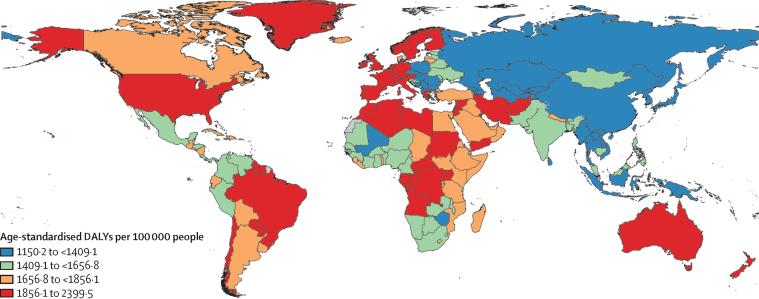
BACKGROUND: The mental disorders included in the Global Burden of Diseases, Injuries, and Risk Factors Study (GBD) 2019 were depressive disorders, anxiety disorders, bipolar disorder, schizophrenia, autism spectrum disorders, conduct disorder, attention-deficit hyperactivity disorder, eating disorders, idiopathic developmental intellectual disability, and a residual category of other mental disorders. We aimed to measure the global, regional, and national prevalence, disability-adjusted life-years (DALYS), years lived with disability (YLDs), and years of life lost (YLLs) for mental disorders from 1990 to 2019. METHODS: In this study, we assessed prevalence and burden estimates from GBD 2019 for 12 mental disorders, males and females, 23 age groups, 204 countries and territories, between 1990 and 2019. DALYs were estimated as the sum of YLDs and YLLs to premature mortality. We systematically reviewed PsycINFO, Embase, PubMed, and the Global Health Data Exchange to obtain data on prevalence, incidence, remission, duration, severity, and excess mortality for each mental disorder. These data informed a Bayesian meta-regression analysis to estimate prevalence by disorder, age, sex, year, and location. Prevalence was multiplied by corresponding disability weights to estimate YLDs. Cause-specific deaths were compiled from mortality surveillance databases. The Cause of Death Ensemble modelling strategy was used to estimate death rate by age, sex, year, and location. The death rates were multiplied by the years of life expected to be remaining at death based on a normative life expectancy to estimate YLLs. Deaths and YLLs could be calculated only for anorexia nervosa and bulimia nervosa, since these were the only mental disorders identified as underlying causes of death in GBD 2019. FINDINGS: Between 1990 and 2019, the global number of DALYs due to mental disorders increased from 80·8 million (95% uncertainty interval [UI] 59·5-105·9) to 125·3 million (93·0-163·2), and the proportion of global DALYs attributed to mental disorders increased from 3·1% (95% UI 2·4-3·9) to 4·9% (3·9-6·1). Age-standardised DALY rates remained largely consistent between 1990 (1581·2 DALYs [1170·9-2061·4] per 100 000 people) and 2019 (1566·2 DALYs [1160·1-2042·8] per 100 000 people). YLDs contributed to most of the mental disorder burden, with 125·3 million YLDs (95% UI 93·0-163·2; 14·6% [12·2-16·8] of global YLDs) in 2019 attributable to mental disorders. Eating disorders accounted for 17 361·5 YLLs (95% UI 15 518·5-21 459·8). Globally, the age-standardised DALY rate for mental disorders was 1426·5 (95% UI 1056·4-1869·5) per 100 000 population among males and 1703·3 (1261·5-2237·8) per 100 000 population among females. Age-standardised DALY rates were highest in Australasia, Tropical Latin America, and high-income North America. INTERPRETATION: GBD 2019 showed that mental disorders remained among the top ten leading causes of burden worldwide, with no evidence of global reduction in the burden since 1990. The estimated YLLs for mental disorders were extremely low and do not reflect premature mortality in individuals with mental disorders. Research to establish causal pathways between mental disorders and other fatal health outcomes is recommended so that this may be addressed within the GBD study. To reduce the burden of mental disorders, coordinated delivery of effective prevention and treatment programmes by governments and the global health community is imperative. FUNDING: Bill & Melinda Gates Foundation, Australian National Health and Medical Research Council, Queensland Department of Health, Australia.
Overview
CoChat Summary
TL;DR
GBD 2019 estimated prevalence and burden for 12 mental disorders across 204 countries and territories from 1990 to 2019. Mental disorders caused 970·1 million cases and 125·3 million DALYs in 2019, with no evidence of global reduction in age-standardised DALY rates since 1990.
Key findings
- Global mental disorder cases increased from 654·8 million (95% UI 603·6–708·1) in 1990 to 970·1 million (900·9–1044·4) in 2019, a 48·1% increase, with no marked increases in age-standardised prevalence for any disorder.
- DALYs increased from 80·8 million (59·5–105·9) to 125·3 million (93·0–163·2), and the proportion of global DALYs attributed to mental disorders rose from 3·1% (2·4–3·9) to 4·9% (3·9–6·1); age-standardised DALY rates remained largely consistent (1581·2 to 1566·2 per 100 000).
- YLDs accounted for most burden: 125·3 million YLDs (93·0–163·2), or 14·6% (12·2–16·8) of global YLDs in 2019. YLLs were estimated only for eating disorders, at 17 361·5 (15 518·5–21 459·8).
- Depressive disorders accounted for the largest proportion of mental disorder DALYs in 2019 (37·3% [32·3–43·0]), followed by anxiety disorders (22·9% [18·6–27·5]) and schizophrenia (12·2% [9·6–15·2]); age-standardised DALY rates were highest in Australasia, Tropical Latin America, and high-income North America.
Methods
- GBD 2019 estimated prevalence and burden for 12 mental disorders by sex, 23 age groups, 204 countries and territories, and year from 1990 to 2019.
- Systematic reviews of PsycINFO, Embase, PubMed, and the Global Health Data Exchange informed Bayesian meta-regression (DisMod-MR 2.1) prevalence estimates; prevalence was multiplied by disability weights to estimate YLDs, and Cause of Death Ensemble modelling estimated deaths/YLLs.
- DALYs were calculated as YLDs plus YLLs; YLLs were estimated only for anorexia nervosa and bulimia nervosa. Uncertainty intervals were derived from the 25th and 975th ordinals of 1000 draws, and age-standardised rates used the GBD world population age standard.
Limitations
- The paper states that some estimates relied on sparse datasets and high-quality survey data remain scarce for many countries; measurement error could not be fully quantified, and uncertainty intervals do not incorporate unquantified measurement, selection, or model specification bias.
- The paper states that severity distributions were derived from few studies, mostly from high-income countries, likely underestimating burden where treatment access is limited; most data used DSM-IV and ICD-10 classifications, and personality disorders, binge eating disorder, and other specified feeding or eating disorders were not fully captured.
- The paper states that YLLs were estimated only for eating disorders and are extremely low, not reflecting premature mortality in people with mental disorders; disability weights capture health loss but not welfare loss, and comorbidity adjustment assumes independent distributions. Evident from the text: burden estimates for low-data regions, such as parts of sub-Saharan Africa and Asia, carry more uncertainty.
Model-written summary. Check it against the paper before relying on it.
Integrity signals
Registry
Cites
Statistics
Figures
Verification
Claims the paper makes
10 Valid · 0 Not valid · 9 Not checked · 131 Own results and interpretations
The cited sources support only part of this claim — read each source’s verdict below.
In the paper
“Between 1990 and 2019, a reduction in DALYs from communicable, maternal, neonatal, and nutritional diseases has been offset by an increase in burden due to non-communicable diseases, including mental disorders.3, 4, 5”
§ Global, regional, and national burden of 12 mental disorders in 204 countries and territories, 1990–2019: a systematic analysis for the Global Burden of Disease Study 2019 > Introduction
What the sources say
- Could not verifycites [3] Wang H Abbas KM Abbasifard M Global age-sex-specific fertility, mortality, healthy life expectancy (HALE), and population estimates in 204 countries and territories, 1950-2019: a comprehensive demographic analysis for the Global Burden of Disease Study 2019 Lancet 396 2020 1160 1203 33069325 PMC7566045 sourceExperimental — accuracy not yet measured
The Results (Mortality and HALE; page unavailable) report changes in survival and years lived in poor health, while the Discussion (Global population health improvement; page unavailable) describes overall improvements in mortality and HALE. Searches for DALYs and the named disease categories found no passage assessing whether declining communicable-disease DALYs were offset by rising non-communicable-disease burden, including mental disorders. (LLM, conf=0.73)
- Partly supportedcites [4] Murray CJL Aravkin AY Zheng P Global burden of 87 risk factors in 204 countries and territories, 1990-2019: a systematic analysis for the Global Burden of Disease Study 2019 Lancet 396 2020 1223 1249 33069327 PMC7566194 sourceExperimental — accuracy not yet measured
The Results (Attributable burden by age group; page unavailable) report substantial 1990–2019 declines in DALYs attributable to child malnutrition and environmental risks, alongside rising attributable-DALY shares for several other risks. But this is an analysis of risk-attributable burden, not a finding that declining DALYs from the stated disease categories were offset by increasing non-communicable disease DALYs; the passages also do not establish an increase for mental disorders. (LLM, conf=0.84)
- Supportedcites [5] Vos T Lim SS Abbafati C Global burden of 369 diseases and injuries in 204 countries and territories, 1990-2019: a systematic analysis for the Global Burden of Disease Study 2019 Lancet 396 2020 1204 1222 33069326 PMC7567026 source
The Results (Global trends; page not provided) report that total global DALYs remained almost constant from 1990 to 2019, while major infectious, neonatal, and nutritional causes declined and non-communicable causes, including depressive disorders, were among the largest contributors to increasing DALYs. The Results (National trends; page not provided) also describe a shift from communicable, maternal, neonatal, and nutritional diseases towards non-communicable causes. The increase refers to absolute DALY counts, not necessarily age-standardised rates. (LLM, conf=0.88)
plainstates a cause- Asserted: passes — The authors put it forward as true.
- Checkable: passes — It can be checked against evidence.
- Load-bearing: unclear — It is unclear whether the paper’s conclusions depend on it.
- Based: passes — The paper gives a reason why it holds.
- Could not verify
The cited sources support only part of this claim — read each source’s verdict below.
In the paper
“The first covariate identified the mean mortality rate in the previous ten years due to war and terrorism for each GBD location, considering the known association between conflict and elevated prevalence of major depressive disorder and anxiety disorders.12”
§ Global, regional, and national burden of 12 mental disorders in 204 countries and territories, 1990–2019: a systematic analysis for the Global Burden of Disease Study 2019 > Methods > Estimation of YLDs
What the sources say
- Partly supportedcites [12] Charlson F van Ommeren M Flaxman A Cornett J Whiteford H Saxena S New WHO prevalence estimates of mental disorders in conflict settings: a systematic review and meta-analysis Lancet 394 2019 240 248 31200992 PMC6657025 sourceExperimental — accuracy not yet measured
Split into 2 atoms — 1 confirmed, 1 partially supported, 0 disputed, 0 misattributed, 0 unverifiable. Expand the claim to see per-atom verdicts.
plainstates an association- Asserted: passes — The authors put it forward as true.
- Checkable: passes — It can be checked against evidence.
- Load-bearing: unclear — It is unclear whether the paper’s conclusions depend on it.
- Based: passes — The paper gives a reason why it holds.
- Partly supported
The cited sources support only part of this claim — read each source’s verdict below.
In the paper
“Alternative mortality-based metrics have shown that excess deaths in people with mental disorders occur not just from suicide and other external causes but also from infectious diseases, neoplasms, diabetes, and circulatory system and respiratory diseases.34, 35”
§ Global, regional, and national burden of 12 mental disorders in 204 countries and territories, 1990–2019: a systematic analysis for the Global Burden of Disease Study 2019 > Discussion
What the sources say
- Supportedcites [34] Plana-Ripoll O Pedersen CB Agerbo E A comprehensive analysis of mortality-related health metrics associated with mental disorders: a nationwide, register-based cohort study Lancet 394 2019 1827 1835 31668728 source
The Discussion states that people with mental disorders have premature mortality attributable to suicide and other external causes, but that most premature mortality is attributable to general medical conditions. It explicitly lists infectious diseases, neoplasms, diabetes mellitus, circulatory-system diseases, and respiratory diseases. (LLM, conf=0.95)
- Partly supportedcites [35] Walker ER McGee RE Druss BG Mortality in mental disorders and global disease burden implications: a systematic review and meta-analysis JAMA Psychiatry 72 2015 334 341 25671328 PMC4461039 sourceExperimental — accuracy not yet measured
The Results (Mortality; page unavailable) find elevated mortality from both natural and unnatural causes among people with mental disorders. The Discussion identifies suicide and cardiovascular disease, and the introductory passage mentions infections, heart disease, and other chronic diseases. Our copy does not establish the claim’s more specific list of excess deaths from neoplasms, diabetes, and respiratory diseases. (LLM, conf=0.88)
plainstates an association- Asserted: passes — The authors put it forward as true.
- Checkable: passes — It can be checked against evidence.
- Load-bearing: passes — The paper’s conclusions depend on it.
- Based: passes — The paper gives a reason why it holds.
- Supported
Every source the paper cites for this claim was checked and supports it.
In the paper
“Binge eating disorder and the group of ‘other specified feeding or eating disorders’ are likely to explain a substantial proportion of eating disorder burden currently not captured by GBD analyses.33”
§ Global, regional, and national burden of 12 mental disorders in 204 countries and territories, 1990–2019: a systematic analysis for the Global Burden of Disease Study 2019 > Discussion
What the sources say
- Supportedcites [33] Santomauro DF Melen S Mitchison D Vos T Whiteford H Ferrari AJ The hidden burden of eating disorders: an extension of estimates from the Global Burden of Disease Study 2019 Lancet Psychiatry 8 2021 320 328 33675688 PMC7973414 source
The Introduction says GBD 2019 recognised only anorexia nervosa and bulimia nervosa as causes of burden. The Discussion states that excluding binge-eating disorder and OSFED left a large proportion of eating disorder burden uncaptured in GBD 2019, directly supporting the claim. (LLM, conf=0.94)
hedgedstates a possible cause- Asserted: passes — The authors put it forward as true.
- Checkable: passes — It can be checked against evidence.
- Load-bearing: unclear — It is unclear whether the paper’s conclusions depend on it.
- Based: passes — The paper gives a reason why it holds.
- Supported
The cited sources support only part of this claim — read each source’s verdict below.
In the paper
“DALYs for depressive and anxiety disorders were high in countries with high rates of childhood sexual abuse,4 intimate partner violence,4 and conflict and war.12”
§ Global, regional, and national burden of 12 mental disorders in 204 countries and territories, 1990–2019: a systematic analysis for the Global Burden of Disease Study 2019 > Discussion
What the sources say
- Could not verifycites [4] Murray CJL Aravkin AY Zheng P Global burden of 87 risk factors in 204 countries and territories, 1990-2019: a systematic analysis for the Global Burden of Disease Study 2019 Lancet 396 2020 1223 1249 33069327 PMC7566194 sourceExperimental — accuracy not yet measured
The Results section discusses childhood sexual abuse as a risk exposure, and the Limitations section identifies both childhood sexual abuse and intimate partner violence as risks with sparse data. Neither passage reports that depressive or anxiety disorder DALYs were high in countries with high rates of those exposures. Searches for depressive disorders, anxiety disorders, depression, and anxiety did not locate that country-level finding; the separate conflict-and-war citation is not assessed here. (LLM, conf=0.75)
- Partly supportedcites [12] Charlson F van Ommeren M Flaxman A Cornett J Whiteford H Saxena S New WHO prevalence estimates of mental disorders in conflict settings: a systematic review and meta-analysis Lancet 394 2019 240 248 31200992 PMC6657025 sourceExperimental — accuracy not yet measured
Citation 12 is attached to the conflict-and-war portion of the sentence. The Results report substantially higher years lived with disability (YLDs) for depression and anxiety in conflict-affected populations than the global estimates. The paper does not report country-level DALYs or assess whether countries with higher rates of conflict and war have higher DALYs; the childhood sexual abuse and intimate partner violence portions carry a different citation. (LLM, conf=0.85)
plainstates an association- Asserted: passes — The authors put it forward as true.
- Checkable: passes — It can be checked against evidence.
- Load-bearing: unclear — It is unclear whether the paper’s conclusions depend on it.
- Based: passes — The paper gives a reason why it holds.
- Could not verify
68 more claims · 2 with their cited sources checked
Create a free account to see all 150 claims and to verify the 2 references still open.
- Probably not a substantial claim. 52
- It may state two separate claims as one. 33
- The quote only partly states this claim. 1
Claims other papers make about this one
Each is checked against this paper’s own text: does it say what the citing paper says it does?
The cited source doesn’t support the claim as written.
In the citing paper
“Deaths and YLLs could only be calculated for anorexia nervosa as it was the only mental disorder identified as an underlying cause of death (suicide was categorised as a separate cause to mental disorders in GBD 2023).2,8”
From Updated trends in the global prevalence and burden of mental disorders, 1990–2023: a systematic analysis for the Global Burden of Disease Study 2023 (2026) · cites this paper as [2]
Checked by a reasoning model — may be wrong.
Experimental — accuracy not yet measuredThe source backs part of the claim, not all of it — or backs it for a different population, condition or comparison.
In the citing paper
“Mental disorders also have broader societal consequences impacting those responsible for the wellbeing of individuals with mental disorders, as well as employers, due to diminished productivity and work force participation, and government, with increased welfare and mental health service requirements.2”
From Updated trends in the global prevalence and burden of mental disorders, 1990–2023: a systematic analysis for the Global Burden of Disease Study 2023 (2026) · cites this paper as [2]
Experimental — accuracy not yet measuredThe source backs part of the claim, not all of it — or backs it for a different population, condition or comparison.
In the citing paper
“common among females, while autism spectrum disorders, conduct disorder, ADHD, IDID, and the residual group of other mental disorders were more common among males.2,16”
From Updated trends in the global prevalence and burden of mental disorders, 1990–2023: a systematic analysis for the Global Burden of Disease Study 2023 (2026) · cites this paper as [2]
Experimental — accuracy not yet measuredThe source backs part of the claim, not all of it — or backs it for a different population, condition or comparison.
In the citing paper
“Individuals with mental disorders are at an increased risk of early mortality from a range of physical illnesses and injuries, such as suicide and homicide, 2,38 but these are categorised as separate causes within GBD.”
From Updated trends in the global prevalence and burden of mental disorders, 1990–2023: a systematic analysis for the Global Burden of Disease Study 2023 (2026) · cites this paper as [2]
Experimental — accuracy not yet measured
22 more claims about this paper
Create a free account to see every claim other papers make about this one.
Citations
Cites
Vos, T., Lim, S. S., Abbafati, C., Abbas, K. M., Abbasi, M., Abbasifard, M., Abbasi-Kangevari, M., Abbastabar, H., Abd-Allah, F., Abdelalim, A., et al. (2020) · The Lancet · doi:10.1016/s0140-6736(20)30925-9 · Cited by 19,358
Murray, C. J. L., Aravkin, A. Y., Zheng, P., Abbafati, C., Abbas, K. M., Abbasi-Kangevari, M., Abd-Allah, F., Abdelalim, A., Abdollahi, M., Abdollahpour, I., et al. (2020) · The Lancet · doi:10.1016/s0140-6736(20)30752-2 · Cited by 9,854
Whiteford, H. A., Degenhardt, L., Rehm, J., Baxter, A. J., Ferrari, A. J., Erskine, H. E., Charlson, F. J., Norman, R. E., Flaxman, A. D., Johns, N., et al. (2013) · The Lancet · doi:10.1016/s0140-6736(13)61611-6 · Cited by 6,006
Santomauro, D. F., Mantilla Herrera, A. M., Shadid, J., Zheng, P., Ashbaugh, C., Pigott, D. M., Abbafati, C., Adolph, C., Amlag, J. O., Aravkin, A. Y., et al. (2021) · The Lancet · doi:10.1016/s0140-6736(21)02143-7 · Cited by 5,444
The Lancet Commission on global mental health and sustainable development
Patel, V., Saxena, S., Lund, C., Thornicroft, G., Baingana, F., Bolton, P., Chisholm, D., Collins, P. Y., Cooper, J. L., Eaton, J., et al. (2018) · The Lancet · doi:10.1016/s0140-6736(18)31612-x · Cited by 3,692
Walker, E. R., McGee, R. E., & Druss, B. G. (2015) · JAMA Psychiatry · doi:10.1001/jamapsychiatry.2014.2502 · Cited by 2,976
Wang, H., Abbas, K. M., Abbasifard, M., Abbasi-Kangevari, M., Abbastabar, H., Abd-Allah, F., Abdelalim, A., Abolhassani, H., Abreu, L. G., Abrigo, M. R. M., et al. (2020) · The Lancet · doi:10.1016/s0140-6736(20)30977-6 · Cited by 1,971
Guidelines for accurate and transparent health estimates reporting: the GATHER statement
Stevens, G. A., Alkema, L., Black, R. E., Boerma, J. T., Collins, G. S., Ezzati, M., Grove, J. T., Hogan, D. R., Hogan, M. C., Horton, R., et al. (2016) · The Lancet · doi:10.1016/s0140-6736(16)30388-9 · Cited by 1,798
Charlson, F., van Ommeren, M., Flaxman, A., Cornett, J., Whiteford, H., & Saxena, S. (2019) · The Lancet · doi:10.1016/s0140-6736(19)30934-1 · Cited by 1,702
Degenhardt, L., Charlson, F., Ferrari, A., Santomauro, D., Erskine, H., Mantilla-Herrara, A., Whiteford, H., Leung, J., Naghavi, M., Griswold, M., et al. (2018) · The Lancet Psychiatry · doi:10.1016/s2215-0366(18)30337-7 · Cited by 1,572
Research works printed but not linked: 1
- Flaxman AD Vos T Murray CJL An integrative metaregression framework for descriptive epidemiology 2015 University of Washington Press Washington
Cited by
Items 5,801–5,900 of 6,592
Potential of Neurosteroids for Precision Medicine in Psychiatry
Dargan, T., Walton, N. L., & Maguire, J. L. (2026) · Biological Psychiatry · doi:10.1016/j.biopsych.2026.07.009
Gianini, S. H. S., Grecca, I. S. G., Porto, A. A. [., Folegatti, D. R. M. A., Oliveira, C. M. D., Garner, D. M., Raimundo, R. D., & Valenti, V. E. (2026) · International Journal of Psychiatry in Clinical Practice · doi:10.1080/13651501.2026.2637451 · Cited by 1
“Collectively, they account for a substantial proportion of the global disease burden, ranking among the top ten causes of disability-adjusted life years (DALYs) across all age groups (Ferrari et al., 2022).”
Prevalence of depression in a large regionally representative population sample in Côte d’Ivoire
Jäggi, L., Falgas‐Bagué, I., Koné, S., Probst-Hensch, N. M., & Fink, G. (2025) · BMC Public Health · doi:10.1186/s12889-025-24879-3
“Depression is a leading cause of disability worldwide and one of the main contributors to the global burden of disease [1].”
Wu, Y., Xia, X., Jing, P., Ye, F., & Wang, Q. (2026) · Journal of Affective Disorders · doi:10.1016/j.jad.2026.122255
Senanu, J., Wanyu, B. Y., Burns, J., Archibong, V. B., Chinheya, R. M., Musa, N. S. O., Zengeni, S., Haj-Khlifa, A., Adeniji, K. O., Kolo, R. M., et al. (2026) · Biology Open · doi:10.1242/bio.062217
“Globally, neurological and mental disorders are a leading cause of disability-adjusted life years (GBD 2019 Mental Disorders Collaborators, 2022; GBD 2021 Nervous System Disorders Collaborators, 2024).”
Abdullaev, R. Y., Шорохова, В. А., & Комиссарова, О. Г. (2025) · Vrach · doi:10.29296/25877305-2025-02-06
Zhao, J., Ji, J., Cao, A., Ni, J., & Cao, T. (2025) · Frontiers in Psychiatry · doi:10.3389/fpsyt.2025.1613331
The global burden of disease and the mental health of communities
Vigo, D., Jones, L., Atun, R. A., & Thornicroft, G. (2025) · Oxford University Press eBooks · doi:10.1093/med/9780198898818.003.0038
Wang, B., Zou, C., Zhang, X., Fu, L., Liu, K., Song, H., Wang, G., Xie, S., Zeng, J., He, S., et al. (2026) · Acta Psychologica · doi:10.1016/j.actpsy.2026.107530
Social network structure and depression by gender in rural Honduras: a cross-sectional study
Lee, S. T., Papamichalis, M., Raygoza-Cortez, K., Christakis, N. A., & Rodríguez, A. L. (2026) · BMJ Open · doi:10.1136/bmjopen-2025-108285
Zhu, C., Hu, R., Du, W., Ye, Y., Mu, Q., Chen, Y., Xu, Y., Zhang, K., & Lu, S. (2026) · BMC Psychiatry · doi:10.1186/s12888-026-08169-9
“Major depressive disorder (MDD) is among the most prevalent and disabling psychiatric illnesses world-wide, and the number of patients continues to rise [1, 2].”
Stockton, M. A., Mazinyo, E. W., Mlanjeni, L., et al. (2023) · Cambridge Prisms Global Mental Health · doi:10.1017/gmh.2023.89.pr7
Haroun, R. A., Effat, S. M. A., Osman, W. H., Mohammed, D. A., Ibrahim, N. F., Eessa, A. M., & Aufa, O. M. (2026) · Middle East Current Psychiatry · doi:10.1186/s43045-026-00646-x
Shoari, N., Lewis, K. M., Blackburn, R. M., et al. (2026) · BMJ Connections Mental Health · doi:10.1136/bmjcment-2025-000023
Li, C., Yu, X., Song, R., Fang, Y., Yang, J., Tang, Z., Wang, S. W., Cheng, X., Yi, W., Pan, R., et al. (2025) · Environmental Pollution · doi:10.1016/j.envpol.2025.127331
Ramírez, S. M. R., Gómez-Londoño, D., Tamayo, M. M., Valencia, S. M., Arroyave, I., & Trujillo, N. (2026) · Revista Facultad Nacional de Salud Pública · doi:10.17533/udea.rfnsp.e362568
Sanborn, J., Nash, D., Robertson, M. M., Parcesepe, A. M., & Shahn, Z. (2026) · medRxiv · doi:10.64898/2026.07.31.26359417
Ding, R., Zhao, M. H., Xia, Y., Wang, Y., Shi, Z., Hu, X., Ling, L., & He, P. (2026) · Schizophrenia Bulletin · doi:10.1093/schbul/sbag014
Kuntz, J., Necyk, C., & Simpson, S. H. (2024) · Primary care diabetes · doi:10.1016/j.pcd.2024.12.001
Zhao, X., Zhang, L., Kramer, L., Wang, B., Guan, M., & Ma, Q. (2025) · Postgraduate Medicine · doi:10.1080/00325481.2025.2529772 · Cited by 2
“GBD 2019 Mental health Disorders Collaborators provided a systematic analysis of the global, regional, and national burden of mental health disorders, underscoring the need for detailed prevalence data to inform policy [8].”
Murtala, A. A., Oyinloye, E. O., Oladoja, F. A., Fageyinbo, M. S., Olasore, H. S. A., Ogunjimi, L., Alabi, A. A., Olooto, W. E., Soyinka, O. O., Faponle, A. S., et al. (2024) · Pharmacological Research - Modern Chinese Medicine · doi:10.1016/j.prmcm.2024.100541
Kim, K., Chang, Y., Yoo, E., & Ryu, S. (2025) · Environmental Research · doi:10.1016/j.envres.2025.122838 · Cited by 3
Stockton, M. A., Mazinyo, E. W., Mlanjeni, L., et al. (2023) · Cambridge Prisms Global Mental Health · doi:10.1017/gmh.2023.89.pr5
Kangson, R., & Chowanda, A. (2026) · International Conference on Electronics Representation and Algorithm (ICERA) · doi:10.1109/icera72709.2026.11666697
“Statistics taken across 204 countries from 1990 to 2019 have shown that there are 48.1% increase in Mental health disorder cases, which indicates there are at least millions of people suffering from a condition that is related to mental health on a global scale [2].”
InfluentialLi, W., Tong, J., Gao, X., Deng, H., Li, Z., Zhu, J., Liu, J., Zhang, Y., Liu, D., Zhang, X., et al. (2026) · ALPHA PSYCHIATRY · doi:10.31083/ap39454
Az autizmus és a tehetség kapcsolata neuropszichológiai megközelítésben
Gyarmathy, É. (2023) · Magyar Pszichológiai Szemle · doi:10.1556/0016.2023.00034 · Cited by 1
Technology-assisted interventions for neuropsychiatric disorders
Fliti, T., Shhaytli, A., Serhal, A., Takesh, Z., & Chokor, M. (2025) · Progress in brain research · doi:10.1016/bs.pbr.2025.08.017 · Cited by 1
Madsen, L. S., Poulsen, D. V., Ryom, K., Oestergaard, L. G., Maribo, T., & Jessen, N. H. (2026) · Healthcare · doi:10.3390/healthcare14131861
Beer, C., Rae, F., Watt, M., Semmler, A., & Voisey, J. (2026) · International Journal of Molecular Sciences · doi:10.3390/ijms27167329
Wu, J., Glaser, K., Price, D., & Gessa, G. D. (2026) · medRxiv · doi:10.64898/2026.07.13.26357914
Handermann, F., Both, C., Niemeyer, L., Schumm, L., Dittmann, R., Häge, A., & Mechler, K. (2026) · Journal of Child and Adolescent Psychopharmacology · doi:10.1177/10445463261485772
Mirzazadeh, H., Sadeghi, E., Mostafavi, S., Elmi, S., Moshfeghinia, R., & Rahimi, S. (2026) · Journal of Affective Disorders · doi:10.1016/j.jad.2026.122309
Editorial: Central and peripheral nervous system
Rong, P., Tang, Y., & Wang, Y. (2026) · Current Opinion in Pharmacology · doi:10.1016/j.coph.2026.102648
Mohammadi, F., Kooteh, B. R., Mojahed, A., & Nadimi, J. (2025) · Mental Wellness · doi:10.4081/mw.2025.24
Suliman, A., Quadri, F., Elizondo, G., Patel, H., Rabah, A., & Ford, C. (2026) · International Journal of Cardiology Cardiovascular Risk and Prevention · doi:10.1016/j.ijcrp.2026.200704
Kabuayi, P. N., Phanzu, B. K., Bugeme, M., Mukengeshay, P. T., Ndawu, J. T., Kikumpa, J. B., & BOMBA, D. B. (2026) · BMC Psychiatry · doi:10.1186/s12888-026-07873-w
“The Global Burden of Disease (GBD) 2019 study reported that mental disorders remained among the top ten leading causes of burden worldwide, with no significant reduction in the global burden of mental disorders since 1990 [7], under-scoring their persistent and widespread impact.”
Nagendra, L., Agarwal, K., Kapoor, N., Bhattacharya, S., Moudgil, K., Kamrul-Hasan, A. B. M., Raza, S. A., Bangalee, V., Sharma, S., Naseri, M. W., et al. (2026) · Endocrine Practice · doi:10.1016/j.eprac.2025.12.026 · Cited by 1
Boesi, S. L., Prieto, D. D. R., Marin-Hamburger, Y., & Visconti-Lopez, F. J. (2025) · Middle East Current Psychiatry · doi:10.1186/s43045-025-00610-1
Benefits of Green Space for Mental Illness, Sleep, and Cognitive Health in Mainland China
Feng, X., Akaraci, S., & Astell‐Burt, T. (2024) · Springer eBooks · doi:10.1007/978-981-97-3102-2_6
Shahu, Y. K., Rajak, M. K., THAKUR, R. K., et al. (2025) · International Journal of Research in Orthopaedics · doi:10.18203/issn.2455-4510.intjresorthop20254224
Kapoor, A., Ramamurthy, P., Manikandan, M., & Thilakan, P. (2023) · Archives of Mental Health · doi:10.4103/amh.amh_196_22 · Cited by 1
Tenkanen, T., Pihlainen, K., Raitanen, J. A., Honkanen, T., Vaara, J. P., Kyröläinen, H., Levola, T., Lundell, R. V., Sievänen, H. T., & Vasankari, T. J. (2026) · BMJ Open Sport & Exercise Medicine · doi:10.1136/bmjsem-2025-002921
Starke, F., Zimmermann, J., Sikora, A., Houkes, I., Schulz, A., Stegmann, R., Seufert, L., Schmitz, E., Buntrock, C., Szycik, G. R., et al. (2026) · BMC Psychiatry · doi:10.1186/s12888-026-08639-0
The therapeutic potential of cytisine and its derivatives in disorders of the central nervous system
Cheng, M., Zhu, D., Chen, S., Jia, J., Xu, J., & Zeng, X. (2026) · Biochemical Pharmacology · doi:10.1016/j.bcp.2026.117853
Taru, M. Y., Philip, T. F., Nwoga, C. N., Jidong, D. E., Ojeahere, M. I., Boyiga, B. B., Armiya’u, A. Y., & Akinnusi, P. (2025) · International Journal of Psychiatry · doi:10.33140/ijp.10.01.06 · Cited by 2
Depression prevalence estimates in Spain (1995–2021): a systematic review
Ruiz-Sánchez, S., González‐Teruel, A., & Novella, E. J. (2026) · Open Medicine · doi:10.1515/med-2026-1498
Peng, J., Huang, J. T., Hu, C., Zhu, S., Huang, H., Liao, H., Zheng, Q., Yang, B., & Liu, Q. (2026) · Frontiers in Psychiatry · doi:10.3389/fpsyt.2026.1806489
Childhood trauma: Unfolding the lifelong impact on mental health
Kuzminskaite, E. (2023) · doi:10.5463/thesis.371 · Cited by 5
Yun, Y.-J., Lee, Y., Kwon, Y., & Lee, J.-W. (2026) · Journal of Korean Medical Science · doi:10.3346/jkms.2026.41.e123
Dao, A., Bernstein, R. A., Ramos, F. N., Beasley, B., & Ezawa, I. D. (2025) · Contemporary Clinical Trials · doi:10.1016/j.cct.2025.107907
Yang, H., Chang, F., Liu, Z., Zhang, W., & Cai, J. (2026) · Technology in Society · doi:10.1016/j.techsoc.2026.103535
Chen, Y., Zhu, L., Zhang, Y., Li, J., Langley, C., Sahakian, B. J., Feng, J., Xiang, W., Si, T., & Luo, Q. (2026) · Journal of Affective Disorders · doi:10.1016/j.jad.2026.122150
Aiona, K., Crume, T., Reyes, N., Schmiege, S. J., Young, J., Holst, B., Durkin, M. S., & DiGuiseppi, C. G. (2025) · Journal of Autism and Developmental Disorders · doi:10.1007/s10803-025-06959-w · Cited by 1
Min, L., Cui, Y., Ma, X., & Cui, L. (2026) · Healthcare · doi:10.3390/healthcare14172795
Ma, W., Zhang, K., Wang, L., Wu, G., & Ren, S. (2026) · European journal of medical research · doi:10.1186/s40001-026-04487-6
Romero, E., González‐González, J., Álvarez-Voces, M., Costa‐Montenegro, E., Díaz-Vázquez, B., Busto-Castiñeira, A., Villar, P., & López‐Romero, L. (2025) · Frontiers in Public Health · doi:10.3389/fpubh.2025.1526413 · Cited by 3
Xu, C., Zhang, S., Liao, Y., Shan, E., Zhao, P., Liu, R., Wang, J., Yin, M., Tai, X., & Zhang, X. (2026) · Frontiers in Microbiology · doi:10.3389/fmicb.2026.1937281
Huang, Y., Hu, Y., Li, C.-Y., Liew, Z., Weng, M., Heck, J. E., & Lee, P. (2026) · Lupus Science & Medicine · doi:10.1136/lupus-2026-002129
乳癌抑制遺伝子BRCA1の機能解析 : CDK2-BRCA1-NPM pathway(第105回日本外科学会定期学術集会)
太田, 智., 呉, 文., 速水, 亮., 佐藤, 工., & 福田, 護. (2005) · 日本外科学会雑誌
Psychiatric Nursing Research in Schizophrenia: Call to Action
Beebe, L. H. (2023) · Journal of Psychosocial Nursing and Mental Health Services · doi:10.3928/02793695-20230109-01
Gao, W., He, X., Xu, Y., Shan, F., Liang, J., & Xia, Q. (2026) · BMC Psychiatry · doi:10.1186/s12888-026-08322-4 · Cited by 1
“SCZ is characterized by a high prevalence, recurrence, and disability rate, imposing a significant burden on patients, their families, and society [5].”
Yan, M., Yang, X., Xi, G., He, Y., & Yang, L. (2024) · Atmospheric Pollution Research · doi:10.1016/j.apr.2024.102274
Stockton, M. A., Mazinyo, E. W., Mlanjeni, L., et al. (2023) · Cambridge Prisms Global Mental Health · doi:10.1017/gmh.2023.89.pr9
Valle, R., Velez, C., & Iyer, S. N. (2025) · medRxiv · doi:10.1101/2025.11.11.25340030
Evaluation the inhibitory effect of nicardipine on the metabolism of quetiapine
Yang, J., Xia, H., Li, Q., Li, R., Cao, L., & Tang, C. (2025) · Frontiers in Pharmacology · doi:10.3389/fphar.2025.1567044
“At present, mental disorders including bipolar disorder, major depressive disorder, and schizophrenia, remain a leading cause of the global disease burden (Collaborators, 2022).”
Sanan, M., Yao, S., Wareesawetsuwan, N., Zhang, P., & Song, X. (2026) · World Journal of Psychiatry · doi:10.5498/wjp.v16.i8.118042
Challenges in assessing severity levels in personality disorders
Serafim, A. D. P., Ferreira, T. C., & de Barros, D. M. (2024) · Jornal Brasileiro de Psiquiatria · doi:10.1590/0047-2085-2023-0092
Review: The COVID-19 pandemic and mental health in Kazakhstan — R0/PR3
Mergenova, G., Rosenthal, S. L., Myrkassymova, A., et al. (2023) · Cambridge Prisms Global Mental Health · doi:10.1017/gmh.2023.46.pr3
Immunological Changes and Brain Function over a Psychotic-Depressive Spectrum
Paul, E. R. (2023) · Linköping University medical dissertations · doi:10.3384/9789180753098
Towards a WPA Position Document on the Human Rights of Older Adults with Mental Health Conditions
Lima, C. A. D. M. (2022) · Consortium Psychiatricum · doi:10.17816/cp150
Wilson, J., Langcake, A., Bryant, Z., Freeman, T. P., Leung, J., Chan, G., Englund, A., Graham, M., & Stockings, E. (2025) · Systematic Reviews · doi:10.1186/s13643-024-02657-3 · Cited by 2
Zhang, M., Huang, X., Yao, L., & Wu, W. (2026) · Frontiers in Cellular Neuroscience · doi:10.3389/fncel.2026.1901256
Tayob, M. (2026) · South African Journal of Psychiatry · doi:10.4102/sajpsychiatry.v32i0.2660
Morfologicheskaya harakteristika subhondral'noj kostnoj tkani pri osteoartroze kolennogo sustava
Минасов, Б. Ш., Yakupov, R., Николаевич, А. В., Shchekin, V. S., Олеговна, В. А., Minasov, T. B., Каримов, К. К., & Akhmeldinova, A. A. (2025) · Bulletin of Russian State Medical University · doi:10.24075/brsmu.2025.024 · Cited by 2
Liu, J. C. W., Gorbovskaya, I., Zhang, A., Hahn, M., Palma, G. D., & Müller, D. J. (2026) · The Canadian Journal of Psychiatry · doi:10.1177/07067437261487782
Lee, T. T., Chan, D. C. C., Han, Y., Lau, M. K.-W., Wong, S. Y. S., Wong, H., Gordon, D., & Chung, R. Y. (2026) · BMJ Open · doi:10.1136/bmjopen-2025-100850
Golec, M., Wieczorek, T., Tomaszewski, M., Kogut, K., Suchcicka, J., Dmowski, C., Banski, P., Mycka, H., Janas, J., Bogucka, J., et al. (2026) · npj Digital Public Health · doi:10.1038/s44482-026-00034-6 · Cited by 1
Lamçja, F. Z., Sula, E., Prifti, E., Pina, P., & Gaxhja, E. (2026) · Multidisciplinary Science Journal · doi:10.31893/multiscience.2027173
History of child psychiatry in Spain
Castro‐Fornieles, J., & Toro, J. (2023) · Revista de Psiquiatría y Salud Mental · doi:10.1016/j.sjpmh.2023.05.002
Merlet, V., Deperrois, R., & Combalbert, N. (2025) · Issues in Mental Health Nursing · doi:10.1080/01612840.2025.2555876
Chen, C., Fu, Y., Gu, S., Liu, J., Zheng, Y., & Li, Y. (2024) · SSRN Electronic Journal · doi:10.2139/ssrn.4773249
Clinical And Genetic Risk Factors For Asthma Exacerbations And Mortality In Adults
Мухтарова, Л. А., Fedorova, Y. Y., Karunas, A. S., et al. (2023) · Russian Open Medical Journal · doi:10.15275/rusomj.2023.0403
Ni, J., Qiao, M.-X., Lin, Y.-G., Yu, H., & Li, T. (2026) · Journal of Psychiatric Research · doi:10.1016/j.jpsychires.2026.08.001
Artificial Intelligence Interventions in Chronic Pain Management: A Scoping Review (Preprint)Preprint
Abiodun, A. O., Das, S., & Taylor, A. (2024) · doi:10.2196/preprints.57883
Bidarolli, M., Das, B., Rawat, V. S., Gupta, M., Sony, H. T., & Agnihotri, A. (2026) · Drugs & Therapy Perspectives · doi:10.1007/s40267-026-01224-1
Jussila, J. J., & Appelqvist‐Schmidlechner, K. (2026) · Journal of Physical Activity and Health · doi:10.1123/jpah.2026-0072 · Cited by 1
Muñoz, F. L., da Cruz, R. F., Silveira, L. V. D. A., & Díaz, M. D. P. (2026) · Epidemiologia e Serviços de Saúde · doi:10.1590/s2237-96222026v35e20250722.pt
การเฝ้าระวังสุขภาพจิตเชิงรุกในสถานการณ์วิกฤต : บทเรียนจากสถานการณ์ชายแดนไทย-กัมพูชา
สุรอรุณสัมฤทธิ์, บ., ตันอารีย์, อ., มากคล้าย, ก., สรรพโส, ศ., & อินทร์เชื้อ, ส. (2026) · Journal of Mental Health of Thailand - วารสารสุขภาพจิต แห่งประเทศไทย · doi:10.64838/jmht.2026.286782
Edmond, K. Z., Kaul, D., Yusupov, N., Ködel, M., Sauer, S., Fröhlich, A. S., Kentro, J. A., Ran, T. A. O., Kleinman, J. E., Weinberger, D. R., et al. (2026) · American Journal of Psychiatry · doi:10.1176/appi.ajp.20250473 · Cited by 3
Ito, M., Johnson, M., Agner, R., Boada, P., Schadler, A. D., Morillo, R. J., & Young, T. L. (2025) · Research Square · doi:10.21203/rs.3.rs-6629859/v1
Evolutionary Concepts in Cognitive Behavioural Therapy
Giosan, C., & Vlad, D. (2026) · Springer eBooks · doi:10.1007/978-3-032-27009-2_8
Hu, F., Zhang, H., He, Q., Zhang, J., Zhang, J., Song, C., & Yang, C. Z. (2025) · Frontiers in Psychiatry · doi:10.3389/fpsyt.2025.1677304
Health Literacy und Empowerment für Menschen mit schweren psychischen Erkrankungen
Mües, H. M., Grabovac, I., & Löffler‐Stastka, H. (2024) · psychopraxis neuropraxis · doi:10.1007/s00739-024-01014-2
Mapping intrinsic neural timescale alterations in major depressive disorder
Ge, Y., Chen, L., Liu, B., Lv, X., Li, N., Bai, Y., Wei, W., Wu, Y., Li, K., Wang, M., et al. (2026) · Progress in Neuro-Psychopharmacology and Biological Psychiatry · doi:10.1016/j.pnpbp.2026.111823
Colombo, F., Calesella, F., Bravi, B., et al. (2025) · medRxiv · doi:10.1101/2025.07.03.25330801
Barriers and facilitators of mental health app use among young women – a multimethod study
Schröder, J., Miethe, S., López, L., Emde, A., & Trautmann, S. (2026) · BMC Women s Health · doi:10.1186/s12905-026-04934-w
Watanabe, K., Sumiyoshi, T., Kato, M., Kikuchi, T., Moriguchi, Y., Åström, D. O., & Christensen, M. C. (2025) · Journal of Affective Disorders Reports · doi:10.1016/j.jadr.2025.100955 · Cited by 2
Metadata
- Authors
- *
- Corresponding author
- *
- Venue
- The Lancet Psychiatry
- Publisher
- Elsevier BV
- Published
- 2022-02
- Volume
- 9
- Issue
- 2
- Pages
- 137-150
- ISSN
- 2215-0366 (ISSN-L)
- PMC
- PMC8776563
- OpenAlex
- W4205208574
- Cited by
- 6,481
- References
- 33
- Citations by year
- 2026: 1577 · 2025: 1938 · 2024: 1557 · 2023: 1050 · 2022: 349
- FWCI
- 183.57
- Type
- journal article
- Language
- en
- Open access
- hybrid
- doi.org
- Licence
- cc-by
- www.elsevier.com/tdm/userlicense/1.0/ (tdm)
- www.elsevier.com/legal/tdmrep-license (tdm)
- creativecommons.org/licenses/by/4.0/ (vor)
- Locations
- The Lancet Psychiatry (publishedVersion, cc-by)
- PubMed Central (publishedVersion, cc-by)
- PubMed (publishedVersion)
- Adelaide Research & Scholarship (AR&S) (University of Adelaide) (submittedVersion, cc-by)
- Minerva Access (University of Melbourne) (submittedVersion, cc-by)
- Spiral (Imperial College London) (submittedVersion, other-oa)
- Funders
- ACADIA Pharmaceuticals
- Fundação de Amparo à Pesquisa do Estado do Rio Grande do Sul
- Medical Research Council
- National Institute for Health Research Southampton Biomedical Research Centre
- Royal Academy of Engineering
- Academy of Medical Sciences
- Conselho Nacional de Desenvolvimento Científico e Tecnológico
- Queensland Health
- Department of Health, State Government of Victoria
- U.S. Department of Defense
- South African Medical Research Council
- National Institute of Mental Health
- Danmarks Grundforskningsfond (1177991)
- U.S. Department of Veterans Affairs
- University of Melbourne
- Bill and Melinda Gates Foundation
- King's College London
- National Institutes of Health
- National Health and Medical Research Council (APP1121516, APP1137969, APP1138488)
- Topics
- Health Sciences › Medicine › Psychiatry and Mental health › Mental Health Treatment and Access
- Health Sciences › Medicine › Public Health, Environmental and Occupational Health › Global Health and Epidemiology
- Social Sciences › Economics, Econometrics and Finance › Economics and Econometrics › Health Systems, Economic Evaluations, Quality of Life
- Keywords
- mental illness, depressive disorders, anxiety disorders, bipolar disorder, schizophrenia, autism spectrum disorder, conduct disorder, attention deficit hyperactivity disorder, eating disorders, intellectual disability, disability-adjusted life years, years lived with disability, years of life lost, prevalence, disability weights, excess mortality, anorexia nervosa, bulimia nervosa, sex differences, age differences, global burden
- MeSH terms
- Global Burden of Disease, Disability-Adjusted Life Years, Adolescent, Adult, Aged, Mental Disorders, Child, Child, Preschool, Female, Humans, Infant, Male, Middle Aged, Risk Factors, Severity of Illness Index, Global Health, Prevalence, Epidemiologic Studies, Age Distribution, Young Adult
About these checks
Registry, retraction, Cites and statistics results are computed, not judged, with one exception: a printed reference that no index lists is read once by a model before it counts as a citation error. Claims are extracted by a model and kept only when their quote appears verbatim in the text; each cited source is then checked, with a model’s help, for whether it says what the claim relies on. Those verdicts can be wrong — read the claim’s quote and the cited source before relying on one.
The claim verdicts this report counts are experimental: their accuracy is not yet measured.
A language model drew the claims from the paper on 2026-10-10, under version 3 of the claim definition (model deepseek-v4.1-flash, prompt extract-v3).
A second model labelled each claim on 2026-10-10 (model jev-1.13-20260917, definition revision gold-guideline-v0.2).
Cited sources are checked with a language model’s help (gpt-6-sol).
Statistics and arithmetic are recomputed, not judged.
Confidence bands are shown only for fields calibrated on our annotated test set. None is calibrated yet, so no band is shown.
What counts as a claim ›How we measure confidence ›How we check this ›
Are you an author, or do you see a problem with this page? Request a review
Data sources
Bibliographic data: Semantic Scholar, OpenAlex, Crossref.
Contains information from the Semantic Scholar Academic Graph Datasets, made available under the ODC Attribution License (ODC-BY 1.0).
Semantic Scholar’s data is described in: Kinney, R., et al. (2023). The Semantic Scholar Open Data Platform. arXiv:2301.10140.
