

Adeno-associated virus vectored immunoprophylaxis to prevent HIV in healthy adults: a phase 1 randomised controlled trial
Open accessThe DOI matches its Crossref record; 30 of the 31 references it cites were found in a registry or an index.
Abstract
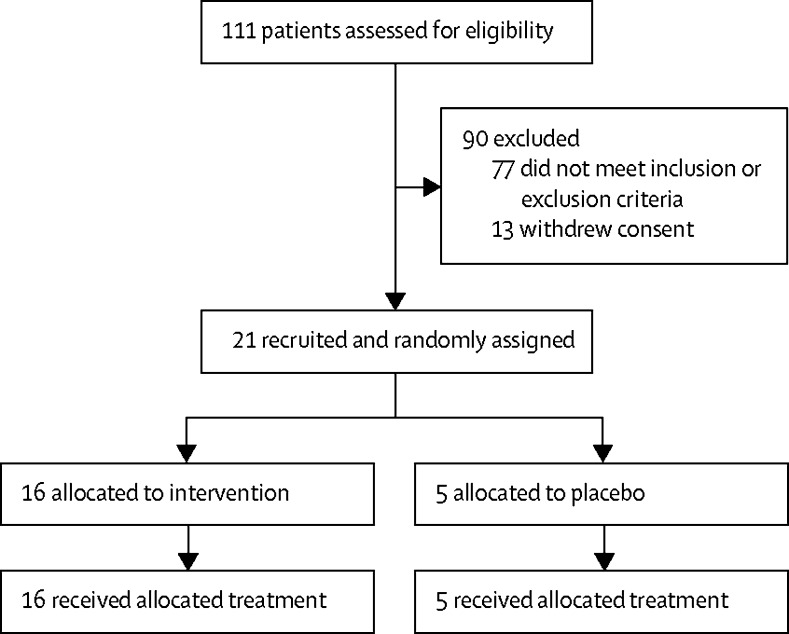
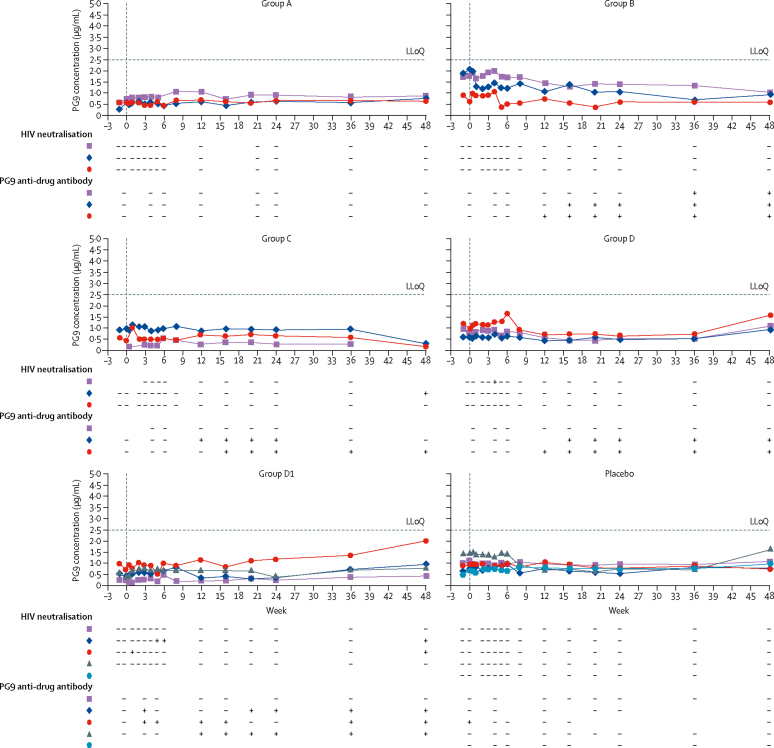
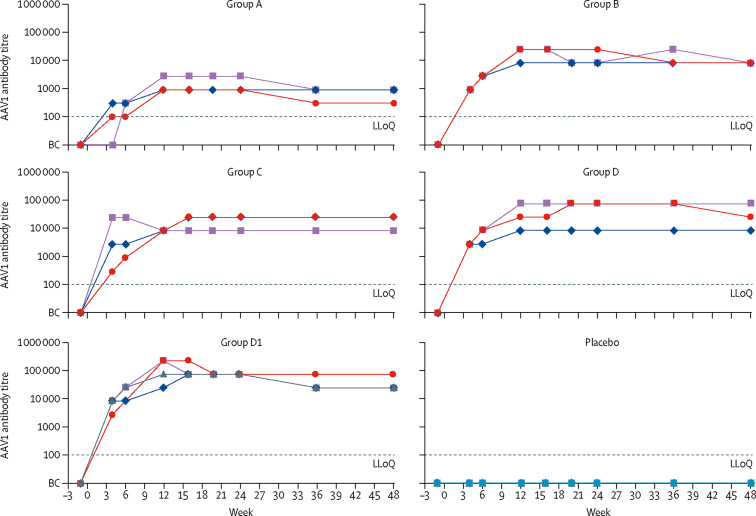
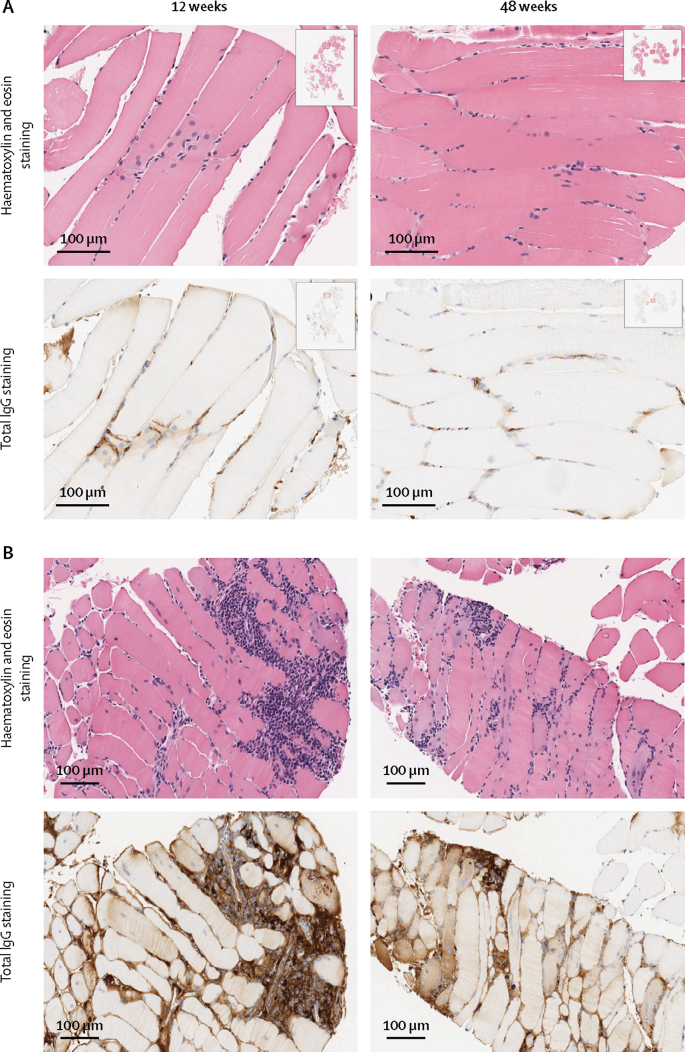
Background A preventive vaccine for HIV is a crucial public health need; adeno-associated virus (AAV)-mediated antibody gene delivery could be an alternative to immunisation to induce sustained expression of neutralising antibodies to prevent HIV. We assessed safety and tolerability of rAAV1-PG9DP, a recombinant AAV1 vector encoding the gene for PG9, a broadly neutralising antibody against HIV. Methods This first-in-human, proof-of-concept, double-blind, phase 1, randomised, placebo-controlled, dose-escalation trial was done at one clinical research centre in the UK. Healthy men aged 18–45 years without HIV infection were randomly assigned to receive intramuscular injection with rAAV1-PG9DP or placebo in the deltoid or quadriceps in one of four dose-escalating cohorts (group A, 4 × 10 12 vector genomes; group B, 4 × 10 13 vector genomes; group C, 8 × 10 13 vector genomes; and group D, 1·2 × 10 14 vector genomes). Volunteers were followed up for 48 weeks. The primary objective was to assess safety and tolerability. A secondary objective was to assess PG9 expression in serum and related HIV neutralisation activity. All volunteers were included in primary and safety analyses. The trial is complete and is registered with ClinicalTrials.gov, number NCT01937455. Findings Between Jan 30, 2014, and Feb 28, 2017, 111 volunteers were screened for eligibility. 21 volunteers were eligible and provided consent, and all 21 completed 48 weeks of follow-up. Reactogenicity was generally mild or moderate and resolved without intervention. No probably or definitely related adverse events or serious adverse events were recorded. We detected PG9 by HIV neutralisation in the serum of four volunteers, and by RT-PCR in muscle biopsy samples from four volunteers. We did not detect PG9 by ELISA in serum. PG9 anti-drug antibody was present in ten volunteers in the higher dose groups. Both anti-AAV1 antibodies and AAV1-specific T-cell responses were detected. Interpretation Future studies should explore higher doses of AAV, alternative AAV serotypes and gene expression cassettes, or other broadly neutralising HIV antibodies. Funding International AIDS Vaccine Initiative, United States Agency for International Development, Bill & Melinda Gates Foundation, US National Institutes of Health.
Overview
The claims and statistics of this paper haven’t been checked yet.
Free: it reads the open-access text and checks the first 5 claims that cite a source we can check. Create a free account to check every claim.
Integrity signals
Registry
Cites
Statistics
Figures
Verification
Claims the paper makes
The claims and statistics of this paper haven’t been checked yet.
Free: it reads the open-access text and checks the first 5 claims that cite a source we can check. Create a free account to check every claim.
Claims other papers make about this one
Each is checked against this paper’s own text: does it say what the citing paper says it does?
The source backs part of the claim, not all of it — or backs it for a different population, condition or comparison.
In the citing paper
“In one study, muscle delivery of AAV resulted in formation of anti-transgene antibodies in some patients, which was predicted by NHP studies [120–123].”
From Immunogenicity of Recombinant Adeno-Associated Virus (AAV) Vectors for Gene Transfer (2023) · cites this paper as [121]
Experimental — accuracy not yet measured
Self-check
Percentages, sums and reported differences re-computed from the paper’s own numbers.
The self-check needs the paper’s full text.
Citations
Cites
Single-Dose Gene-Replacement Therapy for Spinal Muscular Atrophy
Mendell, J. R., Al-Zaidy, S., Shell, R., Arnold, W. D., Rodino-Klapac, L. R., Prior, T. W., Lowes, L., Alfano, L., Berry, K., Church, K., et al. (2017) · New England Journal of Medicine · doi:10.1056/nejmoa1706198 · Cited by 2,381
Manno, C. S., Pierce, G. F., Arruda, V. R., Glader, B., Ragni, M., Rasko, J. J. E., Ozelo, M. C., Hoots, K., Blatt, P., Konkle, B., et al. (2006) · Nature Medicine · doi:10.1038/nm1358 · Cited by 2,163
Self-citationRussell, S., Bennett, J., Wellman, J. A., Chung, D. C., Yu, Z.-F., Tillman, A., Wittes, J., Pappas, J., Elci, O., McCague, S., et al. (2017) · The Lancet · doi:10.1016/s0140-6736(17)31868-8 · Cited by 1,952
Self-citationAdenovirus-Associated Virus Vector–Mediated Gene Transfer in Hemophilia B
Nathwani, A. C., Tuddenham, E. G. D., Rangarajan, S., Rosales, C., McIntosh, J., Linch, D. C., Chowdary, P., Riddell, A., Pie, A. J., Harrington, C., et al. (2011) · New England Journal of Medicine · doi:10.1056/nejmoa1108046 · Cited by 1,864
Rational Design of Envelope Identifies Broadly Neutralizing Human Monoclonal Antibodies to HIV-1
Wu, X., Yang, Z.-Y., Li, Y., Hogerkorp, C.-M., Schief, W. R., Seaman, M. S., Zhou, T., Schmidt, S. D., Wu, L., Xu, L., et al. (2010) · Science · doi:10.1126/science.1187659 · Cited by 1,730
Broad and Potent Neutralizing Antibodies from an African Donor Reveal a New HIV-1 Vaccine Target
Walker, L. M., Phogat, S. K., Chan-Hui, P.-Y., Wagner, D., Phung, P., Goss, J. L., Wrin, T., Simek, M. D., Fling, S., Mitcham, J. L., et al. (2009) · Science · doi:10.1126/science.1178746 · Cited by 1,723
Self-citationStructure of HIV-1 gp120 V1/V2 domain with broadly neutralizing antibody PG9
McLellan, J. S., Pancera, M., Carrico, C., Gorman, J., Julien, J.-P., Khayat, R., Louder, R., Pejchal, R., Sastry, M., Dai, K., et al. (2011) · Nature · doi:10.1038/nature10696 · Cited by 830
Hemophilia B Gene Therapy with a High-Specific-Activity Factor IX Variant
George, L. A., Sullivan, S. K., Giermasz, A., Rasko, J. E. J., Samelson-Jones, B. J., Ducore, J., Cuker, A., Sullivan, L. M., Majumdar, S., Teitel, J., et al. (2017) · New England Journal of Medicine · doi:10.1056/nejmoa1708538 · Cited by 762
Self-citationAAV5–Factor VIII Gene Transfer in Severe Hemophilia A
Rangarajan, S., Walsh, L., Lester, W., Perry, D., Madan, B., Laffan, M., Yu, H., Vettermann, C., Pierce, G. F., Wong, W. Y., et al. (2017) · New England Journal of Medicine · doi:10.1056/nejmoa1708483 · Cited by 694
Broadly Neutralizing Antibodies to HIV and Their Role in Vaccine Design
Burton, D. R., & Hangartner, L. (2016) · Annual Review of Immunology · doi:10.1146/annurev-immunol-041015-055515 · Cited by 583
Cited by
Items 101–139 of 139
Cao, Y., He, H., Cao, K., Liu, Y., Huang, D., Li, T., & Chen, G. (2022) · Biomedical Materials · doi:10.1088/1748-605x/ac4e64 · Cited by 5
Hahn, P. A., Shandilya, S., da Costa, L. A. B., da Silva, L. C. F., O’Hagan, D., Liang, B., Engelman, K. D., Gardner, M. R., Gao, G., Fuchs, S. P., et al. (2025) · AIDS Research and Human Retroviruses · doi:10.1177/08892229251370763 · Cited by 4
Hommes, J. W., Hughes, M. E., Cheung, D., Petri, B., Orthner, L. M., van der Linden, T. J., Bardoel, B. W., Deo, S. K., Patel, D. T., Flannagan, R. S., et al. (2026) · PLoS Pathogens · doi:10.1371/journal.ppat.1014090 · Cited by 5
“…wide range of infectious diseases including human immunodeficiency virus (HIV), influenza virus, Ebola virus, Marburg virus and Clostridium difficile across several different animal models [22–25] and has been investigated in two human clinical trials against HIV (NCT01937455, NCT03374202) [26,27].”
Recent Advances Using Genetic Therapies Against Infectious Diseases and for Vaccination
Galy, A. H. M., Berkhout, B., Breckpot, K., Pichon, C., Bloom, K. M., Kiem, H., Mühlebach, M. D., & McCune, J. M. (2023) · Human Gene Therapy · doi:10.1089/hum.2023.123 · Cited by 4
Xie, M., Wang, L., Deng, Y., Ma, K., Yin, H., Zhang, X., Xiang, X., & Tang, J. (2024) · Journal of Ophthalmology · doi:10.1155/2024/5487973 · Cited by 4
“Currently, AAV has been used in clinical trials to treat a variety of diseases, including hemophilia [51], central nervous system [52], eye [53], muscle [54], heart [55], diseases of digestive system [56], and acquired immune defciency syndrome (AIDS) [57].”
MethodNeukirch, L., Uhrig-Schmidt, S., von Werthern, K., Tuch, A., Kraske, J. A., Lyu, Y., Lenoir, B., Eichmüller, S. B., Meyer, M., Zörnig, I., et al. (2025) · Molecular Therapy · doi:10.1016/j.ymthe.2025.07.014 · Cited by 3
“24,25 In both preclinical and clinical studies, explicit antibody as well as cellular immune responses were observed.”
Xun, M., Fan, X., Wang, H., Zhao, J., Tang, G., Zhang, W., Hu, S., Zhang, L., Wang, D., Chen, Y., et al. (2025) · Molecular Therapy · doi:10.1016/j.ymthe.2025.10.002 · Cited by 3
Advances in Immune-Based Approaches for the Cure of HIV Infection
Wagner, J. A., Sandel, D. A., Deitchman, A. N., Rutishauser, R. L., Deeks, S. G., & Peluso, M. J. (2026) · Drugs · doi:10.1007/s40265-026-02311-3 · Cited by 3
“Serum PG9 was unable to be detected by an enzyme-linked immunosorbent assay, which was attributed at least in part to the development of anti-drug antibodies (ADAs) [167].”
Wagner, J. T., Mueller-Schmucker, S. M., Wang, W., Arnold, P., Uhlig, N., Issmail, L., Eberlein, V., Damm, D., Roshanbinfar, K., Ensser, A., et al. (2024) · Communications Biology · doi:10.1038/s42003-024-06529-3 · Cited by 3
“Furthermore, the majority of the study participants showed a T cell response against the AAV1 capsid, that could eliminate the antibody-producing cells 34 .”
BackgroundMethodInfluentialResearch progress on HIV-1 structural proteins and antiviral therapies
Wang, H., Yuan, J., & Wang, H. (2026) · Frontiers in Immunology · doi:10.3389/fimmu.2026.1805597 · Cited by 2
Ko, H., Li, Y.-Y., Simanjuntak, Y., Yu, H.-P., Chiang, M., Lee, C.-Y., Liang, J., Lee, Y.-L., Sun, C., Wang, P.-S., et al. (2025) · Molecular Therapy · doi:10.1016/j.ymthe.2025.09.007 · Cited by 2
Maurizi, N., Ammirati, E., Silver, E., Hong, K. N., Bui, Q. M., Argirò, A., Olivotto, I., & Adler, E. (2026) · Circulation Heart Failure · doi:10.1161/circheartfailure.125.013771 · Cited by 2
Protection against SIV in Rhesus Macaques Using Albumin and CD4-Based Vector-Mediated Gene Transfer
Spitsin, S. V., Schnepp, B. C., Connell, M. J., Liu, T., Dang, C. M., Pappa, V., Tustin, R., Kinder, A., Johnson, P. R., & Douglas, S. D. (2020) · Molecular Therapy — Methods & Clinical Development · doi:10.1016/j.omtm.2020.04.019 · Cited by 2
Self-citationHeavy-chain immunoglobulin locus editing in rhesus macaque B cells to confer antibody production
Kuhlmann, A.-S., Madkhali, N., Moskovitz, E., Parrott, J. E., Raman, S. S., Riker, A. O., Martinez-Reyes, J., Gupta, M., Jang, R. A., Nelson, V., et al. (2025) · Molecular Therapy — Methods & Clinical Development · doi:10.1016/j.omtm.2025.101598 · Cited by 2
“63 Another study conducted in healthy adults demonstrated similar PG9 bNAb antibody levels following rAAV-1 administration 64 ; however, the differences in capsid, antibodies, and respective half-life and antibody-antigen clearance between the two studies prevent a comparison between the two…”
Levy‐Mendelovich, S., Walsh, C., Schapiro, J., Soffer, S., Klang, E., & Kenet, G. (2023) · Haemophilia · doi:10.1111/hae.14780 · Cited by 2
Immunotherapy and impact on tissue reservoirs
King, H. A. D., Angelovich, T. A., Moso, M. A., Pascoe, R. D., Churchill, M. J., & Lewin, S. R. (2025) · Current Opinion in HIV and AIDS · doi:10.1097/coh.0000000000000996 · Cited by 3
“However, the development of anti-drug antibodies (ADAs) against bNAbs in 40 – 50% of participants [76,77], greatly reduces effectiveness of this approach An alternative strategy for in vivo production of bNAbs using gene therapy is through B cell engineering [78], in which DNA templates encoding…”
Li, S., Yu, P., Wang, H., Liu, M., Wang, Q., Li, Z., Chen, S., He, C., Zhan, B. Y., Tong, L. S., et al. (2025) · Molecular Therapy · doi:10.1016/j.ymthe.2025.12.039 · Cited by 1
Huang, C.-H., Chen, J.-Y., Chang, H.-Y., Hong, W.-Z., Jiang, Y.-W., Lee, C., Wu, C.-H., Lin, Y.-S., Tsai, Y.-Y., Kao, W.-L., et al. (2026) · Cancer Immunology Immunotherapy · doi:10.1007/s00262-026-04336-9 · Cited by 1
Structure and Fc-Effector Function of Rhesusized Variants of Human Anti-HIV-1 IgG1s
Tolbert, W. D., Nguyen, D. N. P., Tuyishime, M., Crowley, A. R., Chen, Y., Jha, S., Goodman, D. D., Bekker, V., Mudrak, S. V., DeVico, A. L., et al. (2022) · Frontiers in Immunology · doi:10.3389/fimmu.2021.787603 · Cited by 1
H. Priddy, F., J. M. Lewis, D., Gelderblom, H. C., Hassanin, H. A., Streatfield, C., LaBranche, C. C., Hare, J., H. Cox, J., Dally, L., Bendel, D., et al. (2019) · Figshare · doi:10.25382/iavi.7451174 · Cited by 1
Self-citationCo-delivered PD-L1 rescues the protective efficacy mediated by an AAV-expressed HIV-1 bNAbPreprint
Kuipa, M., Koroma, A. A., Leguizamo, I., Dhole, P., Barot, Y., Lee, M. Y.-H., Tharp, G. K., Liang, S., Chouinard, M., Ehnert, S., et al. (2026) · bioRxiv (Cold Spring Harbor Laboratory) · doi:10.64898/2026.05.29.728706 · Cited by 1
Rogers, G. (2026) · Zenodo (CERN European Organization for Nuclear Research) · doi:10.5281/zenodo.19503672 · Cited by 1
Generating Broadly Protective Immune Responses to Viral Influenza
Engelhardt, E. (2020) · doi:10.31274/cc-20240624-782
“Most experimental data on VIP is for use with HIV infections, which has shown a lot of promise [62,63].”
BackgroundXu, Z. (2020) · ScholarlyCommons (University of Pennsylvania)
Zhao, S.-Q., Chi, H., Qin, C., & Deng, Y. (2023) · Chinese Science Bulletin (Chinese Version) · doi:10.1360/tb-2022-1097
Erratum to: Progress Note 2024: Curing HIV; Not in My Lifetime or Just Around the Corner?
Harper, J., Betts, M. R., Lichterfeld, M. D., Müller-Trutwin, M. C., Margolis, D. M., Bar, K. J., Li, J. Z., McCune, J. M., Lewin, S. R., Kulpa, D. A., et al. (2024) · Pathogens and Immunity · doi:10.20411/pai.v8i2.696
Gondé, H. (2023) · theses.fr (ABES) · doi:10.70675/c8482cb0z8c7ez4d36z828cz36c81f9b95a1
Desrosiers, R. C. (2022) · The Conversation · doi:10.64628/aai.q4539m5ks
Facilitating Humanized Mouse Models to Study Novel HIV-1 Prevention Compounds
Kleipass, F. (2025) · Kölner Universitäts PublikationsServer (Universität zu Köln)
Clark, N. M., Keles, N. K., Hagedorn, G. N., Klenchin, V. A., Andersen, H., Treece, J., Fennessey, C. M., Xie, J., Denny, T. N., DeMarco, C. T., et al. (2026) · bioRxiv (Cold Spring Harbor Laboratory) · doi:10.64898/2026.04.20.719478
Leguizamo, I., Koroma, A. A., Kuipa, M., Correa, N. S., Barot, Y., Hernandez, S. D., Sethi, M., Das, A., Xie, J., Gao, G., et al. (2026) · bioRxiv (Cold Spring Harbor Laboratory) · doi:10.64898/2026.05.29.728808
Kuipa, M., Koroma, A. A., Leguizamo, I., Dhole, P., Barot, Y., Lee, M. Y.-H., Tharp, G. K., Liang, S., Chouinard, M., Ehnert, S., et al. (2026) · bioRxiv (Cold Spring Harbor Laboratory) · doi:10.64898/2026.05.29.728806
Monoclonal Antibodies Targeting Bacterial Infections: A Broad Review of the Field
Slarve, M. J., Tkaczyk, C., Doyle, M. P., Break, T. J., Smith, A. B., Alter, G., Luna, B. M., Spellberg, B. J., & DiGiandomenico, A. (2026) · BioDrugs · doi:10.1007/s40259-026-00787-9 · Cited by 1
“Although AAV-encoding mAbs induced circulating levels >100 mg/mL and demonstrated protection in HIV-preclinical models, the platform demonstrated immunogenicity issues and did not progress beyond phase I clinical studies [294].”
Vaccine efficacy—the biggest challenge today
Lundstrom, K. H. (2026) · Exploration of Immunology · doi:10.37349/ei.2026.1003260
Manchester, B. J., Gommerman, J. L., Sharif, S., Susta, L., & Wootton, S. K. (2026) · Vaccines · doi:10.3390/vaccines14080692
“Interestingly, it was found that these immune responses did not readily cause harm to participants in the study and only contributed to lower efficiency of the therapeutic AAV [125].”
InfluentialSayettat, S., Tolksdorf, F., Johannson, R., Nelke, J., Malz, A., Fischer, L., Gerhard, I., Ullrich, N., Ellinghaus, U., Stadler, C., et al. (2026) · bioRxiv (Cold Spring Harbor Laboratory) · doi:10.64898/2026.09.17.752120
Programming immunity in situ: A new frontier of in vivo cell engineering
Mietz, J., Merlotti, A., de Fougerolles, A., Demaria, O., & Vivier, É. (2026) · Science Immunology · doi:10.1126/sciimmunol.aed1027
Pediatric passive immunization for HIV-prevention: challenges and potential solutions
Herrera, C., Peet, M. M., Agrahari, V., Hanif, H., Scarlatti, G., & Doncel, G. F. (2026) · Frontiers in Immunology · doi:10.3389/fimmu.2026.1970766
Supporting information 2 of Gene Therapy Advances: A Meta-Analysis of AAV Usage in Clinical Settings
Au, H. K. E., Isalan, M., & Mielcarek, M. (2022) · doi:10.3389/fmed.2021.809118.s002
Metadata
- Authors
- Priddy, F. H., Lewis, D. J. M., Gelderblom, H. C., Hassanin, H., Streatfield, C., LaBranche, C., Hare, J., Cox, J. H., Dally, L., Bendel, D., Montefiori, D., Sayeed, E., Ackland, J., Gilmour, J., Schnepp, B. C., Wright, J. F., & Johnson, P.
- Affiliations
- International AIDS Vaccine Initiative (US)
- Imperial College London (GB)
- University of Surrey (GB)
- Duke Medical Center (US)
- Emmes (United States) (US)
- Children's Hospital of Philadelphia (US)
- Corresponding author
- Priddy, Frances H
- ORCID
- Venue
- The Lancet HIV
- Publisher
- Elsevier BV
- Published
- 2019-04
- Volume
- 6
- Issue
- 4
- Pages
- e230-e239
- ISSN
- 2352-3018 (ISSN-L)
- PMC
- PMC6443625
- OpenAlex
- W2920817121
- Cited by
- 131
- References
- 31
- Citations by year
- 2026: 13 · 2025: 17 · 2024: 21 · 2023: 20 · 2022: 15 · 2021: 20 · 2020: 18 · 2019: 7
- FWCI
- 9.04
- Type
- journal article
- Language
- en
- Open access
- hybrid
- doi.org
- Licence
- cc-by
- www.elsevier.com/tdm/userlicense/1.0/ (tdm)
- creativecommons.org/licenses/by/4.0/ (vor)
- Locations
- The Lancet HIV (publishedVersion, cc-by)
- Europe PMC (PubMed Central) (publishedVersion, cc-by)
- PubMed Central (publishedVersion, cc-by)
- PubMed (publishedVersion)
- Funders
- National Institutes of Health during the conduct of the study (US 9408904)
- Topics
- Life Sciences › Biochemistry, Genetics and Molecular Biology › Genetics › Virus-based gene therapy research
- Life Sciences › Immunology and Microbiology › Virology › HIV Research and Treatment
- Health Sciences › Medicine › Infectious Diseases › SARS-CoV-2 and COVID-19 Research
- Keywords
- HIV prevention, adeno-associated virus vectors, gene therapy, neutralizing antibodies, vaccine safety and tolerability, anti-drug antibodies, dose escalation, healthy adults, AAV serotypes
- MeSH terms
- Dependovirus, Adolescent, Adult, Double-Blind Method, Follow-Up Studies, Genetic Vectors, United Kingdom, Humans, Injections, Intramuscular, Male, Middle Aged, Neutralization Tests, Placebos, Recombinant Proteins, Genetic Therapy, HIV Antibodies, HIV Infections, Young Adult, Antibodies, Neutralizing, Healthy Volunteers
About these checks
Registry, retraction, Cites and statistics results are computed, not judged, with one exception: a printed reference that no index lists is read once by a model before it counts as a citation error. Claims are extracted by a model and kept only when their quote appears verbatim in the text; each cited source is then checked, with a model’s help, for whether it says what the claim relies on. Those verdicts can be wrong — read the claim’s quote and the cited source before relying on one.
Statistics and arithmetic are recomputed, not judged.
Confidence bands are shown only for fields calibrated on our annotated test set. None is calibrated yet, so no band is shown.
What counts as a claim ›How we measure confidence ›How we check this ›
Are you an author, or do you see a problem with this page? Request a review
Data sources
Bibliographic data: Semantic Scholar, OpenAlex, Crossref.
Contains information from the Semantic Scholar Academic Graph Datasets, made available under the ODC Attribution License (ODC-BY 1.0).
Semantic Scholar’s data is described in: Kinney, R., et al. (2023). The Semantic Scholar Open Data Platform. arXiv:2301.10140.
