

Efficacy of psychological therapies in people with inflammatory bowel disease: a systematic review and meta-analysis
Open accessThe DOI matches its Crossref record; 50 of the 50 references it cites were found in a registry or an index.
Abstract
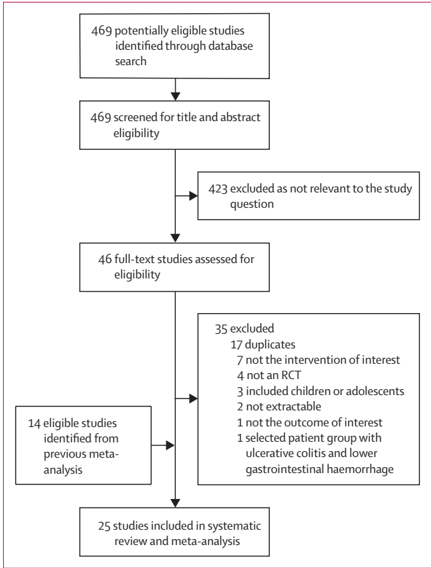
Background There is increasing evidence for an influence of the gut–brain axis on the natural history of inflammatory bowel disease (IBD). Psychological therapies could, therefore, have beneficial effects in individuals with IBD, but data are conflicting. We aimed to update our previous systematic review and meta-analysis to assess whether the inclusion of more randomised controlled trials (RCTs) showed any beneficial effects and whether these effects varied by treatment modality. Methods In this systematic review and meta-analysis, we searched MEDLINE, Embase, Embase Classic, PsychINFO, and the Cochrane Central Register of Controlled Trials from Jan 1, 2016, to April 30, 2023, for RCTs published in any language recruiting individuals aged 16 years or older with IBD that compared psychological therapy with a control intervention or treatment as usual. We pooled dichotomous data to obtain relative risks (RR) with 95% CIs of inducing remission in people with active disease or of relapse in people with quiescent disease at final follow-up. We pooled continuous data to estimate standardised mean differences (SMD) with 95% CIs in disease activity indices, anxiety scores, depression scores, stress scores, and quality-of-life scores at completion of therapy and at final follow-up. We pooled all data using a random-effects model. Trials were analysed separately according to whether they recruited people with clinically active IBD or predominantly individuals whose disease was quiescent. We conducted subgroup analyses by mode of therapy and according to whether trials recruited selected groups of people with IBD. We used the Cochrane risk of bias tool to assess bias at the study level and assessed funnel plots using the Egger test. We assessed heterogeneity using the I 2 statistic. Findings The updated literature search identified a total of 469 new records, 11 of which met eligibility criteria. 14 studies were included from our previous meta-analysis published in 2017. In total, 25 RCTs were eligible for this meta-analysis, all of which were at high risk of bias. Only four RCTs recruited patients with active IBD; there were insufficient data for meta-analysis of remission, disease activity indices, depression scores, and stress scores. In patients with active IBD, psychological therapy had no benefit compared with control for anxiety scores at completion of therapy (two RCTs; 79 people; SMD –1·04, 95% CI –2·46 to 0·39), but did have significant benefit for quality-of-life scores at completion of therapy (four RCTs; 309 people; 0·68, 0·09 to 1·26), although heterogeneity between studies was high ( I 2 =82%). In individuals with quiescent IBD, RR of relapse of disease activity was not reduced with psychological therapy (ten RCTs; 861 people; RR 0·83, 95% CI 0·62 to 1·12), with moderate heterogeneity ( I 2 =60%), and the funnel plot suggested evidence of publication bias or other small study effects (Egger test p=0·046). For people with quiescent IBD at completion of therapy, there was no difference in disease activity indices between psychological therapy and control (13 RCTs; 1015 people; SMD –0·01, 95% CI –0·13 to 0·12; I 2 =0%). Anxiety scores (13 RCTs; 1088 people; –0·23, –0·36 to –0·09; 18%), depression scores (15 RCTs; 1189 people; –0·26, –0·38 to –0·15; 2%), and stress scores (11 RCTs; 813 people; –0·22, –0·42 to –0·03; 47%) were significantly lower, and quality-of-life scores (16 RCTs; 1080 people; 0·31, 0·16 to 0·46; 30%) were significantly higher, with psychological therapy versus control at treatment completion. Statistically significant benefits persisted up to final follow-up for depression scores (12 RCTs; 856 people; –0·16, –0·30 to –0·03; 0%). Effects were strongest in RCTs of third-wave therapies and in RCTs that recruited people with impaired psychological health, fatigue, or reduced quality of life at baseline. Interpretation Psychological therapies have beneficial, short-term effects on anxiety, depression, stress, and quality-of-life scores, but not on disease activity. Further RCTs in selected groups are needed to establish the place for such therapies in IBD care. Funding None.
Overview
The claims and statistics of this paper haven’t been checked yet.
Free: it reads the open-access text and checks the first 5 claims that cite a source we can check. Create a free account to check every claim.
Integrity signals
Registry
Cites
Statistics
Figures
Verification
Claims the paper makes
The claims and statistics of this paper haven’t been checked yet.
Free: it reads the open-access text and checks the first 5 claims that cite a source we can check. Create a free account to check every claim.
Claims other papers make about this one
Each is checked against this paper’s own text: does it say what the citing paper says it does?
The source backs part of the claim, not all of it — or backs it for a different population, condition or comparison.
In the citing paper
“There are several clinician-administered psychological approaches that are supported in the management of emotional distress, pain, fatigue, and well-being in IBD, including cognitive behavior therapy and mindfulness-based interventions.10”
From Culturally Informed Digital Behavioral Intervention Development for Inflammatory Bowel Disease: A Qualitative Study (2025) · cites this paper as [10]
Experimental — accuracy not yet measuredThe cited source says what the claim attributes to it.
In the citing paper
“This may resonate with the principle of acceptance, which underlies psychological approaches demonstrating the most positive effect in IBD10 and holds promise for further study.”
From Culturally Informed Digital Behavioral Intervention Development for Inflammatory Bowel Disease: A Qualitative Study (2025) · cites this paper as [10]
Self-check
Percentages, sums and reported differences re-computed from the paper’s own numbers.
The self-check needs the paper’s full text.
Citations
Cites
Measuring inconsistency in meta-analyses
Higgins, J. P. T., Thompson, S. G., Deeks, J. J., & Altman, D. G. (2003) · BMJ · doi:10.1136/bmj.327.7414.557 · Cited by 63,139
Bias in meta-analysis detected by a simple, graphical test
Egger, M., Smith, G. D., Schneider, M., & Minder, C. (1997) · BMJ · doi:10.1136/bmj.315.7109.629 · Cited by 56,722
Meta-analysis in clinical trials
DerSimonian, R., & Laird, N. (1986) · Controlled Clinical Trials · doi:10.1016/0197-2456(86)90046-2 · Cited by 39,552
Sterne, J. A. C., Sutton, A. J., Ioannidis, J. P. A., Terrin, N., Jones, D. R., Lau, J., Carpenter, J., Rucker, G., Harbord, R. M., Schmid, C. H., et al. (2011) · BMJ · doi:10.1136/bmj.d4002 · Cited by 7,709
Ng, S. C., Shi, H. Y., Hamidi, N., Underwood, F. E., Tang, W., Benchimol, E. I., Panaccione, R., Ghosh, S., Wu, J. C. Y., Chan, F. K. L., et al. (2017) · The Lancet · doi:10.1016/s0140-6736(17)32448-0 · Cited by 6,087
Lamb, C. A., Kennedy, N. A., Raine, T., Hendy, P. A., Smith, P. J., Limdi, J. K., Hayee, B., Lomer, M. C. E., Parkes, G. C., Selinger, C., et al. (2019) · Gut · doi:10.1136/gutjnl-2019-318484 · Cited by 2,346
Barberio, B., Zamani, M., Black, C. J., Savarino, E. V., & Ford, A. C. (2021) · The Lancet Gastroenterology & Hepatology · doi:10.1016/s2468-1253(21)00014-5 · Cited by 758
Self-citationAcceptance and mindfulness-based therapy: New wave or old hat?
Hofmann, S. G., & Asmundson, G. J. G. (2008) · Clinical Psychology Review · doi:10.1016/j.cpr.2007.09.003 · Cited by 665
The third wave of cognitive behavioral therapy and the rise of process-based care
Hayes, S. C., & Hofmann, S. G. (2017) · World Psychiatry · doi:10.1002/wps.20442 · Cited by 613
Bi-directionality of brain–gut interactions in patients with inflammatory bowel disease
Gracie, D. J., Guthrie, E. A., Hamlin, P. J., & Ford, A. C. (2018) · Gastroenterology · doi:10.1053/j.gastro.2018.01.027 · Cited by 408
Self-citation
Cited by
Wan, J., Zhou, J., Wang, Z., Liu, D., Zhang, H., Xie, S., & Wu, K. (2025) · Chinese Medical Journal · doi:10.1097/cm9.0000000000003542 · Cited by 114
“[102] In addition, the vagus nerve plays a key role in “inflammatory reflex”. an innate neuroimmune mechanism that detects and suppresses inflammation in the intestines and other organs.”
Massironi, S., Pigoni, A., Vegni, E. A. M., Keefer, L., Dubinsky, M. C., Brambilla, P., Delvecchio, G., & Danese, S. (2024) · Inflammatory Bowel Diseases · doi:10.1093/ibd/izae206 · Cited by 62
An Overview of Research on Acceptance and Commitment Therapy
Levin, M. E., Krafft, J., & Twohig, M. P. (2024) · Psychiatric Clinics of North America · doi:10.1016/j.psc.2024.02.007 · Cited by 49
Seaton, N., Hudson, J. L., Harding, S., Norton, S., Mondelli, V., Jones, A. S. K., & Moss-Morris, R. E. (2024) · EBioMedicine · doi:10.1016/j.ebiom.2023.104910 · Cited by 49
Diagnosis and management of inflammatory bowel disease
Li, L., Cheng, R., Wu, Y., Lin, H., Gan, H., & Zhang, H. (2024) · Journal of Evidence-Based Medicine · doi:10.1111/jebm.12626 · Cited by 58
“191 Similarly, psychological interventions in patients with inflammatory diseases are effective in reducing medical attention and associated healthcare costs.”
BackgroundACG Clinical Guideline Update: Preventive Care in Inflammatory Bowel Disease
Farraye, F. A., Melmed, G., Lichtenstein, G. R., Barnes, E. L., Limketkai, B. N., Caldera, F., & Kane, S. V. (2025) · The American Journal of Gastroenterology · doi:10.14309/ajg.0000000000003541 · Cited by 58
Luo, K., Zhang, M., Tu, Q., Li, J., Wang, Y., Wan, S., Li, D., Qian, Q., & Lu, X. (2025) · Journal of Neuroinflammation · doi:10.1186/s12974-025-03476-6 · Cited by 49
“However, another meta-analysis including 25 RCTs indicated that psychological therapies had no effect on disease activity indices in patients with quiescent disease (SMD = − 0.01) and did not reduce the risk of disease activity relapse [152].”
InfluentialReview article: Measuring disease severity in inflammatory bowel disease – Beyond treat to target
Swaminathan, A., Day, A. S., Sparrow, M., Peyrin‐Biroulet, L., Siegel, C. A., & Gearry, R. B. (2024) · Alimentary Pharmacology & Therapeutics · doi:10.1111/apt.18231 · Cited by 44
“184 The additive role of combining newer biological agents for the treatment of IBD with psychological interventions remains unclear.”
Riggott, C., Ford, A. C., & Gracie, D. J. (2024) · Alimentary Pharmacology & Therapeutics · doi:10.1111/apt.18192 · Cited by 35
“106,111 Despite the proven efficacy of brain–gut behavioural treatments in IBS, only one RCT, to date, has examined the effects of a brain–gut behavioural treatment in patients with quiescent IBD reporting IBS-type symptoms, and although the results suggested this was effective in this subgroup of…”
Self-citationRole of stress and early-life stress in the pathogeny of inflammatory bowel disease
Bonaz, B. L., Sinniger, V., & Pellissier, S. (2024) · Frontiers in Neuroscience · doi:10.3389/fnins.2024.1458918 · Cited by 24
Prevalence of Sexual Dysfunction in Inflammatory Bowel Disease: Systematic Review and Meta-analysis
Nardone, O. M., Calabrese, G., Bertin, L., Ford, A. C., Castiglione, F., Zingone, F., Savarino, E. V., & Barberio, B. (2024) · Journal of Crohn s and Colitis · doi:10.1093/ecco-jcc/jjae133 · Cited by 23
Self-citationRiggott, C., Fairbrass, K. M., Black, C. J., Gracie, D. J., & Ford, A. C. (2023) · Alimentary Pharmacology & Therapeutics · doi:10.1111/apt.17735 · Cited by 14
Self-citationGodfrey, D., Koczanowski, S., Selvarajah, J., Gao, W., Segal, J. P., & Pellino, G. (2025) · The American Journal of Medicine · doi:10.1016/j.amjmed.2025.08.015 · Cited by 16
Goren, G., Schwartz, D., Friger, M. D., Sergienko, R., Monsonego, A., Slonim‐Nevo, V., Greenberg, D., Odes, S., & Sarid, O. (2025) · Journal of Clinical Medicine · doi:10.3390/jcm14051569 · Cited by 24
“A groundbreaking aspect of COBMINDEX, as highlighted in the study by Riggoee et al. [83] while evaluating effects of psychological therapy on CD patients, is that unlike other interventions that focus primarily on patients in remission, COBMINDEX has demonstrated significant benefits for…”
Riggott, C., Gracie, D. J., & Ford, A. C. (2025) · Alimentary Pharmacology & Therapeutics · doi:10.1111/apt.70248 · Cited by 15
Self-citationMoss-Morris, R. E., Norton, C. S., Hart, A. L., Büttner, F., Hamborg, T., Miller, L., Stagg, I., Aziz, Q., Czuber‐Dochan, W., Dibley, L. B., et al. (2025) · The Lancet Digital Health · doi:10.1016/j.landig.2025.100906 · Cited by 23
Riggott, C., Fairbrass, K. M., Gracie, D. J., & Ford, A. C. (2025) · Alimentary Pharmacology & Therapeutics · doi:10.1111/apt.70068 · Cited by 13
Self-citationKalogeropoulou, M., Karaivazoglou, K., Κωνσταντοπούλου, Γ., Vinni, E., Sotiropoulos, C., Tourkochristou, E., Aggeletopoulou, I., Lourida, T., Labropoulou, E.-P., Διαμαντοπούλου, Γ., et al. (2024) · Journal of Crohn s and Colitis · doi:10.1093/ecco-jcc/jjae144 · Cited by 13
Avest, M. M. T., Huijbers, M. J., Horjus, C. S., Römkens, T. E. H., Witteman, E. M., van Dop, W. A., Dresler, M., Donders, A. R. T., Dijkstra, G. D. H., Nissen, L. H. C., et al. (2025) · Inflammatory Bowel Diseases · doi:10.1093/ibd/izaf116 · Cited by 11
“13,14 Nevertheless, the effectiveness of MBIs on psychological distress in IBD varies according to recent meta-analyses.”
InfluentialMarchese, S. H., Naftaly, J. P., & Pandolfino, J. (2024) · Translational Gastroenterology and Hepatology · doi:10.21037/tgh-24-10 · Cited by 8
“Historically, cognitive behavioral therapy (CBT) has been a popular behavioral health treatment modality for patients with IBS (15-17) and IBD (18-20).”
Zhou, Y. J., Huang, R.-Q., Xu, J., Yi, J., Wang, F., Zhou, X., Zhang, J., Wang, T., Liu, Y., Chen, C., et al. (2024) · Pancreatology · doi:10.1016/j.pan.2024.01.010 · Cited by 9
Tse, C. S., Lewis, J. D., Horst, S., Saha, S., Taleban, S., Shah, S. A., Lutz, M. K., Fiske, H. W., Brown, L. A., Kuehnel, R. H., et al. (2025) · The American Journal of Gastroenterology · doi:10.14309/ajg.0000000000003681 · Cited by 10
Horovitz, O. (2025) · Frontiers in Nutrition · doi:10.3389/fnut.2025.1592528 · Cited by 12
Comparative Analysis of Deep Neural Networks for Automated Ulcerative Colitis Severity Assessment
Vezakis, A., Vezakis, I., Πετροπούλου, Ο., Miloulis, S.-T., Αναστασίου, Α., Kakkos, I., & Matsopoulos, G. K. (2025) · Bioengineering · doi:10.3390/bioengineering12040413 · Cited by 10
“Additionally, the chronic nature of the disease can contribute to emotional distress, anxiety, and reduced social functioning [4,5].”
Ma, C., Ford, A. C., Hashash, J. G., Barbara, G., Bernstein, C. N., Brenner, D. M., Griffiths, A. M., Keefer, L., Long, M. D., Nurko, S., et al. (2026) · Gastroenterology · doi:10.1053/j.gastro.2026.04.008 · Cited by 9
Self-citationGravina, A. G., Pellegrino, R., Palladino, G., Zanini, A., Federico, A., & Zingone, F. (2024) · Gastroenterology Insights · doi:10.3390/gastroent15040067 · Cited by 7
Jia, J., Wu, Y., Liu, S., Chen, W., Li, R., Bai, Y., & Hu, L. (2025) · Frontiers in Medicine · doi:10.3389/fmed.2025.1593483 · Cited by 5
Riggott, C., Fairbrass, K. M., Guthrie, E., Black, C. J., Selinger, C. P., Ford, A. C., & Gracie, D. J. (2025) · Alimentary Pharmacology & Therapeutics · doi:10.1111/apt.70431 · Cited by 4
Self-citationFloria, D., Fogarasi, B., Tari, E., Szabó, L., Veres, D. S., Bognár, A. S., Beáta, S., Erőss, B. M., Teutsch, B., & Hegyi, P. J. (2025) · Therapeutic Advances in Gastroenterology · doi:10.1177/17562848251386324 · Cited by 6
“69 Acceptance, mindfulness, and value-focused approaches represent third-wave therapies in psychological interventions.”
InfluentialTraynard, V. (2024) · Nutrients · doi:10.3390/nu16223927 · Cited by 5
Zhu, Y., Liu, K., Jiang, J., Cheng, X., Wang, H., Long, F., Li, K., Mu, C., & Cui, L. (2025) · BMC Gastroenterology · doi:10.1186/s12876-025-03623-6 · Cited by 5
“A meta-analysis by Riggott et al. [46] revealed that most nursing interventions had no significant impact on disease activity.”
Greywoode, R., Philippou, A., Ullman, T., & Keefer, L. (2025) · Inflammatory Bowel Diseases · doi:10.1093/ibd/izaf145 · Cited by 3
Pellizzer, M. L., Mountifield, R. E., Prosser, R., & Prichard, I. J. (2025) · Body Image · doi:10.1016/j.bodyim.2025.101916 · Cited by 4
Maehder, K., Peters, L., Hübener, S., Matysiak, A., Huber, S., Toussaint, A. C., Zapf, A., Vettorazzi, E., Weber, P., Stahlmann, K., et al. (2025) · EClinicalMedicine · doi:10.1016/j.eclinm.2025.103663 · Cited by 4
Holistic care in inflammatory bowel disease: is it in REACH?
Said, H., Moulton, C. D., Hart, A. L., & Keefer, L. (2026) · Journal of Crohn s and Colitis · doi:10.1093/ecco-jcc/jjaf227 · Cited by 3
Lu, B., Ma, L., Xia, F., Zhang, L., Liu, Y., Yu, X., Sun, R., & Luo, Y. (2026) · Frontiers in Psychiatry · doi:10.3389/fpsyt.2026.1751497 · Cited by 3
Management of Pediatric Crohn’s Disease: an ECCO-ESPGHAN Guideline Update
Shouval, D. S., Hojsak, I., Miele, E., Sokollik, C., Turner, D., Kolho, K., Boneh, R. S., van Rheenen, P. F., Wine, E., Russell, R. K., et al. (2026) · Journal of Crohn s and Colitis · doi:10.1093/ecco-jcc/jjag084 · Cited by 8
Fatigue Is Strongly Associated with Depressive Symptoms in Patients with Inflammatory Bowel Disease
Mona, R., Göldi, A., Schneider, T., Panne, I., Egger, A., Niess, J. H., & Hruz, P. L. (2025) · Inflammatory Intestinal Diseases · doi:10.1159/000545572 · Cited by 2
You, Z., Shen, J., Ahuja, V., Watermeyer, G., Steinwurz, F., Шапина, М. В., Fiocchi, C., & Ran, Z. H. (2025) · Therapeutic Advances in Gastroenterology · doi:10.1177/17562848251383792 · Cited by 2
“4,28,29 Despite some inherent limitations, the importance of endoscopy in IBD management is unquestionable for both diagnostic, treatment, and follow-up purposes, and BRICS physicians largely agreed on its use for achieving MH as a treatment goal.”
Aktualisierte S3-Leitlinie Colitis ulcerosa (Version 7.0)
Blumenstein, I., Schnoy, E., Atreya, R., Bettenworth, D., de Laffolie, J., Kaltz, B., Kienle, P., Langhorst, J., Maaser, C., Ockenga, J., et al. (2026) · Zeitschrift für Gastroenterologie · doi:10.1055/a-2769-2192 · Cited by 4
Petrik, M. L., Kuhn, T. A., & Kinsinger, S. (2024) · Journal of clinical psychology in medical settings · doi:10.1007/s10880-024-10006-8 · Cited by 2
“Psychological interventions have generally been found to be effective in improving anxiety, depression, stress, and quality of life, but not disease activity, in people with IBD (Riggott et al., 2023).”
Chester, M. A., & Keefer, L. (2024) · The American Journal of Gastroenterology · doi:10.14309/ajg.0000000000003125 · Cited by 3
Similar Symptoms, Distinct Syndromes: Multi-modal Approach to the Patient with an IBD-IBS Overlap
Chang, A., Oh, J. E., Shin, A., Oser, M. L., Manitius, N., Ghaffari, A., & Limketkai, B. N. (2025) · Digestive Diseases and Sciences · doi:10.1007/s10620-025-09473-2 · Cited by 3
Influence of the Gut-Brain Axis on Psychiatric Comorbidity in Inflammatory Bowel Disease
Borrego-Ruiz, A., & Borrego, J. J. (2026) · Psychiatry International · doi:10.3390/psychiatryint7020052 · Cited by 3
Wang, Z., Dong, D., Yao, L., Liu, J., Zhan, S., Wei, M., Shao, J., & Luo, H. (2026) · Acta Psychologica · doi:10.1016/j.actpsy.2026.106787 · Cited by 1
Psychological therapies in inflammatory bowel disease
Shin, A. (2023) · The Lancet. Gastroenterology & hepatology · doi:10.1016/s2468-1253(23)00229-7 · Cited by 1
Goli, F., Derakhshanjan, A., Jahanzad, S., Haghayegh, S. A., Afshar, H., & Adibi, P. (2025) · Crohn s & Colitis 360 · doi:10.1093/crocol/otaf018 · Cited by 2
Massouridis, B., & Swaminathan, A. (2025) · Alimentary Pharmacology & Therapeutics · doi:10.1111/apt.70086 · Cited by 1
“A previous meta-analysis of psychological therapies targeting the gut–brain axis in IBD has shown short-term improvements to psychological health and quality of life, but longer term benefits remain less clear [6].”
Lores, T. J., & Keefer, L. (2025) · Alimentary Pharmacology & Therapeutics · doi:10.1111/apt.70272 · Cited by 1
Welyczko, N. (2023) · Gastrointestinal Nursing · doi:10.12968/gasn.2023.21.8.8
New treatments in inflammatory bowel disease � A thrilling time ahead
Gomollón, F. (2024) · Revista Española de Enfermedades Digestivas · doi:10.17235/reed.2024.10764/2024
Like a Punch in the Gut: A Novel Perspective On Annual Recurrences of Ulcerative Colitis
Johnston, S., Fraser, A., Biddle, C., & Wild, J. (2024) · Crohn s & Colitis 360 · doi:10.1093/crocol/otae050
“36 We have outlined a theoretically derived explanation for UC flare-ups drawing on a robust psychological model of the reexperiencing symptoms that can develop following trauma exposure.”
BackgroundImpact of Inflammatory Bowel Disease on Patient’s Quality of Life – A Review
Duszyńska, K., Dolepski, K., Góral, A., Żuk, K., & Czachajda, M. (2024) · Journal of Health Study and Medicine · doi:10.2478/jhsm-2024-0009
Liu, P., Zhang, Y., Huang, H., & Li, Y. (2024) · Medicine · doi:10.1097/md.0000000000040414
Anxiety and Depression in Inflammatory Bowel Diseases
Zinger, A., Bedell, A., & Rubin, D. T. (2024) · Springer eBooks · doi:10.1007/978-3-031-32046-0_24-1
Reply: Opioids Intertwined With Psychology: Hidden Effects in the Treatment of Patients With IBD
Riggott, C., Fairbrass, K. M., Selinger, C. P., Gracie, D. J., & Ford, A. C. (2025) · Inflammatory Bowel Diseases · doi:10.1093/ibd/izae305
Self-citationRiggott, C., Fairbrass, K. M., Gracie, D. J., & Ford, A. C. (2025) · Alimentary Pharmacology & Therapeutics · doi:10.1111/apt.70100
“Few randomised controlled trials (RCTs) have assessed the effects of brain–gut behavioural therapies or gut–brain neuromodulators in patients with IBD with pre-existing psychological co-morbidity, who are the patient group most likely to benefit from the addition of such therapies [7].”
Self-citationChappell, K. D., Chinbaatar, O., Goodman, K. J., & Kroeker, K. I. (2025) · Journal of Digestive Diseases · doi:10.1111/1751-2980.13342
Pediatric Subspecialties: Gastroenterology Clinics
Rausch, R., Dopheide, L. P., & Bovio, N. R. (2025) · Springer eBooks · doi:10.1007/978-3-031-85784-3_12
Exploring the Role of Wearable Devices in Inflammatory Bowel Disease Management
Liu, D., Wei, Y., & Wan, J. (2025) · Gastroenterology · doi:10.1053/j.gastro.2025.01.260
Riggott, C., Gracie, D. J., & Ford, A. C. (2025) · Alimentary Pharmacology & Therapeutics · doi:10.1111/apt.70293
Self-citationAnxiety and Depression in Inflammatory Bowel Diseases
Zinger, A., Bedell, A., & Rubin, D. T. (2025) · Springer eBooks · doi:10.1007/978-3-031-73363-5_24
Nicholenas, A., Lavelle, J., Mellotte, G. S., Harpur, L. L., Mulcahy, H. E., & McHugh, L. (2025) · Journal of Contextual Behavioral Science · doi:10.1016/j.jcbs.2025.100951
Welcher Patient mit Magen-Darm-Beschwerden braucht psychosomatischen Support?
Keip, B., & Dejaco, C. (2025) · Journal für Gastroenterologische und Hepatologische Erkrankungen · doi:10.1007/s41971-025-00243-5
Seaton, N., Harding, S., Jones, A. S. K., Chow, T. W., Mondelli, V., Hudson, J. L., & Moss-Morris, R. E. (2025) · Psychosomatic Medicine · doi:10.1097/psy.0000000000001457 · Cited by 2
“38 This discrepancy may reflect distinctive features of COMPASS-IBD, built on the TMA-LTC, including modules that target symptom perception and self-management.”
Ministro, P., Carvalho, D. V., Correia, L., Dias, C. C., Gonçalves, R., Lago, P. M., Magro, F., Dias, S., Portela, F., & GEDII, O. B. O. (2026) · GE Portuguese Journal of Gastroenterology · doi:10.1159/000549922
“Only 36% of units routinely assess nutritional status, and psychological assessments are performed in just 6% of units at diagnosis, in mis-alignment with current guidelines and current evidence on these matters [10, 26, 27].”
Liu, L., Yao, Y., & Li, S. (2026) · Journal of Clinical Gastroenterology · doi:10.1097/mcg.0000000000002345
Model psychosocial care for youth with inflammatory bowel disease
Robbertz, A. S., Hommel, K. A., Keefer, L., & Reed, B. (2026) · Inflammatory Bowel Diseases · doi:10.1093/ibd/izag005 · Cited by 1
Ulcerative Colitis (UC) Detection: A Systematic Review of Deep Learning Models
Latha, D., Ramya, K., Lakshmi, D., & Gomathi, N. (2025) · International Conference on Sustainable Computing and Smart Systems (ICSCSS) · doi:10.1109/icscss64956.2025.11500824
“Further, this disease can also modify various things in life that may cause anxiety, emotional distress, and decreased social functioning [4,5].”
Saleh, A. O., Hawas, Y., Mahmoud, M. H., Haseeb, M. E., Nasser, M., Al-Majali, L. N., Gowaily, I., Abuelazm, M., Elkhattib, I., & Elnaggar, M. (2026) · Clinics and Research in Hepatology and Gastroenterology · doi:10.1016/j.clinre.2026.102847
Qi-wen, F., Jiang, Y.-L., Ge, X.-Y., & Yang, J.-H. (2026) · World Journal of Psychiatry · doi:10.5498/wjp.119197
Environmental and Lifestyle Factors in Inflammatory Bowel Diseases
Cunha, T. D., & Vaziri, H. (2026) · American Journal of Lifestyle Medicine · doi:10.1177/15598276261462804 · Cited by 2
Roukas, C., Miller, L., Büttner, F., Hamborg, T., Gordeev, V. S., Wileman, V., Pollok, R., Saxena, S. K., Moss-Morris, R. E., Hart, A. L., et al. (2026) · BMJ Open Gastroenterology · doi:10.1136/bmjgast-2025-002140
Shao-yan, Z., Ma, S.-J., Ouyang, C.-X., Zhu, S.-L., & Xiang-bin, X. (2026) · World Journal of Gastrointestinal Surgery · doi:10.4240/wjgs.v18.i7.121387
Sun, J., Li, L., Chang, Z., Butwicka, A., Bergman, D., Sun, S., Marxer, C. A., Halfvarson, J., Olén, O., & Ludvigsson, J. F. (2026) · Clinical Gastroenterology and Hepatology · doi:10.1016/j.cgh.2026.05.034 · Cited by 1
Avest, M. M. T., Nissen, L. H. C., Bosman, S. J. E., Dijkman, I., Speckens, A. E. M., & Huijbers, M. J. (2026) · Mindfulness · doi:10.1007/s12671-026-02948-x · Cited by 1
“Recent meta-analyses on MBIs in IBD have reported positive effects on anxiety and depression (Riggott et al., 2023), as well as on perceived stress and quality of life (Naude et al., 2023; Riggott et al., 2023).”
Sagen, Å. M., Eide, G. E., Grimstad, T. B., & Reime, M. H. (2026) · Nursing Reports · doi:10.3390/nursrep16090301
“Psychological interventions, including cognitive behavioural therapy, stress-management programmes, and coping-skills training, have shown potential for improving mental well-being and quality of life among individuals with chronic diseases [56].”
Martino, G., Merlo, E. M., Vicario, C. M., Bellone, F., Francesco, C. D., Feldt‐Rasmussen, U., Catalano, A., Fries, W., & Silvestro, O. (2026) · Research in Psychotherapy Psychopathology Process and Outcome · doi:10.4081/ripppo.2026.900
“…interventions may improve HR-QoL and reduce depressive and anxiety symptoms in patients with IBD, although effects remain heterogeneous and appear to depend on intervention type, outcome selection, and integration within clinical care pathways (Riggott et al. , 2023; Wang et al. , 2025).”
Pathan, R. M., Ghanta, S., Bade, P. G. T., Kommu, M. R. K., Kondepati, V. K., Gangavarapu, N. K., Navuluri, L. T., Munipally, S. T., & Lakkakula, P. (2026) · The Egyptian Journal of Internal Medicine · doi:10.1186/s43162-026-00718-8
Gailot, A., Banihani, N., & Muhammad, N. (2026) · Cureus · doi:10.7759/cureus.116451
“Only four trials recruited active IBD populations, limiting conclusions in that setting [33].”
Yuan, K., Hu, X., Fang, Q., Li, S., Lin, P., Ding, B., & Lin, T. (2026) · Frontiers in Gastroenterology · doi:10.3389/fgstr.2026.1926425
Ibrahim, E. A., Saleh, N., Mansour, M., Alnounou, A., Mohamed, I., Ghnaimat, A. A., Mahmoud, M. R., Kaelber, D. C., & Almomani, A. (2026) · Baylor University Medical Center Proceedings · doi:10.1080/08998280.2026.2732411 · Cited by 1
Goyal, M. K., Lee, A., Shah, D., Brehmer, S., Sheehan, J., Berinstein, J. A., Goyal, O., Nero, N. A., Singh, P., & Bishu, S. (2026) · Clinical Gastroenterology and Hepatology · doi:10.1016/j.cgh.2026.09.022
Metadata
- Authors
- Riggott, C., Mikocka-Walus, A., Gracie, D. J., & Ford, A. C.
- Affiliations
- St James's University Hospital (GB)
- Corresponding author
- Ford, Alexander C
- Venue
- The Lancet Gastroenterology & Hepatology
- Publisher
- Elsevier BV
- Published
- 2023-10
- Volume
- 8
- Issue
- 10
- Pages
- 919-931
- ISSN
- 2468-1156 (ISSN-L)
- 2468-1253
- OpenAlex
- W4385487419
- Semantic Scholar
- cf57096c298be0cd31a7c5d176489c87d7023231
- Cited by
- 83
- References
- 50
- Citations by year
- 2026: 23 · 2025: 37 · 2024: 20 · 2023: 3
- FWCI
- 3.20
- Type
- journal article
- Language
- en
- Open access
- hybrid
- doi.org
- Licence
- cc-by
- www.elsevier.com/tdm/userlicense/1.0/ (tdm)
- www.elsevier.com/legal/tdmrep-license (tdm)
- creativecommons.org/licenses/by/4.0/ (vor)
- Locations
- The Lancet. Gastroenterology & hepatology (publishedVersion, cc-by)
- PubMed (publishedVersion)
- White Rose Research Online (University of Leeds, The University of Sheffield, University of York) (acceptedVersion, public-domain)
- Figshare (submittedVersion, cc-by)
- Topics
- Health Sciences › Medicine › Gastroenterology › Inflammatory Bowel Disease
- Social Sciences › Psychology › Clinical Psychology › Mindfulness and Compassion Interventions
- Social Sciences › Psychology › Clinical Psychology › Psychotherapy Techniques and Applications
- Keywords
- inflammatory bowel disease, psychotherapy, gut-brain axis, anxiety, depression, stress, quality of life, remission, disease activity, treatment options, psychotherapy efficacy
- MeSH terms
- Anxiety, Depression, Humans, Psychotherapy, Recurrence, Inflammatory Bowel Diseases
About these checks
Registry, retraction, Cites and statistics results are computed, not judged, with one exception: a printed reference that no index lists is read once by a model before it counts as a citation error. Claims are extracted by a model and kept only when their quote appears verbatim in the text; each cited source is then checked, with a model’s help, for whether it says what the claim relies on. Those verdicts can be wrong — read the claim’s quote and the cited source before relying on one.
Statistics and arithmetic are recomputed, not judged.
Confidence bands are shown only for fields calibrated on our annotated test set. None is calibrated yet, so no band is shown.
What counts as a claim ›How we measure confidence ›How we check this ›
Are you an author, or do you see a problem with this page? Request a review
Data sources
Bibliographic data: Semantic Scholar, OpenAlex, Crossref.
Contains information from the Semantic Scholar Academic Graph Datasets, made available under the ODC Attribution License (ODC-BY 1.0).
Semantic Scholar’s data is described in: Kinney, R., et al. (2023). The Semantic Scholar Open Data Platform. arXiv:2301.10140.
