

The DOI matches its Crossref record; 12 of the 12 references it cites were found in a registry or an index.
The Global Nutrient Database: availability of macronutrients and micronutrients in 195 countries from 1980 to 2013
Open accessAbstract
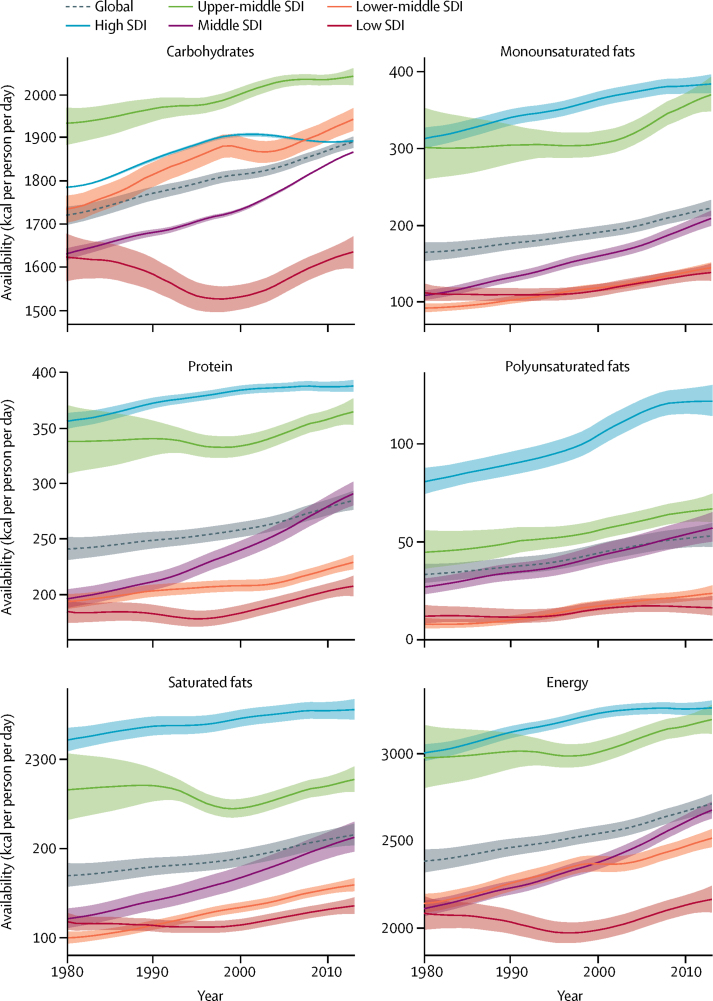
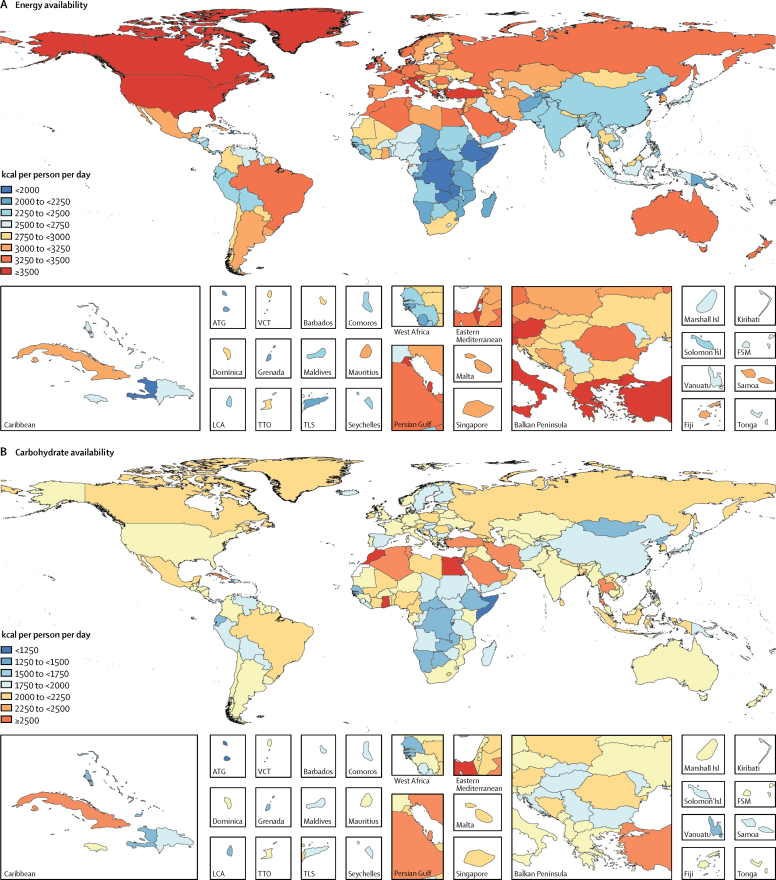
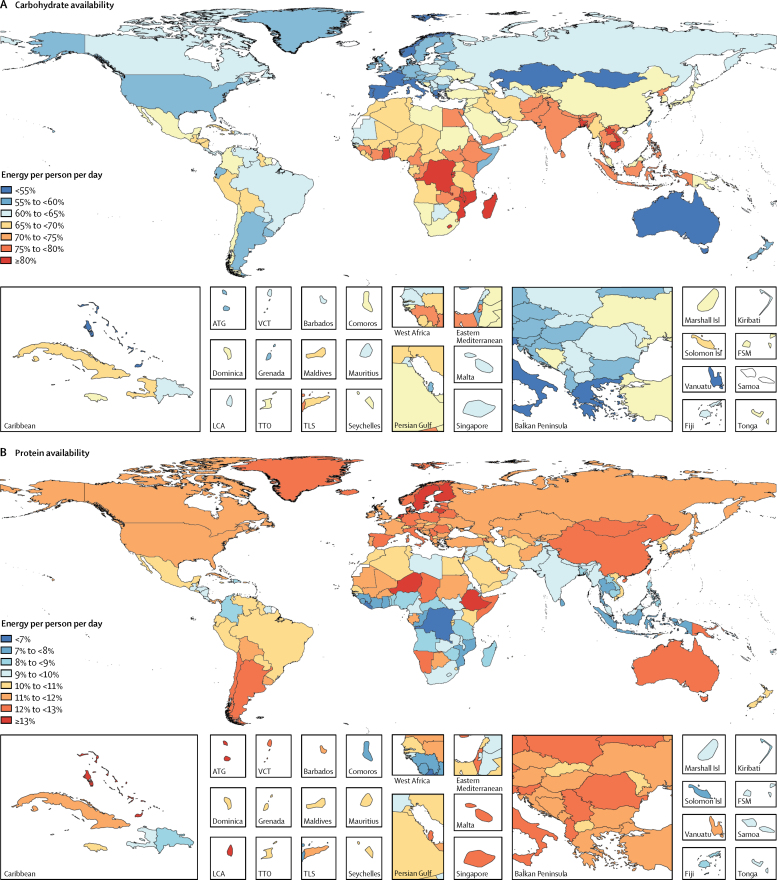
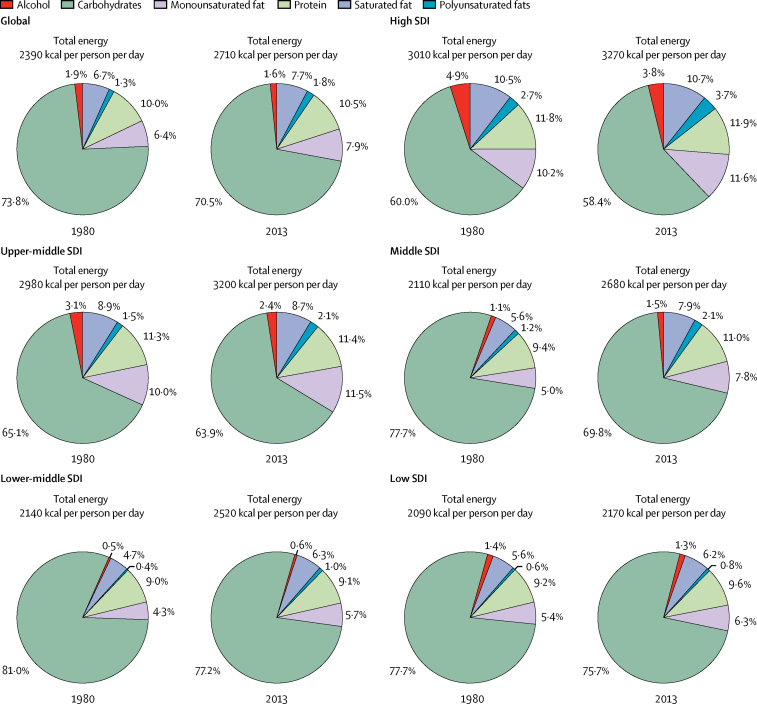
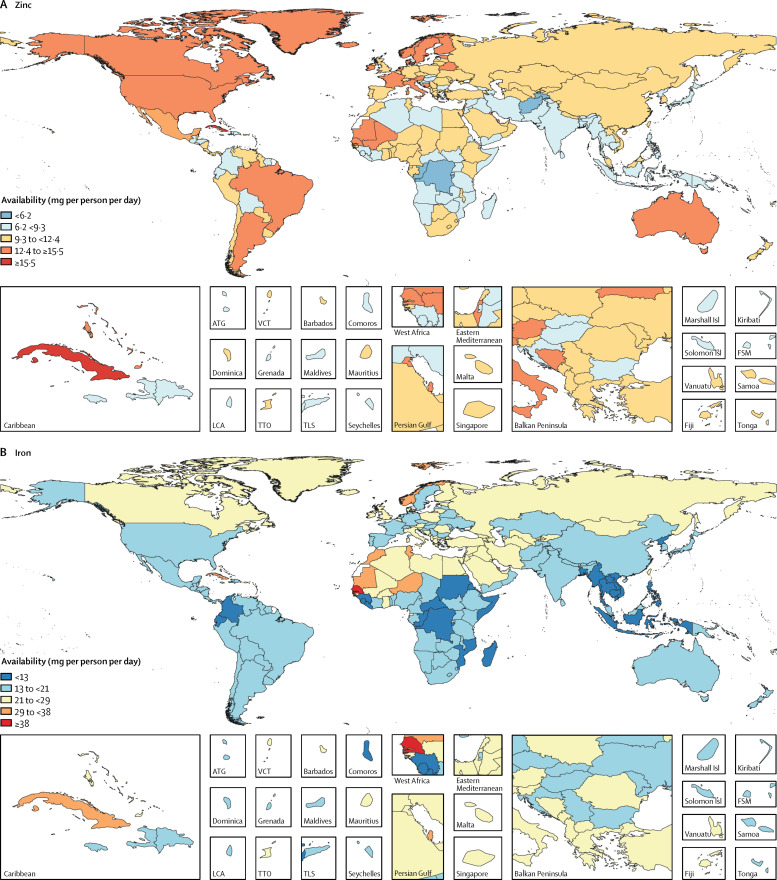
BACKGROUND: Few data are available on the supply and consumption of nutrients at the country level. To address this data gap, we aimed to create a database that provides information on availability (ie, supply) of 156 nutrients across 195 countries and territories from 1980 to 2013. METHODS: We matched 394 food and agricultural commodities from the Food and Agriculture Organization of the United Nations Supply and Utilization Accounts (SUAs) to food items in the United States Department of Agriculture Food Composition Database and obtained data on nutrient composition of the SUAs' food items. Then, after adjusting for inedible portion of each food item, we added the contributions of individual food items to the availability of each nutrient and estimated the national availability of macronutrients and micronutrients in each year. We validated our estimates by comparing our results with those of national nutrition surveys from three countries (the USA, South Korea, and Ecuador). Using dietary consumption data from the Global Burden of Disease study and two popular machine learning algorithms (Random Forest and XGBoost [extreme gradient boosting]), we developed predictive models to estimate the consumption of each nutrient based on their national availability. FINDINGS: Globally 2710 kcal (95% UI 2660-2770) were available per person per day in 2013. Carbohydrates were the major contributor to energy availability (70·5%), followed by fats (17·4%), and protein (10·5%). The energy availability and the contribution of macronutrients to total energy widely varied across levels of development. Countries at the higher level of development (high Socio-demographic Index countries) had more energy available per person per day (3270 kcal, 3220-3310); greater contributions from fats (26·0%) and proteins (11·9%) to total energy availability; and lower contributions from carbohydrate (54·8%). During 1980-2013, energy availability and the contributions of protein and fats to energy availability have increased globally and across levels of development while the contribution of carbohydrates to total energy availability has decreased. The supply of the micronutrients has also increased during the same period globally and across levels of development. Our validation analysis showed that, after accounting for waste at the retail and household level, our estimates of macronutrient availability were very close to the consumption data in nationally representative surveys. Our machine-learning models closely predicted the observed intake of nutrients with the out-of-sample correlation of greater than 0·8 between predicted and observed intake for the nutrients included in the analysis. INTERPRETATION: Our global nutrient database provides a picture of the supply of various nutrients at the country level and can be useful to assess the performance of national food systems in addressing the nutritional needs of their population. FUNDING: Bill & Melinda Gates Foundation.
Overview
The claims and statistics of this paper haven’t been checked yet.
Run the check — free, no account needed. It reads the open-access text and checks the sources it cites.
Integrity signals
Registry
Cites
Statistics
Figures
Verification
Claims the paper makes
The claims and statistics of this paper haven’t been checked yet.
Run the check — free, no account needed. It reads the open-access text and checks the sources it cites.
Claims other papers make about this one
Each is checked against this paper’s own text: does it say what the citing paper says it does?
The cited source says what the claim attributes to it.
In the citing paper
“Additionally, population‐specific differences in body composition and insulin sensitivity among Asian individuals 12 , together with dietary carbohydrate patterns 18 , 19 , may also contribute.”
Self-check
Percentages, sums and reported differences re-computed from the paper’s own numbers.
The self-check needs the paper’s full text.
Citations
Cites
Breiman, L. (2001) · Machine Learning · doi:10.1023/a:1010933404324 · Cited by 133,538
Classification and Regression by randomForest
Liaw, A. I., & Wiener, M. C. (2007) · Cited by 18,594
Forouzanfar, M. H., Afshin, A., Alexander, L. T., Anderson, H. R., Bhutta, Z. A., Biryukov, S., Brauer, M., Burnett, R., Cercy, K., Charlson, F. J., et al. (2016) · The Lancet · doi:10.1016/s0140-6736(16)31679-8 · Cited by 7,698
Self-citationLloyd-Jones, D. M., Hong, Y., Labarthe, D., Mozaffarian, D., Appel, L. J., Van Horn, L., Greenlund, K., Daniels, S., Nichol, G., Tomaselli, G. F., et al. (2010) · Circulation · doi:10.1161/circulationaha.109.192703 · Cited by 4,750
Gakidou, E., Afshin, A., Abajobir, A. A., Abate, K. H., Abbafati, C., Abbas, K. M., Abd-Allah, F., Abdulle, A. M., Abera, S. F., Aboyans, V., et al. (2017) · The Lancet · doi:10.1016/s0140-6736(17)32366-8 · Cited by 2,406
Self-citationRuel, M. T., & Alderman, H. (2013) · The Lancet · doi:10.1016/s0140-6736(13)60843-0 · Cited by 1,820
Nutrition-sensitive agriculture: What have we learned so far?
Ruel, M. T., Quisumbing, A. R., & Balagamwala, M. (2018) · Global Food Security · doi:10.1016/j.gfs.2018.01.002 · Cited by 587
Global trends in dietary micronutrient supplies and estimated prevalence of inadequate intakes
Beal, T., Massiot, E., Arsenault, J. E., Smith, M. R., & Hijmans, R. J. (2017) · PLoS ONE · doi:10.1371/journal.pone.0175554 · Cited by 441
Gobbo, L. C. D., Khatibzadeh, S., Imamura, F., Micha, R., Shi, P., Smith, M. R., Myers, S. S., & Mozaffarian, D. (2015) · American Journal of Clinical Nutrition · doi:10.3945/ajcn.114.087403 · Cited by 146
Smith, M. R., Micha, R., Golden, C. D. W., Mozaffarian, D., & Myers, S. S. (2016) · PLoS ONE · doi:10.1371/journal.pone.0146976 · Cited by 144
Cited by
Sorted by citations
Afshin, A., Sur, P. J., Fay, K. A., Cornaby, L., Ferrara, G., Salama, J. S., Mullany, E. C., Abate, K. H., Abbafati, C., Abebe, Z., et al. (2019) · The Lancet · doi:10.1016/s0140-6736(19)30041-8 · Cited by 5,811
Self-citationGlobal patterns and trends in colorectal cancer incidence in young adults
Siegel, R. L., Torre, L. A., Soerjomataram, I., Hayes, R. B., Bray, F., Weber, T. K., & Jemal, A. (2019) · Gut · doi:10.1136/gutjnl-2019-319511 · Cited by 966
Aquatic foods to nourish nations
Golden, C. D. W., Koehn, J. Z., Shepon, A., Passarelli, S., Free, C. M., Viana, D. F., Matthey, H., Eurich, J. G., Gephart, J. A., Fluet‐Chouinard, E., et al. (2021) · Nature · doi:10.1038/s41586-021-03917-1 · Cited by 656
Global patterns in excess body weight and the associated cancer burden
Sung, H., Siegel, R. L., Torre, L. A., Pearson‐Stuttard, J., Islami, F., Fedewa, S. A., Sauer, A. G., Shuval, K., Gapstur, S. M., Jacobs, E. J., et al. (2018) · CA A Cancer Journal for Clinicians · doi:10.3322/caac.21499 · Cited by 565
Food Fortification: The Advantages, Disadvantages and Lessons from Sight and Life Programs
Olson, R., Gavin-Smith, B., Ferraboschi, C., & Kraemer, K. (2021) · Nutrients · doi:10.3390/nu13041118 · Cited by 308
Metadata
- Authors
- Schmidhuber, J., Sur, P., Fay, K., Huntley, B., Salama, J., Lee, A., Cornaby, L., Horino, M., Murray, C., & Afshin, A.
- Affiliations
- Food and Agriculture Organization of the United Nations (IT)
- University of Washington (US)
- Nevada Department of Health and Human Services (US)
- Corresponding author
- Afshin, Ashkan
- ORCID
- Venue
- The Lancet Planetary Health
- Publisher
- Elsevier BV
- Published
- 2018-08
- Volume
- 2
- Issue
- 8
- Pages
- e353-e368
- ISSN
- 2542-5196 (ISSN-L)
- PMC
- PMC6076406
- OpenAlex
- W2886197746
- Cited by
- 109
- References
- 12
- Citations by year
- 2026: 3 · 2025: 13 · 2024: 15 · 2023: 26 · 2022: 13 · 2021: 23 · 2020: 9 · 2019: 6 · 2018: 1
- FWCI
- 9.15
- Type
- journal article
- Language
- en
- Open access
- gold
- doi.org
- Licence
- Locations
- The Lancet Planetary Health (publishedVersion, cc-by)
- Europe PMC (PubMed Central) (publishedVersion, cc-by)
- PubMed Central (publishedVersion, cc-by)
- PubMed (publishedVersion)
- DOAJ (DOAJ: Directory of Open Access Journals) (submittedVersion, cc-by-sa)
- Topics
- Life Sciences › Agricultural and Biological Sciences › Food Science › Agricultural and Food Production Studies
- Life Sciences › Agricultural and Biological Sciences › Food Science › Nutrition, Health, and Society Studies
- Physical Sciences › Environmental Science › Ecology › Agriculture Sustainability and Environmental Impact
- Keywords
- nutrient availability, macronutrients, micronutrients, energy availability, food supply, nutrient consumption, socio-demographic index, dietary habits, food waste, global burden of disease, food and agricultural commodities
- MeSH terms
- Nutrients, Nutrition Surveys, Global Health, Micronutrients, Databases as Topic
About these checks
Registry, retraction, Cites and statistics results are computed, not judged, with one exception: a printed reference that no index lists is read once by a model before it counts as a citation error. Claims are extracted by a model and kept only when their quote appears verbatim in the text; each cited source is then checked, with a model’s help, for whether it says what the claim relies on. Those verdicts can be wrong — read the claim’s quote and the cited source before relying on one.
Statistics and arithmetic are recomputed, not judged.
Confidence bands are shown only for fields calibrated on our annotated test set. None is calibrated yet, so no band is shown.
What counts as a claim ›How we measure confidence ›How we check this ›
Are you an author, or do you see a problem with this page? Request a review
