

Pollution and health: a progress update
Open accessThe DOI matches its Crossref record; 61 of the 61 references it cites were found in a registry or an index.
Abstract
The Lancet Commission on pollution and health reported that pollution was responsible for 9 million premature deaths in 2015, making it the world's largest environmental risk factor for disease and premature death. We have now updated this estimate using data from the Global Burden of Diseases, Injuriaes, and Risk Factors Study 2019. We find that pollution remains responsible for approximately 9 million deaths per year, corresponding to one in six deaths worldwide. Reductions have occurred in the number of deaths attributable to the types of pollution associated with extreme poverty. However, these reductions in deaths from household air pollution and water pollution are offset by increased deaths attributable to ambient air pollution and toxic chemical pollution (ie, lead). Deaths from these modern pollution risk factors, which are the unintended consequence of industrialisation and urbanisation, have risen by 7% since 2015 and by over 66% since 2000. Despite ongoing efforts by UN agencies, committed groups, committed individuals, and some national governments (mostly in high-income countries), little real progress against pollution can be identified overall, particularly in the low-income and middle-income countries, where pollution is most severe. Urgent attention is needed to control pollution and prevent pollution-related disease, with an emphasis on air pollution and lead poisoning, and a stronger focus on hazardous chemical pollution. Pollution, climate change, and biodiversity loss are closely linked. Successful control of these conjoined threats requires a globally supported, formal science-policy interface to inform intervention, influence research, and guide funding. Pollution has typically been viewed as a local issue to be addressed through subnational and national regulation or, occasionally, using regional policy in higher-income countries. Now, however, it is increasingly clear that pollution is a planetary threat, and that its drivers, its dispersion, and its effects on health transcend local boundaries and demand a global response. Global action on all major modern pollutants is needed. Global efforts can synergise with other global environmental policy programmes, especially as a large-scale, rapid transition away from all fossil fuels to clean, renewable energy is an effective strategy for preventing pollution while also slowing down climate change, and thus achieves a double benefit for planetary health.
Overview
The claims and statistics of this paper haven’t been checked yet.
Free: it reads the open-access text and checks the first 5 claims that cite a source we can check. Create a free account to check every claim.
Integrity signals
Registry
Cites
Statistics
Figures
Verification
Claims the paper makes
The claims and statistics of this paper haven’t been checked yet.
Free: it reads the open-access text and checks the first 5 claims that cite a source we can check. Create a free account to check every claim.
Claims other papers make about this one
Each is checked against this paper’s own text: does it say what the citing paper says it does?
The cited source says what the claim attributes to it.
In the citing paper
“pollution remains responsible for approximately 9 million deaths per year”
From Is Pollution the Primary Driver of Infectious Syndemics? (2024) · cites this paper as [17]
The check wasn’t confident either way, so it gives no verdict — never disputed.
In the citing paper
“Inequalities and multimodal exposomal factors were associated with accelerated aging, shedding light on prior individual reports of brain health2,26,27 and aging trajectories24,25.”
From The exposome of healthy and accelerated aging across 40 countries (2025) · cites this paper as [25]
Experimental — accuracy not yet measured
Self-check
Percentages, sums and reported differences re-computed from the paper’s own numbers.
The self-check needs the paper’s full text.
Citations
Cites
Murray, C. J. L., Aravkin, A. Y., Zheng, P., Abbafati, C., Abbas, K. M., Abbasi-Kangevari, M., Abd-Allah, F., Abdelalim, A., Abdollahi, M., Abdollahpour, I., et al. (2020) · The Lancet · doi:10.1016/s0140-6736(20)30752-2 · Cited by 9,854
Self-citationThe Lancet Commission on pollution and health
Landrigan, P. J., Fuller, R., Acosta, N. J. R., Adeyi, O., Arnold, R., Basu, N. (., Baldé, A. B., Bertollini, R., Bose-O'Reilly, S., Boufford, J. I., et al. (2018) · The Lancet · doi:10.1016/s0140-6736(17)32345-0 · Cited by 4,929
Self-citationThe Next Generation of the Penn World Table
Feenstra, R. C., Inklaar, R., & Timmer, M. P. (2015) · American Economic Review · doi:10.1257/aer.20130954 · Cited by 4,799
Evidence-based health policy—lessons from the Global Burden of Disease Study
Murray, C. J. L., & Lopez, A. D. (1996) · Science · doi:10.1126/science.274.5288.740 · Cited by 2,178
Neurobehavioural effects of developmental toxicity
Grandjean, P., & Landrigan, P. J. (2014) · The Lancet Neurology · doi:10.1016/s1474-4422(13)70278-3 · Cited by 1,886
Self-citationTemporal trends in sperm count: a systematic review and meta-regression analysis
Levine, H., Jørgensen, N., Martino-Andrade, A., Mendiola, J., Weksler-Derri, D., Mindlis, I., Pinotti, R., & Swan, S. H. (2017) · Human Reproduction Update · doi:10.1093/humupd/dmx022 · Cited by 1,374
Transboundary health impacts of transported global air pollution and international trade
Zhang, Q., Jiang, X., Tong, D., Davis, S. J., Zhao, H., Geng, G., Feng, T., Zheng, B., Lu, Z., Streets, D. G., et al. (2017) · Nature · doi:10.1038/nature21712 · Cited by 1,056
Self-citationGlobal anthropogenic emissions of particulate matter including black carbon
Klimont, Z., Kupiainen, K., Heyes, C., Purohit, P., Cofala, J., Rafaj, P., Borken-Kleefeld, J., & Schöpp, W. (2017) · Atmospheric Chemistry and Physics · doi:10.5194/acp-17-8681-2017 · Cited by 878
Pandey, A., Brauer, M., Cropper, M. L., Balakrishnan, K., Mathur, P., Dey, S., Turkgulu, B., Kumar, G. A., Khare, M., Beig, G., et al. (2021) · The Lancet Planetary Health · doi:10.1016/s2542-5196(20)30298-9 · Cited by 731
Self-citationChowdhury, R., Ramond, A., O’Keeffe, L. M., Shahzad, S., Kunutsor, S. K., Muka, T., Gregson, J., Willeit, P., Warnakula, S., Khan, H., et al. (2018) · BMJ · doi:10.1136/bmj.k3310 · Cited by 638
Research works printed but not linked: 2
- 24. The Intergovernmental Panel on Climate Change. Cambridge University Press; 2021. Climate Change 2021: the physical science basis: contribution of working group I to the sixth assessment report of the intergovernmental panel on climate change. https://www.ipcc.ch/report/ar6/wg1/#FullReport
- 77. Téllez-Rojo MM, Bautista-Arredondo LF, Trejo-Valdivia B, et al. Reporte nacional de niveles de plomo en sangre y uso de barro vidriado en población infantil vulnerable. Salud Publica Mex. 2019;61:787–797. doi: 10.21149/10555. · DOI
Cited by
Items 501–600 of 1,001
Emerging Designs and Applications for Biomembrane Biosensors
Selivanovitch, E., Ostwalt, A. R., Chao, Z., & Daniel, S. (2024) · Annual Review of Analytical Chemistry · doi:10.1146/annurev-anchem-061622-042618 · Cited by 13
Leontjevaite, K., Donnelly, A. A., & Macintyre, T. E. (2024) · Air · doi:10.3390/air2030016 · Cited by 13
“…PM 2.5 concentrations above 35 µ g/m 3 (the lowest of the three WHO interim target levels required) [77,80], primarily due to industrial activity, which has increased airborne pollutants in places near Japan, South Korea, and Taiwan, as well as in places as far away as California in the USA [83].”
InfluentialChronic maternal exposure to low-dose PM2.5 impacts cognitive outcomes in a sex-dependent manner
Oliver, B. G. G., Huang, X., Yarak, R. A., Bai, X., Wang, Q., Zakarya, R., Reddy, K. V. V. S. N., Donovan, C., Kim, R., Morkaya, J., et al. (2024) · Environment International · doi:10.1016/j.envint.2024.108971 · Cited by 15
de Foy, B., Edwards, R., Joy, K. S., Zaman, S. U., Salam, A., & Schauer, J. J. (2024) · Atmospheric Research · doi:10.1016/j.atmosres.2024.107656 · Cited by 14
Zaid, M. H. M., & Basu, D. (2024) · Environmental Monitoring and Assessment · doi:10.1007/s10661-024-13267-w · Cited by 13
“In 2019, pollution was responsible for approximately 9 million premature deaths worldwide, with air pollution alone accounting for the highest number of fatalities at 6.7 million (Fuller et al., 2022).”
InfluentialRe-thinking the link between exposure to mercury and blood pressure
Hu, X. F., Loan, A., & Chan, H. M. (2025) · Archives of Toxicology · doi:10.1007/s00204-024-03919-8 · Cited by 17
“It is likely that their contribution has been underestimated (Fuller et al. 2022).”
Confronting the interconnection of chemical pollution and climate change
Bălan, S. A., van Bergen, S. K., Blake, A., Buck, T., Coffin, S., DeWitt, J. C., Goldenman, G., von Hippel, F. A., von Hippel, S. T., Leonetti, C. P., et al. (2025) · Environmental Innovation and Societal Transitions · doi:10.1016/j.eist.2025.100966 · Cited by 14
Sun, B., Sun, X., Chen, W., Zhou, Y. T., Zhang, W., Nie, Q., Lin, X., Li, Y., & Liu, Y. (2025) · Colloids and Surfaces A Physicochemical and Engineering Aspects · doi:10.1016/j.colsurfa.2025.136384 · Cited by 14
Semiautomated Production of Cell-Free Biosensors
Brown, D. M., Phillips, D. A., Garcia, D. C., Arce, A., Lucci, T. J., Davies, J. P., Mangini, J. T., Rhea, K. A., Bernhards, C. B., Biondo, J. R., et al. (2025) · ACS Synthetic Biology · doi:10.1021/acssynbio.4c00703 · Cited by 13
He, K., Xu, Z., Xu, J., & Gong, G. (2025) · BMC Public Health · doi:10.1186/s12889-025-22466-0 · Cited by 13
“In 2019, this number increased to 2.3 million [7].”
InfluentialDeng, Y., Li, Z., Zhang, P., Yang, Y., Xie, Y., Cheng, Y., Yu, S., Zhu, G., Han, L., Jia, L., et al. (2025) · Journal of Environmental Management · doi:10.1016/j.jenvman.2025.126216 · Cited by 13
Bringing soil chemistry to environmental health science to tackle soil contaminants
Duckworth, O. W., Polizzotto, M. L., & Thompson, A. (2022) · Frontiers in Environmental Science · doi:10.3389/fenvs.2022.981607 · Cited by 12
“Exposure to pollution has real consequences, causing an estimated nine million human deaths in 2015 alone (Fuller et al., 2022).”
BackgroundFabrication of Na 0.4 MnO 2 Microrods for Room-Temperature Oxidation of Sulfurous Gases
Gupta, N. K., Achary, S. N., Viltres, H., Bae, J., & Kim, K. S. (2022) · ACS Omega · doi:10.1021/acsomega.2c04773 · Cited by 12
Sex-Dependent Responses to Maternal Exposure to PM2.5 in the Offspring
Chen, H., van Reyk, D. M., Oliveira, A., Chan, Y. L., Town, S. E. L., Rayner, B. S., Pollock, C. A., Saad, S., George, J., Padula, M. P., et al. (2022) · Antioxidants · doi:10.3390/antiox11112255 · Cited by 13
Cui, P.-Y., Yang, F., Wang, J., Chen, W., Huang, Y., & Tao, W.-Q. (2022) · Building and Environment · doi:10.1016/j.buildenv.2022.109949 · Cited by 12
Hachicha, A. A., Abo-Zahhad, E. M., Oh, S., Issa, S., & Rahman, S. M. A. (2023) · Applied Thermal Engineering · doi:10.1016/j.applthermaleng.2023.120271 · Cited by 12
A pair of cadmium-exposed zebrafish affect social behavior of the un-exposed majority
Shelton, D. S., Dinges, Z. M., Khemka, A., Sykes, D. J., Suriyampola, P. S., Shelton, D. E. P., Boyd, P., Kelly, J. R., Bower, M. E., Amro, H., et al. (2023) · Environmental Toxicology and Pharmacology · doi:10.1016/j.etap.2023.104119 · Cited by 13
Self-citationLi, C., Xia, Y., & Wang, L. (2023) · Environmental Science and Pollution Research · doi:10.1007/s11356-023-27676-w · Cited by 13
“For example, studies have highlighted the adverse effects of atmosphere pollution on human health (Fuller et al. 2022).”
Public health and nuclear winter: addressing a catastrophic threat
Vilhelmsson, A., & Baum, S. D. (2023) · Journal of Public Health Policy · doi:10.1057/s41271-023-00416-7 · Cited by 11
“Data on nuclear winter may be scarce, but insight could be obtained adapting prior research on other environmental threats such as climate change [32] and pollution [33].”
Circulating Exosomes and Ambient Air Pollution Exposure in COPD.
Soleimanifar, N., Assadiasl, S., Kalateh, E., Hassanvand, M. S., Sadr, M., Mojtahedi, H., Nadafi, K., Nicknam, M. H., & Edalatifard, M. (2023) · Chronic obstructive pulmonary diseases · doi:10.15326/jcopdf.2023.0400
“Air pollution is one of the most challenging health concerns, particularly in developing countries, reported to be associated with almost 7 million premature deaths annually and inflammatory disease exacerbation (4, 5).”
Yang, B., Wiser, F. C., McNeill, V. F., Fiore, A. M., Tao, M., Henze, D. K., Sen, S., & Westervelt, D. M. (2023) · Environmental Science Atmospheres · doi:10.1039/d3ea00121k · Cited by 12
Green Plants as a Sustainable Solution to Air Pollution
Joshi, N., Gupta, C. K., Mangla, Y., & Chowdhuri, A. (2023) · International Journal of Plant and Environment · doi:10.18811/ijpen.v9i02.02 · Cited by 14
Anakhu, E. A., Ameh, V. I., Modekwe, H. U., Ayeleru, O. O., & Ramatsa, I. M. (2023) · Environmental Functional Materials · doi:10.1016/j.efmat.2024.02.002 · Cited by 18
Işınkaralar, Ö., Świsłowski, P., Işınkaralar, K., & Rajfur, M. (2024) · Environmental Monitoring and Assessment · doi:10.1007/s10661-024-12696-x · Cited by 12
“…within the air quality under the influence of various anthropogenic, natural, organic, or inorganic pollutants, potentially toxic metals have come to the forefront, posing a potential danger to human and environmental health via variability sources (Fuller et al., 2022; Nieder & Benbi, 2023).”
Jovičić-Bata, J., Sazdanić-Velikić, D., Ševo, M., Milanović, M., Tubić, T., Bijelović, M., Milošević, N., & Milić, N. (2025) · Cancers · doi:10.3390/cancers17050864 · Cited by 14
“Air pollution is responsible for 6.7 million global deaths per year, primarily affecting people in low-and middle-income countries [54,55].”
InfluentialNurunnahar, S., Islam, M. S., & Rahman, M. M. (2022) · Public Health Challenges · doi:10.1002/puh2.43 · Cited by 11
Occupational exposure to pesticides: DNA damage in horticulturist from Nativitas, Tlaxcala in Mexico
Sánchez-Alarcón, J., Milić, M., Bonassi, S., Gómez‐Arroyo, S., Cortés‐Eslava, J., Flores-Márquez, A. R., Valencia-Sánchez, R. A., & Quintana, R. V. (2023) · Environmental Toxicology and Pharmacology · doi:10.1016/j.etap.2023.104141 · Cited by 11
Bhat, M. A., Mishra, A. K., Jan, S., Shah, S. A., Asgher, M., Rahman, S., & Jan, A. T. (2023) · South African Journal of Botany · doi:10.1016/j.sajb.2023.09.043 · Cited by 13
Santos, O. P. D., Verloo, H., Joost, S., & Melly, P. (2023) · International Journal of Environmental Research and Public Health · doi:10.3390/ijerph20206963 · Cited by 11
“Of all the unwanted waste of human origin released into the air, land, water, and oceans [9], particulate matter (PM), nitrogen dioxide (NO 2 ), ground-level ozone (O 3 ), and sulfur dioxide (SO 2 ) are the pollutants with the greatest impacts on human health [10].”
BackgroundEnvironmental Impact of a Direct Laryngoscopy: Opportunities for Pollution Mitigation
Filley, G. I., Kayastha, D., Hayes, W., Mehra, S., Sherman, J. D., & Eckelman, M. J. (2024) · The Laryngoscope · doi:10.1002/lary.31341 · Cited by 12
Xie, T., Wang, Y., & Yuan, Y. (2024) · Environmental and Resource Economics · doi:10.1007/s10640-024-00860-3 · Cited by 14
Glover, S., Hill, C., McGuinness, B., McKnight, A. J., & Hunter, R. F. (2024) · Cities & Health · doi:10.1080/23748834.2024.2335707 · Cited by 16
“2019, Fuller et al .”
The association between ambient air pollution and colorectal cancer: a Mendelian randomization study
Xu, X., Zhang, L., An, Y., Han, H., Chen, R., Zhang, M., Li, Y., & Zhang, S. (2024) · International Journal of Environmental Health Research · doi:10.1080/09603123.2024.2361453 · Cited by 13
“Almost 90% of the global population was exposed to air pollution in 2019, resulting in approximately 6.7 million deaths (Fuller et al. 2022), ranking as one of the top ten leading causes of premature mortality worldwide (Gbdrf 2020).”
InfluentialMahmud, H., Shobnom, K., Ali, M. S., Muntakim, N., Kulsum, U., Baroi, D. S., Ahmed, Z., Rahman, M. M., & Hassan, M. Z. (2024) · Management of Environmental Quality An International Journal · doi:10.1108/meq-08-2023-0265 · Cited by 11
Waste reutilization in pollution remediation: Paving new paths for wastewater treatment
Suresh, D., Goh, P. S., Kang, H. S., Ahmad, M. N., & Ismail, A. F. (2024) · Journal of environmental chemical engineering · doi:10.1016/j.jece.2024.113570 · Cited by 13
Bastian, M. (2024) · Environmental Humanities · doi:10.1215/22011919-11150043 · Cited by 18
The need for individualization: An open innovation perspective on the case for customized products
Padual, S. R. M., Ong, A. K. S., German, J. D., & Gumasing, M. J. J. (2024) · Acta Psychologica · doi:10.1016/j.actpsy.2024.104473 · Cited by 20
Zyoud, S. H., & Zyoud, A. H. (2024) · Discover Sustainability · doi:10.1007/s43621-024-00499-6 · Cited by 17
Borroni, E., Buoli, M., Nosari, G., Ceresa, A., Fedrizzi, L., Antonangeli, L. M., Monti, P., Bollati, V., Pesatori, A. C., & Carugno, M. (2024) · European Psychiatry · doi:10.1192/j.eurpsy.2024.1767 · Cited by 14
“Most subjects were of normal weight, never smokers, employed, recruited during outpatient visits, and had a high school degree, with no substantial differences between men and women.”
BackgroundHealth benefits of air pollution reduction: Evidence from economic slowdown in India
Kyrychenko, O. (2024) · Economics & Human Biology · doi:10.1016/j.ehb.2024.101437 · Cited by 12
How centralizing environmental enforcement affects water quality: A quasi-experiment in China
Tang, Y., Liu, Z., Walker, T. R., Rodenbiker, J., Li, Y., & Liu, W. (2024) · Environmental Impact Assessment Review · doi:10.1016/j.eiar.2024.107704 · Cited by 12
Mapping Spatiotemporal Disparities in Residential Electricity Inequality Using Machine Learning
Ying, Y., Li, X., Hsu, A., & Kittner, N. (2024) · Environmental Science & Technology · doi:10.1021/acs.est.4c06093 · Cited by 13
Chen, Y., Dong, G., Li, S., Liu, Y., Li, S., Guo, Y., Wang, C., & Chen, G. (2024) · Journal of Hazardous Materials · doi:10.1016/j.jhazmat.2024.136433 · Cited by 13
Garber, M. D., Benmarhnia, T., Mason, J., Morales-Zamora, E., & Rojas‐Rueda, D. (2024) · Current Environmental Health Reports · doi:10.1007/s40572-024-00465-4 · Cited by 22
Donzelli, G., Gehring, R., Murugadoss, S., Roos, T., Schaffert, A., & Linzalone, N. (2024) · Reviews on Environmental Health · doi:10.1515/reveh-2024-0072 · Cited by 11
Lederer, A., Görrissen, N., Nguyen, T. T., Kreutz, C., Rasel, H., Bartsch, F., Lang, H., & Endres, K. (2025) · Journal of Translational Medicine · doi:10.1186/s12967-024-06012-x · Cited by 12
Umair, A., Baig, M. M., Yousaf, S., Touqeer, M., Hassan, M., Ahmad, A., Kim, J., Ju, H., & Lee, S. G. (2025) · Journal of Water Process Engineering · doi:10.1016/j.jwpe.2025.107019 · Cited by 11
Yang, Y., Ouyang, L., Wú, Z., Jiang, Q. M., & Qiao, R. (2025) · Journal of Cleaner Production · doi:10.1016/j.jclepro.2025.144813 · Cited by 11
Environmental exposure assessment in the German National Cohort (NAKO)
Wolf, K., Dallavalle, M., Niedermayer, F., Bolte, G., Lakes, T., Schikowski, T., Greiser, K. H., Schwettmann, L., Westerman, R., Nikolaou, N., et al. (2025) · Environmental Research · doi:10.1016/j.envres.2025.121259 · Cited by 12
How Do Health System Features Influence Health System Performance?
OECD (2025) · OECD eBooks · doi:10.1787/7b877762-en · Cited by 23
Lee, W. K., Wan, H. T., CHENG, Z., Wing Yee, C. H. A. N., Lam, T. K. Y., Lai, K. P., Wang, J., Cai, Z., & Wong, C. K. C. (2025) · Environmental Science & Technology · doi:10.1021/acs.est.5c02623 · Cited by 12
Physical Activity, Air Pollution, and Mortality: A Systematic Review and Meta-analysis
Martin, L., Nasir, H., Bagheri, R., Ugbolue, U. C., Laporte, C., Baker, J. S., Gu, Y., Žák, M., Duclos, M., & Dutheil, F. (2025) · Sports Medicine - Open · doi:10.1186/s40798-025-00830-z · Cited by 16
“Pollution is responsible for one in six deaths worldwide [1], and is considered by the World Health Organization (WHO) as one of the main public issues facing the 21st century [2].”
Leuthold, D., Herold, N. K., Nerlich, J., Bartmann, K., Scharkin, I., Hallermann, S., Schweiger, N., Fritsche, E., & Tal, T. L. (2025) · Environmental Health Perspectives · doi:10.1021/ehp.6c00394 · Cited by 11
Low-Cost Source Apportionment (LoCoSA) of air pollution - literature review of the state of the art
Bousiotis, D., Ademi, L., Sanghera, D. S., Tinker, D., & Pope, F. D. (2025) · The Science of The Total Environment · doi:10.1016/j.scitotenv.2025.180257 · Cited by 11
Barreto, J. R., Palmeirim, A. F., Sangermano, F., Carrasco‐Rueda, F., de Thoisy, B., González‐Chaves, A., Grillet, M. E., Morpurgo-Dest, V., Galarza, F. E. R., Rodriguez, A., et al. (2025) · Communications Earth & Environment · doi:10.1038/s43247-025-02620-7 · Cited by 13
“In fact, pollution was responsible for 9 million premature deaths in 2015 globally, being the largest environmental risk for disease 57 .”
InfluentialSelection of additives to improve the efficiency of NOx and SO2 treatment in electron beam process
Seo, S. H., Jo, S.-H., Oh, Y.-H., Kim, T., & Son, Y. (2022) · Journal of environmental chemical engineering · doi:10.1016/j.jece.2022.108849 · Cited by 11
Novel application of sodium manganese oxide in removing acidic gases in ambient conditions
Gupta, N. K., Achary, S. N., Viltres, H., Bae, J., & Kim, K. S. (2023) · Scientific Reports · doi:10.1038/s41598-023-29274-9 · Cited by 11
Su, Z., Yang, Y., Wang, Y., Zhang, P., & Luo, X. (2023) · International Journal of Environmental Research and Public Health · doi:10.3390/ijerph20053994 · Cited by 14
“The relevant research reveals that haze pollution has a negative environmental impact on residents’ health [4], urban crime rates [5], personal well-being [6], regional innovation vitality [7], and so forth.”
BackgroundNiu, J., Wang, Z., Wang, X., & Ran, F. (2023) · Journal of Materials Science Materials in Electronics · doi:10.1007/s10854-023-09994-4 · Cited by 11
D’Amico, G., Santonocito, R., Vitale, A. M., Scalia, F., Marino, A., Campanella, C., Bucchieri, F., Cappello, F., & Bavisotto, C. C. (2023) · Cells · doi:10.3390/cells12111498 · Cited by 12
Akhtar, N., Aslam, Z., SHAWABKEH, R. A., Baig, N., Aslam, U., Ihsanullah, I., & Khan, S. (2023) · Environmental Science and Pollution Research · doi:10.1007/s11356-023-27671-1 · Cited by 11
“4 million premature deaths in 2019 (Fuller et al. 2022).”
Li, S., Wei, G., Liu, Y., & Bai, L. (2023) · Remote Sensing · doi:10.3390/rs15133356 · Cited by 11
Diao, Q., Qin, X., Hu, N., Ling, Y., Hua, Q., Li, M., Li, X., Zhou, H., Liu, Y., Zeng, H., et al. (2023) · Environmental Pollution · doi:10.1016/j.envpol.2023.122299 · Cited by 10
Ríos, B., Esteban, Y. D., & de Raga, G. B. (2023) · The Science of The Total Environment · doi:10.1016/j.scitotenv.2023.166912 · Cited by 12
Modelling concentration heterogeneities in streets using the street-network model MUNICH
Sarica, T., Maison, A., Roustan, Y., Ketzel, M., Jensen, S. S., Kim, Y., Chaillou, C., & Sartelet, K. (2023) · Geoscientific model development · doi:10.5194/gmd-16-5281-2023 · Cited by 11
“This figure remains valid in 2019 despite an improvement in the types of pollution associated with extreme poverty (e.g. household air pollution and water pollution) (Fuller et al., 2022).”
Offshoring emissions through used vehicle exports
Newman, S., Schulte, K., Morellini, M. M., Rahal, C., & Leasure, D. R. (2024) · Nature Climate Change · doi:10.1038/s41558-024-01943-1 · Cited by 14
“These impacts fall unequally on lower-middle income countries (LMICs, [3]) which suffer more overall and per-capita pulmonary deaths from air pollution [7, 13, 15] and stand to suffer the greatest impacts from climate change [16].”
BackgroundKlompmaker, J. O., Hart, J. E., Dominici, F., James, P., Roscoe, C., Schwartz, J. D., Yanosky, J. D., Zanobetti, A., & Laden, F. (2024) · The Science of The Total Environment · doi:10.1016/j.scitotenv.2024.171866 · Cited by 11
Normative power in the planetary organic crisis
Manners, I. (2024) · Cooperation and Conflict · doi:10.1177/00108367241244954 · Cited by 14
Smart city and green innovation: Mechanisms and industrial emission reduction effect
Sun, Q. (2024) · Heliyon · doi:10.1016/j.heliyon.2024.e30115 · Cited by 16
“Overindulgence in pollutants can harm the healing capacity of the environment and public health [1,2].”
BackgroundEnvironmental Health: Translating Policy Into Action
Senay, E., & Hantel, A. (2022) · Annals of Internal Medicine · doi:10.7326/m22-2808 · Cited by 11
“Worldwide, pollution is responsible for an estimated 9 million deaths annually (5).”
BackgroundCancer and Environmental Xenobiotics: Mechanisms, Controversies, and Innovations
Mafe, A. N., & Büsselberg, D. (2025) · Journal of Xenobiotics · doi:10.3390/jox16010002 · Cited by 13
“In particular, the scarcity of region-specific toxicological and epidemiological data in low-and middle-income countries (LMICs) has created major blind spots in risk assessment and policy formulation, thereby limiting global understanding of environmental carcinogenesis [6,7].”
Fears, R., Holzeis, C. C., Caussy, D., Harper, S. L., Hoe, V. C. W., McNeil, J. N., Mogwitz, J., ter Meulen, V., & Haines, A. (2023) · Global Policy · doi:10.1111/1758-5899.13210 · Cited by 11
“There is an additional burden of about 2.3 m annual household air pollution deaths from burning solid fuels and kerosene indoors (Fuller et al., 2022), There is evidence that some constituents of PM 2.5 such as black carbon may be more toxic than other constituents.”
InfluentialBaheti, B., Chen, G., Ding, Z., Wu, R., Zhang, C., Zhou, L., Liu, X., Song, X., & Wang, C. (2023) · Environmental Research · doi:10.1016/j.envres.2023.116862 · Cited by 11
Eff-AQI: An Efficient CNN-Based Model for Air Pollution Estimation: A Study Case in India
Utomo, S., Rouniyar, A., Jiang, G. H., Chang, C. H., Tang, K. C., Hsu, H.-C., & Hsiung, P. (2023) · International Conference on Information Technology for Social Good (GoodIT) · doi:10.1145/3582515.3609531 · Cited by 10
“5 million are attributable to air pollution [12].”
Cains, M. G., Desrousseaux, A. O. S., Boxall, A. B. A., Molander, S., Molina‐Navarro, E., Sussams, J., Critto, A., Stahl, R. G., & Rother, H. (2023) · Integrated Environmental Assessment and Management · doi:10.1002/ieam.4872 · Cited by 10
“While the chemicals industry has brought large bene fi ts to modern lives (e.g., advances in the devel - opment of medicines, detergents, lubricants, and cos - metics), the use of chemicals has the potential to negatively impact the natural environment and human health (Fuller et al., 2022).”
BackgroundFeng, H., Yang, Y., Ye, H., Xu, J., Zhao, M., Jin, Y., & Zhang, S. (2024) · Toxics · doi:10.3390/toxics12060381 · Cited by 10
“Due to the increasing burden from IS, COPD and DM, it is crucial to identify key risk factors to prevent premature deaths from these NCDs. Air pollution was responsible for 6.7 million deaths in 2019 globally [7].”
BackgroundInfluentialWater Pollution: Causes, Impacts, and Solutions: a critical review
Baba, D. F. A. M. (2024) · Mağallaẗ al-ʿulūm wa-al-dirāsāt al-insāniyyaẗ. · doi:10.37376/jsh.vi76.5785 · Cited by 10
“By addressing water pollution, we can protect these economic sectors, promote sustainable tourism, and maintain the productivity of fisheries, thereby preserving jobs and supporting local economies [17], [18], [19], [20], [21], [22], [23], [24], [25].”
BackgroundInfluentialLi, Z., Wu, W., Huang, Y., Lawrence, W. R., Shao, L., Du, Z., Wang, Y., Hu, S., Hao, Y., & Zhang, W. (2024) · Environmental Pollution · doi:10.1016/j.envpol.2024.124704 · Cited by 12
Wang, H., Zhu, Z., Benmarhnia, T., Chen, X., Jalaludin, B. B., Wulayin, M., Huang, C., Zhang, T., Xu, L., & Wang, Q. (2024) · Environment International · doi:10.1016/j.envint.2024.108951 · Cited by 10
Host-associated microbes mitigate the negative impacts of aquatic pollution
Diner, R. E., Allard, S. M., & Gilbert, J. A. (2024) · mSystems · doi:10.1128/msystems.00868-24 · Cited by 15
“A recent study estimated pollution is responsible for approxi mately 9 million human deaths per year, corresponding to one in six deaths worldwide (11), with pollution strongly impacting low-and middle-income countries.”
BackgroundKazemi, Z., Yunesian, M., Hassanvand, M. S., Daroudi, R., Ghorbani, A., & Sefiddashti, S. E. (2024) · Ecotoxicology and Environmental Safety · doi:10.1016/j.ecoenv.2024.117158 · Cited by 10
Fine particulate matter‑induced cardiac developmental toxicity (Review)
Meng, X., Du, W., & Sun, Z. (2024) · Experimental and Therapeutic Medicine · doi:10.3892/etm.2024.12756 · Cited by 11
“In 2019, environmental air pollution caused ~7 million deaths worldwide (252).”
Direct environmental pollution from solid waste
Bano, A. (2024) · Elsevier eBooks · doi:10.1016/b978-0-443-22356-3.00011-7 · Cited by 11
Bao, Y.-B., Fang, X., Cheng, Y., Cui, D., Liu, H., & Xiang, P. (2024) · Critical Reviews in Environmental Science and Technology · doi:10.1080/10643389.2024.2429241 · Cited by 10
“On the other hand, DEDs are often cured by antioxidant drugs, and regenerative cerium oxide nanoparticles remove ROS to ameliorate corneal epithelial defects, and add the number of goblet cells (Fuller et al., 2022).”
Bradley, P. M., Romanok, K. M., Smalling, K. L., Gordon, S. E., Huffman, B. J., Friedman, K. P., Villeneuve, D. L., Blackwell, B. R., Fitzpatrick, S. C., Focazio, M. J., et al. (2024) · Environment International · doi:10.1016/j.envint.2024.109220 · Cited by 11
“…effects and concomitant underestimation of the corresponding contribution to the global–disease burden, anthropogenic–contaminant exposures have been identified as the largest environmental cause of disease and premature death in the world today (Fuller et al., 2022; Landrigan et al., 2018).”
Annual Research Review: Micronutrients and their role in the treatment of paediatric mental illness
Rucklidge, J. J., Bruton, A. M., Welsh, A., Ast, H. K., & Johnstone, J. M. (2024) · Journal of Child Psychology and Psychiatry · doi:10.1111/jcpp.14091 · Cited by 13
Vojtíšek-Lom, M., Dittrich, L., Pechout, M., Červená, T., Vimrova, A., Sikorová, J., Závodná, T., Ondráček, J., Aakko-Saksa, P. T., Topinka, J., et al. (2024) · The Science of The Total Environment · doi:10.1016/j.scitotenv.2024.178010 · Cited by 10
Plaß, D., Beloconi, A., Bessems, J. G. M., Buekers, J., Kienzler, S., Martínez, G. S., Purece, A., & Vounatsou, P. (2025) · Environmental Research · doi:10.1016/j.envres.2025.120828 · Cited by 12
Sanganyado, E. (2025) · Environmental Chemistry and Ecotoxicology · doi:10.1016/j.enceco.2025.02.002 · Cited by 11
Fullerton, J. M., & Tesfaye, M. (2025) · Biological Psychiatry · doi:10.1016/j.biopsych.2025.02.008 · Cited by 11
“Overall exposure to pollutants may contribute to the exposome impacting BD, particularly in countries where environmental pollution is a growing concern (148).”
Du, Y., Xu, Y., Hou, J., Li, X., Yang, J., Yang, J., Shan, S., Wang, C., & Su, H. (2025) · Separation and Purification Technology · doi:10.1016/j.seppur.2025.132098 · Cited by 10
Schölin, L., Petticrew, M. P., Collin, J., Knipe, D. W., Barry, R. A., Eddleston, M., Gunnell, D., Pearson, M., & van Schalkwyk, M. C. (2025) · Health Promotion International · doi:10.1093/heapro/daaf001 · Cited by 12
Air Pollution Monitoring Using Cost-Effective Devices Enhanced by Machine Learning
Colléaux, Y., Willaume, C., Mohandes, B., Nebel, J., & Rahman, F. (2025) · Sensors · doi:10.3390/s25051423 · Cited by 10
“According to the World Health Organization, air pollution is responsible for nearly 7 million premature deaths yearly and is the second highest risk factor for noncommunicable diseases [5–11].”
Abalo‐García, A., Hernández-García, S., Ramírez, I., & Schiavi, E. (2025) · IEEE Access · doi:10.1109/access.2025.3547038 · Cited by 10
“Air pollution is also related to climate change, since many of the polluting particles are greenhouse gases [11].”
AhR and STAT3: A Dangerous Duo in Chemical Carcinogenesis
Minacori, M., Fiorini, S., Perugini, M., Iannetta, A., Meschiari, G., Chichiarelli, S., Fabio Altieri, F., Natali, P. G., & Eufemi, M. (2025) · International Journal of Molecular Sciences · doi:10.3390/ijms26062744 · Cited by 13
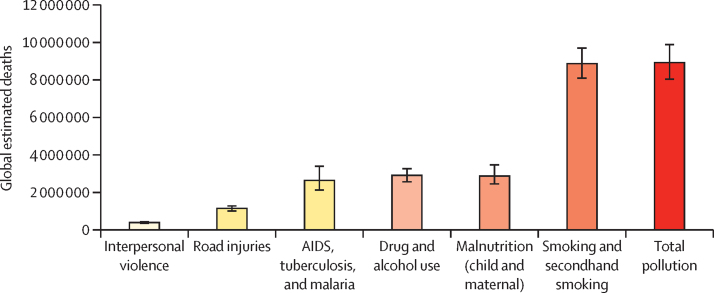
“This figure is three times greater than the combined mortality caused by AIDS, tuberculosis, and malaria [83].”
Nursing Research on the United Nations Sustainable Development Goals—A Bibliometric Analysis
Holmberg, C., & Åhlström, L. (2025) · Journal of Advanced Nursing · doi:10.1111/jan.16953 · Cited by 10
“However, when the environment becomes contaminated or polluted, it can have detrimental effects on both short-and long-term health outcomes (Fuller et al. 2022).”
Innate immunity of the lungs in homeostasis and disease
Norris, P. A. A., & Kubes, P. (2025) · Mucosal Immunology · doi:10.1016/j.mucimm.2025.04.001 · Cited by 14
Panda, U., Dey, S., Sharma, A., Singh, A., Reyes‐Villegas, E., Darbyshire, E., Carbone, S., Das, T., Allan, J., McFiggans, G. B., et al. (2025) · Scientific Reports · doi:10.1038/s41598-025-99245-9 · Cited by 11
Shima, M. (2025) · Environmental Health and Preventive Medicine · doi:10.1265/ehpm.25-00020 · Cited by 10
“There are various air pollutants, including particulate matter (PM), carbon monoxide (CO), ozone (O 3 ), nitrogen dioxide (NO 2 ), and sulfur dioxide (SO 2 ), in atmospheric environment [1].”
Establishing a nation-wide eco-environment monitoring network for sustainable governance
Zhang, D. (2025) · Environmental Science and Ecotechnology · doi:10.1016/j.ese.2025.100585 · Cited by 10
“Air and water pollution remain acute worldwide, causing millions of premature deaths each year and impeding progress toward the United Nations Sustainable Development Goals (SDGs) related to clean air and water [1].”
Metadata
- Authors
- Fuller, R., Landrigan, P. J., Balakrishnan, K., Bathan, G., Bose-O'Reilly, S., Brauer, M., Caravanos, J., Chiles, T., Cohen, A., Corra, L., Cropper, M., Ferraro, G., Hanna, J., Hanrahan, D., Hu, H., Hunter, D., Janata, G., Kupka, R., Lanphear, B., Lichtveld, M., Martin, K., Mustapha, A., Sanchez-Triana, E., Sandilya, K., Schaefli, L., Shaw, J., Seddon, J., Suk, W., Téllez-Rojo, M. M., & Yan, C.
- Affiliations
- European Organization for Nuclear Research (CH)
- Boston College (US)
- Sri Ramachandra Institute of Higher Education and Research (IN)
- University of British Columbia (CA)
- New York University (US)
- Health Effects Institute (US)
- University of Maryland, College Park (US)
- Pure Earth (US)
- University of Southern California (US)
- University of Oxford (GB)
- Simon Fraser University (CA)
- University of Pittsburgh (US)
- Consortium of Universities for Global Health (US)
- Nigerian Institute of Medical Research (NG)
- Indiana University Bloomington (US)
- National Institute of Environmental Health Sciences (US)
- Shanghai Jiao Tong University (CN)
- Corresponding author
- Fuller, Richard
- ORCID
- Venue
- The Lancet Planetary Health
- Publisher
- Elsevier BV
- Published
- 2022-06
- Volume
- 6
- Issue
- 6
- Pages
- e535-e547
- ISSN
- 2542-5196 (ISSN-L)
- PMC
- PMC11995256
- OpenAlex
- W4280493402
- Semantic Scholar
- beacc6992a2c7986cea54006be5542f6ce8d431b
- Cited by
- 2,143
- References
- 60
- Citations by year
- 2026: 391 · 2025: 556 · 2024: 590 · 2023: 503 · 2022: 99
- FWCI
- 42.62
- Type
- journal article
- Language
- en
- Update notices
- erratum (2022-07-01)
- Open access
- gold
- doi.org
- Licence
- cc-by-nc-nd
- www.elsevier.com/tdm/userlicense/1.0/ (tdm)
- www.elsevier.com/legal/tdmrep-license (tdm)
- creativecommons.org/licenses/by-nc-nd/4.0/ (vor)
- Locations
- The Lancet Planetary Health (publishedVersion, cc-by-nc-nd)
- PubMed Central (publishedVersion, cc-by-nc-nd)
- PubMed (publishedVersion)
- Greater South Information System
- Funders
- Institute for Health Metrics and Evaluation
- Hellenic Ministry of Environment and Energy
- Bill and Melinda Gates Foundation
- Department for Environment, Food and Rural Affairs, UK Government
- Direktion für Entwicklung und Zusammenarbeit
- Topics
- Physical Sciences › Environmental Science › Health, Toxicology and Mutagenesis › Air Quality and Health Impacts
- Social Sciences › Health › Occupational Health and Global Justice
- Physical Sciences › Environmental Science › Health, Toxicology and Mutagenesis › Public Health and Environmental Issues
- Keywords
- ambient air pollution, household air pollution, water pollution, lead poisoning, environmental risk factors, global burden of disease, science-policy interface, planetary health, fossil fuel transition, climate change, biodiversity loss, low- and middle-income countries
- MeSH terms
- Air Pollution, Fossil Fuels, Humans, Income, Risk Factors, Mortality, Premature
About these checks
Registry, retraction, Cites and statistics results are computed, not judged, with one exception: a printed reference that no index lists is read once by a model before it counts as a citation error. Claims are extracted by a model and kept only when their quote appears verbatim in the text; each cited source is then checked, with a model’s help, for whether it says what the claim relies on. Those verdicts can be wrong — read the claim’s quote and the cited source before relying on one.
Statistics and arithmetic are recomputed, not judged.
Confidence bands are shown only for fields calibrated on our annotated test set. None is calibrated yet, so no band is shown.
What counts as a claim ›How we measure confidence ›How we check this ›
Are you an author, or do you see a problem with this page? Request a review
Data sources
Bibliographic data: Semantic Scholar, OpenAlex, Crossref.
Contains information from the Semantic Scholar Academic Graph Datasets, made available under the ODC Attribution License (ODC-BY 1.0).
Semantic Scholar’s data is described in: Kinney, R., et al. (2023). The Semantic Scholar Open Data Platform. arXiv:2301.10140.
