

Sub-Saharan Africa—the new breeding ground for global digital health
Open accessThe DOI matches its Crossref record; 1 of the 1 references it cites were found in a registry or an index.
Abstract
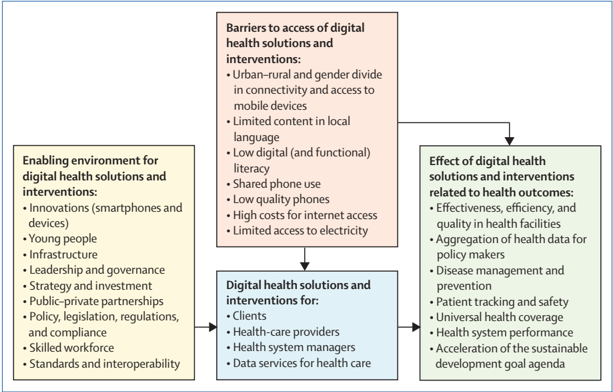
Sub-Saharan Africa has become an emerging arena for digital health innovations directed at strengthening health care, in terms of both patient management and disease surveillance and prevention. Across the region with the world's largest burden of disease and the most severe shortage of health-care workers, we see increased use of digital health solutions and interventions for clients, health-care providers, health-system managers, and data services. As the traditional health-care systems are typically ill-equipped, understaffed, or not accessible at all, sub-Saharan Africa is booming with digital health.
Overview
The claims and statistics of this paper haven’t been checked yet.
Free: it reads the open-access text and checks the first 5 claims that cite a source we can check. Create a free account to check every claim.
Integrity signals
Registry
Cites
Statistics
Figures
Verification
Claims the paper makes
The claims and statistics of this paper haven’t been checked yet.
Free: it reads the open-access text and checks the first 5 claims that cite a source we can check. Create a free account to check every claim.
Claims other papers make about this one
Each is checked against this paper’s own text: does it say what the citing paper says it does?
The source backs part of the claim, not all of it — or backs it for a different population, condition or comparison.
In the citing paper
“According to them, 41 countries in SSA have in place national digital health strategies and architectures (NDHSA).”
From The development of telemedicine programs in Sub-Saharan Africa: Progress and associated challenges (2022) · cites this paper as [8]
Experimental — accuracy not yet measured
Self-check
Percentages, sums and reported differences re-computed from the paper’s own numbers.
The self-check needs the paper’s full text.
Citations
Cites
Su, K., Xu, L., Li, G., Ruan, X., Li, X., Deng, P., Li, X., Li, Q., Chen, X., Xiong, Y., et al. (2019) · EBioMedicine · doi:10.1016/j.ebiom.2019.08.024 · Cited by 68
Research works printed but not linked: 1
- Al Isma'ili, 2017, African societal challenges transformation through IoT. 21st Pacific Asia conference on information systems, PACIS 2017, AIS Electronic Library, 1
Cited by
Bhaskar, S., Bradley, S., Chattu, V. K., Adisesh, A., Nurtazina, A., Kyrykbayeva, S., Sakhamuri, S., Yaya, S., Sunil, T., Thomas, P., et al. (2020) · Frontiers in Public Health · doi:10.3389/fpubh.2020.556720 · Cited by 305
“Spotlight on Africa Sub-Saharan Africa is a region of swift telehealth development, as program implementation increases, and smartphone penetrance is expected to reach 66% by 2025 (43).”
BackgroundEwoh, P., & Vartiainen, T. (2024) · Journal of Medical Internet Research · doi:10.2196/46904 · Cited by 158
Digital twins as global learning health and disease models for preventive and personalized medicine
Li, X., Loscalzo, J., Mahmud, A. K. M. F., Aly, D. M., Rzhetsky, A., Žitnik, M., & Benson, M. (2025) · Genome Medicine · doi:10.1186/s13073-025-01435-7 · Cited by 152
Social media and adolescent well-being in the Global South
Ghai, S., Magis-Weinberg, L., Stoilova, M., Livingstone, S., & Orben, A. (2022) · Current Opinion in Psychology · doi:10.1016/j.copsyc.2022.101318 · Cited by 118
Wamai, R. G., Hirsch, J. L., Damme, W. V., Alnwick, D. J., Bailey, R. C., Hodgins, S., Alam, U., & Anyona, R. M. (2021) · International Journal of Environmental Research and Public Health · doi:10.3390/ijerph18168638 · Cited by 119
Guo, X., Khalid, M. A., Domingos, I., Michala, A. L., Adriko, M., Rowel, C., Ajambo, D., Garrett, A., Kar, S., Yan, X., et al. (2021) · Nature Electronics · doi:10.1038/s41928-021-00612-x · Cited by 119
van de Vijver, S. J. M., Tensen, P., Asiki, G., Requena‐Méndez, A., Heidenrijk, M., Stronks, K., Cobelens, F. G. J., Bont, J., & Agyemang, C. O. (2023) · Digital Health · doi:10.1177/20552076231185434 · Cited by 115
“Besides learning from the digitally advanced societies in Europe and North America21 there are also a lot of interesting initiatives and expertise in digital health in low-resource settings such as Southeast Asia and Sub-Saharan Africa.22,23 In low-resource settings, global challenges such as limited healthcare worker…”
BackgroundKaramagi, H. C., Muneene, D., Droti, B., Jepchumba, V., Okeibunor, J., Nabyonga‐Orem, J., Asamani, J. A., Traoré, M., & Kipruto, H. (2022) · Journal of Global Health · doi:10.7189/jogh.12.04090 · Cited by 99
“The potential of digital health to supplement conventional health services is well documented in [9], [8], [18].”
BackgroundHealthcare inequity and digital health–A bridge for the divide, or further erosion of the chasm?
Hadjiat, Y. (2023) · PLOS Digital Health · doi:10.1371/journal.pdig.0000268 · Cited by 87
“Yet, there is no lack of examples of digital health solutions in Sub-Saharan Africa [12].”
BackgroundColonialism in the new digital health agenda
Sekalala, S. R., & Chatikobo, T. (2024) · BMJ Global Health · doi:10.1136/bmjgh-2023-014131 · Cited by 88
“62 Generalisations about multi-layered and multi-dimensional contexts appear regularly in both the main-stream press and in development documents.”
BackgroundDigital Solutions for Community and Primary Health Workers: Lessons From Implementations in Africa
Owoyemi, A., Osuchukwu, J. I., Azubuike, C., Ikpe, R. K., Nwachukwu, B. C., Akinde, C. B., Biokoro, G. W., Ajose, A. B., Nwokoma, E. I., Mfon, N. E., et al. (2022) · Frontiers in Digital Health · doi:10.3389/fdgth.2022.876957 · Cited by 78
The development of telemedicine programs in Sub-Saharan Africa: Progress and associated challenges
Dodoo, J. E., Al-Samarraie, H., & Alsswey, A. (2022) · Health and Technology · doi:10.1007/s12553-021-00626-7 · Cited by 68
“[8] commented that telemedicine systems can be a potential gamechanger in healthcare provision in SSA.”
BackgroundWaljee, A. K., Weinheimer-Haus, E. M., Abubakar, A., Ngugi, A. K., Siwo, G. H., Kwakye, G., Singal, A. G., Rao, A., Saini, S. D., Read, A. J., et al. (2022) · Gut · doi:10.1136/gutjnl-2022-327211 · Cited by 68
Lack of ownership of mobile phones could hinder the rollout of mHealth interventions in Africa
Okano, J. T., Ponce, J., Krönke, M., & Blower, S. M. (2022) · eLife · doi:10.7554/elife.79615 · Cited by 62
Mechan, F., Bartoníček, Z., Malone, D. J., & Lees, R. S. (2023) · Malaria Journal · doi:10.1186/s12936-022-04414-0 · Cited by 65
“In response to this growing demand, the African Drone and Data Academy was launched in 2020 in Malawi to provide high-quality courses in both drone operation and data visualization [94].”
BackgroundSukums, F. K., Mzurikwao, D., Sabas, D., Chaula, R., Mbuke, J., Kabika, T. B., Kaswija, J., Ngowi, B. J., Noll, J., Winkler, A. S., et al. (2023) · Health Policy and Technology · doi:10.1016/j.hlpt.2023.100728 · Cited by 58
Self-citationKipruto, H., Muneene, D., Droti, B., Jepchumba, V., Okeibunor, J., Nabyonga‐Orem, J., & Karamagi, H. C. (2022) · Frontiers in Digital Health · doi:10.3389/fdgth.2022.874251 · Cited by 57
“The large-scale rollout of context-tailored digital interventions might improve health outcomes in the region due to the large tech-receptive young population (7).”
BackgroundMethodInfluentialTransforming Public Finance Through GovTech
Amaglobeli, D., Mooij, R. A., Mengistu, A., Moszoro, M., Nose, M., Nunhuck, S., Pattanayak, S., del Paso, L. R., Solomon, F., Sparkman, R., et al. (2023) · IMF staff discussion note · doi:10.5089/9798400245480.006 · Cited by 48
Mobile Health Technology for Enhancing the COVID-19 Response in Africa: A Potential Game Changer?
Nachega, J. B., Leisegang, R., Kallay, O., Mills, E. J., Zumla, A., & Lester, R. T. (2020) · The American Journal of Tropical Medicine and Hygiene · doi:10.4269/ajtmh.20-0506 · Cited by 44
Manby, L., Aicken, C. R. H., Delgrange, M., & Bailey, J. (2021) · AIDS and Behavior · doi:10.1007/s10461-021-03402-w · Cited by 49
Design of a FAIR digital data health infrastructure in Africa for COVID‐19 reporting and research
van Reisen, M., Oladipo, F. O., Stokmans, M. J. W., Mpezamihgo, M., Folorunso, S. O., Schultes, E., Basajja, M., Aktau, A., Amare, S. Y., Taye, G. T., et al. (2021) · Advanced Genetics · doi:10.1002/ggn2.10050 · Cited by 50
“22,86 The design process described thus far has resulted in a dash-board for clinics and hospitals to assist with data collection and a data management system that is FAIR and fits within the boundaries set by the jurisdictions of the countries involved.”
BackgroundExperiences on the Utility and Barriers of Telemedicine in Healthcare Delivery in Kenya
Onsongo, S., Kamotho, C., de Wit, T. F. R., & Lowrie, K. (2023) · International Journal of Telemedicine and Applications · doi:10.1155/2023/1487245 · Cited by 47
“The limited availability of information and communication technology (ICT) capacity has been cited by many as the main barrier [34].”
BackgroundAlnasser, Y. S., Proaño, Á., Loock, C., Chuo, J., & Gilman, R. H. (2024) · Journal of Epidemiology and Global Health · doi:10.1007/s44197-024-00214-8 · Cited by 44
“With the ever-increasing prevalence of smartphones in many LMIC, phone-based telemedicine strategies might be a practical and digitally equitable solutions that could also be cheaper than computer-based alternatives [37].”
BackgroundAwosiku, O. V., Ibrahim, N. G., Oyediran, O. T., Egbewande, O. M., Jibril, H. L., Afolabi, D., Okereke, M., & Effiong, F. B. (2025) · Frontiers in Digital Health · doi:10.3389/fdgth.2025.1391500 · Cited by 46
“It might be said that Sub-Saharan Africa has emerged as a leader in creating digital health initiatives to assist in providing services (37).”
Holst, C., Isabwe, G. M. N., Sukums, F. K., Ngowi, H. A., Kajuna, F., Radovanović, D., Mansour, W. A., Mwakapeje, E. R., Cardellichio, P., Ngowi, B. J., et al. (2021) · JMIR mhealth and uhealth · doi:10.2196/25558 · Cited by 33
“However, the future of health education and health promotion participation in sub-Saharan Africa may very well be digital [11].”
BackgroundSelf-citationPoint-of-care ultrasound for tuberculosis management in Sub-Saharan Africa—a balanced SWOT analysis
Suttels, V., du Toit, J., Fiogbe, A., Wachinou, A. P., Guendehou, B., Alovokpinhou, F., Toukoui, P., Hada, A. R., Sefou, F., Vinasse, P., et al. (2022) · International Journal of Infectious Diseases · doi:10.1016/j.ijid.2022.07.009 · Cited by 31
Blazing the trail for innovative tuberculosis diagnostics
Yerlikaya, S., Broger, T., Isaacs, C., Bell, D., Holtgrewe, L., Gupta‐Wright, A., Nahid, P., Cattamanchi, A., & Denkinger, C. M. (2023) · Infection · doi:10.1007/s15010-023-02135-3 · Cited by 30
“…management when using digital records and tools, adoption of digital health technologies aimed at healthcare workers has been slow in the TB field [147], in part due to a lack of focus on making them acceptable to intended users and feasible to implement and sustain in low-resource, high-burden…”
Binder, S., Ario, A. R., Hien, H., Mayet, N. T., Jani, I. V., Ihekweazu, C. A., Abate, E., Nsanzimana, S., Yavo, W., Halatoko, W. A., et al. (2021) · Health Security · doi:10.1089/hs.2021.0094 · Cited by 27
“53 Some of these entre-preneurs and companies have links to decisionmakers in government, and NPHI leadership is challenged to ensure the quality of recommended or purchased goods and services.”
Chepkorir, J., Guillaume, D., Lee, J., Duroseau, B., Xia, Z., Wyche, S. P., Anderson, J., & Han, H. (2024) · International Journal of Environmental Research and Public Health · doi:10.3390/ijerph21070872 · Cited by 29
“[25,30–32, 39, 40, 42– 46”
Simbini, T., Adimado, E. E., Adjorlolo, S., Guerrero‐Torres, L., Srinivas, P., Zizhou, S., & Zerfu, T. A. (2026) · PLOS Digital Health · doi:10.1371/journal.pdig.0000863 · Cited by 29
“In Sub-Saharan Africa (SSA), where healthcare systems often grapple with limited resources, fragmented services, and logistical challenges, digital technologies offer innovative solutions to enhance service delivery and health outcomes [2].”
Cancer workforce—a global crisis: a Lancet Oncology Commission
Hricak, H., Ward, Z. J., Moraes, F. Y., Scott, A. M., Dako, F., Ngwa, W. F., Villarreal-Garza, C. M., Abdel-Wahab, M., Avery, S. M., Addai, B. W., et al. (2026) · The Lancet Oncology · doi:10.1016/s1470-2045(26)00065-3 · Cited by 29
Skeen, S., Marlow, M., Toit, S. D., Meléndez‐Torres, G. J., Mudekunye, L., Mapalala, E., Ngoma, K., Ntanda, B. M., Maketha, M., Grieve, C. M., et al. (2023) · Digital Health · doi:10.1177/20552076231203893 · Cited by 31
“15 There is limited evidence on the effectiveness of digitally delivered parenting interventions from LMICs to improve caregiving behaviours, caregiver mental health and child outcomes.”
BackgroundCOVID-19 and mental health services in Sub-Saharan Africa: A critical literature review
Dzinamarira, T., Iradukunda, P. G., Saramba, E., Gashema, P., Moyo, E., Mangezi, W. O., & Musuka, G. (2024) · Comprehensive Psychiatry · doi:10.1016/j.comppsych.2024.152465 · Cited by 28
Gaobotse, G., Mbunge, E., Batani, J., & Muchemwa, B. (2022) · Sensors International · doi:10.1016/j.sintl.2022.100173 · Cited by 27
Olusanya, O. A., White, B. M., Melton, C. A., & Shaban‐Nejad, A. (2022) · JMIR Formative Research · doi:10.2196/34363 · Cited by 27
Kowatsch, T., & Fleisch, E. (2021) · Springer eBooks · doi:10.1007/978-3-030-76897-3_4 · Cited by 23
Big Data Analytics for Integrated Infectious Disease Surveillance in sub-Saharan Africa
Achieng, M. S., & Ogundaini, O. O. (2024) · South African journal of information management · doi:10.4102/sajim.v26i1.1668 · Cited by 30
“In recent years, Africa has seen improved developments in ICT and digital infrastructure, which has served as a foundation for an increase in digital health initiatives (Hampshire et al. 2021; Holst et al. 2020).”
BackgroundKrzywicki, T., Brona, P., Zbrzezny, A. M., & Grzybowski, A. E. (2023) · Journal of Clinical Medicine · doi:10.3390/jcm12103587 · Cited by 24
Motiwala, F., & Ezezika, O. (2022) · African Journal of Science, Technology, Innovation and Development · doi:10.1080/20421338.2021.1985203 · Cited by 18
Leveraging e-learning for medical education in low- and middle-income countries
Ma, X., & Vervoort, D. (2020) · Cardiology in the Young · doi:10.1017/s1047951120001109 · Cited by 19
Haroun, Y., Sambaiga, R. F., Sarkar, N. D. P., Kapologwe, N., Kengia, J. T., Liana, J., Kimatta, S. S., James, J., Simon, V. T., Hassan, F., et al. (2022) · BMC Health Services Research · doi:10.1186/s12913-022-08744-2 · Cited by 19
“In today’s digitised world, digital technologies are considered essential tools for health promotion and solutions to healthcare delivery challenges [22, 26, 27].”
BackgroundGoel, V., Mathew, S., Gudi, N., Jacob, A. G., & John, O. (2023) · Journal of Global Health · doi:10.7189/jogh.13.04028 · Cited by 23
Digital health and self-management of chronic diseases in sub-Saharan Africa: A scoping review
Achieng, M. S., & Ogundaini, O. O. (2022) · South African journal of information management · doi:10.4102/sajim.v24i1.1550 · Cited by 23
“It is based on this that Holst et al. (2020) refer to SSA as an emergent breeding ground for digital health initiatives.”
BackgroundFeldacker, C., Pienaar, J., Wasunna, B., Ndebele, F., Makhele, C., Day, S., Tweya, H. M., Oni, F., Sardini, M., Adhikary, B., et al. (2023) · Journal of Medical Internet Research · doi:10.2196/42111 · Cited by 17
“The South African 2wT RCT adhered to best practices in the monitoring and evaluation of digital health innovations [14,70,75], adding to the evidence from both the Zimbabwe RCT and routine scale-up that 2wT is as safe as, and more efficient than, routine in-person reviews for postoperative follow-up [50,55].”
MethodChepkirui, M., Dellicour, S., Musuva, R., Odero, I. A., Omondi, B., Omondi, B., Onyango, E., Barsosio, H. C., Otiso, L., Okomo, G. O., et al. (2025) · PLOS Digital Health · doi:10.1371/journal.pdig.0000870 · Cited by 20
“The rising use of digital health tools in Sub-Saharan Africa [1–3] is driven by the need to improve data quality, patient care, decision-making, optimising resources, surveillance, research, and healthcare access in line with the universal health coverage agenda [4,5].”
Increasing the resolution of malaria early warning systems for use by local health actors
Evans, M., Ihantamalala, F. A., Randriamihaja, M., Herbreteau, V., Révillion, C., Catry, T., Delaître, É., Bonds, M. H., Roche, B., Mitsinjoniala, E., et al. (2025) · Malaria Journal · doi:10.1186/s12936-025-05266-0 · Cited by 13
Day, S., Ncube, V., Maja, L., Wasunna, B., Pienaar, J., Setswe, G., Waweru, E., & Feldacker, C. (2023) · JMIR Formative Research · doi:10.2196/44122 · Cited by 15
“Health care worker (HCW) shortages are common in many lowand middle-income countries (LMICs), including those in sub-Saharan Africa (SSA), and contribute to the compromised quality of health care systems and reduced access to quality patient care [1,2].”
BackgroundStrengthening Africa’s brain health and economic resilience
Rizig, M., McLaughlin, C., Narayan, V. A., Salama, M., Udeh‐Momoh, C. T., Rwafa, C., Gichu, M., Ojagbemi, A., Guerchet, M., Bitanihirwe, B. K. Y., et al. (2025) · Nature Medicine · doi:10.1038/s41591-025-03863-9 · Cited by 13
Groen, G., Jörns‐Presentati, A., Dessauvagie, A., Seedat, S., van den Heuvel, L. L., Suliman, S., Grobler, G. P., Jansen, R., Mwape, L., Katowa-Mukwato, P., et al. (2022) · Issues in Mental Health Nursing · doi:10.1080/01612840.2022.2124003 · Cited by 13
“Since traditional health care systems are typically understaffed, unreliable or resource-constrained, digital health is advancing in sub-Saharan Africa (Aceto et al., 2018; Holst et al., 2020; Naslund et al., 2017).”
Background“Feeling Like an Island”: Perceptions of Professional Isolation Among Emergency Nurses
Kutoane, M., Scott, T., & Brysiewicz, P. (2023) · Journal of Emergency Nursing · doi:10.1016/j.jen.2023.08.002 · Cited by 12
Sato, R., Metiboba, L., Galadanchi, J. A., Adeniran, M. O. A., Hassan, S. H., Akpan, D., Odogwu, J., & Fashoto, B. (2023) · BMC Public Health · doi:10.1186/s12889-023-16575-x · Cited by 11
Digital health and artificial intelligence innovations for oncology in sub-Saharan Africa
Dako, F., de Moraes, F. Y., Doo, F. X., Abed, M., Anazodo, U., Patrick, L., Favorito, F. M., Fouad, E., Alabi, A. O., Avery, S., et al. (2025) · The Lancet Oncology · doi:10.1016/s1470-2045(25)00360-2 · Cited by 11
Mumuni, A. N., Hasford, F., Udeme, N. I., Dada, M. O., & Awojoyogbe, B. O. (2022) · Physical Sciences Reviews · doi:10.1515/psr-2022-0121 · Cited by 19
Online delivery of oral HIV pre‐ and post‐exposure prophylaxis: findings from the ePrEP Kenya pilot
Kiptinness, C., Naik, P., Kareithi, T., Thuo, N., Okello, P., Culquichicon, C., Rafferty, M., Abdulrashid, S., Jomo, E., Nyamasyo, N., et al. (2025) · Journal of the International AIDS Society · doi:10.1002/jia2.26468 · Cited by 10
Ho, Y. X., Morse, R. S., Lambden, K., Mushi, B. P., Ngoma, M., Mahuna, H., Ngoma, T., & Miesfeldt, S. (2022) · Applied Clinical Informatics · doi:10.1055/s-0042-1758223 · Cited by 10
Banerjee, R., Singh, B. S., Sahrawat, N., Mehrotra, A. P., Swain, S., Mishra, R. M., Antony, P., Aparna, U., Jain, B. K., & Neogi, S. B. (2025) · BMC Pregnancy and Childbirth · doi:10.1186/s12884-025-07416-3 · Cited by 10
“Such initiatives will eventually strengthen the health systems impacting implementation of all programs [15].”
Jiwa, A., Ngatia, A., Benali, K., Boehmer, N., Delle, S., Emedom-Nnamdi, P., Fofie, C. O., O’Brien, C. M., Olatunji, T., Obayagbona, K. I., et al. (2026) · Journal of Medical Internet Research · doi:10.2196/63495 · Cited by 11
“Despite a surge in digital health tools over the past decade, few have successfully been integrated into interventions, and even fewer digital health interventions have achieved widespread, sustained implementation into health care systems, particularly in sub-Saharan Africa [1].”
Digital Interventions in the Health Sector – Country Cases and Policy Discussions
Wang, L. X., & Bloch, C. (2023) · IMF Notes · doi:10.5089/9798400251030.068 · Cited by 10
Kachimanga, C., Divala, T. H., Ket, J. C. F., Kulinkina, A. V., Zaniku, H. R., Murkherjee, J., Palazuelos, D., Abejirinde, I. O., & van den Akker, T. (2023) · JMIR Research Protocols · doi:10.2196/44066 · Cited by 11
Blay, K. B., Amankwaa, E. F., Afolabi, O. O. D., & Mensah, P. A. (2023) · International Development Planning Review · doi:10.3828/idpr.2023.6 · Cited by 9
Digital health: a tool for mitigating health workforce brain drain in Africa
Owhor, G. A., Adekoya, O. O., Abdulwahab, A. A., Okoli, E. A., Shomuyiwa, D. O., Onah, I. M., & Chikezie, N. C. (2023) · Pan African Medical Journal · doi:10.11604/pamj.2023.45.172.39670 · Cited by 9
“Lifebank in Nigeria also uses artificial intelligence (AI) and Blockchain technology to supply blood and medical supplies [9,10].”
Redesigning Electronic Health Record Systems to Support Developing Countries
Tshimula, J. M., Nkashama, D. K., Kalala, K., Dialufuma, M. V., Didier, M. M., Kanda, H., Muabila, J. T., & Mayemba, C. N. (2023) · International Conference on Medical and Health Informatics (ICMHI) · doi:10.1145/3608298.3608338 · Cited by 8
“access a digital health-financing platform (Holst et al., 2020).”
Olu, O. O., Karamagi, H. C., & Okeibunor, J. (2023) · Frontiers in Digital Health · doi:10.3389/fdgth.2023.1037113 · Cited by 9
“They have been shown to improve ef fi ciency in health service delivery, reduce the cost of healthcare, improve access to health information and provide timely health information for evidence-based decision making (12).”
BackgroundBolado, G. N., Ataro, B. A., Kebede, C., Kebamo, T. E., Minuta, W. M., & Wolde, A. D. (2025) · PLoS ONE · doi:10.1371/journal.pone.0329494 · Cited by 7
RetractedNgabonziza, J. C. S., Suleiman, K., Mohamed, N. S., Rukundo, G., Muremba, M. F., Kagame, J., Mugisha, J. C., Rutebuka, H., Remera, E., Siddig, E. E., et al. (2026) · EBioMedicine · doi:10.1016/j.ebiom.2026.106168 · Cited by 10
“26 30 The cEMR, if successfully scaled, will improve healthcare delivery across multiple sectors, including maternal and child health, infectious disease surveillance, and chronic disease management.”
Nanyonga, S., Blanshard, P., Crevola, L. M., & Simeon‐Dubach, D. (2026) · Frontiers in Public Health · doi:10.3389/fpubh.2026.1710904 · Cited by 8
“Forty-one out of fifty-four African countries have national digital health strategies and architectures (6).”
Otorkpa, O. J., Alao, J. O., & Olaiya, A. P. (2025) · Journal of Global Health · doi:10.7189/jogh.15.03013 · Cited by 7
Secure Data Transfer and Provenance for Distributed Healthcare
Michala, A. L., Attar, H. H., & Vourganas, I. (2022) · Springer eBooks · doi:10.1007/978-981-16-8150-9_11 · Cited by 9
Digital Health Promotion For Fitness Enthusiasts In Africa
Arueyinzho, O., & Sanyaolu, K. (2022) · IEEE International Conference on Digital Health (ICDH) · doi:10.1109/icdh55609.2022.00017 · Cited by 8
Assessing Strategic Priority Factors in eHealth Policies of Four African Countries
Larbi, D., Anthun, K. S., Asah, F. N., Debrah, O., & Antypas, K. (2022) · IST-Africa Conference (IST-Africa) · doi:10.23919/ist-africa56635.2022.9845650 · Cited by 7
“Assessing the human factors, there is a need to facilitate a more user-centred design as this can improve legitimacy, ownership and usability of solutions [32].”
BackgroundNdiaye, M., Saadé, R. G., & Liu, H. (2025) · Global Transitions · doi:10.1016/j.glt.2025.09.002 · Cited by 10
The Covid19 outbreak: a catalyst for digitization in African countries
Bensbih, S., Essangri, H., & Souadka, A. (2020) · Journal of the Egyptian Public Health Association · doi:10.1186/s42506-020-00047-w · Cited by 6
“…in African countries Said Bensbih 1* , Hajar Essangri 2 and Amine Souadka 2 To the Editor: Digital health use in some African countries has prompted a significant transformation [1] and we would like to underline the Covid-19 outbreak ’ s role as a catalyst for digital health growth in Africa.”
BackgroundNgwenya, M. W., Muthelo, L., Mbombi, M. O., Bopape, M. A., & Mothiba, T. M. (2022) · IntechOpen eBooks · doi:10.5772/intechopen.101228 · Cited by 6
Anto‐Ocrah, M., Asiedu, M., Rao, S. V., DeSplinter, L., & Hollenbach, S. J. (2023) · Frontiers in Public Health · doi:10.3389/fpubh.2023.1228212 · Cited by 8
Nkangu, M., Tangang, B., Pessa, A., Weledji, D., Obegu, P., Kasonde, M., Ngo, N. V., Wanda, F., Gobina, R. M., Kibu, O. D., et al. (2025) · Frontiers in Pharmacology · doi:10.3389/fphar.2025.1474999 · Cited by 6
Dzando, G., Ward, P., Mwanri, L., Moussa, R. K., & Ambagtsheer, R. C. (2025) · BMC Geriatrics · doi:10.1186/s12877-025-06016-2 · Cited by 7
“…while the efforts to integrate digital technology into mainstream health and social care systems in Kenya and the rest of SSA continues to grow [47, 48], further research, particularly longitudinal and qualitative studies, is needed to explore the contextual needs and challenges faced by these…”
Barkley, C., Nyakonda, C. N., Kuthyola, K., Ndlovu, P., Lee, D., Dallos, A., Kofi-Armah, D., Obeng, P., & Merrill, K. G. (2025) · International Journal of Environmental Research and Public Health · doi:10.3390/ijerph22081281 · Cited by 6
“Faced with a high mental health disease burden and a severe shortage of mental health workers, SSA has become a promising region for digital health innovation, increasingly turning to digital solutions for prevention and health system strengthening [20].”
Essouma, M., & Noubiap, J. J. (2024) · Journal of Allergy and Clinical Immunology Global · doi:10.1016/j.jacig.2024.100288 · Cited by 10
“…Good partnerships between public health care facilities and private autoimmunity centers of excellence 322,323 (Fig 3) 15,16,38,58,136,151,152,280,288,289,309,310,324,325 are also expected to contribute to improving research on and care provision for ADs in Africa, as seen with other…”
BackgroundOsingada, C. P., McMorris, B. J., Tracy, M. F., Nakasujja, N., Ngabirano, T. D., & Porta, C. M. (2025) · BMC Health Services Research · doi:10.1186/s12913-025-12636-6 · Cited by 5
“Despite the challenges noted above, Sub-Saharan Africa continues to be a hot spot for digital innovations [25], and the advent of COVID-19 catalyzed increased utilization of telehealth technologies in the region [24, 26, 27].”
Elkins, C., Kokera, S. B., Vumbugwa, P., Gavhera, J., West, K. M., Wilson, K. S., Makunike-Chikwinya, B., Masimba, L., Holec, M. M., Barnhart, S., et al. (2024) · PLoS ONE · doi:10.1371/journal.pone.0296570 · Cited by 5
Okunade, K. S., Fayinto, A. I., Adekanye, T. V., Allsop, M. J., Adelabu, H., Soibi-Harry, A. P., Thomas-Ogodo, O., Onyeka, T. C., Lawanson, T., Adenekan, M. A., et al. (2025) · JCO Global Oncology · doi:10.1200/go-25-00150 · Cited by 6
Ahmed, N., Abdullahi, Y. B., Bashir, S., Abdi, M. S., Osman, M. M., Ahmed, M. Y., & Abdi, Y. H. (2026) · Discover Public Health · doi:10.1186/s12982-026-02063-1 · Cited by 4
“Digital innovations are increasingly being integrated into surveillance, with substantial scaling of District Health Information Software 2 (DHIS2), geographic information systems (GIS), mobile health (mHealth) reporting platforms, and genomic sequencing capacity across the continent [29, 30].”
Khanyile, R., Marima, R. M., Mbeje, M., Mutambirwa, S. B. A., Montwedi, D., & Dlamini, Z. (2023) · Springer eBooks · doi:10.1007/978-3-031-21506-3_15 · Cited by 8
Asahngwa, C. T., Fantaye, A. W., Buh, A. W., Obegu, P., Fournier, K., Kasonde, M., Jacobs, C. N., Clementina, P., Gobina, R. M., Kibu, O. D., et al. (2024) · PLoS ONE · doi:10.1371/journal.pone.0295437 · Cited by 4
Moucheraud, C., Wollum, A., Awan, M. A., Dow, W. H., Friedman, W., Koulidiati, J., Sabasaba, A. N., Shah, M., & Wagner, Z. (2024) · Contraception and Reproductive Medicine · doi:10.1186/s40834-024-00296-6 · Cited by 4
“Given the rise in health-related digital tools globally, including in low-and middle-income countries [31, 32], we need to better understand how end-users experience these interventions – and how their design can be tweaked to improve implementation.”
BackgroundHashim, C. V., Llewellyn, E., Wood, R., Brett, T., Chinyanga, T., Webb, K. A., & Segal, K. S. (2024) · Journal of the International AIDS Society · doi:10.1002/jia2.26346 · Cited by 5
Discursive framework for a multi-disease digital health passport in Africa: a perspective
Towett, G., Snead, R. S., Marczika, J., & y Nogueira, I. P. (2024) · Globalization and Health · doi:10.1186/s12992-024-01067-3 · Cited by 4
“One crucial area is bridging the digital divide with a particular emphasis on special groups, [84] and marginalized groups such as immigrants and refugees who have been forced to flee their homes due to civil conflicts and economic hardships, [85] a crisis particularly prevalent in parts of the…”
BackgroundDeveloping a Digital Information and Consultation Platform in Zimbabwe
Chawurura, T., Chikomo, S., Manhibi, R., van Dijk, J., & van Stam, G. (2022) · Lecture notes of the Institute for Computer Sciences, Social Informatics and Telecommunications Engineering · doi:10.1007/978-3-031-06374-9_6 · Cited by 5
Batani, J. (2022) · ResearchSpace (University of KwaZulu-Natal) · Cited by 7
Chukwuonye, I. I., Umuerri, E. M., Baldridge, A. S., Ayoola, Y. A., Sani, M., Ogah, O. S., Orimolade, O. A., Chukwuonye, M., Kalu, K. U., Raphael, C. O., et al. (2026) · PLoS ONE · doi:10.1371/journal.pone.0344011 · Cited by 3
“[35] Mobile health applications, telemedicine, and electronic health records may enhance patient monitoring, treatment adherence, and provider decision-making.”
The Role of African Nurse Diaspora in Addressing Public Health Priorities in Africa
Ezeonwu, M. C. (2021) · Global Qualitative Nursing Research · doi:10.1177/23333936211031501 · Cited by 3
“Furthermore, a shortage of well-trained and amply equipped healthcare workers, quality medicine, and poor infrastructure all remain threats that highlight how grossly limited the continent’s capacity is to assess, diagnose, treat, and manage diseases (Holst et al., 2020).”
BackgroundDigital media and maternal healthcare among young women in Kenya: Use, patterns, and perspectives
Momanyi, L. K., & Mogambi, H. (2023) · Digital Theory Culture & Society · doi:10.61126/dtcs.v1i2.19 · Cited by 3
“Chronic illness management, disease pandemics, and maternal care can all benefit from Digital Health Innovations (DHIs) (Holst et al., 2020).”
BackgroundInfluentialRole of Telemedicine in Increasing Healthcare Access in Nigeria: Challenges and Effective Adoption
Ogunniran, I. A., Owolabi, R. O., Musa, A. A., Magaji, A. A., & Aliyu, I. U. (2024) · Comprehensive Health and Biomedical Studies · doi:10.5812/chbs-153991 · Cited by 3
Trustworthy AI in Healthcare: Exploring Ethics in Digital Health Technologies in Nigeria
Owoyemi, A., Arthur, E., Ladi-Akinyemi, T., Babalola, Y. T., & Eke, D. (2025) · Springer eBooks · doi:10.1007/978-3-031-75674-0_9 · Cited by 3
Chiwanga, F. S., Woodford, J., Masika, G. M., Richards, D. A., Savi, V., & von Essén, L. (2023) · JMIR Research Protocols · doi:10.2196/48799 · Cited by 3
“…digital health strategies and architectures are being implemented and are endorsed by the United Nations and the World Health Organization [18]. mHealth interventions have shown promise in improving treatment adherence among patients with tuberculosis in Tanzania [19] and young people…”
Advancing the digital transformation of health: The Global Digital Health Monitor
Layer, E., & Mechael, P. (2024) · Elsevier eBooks · doi:10.1016/b978-0-443-18529-8.00013-5 · Cited by 3
Unsworth, M., Fabens, I., Setswe, G., Moyo, K., Pienaar, J., Makhele, C., Phohole, M., Igaba, N., Hlongwane, S., Sardini, M., et al. (2025) · PLOS Global Public Health · doi:10.1371/journal.pgph.0004049 · Cited by 3
Afro-centric law and technology discourse
Ncube, C. B., & Phiri, T. R. (2023) · Edward Elgar Publishing eBooks · doi:10.4337/9781803921327.00026 · Cited by 2
Tariku, A., Andargie, B. A., Yilma, T. M., Hussen, A. M., Abera, A., Mohan, D., Pandya, S., Kan, L., Ruton, H., Kimball, M., et al. (2025) · Oxford Open Digital Health · doi:10.1093/oodh/oqaf018 · Cited by 3
“Yet, many people in the region are facing several real-life barriers to access digital health interventions with overt urban–rural and gender divides, addressing these barriers is essential to improve maternal and child health services and reduce related mortality [6].”
Transport and Logistics in Africa: Policy and Future Direction
Chikwere, D., Munuhwa, S., & Chibaro, M. (2026) · Springer eBooks · doi:10.1007/978-3-032-11384-9_11 · Cited by 2
Metadata
- Authors
- Holst, C., Sukums, F., Radovanovic, D., Ngowi, B., Noll, J., & Winkler, A. S.
- Affiliations
- University of Oslo (NO)
- Muhimbili University of Health and Allied Sciences (TZ)
- University of Dar es Salaam (TZ)
- Corresponding author
- Holst, Christine
- Venue
- The Lancet Digital Health
- Publisher
- Elsevier BV
- Published
- 2020-04
- Volume
- 2
- Issue
- 4
- Pages
- e160-e162
- ISSN
- 2589-7500 (ISSN-L)
- OpenAlex
- W3013685219
- Semantic Scholar
- 2e14dc8cf2a2340a5bf8234dd5ac6f30fe6b2bbf
- Cited by
- 144
- References
- 1
- Citations by year
- 2026: 24 · 2025: 29 · 2024: 17 · 2023: 31 · 2022: 25 · 2021: 14 · 2020: 4
- FWCI
- 19.29
- Type
- journal article
- Language
- en
- Open access
- gold
- doi.org
- Licence
- cc-by-nc-nd
- www.elsevier.com/tdm/userlicense/1.0/ (tdm)
- www.elsevier.com/legal/tdmrep-license (tdm)
- creativecommons.org/licenses/by-nc-nd/4.0/ (vor)
- Locations
- The Lancet Digital Health (publishedVersion, cc-by-nc-nd)
- PubMed (publishedVersion)
- DOAJ (DOAJ: Directory of Open Access Journals) (submittedVersion, cc-by-sa)
- mediaTUM – the media and publications repository of the Technical University Munich (Technical University Munich) (submittedVersion)
- Topics
- Health Sciences › Health Professions › General Health Professions › Mobile Health and mHealth Applications
- Health Sciences › Medicine › Public Health, Environmental and Occupational Health › Healthcare Systems and Practices
- Health Sciences › Medicine › Public Health, Environmental and Occupational Health › Telemedicine and Telehealth Implementation
- Keywords
- digital health, sub-Saharan Africa, health care access, health workforce shortage, disease surveillance, disease prevention, clinical management, health services administration, digital health innovation
- MeSH terms
- Information Technology, Digital Technology, Delivery of Health Care, Humans, Global Health, Telemedicine, Africa South of the Sahara
About these checks
Registry, retraction, Cites and statistics results are computed, not judged, with one exception: a printed reference that no index lists is read once by a model before it counts as a citation error. Claims are extracted by a model and kept only when their quote appears verbatim in the text; each cited source is then checked, with a model’s help, for whether it says what the claim relies on. Those verdicts can be wrong — read the claim’s quote and the cited source before relying on one.
Statistics and arithmetic are recomputed, not judged.
Confidence bands are shown only for fields calibrated on our annotated test set. None is calibrated yet, so no band is shown.
What counts as a claim ›How we measure confidence ›How we check this ›
Are you an author, or do you see a problem with this page? Request a review
Data sources
Bibliographic data: Semantic Scholar, OpenAlex, Crossref.
Contains information from the Semantic Scholar Academic Graph Datasets, made available under the ODC Attribution License (ODC-BY 1.0).
Semantic Scholar’s data is described in: Kinney, R., et al. (2023). The Semantic Scholar Open Data Platform. arXiv:2301.10140.
