

Development and validation of a weakly supervised deep learning framework to predict the status of molecular pathways and key mutations in colorectal cancer from routine histology images: a retrospective study
Open accessPublished version of a preprint
The DOI matches its Crossref record; 54 of the 54 references it cites were found in a registry or an index.
Abstract
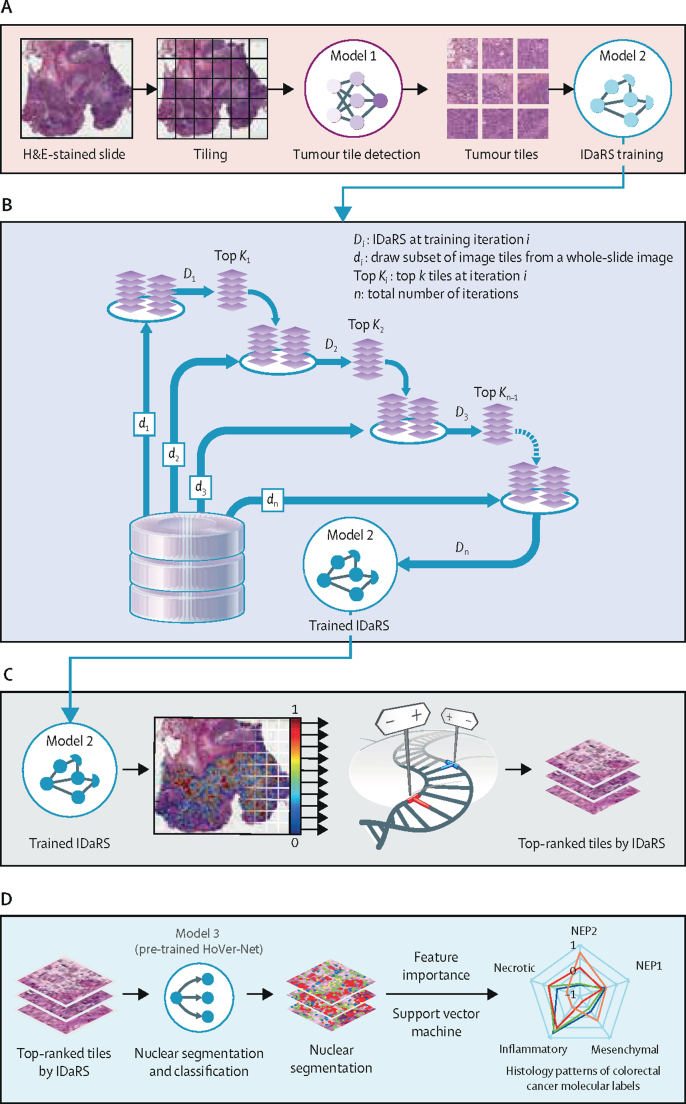
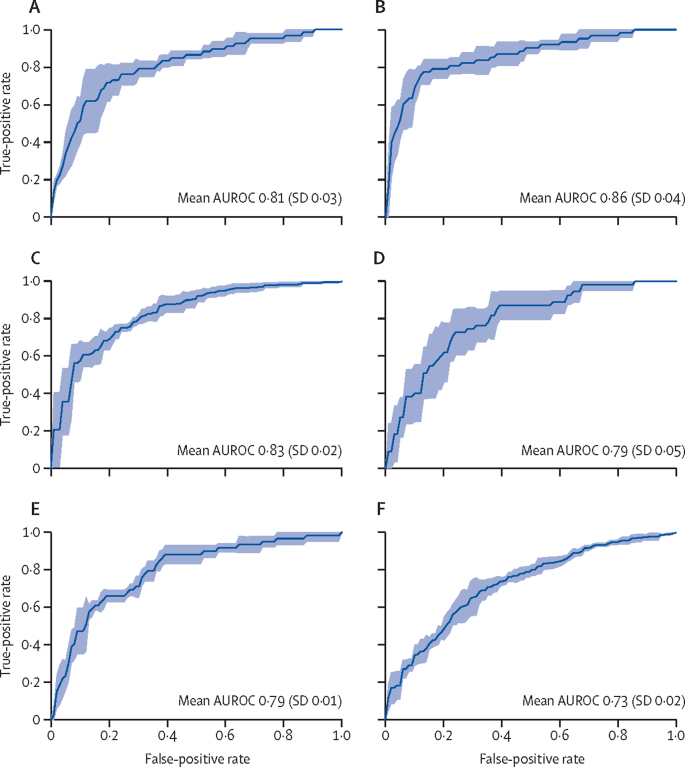
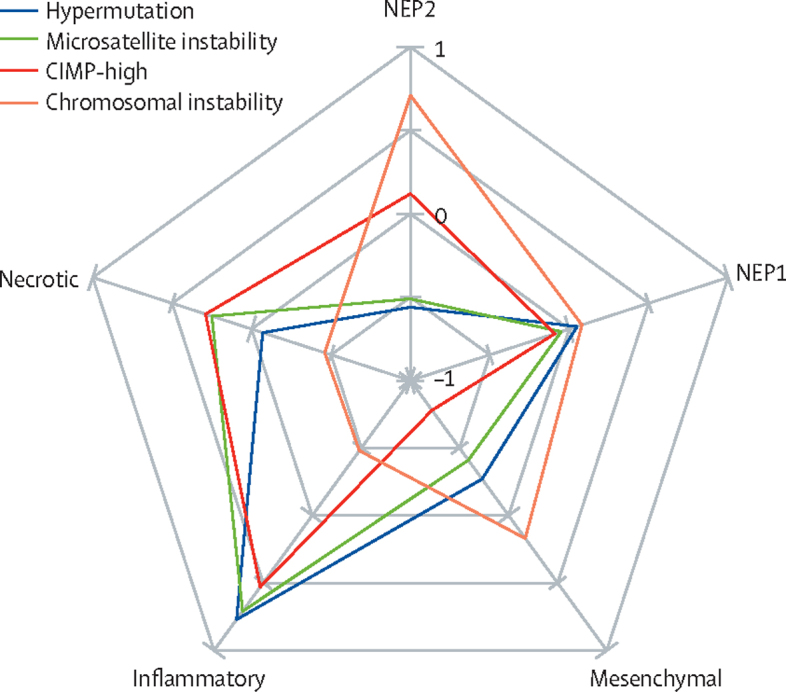
Background Determining the status of molecular pathways and key mutations in colorectal cancer is crucial for optimal therapeutic decision making. We therefore aimed to develop a novel deep learning pipeline to predict the status of key molecular pathways and mutations from whole-slide images of haematoxylin and eosin-stained colorectal cancer slides as an alternative to current tests. Methods In this retrospective study, we used 502 diagnostic slides of primary colorectal tumours from 499 patients in The Cancer Genome Atlas colon and rectal cancer (TCGA-CRC-DX) cohort and developed a weakly supervised deep learning framework involving three separate convolutional neural network models. Whole-slide images were divided into equally sized tiles and model 1 (ResNet18) extracted tumour tiles from non-tumour tiles. These tumour tiles were inputted into model 2 (adapted ResNet34), trained by iterative draw and rank sampling to calculate a prediction score for each tile that represented the likelihood of a tile belonging to the molecular labels of high mutation density ( vs low mutation density), microsatellite instability ( vs microsatellite stability), chromosomal instability ( vs genomic stability), CpG island methylator phenotype (CIMP)-high ( vs CIMP-low), BRAF mut ( vs BRAF WT ), TP53 mut ( vs TP53 WT ), and KRAS WT ( vs KRAS mut ). These scores were used to identify the top-ranked titles from each slide, and model 3 (HoVer-Net) segmented and classified the different types of cell nuclei in these tiles. We calculated the area under the convex hull of the receiver operating characteristic curve (AUROC) as a model performance measure and compared our results with those of previously published methods. Findings Our iterative draw and rank sampling method yielded mean AUROCs for the prediction of hypermutation (0·81 [SD 0·03] vs 0·71), microsatellite instability (0·86 [0·04] vs 0·74), chromosomal instability (0·83 [0·02] vs 0·73), BRAF mut (0·79 [0·01] vs 0·66), and TP53 mut (0·73 [0·02] vs 0·64) in the TCGA-CRC-DX cohort that were higher than those from previously published methods, and an AUROC for KRAS mut that was similar to previously reported methods (0·60 [SD 0·04] vs 0·60). Mean AUROC for predicting CIMP-high status was 0·79 (SD 0·05). We found high proportions of tumour-infiltrating lymphocytes and necrotic tumour cells to be associated with microsatellite instability, and high proportions of tumour-infiltrating lymphocytes and a low proportion of necrotic tumour cells to be associated with hypermutation. Interpretation After large-scale validation, our proposed algorithm for predicting clinically important mutations and molecular pathways, such as microsatellite instability, in colorectal cancer could be used to stratify patients for targeted therapies with potentially lower costs and quicker turnaround times than sequencing-based or immunohistochemistry-based approaches. Funding The UK Medical Research Council.
Overview
The claims and statistics of this paper haven’t been checked yet.
Free: it reads the open-access text and checks the first 5 claims that cite a source we can check. Create a free account to check every claim.
Integrity signals
Registry
Cites
Statistics
Figures
Verification
Claims the paper makes
The claims and statistics of this paper haven’t been checked yet.
Free: it reads the open-access text and checks the first 5 claims that cite a source we can check. Create a free account to check every claim.
Claims other papers make about this one
Each is checked against this paper’s own text: does it say what the citing paper says it does?
The cited source says what the claim attributes to it.
In the citing paper
“Here, we demonstrate that the use of SL can enable AI-based prediction of clinical biomarkers in solid tumors, and yields high-performing models for pathology-based prediction of BRAF and MSI status, two important prognostic and predictive biomarkers in CRC 3,9,34 .”
From Swarm learning for decentralized artificial intelligence in cancer histopathology (2022) · cites this paper as [34]
Self-check
Percentages, sums and reported differences re-computed from the paper’s own numbers.
The self-check needs the paper’s full text.
Citations
Cites
Deep Residual Learning for Image Recognition
He, K., Zhang, X., Ren, S., & Sun, J. (2016) · 2016 IEEE Conference on Computer Vision and Pattern Recognition (CVPR) · doi:10.1109/cvpr.2016.90 · Cited by 235,474
A Threshold Selection Method from Gray-Level Histograms
Otsu, N. (1979) · IEEE Transactions on Systems, Man, and Cybernetics · doi:10.1109/tsmc.1979.4310076 · Cited by 43,398 · cited 1×
“27 Then, the segmented tissue region in each whole-slide image was divided into equally sized tiles (256 μm by 256 μm).”
PyTorch: An Imperative Style, High-Performance Deep Learning Library
Paszke, A., Gross, S., Massa, F., Lerer, A., Bradbury, J., Chanan, G., Killeen, T., Lin, Z., Gimelshein, N., Antiga, L., et al. (2019) · arXiv · doi:10.48550/arxiv.1912.01703 · Cited by 31,473
ShuffleNet: An Extremely Efficient Convolutional Neural Network for Mobile Devices
Zhang, X., Zhou, X., Lin, M., & Sun, J. (2018) · 2018 IEEE/CVF Conference on Computer Vision and Pattern Recognition · doi:10.1109/cvpr.2018.00716 · Cited by 9,982
ShuffleNet: An Extremely Efficient Convolutional Neural Network for Mobile Devices
Zhang, X., Zhou, X., Lin, M., & Sun, J. (2017) · arXiv · doi:10.48550/arxiv.1707.01083 · Cited by 9,982
The consensus molecular subtypes of colorectal cancer
Guinney, J., Dienstmann, R., Wang, X., de Reyniès, A., Schlicker, A., Soneson, C., Marisa, L., Roepman, P., Nyamundanda, G., Angelino, P., et al. (2015) · Nature Medicine · doi:10.1038/nm.3967 · Cited by 5,170 · cited 1×
“Increasing numbers of studies have subtyped colorectal cancer on the basis of shared and distinct molecular characteristics and pathways 1,8 and determined the association of these pathways with patient prognosis, overall survival, and response to specific treatments—particularly targeted therapy…”
BackgroundEhteshami Bejnordi, B., Veta, M., Johannes van Diest, P., van Ginneken, B., Karssemeijer, N., Litjens, G., van der Laak, J. A. W. M., and the CAMELYON16 Consortium, Hermsen, M., Manson, Q. F., et al. (2017) · JAMA · doi:10.1001/jama.2017.14585 · Cited by 3,293
Self-citationCoudray, N., Ocampo, P. S., Sakellaropoulos, T., Narula, N., Snuderl, M., Fenyö, D., Moreira, A. L., Razavian, N., & Tsirigos, A. (2018) · Nature Medicine · doi:10.1038/s41591-018-0177-5 · Cited by 2,930
Clinical-grade computational pathology using weakly supervised deep learning on whole slide images
Campanella, G., Hanna, M. G., Geneslaw, L., Miraflor, A., Werneck Krauss Silva, V., Busam, K. J., Brogi, E., Reuter, V. E., Klimstra, D. S., & Fuchs, T. J. (2019) · Nature Medicine · doi:10.1038/s41591-019-0508-1 · Cited by 2,799 · cited 2×
“However, the multiple instance learning method 22 required tens of thousands of whole-slide images to effectively train the model.”
BackgroundMethodData-efficient and weakly supervised computational pathology on whole-slide images
Lu, M. Y., Williamson, D. F. K., Chen, T. Y., Chen, R. J., Barbieri, M., & Mahmood, F. (2021) · Nature Biomedical Engineering · doi:10.1038/s41551-020-00682-w · Cited by 2,282
Cited by
Items 101–200 of 306
Deep learning model to predict Epstein–Barr virus associated gastric cancer in histology
Jeong, Y., Cho, C. E., Kim, J.-E., Lee, J., Kim, N., Jung, W. Y., Sung, J., Kim, J. H., Lee, Y. J., Jung, J., et al. (2022) · Scientific Reports · doi:10.1038/s41598-022-22731-x · Cited by 24
Yi, M., Cao, Y., Wang, L., Gu, Y., Zheng, X., Wang, J., Chen, W., Wei, L., Zhou, Y., Shi, C., et al. (2023) · Journal of Medical Internet Research · doi:10.2196/46854 · Cited by 23
“This technology is already being successfully applied in real-world apps across various medical professions [17,19-21].”
Guitton, T., Allaume, P., Rabilloud, N., Rioux-Leclercq, N. C., Henno, S., Turlin, B., Galibert, M., Lièvre, A., Lespagnol, A., Pécot, T., et al. (2023) · Diagnostics · doi:10.3390/diagnostics14010099 · Cited by 31
“All studies had almost similar results when determining the KRAS mutation with an AUC of 0.6 in Bilal et al. and Schrammen et al. and 0.58 in Jang et al. [31,34,35].”
ResultInfluentialFedDropoutAvg: Generalizable federated learning for histopathology image classificationPreprint
Gunesli, G. N., Bilal, M., Raza, S. E. A., & Rajpoot, N. (2021) · arXiv (Cornell University) · doi:10.48550/arxiv.2111.13230 · Cited by 28
“The network distinguished the tiles of the unseen test set belonging to the tumor and non-tumor classes with an accuracy of 99% [25].”
BackgroundSelf-citationArtificial Intelligence in the Diagnosis of Colorectal Cancer: A Literature Review
Uchikov, P., Khalid, U., Kraev, K., Hristov, B., Kraeva, M., Tenchev, T., Chakarov, D., Sandeva, M., Dragusheva, S., Taneva, D., et al. (2024) · Diagnostics · doi:10.3390/diagnostics14050528 · Cited by 22
“The proposed algorithm for predicting clinically valuable mutations and molecular pathways, such as MSIs, in colorectal cancer could be used to stratify patients for targeted therapies with quicker turnaround times compared to sequencing-based or immunohistochemistry-related approaches [10].”
MethodInfluentialConfounding factors and biases abound when predicting molecular biomarkers from histological images
Dawood, M., Branson, K., Tejpar, S., Rajpoot, N., & Minhas, F. (2026) · Nature Biomedical Engineering · doi:10.1038/s41551-026-01616-8 · Cited by 24
Self-citationPrompt-MIL: Boosting Multi-instance Learning Schemes via Task-Specific Prompt Tuning
Zhang, J., Kapse, S., Ma, K., Prasanna, P., Saltz, J. H., Vakalopoulou, M., & Samaras, D. (2023) · Lecture notes in computer science · doi:10.1007/978-3-031-43993-3_60 · Cited by 30
Lim, K.-H., Yang, S., Kim, S.-H., Ko, E., Kang, M., & Joo, J.-Y. (2023) · Brain · doi:10.1093/brain/awac451 · Cited by 21
“algorithms for the clinical prediction of genetic mutations in cancer.(194) Prediction of unexpected genetic variation in PLCs gene”
MethodEmbedding Space Augmentation for Weakly Supervised Learning in Whole-Slide Images
Zaffar, I., Jaume, G., Rajpoot, N., & Mahmood, F. (2023) · IEEE International Symposium on Biomedical Imaging (ISBI) · doi:10.1109/isbi53787.2023.10230723 · Cited by 25
“Computational pathology has made significant progress in recent years with new methods capable of classifying high-dimensional whole-slide images (WSI) of the order of 100,000 × 100,000 pixels [1, 2].”
Self-citationThe Applications of Artificial Intelligence in Digestive System Neoplasms: A Review
Zhang, S., Mu, W., Dong, D., Wei, J., Fang, M., Shao, L., Zhou, Y., He, B., Zhang, S., Liu, Z., et al. (2023) · Health Data Science · doi:10.34133/hds.0005 · Cited by 23
“…that deep-learning-based models in histopathology have potential for predicting microsatellite instability [135,136], the status of key molecular pathways and key mutations [137], and molecular subtypes [138], which could be an alternative and results in time and cost savings in clinical workflow.”
BackgroundZhou, Z., Ren, Y., Zhang, Z., Guan, T., Wang, Z., Chen, W., Luo, T., & Li, G. (2023) · Gastric Cancer · doi:10.1007/s10120-023-01407-z · Cited by 21
“These models perform impressively [12, 13], demonstrating the ability to distinguish the characteristics of cancer tissues from those of normal tissues in H&E-stained images.”
MesoGraph: Automatic profiling of mesothelioma subtypes from histological images
Eastwood, M., Sailem, H., Marc, S. T., Gao, X. W., Offman, J., Karteris, E., Montero, Á., Jonigk, D. D., Cookson, W., Moffatt, M. F., et al. (2023) · Cell Reports Medicine · doi:10.1016/j.xcrm.2023.101226 · Cited by 28
Self-citationShephard, A., Mahmood, H., Raza, S. E. A., Araújo, A. L. D., Santos‐Silva, A. R., Lopes, M. A., Vargas, P. A., McCombe, K. D., Craig, S. G., James, J. A., et al. (2025) · Communications Medicine · doi:10.1038/s43856-025-00873-z · Cited by 23
Self-citationZubair, M., Khan, A. H., Bilal, S. F., & Li, J. (2025) · Briefings in Bioinformatics · doi:10.1093/bib/bbaf541 · Cited by 19
Fan, L., Wu, H., Wu, Y., Wu, S., Zhao, J., & Zhu, X. (2024) · BMC Gastroenterology · doi:10.1186/s12876-024-03316-6 · Cited by 19
“For instance, BILAL et al. [13] utilized the ResNet-34 deep learning architecture to prognosticate the genetic status of rectal cancer, attaining AUC metrics of 0.81, 0.86, and 0.83 for high mutation load, microsatellite instability, and chromosomal instability, respectively.”
MethodInfluentialArea under the curve may hide poor generalisation to external datasets
Kleppe, A. (2022) · ESMO Open · doi:10.1016/j.esmoop.2022.100429 · Cited by 23
Gustav, M., van Treeck, M., Reitsam, N. G., Carrero, Z. I., Loeffler, C. M. L., Meneghetti, A. R., Märkl, B., Boardman, L. A., French, A. J., Goode, E. L., et al. (2025) · The Lancet Digital Health · doi:10.1016/j.landig.2025.100891 · Cited by 24
“We assessed the co-occurrence of genetic alterations with MSI, evaluated their predictability based on deep learning, and examined corresponding slide morphology in relation to features linked to MSI.”
InfluentialLi, C., Cai, D., Zhong, M., Lv, M., Huang, Z.-P., Zhu, Q., Hu, C., Qi, H., Wu, X., & Gao, F. (2022) · Frontiers in Genetics · doi:10.3389/fgene.2022.880093 · Cited by 20
“Based on the idea of multi-instance learning in pathology research (Bilal et al., 2021; Sirinukunwattana et al., 2021), our MSCNN model considered both full-image and local detail information of CT images by cropping and de fl ating the ROI region, making the prognostic predicting of our model more…”
MethodComputational pathology in ovarian cancer
Oršulić, S., John, J., Walts, A. E., & Gertych, A. (2022) · Frontiers in Oncology · doi:10.3389/fonc.2022.924945 · Cited by 23
“Indeed, stromal features were identi fi ed as the most effective biomarkers in colon cancer (45 – 47), mesothelioma (48), breast cancer (49, 50), lung adenocarcinoma (51) and early-stage non-small cell lung cancer (52).”
BackgroundAljarallah, N. A., Dutta, A. K., & Sait, A. R. W. (2024) · International Journal of Molecular Sciences · doi:10.3390/ijms25126422 · Cited by 20
“The disruption of these pathways may cause developmental neurological disorders, including autism spectrum disorder or intellectual disability [14].”
BackgroundAhmadvand, P., Farahani, H., Farnell, D., Darbandsari, A., Topham, J. T., Karasinska, J. M., Nelson, J., Naso, J. R., Jones, S. J. M., Renouf, D. J., et al. (2024) · American Journal Of Pathology · doi:10.1016/j.ajpath.2024.08.006 · Cited by 22
“Four deep learning architectures [namely Vanilla, 21,27 Iterative Draw and Rank Sampling (IDaRS), 28 and attention-based models, including Deep Multiple Instance Learning (DeepMIL) 29 and Variability-aware Multiple Instance Learning (VarMIL)], 30 were used to train classi fi ers for stratifying…”
Hezi, H., Gelber, M., Balabanov, A., Maruvka, Y. E., & Freiman, M. (2024) · Computer Methods and Programs in Biomedicine · doi:10.1016/j.cmpb.2024.108513 · Cited by 21
Comprehensive application of artificial intelligence in colorectal cancer: A review
Sun, K., Wang, Y., Qu, R., Yang, Q., Luo, R., Jiang, Z., Wang, H., & Fu, W. (2025) · iScience · doi:10.1016/j.isci.2025.112980 · Cited by 20
Integrating computational pathology and proteomics to address tumor heterogeneity
Dent, A., & Diamandis, P. (2022) · The Journal of Pathology · doi:10.1002/path.5905 · Cited by 16
Xia, S., Li, Q., Zhu, H., Zhang, X.-Y., Shi, Y., Yang, D., Wu, J., Guan, Z., Lu, Q.-Y., Li, X.-T., et al. (2024) · BMC Cancer · doi:10.1186/s12885-024-11997-1 · Cited by 16
Unsupervised mutual transformer learning for multi-gigapixel Whole Slide Image classification
Javed, S., Mahmood, A., Qaiser, T., Werghi, N., & Rajpoot, N. (2024) · Medical Image Analysis · doi:10.1016/j.media.2024.103203 · Cited by 21
Self-citationA new magnetic resonance imaging tumour response grading scheme for locally advanced rectal cancer
Pang, X., Xie, P., Li, Y., Chen, H., Zheng, J., Meng, X., & Wan, X. (2022) · British Journal of Cancer · doi:10.1038/s41416-022-01801-x · Cited by 16
Rubinstein, J. C., pour, A. F., Zhou, J., Sheridan, T., White, B. S., & Chuang, J. H. (2022) · Journal of Surgical Oncology · doi:10.1002/jso.27118 · Cited by 16
“Several efforts have shown the potential of deep learning to predict molecular features of colon cancer, including MSI status, from digitized histology slides.(16,17) Deep learning algorithms in the form of convolutional neural networks (CNNs) accept WSIs as input and automatically generate numerical representations t…”
BackgroundIntroducing Neoadjuvant Immunotherapy for Colorectal Cancer: Advancing the Frontier
Orhan, A., Justesen, T. F., Raskov, H., Qvortrup, C., & Gögenür, I. (2024) · Annals of Surgery · doi:10.1097/sla.0000000000006443 · Cited by 14
“…a trained deep neural network, Bilal and colleagues were able to establish and cross-validate an algorithm to predict TMB, MMR status, and mutations related to the KRAS , BRAF , and TP53 genes in CRC, 74 thereby reducing the time and resources spent on standard IHC and sequence-based techniques.”
Frascarelli, C., Venetis, K., Marra, A., Mane, E., Ivanova, M., Cursano, G., Porta, F. M., Concardi, A., Ceol, A. G. M., Farina, A., et al. (2024) · Computational and Structural Biotechnology Journal · doi:10.1016/j.csbj.2024.11.037 · Cited by 14
“To classify the morphology of the tiles in which the WSI was segmented, a weakly supervised DL Iterative Draw and Rank Sampling (IDaRS) model pre-trained by Bilal et al., was employed [30].”
InfluentialMorel, L.-O., Dérangère, V., Arnould, L., Ladoire, S., & Vinçon, N. (2023) · Scientific Reports · doi:10.1038/s41598-023-34016-y · Cited by 15
Dent, A., Faust, K., Lam, K. H. B., Alhangari, N., Leon, A. J., Tsang, Q., Kamil, Z. S., Gao, A. F., Pal, P., Lheureux, S., et al. (2023) · Science Advances · doi:10.1126/sciadv.adg1894 · Cited by 14
Guo, B., Li, X., Yang, M., Zhang, H., & Xu, X. S. (2023) · Computerized Medical Imaging and Graphics · doi:10.1016/j.compmedimag.2023.102189 · Cited by 15
Review of Molecular Technologies for Investigating Canine Cancer
Kehl, A., Aupperle‐Lellbach, H., de Brot, S., & van der Weyden, L. (2024) · Animals · doi:10.3390/ani14050769 · Cited by 14
Cen, M., Li, X., Guo, B., Jonnagaddala, J., Zhang, H., & Xu, S. X. (2023) · American Journal Of Pathology · doi:10.1016/j.ajpath.2023.09.006 · Cited by 13
Nowak, M., Jabbar, F., Rodewald, A., Gneo, L., Tomasevic, T., Harkin, A., Iveson, T. J., Saunders, M. P., Kerr, R. S., Oein, K., et al. (2024) · Cell Reports Medicine · doi:10.1016/j.xcrm.2024.101727 · Cited by 14
Hu, Y., Sirinukunwattana, K., Li, B., Gaitskell, K. L., Domingo, E., Bonnaffé, W., Wojciechowska, M., Wood, R., Alham, N. K., Malacrino, S., et al. (2025) · Medical Image Analysis · doi:10.1016/j.media.2024.103437 · Cited by 16
Faa, G., Coghe, F., Pretta, A., Castagnola, M., Eyken, P. V., Saba, L., Scartozzi, M., & Fraschini, M. (2024) · Diagnostics · doi:10.3390/diagnostics14151605 · Cited by 17
“A novel deep learning framework designed for predicting the status of key molecular pathways and mutations in CRC, involving three convolutional neural network models, was introduced by Bilal and coworkers in 2021 [29].”
Lan, X., Guo, G., Wang, X., Yan, Q., Xue, R., Li, Y., Zhu, J., Dong, Z., Wang, F., Li, G., et al. (2024) · Skin Research and Technology · doi:10.1111/srt.13571 · Cited by 11
Artificial intelligence: the human response to approach the complexity of big data in biology
Melandri, G., Radohery, G. F. R., Beaumont, C., de Cripan, S. M., Muller, C., Piras, L., Pereira, M. A., Salvador, A. F., Domingo-Almenara, X., Bolger, M., et al. (2025) · GigaScience · doi:10.1093/gigascience/giaf057 · Cited by 11
Gülmez, B. (2025) · Clinical Imaging · doi:10.1016/j.clinimag.2025.110542 · Cited by 11
Multimodal AI-based risk stratification for distant metastasis in nasopharyngeal carcinoma
Zhou, J., Wibawa, M. S., Wang, R., Deng, Y., Huang, H., Luo, Z.-X., Xia, Y., Guo, X., Young, L. S., Lo, K. W., et al. (2025) · ESMO Open · doi:10.1016/j.esmoop.2025.105809 · Cited by 11
Self-citationBilal, M., Gulzar, M. A., Jaffar, N., Alabduljabbar, A., Altherwy, Y. N., Alsuhaibani, A., & Almarshad, F. A. (2025) · Computerized Medical Imaging and Graphics · doi:10.1016/j.compmedimag.2025.102680 · Cited by 12
Self-citationLiu, A., Li, X., Wu, H., Guo, B., Jonnagaddala, J., Zhang, H., & Xu, S. X. (2023) · JCO Precision Oncology · doi:10.1200/po.22.00522 · Cited by 12
Hou, W., He, Y., Yao, B., Yu, L., Yu, R., Gao, F., & Wang, L. (2023) · Lecture notes in computer science · doi:10.1007/978-3-031-43987-2_72 · Cited by 20
Towards computationally efficient prediction of molecular signatures from routine histology images
Lafarge, M. W., & Koelzer, V. H. (2021) · The Lancet Digital Health · doi:10.1016/s2589-7500(21)00232-6 · Cited by 10
“Bilal and colleagues 8 investigated the ability of a novel iterative draw and rank sampling algorithm to directly train a model to calculate a prediction score for each tile in a whole-slide image, which represents the likelihood of a tile belonging to the positive class within the binary…”
BackgroundMethodInfluentialPark, J., Chung, Y. R., & Nose, A. (2022) · Scientific Reports · doi:10.1038/s41598-022-16283-3 · Cited by 11
Wu, J., Li, J., Huang, B., Dong, S., Wu, L., Shen, X., & Zheng, Z. (2025) · Translational Oncology · doi:10.1016/j.tranon.2025.102281 · Cited by 10
“The mainstream Residual Network 18 (ResNet18) was introduced to make up for limited imaging data in the current study [28,29].”
Singh, V. K., Makhlouf, Y., Sarker, M. M. K., Craig, S. G., Baena, J., Greene, C., Mason, L., James, J. A., Salto‐Tellez, M., O’Reilly, P. G., et al. (2024) · Biomedical Physics & Engineering Express · doi:10.1088/2057-1976/ad5bed · Cited by 9
Selvaraj, C., Cho, W. C. S., Kulanthaivel, L., Alothaim, A. S., Vijayakumar, R., Jayaprakashvel, M., & Desai, D. (2025) · 3 Biotech · doi:10.1007/s13205-025-04518-9 · Cited by 12
“For instance, some genetic mutations are associated with aggressive disease or resistance to chemotherapy, and when identified in combination with some imaging biomarkers, it becomes simpler for clinicians to tailor treatment regimens (Bilal et al. 2021).”
Cells are Actors: Social Network Analysis with Classical ML for SOTA Histology Image Classification
Tajeddin, N. Z., Jahanifar, M., & Rajpoot, N. (2021) · Lecture notes in computer science · doi:10.1007/978-3-030-87237-3_28 · Cited by 12
Self-citationREET: robustness evaluation and enhancement toolbox for computational pathology
Foote, A., Asif, A., Rajpoot, N., & Minhas, F. (2022) · Bioinformatics · doi:10.1093/bioinformatics/btac315 · Cited by 11
Self-citationLv, Z., Yan, R., Lin, Y., Wang, Y., & Zhang, F. (2022) · Lecture notes in computer science · doi:10.1007/978-3-031-16434-7_29 · Cited by 14
Minciuna, C.-E., Tanase, M., Manuc, T. E., Tudor, Ș., Herlea, V., Dragomir, M. P., Călin, G. A., & Vasilescu, C. (2022) · Computational and Structural Biotechnology Journal · doi:10.1016/j.csbj.2022.09.010 · Cited by 11
“2021 Bilal M [136], Lancet Digit Health CRC Assess the status of major molecular pathways and”
BackgroundKumar, P. J. S., Pandurangan, R., Bapu, B. R. T., & Nagaraju, V. (2024) · Biomedical Signal Processing and Control · doi:10.1016/j.bspc.2024.106303 · Cited by 11
Chen, W., Zheng, K., Yuan, W., Jia, Z., Wu, Y., Duan, X., Yang, W., Wen, Z., Zhong, L., & Liu, X. (2024) · La radiologia medica · doi:10.1007/s11547-024-01909-5 · Cited by 9
A weakly supervised deep learning framework for automated PD-L1 expression analysis in lung cancer
Jiao, F., Shang, Z., Lu, H., Chen, P., Chen, S., Xiao, J., Zhang, F., Zhang, D., Lv, C., & Han, Y. (2025) · Frontiers in Immunology · doi:10.3389/fimmu.2025.1540087 · Cited by 9
Aligning computational pathology with clinical practice for colorectal cancer
Baumann, E., Carreño-Martínez, J. F., Frei, A. L., García-Baroja, J., Gwerder, M., Khan, A., Mehmeti, R., Hanimann, J., Zens, P., Dawson, H., et al. (2025) · npj Precision Oncology · doi:10.1038/s41698-025-01119-w · Cited by 8
“%) subsequently identifytumortissueusingatissueclassi fi cationalgorithm 60 – 64 .”
Keller, P., Dawood, M., Chohan, B. S., & Minhas, F. (2025) · Medical Image Analysis · doi:10.1016/j.media.2025.103491 · Cited by 9
“Heuristic meth-ods generate predictions for each patch independently and aggregate them using fixed statistics, such as majority voting [5, 6].”
Self-citationCannarozzi, A. L., Biscaglia, G., Parente, P., Latiano, T. P., Gentile, A., Ciardiello, D., Massimino, L., Brina, A. L. P. D., Guerra, M., Tavano, F., et al. (2025) · Critical Reviews in Oncology/Hematology · doi:10.1016/j.critrevonc.2025.104694 · Cited by 8
Eastwood, M., Marc, S. T., Gao, X. W., Sailem, H., Offman, J., Karteris, E., Montero, Á., Jonigk, D. D., Cookson, W., Moffatt, M. F., et al. (2023) · Artificial Intelligence in Medicine · doi:10.1016/j.artmed.2023.102628 · Cited by 9
Self-citationLiu, X., Zhang, S., Shao, L., Sun, C., Li, B., Wei, W., Ying, Z., Liu, Z., & Tian, J. (2024) · The Innovation Medicine · doi:10.59717/j.xinn-med.2024.100069 · Cited by 15
Yu, Z., Xia, Z., Xu, D., Zhang, Z., Zhang, L., Zhang, P., Wu, L., Wang, B., Wang, H., & Zhao, Z. (2026) · npj Digital Medicine · doi:10.1038/s41746-025-02289-4 · Cited by 8
Persistent Homology in Medical Image Processing: A Literature Review
Brito-Pacheco, D., Giannopoulos, P., & Reyes‐Aldasoro, C. C. (2026) · ACM Transactions on Computing for Healthcare · doi:10.1145/3820762 · Cited by 10
CellOMaps: A compact representation for robust classification of lung adenocarcinoma growth patterns
Al-Rubaian, A., Gunesli, G. N., Althakfi, W., Azam, A. S., Snead, D. R. J., Rajpoot, N., & Raza, S. E. A. (2025) · Computers in Biology and Medicine · doi:10.1016/j.compbiomed.2025.110127 · Cited by 7
Self-citationMa, L., Chen, H., & Gong, M. (2023) · Applied Intelligence · doi:10.1007/s10489-023-05224-w · Cited by 8
Softmax-Driven Active Shape Model for Segmenting Crowded Objects in Digital Pathology Images
Salvi, M., Meiburger, K. M., & Molinari, F. (2024) · IEEE Access · doi:10.1109/access.2024.3369916 · Cited by 9
“Recent studies have demonstrated the significance of nucleus segmentation in various cancer types, such as lung, bladder, and colorectal cancer, for grading and assisting in diagnosis and treatment [66], [67], [68].”
BackgroundHis‐MMDM: Multi‐Domain and Multi‐Omics Translation of Histopathological Images with Diffusion Models
Li, Z., Su, T., Zhang, B., Han, W., Zhang, S., Sun, G., 丛玉炜, Chen, X., Qi, J., Wang, Y., et al. (2026) · Advanced Science · doi:10.1002/advs.202518066 · Cited by 7
Gao, R., Yang, Z., Yuan, X., Wang, Y., Xia, Y., Zhang, Y., Zheng, B., Gong, Y., Yue, Y., Tu, Y., et al. (2026) · Nature Communications · doi:10.1038/s41467-026-71558-x · Cited by 6
“The prevalence of these biomarkers is summarized in the Supplementary Tables 27 and 28.”
InfluentialSingh, V. K., Sarker, M. M. K., Makhlouf, Y., Craig, S. G., Humphries, M. P., Loughrey, M. B., James, J. A., Salto‐Tellez, M., O’Reilly, P. G., & Maxwell, P. (2022) · Cancers · doi:10.3390/cancers14163910 · Cited by 6
Wu, Y., Liu, X., Liu, F., Li, Y., Xiong, X., Sun, H., Lin, B., Li, Y., & Xu, B. (2023) · PeerJ · doi:10.7717/peerj.15408 · Cited by 8
“Therefore it plays an increasingly significant role in various aspects of tumor screening, diagnosis, assessment of efficacy, and prediction of prognosis (Coudray et al., 2018; Bilal et al., 2021; Zhou et al., 2020; She et al., 2020; Courtiol et al., 2019; Lin et al., 2022).”
BackgroundDeep learning-based histological predictions of chromosomal instability in colorectal cancer
Hyeon, D.-W., Kim, Y., Hwang, Y. S., Bae, J. M., Kang, G. H., & Kim, K. (2024) · American Journal of Cancer Research · doi:10.62347/jynd6488 · Cited by 6
Predicting FOXA1 gene mutation status in prostate cancer through multi-modal deep learning
Lin, S., Deng, L., Hu, Z., Lin, C., Mao, Y., Liu, Y., Li, W., Yang, Y., Zhou, R. H., Lai, Y., et al. (2025) · Biomedical Signal Processing and Control · doi:10.1016/j.bspc.2025.107739 · Cited by 6
Mulyadi, Y. F., & Utaminingrum, F. (2024) · International Conference on Intelligent Cybernetics Technology & Applications (ICICyTA) · doi:10.1109/icicyta64807.2024.10913097 · Cited by 6
“However, the study noted that weak supervision could limit precision [10].”
Li, Y., Bi, J., Pi, G., He, H., Li, Y., & Han, G. (2023) · Annals of Translational Medicine · doi:10.21037/atm-22-6481 · Cited by 7
Hu, T., Luan, H., Yan, R., Hu, J., Yang, K., Han, X., Liu, W., He, J., Duan, X., Li, R., et al. (2024) · IEEE International Conference on Bioinformatics and Biomedicine (BIBM) · doi:10.1109/bibm62325.2024.10822101 · Cited by 5
“Bilal et al. [16] proposed weakly supervised learning methods with iterative and ranking sampling, which redefined the sampling strategy to prioritize patch importance.”
Multi-cancer analysis of histopathologic MSI screening based on digital histology image
Lee, J., Kim, C. Y., Lee, S., & Chung, J.-H. (2025) · PLoS ONE · doi:10.1371/journal.pone.0332034 · Cited by 6
Kour, T., Raina, J. K., Gondhi, N. K., Sharma, A. K., Banerjee, S., Kumar, P., Sharma, R., & Panjaliya, R. K. (2025) · Archives of Computational Methods in Engineering · doi:10.1007/s11831-025-10401-w · Cited by 7
Zhang, T., Sun, Z., Li, Z., Ahmad, M. U., Islam, M. T., Yang, F., Yang, X., Wu, L., Xie, J., Feng, W., et al. (2025) · Journal of Translational Medicine · doi:10.1186/s12967-025-06181-3 · Cited by 5
“HoverNet, a state-of-the-art instance segmentation model adept at delineating individual cell boundaries [38, 39].”
Baumann, E., Schäfer, L., Meeuwsen, F. C., Kirsch, R., Nagtegaal, I. D., Berger, M. D., Dawson, H., & Zlobec, I. (2025) · Modern Pathology · doi:10.1016/j.modpat.2025.100932 · Cited by 6
Tong, Z., Wang, Y., Bao, X., Deng, Y., Lin, B., Su, G., Ye, K., Dai, X., Zhang, H., Liu, L., et al. (2023) · iScience · doi:10.1016/j.isci.2023.108468 · Cited by 6
Brunel, B., Prada, P., Slimano, F., Boulagnon‐Rombi, C., Bouché, O., & Piot, O. (2023) · The Analyst · doi:10.1039/d3an00627a · Cited by 5
Omar, M., Xu, Z., Rand, S. B., Alexanderani, M. K., Salles, D. C., Valencia, I., Schaeffer, E. M., Robinson, B. D., Lotan, T. L., Loda, M. F., et al. (2024) · Molecular Cancer Research · doi:10.1158/1541-7786.mcr-23-0639 · Cited by 7
“For instance, Coudray and colleagues have developed a model for predicting several key mutations in lung adenocarcinoma (25), whereas Bilal and colleagues developed a DL system for predicting several key genetic alterations in colorectal cancer (26).”
BackgroundXiaojian, Y., Zhanbo, Q., Chu, J., Wang, Z., Liu, J., Liu, J., Pan, Y., & Han, S. (2024) · Journal of Cancer Research and Clinical Oncology · doi:10.1007/s00432-024-05992-z · Cited by 5
Automated Artificial Intelligence Empowered Colorectal Cancer Detection and Classification Model
Ragab, M., & Albukhari, A. (2022) · Computers, materials & continua/Computers, materials & continua (Print) · doi:10.32604/cmc.2022.026715 · Cited by 5
Uncertainty Aware Sampling Framework of Weak-Label Learning for Histology Image Classification
Aljuhani, A., Casukhela, I., Chan, J., Liebner, D. A., & Machiraju, R. (2022) · Lecture notes in computer science · doi:10.1007/978-3-031-16434-7_36 · Cited by 7
Buvaneswari, T., Ramkumar, M., Venkatesan, P., & Kumar, R. S. (2025) · Molecular Imaging and Biology · doi:10.1007/s11307-025-01990-w · Cited by 4
Digital Pathology and Artificial Intelligence in Breast Pathology
Hanna, M. G. (2025) · Surgical pathology clinics · doi:10.1016/j.path.2025.07.002 · Cited by 4
Deep learning radiomics based on MRI for differentiating tongue cancer T - staging
Lu, Z., Zhu, B., Ling, H. H., & Chen, X. (2025) · BMC Cancer · doi:10.1186/s12885-025-14627-6 · Cited by 4
“ResNet18 and ResNet50 ( h t t p s : / / g i t e e . c o m / w a n g q i n g b a i d u / O n e k e y C o m p o) are currently widely used deep l e a r n i n g algorithms in the field of radiomics [3, 5].”
Integrating artificial intelligence ( AI ) into colorectal cancer reporting
Bräutigam, K., Baker, A., Koelzer, V. H., Kather, J. N., & Graham, T. A. (2026) · The Journal of Pathology · doi:10.1002/path.70029 · Cited by 4
“AI can predict a variety of factors in CRC, e.g. prognosis [28], treatment response [17], and tumour recurrence [29] (also for liver metastases [30]), and can accurately read microsatellite instability [31 – 35] and CRC consensus molecular subtypes (CMSs) [36] from slides.”
Huynh, C. D. (2026) · Intelligence-Based Medicine · doi:10.1016/j.ibmed.2026.100386 · Cited by 4
Boman, S. E., Mulliqi, N., Blilie, A., Ji, X., Szolnoky, K., Gudlaugsson, E. G., Janssen, E. A. M., Kjosavik, S. R., Asenjo, J., Gambacorta, M., et al. (2026) · Scientific Reports · doi:10.1038/s41598-026-52148-9 · Cited by 4
Multi-omic biomarkers of neoadjuvant treatment response in rectal cancer: A narrative review
Maerten, P., Wolthuis, A. M., D’Hoore, A. J. L., Bislenghi, G., Hertogh, G. D., Sagaert, X., Dresen, R. C., Broeckhoven, V., Rasschaert, G., Tejpar, S., et al. (2026) · European Journal of Surgical Oncology · doi:10.1016/j.ejso.2026.111910 · Cited by 4
Deep Learning and Colon Cancer Interpretation
McHugh, K. E., & Pai, R. K. (2023) · Surgical pathology clinics · doi:10.1016/j.path.2023.05.003 · Cited by 4
Berloco, F., Zaccaria, G. M., Altini, N., Colucci, S., & Bevilacqua, V. (2025) · Computerized Medical Imaging and Graphics · doi:10.1016/j.compmedimag.2025.102526 · Cited by 5
Oncogenic mutations of clinical significance in colorectal cancer
Lea, V., Lim, S. H.-S., & Lee, C. S. (2025) · Pathology · doi:10.1016/j.pathol.2025.05.001 · Cited by 4
Malignant Mesothelioma Subtyping of Tissue Images via Sampling Driven Multiple Instance Prediction
Eastwood, M., Marc, S. T., Gao, X. W., Sailem, H., Offman, J., Karteris, E., Montero, Á., Jonigk, D. D., Cookson, W., Moffatt, M. F., et al. (2022) · Lecture notes in computer science · doi:10.1007/978-3-031-09342-5_25 · Cited by 4
Self-citationOgundipe, O., Zhai, B., Kurt, Z., & Woo, W. L. (2025) · Current Bioinformatics · doi:10.2174/0115748936309582240907160359 · Cited by 4
A Novel Approach to Linking Histology Images with DNA Methylation
Raza, M., Dawood, M., Qaiser, T., & Rajpoot, N. (2025) · Lecture notes in computer science · doi:10.1007/978-3-031-91721-9_21 · Cited by 4
Self-citationArtificial Intelligence in cancer pathology—hope or hype?
Ilyas, M. (2022) · The Lancet Digital Health · doi:10.1016/s2589-7500(22)00193-5 · Cited by 4
Self-citation
Metadata
- Authors
- Bilal, M., Raza, S. E. A., Azam, A., Graham, S., Ilyas, M., Cree, I. A., Snead, D., Minhas, F., & Rajpoot, N. M.
- Affiliations
- University of Warwick (GB)
- University Hospital Coventry (GB)
- University of Nottingham (GB)
- Centre international de recherche sur le cancer (FR)
- Corresponding author
- Rajpoot, Nasir M
- ORCID
- Venue
- The Lancet Digital Health
- Publisher
- Elsevier BV
- Published
- 2021-12
- Volume
- 3
- Issue
- 12
- Pages
- e763-e772
- ISSN
- 2589-7500 (ISSN-L)
- PMC
- PMC8609154
- OpenAlex
- W3205605830
- Semantic Scholar
- b23ab94b443b7ee7990041967dda62f57b6f3e1e
- Cited by
- 299
- References
- 54
- Citations by year
- 2026: 47 · 2025: 64 · 2024: 48 · 2023: 70 · 2022: 59 · 2021: 11
- FWCI
- 16.61
- Type
- journal article
- Language
- en
- Open access
- gold
- doi.org
- Licence
- cc-by-nc-nd
- www.elsevier.com/tdm/userlicense/1.0/ (tdm)
- www.elsevier.com/legal/tdmrep-license (tdm)
- creativecommons.org/licenses/by-nc-nd/4.0/ (vor)
- Locations
- The Lancet Digital Health (publishedVersion, cc-by-nc-nd)
- medRxiv (acceptedVersion, cc-by-nc-nd)
- PubMed Central (publishedVersion, cc-by-nc-nd)
- PubMed (publishedVersion)
- Repository@Nottingham (University of Nottingham) (publishedVersion, cc-by-nc-nd)
- Warwick Research Archive Portal (University of Warwick) (acceptedVersion)
- Repository@Nottingham (University of Nottingham) (submittedVersion, cc-by-nc-nd)
- DOAJ (DOAJ: Directory of Open Access Journals) (submittedVersion, cc-by-sa)
- Funders
- Korea Health Industry Development Institute
- Seoul National University Hospital
- Medical Research Council (MR/P015476/1)
- Ministry of Health and Welfare (HI18C0316)
- Topics
- Physical Sciences › Computer Science › Artificial Intelligence › AI in cancer detection
- Health Sciences › Medicine › Radiology, Nuclear Medicine and Imaging › Radiomics and Machine Learning in Medical Imaging
- Health Sciences › Medicine › Oncology › Colorectal Cancer Screening and Detection
- Keywords
- colorectal cancer, mutation status prediction, weakly supervised deep learning, whole slide images, H&E staining, microsatellite instability, chromosomal instability, CpG island methylator phenotype, BRAF mutation, TP53 mutation, KRAS mutation, hypermutation, nuclei segmentation
- MeSH terms
- Deep Learning, Colon, Histological Techniques, Humans, Mutation, Phenotype, Rectum, Retrospective Studies, ROC Curve, Biomarkers, Tumor, Colorectal Neoplasms, Area Under Curve, Microsatellite Instability
About these checks
Registry, retraction, Cites and statistics results are computed, not judged, with one exception: a printed reference that no index lists is read once by a model before it counts as a citation error. Claims are extracted by a model and kept only when their quote appears verbatim in the text; each cited source is then checked, with a model’s help, for whether it says what the claim relies on. Those verdicts can be wrong — read the claim’s quote and the cited source before relying on one.
Statistics and arithmetic are recomputed, not judged.
Confidence bands are shown only for fields calibrated on our annotated test set. None is calibrated yet, so no band is shown.
What counts as a claim ›How we measure confidence ›How we check this ›
Are you an author, or do you see a problem with this page? Request a review
Data sources
Bibliographic data: Semantic Scholar, OpenAlex, Crossref.
Contains information from the Semantic Scholar Academic Graph Datasets, made available under the ODC Attribution License (ODC-BY 1.0).
Semantic Scholar’s data is described in: Kinney, R., et al. (2023). The Semantic Scholar Open Data Platform. arXiv:2301.10140.
