

Development and validation of a weakly supervised deep learning framework to predict the status of molecular pathways and key mutations in colorectal cancer from routine histology images: a retrospective study
Open accessPublished version of a preprint
The DOI matches its Crossref record; 54 of the 54 references it cites were found in a registry or an index.
Abstract
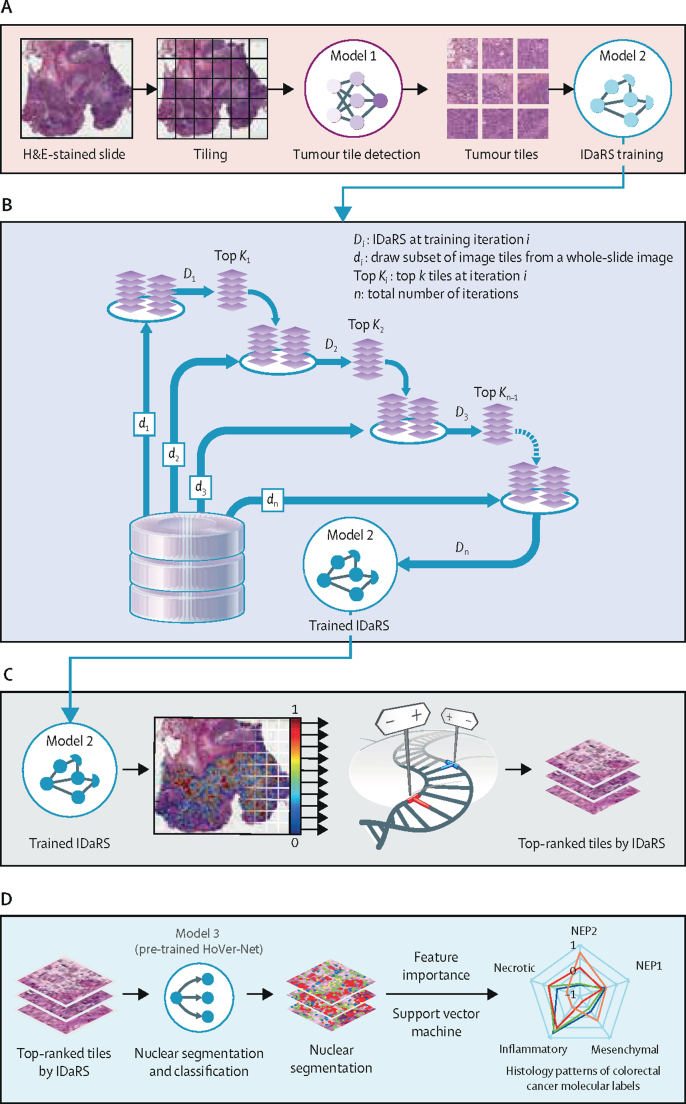
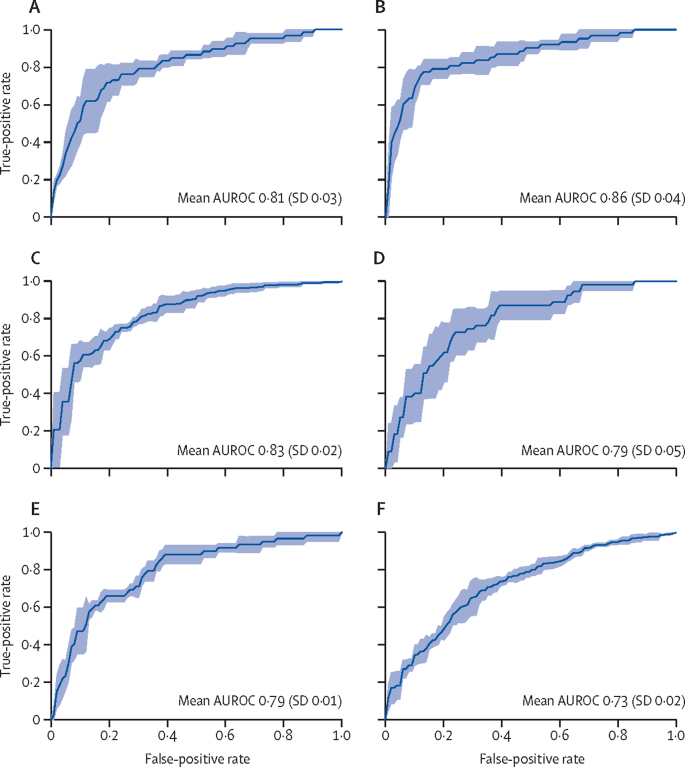
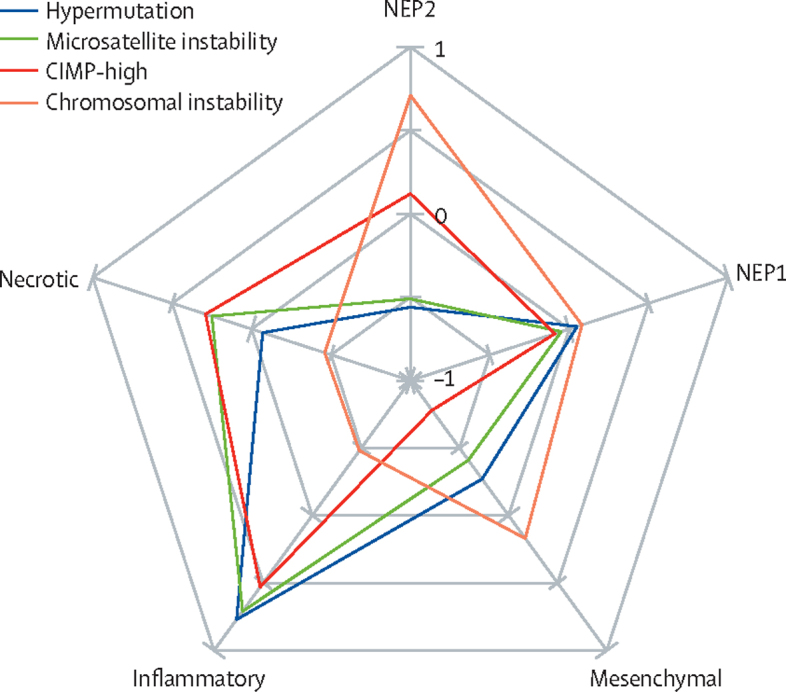
Background Determining the status of molecular pathways and key mutations in colorectal cancer is crucial for optimal therapeutic decision making. We therefore aimed to develop a novel deep learning pipeline to predict the status of key molecular pathways and mutations from whole-slide images of haematoxylin and eosin-stained colorectal cancer slides as an alternative to current tests. Methods In this retrospective study, we used 502 diagnostic slides of primary colorectal tumours from 499 patients in The Cancer Genome Atlas colon and rectal cancer (TCGA-CRC-DX) cohort and developed a weakly supervised deep learning framework involving three separate convolutional neural network models. Whole-slide images were divided into equally sized tiles and model 1 (ResNet18) extracted tumour tiles from non-tumour tiles. These tumour tiles were inputted into model 2 (adapted ResNet34), trained by iterative draw and rank sampling to calculate a prediction score for each tile that represented the likelihood of a tile belonging to the molecular labels of high mutation density ( vs low mutation density), microsatellite instability ( vs microsatellite stability), chromosomal instability ( vs genomic stability), CpG island methylator phenotype (CIMP)-high ( vs CIMP-low), BRAF mut ( vs BRAF WT ), TP53 mut ( vs TP53 WT ), and KRAS WT ( vs KRAS mut ). These scores were used to identify the top-ranked titles from each slide, and model 3 (HoVer-Net) segmented and classified the different types of cell nuclei in these tiles. We calculated the area under the convex hull of the receiver operating characteristic curve (AUROC) as a model performance measure and compared our results with those of previously published methods. Findings Our iterative draw and rank sampling method yielded mean AUROCs for the prediction of hypermutation (0·81 [SD 0·03] vs 0·71), microsatellite instability (0·86 [0·04] vs 0·74), chromosomal instability (0·83 [0·02] vs 0·73), BRAF mut (0·79 [0·01] vs 0·66), and TP53 mut (0·73 [0·02] vs 0·64) in the TCGA-CRC-DX cohort that were higher than those from previously published methods, and an AUROC for KRAS mut that was similar to previously reported methods (0·60 [SD 0·04] vs 0·60). Mean AUROC for predicting CIMP-high status was 0·79 (SD 0·05). We found high proportions of tumour-infiltrating lymphocytes and necrotic tumour cells to be associated with microsatellite instability, and high proportions of tumour-infiltrating lymphocytes and a low proportion of necrotic tumour cells to be associated with hypermutation. Interpretation After large-scale validation, our proposed algorithm for predicting clinically important mutations and molecular pathways, such as microsatellite instability, in colorectal cancer could be used to stratify patients for targeted therapies with potentially lower costs and quicker turnaround times than sequencing-based or immunohistochemistry-based approaches. Funding The UK Medical Research Council.
Overview
The claims and statistics of this paper haven’t been checked yet.
Free: it reads the open-access text and checks the first 5 claims that cite a source we can check. Create a free account to check every claim.
Integrity signals
Registry
Cites
Statistics
Figures
Verification
Claims the paper makes
The claims and statistics of this paper haven’t been checked yet.
Free: it reads the open-access text and checks the first 5 claims that cite a source we can check. Create a free account to check every claim.
Claims other papers make about this one
Each is checked against this paper’s own text: does it say what the citing paper says it does?
The cited source says what the claim attributes to it.
In the citing paper
“Here, we demonstrate that the use of SL can enable AI-based prediction of clinical biomarkers in solid tumors, and yields high-performing models for pathology-based prediction of BRAF and MSI status, two important prognostic and predictive biomarkers in CRC 3,9,34 .”
From Swarm learning for decentralized artificial intelligence in cancer histopathology (2022) · cites this paper as [34]
Self-check
Percentages, sums and reported differences re-computed from the paper’s own numbers.
The self-check needs the paper’s full text.
Citations
Cites
Deep Residual Learning for Image Recognition
He, K., Zhang, X., Ren, S., & Sun, J. (2016) · 2016 IEEE Conference on Computer Vision and Pattern Recognition (CVPR) · doi:10.1109/cvpr.2016.90 · Cited by 235,474
A Threshold Selection Method from Gray-Level Histograms
Otsu, N. (1979) · IEEE Transactions on Systems, Man, and Cybernetics · doi:10.1109/tsmc.1979.4310076 · Cited by 43,398 · cited 1×
“27 Then, the segmented tissue region in each whole-slide image was divided into equally sized tiles (256 μm by 256 μm).”
PyTorch: An Imperative Style, High-Performance Deep Learning Library
Paszke, A., Gross, S., Massa, F., Lerer, A., Bradbury, J., Chanan, G., Killeen, T., Lin, Z., Gimelshein, N., Antiga, L., et al. (2019) · arXiv · doi:10.48550/arxiv.1912.01703 · Cited by 31,473
ShuffleNet: An Extremely Efficient Convolutional Neural Network for Mobile Devices
Zhang, X., Zhou, X., Lin, M., & Sun, J. (2018) · 2018 IEEE/CVF Conference on Computer Vision and Pattern Recognition · doi:10.1109/cvpr.2018.00716 · Cited by 9,982
ShuffleNet: An Extremely Efficient Convolutional Neural Network for Mobile Devices
Zhang, X., Zhou, X., Lin, M., & Sun, J. (2017) · arXiv · doi:10.48550/arxiv.1707.01083 · Cited by 9,982
The consensus molecular subtypes of colorectal cancer
Guinney, J., Dienstmann, R., Wang, X., de Reyniès, A., Schlicker, A., Soneson, C., Marisa, L., Roepman, P., Nyamundanda, G., Angelino, P., et al. (2015) · Nature Medicine · doi:10.1038/nm.3967 · Cited by 5,170 · cited 1×
“Increasing numbers of studies have subtyped colorectal cancer on the basis of shared and distinct molecular characteristics and pathways 1,8 and determined the association of these pathways with patient prognosis, overall survival, and response to specific treatments—particularly targeted therapy…”
BackgroundEhteshami Bejnordi, B., Veta, M., Johannes van Diest, P., van Ginneken, B., Karssemeijer, N., Litjens, G., van der Laak, J. A. W. M., and the CAMELYON16 Consortium, Hermsen, M., Manson, Q. F., et al. (2017) · JAMA · doi:10.1001/jama.2017.14585 · Cited by 3,293
Self-citationCoudray, N., Ocampo, P. S., Sakellaropoulos, T., Narula, N., Snuderl, M., Fenyö, D., Moreira, A. L., Razavian, N., & Tsirigos, A. (2018) · Nature Medicine · doi:10.1038/s41591-018-0177-5 · Cited by 2,930
Clinical-grade computational pathology using weakly supervised deep learning on whole slide images
Campanella, G., Hanna, M. G., Geneslaw, L., Miraflor, A., Werneck Krauss Silva, V., Busam, K. J., Brogi, E., Reuter, V. E., Klimstra, D. S., & Fuchs, T. J. (2019) · Nature Medicine · doi:10.1038/s41591-019-0508-1 · Cited by 2,799 · cited 2×
“However, the multiple instance learning method 22 required tens of thousands of whole-slide images to effectively train the model.”
BackgroundMethodData-efficient and weakly supervised computational pathology on whole-slide images
Lu, M. Y., Williamson, D. F. K., Chen, T. Y., Chen, R. J., Barbieri, M., & Mahmood, F. (2021) · Nature Biomedical Engineering · doi:10.1038/s41551-020-00682-w · Cited by 2,282
Landon, M., Saam, J., Brown, K. L., Moyes, K., Evans, B., & Wenstrup, R. (2015) · Oncology · doi:10.1159/000430097 · Cited by 1,939
Collins, G. S., Reitsma, J. B., Altman, D. G., & Moons, K. (2015) · BMC Medicine · doi:10.1186/s12916-014-0241-z · Cited by 1,927
Kather, J. N., Pearson, A. T., Halama, N., Jäger, D., Krause, J., Loosen, S. H., Marx, A., Boor, P., Tacke, F., Neumann, U. P., et al. (2019) · Nature Medicine · doi:10.1038/s41591-019-0462-y · Cited by 1,458 · cited 9×
“4,11,18 We showed that using a novel training strategy in a standard deep learning model can improve the prediction of key molecular characteristics and mutations in colorectal cancer tumours.”
BackgroundMethodInfluentialHover-Net: Simultaneous segmentation and classification of nuclei in multi-tissue histology images
Graham, S., Vu, Q. D., Raza, S. E. A., Azam, A., Tsang, Y. W., Kwak, J. T., & Rajpoot, N. (2019) · Medical Image Analysis · doi:10.1016/j.media.2019.101563 · Cited by 1,423
Self-citationSymmetric Cross Entropy for Robust Learning With Noisy Labels
Wang, Y., Ma, X., Chen, Z., Luo, Y., Yi, J., & Bailey, J. (2019) · 2019 IEEE/CVF International Conference on Computer Vision (ICCV) · doi:10.1109/iccv.2019.00041 · Cited by 1,046
The Chromosomal Instability Pathway in Colon Cancer
Pino, M. S., & Chung, D. C. (2010) · Gastroenterology · doi:10.1053/j.gastro.2009.12.065 · Cited by 932 · cited 1×
“2,9 The strong association of CIMP-high with a high proportion of inflammatory cells and a low proportion of mesenchymal cells found in our cellular composition analysis might suggest the molecular characteristics of an active immune response, as reported previously.”
Structure-Preserving Color Normalization and Sparse Stain Separation for Histological Images
Vahadane, A., Peng, T., Sethi, A., Albarqouni, S., Wang, L., Baust, M., Steiger, K., Schlitter, A. M., Esposito, I., & Navab, N. (2016) · IEEE Transactions on Medical Imaging · doi:10.1109/tmi.2016.2529665 · Cited by 825
Hendry, S., Salgado, R., Gevaert, T., Russell, P. A., John, T., Thapa, B., Christie, M., van de Vijver, K., Estrada, M. V., Gonzalez-Ericsson, P. I., et al. (2017) · Advances in Anatomic Pathology · doi:10.1097/pap.0000000000000162 · Cited by 709
Pan-cancer image-based detection of clinically actionable genetic alterations
Kather, J. N., Heij, L. R., Grabsch, H. I., Loeffler, C., Echle, A., Muti, H. S., Krause, J., Niehues, J. M., Sommer, K. A. J., Bankhead, P., et al. (2020) · Nature Cancer · doi:10.1038/s43018-020-0087-6 · Cited by 662 · cited 5×
“4,11,18 We showed that using a novel training strategy in a standard deep learning model can improve the prediction of key molecular characteristics and mutations in colorectal cancer tumours.”
InfluentialDeep learning for prediction of colorectal cancer outcome: a discovery and validation study
Skrede, O.-J., De Raedt, S., Kleppe, A., Hveem, T. S., Liestøl, K., Maddison, J., Askautrud, H. A., Pradhan, M., Nesheim, J. A., Albregtsen, F., et al. (2020) · The Lancet · doi:10.1016/s0140-6736(19)32998-8 · Cited by 627
Comparative Molecular Analysis of Gastrointestinal Adenocarcinomas
Liu, Y., Sethi, N. S., Hinoue, T., Schneider, B. G., Cherniack, A. D., Sanchez-Vega, F., Seoane, J. A., Farshidfar, F., Bowlby, R., Islam, M., et al. (2018) · Cancer Cell · doi:10.1016/j.ccell.2018.03.010 · Cited by 615 · cited 3×
“1 6 Further classifications consider different subgroups of CpG island methylator phenotypes (CIMPs) and microsatellite instability 1,6,7 based on responses to adjuvant therapy and survival.”
BackgroundResultA deep learning model to predict RNA-Seq expression of tumours from whole-slide images
Schmauch, B., Romagnoni, A., Pronier, E., Saillard, C., Maillé, P., Calderaro, J., Kamoun, A., Sefta, M., Toldo, S., Zaslavskiy, M., et al. (2020) · Nature Communications · doi:10.1038/s41467-020-17678-4 · Cited by 533
Tumor-infiltrating lymphocytes are a marker for microsatellite instability in colorectal carcinoma
Smyrk, T. C., Watson, P., Kaul, K., & Lynch, H. T. (2001) · Cancer · doi:10.1002/1097-0142(20010615)91:12<2417::aid-cncr1276>3.0.co;2-u · Cited by 522 · cited 2×
“Our findings of a strong correlation between microsatellite instability and hypermutation, 1,3,37 a moderate correlation between microsatellite instability and CIMP, 6,7 and a high infiltrate of inflammatory cells in microsatellite instable tumours 9,32,34 are in line with existing literature.”
BackgroundResultHistopathological Identification of Colon Cancer with Microsatellite Instability
Alexander, J., Watanabe, T., Wu, T.-T., Rashid, A., Li, S., & Hamilton, S. R. (2001) · The American Journal of Pathology · doi:10.1016/s0002-9440(10)63994-6 · Cited by 511
Weakly Supervised Deep Learning for Whole Slide Lung Cancer Image Analysis
Wang, X., Chen, H., Gan, C., Lin, H., Dou, Q., Tsougenis, E., Huang, Q., Cai, M., & Heng, P.-A. (2020) · IEEE Transactions on Cybernetics · doi:10.1109/tcyb.2019.2935141 · Cited by 408 · cited 1×
“Another weakly supervised method to classify whole-slide images proposed by Wang and colleagues 23 requires pixel-level coarse annotations, which are labour-intensive and often unavailable, in addition to high-level image labels.”
MethodYamashita, R., Long, J., Longacre, T., Peng, L., Berry, G., Martin, B., Higgins, J., Rubin, D. L., & Shen, J. (2021) · The Lancet Oncology · doi:10.1016/s1470-2045(20)30535-0 · Cited by 391
Clinical-Grade Detection of Microsatellite Instability in Colorectal Tumors by Deep Learning
Echle, A., Grabsch, H. I., Quirke, P., van den Brandt, P. A., West, N. P., Hutchins, G. G. A., Heij, L. R., Tan, X., Richman, S. D., Krause, J., et al. (2020) · Gastroenterology · doi:10.1053/j.gastro.2020.06.021 · Cited by 376 · cited 7×
“4,11,18 We showed that using a novel training strategy in a standard deep learning model can improve the prediction of key molecular characteristics and mutations in colorectal cancer tumours.”
InfluentialCharacterization of sporadic colon cancer by patterns of genomic instability.
Goel, A., Arnold, C., Niedzwiecki, D., Chang, D. K., Ricciardiello, L., Carethers, J. M., Dowell, J. M., Wasserman, L. M., Compton, C. C., Mayer, R. J., et al. (2003) · PubMed · Cited by 333
Molecular pathways in colorectal cancer
Al‐Sohaily, S., Biankin, A., Leong, R., Kohonen‐Corish, M., & Warusavitarne, J. (2012) · Journal of Gastroenterology and Hepatology · doi:10.1111/j.1440-1746.2012.07200.x · Cited by 298
Pathologic Predictors of Microsatellite Instability in Colorectal Cancer
Greenson, J. K., Huang, S.-C., Herron, C., Moreno, V., Bonner, J. D., Tomsho, L. P., Ben-Izhak, O., Cohen, H. I., Trougouboff, P., Bejhar, J., et al. (2009) · American Journal of Surgical Pathology · doi:10.1097/pas.0b013e31817ec2b1 · Cited by 286 · cited 2×
“Our findings of a strong correlation between microsatellite instability and hypermutation, 1,3,37 a moderate correlation between microsatellite instability and CIMP, 6,7 and a high infiltrate of inflammatory cells in microsatellite instable tumours 9,32,34 are in line with existing literature.”
BackgroundResultDiao, J. A., Wang, J. K., Chui, W. F., Mountain, V., Gullapally, S. C., Srinivasan, R., Mitchell, R. N., Glass, B., Hoffman, S., Rao, S. K., et al. (2021) · Nature Communications · doi:10.1038/s41467-021-21896-9 · Cited by 269
Sirinukunwattana, K., Domingo, E., Richman, S. D., Redmond, K. L., Blake, A., Verrill, C., Leedham, S. J., Chatzipli, A., Hardy, C., Whalley, C. M., et al. (2021) · Gut · doi:10.1136/gutjnl-2019-319866 · Cited by 264 · cited 1×
“In histopathology, deep learning-based algorithms have been shown to predict clinically relevant molecular phenotypes, 13 microsatellite instability, 4,14,15 consensus mole cular subtypes, 4,16 and outcomes 17 in colorectal cancer.”
BackgroundStjepanovic, N., Moreira, L., Carneiro, F., Balaguer, F., Cervantes, A., Balmaña, J., & Martinelli, E. (2019) · Annals of Oncology · doi:10.1093/annonc/mdz233 · Cited by 250
PanNuke: An Open Pan-Cancer Histology Dataset for Nuclei Instance Segmentation and Classification
Gamper, J., Alemi Koohbanani, N., Benet, K., Khuram, A., & Rajpoot, N. (2019) · Lecture Notes in Computer Science · doi:10.1007/978-3-030-23937-4_2 · Cited by 245
Self-citationNeural Image Compression for Gigapixel Histopathology Image Analysis
Tellez, D., Litjens, G., van der Laak, J., & Ciompi, F. (2021) · IEEE Transactions on Pattern Analysis and Machine Intelligence · doi:10.1109/tpami.2019.2936841 · Cited by 242 · cited 1×
“21 For instance, Campanella and colleagues 22 proposed a deep learning system based on multiple instance learning to discriminate between tumour and non-tumour whole-slide images using high-level image labels only.”
BackgroundValidation of digital pathology imaging for primary histopathological diagnosis
Snead, D. R. J., Tsang, Y., Meskiri, A., Kimani, P. K., Crossman, R., Rajpoot, N. M., Blessing, E., Chen, K., Gopalakrishnan, K., Matthews, P., et al. (2016) · Histopathology · doi:10.1111/his.12879 · Cited by 238 · cited 4×
“…instability and hypermutation showed a strong positive correlation, and the scores for microsatellite instability and CIMP showed a moderate positive correlation, wherein the microsatellite stability score showed the highest positive correlation with the CIMP-low score (appendix 1 pp 11–12).”
BackgroundInfluentialSelf-citationChemotaxis in Escherichia coli: A Molecular Model for Robust Precise Adaptation
Hansen, C. H., Endres, R. G., & Wingreen, N. S. (2008) · PLoS Computational Biology · doi:10.1371/journal.pcbi.0040001 · Cited by 195
Context-aware convolutional neural network for grading of colorectal cancer histology images
Shaban, M., Awan, R., Fraz, M. M., Azam, A., Tsang, Y.-W., Snead, D., & Rajpoot, N. M. (2020) · IEEE Transactions on Medical Imaging · doi:10.1109/tmi.2020.2971006 · Cited by 179 · cited 1×
“…and non-tumour tiles, comprising 35 436 tiles from seven arbitrarily selected slides from the TCGA-CRC-DX cohort combined with two publicly available datasets (from Kather and colleagues 4 and Shaban and colleagues 28 ), to extract tumour tiles from the TCGA-CRC-DX cohort slides (appendix 1 p 3).”
Self-citationShaban, M., Khurram, S. A., Fraz, M. M., Alsubaie, N., Masood, I., Mushtaq, S., Hassan, M., Loya, A., & Rajpoot, N. M. (2019) · Scientific Reports · doi:10.1038/s41598-019-49710-z · Cited by 176
Self-citationKang, S., Na, Y., Joung, S. Y., Lee, S. I., Oh, S. C., & Min, B. W. (2018) · Medicine · doi:10.1097/md.0000000000010019 · Cited by 162 · cited 1×
“35,36 Our differential cellular composition analysis suggests that the infiltration scores of lymphocytes and necrosis within the tumour can serve as digital biomarkers for further stratification and the analysis of each pathway and its clinical impact.”
Singh, M. P., Rai, S., Pandey, A., Singh, N. K., & Srivastava, S. (2021) · Genes & Diseases · doi:10.1016/j.gendis.2019.10.013 · Cited by 146 · cited 2×
“Our findings of a strong correlation between microsatellite instability and hypermutation, 1,3,37 a moderate correlation between microsatellite instability and CIMP, 6,7 and a high infiltrate of inflammatory cells in microsatellite instable tumours 9,32,34 are in line with existing literature.”
BackgroundResultPanNuke Dataset Extension, Insights and Baselines
Gamper, J., Koohbanani, N. A., Benes, K., Graham, S., Jahanifar, M., Khurram, S. A., Azam, A. S., Hewitt, K. J., & Rajpoot, N. (2020) · arXiv (Cornell University) · doi:10.48550/arxiv.2003.10778 · Cited by 146
Self-citationShia, J., Schultz, N., Kuk, D., Vakiani, E., Middha, S., Segal, N. H., Hechtman, J. F., Berger, M. F., Stadler, Z. K., Weiser, M. R., et al. (2017) · Modern Pathology · doi:10.1038/modpathol.2016.198 · Cited by 105 · cited 4×
“Our findings of a strong correlation between microsatellite instability and hypermutation, 1,3,37 a moderate correlation between microsatellite instability and CIMP, 6,7 and a high infiltrate of inflammatory cells in microsatellite instable tumours 9,32,34 are in line with existing literature.”
BackgroundResultInfluentialBae, J. M., Kim, J. H., & Kang, G. H. (2016) · Archives of Pathology & Laboratory Medicine · doi:10.5858/arpa.2015-0310-ra · Cited by 100 · cited 4×
“1 6 Further classifications consider different subgroups of CpG island methylator phenotypes (CIMPs) and microsatellite instability 1,6,7 based on responses to adjuvant therapy and survival.”
BackgroundResultInfluentialRony, J., Belharbi, S., Dolz, J., Ayed, I. B., McCaffrey, L. M., & Granger, É. (2023) · The Journal of Machine Learning for Biomedical Imaging · doi:10.59275/j.melba.2023-5g54 · Cited by 94
Hypermutation and microsatellite instability in gastrointestinal cancers
Yuza, K., Nagahashi, M., Watanabe, S., Takabe, K., & Wakai, T. (2017) · Oncotarget · doi:10.18632/oncotarget.22783 · Cited by 86 · cited 1×
“Our findings of a strong correlation between microsatellite instability and hypermutation, 1,3,37 a moderate correlation between microsatellite instability and CIMP, 6,7 and a high infiltrate of inflammatory cells in microsatellite instable tumours 9,32,34 are in line with existing literature.”
ResultCurrent Microsatellite Instability Testing in Management of Colorectal Cancer
Sun, B. L. (2020) · Clinical Colorectal Cancer · doi:10.1016/j.clcc.2020.08.001 · Cited by 80 · cited 1×
“35,36 Our differential cellular composition analysis suggests that the infiltration scores of lymphocytes and necrosis within the tumour can serve as digital biomarkers for further stratification and the analysis of each pathway and its clinical impact.”
BackgroundAdvani, S. M., Advani, P., DeSantis, S. M., Brown, D., VonVille, H. M., Lam, M., Loree, J. M., Mehrvarz Sarshekeh, A., Bressler, J., Lopez, D. S., et al. (2018) · Translational Oncology · doi:10.1016/j.tranon.2018.07.008 · Cited by 65
Neoadjuvant ipilimumab plus nivolumab in early stage colon cancer
Chalabi, M., Fanchi, L. F., Van den Berg, J. G., Beets, G. L., Lopez-Yurda, M., Aalbers, A. G., Grootscholten, C., Snaebjornsson, P., Maas, M., Mertz, M., et al. (2018) · Annals of Oncology · doi:10.1093/annonc/mdy424.047 · Cited by 59
Gao, J., Arbman, G., Wadhra, T. I., Zhang, H., & Sun, X.-F. (2005) · World Journal of Gastroenterology · doi:10.3748/wjg.v11.i14.2179 · Cited by 33
The Aachen Protocol for Deep Learning Histopathology: A hands-on guide for data preprocessing
Muti, H. S., Loeffler, C. M. L., Echle, A., Heij, L. R., Buelow, R. D., Krause, J., Broderius, L., Niehues, J., Liapi, G., Boor, P., et al. (2020) · Zenodo (CERN European Organization for Nuclear Research) · doi:10.5281/zenodo.3694993 · Cited by 27
Altered pathways and colorectal cancer prognosis
Moreno, V. R., & Pamplona, R. S. (2015) · BMC Medicine · doi:10.1186/s12916-015-0307-6 · Cited by 11 · cited 1×
“3,9,10 However, standard genetic (eg, PCR) and immunohistochemistry testing might incur time delays and additional costs, 3,4 and molecular testing assays (eg, diagnostic biopsies) often require tissue, the availability of which can be limited.”
BackgroundSaller, J. J., Qin, D., Felder, S. I., & Coppola, D. (2020) · Clinical Colorectal Cancer · doi:10.1016/j.clcc.2020.02.003 · Cited by 4 · cited 2×
“30 It could also indicate that a more sophisticated aggregation method than a simple average or majority voting might be needed to correctly classify some molecular characteristics.”
MethodCAFÉ-Map: Context Aware Feature Mapping for mining high dimensional biomedical data
Minhas, F., Asif, A., & Arif, M. (2016) · Computers in Biology and Medicine · doi:10.1016/j.compbiomed.2016.10.006 · Cited by 4
Self-citation
Cited by
Artificial intelligence in drug development
Zhang, K., Yang, X., Wang, Y., Yu, Y., Huang, N., Li, G., Li, X., Wu, J. C., & Yang, S. (2025) · Nature Medicine · doi:10.1038/s41591-024-03434-4 · Cited by 498
A foundation model for clinical-grade computational pathology and rare cancers detection
Vorontsov, E., Bozkurt, A., Casson, A., Shaikovski, G., Zelechowski, M., Severson, K., Zimmermann, E., Hall, J., Tenenholtz, N., Fusi, N., et al. (2024) · Nature Medicine · doi:10.1038/s41591-024-03141-0 · Cited by 572
“However, given the incredible gains in performance of computer vision, a subfield of AI focused on images, more recent studies 15–19 attempt to unlock new insights from routine WSIs and reveal undiscovered outcomes such as prognosis and therapeutic response 20 .”
Artificial intelligence in histopathology: enhancing cancer research and clinical oncology
Shmatko, A., Ghaffari Laleh, N., Gerstung, M., & Kather, J. N. (2022) · Nature Cancer · doi:10.1038/s43018-022-00436-4 · Cited by 446
“Although prediction performance did not reach clinical standards, this work provided seminal proof of principle and gave rise to follow-up studies on a number of solid tumor types, including breast cancer 73 , prostate cancer 74 and gastro-intestinal tumors 61,75,76 .”
BackgroundResultWagner, S. J., Reisenbüchler, D., West, N. P., Niehues, J. M., Zhu, J., Foersch, S., Veldhuizen, G. P., Quirke, P., Grabsch, H. I., van den Brandt, P. A., et al. (2023) · Cancer Cell · doi:10.1016/j.ccell.2023.08.002 · Cited by 275
Tumour-infiltrating lymphocytes: from prognosis to treatment selection
Brummel, K., Eerkens, A. L., de Bruyn, M., & Nijman, H. W. (2023) · British Journal of Cancer · doi:10.1038/s41416-022-02119-4 · Cited by 242
Metadata
- Authors
- Bilal, M., Raza, S. E. A., Azam, A., Graham, S., Ilyas, M., Cree, I. A., Snead, D., Minhas, F., & Rajpoot, N. M.
- Affiliations
- University of Warwick (GB)
- University Hospital Coventry (GB)
- University of Nottingham (GB)
- Centre international de recherche sur le cancer (FR)
- Corresponding author
- Rajpoot, Nasir M
- ORCID
- Venue
- The Lancet Digital Health
- Publisher
- Elsevier BV
- Published
- 2021-12
- Volume
- 3
- Issue
- 12
- Pages
- e763-e772
- ISSN
- 2589-7500 (ISSN-L)
- PMC
- PMC8609154
- OpenAlex
- W3205605830
- Semantic Scholar
- b23ab94b443b7ee7990041967dda62f57b6f3e1e
- Cited by
- 299
- References
- 54
- Citations by year
- 2026: 47 · 2025: 64 · 2024: 48 · 2023: 70 · 2022: 59 · 2021: 11
- FWCI
- 16.61
- Type
- journal article
- Language
- en
- Open access
- gold
- doi.org
- Licence
- cc-by-nc-nd
- www.elsevier.com/tdm/userlicense/1.0/ (tdm)
- www.elsevier.com/legal/tdmrep-license (tdm)
- creativecommons.org/licenses/by-nc-nd/4.0/ (vor)
- Locations
- The Lancet Digital Health (publishedVersion, cc-by-nc-nd)
- medRxiv (acceptedVersion, cc-by-nc-nd)
- PubMed Central (publishedVersion, cc-by-nc-nd)
- PubMed (publishedVersion)
- Repository@Nottingham (University of Nottingham) (publishedVersion, cc-by-nc-nd)
- Warwick Research Archive Portal (University of Warwick) (acceptedVersion)
- Repository@Nottingham (University of Nottingham) (submittedVersion, cc-by-nc-nd)
- DOAJ (DOAJ: Directory of Open Access Journals) (submittedVersion, cc-by-sa)
- Funders
- Korea Health Industry Development Institute
- Seoul National University Hospital
- Medical Research Council (MR/P015476/1)
- Ministry of Health and Welfare (HI18C0316)
- Topics
- Physical Sciences › Computer Science › Artificial Intelligence › AI in cancer detection
- Health Sciences › Medicine › Radiology, Nuclear Medicine and Imaging › Radiomics and Machine Learning in Medical Imaging
- Health Sciences › Medicine › Oncology › Colorectal Cancer Screening and Detection
- Keywords
- colorectal cancer, mutation status prediction, weakly supervised deep learning, whole slide images, H&E staining, microsatellite instability, chromosomal instability, CpG island methylator phenotype, BRAF mutation, TP53 mutation, KRAS mutation, hypermutation, nuclei segmentation
- MeSH terms
- Deep Learning, Colon, Histological Techniques, Humans, Mutation, Phenotype, Rectum, Retrospective Studies, ROC Curve, Biomarkers, Tumor, Colorectal Neoplasms, Area Under Curve, Microsatellite Instability
About these checks
Registry, retraction, Cites and statistics results are computed, not judged, with one exception: a printed reference that no index lists is read once by a model before it counts as a citation error. Claims are extracted by a model and kept only when their quote appears verbatim in the text; each cited source is then checked, with a model’s help, for whether it says what the claim relies on. Those verdicts can be wrong — read the claim’s quote and the cited source before relying on one.
Statistics and arithmetic are recomputed, not judged.
Confidence bands are shown only for fields calibrated on our annotated test set. None is calibrated yet, so no band is shown.
What counts as a claim ›How we measure confidence ›How we check this ›
Are you an author, or do you see a problem with this page? Request a review
Data sources
Bibliographic data: Semantic Scholar, OpenAlex, Crossref.
Contains information from the Semantic Scholar Academic Graph Datasets, made available under the ODC Attribution License (ODC-BY 1.0).
Semantic Scholar’s data is described in: Kinney, R., et al. (2023). The Semantic Scholar Open Data Platform. arXiv:2301.10140.
