

The Devil and Florentino: Specters of Petro-Populism in Venezuela
Open accessThe DOI matches its Crossref record; 84 of the 93 references it cites were found in a registry or an index, and 8 are not checked yet; none of the 74 sources its claims cite is checked for support yet.
Abstract
Abstract Scholarship on the political economy of natural resources in the Global South has often relied on the concept of the “resource curse” to explain the negative features of extractive economies and their alleged tendency to promote rent capture at the expense of national sovereignty and development. Such theories link the behavior of social actors to an excess of “unearned income,” with little reference to the concrete forms of political and cultural mediation that reproduce this structure of growth. This article explores the role of the devil symbol in populist discourse in Venezuela and how this spectral figure comes to mediate subaltern consciousness. Tracing the origins of this image to colonialism and efforts to grasp the dynamics of the modern petrostate, the analysis shows how use of this symbol to mediate the forecast transition from a rentier to a productive economy has given workers in a state enterprise a potent set of signs to articulate opposition to unjust labor conditions. Venezuelan leaders have deployed figures drawn from local folklore to divide society into two competing power blocs. Yet, while these discourses are effective at forging coalitions and justifying specific reallocations of oil wealth, they do not obviate the tensions of this transition, and a counternarrative using these same figures has arisen in response. The article concludes with an analysis of parallels between global theories of the resource curse and local Venezuelan iterations of this discourse as well as a discussion of the role of translation in theories of culture and modernity.
Checked 2026-11-22 · 8 references not checked yet
Overview
CoChat Summary
TL;DR
The article argues that Venezuela’s devil symbol, rooted in colonial and folk traditions, became a central trope of Chavista petro-populism and a way workers at a state farm critiqued oil rent, corruption, and labor conditions. It concludes that this discourse could mobilize opposition to rentier elites but ultimately reproduced fetishized views of the petrostate rather than critiquing capitalist production.
Key findings
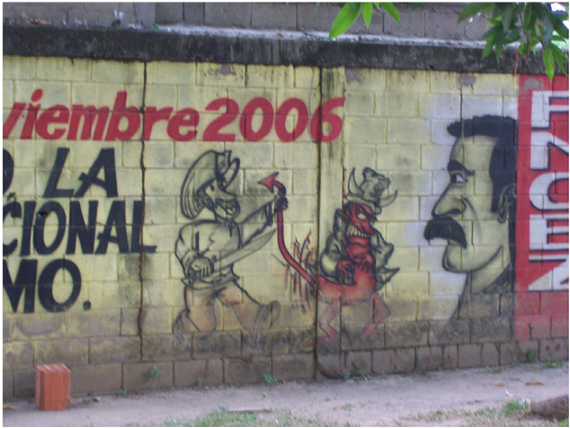
- Chávez’s 2006 UN “devil” remark and domestic discourse drew on the legend of *Florentino y El Diablo*; Chávez re-signified the tale as a critique of rentier dependency and “the oligarchy,” casting his movement as Florentino against the devil, Bush, and rentier elites.
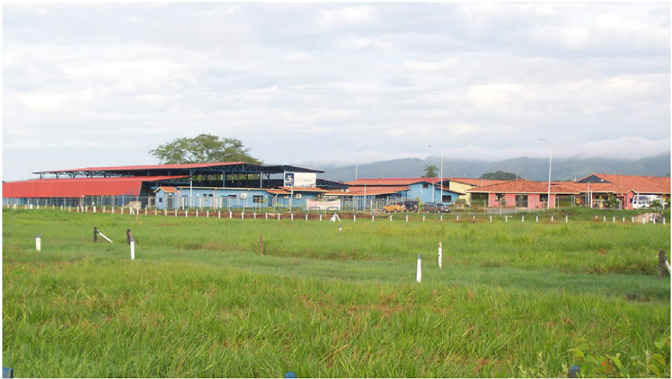
- At the Centro Técnico Productivo Socialista Florentino—a Ministry of Agriculture enterprise on a former latifundio of 4,000 hectares—workers used devil talk to critique delayed wages and benefits and suspected corruption; Sergio said “The devil is winning in Florentino” when pay was late, and workers planned a highway protest to appeal directly to Chávez.
- The article argues that local “resource curse” narratives and scholarly resource-curse theories both fetishize oil, attributing outcomes to unearned income rather than social relations; Chavista discourse could imply the petrostate could be purified or recaptured, not transcended.
- Workers’ critiques targeted the circulation of rent and the terms of labor, not wage labor itself; the absence of trade unions and manager-controlled Socialist Labor Committees limited collective leverage. The paper notes Sergio had seven children, the standard *Florentino* poem has more than 350 lines, and the 1989 Caracazo left “upwards of three thousand people dead” by some estimates.
Methods
- Ethnographic fieldwork in the Centro Técnico Productivo Socialista Florentino, a state enterprise in Barinas/western Venezuela; the acknowledgments state that quotes without citation come from fieldnotes taken in 2009–2010, while the text also refers to starting fieldwork in early 2007.
- Analysis of populist discourse, folklore (*Florentino y El Diablo*, especially Alfredo Arevelo Torrealba’s 1956 standard version), Chávez speeches, pro-government media, and secondary historical/political-economy literature.
- Main analytic frame draws on Gramsci, Laclau, Žižek, and Williams on hegemony/populism; Coronil on the petrostate and Occidentalism; and Taussig, Nash, and related scholarship on devil imagery and commodity fetishism.
Limitations
- Stated: the author does not claim to have “recovered” subaltern voices; devil discourse was one pervasive idiom, not the only critique, and workers’ critiques were diffuse and lacked systematic character; Sergio’s critique targeted the terms of labor, not wage labor itself.
- Stated/evident: there were no trade unions at Florentino and labor committees were tightly controlled by managers; budgetary opacity meant workers could only speculate about corruption; the study centers on a single state enterprise in Barinas, limiting generalization to other Venezuelan workers or petro-populism.
- Evident: the analysis relies heavily on fieldnotes and the author’s interpretation, without systematic survey or quantitative data; the text also contains a date discrepancy between fieldwork “early 2007” and fieldnotes from 2009–2010.
Model-written summary. Check it against the paper before relying on it.
Integrity signals
Registry
Cites
Statistics
Figures
Verification
Claims the paper makes
0 Valid · 16 Not valid · 54 Not checked · 109 Own results and interpretations
The paper states this without a source or data behind it here, so there is nothing to check it against. The quote shows it is in the paper.
In the paper
“Venezuelan leaders have deployed figures drawn from local folklore to divide society into two competing power blocs.”
plainstates a cause- Asserted: passes — The authors put it forward as true.
- Checkable: passes — It can be checked against evidence.
- Load-bearing: passes — The paper’s conclusions depend on it.
- Based: unclear — It is unclear why the paper says it holds.
A result the paper states — it cites no source for it, so there is none to check. The quote shows it is in the paper.
In the paper
“The devil symbol could be attached to a variety of objects, including managers, the occult powers of oil, or the exertion of work itself.”
hedgedstates an association- Asserted: passes — The authors put it forward as true.
- Checkable: passes — It can be checked against evidence.
- Load-bearing: unclear — It is unclear whether the paper’s conclusions depend on it.
- Based: passes — The paper gives a reason why it holds.
A result the paper states — it cites no source for it, so there is none to check. The quote shows it is in the paper.
In the paper
“In Venezuela, social actors were able to make sense of the occult features of the petroleum economy using a shared cultural system.”
plainstates a cause- Asserted: passes — The authors put it forward as true.
- Checkable: passes — It can be checked against evidence.
- Load-bearing: passes — The paper’s conclusions depend on it.
- Based: passes — The paper gives a reason why it holds.
None of the sources cited for this claim have been checked yet.
In the paper
“Following conventional readings of Venezuelan history (Tinker-Salas 2009; Coronil 1997: 67 -117), Chavista discourse correlated the rise of oil with the decline of national agriculture and other sectors of the economy, using an image drawn from popular culture.”
What the sources say
- Not checked — no full text of the sourcecites Tinker-Salas 2009 matched to “The Enduring Legacy: Oil, Culture, and Society in Venezuela” (2009) source
- Not matchedcites Coronil 1997
An author–year citation the paper’s reference list doesn’t settle. We don’t search these by name.
plainstates an association- Asserted: passes — The authors put it forward as true.
- Checkable: passes — It can be checked against evidence.
- Load-bearing: passes — The paper’s conclusions depend on it.
- Based: passes — The paper gives a reason why it holds.
A result the paper states — it cites no source for it, so there is none to check. The quote shows it is in the paper.
In the paper
“Labor in Florentino was also far less exploitative than in many other LatinAmerican settings.”
plain- Asserted: passes — The authors put it forward as true.
- Checkable: passes — It can be checked against evidence.
- Load-bearing: passes — The paper’s conclusions depend on it.
- Based: passes — The paper gives a reason why it holds.
52 more claims
Create a free account to see all 179 claims and to verify the 2 references still open.
- It may state two separate claims as one. 83
- Probably not a substantial claim. 77
Citations
Cites
Imagined Communities: Reflections on the Origin and Spread of Nationalism
Sweet, S. S. (1984) · Telos · doi:10.3817/0684060227 · Cited by 11,054 · cited 1×
“…affirms the history of nineteenth-century Venezuela as its sacred touchstone, for example the cult of the revolution, and Simón Bolívar (see Anderson 1983), but it also operates by way of an existential contradiction between the early history of the Republic and Venezuela ’ s current…”
Provincializing Europe: Postcolonial Thought and Historical Difference
Wong, R. B., & Chakrabarty, D. (2001) · The American Historical Review · doi:10.2307/2692957 · Cited by 9,382
Selections from the Prison Notebooks
GRAMSCI, A. (2007) · On Violence · doi:10.2307/j.ctv120qr2d.14 · Cited by 6,400 · cited 1×
“” This dialectic of “ virtuous being, ” but “ corrupted becoming, ” is the force which held together a national-popular consensus (Gramsci 1971) in what came to be known as “ The Bolivarian Revolution.”
Encountering development: the making and unmaking of the Third World
(1995) · Choice Reviews Online · doi:10.5860/choice.32-5764 · Cited by 5,461
Natural Resource Abundance and Economic Growth
Sachs, J., & Warner, A. (1995) · doi:10.3386/w5398 · Cited by 4,461 · cited 1×
“…systems and that the negative impacts of “ excess ” resource income include a “ democracy deficit, ” (Ross 1999), declines in real economic growth (Sachs and Warner 1995), and kleptocracies whose sole objective is to enrich themselves while preserving power through gross spending on…”
Death Without Weeping: The Violence of Everyday Life in Brazil
Scheper-Hughes, N. (1992) · University of California Press eBooks · doi:10.1525/9780520911567 · Cited by 2,839
Learning to Labour: How Working Class Kids Get Working Class Jobs.
Wexler, P., & Willis, P. E. (1981) · Contemporary Sociology · doi:10.2307/2067890 · Cited by 2,802
Notes on the Difficulty of Studying the State (1977)
ABRAMS, P. (1988) · Journal of Historical Sociology · doi:10.1111/j.1467-6443.1988.tb00004.x · Cited by 2,463 · cited 1×
“The question of how “ the idea of the state ” as a fount of justice that stands behind the play of ordinary politics (Abrams 1988) was preserved in the face of stark inequality and systemic failures cannot be answered solely by reference to the state ’ s ties with petroleum.”
Witchcraft, Oracles and Magic among the Azande
BARTLETT, F. C. (1937) · Nature · doi:10.1038/140338a0 · Cited by 2,196 · cited 1×
“But the mere existence of such a belief does not explain why certain events are attributed to malevolent agency, while others are not, nor why certain causal connections should prove more convincing than others (see Tambiah 1990; Evans-Pritchard 1937).”
History and Class Consciousness: Studies in Marxist Dialectics
Vucinich, A., Lukacs, G., & Livingstone, R. (1972) · Russian Review · doi:10.2307/128069 · Cited by 2,168
The Political Economy of the Resource Curse
Ross, M. L. (1999) · World Politics · doi:10.1017/s0043887100008200 · Cited by 1,991
Carbon democracy: political power in the age of oil
(2012) · Choice Reviews Online · doi:10.5860/choice.49-5932 · Cited by 1,921
Marxism and the Philosophy of Language
Magee, P. (2013) · Cited by 1,632
Spirits of Resistance and Capitalist Discipline: Factory Women in Malaysia.
McGee, T., & Ong, A. (1988) · Pacific Affairs · doi:10.2307/2759343 · Cited by 1,563
Occult economies and the violence of abstraction: notes from the South African postcolony
Comaroff, J., & Comaroff, J. L. (1999) · American Ethnologist · doi:10.1525/ae.1999.26.2.279 · Cited by 1,529 · cited 1×
“…is that the devil and other spectral figures mediate the destructive effects of capitalist production and exchange as well as the social dislocation that results from illicit or occluded forms of wealth accumulation (see also Comaroff and Comaroff 1999; Ong 1987; Gregory 2006; cf. Haynes 2013).”
The Devil and Commodity Fetishism in South America
Huaco, G. (1981) · Hispanic American Historical Review · doi:10.1215/00182168-61.3.573 · Cited by 1,492
The Paradox of Plenty: Oil Booms and Petro-States
Karl, T. L. (1997) · University of California Press eBooks · doi:10.1525/9780520918696 · Cited by 1,422
Purity and Danger: An analysis of concepts of pollution and taboo
Madge, C. (1967) · Sociology · doi:10.1177/003803856700100211 · Cited by 1,276
Fictions Of Feminist Ethnography
Visweswaran, K. (2010) · doi:10.5749/9780816685448 · Cited by 1,273
The Magical State: Nature, Money, and Modernity in Venezuela
Roseberry, W., & Coronil, F. (1998) · The American Historical Review · doi:10.2307/2650167 · Cited by 1,091 · cited 12×
“The inability of oil-exporters to use resource wealth to develop their own societies is not an “ inexorable dynamic ” but a social process, which even strident critics can reproduce (Coronil 1997: 42).”
InfluentialResource curse? governmentality, oil and power in the Niger Delta, Nigeria
Watts, M. (2004) · Geopolitics · doi:10.1080/14650040412331307832 · Cited by 824 · cited 1×
“Coronil (1997) stresses that theories of the “ resource curse ” rarely consider that the “ rentier effect ” is a symptom of specific uses of oil revenue, not unearned income (see also Watts 2004).”
Cultural Intimacy: Social Poetics In the Nation‐State
Cohen, A. P. (1998) · American Ethnologist · doi:10.1525/ae.1998.25.1.7 · Cited by 753
We Eat the Mines and the Mines Eat Us: Dependency and Exploitation in Bolivian Tin Mines
Burke, M., & Nash, J. (1980) · Technology and Culture · doi:10.2307/3103196 · Cited by 702
Carbon Democracy: Political Power in the Age of Oil
(2017) · The SHAFR Guide Online · doi:10.1163/2468-1733_shafr_sim280020537 · Cited by 649
Death without weeping: the violence of everyday life in Brazil
Flowers, N. M. (1992) · Cadernos de Saúde Pública · doi:10.1590/s0102-311x1992000200018 · Cited by 600
Money and the Morality of Exchange
Spaulding, J., Parry, J., & Bloch, M. (1990) · African Economic History · doi:10.2307/3601916 · Cited by 573
Resource Wars: The New Landscape of Global Conflict
Brown, S. A., Klare, M. T., & Pelletiere, S. (2002) · The Journal of Military History · doi:10.2307/3093336 · Cited by 471
The clash of fundamentalisms : crusades, Jihads and modernity
ALI, T. O. (2002) · Cited by 456
Brubaker, R. (2020) · Nations and Nationalism · doi:10.1111/nana.12522 · Cited by 401 · cited 1×
“Likewise, studies of populism have tended to adopt a national framing, which treats the political cultures of nation-states as bounded wholes, limiting ability to translate across cultural boundaries (see Brubaker 2020).”
National Ideology Under Socialism: Identity and Cultural Politics in Ceauşescu’s Romania
Verdery, K. (1991) · University of California Press eBooks · doi:10.1525/9780520917286 · Cited by 317
Dismembering and Remembering the Nation: The Semantics of Political Violence in Venezuela
Coronil, F., & Skurski, J. (1991) · Comparative Studies in Society and History · doi:10.1017/s0010417500017047 · Cited by 300 · cited 1×
“After the Caracazo riots of 1989, which by some estimates left upwards of three thousand people dead (Coronil and Skurski 1991), “ the devil ’ s excrement ” came increasingly to be attached to the nation in popular discourse.”
Against the Populist Temptation
Žižek, S. (2006) · Critical Inquiry · doi:10.1086/505378 · Cited by 280 · cited 1×
“Elaborating on this point, Zizek (2006) contends that populist discourse achieves social cohesion by explaining the objective position of social actors in relation to spectral figures that frustrate popular demands.”
Energizing historical materialism: Fossil fuels, space and the capitalist mode of production
Huber, M. T. (2009) · Geoforum · doi:10.1016/j.geoforum.2008.08.004 · Cited by 251 · cited 1×
“In this literature, fossil fuels have been faulted for everything from war to poverty to capitalism itself (e.g., Mitchell 2011; Collier 2008; Altvater 2007; Huber 2009; Renner 2006).”
Writing women's worlds: Bedouin stories
(1993) · Choice Reviews Online · doi:10.5860/choice.30-4467 · Cited by 245
Extraction, Protest and Indigeneity in Bolivia: The TIPNIS Effect
McNeish, J.-A. (2013) · Latin American and Caribbean Ethnic Studies · doi:10.1080/17442222.2013.808495 · Cited by 236 · cited 1×
“…1986), I enter into dialog with classic studies of Latin America ’ s devil cults (e.g., Nash 1993[1979]; Taussig 1980; Harris 1989; Edelman 1994; Nugent 1996; Crain 2009; Gordillo 2004; Gregory 2006; McNeish 2013) to deconstruct the feelings of turpitude that haunt Venezuela ’ s national psyche.”
Beyond The Fringe: The Nation State, Colonialism, and The Technologies of Power*
COHN, B. S., & DIRKS, N. B. (1988) · Journal of Historical Sociology · doi:10.1111/j.1467-6443.1988.tb00011.x · Cited by 235 · cited 1×
“…as Joel Robbins (1998) stresses, negative sentiments can equally contribute to identification with a national community, and such feelings may be just as powerful as the forms of self-ascription grounded in overt displays of honor and pride (see also Cohn and Dirks 1988; Herzfeld 1997; Urban 1994).”
Money and Modernity: State and Local Currencies in Melanesia
Keane, W. (2000) · American Anthropologist · doi:10.1525/aa.2000.102.3.654 · Cited by 231 · cited 2×
“By invoking the devil as a symbol of the destructive power of petroleum and venal elites, Chávez rearticulated popular conceptions of oil as a “ useless, ” or corrupting, form of wealth (Taussig 1980, Akin and Robbins 1999) by suggesting its revenue could be “ sown ” into virtuous spaces.”
Culture and waste : The creation and destruction of value
Muecke, S. (2003) · Medical Entomology and Zoology · Cited by 213
Pagels, E. (1995) · doi:10.5860/choice.33-2090 · Cited by 192
We Created Chavez: A People’s History of the Venezuelan Revolution
Ciccariello-Maher, G. (2013) · doi:10.1215/9780822378938 · Cited by 180 · cited 1×
“Embodying a departure from the elite political discourses, which have historically marginalized large sectors of Venezuelan society (Ciccariello-Maher 2013), Chávez ’ s knowledge of the Florentino story burnished his credentials as a “ man of the people ” who grasped the cultural wisdom of average…”
Puritan Conquistadors: Iberianizing the Atlantic, 1550-1700
Cañizares-Esguerra, J. (2006) · doi:10.1515/9781503619654 · Cited by 177 · cited 2×
“In the colonial imagination, the devil, along with his familiar identification with the underworld, was thought to possess an earthly kingdom separating heaven and hell (Cañizares-Esguerra 2006).”
Selective Hegemony and Beyond-Populations with “No Productive Function”: A Framework for Enquiry
Smith, G. A. (2011) · Identities · doi:10.1080/1070289x.2011.593413 · Cited by 167 · cited 2×
“The capacity of state actors to allocate rent without enhancing productivity gave political elites the power to forge an “ expansive form of hegemony ” (Smith 2011), which integrated surplus populations on the basis of citizenship, without challenging Venezuela ’ s structural position in the world…”
Planetary Mine. Territories of Extraction under Late Capitalism
Arias-Loyola, M. (2020) · Journal of Economic Geography · doi:10.1093/jeg/lbaa032 · Cited by 162
13. The Great Moving Right Show [1979]
(2020) · Essential Essays, Volume 1 · doi:10.1515/9781478002413-020 · Cited by 160
Oil in parallax: Scarcity, markets, and the financialization of accumulation
Labban, M. (2010) · Geoforum · doi:10.1016/j.geoforum.2009.12.002 · Cited by 149 · cited 1×
“…deployed a local version of “ the curse, ” when they suggested oil wealth was “ unearthed, ” when in fact its value is constituted through processes of calculation, measurement, and extraction (Labban 2010; Baptista and Mommer 1986) –– processes over which Venezuelans did not have complete control.”
The Enduring Legacy: Oil, Culture, and Society in Venezuela
Tinker Salas, M. (2009) · doi:10.1215/9780822392231 · Cited by 128
On the Potential and Problems of Pentecostal Exchange
Haynes, N. (2013) · American Anthropologist · doi:10.1111/j.1548-1433.2012.01537.x · Cited by 126 · cited 1×
“…is that the devil and other spectral figures mediate the destructive effects of capitalist production and exchange as well as the social dislocation that results from illicit or occluded forms of wealth accumulation (see also Comaroff and Comaroff 1999; Ong 1987; Gregory 2006; cf. Haynes 2013).”
From windfall to curse?: oil and industrialization in Venezuela, 1920 to the present
(2010) · Choice Reviews Online · doi:10.5860/choice.47-5759 · Cited by 125 · cited 2×
“By the late 1970s, Venezuela ’ s home market was effectively a massive rent-redistribution scheme, with low rates of investment and wages almost entirely divorced from productivity (DiJohn 2009).”
Belk, R. (2015) · Handbook of Culture and Consumer Behavior · doi:10.1093/acprof:oso/9780199388516.003.0014 · Cited by 119 · cited 1×
“In his writings on culture and power, Raymond Williams (1977) argues that hegemonic discourses serve to organize political consent by offering accounts for material relationships both within and beyond the direct experience of social actors.”
sex and sin, witchcraft and the devil in late‐colonial Mexico
BEHAR, R. (1987) · American Ethnologist · doi:10.1525/ae.1987.14.1.02a00030 · Cited by 116 · cited 1×
“This kingdom was a battleground for angels, demons, and other supernatural figures (Pagels 1995), and Hispanic settlers brought this vision of struggle between the forces of light and dark to efforts to Christianize the Americas ’ indigenous inhabitants (see also Behar 1987).”
Un/common Cultures: Racism and the Rearticulation of Cultural Difference
Visweswaran, K. (2010) · Project Muse (Johns Hopkins University) · Cited by 114
Un/common Cultures: Racism and the Rearticulation of Cultural Difference
Visweswaran, K. (2010) · doi:10.1215/9780822391630 · Cited by 111
The Missionary Politics of Hugo Chávez
Zúquete, J. P. (2008) · Latin American Politics and Society · doi:10.1111/j.1548-2456.2008.00005.x · Cited by 100
Poetics and politics in the Ecuadorean Andes: women's narratives of death and devil possession
CRAIN, M. M. (1991) · American Ethnologist · doi:10.1525/ae.1991.18.1.02a00030 · Cited by 87 · cited 1×
“…1986), I enter into dialog with classic studies of Latin America ’ s devil cults (e.g., Nash 1993[1979]; Taussig 1980; Harris 1989; Edelman 1994; Nugent 1996; Crain 2009; Gordillo 2004; Gregory 2006; McNeish 2013) to deconstruct the feelings of turpitude that haunt Venezuela ’ s national psyche.”
The Devil behind the Mirror: Globalization and Politics in the Dominican Republic
Gregory, S. (2006) · doi:10.1525/9780520957893 · Cited by 85
Barrio Rising: Urban Popular Politics and the Making of Modern Venezuela
Velasco, A. (2015) · doi:10.1525/9780520959187 · Cited by 73
Landlords and the Devil: Class, Ethnic, and Gender Dimensions of Central American Peasant Narratives
Edelman, M. (1994) · Cultural Anthropology · doi:10.1525/can.1994.9.1.02a00040 · Cited by 72 · cited 2×
“…sign (Volosinov 1986), I enter into dialog with classic studies of Latin America ’ s devil cults (e.g., Nash 1993[1979]; Taussig 1980; Harris 1989; Edelman 1994; Nugent 1996; Crain 2009; Gordillo 2004; Gregory 2006; McNeish 2013) to deconstruct the feelings of turpitude that haunt Venezuela ’ s…”
The Politics of Identity in Russia's Postcommunist Transition: The Nation against Itself
Urban, M. (1994) · Slavic Review · doi:10.2307/2501518 · Cited by 61 · cited 1×
“…as Joel Robbins (1998) stresses, negative sentiments can equally contribute to identification with a national community, and such feelings may be just as powerful as the forms of self-ascription grounded in overt displays of honor and pride (see also Cohn and Dirks 1988; Herzfeld 1997; Urban 1994).”
The ‘great Satan’ vs. the ‘mad mullahs’: how the United States and Iran demonize each other
Cappucci, J. (2009) · Contemporary Islam · doi:10.1007/s11562-009-0108-9 · Cited by 60
Schiller, N. (2013) · American Ethnologist · doi:10.1111/amet.12038 · Cited by 55 · cited 1×
“The ad was arresting, and I recall thinking it must have been the work of savvy media consultants (for analysis of pro-Chavista media, see Schiller 2013; Samet 2019).”
Death and the Regeneration of Life.
Hugh-Jones, S. P., Bloch, M. E. F., & Parry, J. P. (1986) · Man · doi:10.2307/2802663 · Cited by 55
The Body as Wound: Possession, Malandros and Everyday Violence in Venezuela
Ferrándiz, F. (2004) · Critique of Anthropology · doi:10.1177/0308275x04042649 · Cited by 53
Nugent, D. (1996) · American Ethnologist · doi:10.1525/ae.1996.23.2.02a00050 · Cited by 49 · cited 3×
“…1986), I enter into dialog with classic studies of Latin America ’ s devil cults (e.g., Nash 1993[1979]; Taussig 1980; Harris 1989; Edelman 1994; Nugent 1996; Crain 2009; Gordillo 2004; Gregory 2006; McNeish 2013) to deconstruct the feelings of turpitude that haunt Venezuela ’ s national psyche.”
Coffee and Capitalism in the Venezuelan Andes
Downing, T. E., & Roseberry, W. (1985) · Ethnohistory · doi:10.2307/481903 · Cited by 47
Mad Mullahs and Englishmen: Discourse in the Colonial Encounter
Edwards, D. B. (1989) · Comparative Studies in Society and History · doi:10.1017/s0010417500016145 · Cited by 44 · cited 1×
“…that allowed for easy comparisons with the Ayatollah Khomeini and other obscurantist leaders who had previously satanized the United States — figures they judged were not ready for primetime, or modernity for that matter (Schoen and Rowan 2009: 8 – 9 et passim; see Beeman 2008; Edwards 1989).”
Deadline: Populism and the Press in Venezuela
Samet, R. (2019) · doi:10.7208/chicago/9780226633879.001.0001 · Cited by 38 · cited 3×
“With high rates of crime giving rise to generalized feelings of vulnerability glossed as la inseguridad (Briceño-Leon, Avil, and Camardiel 2009; Samet 2019), it was not surprising to hear Florentino workers mobilize a discourse of a loss of values.”
A Coffee Frontier: Land, Society, and Politics in Duaca, Venezuela, 1830–1936
Yarrington, D. (1997) · doi:10.2307/jj.11786288 · Cited by 30 · cited 1×
“This structure of growth was part of the long process of Venezuela ’ s subordinate integration into the world capitalist market, which began with coffee in the eighteenth and nineteenth centuries (Roseberry 1985, Yarrington 1997).”
Populism and Performance in the Bolivarian Revolution of Venezuela
Marino, A. (2018) · Northwestern University Press eBooks · doi:10.2307/j.ctv43vt0v · Cited by 24 · cited 1×
“…, written by the Venezuelan man of letters and President Romulo Gallegos, symbolizes the Liberal Party ’ s strugglewith a Conservative oligarchy in the nineteenth century as well as the Liberal Party ’ s victory at the Battle of Santa Inés during the Federal War from 1859 – 1863 (Marino 2018).”
Grassroots Politics and Oil Culture in Venezuela
Strønen, I. Å. (2017) · doi:10.1007/978-3-319-59507-8 · Cited by 24
Refounding the Republic the Political Project of Chavismo
López-Maya, M., & Lander, L. E. (2000) · NACLA Report on the Americas · doi:10.1080/10714839.2000.11725609 · Cited by 19
Landscapes of Devils: Tensions of Place and Memory in the Argentinean Chaco
Lyons, G., & Gordillo, G. (2005) · Rocky Mountain Review of Language and Literature · doi:10.2307/3655072 · Cited by 19 · cited 2×
“…1986), I enter into dialog with classic studies of Latin America ’ s devil cults (e.g., Nash 1993[1979]; Taussig 1980; Harris 1989; Edelman 1994; Nugent 1996; Crain 2009; Gordillo 2004; Gregory 2006; McNeish 2013) to deconstruct the feelings of turpitude that haunt Venezuela ’ s national psyche.”
Landscapes of Devils: Tensions of Place and Memory in the Argentinean Chaco
Gordillo, G. R. (2005) · The Journal of Latin American and Caribbean Anthropology · doi:10.1525/jlat.2005.10.2.455 · Cited by 18
The Fernando Coronil Reader: The Struggle for Life is the Matter
Ferrández, L. F. A. (2020) · Journal of Iberian and Latin American Research · doi:10.1080/13260219.2020.1832368 · Cited by 17
Renner, M. (2006) · Development · doi:10.1057/palgrave.development.1100273 · Cited by 15 · cited 1×
“In this literature, fossil fuels have been faulted for everything from war to poverty to capitalism itself (e.g., Mitchell 2011; Collier 2008; Altvater 2007; Huber 2009; Renner 2006).”
Reproducing dependency: auto industry policy and petrodollar circulation in Venezuela
Coronil, F., & Skurski, J. (1982) · International Organization · doi:10.1017/s0020818300004781 · Cited by 14 · cited 1×
“…to the U.S. dollar meant oil rent tended to multiply in services, rather than industry, and that the deluge of petrodollars incentivized political leaders to act as “ masters of largesse ” for returns, which could not be absorbed productively (Baptista and Mommer 1986; Coronil and Skurski 1982).”
The Devil as Cognitive Mapping
Ližardo, O. (2009) · Rethinking Marxism · doi:10.1080/08935690903145838 · Cited by 13
Venezuelan Oil: Free Gift of Nature or Wealth of a Nation?
Hellinger, D. (2006) · International Journal · doi:10.2307/40204245 · Cited by 10
Devil or Democrat? Hugo Chávez and the US Prestige Press
Boykoff, J. (2009) · New Political Science · doi:10.1080/07393140802693832 · Cited by 7 · cited 1×
“Few journalists paused to investigate what “ the devil ” could mean in the cultural context of Venezuela or how the symbol related to friction between the two leaders (for analysis of U.S. media portrayals of Chávez, see Boykoff 2009).”
Ignorant Mobs or Rational Actors? Understanding Support for Venezuela's “Bolivarian Revolution”
Lupien, P. (2015) · Political Science Quarterly · doi:10.1002/polq.12325 · Cited by 5 · cited 1×
“The few journalists who could acknowledge the Venezuelan President ’ s democratic credentials suggested he could only have been elected by an equally irrational nation (Zuckerman 2005; Lupien 2015).”
The Alternative University: Lessons from Bolivarian Venezuela
Apostolova, R., & Ivancheva, M. P. (2023) · Educational Philosophy and Theory · doi:10.1080/00131857.2023.2241622 · Cited by 5
Straka, T. (2003) · UCLA - Biblioteca de Administración y Contaduría · Cited by 2
State of Health: Pleasure and Politics in Venezuelan Health Care under Chávez
Cooper, A. (2019) · doi:10.1525/9780520971080 · Cited by 1
The Alternative University: Lessons from Bolivarian Venezuela
Ivancheva, M. (2023) · doi:10.1515/9781503636026 · Cited by 1
Coronil, F. (2019) · Duke University Press eBooks · doi:10.1515/9781478004592-015 · Cited by 1
Fictions of feminist ethnography
(1994) · Choice Reviews Online · doi:10.5860/choice.32-1606
(1986)
Notes on the Difficulty of Studying the State (1977)
Abrams, P. (n.d.) · Twenty Years of theJournal of Historical Sociology · doi:10.1002/9781444309706.ch1
The symbolism of money in Imerina
Bloch, M. (1989) · Money and the Morality of Exchange · doi:10.1017/cbo9780511621659.007
McBeth, B. S. (n.d.) · Juan Vicente Gomez and the Oil Companies in Venezuela, 1908–1935 · doi:10.1017/cbo9780511523939.005
Landscapes of Devils: Tensions of Place and Memory in the Argentinean Chaco
Gordillo, G. R. (2004) · doi:10.1215/9780822386025
Harris, J. (n.d.) · Routledge Encyclopedia of Philosophy · doi:10.4324/9780415249126-l043-1
Introduction: New Perspectives and the Chávez Phenomenon
Ellner, S., & Salas, M. T. (2006) · Venezuela · doi:10.5040/9798216412526.ch-i
Research works printed but not linked: 26
- Briceño-Leon, Roberto, Olga Avil, and Alberto Camardiel. 2009. Inseguridad y Violencia en Venezuela . Caracas: Editorial Alfa.
- Roseberry, William. 1989. Anthropologies and Histories . New Brunswick: Rutgers University Press.
- Tambiah, Stanley. 1990. Magic, Science and Religion and the Scope of Rationality . Cambridge: Cambridge University Press.
- Muñoz, Freddy. 1998. Venezuela: La economía por construir . Caracas: Monte Avila Latinoamericana.
- Acevedo, Ángel Eduardo. 2007. Prólogo: Antología poetica. Con la segunda versión de Florentino y el Diablo . Caracas: Editorial Caracas.
- Briceño-Leon, J. M. 2002[1980]. Discurso Salvaje . Caracas, Venezuela: Fundarte.
- Collier, Paul. 2008. The Bottom Billion: Why the Poorest Countries are Falling Behind and What Can Be Done about It . Oxford: Oxford University Press.
- McBeth, Brian S. 2002. Juan Vicente Gómez and the Oil Companies in Venezuela, 1908 -1935 . Cambridge: Cambridge University Press.
- Achar, Gilbert. 2006. The Clash of Barbarisms . Boulder: Paradigm Publishers.
- La Fuente, Sandra and Alfredo Meza. 2012. El Acertijo de abril . Caracas: Ediciones Cyngular.
- Ramonet, Ignacio. 2013. Mi Primera Vida . Barcelona: Debate.
- Coronel, Gustavo. 1983. The Nationalization of the Venezuelan Oil Industry . Lexington: Lexington Books.
- Rangel, Alberto Domingo. 1970. El Rey Petroleo . Caracas: Universidad Central de Venezuela.
- Vargas, Iraida. 2007. Resistencia y Participación . Caracas: Monte Ávila, Editores Latinoamericana.
- Riggio, Milla Cozart, Angela Marino, and Paolo Vignolo. 2015. Festive Devils of the Americas . New York: Seagull Books.
- Lukács, Gyorgy. 2021[1952]. The Destruction of Reason . London: Verso.
- Herzfeld, Michael. 1997. Of Definitions and Boundaries. In Cultural Intimacy: Social Poetics in the NationState . London: Routledge.
- Baptista, 1986, El Petróleo en el Pensamiento Economico Venezolano
- Robbins, Joel. 1998. On Reading ' World News ' : Apocalyptic Narrative, Negative Nationalism, and Transnational Christianity in a Papua New Guinea Society. Social Analysis 42, 2: 103 -30.
- Zuckerman, Mortimer B. 2005. Cracking down on Caracas. U.S. News and World Report , 138(5) (February 2).
- Scott, James. 1977. The Moral Economy of the Peasant . New Haven: Yale University Press.
- Schoen, Douglas E. and Michael Rowan. 2009. Hugo Chávez and the War against America: The Threat Closer to Home . New York: Free Press.
- Laclau, Ernesto. 2005. On Populist Reason . London: Verso.
- Weismantel, Mary. 2001. Cholas and Pishtacos: Tales of Race and Sex in the Andes . Chicago: University of Chicago Press.
- Hobsbawm, Eric and Terrence Ranger. 1983. The Invention of Tradition . Cambridge: Cambridge University Press.
- Ellner, Steve and Miguel Tinker Salas. 2007. Venezuela: Hugo Chávez and the Decline of an ' Exceptional Democracy . ' Boulder: Rowman and Littlefield.
Cited by
Toward a Caribbean Genealogy of Energy: Cosmologies of Energy in Modernity’s First World
Crosson, J. B. (2025) · Religions · doi:10.3390/rel16020108 · Cited by 2
Omoile, K. U., Wasiu, Y., & Rufai, A. A. (2026) · African Journal of Economic and Management Studies · doi:10.1108/ajems-12-2025-1046
Metadata
- Authors
- Kappeler, A.
- Affiliations
- University of Edinburgh (GB)
- Corresponding author
- Kappeler, Aaron
- ORCID
- Kappeler, Aaron
- Venue
- Comparative Studies in Society and History
- Publisher
- Cambridge University Press (CUP)
- Published
- 2024-04-01
- Volume
- 66
- Issue
- 3
- Pages
- 474-500
- ISSN
- 0010-4175 (ISSN-L)
- 1475-2999
- OpenAlex
- W4393392612
- Cited by
- 2
- References
- 79
- Citations by year
- 2026: 1 · 2025: 1
- FWCI
- 1.34
- Type
- journal article
- Language
- en
- Open access
- hybrid
- doi.org
- Locations
- Comparative Studies in Society and History (publishedVersion, cc-by)
- Edinburgh Research Explorer (University of Edinburgh) (submittedVersion, cc-by)
- Funders
- University of Toronto
- Topics
- Social Sciences › Economics, Econometrics and Finance › General Economics, Econometrics and Finance › Natural Resources and Economic Development
- Social Sciences › Sociology and Political Science › Extractivism and Socioeconomic Issues
- Social Sciences › Political Science and International Relations › Politics and Society in Latin America
- Keywords
- resource curse, oil wealth, rent capture, folklore, petrostates, rentier economy, state-owned enterprises, working conditions, subaltern consciousness, political economy of natural resources, colonialism, counter-narratives, translation, modernity, Venezuela
About these checks
Registry, retraction, Cites and statistics results are computed, not judged, with one exception: a printed reference that no index lists is read once by a model before it counts as a citation error. Claims are extracted by a model and kept only when their quote appears verbatim in the text; each cited source is then checked, with a model’s help, for whether it says what the claim relies on. Those verdicts can be wrong — read the claim’s quote and the cited source before relying on one.
A language model drew the claims from the paper on 2026-10-10, under version 3 of the claim definition (model deepseek-v4.1-flash, prompt extract-v3).
A second model labelled each claim on 2026-10-10 (model jev-1.13-20260917, definition revision gold-guideline-v0.2).
Statistics and arithmetic are recomputed, not judged.
Confidence bands are shown only for fields calibrated on our annotated test set. None is calibrated yet, so no band is shown.
What counts as a claim ›How we measure confidence ›How we check this ›
Are you an author, or do you see a problem with this page? Request a review
Data sources
Bibliographic data: Semantic Scholar, OpenAlex, Crossref.
Contains information from the Semantic Scholar Academic Graph Datasets, made available under the ODC Attribution License (ODC-BY 1.0).
Semantic Scholar’s data is described in: Kinney, R., et al. (2023). The Semantic Scholar Open Data Platform. arXiv:2301.10140.
