

Intrusive memories to traumatic footage: the neural basis of their encoding and involuntary recall
Open accessThe DOI matches its Crossref record; 77 of the 77 references it cites were found in a registry or an index.
Abstract
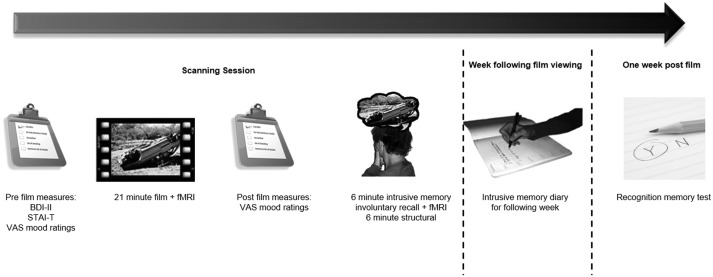
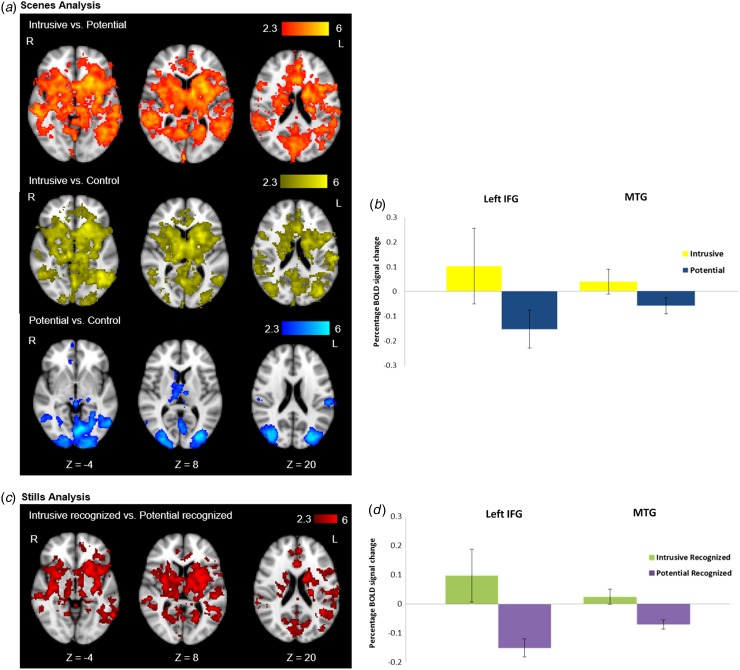
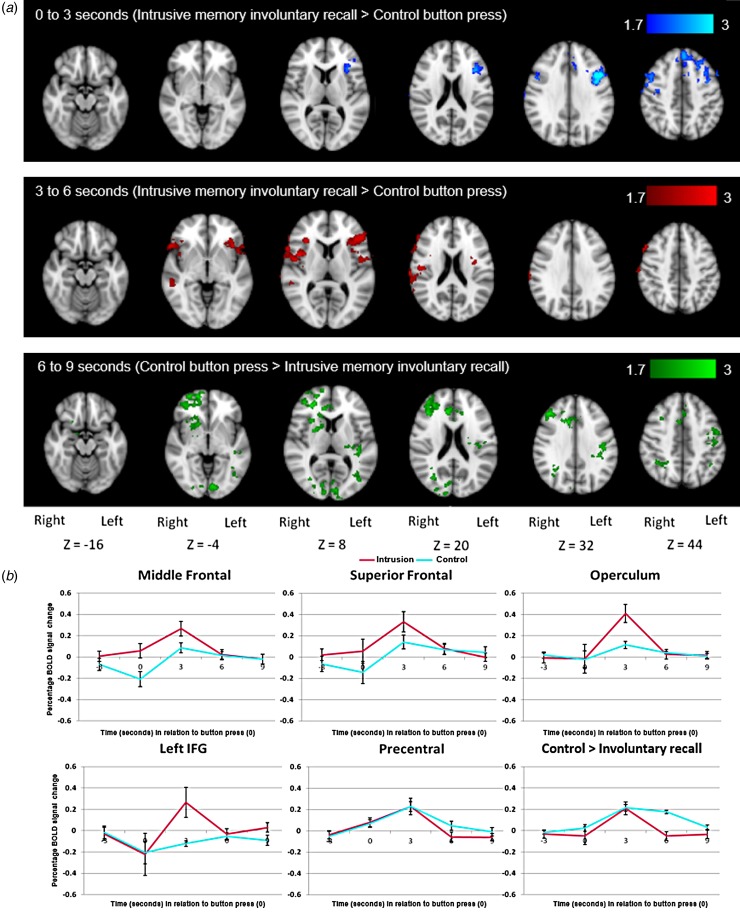
Background: A hallmark symptom after psychological trauma is the presence of intrusive memories. It is unclear why only some moments of trauma become intrusive, and how these memories involuntarily return to mind. Understanding the neural mechanisms involved in the encoding and involuntary recall of intrusive memories may elucidate these questions. Method: Participants (n= 35) underwent functional magnetic resonance imaging (fMRI) while being exposed to traumatic film footage. After film viewing, participants indicated within the scanner, while undergoing fMRI, if they experienced an intrusive memory of the film. Further intrusive memories in daily life were recorded for 7 days. After 7 days, participants completed a recognition memory test. Intrusive memory encoding was captured by comparing activity at the time of viewing ‘Intrusive scenes’ (scenes recalled involuntarily), ‘Control scenes’ (scenes never recalled involuntarily) and ‘Potential scenes’ (scenes recalled involuntarily by others but not that individual). Signal change associated with intrusive memory involuntary recall was modelled using finite impulse response basis functions. Results: We found a widespread pattern of increased activation for Intrusive v. both Potential and Control scenes at encoding. The left inferior frontal gyrus and middle temporal gyrus showed increased activity in Intrusive scenes compared with Potential scenes, but not in Intrusive scenes compared with Control scenes. This pattern of activation persisted when taking recognition memory performance into account. Intrusive memory involuntary recall was characterized by activity in frontal regions, notably the left inferior frontal gyrus. Conclusions: The left inferior frontal gyrus may be implicated in both the encoding and involuntary recall of intrusive memories.
Overview
The claims and statistics of this paper haven’t been checked yet.
Free: it reads the open-access text and checks the first 5 claims that cite a source we can check. Create a free account to check every claim.
Integrity signals
Registry
Cites
Statistics
Figures
Verification
Claims the paper makes
The claims and statistics of this paper haven’t been checked yet.
Free: it reads the open-access text and checks the first 5 claims that cite a source we can check. Create a free account to check every claim.
Claims other papers make about this one
Each is checked against this paper’s own text: does it say what the citing paper says it does?
The source backs part of the claim, not all of it — or backs it for a different population, condition or comparison.
In the citing paper
“So-called subsequent memory paradigms [141] have yielded several markers that predicted the later voluntary recollection of information [142], or the involuntary retrieval of experimental trauma [143–145].”
From Multiple memory systems, multiple time points: How science can inform treatment to control the expression of unwanted emotional memories (2018) · cites this paper as [143]
Experimental — accuracy not yet measuredThe cited source says what the claim attributes to it.
In the citing paper
“suggesting that distinct neural traces for intrusive memories are already (partially) formed during exposure to experimental trauma”
From Intrusive memories of trauma: A target for research bridging cognitive science and its clinical application (2019) · cites this paper as Clark, MacKay, Woolrich, & Holmes, 2016
Self-check
Percentages, sums and reported differences re-computed from the paper’s own numbers.
The self-check needs the paper’s full text.
Citations
Cites
Diagnostic and Statistical Manual of Mental Disorders
Williams, J. B. W., & First, M. (2013) · Encyclopedia of Social Work · doi:10.1093/acrefore/9780199975839.013.104 · Cited by 109,519
A cognitive model of posttraumatic stress disorder
Ehlers, A., & Clark, D. M. (2000) · Behaviour Research and Therapy · doi:10.1016/s0005-7967(99)00123-0 · Cited by 6,147 · cited 2×
“Intrusive memories to traumatic footage: the neural basis of their encoding and involuntary recall”
BackgroundEpisodic memory: from mind to brain
Tulving, E. (2002) · Annual Review of Psychology · doi:10.1146/annurev.psych.53.100901.135114 · Cited by 4,950 · cited 1×
“Episodic memory involves imagery (Tulving, 2002).”
Predictors of posttraumatic stress disorder and symptoms in adults: a meta-analysis
Ozer, E. J., Best, S. R., Lipsey, T. L., & Weiss, D. S. (2003) · Psychological Bulletin · doi:10.1037/0033-2909.129.1.52 · Cited by 3,322 · cited 3×
“Our analyses suggest that whilst experiencing trauma the brain behaves differently during moments that later become intrusive memories, consistent with clinical suggestions that the peritraumatic phase is important in predicting PTSD (Ozer et al. 2003; American Psychiatric Association, 2013).”
BackgroundForman, S. D., Cohen, J. D., Fitzgerald, M., Eddy, W. F., Mintun, M. A., & Noll, D. C. (1995) · Magnetic Resonance in Medicine · doi:10.1002/mrm.1910330508 · Cited by 3,202 · cited 1×
“…(MNI) 152 standard space using FLAME (FMRIB’s Local Analysis of Mixed Effects) stage 1 (Beckmann et al. 2003; Woolrich et al. 2004; Woolrich, 2008). z-Statistic images were thresholded at z > 2.3 and a family-wise error corrected cluster significance threshold of p < 0.05 (Forman et al. 1995).”
MethodInfluentialBuckner, R. L., & Carroll, D. C. (2007) · Trends in Cognitive Sciences · doi:10.1016/j.tics.2006.11.004 · Cited by 2,691
Trauma and Posttraumatic Stress Disorder in the Community: The 1996 Detroit Area Survey of Trauma
Breslau, N., Kessler, R. C., Chilcoat, H. D., Schultz, L. R., Davis, G. C., & Andreski, P. (1998) · Archives of General Psychiatry · doi:10.1001/archpsyc.55.7.626 · Cited by 2,407 · cited 1×
“The majority of people will experience or witness a traumatic event during their lifetime and a significant minority will develop post-traumatic stress disorder (PTSD) (Breslau et al. 1998; American Psychiatric Association, 2013).”
BackgroundCan cognitive processes be inferred from neuroimaging data?
POLDRACK, R. (2006) · Trends in Cognitive Sciences · doi:10.1016/j.tics.2005.12.004 · Cited by 2,249
Kosslyn, S. M., Ganis, G., & Thompson, W. L. (2001) · Nature Reviews Neuroscience · doi:10.1038/35090055 · Cited by 1,894 · cited 1×
“…(e.g. rostral anterior cingulate cortex) (Bishop et al. 2004; Browning & Harmer, 2012), emotional processing, pain and empathy of pain (e.g. insula, anterior cingulate, thalamus) (Leknes & Tracey, 2008) and visual processing and mental imagery (e.g. ventral occipital cortex) (Kosslyn et al. 2001).”
BackgroundMeta-analyzing left hemisphere language areas: phonology, semantics, and sentence processing.
Vigneau, M., Beaucousin, V., Hervé, P. Y., Duffau, H., Crivello, F., Houdé, O., Mazoyer, B., & Tzourio-Mazoyer, N. (2006) · NeuroImage · doi:10.1016/j.neuroimage.2005.11.002 · Cited by 1,851
Cited by
Naturalistic Stimuli in Neuroscience: Critically Acclaimed
Sonkusare, S., Breakspear, M., & Guo, C. (2019) · Trends in Cognitive Sciences · doi:10.1016/j.tics.2019.05.004 · Cited by 611
Mental Imagery in Depression: Phenomenology, Potential Mechanisms, and Treatment Implications
Holmes, E. A., Blackwell, S. E., Burnett Heyes, S., Renner, F., & Raes, F. (2016) · Annual Review of Clinical Psychology · doi:10.1146/annurev-clinpsy-021815-092925 · Cited by 325
Self-citationNanay, B. (2018) · Cortex · doi:10.1016/j.cortex.2017.07.006 · Cited by 299
James, E. L., Lau-Zhu, A., Clark, I. A., Visser, R. M., Hagenaars, M. A., & Holmes, E. A. (2016) · Clinical Psychology Review · doi:10.1016/j.cpr.2016.04.010 · Cited by 300
Self-citationIyadurai, L., Blackwell, S. E., Meiser-Stedman, R., Watson, P. C., Bonsall, M. B., Geddes, J. R., Nobre, A. C., & Holmes, E. A. (2018) · Molecular Psychiatry · doi:10.1038/mp.2017.23 · Cited by 266
Self-citationIyadurai, L., Visser, R. M., Lau-Zhu, A., Porcheret, K., Horsch, A., Holmes, E. A., & James, E. L. (2019) · Clinical Psychology Review · doi:10.1016/j.cpr.2018.08.005 · Cited by 256
Self-citationMedia exposure to mass violence events can fuel a cycle of distress
Thompson, R. R., Jones, N. M., Holman, E. A., & Silver, R. C. (2019) · Science Advances · doi:10.1126/sciadv.aav3502 · Cited by 209
Mental imagery in psychiatry: conceptual & clinical implications
Ji, J. L., Kavanagh, D. J., Holmes, E. A., MacLeod, C., & Di Simplicio, M. (2019) · CNS Spectrums · doi:10.1017/s1092852918001487 · Cited by 118
“Initial advances have been made in exploring the basis of trauma flashbacks 172 and also of elevated emotional imagery in bipolar disorder.”
Self-citationMental Imagery: Philosophy, Psychology, Neuroscience
Nánay, B. (2023) · doi:10.1093/oso/9780198809500.001.0001 · Cited by 137
Visser, R. M., Lau-Zhu, A., Henson, R. N., & Holmes, E. A. (2018) · Philosophical Transactions of the Royal Society B: Biological Sciences · doi:10.1098/rstb.2017.0209 · Cited by 95
Self-citationLau‐Zhu, A., Henson, R. N., & Holmes, E. A. (2019) · Journal of Experimental Psychology General · doi:10.1037/xge0000598 · Cited by 87
Self-citationImplicit Bias as Mental Imagery
Nánay, B. (2021) · Journal of the American Philosophical Association · doi:10.1017/apa.2020.29 · Cited by 74
Ren, Y., Nguyen, V. T., Sonkusare, S., Lv, J., Pang, T., Guo, L., Eickhoff, S. B., Breakspear, M. J., & Guo, C. C. (2018) · Nature Communications · doi:10.1038/s41467-018-07325-4 · Cited by 60
Singh, L., Espinosa, L., Ji, J. L., Moulds, M. L., & Holmes, E. A. (2020) · Cognitive Neuropsychiatry · doi:10.1080/13546805.2020.1804845 · Cited by 57
Self-citationMiedl, S. F., Wegerer, M., Kerschbaum, H., Blechert, J., & Wilhelm, F. H. (2017) · Psychoneuroendocrinology · doi:10.1016/j.psyneuen.2017.10.006 · Cited by 48
Neuromodulation of Visual Cortex Reduces the Intensity of Intrusive Memories
Herz, N., Bar‐Haim, Y., Tavor, I., Tik, N., Sharon, H., Holmes, E. A., & Censor, N. (2021) · Cerebral Cortex · doi:10.1093/cercor/bhab217 · Cited by 45
Self-citationNegative emotion enhances memory for the sequential unfolding of a naturalistic experience.
Dev, D. K., Wardell, V., Checknita, K. J., Te, A. A., Petrucci, A. S., Le, M. L., Madan, C. R., & Palombo, D. J. (2022) · Journal of Applied Research in Memory and Cognition · doi:10.1037/mac0000015 · Cited by 44
Clark, I. A., Niehaus, K. E., Duff, E. P., Di Simplicio, M. C., Clifford, G. D., Smith, S. M., Mackay, C. E., Woolrich, M. W., & Holmes, E. A. (2014) · Behaviour Research and Therapy · doi:10.1016/j.brat.2014.07.010 · Cited by 37
Self-citationIntrusive memories of trauma in the laboratory: Methodological developments and future directions
Lau-Zhu, A., Holmes, E. A., & Porcheret, K. (2018) · Current Behavioral Neuroscience Reports · doi:10.1007/s40473-018-0141-1 · Cited by 36
Self-citationHall, S. A., Brodar, K. E., LaBar, K. S., Berntsen, D., & Rubin, D. C. (2018) · NeuroImage Clinical · doi:10.1016/j.nicl.2018.05.009 · Cited by 32
“In contrast to other work examining the neural underpinnings of involuntary memories in healthy individuals (e.g., Hall et al., 2014), Clark et al. (2016) found that involuntary retrieval elicited activity in frontal regions.”
InfluentialIntrusive memories: A mechanistic signature for emotional memory persistence
Herz, N., Bar‐Haim, Y., Holmes, E. A., & Censor, N. (2020) · Behaviour Research and Therapy · doi:10.1016/j.brat.2020.103752 · Cited by 34
Self-citationNeural Processing During Fear Extinction Predicts Intrusive Memories
Miedl, S. F., Rattel, J. A., Franke, L. K., Blechert, J., Kronbichler, M., Spoormaker, V. I., & Wilhelm, F. H. (2020) · Biological Psychiatry Cognitive Neuroscience and Neuroimaging · doi:10.1016/j.bpsc.2019.12.017 · Cited by 37
Shields, G. S., McCullough, A. M., Ritchey, M., Ranganath, C., & Yonelinas, A. P. (2019) · Psychoneuroendocrinology · doi:10.1016/j.psyneuen.2019.04.001 · Cited by 34
The neural basis of Tetris gameplay: implicating the role of visuospatial processing
Ågren, T., Hoppe, J. M., Singh, L., Holmes, E. A., & Rosén, J. (2021) · Current Psychology · doi:10.1007/s12144-021-02081-z · Cited by 28
Self-citationThe memory trace of an intrusive trauma-analog episode
Kobelt, M., Waldhauser, G. T., Rupietta, A. E., Heinen, R. M., Rau, E. M. B., Kessler, H., & Axmacher, N. (2024) · Current Biology · doi:10.1016/j.cub.2024.03.005 · Cited by 27
Clancy, K. J., Devignes, Q., Ren, B., Pollmann, Y., Nielsen, S. R., Howell, K., Kumar, P., Belleau, E. L., & Rosso, I. M. (2024) · Molecular Psychiatry · doi:10.1038/s41380-024-02486-9 · Cited by 23
“The majority of neuroimaging research on TR-IMs has focused on the frequency and intensity of IMs, consistent with clinical assessments of the symptom, and implicate a diverse set of cortical regions linked to sensory, cognitive, and affective processes [17, 47 – 49].”
BackgroundFunctional locus coeruleus imaging to investigate an ageing noradrenergic system
Ludwig, M., Yi, Y., Lüsebrink, F., Callaghan, M. F., Betts, M. J., Yakupov, R., Weiskopf, N., Dolan, R. J., Düzel, E., & Hämmerer, D. (2024) · Communications Biology · doi:10.1038/s42003-024-06446-5 · Cited by 26
Steward, T., Das, P., Malhi, G. S., Bryant, R. A., & Felmingham, K. L. (2020) · European Neuropsychopharmacology · doi:10.1016/j.euroneuro.2020.09.634 · Cited by 23
Goodwin, G. M., Holmes, E. A., Andersson, E., Browning, M. D., Jones, A., Lass‐Hennemann, J., Månsson, K. N. T., Moessnang, C., Salemink, E., Sánchez-López, Á., et al. (2018) · European Neuropsychopharmacology · doi:10.1016/j.euroneuro.2017.10.036 · Cited by 22
“A second analog study used the trauma-film-paradigm (an experimental tool for investigating intrusive memories in healthy participants; Bourne et al., 2013; Clark et al., 2016; James et al., 2015; James et al., 2016).”
MethodSelf-citationInvestigating the role of future thinking in a case of highly superior autobiographical memory
Gibson, E. C., Ford, L., & Robinson, G. A. (2022) · Cortex · doi:10.1016/j.cortex.2022.01.016 · Cited by 17
The Unintended Consequences of Disaster-Related Media Coverage
Lubens, P., & Holman, E. A. (2017) · Cambridge University Press eBooks · doi:10.1017/9781316481424.013 · Cited by 19
Visualizing the IKEA effect: experiential consumption assessed with fNIRS-based neuroimaging
Oishi, H., Nakazawa, K., Takahashi, T., Kyutoku, Y., & Dan, I. (2023) · Frontiers in Neuroergonomics · doi:10.3389/fnrgo.2023.1129582 · Cited by 15
“The LIFG has been associated with past memory recall (Clark et al., 2015).”
BackgroundMa, Y., Jiao, F., Batsikadze, G., Yavari, F., & Nitsche, M. A. (2024) · Brain stimulation · doi:10.1016/j.brs.2024.07.004 · Cited by 11
“Subsequent investigations revealed that the LiFG is not solely involved in traumatic memory encoding, but also in the involuntary recall of intrusive memories [67].”
BackgroundVisser, R. M., Henson, R. N., & Holmes, E. A. (2021) · Biological Psychiatry Cognitive Neuroscience and Neuroimaging · doi:10.1016/j.bpsc.2021.08.006 · Cited by 13
“ROI analyses (Figure 2B) showed higher activation for intrusive hotspots in the left IFG (t24 = 2.40, p = .012, one sided; d = 0.48), but not MTG (t24 = 1.03, p = .156, one sided; d = 0.21) or amygdala (t24 = 0.91, p = .187, one sided; d = 0.18).”
BackgroundResultInfluentialSelf-citationEnhanced semantic memory in a case of highly superior autobiographical memory
Ford, L., Shaw, T. B., Mattingley, J. B., & Robinson, G. A. (2022) · Cortex · doi:10.1016/j.cortex.2022.02.007 · Cited by 8
Joss, D., Datko, M., Washington, C. I., Tresvalles, M. A., Mete, M., Lazar, S. W., Schuman‐Olivier, Z., & Hoge, E. A. (2024) · Journal of Mood and Anxiety Disorders · doi:10.1016/j.xjmad.2024.100096 · Cited by 9
“…dorsal medial frontal cortex (DMFC), which is critical for self-referential processes [40] and also a core region of the default mode network [37,41,42]; dorsal lateral prefrontal cortex (DLPFC) as the core region of the executive network [43]; and the amygdala-hippocampal complex which are core…”
Nánay, B. (2023) · Oxford University Press eBooks · doi:10.1093/oso/9780198809500.003.0013 · Cited by 7
Rohde, K., Caspar, F., Koenig, T. W., Pascual‐Leone, A., & Stein, M. (2018) · Emotion · doi:10.1037/emo0000356 · Cited by 6
Schippert, A. C., Grov, E. K., Dahl‐Michelsen, T., Silvola, J. T., Sparboe-Nilsen, B., Danielsen, S. O., Lie, I., Aaland, M., & Bjørnnes, A. K. (2024) · BMJ Open · doi:10.1136/bmjopen-2023-083388 · Cited by 5
Experimental trauma rapidly modifies functional connectivity
Gvozdanovic, G., Seifritz, E., Stämpfli, P., Canna, A., Rasch, B., & Esposito, F. (2020) · Brain Imaging and Behavior · doi:10.1007/s11682-020-00396-2 · Cited by 7
“Additionally, further research on the neural activity during encoding of trauma film scenes revealed the relevance of MTG for actually intrusive scenes compared to potentially intrusive scenes (Clark et al. 2016).”
Backgroundvan den Berg, K. C., ten Bloemendal, E., Hendrickson, A. T., Simplicio, M. C. D., Voncken, M. J., Aalbers, G., & Keijsers, G. P. J. (2024) · Clinical Psychology & Psychotherapy · doi:10.1002/cpp.3050 · Cited by 5
Novich, M., & Zduniak, A. (2021) · Emerald Group Publishing Limited eBooks · doi:10.1108/978-1-83982-848-520211020 · Cited by 11
Pavlovian threat conditioning can generate intrusive memories that persist over time
Espinosa, L., Bonsall, M. B., Becker, N., Holmes, E. A., & Olsson, A. (2022) · Behaviour Research and Therapy · doi:10.1016/j.brat.2022.104161 · Cited by 7
Self-citationLaurin, A., Bottemanne, H., Bulteau, S., Haj, M. E., Sauvaget, A., & Deschamps, T. (2026) · Neuroscience & Biobehavioral Reviews · doi:10.1016/j.neubiorev.2026.106546 · Cited by 4
Bagheri, M., Woud, M. L., Oglou, I. F., Oglou, F. F., Ratzkowski, J. D. J., Margraf, J., & Blackwell, S. E. (2025) · Journal of Emotion and Psychopathology · doi:10.55913/joep.v1i2.48 · Cited by 3
“In fact, the timeframe of the attentional blink (200 ms) may preclude effects of involuntary retrieval of an episodic memory, which appears to occur over a longer time-frame (Clark et al., 2016).”
Miedl, S. F., Franke, L. K., Danböck, S. K., Martini, M., Hettegger, S. E., Kronbichler, M., Flor, H., & Wilhelm, F. H. (2024) · European Journal of Psychotraumatology · doi:10.1080/20008066.2024.2388429 · Cited by 3
“…to an involvement of heightened central autonomic–interoceptive processing (Fullana et al., 2018) in audiovisual intrusion formation and are in agreement with previous studies linking networks around the dACC to analogue intrusions (Battaglini et al., 2016; Bourne et al., 2013; Clark et al., 2016).”
BackgroundResultShkreli, L., Nettekoven, C., Boessenkool, S., Martens, M., Filippini, N., Capitão, L. P., Cowen, P. J., & Reinecke, A. (2025) · Psychiatry Research · doi:10.1016/j.psychres.2025.116458 · Cited by 2
“Specifically, losartan decreased rsFC between hippocampus and IFG – a structure associated with threat processing (Mujica-Parodi et al., 2017; Pfeuty et al., 2015; Rahko et al., 2010) and aversive memory processing (Bourne et al., 2013; Clark et al., 2016; Kelly et al., 2007).”
Kobelt, M., Waldhauser, G. T., Fellner, M.-C., & Axmacher, N. (2025) · PLoS Biology · doi:10.1371/journal.pbio.3003258 · Cited by 4
“Specifically, excessive sensory processing during trauma exposure [80–82] might result in the formation of more pronounced sensory representations and has been previously shown to result in more intrusive memories of traumatic film footage [82].”
Are there Special Mechanisms of Involuntary Memory?
Mole, C. (2016) · Review of Philosophy and Psychology · doi:10.1007/s13164-016-0326-z · Cited by 2
“Recent studies have focused on those involuntary recollections that are unpleasant, and that are of unpleasant episodes (Clark et al. 2016).”
Fischer, S., Schumacher, S., & Daniels, J. K. (2022) · Zeitschrift für Klinische Psychologie und Psychotherapie · doi:10.1026/1616-3443/a000650 · Cited by 2
Nánay, B. (2023) · Oxford University Press eBooks · doi:10.1093/oso/9780198809500.003.0031 · Cited by 2
Nánay, B. (2023) · Oxford University Press eBooks · doi:10.1093/oso/9780198809500.003.0004 · Cited by 2
Mole, C. (2016) · Psychological Medicine · doi:10.1017/s0033291716000040 · Cited by 2
“An important series of recent papers (Bourne et al. 2013; Clark et al. 2014, 2016) suggests that this is a mistake.”
Deng, Q., Deng, Z., Xu, L., Song, Y., & Cai, J. D. (2024) · The Journal of the Acoustical Society of America · doi:10.1121/10.0034627 · Cited by 1
Targeting memory of embedded positive verbal content indirectly modulates negative visual memory
Kozak, S., Markovits, T., Hacohen, N., Bar‐Haim, Y., & Censor, N. (2025) · iScience · doi:10.1016/j.isci.2025.113586 · Cited by 1
Prefrontal and Cerebellar Contributions to Semantic Memory Retrieval
Kubinec, A., Rovný, R., Riečanský, I., & Marko, M. (2026) · Neurobiology of Language · doi:10.1162/nol.a.235 · Cited by 1
“…memory retrieval, inhibitory control is thought to play a central role in suppressing strongly associated but irrelevant concepts and intrusions (Clark et al., 2016; Kühn et al., 2013), thereby aligning memory outputs with current task demands and enabling coherent as well as flexible cognitive…”
An investigation of potential neural correlates of intrusive retrieval of distressing memories
Battaglini, E., Liddell, B. J., Das, P., Malhi, G. S., Felmingham, K. L., & Bryant, R. A. (2017) · Journal of Behavior Therapy and Experimental Psychiatry · doi:10.1016/j.jbtep.2017.08.004 · Cited by 2
Mental Imagery versus Imagination
Nánay, B. (2023) · Oxford University Press eBooks · doi:10.1093/oso/9780198809500.003.0022 · Cited by 2
Woolrich, M. W., Jenkinson, M., & Mackay, C. E. (2020) · doi:10.1093/med/9780198713005.003.0012 · Cited by 1
Self-citationClark, I. A., Mackay, C. E., Holmes, E. A., & Bourne, C. (2016) · Psychological Medicine · doi:10.1017/s0033291716000052 · Cited by 1
“…and subsequently replicating a widespread ‘neural signature’ at the time of viewing (encoding) scenes that later became intrusive (Bourne et al. 2013; Clark et al. 2016); and second, by using machine learning to predict the occurrence of later intrusive memories solely from the brain imaging data…”
InfluentialSelf-citationMole, C. (2016) · Psychological Medicine · doi:10.1017/s0033291716001793
“…is that ‘the left inferior frontal gyrus and middle temporal gyrus show activation that is not compatible with simple increasing levels of emotionality – activity in these areas is lower during Potential scenes than during both Control and Actual (Intrusive) scenes’ (Clark et al. 2016b, p. 1788).”
InfluentialLa mémoire intrusive dans le trouble de stress post-traumatique : apport de la neuroimagerie
Mouchabac, S., El‐Hage, W., & Ferreri, F. (2016) · Annales Médico-psychologiques revue psychiatrique · doi:10.1016/j.amp.2016.09.010
Ursano, R. J., Fullerton, C. S., Weisaeth, L., & Raphael, B. (2017) · Cambridge University Press eBooks · doi:10.1017/9781316481424.011
Lau-Zhu, A., Henson, R. N., & Holmes, E. A. (2019) · Journal of Experimental Psychology General · doi:10.1037/xge0000598.supp
A systematic review and meta-analysis of modulating intrusive memories from lab-analogue traumaPreprint
Varma, M. M., Zeng, S., Singh, L., Holmes, E. A., Chiu, M. H., & Hu, X. (2023) · doi:10.31234/osf.io/pfuq3
Self-citationNánay, B. (2023) · Oxford University Press eBooks · doi:10.1093/oso/9780198809500.003.0002 · Cited by 1
Nánay, B. (2023) · Oxford University Press eBooks · doi:10.1093/oso/9780198809500.003.0008
Mental Imagery in Psychology and Neuroscience
Nánay, B. (2023) · Oxford University Press eBooks · doi:10.1093/oso/9780198809500.003.0001
Nánay, B. (2023) · Oxford University Press eBooks · doi:10.1093/oso/9780198809500.002.0007
Top-Down Influences on Perception and Mental Imagery
Nánay, B. (2023) · Oxford University Press eBooks · doi:10.1093/oso/9780198809500.003.0011
Nánay, B. (2023) · Oxford University Press eBooks · doi:10.1093/oso/9780198809500.003.0006 · Cited by 1
Perception/Mental Imagery Mixed Cases
Nánay, B. (2023) · Oxford University Press eBooks · doi:10.1093/oso/9780198809500.003.0009
Nánay, B. (2023) · Oxford University Press eBooks · doi:10.1093/oso/9780198809500.003.0010
Nánay, B. (2023) · Oxford University Press eBooks · doi:10.1093/oso/9780198809500.003.0012
Nánay, B. (2023) · Oxford University Press eBooks · doi:10.1093/oso/9780198809500.003.0003 · Cited by 1
Nánay, B. (2023) · Oxford University Press eBooks · doi:10.1093/oso/9780198809500.003.0005
Nánay, B. (2023) · Oxford University Press eBooks · doi:10.1093/oso/9780198809500.003.0017
Nánay, B. (2023) · Oxford University Press eBooks · doi:10.1093/oso/9780198809500.003.0024
Nánay, B. (2023) · Oxford University Press eBooks · doi:10.1093/oso/9780198809500.003.0029
Sensory Substitution and Echolocation
Nánay, B. (2023) · Oxford University Press eBooks · doi:10.1093/oso/9780198809500.003.0015
Nánay, B. (2023) · Oxford University Press eBooks · doi:10.1093/oso/9780198809500.003.0018
Sense Modalities in Mental Imagery
Nánay, B. (2023) · Oxford University Press eBooks · doi:10.1093/oso/9780198809500.003.0014
Nánay, B. (2023) · Oxford University Press eBooks · doi:10.1093/oso/9780198809500.003.0028 · Cited by 1
Nánay, B. (2023) · Oxford University Press eBooks · doi:10.1093/oso/9780198809500.002.0003
Nánay, B. (2023) · Oxford University Press eBooks · doi:10.1093/oso/9780198809500.003.0020
Nánay, B. (2023) · Oxford University Press eBooks · doi:10.1093/oso/9780198809500.003.0016
Nánay, B. (2023) · Oxford University Press eBooks · doi:10.1093/oso/9780198809500.003.0025
Nánay, B. (2023) · Oxford University Press eBooks · doi:10.1093/oso/9780198809500.003.0021
Nánay, B. (2023) · Oxford University Press eBooks · doi:10.1093/oso/9780198809500.003.0027 · Cited by 1
Nánay, B. (2023) · Oxford University Press eBooks · doi:10.1093/oso/9780198809500.003.0023
Nánay, B. (2023) · Oxford University Press eBooks · doi:10.1093/oso/9780198809500.003.0026
Clinical Applications of Mental Imagery
Nánay, B. (2023) · Oxford University Press eBooks · doi:10.1093/oso/9780198809500.003.0030
Nánay, B. (2023) · Oxford University Press eBooks · doi:10.1093/oso/9780198809500.003.0007
Nánay, B. (2023) · Oxford University Press eBooks · doi:10.1093/oso/9780198809500.002.0006
Nánay, B. (2023) · Oxford University Press eBooks · doi:10.1093/oso/9780198809500.002.0005
Nánay, B. (2023) · Oxford University Press eBooks · doi:10.1093/oso/9780198809500.003.0019
Spatial encoding of a traumatic virtual reality scene reduces intrusive memories
Meyer, T., King, J. A., Dibbets, P., Dari, M., Burgess, N., Benning, R., Ronner, J., Morina, N., & Brewin, C. R. (2026) · Social Cognitive and Affective Neuroscience · doi:10.1093/scan/nsag037
“Positive correlations between intrusions and negative affect (see Table 1) align with studies using the trauma-film paradigm (Clark et al. 2015, 2016).”
A visual cortex origin of trauma memory intrusions: integrated evidence from TMS and fMRI
Dai, J., Xu, Z., Guo, J., Yu, K., & Wang, Y. (2026) · Psychological Medicine · doi:10.1017/s0033291726104309 · Cited by 1
“Using a subsequent memory paradigm (Bourne et al., 2013; Clark et al., 2016), we traced brain regions that discriminated Potential and Intrusive episodes from Control episodes during encoding.”
Kam, H. A., Felsenstein, T. E., Arora, I. H., Bartal, A., Pham, C. T., Chan, S. J., & Dekel, S. (2026) · Journal of Affective Disorders · doi:10.1016/j.jad.2026.122018 · Cited by 2
McNiece, Z. P., Zuniga-Ruiz, S., Chakalian, A., & Bencomo, A. (2025) · Emerald Group Publishing Limited eBooks · doi:10.1108/978-1-83708-592-720251008
Metadata
- Authors
- Clark, I. A., Holmes, E. A., Woolrich, M. W., & Mackay, C. E.
- Affiliations
- Warneford Hospital (GB)
- MRC Cognition and Brain Sciences Unit (GB)
- Corresponding author
- Mackay, C. E.
- Venue
- Psychological Medicine
- Publisher
- Cambridge University Press (CUP)
- Published
- 2015-12-09
- Volume
- 46
- Issue
- 3
- Pages
- 505-518
- ISSN
- 0033-2917 (ISSN-L)
- 1469-8978
- PMC
- PMC4697303
- OpenAlex
- W2193841008
- Cited by
- 100
- References
- 77
- Citations by year
- 2026: 5 · 2025: 5 · 2024: 9 · 2023: 38 · 2022: 5 · 2021: 5 · 2020: 6 · 2019: 6 · 2018: 6 · 2017: 7 · 2016: 7
- FWCI
- 4.00
- Type
- journal article
- Language
- en
- Open access
- hybrid
- doi.org
- Locations
- Psychological Medicine (publishedVersion, cc-by)
- PubMed Central (publishedVersion, cc-by)
- PubMed (publishedVersion)
- ePrints Soton (University of Southampton) (acceptedVersion)
- Funders
- Wellcome Trust (WT088217)
- National Institute for Health and Care Research
- Medical Research Council (MC-A060-5PR50)
- Engineering and Physical Sciences Research Council
- Topics
- Life Sciences › Neuroscience › Cognitive Neuroscience › Memory Processes and Influences
- Social Sciences › Psychology › Clinical Psychology › Posttraumatic Stress Disorder Research
- Life Sciences › Neuroscience › Cognitive Neuroscience › Memory and Neural Mechanisms
- Keywords
- intrusive memories, psychological trauma, memory encoding, left inferior frontal gyrus, middle temporal gyrus, recognition memory, neural basis of memory, post-traumatic stress disorder
- MeSH terms
- Psychological Trauma, Adolescent, Adult, Brain Mapping, Female, United Kingdom, Humans, Magnetic Resonance Imaging, Male, Mental Recall, Stress Disorders, Post-Traumatic, Temporal Lobe, Prefrontal Cortex, Young Adult, Memory, Episodic
About these checks
Registry, retraction, Cites and statistics results are computed, not judged, with one exception: a printed reference that no index lists is read once by a model before it counts as a citation error. Claims are extracted by a model and kept only when their quote appears verbatim in the text; each cited source is then checked, with a model’s help, for whether it says what the claim relies on. Those verdicts can be wrong — read the claim’s quote and the cited source before relying on one.
Statistics and arithmetic are recomputed, not judged.
Confidence bands are shown only for fields calibrated on our annotated test set. None is calibrated yet, so no band is shown.
What counts as a claim ›How we measure confidence ›How we check this ›
Are you an author, or do you see a problem with this page? Request a review
Data sources
Bibliographic data: Semantic Scholar, OpenAlex, Crossref.
Contains information from the Semantic Scholar Academic Graph Datasets, made available under the ODC Attribution License (ODC-BY 1.0).
Semantic Scholar’s data is described in: Kinney, R., et al. (2023). The Semantic Scholar Open Data Platform. arXiv:2301.10140.
