

Comparison of neural substrates of temporal discounting between youth with autism spectrum disorder and with obsessive-compulsive disorder
Open accessThe DOI matches its Crossref record; 120 of the 123 references it cites were found in a registry or an index.
Abstract
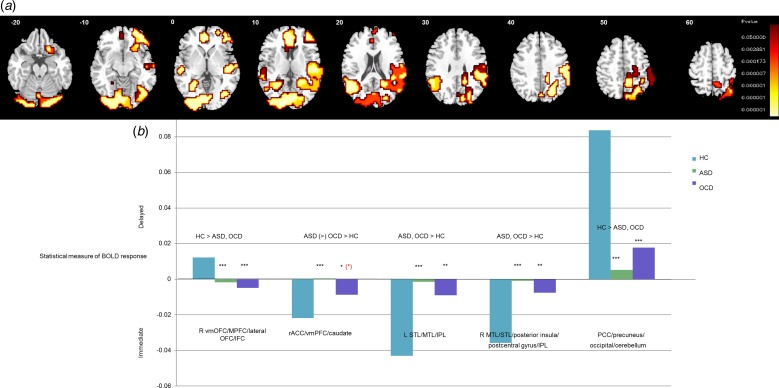
Background: Autism spectrum disorder (ASD) and obsessive-compulsive disorder (OCD) share abnormalities in hot executive functions such as reward-based decision-making, as measured in the temporal discounting task (TD). No studies, however, have directly compared these disorders to investigate common/distinct neural profiles underlying such abnormalities. We wanted to test whether reward-based decision-making is a shared transdiagnostic feature of both disorders with similar neurofunctional substrates or whether it is a shared phenotype with disorder-differential neurofunctional underpinnings. Methods: Age and IQ-matched boys with ASD (N= 20), with OCD (N= 20) and 20 healthy controls, performed an individually-adjusted functional magnetic resonance imaging (fMRI) TD task. Brain activation and performance were compared between groups. Results: Boys with ASD showed greater choice-impulsivity than OCD and control boys. Whole-brain between-group comparison revealed shared reductions in ASD and OCD relative to control boys for delayed-immediate choices in right ventromedial/lateral orbitofrontal cortex extending into medial/inferior prefrontal cortex, and in cerebellum, posterior cingulate and precuneus. For immediate-delayed choices, patients relative to controls showed reduced activation in anterior cingulate/ventromedial prefrontal cortex reaching into left caudate, which, at a trend level, was more decreased in ASD than OCD patients, and in bilateral temporal and inferior parietal regions. Conclusions: This first fMRI comparison between youth with ASD and with OCD, using a reward-based decision-making task, shows predominantly shared neurofunctional abnormalities during TD in key ventromedial, orbital- and inferior fronto-striatal, temporo-parietal and cerebellar regions of temporal foresight and reward processing, suggesting trans-diagnostic neurofunctional deficits.
Overview
The claims and statistics of this paper haven’t been checked yet.
Free: it reads the open-access text and checks the first 5 claims that cite a source we can check. Create a free account to check every claim.
Integrity signals
Registry
Cites
Statistics
Figures
Verification
Claims the paper makes
The claims and statistics of this paper haven’t been checked yet.
Free: it reads the open-access text and checks the first 5 claims that cite a source we can check. Create a free account to check every claim.
Claims other papers make about this one
Each is checked against this paper’s own text: does it say what the citing paper says it does?
The source backs part of the claim, not all of it — or backs it for a different population, condition or comparison.
In the citing paper
“During the DDT, altered ACC activation has been observed in OCD patients, suggesting difficulties in integrating long-term consequences into decision-making processes (41).”
From Neural mechanisms underlying cognitive inflexibility in obsessive-compulsive disorder: a review (2026) · cites this paper as [41]
Experimental — accuracy not yet measuredThe source backs part of the claim, not all of it — or backs it for a different population, condition or comparison.
In the citing paper
“The OFC and the caudate loops (including CN, Nucleus Accumbens, STN, GP, Thalamus, vmPFC, rACC, dACC, and vACC) are proposed to drive impulsivity and compulsive behavior, highlighting a critical link between neural dysfunctions and choice impulsivity in OCD (41, 46, 152).”
From Neural mechanisms underlying cognitive inflexibility in obsessive-compulsive disorder: a review (2026) · cites this paper as [41]
Experimental — accuracy not yet measuredThe cited source says what the claim attributes to it.
In the citing paper
“Some studies have found significantly higher delay discounting rates in OCD patients, indicating increased impulsivity, while other studies have reported no significant differences in delay discounting between OCD patients and healthy controls (See Table 3).”
From Neural mechanisms underlying cognitive inflexibility in obsessive-compulsive disorder: a review (2026) · cites this paper as [41]
Self-check
Percentages, sums and reported differences re-computed from the paper’s own numbers.
The self-check needs the paper’s full text.
Citations
Cites
Diagnostic and Statistical Manual of Mental Disorders
Williams, J. B. W., & First, M. (2013) · Encyclopedia of Social Work · doi:10.1093/acrefore/9780199975839.013.104 · Cited by 109,519
The assessment and analysis of handedness: The Edinburgh inventory
Oldfield, R. C. (1971) · Neuropsychologia · doi:10.1016/0028-3932(71)90067-4 · Cited by 35,900
Lord, C., Rutter, M., & Le Couteur, A. (1994) · Journal of Autism and Developmental Disorders · doi:10.1007/bf02172145 · Cited by 9,065 · cited 1×
“ASD diagnosis was made by a consultant psychiatrist using ICD-10 research diagnostic criteria (WHO, 1992) and confirmed with the Autism Diagnostic Interview-Revised [ADI-R; (Lord et al. 1994)].”
Lord, C., Risi, S., Lambrecht, L., Cook, E. H., Leventhal, B. L., DiLavore, P. C., Pickles, A., & Rutter, M. (2000) · Journal of Autism and Developmental Disorders · doi:10.1023/a:1005592401947 · Cited by 7,520 · cited 1×
“The ADI-R and the Autism Diagnostic Observation Schedule [ADOS; (Lord et al. 2000)] were completed for all ASD boys; all 29 reached autism cut-offs on all ADI-R (social/communication/ restricted/stereotyped) and ADOS (communication/ social) domains.”
Saliency, switching, attention and control: a network model of insula function
Menon, V., & Uddin, L. Q. (2010) · Brain Structure and Function · doi:10.1007/s00429-010-0262-0 · Cited by 5,592
Wechsler Abbreviated Scale of Intelligence
Dumont, R., Willis, J. O., Veizel, K., & Zibulsky, J. (2014) · Encyclopedia of Special Education · doi:10.1002/9781118660584.ese2519 · Cited by 5,521
Talairach, J., Tournoux, P., & Rayport, M. (1988) · Thieme eBooks · Cited by 5,058
Wechsler Abbreviated Scale of Intelligence
Wechsler, D. (2012) · PsycTESTS Dataset · doi:10.1037/t15170-000 · Cited by 4,596
Simonoff, E., Pickles, A., Charman, T., Chandler, S., Loucas, T., & Baird, G. (2008) · Journal of the American Academy of Child & Adolescent Psychiatry · doi:10.1097/chi.0b013e318179964f · Cited by 3,399 · cited 2×
“These disorders are highly comorbid, with rates exceeding 30% (Simonoff et al. 2008) and can sometimes be clinically difficult to separate (Doshi-Velez et al.”
The Yale-Brown Obsessive Compulsive Scale: II. Validity
Goodman, W. K. (1989) · Archives of General Psychiatry · doi:10.1001/archpsyc.1989.01810110054008 · Cited by 2,799
Research works printed but not linked: 2
- WHO (1992). The ICD-10 Classification of Mental and Behavioural Disorders: Clinical Descriptions and Diagnostic Guidelines. World Health Organization: Geneva.
- Rutter M, Bailey A, Lord C (2003). The Social Communication Questionnaire: Manual. Western Psychological Services: Los Angeles.
Cited by
Hollocks, M. J., Lerh, J. W., Magiati, I., Meiser-Stedman, R., & Brugha, T. S. (2019) · Psychological Medicine · doi:10.1017/s0033291718002283 · Cited by 988
“In addition, compulsive behaviours in OCD can appear similar in presentation to restrictive and repetitive behaviours as observed in ASD, and indeed recent evidence has suggested some neurobiological overlap (Carlisi et al., 2017).”
Evaluation of the Social Motivation Hypothesis of Autism: A Systematic Review and Meta-analysis
Clements, C. C., Zoltowski, A. R., Yankowitz, L. D., Yerys, B. E., Schultz, R. T., & Herrington, J. D. (2018) · JAMA Psychiatry · doi:10.1001/jamapsychiatry.2018.1100 · Cited by 316
Can delay discounting deliver on the promise of RDoC?
Lempert, K. M., Steinglass, J. E., Pinto, A., Kable, J. W., & Simpson, H. B. (2019) · Psychological Medicine · doi:10.1017/s0033291718001770 · Cited by 190
“Taking a dimensional approach might also clarify why delay discounting findings are mixed in some disorders (e.g. autism spectrum disorders and major depressive disorder; Dombrovski et al., 2011; Carlisi et al., 2017).”
BackgroundResultNorman, L. J., Taylor, S. F., Liu, Y., Radua, J., Chye, Y., De Wit, S. J., Huyser, C., Karahanoglu, F. I., Luks, T., Manoach, D., et al. (2019) · Biological Psychiatry · doi:10.1016/j.biopsych.2018.11.010 · Cited by 189
Self-citationMohapatra, A. N., & Wagner, S. (2023) · Frontiers in Psychiatry · doi:10.3389/fpsyt.2023.1205199 · Cited by 81
“Moreover, fMRI studies reported hypoactivation of the ACC to social reward in ASD compared to typically developing controls (158, 159), which indicate that these patient process socially rewarding and motivating cues abnormally (160).”
BackgroundNorman, L. J., Carlisi, C. O., Christakou, A., Murphy, C. M., Chantiluke, K., Giampietro, V., Simmons, A., Brammer, M., Mataix-Cols, D., & Rubia, K. (2018) · Biological Psychiatry: Cognitive Neuroscience and Neuroimaging · doi:10.1016/j.bpsc.2018.03.009 · Cited by 55
“The vmOFC is highly implicated in OCD (9,39,57,86,91).”
Self-citationTransdiagnostic neuroimaging in psychiatry: a review
Mitelman, S. A. (2019) · Psychiatry Research · doi:10.1016/j.psychres.2019.01.026 · Cited by 50
Carlisi, C. O., Norman, L., Murphy, C. M., Christakou, A., Chantiluke, K., Giampietro, V., Simmons, A., Brammer, M., Murphy, D. G., Mataix-Cols, D., et al. (2017) · Cerebral Cortex · doi:10.1093/cercor/bhx265 · Cited by 40
“In line with a recent study comparing these groups during temporal discounting (Carlisi et al. 2017), another “ hot ” EF task, there were predominantly shared neurofunctional abnormalities between ASD and OCD.”
Self-citationThe functional neural architecture of dysfunctional reward processing in autism
Janouschek, H., Chase, H. W., Sharkey, R. J., Peterson, Z. J., Camilleri, J. A., Abel, T. G., Eickhoff, S. B., & Nickl‐Jockschat, T. (2021) · NeuroImage Clinical · doi:10.1016/j.nicl.2021.102700 · Cited by 53
Marzuki, A. A., Pereira de Souza, A. M. F. L., Sahakian, B. J., & Robbins, T. W. (2020) · Neuroscience & Biobehavioral Reviews · doi:10.1016/j.neubiorev.2019.12.010 · Cited by 39
Decision-making in autism: A narrative review
van der Plas, E., Mason, D., & Happe, F. G. E. (2023) · Autism · doi:10.1177/13623613221148010 · Cited by 41
“For example, three studies did not find a difference in learning performance between the autism and comparison group, but nonetheless found group differences in choice perseverance or flexibility (Carlisi et al., 2017b; D’Cruz et al., 2013, 2016; Latinus et al., 2019).”
BackgroundResultInfluentialNorman, L. J., Carlisi, C. O., Christakou, A., Chantiluke, K., Murphy, C., Simmons, A., Giampietro, V., Brammer, M., Mataix-Cols, D., & Rubia, K. (2017) · Psychiatry Research: Neuroimaging · doi:10.1016/j.pscychresns.2017.09.008 · Cited by 35
“We, however, hypothesised more prominent or disorder-speci fi c abnormalities in OCD patients in VMPFC/OFC (Carlisi et al., 2017b; Menzies et al., 2008; Norman et al., 2016, 2017), and larger or disorder-speci fi c underactivation in IFG in ADHD patients (Noreika et al., 2013; Norman et al., 2016,…”
InfluentialSelf-citationGadelkarim, W., Shahper, S., Reid, J. E., Wikramanayake, M., Kaur, S., Kolli, S., Osman, S., & Fineberg, N. A. (2019) · International Journal of Psychiatry in Clinical Practice · doi:10.1080/13651501.2019.1638939 · Cited by 41
“Carlisi et al. (2017a, 2017b, 2017c, 2017d), in a series of studies comparing patients with ASD and OCD, recently found disorder-specific and shared structural and functional brain abnormalities associated with vigilance processing, neuro-computational mechanisms of decision-making and inhibitory…”
ResultAkkermans, S. E. A., Rheinheimer, N., Bruchhage, M. M. K., Durston, S., Brandeis, D., Banaschewski, T., Boecker-Schlier, R., Wolf, I., Williams, S. C. R., Buitelaar, J. K., et al. (2019) · Psychological Medicine · doi:10.1017/s0033291718003136 · Cited by 33
“So far, scarce direct comparisons of ASD and OCD revealed common functional alterations during reward/decision-making processes in frontostriatal regions such as the orbitofrontal cortex (OFC), nucleus accumbens (NAcc), anterior cingulate cortex (ACC) and caudate (Carlisi et al., 2017a, 2017b).”
Social and delay discounting in autism spectrum disorder
Warnell, K. R., Maniscalco, S., Baker, S. M., Yi, R., & Redcay, E. (2019) · Autism Research · doi:10.1002/aur.2085 · Cited by 32
“We recruited adolescents and young adults, age ranges that have successfully completed discounting tasks in prior studies (e.g., Carlisi et al., 2017; Murphy et al., 2017), and compared their results to a TD group matched on age, sex, and IQ.”
BackgroundResultAlterations of Regional Homogeneity in Preschool Boys With Autism Spectrum Disorders
Lan, Z., Xu, S., Wu, Y., Xia, L., Hua, K., Li, M., Liu, M., Yin, Y., Li, C., Huang, S., et al. (2021) · Frontiers in Neuroscience · doi:10.3389/fnins.2021.644543 · Cited by 34
“Another fMRI neuro-basic study of ASD in adolescents also found that reduced OFC activation was associated with abnormal reward decision making in patients with ASD (Carlisi et al., 2017).”
BackgroundMapping common grey matter volume deviation across child and adolescent psychiatric disorders
Li, T., Wang, L., Camilleri, J. A., Chen, X., Li, S., Stewart, J. L., Jiang, Y., Eickhoff, S. B., & Feng, C. (2020) · Neuroscience & Biobehavioral Reviews · doi:10.1016/j.neubiorev.2020.05.015 · Cited by 30
A Systematic Review of the Positive Valence System in Autism Spectrum Disorder
Tschida, J. E., & Yerys, B. E. (2020) · Neuropsychology Review · doi:10.1007/s11065-020-09459-z · Cited by 30
“This pattern of findings suggests that autistic individuals may be more likely to make impulsive choices and less successfully delay monetary rewards compared to neurotypical individuals (Carlisi et al., 2017; Chantiluke et al., 2014; Murphy et al., 2017).”
BackgroundMethodResultInfluentialOron, O., Getselter, D., Shohat, S., Reuveni, E., Lukić, I., Shifman, S., & Elliott, E. (2019) · Translational Psychiatry · doi:10.1038/s41398-019-0584-5 · Cited by 18
Varma, M. M., Zhen, S., & Yu, R. (2023) · NeuroImage · doi:10.1016/j.neuroimage.2023.120363 · Cited by 18
Association of temporal discounting with transdiagnostic symptom dimensions
Keidel, K., Lu, X., Suzuki, S., Murawski, C., & Ettinger, U. (2024) · npj Mental Health Research · doi:10.1038/s44184-024-00060-3 · Cited by 22
“As a consequence, this may help explain inconsistent fi ndings regarding associations of TD with disorders such as autism-1 spectrum disorders 27 – 30 or schizophrenia 31 – 36 , which could be due to highly heterogenous symptom clusters 9 or medication confounds 13 .”
Lee, J. Y., Choi, Y.-H., Cha, J. H., Lee, J. Y., Lee, Y., Kim, B., Kim, I.-K., Lee, J., & Lee, H. J. (2021) · Scientific Reports · doi:10.1038/s41598-020-79446-0 · Cited by 16
Godefroy, V., Sezer, I., Bouzigues, A., Montembeault, M., Koban, L., Plaßmann, H., & Migliaccio, R. (2023) · Neuroscience & Biobehavioral Reviews · doi:10.1016/j.neubiorev.2023.105048 · Cited by 16
“Individuals with ASD also present altered delay discounting (Carlisi et al., 2017; Warnell et al., 2019), perhaps in association with an early amyloid pathology leading to AD in older age.”
BackgroundHauser, T. U. (2021) · Current topics in behavioral neurosciences · doi:10.1007/7854_2020_195 · Cited by 17
Contagion of Temporal Discounting Value Preferences in Neurotypical and Autistic Adults
Thomas, L., Lockwood, P. L., Garvert, M. M., & Balsters, J. H. (2021) · Journal of Autism and Developmental Disorders · doi:10.1007/s10803-021-04962-5 · Cited by 17
“As log k approaches 0, individuals are more sensitive to delay and discount rewards more steeply as a function of time (Carlisi et al., 2017; Garvert et al., 2015).”
BackgroundAutistic adults show enhanced generosity to socially distant others
Forbes, P., Chaliani, I., Schilbach, L., & Kalenscher, T. (2023) · Autism · doi:10.1177/13623613231190674 · Cited by 13
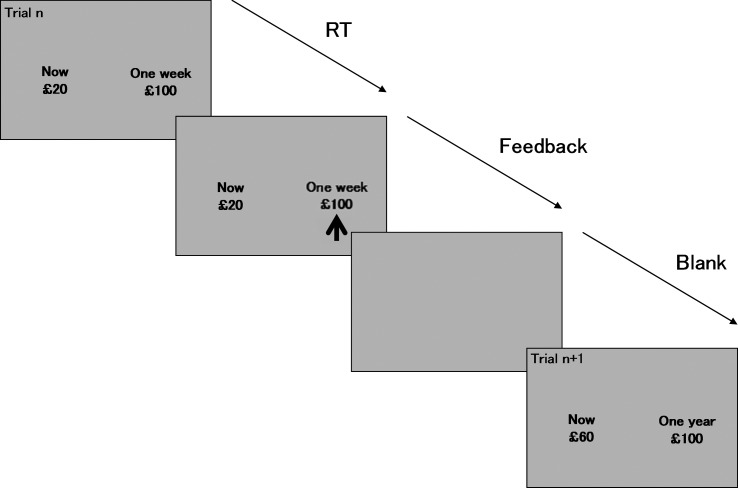
“…a heightened preference for smaller-sooner rewards (e.g. £60 now) over larger-later rewards (e.g. £100 in 1 year) compared to non-autistic participants (Carlisi et al., 2017; Chantiluke et al., 2014), although not all studies find these differences (e.g. Demurie et al., 2012; Warnell et al., 2019).”
ResultCamasio, A., Panzeri, E., Mancuso, L., Costa, T., Manuello, J., Ferraro, M., Duca, S., Cauda, F., & Liloia, D. (2022) · PLoS ONE · doi:10.1371/journal.pone.0277466 · Cited by 13
Lakhani, N. V., Souther, M. K., Boateng, B., & Kable, J. W. (2026) · Imaging Neuroscience · doi:10.1162/imag.a.1170 · Cited by 11
“…gambling ( Miedl et al., 2012, 2015; Wang et al., 2017; Wiehler et al., 2017), obsessive compulsive disorder ( Norman et al., 2017), ADHD ( Norman et al., 2017), schizophrenia ( Avsar et al., 2013; Souther et al., 2022), major depressive disorder ( Souther et al., 2022; Vanyukov et al.,…”
InfluentialLan, Z., Xu, S., Yu, X., Yu, Z., Li, M., Chen, F., Liu, Y., Wang, T., Wu, Y., Gan, Y., et al. (2022) · Frontiers in Neuroscience · doi:10.3389/fnins.2022.844821 · Cited by 9
“Chen et al. (2018) first explored atypical brain FC in preschool individuals with ASD, and found that brain regions involved in social cognition with ASD showed under-connectivity, while those involved in sensory and visual movement showed over-connectivity.”
BackgroundValori, I., Carnevali, L., Mantovani, G., & Farroni, T. (2022) · Brain Sciences · doi:10.3390/brainsci12101411 · Cited by 9
“Moreover, it is interesting to note that atypicalities in the reward system are also present in other neurodevelopmental conditions or psychopathologies, and may constitute a trans-diagnostic feature [92].”
BackgroundStriatal bases of temporal discounting in early adolescents
Hamilton, K. R., Smith, J. F., Gonçalves, S. F., Nketia, J., Tasheuras, O. N., Yoon, M., Rubia, K., Chirles, T. J., Lejuez, C. W., & Shackman, A. J. (2020) · Neuropsychologia · doi:10.1016/j.neuropsychologia.2020.107492 · Cited by 12
“, 2009) and validated in multiple studies (Carlisi et al., 2016; Carlisi et al., 2017; Chantiluke et al., 2014).”
ResultSelf-citationAutism-related proteins form a complex to maintain the striatal asymmetry in mice
Jiang, Y., Zhu, F., Zhong, J., Sun, X., Yuan, Y., Wang, S., Chen, H., & Xu, Z. (2025) · Cell Research · doi:10.1038/s41422-025-01174-9 · Cited by 6
“12,17,18 The human caudate nucleus, analogous to the dorsomedial striatum (DMS) in rodents, 19 exhibits inherent rightward volumetric lateralization.”
Identificando compulsiones en niños y adolescentes con trastorno del espectro autista
Ortiz, A. E., Espelt, C., Rosa, M., Puig, O., Lázaro, L., & Calvo, R. M. (2019) · Revista de Psiquiatría Infanto-Juvenil · doi:10.31766/repsij.v36n4a4 · Cited by 5
Decision making in adults with autism: The role of ecological executive dysfunctions
García-Villamisar, D. A., Brand, M., & Jodra, M. (2020) · Revista de Psicopatología y Psicología Clínica · doi:10.5944/rppc.26200 · Cited by 5
“…y Psicopatología people with autism in the frontal lobe, and in particular, in the ventromedial circuit (Carper & Courchesne, 2000; Shafritz, Bregman, Ikuta, & Szeszko, 2015), which points to the existence of a dysfunction in the orbitofrontal cortex (Carlisi et al., 2017; Fujino et al., 2017).”
Wagner, B., Schüller, C. B., Schüller, T., Baldermann, J. C., Kohl, S., Visser-Vandewalle, V. E. R. M., Huys, D., Marx, M., Kuhn, J., & Peters, J. (2023) · Journal of Neuroscience · doi:10.1523/jneurosci.0138-23.2023 · Cited by 5
Yu, K., Xu, S., Fu, S., Hua, K., Yin, Y., Lei, Q., Liu, J., Wu, Y., & Jiang, G. (2025) · Frontiers in Human Neuroscience · doi:10.3389/fnhum.2025.1513200 · Cited by 3
Pereira, J. A., Veenstra-VanderWeele, J. M., & Jutla, A. (2025) · Journal of the American Academy of Child & Adolescent Psychiatry · doi:10.1016/j.jaac.2025.06.017 · Cited by 5
Måleegenskaper ved den norske versjonen av Social Communication Questionnaire (SCQ)
Kaasbøll, J., Jozefiak, T., & Aanondsen, C. M. (2021) · PsykTestBarn · doi:10.21337/0071 · Cited by 3
Time perception and delay discounting in the FMR1 knockout rat
Fox, A. E., Cooper, A. R., Pape, A. L., Tobias-Wallingford, H., & DeCoteau, W. E. (2024) · Journal of the Experimental Analysis of Behavior · doi:10.1002/jeab.4227 · Cited by 2
“They also add to an emerging picture of what appears to be slower learning (e.g., Tian et al., 2017) in the FMR1 KO model and increased impulsive choice behavior (more SSR choices and fewer LLR choices) associated with developmental disabilities, particularly ASD.”
InfluentialZhu, C., Bore, M. C., Wang, X., Xu, T., & Feng, T. (2026) · Molecular Psychiatry · doi:10.1038/s41380-026-03495-6 · Cited by 2
Lyon, R. E., Wanstall, E. A., & Toplak, M. E. (2021) · Springer eBooks · doi:10.1007/978-3-030-74675-9_13 · Cited by 1
Neural mechanisms underlying cognitive inflexibility in obsessive-compulsive disorder: a review
Guo, W., Neo, P. S.-H., & McNaughton, N. (2026) · Frontiers in Psychiatry · doi:10.3389/fpsyt.2026.1795436
“Neural basis of de fi cits: The OFC and the caudate loops (including CN, Nucleus Accumbens, STN, GP, Thalamus, vmPFC, rACC, dACC, and vACC) are proposed to drive impulsivity and compulsive behavior, highlighting a critical link between neural dysfunctions and choice impulsivity in OCD (41, 46, 152).”
Marzuki, A. A. (2021) · Apollo (University of Cambridge) · doi:10.17863/cam.70408
Savickaite, S., Khalaf, H., Smith, E., Quick, A., McDonnell, N., & Simmons, D. (2023) · PsyArXiv (OSF Preprints) · doi:10.31234/osf.io/zwrf7
Diversidad en el neurodesarrollo
Leo-Jimenez, J. O. D., Rodríguez-Santillán, E., Valenzuela, C. C. C., Gomar, M. L. G., Alameda, A. J. C., Cortés, A. N., Moreno, M. B., Macedo, Z. B. N., Martínez, F. G., Carrillo, M. C., et al. (2024) · doi:10.52501/cc.143
Golden, A., McLachlan, K., Amlung, M. T., Rasmussen, C., & Pei, J. R. (2025) · Advances in Neurodevelopmental Disorders · doi:10.1007/s41252-025-00467-9
“…steep discounting in case–control studies (e.g., Barkley et al., 2001; Chantiluke et al., 2014; Costa Dias et al., 2013; Demurie et al., 2012; Norman et al., 2017; Paloyelis et al., 2010; Thapaliya et al., 2023; Wilson et al. 2011; see Jackson & MacKillop, 2016; Patros et al., 2016), and…”
Development and employment of discounting tasks in 16p11.2 hemideletion mice
Rojas, G. R. (2023) · University of Minnesota Digital Conservancy (University of Minnesota)
Rosoli, A. S. (2023) · Repository of Digital Objects for Teaching Research and Culture (University of Valencia)
León, J. J. (2023) · Repositorio de Patentes de la Universidad de Almería (Universidad de Almería)
Yates, J. R. (2026) · Springer eBooks · doi:10.1007/978-3-032-15602-0_7
Baou, C. E. (2026) · UCL Discovery (University College London)
Metadata
- Authors
- Carlisi, C. O., Norman, L., Murphy, C. M., Christakou, A., Chantiluke, K., Giampietro, V., Simmons, A., Brammer, M., Murphy, D. G., MRC AIMS consortium, Mataix-Cols, D., & Rubia, K.
- Affiliations
- King's College London (GB)
- University of Reading (GB)
- Corresponding author
- Carlisi, C. O.
- ORCID
- Venue
- Psychological Medicine
- Publisher
- Cambridge University Press (CUP)
- Published
- 2017-04-24
- Volume
- 47
- Issue
- 14
- Pages
- 2513-2527
- ISSN
- 0033-2917 (ISSN-L)
- 1469-8978
- PMC
- PMC5964452
- OpenAlex
- W2608442247
- Cited by
- 49
- References
- 123
- Citations by year
- 2026: 3 · 2025: 4 · 2024: 3 · 2023: 7 · 2022: 5 · 2021: 9 · 2020: 4 · 2019: 6 · 2018: 6 · 2017: 2
- FWCI
- 2.82
- Type
- journal article
- Language
- en
- Open access
- hybrid
- doi.org
- Locations
- Psychological Medicine (publishedVersion, cc-by)
- Europe PMC (PubMed Central) (publishedVersion, cc-by)
- PubMed Central (publishedVersion, cc-by)
- PubMed (publishedVersion)
- CentAUR (University of Reading) (submittedVersion)
- UCL Discovery (University College London) (submittedVersion)
- Research Portal (King's College London) (submittedVersion, cc-by)
- Funders
- Eli Lilly and Company
- South London and Maudsley NHS Foundation Trust
- NIHR Biomedical Research Centre, Royal Marsden NHS Foundation Trust/Institute of Cancer Research
- National Institute for Health and Care Research (RP-PG-0606-1045, G0400061)
- King's College London
- National Institutes of Health
- Institute of Psychiatry, Psychology and Neuroscience, King’s College London
- Medical Research Council (G0400061, G0300155, MRC G0300155, MR/N026063/1)
- NIHR Sheffield Biomedical Research Centre
- Topics
- Life Sciences › Neuroscience › Cognitive Neuroscience › Autism Spectrum Disorder Research
- Life Sciences › Neuroscience › Cognitive Neuroscience › Neural and Behavioral Psychology Studies
- Social Sciences › Psychology › Clinical Psychology › Obsessive-Compulsive Spectrum Disorders
- Keywords
- autism spectrum disorder, obsessive-compulsive disorder, delay discounting, reward-based decision-making, impulsivity, orbitofrontal cortex, ventromedial prefrontal cortex, caudate nucleus, cerebellum, youth
- MeSH terms
- Autism Spectrum Disorder, Adolescent, Brain Mapping, Caudate Nucleus, Cerebellum, Cerebral Cortex, Child, Gyrus Cinguli, Humans, Impulsive Behavior, Magnetic Resonance Imaging, Male, Obsessive-Compulsive Disorder, Reward, Prefrontal Cortex, Delay Discounting
About these checks
Registry, retraction, Cites and statistics results are computed, not judged, with one exception: a printed reference that no index lists is read once by a model before it counts as a citation error. Claims are extracted by a model and kept only when their quote appears verbatim in the text; each cited source is then checked, with a model’s help, for whether it says what the claim relies on. Those verdicts can be wrong — read the claim’s quote and the cited source before relying on one.
Statistics and arithmetic are recomputed, not judged.
Confidence bands are shown only for fields calibrated on our annotated test set. None is calibrated yet, so no band is shown.
What counts as a claim ›How we measure confidence ›How we check this ›
Are you an author, or do you see a problem with this page? Request a review
Data sources
Bibliographic data: Semantic Scholar, OpenAlex, Crossref.
Contains information from the Semantic Scholar Academic Graph Datasets, made available under the ODC Attribution License (ODC-BY 1.0).
Semantic Scholar’s data is described in: Kinney, R., et al. (2023). The Semantic Scholar Open Data Platform. arXiv:2301.10140.
