

The DOI matches its Crossref record; 48 of the 48 references it cites were found in a registry or an index.
“If you don’t improve, what’s the point?” Investigating the impact of a “flipped” online exchange in teacher education
Open accessAbstract
This article presents a pedagogical design for teacher education that combines flipped materials, in-class instruction, and telecollaboration (also known as virtual exchange) for foreign language teacher education. The context of this study is a course on technology and language learning for future teachers in which the flipped classroom concept was applied to technology-infused collaborative teacher training between future ESL/EFL instructors located at two partner universities (one in the USA, one in Europe). The three main teaching approaches (flipped materials, in class, and telecollaborative, or “FIT”) were symbiotic in that each structure reinforced the other through reception, discussion, and reflection as a means to help the student teachers bridge the gap between theory and practice. We apply classroom ethnographic discourse analysis to data sources (face-to-face and online discussion groups, student e-portfolios) to look at uptake of ideas, conceptual understanding, and successful transfer of new knowledge, and thereby identify whether the design provides significant learning opportunities for the future teachers. Although most studies of telecollaboration in language teacher education look principally at output, this approach allows an in-depth look at the learning process as knowledge is developed collaboratively between the participants.
Overview
The claims and statistics of this paper haven’t been checked yet.
Run the check — free, no account needed. It reads the open-access text and checks the sources it cites.
Integrity signals
Registry
Cites
Statistics
Figures
Verification
Claims the paper makes
The claims and statistics of this paper haven’t been checked yet.
Run the check — free, no account needed. It reads the open-access text and checks the sources it cites.
Claims other papers make about this one
Each is checked against this paper’s own text: does it say what the citing paper says it does?
In the citing paper
“In addition to the videos, the environments or instructional interventions that offered more opportunities for getting and providing formative peer feedback, reviews or assessment promoted learning support, interactive collaborations and reflection (Dooly and Sadler 2020;Gikandi and Morrow 2016;Luo, Murray, and Crompton 2017), and were more likely to drive to knowledge development (Evens et al. 20”
From COVID-19 and teacher education: a literature review of online teaching and learning practices (2020) · cites this paper as Dooly and Sadler 2020
Self-check
Percentages, sums and reported differences re-computed from the paper’s own numbers.
The self-check needs the paper’s full text.
Citations
Cites
Vygotsky, L. S. (1964) · Bulletin of the Orton Society · doi:10.1007/bf02928399 · Cited by 20,704
Determining Validity in Qualitative Inquiry
Creswell, J. W., & Miller, D. L. (2000) · Theory Into Practice · doi:10.1207/s15430421tip3903_2 · Cited by 9,184 · cited 4×
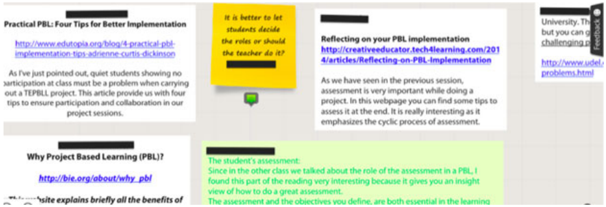
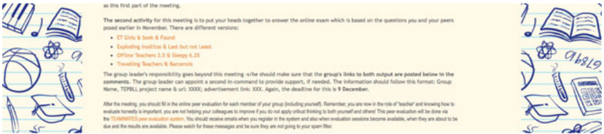
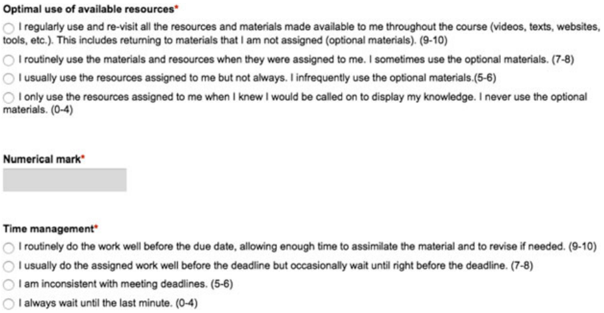
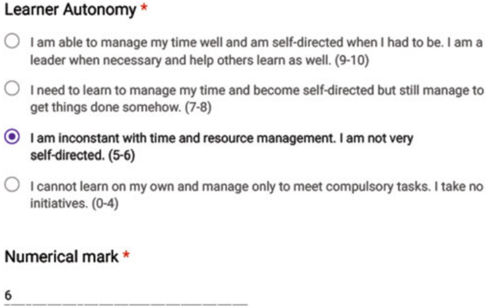
“…according to format: blog, podcasts, online presentations, digital posters, etc.) • peer evaluations concerning activity preparation, group work, and learner autonomy • self-evaluations regarding activity preparation, group work, and learner autonomy • group reflections (grouped according to…”
BackgroundMethodInfluential(2008) · Cited by 1,400
Analyzing discourse : text and talk
Tannen, D. (1982) · Cited by 1,378
Adler, P. A., Alder, P., Denzin, N. K., Jorgensen, D. L., Marshall, C., & Rossman, G. (1990) · Contemporary Sociology A Journal of Reviews · doi:10.2307/2072869 · Cited by 954
Understanding language teaching: from method to postmethod
(2006) · Choice Reviews Online · doi:10.5860/choice.44-1658 · Cited by 852
Transforming Teaching Practice: Becoming the critically reflective teacher
Larrivee, B. (2000) · Reflective Practice · doi:10.1080/713693162 · Cited by 849
Acquisition of mathematics concepts and processes
Lesh, R., & Landau, M. (1983) · Academic Press eBooks · Cited by 725
Critical Discourse Analysis in Education: A Review of the Literature
Rogers, R. L., Malancharuvil-Berkes, E., Mosley, M., Hui, D., & Joseph, G. O. (2005) · Review of Educational Research · doi:10.3102/00346543075003365 · Cited by 708
O’Dowd, R. (2018) · Journal of virtual exchange · doi:10.14705/rpnet.2018.jve.1 · Cited by 617
Research works printed but not linked: 3
- Telles, 2009, Teletandem: Um contexto virtual, autônomo e colaborativo para aprendizagem de línguas estrangeiras no século XXI
- Saada-Robert, 2004, Situation éducative et significations, 135
- Little, 2000, All together now: Papers from the 7th Nordic Conference and Workshop on Autonomous Language Learning, 45
Cited by
COVID-19 and teacher education: a literature review of online teaching and learning practices
Carrillo, C., & Flores, M. A. (2020) · European Journal of Teacher Education · doi:10.1080/02619768.2020.1821184 · Cited by 1,019
Effects of online flipped classroom on foreign language classroom anxiety and reading anxiety
Gok, D., Bozoğlan, H., & Bozoğlan, B. (2021) · Computer Assisted Language Learning · doi:10.1080/09588221.2021.1950191 · Cited by 93
The role of telecollaboration in English language teacher education: a systematic review
Emir, G., & Ekşi, G. Y. (2024) · Smart Learning Environments · doi:10.1186/s40561-024-00290-0 · Cited by 55
Wu, S. (2021) · Computer Assisted Language Learning · doi:10.1080/09588221.2021.1976800 · Cited by 33
Kessler, M., Marino, F., & Liska, D. (2023) · Research Methods in Applied Linguistics · doi:10.1016/j.rmal.2023.100082 · Cited by 28
Technology use in secondary level of English language teaching: A Literature Review
Luthfiyyah, R., Hafifah, G. N., Ivone, F. M., & Tresnadewi, S. (2021) · JEES (Journal of English Educators Society) · doi:10.21070/jees.v6i1.1020 · Cited by 26
Facilitating self-efficacy in university students: an interactive approach with Flipped Classroom
Cosculluela, C. L., Suárez, C., Quiroga, S., Oto, S. A., Rodríguez, E. M. L., & Villate, A. S. (2021) · Higher Education Research & Development · doi:10.1080/07294360.2021.1937067 · Cited by 26
COVID pandemic and virtual classes: a study of students from Punjab
Chadda, I., & Kaur, H. (2021) · AAOU Journal/AAOU journal · doi:10.1108/aaouj-02-2021-0017 · Cited by 24
Exploring student achievement and perceptions in an online flipped grammar course
Ahmad, D., & Arifin, M. A. (2021) · Indonesian Journal of Applied Linguistics · doi:10.17509/ijal.v10i3.31750 · Cited by 22
Grammar instruction through multinational telecollaboration for pre-service teachers
Wach, A., De, Z., & Nichols-Besel, K. (2021) · ReCALL · doi:10.1017/s0958344021000112 · Cited by 22
Virtual Exchange as a Transformational Third Space for English Language Teacher Education
Orsini-Jones, M. E. (2023) · International Journal of Computer-Assisted Language Learning and Teaching · doi:10.4018/ijcallt.334712 · Cited by 19
Muluk, S., Zainuddin, Z., & Dahliana, S. (2022) · Studies in English Language and Education · doi:10.24815/siele.v9i2.23314 · Cited by 19
Simuţ, C. C., Petrila, L., Popescu, F.-A., & Oprea, I. M. (2021) · Sustainability · doi:10.3390/su131810296 · Cited by 16
Learning path planning methods based on learning path variability and ant colony optimization
Zhao, J., Mao, H., Mao, P., & Hao, J. (2024) · Systems and Soft Computing · doi:10.1016/j.sasc.2024.200091 · Cited by 15
The Multifaceted Field of Virtual Exchanges in Teacher Education: A Literature Review
Ingrisch-Rupp, C., & Symeonidis, V. (2024) · Center for Educational Policy Studies Journal · doi:10.26529/cepsj.1741 · Cited by 13
Canedo, C. M., Crespo-Puig, N., Cladellas, R., Pros, R. C., Méndez-Ulrich, J. L., & Sanz, A. (2023) · Learning Environments Research · doi:10.1007/s10984-023-09456-y · Cited by 12
Virtual exchange in teacher education: is there an impact in teacher practice?
Dooly, M. (2020) · doi:10.14705/rpnet.2020.46.1136 · Cited by 12
Self-citationBeyond borders: Virtual Global Engagement in teacher education
Xu, L., Hinds, A., Rakisheva, A., Souefi, N. M. F. E., & Witt, A. M. (2025) · Teaching and Teacher Education · doi:10.1016/j.tate.2025.105133 · Cited by 9
Rahimi, A. R., & Sevilla‐Pavón, A. (2025) · Smart Learning Environments · doi:10.1186/s40561-024-00363-0 · Cited by 9
Wu, S. (2022) · CALICO Journal · doi:10.1558/cj.23991 · Cited by 9
Izquierdo, J., Caraveo, M. D. C. S., Villegas, V. D. L. C., & Díaz, R. Z. (2021) · Íkala Revista de Lenguaje y Cultura · doi:10.17533/udea.ikala.v26n3a11 · Cited by 9
Werner, S., & O’Dowd, R. (2025) · Social Sciences · doi:10.3390/socsci14040242 · Cited by 8
Koti, A. (2023) · Creative Education · doi:10.4236/ce.2023.1413173 · Cited by 8
Gruber, A., & Bailey, A. C. (2021) · Global Journal of Foreign Language Teaching · doi:10.18844/gjflt.v11i1.5148 · Cited by 8
Turan, P., & Yiğitoğlu, N. (2025) · System · doi:10.1016/j.system.2025.103608 · Cited by 7
Háhn, J. (2020) · AFinLAn vuosikirja · doi:10.30661/afinlavk.89449 · Cited by 7
Plurilingual Classroom Practices and Participation
Masats, D., & Nussbaum, L. (2021) · Routledge eBooks · doi:10.4324/9781003169123 · Cited by 7
Singh, S., & Mahapatra, S. K. (2021) · TESOL Journal · doi:10.1002/tesj.635 · Cited by 7
Chura‐Quispe, G., Guillén, J. Y. C., & Ato, L. A. L. (2022) · Revista Iberoamericana de Tecnología en Educación y Educación en Tecnología · doi:10.24215/18509959.31.e7 · Cited by 7
Cerveró-Carrascosa, A. (2022) · International Journal of Computer-Assisted Language Learning and Teaching · doi:10.4018/ijcallt.307062 · Cited by 7
Bolandifar, S., & Salehi, N. (2024) · E-Learning and Digital Media · doi:10.1177/20427530241254538 · Cited by 6
The evolution of virtual exchange and assessment practices
Dooly, M. (2022) · doi:10.14705/rpnet.2022.59.1407 · Cited by 6
Self-citationWu, S., Ware, P., & Liaw, M. (2020) · Advances in educational technologies and instructional design book series · doi:10.4018/978-1-7998-3292-8.ch012 · Cited by 6
Survey datasets of VIKKE assessment tool on children's Finnish Sign Language development
Syrj�l�, H., & Kanto, L. (2024) · doi:10.17011/jyx/dataset/94272 · Cited by 5
Business communication skills through virtual exchange – a case study
Vuylsteke, J.-F. (2022) · doi:10.14705/rpnet.2022.59.1416 · Cited by 4
Marjanović, J., Dooly, M., & Sadler, R. W. (2021) · Educational linguistics · doi:10.1007/978-3-030-74958-3_6 · Cited by 4
Self-citationPeer assessment of process writing in a virtual exchange project
Czura, A., & Sendur, A. M. (2022) · doi:10.14705/rpnet.2022.59.1412 · Cited by 4
Hartoyo, I., Dewi, N. R., Saragih, B., Isdianto, E., & Khairina, Y. (2024) · Sustainable Jurnal Kajian Mutu Pendidikan · doi:10.32923/kjmp.v7i2.5089 · Cited by 4
DIGITAL LEARNING IN FOREIGN LANGUAGE TEACHER TRAINING IN HIGHER EDUCATION: A CASE STUDY
Carlon, G. (2020) · International Conference on Advances in Education (ADVED) · doi:10.47696/adved.2020156 · Cited by 4
Lehotska, N., Tomaš, Z., & Vojtkuláková, M. (2022) · Teaching English as a Second or Foreign Language--TESL-EJ · doi:10.55593/ej25100a9 · Cited by 4
TEAMMATES in virtual exchange: tool and tips for peer assessment
Dooly, M. (2022) · doi:10.14705/rpnet.2022.59.1413 · Cited by 3
Self-citationLiao, M.-H. (2023) · Lecture notes in computer science · doi:10.1007/978-3-031-40113-8_24 · Cited by 3
Exploring Reflective Practices in Modified EFL Flipped Videoconferences
Huang, H.-W., Dong-qin, L., McCusker, D., Whitfield, B., & Chang, T.-S. (2023) · International Conference on Education and Training Technologies (ICETT) · doi:10.1145/3599640.3599653 · Cited by 3
Le développement des compétences techno-sémio-pédagogiques en télécollaboration
Cappellini, M. A. (2023) · Alsic · doi:10.4000/alsic.6816 · Cited by 3
Multiple online environments as complex systems: Toward an orchestration of environments
Cappellini, M. A., & Combe, C. (2022) · Language learning & technology · doi:10.64152/10125/73497 · Cited by 3
Sani, N. L., Wedi, A., & Soepriyanto, Y. (2025) · JKTP Jurnal Kajian Teknologi Pendidikan · doi:10.17977/um038v8i42025p260-269 · Cited by 2
Empowering EFL Student Teachers through Pedagogical Engagements within an Elective CALL Course
Ozkurt, S. K., & Yaylı, D. (2024) · Journal of Language Teaching and Learning · doi:10.66887/jltl.v14i2.651 · Cited by 2
Telecollaboration in English Language Teacher Education: A Systematic Review
Coşkun, D. (2023) · Boğaziçi Üniversitesi Eğitim Dergisi · doi:10.52597/buje.1153468 · Cited by 2
Luca, N. D. (2023) · Bellaterra Journal of Teaching & Learning Language & Literature · doi:10.5565/rev/jtl3.1207 · Cited by 2
Khodabandeh, F. (2024) · Journal of Psycholinguistic Research · doi:10.1007/s10936-024-10096-3 · Cited by 2
Multinational telecollaboration in language teacher education: Teacher educators’ perspectives
Wach, A., Tanghe, S., & De, Z. (2024) · Language learning & technology · doi:10.64152/10125/73590 · Cited by 2
Dooly, M. (2022) · Language learning and language teaching · doi:10.1075/lllt.57.04doo · Cited by 2
Self-citation“Let's talk about el catalan's 😉”
Dooly, M., & Czura, A. (2021) · Routledge eBooks · doi:10.4324/9781003169123-22 · Cited by 1
Self-citationAssessing virtual exchange in foreign language courses at tertiary level
Czura, A., & Sendur, A. M. (2022) · doi:10.14705/rpnet.2022.59.9782383720102 · Cited by 1
A Content Based Course With the Assistance of Artificial Intelligence
Li, B., Peng, M., & Keith, B. (2024) · International Conference on New Media Development and Modernized Education (NMDME) · doi:10.4108/eai.13-10-2023.2341090 · Cited by 1
Review of Understanding attitude in intercultural virtual communication
Wu, S. (2021) · Language learning & technology · doi:10.64152/10125/73424 · Cited by 1
Regulation of Flipped Learning Activities in Programming
Gonçalves, A. C., Ferreira, D. J., de Campos, D. S., & Silva, U. F. (2021) · International Journal for Innovation Education and Research · doi:10.31686/ijier.vol9.iss8.3265 · Cited by 1
Su-mei, W. (2020) · SMU Scholar (Southern Methodist University) · Cited by 1
Rampazzo, L. (2021) · Estudos Linguísticos (São Paulo 1978) · doi:10.21165/el.v50i3.2981 · Cited by 1
Baskara, R. (2024) · Abjadia International Journal of Education · doi:10.18860/abj.v9i1.18795 · Cited by 1
Khatib, A. S. E. (2020) · SSRN Electronic Journal · doi:10.2139/ssrn.3738749
Carrera-Sánchez, M. M., Carrera, G. J. P., Puente, A. P., Villarreal, L. A. V., & Villarreal, A. C. C. (2020) · Revista Conocimiento Global. · doi:10.70165/cglobal.v5i2.100
Lan, X., & Yu, Z. (2023) · Chinese as a Second Language Research · doi:10.1515/caslar-2023-2002
Vásquez, G. C. (2023) · OSF Preprints (OSF Preprints) · doi:10.31219/osf.io/68rv4
Torky, S. A. E. F., & Ahmed, N. H. A. E. G. S. (2024) · CDELT Occasional Papers in the Development of English Education · doi:10.21608/opde.2024.349219
Global Citizenship Teacher Education Through Collaborative Online International Learning
Kopish, M. A., Öztürk, F. Z., & Marques, W. (2025) · Globalisation, comparative education and policy research · doi:10.1007/978-3-031-86145-1_7
Virtual Exchanges in CALL Teacher Education
Morais, Á. M. A., & O’Dowd, R. (2025) · Springer eBooks · doi:10.1007/978-3-031-51447-0_302-1
Self-regulation strategies in foreign language virtual exchanges
Mateo-Guillen, C., Beamud, M. D. P., & González‐Lloret, M. (2025) · Porta Linguarum Revista Interuniversitaria de Didáctica de las Lenguas Extranjeras · doi:10.30827/portalin.vixiii.33328
Kratzer, A., Delgado, A., Kienle, A. C., Dooly, M., & Schmid, E. C. (2025) · Springer eBooks · doi:10.1007/978-3-032-00887-9_14
Self-citationYuee, C. (2025) · Porta Linguarum Revista Interuniversitaria de Didáctica de las Lenguas Extranjeras · doi:10.30827/portalin.vi44.30486
Dovrat, L. (2024) · Lancaster EPrints (Lancaster University) · doi:10.17635/lancaster/thesis/2466
Transformative Media for Diverse Learners: Enhancing Engagement and Technology Competence in ELT
Hartoyo, I., Dewi, N. R., Saragih, B., Isdianto, M. E., & Khairina, Y. (2025) · International Seminar of Language, Art and Literature Education (ISLALE) · doi:10.4108/eai.6-11-2024.2356577
Ye, M., & Agarwal, N. (2025) · Education & Learning in Developing Nations · doi:10.26480/eldn.01.2025.09.12
Dovrat, L. (2025) · Journal of virtual exchange · doi:10.21827/jve.8.42336
The impact of teacher competence on learning outcomes in university flipped classroom teaching
Wang, H., Hamid, J. A., & Tham, J. (2026) · Edelweiss Applied Science and Technology · doi:10.55214/2576-8484.v10i2.12153
Večplastno področje virtualnih izmenjav v izobraževanju učiteljev: pregled literature
Ingrisch-Rupp, C., & Symeonidis, V. (2025) · Pedocs (German Institute for International Educational Research) · doi:10.25656/01:35094
Олегівна, Л. Ю. (2026) · Academis notes Series Pedagogical sciences · doi:10.59694/ped_sciences.2026.20.099
Dang, T. T., An, T. P., & Pham, P. L. (2026) · International Journal of Social Science and Human Research · doi:10.47191/ijsshr/v9-i4-49
Collaborating across tiers: rethinking digital language teacher education via virtual exchange
Schmid, E. C., Kullick, A., & Platz, C. (2026) · Innovation in Language Learning and Teaching · doi:10.1080/17501229.2026.2671317
A bibliometric analysis of the research trends in ReCALL (2009-2024)
Topal, İ. H. (2026) · Alanyazın · doi:10.59320/alanyazin.1821568
Enhancing L2 Pragmatic Competence in Digital and Networked Environments
Aksoyalp, Y., & Tıkız‐Ertürk, G. (2026) · IGI Global eBooks · doi:10.4018/979-8-3373-8317-0.ch010
Language Learning and Communicative Competence Development: A Japan-Germany Case Study
Rakhshandehroo, M., & Ziegner-Llewellin, K. (2026) · Springer international handbooks of education · doi:10.1007/978-3-032-10711-4_1-1
Heidari, K. (2026) · CALICO Journal · doi:10.3138/calico-2024-0036
Yang, Y., & Kradumporn, P. (2026) · International Journal of Chinese Education · doi:10.1177/2212585x261466682
Torres, C., Corbacho, A. F., & Fuentes, C. M. T. (2026) · TESL Canada Journal · doi:10.18806/tesl.v43i1/1446
Tran, N. G., & Ngo, G. V. (2026) · Vietnam Journal of Education (online)/Vietnam Journal of Education/Giáo dục · doi:10.52296/vje.2026.886
Petsiotis, K. (2026) · Lancaster EPrints (Lancaster University) · doi:10.17635/lancaster/thesis/3354
Guerriche, A. (2026) · Intercultural Education · doi:10.1080/14675986.2026.2732606
Nykyporets, S. S., & Никипорець, С. С. (2024) · Repository of Vinnytsia National Technical University (Vinnytsia National Technical University)
Ufiqoh, L., Habiddin, H., Joharmawan, R., & Sari, S. P. (2026) · J-PEK (Jurnal Pembelajaran Kimia) · doi:10.17977/um026v11i12026p029
Prihartini, N., Arifin, S. M., & Warni, S. (2026) · DEIKTIS Jurnal Pendidikan Bahasa dan Sastra · doi:10.53769/deiktis.v6i3.4265
Jiyenbayeva, N. (2026) · Ilgʻor iqtisodiyot va pedagogik texnologiyalar. · doi:10.60078/3060-4842-2026-vol3-iss5-pp432-454
Metadata
- Authors
- Dooly, M., & Sadler, R.
- Affiliations
- Universitat Autònoma de Barcelona (ES)
- University of Illinois Urbana-Champaign (US)
- Venue
- ReCALL
- Publisher
- Cambridge University Press (CUP)
- Published
- 2019-07-25
- Volume
- 32
- Issue
- 1
- Pages
- 4-24
- ISSN
- 0958-3440 (ISSN-L)
- 1474-0109
- OpenAlex
- W2963175726
- Cited by
- 71
- References
- 48
- Citations by year
- 2026: 11 · 2025: 8 · 2024: 8 · 2023: 10 · 2022: 12 · 2021: 16 · 2020: 6
- FWCI
- 10.58
- Type
- journal article
- Language
- en
- Open access
- hybrid
- doi.org
- Locations
- ReCALL (publishedVersion, cc-by)
- Dipòsit Digital de Documents de la UAB (Universitat Autònoma de Barcelona) (submittedVersion, cc-by)
- Funders
- Generalitat de Catalunya
- Agència de Gestió d'Ajuts Universitaris i de Recerca
- Erasmus+
- Topics
- Social Sciences › Education › English Language Learning and Teaching
- Social Sciences › Arts and Humanities › Language and Linguistics › EFL/ESL Teaching and Learning
- Social Sciences › Education › Foreign Language Teaching Methods
- Keywords
- flipped classroom, virtual exchange, teacher professional development, foreign language teacher training, pre-service teachers, knowledge transfer, theory-practice gap, online forums, e-portfolio
About these checks
Registry, retraction, Cites and statistics results are computed, not judged, with one exception: a printed reference that no index lists is read once by a model before it counts as a citation error. Claims are extracted by a model and kept only when their quote appears verbatim in the text; each cited source is then checked, with a model’s help, for whether it says what the claim relies on. Those verdicts can be wrong — read the claim’s quote and the cited source before relying on one.
Statistics and arithmetic are recomputed, not judged.
Confidence bands are shown only for fields calibrated on our annotated test set. None is calibrated yet, so no band is shown.
What counts as a claim ›How we measure confidence ›How we check this ›
Are you an author, or do you see a problem with this page? Request a review
Data sources
Bibliographic data: Semantic Scholar, OpenAlex, Crossref.
Contains information from the Semantic Scholar Academic Graph Datasets, made available under the ODC Attribution License (ODC-BY 1.0).
Semantic Scholar’s data is described in: Kinney, R., et al. (2023). The Semantic Scholar Open Data Platform. arXiv:2301.10140.
