

Daily life impairments associated with childhood/adolescent attention-deficit/hyperactivity disorder as recalled by adults: results from the European Lifetime Impairment Survey
Open accessThe DOI matches its Crossref record; 20 of the 20 references it cites were found in a registry or an index.
Abstract
Introduction: The Lifetime Impairment Survey, conducted in Europe, assessed impairment and symptoms of attention-deficit/hyperactivity disorder (ADHD) in childhood, and experiences of ADHD diagnosis and treatment, as recalled by adults. Methods: Adults with ADHD and without ADHD (control group) were invited to participate in an internet-based survey and report on their childhood experiences. History of ADHD diagnosis was self-reported. Groups were compared using impairment and symptom scales. Results: Overall, 588 adults with ADHD and 736 without ADHD participated. Mean (standard deviation [SD]) age at diagnosis of ADHD was 20.0 (12.6) years (median 18.0) following consultation with 3.8 (5.1) doctors (median 2) over 44.6 (69.3) months (median 17.0). A total of 64.1% (377/588) of adults with ADHD reported frustration or difficulties during the diagnostic process. The ADHD group had a higher mean (SD) score versus control for general (3.3 [1.2] vs 2.1 [1.2]; p < 0.001) and school impairment (2.8 [0.7] vs 2.3 [0.6]; p < 0.001) but not home impairment (2.1 [0.5] for both groups). Discussion: The survey demonstrated that ADHD had a negative impact on all aspects of childhood investigated, as recalled by adults. Conclusions: These data provide insights into childhood impairments and identify areas for improvement in the management and treatment of ADHD.
Overview
The claims and statistics of this paper haven’t been checked yet.
Free: it reads the open-access text and checks the first 5 claims that cite a source we can check. Create a free account to check every claim.
Integrity signals
Registry
Cites
Statistics
Figures
Verification
Claims the paper makes
The claims and statistics of this paper haven’t been checked yet.
Free: it reads the open-access text and checks the first 5 claims that cite a source we can check. Create a free account to check every claim.
Claims other papers make about this one
Each is checked against this paper’s own text: does it say what the citing paper says it does?
The source backs part of the claim, not all of it — or backs it for a different population, condition or comparison.
In the citing paper
“adults with ADHD have a low HRQOL both in adulthood 227,228 and in their r etrospective reports fromchildhood 229 .”
From Attention-deficit/hyperactivity disorder (2015) · cites this paper as [229]
Experimental — accuracy not yet measured
Self-check
Percentages, sums and reported differences re-computed from the paper’s own numbers.
The self-check needs the paper’s full text.
Citations
Cites
The worldwide prevalence of ADHD: a systematic review and metaregression analysis
Polanczyk, G., de Lima, M. S., Horta, B. L., Biederman, J., & Rohde, L. A. (2007) · American Journal of Psychiatry · doi:10.1176/ajp.2007.164.6.942 · Cited by 5,346 · cited 2×
“Attention-deficit/hyperactivity disorder (ADHD), the most common neurobehavioral disorder in childhood, has an estimated worldwide-pooled prevalence of 5% in children and adolescents (aged# 18 years).(1,2) While geographic variation in ADHD prevalence rates has been demonstrated, this has been attributed to methodolog…”
BackgroundKessler, R. C., Adler, L., Barkley, R., Biederman, J., Conners, C. K., Demler, O., Faraone, S. V., Greenhill, L. L., Howes, M. J., Secnik, K., et al. (2006) · American Journal of Psychiatry · doi:10.1176/ajp.2006.163.4.716 · Cited by 3,886
Self-citationFARAONE, S. V., BIEDERMAN, J., & MICK, E. (2006) · Psychological Medicine · doi:10.1017/s003329170500471x · Cited by 2,267 · cited 1×
“Symptoms associated with ADHD, which is largely considered a childhood disorder, often persist into adulthood; approximately 65% of children diagnosed with ADHD exhibit symptoms as adults.(6) However, the majority of adults who seek assistance for ADHD (approximately 75%) have not previously received a diagnosis with…”
BackgroundSelf-citationThe Prevalence of DSM-IV Attention-Deficit/Hyperactivity Disorder: A Meta-Analytic Review
Willcutt, E. G. (2012) · Neurotherapeutics · doi:10.1007/s13311-012-0135-8 · Cited by 2,160
Barkley, R. A., Fischer, M., Smallish, L., & Fletcher, K. (2002) · Journal of Abnormal Psychology · doi:10.1037/0021-843x.111.2.279 · Cited by 1,199 · cited 1×
“Retrospective diagnoses of childhood ADHD can be problematic, as adults with ADHD may have limited recall of their childhood symptoms and, depending on their current level of symptoms, tend to underestimate the severity of the childhood stage of the disorder compared with parent ratings of ADHD symptoms collected in c…”
BackgroundYoung Adult Outcome of Hyperactive Children: Adaptive Functioning in Major Life Activities
Barkley, R. A., Fischer, M., Smallish, L., & Fletcher, K. (2006) · Journal of the American Academy of Child & Adolescent Psychiatry · doi:10.1097/01.chi.0000189134.97436.e2 · Cited by 1,027 · cited 1×
“-based survey,(15) it is consistent with studies showing that adults with ADHD have more partners than those without the disorder.(26) Adults with ADHD also recalled more incidences of behavioral or conduct problems than adults without ADHD, which is consistent with previous findings.”
ResultKooij, S. J., Bejerot, S., Blackwell, A., Caci, H., Casas-Brugué, M., Carpentier, P. J., Edvinsson, D., Fayyad, J., Foeken, K., Fitzgerald, M., et al. (2010) · BMC Psychiatry · doi:10.1186/1471-244x-10-67 · Cited by 928 · cited 1×
“As clinical guidelines for ADHD therapy in adults advise the use of medication in the context of a comprehensive, multimodal program of treatments, the proportion of adults with ADHD receiving both prescription medication and behavioral interventions could be considered low.(21) The majority of patients (66.”
Self-citationDUPAUL, G. J., MCGOEY, K. E., ECKERT, T. L., & VANBRAKLE, J. (2001) · Journal of the American Academy of Child & Adolescent Psychiatry · doi:10.1097/00004583-200105000-00009 · Cited by 698
Biederman, J., Faraone, S. V., Spencer, T. J., Mick, E., Monuteaux, M. C., & Aleardi, M. (2006) · The Journal of Clinical Psychiatry · doi:10.4088/jcp.v67n0403 · Cited by 565 · cited 11×
“The study was designed and implemented by GfK Healthcare (London, UK), an independent market research organization, under the direction of a steering committee of psychiatrists and psychologists who treat and research ADHD.”
BackgroundMethodResultInfluentialSelf-citationMolecular Genetics of Attention Deficit Hyperactivity Disorder
Faraone, S. V., & Mick, E. (2010) · Psychiatric Clinics of North America · doi:10.1016/j.psc.2009.12.004 · Cited by 411 · cited 2×
“Attention-deficit/hyperactivity disorder (ADHD), the most common neurobehavioral disorder in childhood, has an estimated worldwide-pooled prevalence of 5% in children and adolescents (aged# 18 years).1,2 While geographic variation in ADHD prevalence rates has been demonstrated, this has been attributed to methodologic…”
BackgroundSelf-citationRiley, A. W., Spiel, G., Coghill, D., Döpfner, M., Falissard, B., Lorenzo, M. J., Preuss, U., Ralston**, S. J., & ADORE Study Group* (2006) · European Child & Adolescent Psychiatry · doi:10.1007/s00787-006-1006-9 · Cited by 156 · cited 1×
“Previous pan-European studies of impairments associated with ADHD in everyday life demonstrated that ADHD had a negative impact on familial and social relationships and on various everyday activities; however, impairments were parent-reported rather than retrospectively recalled by adults.(13,14) Results from a U.”
BackgroundSelf-citationCoghill, D., Soutullo, C., d'Aubuisson, C., Preuss, U., Lindback, T., Silverberg, M., & Buitelaar, J. (2008) · Child and Adolescent Psychiatry and Mental Health · doi:10.1186/1753-2000-2-31 · Cited by 146
Faraone, S. V., Spencer, T. J., Montano, C. B., & Biederman, J. (2004) · Archives of Internal Medicine · doi:10.1001/archinte.164.11.1221 · Cited by 144
Self-citationDöpfner, M., Steinhausen, H., Coghill, D., Dalsgaard, S., Poole, L., Ralston, S. J., Rothenberger, A., & ADORE Study Group* (2006) · European Child & Adolescent Psychiatry · doi:10.1007/s00787-006-1007-8 · Cited by 143 · cited 1×
“While geographic variation in ADHD prevalence rates has been demonstrated, this has been attributed to methodological variation in the application of diagnostic criteria, particularly relating to the evaluation of impairment.(1,3,4) Both the prevalence and heritability of ADHD is similar across Europe, Scandinavia, No…”
BackgroundSelf-citationFriedrichs, B., Igl, W., Larsson, H., & Larsson, J.-O. (2012) · Journal of Attention Disorders · doi:10.1177/1087054710376909 · Cited by 118
Fading Memories: Retrospective Recall Inaccuracies in ADHD
Miller, C. J., Newcorn, J. H., & Halperin, J. M. (2010) · Journal of Attention Disorders · doi:10.1177/1087054709347189 · Cited by 101
WILSON, J. M., & Marcotte, A. C. (1996) · Journal of the American Academy of Child & Adolescent Psychiatry · doi:10.1097/00004583-199605000-00012 · Cited by 90
Hodgkins, P., Montejano, L., Sasané, R., & Huse, D. (2011) · The Primary Care Companion For CNS Disorders · doi:10.4088/pcc.10m01030 · Cited by 72
A comparison of North American versus non-North American ADHD study populations
Buitelaar, J. K., Barton, J., Danckaerts, M., Friedrichs, E., Gillberg, C., Hazell, P. L., Hellemans, H., Johnson, M., Kalverdijk, L. J., Masi, G., et al. (2006) · European Child & Adolescent Psychiatry · doi:10.1007/s00787-005-0523-2 · Cited by 38 · cited 1×
“While geographic variation in ADHD prevalence rates has been demonstrated, this has been attributed to methodological variation in the application of diagnostic criteria, particularly relating to the evaluation of impairment.(1,3,4) Both the prevalence and heritability of ADHD is similar across Europe, Scandinavia, No…”
BackgroundDistinguishing Symptoms of ADHD from Other Psychiatric Disorders in the Adult Primary Care Setting
Montano, C. B., & Weisler, R. H. (2011) · Postgraduate Medicine · doi:10.3810/pgm.2011.05.2287 · Cited by 14 · cited 1×
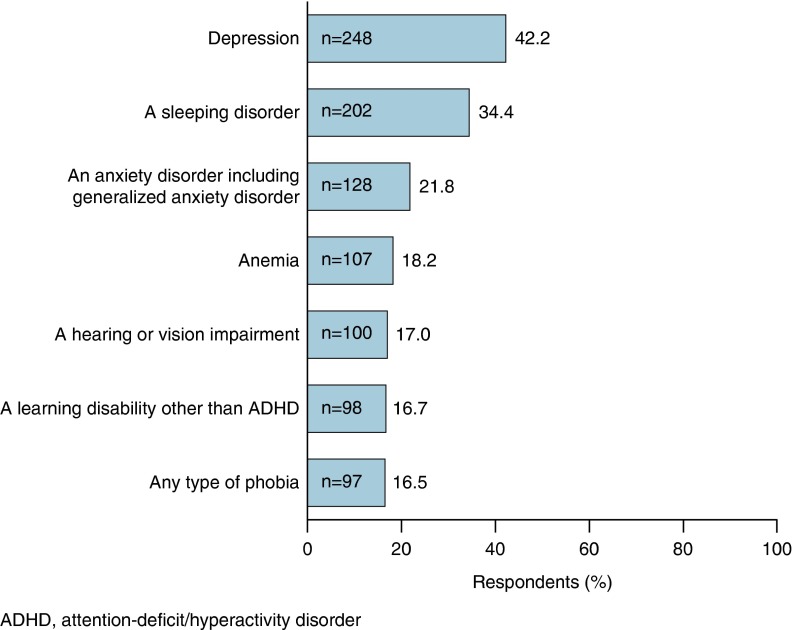
“1%) of adults reporting 4 or more comorbid conditions, which may contribute to misdiagnosis of ADHD in adults.(22) Consistent with previous findings,(23-25) depression and anxiety disorders were among the most frequently reported coexisting psychiatric comorbidities in the ADHD group.”
Background
Research works printed but not linked: 2
- Caci H, Asherson P, Doepfner M, etal Attention deficit/hyperactivity disorder is associated with impairment in everyday life as reported by parents of affected children: results of the European Lifetime Impairment Study (Abstract P-30-04). ADHD Attention Deficit Hyperactivity Disorders. 2011; 3(2): 197.
- Hervas A, Asherson P, Caci H, etal Parental experiences of diagnosis and treatment of attention deficit/hyperactivity disorder in children: results from the European Lifetime Impairment Survey (Abstract P-31-01). ADHD Attention Deficit Hyperactivity Disorders. 2011; 3(2): 199.
Cited by
Attention-deficit/hyperactivity disorder
Faraone, S. V., Asherson, P., Banaschewski, T., Biederman, J., Buitelaar, J. K., Ramos-Quiroga, J. A., Rohde, L. A., Sonuga-Barke, E. J. S., Tannock, R., & Franke, B. (2015) · Nature Reviews Disease Primers · doi:10.1038/nrdp.2015.20 · Cited by 1,479
Self-citationHoogman, M., Stolte, M., Baas, M., & Kroesbergen, E. (2020) · Neuroscience & Biobehavioral Reviews · doi:10.1016/j.neubiorev.2020.09.029 · Cited by 132
Time of onset and/or diagnosis of ADHD in European children: a systematic review
Rocco, I., Corso, B., Bonati, M. R., & Minicuci, N. (2021) · BMC Psychiatry · doi:10.1186/s12888-021-03547-x · Cited by 127
“Children with unmanaged ADHD often experience unnecessary impairments and detrimental long-term consequences leading to high personal and societal costs [8, 9].”
BackgroundAsherson, P. J., Leaver, L., Adamou, M., Arif, M., Askey, G., Butler, M., Cubbin, S., Newlove‐Delgado, T., Kustow, J., Lanham-Cook, J., et al. (2022) · BMC Psychiatry · doi:10.1186/s12888-022-04290-7 · Cited by 90
“Similar results were reported in a large pan-European survey of adults with self-reported ADHD, where just over half of participants (52%) received a diagnosis of ADHD for the first time in adulthood [68].”
ResultSelf-citationPitts, M., Mangle, L., & Asherson, P. (2015) · Archives of Psychiatric Nursing · doi:10.1016/j.apnu.2014.10.001 · Cited by 63
Self-citation
Metadata
- Authors
- Caci, H., Asherson, P., Donfrancesco, R., Faraone, S. V., Hervas, A., Fitzgerald, M., & Döpfner, M.
- Affiliations
- King's College London (GB)
- Ospedale Sandro Pertini (IT)
- SUNY Upstate Medical University (US)
- Trinity College Dublin (IE)
- University of Cologne (DE)
- Venue
- CNS Spectrums
- Publisher
- Cambridge University Press (CUP)
- Published
- 2014-02-26
- Volume
- 20
- Issue
- 2
- Pages
- 112-121
- ISSN
- 1092-8529 (ISSN-L)
- 2165-6509
- PMC
- PMC4411647
- OpenAlex
- W2130671431
- Cited by
- 37
- References
- 20
- Citations by year
- 2026: 5 · 2025: 3 · 2024: 5 · 2023: 3 · 2022: 4 · 2021: 4 · 2020: 4 · 2017: 4 · 2016: 1 · 2015: 3 · 2014: 1
- FWCI
- 2.29
- Type
- journal article
- Language
- en
- Open access
- hybrid
- doi.org
- Licence
- Locations
- CNS Spectrums (publishedVersion, cc-by-nc-sa)
- Europe PMC (PubMed Central) (publishedVersion, cc-by-nc-sa)
- PubMed Central (publishedVersion, cc-by-nc-sa)
- PubMed (publishedVersion)
- Kölner Universitäts PublikationsServer (Universität zu Köln) (publishedVersion)
- Arrow@dit (Dublin Institute of Technology) (submittedVersion)
- Research Portal (King's College London) (submittedVersion)
- Topics
- Health Sciences › Medicine › Psychiatry and Mental health › Attention Deficit Hyperactivity Disorder
- Social Sciences › Psychology › Clinical Psychology › Child and Adolescent Psychosocial and Emotional Development
- Life Sciences › Neuroscience › Cognitive Neuroscience › Autism Spectrum Disorder Research
- Keywords
- attention deficit hyperactivity disorder, childhood ADHD, daily life impairment, ADHD diagnosis, diagnostic process, ADHD treatment
- MeSH terms
- Activities of Daily Living, Adult, Attention Deficit Disorder with Hyperactivity, Child, Child Behavior Disorders, Europe, Female, Health Surveys, Humans, Male, Socioeconomic Factors, Self Report
About these checks
Registry, retraction, Cites and statistics results are computed, not judged, with one exception: a printed reference that no index lists is read once by a model before it counts as a citation error. Claims are extracted by a model and kept only when their quote appears verbatim in the text; each cited source is then checked, with a model’s help, for whether it says what the claim relies on. Those verdicts can be wrong — read the claim’s quote and the cited source before relying on one.
Statistics and arithmetic are recomputed, not judged.
Confidence bands are shown only for fields calibrated on our annotated test set. None is calibrated yet, so no band is shown.
What counts as a claim ›How we measure confidence ›How we check this ›
Are you an author, or do you see a problem with this page? Request a review
Data sources
Bibliographic data: Semantic Scholar, OpenAlex, Crossref.
Contains information from the Semantic Scholar Academic Graph Datasets, made available under the ODC Attribution License (ODC-BY 1.0).
Semantic Scholar’s data is described in: Kinney, R., et al. (2023). The Semantic Scholar Open Data Platform. arXiv:2301.10140.
