

Exploring how L2 utterance fluency relates to cognitive fluency in monologic and dialogic speaking
Open accessThe DOI matches its Crossref record; 62 of the 63 references it cites were found in a registry or an index, and 1 are not checked yet; none of the 56 sources its claims cite is checked for support yet.
Abstract
We explored the relationships between L2 utterance fluency and cognitive fluency in monologic and dialogic tasks. The study involved 136 Chinese university-level English learners. Utterance fluency was measured through speed, breakdown, and repair fluency aspects. Cognitive fluency was indicated by L2 lexical and syntactic processing efficiency measures. Stepwise regression models, including metrics of L2-specific cognitive fluency, L2 knowledge, and L1 utterance fluency as predictors, targeted L2 utterance fluency as the dependent variable. We found that L2 cognitive fluency predicted limited variance in utterance fluency, with its influence more evident in monologues. L2 lexical processing efficiency paralleled syntactic processing efficiency’s importance in the monologic task but surpassed it in dialogues. Moreover, L2 processing speed had a more significant impact on utterance fluency than processing stability across both contexts. We suggest that cognitive fluency is not the sole determinant of utterance fluency; L2 knowledge and L1 utterance fluency play non-negligible roles.
Checked 2026-11-24 · 1 reference not checked yet
Overview
CoChat Summary
TL;DR
This study examined how L2 utterance fluency (UF) relates to cognitive fluency (CF) in monologic and dialogic speaking among 136 Chinese university English learners. L2 CF predicted limited variance in UF, with its influence more evident in monologues, while L2 knowledge and L1 UF also played non-negligible roles.
Key findings
- In monologic speaking, L2 CF predicted six of nine UF measures: MASPR was predicted by L2 lexical processing speed and L2 syntactic processing stability, accounting for 20% of the variance; MASPD by L2 lexical processing speed, explaining 2%; RR by L2 syntactic processing speed and stability, accounting for 13%; AR by L2 lexical processing stability, 6%; EASPD by L2 lexical processing speed, 6%; and CR by L2 syntactic processing speed, 5%. FPR was predicted only by L1 FPR, explaining 42% of the variance, while EASPR and FSR were not significantly predicted by any predictors.
- In dialogic speaking, less variance in L2 UF was predicted by L2 CF, L2 knowledge, and L1 UF. Only four UF measures were significantly predicted by L2 CF: MASPR and EASPD by L2 lexical processing speed, accounting for 7% and 8% of the variance; MASPD by L2 syntactic processing speed, 4%; and CR by L2 lexical processing stability, 7%. AR and EASPR were predicted only by L2 comprehensive knowledge of vocabulary and grammar, explaining 9% and 7%; FPR by L2 comprehensive knowledge (6%) and L1 FPR (19%); and RR solely by L1 RR (7%).
- L2 lexical processing efficiency paralleled syntactic processing efficiency in the monologic task but surpassed it in dialogues. Across both contexts, L2 processing speed had a more significant impact on UF than processing stability.
- L2 knowledge and L1 UF were non-negligible contributors: comprehensive knowledge of vocabulary and grammar was important in both contexts, and L1 FPR contributed most of the variance in L2 FPR (42% monologic; 19% dialogic).
Methods
- Participants were 136 Chinese university-level English learners. For RQ1, 108 participants were analyzed (92 females; M age = 19.87, SD = 1.34); for RQ2, 103 participants were analyzed (93 females; M age = 20.08, SD = 1.37); 81 participants contributed to both RQs.
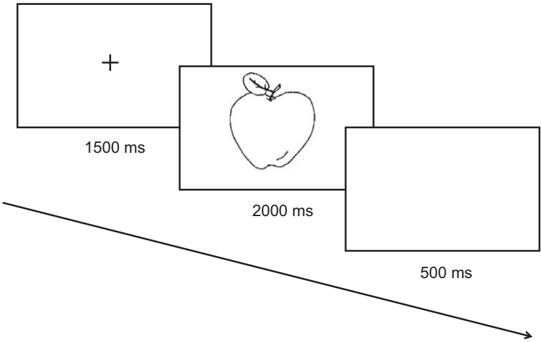
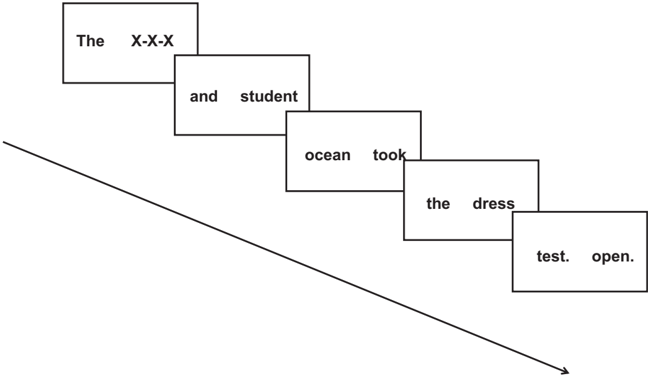
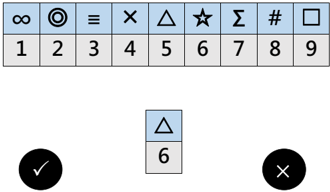
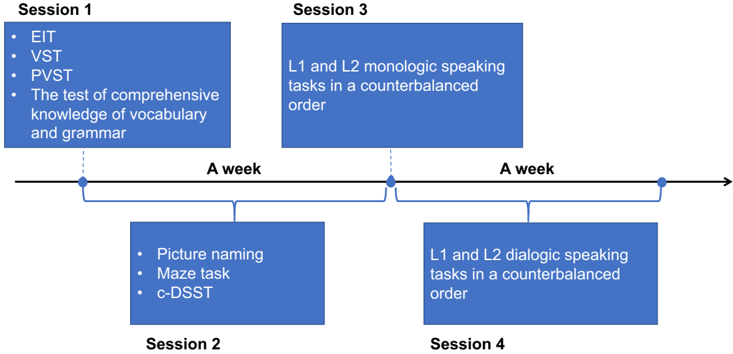
- L2 UF was measured through speed, breakdown, and repair fluency in monologic and dialogic tasks. L2 CF was measured via an L2 picture-naming task (lexical processing) and a maze task (syntactic processing), with speed and stability (mean RT and CV) residualized on a computerized Digit Symbol Substitution Test to obtain L2-specific CF measures. Predictors also included L2 knowledge (VST, PVST, DIALANG vocabulary/grammar) and L1 UF.
- Stepwise multiple regressions targeted L2 UF measures as dependent variables. Dialogic conversations with significant imbalance (one speaker dominating over 70% or the other silent for such periods) were excluded; seven conversations (14 participants) were excluded. Silent pauses of at least 200 ms were detected in L2 samples.
Limitations
- The paper states: the ASU-based approach to coding silent pause positions may not fully capture clause-boundary versus within-clause pauses; task order effects were not accounted for; pronunciation knowledge was not assessed; no significant correlation was found between L2-specific RT and CV, suggesting participants may not have reached a level where automatization-related individual differences are detectable; and no statistical comparison of the UF-CF link variance between monologic and dialogic tasks was conducted due to limited overlapping participants and task differences.
- Evident from the text: the study used convenience sampling and predominantly female samples, which limits generalizability. The regression design does not establish causality.
Model-written summary. Check it against the paper before relying on it.
Integrity signals
Registry
Cites
Statistics
Figures
Verification
Claims the paper makes
0 Valid · 3 Not valid · 42 Not checked · 95 Own results and interpretations
A result the paper reports from its own data — it cites no other source for it, so there is none to check. The quote shows it is in the paper.
In the paper
“L2 lexical processing efficiency paralleled syntactic processing efficiency's importance in the monologic task but surpassed it in dialogues.”
§ Exploring how L2 utterance fluency relates to cognitive fluency in monologic and dialogic speaking > Abstract
plainstates an association- Asserted: passes — The authors put it forward as true.
- Checkable: passes — It can be checked against evidence.
- Load-bearing: passes — The paper’s conclusions depend on it.
- Based: passes — The paper gives a reason why it holds.
A result the paper reports from its own data — it cites no other source for it, so there is none to check. The quote shows it is in the paper.
In the paper
“Moreover, L2 processing speed had a more significant impact on utterance fluency than processing stability across both contexts.”
§ Exploring how L2 utterance fluency relates to cognitive fluency in monologic and dialogic speaking > Abstract
plainstates a cause- Asserted: passes — The authors put it forward as true.
- Checkable: passes — It can be checked against evidence.
- Load-bearing: passes — The paper’s conclusions depend on it.
- Based: passes — The paper gives a reason why it holds.
A result the paper reports from its own data — it cites no other source for it, so there is none to check. The quote shows it is in the paper.
In the paper
“We found that L2 cognitive fluency predicted limited variance in utterance fluency, with its influence more evident in monologues.”
§ Exploring how L2 utterance fluency relates to cognitive fluency in monologic and dialogic speaking > Abstract
plainstates an association- Asserted: passes — The authors put it forward as true.
- Checkable: passes — It can be checked against evidence.
- Load-bearing: passes — The paper’s conclusions depend on it.
- Based: passes — The paper gives a reason why it holds.
A result the paper reports from its own data — it cites no other source for it, so there is none to check. The quote shows it is in the paper.
In the paper
“L2 lexical processing efficiency paralleled syntactic processing efficiency's importance in the monologic task but surpassed it in dialogues.”
§ Exploring how L2 utterance fluency relates to cognitive fluency in monologic and dialogic speaking > Abstract
plainstates an association- Asserted: passes — The authors put it forward as true.
- Checkable: passes — It can be checked against evidence.
- Load-bearing: passes — The paper’s conclusions depend on it.
- Based: passes — The paper gives a reason why it holds.
73 more claims
Create a free account to see all 140 claims and to verify the 50 references still open.
- It may state two separate claims as one. 23
- Probably not a substantial claim. 44
Self-check
Percentages, sums and reported differences re-computed from the paper’s own numbers.
Each contradiction between two passages listed here was confirmed by an independent check.
Rated major: it would touch a result — a value a result rests on, reported and recomputed p-values on opposite sides of the significance level, two passages that conflict with no sign which is right, or a cited work retracted before this paper was published.
In the paper
§ Exploring how L2 utterance fluency relates to cognitive fluency in monologic and dialogic speaking > 5.1. Overall relationships in monologic speaking
“MASPR and RR were more affected by L2 CF factors than by L2 knowledge and L1 UF, with 20% and 13% variance explained by L2 CF, respectively.”
§ Exploring how L2 utterance fluency relates to cognitive fluency in monologic and dialogic speaking > 5.5. Contribution of L2 knowledge to L2 utterance fluency
“It should be noted that more variance in MASPD and RR was predicted by the knowledge measure than CF.”
Rated major: it would touch a result — a value a result rests on, reported and recomputed p-values on opposite sides of the significance level, two passages that conflict with no sign which is right, or a cited work retracted before this paper was published.
In the paper
§ Exploring how L2 utterance fluency relates to cognitive fluency in monologic and dialogic speaking > 5.4. Comparing the effects of L2 processing speed and stability
“In the dialogic task, only processing speed could predict L2 UF, while no processing stability measure showed significant effects.”
§ Exploring how L2 utterance fluency relates to cognitive fluency in monologic and dialogic speaking > 6. Conclusion
“| L2CR | L2 lexical processing stability | .07 | .07 | .27** | 2.85 | 1.00 | 8.11 |”
Rated minor: it would not touch a result — a value no result rests on, a p-value that stays on the same side of the significance level, or a conflict that is clerical, resolved elsewhere in the paper, or outside its own findings.
In the paper
§ Exploring how L2 utterance fluency relates to cognitive fluency in monologic and dialogic speaking > 6. Conclusion
“Although the influence was overall limited and only evident for L2 filled pauses, we suggest that future studies explore the possible benefits of L1 fluency training on L2 performance.”
§ Exploring how L2 utterance fluency relates to cognitive fluency in monologic and dialogic speaking > 5.6. Contribution of L1 utterance fluency to L2 utterance fluency
“In the monologic task, L1 UF could predict MASPR, MASPD, FPR, and RR.In the dialogic task, L1 UF continued to predict FPR and RR.”
Citations
Cites
Snodgrass, J. G., & Vanderwart, M. (1980) · Journal of Experimental Psychology Human Learning & Memory · doi:10.1037//0278-7393.6.2.174 · Cited by 5,615
PsychoPy2: Experiments in behavior made easy
Peirce, J., Gray, J. R., Simpson, S., MacAskill, M., Höchenberger, R., Sogo, H., Kastman, E., & Lindeløv, J. K. (2019) · Behavior Research Methods · doi:10.3758/s13428-018-01193-y · Cited by 5,166
Toward a mechanistic psychology of dialogue.
Pickering, M. J., & Garrod, S. (2004) · Behavioral and Brain Sciences · doi:10.1017/s0140525x04000056 · Cited by 2,678
How Big Is “Big”? Interpreting Effect Sizes in L2 Research
Plonsky, L., & Oswald, F. L. (2014) · Language Learning · doi:10.1111/lang.12079 · Cited by 1,960
Segalowitz, N., & Freed, B. F. (2004) · Studies in Second Language Acquisition · doi:10.1017/s0272263104262027 · Cited by 980
Measuring spoken language: a unit for all reasons
Foster, P. (2000) · Applied Linguistics · doi:10.1093/applin/21.3.354 · Cited by 976
Skehan, P. (2003) · Language Teaching · doi:10.1017/s026144480200188x · Cited by 889
Investigating Fluency in EFL: A Quantitative Approach*
Lennon, P. (1990) · Language Learning · doi:10.1111/j.1467-1770.1990.tb00669.x · Cited by 888
Cognitive Bases of Second Language Fluency
Segalowitz, N. (2010) · doi:10.4324/9780203851357 · Cited by 881
Diagnosing foreign language proficiency : the interface between learning and assessment.
Alderson, J. C. (2005) · Cited by 663
Research works printed but not linked: 5
- Witton-Davies, G. (2014). The study of fluency and its development in mono- logue and dialogue [Doctoral dissertation, University of Lancaster]. https:// taiwan.academia.edu/GilesWittonDavies
- Zhao, P., & Ji, X. (2016). A validity study on VST: Based on classical test theory and item response theory. Foreign Language Testing and Teaching, 2, 39-46 59.
- Michel, M. (2011). Effects of task complexity and interaction in L2 performance. In P. Robinson (Ed.), Second language task complexity: Researching the cognition hypothesis of language learning and performance (pp. 141-174). John Benjamins. https://doi.org/10.1075/tblt. · DOI
- Trouvain, J., & Werner, R. (2022). A phonetic view on annotating speech pauses and pause-internal phonetic particles. In C. Schwarze, & S. Grawun- der (Eds.), Transkription und annotation gesprochener sprache und multi- modaler interaktion: Konzepte, probleme, lösungen [] (pp. 55-73).
- Ortega, L., Iwashita, N., Norris, J. M., & Rabie, S. (2002, October). An investigation of elicited imitation tasks in crosslinguistic SLA research. [Paper presentation]. The 20th Second Language Research Forum, Toronto, Canada. https://www.iris-database.org/details/HAPZ2-KRwXl
Cited by
de Jong, N., & Vercellotti, M. L. (2026) · Cognitive Processing · doi:10.1007/s10339-026-01396-8
Automatic cross-lingual annotation of clause-based utterance fluency in L2 speech
Lu, J., & Sato, R. (2026) · Research Methods in Applied Linguistics · doi:10.1016/j.rmal.2026.100397
Metadata
- Authors
- Gao, J., & Sun, P. P.
- Affiliations
- Zhejiang University of Technology (CN)
- Zhejiang University (CN)
- Corresponding author
- Sun, Peijian Paul
- Venue
- Bilingualism: Language and Cognition
- Publisher
- Cambridge University Press (CUP)
- Published
- 2025-10-07
- Volume
- 29
- Issue
- 4
- Pages
- 1050-1063
- ISSN
- 1366-7289 (ISSN-L)
- 1469-1841
- OpenAlex
- W4414918937
- Semantic Scholar
- f5a332646b35e04bcc5c2e1da7215c50d3160785
- Cited by
- 2
- References
- 61
- Citations by year
- 2026: 2
- FWCI
- 2.30
- Type
- journal article
- Language
- en
- Open access
- hybrid
- doi.org
- Locations
- Bilingualism Language and Cognition (publishedVersion, cc-by)
- Funders
- National Social Science Fund of China (19CYY008)
- Topics
- Social Sciences › Arts and Humanities › Language and Linguistics › EFL/ESL Teaching and Learning
- Social Sciences › Psychology › Developmental and Educational Psychology › Second Language Acquisition and Learning
- Life Sciences › Neuroscience › Cognitive Neuroscience › Neurobiology of Language and Bilingualism
- Keywords
- processing fluency, processing speed, processing stability, Chinese learners of English, second language speaking
About these checks
Registry, retraction, Cites and statistics results are computed, not judged, with one exception: a printed reference that no index lists is read once by a model before it counts as a citation error. Claims are extracted by a model and kept only when their quote appears verbatim in the text; each cited source is then checked, with a model’s help, for whether it says what the claim relies on. Those verdicts can be wrong — read the claim’s quote and the cited source before relying on one.
A language model drew the claims from the paper on 2026-11-24, under version 3 of the claim definition (model deepseek-v4.1-flash, prompt extract-v3).
A second model labelled each claim on 2026-11-24 (model jev-1.13-20260917, definition revision gold-guideline-v0.2).
Statistics and arithmetic are recomputed, not judged.
Confidence bands are shown only for fields calibrated on our annotated test set. None is calibrated yet, so no band is shown.
What counts as a claim ›How we measure confidence ›How we check this ›
Are you an author, or do you see a problem with this page? Request a review
Data sources
Bibliographic data: Semantic Scholar, OpenAlex, Crossref.
Contains information from the Semantic Scholar Academic Graph Datasets, made available under the ODC Attribution License (ODC-BY 1.0).
Semantic Scholar’s data is described in: Kinney, R., et al. (2023). The Semantic Scholar Open Data Platform. arXiv:2301.10140.
