

Exploring how L2 utterance fluency relates to cognitive fluency in monologic and dialogic speaking
Open accessThe DOI matches its Crossref record; 62 of the 62 references it cites were found in a registry or an index; none of the 56 sources its claims cite is checked for support yet.
Abstract
We explored the relationships between L2 utterance fluency and cognitive fluency in monologic and dialogic tasks. The study involved 136 Chinese university-level English learners. Utterance fluency was measured through speed, breakdown, and repair fluency aspects. Cognitive fluency was indicated by L2 lexical and syntactic processing efficiency measures. Stepwise regression models, including metrics of L2-specific cognitive fluency, L2 knowledge, and L1 utterance fluency as predictors, targeted L2 utterance fluency as the dependent variable. We found that L2 cognitive fluency predicted limited variance in utterance fluency, with its influence more evident in monologues. L2 lexical processing efficiency paralleled syntactic processing efficiency’s importance in the monologic task but surpassed it in dialogues. Moreover, L2 processing speed had a more significant impact on utterance fluency than processing stability across both contexts. We suggest that cognitive fluency is not the sole determinant of utterance fluency; L2 knowledge and L1 utterance fluency play non-negligible roles.
Overview
CoChat Summary
TL;DR
This study examined how L2 utterance fluency (UF) relates to cognitive fluency (CF) in monologic and dialogic speaking among 136 Chinese university English learners. L2 CF predicted limited variance in UF, with its influence more evident in monologues, while L2 knowledge and L1 UF also played non-negligible roles.
Key findings
- In monologic speaking, L2 CF predicted six of nine UF measures: MASPR was predicted by L2 lexical processing speed and L2 syntactic processing stability, accounting for 20% of the variance; MASPD by L2 lexical processing speed, explaining 2%; RR by L2 syntactic processing speed and stability, accounting for 13%; AR by L2 lexical processing stability, 6%; EASPD by L2 lexical processing speed, 6%; and CR by L2 syntactic processing speed, 5%. FPR was predicted only by L1 FPR, explaining 42% of the variance, while EASPR and FSR were not significantly predicted by any predictors.
- In dialogic speaking, less variance in L2 UF was predicted by L2 CF, L2 knowledge, and L1 UF. Only four UF measures were significantly predicted by L2 CF: MASPR and EASPD by L2 lexical processing speed, accounting for 7% and 8% of the variance; MASPD by L2 syntactic processing speed, 4%; and CR by L2 lexical processing stability, 7%. AR and EASPR were predicted only by L2 comprehensive knowledge of vocabulary and grammar, explaining 9% and 7%; FPR by L2 comprehensive knowledge (6%) and L1 FPR (19%); and RR solely by L1 RR (7%).
- L2 lexical processing efficiency paralleled syntactic processing efficiency in the monologic task but surpassed it in dialogues. Across both contexts, L2 processing speed had a more significant impact on UF than processing stability.
- L2 knowledge and L1 UF were non-negligible contributors: comprehensive knowledge of vocabulary and grammar was important in both contexts, and L1 FPR contributed most of the variance in L2 FPR (42% monologic; 19% dialogic).
Methods
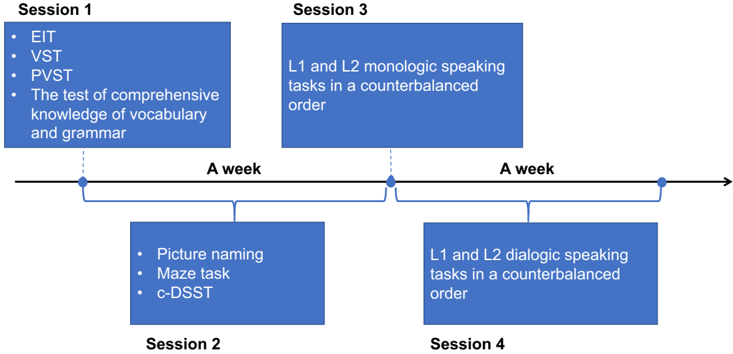
- Participants were 136 Chinese university-level English learners. For RQ1, 108 participants were analyzed (92 females; M age = 19.87, SD = 1.34); for RQ2, 103 participants were analyzed (93 females; M age = 20.08, SD = 1.37); 81 participants contributed to both RQs.
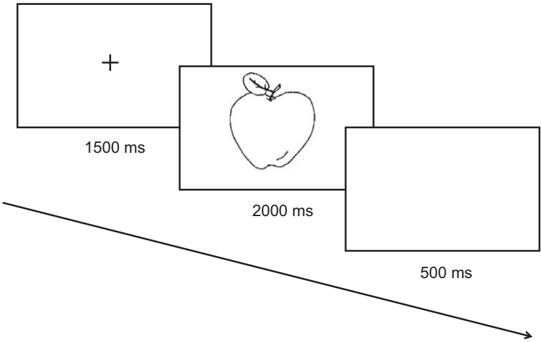
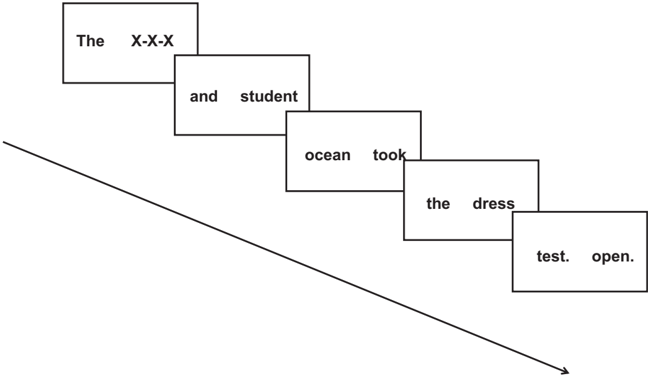
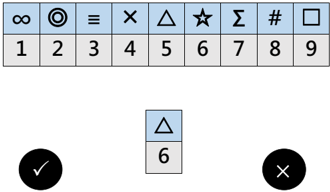
- L2 UF was measured through speed, breakdown, and repair fluency in monologic and dialogic tasks. L2 CF was measured via an L2 picture-naming task (lexical processing) and a maze task (syntactic processing), with speed and stability (mean RT and CV) residualized on a computerized Digit Symbol Substitution Test to obtain L2-specific CF measures. Predictors also included L2 knowledge (VST, PVST, DIALANG vocabulary/grammar) and L1 UF.
- Stepwise multiple regressions targeted L2 UF measures as dependent variables. Dialogic conversations with significant imbalance (one speaker dominating over 70% or the other silent for such periods) were excluded; seven conversations (14 participants) were excluded. Silent pauses of at least 200 ms were detected in L2 samples.
Limitations
- The paper states: the ASU-based approach to coding silent pause positions may not fully capture clause-boundary versus within-clause pauses; task order effects were not accounted for; pronunciation knowledge was not assessed; no significant correlation was found between L2-specific RT and CV, suggesting participants may not have reached a level where automatization-related individual differences are detectable; and no statistical comparison of the UF-CF link variance between monologic and dialogic tasks was conducted due to limited overlapping participants and task differences.
- Evident from the text: the study used convenience sampling and predominantly female samples, which limits generalizability. The regression design does not establish causality.
Model-written summary. Check it against the paper before relying on it.
Integrity signals
Registry
Cites
Statistics
Figures
Verification
Claims the paper makes
0 Valid · 3 Not valid · 42 Not checked · 95 Own results and interpretations
A result the paper reports from its own data — it cites no other source for it, so there is none to check. The quote shows it is in the paper.
In the paper
“L2 lexical processing efficiency paralleled syntactic processing efficiency's importance in the monologic task but surpassed it in dialogues.”
§ Exploring how L2 utterance fluency relates to cognitive fluency in monologic and dialogic speaking > Abstract
plainstates an association- Asserted: passes — The authors put it forward as true.
- Checkable: passes — It can be checked against evidence.
- Load-bearing: passes — The paper’s conclusions depend on it.
- Based: passes — The paper gives a reason why it holds.
A result the paper reports from its own data — it cites no other source for it, so there is none to check. The quote shows it is in the paper.
In the paper
“Moreover, L2 processing speed had a more significant impact on utterance fluency than processing stability across both contexts.”
§ Exploring how L2 utterance fluency relates to cognitive fluency in monologic and dialogic speaking > Abstract
plainstates a cause- Asserted: passes — The authors put it forward as true.
- Checkable: passes — It can be checked against evidence.
- Load-bearing: passes — The paper’s conclusions depend on it.
- Based: passes — The paper gives a reason why it holds.
A result the paper reports from its own data — it cites no other source for it, so there is none to check. The quote shows it is in the paper.
In the paper
“We found that L2 cognitive fluency predicted limited variance in utterance fluency, with its influence more evident in monologues.”
§ Exploring how L2 utterance fluency relates to cognitive fluency in monologic and dialogic speaking > Abstract
plainstates an association- Asserted: passes — The authors put it forward as true.
- Checkable: passes — It can be checked against evidence.
- Load-bearing: passes — The paper’s conclusions depend on it.
- Based: passes — The paper gives a reason why it holds.
A result the paper reports from its own data — it cites no other source for it, so there is none to check. The quote shows it is in the paper.
In the paper
“L2 lexical processing efficiency paralleled syntactic processing efficiency's importance in the monologic task but surpassed it in dialogues.”
§ Exploring how L2 utterance fluency relates to cognitive fluency in monologic and dialogic speaking > Abstract
plainstates an association- Asserted: passes — The authors put it forward as true.
- Checkable: passes — It can be checked against evidence.
- Load-bearing: passes — The paper’s conclusions depend on it.
- Based: passes — The paper gives a reason why it holds.
73 more claims
Create a free account to see all 140 claims and to verify the 50 references still open.
- It may state two separate claims as one. 23
- Probably not a substantial claim. 44
Self-check
Percentages, sums and reported differences re-computed from the paper’s own numbers.
Each contradiction between two passages listed here was confirmed by an independent check.
Rated major: it would touch a result — a value a result rests on, reported and recomputed p-values on opposite sides of the significance level, two passages that conflict with no sign which is right, or a cited work retracted before this paper was published.
In the paper
§ Exploring how L2 utterance fluency relates to cognitive fluency in monologic and dialogic speaking > 5.1. Overall relationships in monologic speaking
“MASPR and RR were more affected by L2 CF factors than by L2 knowledge and L1 UF, with 20% and 13% variance explained by L2 CF, respectively.”
§ Exploring how L2 utterance fluency relates to cognitive fluency in monologic and dialogic speaking > 5.5. Contribution of L2 knowledge to L2 utterance fluency
“It should be noted that more variance in MASPD and RR was predicted by the knowledge measure than CF.”
Rated major: it would touch a result — a value a result rests on, reported and recomputed p-values on opposite sides of the significance level, two passages that conflict with no sign which is right, or a cited work retracted before this paper was published.
In the paper
§ Exploring how L2 utterance fluency relates to cognitive fluency in monologic and dialogic speaking > 5.4. Comparing the effects of L2 processing speed and stability
“In the dialogic task, only processing speed could predict L2 UF, while no processing stability measure showed significant effects.”
§ Exploring how L2 utterance fluency relates to cognitive fluency in monologic and dialogic speaking > 6. Conclusion
“| L2CR | L2 lexical processing stability | .07 | .07 | .27** | 2.85 | 1.00 | 8.11 |”
Rated minor: it would not touch a result — a value no result rests on, a p-value that stays on the same side of the significance level, or a conflict that is clerical, resolved elsewhere in the paper, or outside its own findings.
In the paper
§ Exploring how L2 utterance fluency relates to cognitive fluency in monologic and dialogic speaking > 6. Conclusion
“Although the influence was overall limited and only evident for L2 filled pauses, we suggest that future studies explore the possible benefits of L1 fluency training on L2 performance.”
§ Exploring how L2 utterance fluency relates to cognitive fluency in monologic and dialogic speaking > 5.6. Contribution of L1 utterance fluency to L2 utterance fluency
“In the monologic task, L1 UF could predict MASPR, MASPD, FPR, and RR.In the dialogic task, L1 UF continued to predict FPR and RR.”
Citations
Cites
Snodgrass, J. G., & Vanderwart, M. (1980) · Journal of Experimental Psychology Human Learning & Memory · doi:10.1037//0278-7393.6.2.174 · Cited by 5,615
PsychoPy2: Experiments in behavior made easy
Peirce, J., Gray, J. R., Simpson, S., MacAskill, M., Höchenberger, R., Sogo, H., Kastman, E., & Lindeløv, J. K. (2019) · Behavior Research Methods · doi:10.3758/s13428-018-01193-y · Cited by 5,166
Toward a mechanistic psychology of dialogue.
Pickering, M. J., & Garrod, S. (2004) · Behavioral and Brain Sciences · doi:10.1017/s0140525x04000056 · Cited by 2,678
How Big Is “Big”? Interpreting Effect Sizes in L2 Research
Plonsky, L., & Oswald, F. L. (2014) · Language Learning · doi:10.1111/lang.12079 · Cited by 1,960
Segalowitz, N., & Freed, B. F. (2004) · Studies in Second Language Acquisition · doi:10.1017/s0272263104262027 · Cited by 980
Measuring spoken language: a unit for all reasons
Foster, P. (2000) · Applied Linguistics · doi:10.1093/applin/21.3.354 · Cited by 976
Skehan, P. (2003) · Language Teaching · doi:10.1017/s026144480200188x · Cited by 889
Investigating Fluency in EFL: A Quantitative Approach*
Lennon, P. (1990) · Language Learning · doi:10.1111/j.1467-1770.1990.tb00669.x · Cited by 888
Cognitive Bases of Second Language Fluency
Segalowitz, N. (2010) · doi:10.4324/9780203851357 · Cited by 881
Diagnosing foreign language proficiency : the interface between learning and assessment.
Alderson, J. C. (2005) · Cited by 663
Praat script to detect syllable nuclei and measure speech rate automatically
de Jong, N. H., & Wempe, T. (2009) · Behavior Research Methods · doi:10.3758/brm.41.2.385 · Cited by 596
Diagnosing Foreign Language Proficiency : The Interface between Learning and Assessment
(2005) · Bloomsbury Academic eBooks · doi:10.5040/9781474212151 · Cited by 570
Martinez, R., & Schmitt, N. (2012) · Applied Linguistics · doi:10.1093/applin/ams010 · Cited by 518
9. Strategic planning, task structure and performance testing
Tavakoli, P., & Skehan, P. (2005) · Language Learning & Language Teaching · doi:10.1075/lllt.11.15tav · Cited by 466
A Rasch-based validation of the Vocabulary Size Test
Beglar, D. (2010) · Language Testing · doi:10.1177/0265532209340194 · Cited by 370
Speech production and second language acquisition
Sunderman, G. (2009) · International Journal of Bilingual Education and Bilingualism · doi:10.1080/13670050802149382 · Cited by 349
THE RELATIONSHIP BETWEEN L1 FLUENCY AND L2 FLUENCY DEVELOPMENT
Derwing, T. M., Munro, M. J., Thomson, R. I., & Rossiter, M. J. (2009) · Studies in Second Language Acquisition · doi:10.1017/s0272263109990015 · Cited by 289 · cited 2×
“Research on L2 UF has increasingly recognized the impact of learners ’ L1 fluency on their L2 (e.g., De Jong et al., 2015; Derwing et al., 2009; Gao & Sun, 2023).”
Second language fluency and its underlying cognitive and social determinants
Segalowitz, N. (2016) · International Review of Applied Linguistics in Language Teaching · doi:10.1515/iral-2016-9991 · Cited by 243
DE JONG, N. H., GROENHOUT, R., SCHOONEN, R., & HULSTIJN, J. H. (2015) · Applied Psycholinguistics · doi:10.1017/s0142716413000210 · Cited by 229
PROBLEM-SOLVING MECHANISMS IN L2 COMMUNICATION: A Psycholinguistic Perspective
Dörnyei, Z., & Kormos, J. (1998) · Studies in Second Language Acquisition · doi:10.1017/s0272263198003039 · Cited by 215
Linguistic skills and speaking fluency in a second language
DE JONG, N. H., STEINEL, M. P., FLORIJN, A., SCHOONEN, R., & HULSTIJN, J. H. (2013) · Applied Psycholinguistics · doi:10.1017/s0142716412000069 · Cited by 215
Kahng, J. (2014) · Language Learning · doi:10.1111/lang.12084 · Cited by 200
A Bilingual Vocabulary Size Test of English for Vietnamese Learners
Nguyen, L. T. C., & Nation, P. (2011) · RELC Journal · doi:10.1177/0033688210390264 · Cited by 191
Ginther, A., Dimova, S., & Yang, R. (2010) · Language Testing · doi:10.1177/0265532210364407 · Cited by 158
Fukkink, R. G., Hulstijn, J. H., & Simis, A. (2005) · Modern Language Journal · doi:10.1111/j.0026-7902.2005.00265.x · Cited by 147
Elicited imitation as a measure of second language proficiency: A narrative review and meta-analysis
Yan, X., Maeda, Y., Lv, J., & Ginther, A. (2016) · Language Testing · doi:10.1177/0265532215594643 · Cited by 141
Understanding Dialogue: Language Use and Social Interaction
Pickering, M. J., & Garrod, S. (2021) · doi:10.1017/9781108610728 · Cited by 130
McCarthy, M. (2010) · English Profile Journal · doi:10.1017/s2041536210000012 · Cited by 129 · cited 1×
“…(DeJongetal.,2015;Gao&Sun,2023;Gao&Sun,2024;Kahng,2020),andlittleisknownabout howthesefactorsoperateindialogiccontextswhereinteractionaldemandssuchasturn-takingcan significantlyinfluencespeechproduction(McCarthy,2010;Peltonen,2017).”
Chapter 6. Effects of task complexity and interaction on L2 performance
Michel, M. C. (2011) · Task-Based Language Teaching · doi:10.1075/tblt.2.12ch6 · Cited by 114
The development of a suite of computer-based diagnostic tests based on the Common European Framework
Alderson, J. C., & Huhta, A. (2005) · Language Testing · doi:10.1191/0265532205lt310oa · Cited by 108
Timed Picture Naming Norms for Mandarin Chinese
Liu, Y., Hao, M., Li, P., & Shu, H. (2011) · PLoS ONE · doi:10.1371/journal.pone.0016505 · Cited by 107
Fluency in monologic and dialogic task performance: Challenges in defining and measuring L2 fluency
Tavakoli, P. (2016) · International Review of Applied Linguistics in Language Teaching · doi:10.1515/iral-2016-9994 · Cited by 91
The effects of training on automatization of word recognition in English as a foreign language
Akamatsu, N. (2008) · Applied Psycholinguistics · doi:10.1017/s0142716408080089 · Cited by 91
Second Language Speech Fluency: From Research to Practice
Tavakoli, P., & Wright, C. (2020) · Cambridge University Press eBooks · doi:10.1017/9781108589109 · Cited by 80
Suzuki, S., & Kormos, J. (2023) · Studies in Second Language Acquisition · doi:10.1017/s0272263121000899 · Cited by 80
LIM, H., & GODFROID, A. (2015) · Applied Psycholinguistics · doi:10.1017/s0142716414000137 · Cited by 72
The influence of interlocutor proficiency in a paired oral assessment
Davis, L. (2009) · Language Testing · doi:10.1177/0265532209104667 · Cited by 70
HUENSCH, A., & TRACY-VENTURA, N. (2017) · Applied Psycholinguistics · doi:10.1017/s0142716416000424 · Cited by 69
Exploring Connections Between First and Second Language Fluency: A Mixed Methods Approach
PELTONEN, P. (2018) · The Modern Language Journal · doi:10.1111/modl.12516 · Cited by 68 · cited 2×
“According to Peltonen (2018), the use of stalling mechanisms follows highly idiosyncratic patterns in both L1 and L2, which may explain why L2 FPR in the present study was largely influenced by L1 rather than L2 CF or knowledge.”
Kahng, J. (2020) · Applied Psycholinguistics · doi:10.1017/s0142716420000065 · Cited by 62 · cited 13×
“Following previous research (De Jong et al., 2013; Kahng, 2020; Suzuki & Kormos, 2023), we selected 47 pictures from Snodgrass and Vanderwart ’ s (1980) pool of 260 black-and-white line drawings.”
InfluentialYan, X., Kim, H. R., & Kim, J. Y. (2020) · Language Testing · doi:10.1177/0265532220951508 · Cited by 62
Wu, S., Tio, Y. P., & Ortega, L. (2021) · Studies in Second Language Acquisition · doi:10.1017/s0272263121000103 · Cited by 61
Suzuki, Y., & SUNADA, M. (2016) · Bilingualism Language and Cognition · doi:10.1017/s1366728916000857 · Cited by 61
Peltonen, P. (2017) · System · doi:10.1016/j.system.2017.08.009 · Cited by 54 · cited 2×
“From a problem-solving perspective on speech production, filled pauses, along with other speech features like fillers, drawls, and repetitions, are regarded as stalling mechanisms that help speakers avoid silence while planning speech (Dörnyei & Kormos, 1998; Peltonen, 2017).”
L2 development in an intensive Study Abroad EAP context
Tavakoli, P. (2017) · System · doi:10.1016/j.system.2017.10.009 · Cited by 53
British-English norms and naming times for a set of 539 pictures: The role of age of acquisition
Johnston, R., Dent, K., Humphreys, G. W., & Barry, C. (2010) · Behavior Research Methods · doi:10.3758/brm.42.2.461 · Cited by 38
Pellicer‐Sánchez, A. (2015) · Journal of Spanish Language Teaching · doi:10.1080/23247797.2015.1104029 · Cited by 32
Williams, S. A., & Korko, M. (2019) · Applied Psycholinguistics · doi:10.1017/s0142716418000802 · Cited by 25
How does learners’ L2 utterance fluency relate to their L1? A meta‐analysis
Gao, J., & Sun, P. P. (2024) · International Journal of Applied Linguistics · doi:10.1111/ijal.12493 · Cited by 18 · cited 4×
“Some researchers have resorted to the models of L2 speech production to explain L2 UF from a cognitive perspective (e.g., Gao & Sun, 2023, Kahng, 2014).”
InfluentialSelf-citationTo Correct or Not: The Role of L1 Fluency in Understanding and Measuring L2 Fluency
Gao, J., & Sun, P. P. (2022) · TESOL Quarterly · doi:10.1002/tesq.3198 · Cited by 18
Self-citationChen, X., Hu, N., Wang, Y., & Gao, X. (2020) · Computers in Biology and Medicine · doi:10.1016/j.compbiomed.2020.103729 · Cited by 15
Fluency in L2 learning and use
Lintunen, P., Mutta, M., & Peltonen, P. (2020) · Cited by 15
Jackson, J., Howard, M., & Schwieter, J. W. (2020) · Routledge eBooks · doi:10.4324/9780429431463-6 · Cited by 11
Gao, J., Sun, P. P., & Li, C. (2025) · Language Testing · doi:10.1177/02655322251315792 · Cited by 8
Self-citationFeng, R. (2022) · Frontiers in Psychology · doi:10.3389/fpsyg.2022.926367 · Cited by 7
Cognitive Fluency in L2: The Effect of Automatic and Controlled Lexical Processing on Speech Rate
Olkkonen, S., Snellings, P., Veivo, O., & Lintunen, P. (2024) · Journal of Psycholinguistic Research · doi:10.1007/s10936-024-10099-0 · Cited by 6
The processing of formulaic language on elicited imitation tasks by second language speakers
Yan, X. (2015) · Purdue e-Pubs (Purdue University System) · Cited by 5
Effects of interlocutors’ linguistic competence on L2 speakers’ lexical alignment
Shen, H., & Wang, M. (2025) · Bilingualism: Language and Cognition · doi:10.1017/s1366728924000725 · Cited by 3
Fluency in L2 Learning and Use
Lintunen, P., Mutta, M., & Peltonen, P. (2019) · Channel View Publications eBooks · doi:10.2307/jj.22730469 · Cited by 3
(2001)
(2013) · Max Planck Digital Library
(2011) · Nottingham ePrints (University of Nottingham)
Research works printed but not linked: 5
- Witton-Davies, G. (2014). The study of fluency and its development in mono- logue and dialogue [Doctoral dissertation, University of Lancaster]. https:// taiwan.academia.edu/GilesWittonDavies
- Zhao, P., & Ji, X. (2016). A validity study on VST: Based on classical test theory and item response theory. Foreign Language Testing and Teaching, 2, 39-46 59.
- Michel, M. (2011). Effects of task complexity and interaction in L2 performance. In P. Robinson (Ed.), Second language task complexity: Researching the cognition hypothesis of language learning and performance (pp. 141-174). John Benjamins. https://doi.org/10.1075/tblt. · DOI
- Trouvain, J., & Werner, R. (2022). A phonetic view on annotating speech pauses and pause-internal phonetic particles. In C. Schwarze, & S. Grawun- der (Eds.), Transkription und annotation gesprochener sprache und multi- modaler interaktion: Konzepte, probleme, lösungen [] (pp. 55-73).
- Ortega, L., Iwashita, N., Norris, J. M., & Rabie, S. (2002, October). An investigation of elicited imitation tasks in crosslinguistic SLA research. [Paper presentation]. The 20th Second Language Research Forum, Toronto, Canada. https://www.iris-database.org/details/HAPZ2-KRwXl
Cited by
de Jong, N., & Vercellotti, M. L. (2026) · Cognitive Processing · doi:10.1007/s10339-026-01396-8
Automatic cross-lingual annotation of clause-based utterance fluency in L2 speech
Lu, J., & Sato, R. (2026) · Research Methods in Applied Linguistics · doi:10.1016/j.rmal.2026.100397
Metadata
- Authors
- Gao, J., & Sun, P. P.
- Affiliations
- Zhejiang University of Technology (CN)
- Zhejiang University (CN)
- Corresponding author
- Sun, Peijian Paul
- Venue
- Bilingualism: Language and Cognition
- Publisher
- Cambridge University Press (CUP)
- Published
- 2025-10-07
- Volume
- 29
- Issue
- 4
- Pages
- 1050-1063
- ISSN
- 1366-7289 (ISSN-L)
- 1469-1841
- OpenAlex
- W4414918937
- Semantic Scholar
- f5a332646b35e04bcc5c2e1da7215c50d3160785
- Cited by
- 2
- References
- 61
- Citations by year
- 2026: 2
- FWCI
- 2.30
- Type
- journal article
- Language
- en
- Open access
- hybrid
- doi.org
- Locations
- Bilingualism Language and Cognition (publishedVersion, cc-by)
- Funders
- National Social Science Fund of China (19CYY008)
- Topics
- Social Sciences › Arts and Humanities › Language and Linguistics › EFL/ESL Teaching and Learning
- Social Sciences › Psychology › Developmental and Educational Psychology › Second Language Acquisition and Learning
- Life Sciences › Neuroscience › Cognitive Neuroscience › Neurobiology of Language and Bilingualism
- Keywords
- processing fluency, processing speed, processing stability, Chinese learners of English, second language speaking
About these checks
Registry, retraction, Cites and statistics results are computed, not judged, with one exception: a printed reference that no index lists is read once by a model before it counts as a citation error. Claims are extracted by a model and kept only when their quote appears verbatim in the text; each cited source is then checked, with a model’s help, for whether it says what the claim relies on. Those verdicts can be wrong — read the claim’s quote and the cited source before relying on one.
A language model drew the claims from the paper on 2026-11-24, under version 3 of the claim definition (model deepseek-v4.1-flash, prompt extract-v3).
A second model labelled each claim on 2026-11-24 (model jev-1.13-20260917, definition revision gold-guideline-v0.2).
Statistics and arithmetic are recomputed, not judged.
Confidence bands are shown only for fields calibrated on our annotated test set. None is calibrated yet, so no band is shown.
What counts as a claim ›How we measure confidence ›How we check this ›
Are you an author, or do you see a problem with this page? Request a review
Data sources
Bibliographic data: Semantic Scholar, OpenAlex, Crossref.
Contains information from the Semantic Scholar Academic Graph Datasets, made available under the ODC Attribution License (ODC-BY 1.0).
Semantic Scholar’s data is described in: Kinney, R., et al. (2023). The Semantic Scholar Open Data Platform. arXiv:2301.10140.
