

What level of domestic government health expenditure should we aspire to for universal health coverage?
Open accessThe DOI matches its Crossref record; 18 of the 18 references it cites were found in a registry or an index.
Abstract
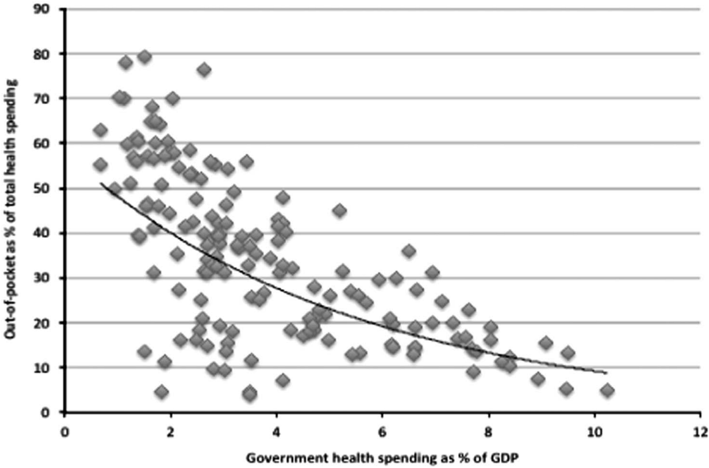
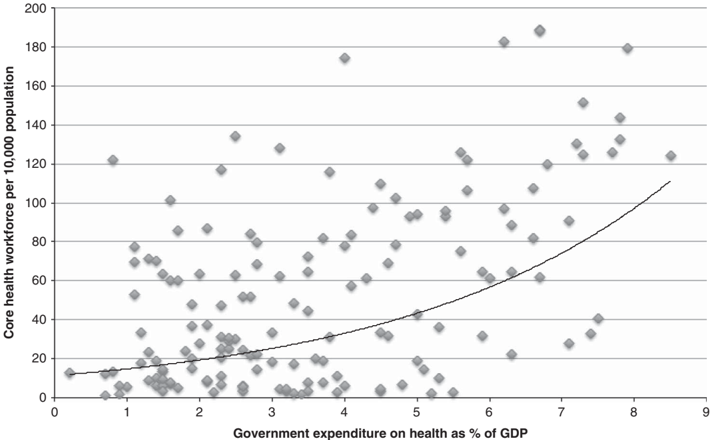
Global discussions on universal health coverage (UHC) have focussed attention on the need for increased government funding for health care in many low- and middle-income countries. The objective of this paper is to explore potential targets for government spending on health to progress towards UHC. An explicit target for government expenditure on health care relative to gross domestic product (GDP) is a potentially powerful tool for holding governments to account in progressing to UHC, particularly in the context of UHC’s inclusion in the Sustainable Development Goals. It is likely to be more influential than the Abuja target, which requires decreases in budget allocations to other sectors and is opposed by finance ministries for undermining their autonomy in making sectoral budget allocation decisions. International Monetary Fund and World Health Organisation data sets were used to analyse the relationship between government health expenditure and proxy indicators for the UHC goals of financial protection and access to quality health care, and triangulated with available country case studies estimating the resource requirements for a universal health system. Our analyses point towards a target of government spending on health of at least 5% of GDP for progressing towards UHC. This can be supplemented by a per capita target of $86 to promote universal access to primary care services in low-income countries.
Overview
The claims and statistics of this paper haven’t been checked yet.
Free: it reads the open-access text and checks the first 5 claims that cite a source we can check. Create a free account to check every claim.
Integrity signals
Registry
Cites
Statistics
Figures
Verification
Claims the paper makes
The claims and statistics of this paper haven’t been checked yet.
Free: it reads the open-access text and checks the first 5 claims that cite a source we can check. Create a free account to check every claim.
Claims other papers make about this one
Each is checked against this paper’s own text: does it say what the citing paper says it does?
In the citing paper
“This is consistent with previous studies that estimated that lower-resource countries would need to spend about 5% of GDP on healthcare to make sufficient progress towards UHC.140”
From Global health 2050: the path to halving premature death by mid-century (2024) · cites this paper as [140]
Self-check
Percentages, sums and reported differences re-computed from the paper’s own numbers.
The self-check needs the paper’s full text.
Citations
Cites
Household catastrophic health expenditure: a multicountry analysis
Xu, K., Evans, D. B., Kawabata, K., Zeramdini, R., Klavus, J., & Murray, C. J. (2003) · The Lancet · doi:10.1016/s0140-6736(03)13861-5 · Cited by 2,309 · cited 1×
“Reducing the reliance on OOP payments for health care is important for financial protection, as demonstrated by Xu et al. (2003) in their study of 59 countries: ‘A 1% increase in the proportion of total health expenditure provided by out-of-pocket payments is associated with an average increase in…”
BackgroundMacroeconomics and health: investing in health for economic development
Sachs, J. D. (2002) · Revista Panamericana de Salud Pública · doi:10.1590/s1020-49892002000800017 · Cited by 1,830
Macroeconomics and Health: Investing in Health for Economic Development
Ivinson, A. J. (2002) · Nature Medicine · doi:10.1038/nm0602-551b · Cited by 436
Reeves, A., Gourtsoyannis, Y., Basu, S., McCoy, D., McKee, M., & Stuckler, D. (2015) · The Lancet · doi:10.1016/s0140-6736(15)60574-8 · Cited by 280
Broader Health Coverage is Good for the Nation’s Health: Evidence from Country Level Panel Data
Moreno-Serra, R., & Smith, P. C. (2015) · Journal of the Royal Statistical Society Series A: Statistics in Society · doi:10.1111/rssa.12048 · Cited by 238 · cited 1×
“…large cross-national panel data sets, confirms the importance of increased levels of public funding of health services (particularly increased tax funding) in improving countries’ health status, the ultimate goal of universal coverage reforms (Moreno-Serra and Smith, 2015; Reeves et al., 2015).”
BackgroundFiscal space for domestic funding of health and other social services
Meheus, F., & McIntyre, D. (2017) · Health Economics, Policy and Law · doi:10.1017/s1744133116000438 · Cited by 172 · cited 3×
“…resource mobilisation and spending on the full range of human rights and social determinants of health in situations where governments are not presently providing ‘maximum available resources’ (see Meheus and McIntyre, 2017 for discussion of how government resource mobilisation can be improved).”
BackgroundSelf-citationMonitoring Intervention Coverage in the Context of Universal Health Coverage
Boerma, T., AbouZahr, C., Evans, D., & Evans, T. (2014) · PLoS Medicine · doi:10.1371/journal.pmed.1001728 · Cited by 116
Does Funding From Donors Displace Government Spending For Health In Developing Countries?
Farag, M., Nandakumar, A. K., Wallack, S. S., Gaumer, G., & Hodgkin, D. (2009) · Health Affairs · doi:10.1377/hlthaff.28.4.1045 · Cited by 114
What Should A Country Spend On Health Care?
Savedoff, W. D. (2007) · Health Affairs · doi:10.1377/hlthaff.26.4.962 · Cited by 72
Health in fragile states. Country case study: Democratic Republic of the Congo.
Waldman, R. J., Newbrander, W., Hsiao, W. C., Savedoff, W. D., Staveteig, S. E., Avogo, W. A., Agadjanian, Akresh, R., Verwimp, P., Bundervoet, T., et al. (2006) · Health Affairs · Cited by 54
Research works printed but not linked: 10
- 2012, World Economic Outlook, October 2012
- Mathauer, I., L. Musango, G. Carrin and K. Mthethwa (2008), Feasibility Assessment and Financial Projection Results for a Social Health Insurance Scheme in Swaziland: Exploring Possible Options, Geneva: World Health Organization.
- Balakrishnan, R., D. Elson, J. Heintz and N. Lusiani (2011), Maximum Available Resources and Human Rights, NJ: Center for Women's Global Leadership, Rutgers, New Brunswick, NJ.
- Taskforce on Innovative International Financing for Health Systems (2009), More Money for Health, and More Health for the Money: Report of the Taskforce, Geneva: International Health Partnership.
- Njora, G. (2010), 'African finance ministers dismiss development declarations'. FAHAMU, http://pambazuka.org/en/category/comment/63894 [25 May 2010]. Organisation of African Unity (2001), Abuja Declaration on HIV/AIDS, Tuberculosis and Other Related Infectious Diseases, Addis Ababa: Organisation of African Unity.
- United Nations (UN) (2015), Report of the Third International Conference on Financing for Development, New York: United Nations.
- World Health Organisation (WHO) (2011), World Health Statistics, 2011, Geneva: World Health Organisation.
- World Health Organisation (WHO) (2012), Measuring Service Availability and Readiness: A Health Facility Assessment Methodology for Monitoring Health System Strengthening. Service Availability Indicators, Geneva: WHO.
- Mathauer, I., O. Doetinchem, J. Kirigia and G. Carrin (2007), Feasibility Assessment and Financial Projection Results for a Social Health Insurance Scheme in Lesotho: Exploring Possible Options, Geneva: World Health Organization.
- UN System Task Team on the Post-2015 UN Development Agenda (2012), Realizing the Future we Want for All: Report to the Secretary-General, New York: United Nations.
Cited by
Items 101–200 of 302
Evolution of the Healthcare Policy Framework in India
Raj, J., Dalal, S., & Gupta, A. (2025) · Indian Public Policy Review · doi:10.55763/ippr.2025.05.06.003 · Cited by 8
Oluedo, E., Obikeze, E., Nwankwo, C., & Okonronkwo, I. (2023) · Nigerian Journal of Clinical Practice · doi:10.4103/njcp.njcp_612_22 · Cited by 8
Sustainable procurement of medical devices in an international context
Virgilio, V. D., Saindon, A. B., & Posada, F. C. G. B. (2023) · Global Clinical Engineering Journal · doi:10.31354/globalce.v5i3.159 · Cited by 8
How Does Fiscal Decentralization Affect Health Outcomes? Evidence from China
Chen, C., Zheng, M., & Zhu, J. (2023) · Risk Management and Healthcare Policy · doi:10.2147/rmhp.s412547 · Cited by 7
Odhiambo, O. B., & Purity, K. (2022) · Journal of Healthcare · doi:10.36959/569/474 · Cited by 10
“Households in low resource settings are unduly exposed to catastrophic and impoverishing health care expenditure due to direct user fees [56-58].”
BackgroundQosaj, F. A., & Bourdeaux, M. E. (2024) · European Journal of Public Health · doi:10.1093/eurpub/ckae045 · Cited by 7
“29 The exception was the Bosnia and Herzegovina government, which reached the second-best-at least recommended level (6–7”
BackgroundHow to Evaluate the Effects of IMF Conditionality
Kentikelenis, A., & Stubbs, T. (2023) · Oxford University Press eBooks · doi:10.1093/oso/9780190637736.003.0003 · Cited by 7
Acharya, S., Mathur, M. R., Tadakamadla, S. K., & Brand, A. M. (2025) · The International Journal of Health Planning and Management · doi:10.1002/hpm.70027 · Cited by 6
Sheikh, K., & Schneider, H. (2025) · SSM - Health Systems · doi:10.1016/j.ssmhs.2025.100107 · Cited by 8
Ethical challenges in obstetric emergencies in low- and middle-income countries
Okonta, P. I., & Umeora, O. (2023) · Best Practice & Research Clinical Obstetrics & Gynaecology · doi:10.1016/j.bpobgyn.2023.102451 · Cited by 8
Russo, G., Sriram, V. M., Willows, T. M., Miotto, R. A., Mocumbi, A. O., & Scheffer, M. C. (2026) · BMJ Global Health · doi:10.1136/bmjgh-2025-018905 · Cited by 7
“Given the growing recognition of private healthcare providers’ role for service availability and achievement of UHC, 71–73 a more focused and narrowly scoped review may be necessary to explore the relationship between specialists’ private services and population health outcomes.”
Ge, Z., Cai, J., & Jing-bo, H. (2024) · Frontiers in Public Health · doi:10.3389/fpubh.2024.1445912 · Cited by 6
Tahir, B., & Mehmood, M. A. (2025) · IEEE Access · doi:10.1109/access.2025.3537168 · Cited by 9
Big Data and Artificial Intelligence for Global Health: Ethical Challenges and Opportunities
Vayena, E., & Ferretti, A. (2021) · Cambridge University Press eBooks · doi:10.1017/9781108692137.036 · Cited by 12
Anjorin, S., Ayorinde, A., Abba, M. S., Oyebode, O. O., & Uthman, O. A. (2021) · Journal of Public Health · doi:10.1093/pubmed/fdab021 · Cited by 9
Eze, P., Ezenduka, C. C., Obikeze, E., Ogbuabor, D. C., Arize, I., Ezenwaka, U., & Onwujekwe, O. E. (2020) · Tropical Medicine & International Health · doi:10.1111/tmi.13486 · Cited by 6
Mental Health in the Philippines: A Policy ChallengePreprint
Peña, M. D., Prieto, M. L., Hartigan-Go, K. Y., Aristorenas, L., & Daowan, B. (2024) · SSRN Electronic Journal · doi:10.2139/ssrn.4882382 · Cited by 6
Alaazi, D. A., Stafinski, T., & Menon, D. (2022) · Journal of Aging & Social Policy · doi:10.1080/08959420.2022.2046992 · Cited by 5
“Public spending on health in Ghana as a proportion of GDP has lagged behind the 5% minimum threshold required for progress toward universal healthcare coverage (McIntyre et al., 2017; Micah et al., 2019).”
BackgroundA Gender Perspective on Health Policies and Programs: An Overview of Frameworks and Experiences
Lingam, L., Bhushan, A., & Kumar, R. (2024) · Springer eBooks · doi:10.1007/978-981-19-9265-0_40-1 · Cited by 5
Kirigia, J. M., & Kubai, P. K. (2023) · Research and Reports in Tropical Medicine · doi:10.2147/rrtm.s382288 · Cited by 9
Preparing for the degrowth transition in healthcare: Understanding the challenges and opportunities
Hensher, M. (2023) · Degrowth Journal · doi:10.36399/degrowth.001.01.02 · Cited by 6
“…states is increasingly appreciated (e.g. Mitchell & Fazi, 2017), while consensus grows that government financing of healthcare is not only the most equitable, but also the most efficient and robust means of guaranteeing universal access to healthcare (Chang et al., 2019; McIntyre et al., 2017).”
BackgroundDonfouet, H. P. P., Daniel, T., Wilunda, C., Mwaniki, E., Njiru, J., Keane, E., Schofield, L., Maina, L., Kutondo, E., Agutu, O., et al. (2024) · Health Policy and Planning · doi:10.1093/heapol/czae036 · Cited by 6
“However, according to recent estimates, none of these countries devote 15% of their budget to health, and domestic general government health spending as a percentage of gross domestic product is 5% (Mcintyre et al ., 2017).”
BackgroundLeveraging social computing for epidemic surveillance: A case study
Tahir, B., & Mehmood, M. A. (2024) · Big Data Research · doi:10.1016/j.bdr.2024.100483 · Cited by 5
Wu, Y., & Zhang, X. (2025) · Economics & Human Biology · doi:10.1016/j.ehb.2025.101494 · Cited by 5
Distributing development assistance for health: simulating the implications of 11 criteria
Ottersen, T., Moon, S., & Røttingen, J. (2017) · Health Economics Policy and Law · doi:10.1017/s1744133116000487 · Cited by 6
“A GHE/GNI2 ratio of at least 5% has been suggested as a useful target for government health expenditure (McIntyre et al., 2017).”
BackgroundSelf-citationNational action on antimicrobial resistance and the political economy of health care
Heinzel, M., & Koenig‐Archibugi, M. (2024) · Journal of European Public Policy · doi:10.1080/13501763.2024.2326656 · Cited by 6
“Ensuring high levels of government involvement in healthcare financing has long been a demand of commentators concerned about health access and equity, also in relation to recent debates about Universal Health Coverage (McIntyre et al. , 2017).”
Dianda, I. (2020) · Advances in Politics and Economics · doi:10.22158/ape.v3n2p57 · Cited by 5
Global Health: Ethical Challenges
(2021) · Cambridge University Press eBooks · doi:10.1017/9781108692137 · Cited by 22
How does corruption influence health system efficiency? A case study of two counties in KenyaPreprint
Munywoki, J., Nyawira, L., Musiega, A., Njuguna, R. G., Tsofa, B., Hanson, K., Molyneux, S. C., Normand, C. E. M., Jemutai, J., & Barasa, E. (2023) · medRxiv · doi:10.1101/2023.06.27.23291949 · Cited by 7
Amollo, N. W., Ouma, O. J., Museve, E., Owenga, J. A., Omondi, D., & Onguru, D. (2026) · BMC Public Health · doi:10.1186/s12889-026-26963-8 · Cited by 4
“Inadequate and unpredictable funding compromises the consistent availability of medicines, diagnostics, and trained personnel, all vital for effective chronic care [16, 22, 25].”
El Sistema Universal de Salud Boliviano y el Acceso Efectivo a la Atención Sanitaria: un diagnóstico
Agafitei, G. A. (2023) · Revista Latinoamericana de Desarrollo Económico · doi:10.35319/lajed.202239278 · Cited by 9
Thomas, A. R., Muhammad, T., Sahu, S. K., & Dash, U. (2024) · Scientific Reports · doi:10.1038/s41598-024-57984-1 · Cited by 4
Ismaila, H., Nabyonga‐Orem, J., Heymans, Y., & Christmals, C. D. (2024) · Health Services Insights · doi:10.1177/11786329241271568 · Cited by 6
“41,42”
A Political–Economic Model of Community and Societal Health Resources: A 92‐Country Global Analysis
Tehrani, S. O., Perkins, D. D., & Mihaylov, N. L. (2024) · Sociology of Health & Illness · doi:10.1111/1467-9566.13865 · Cited by 4
Public services and vulnerability to poverty
Shi, J., Chen, J., Xian, Z., & Zhao, L. (2025) · Research in International Business and Finance · doi:10.1016/j.ribaf.2025.102775 · Cited by 4
Azubuike, C., Ogundeji, Y. K., Butawa, N., Orji, N., Dogo, P. M., & Ohiri, K. (2020) · BMJ Global Health · doi:10.1136/bmjgh-2019-001953 · Cited by 4
Ecological Ethics, Planetary Sustainability, and Global Health
Butler, C. D. (2021) · Cambridge University Press eBooks · doi:10.1017/9781108692137.023 · Cited by 4
Access to and affordability of cancer medicines: time to focus on the last mile
Sirohi, B., & Mathew, A. (2021) · The Lancet Oncology · doi:10.1016/s1470-2045(21)00518-0 · Cited by 4
The present value of human life losses associated with COVID-19 in South Africa
Kirigia, J. M., Mwabu, G., & Masiye, F. (2022) · Journal of Global Health Economics and Policy · doi:10.52872/001c.39792 · Cited by 6
Mosha, D., Aikaeli, J., & Osoro, G. (2021) · Tanzania Journal for Population studies and Development · doi:10.56279/tjpsd.v28i2.122 · Cited by 4
“Also, Tanzania ’ s spending on health is still less than half the 15% recommended in the Abuja Declaration (Mcintyre et al. , 2017).”
BackgroundIyamu, T., & Chitsa, F. (2024) · The Electronic Journal of Information Systems in Developing Countries · doi:10.1002/isd2.12352 · Cited by 3
“Although the affordability by the country's government is questionable, as argued by Mhlaba et al. (2016), the South African NHI is expected to pool funds from the general tax revenue and tax contributions from the citizens (Mcintyre et al., 2017).”
Investing in Addressing NCDs and Mental Health Conditions: a Political Choice
Collins, T. E., Karapici, A., & Berlina, D. (2025) · Annals of Global Health · doi:10.5334/aogh.4649 · Cited by 7
Do Women’s Parliamentary Representation Increase Government Health Spending in Sub-Saharan Africa?
Dianda, I., OUEDRAOGO, I. M., Ouedraogo, A., & Goumbri, J. D. D. (2020) · Journal of Economics and Sustainable Development · doi:10.7176/jesd/11-18-09 · Cited by 3
An assessment of the performance of the national health research system in Mauritius
Musango, L., Nundoochan, A., Ramful, Y., & Kirigia, J. M. (2023) · BMC Health Services Research · doi:10.1186/s12913-023-09208-x · Cited by 3
“Two, the domestic general government health expenditure (GGHE) of 3% of GDP in 2018 was lower than the "target of government spending on health of at least 5% of GDP for progressing towards Universal Health Coverage" recommended by McIntyre, Meheus and Røttingen [104].”
BackgroundAdeniji, F. I. P. (2023) · Population Medicine · doi:10.18332/popmed/171806 · Cited by 3
Asamani, J. A., Bediakon, S. B. K., Ismaila, H., Okoroafor, S. C., Titi-Ofei, R., Ahmat, A., Nabyonga‐Orem, J., Chukwujekwu, O., & Mwinga, K. (2025) · Health Services Insights · doi:10.1177/11786329251320429 · Cited by 5
Ly, M. S., Diop, C. T., Bop, M. C., Atake, E., Niangaly, H., Gnammou, J., Meite, M., Sombié, I., & Faye, A. (2025) · The Lancet Global Health · doi:10.1016/s2214-109x(25)00418-8 · Cited by 4
Nie, J., & Fitzgerald, R. P. (2021) · Cambridge University Press eBooks · doi:10.1017/9781108692137.027 · Cited by 7
Reframing Global Health Ethics Using Ecological, Indigenous, and Regenerative Lenses
Hathaway, M. D., Poland, B. D., & Mashford‐Pringle, A. (2021) · Cambridge University Press eBooks · doi:10.1017/9781108692137.030 · Cited by 5
Development Assistance for Health: Trends and Challenges
Zwi, A. B. (2021) · Cambridge University Press eBooks · doi:10.1017/9781108692137.016 · Cited by 4
Cardiac Surgery in Variable-Resource Contexts: Overly Ambitious or Long Overdue?
Vervoort, D., & Fenton, K. N. (2023) · The Annals of Thoracic Surgery · doi:10.1016/j.athoracsur.2023.03.019 · Cited by 3
Universal Health Coverage: Foundations and Horizons
Ağartan, T. İ. (2025) · Policy Press eBooks · doi:10.51952/9781447371861 · Cited by 4
Jahun, I., Mukhtar, M., Yakubu, A., Zakirai, M. S., Bamidele, M. A., Aliyu, A., Habib, A. G., & Aliyu, G. G. (2021) · World Journal of AIDS · doi:10.4236/wja.2021.112007 · Cited by 3
“Government of Nigeria per capita spending was $12.5 per capita as against the recommended $86 per capita required to achieve UHC [11].”
BackgroundInfluentialNimubona, A. (2022) · Health Economics Review · doi:10.1186/s13561-022-00376-w · Cited by 2
“In low-income countries, national/domestic financing is insufficient to achieve UHC [5, 6].”
BackgroundYüzbaşıoğlu, M. A. (2025) · Prospects in Pharmaceutical Sciences · doi:10.56782/pps.544 · Cited by 2
Huynh, C., & Huynh, M. N. (2018) · Revue interdisciplinaire des sciences de la santé - Interdisciplinary Journal of Health Sciences · doi:10.18192/riss-ijhs.v7i1.2135 · Cited by 2
Gill, S. R., Bakker, I., & Wamsley, D. (2021) · Cambridge University Press eBooks · doi:10.1017/9781108692137.019 · Cited by 4
Neoliberalism, Power Relations, Ethics, and Global Health
Benatar, S. R., Upshur, R. E. G., & Gill, S. R. (2021) · Cambridge University Press eBooks · doi:10.1017/9781108692137.018 · Cited by 3
Review of Public Health Expenditure in the Republic of Tajikistan
Egamov, F., Neelsen, S., Dorgabekova, H., & Madeville, K. (2021) · World Bank, Washington, DC eBooks · doi:10.1596/36125 · Cited by 4
Weder, F., & Courtois, C. (2022) · Frontiers in Communication · doi:10.3389/fcomm.2022.1080948 · Cited by 2
Mbau, R., Vassall, A., Gilson, L., & Barasa, E. (2024) · International Journal of Health Policy and Management · doi:10.34172/ijhpm.7608 · Cited by 2
Boundioa, J., & Diallo, S. (2024) · Journal of Policy Modeling · doi:10.1016/j.jpolmod.2024.11.003 · Cited by 3
Global health financing: Priority to poor people or poor countries?
Onarheim, K. H., & Gopinathan, U. (2017) · Tidsskrift for Den norske legeforening · doi:10.4045/tidsskr.17.0715 · Cited by 2
Okungu, V. (2019) · International Journal of Health Services Research and Policy · doi:10.33457/ijhsrp.508787 · Cited by 2
Societal Determinants and Determination of Health
Birn, A., & Kumar, R. (2021) · Cambridge University Press eBooks · doi:10.1017/9781108692137.003 · Cited by 3
Healthcare Organizations and Enterprise Architecture: A Case Study in Canada
Tallé, S. F., & Ofili, O. U. (2021) · European Scientific Journal ESJ · doi:10.19044/esj.2021.v17n8p33 · Cited by 2
“As healthcare delivery is a huge item of expenditure by governments around the world (Mcintyre et al., 2017), the findings of this study will contribute to identifying key cost optimization factors in IT delivery in healthcare organizations.”
BackgroundChallenging the Global Extractive Order: A Global Health Justice Imperative
Schrecker, T., Birn, A., & Aguilera, M. (2021) · Cambridge University Press eBooks · doi:10.1017/9781108692137.020 · Cited by 2
Animals, the Environment, and Global Health
Benatar, D. (2021) · Cambridge University Press eBooks · doi:10.1017/9781108692137.025 · Cited by 2
Gender Health Inequalities in South Asia: A Case for Higher Public Health Expenditure
Jain, S. (2024) · Vidyodaya Journal of Humanities and Social Sciences · doi:10.31357/fhss/vjhss.v09irchss2023.a06 · Cited by 1
Kalu, E. U., Arize, A. C., Okwueze, F. O., & Udemezue, N. N. (2025) · Future Business Journal · doi:10.1186/s43093-025-00472-3 · Cited by 2
“There seems to be increasing acknowledgement among researchers that to achieve better health outcomes, there should be increase in public health spendings (see [7, 15, 45, 46, 54, 60, 65, 66]; Boachie and Ramu 2018).”
Chen, I.-C., & Bhula‐or, R. (2025) · Springer eBooks · doi:10.1007/978-981-97-1788-0_51-1 · Cited by 1
Reducing private health expenditure in Greece: the case for regulated complementary health insurance
Karakolias, S., Nektarios, M., Xenos, P., & Polyzos, N. M. (2026) · Frontiers in Public Health · doi:10.3389/fpubh.2026.1810695 · Cited by 1
Federspiel, F., & Borghi, J. (2026) · Health Policy and Planning · doi:10.1093/heapol/czag070 · Cited by 1
Inequality and maternal survival cluster analysis of 49 Sub Saharan countries
Murithi, R. G., & Tang, K. (2026) · Discover Public Health · doi:10.1186/s12982-026-02069-9 · Cited by 1
“By weaving references to community-based programmes [6, 26, 27], health financing [37, 46], and social determinants [10, 11], we provide a theoretically grounded interpretation of the statistical results.”
Najam, M., Parveen, S., Khan, Z., Baloch, F., Ain, N. U., Zaman, S., & Habiba, U. (2026) · Pakistan Journal of Clinical Research · doi:10.65761/pjcr.2026.319 · Cited by 1
“28 The Healthy China 2030 strategy that was launched in 2016 further prioritized the prevention of non-communicable disease (NCD) and quality improvement of the health care system, which had undergone full coverage but had suffered from changing disease burden.”
An Indian perspective on the challenges in global health financing
Rao, K. S. (2017) · Health Economics Policy and Law · doi:10.1017/s1744133116000384 · Cited by 1
“…Welfare, Government of India, Hyderabad, Telengana State, India In 2012, the Chatham House established a Working Group on Health Financing, of which I was a member, to deliberate on a global framework for health financing (Røttingen et al., 2014) (reference to paper by McIntyre et al., 2017).”
BackgroundJustice and Global Health: Planetary Considerations
ten Have, H. (2021) · Cambridge University Press eBooks · doi:10.1017/9781108692137.026 · Cited by 1
The International Arms Trade and Global Health
Kennedy, J., McCoy, D., & Gafton, J. (2021) · Cambridge University Press eBooks · doi:10.1017/9781108692137.014 · Cited by 1
International Human Rights Law and the Social Determinants of Health
Forman, L. (2021) · Cambridge University Press eBooks · doi:10.1017/9781108692137.009 · Cited by 2
Mass Migration and Health in the Anthropocene Epoch
Straehle, C. (2021) · Cambridge University Press eBooks · doi:10.1017/9781108692137.024 · Cited by 1
Health Systems and Health and Healthcare Reform
McKee, M. (2021) · Cambridge University Press eBooks · doi:10.1017/9781108692137.006 · Cited by 1
Global Health Governance for Developing Sustainability
Ruggiero, E. D. (2021) · Cambridge University Press eBooks · doi:10.1017/9781108692137.037 · Cited by 1
The Paradox of Exceptionalism: Setting Priorities Straight
Vervoort, D., & Long, C. (2021) · Surgical Innovation · doi:10.1177/15533506211018444 · Cited by 1
“Moreover, that wasteful spending could provide free access to primary care for all low- and middle-income countries, or over six billion people worldwide.(3) The paradox of exceptionalism despite substantial wasteful spending and health disparities extends itself to utopic ideals.”
BackgroundDebt, Structural Adjustment, and Health
Rudin, J., & Sanders, D. M. (2021) · Cambridge University Press eBooks · doi:10.1017/9781108692137.013 · Cited by 2
The Health Impact Fund: How to Make New Medicines Accessible to All
Pogge, T. W. (2021) · Cambridge University Press eBooks · doi:10.1017/9781108692137.033 · Cited by 1
Dwyer, J. (2021) · Cambridge University Press eBooks · doi:10.1017/9781108692137.038 · Cited by 1
Responsibility for Global Health
Buchanan, A. E., & DeCamp, M. W. (2021) · Cambridge University Press eBooks · doi:10.1017/9781108692137.010 · Cited by 3
State of Global Health in a Radically Unequal World: Patterns and Prospects
Schrecker, T., & Labonté, R. (2021) · Cambridge University Press eBooks · doi:10.1017/9781108692137.002 · Cited by 3
Rudasingwa, M., Yeboah, E., Ridde, V., Bonnet, E., Allegri, M. D., & Muula, A. S. (2022) · International Journal for Equity in Health · doi:10.1186/s12939-022-01624-5 · Cited by 1
Nigeria: Interprofessional Health Informatics Collaboration
Oladimeji, B., Okuzu, O., & Olaniran, O. (2022) · Health informatics · doi:10.1007/978-3-030-91237-6_46 · Cited by 1
Kentikelenis, A., & Stubbs, T. (2023) · Oxford University Press eBooks · doi:10.1093/oso/9780190637736.003.0001 · Cited by 1
Perspective Chapter: Advantages and Challenges of the Mandatory Health Insurance in Uzbekistan
Odashev, I. (2023) · IntechOpen eBooks · doi:10.5772/intechopen.1002638 · Cited by 2
Emergency trauma care: Pakistan’s preparedness amidst the growing impact of rapid climate change
Muhammad, A., Qureshi, A. Z., Farhan, M., Oduoye, M. O., Shehzad, F., & Imran, M. (2024) · International Journal of Surgery · doi:10.1097/js9.0000000000001231 · Cited by 1
7 UHC and universalism in health: horizons
Ağartan, T. İ. (2025) · Policy Press eBooks · doi:10.1332/policypress/9781447371847.003.0008 · Cited by 2
Evaluating Global Health Impact and Increasing Access to Essential Medicines
Hassoun, N. (2021) · Cambridge University Press eBooks · doi:10.1017/9781108692137.034 · Cited by 1
The Impacts Of A Free Health Insurance Policy In Vietnam
Nguyen, K. (2021) · Open Access Victoria University of Wellington | Te Herenga Waka (Figshare) · doi:10.26686/wgtn.17152013.v1 · Cited by 1
The Evolution of IMF Conditionality
Kentikelenis, A., & Stubbs, T. (2023) · Oxford University Press eBooks · doi:10.1093/oso/9780190637736.003.0002 · Cited by 2
Challenging the global extractive order: A global health justice imperative
Schrecker, T., Birn, A.-E., & Aguilera, M. (2021) · Newcastle University ePrints (Newcastle Univesity) · doi:10.25405/ncl.34390107
The Environment, Ethics, and Health
Resnik, D. B. (2021) · Cambridge University Press eBooks · doi:10.1017/9781108692137.022
Bioethics and Global Child Health
Denburg, A., & Daneman, D. (2021) · Cambridge University Press eBooks · doi:10.1017/9781108692137.011
Metadata
- Authors
- Mcintyre, D., Meheus, F., & Røttingen, J.-A.
- Affiliations
- University of Cape Town (ZA)
- Norwegian Institute of Public Health (NO)
- Corresponding author
- Mcintyre, Di
- Venue
- Health Economics, Policy and Law
- Publisher
- Cambridge University Press (CUP)
- Published
- 2017-03-23
- Volume
- 12
- Issue
- 2
- Pages
- 125-137
- ISSN
- 1744-1331 (ISSN-L)
- 1744-134X
- OpenAlex
- W2602623443
- Cited by
- 270
- References
- 18
- Citations by year
- 2026: 28 · 2025: 21 · 2024: 29 · 2023: 36 · 2022: 29 · 2021: 69 · 2020: 20 · 2019: 12 · 2018: 13 · 2017: 11
- FWCI
- 22.26
- Type
- journal article
- Language
- en
- Open access
- hybrid
- doi.org
- Locations
- Health Economics Policy and Law (publishedVersion, cc-by)
- PubMed (publishedVersion)
- RePEc: Research Papers in Economics (submittedVersion)
- NORA - Norwegian Open Research Archives (submittedVersion, other-oa)
- NORA - Norwegian Open Research Archives (submittedVersion, cc-by)
- Funders
- University of Cambridge
- National Research Foundation
- Topics
- Health Sciences › Medicine › Public Health, Environmental and Occupational Health › Healthcare Systems and Reforms
- Social Sciences › Economics, Econometrics and Finance › Economics and Econometrics › Global Health Care Issues
- Social Sciences › Economics, Econometrics and Finance › Economics and Econometrics › Healthcare Policy and Management
- Keywords
- universal health coverage, public health expenditure, financial protection, Sustainable Development Goals, low- and middle-income countries, primary health care financing, per capita health expenditure, health financing policy
- MeSH terms
- Health Expenditures, Financing, Government, Humans, Universal Health Insurance, Gross Domestic Product, Healthcare Financing
About these checks
Registry, retraction, Cites and statistics results are computed, not judged, with one exception: a printed reference that no index lists is read once by a model before it counts as a citation error. Claims are extracted by a model and kept only when their quote appears verbatim in the text; each cited source is then checked, with a model’s help, for whether it says what the claim relies on. Those verdicts can be wrong — read the claim’s quote and the cited source before relying on one.
Statistics and arithmetic are recomputed, not judged.
Confidence bands are shown only for fields calibrated on our annotated test set. None is calibrated yet, so no band is shown.
What counts as a claim ›How we measure confidence ›How we check this ›
Are you an author, or do you see a problem with this page? Request a review
Data sources
Bibliographic data: Semantic Scholar, OpenAlex, Crossref.
Contains information from the Semantic Scholar Academic Graph Datasets, made available under the ODC Attribution License (ODC-BY 1.0).
Semantic Scholar’s data is described in: Kinney, R., et al. (2023). The Semantic Scholar Open Data Platform. arXiv:2301.10140.
