

Global trends and regional differences in the burden of anxiety disorders and major depressive disorder attributed to bullying victimisation in 204 countries and territories, 1999–2019: an analysis of the Global Burden of Disease Study
Open accessThe DOI matches its Crossref record; 47 of the 48 references it cites were found in a registry or an index.
Abstract
Aim: This study aimed to analyse the temporal and spatial trends in the burden of anxiety disorders and major depressive disorder related to bullying victimisation on global, regional and country scales. Methods: Data were from the 2019 Global Burden of Disease (GBD) Study. We assessed the global disability-adjusted life years (DALYs, per 100 000 population) of anxiety disorders and major depressive disorder attributable to bullying victimisation by age, sex and geographical location. The percentage changes in age-standardised rates of DALYs were used to quantify temporal trends, and the annual rate changes across 204 countries and territories were used to present spatial trends. Furthermore, we examined the relationship between the sociodemographic index (SDI) and the burden of anxiety disorders as well as major depressive disorder attributable to bullying victimisation and its spatial and temporal characteristics globally. Results: From 1990 to 2019, the global DALY rates of anxiety disorders and major depressive disorder attributable to bullying victimisation increased by 23.31 and 26.60%, respectively, with 27.27 and 29.07% for females and 18.88 and 23.84% for males. Across the 21 GBD regions, the highest age-standardised rates of bullying victimisation-related DALYs for anxiety disorders were in North Africa and the Middle East and for major depressive disorder in High-income North America. From 1990 to 2019, the region with the largest percentage increase in the rates of DALYs was High-income North America (54.66% for anxiety disorders and 105.88% for major depressive disorder), whereas the region with the slowest growth rate or largest percentage decline was East Asia (1.71% for anxiety disorders and −25.37% for major depressive disorder). In terms of SDI, this study found overall upward trends of bullying-related mental disorders in areas regardless of the SDI levels, although there were temporary downward trends in some stages of certain areas. Conclusions: The number and rates of DALYs of anxiety disorders and major depressive disorder attributable to bullying victimisation increased from 1990 to 2019. Effective strategies to eliminate bullying victimisation in children and adolescents are needed to reduce the burden of anxiety disorders and major depressive disorder. Considering the large variations in the burden by SDI and geographic location, future protective actions should be developed based on the specific cultural contexts, development status and regional characteristics of each country.
Overview
The claims and statistics of this paper haven’t been checked yet.
Free: it reads the open-access text and checks the first 5 claims that cite a source we can check. Create a free account to check every claim.
Integrity signals
Registry
Cites
Statistics
Figures
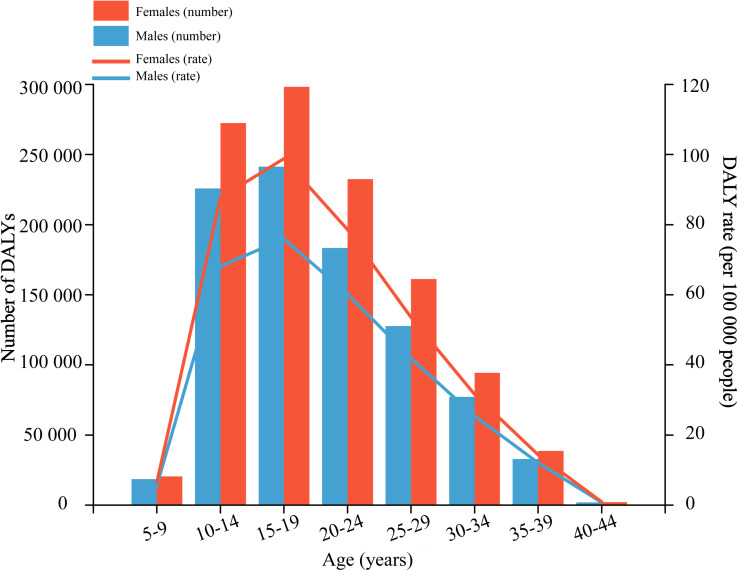
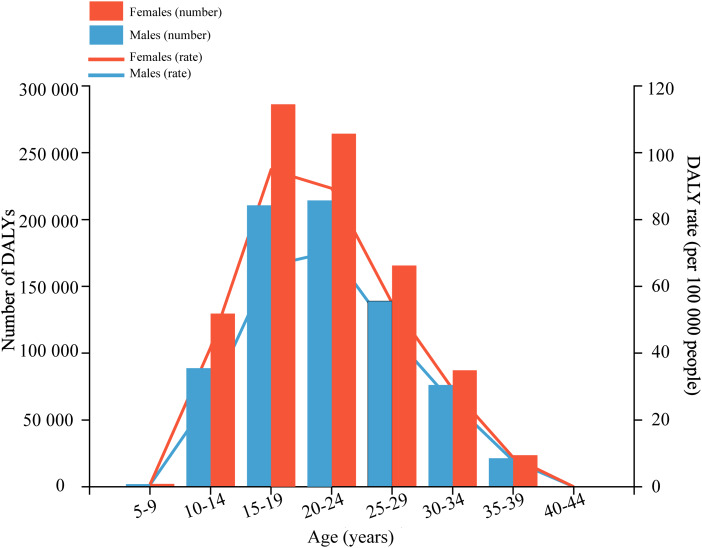
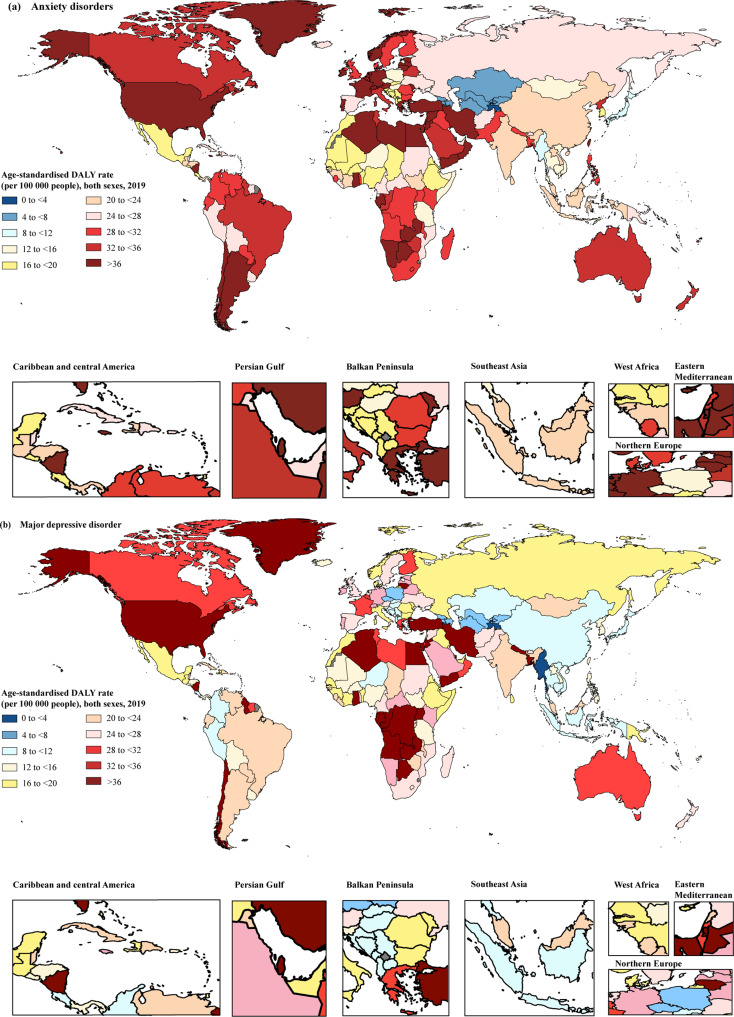
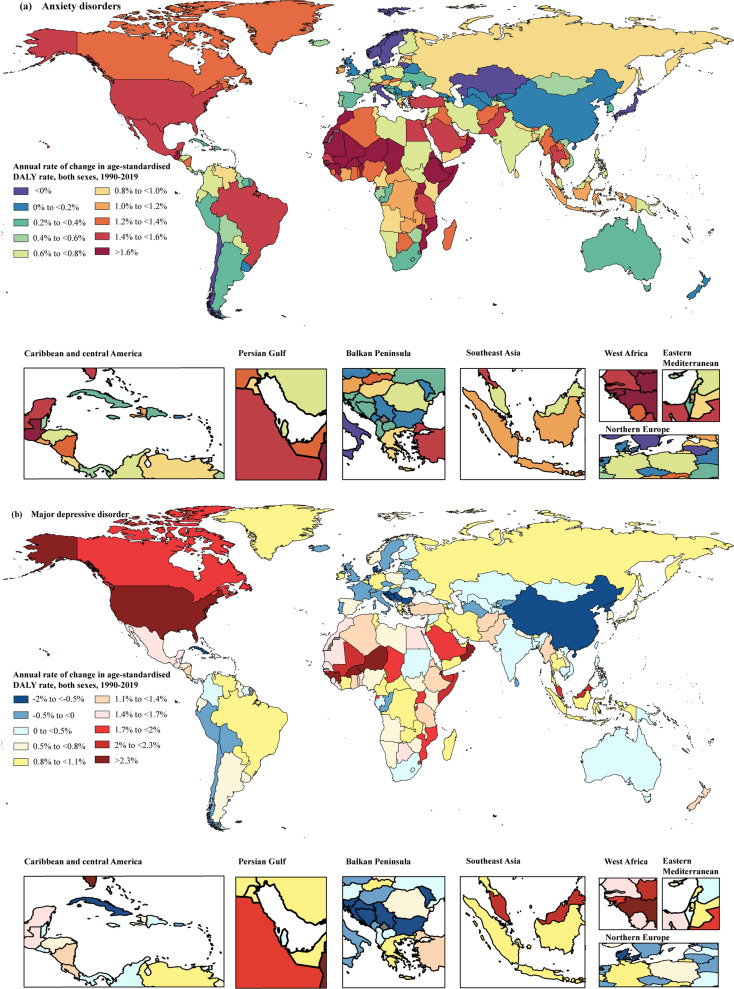
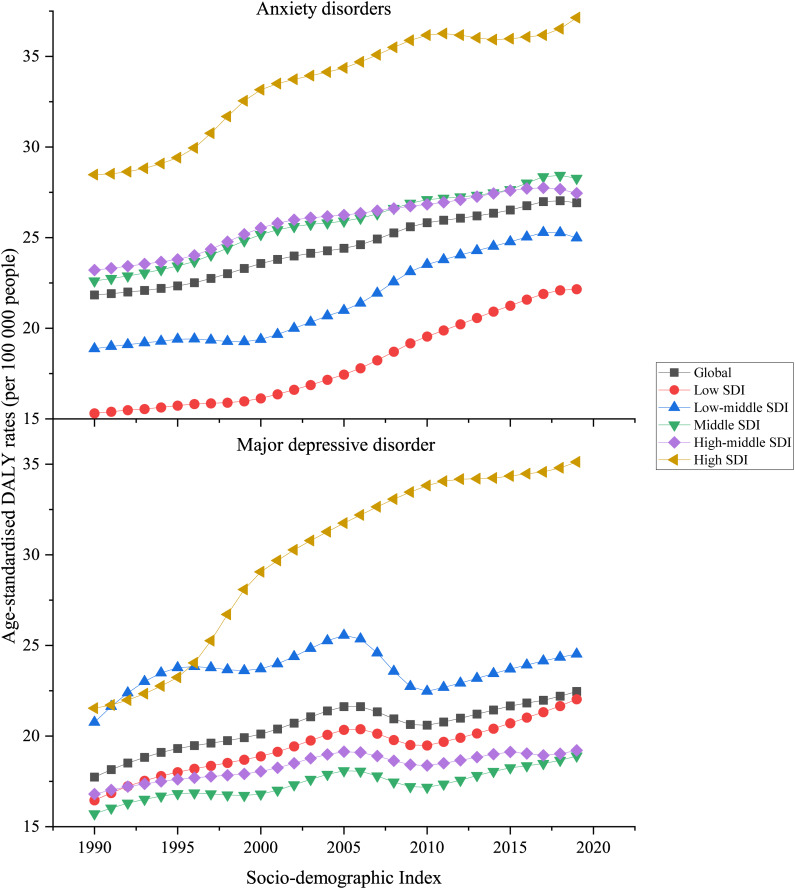
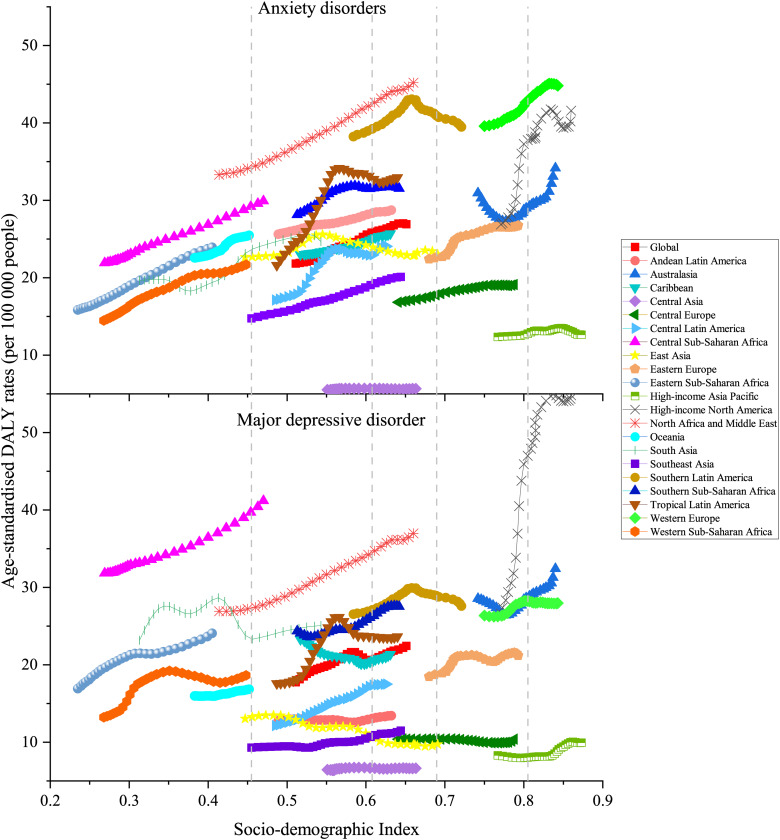
Verification
Claims the paper makes
The claims and statistics of this paper haven’t been checked yet.
Free: it reads the open-access text and checks the first 5 claims that cite a source we can check. Create a free account to check every claim.
Claims other papers make about this one
Each is checked against this paper’s own text: does it say what the citing paper says it does?
In the citing paper
“As not all diseases were estimated for all countries, the GBD 2019 study used the Bayesian meta-regression tool DisMod-MR 2.1 as the principal method to ensure that the incidence, prevalence, and mortality rates for each disease were consistent22,23.”
From Temporal and spatial trend analysis of all-cause depression burden based on Global Burden of Disease (GBD) 2019 study (2024) · cites this paper as [23]
Self-check
Percentages, sums and reported differences re-computed from the paper’s own numbers.
The self-check needs the paper’s full text.
Citations
Cites
Vos, T., Lim, S. S., Abbafati, C., Abbas, K. M., Abbasi, M., Abbasifard, M., Abbasi-Kangevari, M., Abbastabar, H., Abd-Allah, F., Abdelalim, A., et al. (2020) · The Lancet · doi:10.1016/s0140-6736(20)30925-9 · Cited by 19,358
James, S. L., Abate, D., Abate, K. H., Abay, S. M., Abbafati, C., Abbasi, N., Abbastabar, H., Abd-Allah, F., Abdela, J., Abdelalim, A., et al. (2018) · The Lancet · doi:10.1016/s0140-6736(18)32279-7 · Cited by 13,867
Murray, C. J. L., Aravkin, A. Y., Zheng, P., Abbafati, C., Abbas, K. M., Abbasi-Kangevari, M., Abd-Allah, F., Abdelalim, A., Abdollahi, M., Abdollahpour, I., et al. (2020) · The Lancet · doi:10.1016/s0140-6736(20)30752-2 · Cited by 9,854
Roth, G. A., Abate, D., Abate, K. H., Abay, S. M., Abbafati, C., Abbasi, N., Abbastabar, H., Abd-Allah, F., Abdela, J., Abdelalim, A., et al. (2018) · The Lancet · doi:10.1016/s0140-6736(18)32203-7 · Cited by 8,600
Global Burden of Disease Cancer Collaboration, Fitzmaurice, C., Allen, C., Barber, R. M., Barregard, L., Bhutta, Z. A., Brenner, H., Dicker, D. J., Chimed-Orchir, O., Dandona, R., et al. (2017) · JAMA Oncology · doi:10.1001/jamaoncol.2016.5688 · Cited by 6,215
Santomauro, D. F., Mantilla Herrera, A. M., Shadid, J., Zheng, P., Ashbaugh, C., Pigott, D. M., Abbafati, C., Adolph, C., Amlag, J. O., Aravkin, A. Y., et al. (2021) · The Lancet · doi:10.1016/s0140-6736(21)02143-7 · Cited by 5,444
Stanaway, J. D., Afshin, A., Gakidou, E., Lim, S. S., Abate, D., Abate, K. H., Abbafati, C., Abbasi, N., Abbastabar, H., Abd-Allah, F., et al. (2018) · The Lancet · doi:10.1016/s0140-6736(18)32225-6 · Cited by 4,943
Global Burden of Disease Cancer Collaboration, Fitzmaurice, C., Abate, D., Abbasi, N., Abbastabar, H., Abd-Allah, F., Abdel-Rahman, O., Abdelalim, A., Abdoli, A., Abdollahpour, I., et al. (2019) · JAMA Oncology · doi:10.1001/jamaoncol.2019.2996 · Cited by 2,501
Salomon, J. A., Vos, T., Hogan, D. R., Gagnon, M., Naghavi, M., Mokdad, A., Begum, N., Shah, R., Karyana, M., Kosen, S., et al. (2012) · The Lancet · doi:10.1016/s0140-6736(12)61680-8 · Cited by 1,322
Research works printed but not linked: 4
- C. Hong et al. https://doi.org/10.1017/S2045796022000683 Published online by Cambridge University Press Percentage change in ASR, 1990-2019(%) Anxiety disorders Global 908 591.88 (270 055.95-1 945 681.32) 8.58 (2.66-17.12) 23.65 (7.20-50.44) 18.88 (12.74-33.09) 1 119 669.43 (314 546.92-2 480 222.68) 6.81 (2.09-13.97) 30.35 (8.79- 66.59) 27.27 (19.62-44.46) Andean Latin America 7815.96 (2088.52- 18 382.46) 5.80 (1.62-12.81) 22.88 (6.14-53.81) 10.17 (-2.61 to 29.39) 11 453.36 (2838.31-27 315.20) 5.28 (1.45-11.55) 34.84 (8.76-82.56) 14.60 (0.66-34.68) Australasia 3397.37 (924.54- 7719.35) 6.65 (2.12-13.92) 29.62 (8.53-66.00) 12.70 (-3.62 to 43.06) 4379.31 (1157.48-10 176.07) 5.52 (1.66-11.85) 38.81 (11.02-87.20) 8.64 (-6.31 to 45.34) Caribbean 5021.49 (1410.58- 11 645.88) 6.94 (2.06-14.93) 21.70 (6.18-50.09) 10.29 (1.67-22.20) 6843.82 (1745.30-16 327.51) 5.66 (1.61-12.32) 29.70 (7.75-69.63)
- C. Hong et al. https://doi.org/10.1017/S2045796022000683 Published online by Cambridge University Press Southern Sub-Saharan Africa 12 614.78 (3648.85- 27 149.77) 10.21 (3.12-20.63) 29.04 (8.58-62.08) 12.59 (3.20-25.95) 14 692.02 (4184.73- 32212.84) 8.48 (2.61-17.59) 34.02 (9.87-74.02) 11.94 (3.08-23.96) Tropical Latin America 27 169.15 (6520.77- 64 110.56) 5.18 (1.40-11.48) 25.02 (6.28-57.89) 39.72 (24.38-59.77) 44 422.52 (10 227.91- 109432.71) 4.50 (1.18-10.02) 40.89 (10.23-97.16) 62.07 (41.97-84.69) Western Europe 52 568.70 (15 517.04-116 250.20) 9.25 (3.09-18.61) 34.53 (10.92-73.38) 14.72 (0.91-47.22) 80 424.89 (23 149.89- 180279.85) 7.88 (2.67-15.96) 55.62 (17.07-122.64) 12.45 (-3.18 to 45.89) Western Sub-Saharan Africa 54 177.53 (16 887.22-114 957.72) 7.82 (2.40-16.10) 19.99 (5.75-44.14) 37.13 (24.53-55.54) 68 825.55 (22 171.96- 146950.59) 7.09 (2.28-14.55) 23.39 (7.10-50.72) 62.56 (44.41-90.38) Major depressive disorder Global 751 822.67 (153 054.27-1 770 650.05) 5.45 (1.32-11.23) 19.37 (4.03-45.36) 23.84 (16.41-41.27) 958 330.78 (200 074.52-2245947.65) 4.53 (1.13-9.33) 25.68 (5.57-60.05) 29.07 (18.77-52.90) Andean Latin America 3300.47 (685.65- 7820.45) 3.62 (0.88-7.89) 9.56 (1.99-22.62) 8.26 (-7.27 to 37.34) 5794.76 (1191.70- 13964.06) 3.65 (0.89-7.78) 17.51 (3.70-41.82) 5.20 (-10.31 to 31.50) Australasia 2946.01 (624.44- 7085.94) 4.66 (1.18-9.88) 25.31 (5.73-59.06) -1.82 (-17.54 to 29.83) 4480.36 (963.16- 10621.12) 4.88 (1.26-10.25) 39.73 (9.21-92.66) 26.33 (4.92-67.31) Caribbean 3603.91 (737.30- 8512.04) 3.81 (0.89-8.32) 15.31 (3.19-35.88) -0.45 (-8.68 to 13.27) 6415.91 (1385.26- 15599.23) 3.76 (0.96-8.13) 27.48 (6.07-66.33) -11.35 (-20.84 to 1.02) Central Asia 3405.55 (590.88- 8609.81) 2.30 (0.50-5.20) 7.00 (1.29-17.34) 4.82 (-5.23 to 17.14) 2941.22 (484.43- 7631.30) 1.18 (0.25-2.81) 6.27 (1.11-16.30) 1.28 (-8.83 to 11.29) Central Europe 3653.54 (633.38- 8933.44) 4.41 (1.00-9.44) 8.79 (1.74-20.60) 4.90 (-8.06 to 36.93) 4748.97 (802.72- 11705.69) 2.96 (0.66-6.42) 12.06 (2.38-28.63) -3.29 (-19.95 to 36.36) Central Latin America 15 051.57 (2904.07- 36 150.80) 3.38 (0.75-7.43) 11.39 (2.18-27.47) 35.59 (21.24-62.63) 31 413.90 (6285.10- 76518.48) 3.84 (0.88-8.53) 23.58 (4.84-57.39) 50.06 (35.50-69.59) Central Sub-Saharan Africa 29 531.07 (6418.43- 68 446.55) 5.23 (1.17-11.29) 39.14 (7.55-93.73) 16.91 (2.98-42.57) 33 347.69 (7265.43- 77823.55) 4.35 (1.01-9.58) 43.24 (8.71-102.94) 43.14 (22.08-83.26) East Asia 47 955.73 (8171.72- 120 481.42) 3.80 (0.88- 8.11) 7.91 (1.60- 18.87) -19.19 (-26.24 to -7.86) 63 936.38 (10 450.69- 165266.02) 3.23 (0.77-6.87) 11.74 (2.41-28.24) -28.57 (-36.48 to -16.31) Eastern Europe 14 152.03 (2060.27- 37 217.04) 4.78 (0.99- 10.45) 17.98 (3.15- 44.55) 25.91 (15.55-38.40) 18 820.74 (2769.07- 49344.10) 4.66 (0.96-10.20) 24.54 (4.30-60.53) 7.79 (0.41-15.94) Eastern Sub-Saharan Africa 54 785.37 (12 119.39-125 766.15) 3.68 (0.86- 7.96) 22.55 (4.46- 53.15) 35.36 (22.77-57.58) 64 890.47 (14 791.66- 149645.10) 3.21 (0.78-6.91) 25.61 (5.27-60.88) 48.60 (32.66-75.07) High-income Asia Pacific 6467.98 (1233.50- 16 041.00) 4.33 (1.01- 9.40) 10.65 (2.28- 25.28) 23.48 (13.16-37.31) 5344.03 (875.45-14 044.32) 2.50 (0.51-5.75) 9.19 (1.63-23.46) 14.98 (4.19-26.22) High-income North America 58 915.49 (11 444.17-135 495.33) 8.52 (1.96- 17.56) 38.67 (8.00- 87.36) 78.00 (56.99-103.27) 103 651.58 (23 128.83- 239 559.21) 8.61 (2.16-17.64) 71.61 (16.63-162.54) 125.74 (98.81-166.39) North Africa and Middle East 127 799.05 (29 224.78-289 330.59) 7.17 (1.92- 14.12) 37.41 (8.88- 83.77) 20.52 (5.27-54.75) 115 281.86 (27 951.91- 267 609.13) 4.33 (1.21-8.72) 36.47 (9.06-84.00) 61.43 (31.11-143.62) Oceania 1308.96 (260.89- 3098.68) 5.46 (1.20- 12.14) 16.88 (3.24- 40.66) 5.25 (-10.76 to 25.59) 1231.25 (253.75- 2882.46) 4.41 (1.07-9.63) 16.88 (3.45-39.99) 5.60 (-8.60 to 26.41) South Asia 230 497.11 (44 816.34-531 158.14) 5.00 (1.09- 10.54) 21.83 (4.14- 51.16) 1.74 (-7.04 to 18.92) 287 303.98 (57 363.66- 668 343.35) 4.52 (1.02-9.63) 28.51 (5.68-66.62) 14.14 (1.57-41.21) (Continued ) Epidemiology and Psychiatric Sciences 5.17 (1.28- 10.88) 11.29 (2.46- 26.88) 19.29 (10.48-37.26) 39 830.92 (8449.99-94 553.40) 4.00 (1.02-8.56) 11.71 (2.55-27.73) 27.50 (18.26-43.95) Southern Latin America 6511.33 (1288.69- 14 885.26) 6.64 (1.48- 14.22) 20.20 (4.24- 45.70) 7.49 (-17.47 to 51.08) 11 115.05 (2245.46-26 229.91) 6.13 (1.47-12.90) 35.11 (7.64-80.58) 2.44 (-23.16 to 38.94) Southern Sub-Saharan Africa 10 635.76 (2018.95- 25 637.09) 5.51 (1.22- 11.80) 24.25 (4.73- 57.90) 22.06 (10.28-38.72) 13 502.38 (2580.28-32 582.06) 4.40 (1.00-9.66) 30.82 (6.13-73.53) 7.92 (-1.52 to 21.21) Tropical Latin America 17 122.19 (3887.36- 39 799.03) 4.20 (1.05- 9.00) 15.82 (3.74- 36.54) 36.52 (16.97-77.11) 33 472.49 (7366.50-80 480.13) 3.88 (1.03-8.18) 31.61 (7.38-74.34) 34.67 (15.71-71.35) Western Europe 33 618.65 (6718.43- 78 790.86) 5.28 (1.27- 10.98) 21.42 (4.76- 49.24) 2.76 (-11.02 to 32.51) 51 807.12 (10 275.32- 121 973.60) 4.72 (1.13-9.98) 34.90 (7.61-80.31) 8.84 (-8.24 to 42.35) Western Sub-Saharan Africa 40 850.78 (9530.77- 93 273.26) 3.64 (0.87- 7.83) 15.96 (3.33- 37.84) 29.39 (16.80-50.22) 58 999.71 (13 620.58- 136 627.34) 3.10 (0.77-6.78) 21.14 (4.46-50.13) 50.49 (31.39-84.23
- American Psychiatric Association (2000) Diagnostic and Statistical Manual of Mental Disorders 4th Edition, Text Revision (DSM-IV-TR). Washington, DC: American Psychiatric Association Press.
- 2020b, Global Burden of Disease Study 2019 (GBD 2019) Disability Weights
Cited by
Liu, J., Liu, Y., Ma, W., Tong, Y., & Zheng, J. (2024) · Scientific Reports · doi:10.1038/s41598-024-62381-9 · Cited by 160
“Adopting effective techniques is necessary to eradicate bullying among children and adolescents 50 .”
BackgroundRong, J., Wang, X., Cheng, P., Li, D., & Zhao, D. (2025) · The British Journal of Psychiatry · doi:10.1192/bjp.2024.266 · Cited by 170
Bie, F., Xiao-ling, Y. A. N., Xing, J., Wang, L., Xu, Y., Wang, G., Wang, Q., Guo, J., Qiao, J., & Rao, Z. (2024) · Frontiers in Psychiatry · doi:10.3389/fpsyt.2024.1489427 · Cited by 141
Yan, G., Zhang, Y., Wang, S., Yan, Y., Liu, M., Tian, M., & Tian, W. (2024) · Psychiatry Research · doi:10.1016/j.psychres.2024.115958 · Cited by 138
Zhang, Z., Chen, X., Wu, S., Chen, X., Wang, X., Liu, C., Zeng, N., Liu, Y., Huo, T., Liu, X., et al. (2025) · Journal of Affective Disorders · doi:10.1016/j.jad.2025.120299 · Cited by 120
Self-citationYang, F., Lodder, P., Huang, N., Liu, X., Fu, M., & Guo, J. (2023) · Psychiatry Research · doi:10.1016/j.psychres.2023.115433 · Cited by 69
Rong, J., Cheng, P., Li, D., Wang, X., & Zhao, D. (2024) · Ageing Research Reviews · doi:10.1016/j.arr.2024.102443 · Cited by 71
Interpersonal Factors, Peer Relationship Stressors, and Gender Differences in Adolescent Depression
Potter, J. R., & Yoon, K. L. (2023) · Current Psychiatry Reports · doi:10.1007/s11920-023-01465-1 · Cited by 65
Mo, Z., Qin, Z., Ye, J., Hu, X., Wang, R., Zhao, Y., Zheng, P., Lu, Q., Li, Q., & Tang, X. (2024) · Epidemiology and Psychiatric Sciences · doi:10.1017/s2045796024000295 · Cited by 60
Global mental health and its social determinants: How should we intervene?
Lund, C. (2023) · Behaviour Research and Therapy · doi:10.1016/j.brat.2023.104402 · Cited by 50
“An example might be that of bullying, which may not be a major social determinant of health, but has been shown to be a powerful and growing predictor of poor mental health in the global burden of disease study (Hong et al., 2022).”
BackgroundCai, Y., Zhaoxiong, Y., Zhu, W., & Wang, H. (2024) · Annals of Medicine · doi:10.1080/07853890.2024.2314235 · Cited by 46
“…reported to have increased by 49.86% from 1990 to 2017, and has become a major public health problem [10]. it is estimated that more than 350 million people worldwide suffer from depression, resulting in 76.4 million adjusted life years per year, or 10.3% of the total burden of disease [11].”
BackgroundInfluentialXu, Y. J., Li, R., Hu, C., He, Y., Zhang, X., & Li-na, J. (2024) · General Hospital Psychiatry · doi:10.1016/j.genhosppsych.2024.03.003 · Cited by 43
Zhu, F., Yang, Y. X., Yin, T., Pan, M., Xu, J., Chen, R., Zheng, W., & Gu, F. (2025) · Scientific Reports · doi:10.1038/s41598-024-84843-w · Cited by 38
Dongjun, Z., Mingyue, W., Xinqi, L., Lina, W., Wu, J., & Mengyao, J. (2025) · Journal of Affective Disorders · doi:10.1016/j.jad.2025.119491 · Cited by 38
Xu, S., Zhang, Y., Peng, Y., Huang, Q., Wang, Y., Zhang, Y., Yang, C., & Ding, J. (2025) · International Journal of Surgery · doi:10.1097/js9.0000000000002647 · Cited by 36
Li, R., Zhou, X., Wang, X., Cheng, P., Xu, J., Cao, J., Gao, Q., & Zhu, H. (2025) · Journal of Affective Disorders · doi:10.1016/j.jad.2025.04.106 · Cited by 27
Sahle, B. W., Reavley, N. J., Morgan, A. J., Yap, M. B. H., Reupert, A., & Jorm, A. F. (2024) · BMC Psychiatry · doi:10.1186/s12888-024-05752-w · Cited by 28
Cheng, S., Cao, J., Hou, L., Li, S., Sun, W., Shan, S., Zhao, J., Yao, L., Li, X., He, B., et al. (2024) · Pain · doi:10.1097/j.pain.0000000000003298 · Cited by 25
“20 In2019,1inevery8people,or 970 million people around the world were living with a mental disorder, with anxiety and depressive disorders the most common.”
Le, Z., Lou, Y., Tao, Y., Wang, H., & Xu, N. (2025) · Frontiers in Public Health · doi:10.3389/fpubh.2025.1599602 · Cited by 28
Lee, E. B., Jeong, J., Hong, S., Lee, S., Kong, J., Lee, H., & Yon, D. K. (2025) · Psychiatry Investigation · doi:10.30773/pi.2025.0211 · Cited by 22
“29 While the ASDR attributable to IPV declined until 2019—likely due to legal measures and increased awareness through mass media, 30 a sharp rise occurred in 2020, coinciding with COVID-19 lockdowns which heightened IPV risk through social isolation.”
Zhang, J., Liu, Y., & Zhang, X. (2025) · Psychiatry Research · doi:10.1016/j.psychres.2025.116370 · Cited by 21
Accelerated global burden of depressive disorders during the COVID-19 pandemic from 2019 to 2021
Zhou, J., Zhang, Y., He, S., Xu, S., Sun, Q., Zhao, T., & Dai, Y. (2025) · Scientific Reports · doi:10.1038/s41598-025-93923-4 · Cited by 20
“Additionally, the GBD 2021 study employed the Bayesian meta-regression tool, DisMod-MR 2.1, as the principal methodology, ensuring consistency in the incidence, prevalence, and DALYs across all diseases 11,12 .”
InfluentialTinsae, T., Shumet, S., Takelle, G. M., Rtbey, G., Melkam, M., Andualem, F., Nakie, G., Segon, T., Koye, S., Fentahun, S., et al. (2024) · Child and Adolescent Psychiatry and Mental Health · doi:10.1186/s13034-024-00782-4 · Cited by 20
Wang, B., Lan, C., Liu, K., Fu, L., Zhang, P., Ao, C., Zhang, Q., Wu, Q., Yang, F., Li, Y., et al. (2025) · International Psychogeriatrics · doi:10.1016/j.inpsyc.2025.100069 · Cited by 21
Zhou, J., Li, S., Song, Y., Ying, J., Luo, Z., Shan, S., Zhou, L., Zha, J., Wang, X., Song, P., et al. (2025) · Depression and Anxiety · doi:10.1155/da/4178541 · Cited by 24
“…of anxiety disorders; however, many relied on relatively older data [6, 13, 14], analyzed only a single metric of burden (i.e., prevalence or incidence) [15], focused on speci fi c regions [16], targeted particular populations [16, 17] or lacked in-depth insights into the temporal trends [18].”
Wang, W., Wang, Y., Wang, F., Chen, H., Qin, X., Yang, L., Yang, X., & Yang, L. (2024) · BMC Public Health · doi:10.1186/s12889-024-18943-7 · Cited by 18
“For example, the significant increase in disability-adjusted life years(DALYs) of MDD attributable to bullying victimization over the last three decades requires extra attention [11].”
BackgroundA review of exercise interventions for reducing anxiety symptoms: Insights and implications
Ewuzie, Z. D. D., Ezeano, C., & Aderinto, N. (2024) · Medicine · doi:10.1097/md.0000000000040084 · Cited by 18
“[4] While pharmacological treatments are commonly used, they are associated with side effects and limitations in long-term efficacy.”
BackgroundHeadache disorders: a persistent public health challenge for the under 50s
Meng, W., & Sui, L. (2024) · Frontiers in Neurology · doi:10.3389/fneur.2024.1501749 · Cited by 16
Wang, W., Wang, Y., Shao, K., Lei, Z., Cheng, L., Wang, F., Wen, X., Xiao, P., Qin, X., & Yang, L. (2024) · Psychiatry Research · doi:10.1016/j.psychres.2024.116154 · Cited by 12
Zheng, P., Zhang, N., Chen, Z., & Jiang, Z. (2025) · Scandinavian Journal of Trauma Resuscitation and Emergency Medicine · doi:10.1186/s13049-025-01352-z · Cited by 12
“Countries in the GBD study are grouped into five SDI categories: low (0–0.45), low-middle (0.45–0.61), middle (0.61–0.69), high-mid-dle (0.69–0.81), and high (0.81–1) [19].”
InfluentialZou, F., Fang, Y., Lin, Y., Feng, Z., Cai, S., Huang, J., Zheng, S., & Li, J. (2024) · BMC Psychology · doi:10.1186/s40359-024-02246-y · Cited by 11
“These disparities may stem from varying economic and cultural conditions and significant social pressures across different regions [42], which can lead to varying degrees of anxiety and depression in infertile women.”
Gao, Y., Zhou, W., Wang, Q., Zhai, Q., & Zhou, L. (2025) · Frontiers in Psychiatry · doi:10.3389/fpsyt.2025.1638646 · Cited by 12
“These disparities demand tailored strategies: scaling community-based mental health interventions in middle-SDI areas, enhancing geriatric SUD surveillance in high-SDI settings, and integrating mental health into primary care frameworks for low-SDI regions (20, 21).”
Chen, Y., Dong, X., Xu, W., Long, Y., & Liu, K. (2025) · Frontiers in Public Health · doi:10.3389/fpubh.2025.1644610 · Cited by 10
Chen, S., Wang, J., Lang, X., & Zhang, X. (2025) · Journal of Affective Disorders · doi:10.1016/j.jad.2025.03.102 · Cited by 9
Relations between peer bullying and adolescent depression: the mediating effect of cellphone usage
Shen, Y., Zhou, Y., Ren, S., Li, Y., Liu, Y., Zhou, R., Fan, X., & Xie, G. (2025) · Frontiers in Psychiatry · doi:10.3389/fpsyt.2025.1486628 · Cited by 9
Qi, Y., Wei, Z., Wang, M., Wang, W., & Sun, L. (2024) · Journal of Psychosomatic Research · doi:10.1016/j.jpsychores.2024.111930 · Cited by 7
Liu, Z. (2025) · Actas Españolas de Psiquiatría · doi:10.62641/aep.v53i4.1852 · Cited by 7
Self-citationCross-Cultural Control–Value Mechanisms on the Detrimental Effect of Bullying on Mathematics Anxiety
Kaplan, O. (2025) · Behavioral Sciences · doi:10.3390/bs16010003 · Cited by 7
“(Hong et al., 2022).”
Wang, W. J., Xie, M., Liu, Z., Chen, H., Wu, X., & Lin, D. (2024) · Journal of Youth and Adolescence · doi:10.1007/s10964-024-02076-6 · Cited by 7
“Both traditional and cyber bullying victimization are signi fi cant sources of stress for adolescents and can independently lead to a variety of emotional problems, such as anxiety (Hong et al., 2022), depression (He et al., 2022), and mental distress (Liu et al., 2021; Norrington, 2021).”
Self-citationHaoliang, Z., Fu, H., Liu, H., Wang, B., & Zhong, X. (2025) · Behavioral Sciences · doi:10.3390/bs15070982 · Cited by 12
“Globally, nearly one-third of students have reported being bullied by peers at school at least once in the past month (C. Hong et al., 2022).”
Wan, B., Wu, Y., Ma, N., Zhou, Z., & Lu, W. (2023) · PLoS ONE · doi:10.1371/journal.pone.0288034 · Cited by 7
Benbenishty, R., Astor, R. A., Shemesh, M., Avital, D., Raz, T., & Roziner, I. (2024) · Journal of School Violence · doi:10.1080/15388220.2024.2385905 · Cited by 6
“…difficulties and impaired well-being) (Camodeca & Nava, 2022; Carretero et al., 2022); mental health difficulties such as anxiety and depression (Hong et al., 2022); school-related problems such as lower academic achievement (Gimenez et al., 2024) and increased nonattendance and dropout…”
Cai, X., Sun, T., Mengzhen, F. E. N. G., Chen, G. M., Zhou, J., Zhuang, H., Wang, D., Chen, Y., Cheng, Z., Xu, Z., et al. (2025) · Advanced Science · doi:10.1002/advs.202508693 · Cited by 10
Wang, Z., Dou, Y., Jiang, F., Ye, Y., & Zou, Z. (2025) · Journal of Affective Disorders · doi:10.1016/j.jad.2025.03.166 · Cited by 5
Zhang, Z., Xu, H., Liping, C., & Wang, Y. (2025) · BMC Public Health · doi:10.1186/s12889-025-22323-0 · Cited by 5
“The proxies include Disability-adjusted life years (DALYs), Prevalence, Age-standardized Disability-adjusted life years rate (ASDR), and Age-standardized Prevalence rate (ASPR) [13, 32].”
Wu, D., Nan, W., & Xing, Z. (2025) · Psychotherapy and Psychosomatics · doi:10.1159/000549345 · Cited by 4
Santos, M. A. B. D., Guerra, A. E. P., Sayão, M. M. A., Selani, A. L. D. S., Betarelli, B. C., Siqueira, I. D. F., & Forgerini, M. (2026) · Child Psychiatry & Human Development · doi:10.1007/s10578-026-01977-w · Cited by 5
Wu, J., Deng, Y., Tong, K., & Sun, Z. (2025) · BMC Psychiatry · doi:10.1186/s12888-025-06680-z · Cited by 3
Anxiety disorders in the Middle East and North Africa region; 1990 to 2021
Aletaha, R., Kolahi, A., Mousavi, Z. A., Sullman, M. J. M., & Safiri, S. (2025) · Acta Neuropsychiatrica · doi:10.1017/neu.2025.10023 · Cited by 4
“…offered estimates of the burden of mental disorders, including anxiety disorders (Baxter et al ., 2016, Chen et Acta Neuropsychiatrica Bonadiman et al ., 2017, Rehm & Shield, 2019, Charara et al., 2017, Castelpietra et al ., 2022, Ferrari et al ., 2022, Hong et al ., 2022, Whiteford et al ., 2015).”
Liu, H., Zhang, X., & Lu, H. (2025) · Archives of Iranian Medicine · doi:10.34172/aim.34264 · Cited by 3
“12,15,16 No ethical review was required for this study because data from the 2021 GBD are publicly available.”
Ardeh, A., Shahverdi, J., Ghiasi, A., Goodarzi, E., & Zamani, F. (2025) · Health Science Reports · doi:10.1002/hsr2.71312 · Cited by 3
Lin, D., Yin, T., Shi, Z., Xie, X., Fang, J., Li, M., Li, Y., Luo, S., Xue, A., & Liang, J. (2025) · Frontiers in Psychiatry · doi:10.3389/fpsyt.2025.1679479 · Cited by 5
Targeting mGlyR with nanobodies for depression
Laboute, T., Zucca, S., Sial, O. K., Sharma, M., Brunori, G., Singh, S., Nageswar, K., Peng, H., Rader, C. M., Becker, J. A. J., et al. (2026) · Nature Communications · doi:10.1038/s41467-026-68339-x · Cited by 4
Shi, Y., & Ma, Q. (2026) · Frontiers in Immunology · doi:10.3389/fimmu.2026.1821502 · Cited by 3
Pu, Y., Wang, L., Chen, H., Ma, Y., Ye, H., Yu, M., Yang, Y., Xu, H., & Zhang, J. (2025) · Journal of Psychiatric Research · doi:10.1016/j.jpsychires.2025.09.037 · Cited by 2
Tang, B., Zhu, Y., Xiao, Q., & Kang, M. (2026) · International Journal of Psychiatry in Clinical Practice · doi:10.1080/13651501.2026.2614011 · Cited by 3
“…focused on all-age populations, leaving a gap in understanding the specific burden and trends of anxiety disorders among youth (Baxter et al., 2014; hong et al., 2022; Yang et al., 2021). contextual factors further compound the vulnerability of young people. in high-income settings, rapid…”
Liu, L., Gai, J., Luo, M., Zhang, Y., Zhao, W., Lou, Q., Wu, M., Zhao, K., Zhang, G., & Hong, L. (2026) · BMC Public Health · doi:10.1186/s12889-026-27128-3 · Cited by 2
“[24].”
Zhao, L., Li, C., Lv, H., Zeng, C.-L., & Peng, Y. (2025) · Behavioural Neurology · doi:10.1155/bn/4199054 · Cited by 2
“It is estimated that depression a ff ects approximately 264 million individuals worldwide, with its prevalence demonstrating a rising trend [5].”
Merced‐Nieves, F. M., Eitenbichler, S., Goldson, B., Zhang, X., Klein, D. N., Enlow, M. B., Curtin, P. C. P., Wright, R. O., & Wright, R. J. (2023) · Child Development · doi:10.1111/cdev.13997 · Cited by 2
Dahlqvist, H. Z., Gådin, K. G., & Landstedt, E. (2025) · International Journal on Child Maltreatment Research Policy and Practice · doi:10.1007/s42448-024-00218-8 · Cited by 1
“…among young people is complex and many different risk factors have been suggested such as school stress (Folkhälsomyndigheten, 2022), there also seems to be a strong association with peer victimization (Halliday et al., 2021; Hong et al., 2022; Pontillo et al., 2019; Skoog & Kapetanovic, 2022).”
Yang, Y., Capapelo, J. J., Wang, Y., Wu, Y., Zhu, Y., Shi, L., Sun, X., Chen, P., & Li, J. (2025) · Medicine · doi:10.1097/md.0000000000041914 · Cited by 1
“[20] To standardize for age structure differences, ASDRs were utilized to estimate the disease burden.”
A history of youth bullying in Western civilization
Volk, A. A. (2025) · Aggression and Violent Behavior · doi:10.1016/j.avb.2025.102095 · Cited by 1
Amiri, S., & Kazemi, S. (2025) · Medicine · doi:10.1097/md.0000000000045745 · Cited by 1
“[26] In some regions of the world, the prevalence of mental disorders has been reported to be higher, including North Africa and the Middle East (NAME).”
Association between atherogenic index of plasma and depression risk: a meta-analysis
Chen, G., Chen, G.-X., & Wan, W. (2025) · Frontiers in Psychiatry · doi:10.3389/fpsyt.2025.1665118 · Cited by 1
Global burden and trends of depression among women of childbearing age, 1990–2021
Yang, X. N., Feng, C.-P., Liu, Z., & Wu, P. (2025) · Public Health in Practice · doi:10.1016/j.puhip.2025.100688 · Cited by 1
“These risks are especially pronounced in Central Sub-Saharan Africa and High-Income North America, where depression-related deaths associated with these forms of violence are among the highest worldwide [40,41].”
Self-citationPrevalência e fatores associados à vitimização por bullying entre escolares brasileiros, 2019
Malta, D. C., de Souza, J. B., Prates, E. J. S., de Mello, F. C. M., & Silva, M. A. I. (2026) · Saúde em Debate · doi:10.1590/2358-2898202614810270p · Cited by 4
Prevalence and factors associated with bullying victimization among Brazilian students, 2019
Malta, D. C., de Souza, J. B., Prates, E. J. S., de Mello, F. C. M., & Silva, M. A. I. (2026) · Saúde em Debate · doi:10.1590/2358-2898202614810270i · Cited by 2
Lu, S., Feng, Q., Kang, C., & Yang, J.-Z. (2026) · Psychiatry Research · doi:10.1016/j.psychres.2026.117008 · Cited by 1
Wu, S., Zuo, X., Liu, L., Yang, M., Li, X., & Li, S. (2026) · Frontiers in Human Neuroscience · doi:10.3389/fnhum.2026.1828777 · Cited by 1
“MDD is one of the leading contributors to the global disease burden, with its incidence increasing by 26.60% from 1990 to 2019 (Hong et al., 2022).”
InfluentialZhao, R., Yao, X., & Zhao, G. (2025) · Brain Conflux · doi:10.71321/4ex31563 · Cited by 1
“However, increased psychosocial stress and environmental factors, such as pollution associated with industrialization, may also contribute to the elevated burden in these regions [26, 27].”
Shi, H., Kuang, P., Shi, Y., Liu, L., Wang, X., Ren, G., Wang, F., Li, M., Luo, W., & Cui, Y. (2024) · doi:10.2196/preprints.69937
Lv, J., Guo, G., Zhao, H., Liu, Z., Rong, H., & Lü, F. (2025) · doi:10.2196/preprints.72976
Self-citationFlattening the Hierarchy: A Solution to the Male Problem of Bullying
Afun, L. K. A., Akwetea-Mensah, A. K. F., Annancy, Z., Afun, C. S., & De-Souza, K. A. F. (2025) · Journal of Science and Technology (Ghana) · doi:10.4314/just.v43i1.9
“(2013) recommends targeting bullying from a legal level, specifically through policies, modelling an open and safe school environment, as well as improving access to trained professionals (Hong et al. , 2022).”
Guo, J., Si, F., Wang, H., Wang, Y. Q., Lian, X., Xie, S., Zou, Z., & Li, J. (2025) · Future · doi:10.3390/future3020010
Su, M., Yuan, C., Wu, X., Wang, Q., & Wang, S. (2025) · Journal of Receptors and Signal Transduction · doi:10.1080/10799893.2025.2540309
Qi, Y., Wang, M., Wei, Z., Wang, W., Wang, K., & Sun, L. (2025) · JMIR Public Health and Surveillance · doi:10.2196/75027
“Furthermore, data from the Global Burden of Disease Study 2019 show a steady increase from 1990 to 2019 in the burden of anxiety and depression associated with exposure to bullying, with the largest increases in disability-adjusted life years observed in high-income regions [44].”
Nodakenin Exhibits Anxiolytic-like and Anti-depressant-like Effects in the Experimental Mice Models
Xu, N., & Zhao, D. (2025) · Pharmacognosy Magazine · doi:10.1177/09731296251348082
“Moreover, the role of environmental factors, such as stress and early-life adversity, in shaping the biological predisposition to depression has been widely recognized (Hong et al., 2022).”
Spatiotemporal trends and age-period-cohort effects in global depression incidence, 1990-2019
Zhao, J., Wu, J., & Tao, Y.-W. (2025) · Big Data and Information Analytics · doi:10.3934/bdia.2025010
Li, Y., Jiang, L., Li, X., & Wang, H. (2025) · Journal of Psychosomatic Obstetrics & Gynecology · doi:10.1080/0167482x.2025.2584909
“Based on the GBD database, previous studies have mainly explored the spatiotemporal trends and risk factors of depression in the global population [14–16], but few have systematically investigated the spatial distribution and temporal trends of the burden of depression among WCBA.”
Gao, Y., Guo, J., Yang, X., Xu, S., & Li, D. (2025) · Research Square · doi:10.21203/rs.3.rs-8102198/v1
Tinsae, T., Shumet, S., Takelle, G. M., Rtbey, G., Melkam, M., Andualem, F., Nakie, G., Segon, T., Koye, S., Fentahun, S., et al. (2024) · Figshare · doi:10.6084/m9.figshare.26333331
Sahle, B. W., Reavley, N. J., Morgan, A. J., Yap, M. B. H., Reupert, A., & Jorm, A. F. (2024) · Figshare · doi:10.6084/m9.figshare.26708177
Çiftci, K., Aydın, M. Ş., Eşel, E., Asdemir, A., Ökçesiz, İ., & Eker, Ö. O. (2026) · The International Journal of Psychiatry in Medicine · doi:10.1177/00912174261425400
Caba‐Machado, V., Escortell, R., González‐Cabrera, J. M., González-Abaurrea, E., Díaz‐López, A., & Machimbarrena, J. M. (2026) · BMC Psychology · doi:10.1186/s40359-026-04275-1
“Likewise, being the object of bullying or cyberbullying may be associated with an irrational fear that something bad will happen, either through anticipatory anxiety [91, 92] or agoraphobia [93, 94].”
Zheng, L. (2026) · British Educational Research Journal · doi:10.1002/berj.70168
Keshavarzi, A., Arandi, S. Z., Ahmadpanah, M., Haghighi, M., Jahangard, L., Soltanian, A., Hormoz, N., & Brand, S. (2026) · Journal of Psychiatric Research · doi:10.1016/j.jpsychires.2026.05.010
Zhao, G., Sun, J., Su, C., & Chen, H. (2026) · Geriatric Nursing · doi:10.1016/j.gerinurse.2026.104090
Tian, S., Mao, Y., Wang, Y., Li, X., & Liu, F. (2026) · Research Square · doi:10.21203/rs.3.rs-9260045/v1
Qader, Y. A. E., & Benoliel, P. S. (2026) · Educational Management Administration & Leadership · doi:10.1177/17411432261457606
Social fear memory as a framework for understanding social defeat stress and psychopathology
Iturra-Mena, A. M., Chang, S., Bel-Gaete, V., Silva, J. R., & Dagnino‐Subiabre, A. (2026) · Neuroscience & Biobehavioral Reviews · doi:10.1016/j.neubiorev.2026.106860 · Cited by 2
Ling, F., Wu, Y., Dong, Y., Zhong, R., Liu, H., Yang, Y., & Gao, J. (2026) · Journal of Affective Disorders Reports · doi:10.1016/j.jadr.2026.101143
School Fairness as a Bullying Victimization Protective Factor: Structure or Personality?
Emery, C. R., Abdullah, A., Gersbach, K., Mackey, P., & Deliege, A. (2026) · Journal of Interpersonal Violence · doi:10.1177/08862605261463279
Richters, S., Laninga‐Wijnen, L., & Tolmatcheff, C. (2026) · International Journal of Behavioral Development · doi:10.1177/01650254261487326
Shen, K., Wu, C., Kong, W., Wang, X., Zhao, Y., Wang, X., Hong, S., & Li, H. (2026) · Frontiers in Public Health · doi:10.3389/fpubh.2026.1851033
Wang, R., Zhou, X., Xu, X., Shen, R., Huang, Y., Peng, X., Yang, Y., Liang, W., & Zhou, X. (2026) · Brain‐X · doi:10.1002/brx2.70054
Ling, F., Wu, Y., Dong, Y., Zhong, R., Liu, H., Yang, Y., Shen, L., & Gao, J. (2026) · Journal of Affective Disorders Reports · doi:10.1016/j.jadr.2026.101198
RetractedRaissa, R., Trisnawaty, T., & Wahyuni, W. (2026) · Jurnal Ners · doi:10.31004/jn.v10i4.62620
Fiave, J., Ahortor, K. J., Geyevu, D. V., Branjerdporn, N., Oppong-Mensah, T., Dzando, G., & Kye-Duodu, G. (2026) · Frontiers in Psychiatry · doi:10.3389/fpsyt.2026.1969144
Metadata
- Authors
- Hong, C., Liu, Z., Gao, L., Jin, Y., Shi, J., Liang, R., Maimaitiming, M., Ning, X., & Luo, Y.
- Affiliations
- Peking University (CN)
- Tsinghua University (CN)
- Stanford University (US)
- Kunming Medical University (CN)
- Corresponding author
- Luo, Y.
- Venue
- Epidemiology and Psychiatric Sciences
- Publisher
- Cambridge University Press (CUP)
- Published
- 2022
- Volume
- 31
- Pages
- e85-e85
- ISSN
- 2045-7960 (ISSN-L)
- 2045-7979
- PMC
- PMC9714217
- OpenAlex
- W4310645199
- Cited by
- 92
- References
- 48
- Citations by year
- 2026: 22 · 2025: 44 · 2024: 21 · 2023: 5
- FWCI
- 16.54
- Type
- journal article
- Language
- en
- Open access
- gold
- doi.org
- Locations
- Epidemiology and Psychiatric Sciences (publishedVersion, cc-by)
- PubMed Central (publishedVersion, cc-by)
- PubMed (publishedVersion)
- Funders
- National Social Science Fund of China (21CRK014)
- Topics
- Social Sciences › Psychology › Social Psychology › Bullying, Victimization, and Aggression
- Health Sciences › Medicine › Psychiatry and Mental health › Mental Health Treatment and Access
- Social Sciences › Psychology › Clinical Psychology › Suicide and Self-Harm Studies
- Keywords
- bullying victimization, anxiety disorders, major depressive disorder, disability-adjusted life years, temporal trends, regional variation, socio-demographic index, child and adolescent mental health, global burden of disease, sex differences in mental disorders, age-standardized rates, North America, East Asia, Middle East and North Africa, bullying prevention strategies
- MeSH terms
- Global Burden of Disease, Adolescent, Anxiety Disorders, Child, Depressive Disorder, Major, Major Depressive Disorder, Female, Humans, Male, Global Health, Bullying
About these checks
Registry, retraction, Cites and statistics results are computed, not judged, with one exception: a printed reference that no index lists is read once by a model before it counts as a citation error. Claims are extracted by a model and kept only when their quote appears verbatim in the text; each cited source is then checked, with a model’s help, for whether it says what the claim relies on. Those verdicts can be wrong — read the claim’s quote and the cited source before relying on one.
Statistics and arithmetic are recomputed, not judged.
Confidence bands are shown only for fields calibrated on our annotated test set. None is calibrated yet, so no band is shown.
What counts as a claim ›How we measure confidence ›How we check this ›
Are you an author, or do you see a problem with this page? Request a review
Data sources
Bibliographic data: Semantic Scholar, OpenAlex, Crossref.
Contains information from the Semantic Scholar Academic Graph Datasets, made available under the ODC Attribution License (ODC-BY 1.0).
Semantic Scholar’s data is described in: Kinney, R., et al. (2023). The Semantic Scholar Open Data Platform. arXiv:2301.10140.
