

Global trends and regional differences in the burden of anxiety disorders and major depressive disorder attributed to bullying victimisation in 204 countries and territories, 1999–2019: an analysis of the Global Burden of Disease Study
Open accessThe DOI matches its Crossref record; 47 of the 48 references it cites were found in a registry or an index.
Abstract
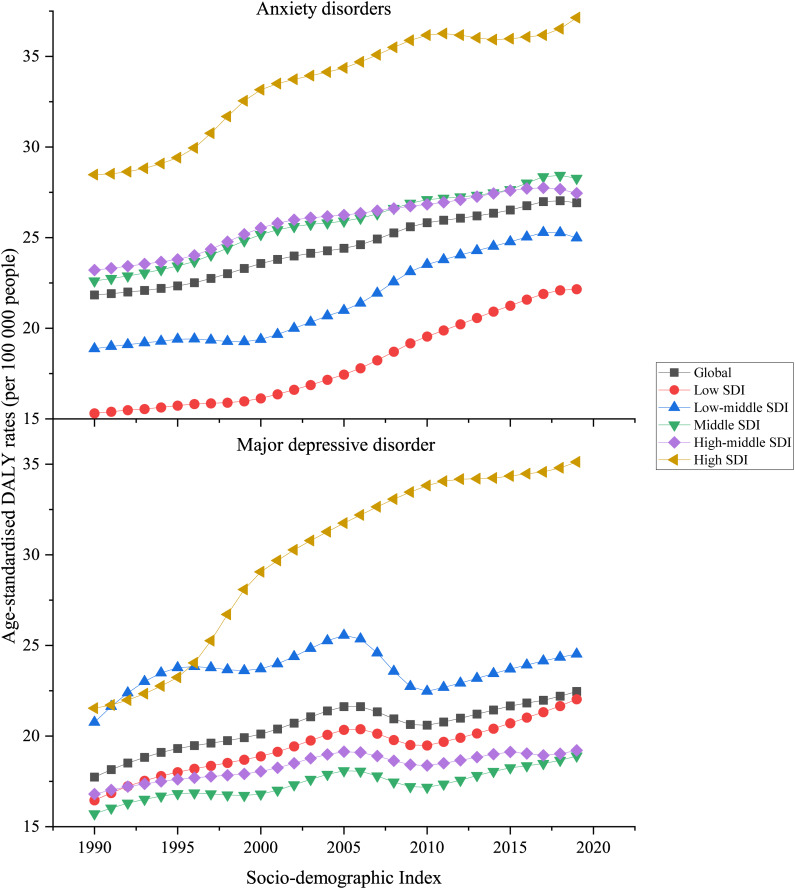
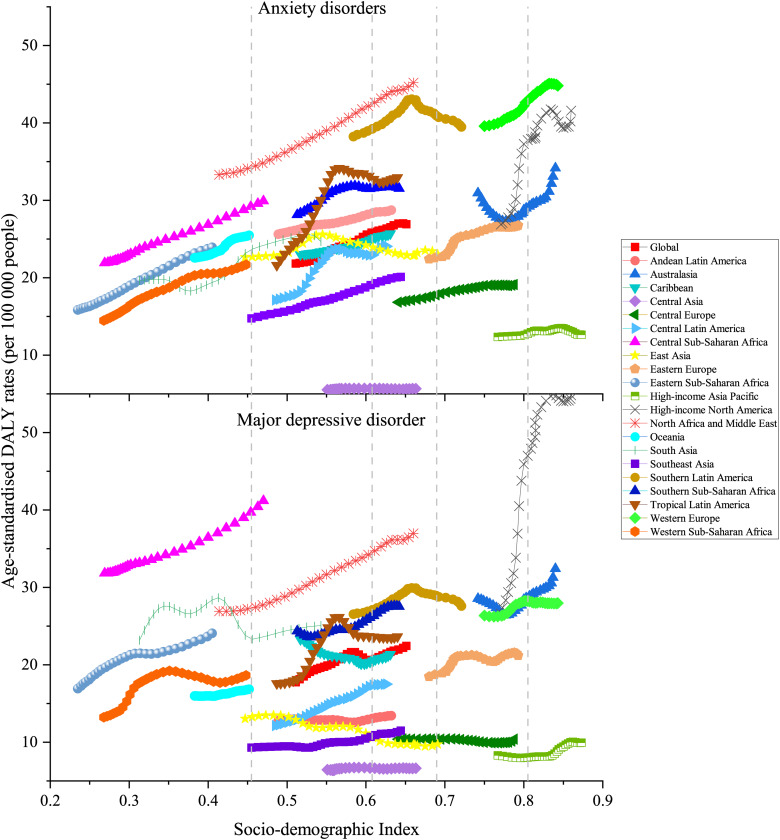
Aim: This study aimed to analyse the temporal and spatial trends in the burden of anxiety disorders and major depressive disorder related to bullying victimisation on global, regional and country scales. Methods: Data were from the 2019 Global Burden of Disease (GBD) Study. We assessed the global disability-adjusted life years (DALYs, per 100 000 population) of anxiety disorders and major depressive disorder attributable to bullying victimisation by age, sex and geographical location. The percentage changes in age-standardised rates of DALYs were used to quantify temporal trends, and the annual rate changes across 204 countries and territories were used to present spatial trends. Furthermore, we examined the relationship between the sociodemographic index (SDI) and the burden of anxiety disorders as well as major depressive disorder attributable to bullying victimisation and its spatial and temporal characteristics globally. Results: From 1990 to 2019, the global DALY rates of anxiety disorders and major depressive disorder attributable to bullying victimisation increased by 23.31 and 26.60%, respectively, with 27.27 and 29.07% for females and 18.88 and 23.84% for males. Across the 21 GBD regions, the highest age-standardised rates of bullying victimisation-related DALYs for anxiety disorders were in North Africa and the Middle East and for major depressive disorder in High-income North America. From 1990 to 2019, the region with the largest percentage increase in the rates of DALYs was High-income North America (54.66% for anxiety disorders and 105.88% for major depressive disorder), whereas the region with the slowest growth rate or largest percentage decline was East Asia (1.71% for anxiety disorders and −25.37% for major depressive disorder). In terms of SDI, this study found overall upward trends of bullying-related mental disorders in areas regardless of the SDI levels, although there were temporary downward trends in some stages of certain areas. Conclusions: The number and rates of DALYs of anxiety disorders and major depressive disorder attributable to bullying victimisation increased from 1990 to 2019. Effective strategies to eliminate bullying victimisation in children and adolescents are needed to reduce the burden of anxiety disorders and major depressive disorder. Considering the large variations in the burden by SDI and geographic location, future protective actions should be developed based on the specific cultural contexts, development status and regional characteristics of each country.
Overview
The claims and statistics of this paper haven’t been checked yet.
Free: it reads the open-access text and checks the first 5 claims that cite a source we can check. Create a free account to check every claim.
Integrity signals
Registry
Cites
Statistics
Figures
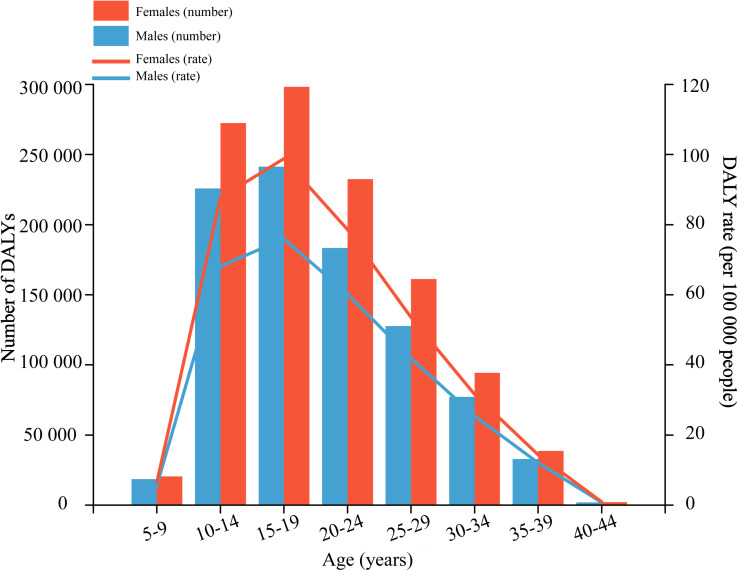
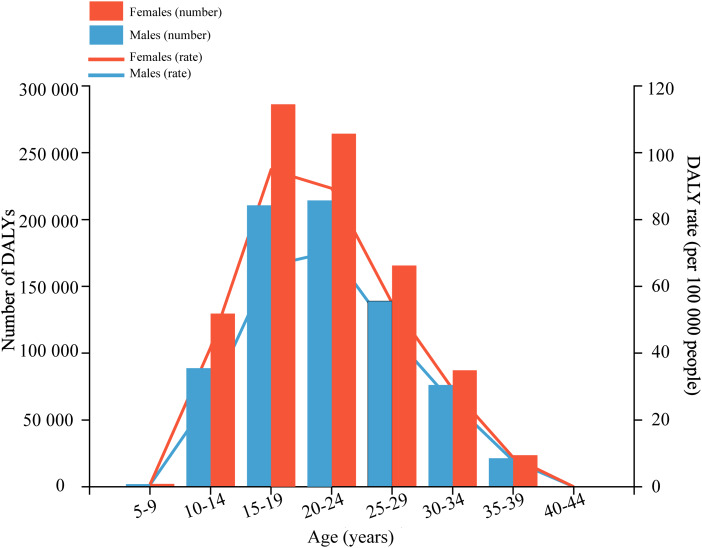
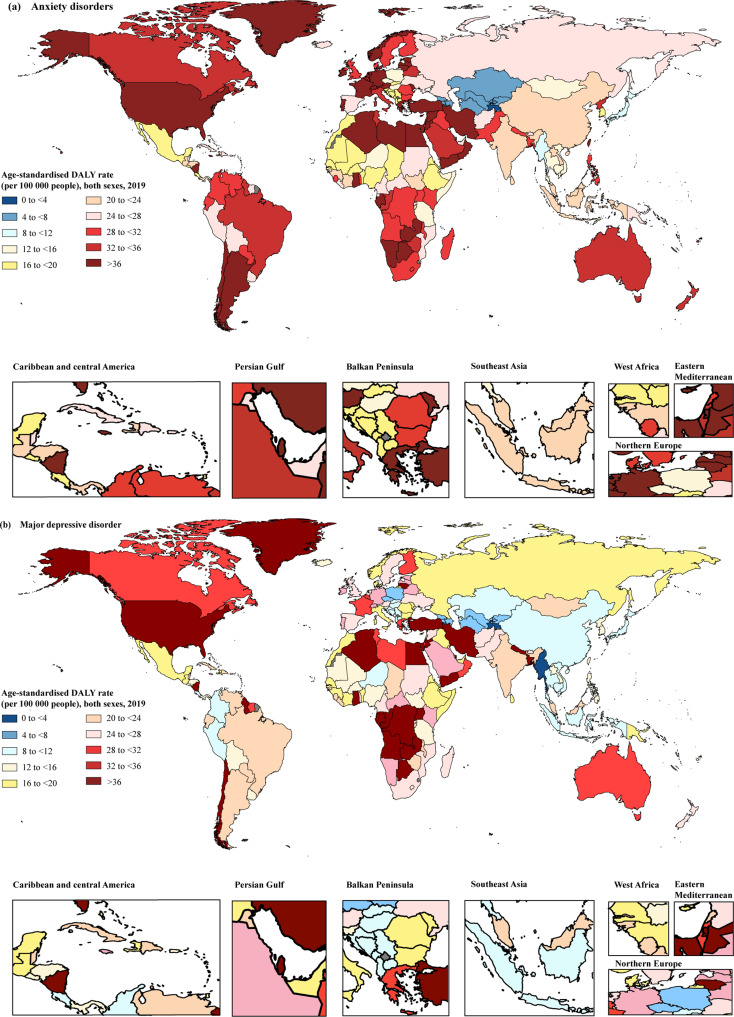
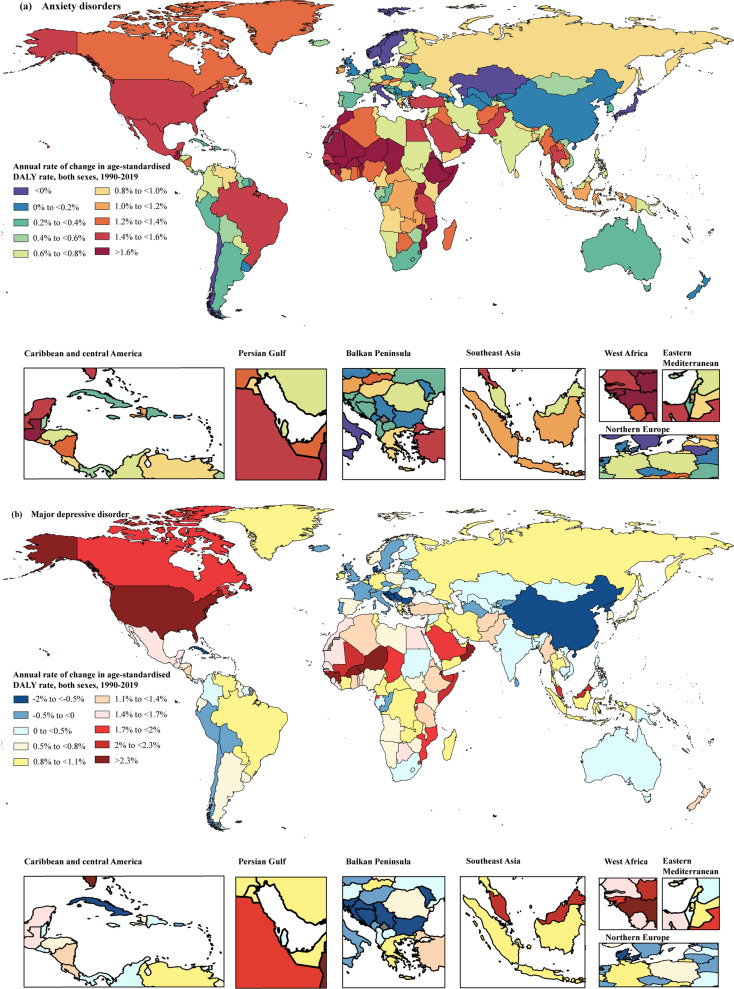
Verification
Claims the paper makes
The claims and statistics of this paper haven’t been checked yet.
Free: it reads the open-access text and checks the first 5 claims that cite a source we can check. Create a free account to check every claim.
Claims other papers make about this one
Each is checked against this paper’s own text: does it say what the citing paper says it does?
In the citing paper
“As not all diseases were estimated for all countries, the GBD 2019 study used the Bayesian meta-regression tool DisMod-MR 2.1 as the principal method to ensure that the incidence, prevalence, and mortality rates for each disease were consistent22,23.”
From Temporal and spatial trend analysis of all-cause depression burden based on Global Burden of Disease (GBD) 2019 study (2024) · cites this paper as [23]
Self-check
Percentages, sums and reported differences re-computed from the paper’s own numbers.
The self-check needs the paper’s full text.
Citations
Cites
Vos, T., Lim, S. S., Abbafati, C., Abbas, K. M., Abbasi, M., Abbasifard, M., Abbasi-Kangevari, M., Abbastabar, H., Abd-Allah, F., Abdelalim, A., et al. (2020) · The Lancet · doi:10.1016/s0140-6736(20)30925-9 · Cited by 19,358
James, S. L., Abate, D., Abate, K. H., Abay, S. M., Abbafati, C., Abbasi, N., Abbastabar, H., Abd-Allah, F., Abdela, J., Abdelalim, A., et al. (2018) · The Lancet · doi:10.1016/s0140-6736(18)32279-7 · Cited by 13,867
Murray, C. J. L., Aravkin, A. Y., Zheng, P., Abbafati, C., Abbas, K. M., Abbasi-Kangevari, M., Abd-Allah, F., Abdelalim, A., Abdollahi, M., Abdollahpour, I., et al. (2020) · The Lancet · doi:10.1016/s0140-6736(20)30752-2 · Cited by 9,854
Roth, G. A., Abate, D., Abate, K. H., Abay, S. M., Abbafati, C., Abbasi, N., Abbastabar, H., Abd-Allah, F., Abdela, J., Abdelalim, A., et al. (2018) · The Lancet · doi:10.1016/s0140-6736(18)32203-7 · Cited by 8,600
Global Burden of Disease Cancer Collaboration, Fitzmaurice, C., Allen, C., Barber, R. M., Barregard, L., Bhutta, Z. A., Brenner, H., Dicker, D. J., Chimed-Orchir, O., Dandona, R., et al. (2017) · JAMA Oncology · doi:10.1001/jamaoncol.2016.5688 · Cited by 6,215
Santomauro, D. F., Mantilla Herrera, A. M., Shadid, J., Zheng, P., Ashbaugh, C., Pigott, D. M., Abbafati, C., Adolph, C., Amlag, J. O., Aravkin, A. Y., et al. (2021) · The Lancet · doi:10.1016/s0140-6736(21)02143-7 · Cited by 5,444
Stanaway, J. D., Afshin, A., Gakidou, E., Lim, S. S., Abate, D., Abate, K. H., Abbafati, C., Abbasi, N., Abbastabar, H., Abd-Allah, F., et al. (2018) · The Lancet · doi:10.1016/s0140-6736(18)32225-6 · Cited by 4,943
Global Burden of Disease Cancer Collaboration, Fitzmaurice, C., Abate, D., Abbasi, N., Abbastabar, H., Abd-Allah, F., Abdel-Rahman, O., Abdelalim, A., Abdoli, A., Abdollahpour, I., et al. (2019) · JAMA Oncology · doi:10.1001/jamaoncol.2019.2996 · Cited by 2,501
Salomon, J. A., Vos, T., Hogan, D. R., Gagnon, M., Naghavi, M., Mokdad, A., Begum, N., Shah, R., Karyana, M., Kosen, S., et al. (2012) · The Lancet · doi:10.1016/s0140-6736(12)61680-8 · Cited by 1,322
Disability weights for the Global Burden of Disease 2013 study
Salomon, J. A., Haagsma, J. A., Davis, A., de Noordhout, C. M., Polinder, S., Havelaar, A. H., Cassini, A., Devleesschauwer, B., Kretzschmar, M., Speybroeck, N., et al. (2015) · The Lancet Global Health · doi:10.1016/s2214-109x(15)00069-8 · Cited by 1,217
Bullying victimization in youths and mental health problems: ‘Much ado about nothing’
Arseneault, L., Bowes, L., & Shakoor, S. (2010) · Psychological Medicine · doi:10.1017/s0033291709991383 · Cited by 1,067
Bullying at School - What We Know and What We Can Do
Awiria, O., Olweus, D., & Byrne, B. (1994) · British Journal of Educational Studies · doi:10.2307/3121681 · Cited by 927
Dai, H., Alsalhe, T. A., Chalghaf, N., Riccò, M., Bragazzi, N. L., & Wu, J. (2020) · PLOS Medicine · doi:10.1371/journal.pmed.1003198 · Cited by 865
Takizawa, R., Maughan, B., & Arseneault, L. (2014) · American Journal of Psychiatry · doi:10.1176/appi.ajp.2014.13101401 · Cited by 805 · cited 2×
“Bullying has major links to anxiety disorders and major depressive disorder, with persistent impacts lasting through adulthood (Takizawa et al., 2014; Lereya et al., 2015; Islam et al., 2020; Ucar et al., 2020; Kim et al., 2022a, 2022b).”
BackgroundImpact of Bullying in Childhood on Adult Health, Wealth, Crime, and Social Outcomes
Wolke, D., Copeland, W. E., Angold, A., & Costello, E. J. (2013) · Psychological Science · doi:10.1177/0956797613481608 · Cited by 640 · cited 1×
“65 times higher odds ratio of anxiety disorders at age 45 (Wolke et al., 2013).”
BackgroundLereya, S. T., Copeland, W. E., Costello, E. J., & Wolke, D. (2015) · The Lancet Psychiatry · doi:10.1016/s2215-0366(15)00165-0 · Cited by 590 · cited 2×
“Bullying has major links to anxiety disorders and major depressive disorder, with persistent impacts lasting through adulthood (Takizawa et al., 2014; Lereya et al., 2015; Islam et al., 2020; Ucar et al., 2020; Kim et al., 2022a, 2022b).”
BackgroundKann, L., Olsen, E. O., McManus, T., Harris, W. A., Shanklin, S. L., Flint, K. H., Queen, B., Lowry, R., Chyen, D., Whittle, L., et al. (2016) · MMWR. Surveillance Summaries · doi:10.15585/mmwr.ss6509a1 · Cited by 540
Arseneault, L. (2018) · Journal of Child Psychology and Psychiatry · doi:10.1111/jcpp.12841 · Cited by 501
Ruscio, A. M., Hallion, L. S., Lim, C. C. W., Aguilar-Gaxiola, S., Al-Hamzawi, A., Alonso, J., Andrade, L. H., Borges, G., Bromet, E. J., Bunting, B., et al. (2017) · JAMA Psychiatry · doi:10.1001/jamapsychiatry.2017.0056 · Cited by 492
Yang, X., Fang, Y., Chen, H., Zhang, T., Yin, X., Man, J., Yang, L., & Lu, M. (2021) · Epidemiology and Psychiatric Sciences · doi:10.1017/s2045796021000275 · Cited by 458 · cited 3×
“H ong et al. Southern Sub-Saharan Africa 12 614.78 (3648.85– 27 149.77) 10.21 (3.12–20.63) 29.04 (8.58–62.08) 12.59 (3.20–25.95) 14 692.02 (4184.73– 32212.84) 8.48 (2.61–17.59) 34.02 (9.87–74.02) 11.94 (3.08–23.96) Tropical Latin America 27 169.15 (6520.77– 64 110.56) 5.18 (1.40–11.48) 25.02 (6.28–57.89) 39.72 (24.38–…”
BackgroundInfluentialThe value of DALY life: problems with ethics and validity of disability adjusted life years
Arnesen, T., & Nord, E. (1999) · BMJ · doi:10.1136/bmj.319.7222.1423 · Cited by 325
Bharadwaj, P., Pai, M. M., & Suziedelyte, A. (2017) · Economics Letters · doi:10.1016/j.econlet.2017.06.028 · Cited by 237
Bannink, R., Broeren, S., van de Looij – Jansen, P. M., de Waart, F. G., & Raat, H. (2014) · PLoS ONE · doi:10.1371/journal.pone.0094026 · Cited by 234
Bullying Victimization Among School-Aged Immigrant Youth in the United States
Maynard, B. R., Vaughn, M. G., Salas-Wright, C. P., & Vaughn, S. (2016) · Journal of Adolescent Health · doi:10.1016/j.jadohealth.2015.11.013 · Cited by 184 · cited 2×
“Bullying is a serious sociodevelopmental issue globally associated with a range of short- and long-term problems among victims (Maynard et al., 2016).”
BackgroundAssociations Between Antibullying Policies and Bullying in 25 States
Hatzenbuehler, M. L., Schwab-Reese, L., Ranapurwala, S. I., Hertz, M. F., & Ramirez, M. R. (2015) · JAMA Pediatrics · doi:10.1001/jamapediatrics.2015.2411 · Cited by 157
Bullying, cyberbullying, and mental health in young people
Landstedt, E., & Persson, S. (2014) · Scandinavian Journal of Public Health · doi:10.1177/1403494814525004 · Cited by 145 · cited 1×
“, 2022), girls may suffer more psychosomatic effects associated with bullying (Landstedt and Persson, 2014).”
BackgroundIslam, M. I., Khanam, R., & Kabir, E. (2020) · Psychiatry Research · doi:10.1016/j.psychres.2020.113364 · Cited by 105 · cited 1×
“Bullying has major links to anxiety disorders and major depressive disorder, with persistent impacts lasting through adulthood (Takizawa et al., 2014; Lereya et al., 2015; Islam et al., 2020; Ucar et al., 2020; Kim et al., 2022a, 2022b).”
BackgroundJadambaa, A., Thomas, H. J., Scott, J. G., Graves, N., Brain, D., & Pacella, R. (2019) · Epidemiology and Psychiatric Sciences · doi:10.1017/s2045796019000489 · Cited by 102 · cited 3×
“In summary, the term anxiety disorders included generalised anxiety disorder, agoraphobia and panic disorder, social phobia, specific phobia and other unspecified anxiety disorders (Jadambaa et al., 2019).”
BackgroundYuchang, J., Junyi, L., Junxiu, A., Jing, W., & Mingcheng, H. (2019) · Trauma, Violence, & Abuse · doi:10.1177/1524838017726426 · Cited by 83 · cited 1×
“Second, regarding culture-related factors, the Confucian tradition and collectivistic culture in East Asia, which emphasise discipline and has less tolerance of bullying (Jin et al., 2019), may contribute to stable low temporal trends of bullying-related mental disorders in the region.”
BackgroundSelf-citationAdrian, M., Jenness, J. L., Kuehn, K. S., Smith, M. R., & McLaughlin, K. A. (2019) · Development and Psychopathology · doi:10.1017/s0954579419000543 · Cited by 77
Sex Differences in Anxiety Disorders in Older Adults
Vasiliadis, H., Desjardins, F., Roberge, P., & Grenier, S. (2020) · Current Psychiatry Reports · doi:10.1007/s11920-020-01203-x · Cited by 71 · cited 1×
“Previous evidence suggested that girls with more passive reactions to traumatic events and who are more likely to internalise stress tended to have higher risks of anxiety and depressive symptoms, in comparison with boys (Chang et al., 2019; Vasiliadis et al., 2020; Roza et al., 2021).”
BackgroundHuitsing, G., Lodder, G. M. A., Browne, W. J., Oldenburg, B., Van der Ploeg, R., & Veenstra, R. (2020) · Prevention Science · doi:10.1007/s11121-020-01116-4 · Cited by 64 · cited 4×
“As for children and adolescents who have been bullied, peer approaches to involve all students and motivate bystanders to stand up for victims are also proven methods for reducing bullying-related mental disorders (Huitsing et al., 2020).”
BackgroundInfluentialHe, Y., Chen, S.-S., Xie, G.-D., Chen, L.-R., Zhang, T.-T., Yuan, M.-Y., Li, Y.-H., Chang, J.-J., & Su, P.-Y. (2022) · Journal of Affective Disorders · doi:10.1016/j.jad.2021.11.038 · Cited by 57
Chen, I., Gamble, J. H., & Lin, C. (2021) · Current Psychology · doi:10.1007/s12144-021-01536-7 · Cited by 46
Kim, S., Craig, W., King, N., Bilz, L., Cosma, A. P., Molcho, M., Qirjako, G., de Matos, M. G., Augustine, L., Šmigelskas, K., et al. (2022) · International Journal of Public Health · doi:10.3389/ijph.2022.1604264 · Cited by 36
Is Bullying Victimization in Childhood Associated With Mental Health in Old Age
Hu, B. (2019) · The Journals of Gerontology Series B · doi:10.1093/geronb/gbz115 · Cited by 33 · cited 1×
“Generally, children and adolescents are the most vulnerable to being bullied (UNESCO, 2019), and the effects of bullying victimisation can last a lifetime (Takizawa et al., 2014; Hu, 2021).”
BackgroundChang, L., Wu, C.-C., Lin, L. N., Chang, H., & Yen, L.-L. (2018) · Journal of Affective Disorders · doi:10.1016/j.jad.2018.11.027 · Cited by 32
Risky cyber behaviors in adolescents with depression: A case control study
Uçar, H. N., Çetin, F. H., Ersoy, S. A., Güler, H. A., Kılınç, K., & Türkoğlu, S. (2020) · Journal of Affective Disorders · doi:10.1016/j.jad.2020.03.046 · Cited by 27
Voluntary Vs Nominated Peer Educators: a Randomized Trial within the NoTrap! Anti-Bullying Program
Zambuto, V., Palladino, B. E., Nocentini, A., & Menesini, E. (2020) · Prevention Science · doi:10.1007/s11121-020-01108-4 · Cited by 27 · cited 4×
“, 2015), and reaffirming strong commitments to children’s rights and empowerment are considered effective measures (Zambuto et al., 2020).”
BackgroundInfluentialJeries-Loulou, L. J., & Khoury‐Kassabri, M. (2022) · American Journal of Orthopsychiatry · doi:10.1037/ort0000597 · Cited by 26 · cited 1×
“, 2022) while in Arab society, the serious situation might be amplified by gender restrictive norms that girls and women are required to conform to traditional roles by submitting to men and remain silent after experiencing sexual victimisation (Jeries-Loulou and Khoury-Kassabri, 2022).”
BackgroundViolence Victimization, Substance Use Disparities, and Gender-Nonconforming Youth
Lowry, R., Johns, M. M., & Robin, L. E. (2020) · American Journal of Preventive Medicine · doi:10.1016/j.amepre.2019.12.021 · Cited by 24 · cited 1×
“orientation are significantly more likely to be bullied due to bullying towards sexual and gender minorities, which may be due to predominant norms of what are acceptable practices of sexuality (Kann et al., 2016; Lowry et al., 2020; McCormick and Krieger, 2020).”
BackgroundIslam, M. I., Chadwick, V. L., Esgin, T., & Martiniuk, A. L. C. (2022) · International Journal of Environmental Research and Public Health · doi:10.3390/ijerph19094995 · Cited by 17 · cited 1×
“Besides, in High-income Australasia, this situation may also result from culturally and linguistically diverse backgrounds (Australian Institute of Health Welfare, 2022), especially for Indigenous youth due to the historical colonisation and assimilative policies (Islam et al., 2022) while in Arab society, the serious…”
BackgroundKim, H. S., Pyo, H. J., Fava, M., Mischoulon, D., Park, M. J., & Jeon, H. J. (2022) · Frontiers in Psychiatry · doi:10.3389/fpsyt.2022.792734 · Cited by 16
Bullying Victimization and Friendship as Influences on Sleep Difficulty among Brazilian Adolescents
Roza, T. H., Yano, V., Roza, S. A., Santo, J. B., & da Cunha, J. M. (2021) · The Journal of Genetic Psychology · doi:10.1080/00221325.2021.1905597 · Cited by 14
Religion and bullying: Perspectives from sexual and gender minority youth (SGMY) in Michigan
McCormick, M., & Krieger, M. J. (2020) · Sexual and Gender Diversity in Social Services · doi:10.1080/10538720.2020.1728460 · Cited by 13 · cited 1×
“orientation are significantly more likely to be bullied due to bullying towards sexual and gender minorities, which may be due to predominant norms of what are acceptable practices of sexuality (Kann et al., 2016; Lowry et al., 2020; McCormick and Krieger, 2020).”
BackgroundPMH14 Uncovering the Hidden Burden of Depression: A Country Comparison
Ken-Opurum, J., Fukuda, T., Chen, Y., Gilliam, Y., & Stankus, A. (2020) · Value in Health Regional Issues · doi:10.1016/j.vhri.2020.07.336 · Cited by 1
Research works printed but not linked: 4
- C. Hong et al. https://doi.org/10.1017/S2045796022000683 Published online by Cambridge University Press Percentage change in ASR, 1990-2019(%) Anxiety disorders Global 908 591.88 (270 055.95-1 945 681.32) 8.58 (2.66-17.12) 23.65 (7.20-50.44) 18.88 (12.74-33.09) 1 119 669.43 (314 546.92-2 480 222.68) 6.81 (2.09-13.97) 30.35 (8.79- 66.59) 27.27 (19.62-44.46) Andean Latin America 7815.96 (2088.52- 18 382.46) 5.80 (1.62-12.81) 22.88 (6.14-53.81) 10.17 (-2.61 to 29.39) 11 453.36 (2838.31-27 315.20) 5.28 (1.45-11.55) 34.84 (8.76-82.56) 14.60 (0.66-34.68) Australasia 3397.37 (924.54- 7719.35) 6.65 (2.12-13.92) 29.62 (8.53-66.00) 12.70 (-3.62 to 43.06) 4379.31 (1157.48-10 176.07) 5.52 (1.66-11.85) 38.81 (11.02-87.20) 8.64 (-6.31 to 45.34) Caribbean 5021.49 (1410.58- 11 645.88) 6.94 (2.06-14.93) 21.70 (6.18-50.09) 10.29 (1.67-22.20) 6843.82 (1745.30-16 327.51) 5.66 (1.61-12.32) 29.70 (7.75-69.63)
- C. Hong et al. https://doi.org/10.1017/S2045796022000683 Published online by Cambridge University Press Southern Sub-Saharan Africa 12 614.78 (3648.85- 27 149.77) 10.21 (3.12-20.63) 29.04 (8.58-62.08) 12.59 (3.20-25.95) 14 692.02 (4184.73- 32212.84) 8.48 (2.61-17.59) 34.02 (9.87-74.02) 11.94 (3.08-23.96) Tropical Latin America 27 169.15 (6520.77- 64 110.56) 5.18 (1.40-11.48) 25.02 (6.28-57.89) 39.72 (24.38-59.77) 44 422.52 (10 227.91- 109432.71) 4.50 (1.18-10.02) 40.89 (10.23-97.16) 62.07 (41.97-84.69) Western Europe 52 568.70 (15 517.04-116 250.20) 9.25 (3.09-18.61) 34.53 (10.92-73.38) 14.72 (0.91-47.22) 80 424.89 (23 149.89- 180279.85) 7.88 (2.67-15.96) 55.62 (17.07-122.64) 12.45 (-3.18 to 45.89) Western Sub-Saharan Africa 54 177.53 (16 887.22-114 957.72) 7.82 (2.40-16.10) 19.99 (5.75-44.14) 37.13 (24.53-55.54) 68 825.55 (22 171.96- 146950.59) 7.09 (2.28-14.55) 23.39 (7.10-50.72) 62.56 (44.41-90.38) Major depressive disorder Global 751 822.67 (153 054.27-1 770 650.05) 5.45 (1.32-11.23) 19.37 (4.03-45.36) 23.84 (16.41-41.27) 958 330.78 (200 074.52-2245947.65) 4.53 (1.13-9.33) 25.68 (5.57-60.05) 29.07 (18.77-52.90) Andean Latin America 3300.47 (685.65- 7820.45) 3.62 (0.88-7.89) 9.56 (1.99-22.62) 8.26 (-7.27 to 37.34) 5794.76 (1191.70- 13964.06) 3.65 (0.89-7.78) 17.51 (3.70-41.82) 5.20 (-10.31 to 31.50) Australasia 2946.01 (624.44- 7085.94) 4.66 (1.18-9.88) 25.31 (5.73-59.06) -1.82 (-17.54 to 29.83) 4480.36 (963.16- 10621.12) 4.88 (1.26-10.25) 39.73 (9.21-92.66) 26.33 (4.92-67.31) Caribbean 3603.91 (737.30- 8512.04) 3.81 (0.89-8.32) 15.31 (3.19-35.88) -0.45 (-8.68 to 13.27) 6415.91 (1385.26- 15599.23) 3.76 (0.96-8.13) 27.48 (6.07-66.33) -11.35 (-20.84 to 1.02) Central Asia 3405.55 (590.88- 8609.81) 2.30 (0.50-5.20) 7.00 (1.29-17.34) 4.82 (-5.23 to 17.14) 2941.22 (484.43- 7631.30) 1.18 (0.25-2.81) 6.27 (1.11-16.30) 1.28 (-8.83 to 11.29) Central Europe 3653.54 (633.38- 8933.44) 4.41 (1.00-9.44) 8.79 (1.74-20.60) 4.90 (-8.06 to 36.93) 4748.97 (802.72- 11705.69) 2.96 (0.66-6.42) 12.06 (2.38-28.63) -3.29 (-19.95 to 36.36) Central Latin America 15 051.57 (2904.07- 36 150.80) 3.38 (0.75-7.43) 11.39 (2.18-27.47) 35.59 (21.24-62.63) 31 413.90 (6285.10- 76518.48) 3.84 (0.88-8.53) 23.58 (4.84-57.39) 50.06 (35.50-69.59) Central Sub-Saharan Africa 29 531.07 (6418.43- 68 446.55) 5.23 (1.17-11.29) 39.14 (7.55-93.73) 16.91 (2.98-42.57) 33 347.69 (7265.43- 77823.55) 4.35 (1.01-9.58) 43.24 (8.71-102.94) 43.14 (22.08-83.26) East Asia 47 955.73 (8171.72- 120 481.42) 3.80 (0.88- 8.11) 7.91 (1.60- 18.87) -19.19 (-26.24 to -7.86) 63 936.38 (10 450.69- 165266.02) 3.23 (0.77-6.87) 11.74 (2.41-28.24) -28.57 (-36.48 to -16.31) Eastern Europe 14 152.03 (2060.27- 37 217.04) 4.78 (0.99- 10.45) 17.98 (3.15- 44.55) 25.91 (15.55-38.40) 18 820.74 (2769.07- 49344.10) 4.66 (0.96-10.20) 24.54 (4.30-60.53) 7.79 (0.41-15.94) Eastern Sub-Saharan Africa 54 785.37 (12 119.39-125 766.15) 3.68 (0.86- 7.96) 22.55 (4.46- 53.15) 35.36 (22.77-57.58) 64 890.47 (14 791.66- 149645.10) 3.21 (0.78-6.91) 25.61 (5.27-60.88) 48.60 (32.66-75.07) High-income Asia Pacific 6467.98 (1233.50- 16 041.00) 4.33 (1.01- 9.40) 10.65 (2.28- 25.28) 23.48 (13.16-37.31) 5344.03 (875.45-14 044.32) 2.50 (0.51-5.75) 9.19 (1.63-23.46) 14.98 (4.19-26.22) High-income North America 58 915.49 (11 444.17-135 495.33) 8.52 (1.96- 17.56) 38.67 (8.00- 87.36) 78.00 (56.99-103.27) 103 651.58 (23 128.83- 239 559.21) 8.61 (2.16-17.64) 71.61 (16.63-162.54) 125.74 (98.81-166.39) North Africa and Middle East 127 799.05 (29 224.78-289 330.59) 7.17 (1.92- 14.12) 37.41 (8.88- 83.77) 20.52 (5.27-54.75) 115 281.86 (27 951.91- 267 609.13) 4.33 (1.21-8.72) 36.47 (9.06-84.00) 61.43 (31.11-143.62) Oceania 1308.96 (260.89- 3098.68) 5.46 (1.20- 12.14) 16.88 (3.24- 40.66) 5.25 (-10.76 to 25.59) 1231.25 (253.75- 2882.46) 4.41 (1.07-9.63) 16.88 (3.45-39.99) 5.60 (-8.60 to 26.41) South Asia 230 497.11 (44 816.34-531 158.14) 5.00 (1.09- 10.54) 21.83 (4.14- 51.16) 1.74 (-7.04 to 18.92) 287 303.98 (57 363.66- 668 343.35) 4.52 (1.02-9.63) 28.51 (5.68-66.62) 14.14 (1.57-41.21) (Continued ) Epidemiology and Psychiatric Sciences 5.17 (1.28- 10.88) 11.29 (2.46- 26.88) 19.29 (10.48-37.26) 39 830.92 (8449.99-94 553.40) 4.00 (1.02-8.56) 11.71 (2.55-27.73) 27.50 (18.26-43.95) Southern Latin America 6511.33 (1288.69- 14 885.26) 6.64 (1.48- 14.22) 20.20 (4.24- 45.70) 7.49 (-17.47 to 51.08) 11 115.05 (2245.46-26 229.91) 6.13 (1.47-12.90) 35.11 (7.64-80.58) 2.44 (-23.16 to 38.94) Southern Sub-Saharan Africa 10 635.76 (2018.95- 25 637.09) 5.51 (1.22- 11.80) 24.25 (4.73- 57.90) 22.06 (10.28-38.72) 13 502.38 (2580.28-32 582.06) 4.40 (1.00-9.66) 30.82 (6.13-73.53) 7.92 (-1.52 to 21.21) Tropical Latin America 17 122.19 (3887.36- 39 799.03) 4.20 (1.05- 9.00) 15.82 (3.74- 36.54) 36.52 (16.97-77.11) 33 472.49 (7366.50-80 480.13) 3.88 (1.03-8.18) 31.61 (7.38-74.34) 34.67 (15.71-71.35) Western Europe 33 618.65 (6718.43- 78 790.86) 5.28 (1.27- 10.98) 21.42 (4.76- 49.24) 2.76 (-11.02 to 32.51) 51 807.12 (10 275.32- 121 973.60) 4.72 (1.13-9.98) 34.90 (7.61-80.31) 8.84 (-8.24 to 42.35) Western Sub-Saharan Africa 40 850.78 (9530.77- 93 273.26) 3.64 (0.87- 7.83) 15.96 (3.33- 37.84) 29.39 (16.80-50.22) 58 999.71 (13 620.58- 136 627.34) 3.10 (0.77-6.78) 21.14 (4.46-50.13) 50.49 (31.39-84.23
- American Psychiatric Association (2000) Diagnostic and Statistical Manual of Mental Disorders 4th Edition, Text Revision (DSM-IV-TR). Washington, DC: American Psychiatric Association Press.
- 2020b, Global Burden of Disease Study 2019 (GBD 2019) Disability Weights
Cited by
Liu, J., Liu, Y., Ma, W., Tong, Y., & Zheng, J. (2024) · Scientific Reports · doi:10.1038/s41598-024-62381-9 · Cited by 160
“Adopting effective techniques is necessary to eradicate bullying among children and adolescents 50 .”
BackgroundRong, J., Wang, X., Cheng, P., Li, D., & Zhao, D. (2025) · The British Journal of Psychiatry · doi:10.1192/bjp.2024.266 · Cited by 170
Bie, F., Xiao-ling, Y. A. N., Xing, J., Wang, L., Xu, Y., Wang, G., Wang, Q., Guo, J., Qiao, J., & Rao, Z. (2024) · Frontiers in Psychiatry · doi:10.3389/fpsyt.2024.1489427 · Cited by 141
Yan, G., Zhang, Y., Wang, S., Yan, Y., Liu, M., Tian, M., & Tian, W. (2024) · Psychiatry Research · doi:10.1016/j.psychres.2024.115958 · Cited by 138
Zhang, Z., Chen, X., Wu, S., Chen, X., Wang, X., Liu, C., Zeng, N., Liu, Y., Huo, T., Liu, X., et al. (2025) · Journal of Affective Disorders · doi:10.1016/j.jad.2025.120299 · Cited by 120
Self-citation
Metadata
- Authors
- Hong, C., Liu, Z., Gao, L., Jin, Y., Shi, J., Liang, R., Maimaitiming, M., Ning, X., & Luo, Y.
- Affiliations
- Peking University (CN)
- Tsinghua University (CN)
- Stanford University (US)
- Kunming Medical University (CN)
- Corresponding author
- Luo, Y.
- Venue
- Epidemiology and Psychiatric Sciences
- Publisher
- Cambridge University Press (CUP)
- Published
- 2022
- Volume
- 31
- Pages
- e85-e85
- ISSN
- 2045-7960 (ISSN-L)
- 2045-7979
- PMC
- PMC9714217
- OpenAlex
- W4310645199
- Cited by
- 92
- References
- 48
- Citations by year
- 2026: 22 · 2025: 44 · 2024: 21 · 2023: 5
- FWCI
- 16.54
- Type
- journal article
- Language
- en
- Open access
- gold
- doi.org
- Locations
- Epidemiology and Psychiatric Sciences (publishedVersion, cc-by)
- PubMed Central (publishedVersion, cc-by)
- PubMed (publishedVersion)
- Funders
- National Social Science Fund of China (21CRK014)
- Topics
- Social Sciences › Psychology › Social Psychology › Bullying, Victimization, and Aggression
- Health Sciences › Medicine › Psychiatry and Mental health › Mental Health Treatment and Access
- Social Sciences › Psychology › Clinical Psychology › Suicide and Self-Harm Studies
- Keywords
- bullying victimization, anxiety disorders, major depressive disorder, disability-adjusted life years, temporal trends, regional variation, socio-demographic index, child and adolescent mental health, global burden of disease, sex differences in mental disorders, age-standardized rates, North America, East Asia, Middle East and North Africa, bullying prevention strategies
- MeSH terms
- Global Burden of Disease, Adolescent, Anxiety Disorders, Child, Depressive Disorder, Major, Major Depressive Disorder, Female, Humans, Male, Global Health, Bullying
About these checks
Registry, retraction, Cites and statistics results are computed, not judged, with one exception: a printed reference that no index lists is read once by a model before it counts as a citation error. Claims are extracted by a model and kept only when their quote appears verbatim in the text; each cited source is then checked, with a model’s help, for whether it says what the claim relies on. Those verdicts can be wrong — read the claim’s quote and the cited source before relying on one.
Statistics and arithmetic are recomputed, not judged.
Confidence bands are shown only for fields calibrated on our annotated test set. None is calibrated yet, so no band is shown.
What counts as a claim ›How we measure confidence ›How we check this ›
Are you an author, or do you see a problem with this page? Request a review
Data sources
Bibliographic data: Semantic Scholar, OpenAlex, Crossref.
Contains information from the Semantic Scholar Academic Graph Datasets, made available under the ODC Attribution License (ODC-BY 1.0).
Semantic Scholar’s data is described in: Kinney, R., et al. (2023). The Semantic Scholar Open Data Platform. arXiv:2301.10140.
