

The DOI matches its Crossref record; 425 of the 426 references it cites were found in a registry or an index.
Ultrasound-Responsive Systems as Components for Smart Materials
Open accessAbstract
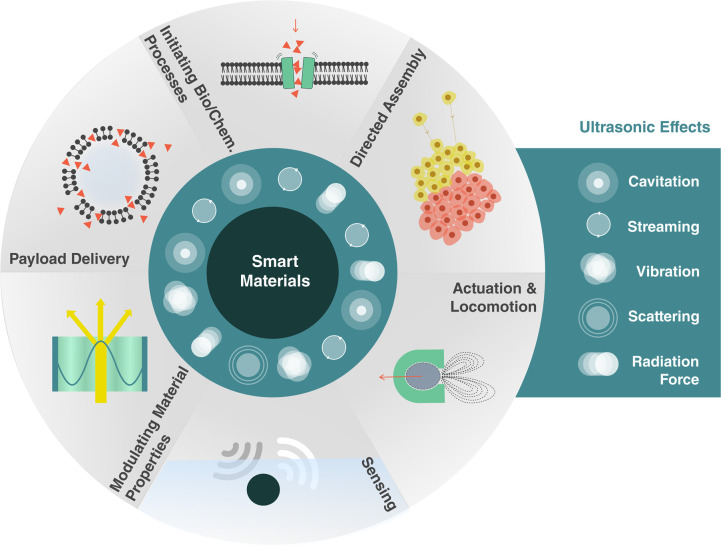
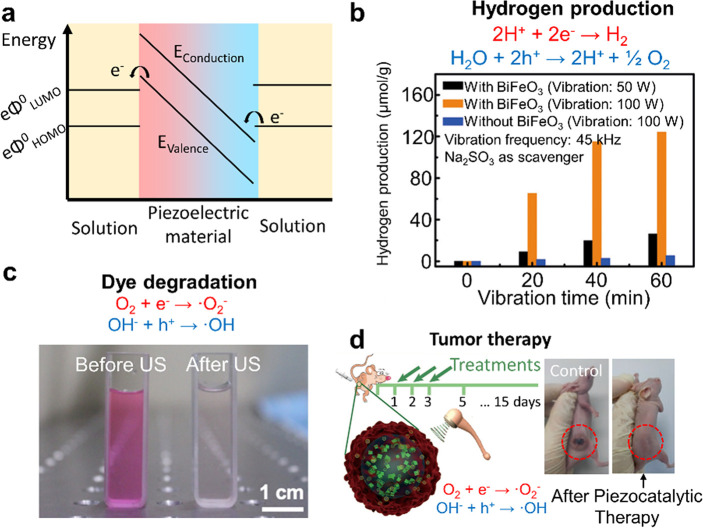
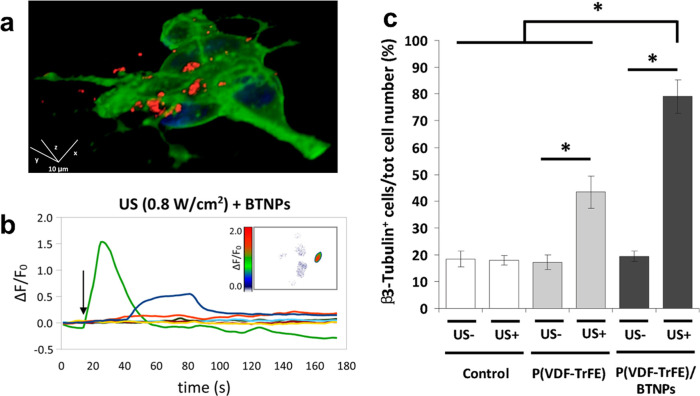
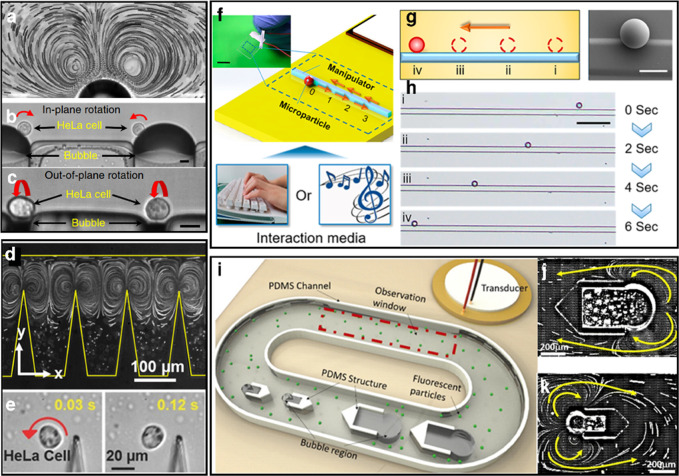
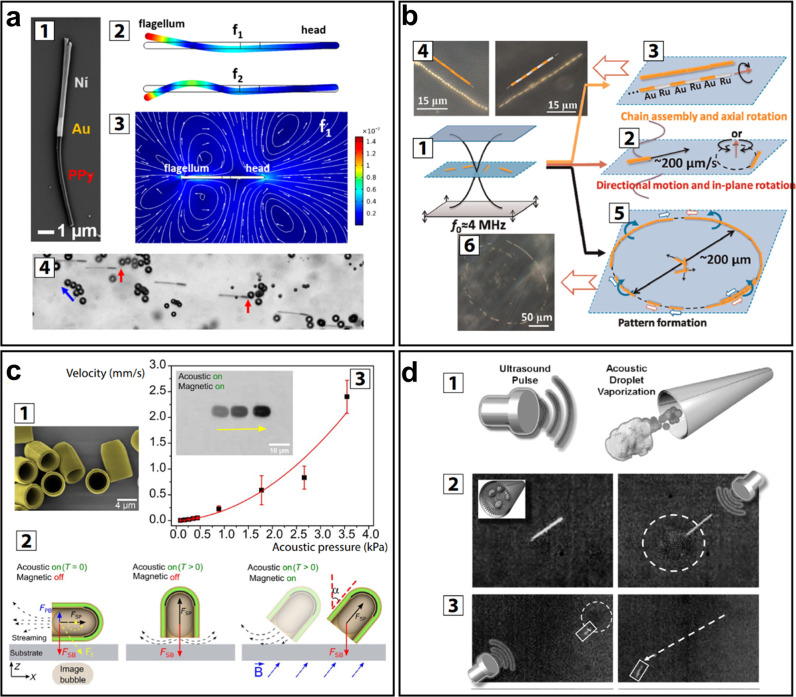
Smart materials can respond to stimuli and adapt their responses based on external cues from their environments. Such behavior requires a way to transport energy efficiently and then convert it for use in applications such as actuation, sensing, or signaling. Ultrasound can carry energy safely and with low losses through complex and opaque media. It can be localized to small regions of space and couple to systems over a wide range of time scales. However, the same characteristics that allow ultrasound to propagate efficiently through materials make it difficult to convert acoustic energy into other useful forms. Recent work across diverse fields has begun to address this challenge, demonstrating ultrasonic effects that provide control over physical and chemical systems with surprisingly high specificity. Here, we review recent progress in ultrasound-matter interactions, focusing on effects that can be incorporated as components in smart materials. These techniques build on fundamental phenomena such as cavitation, microstreaming, scattering, and acoustic radiation forces to enable capabilities such as actuation, sensing, payload delivery, and the initiation of chemical or biological processes. The diversity of emerging techniques holds great promise for a wide range of smart capabilities supported by ultrasound and poses interesting questions for further investigations.
Overview
The claims and statistics of this paper haven’t been checked yet.
Run the check — free, no account needed. It reads the open-access text and checks the sources it cites.
Integrity signals
Registry
Cites
Statistics
Figures
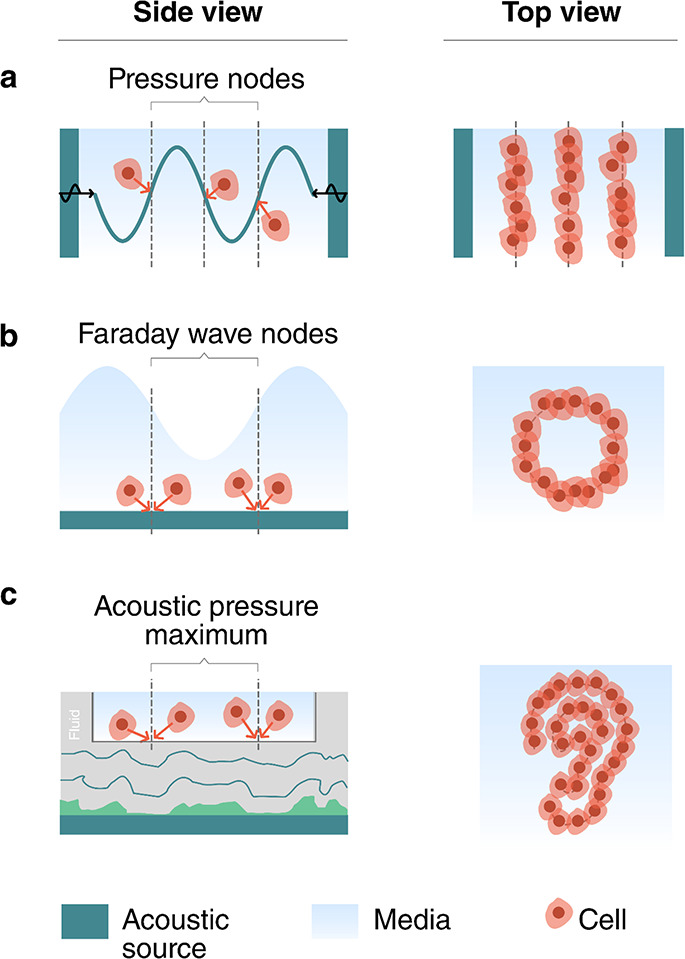
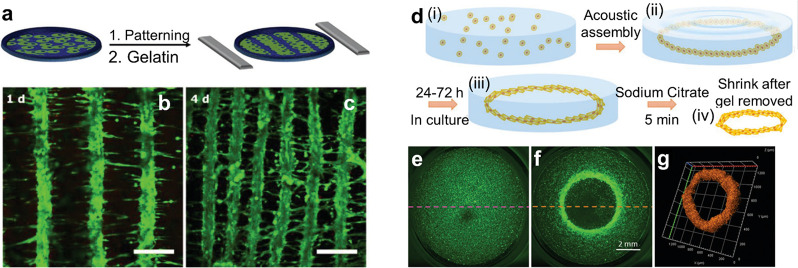
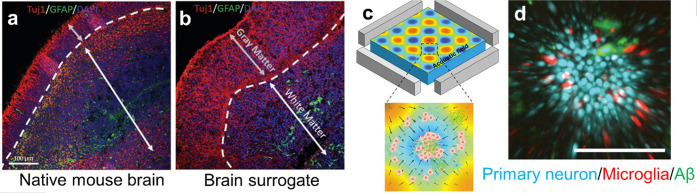
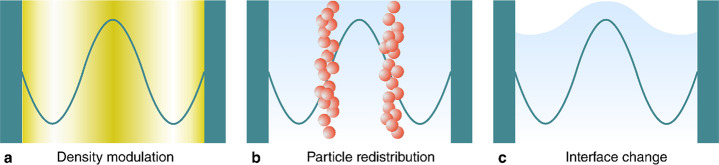
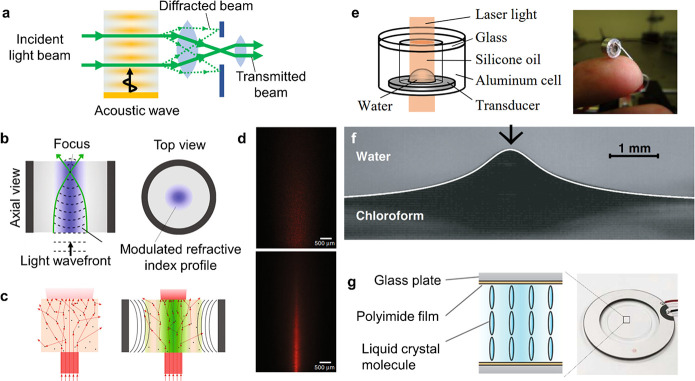
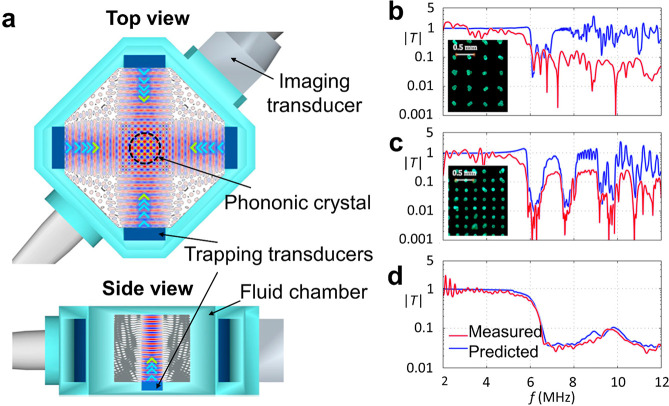
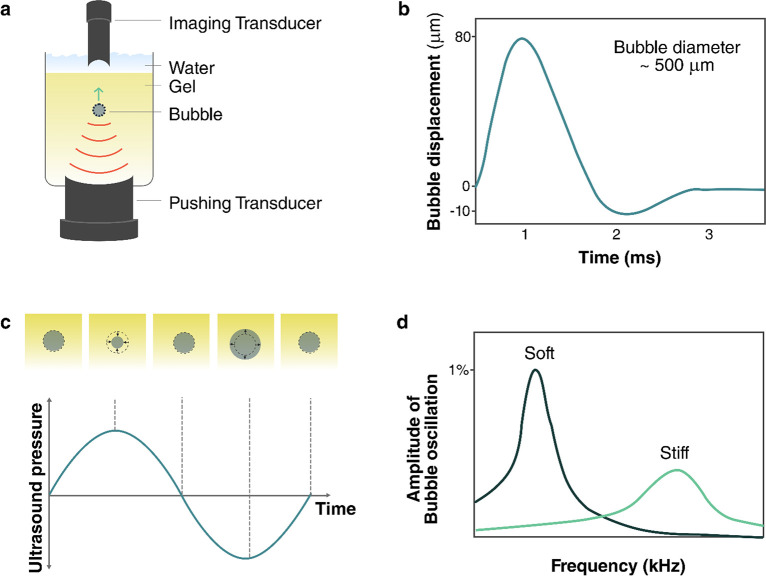
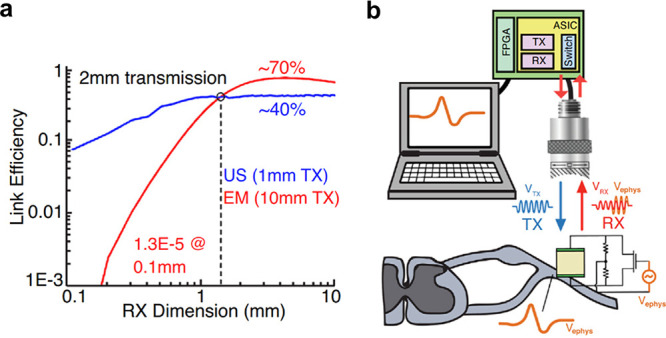
Verification
Claims the paper makes
The claims and statistics of this paper haven’t been checked yet.
Run the check — free, no account needed. It reads the open-access text and checks the sources it cites.
Claims other papers make about this one
Each is checked against this paper’s own text: does it say what the citing paper says it does?
The cited source says what the claim attributes to it.
In the citing paper
“This material converts the mechanical energy from the ultrasound waves into electrical energy, which powers the brain implant (Jiang et al., 2020; Athanassiadis et al., 2021; Birjis et al., 2022).”
From Comparative analysis of energy transfer mechanisms for neural implants (2024) · cites this paper as Athanassiadis et al., 2021
Self-check
Percentages, sums and reported differences re-computed from the paper’s own numbers.
The self-check needs the paper’s full text.
Citations
Cites
Engineering precision nanoparticles for drug delivery
Mitchell, M. J., Billingsley, M. M., Haley, R. M., Wechsler, M. E., Peppas, N. A., & Langer, R. (2021) · Nature Reviews Drug Discovery · doi:10.1038/s41573-020-0090-8 · Cited by 7,933
Regulation of transport pathways in tumor vessels: Role of tumor type and microenvironment
Hobbs, S. K., Monsky, W. L., Yuan, F., Roberts, W. G., Griffith, L., Torchilin, V. P., & Jain, R. K. (1998) · Proceedings of the National Academy of Sciences · doi:10.1073/pnas.95.8.4607 · Cited by 2,438
Imaging and Photodynamic Therapy: Mechanisms, Monitoring, and Optimization
Celli, J. P., Spring, B. Q., Rizvi, I., Evans, C. L., Samkoe, K. S., Verma, S., Pogue, B. W., & Hasan, T. G. (2010) · Chemical Reviews · doi:10.1021/cr900300p · Cited by 2,359
Controlling sound with acoustic metamaterials
Cummer, S. A., Christensen, J., & Alù, A. (2016) · Nature Reviews Materials · doi:10.1038/natrevmats.2016.1 · Cited by 2,216
Ultrasonic metamaterials with negative modulus
Fang, N. X., Xi, D., Xu, J., Ambati, M., Srituravanich, W., Sun, C., & Zhang, X. (2006) · Nature Materials · doi:10.1038/nmat1644 · Cited by 2,040
Microrobots for Minimally Invasive Medicine
Nelson, B. J., Kaliakatsos, I. K., & Abbott, J. J. (2010) · Annual Review of Biomedical Engineering · doi:10.1146/annurev-bioeng-010510-103409 · Cited by 1,967
Alzheimer's Disease and the Amyloid-β Peptide
Murphy, M. P., & LeVine, H. (2010) · Journal of Alzheimer's Disease · doi:10.3233/jad-2010-1221 · Cited by 1,750
APPLICATIONS OF ULTRASOUND TO MATERIALS CHEMISTRY
Suslick, K. S., & Price, G. J. (1999) · Annual Review of Materials Science · doi:10.1146/annurev.matsci.29.1.295 · Cited by 1,708
Nguyen, N., & Wu, Z. (2004) · Journal of Micromechanics and Microengineering · doi:10.1088/0960-1317/15/2/r01 · Cited by 1,701
Using the dynamic bond to access macroscopically responsive structurally dynamic polymers
Wojtecki, R. J., Meador, M. A., & Rowan, S. J. (2010) · Nature Materials · doi:10.1038/nmat2891 · Cited by 1,662
Research works printed but not linked: 9
- Leighton T. G., 1994, The Acoustic Bubble
- Yosioka K., 1955, Acta Acust. Acust., 5, 167
- Gor’kov L. P., 1962, Phys.-Dokl., 6, 773
- Doinikov A. A., 2003, Recent Research Developments in Acoustics, 1, 39
- Yariv, A. Quantum Electronics, 3rd ed. John Wiley & Sons, Inc.: New York, 1989; pp 325–338.
- Handbook of Optoelectronics; Dakin, J., Brown, R. G. W., Eds. Taylor & Francis: New York, 2006; pp 1380–1389.
- Naugol’nykh, K. A.; Ostrovskiĭ, L. A. Nonlinear Wave Processes in Acoustics; Cambridge Texts in Applied Mathematics; Cambridge University Press: New York, 1998; pp 245–291.
- Hamilton M. F., 1986, Nonlinear Wave Propagation in Mechanics
- Alekseev V., 1999, Acoust. Phys., 45, 535
Cited by
Sorted by citations
Current research trends of nanomedicines
Liu, Q., Zou, J., Chen, Z., He, W., & Wu, W. (2023) · Acta Pharmaceutica Sinica B · doi:10.1016/j.apsb.2023.05.018 · Cited by 223
Ultrasound-Based Micro-/Nanosystems for Biomedical Applications
Huang, H. F., Zheng, Y., Chang, M., Song, J., Xia, L., Wu, C., Jia, W., Ren, H., Feng, W., & Chen, Y. (2024) · Chemical Reviews · doi:10.1021/acs.chemrev.4c00009 · Cited by 187
Vijayakanth, T., Shankar, S., Finkelstein‐Zuta, G., Rencus‐Lazar, S., Gilead, S., & Gazit, E. (2023) · Chemical Society Reviews · doi:10.1039/d3cs00202k · Cited by 162
Ma, Q., Yang, H., Zhao, Y., Li, X., Ding, J., Qu, S., Liu, Q., Hu, Z., Li, R., Tao, Q., et al. (2025) · Advanced Science · doi:10.1002/advs.202405835 · Cited by 176
Ferroelectric materials toward next-generation electromechanical technologies
Li, F., Wang, B., Gao, X., Damjanović, D., Chen, L., & Zhang, S. J. (2025) · Science · doi:10.1126/science.adn4926 · Cited by 150
Metadata
- Authors
- Athanassiadis, A. G., Ma, Z., Moreno-Gomez, N., Melde, K., Choi, E., Goyal, R., & Fischer, P.
- Affiliations
- Max Planck Institute for Intelligent Systems (DE)
- Micro, Nano, and Molecular Systems Group, Max Planck Institute for Intelligent Systems, Heisenbergstrasse 3, 70569 Stuttgart, Germany
- University of Stuttgart (DE)
- Corresponding author
- Athanassiadis, Athanasios G.
- Fischer, Peer
- ORCID
- Venue
- Chemical Reviews
- Publisher
- American Chemical Society (ACS)
- Published
- 2021-11-12
- Volume
- 122
- Issue
- 5
- Pages
- 5165-5208
- ISSN
- 0009-2665 (ISSN-L)
- 1520-6890
- PMC
- PMC8915171
- OpenAlex
- W3214480262
- Cited by
- 293
- References
- 426
- Citations by year
- 2026: 80 · 2025: 72 · 2024: 65 · 2023: 56 · 2022: 20
- FWCI
- 2.16
- Type
- journal article
- Language
- en
- Open access
- hybrid
- doi.org
- Locations
- Chemical Reviews (publishedVersion, cc-by)
- PubMed Central (publishedVersion, cc-by)
- PubMed (publishedVersion)
- Funders
- Alexander von Humboldt-Stiftung
- H2020 European Research Council (788296)
- Topics
- Physical Sciences › Physics and Astronomy › Acoustics and Ultrasonics › Ultrasound and Cavitation Phenomena
- Physical Sciences › Physics and Astronomy › Acoustics and Ultrasonics › Acoustic Wave Phenomena Research
- Physical Sciences › Engineering › Mechanics of Materials › Ultrasonics and Acoustic Wave Propagation
- Keywords
- smart materials, acoustic energy conversion, cavitation, microstreaming, acoustic scattering, acoustic radiation force, ultrasonic sensing, ultrasound-mediated drug delivery
- MeSH terms
- Smart Materials
About these checks
Registry, retraction, Cites and statistics results are computed, not judged, with one exception: a printed reference that no index lists is read once by a model before it counts as a citation error. Claims are extracted by a model and kept only when their quote appears verbatim in the text; each cited source is then checked, with a model’s help, for whether it says what the claim relies on. Those verdicts can be wrong — read the claim’s quote and the cited source before relying on one.
Statistics and arithmetic are recomputed, not judged.
Confidence bands are shown only for fields calibrated on our annotated test set. None is calibrated yet, so no band is shown.
What counts as a claim ›How we measure confidence ›How we check this ›
Are you an author, or do you see a problem with this page? Request a review
