

The DOI matches its Crossref record; 62 of the 62 references it cites were found in a registry or an index; none of the 1 sources its claims cite is checked for support yet.
Structure and Stability of Phospholipid-Based Microbubbles Studied Using a Spin Probe
Open accessAbstract
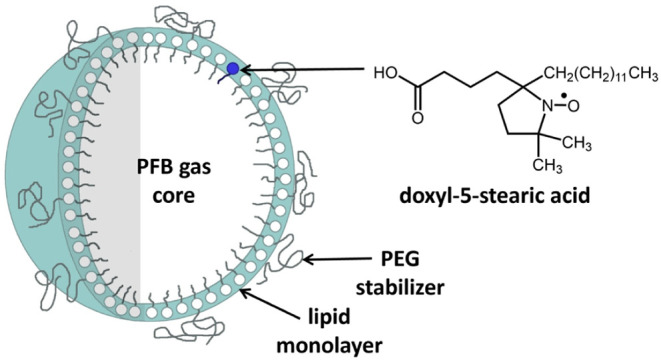
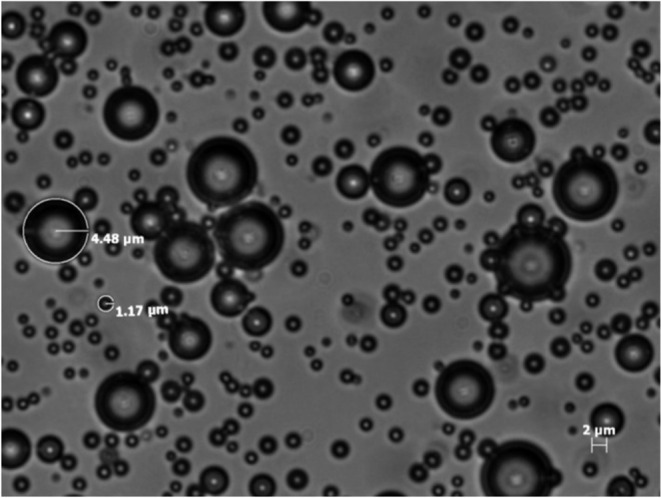
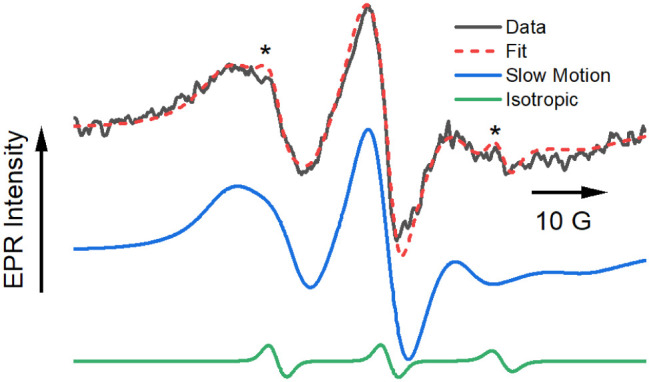
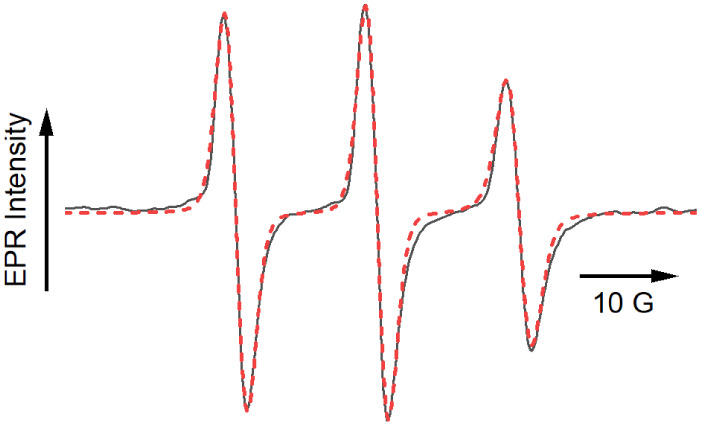
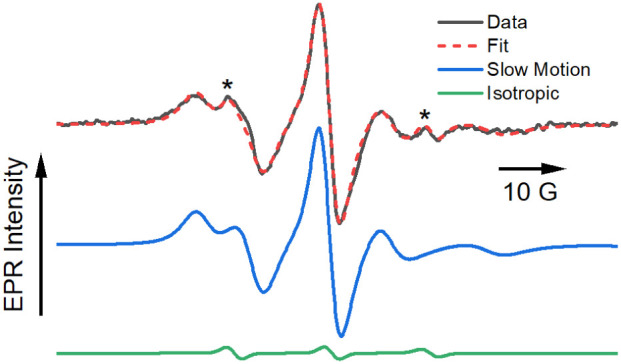
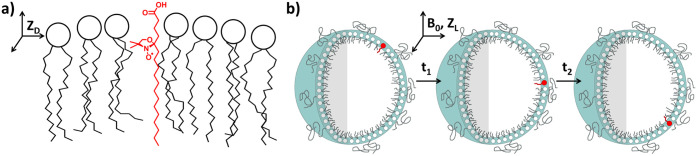
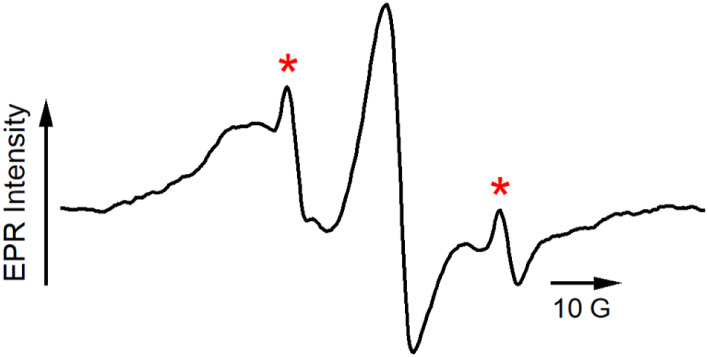
High Resolution Image Download MS PowerPoint Slide Steady-state electron paramagnetic resonance (EPR) spectroscopy is used to investigate the structure and stability of surfactant microbubbles made from distearoylphosphatidylcholine (DSPC) phospholipids and a polymeric stabilizer. The spin probe doxyl-5-stearic acid (5DSA) was incorporated into the phospholipid monolayer at an overall concentration of 3 × 10 –7 M. The bubbles were characterized by optical microscopy and found to range in diameter from 0.6 to 10 μm. The EPR spectrum of the spin probe at room temperature exhibited slow motion and ordering. This behavior was simulated using the microscopic order–macroscopic disorder (MOMD) model through the EasySpin software package. During the course of 12 h in the EPR sample tube, a sharper fast-motion nitroxide spectrum appeared, indicating degradation of the bubbles over time. This is attributed to the typical process of microbubble degradation following gas exchange and interactions between the sample and capillary walls, leading to bubble collapse and the formation of a liquid phase with 5DSA incorporated into liposomes, micelles, or free molecules.
Overview
CoChat Summary
TL;DR
Steady-state EPR with the spin probe 5DSA was used to study DSPC:DSPE-S phospholipid microbubbles, which were 0.6–10 μm in diameter and showed slow-motion, ordered probe behavior at room temperature. Over 12 h, a sharper fast-motion component appeared, indicating bubble degradation and probe release into a liquid phase.
Key findings
- Microbubbles were prepared from 90:10 mol% DSPC:DSPE-S with 5DSA at 3 × 10⁻⁷ M and ranged in diameter from 0.6 to 10 μm by optical microscopy.
- The initial EPR spectrum was broad and anisotropic, consistent with slow motion and ordering; MOMD fitting of the bubble spectrum gave τ⊥ = 4.4 ns, τ∥ = 0.49 ns, Azz = 35.6 G, C20 = 2.72, an order parameter S20 of 0.56, and Heisenberg spin exchange of 10.48 MHz, with an isotropic component weight of 0.014.
- Compared with lipid solution/liposomes, the probe in bubbles had a faster perpendicular rotational correlation time and higher Azz, interpreted as more conformational freedom and higher local hydration, consistent with a less tightly packed lipid monolayer at the gas–liquid interface.
- During 12 h in the EPR tube, a new fast-motion nitroxide spectrum grew, attributed to bubble collapse/degradation, gas exchange, and interactions with capillary walls, forming liposomes, micelles, or free 5DSA.
Methods
- Bubble preparation: DSPC, DSPE-S, and 5DSA were dissolved in chloroform, dried under nitrogen, redispersed in PBS (pH 7.4) at 60 °C, adjusted to 1.5 mg/mL lipid and 3 × 10⁻⁷ M 5DSA, gas-exchanged with perfluorobutane, mechanically agitated, and washed; bubbles were imaged by optical microscopy and analyzed with ImageJ.JS.
- EPR: steady-state X-band (9.5 GHz) with 100 kHz field modulation; oxygen-free samples in 0.5 mm quartz capillaries; sweep time 4 or 8 min, time constant 0.3 or 1 s, up to 25 accumulated scans, modulation amplitude 5 G for broad signals and 2 G for sharper lines.
- Spectral fitting: EasySpin esfit using garlic or chili; MOMD model for ordered slow-motion data; g- and A-tensors from literature; fitted rotational correlation time, line width, Azz, and C20, with fixed diffusion tilt angle βD = 34° when ordering was modeled.
Limitations
- The paper states this was a preliminary study and that no further attempts were made to improve polydispersity.
- The paper notes that broad lines can easily lead to overparameterized fits, so baseline values for as many parameters as possible were fixed from control measurements.
- The paper states that the multicomponent spectrum likely reflects probes in more than one motional regime or location, and that the necessity of including inhomogeneous broadening is attributed to local environmental heterogeneity and broad bubble-size distribution.
Model-written summary. Check it against the paper before relying on it.
Integrity signals
Registry
Cites
Statistics
Figures
Verification
Claims the paper makes
0 Valid · 1 Not valid · 5 Not checked · 53 Own results and interpretations
A result the paper reports from its own data — it cites no other source for it, so there is none to check. The quote shows it is in the paper.
In the paper
“The weights of the isotropic and anisotropic components were 0.03 and 0.97, respectively.”
§ Structure and Stability of Phospholipid-Based Microbubbles Studied Using a Spin Probe > Results and Discussion
plain- Asserted: passes — The authors put it forward as true.
- Checkable: passes — It can be checked against evidence.
- Load-bearing: unclear — It is unclear whether the paper’s conclusions depend on it.
- Based: passes — The paper gives a reason why it holds.
A result the paper reports from its own data — it cites no other source for it, so there is none to check. The quote shows it is in the paper.
In the paper
“Simulation of the slow-motion component returned values of τ⊥ = 4.4 ns, τ∥=0.49 ns, A zz = 35.6 G, and C 20 = 2.72.”
§ Structure and Stability of Phospholipid-Based Microbubbles Studied Using a Spin Probe > Results and Discussion
plain- Asserted: passes — The authors put it forward as true.
- Checkable: passes — It can be checked against evidence.
- Load-bearing: unclear — It is unclear whether the paper’s conclusions depend on it.
- Based: passes — The paper gives a reason why it holds.
A result the paper reports from its own data — it cites no other source for it, so there is none to check. The quote shows it is in the paper.
In the paper
“The normalized relative weight of the isotropic component was 0.014.”
§ Structure and Stability of Phospholipid-Based Microbubbles Studied Using a Spin Probe > Results and Discussion
plain- Asserted: passes — The authors put it forward as true.
- Checkable: passes — It can be checked against evidence.
- Load-bearing: unclear — It is unclear whether the paper’s conclusions depend on it.
- Based: passes — The paper gives a reason why it holds.
A result the paper reports from its own data — it cites no other source for it, so there is none to check. The quote shows it is in the paper.
In the paper
“Rotational anisotropy, measured as the ratio between the perpendicular and parallel rotational correlation times, τ⊥/τ∥, is smaller in the bubbles than observed in the liposomes.”
§ Structure and Stability of Phospholipid-Based Microbubbles Studied Using a Spin Probe > Results and Discussion
plainstates an association- Asserted: passes — The authors put it forward as true.
- Checkable: passes — It can be checked against evidence.
- Load-bearing: passes — The paper’s conclusions depend on it.
- Based: passes — The paper gives a reason why it holds.
A result the paper reports from its own data — it cites no other source for it, so there is none to check. The quote shows it is in the paper.
In the paper
“The spectrum is broad and anisotropic, which is characteristic of the slow-motion regime for the rotation of the nitroxide spin probes.”
§ Structure and Stability of Phospholipid-Based Microbubbles Studied Using a Spin Probe > Results and Discussion
plain- Asserted: passes — The authors put it forward as true.
- Checkable: passes — It can be checked against evidence.
- Load-bearing: passes — The paper’s conclusions depend on it.
- Based: passes — The paper gives a reason why it holds.
33 more claims
Create a free account to see all 59 claims and every source verdict.
- The quote only partly states this claim. 5
- Probably not a substantial claim. 8
- It may state two separate claims as one. 11
Self-check
Percentages, sums and reported differences re-computed from the paper’s own numbers.
Each contradiction between two passages listed here was confirmed by an independent check.
Rated minor: it would not touch a result — a value no result rests on, a p-value that stays on the same side of the significance level, or a conflict that is clerical, resolved elsewhere in the paper, or outside its own findings.
In the paper
§ Structure and Stability of Phospholipid-Based Microbubbles Studied Using a Spin Probe > Results and Discussion
“The value of the rotational correlation time is faster in the lipid spectrum than in the bubbles.”
§ Structure and Stability of Phospholipid-Based Microbubbles Studied Using a Spin Probe > Results and Discussion
“This indicates that the probe has more conformational freedom in the microbubble structure relative to the lipid solution, primarily due to a decrease in τ⊥.”
Citations
Cites
EasySpin, a comprehensive software package for spectral simulation and analysis in EPR
Stoll, S., & Schweiger, A. (2006) · Journal of Magnetic Resonance · doi:10.1016/j.jmr.2005.08.013 · Cited by 6,557
Ultrasound Microbubble Contrast Agents: Fundamentals and Application to Gene and Drug Delivery
Ferrara, K., Pollard, R., & Borden, M. (2007) · Annual Review of Biomedical Engineering · doi:10.1146/annurev.bioeng.8.061505.095852 · Cited by 1,288
Budil, D. E., Lee, S., Saxena, S., & Freed, J. H. (1996) · Journal of Magnetic Resonance, Series A · doi:10.1006/jmra.1996.0113 · Cited by 926
Spin labels in membranes problems in practice
Schreier, S., Polnaszek, C. F., & Smith, I. C. P. (1978) · Biochimica et Biophysica Acta (BBA) - Reviews on Biomembranes · doi:10.1016/0304-4157(78)90011-4 · Cited by 377
Borden, M. A., & Longo, M. L. (2002) · Langmuir · doi:10.1021/la026082h · Cited by 340
Targeted delivery of gas-filled microspheres, contrast agents for ultrasound imaging
Klibanov, A. (1999) · Advanced Drug Delivery Reviews · doi:10.1016/s0169-409x(98)00104-5 · Cited by 283
Shear rheology of lipid monolayers and insights on membrane fluidity
Espinosa, G., López-Montero, I., Monroy, F., & Langevin, D. (2011) · Proceedings of the National Academy of Sciences · doi:10.1073/pnas.1018572108 · Cited by 196
Analysis of protein-lipid interactions based on model simulations of electron spin resonance spectra
Meirovitch, E., Nayeem, A., & Freed, J. H. (1984) · The Journal of Physical Chemistry · doi:10.1021/j150660a018 · Cited by 193
Bales, B. L., & Zana, R. (2002) · The Journal of Physical Chemistry B · doi:10.1021/jp013813y · Cited by 173
Lipid monolayer collapse and microbubble stability
Kwan, J. J., & Borden, M. A. (2012) · Advances in Colloid and Interface Science · doi:10.1016/j.cis.2012.08.005 · Cited by 162
Metadata
- Authors
- Jarocha, L. E., Streeter, J. E., Weaver, S. I., McHorse, A., Lebedeva, N. V., Dayton, P. A., & E. Forbes, M. D.
- Affiliations
- University of North Carolina at Chapel Hill (US)
- Department of Chemistry
- Furman University (US)
- Corresponding author
- Jarocha, Lauren E.
- Venue
- Langmuir
- Publisher
- American Chemical Society (ACS)
- Published
- 2025-10-17
- Volume
- 41
- Issue
- 42
- Pages
- 28513-28520
- ISSN
- 0743-7463 (ISSN-L)
- 1520-5827
- PMC
- PMC12573782
- OpenAlex
- W4415308604
- Semantic Scholar
- 05fab33da340860eefcea02458d47f4299d1c1c4
- Cited by
- 0
- References
- 62
- FWCI
- 0.00
- Type
- journal article
- Language
- en
- Open access
- hybrid
- doi.org
- Licence
- Locations
- Langmuir (publishedVersion, cc-by)
- Europe PMC (PubMed Central) (publishedVersion, cc-by)
- PubMed (publishedVersion)
- Furman University Scholar Exchange (Furman University) (submittedVersion)
- Carolina Digital Repository (University of North Carolina at Chapel Hill) (submittedVersion, cc-by)
- UNC Libraries
- Funders
- Division of Chemistry (1757706, 1900541)
- Division of Molecular and Cellular Biosciences (2228975)
- Topics
- Physical Sciences › Chemistry › Spectroscopy › Electron Spin Resonance Studies
- Physical Sciences › Chemical Engineering › Filtration and Separation › Minerals Flotation and Separation Techniques
- Physical Sciences › Engineering › Biomedical Engineering › Ultrasound and Hyperthermia Applications
- Keywords
- distearoylphosphatidylcholine, spin probes, microbubble stability, bubble collapse, gas exchange, polymer stabilizers, liposomes, micelles
About these checks
Registry, retraction, Cites and statistics results are computed, not judged, with one exception: a printed reference that no index lists is read once by a model before it counts as a citation error. Claims are extracted by a model and kept only when their quote appears verbatim in the text; each cited source is then checked, with a model’s help, for whether it says what the claim relies on. Those verdicts can be wrong — read the claim’s quote and the cited source before relying on one.
A language model drew the claims from the paper on 2026-10-10, under version 3 of the claim definition (model deepseek-v4.1-flash, prompt extract-v3).
A second model labelled each claim on 2026-10-10 (model jev-1.13-20260917, definition revision gold-guideline-v0.2).
Statistics and arithmetic are recomputed, not judged.
Confidence bands are shown only for fields calibrated on our annotated test set. None is calibrated yet, so no band is shown.
What counts as a claim ›How we measure confidence ›How we check this ›
Are you an author, or do you see a problem with this page? Request a review
How to cite
Cite CoChat for the checks on this page, and the paper for its own findings.
- This page
- CoChat. (2026). Citation check: Structure and Stability of Phospholipid-Based Microbubbles Studied Using a Spin Probe. https://app.cochat.ai/papers/10.1021/acs.langmuir.5c03669
- The paper
- Jarocha, L. E., Streeter, J. E., Weaver, S. I., McHorse, A., Lebedeva, N. V., Dayton, P. A., & E. Forbes, M. D. (2025). Structure and Stability of Phospholipid-Based Microbubbles Studied Using a Spin Probe. Langmuir. https://doi.org/10.1021/acs.langmuir.5c03669
Data sources
Bibliographic data: Semantic Scholar, OpenAlex, Crossref.
Contains information from the Semantic Scholar Academic Graph Datasets, made available under the ODC Attribution License (ODC-BY 1.0).
Semantic Scholar’s data is described in: Kinney, R., et al. (2023). The Semantic Scholar Open Data Platform. arXiv:2301.10140.
