

Screening Perovskites from ABO3 Combinations Generated by Constraint Satisfaction Techniques Using Machine Learning
Open accessThe DOI matches its Crossref record; 28 of the 28 references it cites were found in a registry or an index.
Abstract
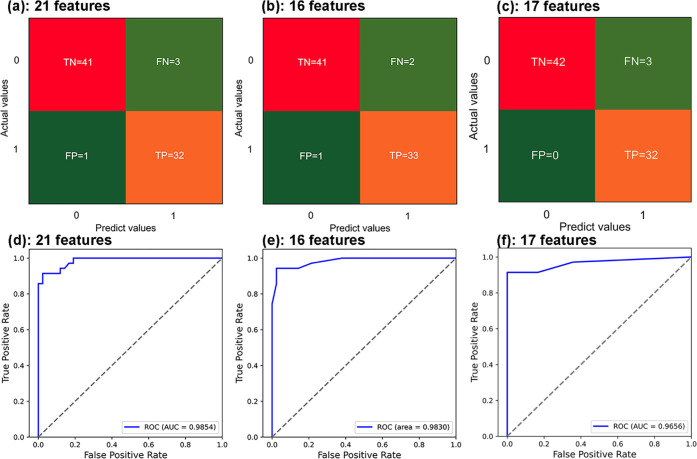
High Resolution Image Download MS PowerPoint Slide Perovskite oxides are attractive candidates for various scientific applications because of their outstanding structure flexibilities and attractive physical and chemical properties. However, labor-intensive and high-cost experimental and density functional theory calculation approaches are normally used to screen candidate perovskites. Herein, a machine learning method is employed to identify perovskites from ABO 3 combinations formulated as constraint satisfaction problems based on the restrictions of charge neutrality and Goldschmidt tolerance factor. By eliminating five features based on their correlation and importance, 16 features refined from 21 features are employed to describe 343 known ABO 3 compounds for perovskite formability and stability model training. It is found that the top three features for predicting formability are structural features of the A–O bond length, tolerance, and octahedral factors, whereas the top nine features for predicting the stability are elemental and structural features related to the B-site elements. The precision and recall of the two models are 0.983, 1.00 and 0.971, 0.943, respectively. The formability prediction model categorizes 2229 ABO 3 combinations into 1373 perovskites and 856 nonperovskites, whereas the stability prediction model distinguishes 430 stable perovskites from 1799 unstable ones. Three hundred thirty-eight combinations are recognized as both formable and stable perovskites for future investigation.
Overview
The claims and statistics of this paper haven’t been checked yet.
Free: it reads the open-access text and checks the first 5 claims that cite a source we can check. Create a free account to check every claim.
Integrity signals
Registry
Cites
Statistics
Figures




Verification
Claims the paper makes
The claims and statistics of this paper haven’t been checked yet.
Free: it reads the open-access text and checks the first 5 claims that cite a source we can check. Create a free account to check every claim.
Self-check
Percentages, sums and reported differences re-computed from the paper’s own numbers.
The self-check needs the paper’s full text.
Citations
Cites
Commentary: The Materials Project: A materials genome approach to accelerating materials innovation
Jain, A., Ong, S. P., Hautier, G., Chen, W., Richards, W. D., Dacek, S., Cholia, S., Gunter, D., Skinner, D., Ceder, G., et al. (2013) · APL Materials · doi:10.1063/1.4812323 · Cited by 13,094
Die Gesetze der Krystallochemie
Goldschmidt, V. M. (1926) · Die Naturwissenschaften · doi:10.1007/bf01507527 · Cited by 4,012 · cited 2×
“21 It is de fi ned as t = ( r A + r O )/( √ 2(r B + r O )), where r A , r B , and r O are the Shannon ionic radii of the A, B, and O ions, 22 respectively.”
BackgroundMethodRevised values of effective ionic radii
Shannon, R. D., & Prewitt, C. T. (1970) · Acta Crystallographica Section B Structural Crystallography and Crystal Chemistry · doi:10.1107/s0567740870003576 · Cited by 1,368 · cited 1×
“21 It is de fi ned as t = ( r A + r O )/( √ 2(r B + r O )), where r A , r B , and r O are the Shannon ionic radii of the A, B, and O ions, 22 respectively.”
BackgroundFabbri, E., Nachtegaal, M., Binninger, T., Cheng, X., Kim, B.-J., Durst, J., Bozza, F., Graule, T., Schäublin, R., Wiles, L., et al. (2017) · Nature Materials · doi:10.1038/nmat4938 · Cited by 1,064
Perovskite Oxides: Preparation, Characterizations, and Applications in Heterogeneous Catalysis
Zhu, J., Li, H., Zhong, L., Xiao, P., Xu, X., Yang, X., Zhao, Z., & Li, J. (2014) · ACS Catalysis · doi:10.1021/cs500606g · Cited by 1,037
Yin, W.-J., Weng, B., Ge, J., Sun, Q., Li, Z., & Yan, Y. (2019) · Energy & Environmental Science · doi:10.1039/c8ee01574k · Cited by 783
Selected perovskite oxides: Characterization, preparation and photocatalytic properties—A review
Grabowska, E. (2016) · Applied Catalysis B: Environmental · doi:10.1016/j.apcatb.2015.12.035 · Cited by 684
Machine learning for perovskite materials design and discovery
Tao, Q., Xu, P., Li, M., & Lu, W. (2021) · npj Computational Materials · doi:10.1038/s41524-021-00495-8 · Cited by 542
Formability of ABO3 perovskites
Li, C., Soh, K. C. K., & Wu, P. (2004) · Journal of Alloys and Compounds · doi:10.1016/j.jallcom.2003.10.017 · Cited by 507
Perovskite oxides – a review on a versatile material class for solar-to-fuel conversion processes
Kubicek, M., Bork, A. H., & Rupp, J. L. M. (2017) · Journal of Materials Chemistry A · doi:10.1039/c7ta00987a · Cited by 316
Cited by
Humayun, M., Li, Z., Israr, M., Khan, A., Luo, W., Wang, C., & Shao, Z. (2025) · Chemical Reviews · doi:10.1021/acs.chemrev.4c00553 · Cited by 352
Machine Learning for Perovskite Solar Cells and Component Materials: Key Technologies and Prospects
Liu, Y., Tan, X., Liang, J., Han, H., Xiang, P., & Yan, W. (2023) · Advanced Functional Materials · doi:10.1002/adfm.202214271 · Cited by 174
Machine Learning in Perovskite Solar Cells: Recent Developments and Future Perspectives
Bansal, N., Mishra, S., Dixit, H., Porwal, S., Singh, P., & Singh, T. (2023) · Energy Technology · doi:10.1002/ente.202300735 · Cited by 93
Feature Selection in Machine Learning for Perovskite Materials Design and Discovery
Wang, J., Xu, P., Ji, X., Li, M., & Lu, W. (2023) · Materials · doi:10.3390/ma16083134 · Cited by 76
Machine Learning-Aided Band Gap Engineering of BaZrS3 Chalcogenide Perovskite
Sharma, S., Ward, Z. D., Bhimani, K., Sharma, M., Quinton, J., Rhone, T. D., Shi, S., Terrones, H., & Koratkar, N. A. (2023) · ACS Applied Materials & Interfaces · doi:10.1021/acsami.3c00618 · Cited by 60
Aamir, M., Bibi, I., Sabir, M. Z., Mubarik, S., Raza, Q., Karami, A. M., Aadil, M., & Ahmad, Z. (2023) · Optical Materials · doi:10.1016/j.optmat.2023.114390 · Cited by 29
Interpretable machine learning-assisted screening of perovskite oxides
Zhao, J., Wang, X., Li, H., & Xu, X. (2024) · RSC Advances · doi:10.1039/d3ra08591k · Cited by 29
Self-citationMachine-learning-assisted discovery of perovskite materials with high dielectric breakdown strength
Li, J., Peng, Y., Zhao, L., Chen, G., Zeng, L., Wei, G., & Xu, Y. (2022) · Materials Advances · doi:10.1039/d2ma00839d · Cited by 22
“Zhao et al. 29 developed a machine learning model based on the constraint satisfaction problem of charge neutrality and constraint coefficient to screen the formed and stable perovskite oxides from ABO 3 combinations.”
MethodSingh, A. K., Vasishth, A., & Kumar, A. (2023) · physica status solidi (a) · doi:10.1002/pssa.202300198 · Cited by 18
Accelerated Design for Perovskite-Oxide-Based Photocatalysts Using Machine Learning Techniques
Zhai, X., & Chen, M. (2024) · Materials · doi:10.3390/ma17123026 · Cited by 20
Machine Learning Approaches in Advancing Perovskite Solar Cells Research
Subba, S., Rai, P., & Chatterjee, S. (2024) · Advanced Theory and Simulations · doi:10.1002/adts.202400652 · Cited by 24
Ge, X., Meng, G., & Liu, B. (2022) · Journal of Industrial and Engineering Chemistry · doi:10.1016/j.jiec.2022.08.023 · Cited by 14
Rahimkhoei, V., Salavati-Niasari, M., Alsultany, F. H., Aljeboree, A. M., & Hamadanian, M. (2025) · Applied Water Science · doi:10.1007/s13201-025-02470-w · Cited by 8
“Double perovskite structures are formed by combining two basic perovskite configurations, each identified as ABO 3 , so the general formula for double perovskites is A 2 BB ′ O 6 (Rahman et al. 2022; Zhao and Wang 2022).”
Gyan, R. A., Wu, T., Gao, P., Seidu, M., Ye, Z., & Sun, S. (2025) · Journal of environmental chemical engineering · doi:10.1016/j.jece.2025.117053 · Cited by 7
Khan, M. N., Peng, D., Hu, S., Wang, X., Lin, X., Han, L., Hu, Z., Zou, J., & Zhang, D. (2025) · International Journal of Hydrogen Energy · doi:10.1016/j.ijhydene.2025.150183 · Cited by 7
Self-citationInk-jet printing of NaTaO3 films for photocatalytic H2O and CO2 conversion in seawater
Luévano-Hipólito, E., Aguirre-Astrain, A., & Torres-Martínez, L. M. (2024) · Materials Science in Semiconductor Processing · doi:10.1016/j.mssp.2024.108984 · Cited by 6
Prediction of the formability and stability of perovskite oxides via multi-label classification
Wang, X., & Zhao, J. (2024) · New Journal of Chemistry · doi:10.1039/d4nj03783a · Cited by 5
Self-citationEnhanced supercapacitor performance of rGO-modified LaFeO3 perovskite: experimental and DFT insights
Verma, H., Mittal, A., Kumar, P., Katheriya, T., Bhattacharya, B., & Upadhyay, S. (2025) · Materials Chemistry and Physics · doi:10.1016/j.matchemphys.2025.131771 · Cited by 4
System energy and band gap prediction of titanium dioxide based on machine learning
Chen, S., Zhang, W., Luo, R., Zhao, Y., Yang, Y., Zhang, B., Lü, Q., & Hu, B. (2024) · Journal of Molecular Structure · doi:10.1016/j.molstruc.2024.137934 · Cited by 6
Sun, H., Lordi, V., Takamura, Y., & Samanta, A. (2024) · ACS Applied Materials & Interfaces · doi:10.1021/acsami.3c18773 · Cited by 4
Mim, S., Islam, M. R., Rana, M. M., Al‐Humaidi, J. Y., & Haque, M. M. (2025) · Journal of materials research/Pratt's guide to venture capital sources · doi:10.1557/s43578-025-01567-x · Cited by 3
Yaqoob, A., Kabir, A., Elboughdiri, N., & Hira, U. (2026) · Physica B Condensed Matter · doi:10.1016/j.physb.2026.418249 · Cited by 3
Wang, B., Wang, J., Li, L., & Wang, D. (2026) · Frontiers in Materials · doi:10.3389/fmats.2025.1669229 · Cited by 6
A review of perovskite-type materials: from synthesis to applications
Sfîrloagă, P., Poienar, M., & Vlăzan, P. (2025) · Elsevier eBooks · doi:10.1016/b978-0-443-13298-8.00009-2 · Cited by 3
Ultrafast synthesis of ternary oxides via a design-test-make-analyze workflow
Dai, H., McDermott, M. J., Chen, A. P., Recatala‐Gomez, J., Nong, W., Zhu, R., Thway, M., Morris, S. A., Schürmann, C. J., Pethe, S. D., et al. (2025) · Cell Reports Physical Science · doi:10.1016/j.xcrp.2025.102799 · Cited by 3
A Study on Machine Learning Based Classification of Crystal Structures in ABO3 Perovskites
Tripathy, S., & Mohapatra, U. M. (2023) · International Conference on Ambient Intelligence in Health Care (ICAIHC) · doi:10.1109/icaihc59020.2023.10431438 · Cited by 1
“Perovskite oxides have received a lot of attention in recent years due to their intriguing electrical, optical, magnetic, dielectric, and thermal properties etc. [1], [2].”
BackgroundAamir, M., Bibi, I., Sabir, M. Z., Zulfiqar, S., Mubarik, S., Raza, Q., Karami, A. M., & Aadil, M. (2023) · Research Square · doi:10.21203/rs.3.rs-3257208/v1 · Cited by 1
System Energy and Band Gap Prediction of Titanium Dioxide Based on Machine LearningPreprint
Chen, S., Zhang, W., Luo, R., Zhao, Y., Yang, Y., Zhang, B., Lü, Q., & Hu, B. (2023) · SSRN Electronic Journal · doi:10.2139/ssrn.4588485
System Energy and Band Gap Prediction of Titanium Dioxide Based on Machine LearningPreprint
Chen, S., Zhang, W., Luo, R., Zhao, Y., Yang, Y., Zhang, B., Lü, Q., & Hu, B. (2023) · SSRN Electronic Journal · doi:10.2139/ssrn.4602549
AI-driven inorganic materials by design
Zhu, R. (2024) · DR-NTU (Nanyang Technological University) · doi:10.32657/10356/183779
Chen, X., Zhao, Y., Cao, Z., Sun, Y., Zhang, W., Yang, Y., Zhang, B., Liu, J., Zhang, Z., & Lu, Q. (2025) · Organic Electronics · doi:10.1016/j.orgel.2025.107358 · Cited by 1
Wang, S., Zhao, W., Zhou, M., Liu, T., Wang, Y., Shi, R., Wang, Y., & Zhang, Z. (2025) · Progress in Photovoltaics Research and Applications · doi:10.1002/pip.70060 · Cited by 1
“Available descriptors for inorganic components include physicochemical parameters (1D) [55, 56], XRD spectral images (2D) [57, 58], and crystal graphs (2D) [59], where nodes and edges are represented by vectors corresponding to the atoms and bonds, respectively.”
Machine learning assisted development of lead-free Cs3Bi2I9 perovskite solar cells
Choudhary, A., Rumman, A. H., Sahriar, M. A., Islam, M. T., Ahmed, S., & Efstathiadis, H. (2026) · Solar Energy · doi:10.1016/j.solener.2026.114743 · Cited by 1
Machine learning enabled discovery of photocatalytic ABX 3 perovskite materials
Akinpelu, S. B., Abolade, S. A., Okafor, E., Obada, D. O., Syam Kumar, R., Ukpong, A. M., Healy, J., & Akande, A. (2026) · Digital Discovery · doi:10.1039/d6dd00010j
Zhao, J., & Wang, X. (2026) · Materials · doi:10.3390/ma19184015
Self-citation
Metadata
- Authors
- Zhao, J., & Wang, X.
- Affiliations
- Nanjing Tech University (CN)
- Nanjing Audit University (CN)
- Corresponding author
- Zhao, Jie
- Wang, Xiaoyan
- Venue
- ACS Omega
- Publisher
- American Chemical Society (ACS)
- Published
- 2022-03-16
- Volume
- 7
- Issue
- 12
- Pages
- 10483-10491
- ISSN
- 2470-1343 (ISSN-L)
- PMC
- PMC8973048
- OpenAlex
- W4223589533
- Cited by
- 35
- References
- 28
- Citations by year
- 2026: 5 · 2025: 10 · 2024: 8 · 2023: 10 · 2022: 2
- FWCI
- 2.11
- Type
- journal article
- Language
- en
- Open access
- gold
- doi.org
- Licence
- Locations
- ACS Omega (publishedVersion, cc-by-nc-nd)
- PubMed Central (publishedVersion, cc-by-nc-nd)
- PubMed (publishedVersion)
- DOAJ (DOAJ: Directory of Open Access Journals) (submittedVersion, cc-by-sa)
- Funders
- Natural Science Foundation of Jiangsu Province (BK20200690)
- Government of Jiangsu Province
- Natural Science Foundation of Jiangsu Higher Education Institutions (17KJB520014, 20KJB530010)
- Topics
- Physical Sciences › Materials Science › Materials Chemistry › Machine Learning in Materials Science
- Physical Sciences › Materials Science › Electronic, Optical and Magnetic Materials › Crystal Structures and Properties
- Physical Sciences › Chemistry › Inorganic Chemistry › Inorganic Chemistry and Materials
- Keywords
- perovskite oxides, constraint satisfaction, tolerance factor, charge neutrality, machine learning, feature selection
About these checks
Registry, retraction, Cites and statistics results are computed, not judged, with one exception: a printed reference that no index lists is read once by a model before it counts as a citation error. Claims are extracted by a model and kept only when their quote appears verbatim in the text; each cited source is then checked, with a model’s help, for whether it says what the claim relies on. Those verdicts can be wrong — read the claim’s quote and the cited source before relying on one.
Statistics and arithmetic are recomputed, not judged.
Confidence bands are shown only for fields calibrated on our annotated test set. None is calibrated yet, so no band is shown.
What counts as a claim ›How we measure confidence ›How we check this ›
Are you an author, or do you see a problem with this page? Request a review
Data sources
Bibliographic data: Semantic Scholar, OpenAlex, Crossref.
Contains information from the Semantic Scholar Academic Graph Datasets, made available under the ODC Attribution License (ODC-BY 1.0).
Semantic Scholar’s data is described in: Kinney, R., et al. (2023). The Semantic Scholar Open Data Platform. arXiv:2301.10140.
